
tldr
- BaaS platforms differ far more than pricing: partner bank stability, regulatory geography, compliance support, and product breadth vary enormously between vendors.
- Survival risk is real. Several BaaS providers have restructured, been acquired, or shut down in the past few years, taking client programs with them.
- The right platform depends heavily on your target geography, product type (cards, accounts, lending, FX), and your team’s appetite for regulatory complexity.
- Stripe Treasury suits product teams that want fast API integration. Unit and Treasury Prime suit startups that want more banking flexibility and direct bank relationships.
- European and US markets operate under different regulatory frameworks, meaning a platform strong in one region is often a poor fit for the other.
- If you are evaluating fintech infrastructure broadly, BaaS selection connects directly to your fintech API stack, not just your banking layer.
You have done the research, talked to a few vendors, and now everything sounds the same. Every BaaS provider promises fast API integration, bank-grade compliance, and a dedicated implementation team. The decks all look nearly identical.
Most founders evaluating BaaS for the first time anchor too hard on pricing and API documentation. Those matter, but they are not where the risk lives. The real differences between platforms show up in which partner bank holds customer deposits, how much compliance support you actually get versus what is in the sales pitch, and whether the vendor will still exist in two years.
This piece covers ten platforms worth serious evaluation, with clear guidance on who each one fits and where each one falls short, across the criteria that define the best banking as a service platforms for early-stage companies. By the end, you should be able to cut your shortlist to two or three vendors and know exactly what questions to ask them.
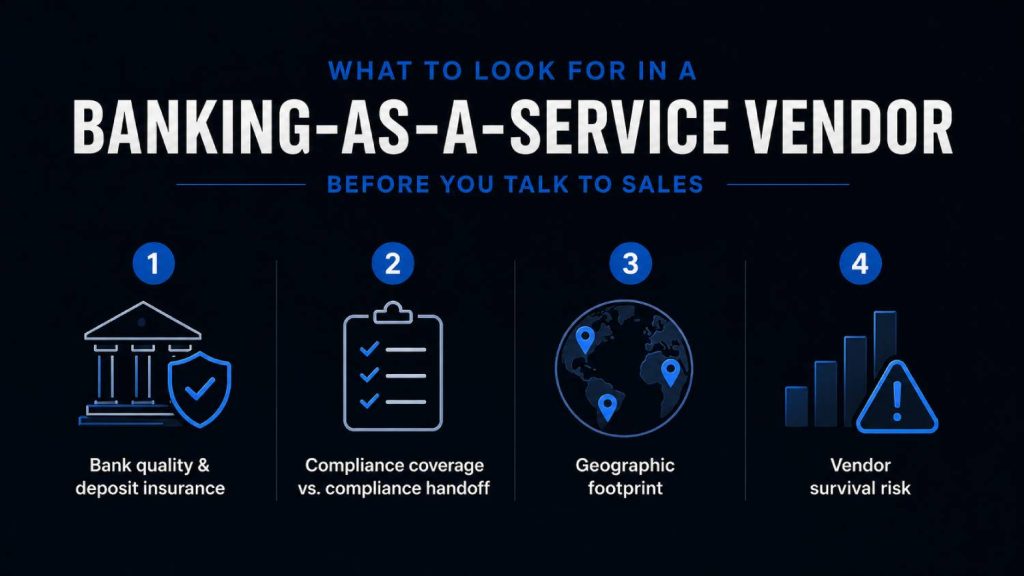
What to Look for in a Banking-as-a-Service Vendor Before You Talk to Sales
Four factors matter more than anything a sales rep will put in a deck. Get clear on these before you request a demo.
Partner bank quality and deposit insurance
Your customers’ money sits at a sponsor bank, not at the BaaS platform. If that bank faces regulatory action or fails, your program is at risk regardless of how polished the BaaS API is. Ask every vendor which FDIC-insured banks hold deposits and whether those relationships are exclusive or shared across many programs.
Compliance coverage vs. compliance handoff
Some platforms take on significant compliance responsibility. Others hand you a framework and expect your team to manage KYC, AML, and program management in-house. If you do not have a compliance team, the first model saves you six figures in hiring. Know which model you are buying.
Geographic footprint
A platform licensed in the EU is not automatically a good fit for a US product, and vice versa. Several vendors in this list operate only in one region. Cross-border ambitions need a vendor with actual regulatory coverage in your target markets, not a roadmap promise.
Vendor survival risk
BaaS has seen real consolidation. Railsr went through administration in 2023. Synapse Financial collapsed in 2024, leaving thousands of end users locked out of accounts. Before signing a multi-year contract, look at funding recency, revenue transparency, and which banks and investors are behind the platform.
The 10 Best Banking-as-a-Service Platforms Compared
1. Unit
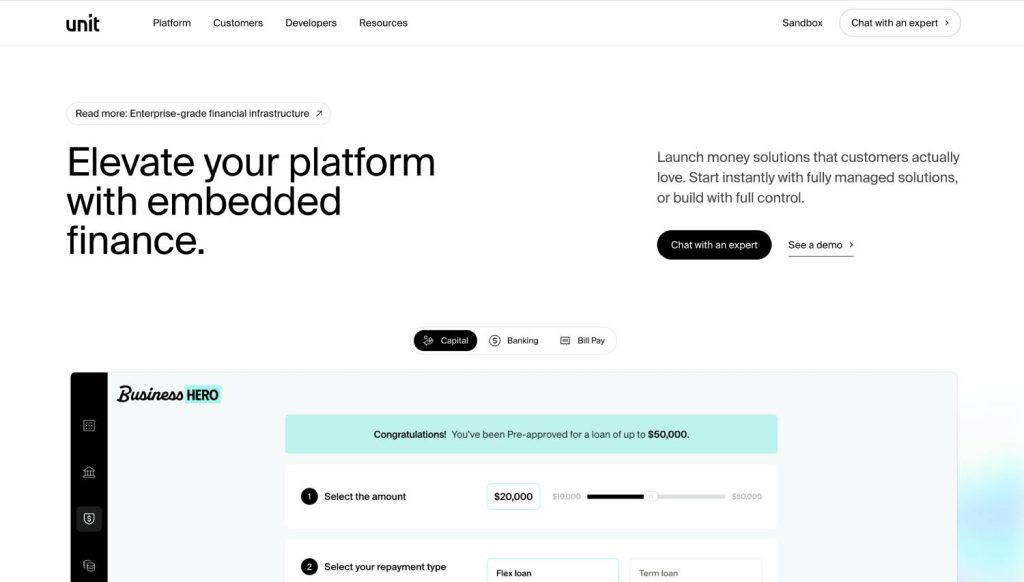
Unit is one of the most commonly recommended BaaS platforms for US-focused fintech startups. It offers embedded banking products including deposit accounts, cards, and ACH payments through a clean REST API.
Ideal customer: US-based B2B fintech or vertical SaaS company that wants to embed financial accounts and cards for business customers.
Unit’s developer documentation is strong, and it maintains multiple partner bank options, which reduces concentration risk compared to single-bank arrangements. The product suite covers most standard embedded banking use cases without requiring heavy custom development.
The platform is focused entirely on the US market. Fee structures are not publicly listed and depend on volume and use case. Unit is not designed for consumer lending or complex cross-border products.
Who should avoid it: Companies targeting European customers, or startups that need FX or lending infrastructure from day one.
2. Treasury Prime
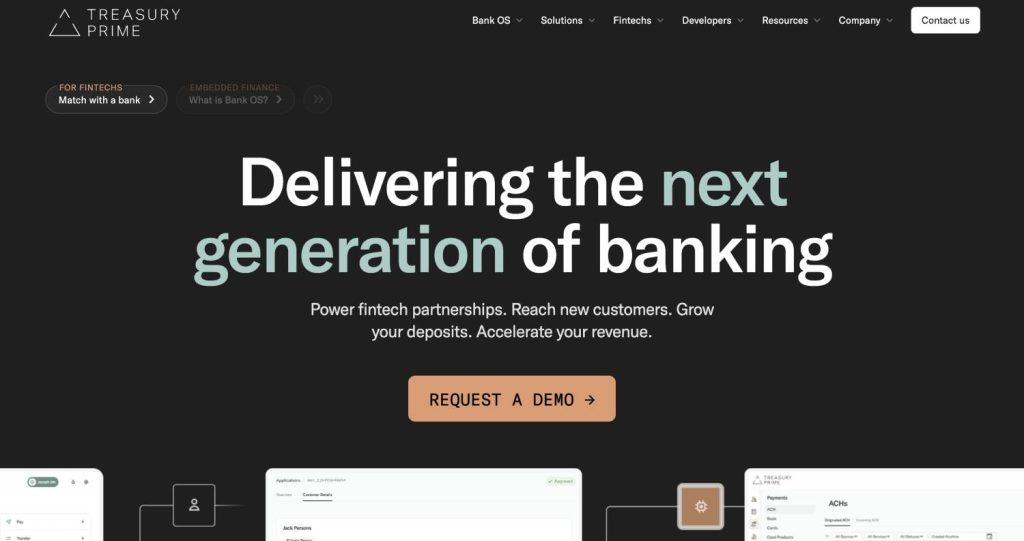
Treasury Prime differentiates itself by connecting fintech companies to a network of FDIC-insured partner banks, rather than relying on a single bank relationship. This gives clients more flexibility in selecting a bank that fits their compliance profile and deposit needs.
Ideal customer: US fintech startups, particularly those building consumer or SMB banking products, that want direct bank relationships rather than a middleman model.
The multi-bank network reduces single-bank dependency, and the platform has published guidance on how its bank relationships work, more transparent than many competitors. Compliance support is substantive rather than a documentation handoff.
Treasury Prime operates only in the US. The multi-bank model can add complexity when you need a single integrated experience, and it is not the fastest path from zero to production for teams with no compliance background.
Who should avoid it: International programs, or teams that want a fully managed, low-touch compliance experience.
3. Stripe Treasury
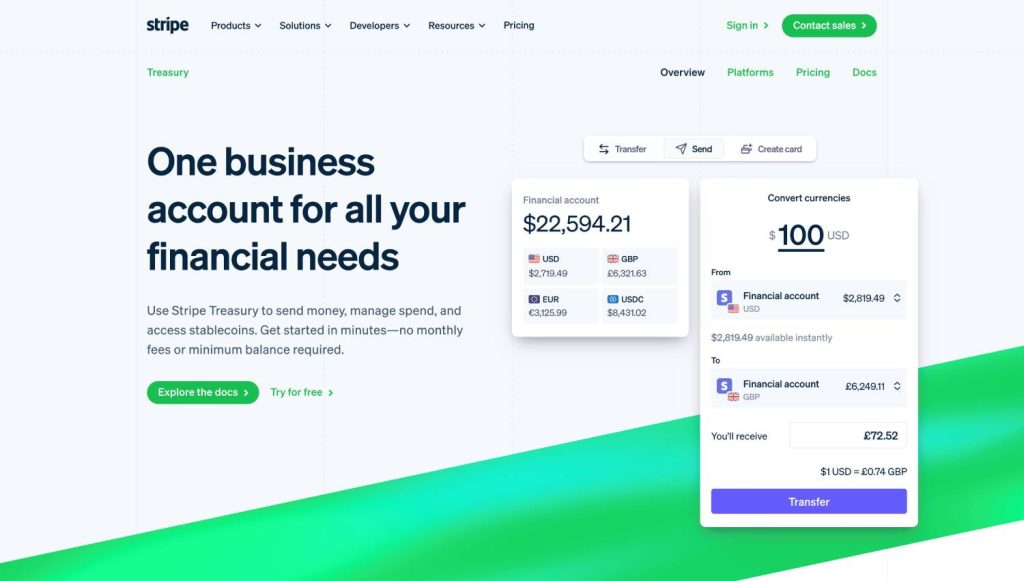
Stripe Treasury is the embedded banking layer built on top of Stripe’s existing payments infrastructure. It lets platforms offer FDIC-insured deposit accounts and money movement to their users through the same Stripe integration many companies already have.
Ideal customer: SaaS platforms or marketplaces already using Stripe that want to add financial accounts without switching infrastructure providers.
For existing Stripe users, this is the fastest integration path available. There is no separate bank relationship to manage, Stripe handles compliance infrastructure, and the product fits naturally into vertical SaaS use cases like payroll platforms or gig economy apps. For a broader look at fintech APIs that complement or compete with Stripe’s stack, the best fintech APIs for SaaS companies comparison covers the full picture.
The tradeoff is lock-in. Product flexibility is narrower than pure-play BaaS vendors. Card issuance and lending capabilities are more limited than dedicated BaaS platforms, and geographic availability outside the US is not guaranteed for all features.
Who should avoid it: Companies that need multi-bank optionality, complex product configurations, or are not already embedded in the Stripe payments stack.
4. Solaris
Solaris (formerly Solarisbank) is a German BaaS provider that holds a full European banking license. It offers a broad product suite covering accounts, cards, lending, and identity verification through APIs.
Ideal customer: European fintech startups or companies building for European markets that need a licensed banking partner and a full-stack product offering.
A full banking license under BaFin regulation means Solaris can provide banking services across the EU without requiring clients to hold their own license. The product suite includes lending, something most BaaS platforms do not offer natively.
Solaris has faced well-documented regulatory challenges from BaFin related to compliance processes. Startups evaluating Solaris should review its current regulatory standing before committing. Commercial terms are not publicly disclosed.
Who should avoid it: US-focused companies, and any team that cannot absorb potential disruption if regulatory issues affect the platform.
5. ClearBank
ClearBank is a UK-based clearing bank that provides BaaS infrastructure to regulated financial institutions and fintech companies. It holds a full UK banking license and processes payments through the Bank of England’s payment systems.
Ideal customer: UK-licensed fintechs, e-money institutions, and financial services companies that need a direct clearing bank relationship rather than a sponsor bank arrangement.
Direct access to UK payment schemes, Faster Payments, CHAPS, BACS, combined with full deposit-taking capability and FSCS protection makes ClearBank well-suited to regulated entities. The platform is built for sophisticated clients and the onboarding process reflects that.
ClearBank is not built for early-stage startups that lack regulatory permissions. Onboarding requires your entity to already hold or be in the process of acquiring a financial services authorization. US market presence is limited.
Who should avoid it: Pre-licensed startups, US-first companies, and teams looking for a quick path to market without regulatory infrastructure in place.
6. Railsr
Railsr offers embedded finance capabilities including cards-as-a-service, banking accounts, and rewards infrastructure through REST APIs. The platform supports a broad set of embedded finance use cases across Europe and has partnerships in additional markets.
Ideal customer: European companies building card programs, loyalty products, or multi-currency accounts within an existing product experience.
Cards-as-a-service capability is well-regarded. The API is developer-friendly, and the platform covers a range of currencies and card configurations.
Railsr went through a significant restructuring, including administration proceedings in 2023. It emerged from that process under new ownership, but any startup evaluating Railsr should conduct thorough due diligence on its current financial stability and the continuity of existing programs before signing.
Who should avoid it: Teams that cannot absorb vendor disruption risk, or companies that need a stable multi-year banking partner for customer-facing deposit products.
7. Banking Circle
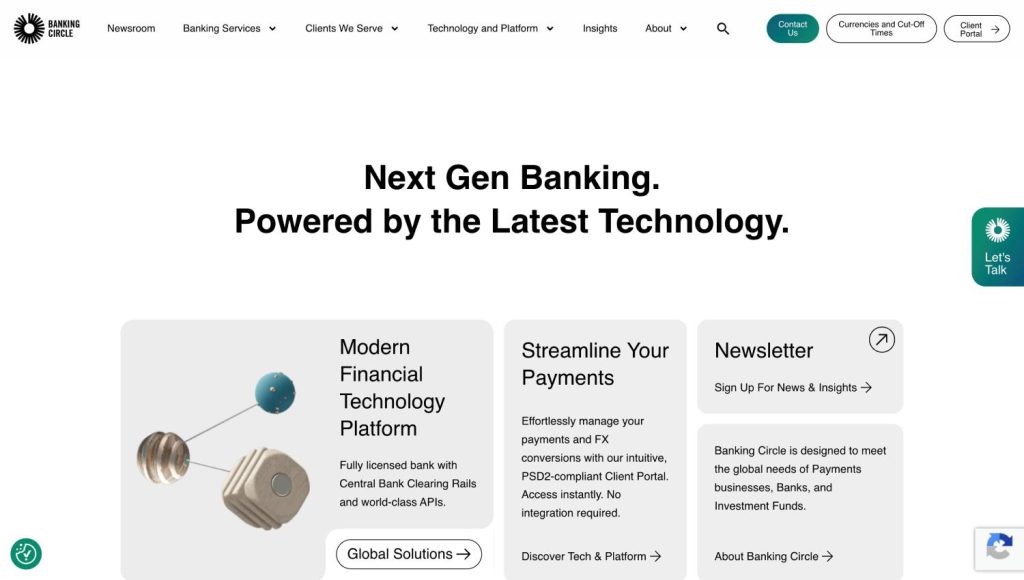
Banking Circle is a licensed bank that focuses on payment services, multi-currency accounts, and cross-border transactions for financial institutions and payment service providers. It is not a general-purpose BaaS platform.
Ideal customer: Payment service providers, acquirers, and B2B fintech companies that need fast, low-cost cross-border settlement and multi-currency account infrastructure.
FX and cross-border capabilities are strong. Banking Circle is designed specifically for PSPs and fintechs moving money across borders at scale, with settlement in major currencies.
This is not a consumer-facing BaaS platform. If you need card issuance, retail deposit accounts, or consumer-facing account features, Banking Circle is not the right fit. It operates as financial infrastructure for other financial companies, not a white-label bank for end users.
Who should avoid it: Consumer fintech startups, companies building retail neobanks, and any team that needs card issuance or consumer deposit accounts.
8. ConnectPay
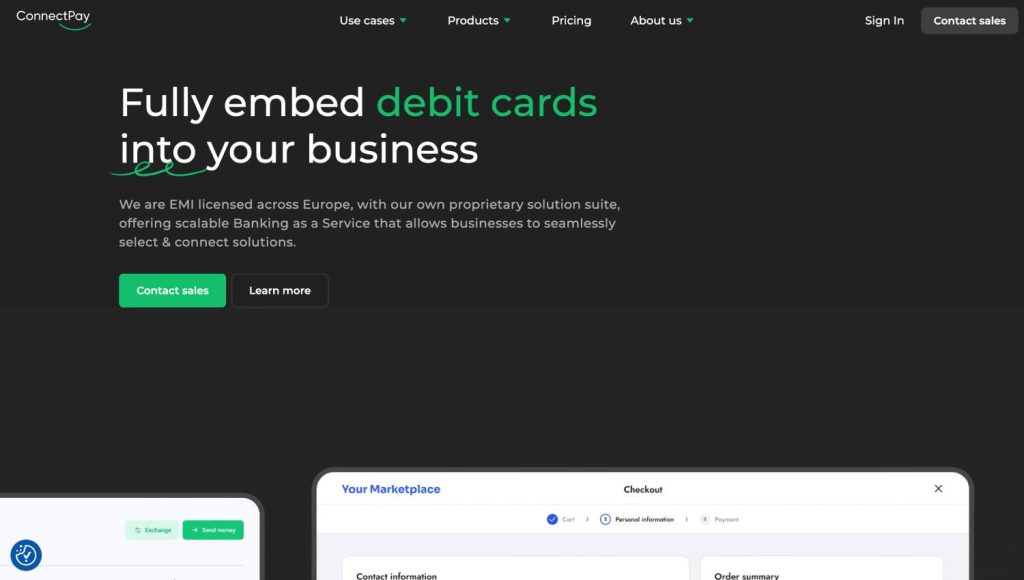
ConnectPay is a European BaaS provider targeting fintech startups and platforms that need compliant, scalable banking infrastructure in the EU. It focuses on IBAN accounts, payments, and compliance services for regulated and semi-regulated fintech clients.
Ideal customer: European fintech startups and growing platforms seeking compliant, scalable BaaS infrastructure, particularly those without existing banking licenses.
Compliance support is a core part of the offering, not an add-on, which helps early-stage companies that do not have in-house compliance teams. SEPA payment coverage and IBAN issuance are strong.
ConnectPay is primarily EU-focused. Product breadth is narrower than Solaris or larger European incumbents, and the platform carries less name recognition than tier-one providers, which may matter when pitching institutional partners or enterprise customers.
Who should avoid it: US-market companies, and startups that need card issuance or lending as primary product features at launch.
9. Synctera
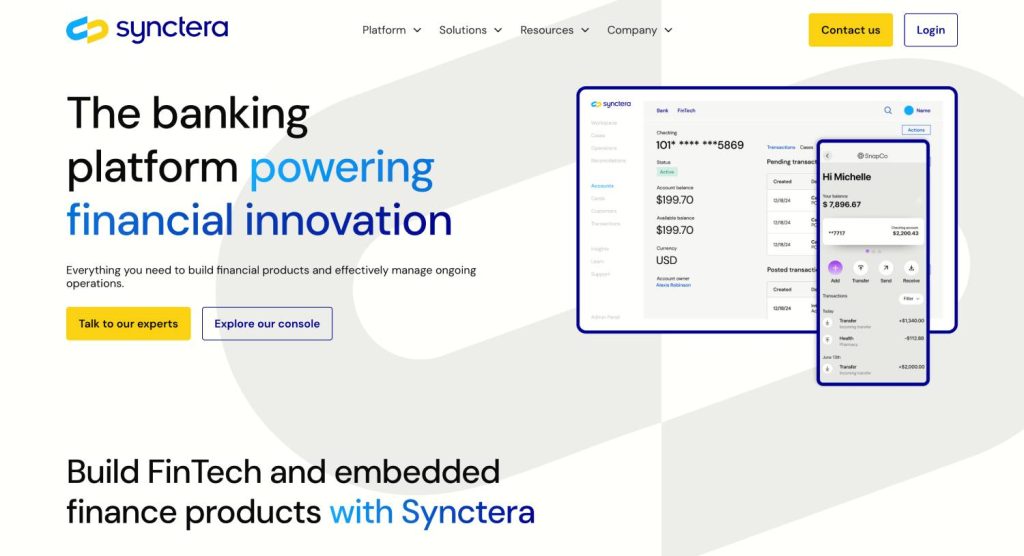
Synctera positions itself as a platform that matches fintech companies with community banks and handles the operational complexity of managing those relationships. It combines a bank-matching marketplace with BaaS tooling.
Ideal customer: US-based fintech startups that want a direct, long-term relationship with a community bank partner but lack the resources to manage that relationship independently.
The bank-matching model is differentiated. Synctera handles program management, compliance monitoring, and bank relationship management, which reduces the burden on early-stage teams. It also supports a range of product types including consumer and business accounts, cards, and lending.
Synctera operates only in the US. The bank-matching approach means onboarding can take longer than plug-and-play platforms. Pricing is not published on the company’s public website.
Who should avoid it: Teams that need to launch in weeks, not months, and companies targeting non-US markets.
10. Green Dot Bank (as a BaaS partner)
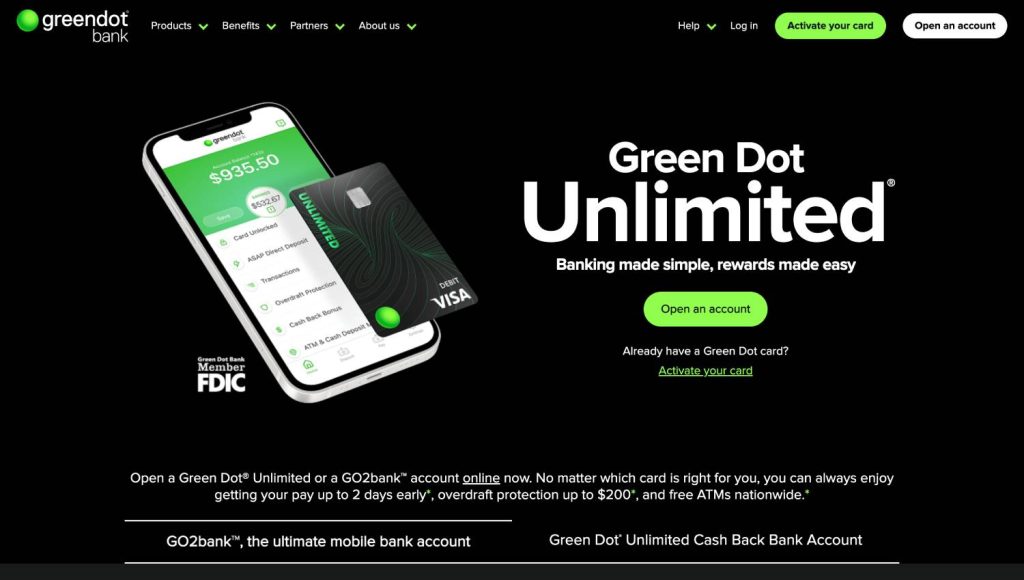
Green Dot operates as a direct bank and offers BaaS services to corporate partners that want to embed financial products. It is notable for powering white-label banking programs at major US retailers and technology companies.
Ideal customer: Established US companies with large customer bases that want to deploy private-label debit cards, spending accounts, or payroll disbursement products, and can negotiate enterprise contracts.
Green Dot holds a direct bank charter, which means FDIC insurance is not routed through a sponsor bank arrangement. The platform has proven performance at enterprise scale, with particular strength in debit card and payroll disbursement use cases.
Green Dot’s partnership model is built around enterprise volumes and long-term contracts, minimum commitments and onboarding timelines reflect that. Early-stage startups are not the target customer for this offering, and the product focus is primarily debit and spending accounts rather than broader banking infrastructure. Companies at Series A or earlier that need a modern REST API with rapid iteration cycles will find the fit poor regardless of the product category.
Who should avoid it: Pre-revenue startups, companies that need quick iteration on product features, and any team that needs a modern REST API with developer-first tooling.
How to Compare BaaS Platforms Without Getting Sold a Roadmap
Every vendor will tell you their product roadmap covers the features you need in the next quarter. Here is how to evaluate what they have now versus what they are promising.
Ask for a reference customer using the specific product feature you need in production, not in pilot. If a vendor cannot provide one, that feature is effectively still in beta regardless of how the documentation reads.
Request a copy of the partner bank agreement or at minimum ask which bank holds deposits, under what regulatory framework, and what happens to your program if that bank relationship ends. Vendors that deflect this question are hiding concentration risk.
Ask about the vendor’s incident history. What were the three biggest outages or compliance events in the past 18 months, and how were they handled? How a company responds to that question tells you more than any SLA document.
BaaS Platform Selection by Product Type
Matching your product category to the right vendor shortlist saves weeks of mis-aligned evaluations.
- Embedded business accounts and cards (US): Unit, Treasury Prime, Synctera
- Consumer neobank or spending product (US): Treasury Prime, Synctera, Green Dot (at scale)
- European accounts and payments: Solaris, ConnectPay, ClearBank (for licensed entities)
- Card programs in Europe: Railsr (with due diligence on stability), Solaris
- Cross-border B2B payments infrastructure: Banking Circle
- SaaS platform adding financial accounts (existing Stripe user): Stripe Treasury
This also connects to how you think about your broader payments and billing stack. If you are simultaneously evaluating merchant of record solutions or payment processors, the merchant of record comparison for B2B SaaS covers the adjacent decisions that often come up at the same time.
Questions Every Founder Should Ask Before Signing a BaaS Contract
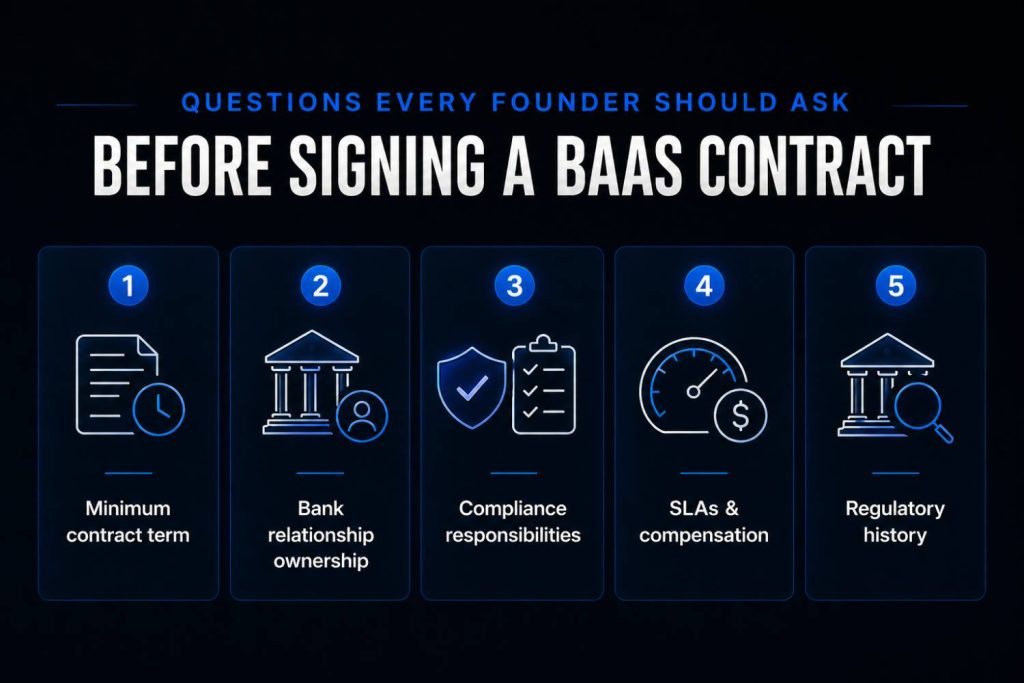
These are the questions that rarely appear in vendor comparison guides but consistently matter in practice.
- What is the minimum contract term and what are the exit provisions if you need to migrate to a different platform?
- Who owns the bank relationship: the platform or your company? If the platform dissolves, what happens to your customer accounts?
- What compliance responsibilities are explicitly yours versus the platform’s, and is that spelled out in the contract or only in the pitch?
- What are the actual SLAs for API uptime and payment settlement, and what compensation applies if those SLAs are missed?
- Has the platform ever been subject to a regulatory enforcement action or required consent order, and if so, how was it resolved?
Getting written answers to these questions before you enter the legal review phase prevents the most common BaaS implementation failures, which almost always trace back to assumptions made during the sales process rather than technical limitations of the platform.
Frequently Asked Questions About BaaS Providers
What is a BaaS provider?
A Banking-as-a-Service provider is a company that lets non-bank businesses offer financial products, such as deposit accounts, debit cards, or payments, to their own customers by accessing regulated banking infrastructure through an API. The BaaS provider either holds a banking license itself or works with a partner bank that does. The client company builds the product experience on top of that infrastructure without needing its own banking charter.
Which BaaS provider is best for startups?
For US-based startups building B2B embedded banking products, Unit and Treasury Prime are the most commonly used platforms at the early stage. Stripe Treasury is the fastest integration for companies already using Stripe. European startups typically evaluate Solaris or ConnectPay first. The right answer depends on your geography, product type, and whether you have in-house compliance capabilities. There is no single best platform across all use cases.
What should I look for in a banking-as-a-service vendor?
Prioritize partner bank quality and deposit insurance structure, compliance support model, geographic licensing coverage, and vendor financial stability. Pricing matters, but it is rarely the deciding factor. Two platforms at similar price points can differ dramatically in how much regulatory work lands on your team, how concentrated your banking relationship is, and whether the vendor has a track record of operational reliability. Ask for live customer references using the specific features you need.
What are examples of BaaS platforms?
Examples include Unit, Treasury Prime, Stripe Treasury, Synctera, and Green Dot in the US market. In Europe, Solaris, ClearBank, Railsr, ConnectPay, and Banking Circle are commonly cited. These platforms differ significantly in product focus, geographic coverage, regulatory structure, and ideal customer profile. Some are full-stack banking providers with their own licenses. Others operate as middleware connecting fintech companies to sponsor banks.
Which banks offer BaaS services?
Some BaaS providers are licensed banks themselves, including Solaris in Germany, ClearBank in the UK, and Green Dot in the US. Other BaaS platforms are not banks but partner with FDIC-insured or equivalent regulated institutions to hold customer deposits. Treasury Prime and Synctera operate on a network model, connecting fintech clients to community banks. The distinction matters because it affects who is ultimately responsible for regulatory compliance and deposit protection.
How does the Synapse Financial collapse affect BaaS platform selection today?
The collapse of Synapse Financial in 2024 exposed the risk of middleware BaaS models where the platform sits between fintech companies and partner banks without owning either side of the relationship. Thousands of end users were locked out of accounts during the reconciliation dispute. For founders evaluating BaaS today, it reinforced the importance of asking who directly holds customer deposits, whether records are reconciled at the bank level, and what happens to your program if the BaaS vendor ceases operations.
What is the difference between BaaS and embedded banking?
Banking-as-a-Service and embedded banking are closely related terms that are often used interchangeably, but they have a slight distinction. BaaS typically refers to the infrastructure layer: the licensed banking capabilities delivered via API. Embedded banking refers to the product outcome: banking features built into a non-bank product experience, such as a payroll platform offering spending accounts. Every embedded banking product relies on a BaaS provider or direct bank relationship underneath it.
How long does it take to go live with a BaaS platform?
Integration timelines vary significantly by vendor and by how much compliance work is required before launch. API-first platforms like Stripe Treasury can be technically integrated in days for existing Stripe users. Platforms that require bank approval, compliance review, and program setup, including Unit, Treasury Prime, and Synctera, typically take two to six months from contract signature to launch. European platforms with full banking licenses can take longer due to regulatory onboarding requirements. Faster is not always better if compliance shortcuts create problems later.
The Actual Risk Most Founders Underestimate
The Synapse Financial collapse in 2024 made visible a risk that had been theoretical for years: a BaaS vendor can fail, and customers can lose access to their money in the process. That is not a remote scenario. It happened, at scale, to real end users. The specific failure mode, a reconciliation breakdown between the middleware platform and its partner banks, is worth understanding because several middleware-model BaaS providers carry structurally similar exposure today.
Choosing a BaaS platform is not the same decision as choosing a SaaS tool you can cancel if the product disappoints. Migrating customer accounts from one banking infrastructure to another is slow, expensive, and disruptive to customers who may have direct deposits, bill pay, or card transactions tied to those accounts. The switching cost is high enough that it is worth taking longer to select the right platform the first time.
The platforms at the top of this list are meaningfully different from each other in ways that matter more than any feature checklist. Geography, compliance model, bank relationship structure, and vendor stability are the axes on which your shortlist should be built. Pricing, API documentation quality, and onboarding speed are secondary factors that matter once you have ruled out the platforms that are simply wrong for your situation.