
tldr
- The API you choose affects compliance burden, reliability at scale, and how much you pay to switch later. Docs quality is not a proxy for any of those things.
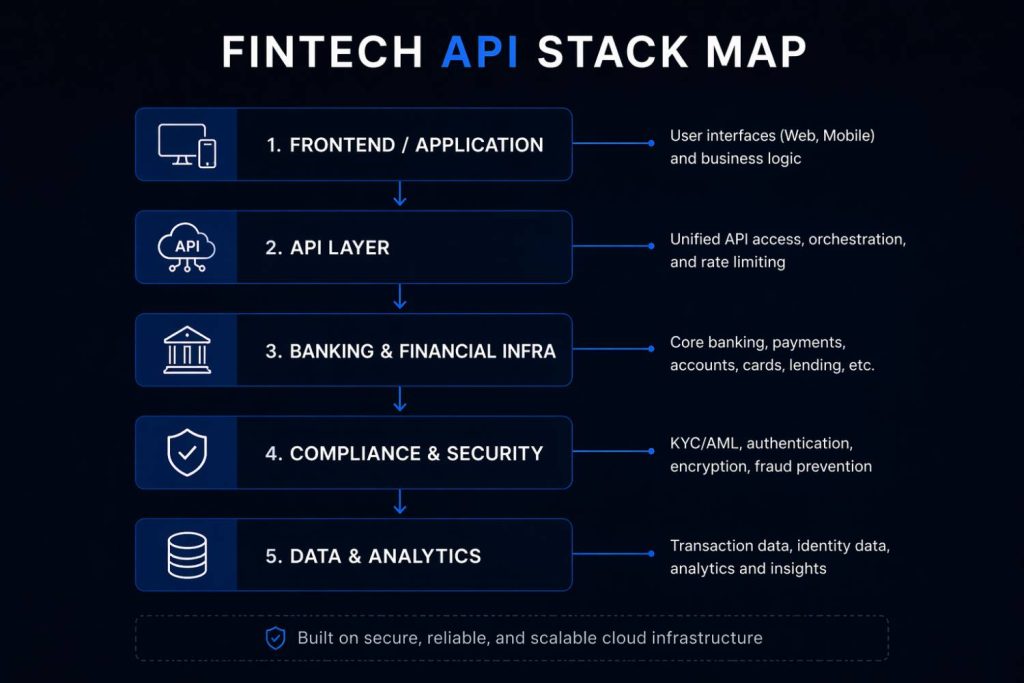
- Payments, banking, identity, and open banking APIs serve different problems. Treating them as interchangeable adds months of rework.
- Stripe is the default for payments, but it is not always the right choice once you hit volume, operate internationally, or need embedded banking features.
- Stage fit matters more than feature count. An API that works at seed can become a ceiling at Series B.
- Pricing transparency varies sharply across this list. Three of the ten providers publish base pricing publicly; the rest require a sales conversation before you see a number.
Most SaaS founders pick a fintech API the same way they pick a font: they go with what they recognize, assume the alternatives are roughly equivalent, and move on. That works until it does not.
The real cost of the wrong fintech infrastructure API shows up later. It shows up as a compliance audit you did not budget for, a rate card that made sense at 10,000 transactions and looks brutal at 10 million, or a migration project that delays your Series B roadmap by two quarters. By then, switching is expensive in ways that have nothing to do with the technology.
This list covers ten APIs by use case, maturity, documentation quality, pricing transparency, and scale fit. For each one, you will find the ideal company stage and a red flag worth knowing before you commit.
What Makes a Fintech API Worth Evaluating in 2026
Four variables matter more than any feature list: reliability at scale, compliance posture, pricing structure, and switching cost.
Reliability means SLA commitments, not marketing copy about uptime. Compliance posture means understanding which regulatory obligations the API handles and which ones it passes to you. Pricing structure means knowing whether fees are flat, volume-tiered, or hidden behind interchange optimization that only works at a specific transaction profile.
Switching cost is the most underestimated variable. If your customer data, KYC records, or ledger state lives inside a provider’s proprietary format, you are not just changing an API when you migrate. You are rebuilding a product.
The 10 Best Fintech APIs for SaaS Builders
Payment APIs
1. Stripe: Payments Infrastructure for Developers
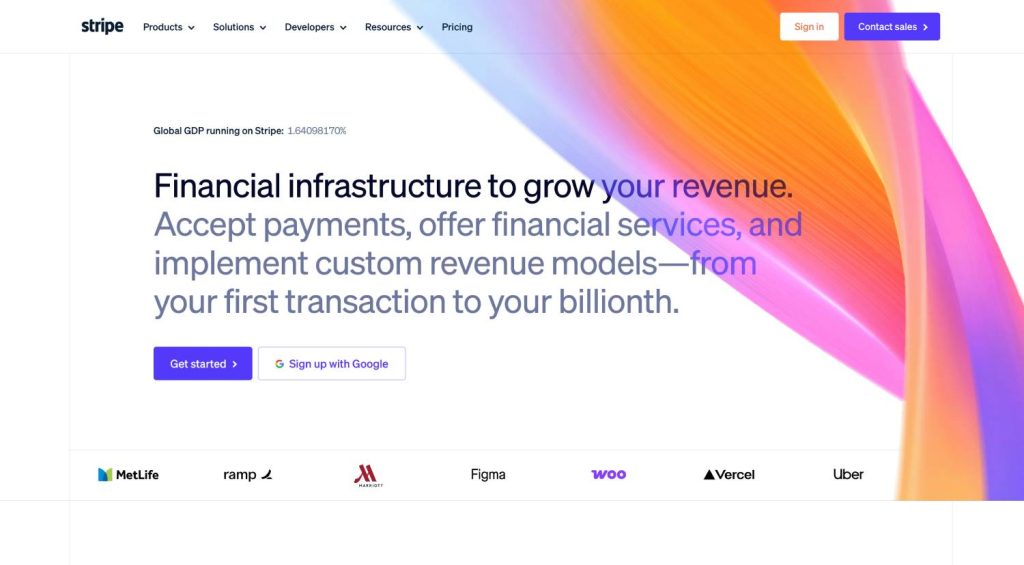
Stripe remains the default starting point for SaaS payments, and for most early-stage companies, that default is defensible. The documentation is genuinely strong, the sandbox is realistic, and Stripe Radar fraud tooling ships out of the box.
Stripe’s public pricing page lists 2.9% + 30 cents per successful card charge for standard processing in the US. Volume discounts exist but require a conversation with their sales team. International card rates and currency conversion fees add up quickly for companies with global user bases.
Ideal stage: Seed to Series A. Teams that want to ship fast and defer infrastructure decisions.
Red flag: Stripe’s standard pricing becomes expensive at high transaction volume. If you are processing above $1M per month, the per-transaction rate warrants a direct negotiation or a pricing comparison against Adyen.
2. Checkout.com: Payment Routing and Performance Optimization
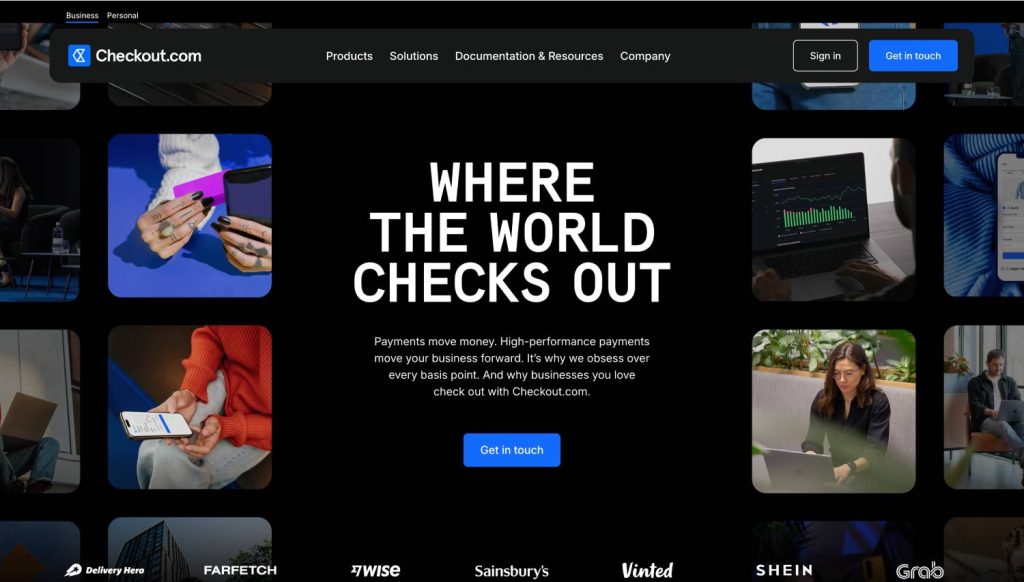
Checkout.com positions itself around authorization rate optimization, which is the percentage of attempted card transactions that actually succeed. A higher authorization rate directly increases revenue without acquiring new customers, and the difference between a 90% and 94% authorization rate at scale is material.
The platform offers smart routing across multiple acquiring banks, which can improve performance across different card types and geographies. Pricing is not publicly listed and requires direct negotiation, which is typical for enterprise-oriented payment platforms.
Ideal stage: Growth-stage companies where authorization rate improvement has a measurable revenue impact.
Red flag: Checkout.com requires implementation investment to realize the routing benefits. Teams that do not have the volume or engineering capacity to configure and test routing rules will not see the gains that justify the switch.
3. Adyen: Global Acquiring for High-Volume Platforms
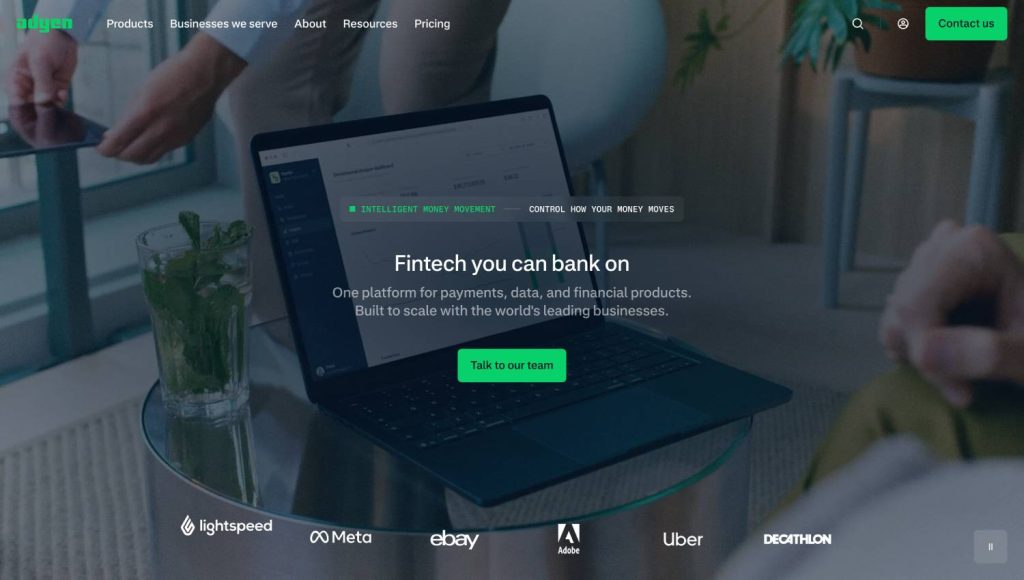
Adyen is a direct acquiring bank, which changes the economics meaningfully compared to payment facilitators like Stripe. By owning the acquiring relationship, Adyen can offer interchange-plus pricing, which at sufficient volume is substantially cheaper than flat-rate processing.
The tradeoff is access. Adyen has a minimum processing volume requirement that makes it inaccessible for most early-stage companies. Implementation is also more involved than plugging in a Stripe SDK. The documentation is thorough but assumes a developer team with time to integrate properly.
Ideal stage: Series B and above, or marketplace platforms processing significant monthly volume.
Red flag: Adyen’s onboarding timeline can run several weeks. If you need a payments API live in days, this is not the right path.
Open banking and bank-payment APIs
4. Plaid: Open Banking and Account Data
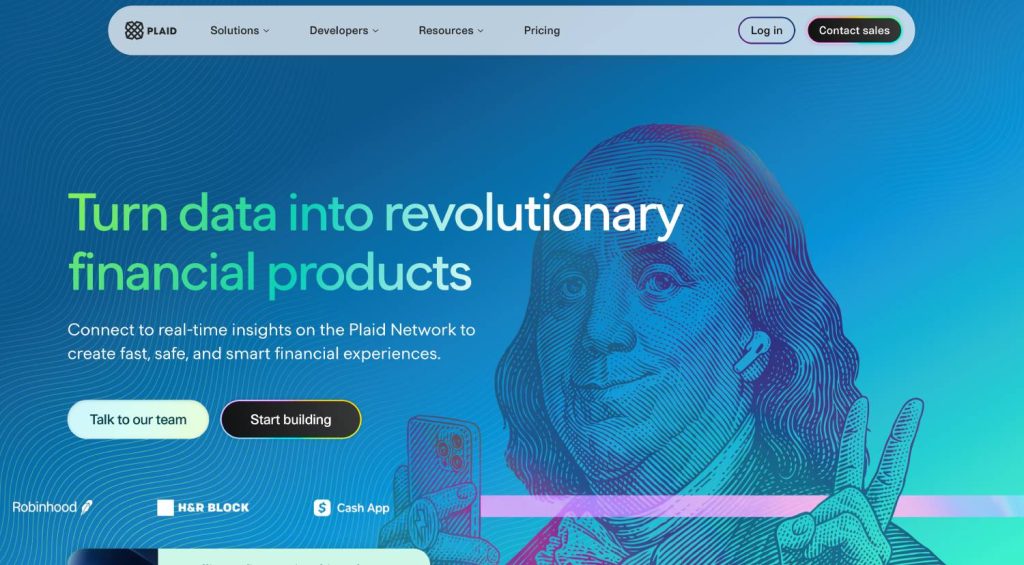
Plaid is the dominant open banking API in North America, covering bank account linking, identity verification, balance checks, and transaction history. If you are building anything that touches ACH payments, personal finance, or lending, Plaid is likely in your evaluation.
Pricing is not publicly listed. Plaid operates on a per-call model with tiered pricing based on products used and volume, and the actual rate requires a sales conversation. That lack of transparency is a real friction point for early-stage teams trying to model unit economics before they build.
Ideal stage: Series A and above, or seed-stage companies where bank connectivity is the core product, not a feature.
Red flag: Plaid does not operate natively in the EU. Teams building for European markets will need a separate provider like Tink or GoCardless.
5. GoCardless: Recurring Payments via Bank Debit
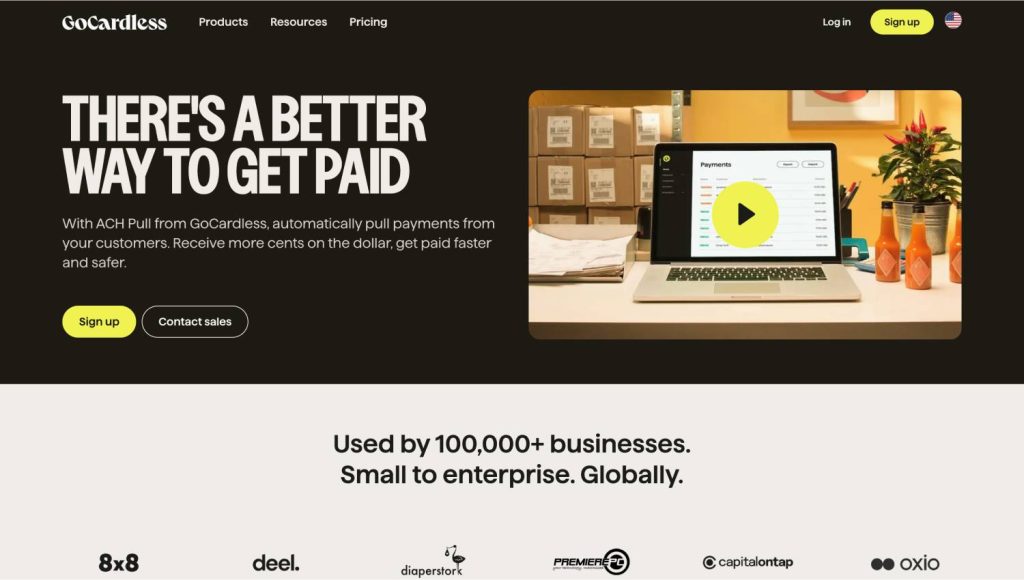
GoCardless specializes in bank-to-bank payments via direct debit, making it a natural fit for SaaS companies with subscription revenue models. Card-based recurring billing carries churn risk from failed charges due to expired cards and fraud blocks. Bank debit has structurally lower failure rates for recurring transactions.
GoCardless operates across the UK, EU, US, Australia, and a growing number of additional markets. For SaaS companies with significant European or UK customer bases, GoCardless is often the most practical option for pulling recurring payments at low cost. Pricing information is available on their public pricing page and varies by market and plan.
Ideal stage: Any stage with a subscription revenue model where card-based billing failure rates are a measurable problem.
Red flag: Bank debit is pull-based and often has multi-day settlement windows. If real-time payment confirmation is a product requirement, the settlement timing requires explicit design consideration.
Banking-as-a-Service APIs
6. Unit: Banking as a Service for SaaS Companies
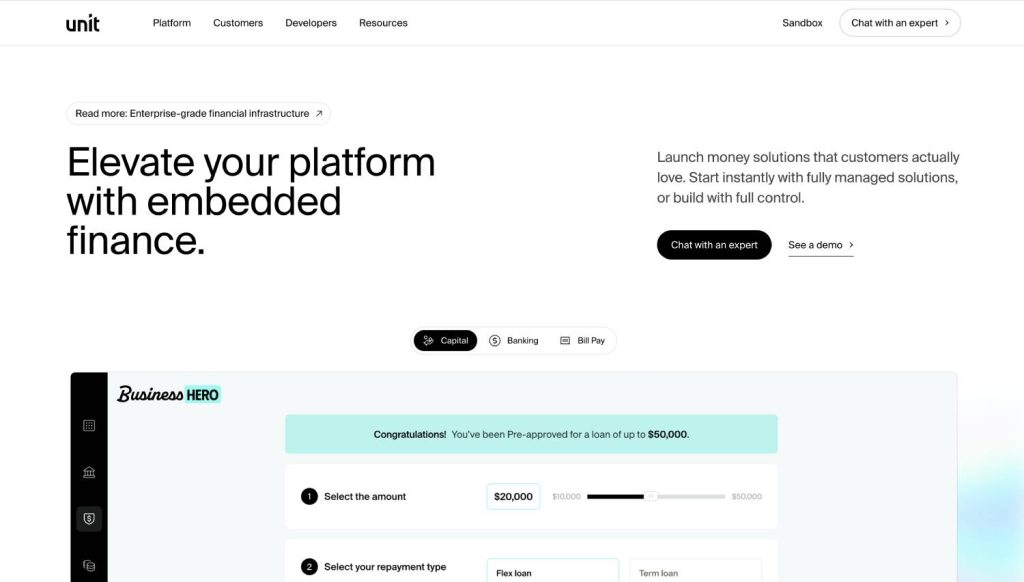
Unit is a Banking as a Service (BaaS) platform that lets SaaS companies add bank accounts, debit cards, and lending features to their products without obtaining a bank charter. The API covers account creation, card issuance, ACH and wire transfers, and spend management features.
For SaaS companies looking at embedded finance, Unit is one of the more complete out-of-the-box BaaS offerings in the US market. The compliance infrastructure, including BSA/AML monitoring, is handled at the platform level rather than delegated entirely to the builder.
Ideal stage: Series A to Series C companies adding financial features to an existing product to increase retention or create a new revenue line.
Red flag: BaaS providers like Unit sit between your product and a bank partner. If that bank partner relationship changes or the provider’s licensing situation shifts, your product is directly exposed. Due diligence on the underlying banking partner is not optional.
Embedded payments APIs
7. Finix: Embedded Payments for Platforms
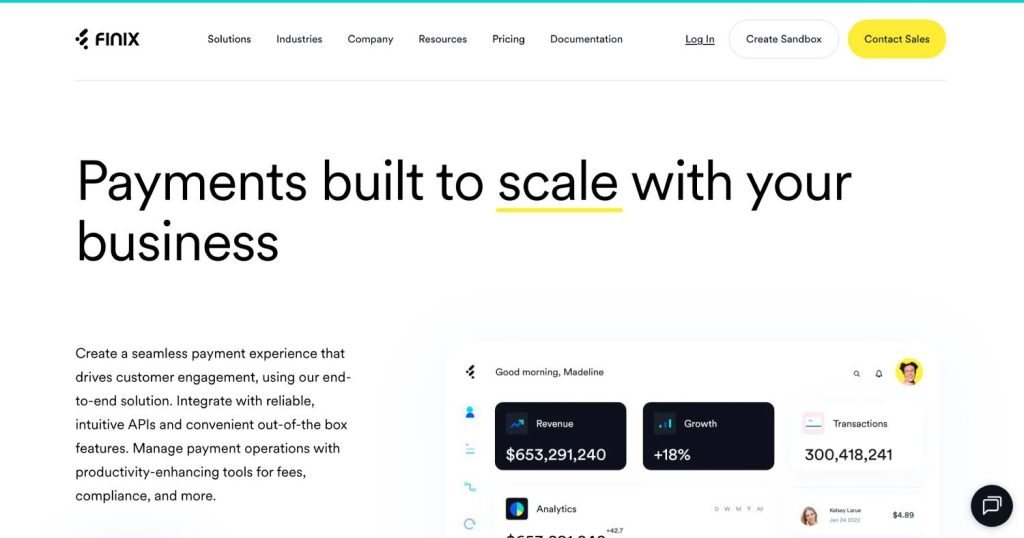
Finix is designed for SaaS platforms that want to monetize payments rather than just process them. The core proposition is helping companies become payment facilitators without building the underlying infrastructure from scratch.
That distinction matters. A payment facilitator model lets you earn a spread on every transaction your customers process, which changes the revenue model for platform businesses. Finix handles the underwriting, compliance, and settlement rails, while the platform controls the user experience and the pricing.
Ideal stage: Series A to Series C platforms with a recurring customer base that processes payments as part of their workflow.
Red flag: The compliance obligations that come with being a payment facilitator are not trivial. Finix reduces the burden, but it does not eliminate it. Teams underestimating the ongoing compliance work here run into problems.
Identity and KYC APIs
8. Socure: Identity Verification and KYC
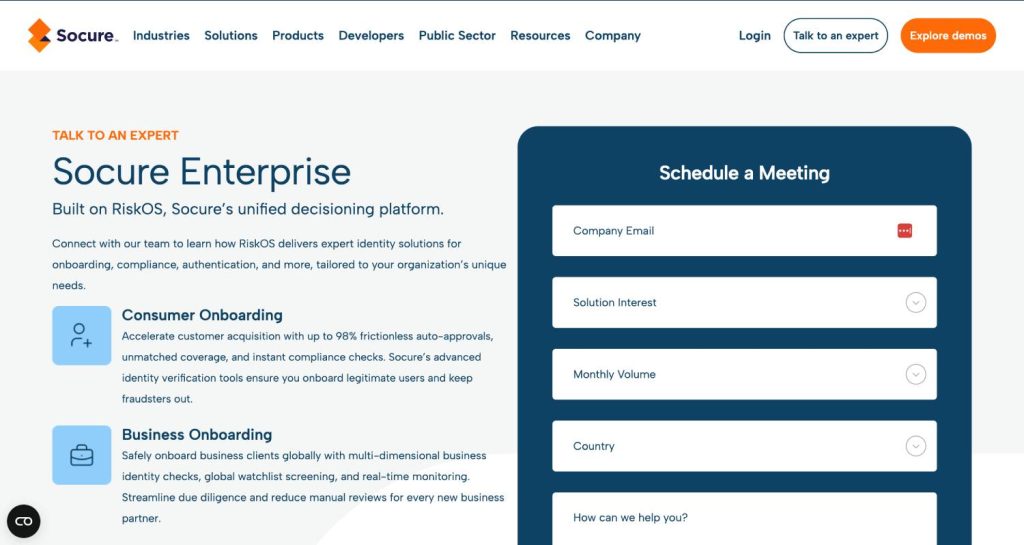
Socure provides identity verification, document verification, and fraud risk scoring through a single API. For fintech-adjacent SaaS products that need to onboard users with KYC requirements, Socure competes directly with providers like Persona and Jumio.
The platform’s machine learning models are trained on a large dataset of identity verification outcomes, which the company says improves approval rates for thin-file consumers, including younger users and new-to-credit populations. Pricing is not publicly disclosed and varies by product and volume.
Ideal stage: Any stage where regulated onboarding is a product requirement, not a nice-to-have.
Red flag: Socure’s strength is in the US market. Teams building internationally will need to verify coverage for specific countries before committing.
Trading and brokerage APIs
9. Alpaca: Trading and Brokerage Infrastructure
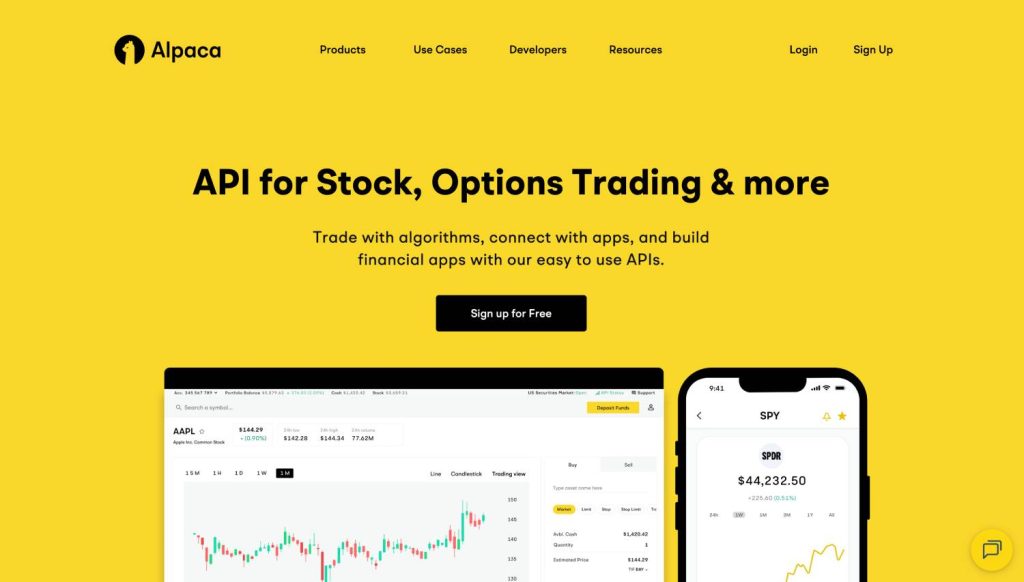
Alpaca offers a brokerage API for building stock trading and investment features into applications. The platform provides market data, order management, and account management in a developer-friendly format. Alpaca’s commission-free trading API is a starting point for teams building trading applications or algorithmic platforms, as noted in coverage from the DEV Community.
The API supports both paper trading (simulated) and live trading, which significantly shortens the testing cycle for teams building investment products.
Ideal stage: Seed to Series A companies building investment or trading features as their core product.
Red flag: Alpaca’s regulatory framework is US-centric. Global expansion requires a separate brokerage infrastructure conversation entirely.
Credit data APIs
10. Nova Credit: Cross-Border Credit Data
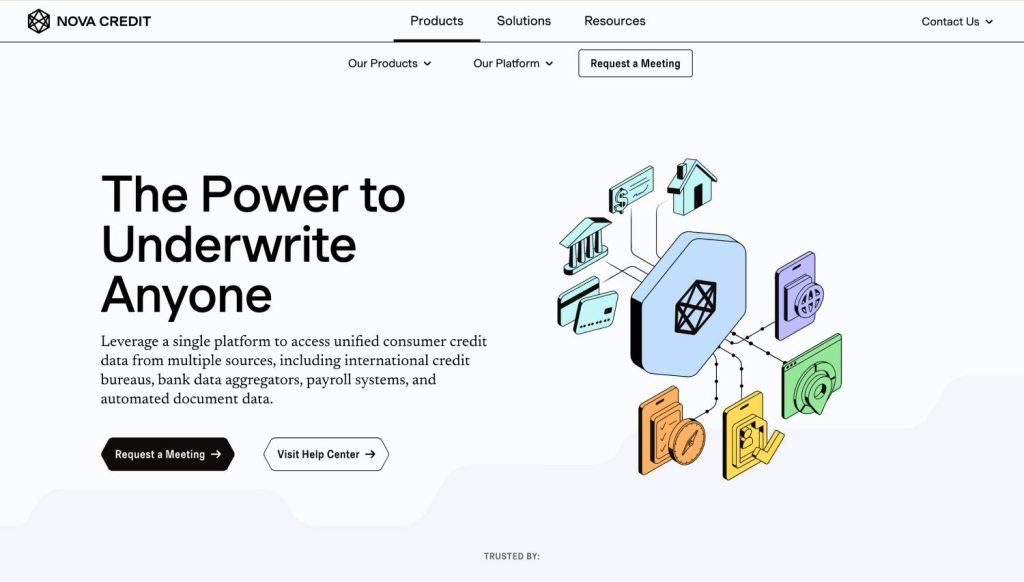
Nova Credit translates international credit histories into US-compatible credit reports, enabling companies to underwrite immigrants and international users who would otherwise have no credit file in the US. For SaaS companies in lending, BNPL, or credit card issuance, this is a meaningful addressable market that most providers cannot serve.
The platform partners with credit bureaus in multiple countries and converts foreign credit data into a format US lenders can use in their underwriting models. Pricing is not publicly disclosed.
Ideal stage: Growth-stage fintech companies with an explicit strategy to serve international or immigrant user populations.
Red flag: Country coverage is not universal. Teams need to verify that Nova Credit’s bureau partnerships cover the specific nationalities they are targeting before building the feature.
How to Match a Fintech API to Your Company Stage
Seed-stage teams should optimize for speed to market and documentation quality, not pricing optimization. At low volume, the difference in per-transaction costs is negligible. What costs real money at seed is integration time and debugging time.
Series A teams should start stress-testing their API choices against realistic growth projections. If the pricing model works at current volume but breaks at 10x volume, that is worth knowing now. The same applies to compliance: many APIs that are simple to integrate carry regulatory obligations that only become apparent when you cross certain thresholds.
Series B and above companies typically have enough transaction volume to negotiate directly with providers, enough engineering capacity to handle complex integrations, and enough at stake that switching costs warrant a formal evaluation. At this stage, whether the right infrastructure agreements were locked in during the prior 12 months often determines how cleanly the next growth phase runs.
What Most SaaS Teams Get Wrong When Evaluating Fintech Infrastructure APIs
The most common mistake is treating documentation quality as a proxy for production reliability. Good docs mean the integration is easier to build. They say nothing about SLA performance at 2 AM on a Friday, or about how support escalations are handled when transactions are failing.
A second mistake is ignoring data portability before signing. If your customer’s KYC data, transaction history, or ledger state cannot be exported in a standard format, you are building a dependency that gets more expensive with every passing month. Asking about data export before you sign is much easier than negotiating it after you are live.
Third, many teams treat embedded finance APIs as a final destination rather than a starting point. The decision to process payments, offer bank accounts, or extend credit as part of your product carries regulatory weight that scales with usage. Teams that skip the legal review early tend to discover the gap at the worst possible time.
Pricing Transparency Across the List
Three of the ten providers on this list publish at least base pricing publicly: Stripe, GoCardless, and Alpaca each have public pricing pages. The remaining seven, Plaid, Adyen, Finix, Socure, Checkout.com, Unit, and Nova Credit, require direct contact before you see a number.
Opaque pricing is not inherently a red flag, but it does change how you evaluate a provider early in the process. If you cannot model unit economics without a sales call, factor that friction into your timeline. Some teams spend three weeks in pricing conversations before deciding to pass.
When pricing is custom, the negotiation itself reveals useful information. How quickly does the team respond? Do they provide clear answers to volume-based pricing questions? Are they willing to put minimums and commitment terms in writing early? The sales process is a preview of the support relationship.
Which Fintech APIs Are Most Reliable at Scale
Adyen and Stripe are the two most operationally mature payments providers on this list, measured by processing history, global infrastructure, and public documentation of their reliability practices. Both have been processing at very high scale for long enough that most failure modes are well-understood.
For open banking APIs, Plaid’s market position in North America reflects years of bank connection maintenance across hundreds of financial institutions. That connection library has real value because maintaining it is genuinely hard work that does not show up in the API interface.
BaaS providers like Unit and embedded payments platforms like Finix are newer in the market. That is not a disqualifier, but it means less production history to draw on when evaluating reliability. Reference checks with current customers at similar transaction volumes are worth the time before committing to a BaaS integration.
Frequently Asked Questions
What are the best fintech APIs for SaaS in 2026?
The strongest options depend on use case. For payments, Stripe is the default at early stage and Adyen is more cost-effective at high volume. For open banking and bank account linking, Plaid leads in North America. For embedded banking features like accounts and cards, Unit is a well-regarded BaaS option. For recurring bank-debit payments, GoCardless is widely used for subscription SaaS businesses. Identity verification is well-served by Socure in the US market. There is no single best API across all categories.
What are the best embedded finance APIs for SaaS platforms?
Embedded finance covers banking, payments, and lending features added to non-bank products. Unit handles bank accounts, debit cards, and ACH. Finix is designed for platforms that want to monetize payments directly. Alpaca covers brokerage and trading infrastructure. The right choice depends on which financial feature you are embedding and whether you want to own the compliance layer or outsource it. Each of these providers takes a different position on how much regulatory responsibility transfers to the platform builder.
Which fintech APIs are reliable at scale?
Stripe and Adyen have the longest track records for high-volume payments processing. Plaid has the deepest bank connection library in North America for open banking use cases. Newer providers like Finix and Unit are growing their production history. For any provider, the most reliable signal is reference checks with companies processing at a similar or higher volume than your projected 12-month run rate. Published SLA terms are a starting point, but they do not capture how support behaves during an actual incident.
Are open banking APIs the same as banking APIs for SaaS?
Open banking APIs specifically refer to APIs that access consumer or business bank account data with the account holder’s consent. This includes balance checks, transaction history, and identity verification tied to a bank account. Banking APIs for SaaS is a broader term that can include open banking data, but also bank account creation, card issuance, ACH payments, and other BaaS features. Plaid and GoCardless are open banking APIs. Unit is a BaaS platform. The distinction matters because they solve different problems and carry different compliance requirements.
When should a SaaS company move from Stripe to a more complex payments API?
The two clearest triggers are volume and use case. On volume: at high monthly processing levels, the difference between Stripe’s flat-rate pricing and interchange-plus pricing through a direct acquirer like Adyen becomes meaningful. On use case: if your SaaS product needs to monetize payments across a customer base rather than just accept payments itself, a platform like Finix is structured for that model in a way Stripe is not. Both are signals worth acting on before the migration becomes urgent.
What should I look for in a fintech API before committing?
Six things worth verifying before signing: published SLA terms, data export format and portability, which compliance obligations transfer to you versus the provider, pricing structure at your projected volume in 12 months, the underlying banking or regulatory partner behind the service, and reference contacts at companies using the API at production scale. Documentation quality is important but is the easiest thing to evaluate and the least predictive of production experience. Spend more time on compliance posture and data portability than most teams do.
What fintech infrastructure should SaaS founders evaluate first?
Start with the API category that is core to your product, not peripheral to it. A payments API matters most if payments are your revenue model. An identity API matters most if you have KYC or fraud exposure. Open banking APIs matter most if bank account data powers your product. Evaluating five API categories at once is slower than sequencing by priority. Once the core infrastructure is stable, add adjacent capabilities. The biggest infrastructure mistakes come from trying to build everything at once before the core use case is proven.
How do banking APIs reduce fintech development time?
Banking APIs abstract away the years of work required to build direct connections to financial institutions, payment networks, and regulatory infrastructure. Instead of obtaining bank charters, building ACH connections, or integrating directly with card networks, a SaaS team can access those capabilities through a single API contract. The time savings vary by use case, but the alternative to using a banking API for most SaaS companies is not building the equivalent infrastructure. It is simply not offering the feature.
The Bigger Picture on Fintech API Selection
The APIs on this list are not interchangeable. They were built for different use cases, different company stages, and different risk tolerances. A founder who treats them as equivalent because the documentation looks similar is optimizing for the wrong variable.
The decision becomes more consequential as you grow. At seed, the cost of a suboptimal API choice is a painful migration in 18 months. At Series B, it is a migration that competes with your product roadmap for engineering time and slows everything downstream. Choosing infrastructure that fits not just your current stage but your realistic next stage is a form of technical discipline that does not show up in a feature comparison table.
API selection in fintech is ultimately a risk allocation decision. Every provider on this list takes on some risks and passes others to you. The teams that handle this well are the ones that read the fine print on compliance obligations before they sign, model pricing at growth-stage volumes before they integrate, and ask about data portability before they build.