
TLDR
- Origination platforms track covenants at closing, not after. Post-close monitoring requires scheduled tests, exception queues, and waiver workflows that loan origination systems were not built to run.
- The four platforms most commonly shortlisted for commercial loan covenant monitoring are Abrigo, Finastra, Numerated, and Spread Street, each suited to a different lender profile.
- The most common gap in covenant programs is not missing tests, it is missing the waiver workflow. Lenders approve exceptions verbally and document them months later, which creates exam risk.
- Dedicated covenant monitoring software ties document collection, financial spreading, test calculations, and waiver approvals into one auditable chain, which is what examiners look for.
- Pricing across these platforms is not publicly disclosed. Budget conversations with vendors typically start at five figures annually for smaller portfolios and scale with loan count.
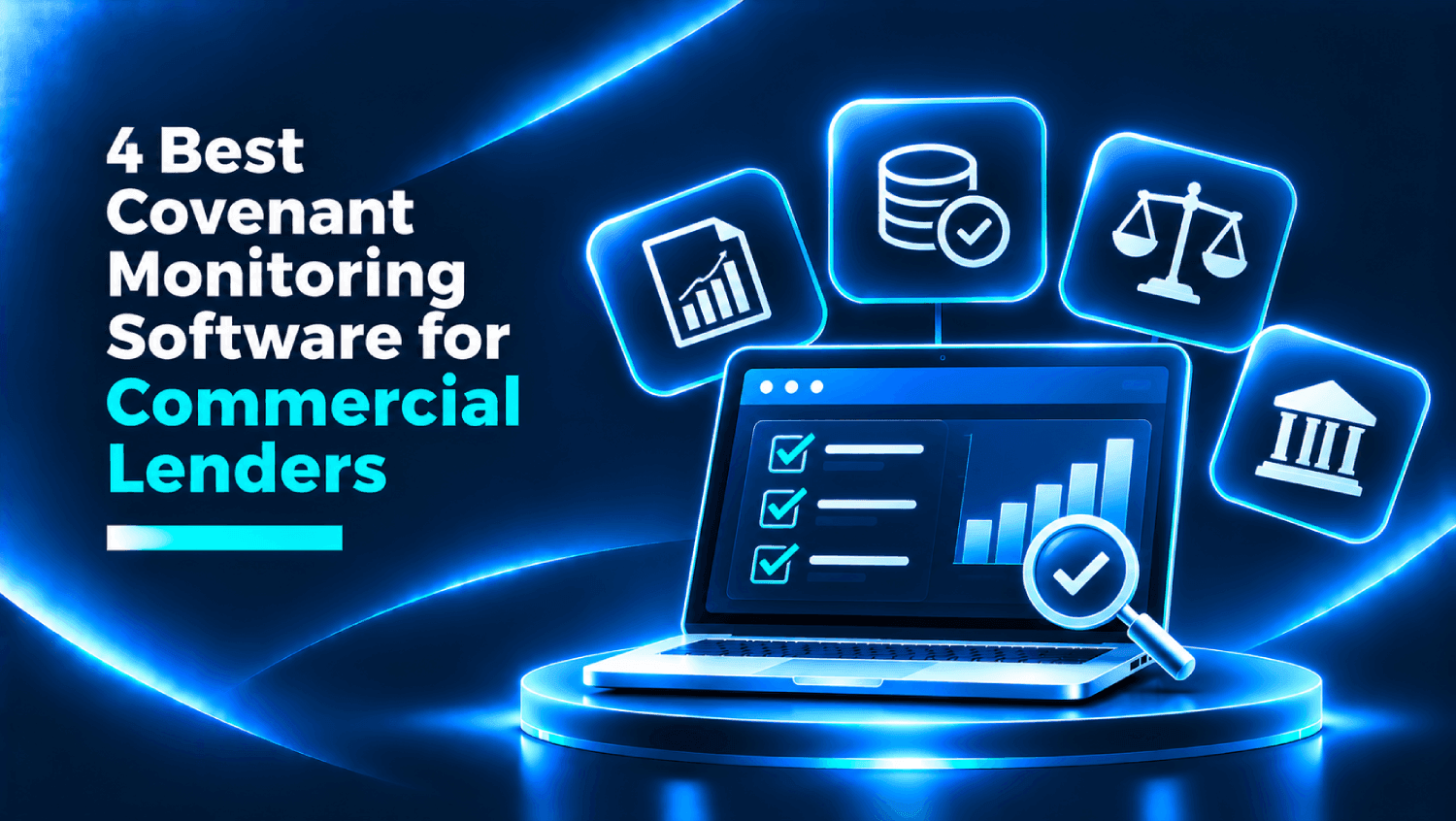
The four best commercial loan covenant monitoring software platforms for most lenders are Abrigo, Finastra Fusion Credit Management, Numerated, and Spread Street. Abrigo suits community banks and credit unions running mid-sized portfolios with integrated spreading. Finastra fits larger institutions that need policy-driven test automation at scale. Numerated targets banks digitizing relationship lending end to end. Spread Street serves smaller teams that want a lighter, spreadsheet-replacement approach to post-close covenant tracking.
Why Your Origination System Is Not a Covenant Monitoring System
Loan origination platforms do one job well: get a loan from application to close. They capture covenant terms in the credit memo, attach them to the loan record, and stop there. The system does not know when a borrower’s fiscal year ends, does not schedule a debt service coverage calculation for 90 days after year-end, and does not route an exception to the credit officer when a test fails.
That gap is where credit losses hide. A covenant breach on a commercial real estate loan or a C&I revolving facility might surface six months before a default, but only if someone ran the test. Post-close covenant testing requires three things the origination system was never designed to do: a recurring test calendar tied to each covenant’s specific cadence, a spreading engine that maps borrower financials to the formula in the loan agreement, and an exception workflow that timestamps every waiver and links it to the approving officer.
Examiners reviewing a commercial portfolio look for exactly that chain. If your team is running covenant tests in a spreadsheet and approving waivers over email, those decisions exist in two disconnected places. Dedicated loan origination and management software platforms handle the front-end process, but post-close monitoring is a separate discipline that needs its own tooling.
What Should Commercial Loan Covenant Monitoring Software Actually Do?
Four functional modules define a credible covenant monitoring platform. Most lenders evaluate vendors on features, but the more useful frame is whether all four modules exist and connect to each other.
Document Collection
The platform needs a borrower-facing portal or automated reminder system that requests financial statements, rent rolls, compliance certificates, and other required deliverables on the schedule written into the loan agreement. Collection that depends on a credit analyst remembering to email the borrower every quarter is not a process, it is a habit. Habits break.
Financial Spreading
Once documents arrive, the platform should spread the financials into a standardized template. Spreading by hand introduces errors and delays. The better platforms use OCR and AI-assisted extraction to map line items from borrower-submitted PDFs to a spreading template, then flag items that require analyst review before the data feeds into covenant calculations.
Automated Covenant Testing
The test engine reads the covenant definition, pulls the spread financial data, runs the calculation, and returns a pass or fail against the threshold in the loan agreement. For a minimum debt service coverage ratio of 1.20x, the system should compute the ratio, compare it to 1.20, and generate a dated test record. That record is the audit trail.
Waiver and Exception Workflow
When a test fails, the system should open a workflow. The credit officer receives an alert, reviews the exception, decides whether to waive or accelerate, documents the rationale, and routes it to the approving authority defined by policy. The waiver gets stored with the original test result. Without this, the waiver exists only in someone’s inbox.
| Platform | Document Collection | AI-Assisted Spreading | Automated Covenant Testing | Waiver Workflow | Best For |
|---|---|---|---|---|---|
| Abrigo | Yes | Yes | Yes | Yes | Community banks, credit unions |
| Finastra Fusion Credit Management | Yes | Yes | Yes (policy-driven) | Yes | Mid-to-large commercial banks |
| Numerated | Yes | Partial (integrates external tools) | Yes | Yes | Banks digitizing relationship lending |
| Spread Street | Limited | Yes | Yes | Basic | Smaller lenders replacing spreadsheets |
The FintechSpecs Post-Close Covenant Stress Test: Four Checks Before You Buy
Before evaluating any vendor demo, run this four-part check against your current covenant program. It will expose the gaps that matter most to your institution and let you evaluate platforms on the right criteria rather than the most polished demo flow.
Check 1: Covenant Calendar Coverage. Pull ten active commercial loans at random. For each one, identify how many distinct covenants are documented, what test frequency applies to each, and whether a system-generated test date exists for every upcoming period. If more than two of the ten have uncalendered tests, your process is manual and your exposure is real.
Check 2: Spreading-to-Test Continuity. Trace one covenant test from raw financial document to final test result. Count how many people touched it and how many system handoffs occurred. Every manual handoff is a point where the data can deviate from the source document without a record of the change.
Check 3: Waiver Audit Trail. Ask your credit team to produce the five most recently approved covenant waivers. Verify that each has a system-stamped date, an attached test result, a documented rationale, and a named approving officer. If any of those elements require pulling an email chain, you have an exam finding waiting to happen.
Check 4: Exception Aging. Ask how long the average exception stays open between the test fail date and the waiver approval date. Institutions without a formal workflow often see exceptions sitting unresolved for weeks because there is no system-generated reminder moving the file forward.
Abrigo: Best for Community Banks Running Integrated Credit Analysis
Abrigo is the most widely adopted dedicated credit analysis and covenant monitoring platform among US community banks and credit unions. Its covenant tracking module sits inside a broader credit platform that includes spreading, loan review, and allowance calculation, which means financial data entered during underwriting can carry through to post-close covenant tests without re-entry.
The platform lets credit teams define covenants at the loan level, set test frequencies, and assign document collection tasks to specific team members. When a test period opens, the system flags the loan and starts a workflow. If the test fails, the exception routes to the designated approver. The waiver documentation is attached to the loan record inside the same system.
Abrigo’s main limitation is integration depth. Banks running core systems from FIS or Jack Henry need to verify how data flows between their core and Abrigo, particularly for loan balances and payment history that factor into some covenant calculations. Pricing is not publicly listed; lenders should request a quote based on portfolio size.
Who Should Look at Abrigo
Community banks and credit unions with commercial portfolios under $2 billion in outstandings and teams that want spreading, loan review, and covenant monitoring in one platform. If your institution already uses Abrigo for credit analysis, adding covenant monitoring is an expansion within an existing vendor relationship, not a new implementation.
Finastra Fusion Credit Management: Best for Mid-to-Large Commercial Banks

Finastra Fusion Credit Management is built for institutions that need covenant monitoring to run against policy rules, not just individual loan terms. The platform lets credit risk teams define covenant templates at the policy level, which loan officers then apply to new credits. When a covenant test runs, it checks the loan-level terms and the institution’s credit policy simultaneously.
That policy-layer approach matters when managing a large and diverse commercial book. A bank with hundreds of C&I, CRE, and construction loans across multiple divisions cannot rely on each credit officer manually configuring covenants for each deal. Finastra’s templated approach pushes standardization upstream, so the covenant structure is consistent before the loan closes, not patched together afterward.
The waiver workflow in Finastra is approval-tier driven. The institution configures which exceptions require senior credit officer review versus committee approval, and the system routes accordingly. That is the kind of control that satisfies OCC or state banking department examiners who want to see that waiver authority matches the institution’s credit policy.
Who Should Look at Finastra Fusion Credit Management
Regional and mid-size commercial banks with complex multi-division commercial portfolios, particularly those under OCC or Federal Reserve supervision where examiner expectations for policy-driven exception management are high. Finastra’s implementation timeline and pricing reflect enterprise complexity. Lenders should expect a multi-month implementation and direct negotiation on licensing. Pricing is not publicly listed.
For institutions also evaluating their broader lending stack, the overlap between covenant monitoring and AI-assisted credit analysis tools is worth understanding. Our comparison of AI credit memo and financial spreading tools covers the spreading side of that stack in more detail.
Numerated: Best for Banks Digitizing Relationship Lending End to End
Numerated approaches commercial lending as a digitization problem, not just a monitoring problem. The platform covers business loan applications, underwriting, decisioning, closing, and post-close portfolio management, with covenant tracking as a component of the portfolio management layer rather than a standalone module.
Its strength for covenant monitoring is the data continuity. Covenant terms captured during origination carry directly into the post-close monitoring calendar without re-entry by the credit team. The borrower portal lets business clients submit financial statements directly into the system, which then routes them through the institution’s spreading and review process. That closed loop reduces the most common failure point in covenant monitoring, which is the document that the borrower emailed to a credit analyst who put it in a folder but never uploaded it to the loan file.
Numerated integrates with core banking systems from Fiserv, FIS, and Jack Henry. For spreading, it works with third-party spreading engines rather than offering a fully native solution at the depth that Abrigo does. Lenders with complex financial statement structures, such as holding companies with multiple operating entities, may find they need to supplement Numerated’s spreading with a more specialized tool.
Who Should Look at Numerated
Banks that want a single platform for digital loan origination and post-close portfolio management, and that are willing to accept some trade-offs on spreading depth in exchange for end-to-end data continuity. It is a strong fit for institutions trying to reduce manual handoffs across the entire commercial loan lifecycle, not just the monitoring phase. Pricing is not publicly disclosed.
Spread Street: Best for Smaller Lenders Replacing Manual Covenant Tracking
Spread Street occupies a different part of the market. It is not an enterprise platform. It is a lender-focused tool designed to replace the Excel workbooks and shared drives that small commercial lenders use to manage financial spreading and covenant tracking.
The platform handles spreading from uploaded financial statements, stores covenant definitions at the loan level, runs scheduled tests, and flags exceptions. Its document collection functionality is more limited than Abrigo or Finastra. Lenders generally still manage borrower document requests outside the platform. The waiver workflow is basic by enterprise standards, but it creates a timestamped record that is meaningfully better than approving an exception in an email thread.
Spread Street’s value proposition is speed to deploy and cost relative to larger platforms. Teams that have been managing covenants manually can get operational quickly without a multi-month implementation cycle. For a loan portfolio in the $50 million to $300 million range, this tradeoff often makes sense. Pricing is not publicly listed, but the platform is positioned as more accessible than enterprise alternatives.
Who Should Look at Spread Street
CDFI lenders, small commercial banks, credit funds, and private lenders with modest portfolios that need to move off spreadsheets without taking on an enterprise software implementation. If your team has two or three credit analysts managing a portfolio of 50 to 150 loans, Spread Street is sized appropriately. Institutions expecting to grow into a 500-loan portfolio should factor in whether the platform scales with them before committing.
What Does a Covenant Test Record Actually Need to Contain?
When an examiner or internal audit team pulls a covenant test from your system, the record needs to tell a complete story without requiring anyone to reconstruct it from emails and spreadsheets. Here is what a defensible covenant test record looks like.
| Field | What It Captures | Why It Matters for Exam Purposes |
|---|---|---|
| Covenant definition | Exact formula and threshold from the loan agreement | Confirms the test matches the contractual obligation |
| Test period | Fiscal period covered by the borrower financials | Establishes timeliness of the test relative to the covenant cadence |
| Document source | Financial statement date, type, and who submitted it | Links the calculation to a specific, identified document |
| Spread data used | Line items pulled from the financial statement | Allows the calculation to be retraced and verified |
| Calculated result | Actual ratio or value computed by the system | Shows the math, not just the conclusion |
| Pass/fail determination | Comparison against the threshold | Makes the outcome unambiguous in the record |
| Test date and analyst | Timestamp and system user who completed or approved the test | Establishes accountability and timing for supervisory review |
| Exception and waiver (if applicable) | Rationale, approving officer, and approval date | Documents that the institution responded to the breach per policy |
Most spreadsheet-based covenant programs capture the calculated result and sometimes the test date. They rarely capture the document source, the spread data used, or the waiver approval chain in one connected record. That incompleteness is what creates exam findings.
How Does Loan Covenant Tracking Differ for CRE Versus C&I Portfolios?
Commercial real estate covenants and commercial and industrial covenants test different things, and the monitoring workflow reflects that difference.
CRE covenants are mostly property-level financial tests: debt service coverage ratio on the property’s net operating income, loan-to-value based on current appraisal, occupancy minimums, and sometimes springing cash sweeps triggered by DSCR. The document collection is simpler because the inputs are rent rolls and operating statements, not consolidated corporate financials. But the testing cadence is often quarterly, and lenders frequently delay occupancy and rent roll collection because there is no system forcing the request.
C&I covenants are more complex. They test the operating company’s leverage ratio, fixed charge coverage, working capital, and sometimes specific balance sheet ratios like minimum liquidity or net worth. The financial inputs come from audited or reviewed statements, internal financials, and compliance certificates signed by the CFO. When the borrower is a holding company with multiple subsidiaries, the spreading requires consolidating financials that may not be directly comparable across periods.
Platforms differ in how well they handle C&I complexity. Abrigo and Finastra have spreading engines designed for multi-entity borrowers. Numerated handles straightforward C&I well but can require supplementation for complex holding structures. Spread Street is better suited to simpler C&I credits or CRE loans where the financial inputs are cleaner. Understanding the makeup of your portfolio, whether it is primarily CRE, C&I, or mixed, should drive the platform decision as much as any feature comparison.
For lenders also evaluating AI tools for the underwriting side of C&I credits, our coverage of AI underwriting and credit decisioning platforms addresses that front-end evaluation stack.
Frequently Asked Questions About Commercial Loan Covenant Monitoring Software
What is the difference between covenant tracking and covenant testing?
Covenant tracking is the administrative process of recording covenant terms, collection deadlines, and test schedules for each loan. Covenant testing is the actual calculation run against borrower financial data to determine whether the borrower passed or failed a specific test. Most origination systems do the former. Post-close covenant monitoring software is designed to do both, and to connect them so a tracked covenant automatically triggers a test when the period closes.
How often should covenant tests be run on a commercial loan portfolio?
Test frequency depends on what is written in the individual loan agreement. Financial covenants on C&I loans are typically tested annually or semi-annually, based on audited or reviewed year-end financials. CRE covenants tied to property cash flow are often tested quarterly using property operating statements. Compliance certificates, which are borrower-signed affirmations of covenant compliance, are frequently required quarterly regardless of financial testing frequency. A monitoring platform should support per-covenant test frequencies, not a single portfolio-wide cadence.
What does a lender waiver workflow need to include to satisfy examiners?
An examiner-ready waiver record needs to show the failed test result, the date the exception was identified, the credit officer’s written rationale for granting a waiver rather than accelerating or demanding cure, the name and title of the approving authority, and the approval date. The waiver should also note any conditions placed on the borrower, such as a requirement to cure within 90 days. All of this should be stored in one record linked to the loan file, not assembled from emails after the fact.
Can a commercial bank’s loan origination system handle post-close covenant monitoring?
Most cannot, at least not at the level examiners expect. Origination systems like nCino, Baker Hill, or Sageworks Lending capture covenant terms at underwriting, but their core design is centered on closing loans, not running recurring post-close tests. These platforms generally do not include automated test scheduling, financial spreading engines tied to test calculations, or structured exception workflows. Lenders sometimes build workarounds using the origination system’s task or tickler functions, but these create records that are difficult to audit and prone to being bypassed when teams are busy.
What is a covenant compliance certificate, and how do monitoring platforms handle it?
A covenant compliance certificate is a document the borrower’s CFO signs each reporting period stating that, to the best of their knowledge, the company is in compliance with all financial covenants in the loan agreement. It is a contractual deliverable, not a substitute for the lender running its own tests. Good monitoring platforms track compliance certificate due dates as a separate collection task, store the signed certificate in the loan file, and flag overdue certificates as exceptions even when independent financial testing has not yet been completed.
How should lenders evaluate covenant monitoring software for a mixed CRE and C&I portfolio?
Ask each vendor to demonstrate two specific scenarios: a quarterly DSCR test on a CRE loan using a property operating statement, and a fixed charge coverage ratio test on a C&I revolving credit using consolidated financials for a two-entity borrower. The platform that handles both cleanly, with spreading that feeds directly into the test calculation, is built for mixed portfolios. Platforms that handle one well and require manual workarounds for the other are really built for one asset class.
Is commercial loan covenant monitoring software subject to vendor risk management requirements?
Yes. For regulated institutions, a covenant monitoring platform that holds borrower financial data, integrates with the core system, and produces records used in regulatory examinations falls within the scope of third-party risk management programs. Banks subject to OCC, Federal Reserve, or FDIC oversight should include covenant monitoring vendors in their vendor due diligence cycle, covering data security, business continuity, and subcontractor relationships. Our coverage of vendor risk management tools for fintech covers the program-level framework in more detail.
What should lenders budget for commercial loan covenant monitoring software?
None of the four platforms reviewed here publish public pricing. Based on the market segment each vendor occupies, smaller platforms like Spread Street are positioned at a lower price point than enterprise solutions like Finastra. Community bank-focused platforms like Abrigo typically price on a per-institution basis with modules added incrementally. Lenders should request quotes based on total loan count in the commercial portfolio, number of credit analysts who will use the system, and whether document collection and spreading are needed in addition to core covenant tracking.
What to Do If Your Portfolio Is Already Behind on Covenant Tests
A portfolio that has drifted on covenant monitoring, where tests are several quarters behind and waivers are undocumented, needs a remediation sequence before a new platform can help. Deploying software into a backlog without first triaging the existing exposure creates a situation where the platform highlights problems faster than the team can respond.
The practical sequence is to first run a loan-level audit of all commercial credits above a materiality threshold, say any loan over $1 million, and identify every covenant that has not been tested in the last 12 months. Prioritize by loan size and risk rating. Then document any known exceptions with whatever contemporaneous evidence exists, even if it is imperfect. That creates a baseline. From the baseline, a new monitoring platform can take over the forward-looking schedule without inheriting the ambiguity of the backlog.
This remediation work also surfaces something useful for the platform selection process: the actual volume of covenants your team needs to monitor, broken down by test type and frequency. That number, not the total loan count, is what drives the real workload estimate for any new system. A portfolio of 200 loans might have 600 distinct covenant tests per year once you count every financial, operational, and reporting covenant across each credit. That granularity is what vendors need to scope an implementation accurately, and what your credit team needs to staff it correctly. For lenders also managing broader compliance program complexity, the fintech product and compliance readiness checklist provides a parallel framework for assessing operational readiness across risk disciplines.