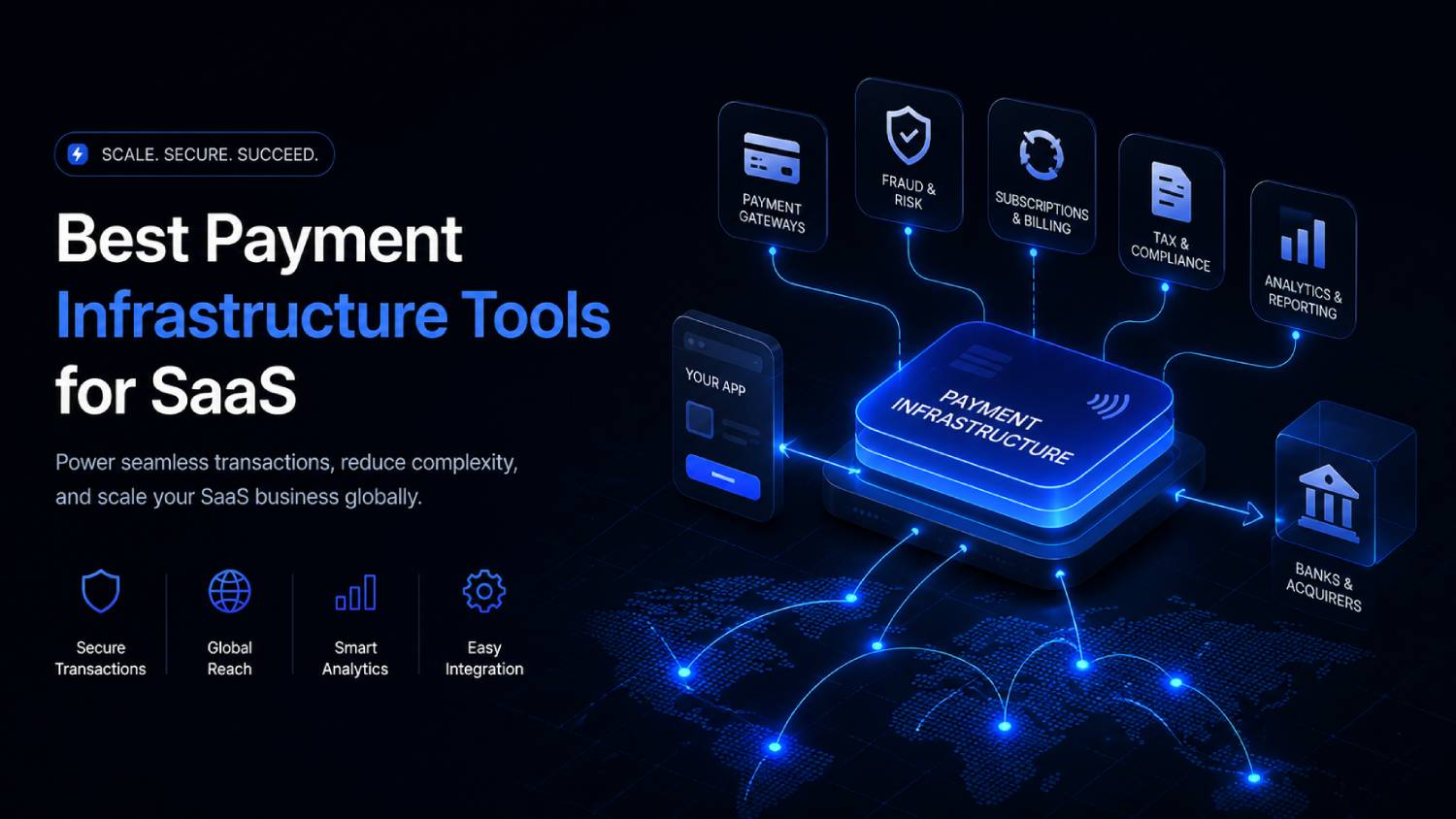

- Your payment stack choice affects tax liability, conversion rates, and churn from day one, not after you hit $1M ARR.
- Merchant of record tools handle global tax compliance for you; payment processors do not. These are different product categories solving different problems.
- Billing infrastructure, fraud tooling, and dunning logic compound over time. A weak setup at $10K MRR becomes a revenue leak at $100K MRR.
- No single tool covers everything. Most SaaS founders need two to three layers: a processor, a billing platform, and optionally an MoR or orchestration layer.
- The ten tools below cover the full payment stack: processing, subscriptions, tax, fraud, and retries.
Most early-stage SaaS founders treat payment infrastructure like they treat legal entity formation: something to handle eventually. The product ships, the first customers pay, Stripe works fine. Then the company starts selling internationally, a customer disputes a charge, sales tax notices arrive from three states, and the retry logic that “should be fine” is silently losing 8% of renewal revenue.
The common mistake is treating payment tooling as a single decision. You pick Stripe, check the box, and move on. In practice, a payment stack has layers: who processes the card, who manages the subscription lifecycle, who handles tax remittance, who fights chargebacks, and who retries failed payments with intelligent logic. Choosing one tool without thinking about the others means you will bolt things on later at higher cost and higher friction.
This piece covers ten tools across those categories, with guidance on which layer each one addresses and which company profiles it fits best.
What Makes a Payment Stack Different from a Payment Gateway
A payment gateway moves money. A payment stack is everything else required to run recurring revenue: subscription management, proration logic, dunning sequences, tax calculation, fraud scoring, and revenue recognition support.
Founders who conflate these end up with a processor that works and a billing operation that does not. The SERP data from community discussions on Reddit confirms that Stripe remains the most popular choice for SaaS subscription billing, largely because it covers more of this stack than a pure gateway would. The confusion arises because Stripe markets itself as both.
When evaluating any tool below, the relevant questions are: what layer does this cover, what does it leave to another tool, and what happens when your company adds a new pricing model or expands to a new country?
The 10 Best Payment Infrastructure Tools for SaaS Founders
1. Stripe
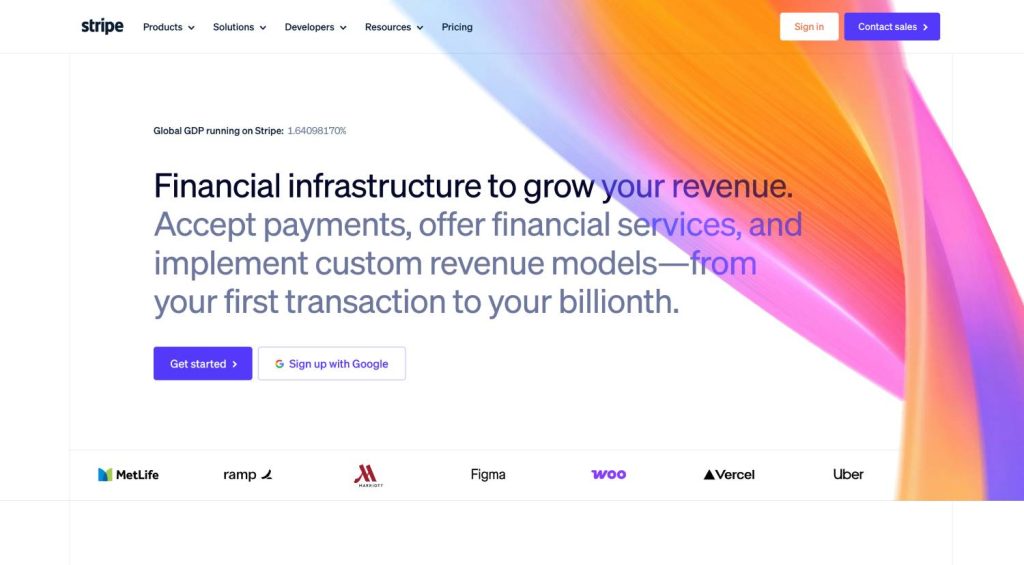
Stripe is the default starting point for most SaaS companies, and for good reason. Its developer documentation is thorough, its API is stable, and it covers payment processing, subscription billing, invoicing, and basic tax tools under one roof.
According to Stripe’s public pricing page, the standard rate is 2.9% plus 30 cents per successful card charge for online transactions, with additional fees for international cards and currency conversion. Stripe Billing handles recurring charges, proration, and trial management, though complex usage-based pricing often pushes founders toward a dedicated billing layer on top.
Stripe is the right starting point for companies that want fast integration, strong engineering documentation, and broad payment method support. It becomes limiting when global tax remittance, sophisticated dunning, or multi-currency pricing models are required at scale.
2. Paddle

Paddle functions as a merchant of record, which means it becomes the legal seller in transactions with your customers. Paddle collects and remits VAT, GST, and sales tax globally, which removes a significant compliance burden for SaaS companies selling internationally.
The tradeoff is control. Because Paddle is the MoR, it processes all payments on your behalf, and your customization options are more constrained than with a direct processor. For a deeper breakdown of how this comparison plays out in practice, the merchant of record comparison across Stripe, Paddle, Lemon Squeezy, and Polar covers the tradeoffs for B2B SaaS specifically.
Paddle suits SaaS companies with global ambitions that want to avoid building a tax compliance stack from scratch. It is less appropriate for companies with complex custom checkout requirements or those where payment data ownership is a product consideration.
3. Chargebee
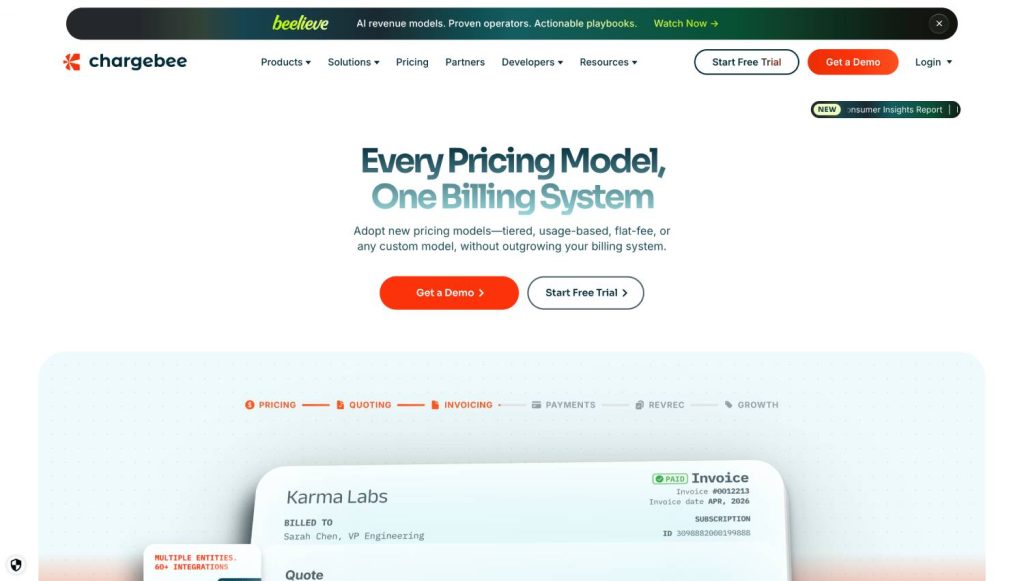
Chargebee is a subscription billing and revenue operations platform, not a payment processor. It sits on top of processors like Stripe or Braintree and adds a dedicated layer for subscription lifecycle management, proration, revenue recognition, and dunning.
Based on Chargebee’s public product positioning, it targets companies that need to manage recurring payments, billing complexity, and global tax compliance beyond what a processor’s native tools handle. Where Stripe Billing covers the basics, Chargebee covers complex pricing architectures: tiered, volume, usage-based, hybrid, and multi-currency with entity-level control.
The platform is most relevant for Series A and beyond, where billing logic has outgrown what a processor’s native billing tools can handle cleanly. Pricing is not flat-rate and scales with billing volume, so cost modeling matters before committing.
4. Recurly
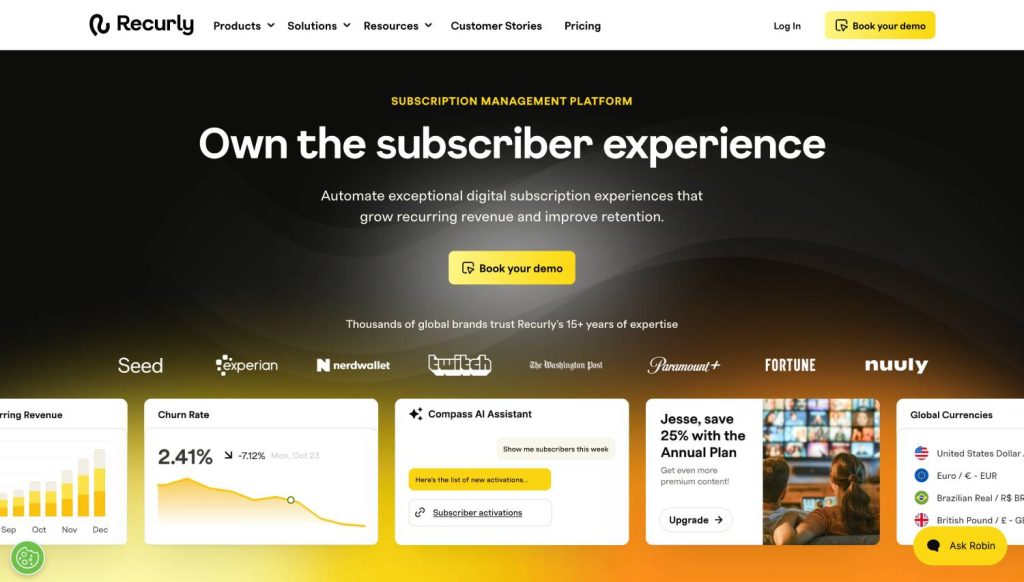
Recurly is another subscription management platform that operates independently of the payment processor layer. It offers multi-gateway support, meaning you can route payments through different processors depending on card type, geography, or failure rate, which is a form of basic payments orchestration.
Recurly’s dunning tools, which handle failed payment recovery through intelligent retry scheduling and customer communication, are a core reason companies choose it over processor-native billing. Subscription churn from failed payments is recoverable revenue, and the difference between a basic retry and an intelligently timed retry is measurable in percentage points.
Recurly fits companies with established subscriber bases that need mature retention tooling and multi-processor flexibility without building orchestration logic themselves.
5. Maxio (formerly SaaSOptics and Chargify)
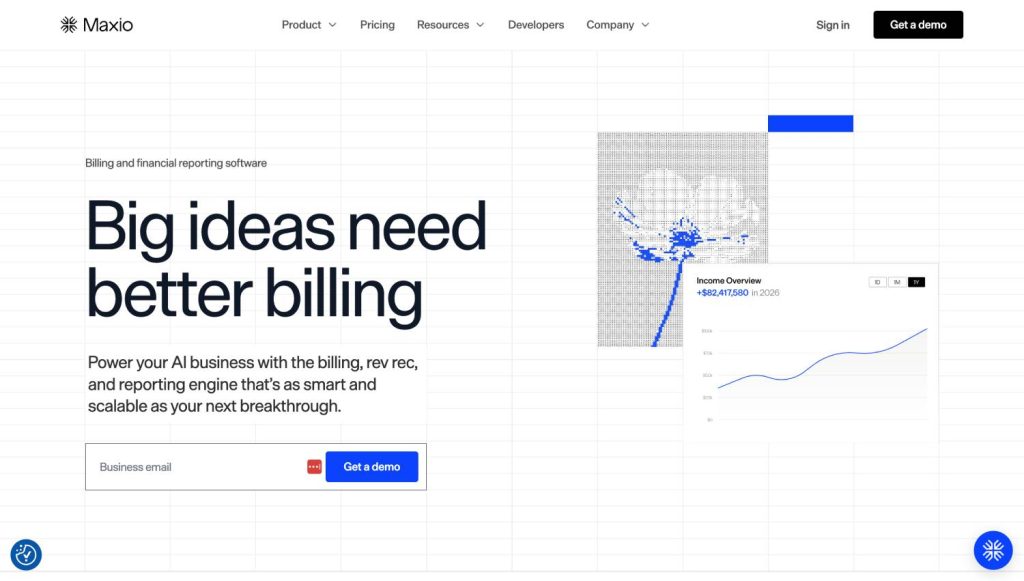
Maxio emerged from the merger of SaaSOptics and Chargify, combining subscription billing with SaaS financial metrics and revenue recognition. It targets B2B SaaS companies specifically, particularly those selling annual contracts, seat-based pricing, or usage-based models that require ASC 606-compliant revenue recognition.
The revenue recognition piece is where Maxio differentiates itself from most billing tools. For companies approaching a financing event or an audit, having automated, auditable revenue recognition built into the billing platform reduces the amount of manual reconciliation and spreadsheet work significantly.
The platform is less suited for high-volume consumer subscription businesses and fits best where deal complexity, contract length, and finance team visibility matter.
6. Lemon Squeezy
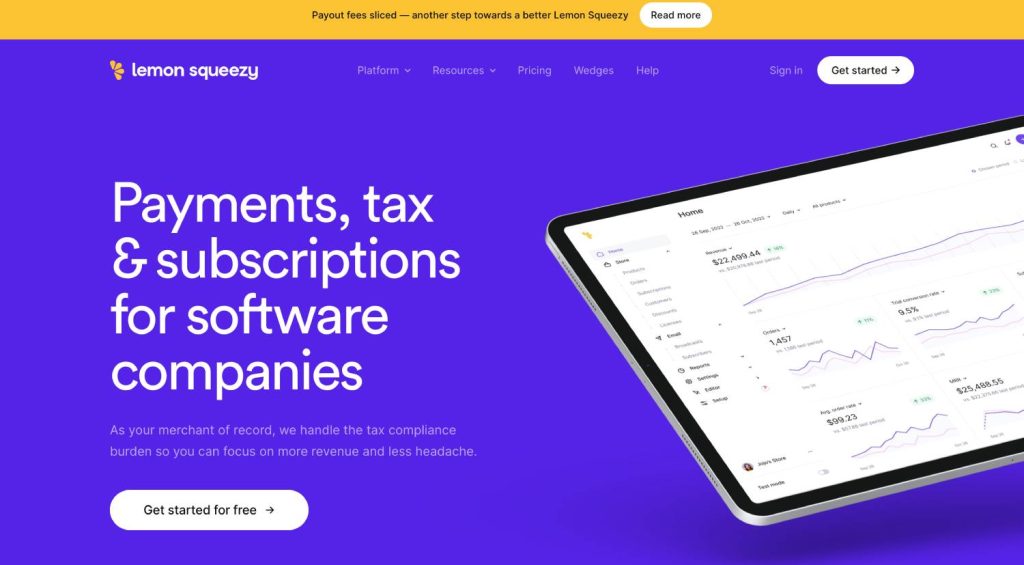
Lemon Squeezy is a merchant of record platform with a simpler interface and lower friction for founders who want global tax handling without the operational overhead of larger MoR providers. It handles VAT, GST, and US sales tax, and it supports digital product sales, SaaS subscriptions, and license key delivery.
Lemon Squeezy is positioned for indie founders and smaller SaaS teams rather than enterprise-grade operations. The platform’s limitations around checkout customization and buyer data ownership are real, but for a solo founder shipping a product to global customers, the compliance automation outweighs the constraints.
7. Adyen

Adyen is a full-stack payment processor that operates its own acquiring infrastructure, which gives it lower effective costs at volume and strong reliability for enterprise-scale transactions. SERP data from Finix’s comparison of payment processors for SaaS includes Adyen among the leading options for global reach.
Adyen is not the right fit for early-stage SaaS companies. It requires volume minimums, has a longer onboarding process, and assumes significant internal engineering capacity to integrate and maintain. For companies processing above a certain monthly threshold where basis points matter, its direct acquiring model creates real cost advantages over third-party processors.
Adyen fits platform and marketplace models, global enterprises, and companies where payment localization and method coverage in specific markets are competitive requirements.
8. Braintree
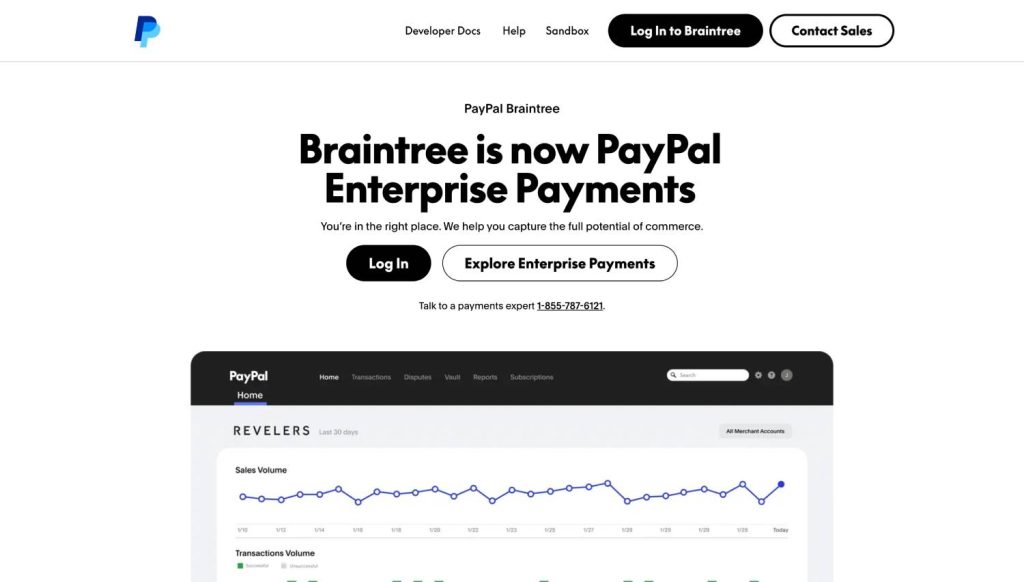
Braintree, a PayPal subsidiary, offers payment processing with strong support for PayPal and Venmo integration alongside traditional card processing. SERP data from Finix positions it among the leading payment gateways for SaaS alongside Stripe and Adyen.
Braintree’s pricing structure includes a standard per-transaction rate similar to Stripe, and it offers a vault for storing payment methods that makes subscription rebilling straightforward. The PayPal network integration is a genuine advantage for companies where a meaningful share of customers prefer PayPal at checkout.
For SaaS companies with a B2C or prosumer customer base, Braintree offers a wider net of supported payment experiences. For pure B2B SaaS with enterprise buyers, it offers less differentiation versus Stripe.
9. Avalara

Avalara is not a payment processor. It is a tax compliance platform that integrates with payment processors and billing tools to automate sales tax calculation, filing, and remittance across US states and international jurisdictions.
SaaS companies that do not use a merchant of record eventually face sales tax nexus obligations across multiple states. Avalara handles the determination, calculation, and filing layer without requiring a full MoR relationship. It connects to Stripe, Chargebee, and most major billing platforms through native integrations.
The cost is real, and Avalara is not priced for very early-stage companies. It makes economic sense when the cost of manual tax compliance or the risk of non-compliance in expansion states exceeds the platform cost. For a closer look at how different fintech APIs fit into a SaaS stack, the breakdown of fintech APIs for SaaS covers tax, billing, and data tooling in that context.
10. Primer
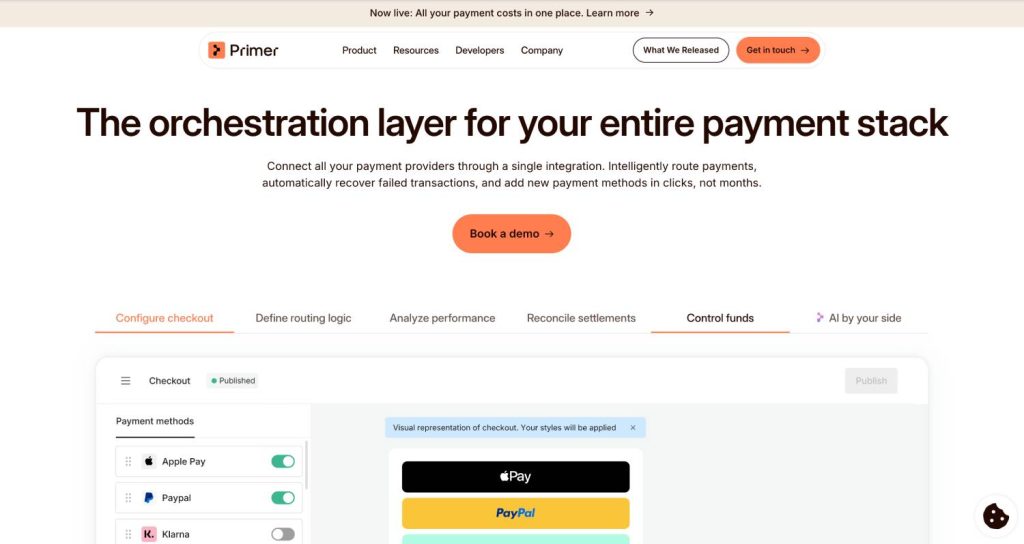
Primer is a payments orchestration platform that sits above multiple processors and lets you define routing rules, retry logic, and fallback flows without writing custom code for each processor. It connects to Stripe, Adyen, Braintree, and others, then lets you route transactions based on card type, geography, issuing bank, or historical approval rates.
Payments orchestration, as described in SERP data from Solidgate’s overview of orchestration platforms, refers to the logic layer that decides which processor handles a given transaction and what happens if it fails. For high-volume SaaS companies with meaningful international transaction mixes, routing optimization can recover authorization rates that a single-processor setup would leave on the table.
Primer is not a first tool. It is a layer that becomes relevant when you have enough transaction volume, enough international exposure, and enough processor relationships that intelligent routing creates measurable improvement over static configuration.
How to Choose a Payment Stack for SaaS: A Decision Framework
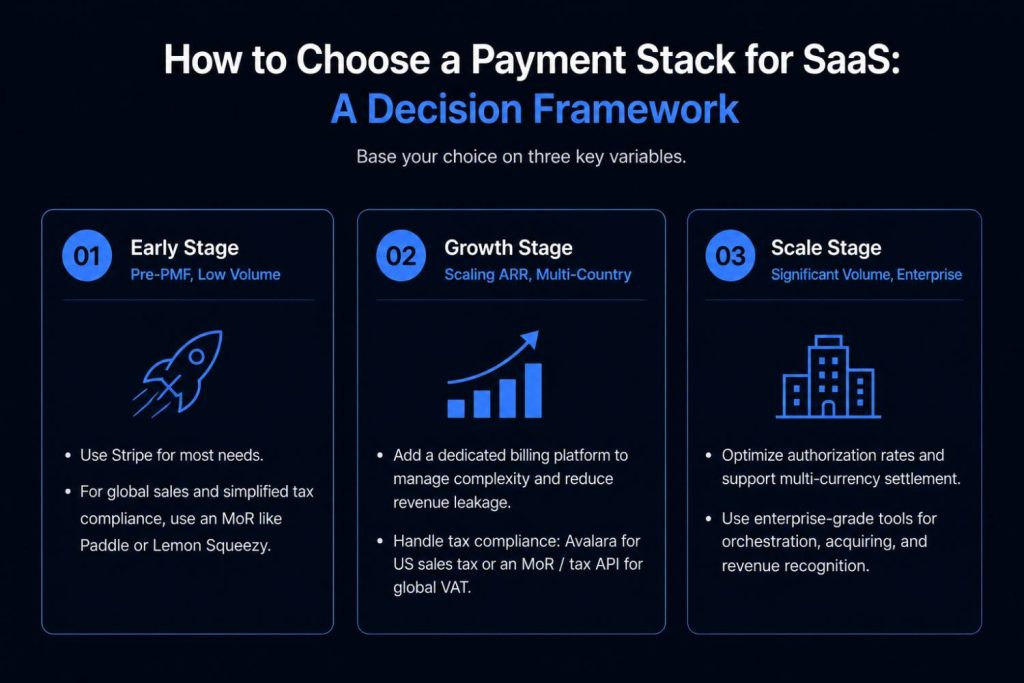
The right starting point depends on three variables: your transaction volume, your geographic reach, and the complexity of your pricing model.
Early stage (pre-product-market fit, low volume)
Stripe alone covers most of what you need. Its Billing product handles basic subscription logic, its Radar product covers fraud scoring, and its documentation supports fast integration. The limitations matter less when the priority is shipping.
If you are selling to international customers from day one and want to skip tax complexity entirely, an MoR like Paddle or Lemon Squeezy removes that layer at the cost of some checkout control.
Growth stage (scaling ARR, multi-country, adding pricing tiers)
This is where a dedicated billing layer often becomes worth the integration cost. If your pricing model has more than two or three variations, if you are managing prorations frequently, or if dunning logic is losing meaningful revenue, Chargebee, Recurly, or Maxio each address specific combinations of those problems.
Tax compliance also becomes a real decision at this stage. Avalara handles state-by-state sales tax for companies not using an MoR. If global VAT compliance is needed, an MoR relationship or a dedicated tax API integration is the fork in the road.
Scale stage (significant volume, multi-processor, enterprise contracts)
At scale, authorization rate optimization, multi-currency settlement, and enterprise billing workflows become the levers. Adyen’s acquiring infrastructure, Primer’s orchestration layer, and Maxio’s revenue recognition tools each address a specific version of the scale problem.
Merchant of Record vs. Billing Tools: What SaaS Founders Get Wrong
An MoR and a billing platform solve different problems, and conflating them causes real architectural mistakes.
A billing platform manages your subscription lifecycle: when to charge, how much to charge, what happens on upgrade or downgrade, and how to recover failed payments. It does not change who is legally responsible for collecting and remitting tax.
An MoR takes on the legal identity of the seller in the transaction. Paddle and Lemon Squeezy become the merchant on record with card networks, which means they collect and remit tax, handle chargebacks in their name, and absorb certain compliance obligations. You trade some control for significant operational simplicity, especially for international tax.
Stripe is a payment processor, not an MoR by default. Stripe Tax adds calculation and reporting support, but Stripe does not remit taxes on your behalf. This distinction is what drives many founders toward MoR solutions when international tax exposure becomes a real business risk.
Fraud, Retries, and the Revenue Leaks Most Founders Ignore
Two categories get underweighted in early payment stack decisions: fraud tooling and failed payment recovery.
Fraud tooling matters more for B2C SaaS and consumer subscriptions than for pure enterprise B2B, but card testing attacks (automated attempts to validate stolen card numbers) can generate significant chargeback exposure on any product with a low-friction signup flow. Stripe Radar, included in Stripe’s standard pricing at basic level, handles most of this for early-stage companies. At higher volume, dedicated fraud platforms add machine-learning models trained on broader transaction networks. Signifyd and Kount are two platforms in that category, though evaluating either requires assessing your transaction profile and chargeback exposure directly with their teams, as pricing and fit vary considerably by use case.
Failed payment recovery is recoverable revenue. A subscription that fails on the first retry is not necessarily lost, smart dunning, meaning retry logic that schedules attempts based on card type, bank behavior, and time of day alongside customer communication sequences, can recover a share of initially failed renewals. The exact recovery rate varies by industry, subscriber profile, and the sophistication of the retry logic in place; neither Recurly nor Chargebee publicly discloses a universal benchmark. Both platforms build dunning into their core product. Stripe’s native Billing retries offer a baseline, but dedicated dunning tools add granularity that compounds at scale.
What Payment Tools Do SaaS Founders Actually Use Together
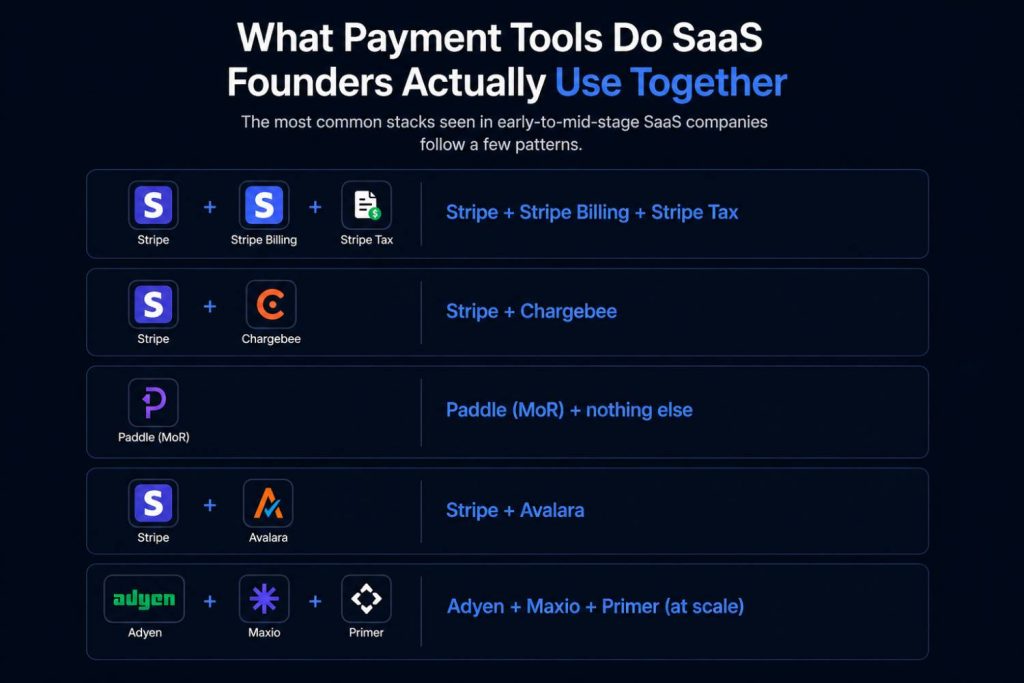
The most common stacks seen in early-to-mid-stage SaaS companies follow a few patterns.
- Stripe + Stripe Billing + Stripe Tax: The all-in-one path. Lower integration complexity, reasonable coverage, caps out when pricing or tax complexity grows.
- Stripe + Chargebee: Stripe as the processor, Chargebee as the subscription and revenue operations layer. Adds cost but handles complex billing models and provides better dunning.
- Paddle (MoR) + nothing else: Paddle handles processing, subscriptions, and global tax in one relationship. Works well for digital-native SaaS with international customers. Less suitable for enterprise contracts with custom billing requirements.
- Stripe + Avalara: Stripe processes payments; Avalara handles US sales tax and filing. Common among companies that want Stripe’s flexibility without adopting an MoR.
- Adyen + Maxio + Primer (at scale): A multi-layer enterprise stack with direct acquiring, subscription and revenue recognition, and orchestration logic. Relevant for companies past Series B with significant transaction volume.
Frequently Asked Questions
What is payments orchestration and does my SaaS company need it?
Payments orchestration is a routing and logic layer that sits above multiple payment processors, directing each transaction to the best available processor based on rules like geography, card type, or issuing bank. It also manages retry flows when a processor declines a charge. Most early-stage SaaS companies do not need it. It becomes relevant when you have relationships with multiple processors, significant international volume, and enough transaction scale that small improvements in authorization rates translate to meaningful revenue recovery.
What is a merchant of record and how is it different from a payment processor?
A merchant of record is the legal entity that sells a product to the end customer in the eyes of card networks and tax authorities. An MoR like Paddle collects and remits sales tax and VAT on your behalf and handles chargebacks in their name. A payment processor like Stripe moves money between accounts but does not take on tax liability or become the seller of record. SaaS companies that sell internationally benefit most from MoR arrangements because global tax compliance is handled without requiring internal tax infrastructure.
How do I choose a payment stack for SaaS at the early stage?
Start with Stripe if you are US-focused, have straightforward pricing, and want fast integration with strong documentation. Consider an MoR like Paddle if you are selling globally from the start and want to avoid building a tax compliance workflow. Add a dedicated billing platform like Chargebee or Recurly when your pricing model has multiple tiers, frequent plan changes, or when failed payment recovery is visibly losing revenue. Avoid over-architecting early. The cost of switching tools at $500K ARR is manageable. The cost of wrong infrastructure at $5M ARR is significantly higher.
What is the difference between Stripe Billing and a dedicated billing platform like Chargebee?
Stripe Billing covers the core subscription lifecycle: recurring charges, trial management, proration, and basic invoicing. Chargebee and similar platforms add a management layer on top, including complex pricing model support, revenue recognition automation, multi-currency contract management, and more sophisticated dunning logic. The line between them is less about features and more about operational complexity. Most companies outgrow Stripe Billing when pricing models become hybrid or multi-tiered, when a finance team needs revenue recognition reporting, or when failed payment recovery becomes a tracked metric.
Does Stripe handle sales tax and VAT?
Stripe Tax calculates and reports sales tax and VAT in supported jurisdictions, but Stripe does not remit taxes on your behalf. You remain the merchant of record and are responsible for filing and remittance. This is the key distinction between using Stripe with Stripe Tax versus using a merchant of record like Paddle, which handles collection, remittance, and filing as the seller. For US-only SaaS companies, Stripe Tax plus manual filing or an integration with Avalara covers most needs. For heavy international exposure, an MoR often provides a cleaner solution.
What are the best tools for reducing SaaS churn from failed payments?
Failed payment recovery depends on two things: intelligent retry logic and customer communication. Recurly’s dunning features use data across their subscriber base to time retries for higher success rates. Chargebee offers configurable retry schedules and email sequences. Stripe Billing’s native Smart Retries use machine learning to schedule retry attempts. The best tool depends on your existing stack, but any of these outperforms manual retry management or a naive fixed-interval retry loop. The recoverable revenue from a structured dunning approach is typically worth the tooling cost at any meaningful subscriber volume.
When does it make sense to add a separate fraud tool beyond Stripe Radar?
Stripe Radar handles most fraud scenarios for early-stage companies without additional cost at the basic level. A dedicated fraud platform makes sense when chargeback rates approach or exceed card network thresholds, when card testing attacks are generating significant dispute volume, or when your transaction profile includes higher-risk use cases like stored card capture at signup. Tools in this category layer machine learning models trained on broader transaction networks and provide more granular rule management than Radar’s interface allows. This is typically a Series A and beyond decision, not a pre-launch one.
What This All Means for Your Stack Decision
Payment infrastructure is not a single-tool problem, and the cost of a weak early decision is not theoretical. Tax exposure compounds as you enter new markets. Failed payment churn compounds as your subscriber count grows. Billing logic that worked for one pricing model breaks when you add another. These are operational realities, not edge cases.
The tools covered here address distinct parts of the stack. Stripe and Braintree process payments. Chargebee, Recurly, and Maxio manage billing logic and subscription lifecycles. Paddle and Lemon Squeezy remove tax compliance overhead by acting as merchant of record. Avalara handles tax without the MoR tradeoffs. Adyen and Primer address volume-scale processing and orchestration. None of them are interchangeable.
The most useful mental model is to map your current problems and your likely problems at 3x current scale, then match tools to those layers. A company at $20K MRR selling in the US needs a different stack than a company at $200K MRR selling in 30 countries. The earlier you think in layers rather than single tools, the fewer painful migrations you will face later.