
TLDR
- Borrowing base calculation applies advance rates and eligibility rules to raw collateral data, so a lender’s available credit line is almost always smaller than the gross collateral value on the books.
- Dedicated asset-based lending borrowing base software automates the borrowing base certificate, eligibility testing, and ineligible bucket calculations that spreadsheets handle badly and auditors question frequently.
- The four platforms reviewed here serve different operational profiles: bank-grade ABL departments, independent commercial finance companies, fintech lenders building their own infrastructure, and mid-market asset-based lenders managing multiple facilities.
- Pricing across this category is not publicly disclosed by any of the vendors as of this writing; expect custom contracts and implementation fees.
The four borrowing base software platforms most relevant to US asset-based lenders are Suntect, Cync Software, Finastra LiquidCredit, and Lendscape. Each automates borrowing base certificate generation, eligibility testing, reserve calculations, and availability reporting. Suntect and Cync suit commercial finance companies and regional banks; Finastra serves large bank ABL departments; Lendscape targets receivables-finance and factoring operations across North America and Europe.
What Does Borrowing Base Software Actually Do for Asset-Based Lenders?
Most ABL teams run borrowing base calculations in Excel. That works until it doesn’t: a formula breaks, an eligibility rule gets misapplied, an auditor asks for the version history, or a borrower submits a certificate with a concentration bucket miscounted. Dedicated software replaces that spreadsheet with an automated engine that ingests collateral data, applies the credit agreement’s eligibility criteria, and produces an auditable borrowing base certificate in minutes rather than hours.
The core mechanics are worth understanding precisely because the software mirrors them. A borrowing base certificate starts with gross collateral, which for a typical receivables-based facility means total accounts receivable. From that gross figure, the software strips out ineligibles: receivables over 90 days past invoice date, cross-aged accounts, government obligors if excluded, concentrations above the agreed cap, and contra accounts. What remains is the eligible collateral pool. The advance rate, say 85% on eligible receivables, then produces the computed availability. Subtract any reserves the lender has established and the outstanding loan balance, and you get the net availability: the amount the borrower can actually draw.
That sequence seems straightforward, but a facility with inventory, equipment, and receivables runs multiple collateral sub-pools simultaneously, each with its own eligibility schedule and advance rate. Manual tracking at that scale produces errors that credit agreement violations and audit findings are built from. Software automates the sequence and locks it to the executed credit agreement terms.
How Do ABL Availability Calculations Work Before Software Enters the Picture?
Understanding the calculation chain helps you evaluate which software features actually matter versus which ones are UI polish. The table below shows a simplified borrowing base calculation for a single-collateral receivables facility. Real facilities add inventory sub-limits, dilution reserves, and cross-collateralization, but this structure covers the fundamental logic.
| Step | Line Item | Illustrative Amount | How It Is Determined |
|---|---|---|---|
| 1 | Gross Accounts Receivable | $10,000,000 | Borrower’s AR aging report |
| 2 | Less: Over-90-Day Receivables | ($800,000) | Ineligible per credit agreement |
| 3 | Less: Cross-Aged Accounts | ($300,000) | Obligors where 50%+ of balance is 90+ days |
| 4 | Less: Concentration Excess | ($500,000) | Balance above 20% single-obligor cap |
| 5 | Less: Other Ineligibles | ($200,000) | Government, intercompany, disputed |
| 6 | Eligible Accounts Receivable | $8,200,000 | Sum of steps 1-5 |
| 7 | Advance Rate | 85% | Set in credit agreement |
| 8 | Computed AR Availability | $6,970,000 | Step 6 × Step 7 |
| 9 | Less: Reserves | ($250,000) | Lender-discretionary (dilution, rent, etc.) |
| 10 | Less: Outstanding Loan Balance | ($5,500,000) | Current revolver draws |
| 11 | Net Availability | $1,220,000 | Step 8 minus steps 9 and 10 |
Every number from step 2 through step 9 is a software configuration decision. If your platform cannot encode the specific ineligible definitions from your credit agreement, your team will reconstruct them manually every cycle. That is the actual problem ABL software solves, and it is the right lens for evaluating each platform.
The FintechSpecs ABL Eligibility Audit: Four Checks Before You Buy
Before evaluating any specific vendor, run what we call the FintechSpecs ABL Eligibility Audit, a four-part check that maps your facility’s complexity against a platform’s configuration depth. Generic loan management software often passes surface-level demos but breaks on these four points.
Check 1: Concentration cap logic. Ask the vendor to demonstrate a facility where a single obligor exceeds 20% of eligible AR. The platform should automatically isolate the excess and exclude it from the eligible pool, without manual override. If the demo requires a workaround, the eligibility engine is not production-ready for complex ABL.
Check 2: Cross-aging. Cross-aging is the rule that makes an entire obligor’s balance ineligible when a threshold percentage of that obligor’s invoices are past a certain age. Many platforms handle over-90-day buckets but fail cross-aging. Ask for a live demo with an AR aging file that triggers cross-aging on at least one account.
Check 3: Multi-collateral sub-limits. Ask whether availability sub-limits (e.g., inventory capped at 50% of total availability) are enforced automatically at certificate generation, or whether they require manual calculation after the fact.
Check 4: Reserve configurability. Lender-discretionary reserves are dynamic and often adjusted outside the standard eligibility schedule. The platform should allow a portfolio manager to add or modify a reserve without triggering a system reconfiguration request to the vendor.
Which Borrowing Base Software Platforms Are Worth Evaluating?
Cync Software

Cync Software is a cloud-native ABL platform built specifically for commercial finance companies and community banks operating asset-based lending facilities. Its core module handles borrowing base certificate generation, AR and inventory collateral tracking, and availability calculation against configurable eligibility rules. The platform ingests AR aging files directly from borrowers, maps them to the facility’s eligibility schedule, and produces a certificate that the lender can review and approve before it posts.
What makes Cync worth evaluating for mid-market ABL operations is the depth of its eligibility engine. The platform supports multiple ineligible categories out of the box, including cross-aging, concentration limits, and contra accounts, and lenders can configure the specific percentage thresholds and aging buckets defined in their credit agreements without developer involvement. Reserve management is handled within the platform, allowing portfolio managers to adjust discretionary reserves at the facility level without requesting a system change.
Cync also supports multi-collateral facilities with separate sub-pools for AR, inventory, and equipment, each with independent advance rates and sub-limits. The borrowing base certificate consolidates those sub-pools into a single availability calculation, which matters for facilities where the inventory component carries a lower advance rate and a sublimit that caps its contribution to total availability.
Cync does not publicly disclose pricing as of this writing. The company sells on an enterprise subscription basis, and contracts are sized based on the number of facilities and collateral sub-pools under management. Implementation timelines are also not publicly disclosed. The platform targets commercial finance companies moving off spreadsheets rather than replacing a legacy system, though prospective buyers should confirm onboarding scope and timeline directly with Cync during evaluation.
Suntect Systems
Suntect positions itself as a purpose-built ABL and factoring platform for independent commercial finance companies. Its borrowing base module covers AR, inventory, and equipment collateral with configurable eligibility testing, and the platform includes a client portal that allows borrowers to upload collateral reports directly, reducing the manual data entry burden on the lender’s portfolio team.
The workflow design is particularly relevant for high-frequency certificate cycles. Some ABL borrowers submit borrowing base certificates daily or weekly, and a platform that requires significant manual review steps for each cycle adds operational cost quickly. Suntect’s automated ingestion and eligibility testing is designed to flag exceptions rather than requiring a reviewer to verify every line, which suits lenders managing a large number of smaller facilities where analyst time is the binding constraint.
Suntect also handles the adjacent workflow of field exam and collateral audit data, allowing examiners to record verification findings directly in the platform and tie them to specific collateral pools. That integration matters for lenders who do their own field examination work rather than outsourcing it, because it keeps audit findings and certificate history in the same system of record.
Like Cync, Suntect does not publicly disclose pricing as of this writing. The company targets small to mid-sized commercial finance operations, and the platform is sold on a subscription basis with pricing based on the number of active facilities and users.
Finastra LiquidCredit
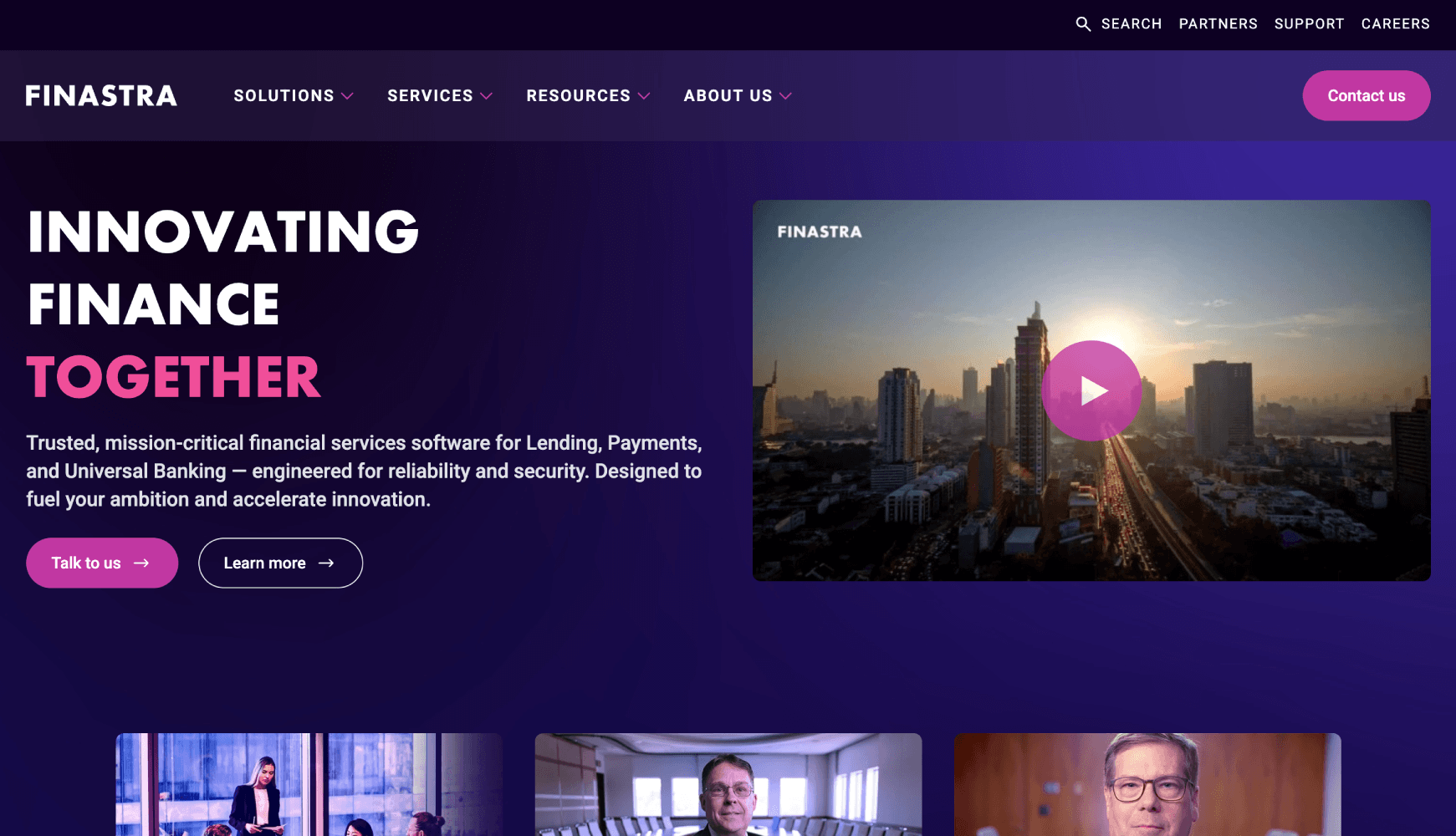
Finastra’s LiquidCredit module within its commercial lending suite is the enterprise-grade option in this category. It is designed for bank ABL departments operating large, complex facilities with multi-collateral structures, syndicated credit agreements, and regulatory reporting requirements. The platform handles borrowing base calculation as one component of a broader loan lifecycle that includes origination, covenant monitoring, and reporting.
The trade-off with Finastra is implementation complexity and cost. LiquidCredit is not a standalone ABL product; it sits within a larger commercial lending platform, and deploying it requires integration with the bank’s core system, credit file infrastructure, and reporting environment. For a regional bank with an ABL portfolio generating enough volume to justify that investment, the depth of the eligibility engine and the regulatory reporting capabilities are worth the complexity. For an independent commercial finance company with ten to twenty facilities, it is almost certainly overbuilt.
Finastra does not publicly disclose pricing for LiquidCredit as of this writing. Enterprise contracts for platforms of this type typically involve significant implementation fees, annual licensing, and ongoing support costs. Banks evaluating this platform should budget for a multi-month implementation and integration engagement.
If you are also evaluating broader loan origination and management capabilities alongside your ABL infrastructure, the best loan origination and management software platforms for US lenders covers how origination systems relate to portfolio management tools.
Lendscape
Lendscape is a receivables finance and factoring platform that covers borrowing base calculation as part of a broader receivables management system. The platform is used by banks and independent finance companies running invoice discounting, factoring, and ABL facilities, particularly where the facility structure involves the lender taking an assignment of receivables rather than a floating lien.
Lendscape’s borrowing base engine handles concentration testing, dilution reserves, and payment allocation across individual invoices, which is a different level of granularity than facility-level AR aging. For lenders running disclosed or undisclosed invoice discounting facilities, where the platform needs to track individual invoice payments and reconcile them against specific funding advances, that invoice-level detail matters. Lenders running traditional revolving ABL with periodic AR aging certificates get less marginal value from that granularity.
The platform supports multi-currency facilities, which is relevant for lenders serving exporters or borrowers with foreign receivables. Lendscape does not publicly disclose pricing as of this writing and is sold on an enterprise subscription basis.
How Do These Platforms Compare on Core ABL Features?
| Feature | Cync Software | Suntect | Finastra LiquidCredit | Lendscape |
|---|---|---|---|---|
| Borrowing base certificate automation | Yes | Yes | Yes | Yes |
| Configurable eligibility rules (no-code) | Yes | Yes | Partial (requires configuration services) | Partial |
| Cross-aging logic | Yes | Yes | Yes | Yes |
| Concentration cap enforcement | Yes | Yes | Yes | Yes |
| Multi-collateral sub-pools | Yes | Yes | Yes | Limited (receivables-focused) |
| Borrower self-service portal | Yes | Yes | Limited | Yes |
| Inventory collateral tracking | Yes | Yes | Yes | Limited |
| Invoice-level receivables tracking | Limited | Limited | Partial | Yes |
| Multi-currency support | Not publicly disclosed | Not publicly disclosed | Yes | Yes |
| Field exam / audit data integration | Limited | Yes | Yes | Limited |
| Best fit | Community banks, commercial finance companies | Independent finance companies, high-frequency cycles | Bank ABL departments, complex facilities | Receivables finance, invoice discounting, factoring |
What Should ABL Lenders Look for in Borrowing Base Monitoring Software?
Certificate automation is table stakes. The features that separate good platforms from adequate ones are exception management, audit trail depth, and reserve configurability. Here is what each of those means operationally.
Exception management is how the platform surfaces ineligibles and eligibility failures without requiring a reviewer to scan every line of the aging report. A good exception workflow flags the specific accounts and invoices that triggered an ineligible classification, shows the rule that caused the exclusion, and allows the reviewer to annotate or override with a reason code. Without that workflow, the borrowing base certificate is automated but the review process is still manual.
Audit trail depth matters for exam management and credit agreement compliance. When a borrower or examiner asks why availability was calculated at a specific number on a specific date, the platform should produce a complete, timestamped record of the input data, the eligibility rules applied, any reserves in effect, and who approved the certificate. Spreadsheet-based processes cannot produce that record reliably, which is one of the primary drivers pushing ABL teams toward dedicated software.
Reserve configurability is the feature most often undersold in demos and most often complained about in production. Lenders adjust discretionary reserves frequently, sometimes in response to borrower-specific concerns, sometimes as a risk management response to collateral quality signals. A platform that requires a configuration change request to add or modify a reserve creates operational friction exactly when the lender needs to move quickly.
ABL lenders who are also building out their broader lending technology stack should look at how AI tools for lending teams are starting to intersect with collateral monitoring, particularly for anomaly detection in AR aging submissions.
How Does Borrowing Base Software Fit Into the Broader ABL Technology Stack?
Borrowing base software is not a standalone system. It sits downstream of collateral data submission and upstream of loan accounting. The integrations that matter most are with the borrower’s ERP or accounting system (for automated aging file ingestion), with the lender’s core loan system (for outstanding balance data), and with any covenant monitoring or reporting tools the lender uses.
Some ABL teams also use bank statement analysis tools to cross-check borrower-reported AR data against cash receipts, as a fraud-detection measure on the collateral pool. Platforms like bank statement analysis and cash flow underwriting APIs can feed that cross-check, though the integration requires custom work unless the borrowing base platform has a native connector.
The loan servicing layer also connects here. For revolving ABL facilities, every draw request triggers a borrowing base check, and every repayment updates the net availability calculation. If the borrowing base platform and the loan servicing system do not share a live data connection, there is always a timing gap in the availability number. Lenders evaluating loan servicing software should check whether prospective platforms have documented integrations with the ABL-specific borrowing base tools.
What Happens When ABL Lenders Skip Dedicated Software?
Consider a hypothetical mid-market commercial finance company managing fifteen revolving ABL facilities, each with weekly certificate cycles. Using Excel, the portfolio team receives aging files, copies them into the template, manually checks concentrations, applies advance rates, and emails the certificate back to the borrower for signature. Each cycle takes two to three hours per facility. At fifteen facilities with weekly cycles, that is thirty to forty-five hours of analyst time per week, almost entirely procedural work with no analytical content.
Beyond the time cost, the error rate is non-trivial. Cross-aging calculations in Excel require array formulas that break when the aging format changes. Concentration caps require SUMIF logic against a dynamic obligor list. When an examiner reviews a facility and finds a miscalculated ineligible, the lender has to reconstruct what the certificate should have shown and explain the discrepancy. That is a material examination finding, not a footnote.
Dedicated software does not eliminate analyst judgment, but it moves that judgment upstream to eligibility rule configuration and exception review, where it belongs, rather than spending it on procedural arithmetic.
Frequently Asked Questions About Asset-Based Lending Borrowing Base Software
What is a borrowing base certificate in asset-based lending?
A borrowing base certificate is a document the borrower submits to the lender, typically on a weekly or monthly schedule, that reports the value of eligible collateral and calculates the resulting credit availability under the facility. It starts with gross collateral, applies eligibility exclusions defined in the credit agreement, multiplies the eligible pool by the advance rate, subtracts reserves and outstanding borrowings, and arrives at net availability. The certificate is the primary mechanism by which the lender controls the borrower’s access to the revolving line.
How is ABL availability calculation different from a standard loan-to-value calculation?
A loan-to-value calculation applies a single percentage to the gross appraised value of collateral. ABL availability calculation applies eligibility rules first to strip ineligible collateral from the pool, then applies an advance rate to the reduced eligible pool, then subtracts lender-discretionary reserves. The result is almost always materially lower than gross collateral times the advance rate, because the eligibility testing removes a significant portion of the collateral before the advance rate is applied. That distinction is what makes dedicated ABL software necessary: the eligibility logic is complex, facility-specific, and changes over time.
Can general-purpose loan management software handle borrowing base calculations?
General-purpose loan origination and management platforms are built for term loans and standard revolvers where the credit limit is fixed at origination. ABL requires a dynamic credit limit that resets with every certificate cycle based on collateral data. Most general-purpose platforms lack the eligibility engine, AR aging ingestion, and reserve management features that ABL requires. Some vendors add ABL modules, but the depth of eligibility rule configuration varies significantly. The FintechSpecs ABL Eligibility Audit checks described above help distinguish genuine ABL functionality from surface-level feature descriptions.
What data does borrowing base software need from the borrower?
At minimum, the platform needs an AR aging report at the invoice or account level, depending on the facility structure. For multi-collateral facilities, the borrower also submits inventory reports and, for equipment-based facilities, appraisal updates at the frequency specified in the credit agreement. The quality and format of borrower-submitted data is a significant operational variable. Platforms that can ingest multiple aging file formats without manual reformatting reduce the data-wrangling burden on the lender’s portfolio team, particularly for facilities with unsophisticated borrowers using legacy accounting systems.
How do reserve calculations work in ABL borrowing base software?
Reserves in ABL are lender-discretionary reductions to computed availability that account for risks not captured by the eligibility schedule. Common reserves include dilution reserves (accounting for expected invoice reductions from returns, discounts, and credits), rent or landlord lien reserves, and environmental reserves. In borrowing base software, reserves are typically input as fixed dollar amounts or as a percentage of eligible collateral, and they reduce availability directly. The platform should allow portfolio managers to add, modify, and document reserves without requiring a system configuration change.
Is asset-based lending borrowing base software different from factoring software?
Yes, though there is overlap. Factoring software is designed around the purchase of individual invoices at a discount, with tracking at the invoice level for payment, aging, and credit risk. ABL software is designed around a revolving credit facility secured by a floating lien on a collateral pool, with availability calculated at the pool level against a periodic aging report. Some platforms, including Lendscape, support both models. Lenders running both types of facilities should confirm that the platform they choose handles both borrowing base certificate generation for ABL and invoice-level tracking for factoring, rather than assuming the two workflows are equivalent.
Which Borrowing Base Software Platform Is Right for Your ABL Operation?
The right choice depends on two variables: facility complexity and operational scale. For community banks and independent commercial finance companies running straightforward AR-based facilities with weekly certificate cycles, Cync Software offers the deepest eligibility engine configuration in a platform that does not require a multi-month enterprise implementation. Suntect is the stronger choice when high-frequency certificate cycles and borrower self-service portal functionality are the primary operational constraint, or when field exam data integration matters.
Finastra LiquidCredit serves a different buyer entirely: bank ABL departments with complex multi-collateral facilities, syndication requirements, and regulatory reporting obligations that justify the implementation investment. Independent lenders looking at Finastra should run a careful total cost of ownership analysis before shortlisting it, because the platform’s strength is depth and integration within a large bank’s lending infrastructure, not deployment speed or standalone usability.
Lendscape belongs on shortlists where the facility structure is closer to invoice discounting or factoring than traditional ABL revolvers, particularly where multi-currency receivables or disclosed financing structures are in scope. For a lender whose entire portfolio is traditional AR-based revolvers, Lendscape’s invoice-level granularity adds complexity without proportional benefit.
What all four platforms share is the core premise that matters most for ABL operations: collateral value does not equal availability. Gross AR is a starting point, not a credit limit. The gap between those two numbers is where eligibility rules, advance rates, and reserves live, and managing that gap accurately and auditabily is exactly the job dedicated asset-based lending borrowing base software is built to do. For lenders still doing that job in Excel, moving to dedicated software is worth serious evaluation, the right platform depends on the specific complexity of the facilities they are managing today.