
- The 2026 AI lending stack is not a black box. Every tool category covered here ships with explainability outputs and human-in-the-loop controls that satisfy CFPB adverse action notice requirements.
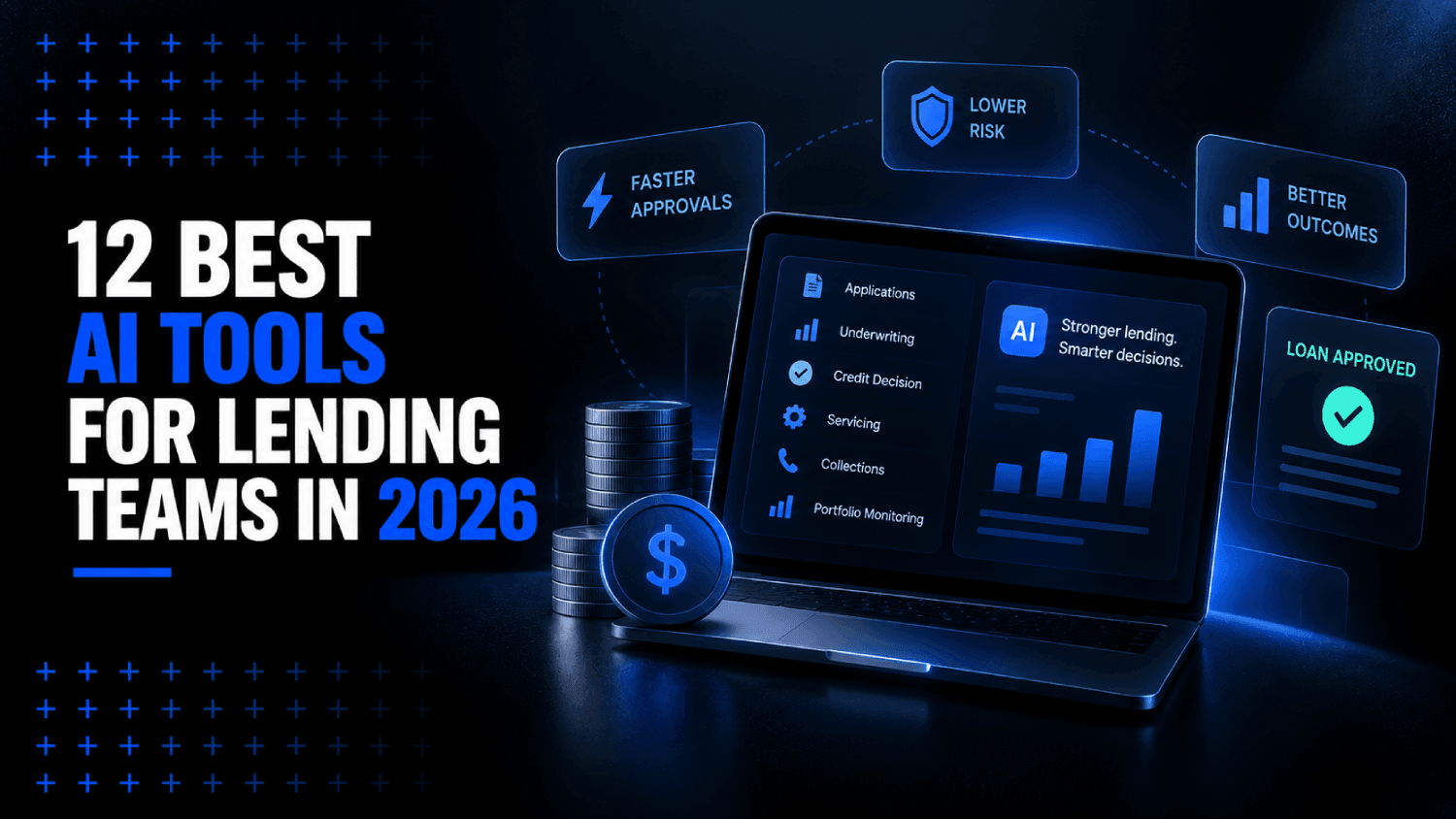
- AI lending tools map cleanly to six lifecycle stages: origination, underwriting, credit decisioning, servicing, collections, and portfolio monitoring. You do not need all six at once.
- The highest-ROI first purchase for most mid-size lenders is a cash flow underwriting API or a credit decisioning platform, not a full LOS replacement.
- Manual-only lending operations carry their own risks: slower cycle times, higher cost per funded loan, and inconsistent credit decisions that create fair lending exposure. The tradeoff is not safety versus automation , it is one set of operational risks versus another.
- This article is the hub for FintechSpecs’ AI lending coverage. Each tool links to a dedicated spoke page with deeper comparisons, pricing, and POC guidance.
The 12 best AI tools for lending teams span six lifecycle stages: cash flow underwriting APIs (Ocrolus, Heron Data, Prism Data), credit decisioning platforms (Taktile, Zest AI, and alternatives), income verification APIs (Argyle, Pinwheel, Truework), AI credit memo tools (Blooma, Spreading.ai), AI loan servicing platforms, AI collections and voice agents, and portfolio monitoring software. Most lenders should start with their weakest stage rather than replacing the full stack. Every tool listed here operates with explainable outputs and human override, not as a closed model.
Why Most Lenders Still Overestimate the Regulatory Risk of AI Credit Tools
The dominant fear in lending operations is that an AI model will make a credit decision nobody can explain, a regulator will ask why Applicant 347 was declined, and the answer will be “the model said so.” That fear was reasonable in 2019. It is largely outdated now.
Every commercial AI underwriting platform shipping in 2026 produces reason codes. Not because vendors are generous, but because the CFPB’s adverse action notice requirement under ECOA and the Fair Credit Reporting Act makes reason codes a legal prerequisite. Vendors who cannot produce them cannot sell to regulated lenders. The market selected for explainability.
The second piece most teams miss: human-in-the-loop is not a workaround for weak AI. It is the architecture. Credit decisioning platforms like Taktile and its alternatives are built around decision flows where a rule engine, a model score, and a human review queue interact. The model handles volume. Humans handle edge cases and exceptions. That division is explicit in the product design, not bolted on as a compliance patch.
What the manual-only camp actually faces is its own consistency problem. Human underwriters make different calls on similar files depending on the day, the analyst, and their queue depth. That inconsistency is a fair lending liability. AI tools trained on policy-consistent data and constrained by rule guardrails produce more uniform outcomes, which is what regulators actually want to see.
How to Map AI Lending Tools to Each Stage of the Loan Lifecycle
The FintechSpecs Lending Stage Framework treats the loan lifecycle as six discrete buying decisions, not one platform purchase. Each stage has a distinct data problem, a distinct risk, and a distinct set of vendors competing for it. Buying one stage at a time is not a compromise. It is the correct procurement sequence for lenders who need to show ROI before a board meeting.
The six stages are: application and origination, data enrichment and underwriting, credit decisioning, loan servicing, borrower communications and collections, and portfolio monitoring. The table below maps each stage to its primary AI tool category and the vendors covered in this article.
| Lifecycle Stage | AI Tool Category | Key Vendors Covered |
|---|---|---|
| Application and Origination | LOS with AI intake | LoanPro, Encompass, nCino |
| Data Enrichment and Underwriting | Bank statement analysis, cash flow APIs | Ocrolus, Heron Data, Prism Data |
| Income and Employment Verification | Payroll connectivity APIs | Argyle, Pinwheel, Truework |
| Credit Decisioning | Decision engine platforms | Taktile, Zest AI, and alternatives |
| Credit Memo and Spreading | AI financial analysis tools | Blooma, Spreading.ai |
| Loan Servicing | AI servicing platforms | LoanPro, Peach Finance, Canopy |
| Collections and Borrower Comms | AI voice agents, collections software | Lexop, Prodigal, AI voice platforms |
| Portfolio Monitoring | Risk surveillance tools | Abrigo, Baker Hill, Visible Equity |
A mid-size lender running $50M to $300M in annual originations typically has one of these stages as a clear bottleneck. The right question is not “which AI platform covers everything?” It is “which stage is costing us the most per loan, and what is the fastest tool to fix it?”
Stage 1: Which AI Tools Cover Loan Origination and Application Intake?
Origination is where AI has the longest track record and the clearest ROI signal. Automated document intake, borrower identity verification, and pre-screening rules can cut the time between application submission and a credit decision from days to hours for consumer and small business loans.
nCino
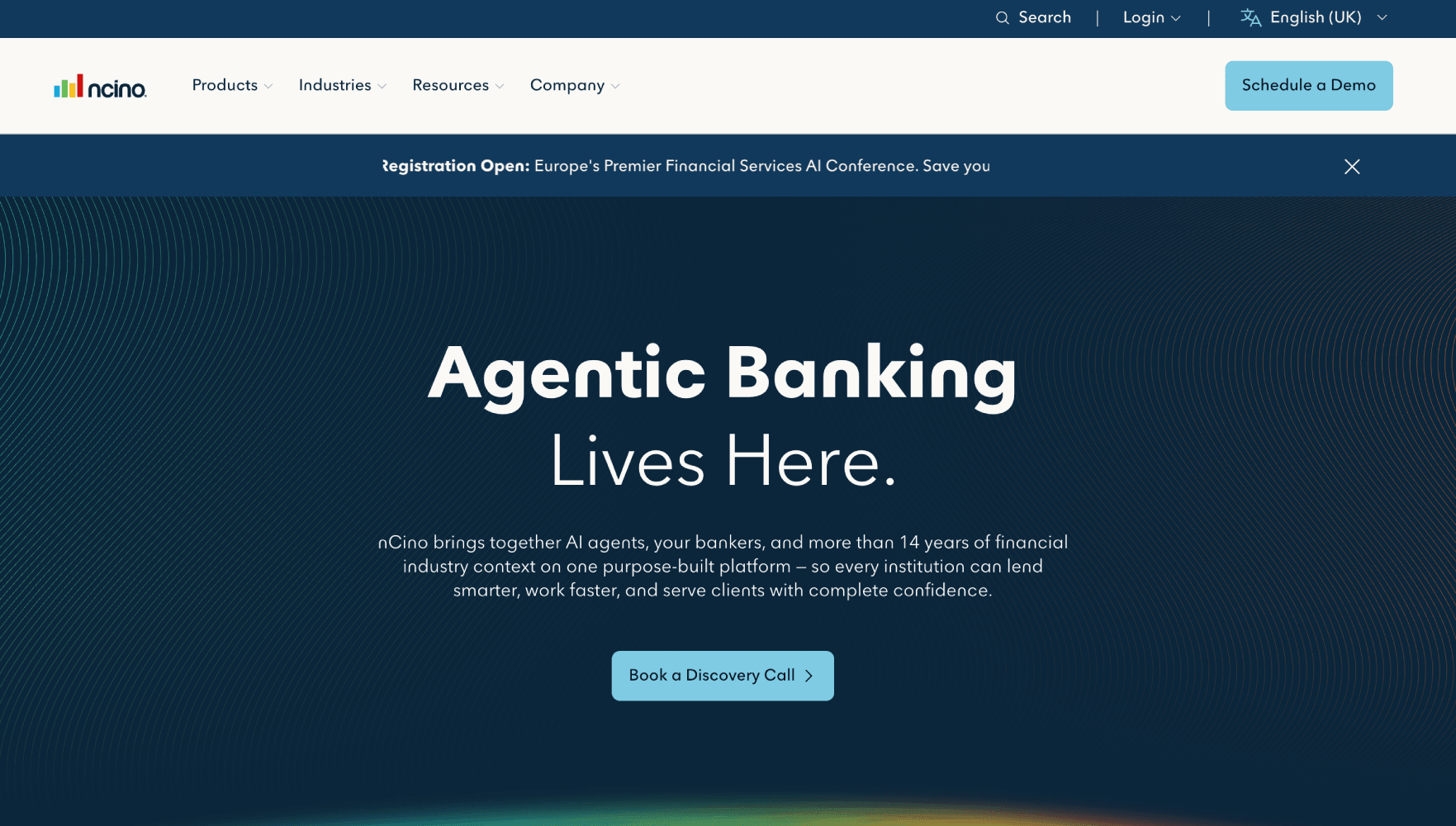
nCino is the dominant AI-enabled loan origination platform in commercial banking. It runs on Salesforce and adds AI-assisted spreading, document classification, and workflow routing on top of a configurable LOS. It targets mid-market and enterprise banks, not non-bank lenders or fintechs building from scratch. Implementation timelines are measured in months, and pricing is not publicly listed as of this writing. Lenders evaluating nCino should budget for a significant professional services engagement alongside the software fee.
Encompass by ICE Mortgage Technology
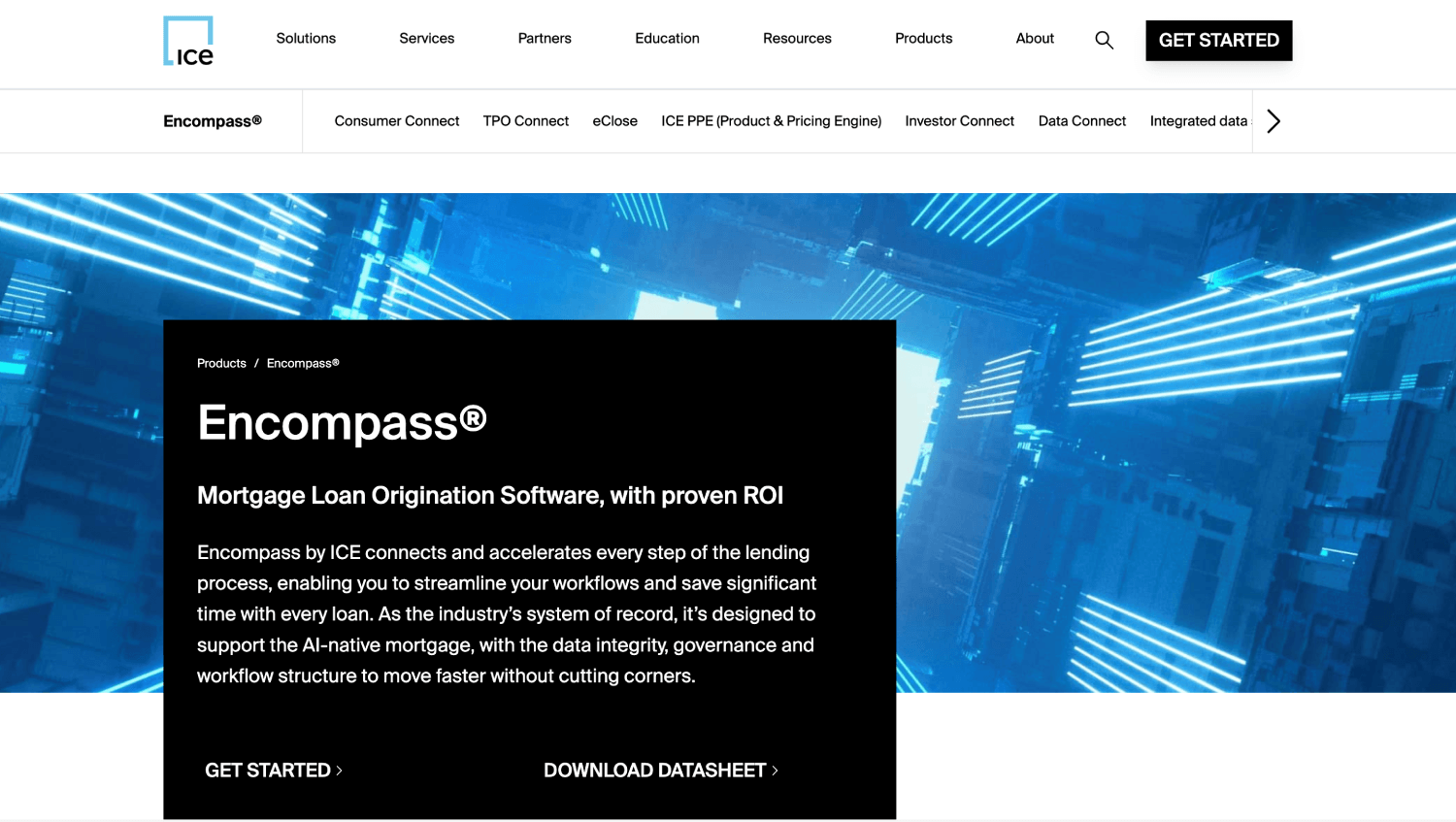
Encompass is the dominant LOS for residential mortgage lenders. Its AI additions include automated income calculation, condition management, and automated underwriting system (AUS) connectivity. For lenders outside residential mortgage, Encompass is not relevant. For residential mortgage lenders, it is effectively the default infrastructure, and the AI layer is an add-on to an existing relationship rather than a greenfield purchase.
If you are evaluating loan origination management systems more broadly, the FintechSpecs comparison of the 9 best loan origination and management software platforms covers the full field including non-bank and fintech-specific options.
Stage 2: Which AI Tools Handle Bank Statement Analysis and Cash Flow Underwriting?
This is where AI delivers the clearest measurable advantage over manual underwriting. Document-by-document bank statement review is time-intensive work; APIs like Ocrolus and Heron Data return structured cash flow signals, average daily balances, revenue trends, NSF frequency, and anomaly flags in a fraction of the time. The speed difference compounds across loan volume. We have not independently timed these tools in our own testing environment, and vendors do not publish standardized processing benchmarks publicly , lenders should request processing time data from vendors based on their specific file types and volumes.
Ocrolus
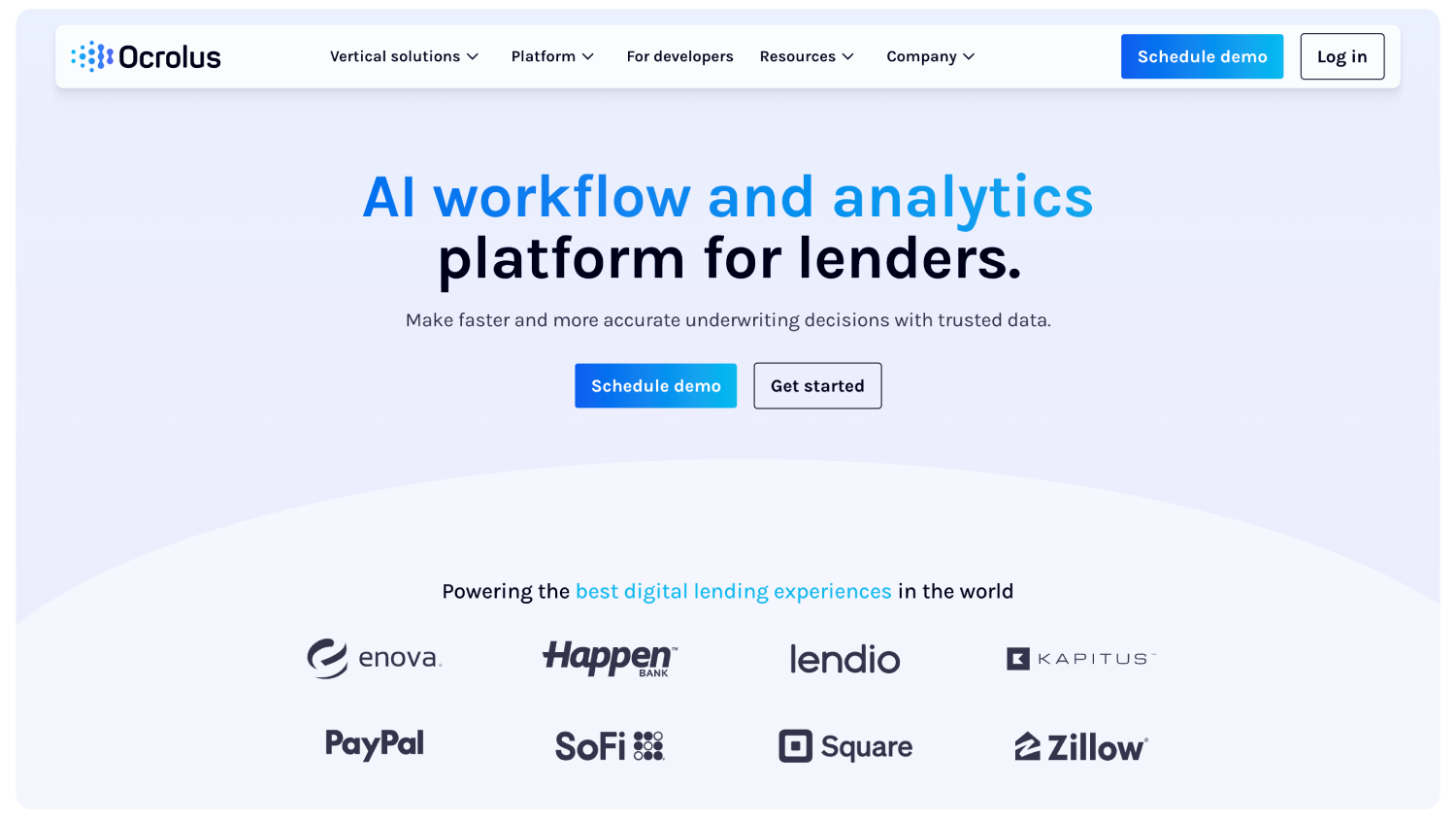
Ocrolus converts bank statements, pay stubs, tax returns, and other financial documents into structured data using a combination of machine learning and human-in-the-loop quality checks. Its audit trail is built into the product: every data point can be traced back to the source document. This is the feature that matters most for fair lending exams, not the accuracy rate. Lenders serving thin-file borrowers or small businesses with non-traditional income benefit most. Pricing is not publicly listed as of this writing and varies by volume.
Heron Data
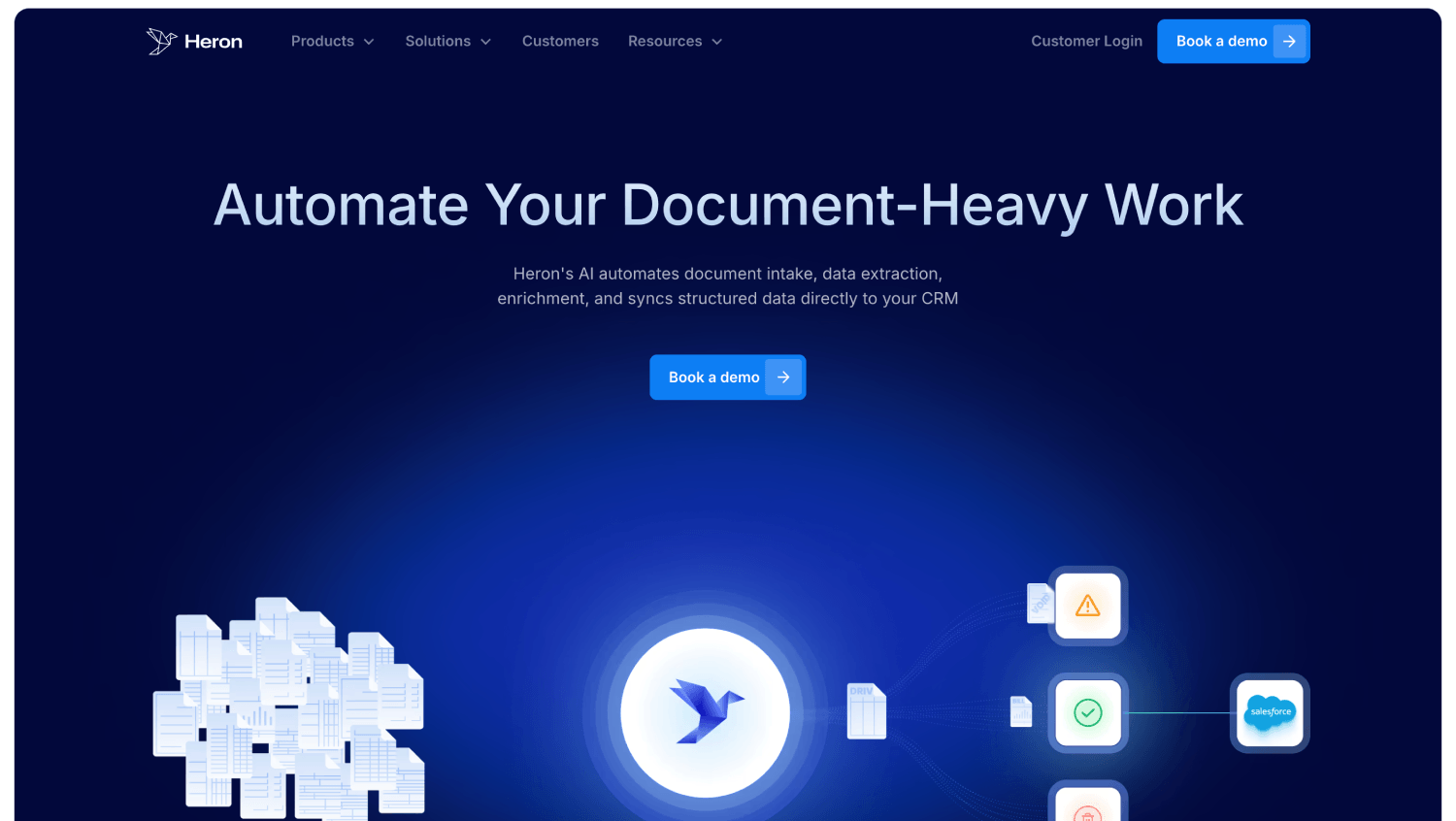
Heron Data focuses on transaction-level categorization from bank feeds rather than document parsing. It connects to bank accounts via open banking APIs and returns labeled transaction categories, income signals, and custom features that a lender’s model can consume directly. The use case is primarily small business lending and embedded credit, where borrowers can share live bank access rather than uploading PDFs. Pricing is API-call based and varies by volume.
Prism Data
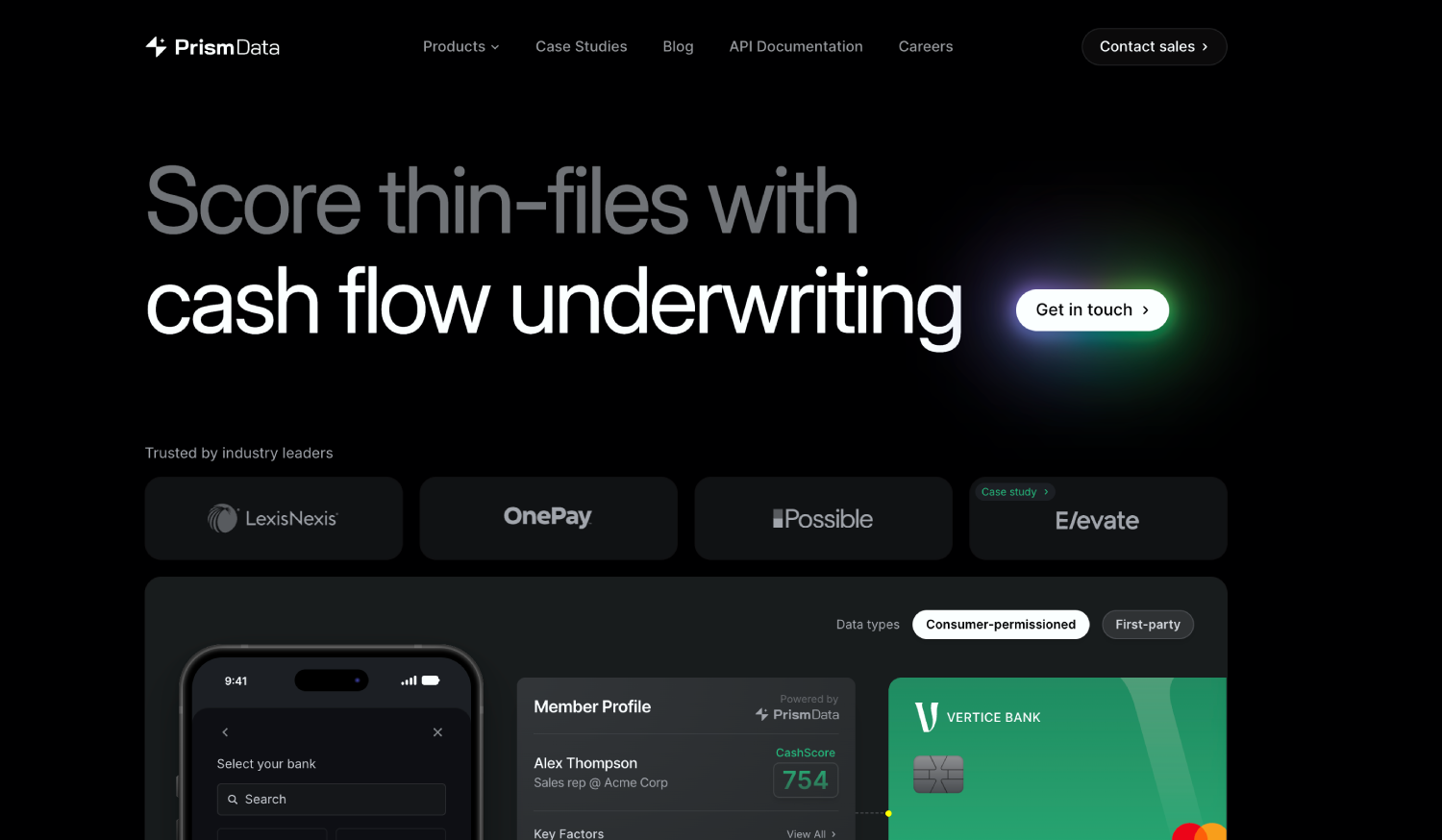
Prism Data sits between Ocrolus and Heron Data in terms of positioning. Its CashScore product generates a single predictive score from cash flow data, aimed at lenders who want a model output rather than raw features to feed into their own model. It is designed for consumer lenders specifically, which distinguishes it from Ocrolus’s broader document coverage. The full comparison of these three platforms is covered in the Ocrolus vs Heron Data vs Prism Data cash flow underwriting breakdown.
For lenders who want to evaluate the broader data enrichment layer before choosing a specific tool, the FintechSpecs guide to the 7 best data enrichment APIs for fintech underwriting covers the full vendor set including credit bureau alternatives.
Stage 3: Which AI Tools Handle Income and Employment Verification?
Income verification has historically been the slowest part of the underwriting queue. Borrowers upload pay stubs, lenders manually confirm the figures, and any discrepancy triggers a back-and-forth that can add days to close. Payroll connectivity APIs eliminate the document upload entirely by pulling income and employment data directly from payroll systems with borrower consent.
Argyle
Argyle connects to over 800 payroll platforms and employment data sources, covering the majority of W-2 workers in the US. Its differentiation is direct-to-source payroll connectivity rather than credit bureau-derived income estimates. Lenders get real-time employment status, pay frequency, year-to-date income, and historical earnings. For consumer mortgage and personal loan lenders, this replaces the verbal verification of employment (VVOE) call. Argyle prices per verification on a volume-tiered basis; the company does not publish a standard rate card publicly, so lenders should request a quote based on anticipated monthly pull volume.
Pinwheel
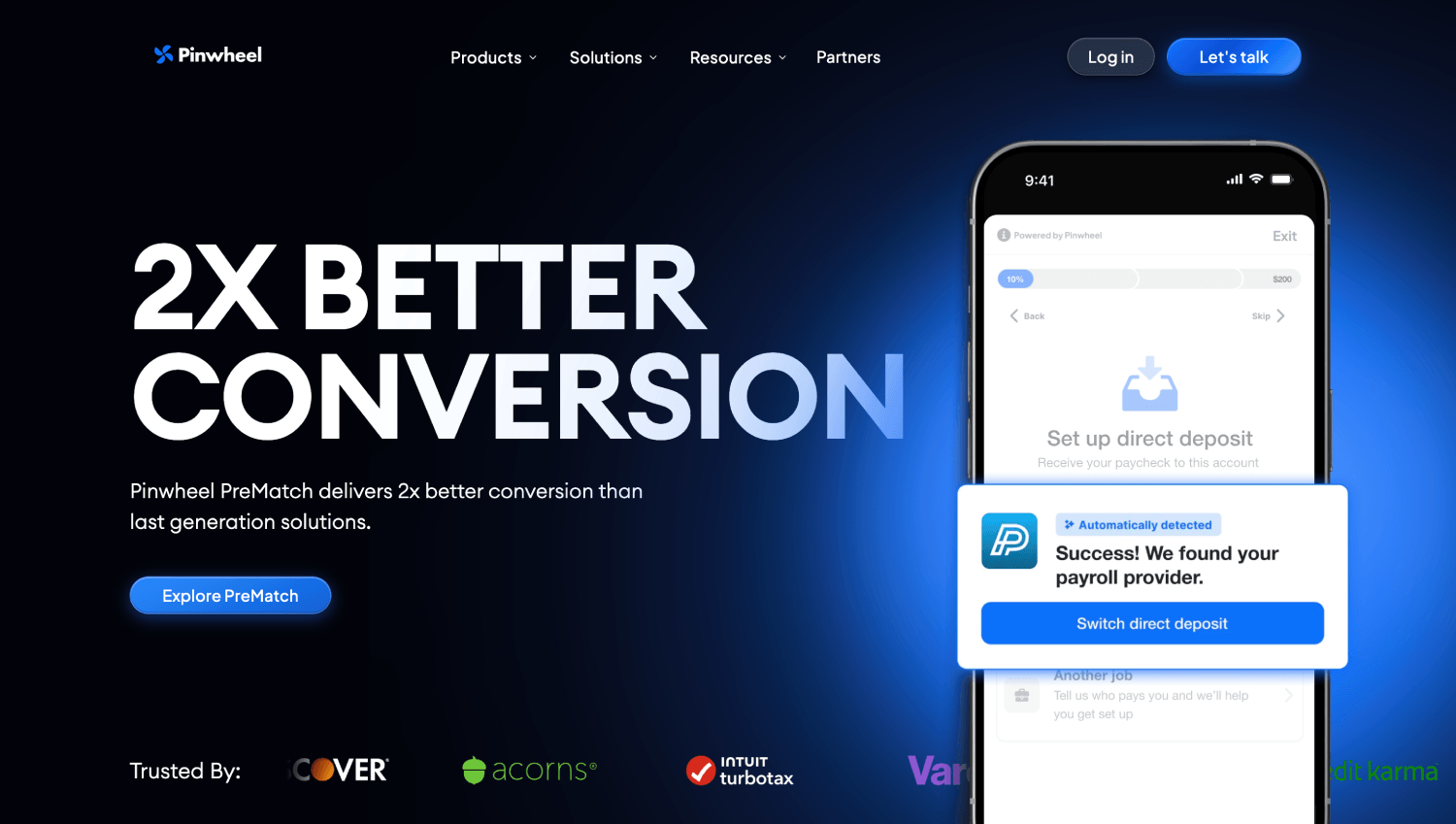
Pinwheel competes directly with Argyle on payroll coverage and adds direct deposit switching as a product alongside income verification. For lenders who also want to capture the deposit relationship at origination, Pinwheel’s bundle has strategic value beyond pure verification. Pinwheel also prices per verification on a volume-tiered basis without a publicly available rate card; pricing should be confirmed directly with the vendor. The detailed head-to-head is covered in the Argyle vs Pinwheel comparison for lenders.
Truework
Truework handles verifications that payroll connectivity cannot reach. When a borrower works for a small employer not covered by Argyle or Pinwheel, Truework falls back to credentialed database lookups and phone verification managed by its own operations team. For mortgage lenders in particular, who face strict GSE verification requirements, Truework’s hybrid approach handles the long tail of employers that pure-API solutions miss.
For lenders evaluating the full income verification API market, the FintechSpecs guide to the 7 best income and employment verification APIs for lenders covers Argyle, Pinwheel, Truework, and four additional vendors with pricing notes.
Stage 4: Which AI Tools Power Credit Decisioning and Underwriting Automation?
Credit decisioning platforms are the orchestration layer. They sit above the data APIs, below the LOS, and connect rules, models, and human review into a single decision flow. This is the stage most often described as a “black box,” and it is the stage where that description is most inaccurate in 2026.
The FintechSpecs overview of the 9 best AI underwriting and credit decisioning platforms covers this category in full detail. The brief version: the market separates into three types of buyers.
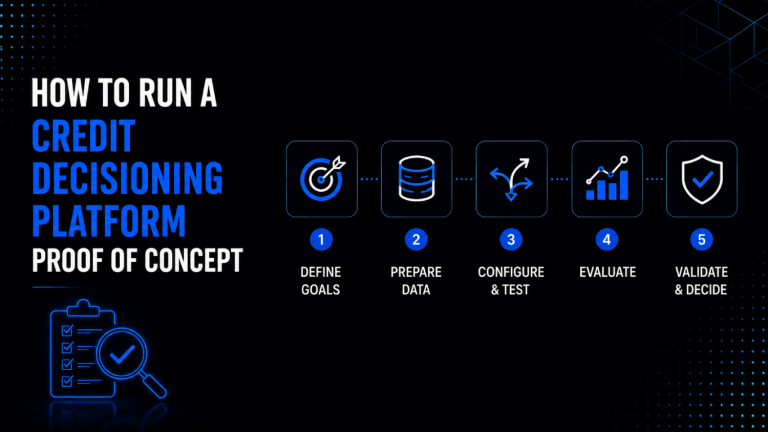
Lenders who want to build and own their own decision logic should evaluate rule-based decision engines like Taktile, where data scientists configure decision flows visually and the model layer is pluggable. Lenders who want a pre-built model they can tune should evaluate model-centric platforms. Lenders who are non-bank fintechs launching embedded credit should evaluate platforms purpose-built for that use case. A lender running a proof of concept should read the guide to running a credit decisioning platform POC before signing any contract, because the evaluation criteria differ significantly from a standard SaaS evaluation.
Zest AI
Zest AI builds machine learning models for credit unions and banks, positioning its models as alternatives to traditional scorecards. Its primary claim is that its models approve more borrowers at the same default rate by using more variables than a traditional FICO-based scorecard. It targets credit unions and community banks rather than fintech lenders, and its implementation involves Zest building and monitoring the model on the lender’s behalf. Pricing is not publicly listed as of this writing.
Taktile
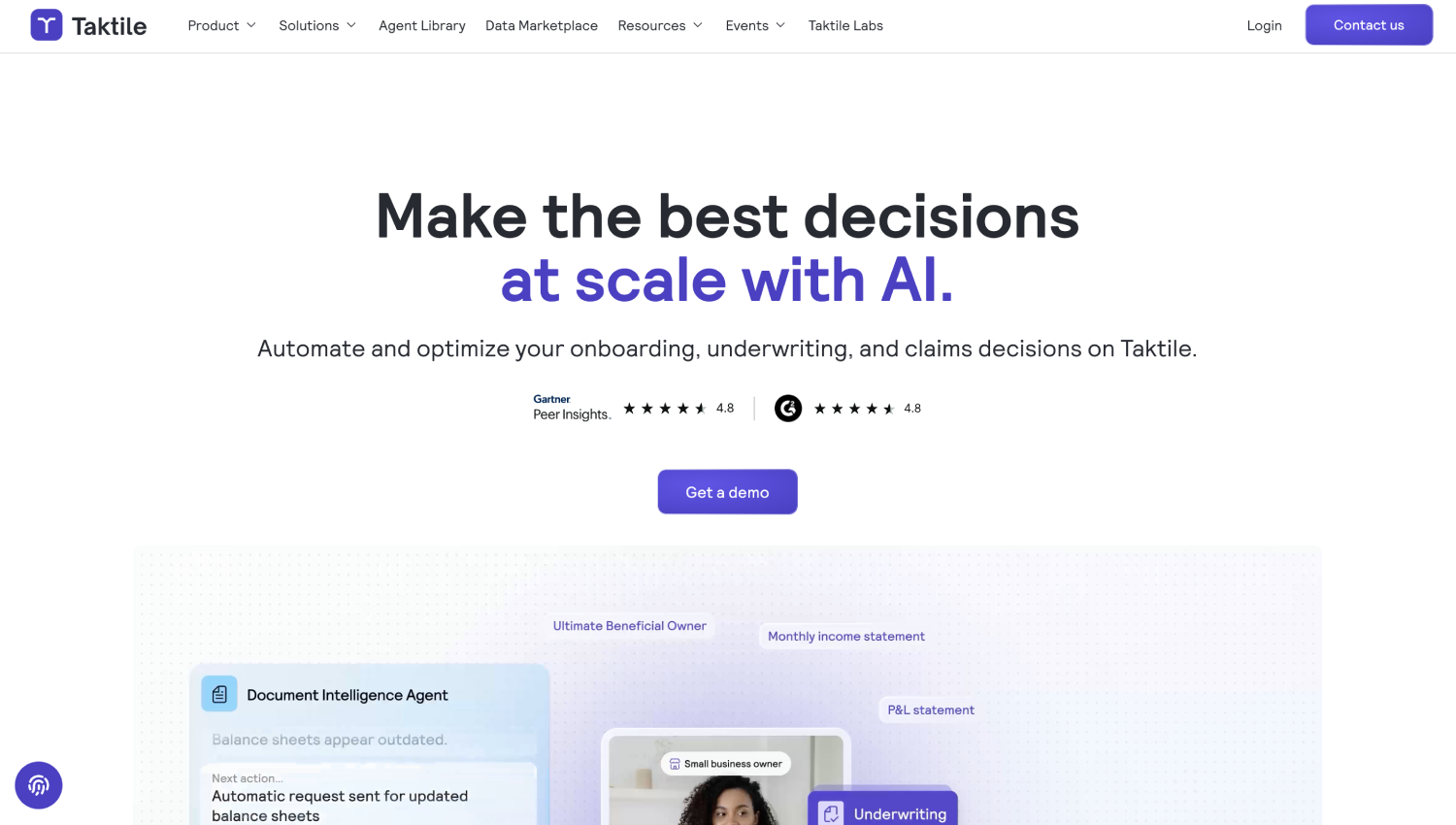
Taktile is a no-code decision flow builder that lets credit teams configure rules, integrate data sources, and run A/B tests on decision policies without engineering involvement. Its value is speed of iteration on credit policy, not a pre-built model. A lender can change an approval threshold, test it against 90 days of historical applications, and deploy the change in hours rather than sprints. Pricing is not publicly listed; lenders should request a quote based on monthly decision volume.
For lenders whose budget or vendor preference pushes them away from either platform, the FintechSpecs comparison of 9 Taktile alternatives covers the alternatives with comparable capabilities.
Stage 5: Which AI Tools Handle Commercial Credit Memo and Financial Spreading?
Commercial and small business lenders have a manual bottleneck that consumer lenders do not: the credit memo. Reading financial statements, writing a narrative memo, and presenting it to a credit committee is time-intensive work per deal , an operational cost that compounds quickly at volume. AI spreading tools compress that cycle by automatically extracting line items from tax returns and financial statements, calculating standard ratios, and generating a first-draft narrative. We have not independently benchmarked time savings across lenders; the actual reduction will depend on deal complexity, analyst familiarity with the tool, and document quality.
Blooma
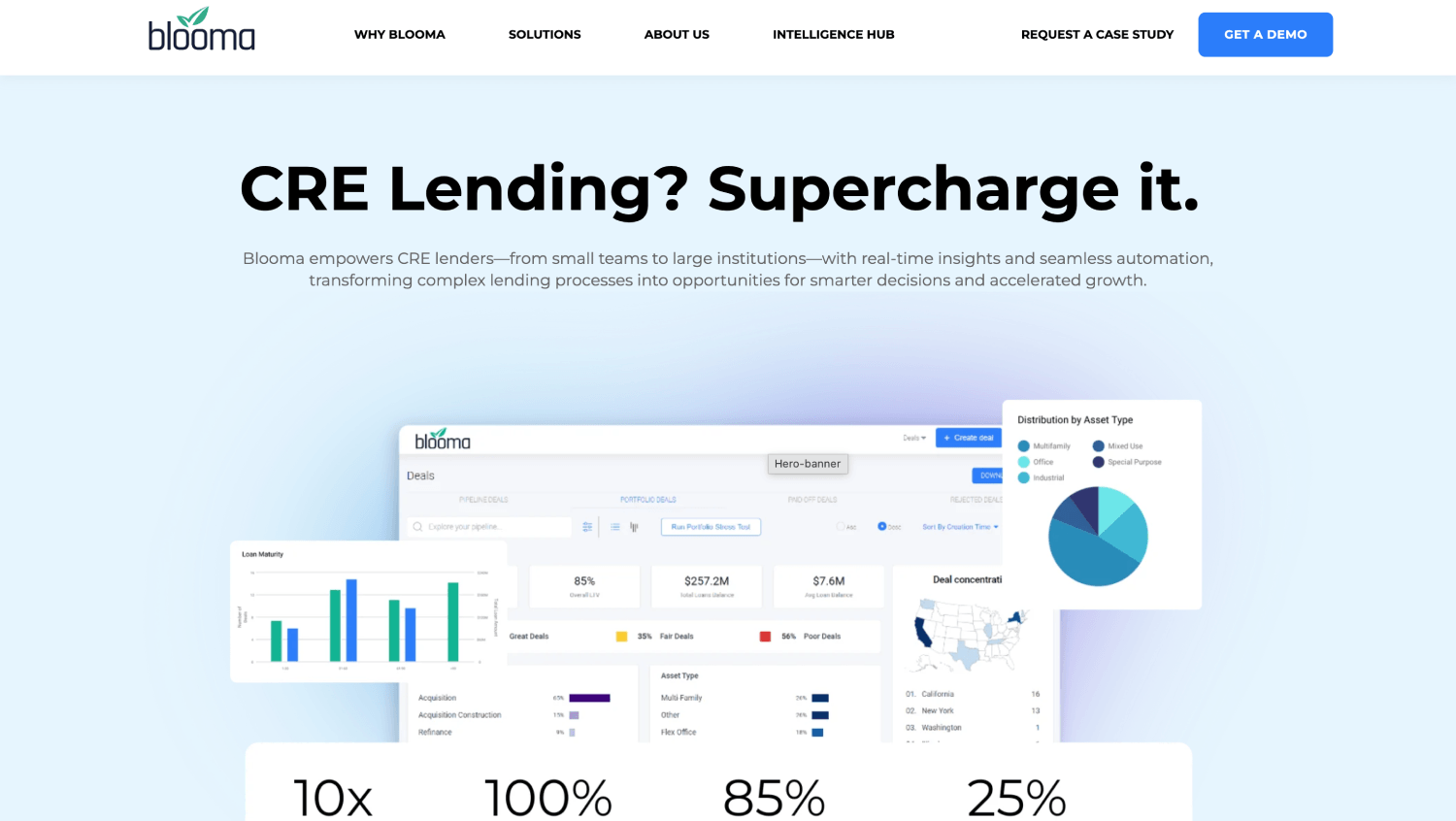
Blooma targets commercial real estate lenders specifically. It extracts data from rent rolls, operating statements, and appraisal reports, calculates debt service coverage ratios and loan-to-value metrics, and generates a credit memo draft. For CRE lenders processing more than 20 deals per month, the time savings are material. Blooma does not serve residential mortgage or consumer lending use cases.
Spreading.ai and Comparable Tools
The broader AI credit memo and financial spreading category covers tools that handle C&I lending, SBA loans, and general commercial credit. The FintechSpecs guide to the 7 best AI credit memo and financial spreading tools covers this segment in full, including tools that handle tax return spreading and CPA-prepared financials alongside bank statement data.
Stage 6: Which AI Tools Automate Loan Servicing After Funding?
Loan servicing is the stage where AI has historically gotten the least attention from lenders and the most complaints from borrowers. Payment processing, escrow management, delinquency tracking, and investor reporting are operationally dense and error-prone when run on legacy systems. AI servicing platforms address this by automating payment application logic, generating compliant borrower communications, and flagging accounts at risk of delinquency before they miss a payment.
LoanPro
LoanPro is a modern loan servicing and management platform built on a configurable, API-first architecture. It handles payment processing, automated payment application rules, delinquency management, and investor reporting. Its AI layer surfaces portfolio anomalies and early delinquency signals. It is a strong fit for non-bank lenders and fintech lending programs that need a servicing platform that can be configured without a systems integrator. Pricing is not publicly listed as of this writing.
Peach Finance
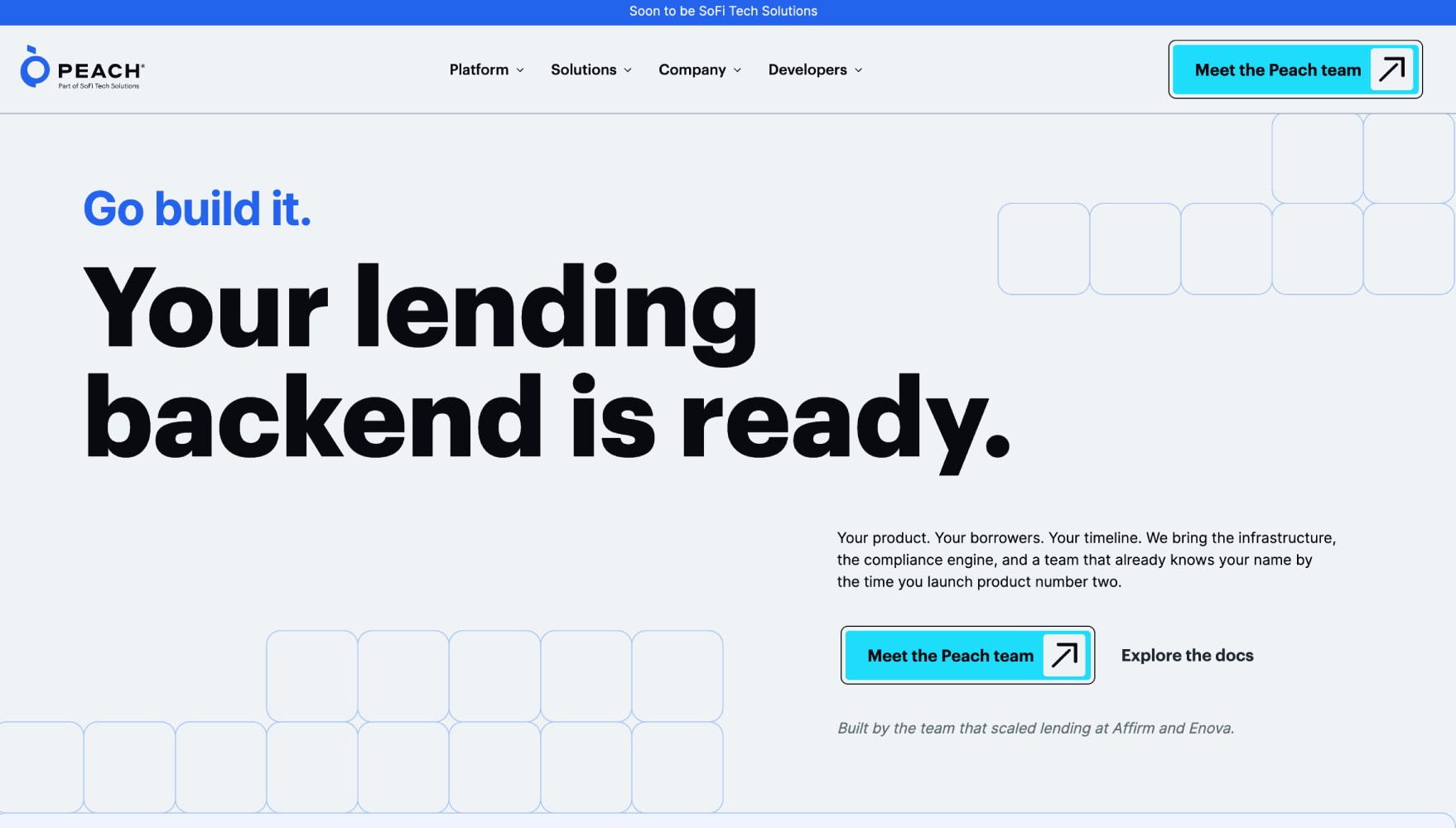
Peach Finance positions itself as a loan management system for fintech lenders, with particular strength in handling complex product types including income-share agreements, BNPL programs, and non-standard amortization schedules. Its API-first design makes it easier to integrate with custom origination and data layers than a traditional servicing platform. The full comparison with LoanPro and Canopy is covered in the FintechSpecs guide to the 9 best loan servicing software and APIs.
Canopy Servicing
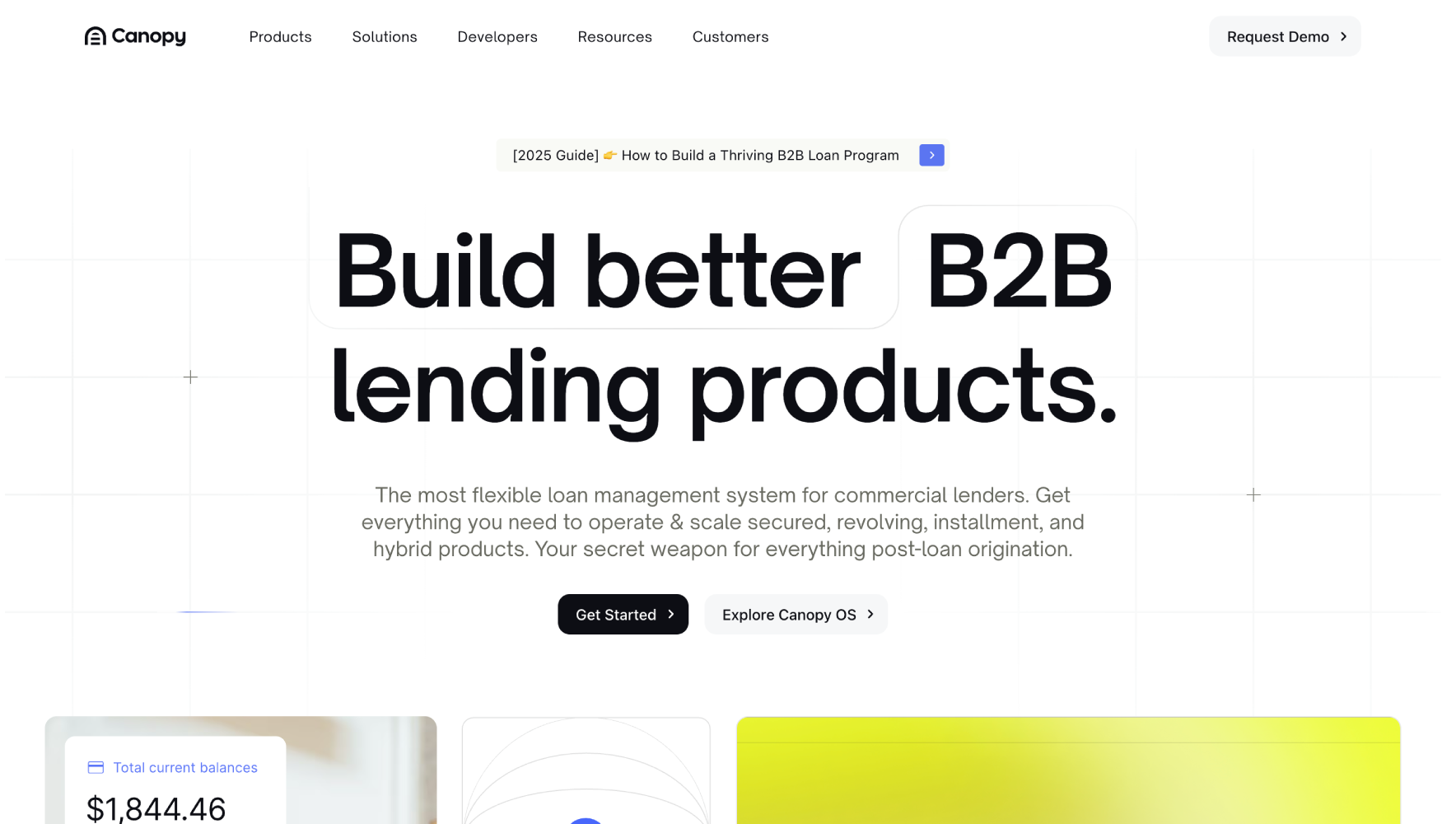
Canopy targets credit card and revolving credit programs alongside installment loans. Its servicing logic handles the complexity of revolving credit that most installment-loan-focused platforms cannot accommodate cleanly. For lenders with a mix of product types, Canopy reduces the need for separate servicing infrastructure per product. The FintechSpecs guide to the 7 best AI loan servicing platforms covers Canopy, LoanPro, Peach, and four additional options with capability comparisons.
Stage 7: Which AI Tools Handle Borrower Communications and Collections?
Collections is the stage where AI skepticism is highest among lending teams, and where the actual tools are most practical. AI voice agents and automated outreach tools do not replace collectors. They handle the first two to three contact attempts on early delinquencies, freeing collectors to focus on accounts where human negotiation changes the outcome.
Prodigal
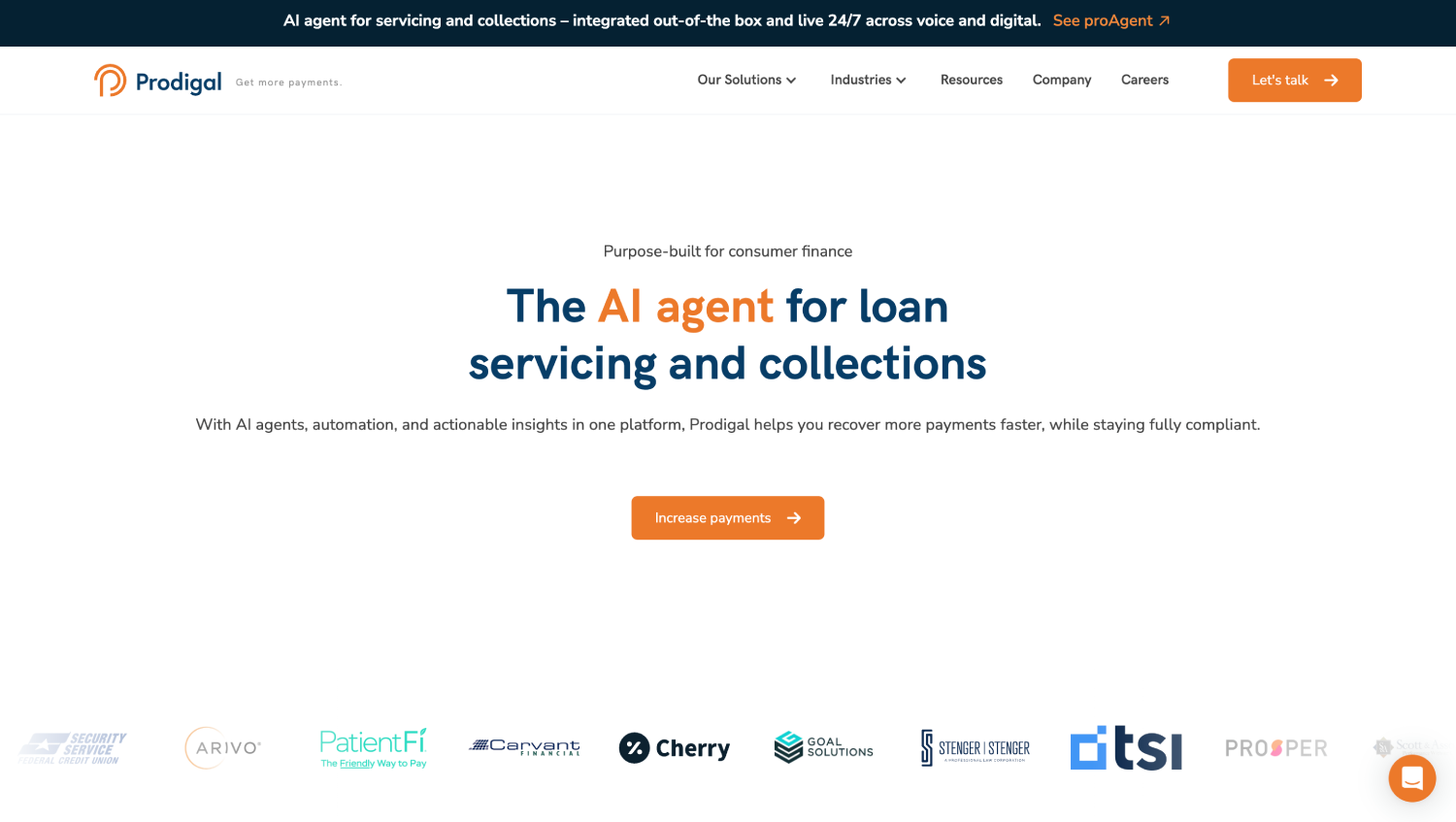
Prodigal uses AI to analyze collector calls, surface coaching insights, and automate borrower engagement for early-stage delinquencies. Its conversation intelligence layer flags FDCPA compliance risks in real time during calls, which is a meaningful operational guardrail for high-volume collections operations. It targets consumer lenders and debt servicers rather than commercial lenders.
Lexop
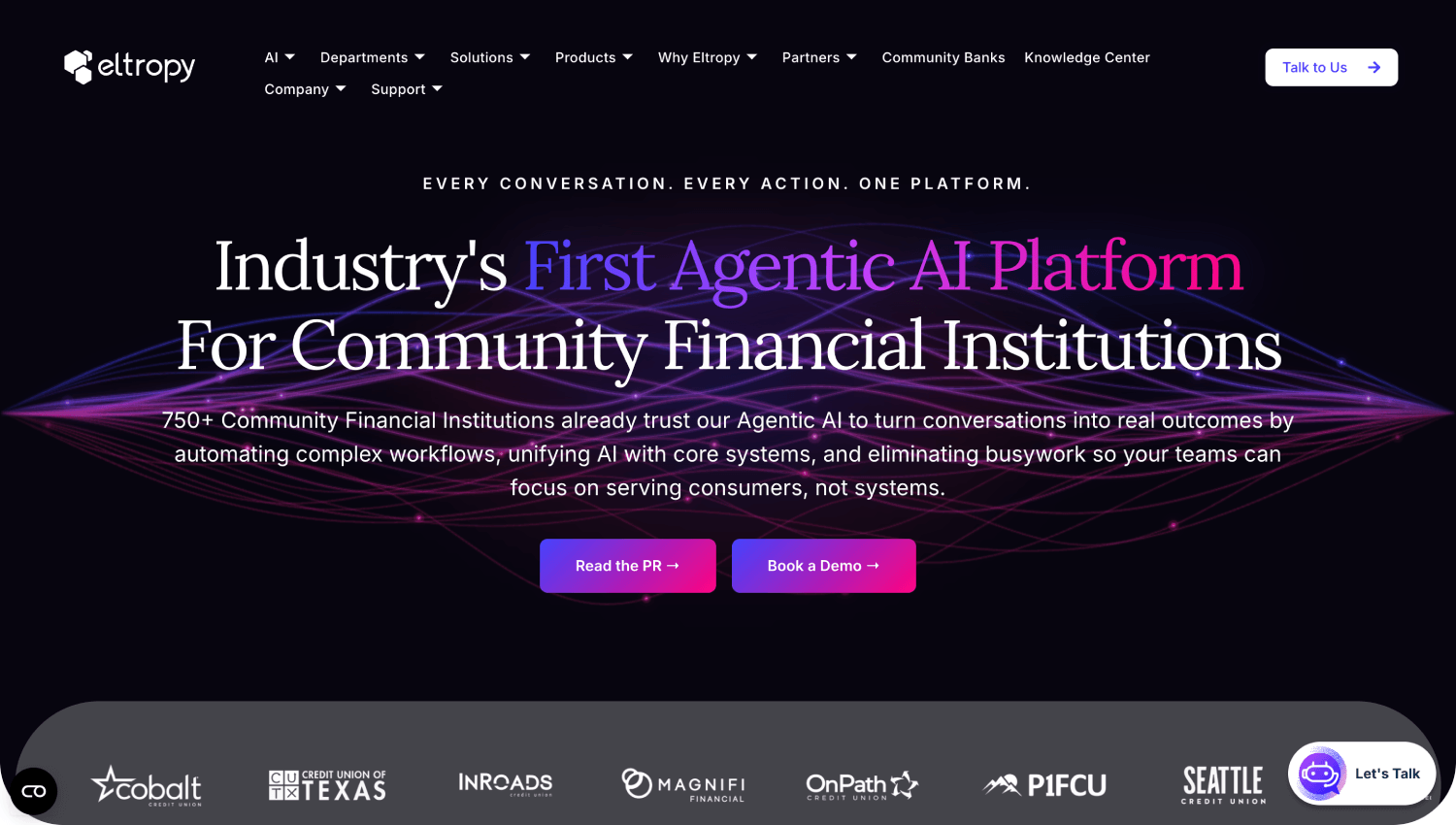
Lexop (acquired by Eltropy) focuses on digital self-service for early-stage collections. Borrowers who miss a payment receive a digital communication with a link to self-cure: view their balance, arrange a payment plan, or ask for a hardship option. The AI layer personalizes timing and channel selection based on borrower behavior. The result for lenders is lower cost per account worked at the early delinquency stage. The full collections AI market is covered in the FintechSpecs guide to the 8 best AI collections software and voice agents.
AI Voice Agents for Borrower Outreach
A separate but related category covers AI voice agents that handle inbound borrower queries about loan status, payment due dates, and payoff quotes. These tools reduce inbound call volume to servicing teams without reducing borrower service quality. The FintechSpecs guide to the 7 best AI voice agents for banks and credit unions covers the vendors with verified integrations into major loan servicing platforms.
Stage 8: Which AI Tools Monitor Portfolio Risk After Funding?
Portfolio monitoring is where AI catches what origination missed. A borrower who qualified cleanly at origination may show cash flow deterioration six months later. Traditional portfolio review happens quarterly or annually. AI monitoring tools watch for early warning signals continuously: NSF frequency increases, revenue declines in bank feed data, changes in employment status, or external data signals like business license lapses or tax lien filings.
Abrigo
Abrigo serves community banks and credit unions with portfolio risk management, credit analysis, and stress testing tools. Its AI layer surfaces early warning indicators on commercial loan portfolios and flags accounts for analyst review before a formal review cycle. It integrates with major core banking systems. Pricing is not publicly disclosed and is typically structured as an annual subscription per institution.
Baker Hill
Baker Hill offers a credit analysis and portfolio monitoring platform targeting commercial lenders at community and regional banks. Its risk rating tools use financial spreading data to automate risk grade calculations and flag grade migration events. For lenders who are also evaluating origination workflow tools, Baker Hill competes with nCino in the commercial banking segment.
Visible Equity
Visible Equity focuses on credit union portfolio analytics, with particular depth in mortgage and consumer loan portfolio stress testing. Its peer benchmarking data lets credit unions compare their loss rates and delinquency trends against institutions of similar size and asset mix. This peer data is useful context during regulatory exams. Pricing is not publicly disclosed as of this writing.
How Should a Mid-Size Lender Sequence AI Tool Adoption?
The FintechSpecs Lending AI Adoption Sequence is a practical buying order based on where AI tools produce measurable ROI fastest relative to implementation complexity. It is not a universal rule, but it reflects the pattern that emerges when you look at which tools lenders actually renew after the first contract year.
Start with data enrichment and income verification. These tools plug into your existing LOS and decisioning process without replacing either. The output is a faster, cheaper, and more consistent data input to decisions your team already makes. Implementation is typically measured in weeks, not quarters. The ROI shows up in analyst time savings and application processing speed within the first month.
Add credit decisioning automation second, once you understand what your data inputs look like in structured form. A decisioning platform is easier to configure and test when your team has already spent three to six months working with structured cash flow and income data. Teams that jump straight to decisioning platforms without clean data inputs spend most of their implementation time on data cleaning instead of policy configuration.
Add AI servicing and collections tools third. These are operational efficiency plays with longer payback periods than data and decisioning tools, but they also compound. A reduction in early delinquency through AI outreach adds up over a portfolio lifetime in a way that a one-time origination efficiency gain does not.
Portfolio monitoring and commercial credit memo tools can be added in either order depending on your book composition. Commercial-heavy lenders should prioritize spreading and memo tools earlier because the manual time cost per deal is higher. Consumer lenders with large portfolios should prioritize monitoring tools because the volume of accounts that benefit from automated surveillance is higher.
| Adoption Priority | Stage | Why First | Typical Implementation Time |
|---|---|---|---|
| 1 | Data enrichment and income verification | Plugs into existing process, fast ROI | 2 to 6 weeks |
| 2 | Credit decisioning platform | Needs clean data inputs to configure effectively | 6 to 16 weeks |
| 3 | AI servicing and collections | Compounding efficiency gain over portfolio life | 8 to 20 weeks |
| 4 | Portfolio monitoring or credit memo tools | Book composition determines which comes first | 4 to 12 weeks |
What Does Explainability Actually Mean in AI Lending Tools?
Explainability in AI lending has a specific legal meaning, not a marketing one. Under ECOA and the FCRA, when a lender takes an adverse action on a credit application, it must provide the applicant with the principal reasons for that action. A model that produces a score without reason codes does not meet this requirement, regardless of its accuracy.
Every commercial credit decisioning and AI underwriting platform in this list produces reason codes that satisfy adverse action notice requirements. The mechanism varies: some use SHAP values (a statistical method for attributing model output to individual features), some use predefined reason code libraries mapped to model variables, and some use both. What matters operationally is that the reason codes are meaningful to a borrower, not just statistically accurate. “Cash flow volatility” is meaningful. “Feature 47 exceeded threshold” is not.
Human-in-the-loop means different things in different platforms. In a decisioning engine like Taktile, it means a rule can route any application above a certain risk score to a human review queue before a decision is issued. In a collections AI like Prodigal, it means a human collector can override the AI’s suggested script or escalation recommendation at any point. In both cases, the human is not reviewing AI output after the fact. They are a decision node inside the workflow.
A practical test for evaluating any AI lending tool: ask the vendor to walk through what a regulator would see when requesting the decision audit trail for a specific declined application from 18 months ago. That exercise , which we call the Name-Swap Test in vendor evaluations , reveals whether the platform’s explainability is production-grade or a demo-environment feature. If the vendor cannot produce a clean, traceable audit trail on a historical decision during the sales process, assume it will not be available during an exam.
What Do AI Lending Tools Actually Cost?
Pricing transparency varies widely across this market. The vendors with the most standardized pricing are the API-first data tools. Decisioning platforms and full servicing platforms almost universally require a custom quote.
For cash flow underwriting APIs, pricing is typically per document processed or per API call. Vendors in this category do not publish standard rate cards publicly, but lenders processing fewer than 500 files per month are generally considered low-volume and may face minimum commitments that make per-unit economics less favorable than they appear at first glance.
Income verification APIs like Argyle and Pinwheel price per verification pull. The per-pull rate varies by volume tier and by whether the lender is pulling a one-time verification or subscribing to ongoing employment monitoring. Lenders evaluating these tools should model both the per-funded-loan cost and the cost of verification attempts on applications that do not fund, since conversion rates affect the real cost per verification significantly.
Credit decisioning platforms typically charge a platform fee plus a per-decision fee. The platform fee covers the infrastructure, hosting, and support. The per-decision fee scales with volume. Some platforms also charge for data source integrations separately from the base platform fee. Any lender comparing total cost of ownership across platforms should ask vendors to quote on a consistent monthly decision volume so the comparisons are apples-to-apples.
Loan servicing platforms charge based on active loan count or total outstanding principal. A lender with $100M in active principal will pay materially more than one with $20M, and pricing structures differ enough that the cheapest platform at $20M may not be the cheapest at $100M. Model your volume trajectory over 24 months before choosing a servicing platform based on current pricing.
Frequently Asked Questions About AI Tools for Lending Teams
What is the difference between an AI underwriting tool and a credit decisioning platform?
An AI underwriting tool typically handles a specific data input: parsing bank statements, verifying income, or spreading financial statements. A credit decisioning platform is the orchestration layer that takes inputs from underwriting tools, applies rules and model scores, routes edge cases to human review, and issues a decision. Most lenders need both. The underwriting tool feeds clean data to the decisioning platform, which then produces an explainable credit decision with audit trail.
Do AI lending tools satisfy CFPB adverse action notice requirements?
Commercial AI credit decisioning platforms sold to regulated US lenders produce reason codes designed to satisfy ECOA adverse action notice requirements. The specific implementation matters: the reason codes must be meaningful to the borrower, not just statistically accurate. Before deploying any AI decisioning tool, lenders should validate that its reason code library meets the specificity standard and document that validation for examiner review. This is a legal question your compliance counsel should review, not a vendor marketing claim to accept at face value.
Which AI lending tool should a mid-size non-bank lender buy first?
A cash flow underwriting API or income verification API is the highest-ROI first purchase for most lenders in the $50M to $300M annual origination range. These tools plug into your existing workflow without replacing your LOS or decisioning process, they reduce analyst time on each file, and they produce structured outputs that make your eventual decisioning platform implementation cleaner. The payback period is typically shorter than a decisioning platform or servicing replacement.
Are AI tools in lending appropriate for thin-file or non-traditional borrowers?
Cash flow underwriting APIs are specifically designed for thin-file use cases where traditional credit bureau scores are absent or uninformative. Ocrolus, Heron Data, and Prism Data all generate cash flow signals from bank statement data that does not rely on bureau score history. For lenders serving gig workers, self-employed borrowers, or recent immigrants without US credit history, these tools expand the approvable population without relaxing credit standards, because they are measuring actual cash behavior rather than credit file depth. Lenders should still validate model fairness across demographic groups before deployment.