
- Taktile is a strong product for fintech-native credit and risk teams, but buyers leave over contract minimums, limited US data integrations out of the box, and the friction of building decision flows without engineering support.
- The real alternatives split into four categories: full-stack decisioning platforms, rules-engine-first tools, compliance-heavy orchestration layers, and lightweight API decisioning for early-stage lenders.
- Migration risk is underestimated. Moving a live underwriting model mid-portfolio is not like switching a billing tool. The platforms below are evaluated explicitly for how hard they are to get out of.
- No single alternative beats Taktile across every dimension. The best choice depends on whether you need model governance, data connectivity, analyst-friendly UI, or raw decisioning speed.
- One platform in this list carries a sponsored profile. It is labeled clearly. The comparison table and verdicts are editorially independent.
The strongest Taktile alternatives for fintech lending and risk teams are Alloy, Oscilar, Inscribe, Provenir, Zest AI, Unit21, Sardine, Lentra, and Scienaptic. Each targets a different buyer profile: Alloy and Oscilar suit orchestration-heavy onboarding stacks, Provenir and Scienaptic handle high-volume lending at scale, Zest AI fits credit unions and banks needing explainable ML, Sardine leads on real-time fraud-plus-credit decisioning, and Lentra is built for consumer and SMB loan origination from origination through servicing.
Why Do Teams Leave Taktile?
Taktile sits in a specific lane: a no-code decision flow builder aimed at analysts and risk managers who want to wire together data sources, scorecard logic, and policy rules without writing Python. That value proposition is real. Where it breaks down is predictable.
Contract economics come up first. Taktile does not publish pricing publicly, and buyers at seed-stage companies regularly report minimum commitments that feel oversized relative to their early decision volumes. When a lender is processing a few hundred applications a month, paying for enterprise infrastructure creates a negative unit-economics problem before the business has validated its credit model.
Data connectivity is the second friction point. Taktile supports integrations with major bureaus and some alternative data providers, but teams building US-market products often need deeper native connectors to sources like Plaid, Argyle, Experian, or specialty cash-flow underwriting APIs. Engineering time spent building and maintaining custom connectors is time not spent on the core credit model. For context on what a well-integrated underwriting data stack looks like, the best data enrichment APIs for fintech underwriting covers the current field in detail.
The third complaint is model governance. Taktile’s strength is rule-based decisioning and decision flows. Teams that want statistical model versioning, champion-challenger testing with full audit trails, or explainability outputs for ECOA compliance find the tooling thinner than expected. That gap is where several alternatives on this list win decisively.
The FintechSpecs Decisioning Stack Segmentation Framework
Most competitor round-ups list ten near-identical tools in a numbered grid. That format fails the buyer because credit decisioning platforms are not interchangeable. The choice depends on where the bottleneck actually lives in your stack.
The FintechSpecs Decisioning Stack Segmentation Framework breaks alternatives into four types based on where they create primary value:
- Orchestration-first platforms connect identity, KYB/KYC, fraud signals, and credit signals into a single decisioning flow. Best for lenders and neobanks that need a unified onboarding and underwriting layer.
- Rules-engine-first tools give analysts a UI to write and test policy logic without code. Best for teams with existing model infrastructure who need a governance layer on top of it.
- ML model platforms own the statistical model, the feature store, and the explainability layer. Best for banks, credit unions, and fintechs that want to replace or augment bureau scores with proprietary models.
- Origination-plus-decisioning systems bundle loan origination, credit decisioning, and servicing orchestration into one product. Best for lenders who do not want to assemble a stack from components.
Each alternative below is categorized by type. The table at the end maps migration risk explicitly.
Which Teams Should Consider Each Taktile Alternative?
Alloy: Orchestration-First, KYB/KYC Through Credit
Alloy started as an identity decisioning platform and has expanded into credit and risk orchestration. Its primary strength is connecting disparate data sources (identity, fraud, credit bureau, cash flow) into a single decision graph with a no-code workflow editor. Teams that are already using Alloy for onboarding and want to extend the same logic into ongoing credit decisioning get meaningful compounding value.
The trade-off is depth versus breadth. Alloy’s credit decisioning layer is less mature than its identity layer. Teams building complex, multi-variable underwriting scorecards will hit limits faster than they would on Provenir or Scienaptic. For head-to-head identity context, the Alloy vs Persona comparison on identity orchestration covers where Alloy’s strengths and weaknesses sit relative to another orchestration-focused competitor.
Best for: Fintech lenders at Series A to Series B that are already using Alloy for onboarding or that need a single platform for KYB, KYC, fraud, and credit decisioning without assembling components.
Oscilar: Real-Time AI Decisioning With Minimal Engineering
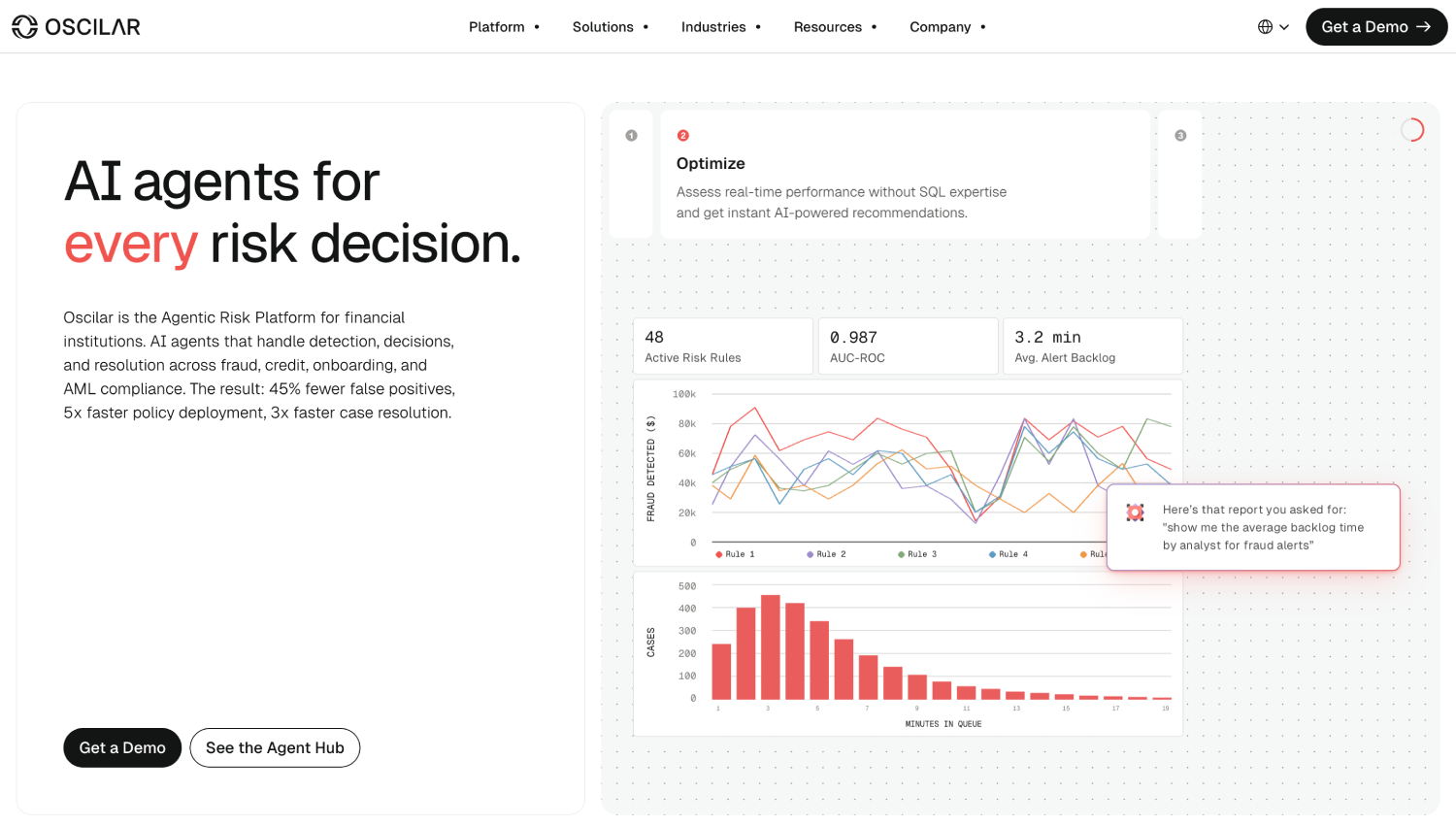
Oscilar consistently appears in competitor lists for Taktile and for good reason. It focuses on real-time risk and credit decisioning using AI-driven rules that adapt based on outcome data. The analyst-friendly interface is genuinely close to Taktile’s in usability, but Oscilar adds a feedback loop layer that automatically flags rule drift as portfolio performance data comes in.
Oscilar’s pricing is not publicly listed, which is a recurring theme across this category. Teams should budget for enterprise contract discussions. The platform skews toward fraud-adjacent use cases as much as pure credit decisioning, which matters if your risk team handles both.
Best for: Risk teams that want AI-assisted rule suggestions and real-time decisioning without a dedicated ML engineering team. Particularly strong for fraud-plus-credit use cases where a single decisioning layer is preferable to separate tools.
Provenir: Rules Engine and ML Model Governance at Scale
Provenir is a rules-engine-first platform with a long track record in consumer and SMB lending. Its model management layer supports champion-challenger testing, version control, and scorecard governance in a way that most newer platforms do not match. For lenders running live portfolios with regulatory audit requirements, that governance infrastructure matters.
Provenir’s interface is more complex than Taktile’s. Analysts without technical training will face a steeper learning curve. Implementation timelines are also longer: enterprise deployments typically run in weeks to months rather than days. The platform is built for scale, not speed of initial deployment.
Best for: Banks, credit unions, and established fintechs with high-volume lending operations that need documented model governance and audit-ready decisioning history. Overkill for a seed-stage company processing under 1,000 applications a month.
Zest AI: Explainable ML for Credit Unions and Community Banks
Zest AI occupies a specific niche: replacing or augmenting traditional bureau-score-based underwriting with machine learning models that meet ECOA and fair lending explainability requirements. The platform is built with compliance-first architecture, meaning every decision comes with an adverse action reason code that satisfies regulatory requirements out of the box.
This is meaningfully different from Taktile, which is primarily a decision flow builder. Zest AI owns the model itself, not just the rules that sit on top of it. That distinction matters for institutions that want to move beyond FICO but face regulatory constraints on black-box models. The limitation is that Zest AI is not a general-purpose orchestration platform. It solves a specific problem for a specific buyer.
Best for: Credit unions, community banks, and regulated consumer lenders that need fair-lending-compliant ML underwriting and cannot use a black-box model. Less relevant for B2B lenders or fintechs without direct ECOA exposure.
Sardine: Fraud and Credit Signals in One API
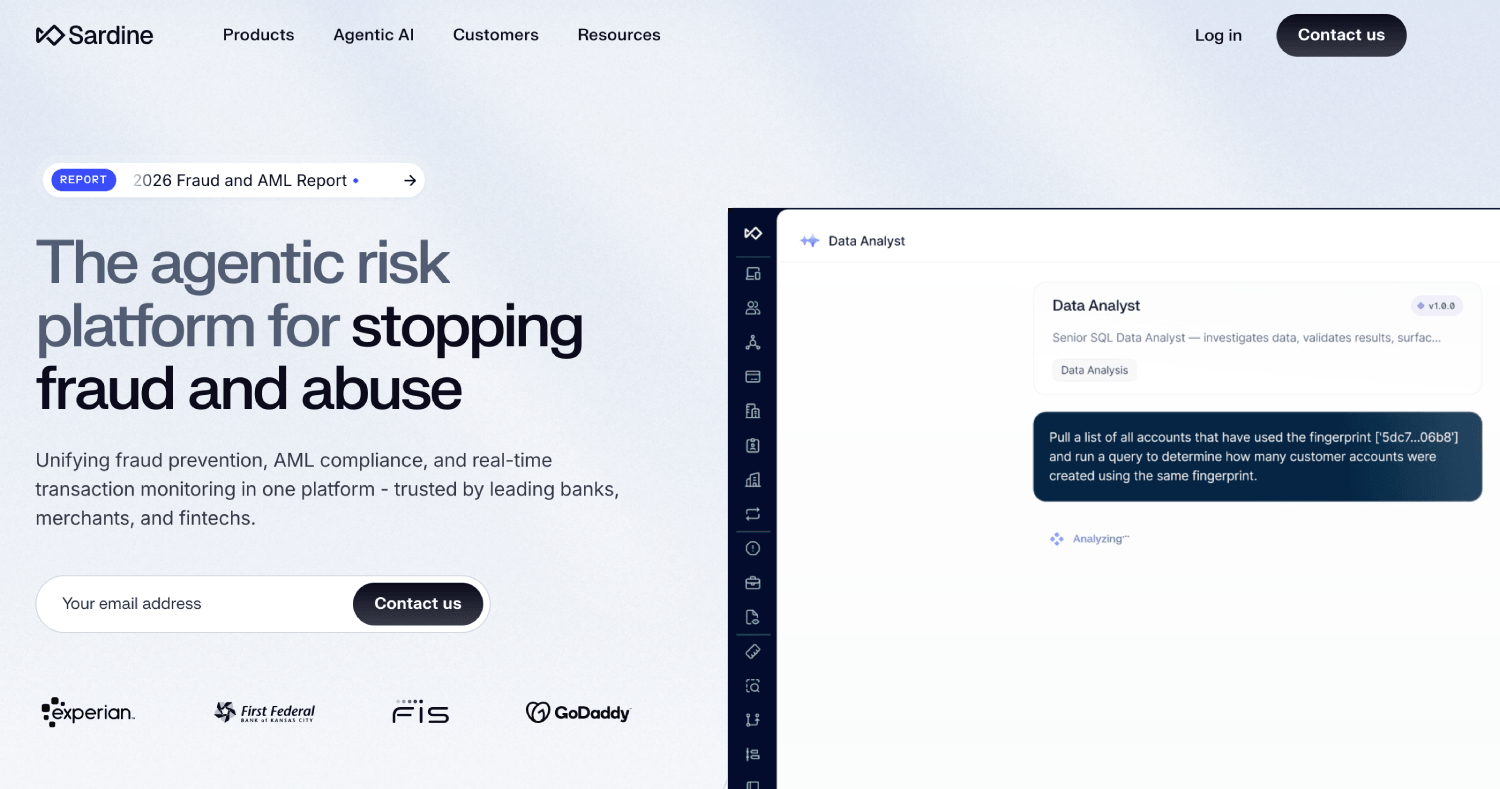
Sardine approaches credit risk from a fraud intelligence angle. Its platform combines device fingerprinting, behavioral biometrics, bank data analysis, and risk scoring into a single API that can feed decisioning logic. The key differentiation is the behavioral layer: Sardine captures how a user interacts with an application (typing speed, copy-paste behavior, session patterns) and factors that into risk signals alongside traditional credit data.
For fintechs dealing with application fraud, synthetic identity fraud, or first-payment default, Sardine’s signal set is genuinely additive. It is not a full underwriting platform on its own, but it integrates well with rules engines and orchestration layers. Teams looking at Sardine alongside the broader fraud tool market should review the fraud detection and risk tools comparison for fintech startups for positioning context.
Best for: Fintechs with high fraud exposure who want behavioral and device intelligence layered into credit decisions. Works best as a signal provider feeding a separate rules engine, not as a standalone underwriting platform.
Unit21: Rules Engine With Case Management Built In
Unit21 is primarily a fraud and AML platform, but its rules engine and alert management infrastructure makes it a viable Taktile alternative for teams that need policy automation with a human review layer. The platform lets risk teams write rules, generate alerts, and manage review queues in one product, which reduces the tooling surface area versus assembling separate decisioning and case management tools.
Unit21’s credit decisioning capability is more limited than its fraud and compliance capabilities. Teams primarily looking for credit underwriting logic will find it thinner than Provenir or Oscilar. The sweet spot is teams that need both automated decisioning and analyst review workflows under a single system. The Unit21 vs Alloy comparison for fraud and risk covers where each platform’s decisioning architecture diverges.
Best for: Risk and compliance teams that run both automated decisioning and manual review workflows and want a single platform that handles both without custom integration.
Scienaptic AI: AI Underwriting for Lending Institutions
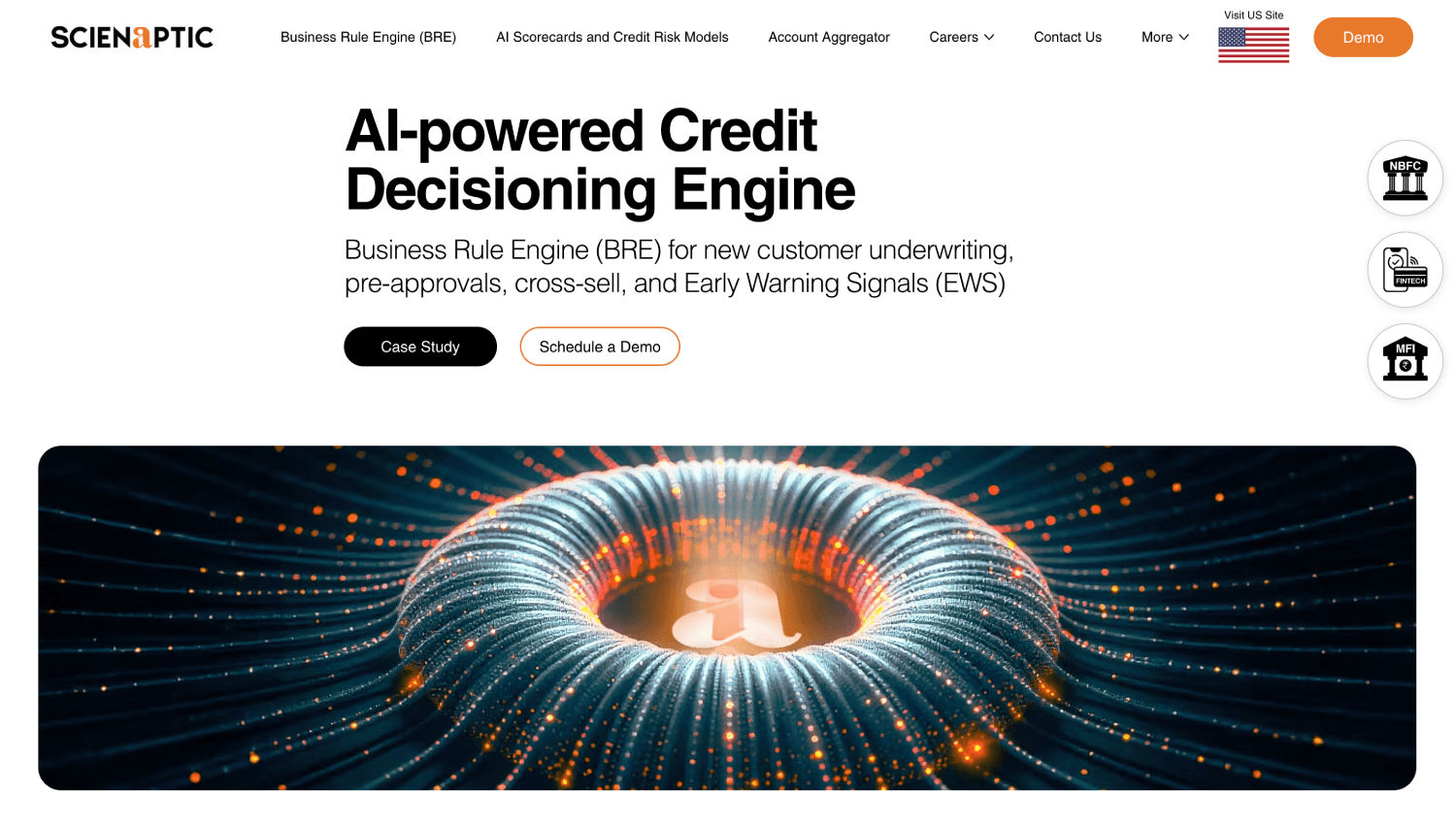
Scienaptic AI positions as an AI-powered underwriting platform targeting banks, credit unions, and auto lenders. Like Zest AI, it focuses on enhancing or replacing traditional credit scoring with models that incorporate alternative data. Its differentiator is a pre-built model library trained on lending-specific data sets, which reduces time to deployment versus building models from scratch.
Scienaptic’s platform is built for lenders with meaningful origination volume. The pricing model and implementation complexity are both weighted toward established institutions rather than early-stage fintechs. Teams at the seed stage will likely find it oversized for their current needs.
Best for: Established consumer and auto lenders who want AI-augmented underwriting with pre-built models and do not want to build model infrastructure internally.
Lentra: Origination and Decisioning for SMB and Consumer Lenders
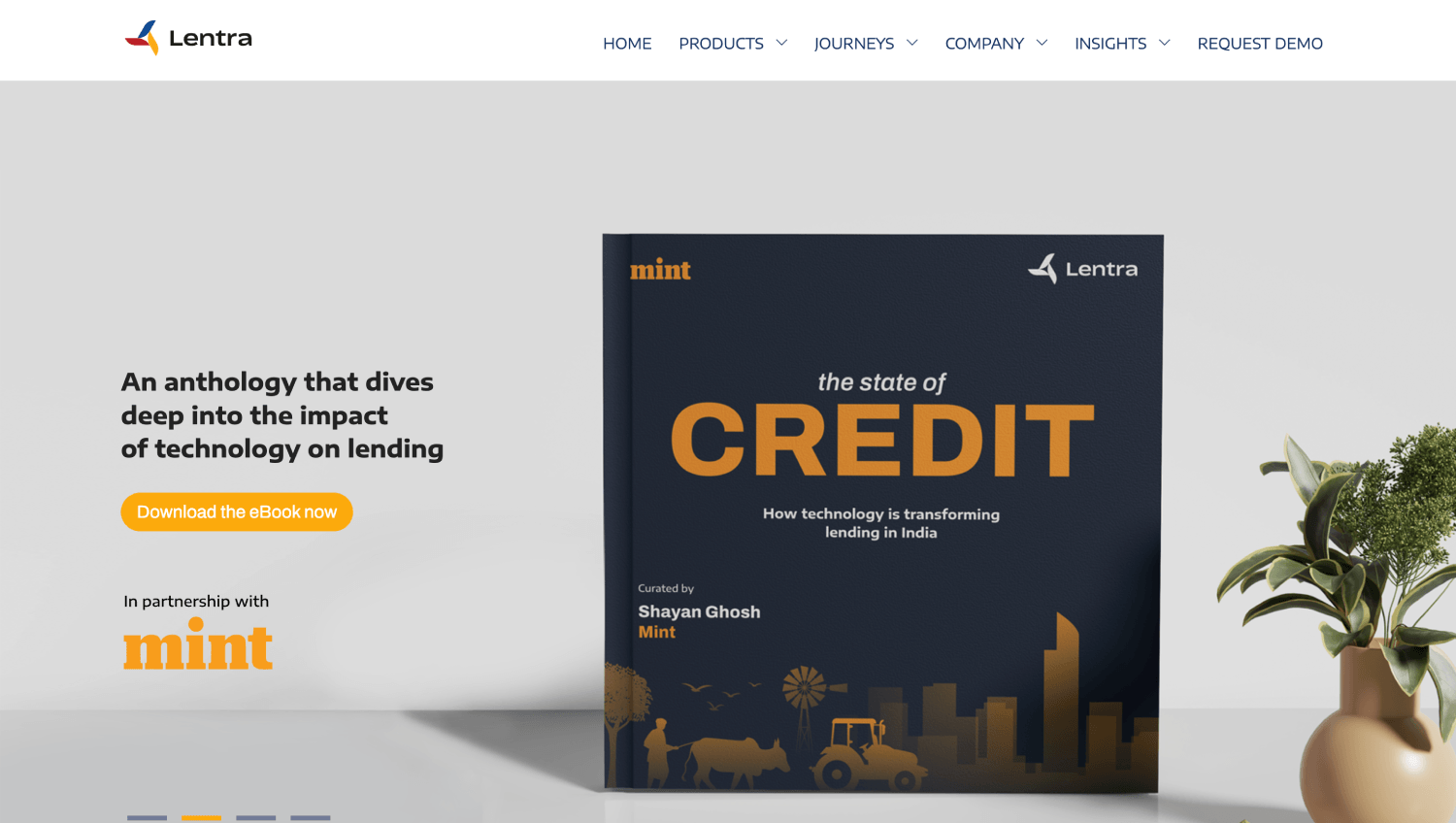
Lentra bundles loan origination, credit decisioning, and workflow automation into a single platform. The differentiation versus a pure decisioning tool like Taktile is that Lentra owns the application experience, document collection, underwriting logic, and routing to human review in one product. Teams that want to avoid assembling a loan origination system separately from a rules engine get genuine value from that consolidation.
The consolidation trade-off is customization. Teams with highly specific underwriting logic or non-standard data sources may find Lentra’s opinionated structure more constraining than a composable stack. It works best for lenders whose underwriting model is relatively standard and who primarily want operational efficiency rather than model innovation.
Best for: SMB and consumer lenders who want a single platform from application to decision without assembling a stack from components. Particularly relevant for teams migrating off legacy loan origination software.
Inscribe: Document and Income Intelligence for Underwriting (Sponsored Profile)
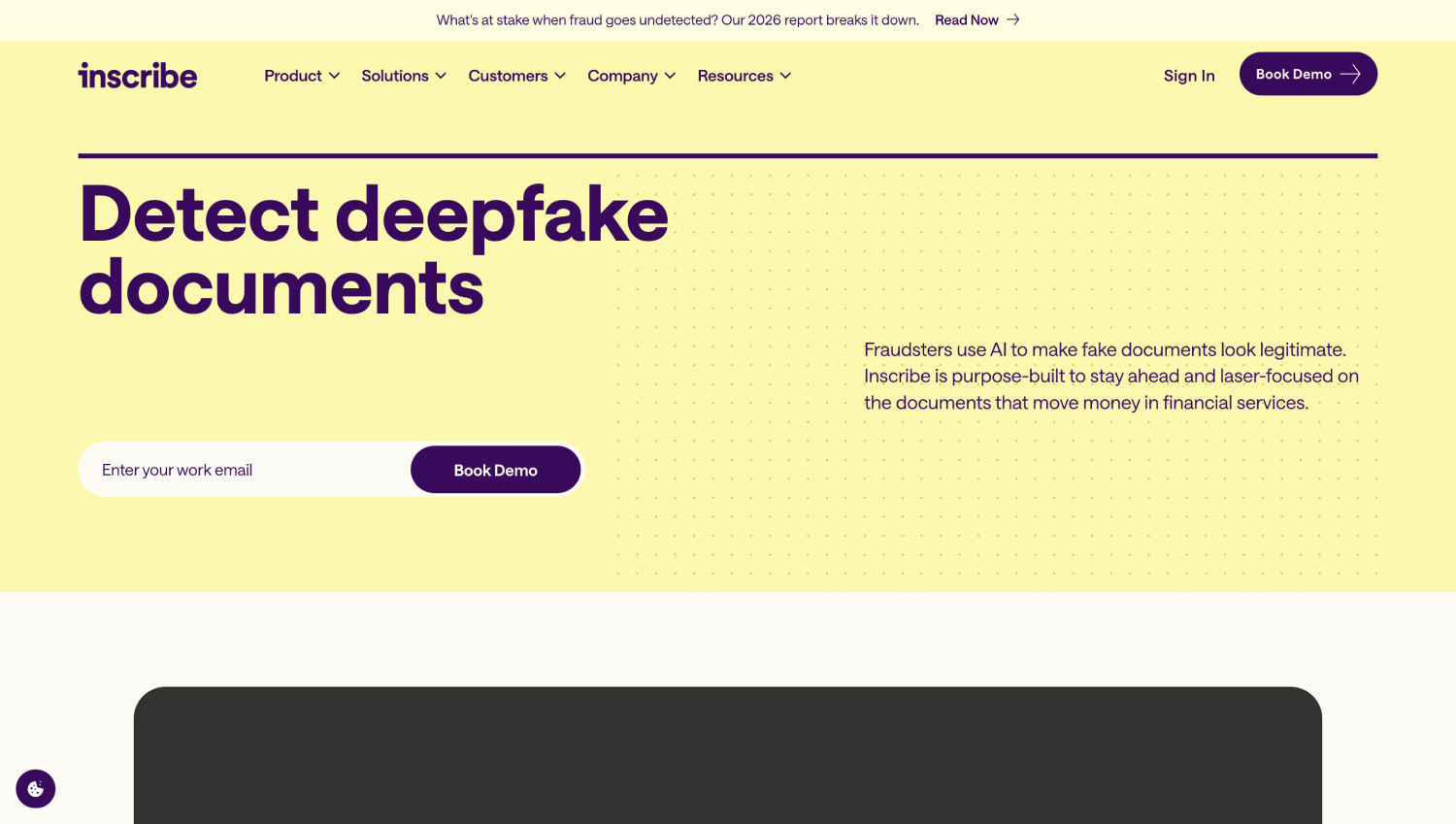
Inscribe is the sponsored platform in this comparison. This section carries additional depth because Inscribe paid for the premium profile. The editorial analysis and comparison table scores are independent of that arrangement. Where claims below originate from Inscribe’s own materials, they are noted; the structural assessment of where Inscribe fits in a credit stack reflects independent editorial judgment.
Inscribe’s focus is document intelligence and income verification for credit underwriting. The platform automatically analyzes bank statements, pay stubs, tax documents, and business financials to extract the structured data that underwriters need for decisioning. For lenders relying heavily on document review in their credit process, Inscribe reduces the manual processing burden significantly and flags document fraud as part of the same workflow.
The key distinction from general-purpose decisioning platforms like Taktile is that Inscribe solves a specific bottleneck: the gap between receiving financial documents and being able to act on the data inside them. It is not a rules engine or a full orchestration platform. It is the layer that makes your rules engine smarter by feeding it cleaner, fraud-screened document data. Teams building a composable credit stack often find Inscribe integrates cleanly with whichever decisioning platform they choose.
Inscribe publishes some pricing information through direct sales engagement. Deployment is API-first, which means engineering involvement is required at setup, but the ongoing analyst experience is built around a document review interface rather than requiring technical users to operate it day to day. Migration risk is low because Inscribe functions as a data layer rather than owning the decisioning logic itself. Replacing it does not require rebuilding credit models.
Best for: Lenders and underwriting teams where document review is a meaningful part of the credit process: SMB lenders, DSCR and real estate lenders, income-verification-dependent consumer products, and fintech platforms processing business financials. Strong fit for teams using Taktile or another rules engine who want better document data feeding into decision flows.
Side-by-Side Comparison: Taktile Alternatives by Use Case and Migration Risk
| Platform | Category | Best For | Pricing Transparency | Migration Risk | Engineering Required |
|---|---|---|---|---|---|
| Alloy | Orchestration-first | Series A-B fintechs needing unified KYB, fraud, credit layer | Not public | Medium. Logic lives in Alloy’s workflow graph. | Low after setup |
| Oscilar | Orchestration-first | Risk teams wanting AI-assisted rule management | Not public | Medium. Rule export is possible but model feedback loops are proprietary. | Low |
| Provenir | Rules-engine-first | High-volume lenders needing model governance and audit trails | Not public | High. Deep integration into decisioning infrastructure. | Medium to high |
| Zest AI | ML model platform | Credit unions and banks needing ECOA-compliant ML | Not public | High. Platform owns the model. | Low after onboarding |
| Sardine | Signal provider | Fintechs with fraud-adjacent credit risk exposure | Not public | Low. Feeds signals into external decisioning system. | Medium (API integration) |
| Unit21 | Rules-engine-first | Teams needing decisioning and case management in one tool | Not public | Medium. Rules are exportable but case history is not portable. | Low to medium |
| Scienaptic AI | ML model platform | Banks and auto lenders wanting pre-built AI underwriting models | Not public | High. Model and scoring infrastructure are deeply embedded. | Medium |
| Lentra | Origination and decisioning | SMB and consumer lenders wanting an end-to-end LOS | Not public | Very high. Platform owns origination workflow. | Medium |
| Inscribe ★ Sponsored | Document intelligence layer | Lenders with document-heavy credit processes needing cleaner data | Available via sales | Low. Data layer only; does not own decisioning logic. | Medium (initial API setup) |
How to Evaluate Migration Risk Before You Switch
The decision to leave Taktile is rarely about features. It is almost always about contract economics or a capability gap that emerged as the portfolio grew. The real cost of switching is in three places most buyers underestimate.
First is logic portability. Decision flows built in Taktile’s visual editor are not automatically portable to another platform. If your credit policy lives entirely inside Taktile’s proprietary workflow format, migrating means reconstructing rules from scratch in the new system. Before signing any alternative, ask for a documented data export spec and confirm the receiving platform’s import tooling.
Second is data connector renegotiation. Taktile maintains commercial relationships with data providers. When you switch platforms, those connections do not automatically transfer. Expect to renegotiate data provider contracts, which can add weeks to a migration timeline. The common mistakes teams make when choosing fintech infrastructure covers this overlooked step in vendor transitions.
Third is live portfolio continuity. Changing a decisioning platform mid-portfolio means running two systems in parallel during the transition period. Budget for engineering time to maintain dual decisioning flows and for a validation period where you compare outputs from both systems before cutover. Teams that skip this step often find edge cases in the new system that would have failed live applications.
What Is the Right Stack for an Early-Stage Lender?
Consider a Series A consumer lender processing around 500 applications a month with a three-person risk team: one analyst, one data scientist, one compliance officer. Taktile’s minimum contract may exceed what the volume justifies. The right architecture at this stage is typically composable rather than monolithic.
A reasonable early-stage alternative stack might combine Sardine for fraud signals, Alloy or a direct bureau API for credit data ingestion, and a lightweight rules engine. As volume grows past 2,000 to 3,000 monthly applications and the credit model matures, graduating to Provenir or Oscilar for more sophisticated governance becomes economically justified. Trying to start with enterprise-grade governance infrastructure before volume validates the model is a cost structure problem, not a risk management improvement. The fintech SaaS scale checklist for reaching $10M ARR covers a similar staged-infrastructure argument in the context of overall platform maturity.
Frequently Asked Questions
Who are Taktile’s main competitors?
Taktile’s most direct competitors in the no-code credit decisioning and risk rules engine space are Alloy, Oscilar, and Provenir. For ML-driven underwriting, Zest AI and Scienaptic AI compete for the same institutional buyer. Sardine and Unit21 overlap with Taktile in fraud-adjacent decisioning. The competitive set shifts significantly based on whether the buyer needs orchestration, a standalone rules engine, or model ownership.
What does Taktile cost?
Taktile does not publish pricing on its public website. Based on buyer reports in the market, contracts are structured around decision volume and data connector usage. Minimum commitments have been a source of friction for early-stage companies. Buyers should request pricing with full disclosure of minimum volumes, overage rates, and data provider pass-through costs before comparing against alternatives.
Can I migrate from Taktile without rebuilding my credit model?
Partially. The statistical model itself (if built externally) can be migrated. The decision flow logic built inside Taktile’s visual editor is proprietary and will require reconstruction on any alternative platform. Data connectors also need to be re-established with each provider separately. Budget three to eight weeks for a structured migration depending on the complexity of your current decision tree and the number of integrated data sources.
Which Taktile alternative is best for a credit union or community bank?
Zest AI is built specifically for regulated lenders that need explainable machine learning models compliant with ECOA adverse action requirements. Scienaptic AI is a second option in this space with pre-built models for consumer and auto lending. Both are meaningfully different from Taktile’s rules-engine approach. Credit unions and community banks that primarily need policy logic management rather than ML model innovation may find Provenir a better operational fit.
Is there a Taktile alternative that handles both fraud and credit decisioning?
Oscilar and Sardine both operate at the intersection of fraud and credit signals. Oscilar offers a full rules engine with AI-assisted fraud and credit decisioning in a single platform. Sardine focuses on behavioral and device signals that can feed into a separate credit decisioning layer. Alloy also spans both use cases through its orchestration architecture, though it is more identity-forward than pure credit-forward.
What questions should I ask any Taktile alternative before signing?
Ask for a complete data export specification so you know what you own if you leave. Ask how champion-challenger model testing works and what the audit trail looks like for a regulatory review. Ask whether data provider relationships transfer to you or stay with the vendor. Ask what the minimum contract commitment is and whether pricing scales linearly with decision volume. These four questions surface the hidden lock-in that most vendor demos do not address.
How does Inscribe fit into a credit decisioning stack?
Inscribe is a document intelligence layer, not a full decisioning platform. It extracts and validates data from bank statements, pay stubs, tax returns, and business financials, then flags document fraud before that data feeds into a rules engine or ML model. Teams using Taktile or any other decisioning platform can add Inscribe upstream to improve input data quality without replacing their existing decisioning infrastructure. Migration risk from Inscribe is low because it does not own the credit decision itself.
The Structural Argument Most Buyers Miss
The most common mistake when evaluating Taktile alternatives is searching for a feature-for-feature replacement. Credit decisioning platforms are not commodity tools. They differ in where they create primary value: data ingestion quality, rules governance, model ownership, or operational workflow. A platform that wins on one dimension almost always trades something on another.
The right evaluation sequence is to define the actual bottleneck in your current credit process before opening a vendor demo. If the problem is analyst speed in building and testing policies, a rules-engine-first tool solves it. If the problem is model accuracy and ECOA compliance, an ML platform solves it. If the problem is data quality entering your decisions, a document intelligence or data enrichment layer solves it. Buying a more expensive orchestration platform when the actual problem is upstream data quality is a common and costly mismatch.
The most expensive risk mistakes fintech founders make often come down to buying infrastructure for a stage of the business that does not exist yet. The platforms that create the most long-term value are the ones matched to the actual volume, team composition, and regulatory exposure of the business today, with a credible path to the next stage without a full rebuild.