- Taktile does not publish prices. Every number you find online is either a buyer-reported estimate or a figure inferred from funding announcements and case studies.
- The platform operates on annual contracts with meaningful minimums, meaning a “contact sales” form is the start of a multi-month negotiation, not a quote.
- True total cost of ownership (TCO) routinely runs 40% to 60% above the base platform fee once implementation, data connectors, support tiers, and overage charges are factored in.
- Three usage bands produce very different cost profiles. A seed-stage lender, a Series B neobank, and an enterprise insurer are buying essentially different products at different price points.
- Getting a second quote from at least one alternative is not just good practice; it is the single most effective tool buyers have in a Taktile negotiation.
Taktile does not publicly list its pricing as of July 2025. The platform targets financial institutions, fintechs, and lenders running complex automated credit decisions, and it sells exclusively through direct sales conversations. Contracts are annual, include platform minimums, and vary significantly by decision volume, number of data integrations, support level, and deployment complexity. Buyers report that first-year all-in costs, including implementation, typically start well above $100,000 for mid-market teams and scale into the seven figures for enterprise deployments.
What Does Taktile Actually Sell?
Taktile is a credit decisioning and risk automation platform. It lets credit, risk, and operations teams build, test, and deploy automated decision flows without writing production code for every rule change. The core product sits between raw data sources (credit bureaus, bank data, fraud signals) and a lender’s origination system, applying configurable logic to each application in real time.
The platform expanded significantly after its Series B and Series C fundraises. According to Taktile’s own announcements, the company raised $54 million in a Series B round and subsequently secured $110 million in a Goldman Sachs-led Series C. Those rounds funded a push into what Taktile calls agentic decisioning, where AI agents handle defined sub-tasks within a broader decision workflow under human oversight. One unnamed global insurer reported projected cost efficiencies exceeding $90 million in claims processing after deploying Taktile across multiple use cases, according to Taktile’s Series C announcement.
What you are buying is not just software. You are buying a decisioning infrastructure layer that touches your credit policy, your data vendors, and your compliance posture simultaneously. That interdependence is precisely why pricing is complex and why switching costs accumulate fast. If you are mapping out your broader infrastructure, the fintech infrastructure stack overview on FintechSpecs shows exactly where a decisioning layer like Taktile sits relative to your core banking, KYC, and fraud tooling.
What Does Taktile Cost? Confirmed Facts vs. Buyer Estimates
Taktile’s pricing page, as of July 2025, does not disclose rates, tiers, or minimums. The company directs all pricing inquiries to its sales team. Every figure below is either sourced from buyer-reported ranges on third-party software review platforms (including G2 and Capterra) or is clearly labeled as an illustrative estimate. No number in this section should be treated as a verified quote.
What Can Be Confirmed
Taktile sells annual contracts. There is no documented monthly or pay-as-you-go option available to new customers. The platform supports tiered pricing based on decision volume, meaning the cost per decision drops as volume increases, a standard structure for this category. Professional services, including implementation and onboarding, are billed separately from the platform license.
What Buyers Report
Reviews aggregated on third-party software review platforms (including G2 and Capterra, as of July 2025) indicate that smaller deployments, typically seed to Series A fintechs running under 10,000 decisions per month, enter contracts that buyers describe as starting in the low five figures annually for the base platform. Mid-market deployments at 50,000 to 500,000 decisions per month land in ranges buyers describe as $100,000 to $300,000 annually for platform access alone. Enterprise deployments, including insurers and large banks running millions of decisions across multiple product lines, are described in reviews and in Taktile’s own case study language as custom-negotiated, with total engagement values that can exceed $500,000 per year.
These ranges are buyer-reported and unverified. They represent starting points for internal budget conversations, not final quotes. Contract values depend heavily on the number of integrated data sources, the number of distinct decision flows, and whether Taktile’s professional services team is engaged for ongoing model support.
The FintechSpecs Decision Cost Stack: Three Usage Bands
The FintechSpecs Decision Cost Stack is a framework for estimating Taktile TCO across three buyer profiles. Each band isolates the cost components that dominate at that stage. Use it to build a budget range before entering a sales conversation, not to predict a final number.
Band 1: Seed to Series A Lender (Under 10,000 Decisions per Month)
At this volume, the platform fee is a smaller fraction of total cost than implementation and integration work. A small lender connecting Taktile to one credit bureau, one bank data source, and its own origination system should budget for initial implementation time from either Taktile’s professional services team or an external integrator. Buyer accounts on G2 and Capterra suggest implementation projects at this scale run four to twelve weeks, with services fees described by reviewers as ranging from $15,000 to $40,000 for basic onboarding (as of July 2025).
| Cost Component | Illustrative Range (Annual) | Notes |
|---|---|---|
| Platform license | $30,000 to $60,000 | Buyer-reported estimates via G2/Capterra; unverified |
| Implementation (year 1 only) | $15,000 to $40,000 | Buyer-reported via G2/Capterra; varies by complexity |
| Data connector fees (external) | $12,000 to $30,000 | Depends on bureau and bank data vendors |
| Internal engineering time | $10,000 to $25,000 | Estimated at 0.25 FTE for 3 months |
| Year 1 estimated TCO | $67,000 to $155,000 | Illustrative only |
Band 2: Series B Neobank or Embedded Lender (50,000 to 500,000 Decisions per Month)
At this volume, data connector costs become significant. A neobank running consumer credit checks at scale is likely connecting to multiple bureaus, an income verification API, a fraud signal provider, and possibly an open banking data source. Each connector adds cost at both the Taktile configuration layer and the underlying data vendor layer. Implementation at this scale typically involves a dedicated Taktile solutions engineer, and buyers at this tier describe onboarding timelines of two to four months (as of July 2025, per G2 and Capterra reviews).
| Cost Component | Illustrative Range (Annual) | Notes |
|---|---|---|
| Platform license | $120,000 to $280,000 | Buyer-reported estimates via G2/Capterra; unverified |
| Implementation (year 1 only) | $40,000 to $80,000 | Increases with number of decision flows |
| Data connector fees (external) | $60,000 to $150,000 | Bureau + income + fraud + bank data |
| Premium support tier | $20,000 to $40,000 | If SLA guarantees are required |
| Internal engineering time | $25,000 to $50,000 | Estimated at 0.5 FTE year-round |
| Year 1 estimated TCO | $265,000 to $600,000 | Illustrative only |
Band 3: Enterprise Financial Institution (Millions of Decisions per Month)
At enterprise scale, Taktile pricing is fully custom. The platform fee component shrinks as a percentage of total engagement cost, while professional services, model governance tooling, and data infrastructure costs dominate. Taktile’s Series C announcement referenced an insurer running multiple use cases with projected savings exceeding $90 million, which gives a sense of the scale at which this tier operates. Budget planning at this level requires direct negotiation with Taktile’s enterprise team and independent legal review of contract terms, particularly around data residency and audit rights.
| Cost Component | Illustrative Range (Annual) | Notes |
|---|---|---|
| Platform license | $400,000+ | Fully negotiated; no public reference |
| Professional services (ongoing) | $100,000 to $300,000 | Model tuning, governance, expansion |
| Data connectors and enrichment | $200,000+ | Depends on data vendor contracts |
| Internal team (dedicated) | $150,000 to $400,000 | Estimated at 1-2 FTE risk engineers |
| Year 1 estimated TCO | $850,000 to $1,500,000+ | Illustrative only |
What Hidden Costs Do Taktile Buyers Miss?
The platform license is the number most buyers anchor to in early conversations. It is also the number that bears the least relationship to what they actually spend in year one. Four cost categories consistently surprise buyers in this software category.
Data Connector and Enrichment Fees
Taktile’s value depends entirely on the quality and breadth of data flowing into its decision flows. The platform integrates with credit bureaus like Experian, Equifax, and TransUnion, income verification providers, bank data aggregators, and fraud signal vendors. Most of those data sources charge per API call. When decision volume scales, those per-call costs scale with it, and they sit entirely outside the Taktile contract. A buyer who signs a Taktile platform agreement without modeling their data vendor costs separately will almost always underspend the budget. For a detailed breakdown of what data enrichment adds to underwriting costs, the data enrichment APIs guide on FintechSpecs covers per-call pricing across major providers.
Overage Charges
Annual contracts typically include a defined decision volume. Exceeding that volume triggers overage fees. Buyers who close a contract during a slower growth period and then accelerate faster than projected can face meaningful overage bills mid-contract. Ask explicitly: what is the per-decision rate above the contracted volume, and is there a cap on overage exposure.
Professional Services and Ongoing Model Work
Credit decisioning logic is not a configure-once system. Policy changes, new product lines, regulatory updates, and performance degradation all require model adjustments. Taktile’s platform is built so that risk and credit teams can make many of those changes without engineering support, but initial build-out, integration testing, and complex rule changes often involve Taktile’s professional services team. That work is time-and-materials or packaged separately. Buyers frequently underestimate how much model iteration they will need in the first 18 months.
Compliance and Audit Infrastructure
Automated credit decisioning carries significant regulatory exposure under the Equal Credit Opportunity Act, Fair Credit Reporting Act, and state-level lending regulations. Implementing Taktile inside a compliant framework requires documentation of decision logic, adverse action notice workflows, and audit trails. Some of that infrastructure is built into the platform, but connecting it properly to your compliance stack requires time from your legal and compliance team or an outside counsel. That cost is real and often invisible in budget models. The FCRA compliance services comparison on FintechSpecs covers what that infrastructure actually costs at different stages.
What Are the Contract Terms Worth Asking About?
Taktile sells annual contracts with multi-year options. The terms that matter most are not always the ones that appear early in a sales conversation. Before signing, get written answers to these questions.
- Annual commitment minimum: What is the minimum annual contract value, and what volume does that cover? Is it a usage floor or a dollar floor?
- Overage rate: What is the per-decision cost above the contracted volume, and is it tiered or flat?
- Multi-year pricing lock: If you sign a two- or three-year deal, are platform fees locked, or can Taktile increase them at renewal?
- Data portability: If you exit the contract, what happens to your decision logic, your model configurations, and your historical decision data? Can you export them in a usable format?
- Professional services scope: What is included in the base contract versus billed additionally? Define this in the SOW before signing.
- Uptime SLA: What is the committed uptime, and what is the remedy if it is missed? For credit decisioning infrastructure, downtime has direct revenue consequences.
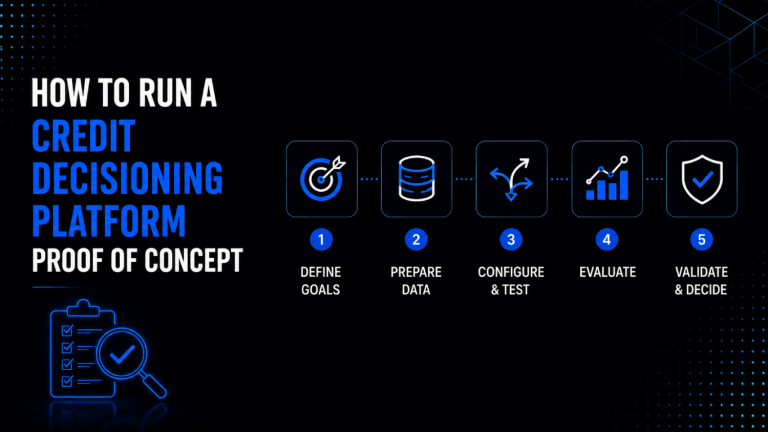
- Proof-of-concept terms: Will Taktile run a time-limited pilot before a full contract commit? The guide to running a credit decisioning proof of concept on FintechSpecs outlines what a structured evaluation should cover.
How Do You Negotiate a Better Taktile Contract?
Taktile’s sales cycle follows a predictable rhythm. Understanding it gives buyers more room to maneuver than most realize going in.
The most effective negotiation tool is a competing quote. Taktile competes against platforms like Provenir, Zest AI, TurnKey Lender, and in some segments against build-your-own approaches using open-source rule engines. Having an alternative quote in hand, even a preliminary one, changes the conversation from a discovery call to a competitive deal. Walking into a Taktile negotiation without alternatives is the fastest way to accept the first proposal without modification.
Volume commitments are the primary variable Taktile uses to set price. If you can credibly commit to a higher decision volume over a multi-year term, you can trade that commitment for a lower per-decision rate. If you are uncertain about growth trajectory, push for a shorter initial term with a renewal option rather than a long-term commit at a rate that assumes growth you may not achieve.
Implementation fees are often negotiable in competitive situations. If a competitor includes implementation in their base contract, use that comparison explicitly. Getting Taktile to include a defined onboarding package in the platform fee rather than billing it separately reduces first-year cash outlay and simplifies budget tracking.
What Are the Lower-Cost Alternatives to Taktile?
Taktile is not the only option in automated credit decisioning, and for some buyer profiles, it may not be the right one. The category includes platforms that trade Taktile’s flexibility and AI-agent architecture for lower entry costs, faster deployment, or simpler pricing.
| Platform | Best For | Pricing Model | Relative Entry Cost |
|---|---|---|---|
| Provenir | Mid-market lenders, banks | Annual contract, custom | Comparable to Taktile mid-market |
| Zest AI | Lenders wanting ML-driven underwriting | Annual contract, custom | Comparable; strong model explainability |
| TurnKey Lender | SMB lenders, credit unions | Monthly SaaS tiers | Lower entry; less flexibility |
| Alloy | Identity and onboarding decisioning | Annual contract, usage-based | Lower for identity; overlaps partially |
| Custom rule engine (in-house) | Teams with engineering resources | Infrastructure + engineering cost | High upfront; low marginal cost at scale |
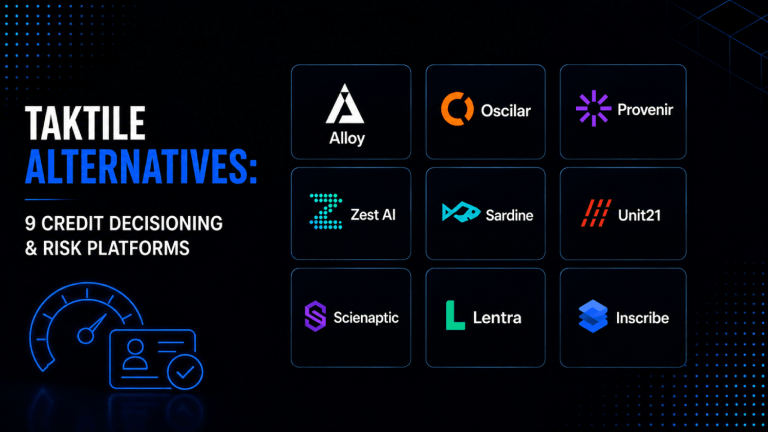
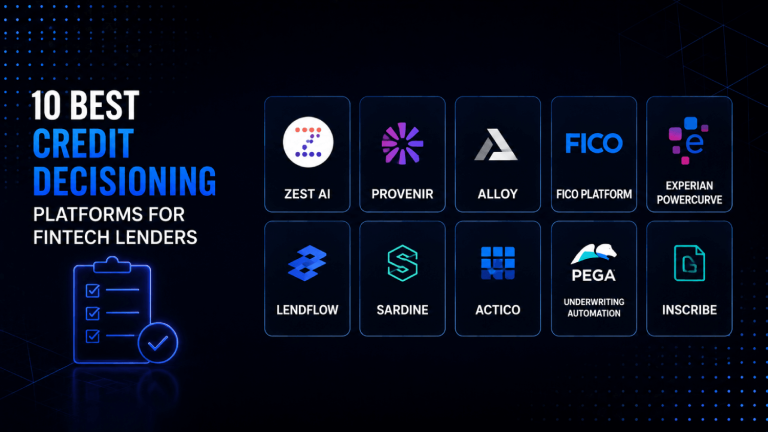
The full comparison of Taktile and its direct competitors, including capability-by-capability breakdowns, is covered in the Taktile alternatives roundup on FintechSpecs. For buyers evaluating the broader category before narrowing to a shortlist, the credit decisioning platforms comparison covers ten platforms with decision criteria by buyer type.
One category worth considering before signing with any enterprise decisioning platform: the hidden costs of switching if the fit is wrong. Decision logic built inside a proprietary platform accumulates technical debt against that vendor’s data model and configuration syntax. The more flows you build, the harder it gets to leave. That switching risk is a real cost that belongs in your TCO model even if you never plan to move. Buyers who ignored this dynamic at contract signing are the ones who accept unfavorable renewal terms two years later. For a broader look at how infrastructure lock-in affects fintech margins, the piece on hidden costs in fintech SaaS margins covers the mechanics in detail.
How Does Taktile Implement, and What Does Setup Actually Take?
Taktile’s implementation process has three distinct phases that carry different cost profiles.
Phase 1: Integration and Configuration (Weeks 1 to 6 Typically)
This phase connects Taktile to your existing data sources and origination system. The complexity depends on how many data vendors you are connecting and how mature your existing API infrastructure is. A lender with clean, well-documented APIs connecting to two or three data sources can move through this phase in four to six weeks. A lender with legacy origination infrastructure or a large number of data partners may take twice as long. Internal engineering time is the variable that most affects schedule and cost here, not Taktile’s own team.
Phase 2: Decision Flow Build (Weeks 4 to 12 Typically)
This phase is where your credit policy gets translated into Taktile’s decision flow framework. Taktile’s no-code and low-code interface is designed for credit and risk professionals, not engineers, but the initial build-out of complex decision trees with multiple data inputs and branching logic takes meaningful time regardless of the interface. Buyers who underinvest in this phase ship decision logic that works at launch but becomes difficult to maintain as policy evolves.
Phase 3: Testing, Compliance Review, and Go-Live (Weeks 8 to 16 Typically)
Automated credit decisioning requires validation before production deployment, both for model performance (default rate, approval rate, false positive rate) and for regulatory compliance. This phase often involves your in-house compliance team, external counsel, or both. It is the phase most frequently underestimated in project plans and most frequently responsible for deployment delays.
Frequently Asked Questions About Taktile Pricing
Does Taktile offer a free trial or freemium tier?
Taktile does not publicly document a free trial or freemium tier as of July 2025. The company’s positioning targets financial institutions and regulated lenders, which makes a self-serve trial model uncommon for this category. Some buyers report that Taktile will run a time-limited proof-of-concept engagement under contract, but the terms and any associated cost depend on the specific sales conversation. There is no documented sandbox that a prospect can access without engaging the sales team.
What is the minimum contract value for Taktile?
Taktile does not publicly disclose a minimum contract value as of July 2025. Buyer-reported figures from third-party review platforms (including G2 and Capterra) suggest smaller deployments begin in the $30,000 to $60,000 annual range for platform access, but those figures are unverified and likely reflect entry-level volume commitments. Any minimum should be confirmed directly with Taktile’s sales team and specified in the contract, not inferred from published ranges.
Are Taktile implementation costs included in the platform fee?
Typically, no. Implementation and professional services are billed separately from the platform license in most reported buyer experiences on G2 and Capterra (as of July 2025). The scope of what is included versus what is additional varies by contract. Buyers should request a written statement of work before signing that defines which onboarding activities are included in the platform fee and which are billed as professional services at an hourly or packaged rate. This distinction has significant implications for year-one cash outlay.
How does Taktile price for multiple products or use cases?
Taktile’s platform can run multiple distinct decision flows simultaneously, for example, a consumer credit product and a small business lending product on the same infrastructure. Pricing for multi-product deployments is negotiated as part of the enterprise contract. Buyers report that additional decision flows and use cases increase the contract value, but there is no public pricing schedule for how individual flows or use cases are priced incrementally. Enterprise buyers typically negotiate an all-in contract covering defined use cases rather than paying per flow.
What happens to my decision logic if I cancel the Taktile contract?
Data portability terms vary by contract and are not publicly documented by Taktile as of July 2025. This is a critical negotiation point. At minimum, buyers should require contractual assurance that their decision logic configurations, model parameters, and historical decision data are exportable in a documented, non-proprietary format before signing. Failing to address this at contract stage significantly increases switching costs and vendor dependency at renewal time.
Does Taktile charge separately for AI or agentic features?
Taktile’s agentic decisioning capabilities, introduced as part of its platform evolution, are not documented with separate pricing as of July 2025. Whether AI-agent features are included in the base platform, gated behind a higher tier, or billed as add-ons should be confirmed during the sales process. Given that Taktile’s Series C funding specifically funded expansion of these capabilities, it is reasonable to expect that premium AI features may carry incremental pricing in future contracts.
How does Taktile pricing compare to building an in-house decisioning system?
An in-house rule engine built on open-source tooling typically has lower marginal cost at scale but significantly higher upfront engineering investment, ongoing maintenance burden, and compliance infrastructure requirements. For a team with under three engineers dedicated to credit infrastructure, Taktile or a comparable platform almost always produces a lower three-year TCO than a full build. For a team at a large institution with a dedicated credit engineering function, the calculation depends on how frequently policy changes require platform-level work. The build-vs-buy decision deserves a full model, not a gut call.
What Should Your Budget Conversation Look Like Before You Talk to Taktile?
The buyers who get the best Taktile contracts are the ones who arrive prepared with four things: a realistic decision volume projection over 24 months, a list of data sources they need connected, a competing quote from at least one alternative, and a written set of contract questions that they will not leave without answers to. Without those, the sales process defaults to Taktile’s structure, Taktile’s scope, and Taktile’s standard terms.
Volume projection matters more than most buyers realize. Taktile prices on volume, which means your forecast directly determines your contract structure. Projecting conservatively protects you from overage fees but may cost you a lower per-decision rate you could have earned with a volume commit. Projecting aggressively gets you a lower rate but locks you into a minimum you may not reach. Neither is inherently wrong, but you need to model both scenarios before you negotiate, not after.
The real insight this category rewards is treating the contract as infrastructure, not software. Credit decisioning logic is not something you replace quarterly. The platform you choose shapes how your credit policy evolves, how your compliance documentation is structured, and how your risk team operates for years. The upfront price is a fraction of the total economic impact. Buyers who optimize only for the initial platform fee, without modeling implementation, data costs, overage exposure, and switching risk, consistently end up paying more than buyers who approach it as a long-term infrastructure investment from the start.