
TLDR
- A single shared multi-currency account cannot tell you which customer sent which wire. Programmatic virtual accounts solve this by assigning a dedicated account number per counterparty, so every inbound payment arrives pre-labeled.
- The eleven providers below differ significantly on account format (virtual IBAN, UK sort code, US routing/account), named beneficiary support, currency breadth, and whether reconciliation data arrives via webhook or requires a polling loop.
- Four of the eleven issue accounts via a single POST request and return a webhook on settlement. The rest require a more involved onboarding or compliance step before accounts go live.
- Pricing for virtual account APIs is almost never published. Expect per-account fees, FX spread, and sometimes a monthly platform fee. Where pricing is publicly available, it is noted; otherwise it is flagged as undisclosed.
- The right choice depends on where your payers are located, not where your company is incorporated. A US company collecting from European clients needs European IBANs, not US-formatted accounts.
The eleven virtual account APIs below are each capable of issuing named, dedicated receiving accounts programmatically for virtual account API cross-border collections. They span providers licensed or partnered across North America, Europe, Asia-Pacific, and select emerging markets. Each profile covers account format, country and currency reach, named beneficiary support, API issuance method, and reconciliation model, so you can shortlist against your payer geography and engineering constraints without a sales call.
What Is a Virtual Account API for Cross-Border B2B Collections?
A virtual account is a receiving account number, real enough to accept wire transfers, SWIFT payments, or local bank credit, that maps to a single counterparty and is issued programmatically rather than opened manually at a bank branch. The account exists inside a pooled structure at an underlying bank or licensed institution, but each virtual account number routes to exactly one beneficiary record in the issuing platform’s ledger.
For cross-border B2B collections, that distinction matters. When a supplier in Germany wires payment to your US company, your bank sees an inbound wire with a reference field that may or may not match your invoice number. With a virtual IBAN assigned to that supplier, the wire hits a dedicated account number that your system resolves to the correct counterparty automatically, with no manual matching required.
This is different from outbound payout APIs, which move money from your account to others, and from portal-based business accounts, where accounts are opened through a dashboard rather than created programmatically. The eleven providers here all expose an API endpoint that creates a receiving account, typically in one or two API calls, and returns account details your platform can display or store.
The FintechSpecs Collection Account Grid: Four Dimensions That Determine Fit
To evaluate these providers consistently, FintechSpecs applies what we call the Collection Account Grid: four dimensions that determine whether a virtual account API actually solves your reconciliation problem or just shifts it.
Account format determines which payers can use it. A virtual IBAN works for European SEPA and SWIFT payers. A UK sort code and account number works for GBP domestics. A US routing and account number works for ACH and Fedwire. Providers that issue only one format limit your payer coverage.
Named beneficiary support means the account is issued with a specific company name as the account holder, not a generic “Client Account of [Platform]” designation. Without a named beneficiary, some payers’ banks will reject the wire for beneficiary name mismatch.
Issuance API depth refers to whether account creation is a single authenticated POST, requires a prior KYC step per end-customer, or sits behind a manual approval queue. The first model works for platforms issuing hundreds of accounts at scale. The third model is a bottleneck.
Reconciliation signal covers how your system learns a payment arrived: a real-time webhook with full payment metadata, a polling endpoint, or a batch report delivered on a schedule. Webhooks are the only viable option for automated reconciliation at volume.
Which Providers Issue Virtual Accounts via API for Cross-Border Collections?
1. Airwallex
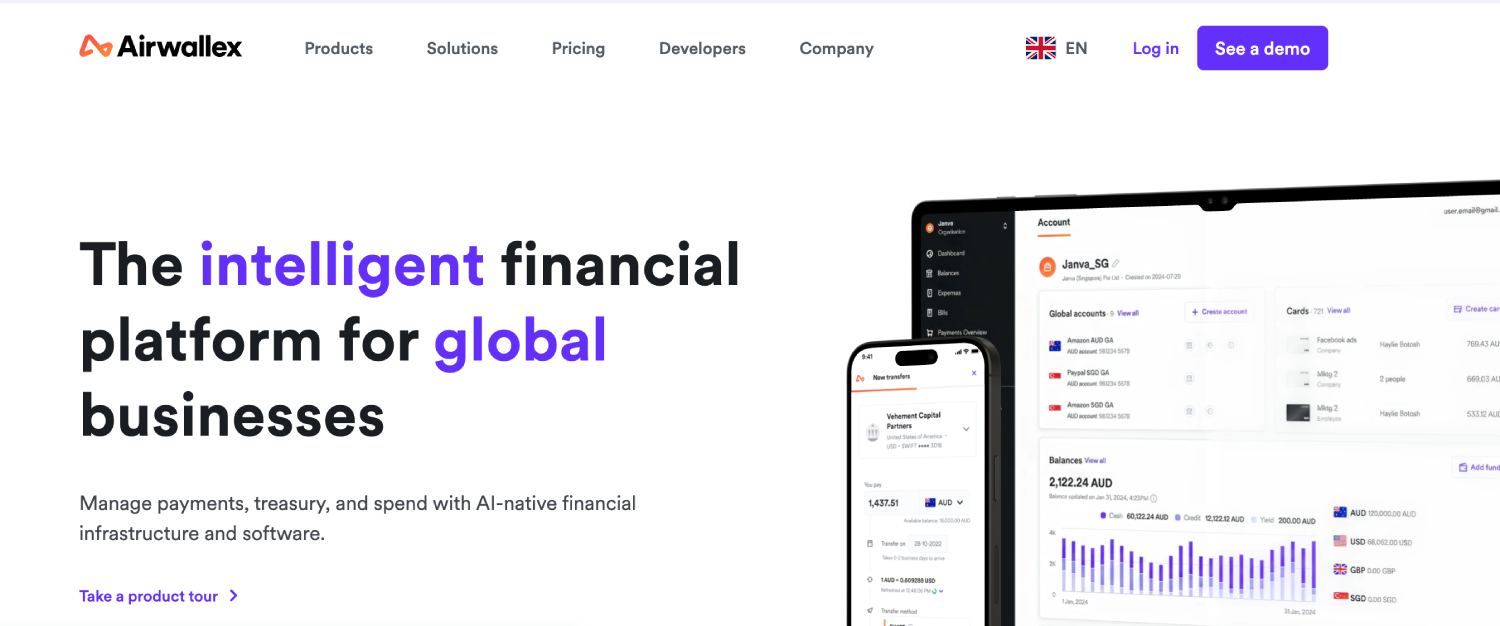
Airwallex issues virtual accounts in multiple formats including local account details for the US (ACH/Fedwire), UK (sort code and account number), EU (IBAN), Australia (BSB and account number), Hong Kong, Singapore, and Canada. Accounts are issued through the Airwallex API and can be assigned to individual payers. Named beneficiary support is available on the IBAN and UK account formats. Reconciliation arrives via webhook on payment receipt, with payment metadata including the payer’s reference and amount. Pricing is not publicly disclosed on a per-account basis; Airwallex directs API users to contact sales. For a detailed look at how Airwallex compares on FX and multi-currency accounts, see the FintechSpecs Airwallex vs Wise comparison for US companies going global.
2. Nium
Nium provides a virtual account API under its Receive product, issuing local account details across more than 40 currencies including USD, EUR, GBP, SGD, AUD, HKD, and JPY. Nium operates under banking licenses and e-money institution registrations across the US, EU, UK, Singapore, Australia, India, and other markets. Named beneficiary support varies by currency corridor; Nium’s developer documentation confirms beneficiary-level account assignment. Reconciliation uses webhooks that fire on funds receipt. API issuance requires prior platform onboarding and customer-level compliance data before accounts are created. Pricing is not publicly listed.
3. Banking Circle
Banking Circle is a licensed bank headquartered in Luxembourg, which makes it unusual among the providers here. It issues virtual IBANs for EUR, GBP, USD, DKK, SEK, NOK, and other European currencies. Because Banking Circle is a bank rather than a payments institution, its virtual IBANs carry a first-party issuer relationship, which matters for beneficiary name matching and correspondent bank acceptance rates. API access is wholesale and requires a direct commercial agreement. Pricing is not publicly disclosed. Banking Circle targets payment service providers, banks, and large platforms rather than individual businesses.
4. Currencycloud (Visa)

Currencycloud, acquired by Visa, provides a virtual account API that creates named virtual IBANs and local account details across 35+ currencies. The API supports individual customer account creation with named beneficiary fields. Reconciliation data is delivered via webhook. Currencycloud is accessible through direct API agreements and also powers the receiving accounts in several embedded finance platforms. Pricing is not publicly listed; Currencycloud routes all pricing inquiries through its sales team.
5. Modulr
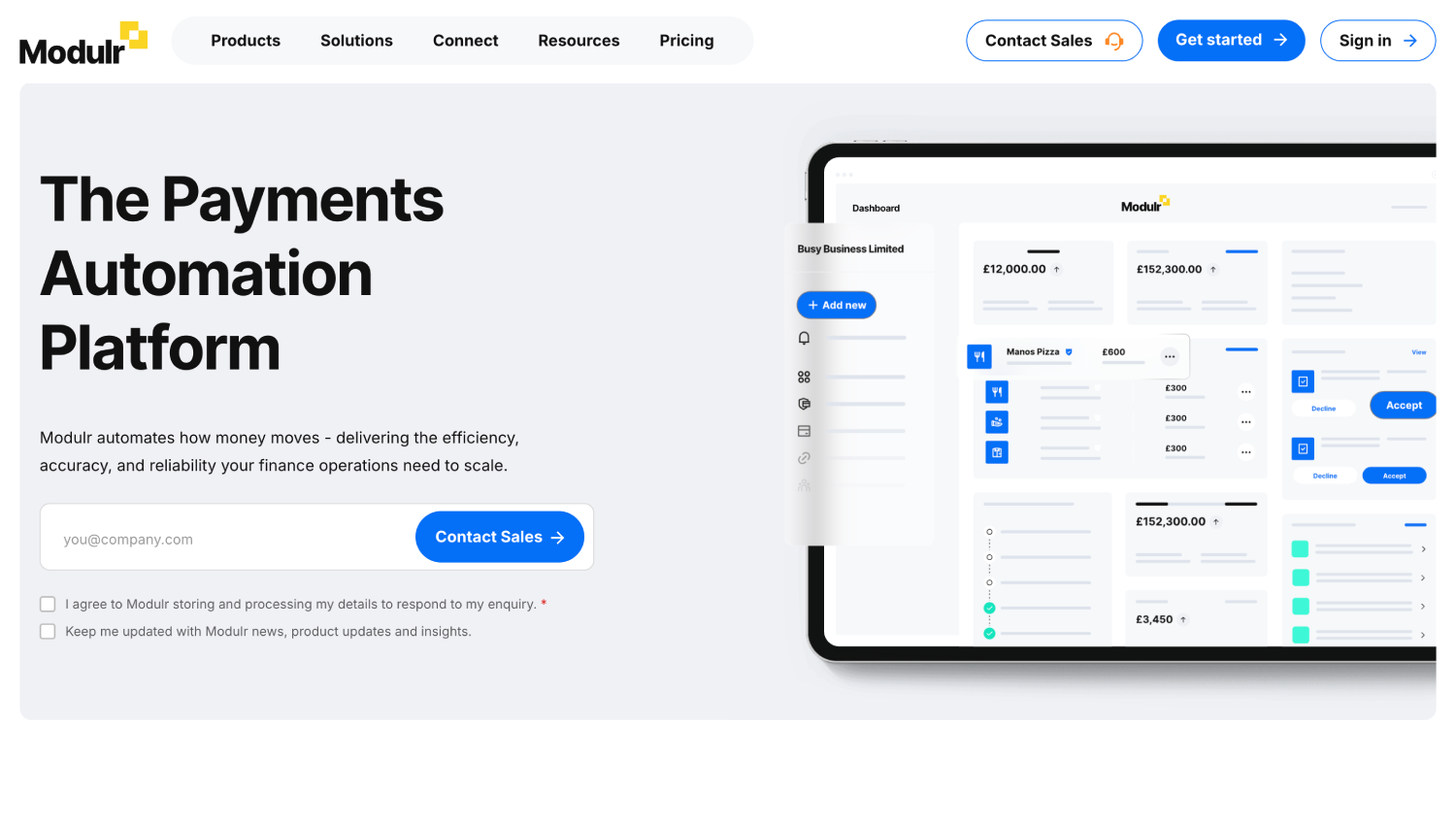
Modulr is a UK-based e-money institution authorized by the Financial Conduct Authority. It issues UK sort code and account number pairs and EU IBANs via API, with named account holder support. Each account is addressable by a dedicated sort code and account number, and inbound payments trigger a real-time webhook. Modulr is designed for platforms that need to issue accounts at scale; its developer documentation describes sub-second account creation for UK sort code accounts. Pricing is not publicly disclosed. Modulr is primarily focused on UK and EU payment corridors and is less suited for USD or Asia-Pacific collecting.
6. Rapyd
Rapyd offers a virtual account API as part of its Collect product, issuing local account details in markets including the US, UK, EU, Brazil, Mexico, Australia, Singapore, and India. Named beneficiary support is available on select corridors. Rapyd’s strength is breadth: it covers more emerging market corridors than most providers on this list, including local collection methods in Southeast Asia and Latin America. Reconciliation uses webhooks. API issuance follows a customer onboarding step. Pricing is not publicly disclosed.
7. Stripe (Financial Connections / Payouts via Connected Accounts)
Stripe does not issue virtual IBANs or virtual account numbers in the traditional sense. What Stripe does offer, via its platform API and Stripe Connect, is a funding instruction endpoint that generates a dedicated account number a payer can wire funds to, which Stripe then allocates to the correct connected account. This works for USD, EUR, and GBP. It is not a full virtual account API in the cross-border B2B collection sense, as it requires the payer to be connected to the Stripe platform flow. Teams looking for a broader cross-border collection account layer typically build that above Stripe or choose a dedicated provider. Stripe’s public pricing page documents fees for connected accounts and wire funding but does not publish per-account fees for virtual account issuance; check Stripe’s current pricing page for the latest figures.
8. Volt
Volt is an open banking payment network that also offers receiving account infrastructure for EUR and GBP via its gateway. Its model differs from pure virtual IBAN providers: it uses open banking rails to initiate push payments, but can assign reference accounts per counterparty for reconciliation. Named beneficiary matching applies at the payment initiation layer. Volt is a better fit for platforms collecting from European payers who can pay via open banking rather than wire transfer. Pricing is not publicly disclosed.
9. Payset
Payset issues dedicated IBANs and UK account details to businesses and to platforms through its API. Each IBAN is issued in the account holder’s name, satisfying named beneficiary requirements. Supported currencies include EUR, GBP, USD, CHF, PLN, CZK, HUF, and others in the European corridor. Payset is FCA-registered and operates under a UK e-money license. API documentation is publicly available and shows account creation via a single POST request. Reconciliation uses webhooks. Pricing is available through Payset’s sales team and is not published on the public site; confirm current rates directly with Payset.
10. Payoneer (B2B Receiving Accounts)
The brief explicitly excludes Payoneer alternatives, and Payoneer’s core product is a portal-based receiving account rather than an API-issued virtual account. It does, however, expose a programmatic API for account creation within its partner program, targeted at platforms that want to issue local receiving details to their business users in the US, EU, UK, Japan, Australia, and Canada. If your team already operates in Payoneer’s partner tier, this is relevant. For platforms evaluating standalone virtual account APIs, the other ten providers on this list offer more API-native approaches. Cross-border payout fees across Payoneer and comparable platforms are covered in the FintechSpecs fee breakdown across Wise, Airwallex, Nium, and Payoneer.
11. Citi Treasury and Trade Solutions (Virtual Account Management)

Citi’s Treasury and Trade Solutions division offers a Virtual Account Management product that creates named virtual account numbers within a master account structure, used by multinationals for receivables reconciliation across USD, EUR, GBP, and 20+ other currencies. Citi operates directly as a global bank, so virtual accounts carry first-party bank issuer relationships, eliminating intermediary rejection risk. API access is available through Citi’s commercial banking API layer. This product targets enterprises and large B2B platforms, not seed-stage companies. Pricing is not publicly disclosed and requires a commercial banking agreement. Citi and Coinbase’s collaboration on virtual accounts and stablecoin settlement is covered separately in the FintechSpecs analysis of Citi and Coinbase stablecoin virtual accounts.
How Do These 11 Virtual Account APIs Compare on the Key Dimensions?
| Provider | Account Format | Named Beneficiary | Primary Currencies | Issuance Method | Reconciliation Signal |
|---|---|---|---|---|---|
| Airwallex | IBAN, UK, US, AU, HK, SG, CA | Yes (IBAN, UK) | 30+ | API (POST) | Webhook |
| Nium | IBAN, UK, US, SG, AU, more | Yes (select corridors) | 40+ | API, requires KYC step | Webhook |
| Banking Circle | IBAN (EU, UK, US, Nordics) | Yes | EUR, GBP, USD, Nordics | API (wholesale, agreement required) | Webhook |
| Currencycloud | IBAN, local account details | Yes | 35+ | API (agreement required) | Webhook |
| Modulr | UK sort code/account, IBAN | Yes | GBP, EUR | API (sub-second creation) | Webhook |
| Rapyd | US, UK, EU, BR, MX, AU, SG, IN | Yes (select) | US, EU, LatAm, APAC | API, requires onboarding | Webhook |
| Stripe | US (wire), EUR, GBP (via Connect) | Partial (connected accounts) | USD, EUR, GBP | API (funding instructions) | Webhook |
| Volt | EUR, GBP (open banking) | Yes (at initiation layer) | EUR, GBP | API | Webhook |
| Payset | IBAN, UK sort code/account | Yes | EUR, GBP, USD, CHF, more | API (single POST) | Webhook |
| Payoneer (Partner API) | US, EU, UK, JP, AU, CA | Partial (partner program) | USD, EUR, GBP, JPY, AUD, CAD | API (partner tier only) | Webhook |
| Citi TTS | Multi-currency (20+ currencies) | Yes | USD, EUR, GBP, 20+ | API (commercial agreement required) | Webhook |
What Does a Realistic B2B Collection Scenario Look Like With These APIs?
Consider a US-based SaaS company with 80 enterprise customers across Germany, the UK, Singapore, and Australia. Each customer pays monthly by bank transfer. The company currently operates a single USD account and asks customers to include their company name in the wire reference. In practice, about 30% of wires arrive with a corrupted or missing reference, requiring manual matching by the finance team.
Moving to a virtual account API changes this. For each of those 80 customers, the platform calls the API once and receives a dedicated IBAN (for EU customers), sort code and account number (for UK customers), and local BSB/account number (for Australian customers). Each account is issued in that customer’s name. When payment arrives, the webhook fires immediately with the customer ID, currency, amount, and payment reference already mapped. The finance team’s reconciliation task goes from “identify who sent this wire” to “confirm amount matches invoice,” which takes seconds rather than hours each month.
At 80 accounts, most providers on this list charge a per-account fee and an FX spread. The per-account fee is typically the smaller cost. The FX spread on cross-currency settlement, if the company collects in EUR and settles in USD, is where the economics concentrate. This is why comparing FX margins alongside account fees is important, not just the API documentation.
What Are the Compliance and Eligibility Requirements for Issuing Virtual Accounts?
Every provider on this list operates under a financial license: an e-money institution authorization, a banking license, or a money services business registration. That license constrains who can issue accounts and to whom.
Most providers require platform-level onboarding before API access is granted. That means submitting your company’s KYC documentation, describing your use case, and in some cases undergoing an AML review of your end-customer population. Banking Circle, Currencycloud, and Citi TTS all require a direct commercial agreement before any API calls are possible.
Some providers also require customer-level KYC before issuing a named virtual account to that customer. Nium’s API, for example, requires a customer object with identity data before account creation is complete. This is not a bottleneck if you already run KYB on your enterprise customers, but it adds a dependency if you planned to issue accounts before onboarding. The FintechSpecs guide to KYB providers for B2B fintech onboarding covers the verification layer you would typically pair with a virtual account API.
Named beneficiary accounts carry stricter requirements than generic receiving accounts because the account holder name must match a verified legal entity. Providers that offer true named beneficiary accounts, Airwallex, Banking Circle, Modulr, Payset, and Citi TTS, enforce entity verification as a precondition. This is the right trade-off for B2B collections: beneficiary name matching reduces correspondent bank rejections substantially.
What Should You Evaluate Beyond Account Format and Currency Coverage?
Currency coverage tables look similar across providers. The practical differentiators sit in four less-visible dimensions.
Underlying bank network quality determines whether your virtual IBAN is accepted by all correspondent banks or only by some. A virtual IBAN issued by a small e-money institution may be rejected by conservative corporate banking counterparties in Germany or Japan. Banking Circle and Citi TTS, as licensed banks, face fewer such rejections. This applies most directly to enterprise B2B collections where the payer’s treasury team may have restrictions on counterparty types.
Funds availability speed varies. Some providers credit your account the moment the inbound wire is confirmed. Others hold funds pending their own clearing cycles. If your platform needs to act on collected funds quickly, ask specifically about settlement timelines, not just payment confirmation.
Account closure and portability are worth verifying. If you switch providers, what happens to your existing virtual account numbers? Payers who have saved your account details will send funds to a dead account. Providers that issue accounts on their own sort codes or BIC/IBAN ranges cannot port those account numbers to another provider. Plan for a migration window where both old and new accounts are active.
Developer experience quality ranges widely. Modulr and Airwallex publish well-structured API documentation with sandbox environments. Some of the enterprise-tier providers on this list, Citi TTS and Banking Circle, have documentation that is harder to access without a commercial agreement in place. If your engineering team needs to prototype before the commercial decision is made, Airwallex, Rapyd, Nium, and Payset offer publicly accessible developer documentation. Teams evaluating broader payment infrastructure should also review the FintechSpecs roundup of the best fintech APIs for SaaS for context on where virtual account APIs fit within a full payment stack.
How Does Cross-Border Payment Reconciliation Actually Work With These APIs?
Reconciliation with virtual accounts follows a consistent pattern across all eleven providers: inbound payment hits a dedicated account number, the platform’s ledger resolves that account number to a customer record, the webhook delivers payment metadata, and the finance system matches the payment to the open invoice.
The failure modes are almost always in the metadata, not the routing. A wire arriving without a full payment reference, or with a reference that your system does not recognize, still requires a manual fallback. Well-designed virtual account setups minimize this by making the account number itself the reconciliation key. Because each account belongs to exactly one customer, the account number alone is sufficient to identify the payer. The reference field becomes a secondary check rather than the primary one.
Multi-currency reconciliation adds a complication. If a German customer pays in EUR into an EUR virtual IBAN, and you settle in USD, the FX conversion happens at some point in the chain. When exactly it happens, and at what rate, varies by provider. Some providers convert on receipt and credit your master account in USD immediately. Others credit in EUR and let you convert on demand at a rate you choose. The first model is simpler to reconcile. The second gives you FX timing control. For companies with significant FX exposure, the second model is worth the additional reconciliation step.
For teams building automated reconciliation on top of these APIs, the FintechSpecs payment reconciliation software guide for fintech finance teams covers the matching layer that sits downstream of the virtual account API.
Frequently Asked Questions
What is the difference between a virtual account and a virtual IBAN?
A virtual IBAN is a specific format of virtual account that follows the International Bank Account Number standard used in SEPA and many SWIFT transfers. It includes a country code, check digits, and a bank identifier. A virtual account is a broader term covering any programmatically issued receiving account number, including UK sort code and account number pairs, US routing and account number pairs, and Australian BSB accounts. All virtual IBANs are virtual accounts, but not all virtual accounts are IBANs.
Can I issue virtual accounts without handling KYC on each end-customer?
Some providers allow platform-level KYC rather than per-customer KYC, meaning your platform completes a single compliance review and can then issue accounts to any customer you have already verified. Others require that each customer’s identity data be submitted before account creation. Airwallex and Payset allow platform-level account issuance in many cases. Nium typically requires a customer object with identity fields before the account is created. Confirm this during your commercial onboarding, as the requirement often depends on your platform type and the customer’s jurisdiction.
Why would a correspondent bank reject a virtual IBAN?
Some correspondent banks, particularly large European and Japanese corporate banks, apply restrictions on account types they will route payments to. An IBAN issued by an e-money institution rather than a licensed bank occasionally triggers a rejection at the sending bank’s compliance layer. This is more common for payers using conservative corporate banking providers. Virtual IBANs from licensed banks such as Banking Circle or Citi TTS face this problem less frequently because the issuer appears as a recognized banking counterparty rather than an e-money institution.
How do multi-currency virtual accounts work for FX conversion?
When a payer sends funds in a foreign currency to a virtual account, the platform provider either converts the funds at receipt and credits your master account in your base currency, or holds the foreign currency and lets you convert on demand at a rate you choose. The first model, auto-convert on receipt, simplifies reconciliation because every credit to your account arrives in a single currency. The second model reduces FX slippage if you have natural offsetting positions in multiple currencies. Airwallex, Nium, and Currencycloud all offer some version of on-demand FX conversion.
What is the typical API latency for virtual account creation?
Modulr’s documentation describes sub-second account creation for UK sort code accounts. Airwallex account creation typically completes in under a few seconds. Providers that require an asynchronous compliance review before account activation, such as some of the wholesale bank providers, may take minutes to hours for the account to become active after the API call. If your use case requires issuing an account in real time during a customer onboarding flow, verify synchronous vs. asynchronous activation explicitly before you build.
Are virtual account fees charged per account created or per transaction?
Fee structures vary. Some providers charge a monthly fee per active virtual account. Others charge a one-time creation fee and then charge per inbound transaction. A few providers bundle account issuance into a broader platform fee and charge only on FX conversion. Because almost none of these providers publish pricing publicly, you need to request a commercial term sheet and model your cost based on expected account count, payment volume, and currency mix before committing.
Which virtual account API works best for collecting from Asian payers?
Nium and Airwallex both issue virtual account details for Singapore, Hong Kong, Australia, and Japan. Rapyd extends further into Southeast Asia with local collection methods for markets including Indonesia, Malaysia, Thailand, and Vietnam, though these may use local payment methods rather than traditional bank account formats. For collections specifically from Japan, verify explicitly with any provider, as Japanese bank account formats have specific requirements and not all virtual account APIs cover JPY domestic collection natively.
How do virtual accounts fit into a broader cross-border payment infrastructure?
Virtual accounts handle the inbound collection and reconciliation layer. They do not handle outbound payouts, FX hedging, treasury management, or compliance monitoring. A complete cross-border payment stack typically pairs a virtual account API with an outbound payout API, an FX management layer, and transaction monitoring for AML compliance. The FintechSpecs fintech infrastructure stack map shows how these layers connect in a full-stack deployment.
How to Shortlist to Two or Three Providers
Start with payer geography. Map where your largest customers pay from and what payment method their banks use. European enterprise payers typically use SWIFT or SEPA credit transfer to IBANs. UK payers use Faster Payments or CHAPS to sort code accounts. US payers use Fedwire or ACH. Any provider that does not issue the right account format for your top payer concentration is out, regardless of other features.
Then filter on named beneficiary support. If more than 20% of your payers are at conservative corporate banks, an account issued in a generic name will cost you more in rejected or manually corrected payments than you save on API fees. Banking Circle, Modulr, Payset, Airwallex, and Citi TTS all support named beneficiary accounts. Confirm this at the account level, not just at the platform level, since some providers issue platform-branded accounts rather than customer-name accounts.
The final cut is usually commercial: who will give you a reasonable per-account fee and FX margin at your expected volume, and whose onboarding timeline fits your engineering sprint. For a growth-stage company issuing fewer than 500 accounts, Airwallex and Payset typically offer faster onboarding and more accessible developer documentation than the enterprise bank tier. For a large platform needing first-party bank IBAN quality and 20-plus currencies, Banking Circle or Citi TTS justify the longer commercial process.