
TLDR
- Stripe Terminal works well for simple card-present use cases, but its platform controls, offline behavior, and sub-merchant reporting create friction for vertical SaaS teams managing dozens or hundreds of merchant locations.
- The six alternatives covered here differ most on three axes: how sub-merchants are onboarded and managed, how the terminal behaves when internet goes down, and how card-present revenue surfaces in platform-level reporting.
- Adyen for Platforms and Payabli are the strongest fits for platforms that need tight API control over hardware and want card-present and card-not-present data in a single reporting layer.
- Square’s Terminal API suits platforms targeting SMB verticals where simplicity and fast sub-merchant onboarding matter more than deep hardware configuration.
- Fiska is purpose-built for vertical SaaS and deserves evaluation by any platform already running a PayFac or revenue-share model.
The six strongest Stripe Terminal alternatives for vertical SaaS in-person payments are Adyen for Platforms, Square for Developers, Payabli, Fiska, Nuvei, and PayPal Zettle for Developers. They differ meaningfully on sub-merchant onboarding speed, offline payment behavior, hardware device control via API, and whether card-present and card-not-present revenue appear in a unified ledger. No single provider wins across all four dimensions, so the right choice depends on your merchant base, volume, and how much of the payment experience you want to own.
Why Stripe Terminal Falls Short for Vertical SaaS Platforms
Stripe Terminal is a solid starting point. The documentation is clean, the hardware selection is reasonable, and if you are already on Stripe for online payments, the integration path is familiar. The problems show up when you scale a platform beyond a handful of merchant locations.
Stripe’s Connected Accounts model requires each sub-merchant to complete Stripe’s own onboarding flow, which you have limited ability to customize. For a vertical SaaS company embedding payments into, say, a field service management platform, that means your merchants see Stripe branding and Stripe’s onboarding questions rather than yours. Platforms that want white-labeled onboarding or faster KYC decisions for lower-risk merchant categories hit a wall.
The offline behavior is another friction point. Stripe Terminal’s offline mode allows card-present payments to process when connectivity drops, but the configuration is not straightforward for platforms managing geographically distributed devices. And on the reporting side, card-present and card-not-present transactions flow through separate reporting surfaces, which makes consolidated merchant-level revenue reporting a custom build rather than a default.
If you are evaluating how much of the payment stack to own versus outsource, the PayFac vs ISV vs MoR implementation guide on FintechSpecs is worth reading before you lock in any terminal provider.
The FintechSpecs Terminal Fit Matrix: Four Axes That Actually Separate These Products
Most terminal comparisons collapse into a hardware spec sheet. That is the wrong frame for a vertical SaaS buyer. What actually separates these providers for a platform operator is a set of integration-layer decisions, not device specs.
The FintechSpecs Terminal Fit Matrix evaluates each provider across four axes that matter to platform teams:
- Platform onboarding control: Can you white-label sub-merchant onboarding, set custom underwriting parameters, or use your own KYC data? Or does the provider’s onboarding flow own the merchant relationship?
- Device API depth: How much can you control the terminal programmatically, from screen UI to receipt format to tip configuration, without calling the provider’s support team?
- Offline payment reliability: Does the terminal queue and process card-present transactions when connectivity drops, and how are those transactions reconciled when the device reconnects?
- Unified reporting: Do card-present and card-not-present transactions appear in a single ledger with sub-merchant-level breakdowns, or does your team have to stitch reports together manually?
Every profile below scores against these four axes explicitly. That is the fastest way to shortlist.
Which Stripe Terminal Competitors Actually Serve Vertical SaaS Platforms?
| Provider | Platform Onboarding Control | Device API Depth | Offline Payments | Unified Reporting | Best Fit Vertical |
|---|---|---|---|---|---|
| Adyen for Platforms | High (white-label, custom onboarding) | High (Terminal API, Tap to Pay, cloud-based integration) | Yes (offline mode supported) | Yes (unified across channels) | Multi-location, enterprise merchants |
| Square for Developers | Moderate (Square onboarding, some white-label options) | Moderate (Terminal API, Reader SDK) | Yes (limited offline mode) | Partial (Square Dashboard required) | SMB verticals, retail and food service |
| Payabli | High (PayFac-as-a-Service, white-label) | High (card-present API, gateway-agnostic) | Varies by integration | Yes (card-present and card-not-present unified) | Platforms running PayFac or revenue-share models |
| Fiska | High (purpose-built for vertical SaaS) | High (device API, platform-level controls) | Confirm with vendor | Yes (platform-level reporting) | Vertical SaaS teams building embedded payments |
| Nuvei for Platforms | High (white-label, modular) | High (card-present API, multi-device support) | Confirm with vendor | Yes (unified omnichannel) | Global platforms, high-volume verticals |
| PayPal Zettle for Developers | Low to moderate (PayPal account required) | Moderate (SDK-based) | Yes (offline card payments supported) | Partial (PayPal reporting layer) | Consumer-facing SMB verticals, solo operators |
Adyen for Platforms: The Strongest Card-Present API for Enterprises
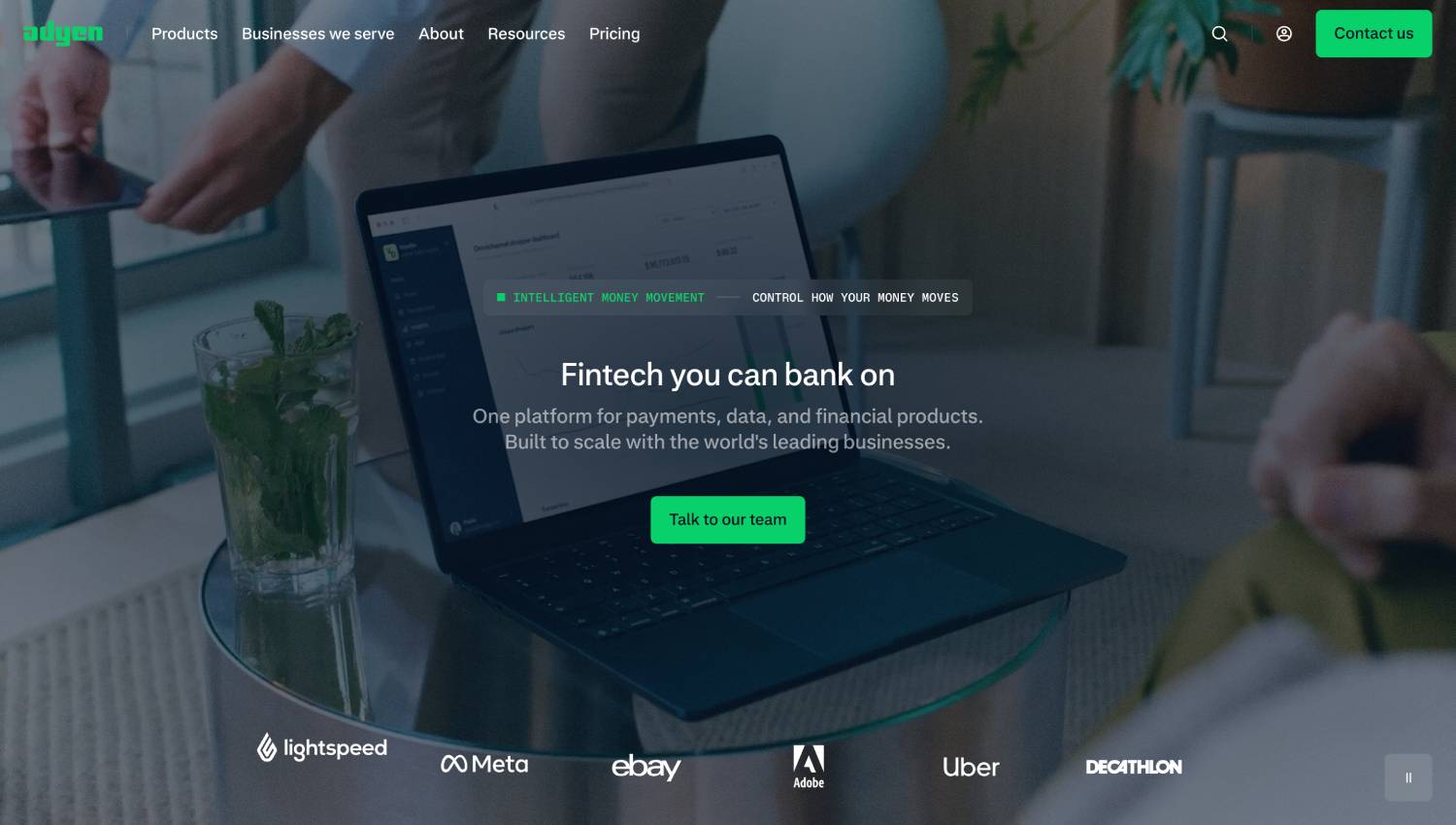
Adyen for Platforms gives vertical SaaS companies the most complete control of any provider on this list. The platform onboarding is white-labeled, meaning your sub-merchants see your brand, not Adyen’s. Underwriting parameters are configurable, and Adyen’s unified commerce architecture means a transaction processed on a physical terminal and a transaction processed through your online checkout surface in the same reporting ledger with the same merchant identifier.
The Terminal API supports cloud-based integration, which is the architecture most SaaS platforms want. Terminals talk to your server rather than requiring a local point-of-sale application, which simplifies device management across distributed merchant locations. Adyen also supports Tap to Pay on iPhone and Android, which matters for field service and mobile-first verticals where carrying a dedicated hardware reader is impractical.
The trade-off is entry complexity and volume expectations. Adyen is frank that it is not optimized for platforms with sub-merchants processing low volumes. If your platform manages merchants doing a few thousand dollars a month in card-present revenue, Adyen’s commercial model may not pencil. Pricing is not publicly listed; the company negotiates rates based on volume. Platforms evaluating Adyen alongside other enterprise payment stacks will find the Stripe vs Adyen comparison on FintechSpecs useful context.
Square for Developers: Fast Setup, Moderate Platform Depth

Square for Developers offers the Terminal API and the Reader SDK, which together let platforms build card-present checkout into their software without building their own hardware management layer. Sub-merchant onboarding is faster than most competitors because Square’s KYC infrastructure is already built and tested at scale. For platforms targeting SMB merchants in retail, food service, or personal services, that speed matters.
The limits are real. Sub-merchants need Square accounts, and those accounts carry Square branding. Platform-level white-labeling is limited compared to Adyen or Payabli. Reporting lives in the Square Dashboard, which means platform operators pulling consolidated revenue data across dozens of merchants need to build their own reporting layer on top of Square’s APIs.
Square’s offline mode does allow card-present transactions to process when connectivity drops, with transactions completing when the device reconnects. The offline window and transaction caps are documented in Square’s developer documentation. For platforms where merchant locations are frequently in low-connectivity environments, verify the specific limits before committing to this architecture.
Payabli: PayFac-as-a-Service With Unified Card-Present and Card-Not-Present
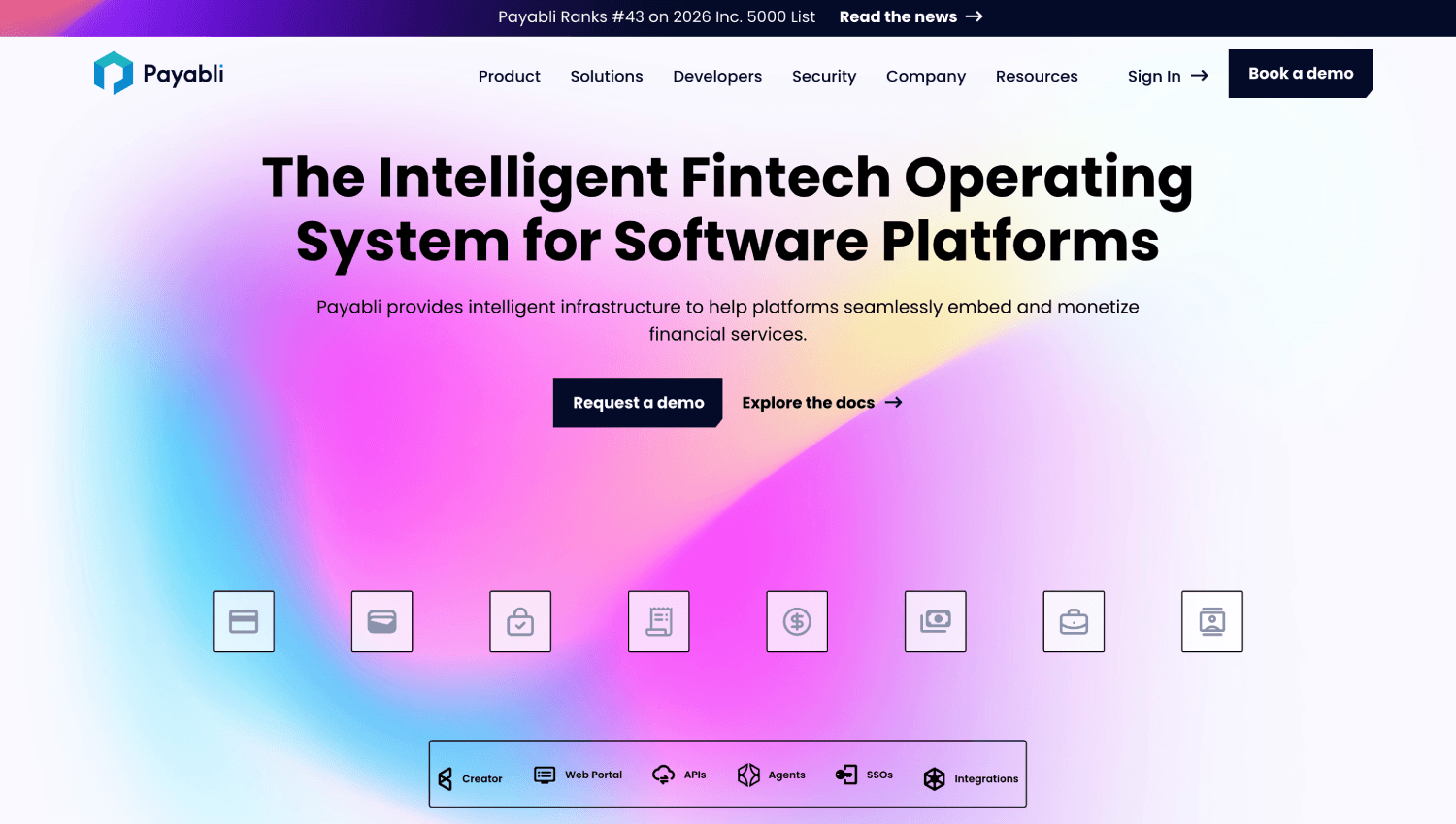
Payabli positions itself specifically for software platforms that want to run as a PayFac or revenue-share model without building the entire payments infrastructure from scratch. The platform provides white-labeled sub-merchant onboarding, card-present processing through a gateway-agnostic terminal API, and a unified reporting layer that surfaces both card-present and card-not-present revenue at the platform and sub-merchant level.
For a vertical SaaS company that has already decided to monetize payments directly, rather than referring merchants to a third-party processor, Payabli reduces the build burden significantly. The onboarding flow is customizable, which means you can embed the KYC and underwriting steps into your own product flow rather than handing merchants off to an external portal.
Payabli does not publish pricing publicly. Rates and platform fees are negotiated based on volume and merchant mix. Platforms researching the broader PayFac model before committing to any vendor will find the PayFac-as-a-Service provider comparison on FintechSpecs a useful frame for what to ask in those conversations.
Fiska: Purpose-Built for Vertical SaaS Embedded Payments
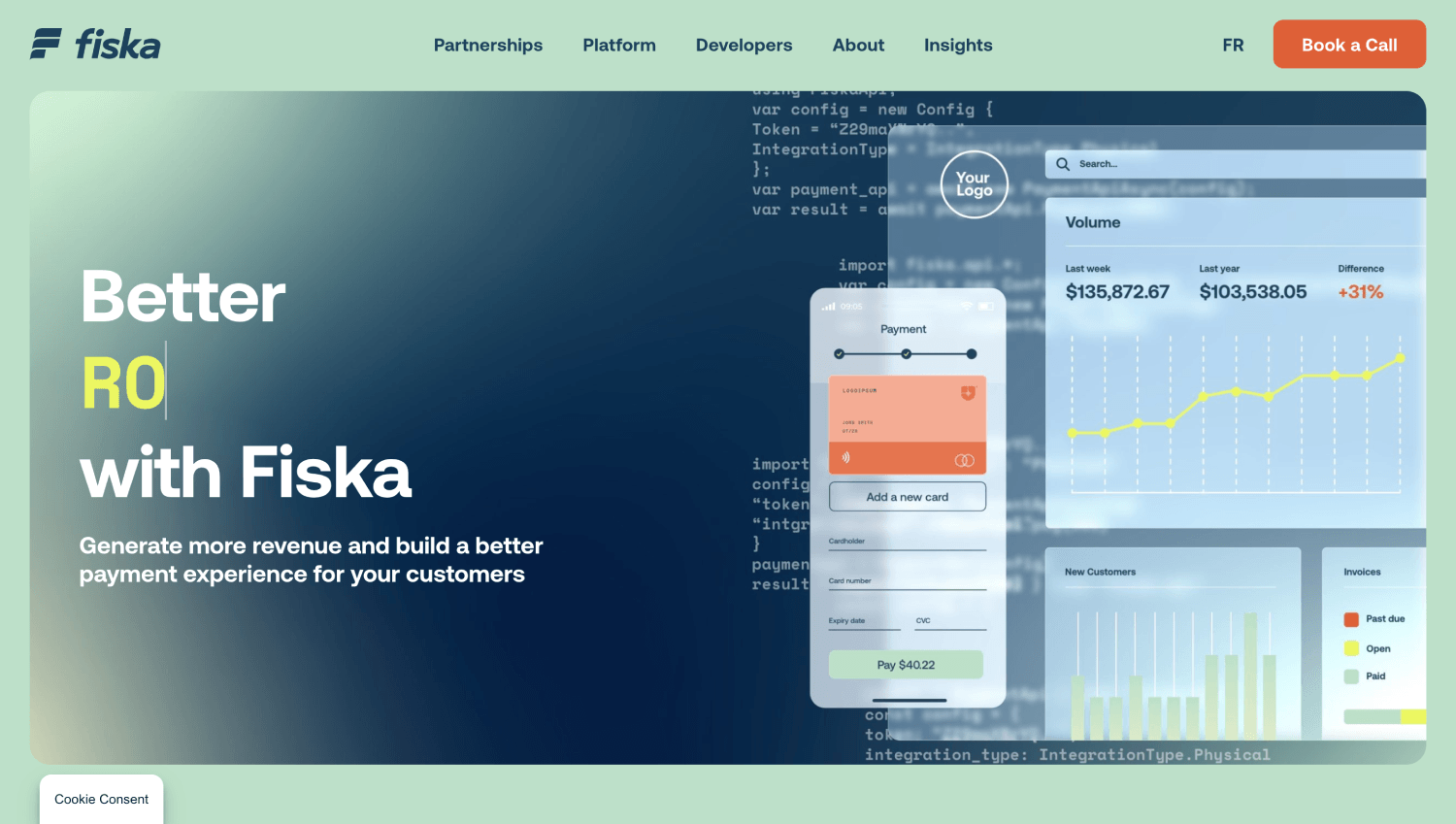
Fiska is the most narrowly targeted provider on this list. It is built for vertical SaaS teams that want to embed card-present payments into their software without hiring a dedicated payments engineering team. The platform includes device API controls, platform-level reporting, and onboarding infrastructure designed for the software-led distribution model, where the SaaS platform, not the merchant, initiates and manages the payment relationship.
That specificity is both the strength and the limitation. Fiska is not trying to serve enterprise retailers or large multi-location hospitality groups. It is trying to reduce the time between “we want to embed payments” and “our merchants are processing live transactions.” For teams at the seed to Series B stage that have confirmed payment monetization as a core revenue line, that focus is valuable.
Pricing and product scope details should be verified directly with Fiska, as the company does not publish a public pricing page. Confirm current hardware availability, offline payment behavior, and reporting depth during any vendor evaluation , the table above flags offline behavior as “Confirm with vendor” because this has not been independently verified. As with any embedded payments decision, the PayFac-as-a-Service comparison for vertical SaaS in healthcare and field services provides a useful lens for benchmarking what a purpose-built provider should actually deliver.
Nuvei for Platforms: Global Coverage with Omnichannel Architecture
Nuvei serves platforms that need card-present processing alongside a broader set of payment methods across multiple geographies. The platform architecture is modular, meaning vertical SaaS companies can add card-present terminals as one component of a wider payment stack that might also include ACH, local payment methods, or card-not-present e-commerce flows.
For US-focused vertical SaaS platforms, Nuvei’s global capability may be more than you need in the near term. The value becomes clearer for platforms that serve merchants operating in multiple countries, or platforms that expect their merchant base to expand internationally. The unified reporting layer covers card-present and card-not-present transactions, which solves one of the key friction points with Stripe Terminal.
Nuvei does not publish standard platform pricing. Rates are volume-based and negotiated. Offline payment behavior and specific hardware device compatibility have not been independently verified for this article , the table flags both as “Confirm with vendor” , and should be confirmed directly with their platform sales team.
PayPal Zettle for Developers: Simple Entry, Limited Platform Depth

PayPal Zettle for Developers offers an SDK-based integration that lets platforms add card-present payments without building deep terminal infrastructure. The offline payment support is functional, and the hardware cost of Zettle readers is lower than most enterprise-grade alternatives. For platforms targeting solo operators or very small businesses where simplicity matters more than white-labeling, Zettle is worth considering.
The core limitation is platform depth. Sub-merchants need PayPal accounts, and the reporting layer lives within PayPal’s infrastructure rather than surfacing cleanly through a platform-level API. Building consolidated multi-merchant reporting on top of Zettle requires significant custom work. And white-labeling the merchant experience is not a realistic option here.
Zettle fits platforms where the goal is to give merchants a quick, familiar payment option, not to own the payment relationship or capture interchange revenue. For platforms whose business model depends on payment monetization, Zettle offers the least support for that goal among the providers on this list.
How to Apply the FintechSpecs Terminal Fit Matrix to Your Platform
Shortlisting works faster when you answer four questions in order before you open any vendor’s documentation.
- Who owns the merchant relationship? If your platform wants to onboard merchants under your brand, with your underwriting parameters and your KYC flow, eliminate any provider that requires merchants to register directly with the payment company. That rules out Zettle and limits Square.
- How distributed and variable is connectivity? If your merchants operate in construction sites, rural areas, pop-up locations, or anywhere that reliable internet is not guaranteed, offline payment behavior moves from a nice-to-have to a hard requirement. Verify the specific offline window, transaction cap, and reconciliation behavior in writing before signing.
- Do card-present and card-not-present transactions need to appear in one ledger? For any platform where merchants collect deposits online and balances in person, or run subscriptions alongside walk-in sales, unified reporting is not optional. Adyen and Payabli solve this natively. Square and Zettle require custom work.
- What is your monthly card-present volume per merchant? Enterprise-grade providers like Adyen have implicit volume expectations. If your median merchant processes under $10,000 per month in card-present transactions, verify that the provider’s commercial model works at that scale before investing in integration.
Running through these four questions will narrow a list of six to two or three in under an hour. From there, the conversation with vendor sales teams becomes a scope and pricing discussion rather than a capabilities discovery call.
Platforms also evaluating the broader payment infrastructure decision alongside terminal selection should cross-reference the payment infrastructure tools comparison for SaaS founders on FintechSpecs for context on how terminal APIs fit into the larger stack.
What Should a Vertical SaaS Team Verify Before Signing a Terminal API Contract?
Beyond the four-axis matrix, three contract-level items create outsized risk if skipped. First, confirm that the provider’s card-present interchange rates and platform fees are structured in a way that your margin model works. Card-present transactions typically carry lower interchange than card-not-present, but platform fees and hardware costs can offset that advantage quickly at lower volumes.
Second, verify the hardware certification timeline. If you want to offer a specific terminal model, confirm that device is certified and in stock. Hardware availability has been inconsistent across the industry in recent years, and a certification delay can push your launch by months.
Third, read the contract language on data portability. If you need to switch providers two years from now, can you export your transaction history, merchant records, and device configuration in a usable format? Providers that lock data into proprietary formats create expensive switching costs. The FintechSpecs fintech vendor evaluation framework covers data portability and other contract-level criteria worth checking before you sign.
Frequently Asked Questions
What makes a terminal API suitable for vertical SaaS versus a standard payment processor?
A vertical SaaS-grade terminal API gives the platform, not the individual merchant, control over onboarding, device configuration, and reporting. Standard processors route each merchant through their own portal and reporting tools, which fragments the platform’s view of revenue and makes it impossible to white-label the merchant experience. The key differentiators are whether the provider supports programmatic sub-merchant onboarding, platform-level reporting, and device management through APIs rather than through a provider-controlled dashboard.
Can vertical SaaS platforms use Stripe Terminal and an alternative provider simultaneously?
Some platforms run hybrid architectures during a migration or to serve different merchant segments with different terminal solutions. This creates reconciliation complexity because transaction data lives in separate systems. It is manageable with a middleware layer or payment orchestration tool, but it adds engineering cost. Most platforms pick one provider and migrate fully rather than running two card-present integrations in parallel.
How important is offline payment support for vertical SaaS terminal integrations?
It depends entirely on where your merchants operate. A retail SaaS platform serving urban storefronts with wired internet connections can treat offline mode as a low-priority feature. A field service SaaS platform whose merchants collect payments at job sites, in basements, or in rural areas needs to verify offline behavior before anything else. Confirm the specific offline transaction window, per-device transaction cap, and how the provider handles declined cards that were approved offline but fail on reconnect.
How does card-present reporting differ from card-not-present reporting in platform integrations?
Card-present and card-not-present transactions generate different interchange rates, different risk profiles, and sometimes different settlement timelines. For a platform trying to understand total merchant revenue, mixing these two transaction types in a unified ledger is a core requirement. Providers that report them separately force your team to stitch together data from multiple API endpoints or dashboards, which increases reconciliation time and the chance of errors. Ask any provider to show you exactly how a sample platform-level revenue report would look with both transaction types included.
What is the typical integration timeline for a card-present terminal API in a vertical SaaS product?
Integration timelines vary widely based on provider documentation quality, your team’s payments engineering experience, and how much of the onboarding and reporting layer you are building custom. A well-resourced team integrating a provider with strong documentation and a working sandbox can complete a basic card-present integration in four to eight weeks. Building white-labeled sub-merchant onboarding, platform-level reporting, and multi-device management on top of that typically adds another two to four months of engineering work.
Do any of these Stripe Terminal alternatives support Tap to Pay on iPhone or Android?
Adyen supports Tap to Pay on iPhone and Android through its Terminal API, which eliminates the need for a physical card reader in mobile-first or field service deployments. Square also supports Tap to Pay for iOS and Android through its Reader SDK. Confirm current availability for Payabli, Fiska, and Nuvei directly with their sales teams, as Tap to Pay support is a hardware certification question that changes as providers add new device partnerships.
How does payment monetization change the terminal provider decision for vertical SaaS?
If your platform earns revenue from payments, through interchange splits, monthly platform fees, or a markup on processing rates, the provider’s commercial model for platforms becomes a first-order decision. Providers that treat your platform as a referral partner rather than a PayFac give you far less pricing control and no ability to capture interchange revenue. Payabli and Fiska are explicitly built for platforms that want to monetize payments directly. Adyen for Platforms supports this model at scale. Square and Zettle offer less flexibility here.
The Decision Most Platforms Get Wrong
Most vertical SaaS teams evaluate terminal providers the same way they evaluate any SaaS tool, by looking at feature lists and pricing pages. The card-present problem is different. The decision that matters is not which terminal has the best hardware or the lowest per-transaction rate. It is which provider’s platform model matches how your business actually earns money from payments.
A platform that earns a monthly SaaS fee and treats payments as a convenience feature has different needs than a platform that earns 60 basis points on every card-present transaction across its merchant base. The first platform should optimize for integration speed and merchant simplicity. The second platform should optimize for pricing control, reporting depth, and onboarding ownership. These two platforms should not be evaluating the same shortlist.
The providers on this list that give platforms genuine pricing control and merchant relationship ownership are Adyen for Platforms, Payabli, and Fiska. The providers that prioritize simplicity and speed over control are Square and Zettle. Nuvei sits in the middle, with global reach that becomes more valuable as platform scale increases. Run the FintechSpecs Terminal Fit Matrix against your actual business model, not against a hypothetical feature comparison, and the right answer becomes obvious faster than you expect.