
- PayFac-as-a-service providers are not interchangeable. Underwriting speed, residual economics, and vertical-specific compliance support differ sharply across providers, and those differences compound directly into your payments revenue.
- Healthcare and field services have distinct requirements: HIPAA-adjacent data handling, high-volume low-ticket transactions, and contractor-heavy merchant portfolios that most generic PayFac setups handle poorly.
- Residual splits range from roughly 20% to 80% of net interchange depending on the provider and volume tier, so the revenue difference between a poorly negotiated and well-negotiated agreement can exceed your SaaS subscription revenue at scale.
- The fastest path to live payments is not always the most profitable one. Stripe Connect is live in days but captures the highest effective rate. Finix and Payrix give up more economics to the software platform but take weeks longer to onboard.
- Underwriting speed for your sub-merchants matters as much as your own onboarding. A field services platform that takes five days to activate a new HVAC contractor loses deals to a competitor that activates in hours.
For vertical SaaS teams evaluating payfac for vertical SaaS use cases, the right answer depends on three factors: how fast your sub-merchants need to activate, how much payments revenue you want to retain, and whether the provider has handled your specific vertical’s compliance requirements before. Stripe Connect suits teams that need to move fast with minimal setup. Finix, Payrix, and Infinicept suit platforms that want to own more of the economics. Healthcare platforms need a provider with documented HIPAA-adjacent data practices, and field services platforms need instant or same-day underwriting for high-churn contractor merchants.
Why Generic PayFac Comparisons Miss the Point for Vertical SaaS
Most PayFac provider comparisons rank by feature count or pricing tier. That works fine if you are building a general marketplace. It fails if your product serves dental practices, home warranty companies, or pest control franchises, because the real differentiator in those segments is not the feature list. It is whether the provider has pre-built risk models and underwriting logic for your merchant type, and whether your residual economics hold up once you account for chargeback exposure, card-not-present rates, and the provider’s own margin layer.
Vertical SaaS platforms monetize payments differently than horizontal platforms. A practice management software company for veterinary clinics is not trying to process payments on the side. Payments are a core revenue line, often comparable to or exceeding SaaS subscription revenue once the platform reaches scale. At that point, the difference between a 30% residual and a 60% residual is not rounding error. It is a business model shift. For context on how payments monetization interacts with your broader product economics, the FintechSpecs breakdown of how fintech companies monetize payments without killing UX covers the margin mechanics in detail.
Healthcare adds another layer. A platform processing payments on behalf of medical practices does not become a HIPAA covered entity purely because of payments, but any provider that touches patient data adjacent to a transaction needs to handle that data with care. Most general-purpose PayFac-as-a-service providers do not have a documented stance on this. The ones that serve healthcare SaaS actively do.
The FintechSpecs Vertical Fit Score: How to Evaluate a PayFac Before You Sign
Before getting to the provider rankings, it helps to have a consistent framework. Most teams evaluate PayFac providers on pricing and feature lists, then discover the hard constraints after the integration is done. The FintechSpecs Vertical Fit Score is a pre-commitment checklist built specifically for vertical SaaS teams. It covers four dimensions that generic comparisons consistently skip, and while the dimensions themselves are straightforward, the value is in applying them before you sign rather than after you are six months into an integration.
Residual economics clarity: Does the provider publish or negotiate a clear residual split, and does that split survive volume growth without renegotiation? Some providers offer attractive splits at low volume and quietly compress them as your GMV grows.
Sub-merchant underwriting speed: How long does it take to activate a net-new sub-merchant in your vertical? A healthcare SaaS platform onboarding a new dermatology practice needs a different answer than a field services platform activating a one-person plumbing contractor. Same-day vs. 3-to-5-day decisions affect your churn and your close rate.
Vertical-specific risk modeling: Does the provider have existing risk parameters for your merchant category codes (MCCs), or will your platform be used as training data while you absorb the early chargeback exposure? Providers with vertical experience front-load this knowledge. Generalist providers make you pay for it in higher reserves.
Compliance posture documentation: For healthcare specifically, has the provider executed business associate agreements (BAAs) for adjacent data flows? For field services, does the provider handle multi-state contractor licensing edge cases in underwriting? These are not nice-to-haves. They are the difference between a smooth audit and an expensive one.
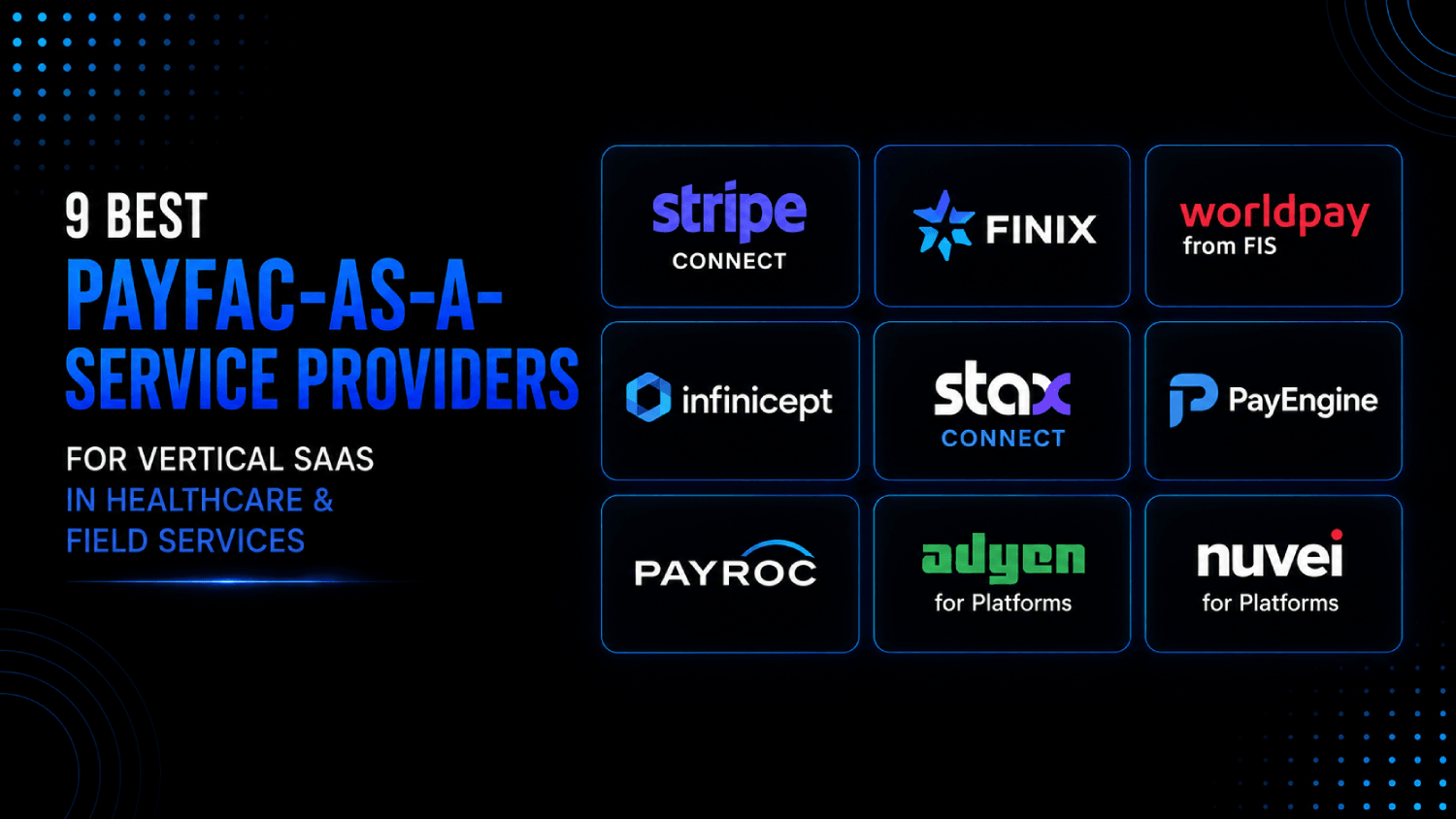
The 9 Best PayFac-as-a-Service Providers for Vertical SaaS
1. Stripe Connect
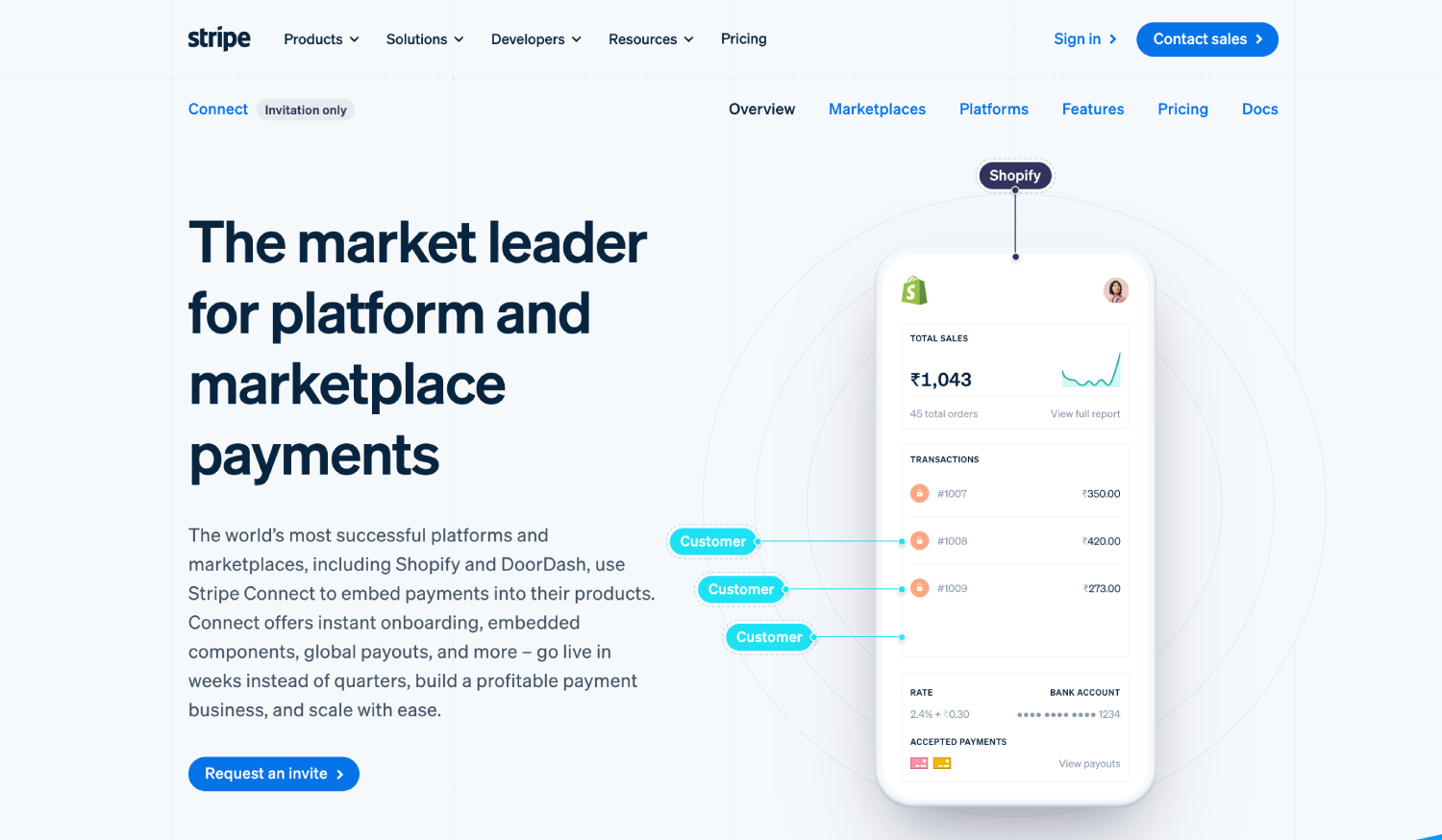
Stripe Connect is the fastest path to live embedded payments for most SaaS teams. The integration documentation is thorough, the developer tooling is mature, and sub-merchant onboarding is largely automated through Stripe’s identity verification infrastructure. Most platforms can go from zero to accepting payments in under two weeks.
The trade-off is economics. Stripe retains a significant share of the payment margin, and vertical SaaS platforms at meaningful volume often find that the per-transaction fee model leaves less on the table than a negotiated residual split with a more specialized provider. Stripe does not publish custom residual splits, so platforms processing under roughly $10 million in annualized GMV typically take the standard pricing with little room to negotiate. Healthcare platforms should verify Stripe’s BAA availability for their specific data configuration directly with their account team, as Stripe’s public documentation notes it does not sign BAAs in most standard configurations.
Best for: Seed-to-Series A vertical SaaS teams that need to launch quickly and optimize economics later.
2. Finix
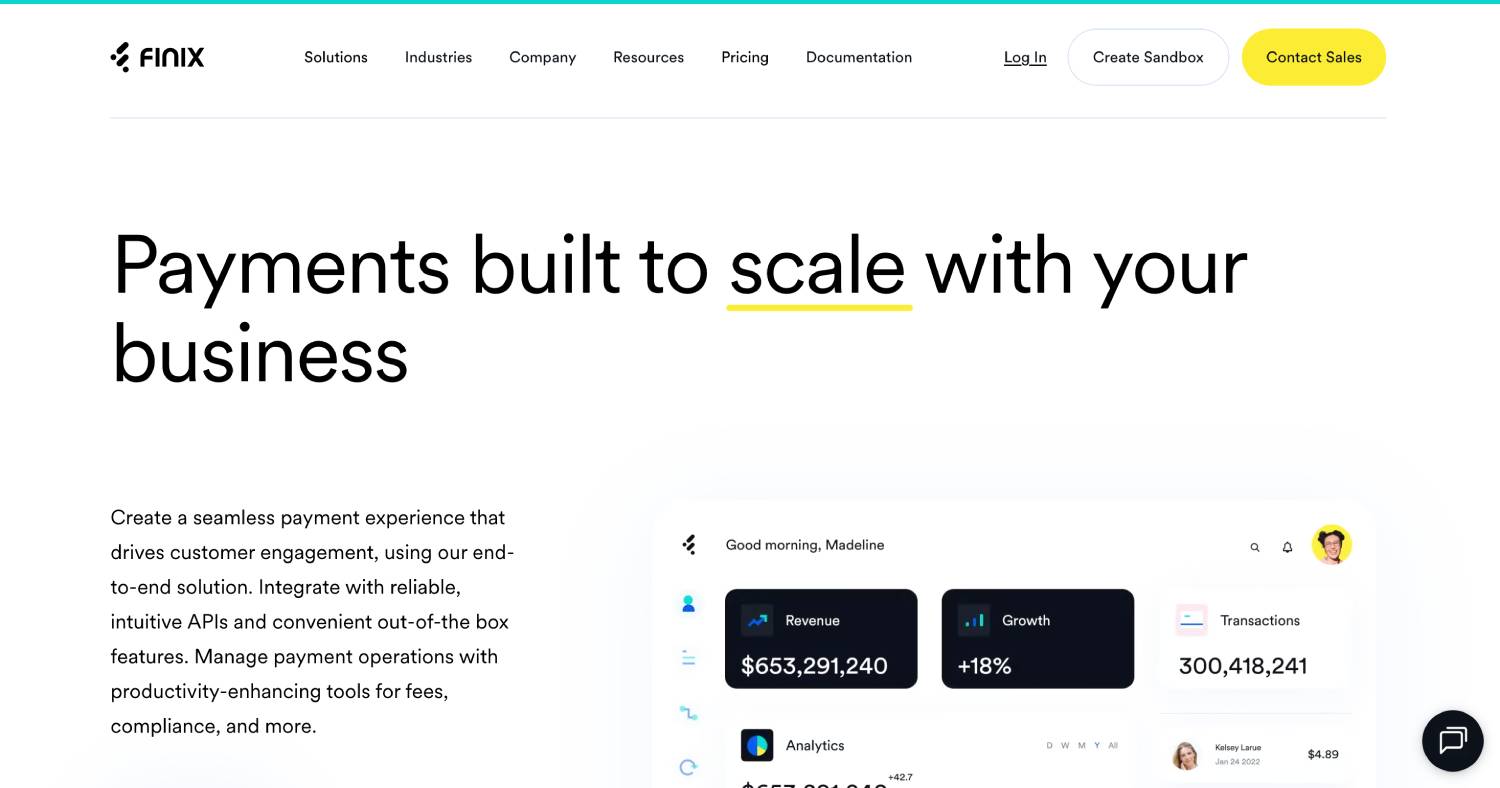
Finix is built explicitly for software companies that want PayFac economics without becoming a registered PayFac themselves. The platform handles risk, compliance, and settlement infrastructure, and gives the software platform a meaningful share of the net interchange. Finix’s residual model is negotiated rather than published, but the company has publicly positioned itself as a high-residual alternative to Stripe Connect for platforms processing meaningful volume.
Finix has made specific investments in healthcare payment infrastructure. The platform’s underwriting logic includes support for healthcare merchant categories, and the company has documented experience with practice management software providers. For field services platforms, Finix’s sub-merchant onboarding supports instant decisioning for lower-risk merchant profiles, which is relevant for platforms activating high volumes of small contractors.
Best for: Series A and B vertical SaaS teams in healthcare or field services that want better residual economics and have engineering capacity for a more involved integration.
3. Payrix
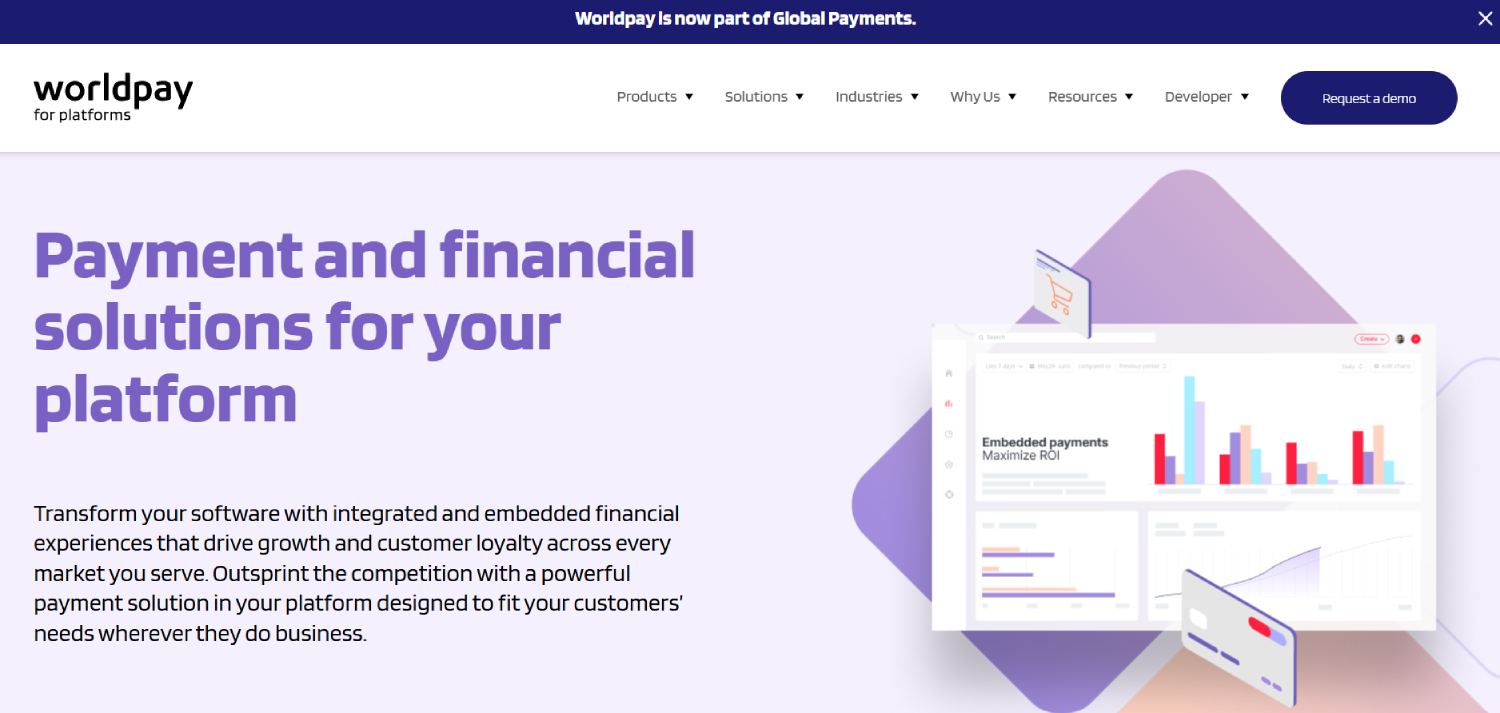
Payrix (now part of Worldpay) targets vertical SaaS explicitly and has built its go-to-market around software-led payments for specific verticals including field services, home services, and professional services. The platform offers white-labeled payment experiences and supports platforms that want their own brand on the checkout flow rather than a third-party payment provider’s name.
Payrix’s acquisition by Worldpay gives it access to Worldpay’s processing infrastructure and global rails, which matters for platforms with international sub-merchants. The residual economics are negotiated per platform and are generally more favorable than Stripe for platforms at mid-market volume. The onboarding process for new platforms takes longer than Stripe, typically several weeks for full integration, but the trade-off is a more configurable risk and settlement layer.
Best for: Field services and home services SaaS teams that want white-label payments and have enough volume to negotiate meaningful residual splits.
4. Infinicept
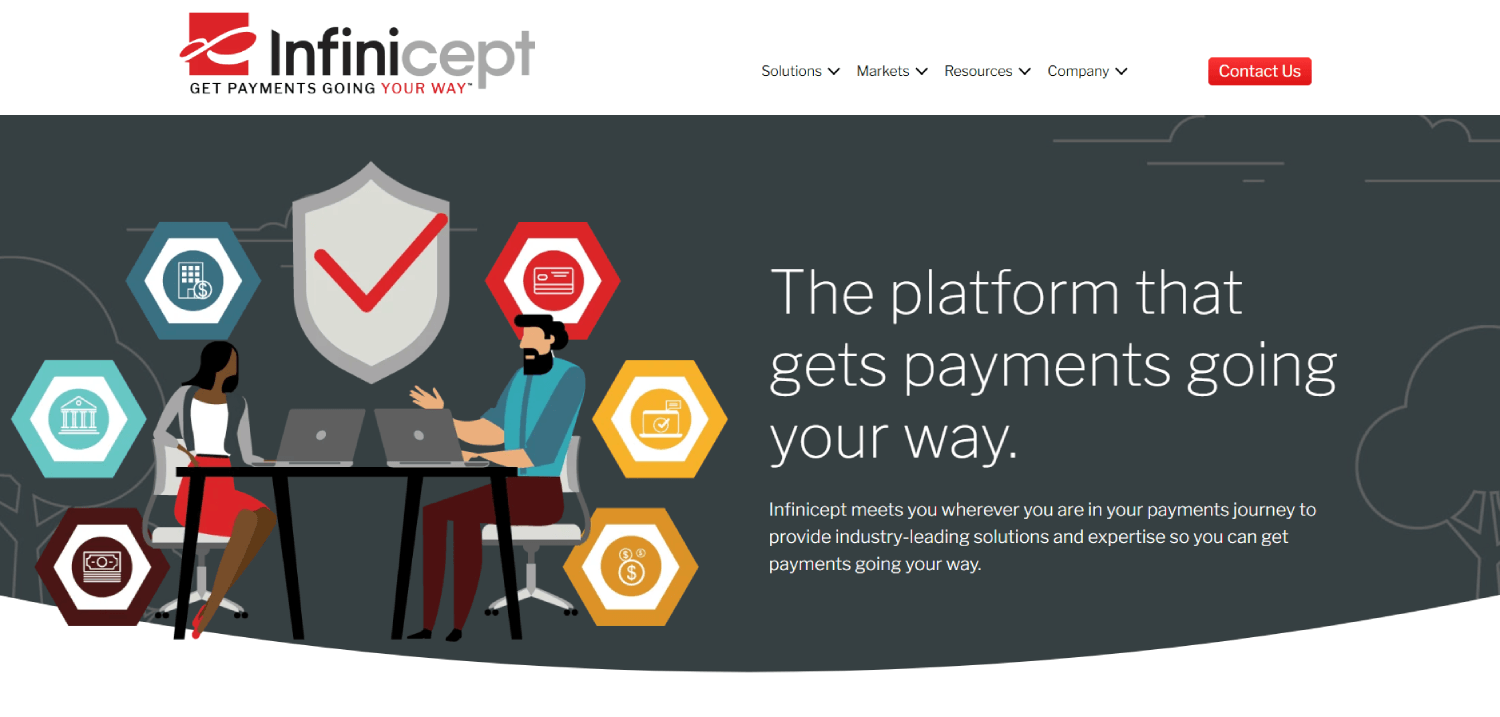
Infinicept occupies a different position than the others on this list. Rather than acting as the acquiring infrastructure itself, Infinicept provides the software layer that lets a SaaS platform register as a PayFac with an acquiring bank and manage that program independently. The platform includes merchant onboarding, underwriting workflow management, risk monitoring, and residual reporting tools.
This matters for vertical SaaS teams that want full PayFac economics without building the compliance and operational infrastructure from scratch. Infinicept’s approach gives platforms more control and higher residuals than any managed PayFac-as-a-service, at the cost of more operational complexity and the need to work directly with an acquiring bank. For healthcare platforms with complex billing workflows or field services platforms with high sub-merchant counts, this level of control can justify the added overhead.
Best for: Growth-stage vertical SaaS teams that have validated payments volume and want to capture full PayFac economics by registering as a PayFac themselves.
5. Stax Connect
Stax Connect is Stax’s PayFac-as-a-service product aimed at software partners. Stax operates on a subscription-plus-interchange model for its direct merchant base, and Stax Connect extends a version of that pricing logic to software platforms. The result is lower effective rates for sub-merchants at higher volume, which is attractive for healthcare practices processing significant monthly transaction counts.
Stax Connect’s vertical focus has historically leaned toward professional services and healthcare-adjacent categories. The platform supports instant merchant onboarding for qualifying profiles and offers partner-facing residual dashboards. Stax does not disclose its residual split percentages publicly, but the structure is negotiated per partner.
Best for: Healthcare SaaS and professional services platforms whose sub-merchants process enough volume to benefit from subscription-model pricing, typically practices with $10,000 or more in monthly card volume.
6. PayEngine
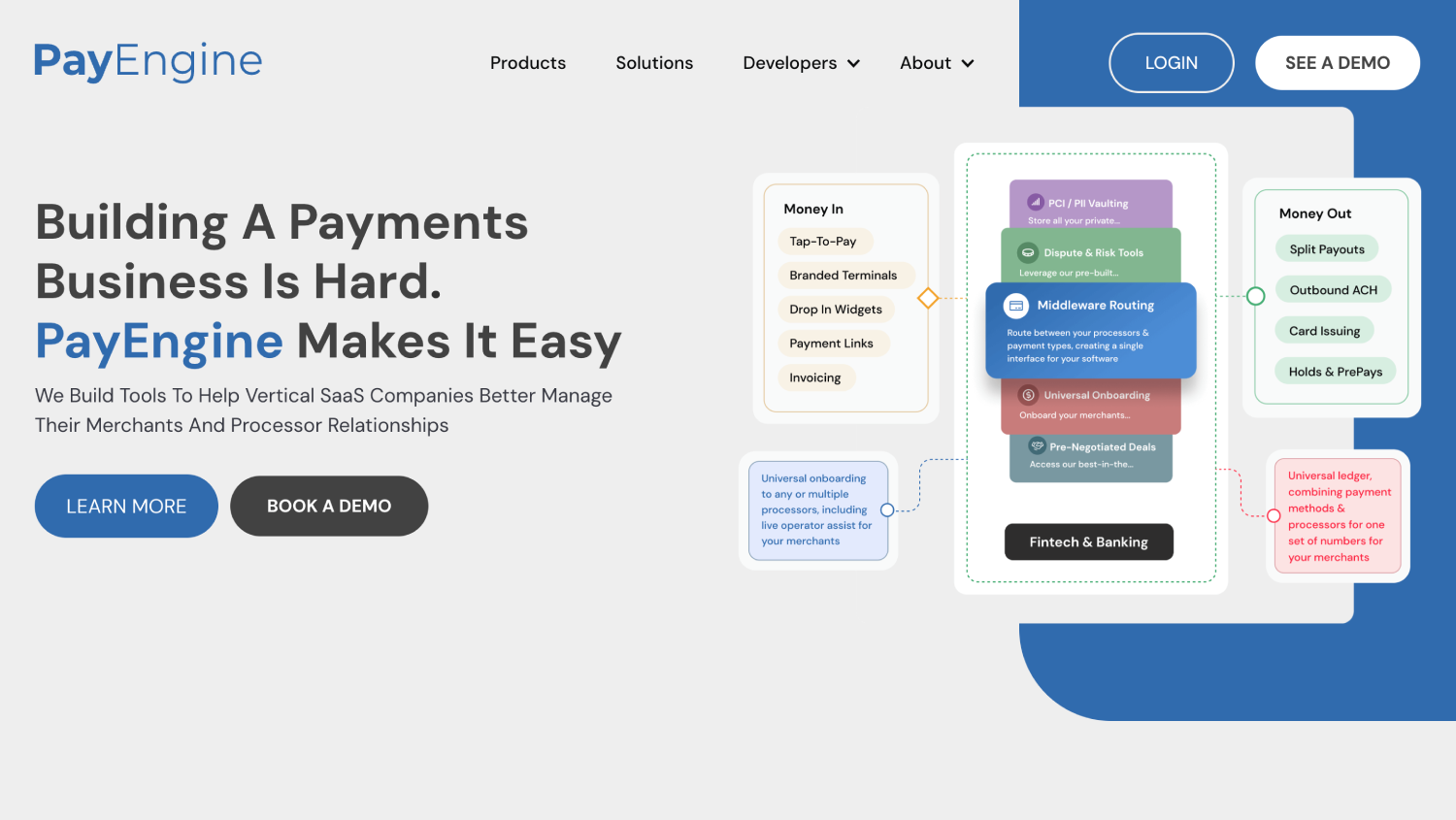
PayEngine is a newer entrant positioned specifically for vertical SaaS teams that want fast platform onboarding and meaningful residual economics without enterprise-level volume commitments. The platform offers near-instant sub-merchant activation, a white-label checkout experience, and a residual model that is more accessible to early-stage platforms than Finix or Payrix typically allow.
PayEngine’s documentation covers healthcare and field services merchant types, and the company has positioned sub-day underwriting for standard merchant profiles as a core differentiator. The platform is still building out the depth of reporting and risk tooling that more established providers offer, so teams with complex risk requirements should evaluate it carefully before committing.
Best for: Seed to early Series A vertical SaaS teams that want better economics than Stripe without the integration complexity of Finix or the volume requirements of Payrix.
7. Payroc
Payroc is a full-stack acquiring and PayFac-as-a-service provider with particular depth in field services and home services verticals. The company’s portfolio includes partnerships with software platforms serving HVAC, plumbing, electrical, and landscaping businesses. That experience translates into pre-built risk models for contractor merchant categories, which reduces the time a field services SaaS platform spends calibrating underwriting thresholds manually.
Payroc offers white-label payment products and negotiated residual splits. The company is less widely discussed in fintech circles than Stripe or Finix, but its vertical depth in trade and field services makes it a serious option for platforms in those categories. Integration documentation is less polished than the developer-first providers, so engineering teams should budget for additional discovery time.
Best for: Field services SaaS platforms in home services, construction, or trades that want a provider with pre-existing MCC risk models for contractor-heavy merchant portfolios.
8. Adyen for Platforms

Adyen for Platforms is the enterprise-grade option on this list. Adyen processes payments for some of the world’s largest platforms and offers a PayFac-like model through its Marketplace and Platforms product. The sub-merchant onboarding is sophisticated, the global acquiring footprint is unmatched, and the risk and compliance infrastructure is built for high-volume, high-stakes environments.
The trade-off is accessibility. Adyen for Platforms has volume minimums that put it out of reach for most early-stage vertical SaaS companies, and the sales cycle and integration timeline are both longer than other providers on this list. For a healthcare SaaS company at Series C processing hundreds of millions in annualized GMV across thousands of practices, Adyen’s economics and compliance infrastructure become genuinely competitive. Below that scale, the cost of entry does not make sense.
Best for: Series C and later vertical SaaS platforms with very high GMV that need enterprise compliance infrastructure and global processing capability.
9. Nuvei for Platforms
Nuvei offers a partner platform product that covers PayFac-as-a-service for software companies. The company has built vertical-specific programs for healthcare, field services, and professional services, and its residual structure is negotiated per platform relationship. Nuvei’s processing footprint spans over 200 countries and territories, which gives it relevance for field services SaaS companies that serve multi-national contractor networks.
Nuvei’s sub-merchant onboarding includes automated KYC for standard merchant profiles and supports ACH and card processing natively. The company’s healthcare program documentation addresses data handling for practice management software contexts. Nuvei is not the most visible name in the vertical SaaS conversation, but platforms that have outgrown the mid-market providers and want an alternative to Adyen’s enterprise minimums often find Nuvei’s positioning relevant.
Best for: Mid-market vertical SaaS platforms that need international processing and want negotiated residuals without Adyen’s volume requirements.
How Do Residual Economics Actually Differ Across These Providers?
Most PayFac-as-a-service providers do not publish their residual split percentages. What you see publicly is the transaction fee or the markup over interchange, not what the software platform actually retains. The gap between those two numbers is where the real comparison lives.
To illustrate how split differences compound, this is an illustrative scenario, not a disclosed rate from any provider, consider a field services SaaS platform processing $2 million per month in GMV at a blended effective rate of 2.5%. That is $50,000 per month in gross payment revenue. If the provider retains 70% and the platform receives 30%, the platform earns $15,000 per month from payments. If the platform negotiates a 60/40 split in its favor, that number becomes $30,000 per month. At 12 months, that is a $180,000 annualized difference on a single residual negotiation. At $10 million per month in GMV, the same 30-point difference in split yields $900,000 per year. This is why vertical SaaS teams focused on payments revenue should treat the residual negotiation as seriously as any other commercial contract.
For a deeper look at how the embedded payments revenue model interacts with SaaS unit economics, the FintechSpecs analysis of top embedded payments providers for B2B SaaS covers the economics from the platform’s perspective across different provider structures.
| Provider | Best Vertical Fit | Sub-Merchant Activation Speed | Residual Model | Healthcare-Specific Support | Minimum Volume to Negotiate |
|---|---|---|---|---|---|
| Stripe Connect | Horizontal / early-stage | Hours to 1 day | Standard pricing, limited negotiation | BAA not standard; verify with team | Not published |
| Finix | Healthcare, professional services | Same day (qualifying profiles) | Negotiated residual split | Yes, documented vertical experience | Not published |
| Payrix (Worldpay) | Field services, home services | 1 to 3 days | Negotiated residual split | Limited; primarily services-focused | Not published |
| Infinicept | Platforms registering as PayFac | Depends on acquiring bank | Full PayFac economics (platform owns) | Platform-configured | Not published |
| Stax Connect | Healthcare, professional services | Near-instant (qualifying profiles) | Negotiated residual split | Yes, healthcare-adjacent focus | Not published |
| PayEngine | Early-stage vertical SaaS | Sub-day | Negotiated residual split | Documented support | Lower than most |
| Payroc | Field services, trades | 1 to 2 days | Negotiated residual split | Limited | Not published |
| Adyen for Platforms | Enterprise SaaS, global | Days (enterprise onboarding) | Negotiated; enterprise minimums | Yes, enterprise compliance | High |
| Nuvei for Platforms | Mid-market, international | 1 to 3 days | Negotiated residual split | Yes, healthcare program documented | Mid-market |
What Does Healthcare PayFac Compliance Actually Require?
Healthcare is one of the most misunderstood verticals for embedded payments because teams conflate payment compliance with healthcare compliance. A software platform that processes payments on behalf of medical practices is not automatically a HIPAA covered entity due to payment processing alone. What matters is whether any protected health information (PHI) touches the payment flow, and whether the provider’s infrastructure is configured to keep those two data streams separate.
In practice, practice management software often combines scheduling, patient records, and billing in a single interface. When a payment is initiated from that interface, the question of whether PHI crosses into the payment processor’s system depends on implementation. Healthcare-focused PayFac providers like Finix and Stax have addressed this at the infrastructure level by supporting data separation and, in some cases, offering BAA documentation for appropriate configurations. Generic providers require the SaaS platform to architect around this problem themselves, which adds engineering complexity and compliance risk.
The PCI DSS obligation is separate and universal. Any platform acting as a PayFac or sub-PayFac must maintain PCI compliance, and the specific SAQ level depends on transaction volume and whether card data is ever handled by the platform’s own systems. For an overview of PCI compliance tooling relevant to SaaS and payment companies, see the FintechSpecs comparison of PCI DSS compliance tools for SaaS and payment companies. Getting this wrong is not just a regulatory problem. It is a merchant churn accelerant, because healthcare practices that discover their payment provider is not configured correctly will leave quickly.
What Makes Field Services PayFac Underwriting Different?
Field services presents a specific underwriting challenge that most generic PayFac-as-a-service providers handle poorly: high merchant turnover, irregular transaction patterns, and a significant proportion of card-not-present transactions charged after work completion. An HVAC contractor processing payments through your software platform might run three jobs in a day, each charged to a customer’s card hours after the service, with no physical card present and no signed receipt. That profile looks suspicious to underwriting models calibrated for retail or subscription businesses.
Providers with field services experience, specifically Payrix and Payroc, have built underwriting logic that accounts for these transaction patterns. That means lower reserve requirements for standard contractor profiles, faster activation decisions for incoming merchants, and fewer false positives on transaction monitoring. A field services SaaS platform that uses a provider without this vertical experience will spend engineering and ops time managing underwriting friction that its competitors have already solved.
Sub-merchant churn in field services is also higher than in most other verticals. Contractors go out of business, pause operations seasonally, or switch between software platforms when contracts renew. A PayFac-as-a-service provider for field services software needs to handle merchant offboarding cleanly, including fund settlement timelines and chargeback liability management for recently closed merchant accounts. These are operational details that surface after launch, not before, and they are worth asking about explicitly before signing an agreement.
How Should You Decide Between Managed PayFac-as-a-Service and Registering as a PayFac?
The core trade-off is economics versus operational complexity. A managed PayFac-as-a-service provider like Stripe, Finix, or Payrix handles the acquiring relationship, risk management, compliance, and settlement on your behalf. You earn a residual on transactions processed through your platform, but the provider keeps a material share of the margin as compensation for taking on the regulatory and risk infrastructure.
Registering as a PayFac through a provider like Infinicept means your platform owns the acquiring relationship directly and captures significantly more of the interchange economics, but you also own the compliance program, the underwriting decisions, and the operational overhead. For most vertical SaaS teams under $5 million in monthly GMV, the incremental economics of full PayFac registration do not offset the cost and distraction of managing that infrastructure in-house. Above $10 million to $20 million in monthly GMV, the math often starts to favor registration.
This decision also intersects with your staffing. A managed PayFac requires an integration, a commercial agreement, and ongoing monitoring. A registered PayFac requires a risk officer, a compliance program, and an active relationship with an acquiring bank. Teams that have not thought through the staffing implications of full registration often find the economics attractive until they price in the headcount. The FintechSpecs guide on how to embed payments in SaaS walks through the PayFac vs. ISV vs. managed service decision in detail if you want a structured framework for this choice.
Frequently Asked Questions
What is PayFac-as-a-service for vertical SaaS?
PayFac-as-a-service is an arrangement where a software platform embeds payment acceptance for its customers (sub-merchants) through a third-party provider that handles the acquiring registration, underwriting, compliance, and settlement infrastructure. The software platform earns a residual share of the transaction revenue without becoming a registered payment facilitator itself. For vertical SaaS, this means the platform can offer native payment processing to its specific merchant segment, such as medical practices or field service contractors, without building payment infrastructure from scratch.
What is the difference between PayFac and a traditional payment processor for SaaS?
A traditional payment processor requires each merchant to apply for their own merchant account directly. A PayFac (or PayFac-as-a-service) model allows the software platform to aggregate sub-merchants under a single master merchant account, which dramatically speeds up merchant onboarding (from weeks to minutes or hours) and gives the platform control over the payment experience, branding, and pricing. The platform also earns a residual on every transaction processed through its system, which a referral or reseller arrangement with a traditional processor typically does not provide.
How does healthcare PayFac compliance work with HIPAA?
Payment processing alone does not automatically make a software platform a HIPAA covered entity, but if patient data (PHI) is transmitted alongside payment data, the platform needs to confirm that its PayFac provider handles that data appropriately. Some providers offer BAA documentation for configurations where PHI may be adjacent to transaction data. Platforms should explicitly ask any healthcare-focused PayFac provider whether they support data separation between PHI and payment data and whether BAA agreements are available for their specific implementation architecture.
What residual percentage should a vertical SaaS platform expect from a PayFac provider?
Most providers do not publish residual split percentages. In practice, negotiated residuals for software platforms range widely based on volume, vertical risk profile, and the platform’s position in the negotiation. Platforms processing under $1 million per month in GMV typically have limited negotiating power. Platforms above $5 million per month can often negotiate meaningfully better splits. The key is to negotiate the split as a percentage of net interchange (after card brand fees and processor cost) rather than gross transaction volume, which is where the economics are actually determined.
How fast can a field services sub-merchant get activated on a PayFac platform?
Activation speed varies significantly by provider and merchant risk profile. Providers with vertical-specific underwriting logic for field services, such as Payrix and Payroc, can activate standard contractor profiles in one to two business days. Generic providers with less calibrated risk models for field services merchant categories may take three to five business days or require manual review. Instant activation is available from some providers for merchants that meet a low-risk profile threshold, but most field services contractors with irregular transaction histories will not qualify for instant decisioning on their first application.
Can a vertical SaaS platform use a PayFac provider and still negotiate custom pricing for its sub-merchants?
Yes. Most PayFac-as-a-service arrangements allow the software platform to set the effective rate charged to sub-merchants independently from the rate the platform pays the provider. The platform earns the spread between what it charges sub-merchants and what it pays the provider (after residual split). This means a field services SaaS platform can price its payment offering at whatever rate the market will bear and retain the difference. The provider’s floor rate and residual structure determine the platform’s minimum cost, not the price charged to merchants.
What is the minimum volume needed to access a negotiated PayFac residual?
No provider publicly states a minimum volume threshold for negotiated residuals. In practice, providers like Finix and Payrix tend to require platforms to demonstrate a meaningful merchant base or a credible projection of payment volume before committing to a negotiated structure. Platforms at seed stage with limited processing history typically start on standard pricing and renegotiate as volume grows. PayEngine has positioned itself as more accessible to early-stage platforms that want residual economics before reaching the volume thresholds that Finix or Payrix typically require.
How do PayFac-as-a-service providers handle sub-merchant chargebacks?
In a managed PayFac structure, the PayFac provider typically holds the primary liability for chargebacks from sub-merchants, but the software platform is often contractually required to maintain a reserve or indemnify the provider for excess chargeback exposure above agreed thresholds. For field services platforms, where card-not-present chargebacks are more common, this is a material contract point. Platforms should review chargeback liability clauses carefully and ask providers specifically how they handle chargeback disputes for field services merchant categories before signing. For a broader look at managing chargeback exposure, the FintechSpecs guide on chargeback management tools for B2B SaaS covers the operational side in detail.
What the Right Choice Actually Comes Down To
Vertical SaaS teams that treat PayFac provider selection as a commodity decision tend to discover the real costs six months after go-live: sub-merchant activation friction that slows their sales cycle, residual economics that do not scale with their GMV growth, and compliance configurations that require expensive retrofitting when a healthcare customer asks a pointed question about data handling. The providers on this list are not interchangeable, and the differences are not marginal.
For healthcare platforms, the short list is Finix, Stax Connect, and Nuvei. All three have documented healthcare vertical experience, and all three support the compliance configurations that practice management software companies encounter in the field. For field services platforms, Payrix and Payroc have pre-built risk models for contractor merchant profiles that meaningfully reduce onboarding friction and false positives in transaction monitoring. Stripe Connect remains the fastest path to market for teams that have not yet validated their payments revenue model, and Infinicept remains the right answer for teams that have validated it and want to capture the full economics.
The residual economics question deserves more attention than most teams give it during vendor selection. A 20-point difference in residual split at $5 million per month in GMV is $1.2 million per year in platform revenue. That number should inform how much time and legal budget you allocate to the commercial negotiation, and it should inform which providers you shortlist in the first place. Teams that have thought carefully about why fintech SaaS margins are worse than founders expect will recognize that payments residuals are one of the few levers that compound without additional headcount, which makes getting this contract right one of the highest-return decisions a vertical SaaS founder can make.