
TLDR
- A single Africa mobile money payout API rarely covers every market. Operator reach, prefunding requirements, and reversal rules differ sharply between Kenya, Ghana, Tanzania, and francophone West Africa.
- The seven providers below split into two groups: purpose-built mobile money aggregators (PawaPay, Cray Finance, Tola Mobile) and broader cross-border payout platforms with meaningful mobile wallet coverage (Chipper Cash for Business, Flutterwave, Cellulant, and MFS Africa).
- Prefunding mechanics matter as much as wallet coverage. Some providers require a country-level float per operator; others pool liquidity centrally. That difference changes your working capital exposure by weeks.
- KYC delegation varies. Some APIs own the end-user KYC step; others push it entirely to the platform. Knowing which model applies affects your compliance posture before you sign a contract.
- Settlement timing to your bank account is a separate question from payout speed to the recipient’s wallet. Both matter for cash flow planning.
Africa mobile money payout APIs connect platforms to wallet networks like M-Pesa, MTN Mobile Money, Airtel Money, Orange Money, and Vodacom across sub-Saharan and francophone Africa. The seven providers profiled here are PawaPay, Cray Finance, Tola Mobile, Chipper Cash for Business, Flutterwave, Cellulant, and MFS Africa. Each differs in country depth, supported operators, prefunding model, KYC delegation, and settlement terms. No single provider covers every market at the same depth.
Why Does One Africa Mobile Money Connection Not Cover Every Wallet?
Mobile money in Africa is not one network. It is dozens of operator-specific schemes, each with its own API contracts, float requirements, transaction limits, and reversal windows. M-Pesa in Kenya operates under Safaricom’s licensing and settlement rules. MTN Mobile Money in Ghana runs under a different regulatory framework than MTN Mobile Money in Uganda or Côte d’Ivoire. When a provider says it supports “MTN,” that claim needs to be validated market by market.
Aggregators solve this by maintaining direct connections or sub-aggregator relationships with each operator in each country. The tradeoff is prefunding. Most mobile money disbursements require float held in-country, in local currency, before a payout can execute. A provider with operations in 30 markets may require you to prefund 30 separate float pools, or it may centralize liquidity and absorb currency risk itself. That structural difference changes your treasury workload considerably.
For platforms already thinking through cross-border payout API selection, Africa mobile money adds a layer of operator-level complexity that standard multi-currency wire providers do not handle.
The FintechSpecs Operator Depth Matrix: How to Read Africa Payout Coverage
Coverage claims from payout providers tend to be expressed in countries, not in operators. A provider might list Kenya as supported but only connect to M-Pesa and not to Airtel Money Kenya. At scale, that gap rejects real payees. The FintechSpecs Operator Depth Matrix forces a more granular reading: for each provider, we look at country count, named operators, local currency settlement, end-user KYC model, and reversal policy.
Use this matrix as a shortlisting filter, not a final answer. Product scope changes. Verify active operator connections with each vendor’s integration team before committing to a build.
| Provider | Countries (mobile money focus) | Notable Operators Supported | Currencies (local) | End-User KYC | Prefunding Model | Reversal Policy |
|---|---|---|---|---|---|---|
| PawaPay | 35+ | M-Pesa (KE, TZ), MTN (GH, UG, CM, CI, ZM), Airtel (UG, TZ, ZM, MG), Orange (CM, CI, BF, SN, ML), Wave (SN, CI) | KES, TZS, GHS, UGX, XOF, ZMW, MGA, others | Delegated to platform | Pooled per cluster or per country (configurable) | Automatic callback on failure; refund to float |
| Cray Finance | Select West/East Africa markets | Not fully disclosed publicly; verify with vendor | Varies by market | Delegated to platform | Not publicly disclosed; verify with vendor | Not publicly disclosed; verify with vendor |
| Tola Mobile | 30+ (Africa focus) | MTN, Airtel, Vodacom, Safaricom M-Pesa | Multiple local currencies | Delegated to platform | Not publicly disclosed; verify with vendor | Not publicly disclosed; verify with vendor |
| Chipper Cash for Business | 7 (Nigeria, Ghana, Kenya, Uganda, Tanzania, Rwanda, South Africa) | MTN GH, M-Pesa KE/TZ, Airtel UG | NGN, GHS, KES, UGX, TZS, RWF, ZAR | Delegated to platform | Prefunded balance model | Varies by market; contact vendor |
| Flutterwave | 30+ African markets | M-Pesa KE/UG/TZ, MTN GH/UG/CM, Airtel, Vodacom | NGN, GHS, KES, TZS, UGX, ZAR, XOF, others | Delegated to platform | Prefunded per currency | Automatic reversal to source balance on failure |
| Cellulant | 35+ African markets | M-Pesa, MTN, Airtel, Orange, Vodacom, Tigo, Halotel | Broad local currency coverage across SSA and francophone Africa | Delegated to platform | Country-level float; verify current terms | Failure callbacks; float recovery; verify with vendor |
| MFS Africa | 40+ countries via hub model | MTN, Airtel, Orange, Vodacom, M-Pesa, Wave, Moov | Broad local currency coverage via hub | Delegated to platform | Hub-based pooled liquidity; country float may still apply | Varies by operator; verify with vendor |
Which Provider Is Built Specifically for Mobile Money Disbursements?
PawaPay
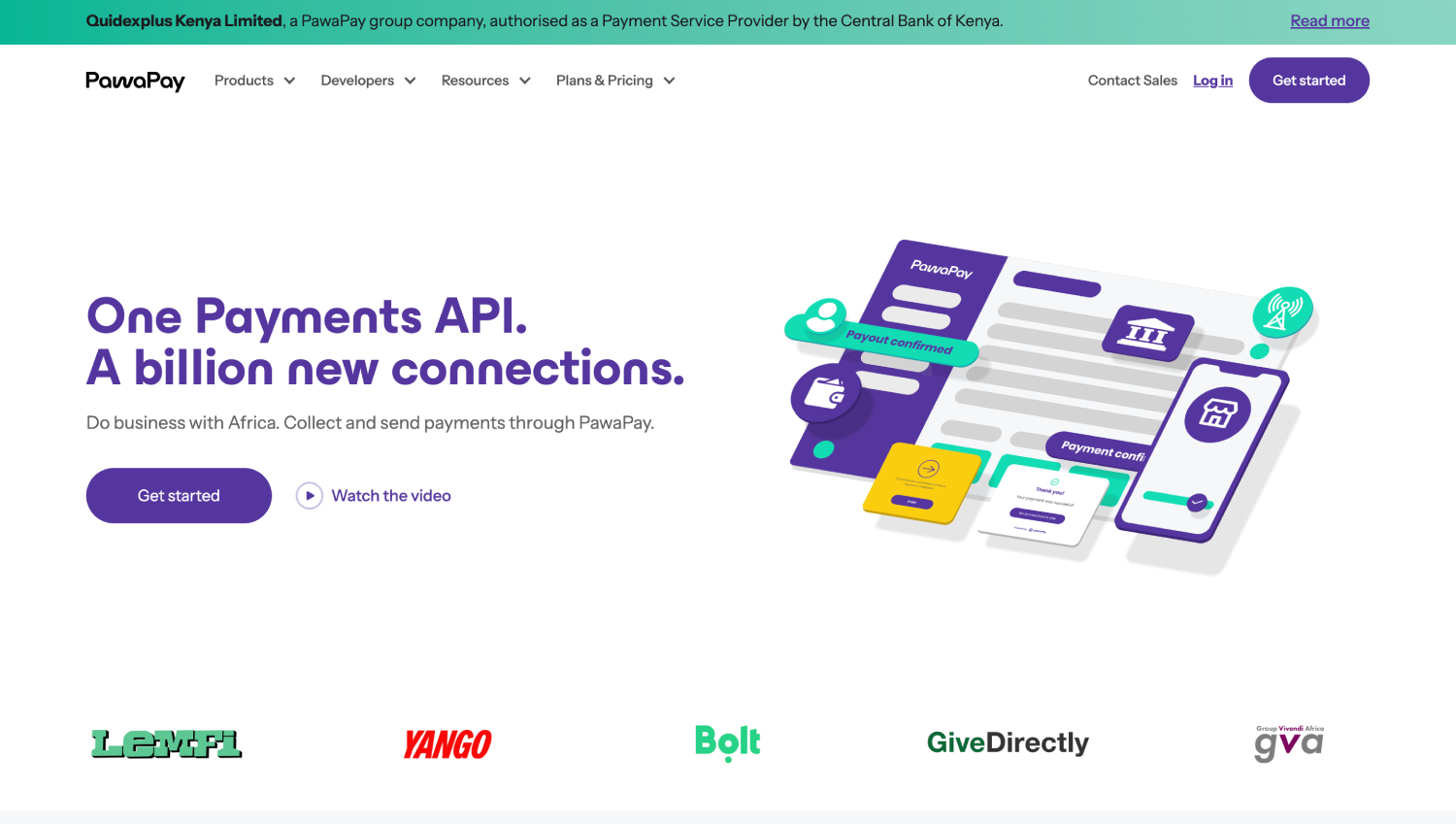
PawaPay is the most transparently documented mobile money disbursement API in the market. Its public developer documentation covers 35+ countries and explicitly names the operators available in each, which makes pre-integration scoping faster than with providers who keep operator lists behind a sales call. PawaPay’s API supports both Collections and Payouts in a single integration, and its failure handling publishes automatic callbacks when a payout is rejected by an operator, with float returned to the sender’s account.
The developer-first documentation is a genuine differentiator for engineering teams. PawaPay publishes sandbox environments per operator, so a team building for M-Pesa Kenya and MTN Ghana simultaneously can test both failure paths before going live. Pricing is not publicly listed; contact PawaPay for volume-based rates.
PawaPay fits platforms doing high-volume disbursements across more than five African markets, particularly those with engineering bandwidth to instrument the callback flows properly. It is less suited to companies that need a no-code or low-code path.
Cray Finance
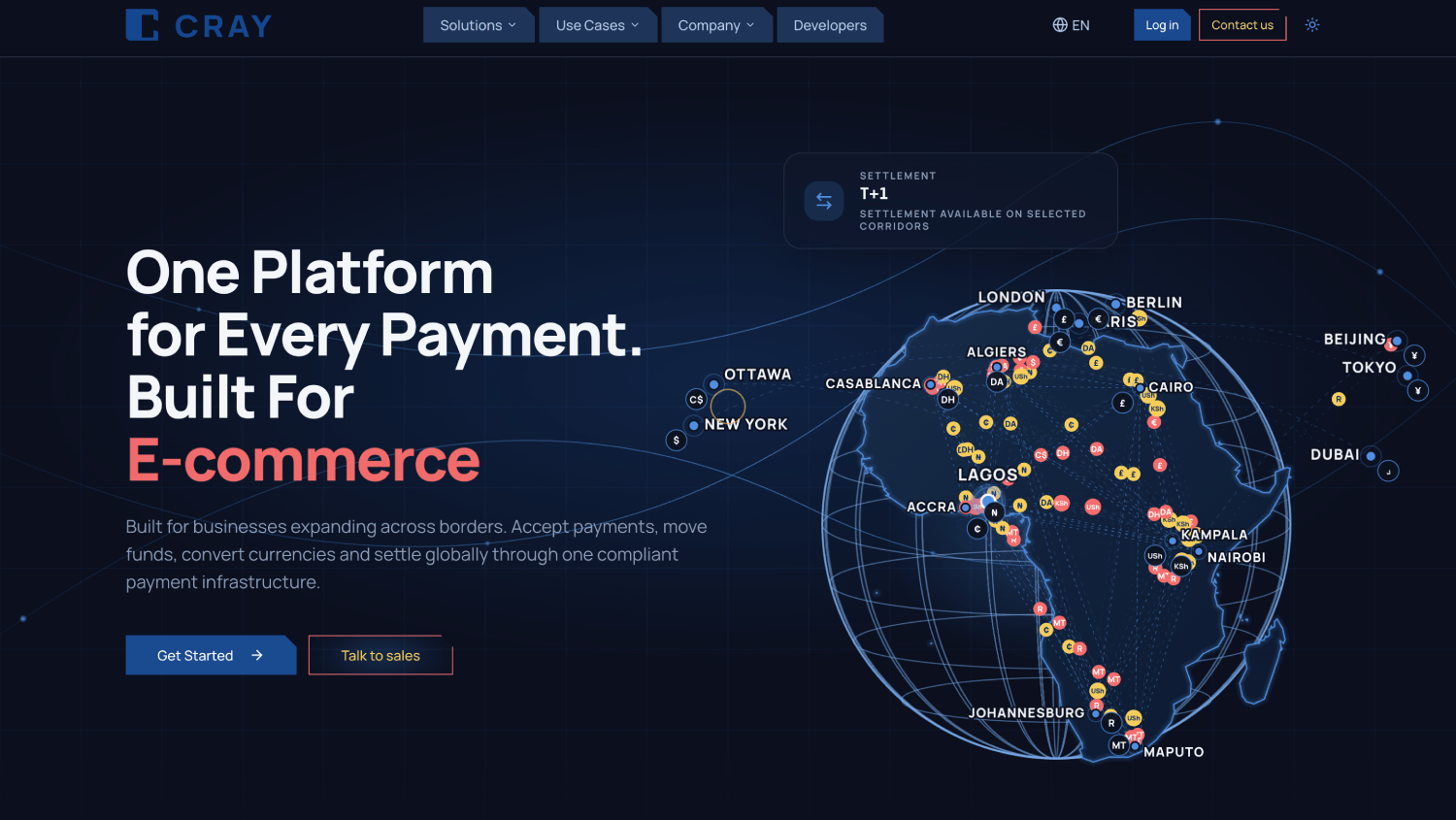
Cray Finance targets fintechs and platforms disbursing into African mobile wallets, with a particular emphasis on making the prefunding and treasury side of mobile money simpler. Its public documentation does not fully enumerate supported operators by country, so any evaluation should include a direct conversation with their integration team to confirm active market coverage. Pricing is not publicly disclosed.
Cray Finance is worth including on a shortlist for teams whose primary pain is the working capital complexity of prefunding multiple country floats rather than raw operator breadth. If managing float across 20 countries is the bottleneck, Cray Finance’s treasury tooling is designed around that problem specifically.
Tola Mobile
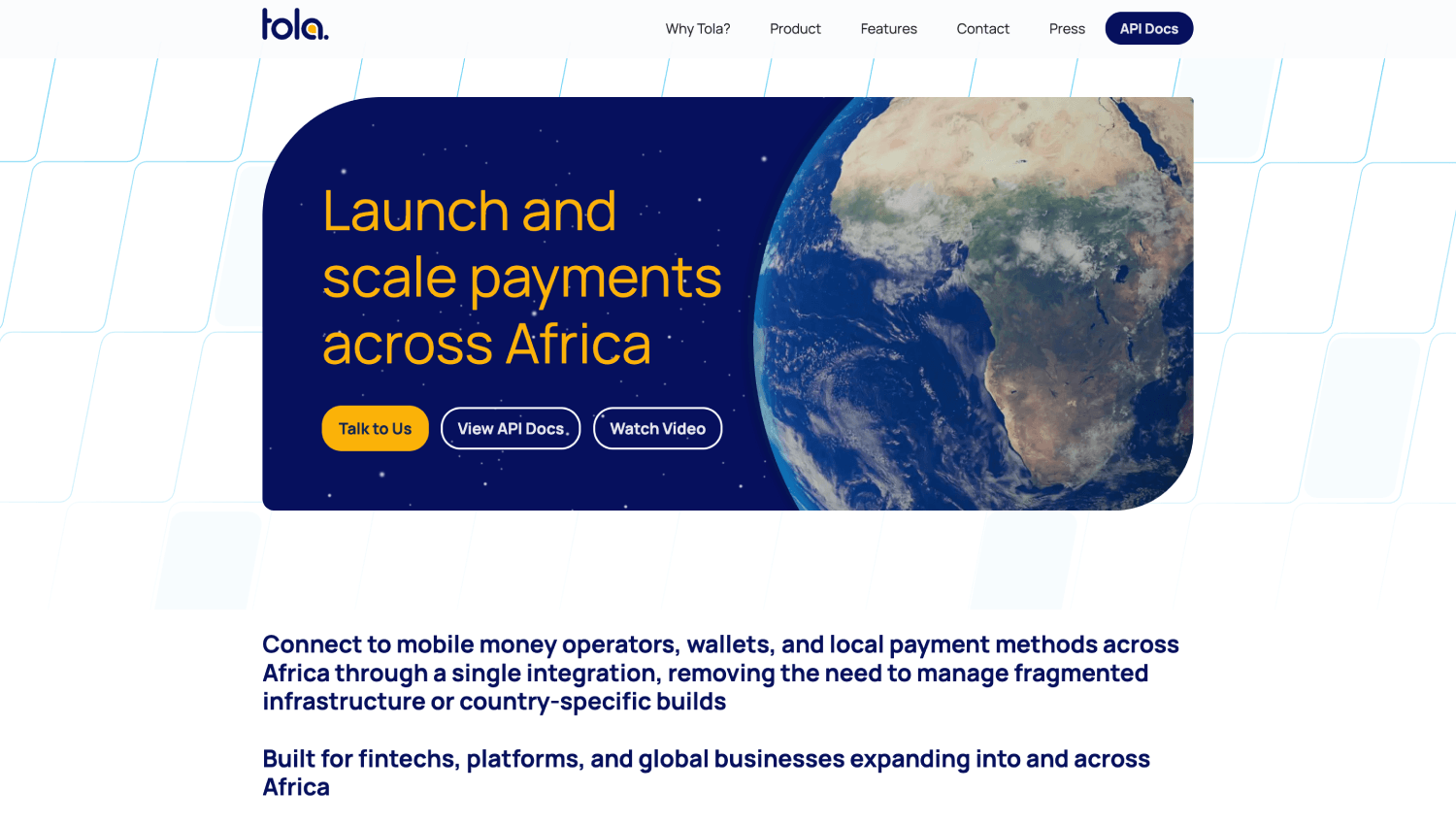
Tola Mobile connects platforms to mobile money operators across 30+ African markets and positions itself as infrastructure for platforms that want to embed disbursements without building direct operator relationships. Tola Mobile’s listed operator coverage includes MTN, Airtel, Vodacom, and Safaricom M-Pesa, though the full per-country operator matrix requires a vendor discussion. Prefunding and reversal details are not publicly disclosed.
Tola Mobile is relevant for platforms embedding Africa payouts as one component of a broader financial product, rather than those building an Africa-first disbursement product. The integration abstraction layer it provides reduces the number of direct operator contracts a platform needs to hold.
Which Broader Payout Platforms Have Genuine Mobile Money Depth?
Flutterwave
Flutterwave is a full payment infrastructure company covering payment collection, payouts, and foreign exchange across African markets. Its payout API supports mobile money disbursements into M-Pesa, MTN, Airtel, Vodacom, and other operators across 30+ markets. Flutterwave’s pricing is not fully listed publicly; the company offers custom rates based on volume and market mix. Its Nigerian roots mean Nigeria-specific products (bank transfers, USSD) are particularly mature, but mobile money coverage in East and francophone West Africa is live and documented in its developer portal.
Flutterwave makes the most sense for platforms already using it for collections and wanting a single API to handle both directions. Using it only for mobile money disbursements while handling collections elsewhere introduces reconciliation complexity that is worth modeling before committing.
Chipper Cash for Business
Chipper Cash for Business covers seven African markets with both consumer-facing and API-based business products. Mobile money payout coverage includes MTN Ghana, M-Pesa Kenya and Tanzania, and Airtel Uganda, among others. The country footprint is narrower than PawaPay or Cellulant, which makes Chipper Cash more suitable for platforms focused on the high-volume corridors (Nigeria, Ghana, Kenya) rather than broad pan-African reach. Pricing is not publicly disclosed.
One structural consideration: Chipper Cash operates its own consumer wallet alongside its business API product. For platforms competing in the consumer remittance space, that dual positioning warrants a commercial discussion about data handling before integration.
Cellulant
Cellulant is one of the older Africa-native payment infrastructure companies, with live connections to operators across 35+ African markets. Its Tingg product covers mobile money collection and disbursement, bank transfers, and USSD. For francophone West Africa specifically, Cellulant’s Orange Money and Wave coverage tends to be deeper than newer entrants. Pricing is enterprise-negotiated and not publicly disclosed.
Cellulant is worth evaluating for platforms with significant francophone Africa exposure, particularly Senegal, Côte d’Ivoire, Burkina Faso, and Mali, where Wave and Orange Money dominate. The integration process is more partner-led than self-serve, which adds time to launch but brings in-market support that matters when operator-level issues arise.
MFS Africa
MFS Africa operates a hub model that connects to 40+ countries and over 400 million mobile money wallets across Africa. The hub architecture means a single integration gives access to MTN, Airtel, Orange, Vodacom, M-Pesa, Wave, and Moov, among others, without maintaining separate operator relationships per country. MFS Africa is infrastructure-tier, meaning it often sits behind other fintechs rather than being directly accessed by end platforms. Pricing is not publicly disclosed and is typically structured for high-volume enterprise clients.
MFS Africa is the right conversation for platforms operating at significant scale across 15 or more African markets, or for teams building a product that will itself aggregate mobile money coverage. For a Series A company disbursing in three to five markets, the sales cycle and minimum volume thresholds may not be a fit.
How Do Prefunding and Settlement Rules Differ Across These Providers?
Prefunding is the least-discussed risk in mobile money payout integrations. Every provider requires some form of balance held against future disbursements, but the structure varies significantly. Consider a platform disbursing field agent commissions across Kenya, Uganda, Tanzania, and Ghana. With a country-level float model, it must hold separate prefunded balances in KES, UGX, TZS, and GHS simultaneously. If volumes are uneven month to month, the platform either over-funds idle markets or risks payout failures during high-volume periods.
A pooled liquidity model, where the provider centrally manages currency conversion and float across markets, reduces that working capital fragmentation. PawaPay offers configurable pooling. MFS Africa’s hub model provides a form of centralized liquidity by design. For providers where the prefunding model is not publicly documented, the specific question to ask is: “Does my float exposure exist per country, per operator, or per centralized account?”
Settlement back to your bank account is a separate timeline. Receiving confirmation that a payout reached a mobile wallet is instantaneous in most cases. Settlement of your net position back to your USD or EUR account may take one to five business days depending on the provider and corridor. That gap is working capital you need to plan for. Teams evaluating outbound payment APIs for global platforms often underestimate this settlement float requirement in Africa specifically.
What KYC Requirements Apply to Mobile Money Payout APIs?
All seven providers in this list delegate end-user KYC to the integrating platform. That means you, as the operator, are responsible for verifying that the person or business receiving a payout is not sanctioned and passes whatever AML checks your compliance program requires. The mobile money operator itself will also perform a lightweight wallet-level check on the recipient (they will reject payouts to unregistered or suspended wallets), but that is not a substitute for your own KYC stack.
What this means in practice: before integrating any Africa mobile money payout API, your platform needs a sanctions screening step and a payee verification layer. OFAC and UN sanctions lists apply to Africa corridors. Some corridors also require collecting the recipient’s national ID number and passing it in the payout API request, depending on operator-specific rules in that market. For platforms evaluating their compliance setup, payout sanctions screening is a prerequisite, not an optional add-on.
Mobile money operators may also impose transaction limits per wallet per day. A disbursement that exceeds an operator’s per-transaction ceiling will fail silently or return an error code, not a human-readable explanation. Building reversal and retry logic into your integration is not optional at scale.
How Should a Platform Shortlist Africa Mobile Money Payout Providers?
The FintechSpecs Operator Depth Matrix above is the starting filter. After that, four questions separate a workable integration from an expensive mistake.
- Operator confirmation by country: Ask the vendor to confirm, in writing, which specific operators are live in each country you need. “We support MTN” is not enough. “MTN Mobile Money Ghana and MTN Mobile Money Uganda are both live with direct connections as of this month” is the answer you need.
- Prefunding structure: Ask whether float is held per country, per operator, or centrally pooled. Get the minimum float requirement per market in writing before signing.
- Reversal and failure SLA: Understand what happens when a payout is rejected by the operator. How quickly does float return to your account? Is the reversal automatic or manual?
- KYC delegation terms: Confirm in your contract that you own the KYC responsibility and that the provider’s terms do not create unexpected compliance obligations on your program.
For teams comparing multiple Africa payout options alongside broader global rails, the analysis in Nium vs Thunes for global payout infrastructure covers how hub-based payout models compare to direct-connection models at the architecture level, which is relevant context for evaluating MFS Africa and Cellulant.
Frequently Asked Questions
What is an Africa mobile money payout API?
An Africa mobile money payout API is a programmatic interface that lets a platform send funds directly to a recipient’s mobile wallet on networks like M-Pesa, MTN Mobile Money, Airtel Money, Orange Money, or Wave. The API handles the routing to the correct operator, currency conversion where required, and returns a callback confirming delivery or failure. The platform integrates once and gains access to multiple operators without holding individual contracts with each.
Does one mobile money payout API cover all African countries?
No provider covers every African market at equal depth. MFS Africa and Cellulant have the broadest nominal footprints at 40 and 35 countries respectively, but active operator connections within each country vary. A provider may list Kenya as supported while only connecting to M-Pesa and not Airtel Money Kenya. Always verify the specific operators live in each country you need before building against a provider’s coverage claim.
How does prefunding work for mobile money disbursements?
Mobile money disbursements require pre-deposited float held in-country or in-currency before payouts can execute. Depending on the provider, this float may need to be held per country, per operator, or in a centralized pooled account. The platform typically transfers funds to the provider in advance, the provider holds that balance against future payouts, and failed transactions return the float to the sender’s account. Settlement back to the platform’s bank account is a separate process and typically takes one to five business days.
What KYC does the platform need to perform for mobile money payouts?
All providers listed here delegate end-user KYC to the integrating platform. The platform must screen recipients against OFAC and other applicable sanctions lists, verify identities to the extent required by its own compliance program, and in some corridors collect national ID numbers as required by operator-level rules. Mobile operator wallet checks confirm that a wallet exists and is active, but that is not a compliance substitute for sanctions screening. Payout failures on KYC grounds are typically silent API rejections.
What is the difference between payout speed and settlement timing?
Payout speed is how quickly a recipient’s mobile wallet is credited after an API request. For most supported operators, this is near-instant when the transaction is accepted. Settlement timing is how quickly the net proceeds from your disbursement activity clear back to your corporate bank account. These are two different clocks. A payout may hit a recipient’s wallet in seconds while your settlement takes three business days. That gap represents working capital you need to fund.
Which provider is best for francophone West Africa mobile money payouts?
Cellulant and MFS Africa have historically deeper operator relationships in francophone West Africa, particularly for Orange Money and Wave across Senegal, Côte d’Ivoire, Burkina Faso, and Mali. PawaPay also documents Wave and Orange coverage in XOF-currency markets. For a platform where francophone West Africa is the primary corridor, all three warrant a direct call to confirm current operator availability and float terms before shortlisting further.
Can a platform use multiple Africa payout API providers simultaneously?
Yes, and for platforms with broad geographic requirements it is often the right architecture. Using PawaPay for East and Southern Africa while routing francophone West Africa through Cellulant, for example, lets a platform pick the deeper operator relationship in each sub-region. The tradeoff is reconciliation complexity: two float accounts, two API integrations, two sets of failure-handling logic. Teams thinking through how payout API architecture connects to reconciliation can reference the payment reconciliation tools used by fintech finance teams for the downstream accounting implications.
How do M-Pesa payout APIs work for platforms?
M-Pesa payout APIs route disbursements through Safaricom’s B2C (Business to Customer) channel in Kenya, or equivalent operator APIs in Tanzania, Uganda, Mozambique, and other M-Pesa markets. Each national M-Pesa deployment has separate API credentials, transaction limits, and settlement terms. Aggregators like PawaPay and Flutterwave handle these operator-level differences behind a single API, so a platform does not need to maintain separate Safaricom, Vodacom Tanzania, and Vodacom Mozambique contracts independently.
Conclusion
The practical gap between “we support Africa mobile money” and “we have a live, tested connection to MTN Mobile Money Ghana, MTN Mobile Money Uganda, and Airtel Money Tanzania with documented reversal behavior” is wide. Every provider in this list has genuine capabilities, but the capabilities that matter to your specific platform depend on your country mix, your disbursement volume, and whether your engineering team can instrument proper callback and retry logic. PawaPay’s transparency about operator-level coverage makes it the clearest starting point for teams that want to scope an integration without a sales cycle. MFS Africa and Cellulant are the stronger choices for teams operating at enterprise scale across 15 or more markets or with heavy francophone West Africa exposure.
Prefunding is the operational variable most platforms underestimate. Before signing any contract, model your float requirement across your top five markets at peak disbursement volume, then ask the provider how much working capital that float requirement ties up and what your options are if a market’s float runs dry mid-batch. That conversation will tell you more about whether the integration will work in production than any coverage map.
Africa mobile money payout is infrastructure where the difference between a first API call in sandbox and a reliable production disbursement at volume is measured in operator-level edge cases: unregistered wallets, operator downtime, daily limit rejections, currency control restrictions. Build the callback logic first. For platforms also evaluating their overall compliance readiness before scaling into new African markets, the fintech product and compliance readiness checklist covers the KYC, AML, and sanctions framework questions that apply before the first payout fires.