
TLDR
- Nium and Thunes both reach 100-plus countries, but the corridors that matter to US platforms differ sharply between them, and raw country count obscures that gap.
- Thunes wins on local rail depth in Southeast Asia, Sub-Saharan Africa, and parts of the Middle East, where it has built or acquired direct connections that Nium reaches through intermediaries.
- Nium wins on card-based payout infrastructure and is the stronger choice for platforms that need to push funds to Visa and Mastercard debit cards in emerging markets.
- Neither vendor publicly discloses per-transaction pricing, so fee math requires a custom quote and careful corridor-level negotiation.
- If neither fits, Payoneer and Airwallex fill specific gaps worth evaluating before signing.
Nium vs Thunes is the comparison that comes up most often when US fintech teams need to pay out in local currencies at scale. Nium is stronger for card payouts and regulated multi-currency accounts, while Thunes has deeper direct local-rail connections in high-friction emerging market corridors. The right choice depends on which corridors carry your volume and whether your recipients hold bank accounts or mobile wallets.
Why “Global Coverage” Claims Are Misleading for Payout Infrastructure
Every major payout network advertises a country count. Nium reaches over 100 countries. Thunes connects to over 130 countries. Neither number tells you what you actually need to know before signing a contract.
Coverage claims conflate three very different things: countries where the vendor routes through a local bank account rail, countries where it routes through a correspondent bank (slower and more expensive), and countries where it can technically deliver but only via a SWIFT wire to a local bank. A payment landing in a Nigerian mobile wallet via direct API integration is a categorically different product from a SWIFT wire that arrives three days later and loses 2% to a local bank’s conversion spread.
The more useful question is corridor depth: for each origin-destination pair you care about, what rail does the vendor use, what is the typical settlement time, and what does the FX markup look like at volume? This is the lens you should apply to every claim both companies make.
How Nium and Thunes Actually Build Their Networks
Nium’s Approach
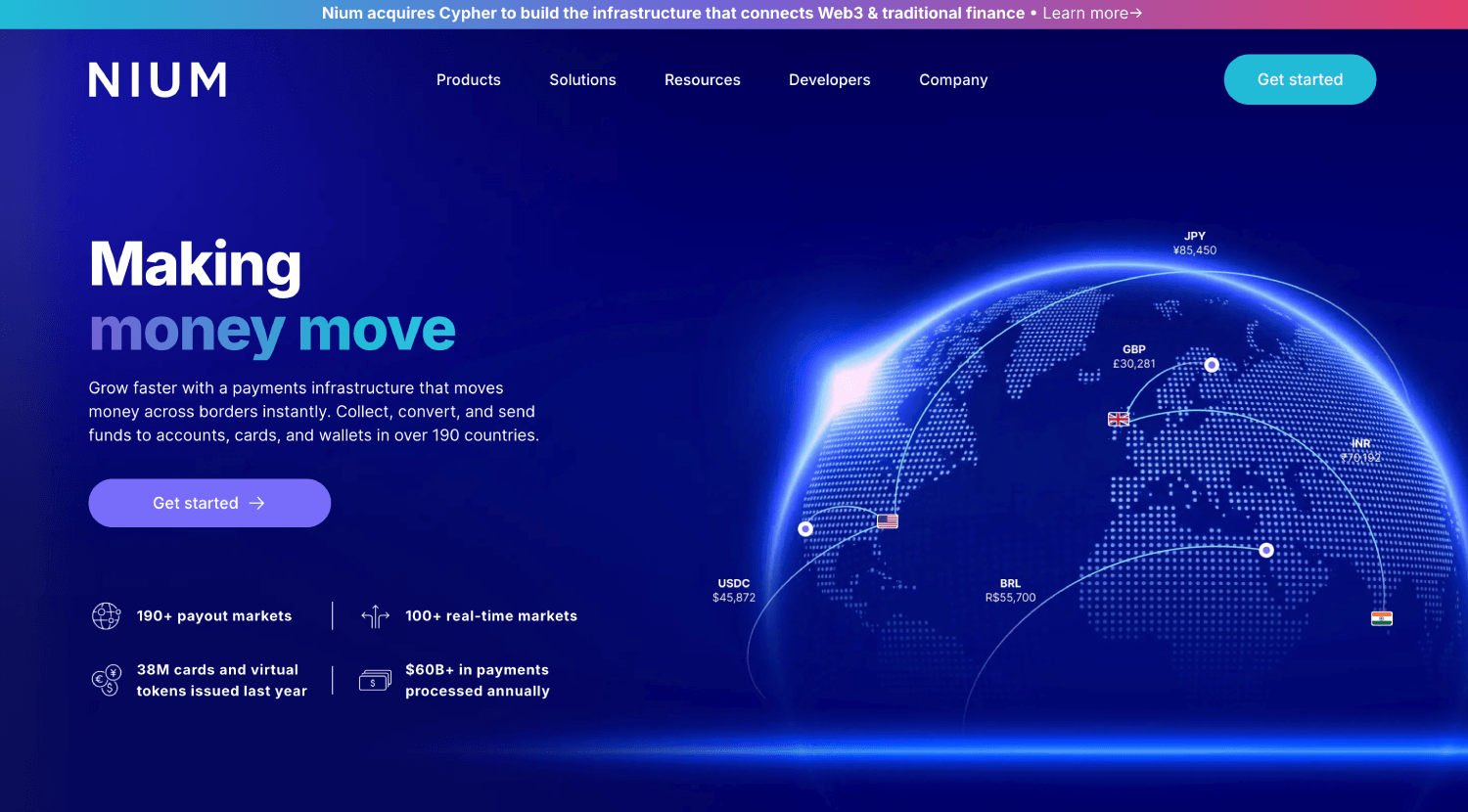
Nium built its network through a mix of direct licensing and strategic acquisitions. The company holds payment licenses in the US, EU, UK, Singapore, and Australia, among others, giving it direct access to domestic rails in those jurisdictions. For markets outside its license footprint, Nium connects through banking partners and local payment providers.
Nium’s card payout product is a genuine differentiator. It can push funds directly to Visa and Mastercard debit cards in a wide range of markets, which matters for platforms serving gig workers, freelancers, or merchants who hold cards but not bank accounts with good API connectivity. This is a harder product to build than a bank account payout, because it requires Visa and Mastercard principal membership or sponsorship relationships, not just local banking licenses.
Thunes’ Approach
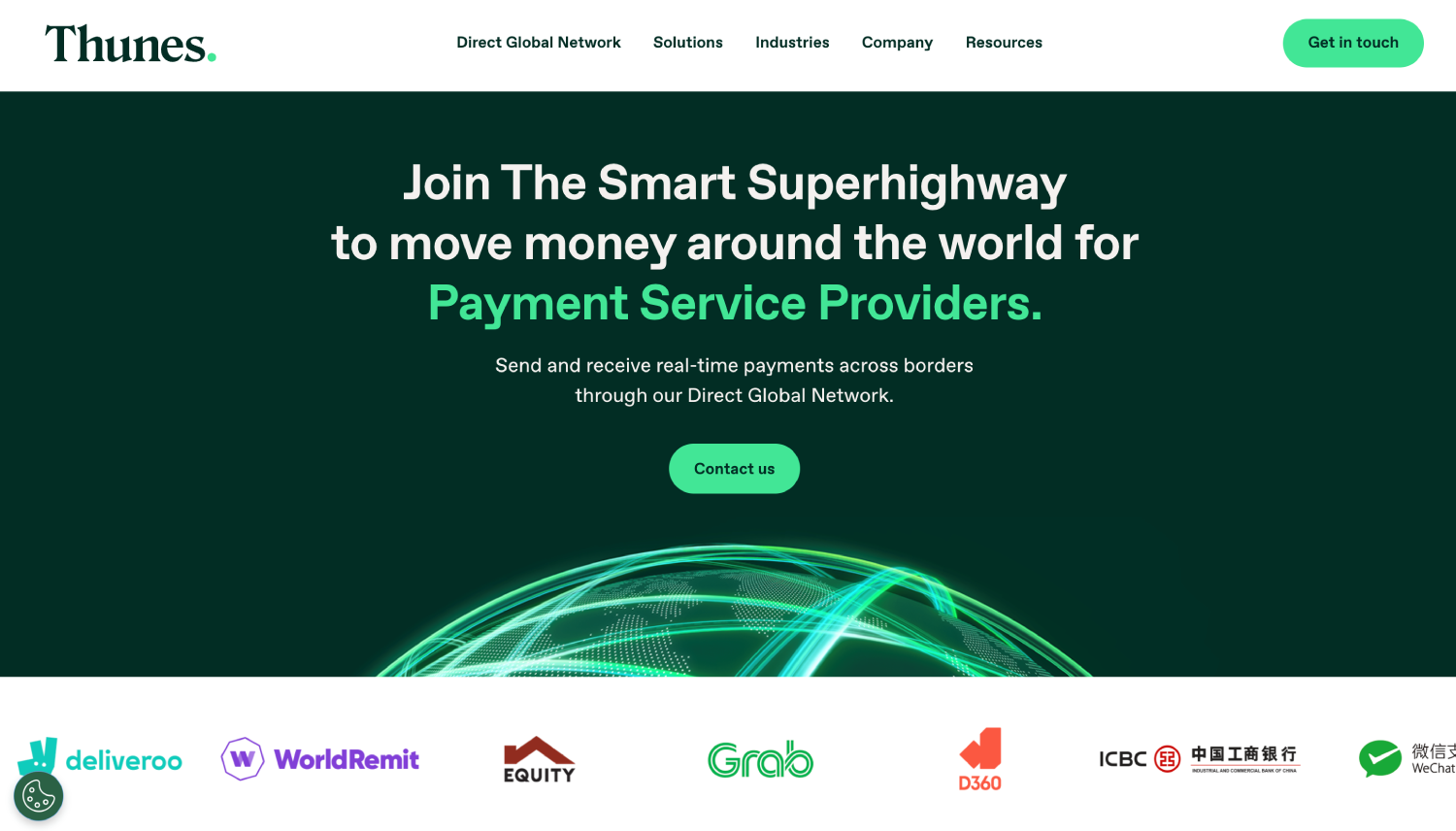
Thunes built its competitive position around what it calls a smart payment network, with particularly deep direct connectivity in markets that most Western infrastructure providers treat as afterthoughts. Its strongest corridors are Sub-Saharan Africa (including M-Pesa and MTN Mobile Money integrations), Southeast Asia, and parts of the Gulf Cooperation Council.
Thunes has also pursued direct partnerships with mobile money operators, which is structurally different from routing through a regional aggregator. When a payment hits M-Pesa in Kenya via Thunes, it is more likely traveling through a direct API connection than a chain of intermediaries. Fewer hops typically mean faster settlement and a smaller spread consumed along the way. The J.P. Morgan partnership on cross-border payouts, which we covered when it launched, underlines how Thunes has positioned itself as infrastructure for institutional-grade payout flows, not just startup tooling.
Corridor Depth Comparison: Where Each Provider Actually Wins
| Region / Corridor | Nium | Thunes | Key Differentiator |
|---|---|---|---|
| US to Southeast Asia (PH, ID, VN) | Strong, local bank account rails | Strong, direct mobile wallet + bank | Thunes has deeper mobile wallet reach |
| US to Sub-Saharan Africa (NG, KE, GH) | Adequate, some partner-routed | Strong, M-Pesa and MTN direct connections | Thunes wins on mobile money depth |
| US to India | Strong, IMPS/UPI-connected | Strong, UPI and bank account | Roughly equivalent; negotiate rates |
| US to Latin America (MX, BR, CO) | Strong, local account and card | Adequate, improving PIX integration | Nium stronger on card payouts; Thunes improving on PIX |
| US to GCC (AE, SA) | Adequate | Strong, direct local bank partnerships | Thunes has stronger local relationships |
| US to EU / UK | Strong, direct licensed | Adequate | Nium holds its own EU/UK licenses |
| Card push payouts (Visa/MC debit) | Strong, broad card push coverage | Limited | Nium wins clearly |
| Mobile money wallets (Africa, SEA) | Limited to some markets | Strong, 60-plus wallet connections | Thunes wins clearly |
The FintechSpecs Corridor Stress Test: A Framework for Choosing Between Them
Most teams approach this vendor selection by asking which provider has better overall coverage. That is the wrong starting point. The right framework runs four checks against your specific payout profile before any demo call.
The FintechSpecs Corridor Stress Test works like this:
- Volume-weighted corridor mapping. List every destination country, sort by dollar volume, and take the top ten. These corridors should drive your vendor choice, not the long tail. A vendor with better coverage in 40 low-volume markets but worse rails in your top three corridors is a bad trade.
- Rail-type verification. For each of your top-ten corridors, ask both vendors explicitly: is this a direct local rail connection, a partner-routed connection, or a correspondent banking path? Get the answer in writing. The distinction determines your settlement timeline and your effective FX cost.
- Recipient profile match. If more than 30% of your recipients hold mobile wallets instead of bank accounts, Thunes deserves the stronger initial weight. If more than 30% will receive to Visa or Mastercard debit cards, Nium has a structural advantage. Run the numbers on your actual recipient data before talking to either sales team.
- Regulatory footprint check. Confirm which entity will be your contracting counterparty and where they hold their money transmitter or payment institution license for each corridor you need. This matters when something goes wrong and it determines your compliance exposure. The FintechSpecs fintech product and compliance readiness checklist covers the right questions to ask before any infrastructure contract.
What Does Pricing Actually Look Like for Global Payout Infrastructure?
Neither Nium nor Thunes publishes a rate card. Both operate on enterprise pricing negotiated per corridor, per volume tier, and per rail type. This is standard for infrastructure-grade payout networks, but it creates a trap for buyers who do not know what to negotiate.
Pricing for cross-border payout infrastructure typically has three components: a per-transaction fee (flat or tiered by volume), an FX markup applied to the mid-market rate, and sometimes a monthly platform or seat fee. The FX markup is often where the real cost sits, because it is less visible than a per-transaction fee and compounds across every payment.
To illustrate what this looks like in practice: a US marketplace paying out $2 million per month to freelancers in the Philippines and Nigeria, hypothetically at a 0.5% FX markup across that volume, would face a monthly FX cost of $10,000. At 1.0%, that doubles to $20,000. The difference between a well-negotiated and a poorly-negotiated FX rate at that volume is $120,000 per year, more than most teams spend on their engineering tooling. These figures are for illustration only and will vary by corridor, provider, and negotiated rate, but the order of magnitude is representative of why corridor-level FX rate negotiation matters more than per-transaction fees for high-volume operations. The hidden costs that kill fintech SaaS margins almost always include FX spreads that were never properly stress-tested at volume.
Which Platforms and Use Cases Fit Nium Best?
Nium is the stronger default for US platforms that need multi-currency wallet infrastructure alongside payouts. Its virtual account product lets platforms hold funds in multiple currencies and convert on demand, which suits marketplaces that collect in USD and EUR before paying out in local currencies. The card payout capability is a genuine moat in markets like the Philippines, Mexico, and Brazil, where many recipients have debit cards but not well-connected bank accounts.
Nium also has traction with platforms that need both inbound and outbound payment infrastructure from a single provider. A B2B SaaS company that collects from enterprise clients in Europe and pays contractors in Asia-Pacific can run both flows through Nium’s stack. That consolidation has a compliance and reconciliation value that goes beyond the per-transaction rate.
The best-fit buyer for Nium is a Series B or later marketplace or platform with at least $1 million per month in payout volume, significant concentration in Latin America or card-heavy corridors, and a preference for a single vendor covering multi-currency accounts plus payouts. Teams evaluating their broader cross-border payout API options will find Nium near the top of most shortlists for exactly these reasons.
Which Platforms and Use Cases Fit Thunes Best?
Thunes fits platforms where the payout destination is the hard problem. If your volume concentrates in Sub-Saharan Africa, Southeast Asia (particularly Indonesia, Vietnam, and the Philippines on mobile wallets), or the Gulf, Thunes’ direct local-rail connections produce measurably better outcomes on settlement speed and recipient experience.
Remittance platforms and payroll providers serving migrant worker populations are natural fits. If a platform sends money to M-Pesa wallets in Kenya, MTN in Ghana, or GCash in the Philippines, Thunes’ wallet integrations reduce the number of intermediate hops, which directly reduces settlement time and the probability of a failed payment. Failed payout rates are one of the most undertracked metrics in cross-border payouts, and they get ugly in markets where Thunes has direct connections that competitors route through aggregators.
Thunes is also the right conversation for teams that already have a primary payout provider but need a specialist vendor for specific corridors. Running Thunes alongside a primary provider for Africa and Southeast Asia is not unusual for platforms at scale.
Where Does Each Provider Fall Short?
Nium’s weaknesses are concentrated in the markets where Thunes is strong: mobile money in Africa, and some GCC corridors where Thunes has invested in direct banking relationships. Nium also lacks the institutional partnership signal that Thunes gets from its J.P. Morgan relationship, which matters in enterprise procurement conversations.
Thunes’ primary weakness is card payouts. If a significant share of your recipients expect funds on a Visa or Mastercard debit card, Thunes does not match Nium’s infrastructure. Thunes also has a more complex integration experience for teams that need multi-currency accounts alongside payouts; it is built as a payout network first, not a multi-product financial infrastructure provider.
Both providers require a custom sales process, minimum volume commitments (typically not disclosed publicly), and implementation timelines that should be accounted for in product roadmaps. Neither is a plug-and-play solution for a pre-seed team. For teams earlier in their build, the best outbound payout APIs for B2B SaaS covers providers with more accessible entry points.
Should You Consider Alternatives to Both?
Two providers deserve a spot on any shortlist that includes Nium and Thunes.
Payoneer operates a different model from either: it functions as both infrastructure and a recipient-facing wallet network, which means many freelancers and contractors already hold accounts before your platform pays them. That existing recipient base reduces friction in ways that pure API infrastructure cannot replicate. The trade-off is less flexibility for teams that need deep corridor customization or want to embed payouts invisibly within their own product. Payoneer’s corridor economics in Southeast Asia and Eastern Europe are generally competitive, though its Africa coverage does not match Thunes’ direct mobile money depth.
Airwallex is worth evaluating for teams with heavy US-to-Asia-Pacific volume that also need multi-currency account infrastructure. Its coverage in Australia, Hong Kong, Singapore, and China is strong, and its developer experience is more accessible for teams that do not yet need the full enterprise payout infrastructure that Nium or Thunes requires. Where Airwallex trails both is in Sub-Saharan Africa and mobile wallet depth, categories where Thunes leads the market. The comparison between Airwallex and Wise for multi-currency operations is a separate decision, covered in depth in the Airwallex vs Wise breakdown for US companies going global.
Frequently Asked Questions
Does Nium or Thunes have better coverage in Africa?
Thunes has deeper direct coverage in Sub-Saharan Africa. Its direct API connections to M-Pesa in Kenya, MTN Mobile Money in Ghana and Uganda, and other regional mobile money operators mean payments reach recipients faster and with fewer failure points than routes that pass through intermediary aggregators. Nium reaches many of the same countries but typically through partner-routed connections rather than direct rails, which affects settlement speed and reliability in high-friction corridors.
Can Nium or Thunes push payouts to debit cards?
Nium has a card push payout product that supports Visa and Mastercard debit card recipients across a significant range of markets. This is one of Nium’s clearest advantages over Thunes. Thunes is built primarily around bank account and mobile wallet delivery and does not offer comparable card push coverage. For platforms where a meaningful share of recipients hold debit cards rather than bank accounts, this distinction is often the deciding factor.
Do Nium and Thunes publish pricing?
Neither provider publishes a public rate card. Both operate on enterprise contracts negotiated per corridor, per volume tier, and per rail type. Pricing has three components to negotiate: per-transaction fees, FX markup on top of mid-market rates, and any platform or minimum commitment fees. FX markup is typically the largest cost driver at volume and deserves the most attention in contract negotiations.
How long does it take to integrate Nium or Thunes?
Both providers require a structured sales and onboarding process rather than a self-serve signup. Integration timelines depend on the number of corridors, the complexity of the recipient types, and your compliance requirements. Both offer sandbox environments for technical testing before going live. Teams should budget several weeks to months for full production readiness, including KYB and compliance reviews that both vendors conduct before approving a contract.
Which provider is better for a US platform paying gig workers internationally?
It depends on where those gig workers are located. If they are concentrated in Southeast Asia and Africa and receive funds primarily to mobile wallets, Thunes is the stronger infrastructure choice. If they are spread across Latin America, the Caribbean, and Asia-Pacific and many hold debit cards, Nium’s card push capability and broader Latin American bank account rails give it the edge. Running the FintechSpecs Corridor Stress Test against your actual recipient data will give you a definitive answer specific to your distribution.
Is Thunes suitable for early-stage startups?
Thunes targets mid-market and enterprise volume. Early-stage teams without significant payout volume will likely find the sales process slow and the minimum commitments challenging to justify. For teams below $500,000 per month in payout volume, providers with more accessible onboarding and published pricing are a better starting point. The common mistakes in choosing fintech infrastructure include over-engineering the payout stack before volume justifies enterprise infrastructure contracts.
The Decision That Actually Matters Here
The vendor selection between Nium and Thunes is not a branding decision or a feature checklist exercise. It is a corridor-routing decision. The platform that routes most of its payout volume through five corridors and gets those five corridors right will outperform a competitor using a “better overall” vendor that has weaker direct rails in those specific markets.
Thunes earns the first call if Africa or mobile-wallet-heavy Southeast Asia represents more than 20% of your payout volume. Nium earns the first call if you need card push payouts, multi-currency accounts and payouts from a single provider, or strong Latin American bank account rails. If your corridors are split across both vendors’ strengths, running them in parallel for specific regions is a legitimate architecture that several platforms at scale already use.
The deeper lesson is that global payout infrastructure is not a commodity decision dressed up as one. The difference between a direct local rail and a correspondent-routed SWIFT path shows up in settlement time, failed payment rates, and FX cost, and those gaps compound fast at volume. Negotiate the FX markup on your top three corridors before you sign anything else.