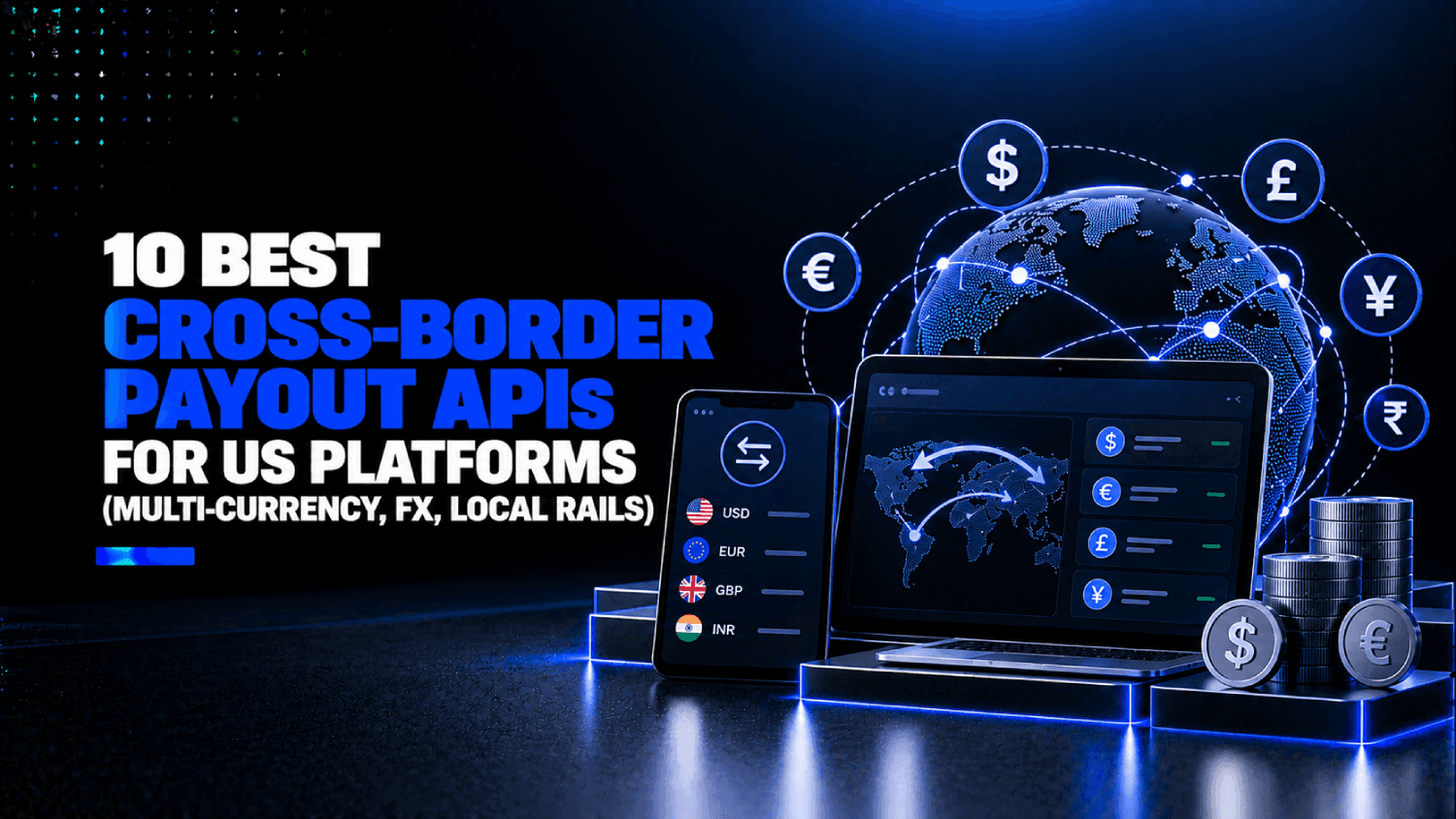

- Bank wires for international payouts cost $15 to $50 per transaction in fees plus a hidden FX spread that most treasury teams never see on the invoice. At any volume above a few dozen payments monthly, a dedicated cross-border payout API recovers that margin quickly.
- The real differentiator between providers is not fee percentage. It is local rail coverage. A provider that routes into a country’s domestic ACH equivalent settles in hours; one that falls back to SWIFT can take three to five business days and trigger correspondent bank fees on the recipient’s end.
- Nine providers cover most US platform use cases: Airwallex, Wise Platform, Nium, Thunes, dLocal, Payoneer, Tipalti, Trolley, and Stripe Connect. Each dominates different corridors and volume tiers.
- Startups and Series A platforms should prioritize setup speed and documentation quality. Series B and beyond should prioritize corridor depth, FX lock-in windows, and volume-based pricing tiers.
- Compliance overhead varies more than most teams expect. Providers that bundle KYC/KYB, sanctions screening, and 1099/1042-S generation save engineering weeks that would otherwise go to custom compliance middleware.
The nine strongest cross-border payout APIs for US platforms are Airwallex, Wise Platform, Nium, Thunes, dLocal, Payoneer, Tipalti, Trolley, and Stripe Connect. They differ on corridor coverage, FX pricing model, local rail depth, settlement speed, and compliance tooling. Airwallex and Wise Platform lead on FX transparency and developer experience for startups. Nium and dLocal lead on emerging market rails, particularly Latin America, Southeast Asia, and Africa. Tipalti and Trolley lead on payee management, tax compliance, and mass disbursement workflows for platforms with hundreds or thousands of recipients.
Why Wire Transfers Are the Wrong Default for Platform Payouts
Most finance teams default to their bank’s international wire product because it is already there. The visible fee is obvious: $25 to $45 per outbound wire, depending on the bank. What does not appear on that invoice is the FX spread the bank applies before converting currency, which typically runs 1% to 3% above the mid-market rate.
On a $5,000 payment to a contractor in Brazil, a 2.5% spread costs $125 in hidden currency conversion. Run 200 payments monthly and that spread alone exceeds $25,000. A payout API with local rail access and a transparent FX markup of 0.5% to 1% cuts that cost by more than half, while also settling faster and generating cleaner transaction records for reconciliation.
Wire infrastructure also does not automate well. Batch uploads, approval workflows, payee onboarding, FX rate locks, tax form generation, and reconciliation feeds all require custom engineering work against a bank API that was built for treasury teams, not developer integration. Payout APIs are designed for exactly this workflow. The 7 Best Outbound Payment and Payout APIs for B2B SaaS covers the domestic-first view; this article covers the cross-border layer specifically.
What Does “Local Rails” Actually Mean for Settlement Speed?
Local rails refers to a country’s domestic payment network, the same infrastructure that moves money between accounts within that country. In Mexico, that is SPEI. In India, it is IMPS or UPI. In the EU, it is SEPA. In Brazil, it is PIX. When a payout provider has direct access to these rails through a local banking partner, the payment enters the recipient’s banking system as a domestic transaction, not a cross-border SWIFT message.
The practical difference: SWIFT wires can take one to five business days and generate correspondent bank fees of $10 to $30 that come out of the recipient’s payout, often invisibly. Local rail payouts typically settle same-day or next-day with no correspondent fee deducted. For contractors who depend on timely payment, this difference matters as much as the exchange rate.
Not every provider has local rails in every country. Many advertise broad country coverage but route outliers through SWIFT, which degrades both speed and cost in exactly the corridors where local settlement would matter most.
The FintechSpecs Corridor-First Evaluation Framework
Before comparing fee percentages, map your actual payment corridors. A provider with 0.5% FX markup but no local rails in the Philippines costs more in practice than one with 0.9% markup and direct access to Instapay. This framework structures the decision in four steps.
Step 1: List your top five corridors by payment volume. Not by recipient count, by dollar volume. A single high-value vendor in Germany may matter more than 50 small contractors in Southeast Asia.
Step 2: Check local rail availability per corridor. Ask each vendor explicitly: “Do you settle into [country] via local rails or SWIFT fallback?” If the answer is vague or qualified, treat it as SWIFT.
Step 3: Calculate total payout cost, not just the API fee. Add the per-transaction fee, the FX markup over mid-market, and any recipient-side deduction from correspondent banks. Run this against your monthly volume to get a real annual cost.
Step 4: Score compliance fit. If you pay 1099 contractors, you need 1099/1042-S generation. If you onboard business sellers, you need KYB. Providers that handle these natively save four to eight weeks of custom compliance engineering at minimum.
Which Providers Lead on Which Corridors?
No single provider wins every corridor. The table below maps each provider’s primary strengths against the corridors US platforms pay most frequently.
| Provider | Strongest Corridors | Local Rail Coverage | FX Pricing | Settlement Speed | Best For |
|---|---|---|---|---|---|
| Airwallex | APAC, EU, UK, AU, US | Strong in AU, SG, HK, EU | Transparent markup, publicly stated | Same-day to 1 business day (major corridors) | Startups to Series C with APAC exposure |
| Wise Platform | EU, UK, US, AU, IN, SG | 70+ countries via local rails | Mid-market rate plus stated fee, no hidden spread | Instant to 1 business day (most corridors) | Platforms needing FX transparency and fast setup |
| Nium | APAC, EU, ME, UK | 100+ countries, direct rails in SEA | Volume-based, negotiated | Real-time to 2 business days | Scale-stage platforms, fintech infrastructure builds |
| Thunes | Africa, SEA, LATAM, ME | 130+ countries, wallet and mobile money rails | Negotiated per corridor | Minutes for mobile money; 1 to 2 days for bank | Platforms paying unbanked or underbanked recipients |
| dLocal | LATAM, Africa, Asia | 40+ emerging markets, strong in BR, MX, IN | Negotiated, volume-tiered | Same-day to 2 business days | Marketplaces with heavy EM payout volume |
| Payoneer | Global (150+ countries) | Broad but SWIFT-heavy outside major markets | 1% to 2% FX fee publicly stated | 1 to 3 business days typical | Freelancer and SMB platforms, existing Payoneer payees |
| Tipalti | Global (196 countries) | 50+ local payment methods | Included in platform fee; FX rate varies | 1 to 3 business days | Finance teams managing 100+ payees with tax compliance needs |
| Trolley | US, CA, EU, IN, PH, AU | Local rails in key corridors | Transparent, tiered by volume | Same-day to 2 business days | Creator and gig platforms, 1099 automation |
| Stripe Connect | US, CA, EU, AU, UK, JP | Strong in developed markets only | Built into Stripe pricing; not separately disclosed for FX payouts | 1 to 2 business days (standard) | Platforms already on Stripe that pay developed-market recipients |
Settlement Speed Breakdown by Provider and Corridor
Settlement speed claims are marketing until you look at specific corridors. “Same-day” to a UK bank account is different from “same-day” to a bank in Nigeria or rural Indonesia. The table below focuses on four corridors that frequently determine which provider a US platform actually chooses.
| Provider | US to India | US to Brazil | US to EU (EUR) | US to Nigeria |
|---|---|---|---|---|
| Airwallex | 1 to 2 days (IMPS) | 1 to 2 days | Same day (SEPA) | Not primary corridor |
| Wise Platform | Hours to 1 day | 1 to 2 days | Hours (SEPA Instant eligible) | 1 to 2 days |
| Nium | Real-time (UPI eligible) | Same day (PIX) | Same day (SEPA) | 1 to 2 days |
| Thunes | 1 to 2 days | 1 to 2 days | 1 to 2 days | Minutes (mobile money) |
| dLocal | Same day | Same day (PIX) | 1 to 2 days | 1 to 2 days |
| Payoneer | 1 to 3 days | 1 to 3 days | 1 to 2 days | 2 to 3 days |
| Tipalti | 1 to 3 days | 1 to 3 days | 1 to 2 days | 2 to 4 days |
| Trolley | 1 to 2 days | 1 to 2 days | 1 to 2 days | Limited coverage |
| Stripe Connect | 2 to 3 days | Limited | 1 to 2 days (SEPA) | Not supported |
Note: Settlement times above reflect publicly documented or commonly reported typical speeds as of the time of writing. Actual speeds vary by recipient bank, day of week, and compliance checks. Confirm corridor-specific SLAs directly with each provider before committing.
Provider-by-Provider Analysis: Who Should Use Each One
1. Airwallex: Best for APAC-Heavy Platforms and Startups That Want Transparent FX
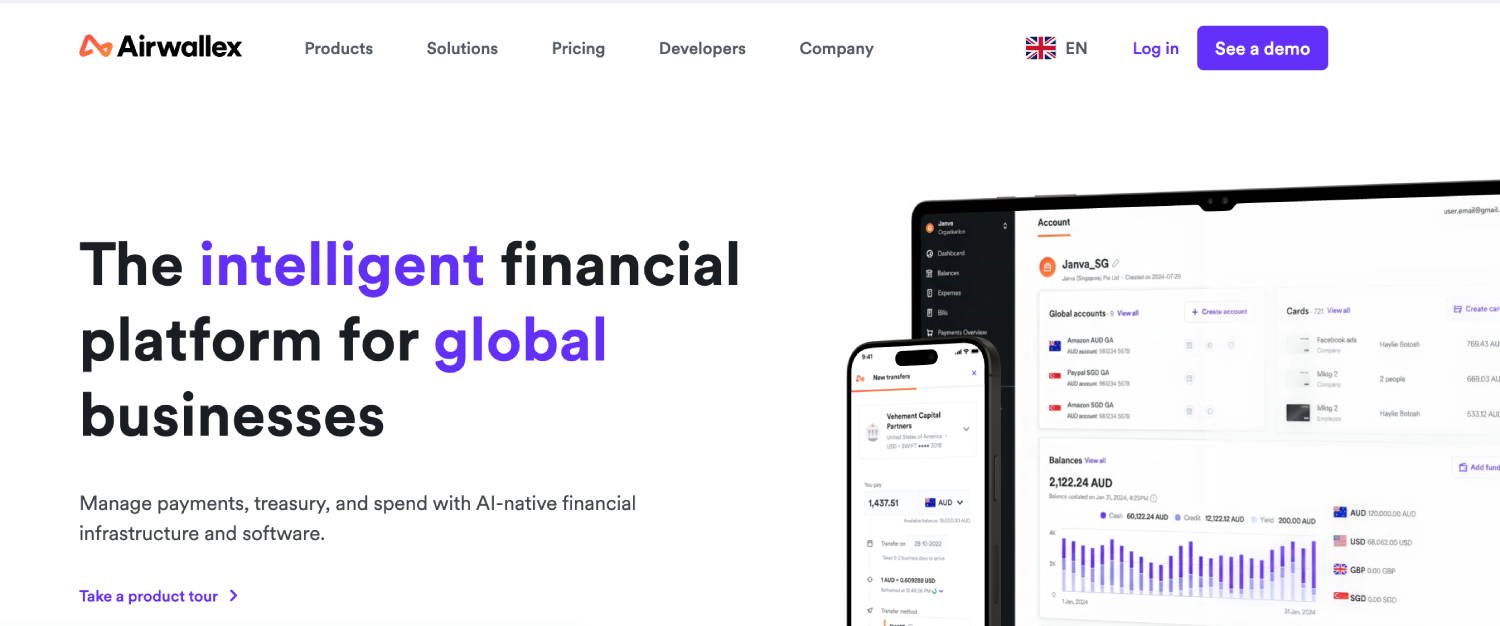
Airwallex built its network from Australia and Hong Kong outward, which gives it genuinely strong local rail access across Southeast Asia, plus solid EU and UK coverage. Its multi-currency wallet lets platforms hold balances in over 20 currencies and convert at the mid-market rate with a publicly stated markup, so treasury teams can audit actual FX costs. Developer documentation is thorough and the sandbox environment works for real integration testing.
The weakness: coverage outside APAC and Europe thins out. Latin America and Sub-Saharan Africa are not where Airwallex competes. If your contractor base is concentrated in the Philippines, Singapore, or Australia alongside EU freelancers, Airwallex is hard to beat at the startup-to-Series-B stage. See the Airwallex vs Wise comparison for a detailed head-to-head on multi-currency account features.
2. Wise Platform: Best for FX Transparency and Fast Onboarding
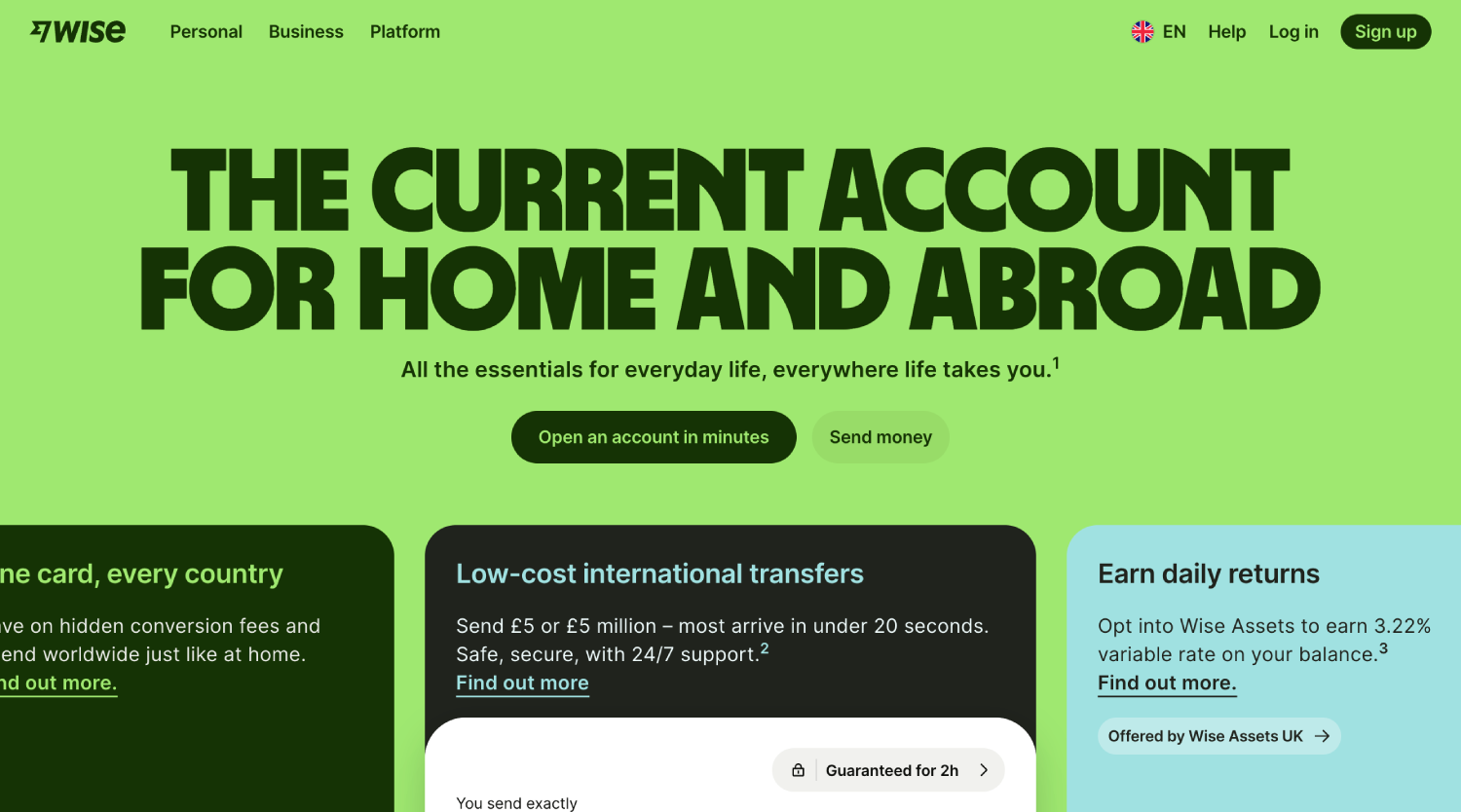
Wise Platform (the B2B API product, distinct from the consumer app) routes payouts at the mid-market exchange rate and charges a separate, disclosed fee. There is no hidden spread. That pricing model makes cost forecasting exact, which matters for platforms that quote payout amounts to recipients before executing. Wise Platform reaches 70-plus countries with local rails, including India, the Philippines, and most of Europe.
Setup speed is genuinely fast relative to enterprise alternatives. Teams report going from API keys to production-grade payouts in days rather than weeks. The tradeoff: pricing is not tiered aggressively for high-volume users. At $10M monthly payout volume, Airwallex or Nium may offer better negotiated rates.
3. Brex: Best for Platforms That Need an Operating Finance Stack Alongside Their Payout Provider
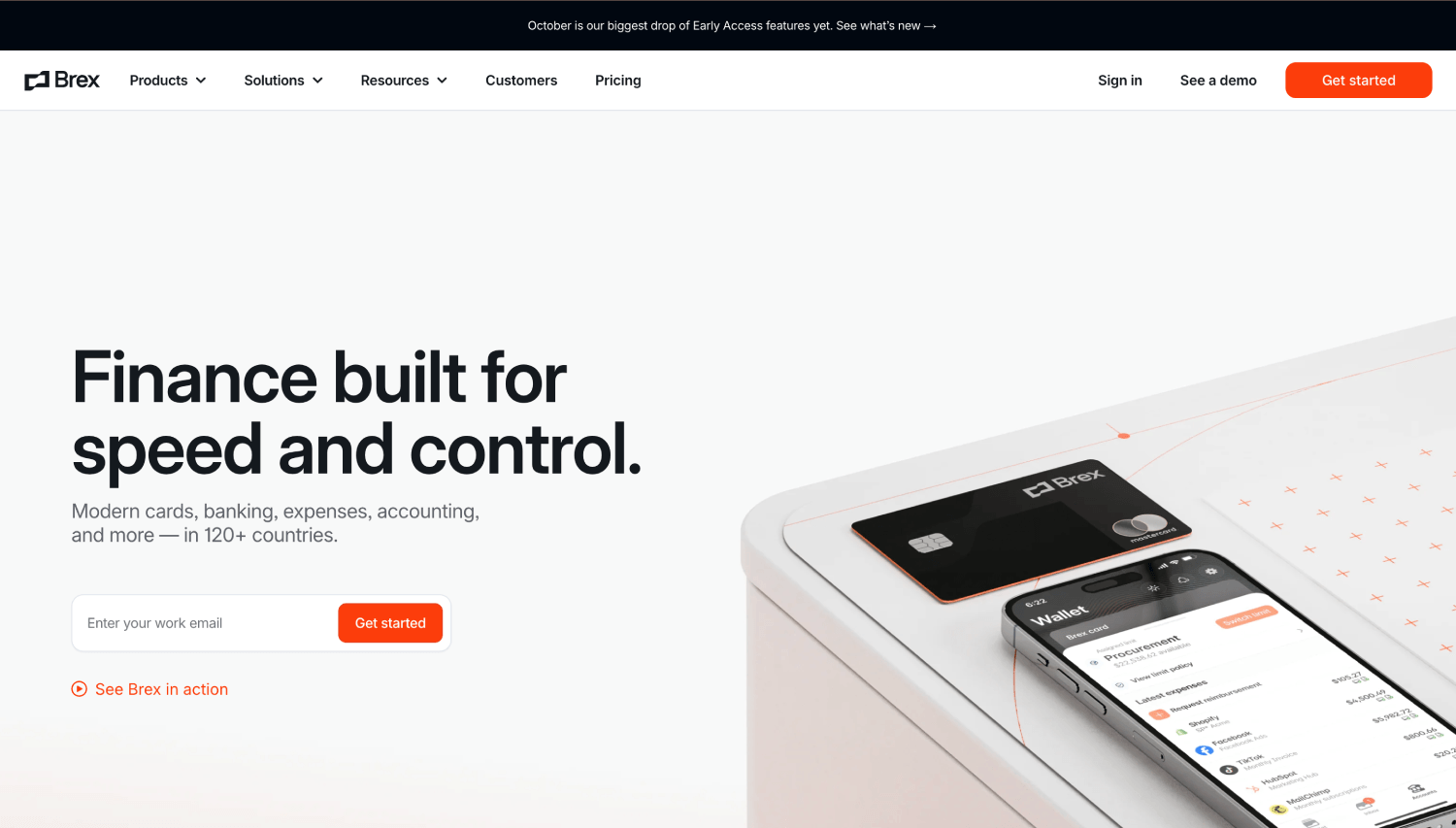
Brex is the intelligent finance platform that growth companies use to run corporate cards, expense management, bill pay, and travel across 120+ countries from one system. It is not a cross-border payout API and does not compete with the providers above on contractor disbursement. It sits on the other side of the ledger, handling the operating spend a platform generates while it pays international recipients, with 1,000+ two-way ERP integrations so transactions sync into NetSuite, QuickBooks, or Sage without a reconciliation queue.
The fit is strongest for platforms with distributed teams and international vendors. Finance can issue a virtual card to a new hire in Singapore, approve a vendor bill in euros, and enforce spend policy before money moves, with no personal guarantee and dynamic limits tied to cash flow. The tradeoff is scope: Brex covers employee and vendor spend, not mass payouts to marketplace recipients or 1099 contractors, so teams running meaningful cross-border payout volume will still pair it with a specialist like Wise Platform or Nium.
4. Nium: Best for Scale-Stage Platforms and Fintech Infrastructure Builds
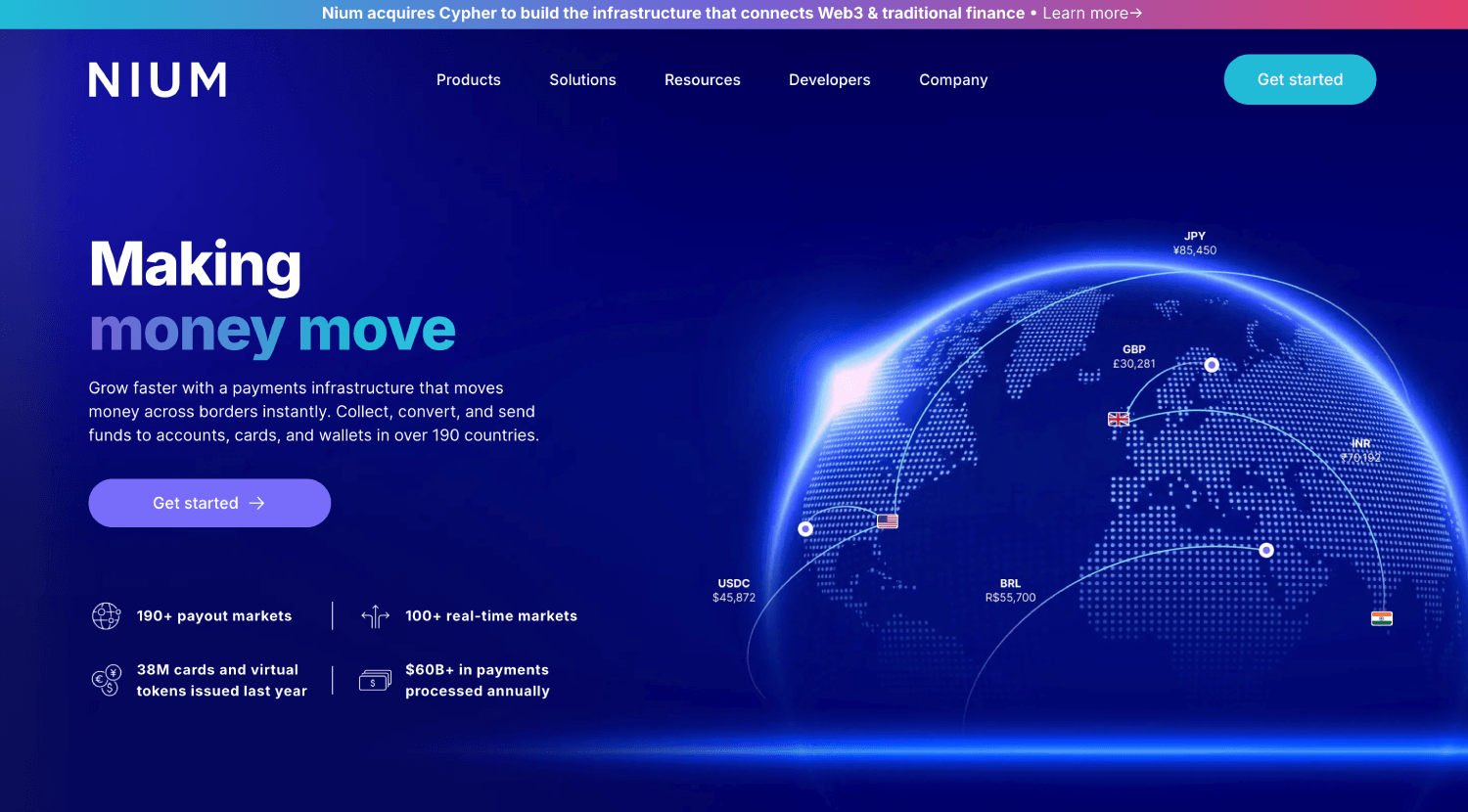
Nium operates as a full-stack global payments infrastructure provider, not just a payout API. It holds licenses in multiple jurisdictions, supports real-time payouts in Southeast Asia via local network connections, and offers card issuing, FX, and multi-currency accounts alongside payouts. Coverage spans over 100 countries with direct rails in a meaningful share of them.
Pricing is negotiated, which is standard at this infrastructure tier. There is no self-serve pricing page; the sales process involves volume discussions. That model suits Series C platforms and larger that need enterprise SLAs, dedicated support, and the ability to negotiate FX margins at scale. Startups will find the onboarding timeline slower than Wise or Airwallex.
5. Thunes: Best for Platforms Paying Into Mobile Money and Underbanked Corridors
Thunes covers over 130 countries and reaches recipients through bank accounts, mobile money wallets (M-Pesa, MTN Mobile Money, Orange Money), and cash pickup networks. That last-mile coverage is why gig platforms, remittance companies, and marketplace operators paying into Sub-Saharan Africa or Southeast Asia often land on Thunes even when they use a different provider for their EU and US corridors.
Mobile money settlement in corridors like Kenya and Tanzania can complete in minutes. Bank payouts to the same countries take one to two business days. For any US platform with a meaningful payout volume into unbanked or underbanked regions, Thunes solves a corridor problem that Airwallex and Wise Platform simply do not address.
6. dLocal: Best for Emerging Market Marketplaces With High Latin American Volume
dLocal focuses specifically on emerging markets: Latin America, Africa, and parts of Asia. It processes both collections and payouts, which matters for platforms that also accept payments from EM customers. For outbound payouts, dLocal’s strength is PIX in Brazil (real-time settlement), SPEI-connected corridors in Mexico, and UPI-compatible routing in India.
Pricing is volume-tiered and negotiated. dLocal is not the cheapest option for EU or developed-market payouts, but that is not what it is built for. If 60% of your payout volume touches Brazil, Mexico, Argentina, or India, dLocal’s local compliance infrastructure and regulatory relationships in those markets reduce the risk of payment failures and holds that SWIFT-routed alternatives generate.
7. Payoneer: Best for Platforms With Existing Payoneer Payee Networks
Payoneer has been accumulating a global payee base for over a decade, particularly among freelancers, digital agencies, and cross-border sellers. If your platform’s recipients already have Payoneer accounts, payouts between Payoneer accounts can settle instantly at low cost. That network effect is Payoneer’s most defensible advantage.
Outside the Payoneer-to-Payoneer flow, the product is adequate but not exceptional. FX fees of around 1% to 2% (as stated on Payoneer’s public pricing) are higher than Wise Platform’s mid-market model and not substantially lower than Nium’s negotiated rates at volume. For new platforms without an existing Payoneer payee base, there are sharper tools for most corridors.
8. Tipalti: Best for Finance Teams Managing 100-Plus Payees With Tax Compliance Needs
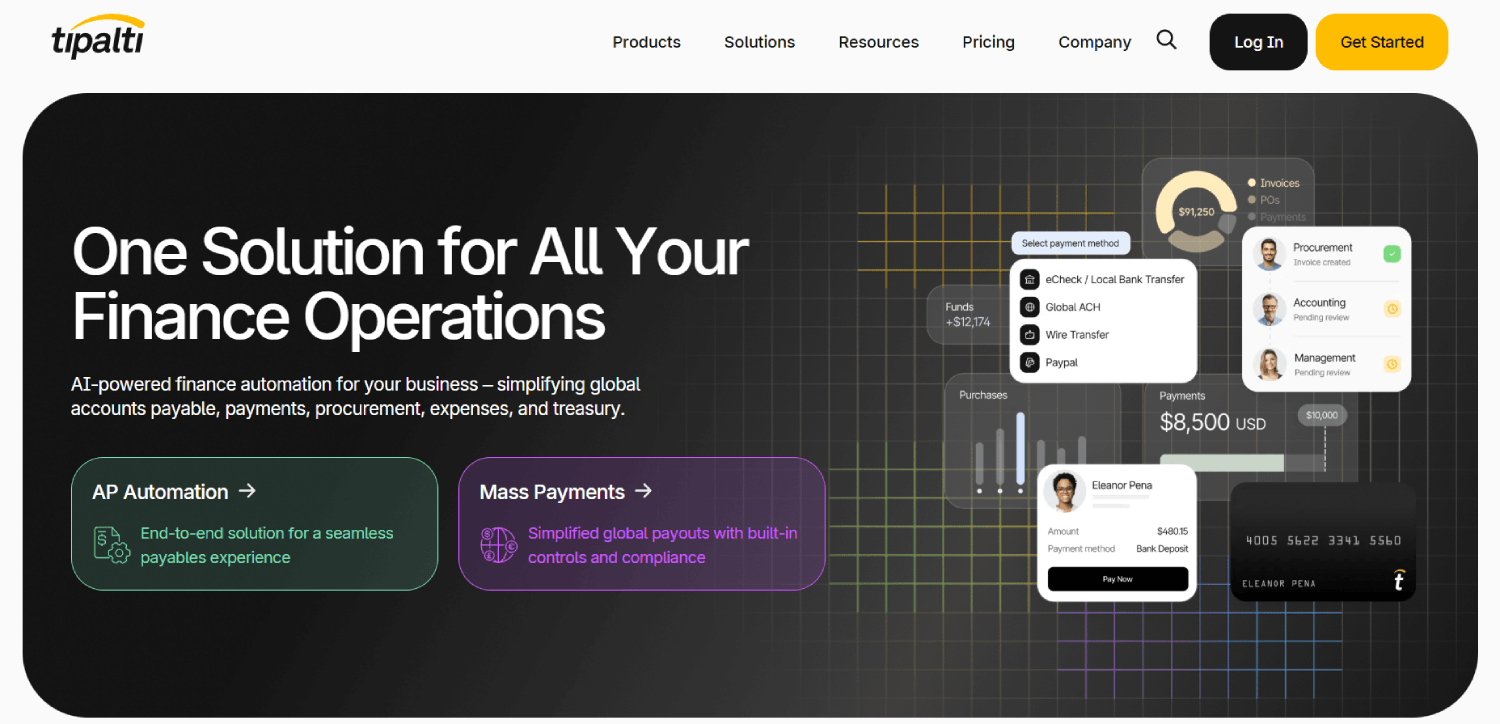
Tipalti approaches cross-border payouts from the AP automation angle rather than the pure API angle. It handles payee onboarding, bank account collection, tax form collection (W-9, W-8BEN), 1099 and 1042-S generation, sanctions screening, and payment execution in one workflow. For a finance team paying 200 international vendors or contractors, that end-to-end compliance stack saves months of integration work.
The tradeoff is that Tipalti is less suited for product teams building payment features into a consumer-facing marketplace. It is a finance operations platform first, a payout API second. If your team has a dedicated AP workflow and wants to eliminate manual steps from vendor payment to tax reporting, Tipalti is the strongest all-in-one option in this list. The Bill.com vs Tipalti comparison covers the AP automation angle in more depth.
9. Trolley: Best for Creator and Gig Platforms With 1099 Automation Requirements
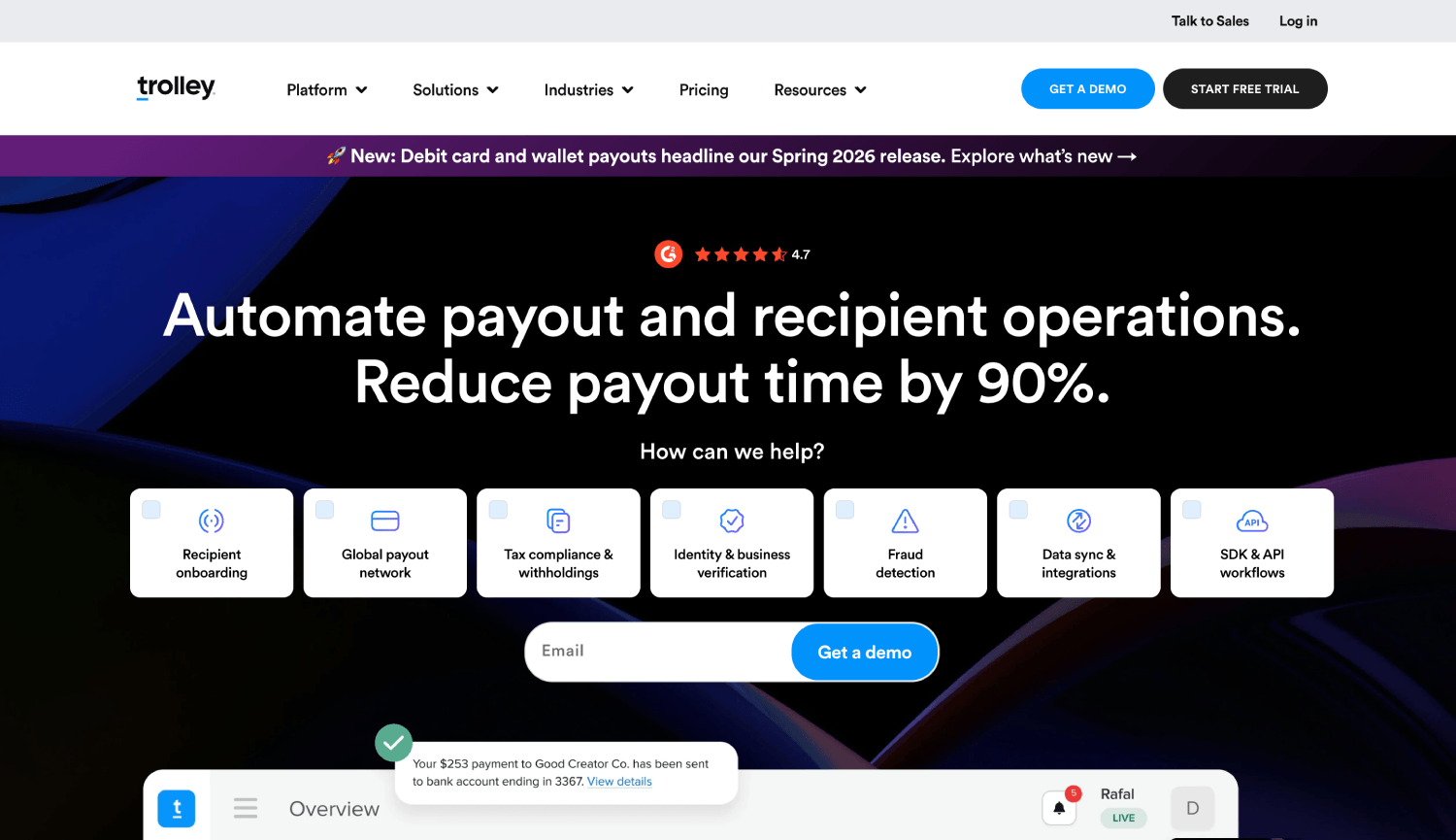
Trolley (formerly Payment Rails) targets exactly one buyer: product teams at platforms that pay large numbers of individual recipients and need US tax compliance built in. The platform combines payee onboarding, global bank payout execution, 1099/1042-S generation, and a recipient portal into one API. Pricing is transparent with publicly stated per-transaction fees and volume tiers.
Corridor coverage is solid in the US, Canada, EU, India, the Philippines, and Australia. Coverage outside those corridors is thinner than Thunes or dLocal. For a creator monetization platform, podcast hosting product, or gig marketplace paying US and Commonwealth recipients with 1099 obligations, Trolley is the most purpose-built option in this list.
10. Stripe Connect: Best for Platforms Already on Stripe Paying Developed-Market Recipients
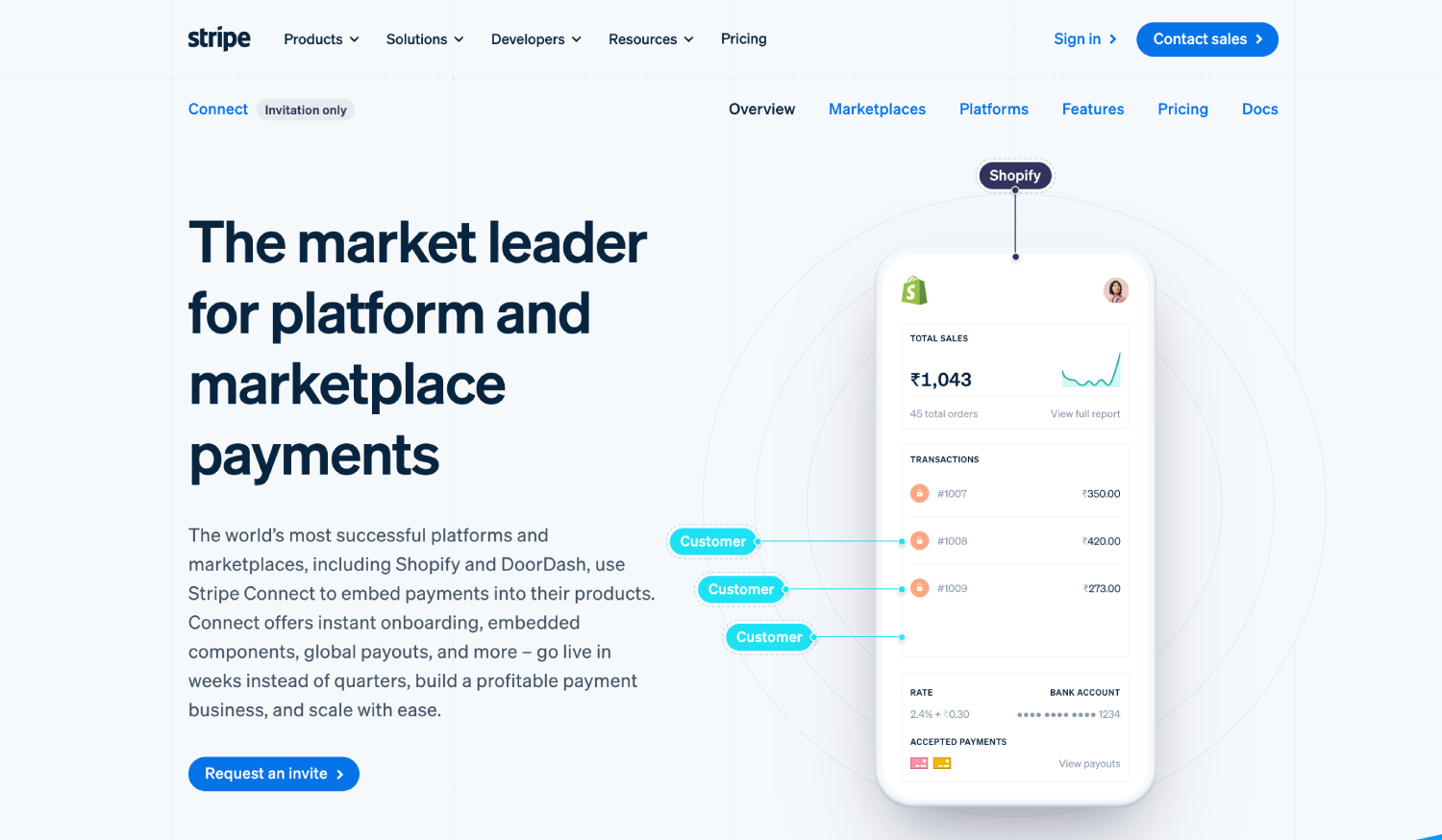
Stripe Connect makes sense specifically when a platform is already processing payments on Stripe and its recipients are concentrated in countries where Stripe operates fully: the US, Canada, EU, UK, Australia, Japan. In that scenario, payouts run through Stripe’s existing infrastructure without adding another vendor relationship, another contract, or another compliance surface.
Stripe’s cross-border payout coverage does not compete with Nium or Thunes in emerging markets. Brazil payout support is limited. Nigeria is not supported. India support exists but is more constrained than Wise or Airwallex. If your growth plan involves significant EM corridors, plan for a second provider or a migration. The 10 Best Fintech APIs for SaaS covers Stripe’s broader API capabilities in context.
What Does a Cross-Border Payout API Actually Cost?
Pricing structures across providers differ enough that comparing headline rates misleads. The table below shows the cost model each provider uses, which determines whether costs are predictable or variable at scale.
| Provider | Pricing Model | FX Markup Approach | Per-Transaction Fee | Platform/Monthly Fee |
|---|---|---|---|---|
| Airwallex | Percentage of transfer + FX markup | Stated markup above mid-market | Varies by corridor | No monthly fee at base tier |
| Wise Platform | Fixed fee + FX fee (no spread) | Mid-market rate; fee disclosed separately | Small fixed amount varies by corridor | Platform licensing fee (negotiated) |
| Nium | Negotiated volume-based | Negotiated FX margin | Negotiated | Negotiated |
| Thunes | Negotiated per corridor | Corridor-specific | Negotiated | Negotiated |
| dLocal | Volume-tiered, negotiated | Corridor-specific | Negotiated | Negotiated |
| Payoneer | Percentage of transfer | Around 1% to 2% above mid-market (public pricing) | Varies | None for basic API access |
| Tipalti | Platform fee + per-payment fee | FX included, rate varies | Included in platform fee structure | Annual platform fee (contact sales) |
| Trolley | Per-transaction, volume tiers | Disclosed FX markup | Publicly stated, varies by tier | Monthly fee based on tier |
| Stripe Connect | Percentage of payout volume | Built into Stripe pricing | Percentage-based | None separate |
A useful way to pressure-test any quote: take a $10,000 payment to a recipient in your most active corridor and ask the provider for the exact amount that lands in the recipient’s account. The gap between $10,000 and that number is your true all-in cost. Do this for your top three corridors before signing. This is also documented in the section on hidden costs that erode fintech SaaS margins, which applies to payout cost structures too.
What Compliance Features Should a Payout API Include?
Compliance tooling varies more across providers than pricing does, and gaps cost more to fix post-integration than FX margin ever would. At a minimum, any cross-border payout API for a US platform should include OFAC/SDN sanctions screening on every payout, 1099 and 1042-S generation if you pay US and non-US contractors, and KYB or KYC on payees at onboarding if your platform takes on that obligation.
Tipalti and Trolley bake all three into their workflows natively. Airwallex and Nium include sanctions screening but hand off tax form generation to the operator. Thunes and dLocal focus on payment execution and expect the platform to own compliance workflows or use a compliance middleware layer. If your team is not staffed to build and maintain that middleware, factor the engineering cost into your provider comparison before you negotiate on FX margin. The Fintech Product and Compliance Readiness Checklist outlines what that operational surface actually looks like at each growth stage.
Frequently Asked Questions
What is a cross-border payout API?
A cross-border payout API is a programmatic interface that allows a business to send money internationally to recipients in other countries, through a single integration. The API handles currency conversion, routing to local or international payment rails, compliance checks, and delivery to bank accounts, mobile wallets, or cash pickup networks. Businesses use these APIs to replace manual wire processes or to embed global payout functionality into their own platforms.
What is the difference between a cross-border payout API and a wire transfer?
A bank wire transfer is a manually initiated, single-payment process that typically costs $15 to $50 per transaction and routes internationally through SWIFT, taking one to five business days. A cross-border payout API automates the process programmatically, often routes through faster local rails in the destination country, charges lower per-transaction fees, and supports batch or mass disbursement workflows. The API approach also provides structured data on every payment for reconciliation and compliance.
Which cross-border payout API has the best coverage for Latin America?
dLocal leads for Latin American coverage, particularly for Brazil (PIX), Mexico (SPEI-connected corridors), and Argentina. It holds local regulatory relationships and processes in local currencies rather than routing everything through USD correspondent banks. Thunes is a secondary option in LATAM for mobile money corridors. Nium covers key LATAM markets at enterprise scale. Stripe Connect and Airwallex have thinner LATAM coverage and should be treated as fallbacks rather than primary options in this region.
How long do cross-border payouts take to settle?
Settlement speed depends on the corridor and the rail used. Providers with direct local rail access in the destination country typically settle same-day or within one business day. Providers routing through SWIFT take one to five business days, and correspondent bank fees are often deducted from the recipient amount. Real-time options exist in markets with fast payment infrastructure: PIX in Brazil settles in seconds, UPI in India can settle in minutes, SEPA Instant in Europe can settle in under an hour.
What is global payout automation?
Global payout automation refers to the use of software and APIs to execute international payments in bulk without manual initiation of each transfer. This includes automated payee onboarding, batch payment scheduling, FX rate locking, compliance screening, payment status tracking, and reconciliation data export, all triggered programmatically or by scheduled workflow. Providers like Tipalti, Trolley, and Airwallex offer this as a complete workflow. Others, like Nium and dLocal, provide the infrastructure that teams build automation on top of.
What should I look for in a multi-currency payout API?
Five things matter: corridor coverage (which countries you can reach via local rails, not just SWIFT), FX pricing transparency (mid-market plus stated markup versus opaque spread), compliance tooling (sanctions screening, tax form generation, KYC/KYB), settlement speed by corridor (ask for specifics, not marketing claims), and API quality (documentation, sandbox availability, webhook support, error handling). Weight corridor fit and FX transparency highest, because those two factors determine your actual payout cost at volume more than any other variable.
Can a startup use a cross-border payout API, or are these only for large platforms?
Wise Platform and Airwallex both offer self-serve onboarding with no minimum volume requirements. Trolley and Payoneer have transparent lower-tier pricing. Any platform paying international contractors or vendors in regular batches, even a few dozen monthly, can reduce costs and engineering overhead by moving from bank wires to a payout API. The setup time for developer-friendly providers is measured in days, not months. The infrastructure payoff scales quickly once the integration is live.
What is the difference between Nium and Wise Platform for cross-border payouts?
Wise Platform is a better fit for early-to-mid-stage platforms that prioritize FX transparency, fast self-serve setup, and clear per-transfer fee disclosure. Nium is better for scale-stage fintech teams building payment infrastructure into their own product, willing to negotiate pricing and handle a longer sales process in exchange for broader rail coverage, multi-currency account features, and enterprise SLAs. Wise is accessible and predictable; Nium is powerful and customizable. The choice depends more on your team’s engineering capacity and current volume than on any single feature difference.
How to Make the Final Provider Decision
Most platforms end up using two providers, not one. A primary provider covers the bulk of corridors at acceptable economics, and a secondary provider handles one or two specific corridors where the primary falls short on local rails or settlement speed. That is not a failure of evaluation; it is a realistic outcome given how uneven global payment infrastructure remains.
The sharper mistake is choosing a provider based on headline FX rates without testing corridor-specific payout cost, or signing with an enterprise provider before volume justifies the minimum contract. Wise Platform or Airwallex can take a platform from zero to production in a week. If volume later justifies moving to Nium or dLocal for specific corridors, that migration is less painful than being locked into an enterprise contract at low volume.
Start with the corridor-first framework: identify your top corridors by dollar volume, verify local rail access for each, calculate total all-in cost with a real payment amount, and score compliance fit against your actual tax and KYC obligations. That sequence produces a defensible shortlist faster than any feature comparison matrix, and it anchors the decision in the economic reality of your actual payout patterns rather than provider marketing claims about global reach.