
TLDR
- Chase gives you FDIC insurance, a US banking charter, and deep domestic rails. Airwallex gives you multi-currency local accounts, tighter FX spreads, and faster international payouts. These are not competing products in the same category.
- The FX spread gap is where the real cost difference lives. Chase charges a foreign exchange spread on wire transfers that public disclosures show can reach 3% or more on some corridors. Airwallex publicly targets interbank-rate-adjacent pricing on most currency pairs.
- Chase wins for companies whose primary operations are domestic, who need credit products, or whose banking counterparties require a US chartered institution.
- Airwallex wins for companies that pay international contractors, collect in multiple currencies, or run cross-border operations where FX drag compounds monthly.
- Many US companies end up using both: Chase for their primary operating account, Airwallex for FX and international payouts.
For US businesses comparing airwallex vs chase on cross-border needs, Airwallex outperforms Chase on foreign exchange costs and international payout reach. Chase holds a structural advantage in domestic lending, FDIC coverage, and counterparty credibility. The decision comes down to where your money actually moves: if most of it stays in USD and crosses borders rarely, Chase is sufficient. If you pay international suppliers, collect in EUR or GBP, or run a multi-currency treasury, the FX spread difference alone justifies running Airwallex alongside or instead of a traditional bank account for those flows.
Why a Traditional US Bank Account Is Not a Multi-Currency Account
Most US founders treat their Chase Business Complete Banking account as a global money account by default. It is not. Chase holds your USD, processes domestic ACH, and issues corporate cards. When money crosses a currency boundary, you are handed off to Chase’s FX desk, where the exchange rate applied is not the interbank rate.
Chase’s public account disclosures acknowledge a foreign exchange rate spread on international wires. The effective all-in cost of a cross-border payment through a traditional bank account typically includes a wire fee plus an FX markup, plus potential correspondent bank fees on the receiving end. To illustrate: at an assumed 2.5% to 3% FX spread, a company sending $50,000 to a European vendor monthly would incur roughly $1,250 to $1,500 in conversion costs per transaction before wire fees , a hypothetical meant to show how spread percentages compound at moderate volumes, not a sourced benchmark figure.
Airwallex, by contrast, is architected specifically for multi-currency movement. The platform lets US businesses open local currency accounts in markets including the UK, EU, Singapore, Australia, Hong Kong, and Canada, receive payments in local currency without conversion, and hold balances across multiple currencies before converting. That architecture matters more than any single fee comparison.
How Do Airwallex and Chase FX Fees Actually Compare?
The honest answer is that Chase does not publish a fixed FX spread on its business banking pages. The rate you receive on an international wire is set at the time of the transaction and includes a margin above the interbank mid-market rate. Chase’s public fee schedules for business accounts show per-wire fees , typically $5 for incoming international wires and $40 to $50 for outgoing international wires as of their publicly listed fee schedule (verified June 2025) , but the FX margin is disclosed separately at transaction time.
According to Airwallex’s public pricing page, the platform offers FX rates at or near interbank rates with conversion fees that vary by plan tier, and charges no monthly account fees on its Explore plan. Airwallex does not publish fixed spread percentages for specific currency pairs on its public pricing page, and actual spreads will vary by pair, direction, and account tier.
| Feature | Airwallex | Chase Business |
|---|---|---|
| Multi-currency local accounts | Yes (50+ currencies, local account details in key markets) | No (USD account only) |
| FX pricing model | Near-interbank spread, disclosed at transaction | Bank-set margin above interbank, disclosed at transaction |
| Outgoing international wire fee | Free on some plans; per-transfer fees apply on base tier | Typically $40 to $50 per outgoing international wire |
| FDIC insurance | No (funds held in licensed e-money or equivalent accounts) | Yes (up to $250,000 per depositor) |
| USD ACH and domestic rails | Yes (ACH, wires) | Yes (full domestic banking) |
| Business credit products | Limited (corporate cards, no business loans) | Yes (LOC, SBA, credit cards) |
| Counterparty acceptance | Accepted for most operational purposes, not always for lender covenants | Universal |
| Monthly account fee | $0 on Explore plan (as of public pricing page) | $15/month, waivable with minimum balance |
| Physical branch access | No | Yes (4,700+ US branches) |
| Multi-user permissions and controls | Yes (role-based access, approval workflows) | Limited (basic sub-user access) |
What Does Airwallex’s Multi-Currency Infrastructure Actually Give You?
The core product for a US business is the ability to receive payments from international customers in their local currency, hold that currency, and pay out in local currency without converting through USD each time. A company billing a UK client in GBP can receive the payment into a GBP account on Airwallex, hold it, and pay a UK contractor directly from that GBP balance. The USD never enters the picture.
That matters because every conversion event costs money. A company that converts GBP to USD and then back to GBP to pay a UK contractor twice has paid the FX spread twice. With a multi-currency account, that double-conversion friction disappears. For companies running SaaS with international subscribers, agencies billing European clients, or importers paying overseas suppliers, this structural difference is worth more than any headline rate comparison.
Airwallex also connects to Xero, QuickBooks, and NetSuite, which reduces reconciliation work on international transactions. The platform issues Visa corporate cards that spend in local currency when traveling or paying international vendors. For teams thinking about the operational overhead of cross-border finance, our comparison of accounts payable automation tools for finance teams gives relevant context on where currency conversion friction shows up in AP workflows.
Where Does Chase Have a Real Structural Advantage?
Chase’s moat is not FX pricing. It is the full-service banking relationship that comes with a chartered institution. If your company is raising a venture debt facility, most lenders will require your primary operating account at a bank with an FDIC-insured charter, not a fintech platform. If you are applying for an SBA loan, the underwriter wants to see a Chase or similar bank statement, not an Airwallex statement.
Payroll providers, landlords, and enterprise vendors occasionally require payments from a US bank account with a routing number issued by an FDIC member bank. Airwallex does have US routing and account numbers for ACH, but its regulatory status differs from a chartered bank. That distinction rarely matters for day-to-day operations but surfaces at exactly the wrong moments, like a lease signing or a debt covenant audit.
Chase also has a credit relationship that Airwallex cannot replicate. A Chase Business Unlimited Credit Card, a revolving line of credit, or a Chase equipment loan are products that build toward a broader banking relationship. Airwallex’s corporate card program is useful for operational spend but does not build toward credit access in the same way.
The FintechSpecs Cross-Border Cost Test: A Decision Framework
To cut through the noise on this comparison, use what we call the Cross-Border Cost Test. It runs four checks on your actual payment flows to determine whether the FX and payout infrastructure matters enough to justify adding Airwallex, replacing Chase, or staying on Chase alone.
Check 1: Monthly FX volume. Add up every dollar amount converted from USD to a foreign currency or vice versa in a typical month. If that number is below $10,000, the spread difference between Chase and Airwallex likely produces a few hundred dollars in annual savings. Meaningful, but not a priority. Above $50,000 monthly, the spread difference compounds to a decision-worthy number.
Check 2: Currency pair diversity. Count how many distinct currency pairs you move money through. One pair (say, USD to EUR) is manageable inside almost any account. Four or more pairs, especially in emerging markets, is where Airwallex’s local payout rails produce material speed and cost differences versus routing through SWIFT correspondents.
Check 3: Collection currency. If your customers pay you in non-USD currencies and you convert those on receipt, you are paying an FX spread on every inbound payment. Multi-currency holding accounts turn that spread into zero until you choose to convert.
Check 4: Credit dependency. If you rely on a bank credit line, have lender covenants tied to your primary operating account, or expect to raise debt in the next 12 months, maintaining Chase as your primary account is not optional. Run Airwallex as a supplemental FX and payout layer.
Which US Business Use Cases Go to Airwallex?
A US software company billing European customers in EUR with a team of contractors in Latin America and Asia is the core Airwallex customer. The company collects EUR without converting, holds it, converts to local currencies as needed for contractor payments, and avoids multiple SWIFT wire fees per month. That workflow is genuinely difficult to replicate at Chase without paying for each FX event and each wire individually.
Importers paying overseas suppliers on net terms benefit similarly. A consumer goods company paying a manufacturer in CNH or HKD monthly saves on both FX spread and the $40+ outgoing wire fee at Chase on each transaction. Over twelve months and a dozen transactions, the arithmetic becomes obvious.
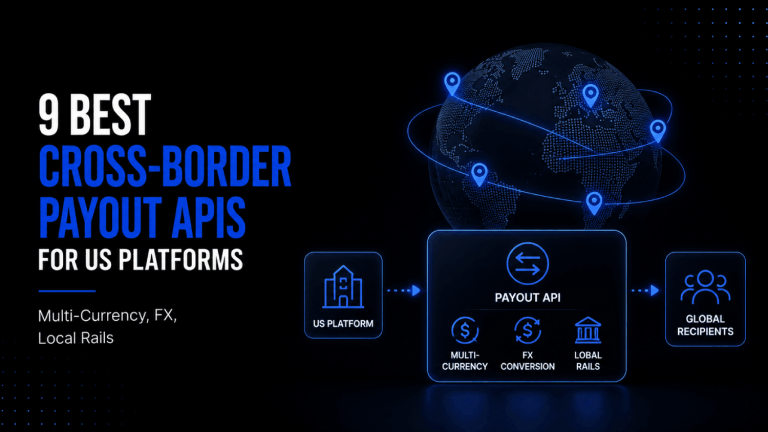
E-commerce operators on platforms like Amazon or Shopify who collect in GBP, EUR, or AUD and want to hold those balances for reinvestment in local markets also fit Airwallex well. The alternative is forced conversion at point of payout, which means realizing the FX spread on every settlement. Our analysis of cross-border payout APIs for US platforms covers the full range of infrastructure options for companies at the API layer, which is relevant if your payout volume warrants a programmatic approach.
Which US Business Use Cases Stay on Chase?
A professional services firm billing domestic clients in USD, paying US employees through ADP or Gusto, and occasionally wiring a small amount internationally once a quarter has no compelling reason to add Airwallex’s operational complexity. Chase handles every part of that workflow, and the incremental FX savings on one quarterly wire are not worth splitting your banking stack.
Companies in regulated industries where banking counterparty quality is scrutinized, including lending, insurance, and healthcare payments, often need their operating account at a chartered institution for regulatory and audit reasons. The compliance calculus shifts the conversation entirely away from FX pricing.
Early-stage startups that have not yet crossed into recurring international payments also tend to stay with Chase. The friction of managing a second financial platform, reconciling across two systems, and handling KYB onboarding on Airwallex is real. Founders evaluating their early infrastructure stack should read our breakdown of top business bank accounts for US startups before assuming they need a fintech account from day one.
Is Airwallex a Real Bank Account for US Businesses?
Airwallex is not a US chartered bank. In the United States, Airwallex operates as a licensed money transmitter and partners with regulated financial institutions to hold customer funds. That means customer balances do not carry FDIC insurance in the same way a Chase deposit account does. Airwallex’s own documentation advises that funds are held in safeguarded accounts with banking partners, but explicit FDIC pass-through coverage depends on the specific structure and should be confirmed directly with Airwallex before treating it as equivalent to a bank deposit.
For operational purposes, most US businesses will not notice the difference day to day. For treasury risk purposes, the distinction is real. Companies holding meaningful cash balances on Airwallex are taking on a different risk profile than companies holding the same amount at Chase. That is not an argument against using Airwallex. It is an argument for being deliberate about which balances you hold where.
Can You Use Airwallex and Chase Together?
Most US companies operating internationally that we have seen described across fintech operator communities run a hybrid stack. Chase or another FDIC-insured bank holds the primary operating account, handles payroll, and anchors any credit relationships. Airwallex handles international collections, foreign currency holding, and cross-border payouts.
The two platforms connect easily through USD transfers. Money flows from Chase into Airwallex when FX conversion is needed, Airwallex processes the cross-border payment, and the remaining balance stays in Airwallex for future international payments. Reconciliation is the main operational friction point, and that friction reduces significantly if you connect both accounts to your accounting software. For companies scaling past early-stage, our fintech SaaS scale checklist includes a section on when to split your banking stack across specialized providers.
How Does Airwallex Compare to Other Fintech Alternatives to Chase?
Wise Business is the most direct Airwallex competitor for multi-currency accounts targeting US businesses. Wise’s mid-market rate promise and transparent fee structure appeal to cost-focused buyers. Airwallex tends to differentiate on payout reach, API access for programmatic payments, and corporate card integration for teams that need spending controls alongside FX. Our dedicated comparison of Airwallex versus Wise for US companies going global covers that matchup in detail.
Mercury is another frequently mentioned alternative, particularly for seed-stage startups, but Mercury’s FX and multi-currency capabilities are more limited than Airwallex’s. Mercury is a strong domestic fintech bank account with Evolve Bank and Choice Financial as banking partners. It is not built primarily around cross-border operations the way Airwallex is.
Frequently Asked Questions
Is Airwallex FDIC insured for US business accounts?
Airwallex is not a US chartered bank and does not offer direct FDIC deposit insurance on its US accounts. Customer funds are held in safeguarded accounts with regulated banking partners, but the specific insurance coverage structure differs from a traditional bank deposit. If FDIC coverage is a hard requirement for your treasury policy, Chase or another chartered bank is the appropriate primary account, and Airwallex can serve as a supplemental FX and payout platform.
What is the actual FX fee difference between Airwallex and Chase?
Chase does not publish a fixed FX spread for business customers. The margin is set at transaction time and can range from 1% to 3% or more above the interbank mid-market rate depending on the currency pair and transaction size. According to Airwallex’s public pricing page, the platform offers near-interbank FX rates with conversion fees that vary by plan tier. The practical difference on a high-volume corridor like USD to EUR typically favors Airwallex, though the exact gap depends on the specific transaction and volume.
Can a US business use Airwallex as its only business account?
Technically yes, but practically for many companies, no. Airwallex supports ACH payments, USD account details, and corporate cards. Companies that need business credit products, SBA loans, or whose banking counterparties require an FDIC-chartered institution will need a traditional bank alongside Airwallex. For early-stage companies with primarily international payment flows and no credit dependency, Airwallex as a primary account is feasible.
Does Chase offer multi-currency accounts for US businesses?
Chase does not offer multi-currency account balances for standard US business banking customers. Chase business accounts hold USD. International payments go through Chase’s wire transfer service with an FX conversion applied at the time of the transaction. There is no mechanism to hold EUR, GBP, or other currencies in a Chase business account and pay out from those balances without converting through USD.
What happens to Airwallex balances if Airwallex fails?
Because Airwallex holds funds in safeguarded accounts with regulated banking partners rather than as FDIC-insured deposits, the recovery process in the event of Airwallex’s insolvency would depend on the specific safeguarding structure and jurisdiction. This is a real distinction from a Chase deposit, where FDIC coverage up to $250,000 per depositor provides a clearer recovery path. Companies with material operating cash balances should review Airwallex’s safeguarding documentation and consult their legal or treasury team before holding large sums.
Which is better for paying international contractors, Airwallex or Chase?
Airwallex is better for paying international contractors in most cases. Local payout rails in markets like the UK, EU, Australia, Singapore, and Hong Kong mean contractors receive payments as domestic transfers rather than international wires, which is faster and avoids correspondent bank fees on the receiving end. Chase’s international wire process charges per-wire fees and routes through SWIFT correspondents, which adds cost and introduces settlement delays that Airwallex’s local rails avoid.
The Honest Bottom Line
Chase and Airwallex solve different problems. Chase is a full-service bank with credit products, FDIC insurance, and domestic infrastructure that most US companies cannot replace. Airwallex is a multi-currency payment platform that makes cross-border money movement cheaper and faster than routing everything through a traditional bank’s FX desk.
The reader who thinks their Chase account covers all their cross-border needs is right until the moment they look at their annual FX costs. To illustrate with a scenario: if a company moves $500,000 through FX annually and the effective spread difference between Chase and Airwallex is 1.5 percentage points , an assumption, not a published figure, since neither institution discloses fixed spreads , that gap works out to $7,500. Whether the actual spread delta for your specific currency pairs and volumes is larger or smaller is something the Cross-Border Cost Test above will surface from your own payment data.
The right framework is not which platform wins. The right question is whether your cross-border payment volume, currency diversity, and credit independence have crossed the threshold where adding Airwallex pays for itself in the first quarter. Run the Cross-Border Cost Test on your last three months of payment data. The answer will be obvious before you finish the spreadsheet.