
- Stripe completed its acquisition of Bridge in late 2024, making Bridge a Stripe-controlled product. Teams that want infrastructure independence now have concrete reasons to look elsewhere.
- Several independent providers match Bridge on core stablecoin orchestration and exceed it on specific dimensions: BVNK leads on enterprise compliance depth, Conduit on Latin American corridor coverage, Zero Hash on institutional custody integration.
- The acquisition risk is not theoretical. Roadmap decisions, pricing changes, and API deprecations at Bridge now flow through Stripe’s priorities, not standalone stablecoin infrastructure priorities.
- Multi-provider redundancy is already standard practice for serious stablecoin payment stacks. Building on a single Stripe-owned rail amplifies concentration risk.
- Provider independence compounds over time. Switching costs grow with every month of deeper API integration, so the decision to diversify is easier before you are fully embedded.
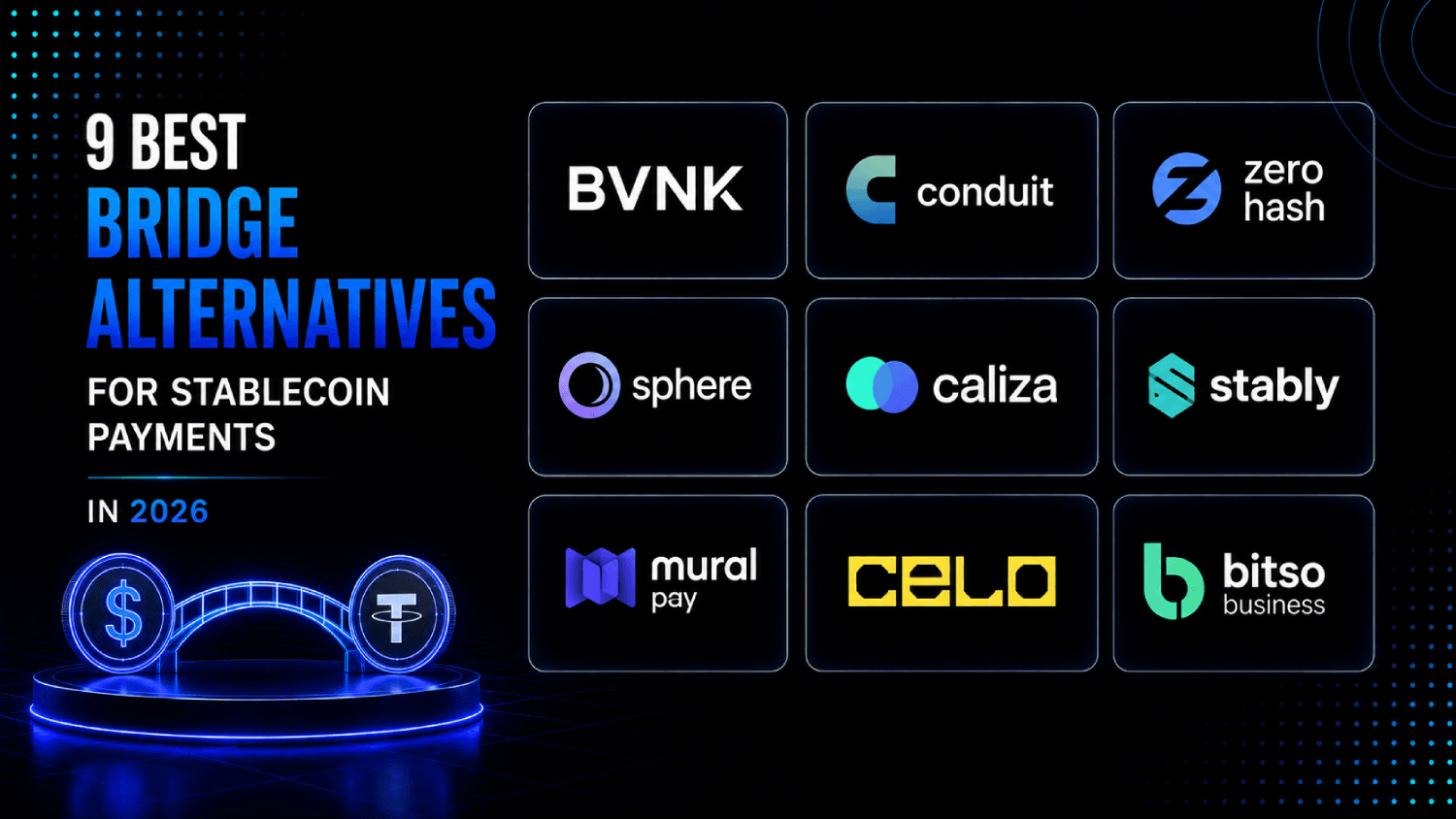
The strongest independent alternatives to Bridge for stablecoin payments in 2026 are BVNK, Conduit, Zero Hash, Sphere, Caliza, Stably, Mural Pay, Celo, and Bitso Business. Each serves a distinct profile: BVNK and Zero Hash suit compliance-heavy or institutional use cases, Conduit and Caliza cover Latin American corridors, Mural Pay fits SMB cross-border payouts, and Sphere targets crypto-native platforms needing embedded stablecoin rails. All operate independently of Stripe.
Why Are Teams Searching for Bridge Alternatives Right Now?
Bridge built a genuinely strong product: a clean API layer over stablecoin issuance, orchestration, and offramp that reduced the infrastructure burden for any fintech wanting to move money in USDC or USDT. When Stripe acquired Bridge for a reported $1.1 billion in late 2024, the reaction in the stablecoin infrastructure market was immediate. Not panic, but a very specific kind of concern that any experienced fintech operator recognizes.
Acquisitions by large payment processors almost always produce the same sequence. First, the acquirer says nothing will change. Then product roadmaps consolidate around the acquirer’s broader priorities. Then pricing migrates toward the parent’s margin structure. Then the API that your team built against starts getting deprecated in favor of the combined platform’s preferred architecture. None of that is malice; it is just how platform businesses absorb point solutions. The problem is that your infrastructure is embedded in that sequence whether you planned for it or not.
Provider independence is now a legitimate vendor evaluation criterion for stablecoin payments, in the same way that teams building on critical fintech infrastructure have learned to weight single-vendor risk. The companies listed here are not compromises. They are purpose-built alternatives with real production deployments, each with a clearer independent roadmap today than Bridge can credibly offer.
The FintechSpecs Stablecoin Provider Stress Test
Before reviewing each alternative, it helps to have a consistent evaluation lens. FintechSpecs applies a four-point framework when assessing stablecoin payment providers for commercial use cases. Call it the Stablecoin Provider Stress Test.
Custody posture: Does the provider hold assets on your behalf, or does it act as an orchestration layer over wallets you control? Custody creates counterparty risk. Orchestration-only models are cleaner for regulated entities.
Corridor depth: Which sending and receiving corridors are production-ready, not just listed as supported? A provider with 40 countries on its website but reliable settlement in only 8 is a corridor-depth problem waiting to surface at the worst time.
Compliance architecture: Does the provider own its licensing, or is it riding another entity’s money transmitter licenses? Owned licenses mean the provider controls its own compliance posture. Third-party licensing means you inherit someone else’s regulatory relationship.
Acquisition surface: Is the provider privately held, VC-backed, or already absorbed by a larger player? A provider currently in active acquisition discussions has a roadmap that may not reflect its public positioning. Independent providers with institutional backing but no announced acquisition conversations are the lowest-risk bets for a 24-month infrastructure horizon.
Which Providers Actually Replace Bridge on Stablecoin Orchestration?
1. BVNK
BVNK is the most direct structural competitor to Bridge for teams that need enterprise-grade stablecoin payments with compliance depth baked in. The platform handles stablecoin acceptance, conversion, and payouts across multiple corridors, with a strong European and UK regulatory footprint. BVNK holds its own e-money licenses in the UK and EU, which matters for fintech platforms that cannot afford to build their compliance posture on a third party’s regulatory relationship.
Where BVNK outperforms Bridge specifically: the compliance architecture is designed for regulated fintech customers, not retrofitted for them. Teams at Series B and C stage that are already managing AML programs and regulatory audits tend to find BVNK’s structure easier to pass through their own compliance reviews. BVNK’s API documentation is thorough, and the team supports enterprise onboarding with dedicated integration support rather than self-serve only.
BVNK does not publish pricing publicly. The company does not disclose this on its website; expect negotiated contracts based on volume. Best for: fintech platforms in Europe or the UK, or US platforms with significant cross-border exposure to those markets.
2. Conduit
Conduit is purpose-built for dollar-denominated payments into Latin American markets using stablecoins as the underlying rail. If your payment problem is specifically US-to-LatAm or intra-LatAm, Conduit’s corridor depth in Brazil, Mexico, Colombia, and Argentina is its defining advantage over Bridge.
Conduit’s model converts stablecoins to local currency at the point of settlement, meaning recipients do not need crypto infrastructure to receive funds. This is the right architecture for B2B payables, creator payouts, or supplier payments where the counterparty is a business in a local banking system. Bridge has LatAm corridor support, but Conduit’s entire product thesis is built around it, which typically translates to better settlement reliability and faster incident resolution in those markets.
Pricing is not public. The platform is enterprise-focused and requires a sales conversation for onboarding. Best for: US or global platforms with high-volume LatAm payout needs, payroll providers, or B2B marketplaces with suppliers in the region.
3. Zero Hash
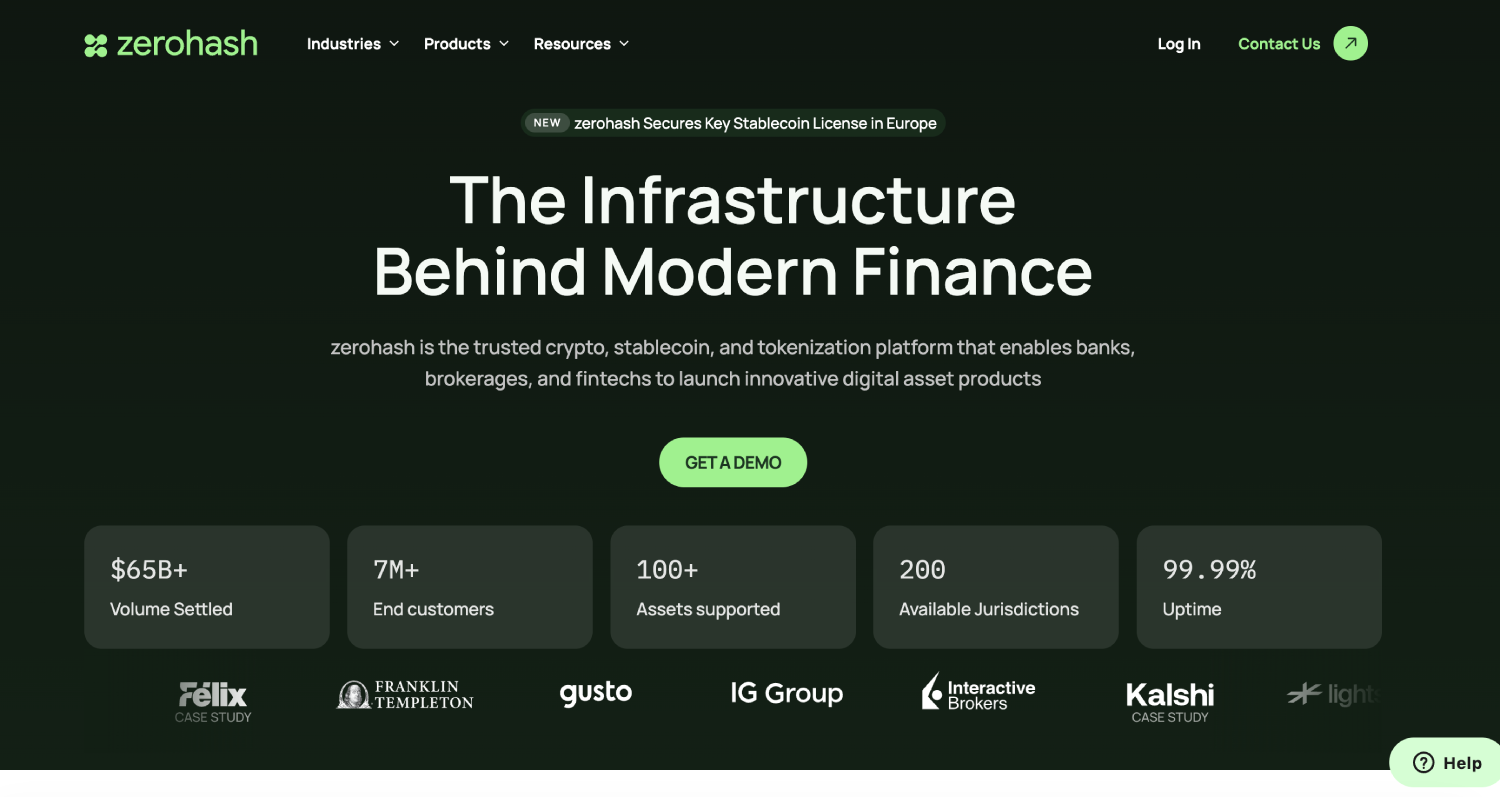
Zero Hash operates as an infrastructure layer that sits beneath fintech products, handling stablecoin settlement, custody, and digital asset operations without requiring the end platform to hold a money transmitter license in every state. Zero Hash holds its own licenses across the US and has several institutional partners that have already processed production volume through the platform.
The core differentiation from Bridge is institutional depth. Zero Hash is built for platforms that want to embed stablecoin functionality without becoming a crypto company internally. Their B2B2C model means the platform’s compliance and licensing infrastructure flows down to the end product, which is a meaningful advantage for non-crypto fintechs adding stablecoin capability. As covered in our overview of leading stablecoin infrastructure providers, Zero Hash consistently appears as a top-tier option for institutional embedding use cases.
Pricing is not publicly listed. Best for: fintechs embedding stablecoin acceptance into a broader product without wanting to own the custody or licensing layer.
4. Sphere
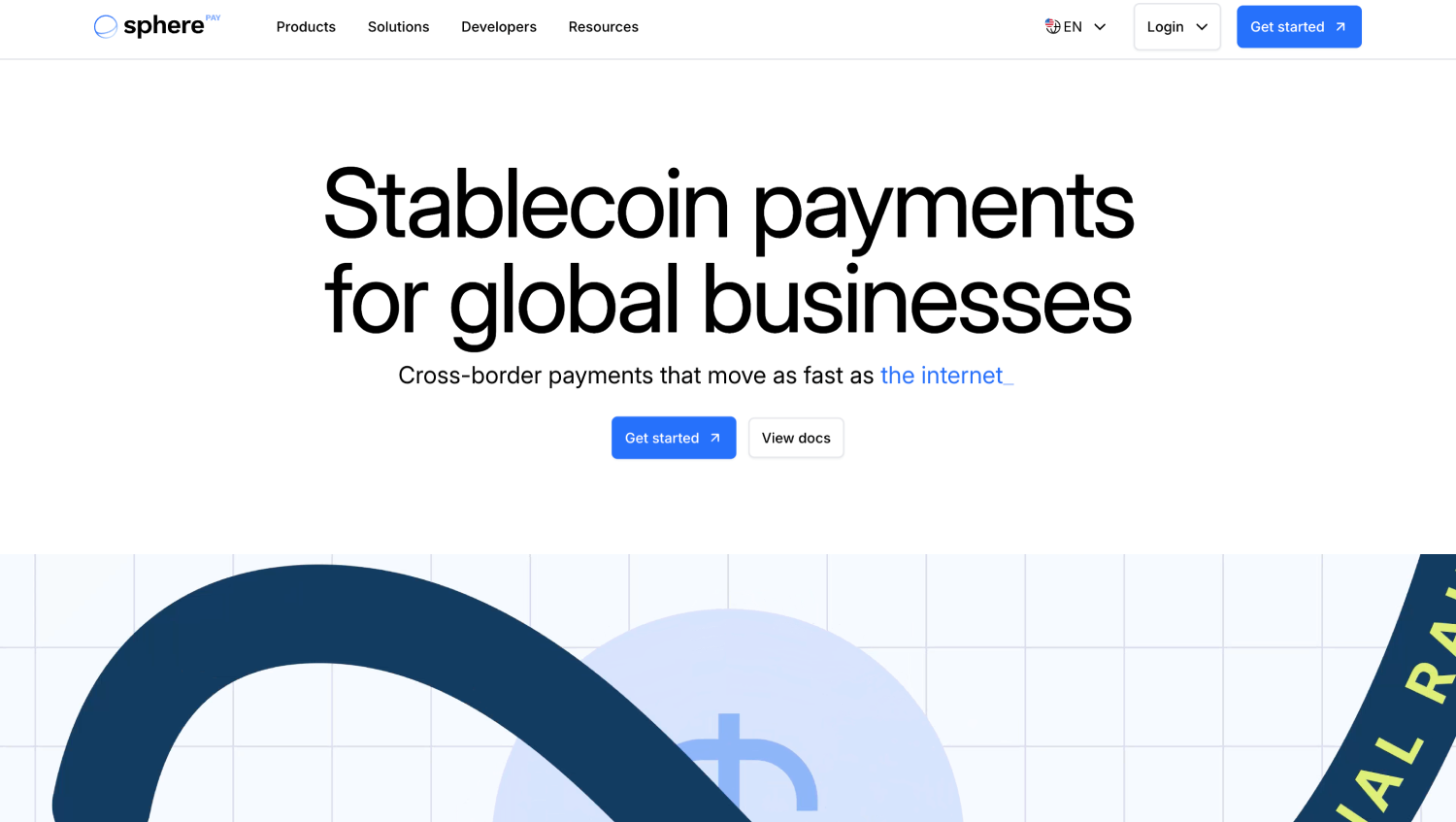
Sphere positions itself as a stablecoin payments API built for crypto-native and hybrid platforms. It handles USDC and USDT acceptance, payouts, and conversions, and its API design skews toward developer ergonomics rather than enterprise sales processes. Sphere’s onboarding is faster than most enterprise stablecoin providers, which matters for seed and Series A teams that need to get into production without a six-week sales cycle.
The trade-off: Sphere’s compliance depth and corridor breadth is narrower than BVNK or Zero Hash. It is a better fit for crypto-adjacent platforms than for heavily regulated fintech products that need to demonstrate compliance documentation to bank partners or institutional investors. Think payment tools for creator economies, gig platforms, or crypto-adjacent consumer apps.
5. Caliza
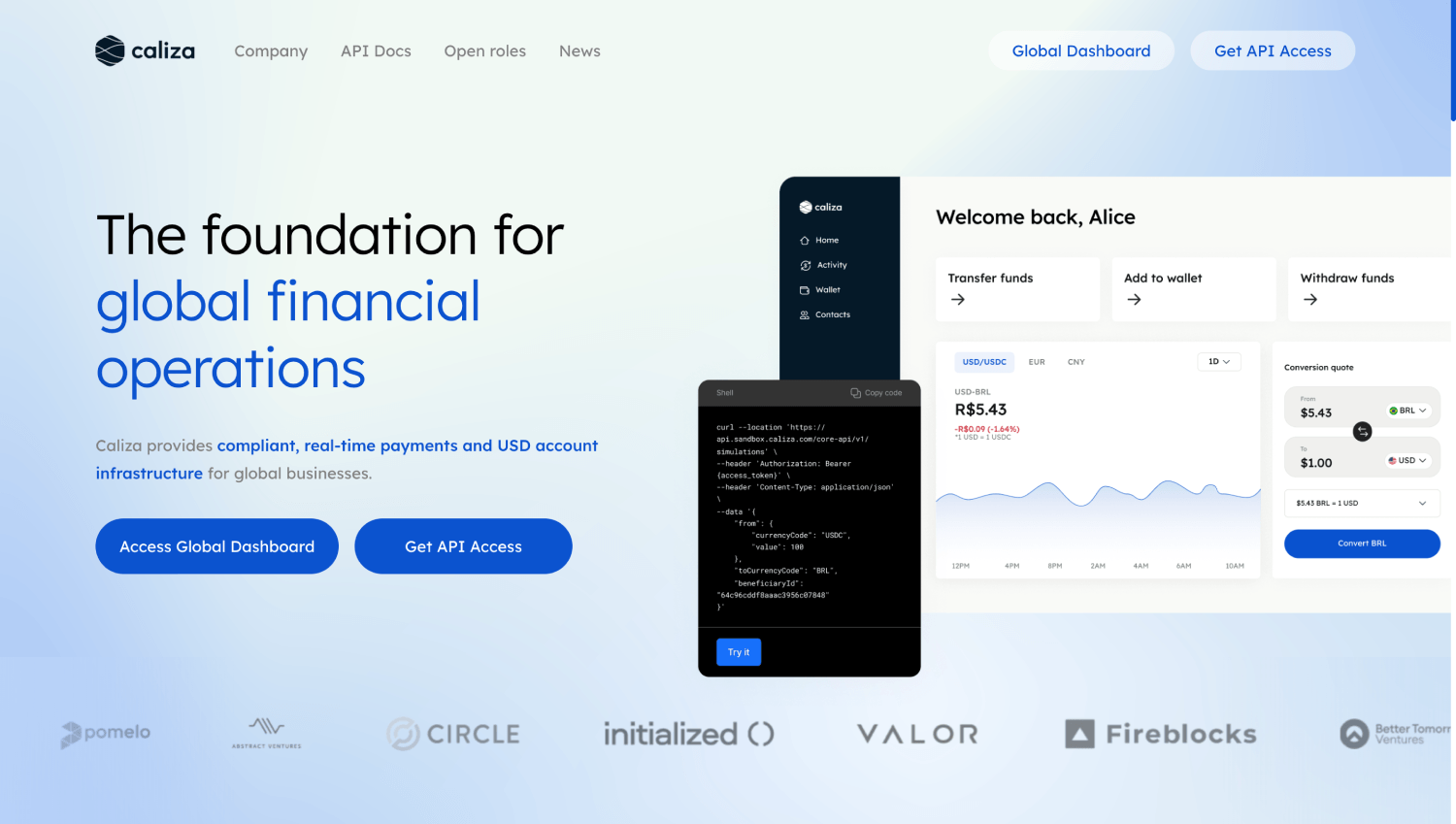
Caliza focuses on dollar-based payments and stablecoin accounts for Latin American businesses and platforms. Where Conduit is primarily a payout rail for US senders, Caliza is more symmetrically built for LatAm-native businesses that want dollar accounts and stablecoin payment functionality. The product includes stablecoin accounts, fiat offramps, and payment APIs designed for the local business context.
Caliza is a narrower product by design, which means it is not a full Bridge replacement for a globally-oriented platform. For LatAm-first operators or US platforms with a specific LatAm neobank or treasury use case, it fills a gap that Bridge never fully addressed. Pricing is not public. Best for: LatAm fintechs and platforms building dollar-denominated financial products for regional SMBs.
6. Stably
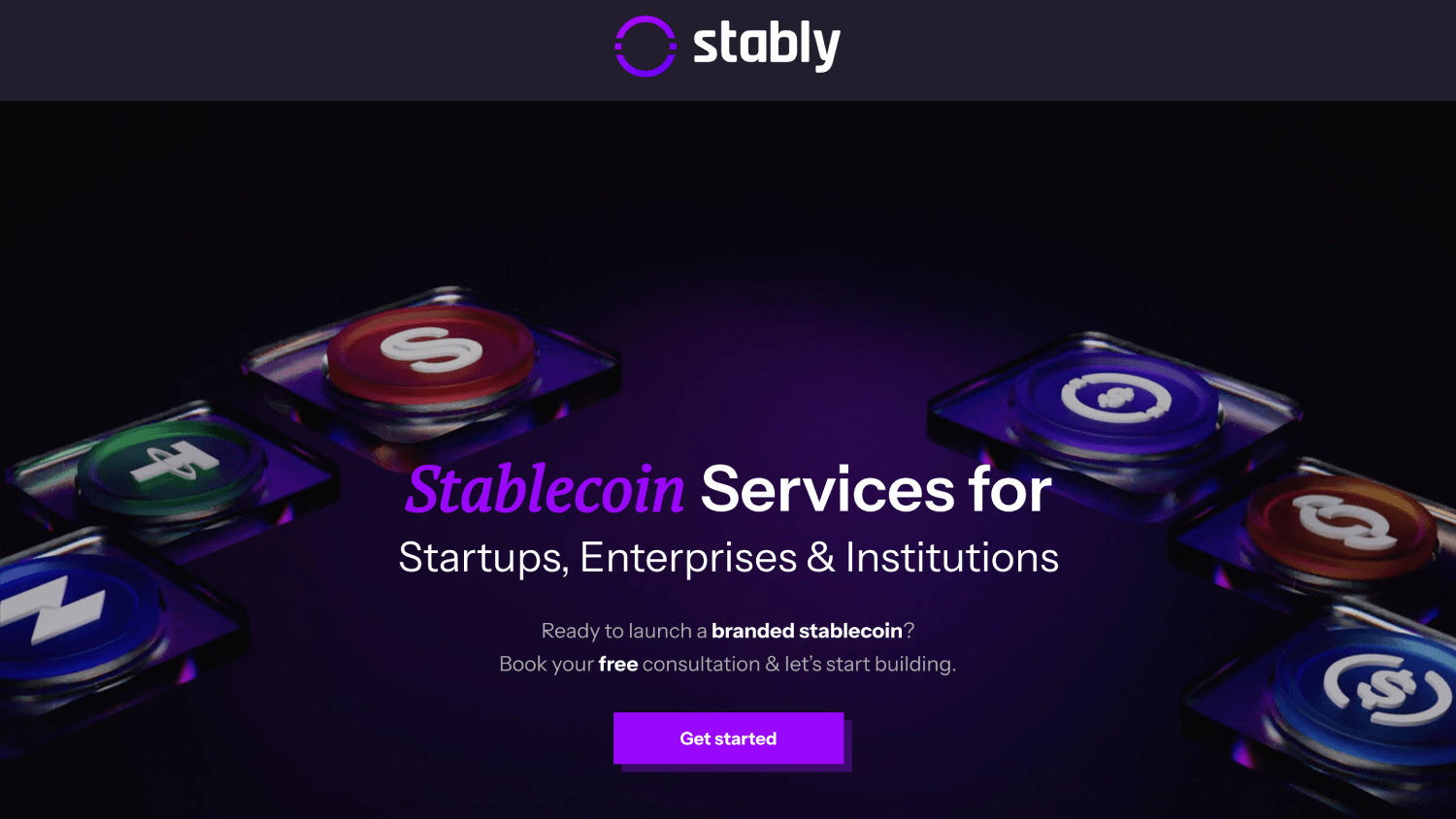
Stably provides stablecoin issuance infrastructure and on/offramp APIs, with a product set that covers white-label stablecoin creation, USD-backed token issuance, and exchange connectivity. For teams that want to explore stablecoin issuance rather than just rails, Stably is one of the few providers in this list that covers both sides. The platform’s public pricing page lists specific plan tiers, making it easier to evaluate for smaller teams than providers with fully custom pricing.
Stably is not a direct Bridge replacement for enterprise stablecoin orchestration, but it is a strong option for platforms that want issuance capability alongside payment rails. Teams evaluating their options across the stablecoin issuance platform market will find Stably’s transparent pricing a useful anchor point for budget conversations.
7. Mural Pay
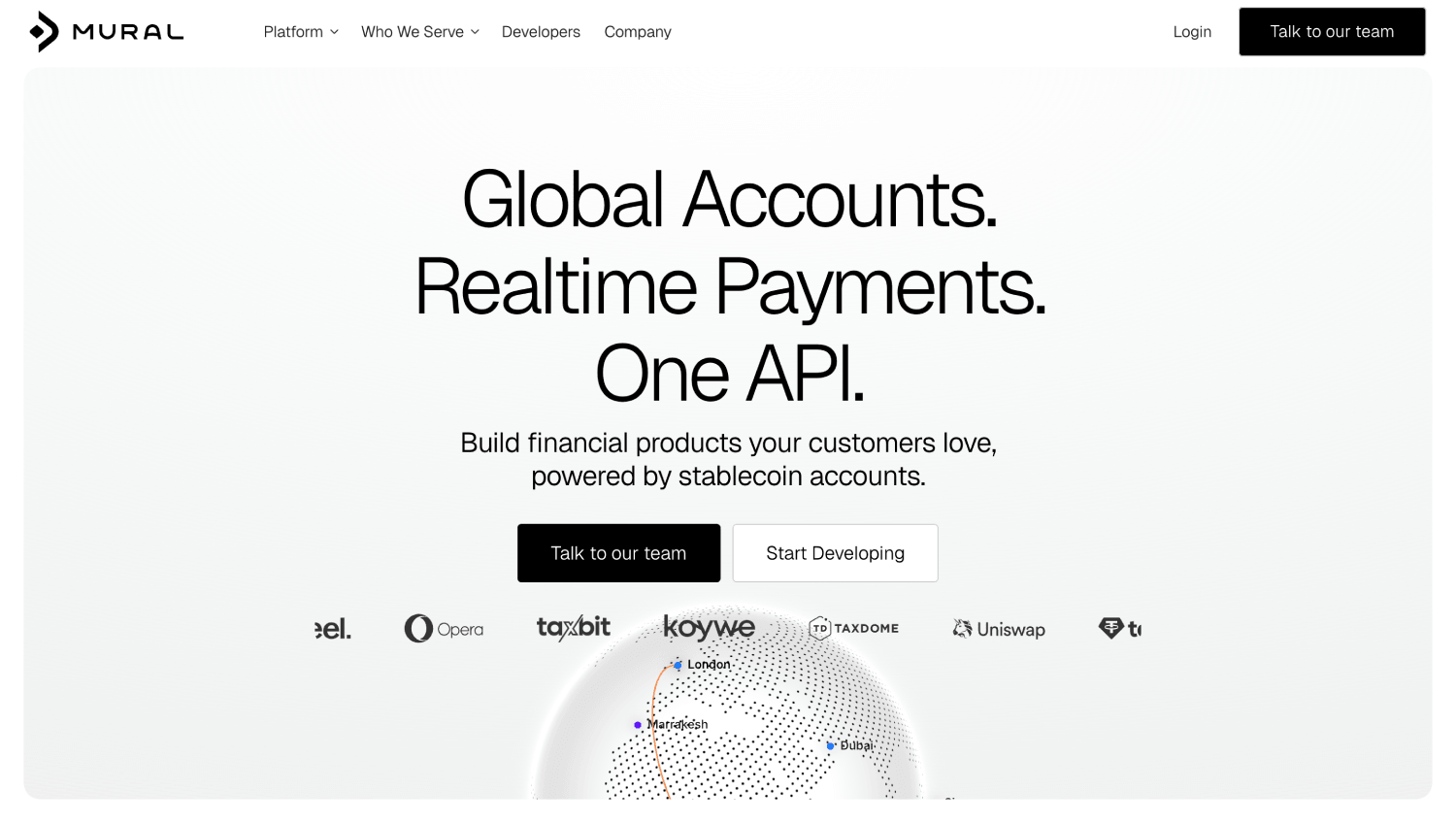
Mural Pay targets B2B cross-border payments using stablecoin rails, with an interface designed for finance teams rather than developers. The product sits between a payment API and a payments SaaS, meaning a finance operator can use Mural Pay directly without engineering involvement for standard use cases. This distinguishes it from Bridge and most other alternatives on this list, which require API integration to access full functionality.
The trade-off for the lower engineering lift is less flexibility at the API layer. For teams that want to embed stablecoin payments deeply into a custom product, Mural Pay is less suitable than BVNK or Zero Hash. For SMBs or operations-first teams paying international suppliers or contractors in stablecoins, it is one of the more accessible options available. Pricing is not publicly disclosed in detail.
8. Celo
Celo is a blockchain protocol with a native stablecoin network, including cUSD and cEUR. It is a different category than Bridge’s orchestration layer: building on Celo means choosing a specific chain and its native stablecoin assets rather than using a provider-agnostic API. That distinction matters. Teams that want chain-agnostic stablecoin infrastructure should look elsewhere. Teams that want to build a payments product natively on a fee-efficient chain with mobile-first design patterns will find Celo’s network well-suited.
Celo has a strong presence in payments use cases targeting Africa, Latin America, and Southeast Asia where mobile money is the primary financial access point. It is not the right fit for US-centric B2B payment platforms. Best for: payments products being built for emerging market contexts, particularly where mobile wallet UX matters and gas fees need to be negligible.
9. Bitso Business
Bitso Business is the B2B arm of Bitso, one of the largest crypto exchanges in Latin America. The business product covers cross-border payments, stablecoin settlement, and treasury management for companies moving money between the US and Mexico, Argentina, Colombia, and Brazil. Bitso’s exchange liquidity is a genuine advantage for corridor-specific use cases because it supports settlement reliability in markets where thinner liquidity is a real operational problem.
For US-Mexico corridors specifically, Bitso Business has one of the deepest operational track records in the stablecoin payments space. The product is not a developer API in the same sense as Bridge or Zero Hash; it leans more toward a managed service with treasury management tooling. Best for: companies with significant recurring payment volume in the US-Mexico corridor or broader LatAm operations.
How Do These Alternatives Compare on Core Dimensions?
| Provider | Best For | Key Corridor Strength | Compliance Posture | API-First | Public Pricing |
|---|---|---|---|---|---|
| BVNK | Enterprise fintech, regulated platforms | UK, EU, global | Own e-money licenses (UK, EU) | Yes | No |
| Conduit | US-to-LatAm payouts | Brazil, Mexico, Colombia, Argentina | Partner licensing | Yes | No |
| Zero Hash | Embedded stablecoin in non-crypto fintech | US (broad) | Own MTLs, multi-state | Yes | No |
| Sphere | Crypto-native and hybrid platforms | US, global crypto corridors | Lighter; not for heavily regulated products | Yes | Partial |
| Caliza | LatAm-native businesses, dollar accounts | LatAm regional | Regional licensing | Yes | No |
| Stably | Issuance plus payments | US-centric | Moderate | Yes | Yes (tiered) |
| Mural Pay | SMB cross-border payables | Global, ops-focused | Moderate | Partial | No |
| Celo | Emerging market payments apps | Africa, LatAm, Southeast Asia | Protocol-level; no provider license | Protocol | N/A |
| Bitso Business | US-Mexico and LatAm corridors | Mexico, LatAm | Mexican regulatory license | Partial | No |
What Should You Actually Worry About After Stripe’s Bridge Acquisition?
The acquisition risk that matters most is not pricing. Pricing changes are visible and survivable. The harder risk is roadmap divergence. When Stripe absorbed Bridge, Bridge’s stablecoin infrastructure roadmap became one input among many inside a company whose primary products are card-based payment processing, billing infrastructure, and financial services for traditional commerce. Stablecoin orchestration is a small part of Stripe’s overall strategy.
That means feature requests, API stability, new corridor launches, and compliance updates at Bridge will be prioritized against Stripe’s broader roadmap. Teams with niche corridor needs, or those pushing on features that matter deeply to stablecoin-native use cases but barely at all for traditional payments, will feel this. It is the same dynamic that played out when large acquirers absorbed point solutions across the broader payment infrastructure tools category over the past decade.
Consider a hypothetical that illustrates the exposure. Say a Series B cross-border payroll platform processes $8 million per month through Bridge, with 60% of volume flowing to LatAm corridors and the rest to Southeast Asia. A Bridge roadmap decision to deprioritize new LatAm corridor launches because Stripe’s core customer base has minimal LatAm exposure would directly damage that platform’s competitive positioning, and there would be no recourse because the roadmap is Stripe’s to set. The platform would face an emergency migration under time pressure, exactly the scenario that multi-provider redundancy prevents.
How Should a Fintech Structure Its Stablecoin Provider Strategy?
The strongest teams in this space are not running a single stablecoin provider. They architect their payment stack with a primary provider handling the majority of volume and a secondary provider on live integration, not just documented as a fallback. This is called multi-provider redundancy and it is fast becoming a standard compliance expectation for fintechs with significant stablecoin payment volume, as it mirrors the multi-rail approach regulators and investors expect from mature payment infrastructure.
A practical structure: use your primary provider for the majority of corridors where it has proven settlement reliability, and maintain a secondary provider integration for your two highest-risk corridors (typically the ones with the thinnest liquidity or highest regulatory volatility). This approach is detailed in our coverage of leading stablecoin payment APIs, where multi-rail architecture comes up repeatedly as a differentiator between early-stage and mature implementations.
The selection logic for a primary versus secondary provider follows the Stablecoin Provider Stress Test directly: your primary provider should score strongest on corridor depth and compliance architecture for your specific markets. Your secondary should score strongest on acquisition surface and switching ergonomics, meaning it should have clean APIs and no current acquisition conversations in the market.
Which Bridge Alternative Is Best for US-Based Fintechs Going Global?
For US-based fintechs moving into global corridors, the honest answer is that no single provider matches Bridge’s original positioning as a unified global stablecoin orchestration layer. That is the real gap the acquisition created. Bridge’s pre-acquisition value proposition was a single API with broad coverage and clean developer ergonomics. The independent alternatives are more specialized.
For US platforms going into Europe: BVNK is the strongest option, with licensed infrastructure and a product built for European compliance requirements. For US platforms going into LatAm: Conduit or Bitso Business depending on whether the use case is payout-heavy or requires more treasury management tooling. For US platforms adding stablecoin rails to an existing product without wanting to build deep internal expertise: Zero Hash’s B2B2C model removes the most complexity. Teams building on cross-border payout APIs will find this provider decision intersects directly with their underlying rail selection.
The implication is that most platforms exiting Bridge will need to run two providers rather than one. That is not a downgrade from Bridge; it is a more resilient architecture that most mature stablecoin payment teams would have recommended anyway.
Frequently Asked Questions
Is Bridge owned by Stripe?
Yes. Stripe acquired Bridge in late 2024 for a reported $1.1 billion. Bridge continues to operate as a product within Stripe, but its roadmap and strategic priorities are now set by Stripe’s leadership rather than a standalone team. Teams evaluating Bridge for long-term infrastructure should weigh this as a vendor dependency on Stripe, not on an independent stablecoin infrastructure company.
What is the best Bridge alternative for stablecoin payments?
There is no single best alternative because Bridge covered several distinct use cases. For enterprise compliance in Europe, BVNK is the strongest replacement. For LatAm corridor payments, Conduit or Bitso Business lead. For embedding stablecoin infrastructure into a non-crypto fintech without managing your own licensing, Zero Hash is the most direct structural equivalent. The right choice depends on your primary corridor, compliance requirements, and whether you need an API-first product or a more managed service.
Does BVNK have its own regulatory licenses?
Yes. BVNK holds e-money institution licenses in the UK and EU, which means the platform operates under its own regulatory authorizations rather than relying on a partner institution’s licenses. This is a meaningful distinction for fintech platforms that need to demonstrate clean regulatory lineage to their own bank partners, institutional investors, or regulators during audits.
What is stablecoin orchestration?
Stablecoin orchestration refers to the API and infrastructure layer that manages the routing, conversion, settlement, and compliance functions across multiple stablecoins and corridors. Rather than building direct integrations to blockchain networks, issuers, and offramp providers separately, an orchestration layer abstracts this complexity into a single API. Bridge was an orchestration layer. Providers like BVNK and Zero Hash offer similar functionality, though with different compliance architectures and corridor strengths.
Can I use multiple stablecoin providers simultaneously?
Yes, and for platforms with significant payment volume, multi-provider architecture is recommended. The practical implementation routes different corridors or volume tiers through different providers, typically with one primary and one live secondary integration. This protects against provider-side outages, pricing changes, or roadmap shifts without requiring an emergency migration. Most enterprise stablecoin infrastructure teams treat single-provider dependence the same way they treat single-bank dependence: as a risk to manage, not a default to accept.
Is Zero Hash a direct Bridge replacement?
Zero Hash covers similar ground to Bridge for US-focused platforms embedding stablecoin functionality into a broader financial product. The key similarity is the B2B2C model, where Zero Hash’s compliance infrastructure flows down to the platform’s end product. The key difference is that Zero Hash’s primary strength is US licensing depth, while Bridge had broader global corridor ambitions. For global stablecoin orchestration, you will likely need Zero Hash plus a corridor-specific provider for non-US markets.
How does the Stripe Bridge acquisition affect vendor risk assessments?
Any fintech conducting a vendor risk assessment on Bridge should now treat it as a Stripe dependency, not a standalone infrastructure dependency. That means your vendor risk evaluation should include Stripe’s overall financial health, data handling practices, and terms of service, not just Bridge’s. It also means your contractual terms and SLAs with Bridge flow through Stripe’s standard agreements. Teams doing formal vendor risk reviews should re-examine Bridge’s documentation through this lens. Our framework for evaluating fintech vendors before you sign covers the specific checkpoints relevant to post-acquisition vendor relationships.
What Most Teams Miss When Choosing a Bridge Alternative
The most common mistake in this evaluation is treating it as a feature comparison. Teams build a spreadsheet, list corridors and pricing and compliance certifications, and choose the provider that wins the most columns. What the spreadsheet misses is timeline asymmetry. Your switching cost grows every quarter you run on a given provider’s API. The decision to add a secondary provider is easiest at the beginning and hardest after 18 months of deep integration, custom reconciliation logic, and internal tooling built around one provider’s data model.
The Stablecoin Provider Stress Test matters most when applied before integration, not after. Corridor depth is verifiable before you sign. Compliance architecture is publicly documentable. Acquisition surface requires judgment, but it is not unknowable. The teams that will regret their Bridge alternative choices in 2027 are the ones doing this analysis after they are fully embedded.
Provider independence in stablecoin payments is not a philosophical preference. It is an operational posture with real consequences for roadmap alignment, pricing negotiation position, and incident resolution speed. The providers listed here are not consolation prizes for teams that missed Bridge’s early-adopter window. Several of them, particularly BVNK and Zero Hash, are more institutionally appropriate for regulated fintech platforms than Bridge was before the acquisition. The Stripe deal did not create a gap in the market so much as it clarified which operators were building on a platform versus building on infrastructure.