
- Most KYB programs are structured as one-time onboarding checks. That model creates a compliance gap that grows every day a business relationship continues unchanged.
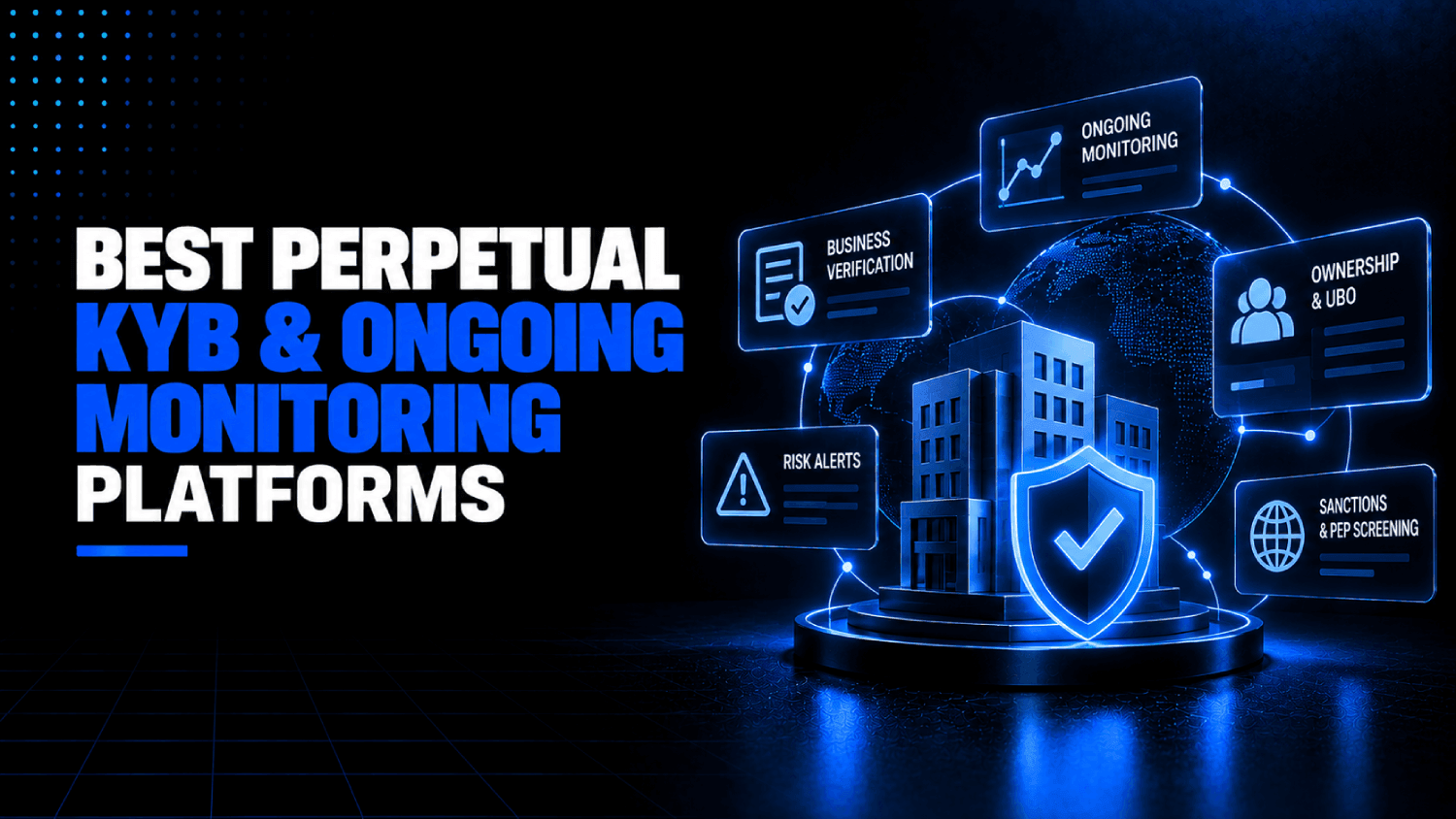
- Perpetual KYB replaces the periodic re-verification cycle with continuous monitoring of corporate registry data, UBO changes, sanctions lists, and adverse media in near real time.
- Regulatory pressure from FinCEN, the FFIEC, and state-level banking supervisors is pushing financial institutions and fintech platforms toward demonstrable ongoing due diligence, not just point-in-time snapshots.
- The platforms in this list differ significantly on data freshness, UBO graph depth, alert configurability, and whether they handle both initial verification and ongoing monitoring in a single workflow.
- Pricing across this category is not publicly disclosed by most vendors. Expect enterprise negotiations and usage-based components tied to monitored entity volume.
Perpetual KYB platforms continuously monitor verified business entities for ownership changes, sanctions hits, adverse media, and license revocations after onboarding is complete. The leading options include Alloy, Middesk, Comply Advantage, Socure, and Traction (formerly Traction Technology), each covering different slices of the monitoring stack. The right choice depends on whether you need UBO graph monitoring, document re-verification triggers, or integration with an existing identity orchestration layer.
Why One-Time Business Verification Is a Compliance Liability
Most fintech compliance teams think of KYB as an onboarding function. A business applies, you verify the EIN, pull a Dun and Bradstreet report, check the UBO against OFAC, and move on. That mental model made sense when regulatory guidance described verification at account opening. It no longer does.
Corporate structures change constantly. Beneficial ownership shifts when a private equity firm buys a controlling stake. A previously clean director gets added to an SDN list months after account approval. A business license gets revoked in one state while the company keeps transacting. None of these events trigger a re-check in a static KYB workflow, yet all of them create direct exposure for the financial institution or fintech platform that holds the relationship.
FinCEN’s Customer Due Diligence rule requires covered financial institutions to maintain current and accurate beneficial ownership information, not just collect it at onboarding. The FFIEC examination manual reinforces this with expectations around ongoing due diligence as a component of a risk-based BSA/AML program. The gap between “we verified at onboarding” and “we have current verified information” is exactly where enforcement actions live. If your compliance program has that gap, you already have a problem. You just have not been examined yet.
For a deeper look at where early-stage fintech teams typically underestimate compliance infrastructure costs, the biggest compliance blind spots in early-stage fintech covers the structural gaps that tend to surface during regulatory exams rather than audits.
What Does Perpetual KYB Actually Monitor?
Perpetual KYB is not a single data feed. It is a continuous surveillance layer that watches several data categories simultaneously and fires alerts when something material changes.
Corporate Registry and Ownership Changes
State corporate registries update when entities file amended articles, change registered agents, or dissolve. Monitoring these feeds catches business structure changes that a customer might not voluntarily disclose. The lag between a state filing and when a vendor’s database reflects it varies considerably and is one of the sharpest differentiation points across providers.
UBO Graph Changes
Ultimate beneficial ownership data degrades faster than almost any other compliance dataset. A 25% threshold change in a privately held company may not require a public disclosure outside of specific regulated contexts, making it difficult to detect. Providers that source data directly from corporate filings, commercial registries, and proprietary networks tend to surface these shifts faster than those relying on aggregated commercial databases.
Sanctions and Watchlist Screening
OFAC updates the SDN list asynchronously, sometimes multiple times in a week. Adverse media and PEP list changes follow similar patterns. Perpetual KYB platforms re-screen monitored entities and their associated individuals against these lists continuously rather than on a scheduled batch cycle.
Adverse Media and Negative News
Adverse media monitoring watches for news coverage connecting a business or its principals to financial crime, fraud, or regulatory enforcement. The quality difference between providers here is significant. Low-quality implementations surface every press mention containing a company name adjacent to a crime story. High-quality implementations use entity resolution to filter noise and only surface genuine associations.
The FintechSpecs Perpetual KYB Coverage Matrix
Before evaluating vendors, compliance teams need a framework to assess what a perpetual KYB platform actually covers. The FintechSpecs Perpetual KYB Coverage Matrix defines five coverage layers any serious platform should address:
- Registry freshness: How quickly does the platform reflect a state corporate filing? Hours, days, or weeks?
- UBO graph depth: Does the platform trace ownership beyond the first layer? Can it identify a beneficial owner holding through a holding company structure?
- Screening cadence: Are sanctions and watchlist re-screens continuous, daily, or weekly?
- Alert signal-to-noise ratio: Can alert thresholds be configured by risk tier, or does every entity get the same alert logic?
- Workflow integration: Does the monitoring layer integrate with the same case management system used for initial KYB, or does it create a separate alert queue that ops teams have to reconcile manually?
Run every vendor in this list through those five layers before signing a contract. The platform that scores well on registry freshness but poorly on workflow integration will create more manual work than it eliminates.
Which Platforms Support Perpetual KYB and Ongoing Monitoring?
| Platform | Initial KYB | Continuous Monitoring | UBO Graph | Sanctions Re-Screen | Adverse Media | Best For |
|---|---|---|---|---|---|---|
| Alloy | Yes | Yes | Yes | Continuous | Yes | Fintech platforms needing unified identity orchestration |
| Middesk | Yes | Yes | Partial | Via partners | Limited | B2B onboarding with registry-first data depth |
| ComplyAdvantage | No (screening only) | Yes | Via KYB add-on | Continuous | Yes | Teams with existing KYB infra needing screening layer |
| Socure | Yes (consumer-primary) | Yes | Limited | Continuous | Yes | Consumer fintechs extending into business verification |
| Kyckr | Yes | Yes | Yes | Via partners | No | Cross-border businesses needing global registry coverage |
| Traction / KYB-focused registry monitors | Varies | Yes | Varies | Varies | Varies | Specialist use cases with specific data gaps |
The table above reflects publicly available feature documentation as of July 2025. Vendors update capabilities frequently; verify current scope during a sales conversation.
Alloy: Best for Unified Onboarding and Ongoing Monitoring in One Workflow
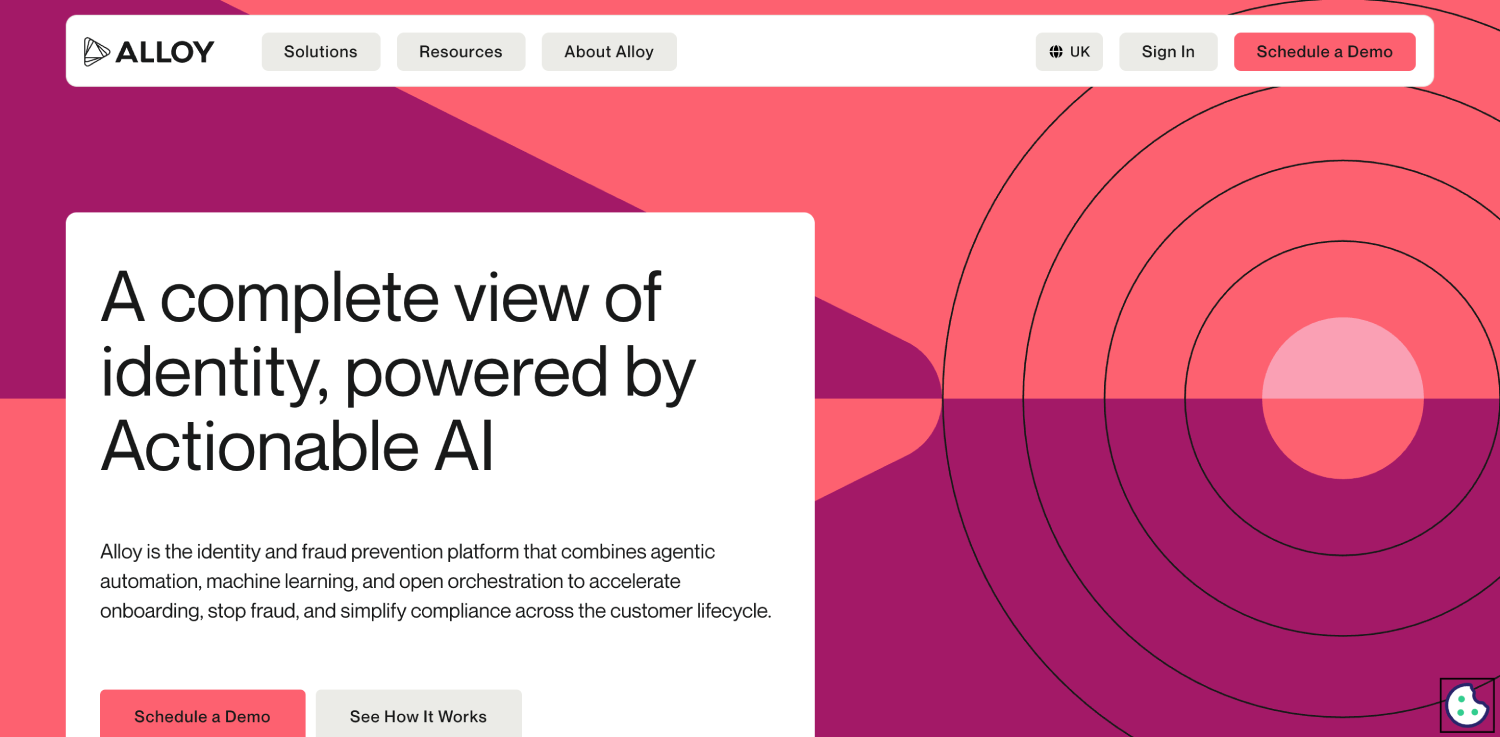
Alloy built its reputation as an identity orchestration layer, and its perpetual KYB product extends that orchestration model into ongoing monitoring. Rather than creating a separate alert feed, Alloy’s monitoring integrates directly with the same decision engine and case management workflow used during onboarding. An alert about a UBO change on a monitored entity flows into the same review queue a compliance analyst already works in, not into a siloed notification system.
Alloy monitors for beneficial ownership changes, sanctions and PEP list updates, adverse media, and corporate structure changes. The platform allows risk-tiered alert configurations, which means a high-risk merchant can have tighter monitoring thresholds than a low-risk SaaS vendor without requiring manual override for every entity. This matters operationally. A compliance team managing 50,000 monitored entities cannot afford the same alert sensitivity for every account.
Alloy does not publish pricing. Contracts are structured on a per-entity monitored basis with enterprise minimums. Teams evaluating Alloy should budget accordingly and compare it against the total cost of operating a separate monitoring tool alongside their existing KYB vendor. The Alloy vs Middesk comparison covers the initial verification capabilities in detail for teams deciding between these two at the onboarding stage.
Middesk: Best Registry Coverage for US Business Verification
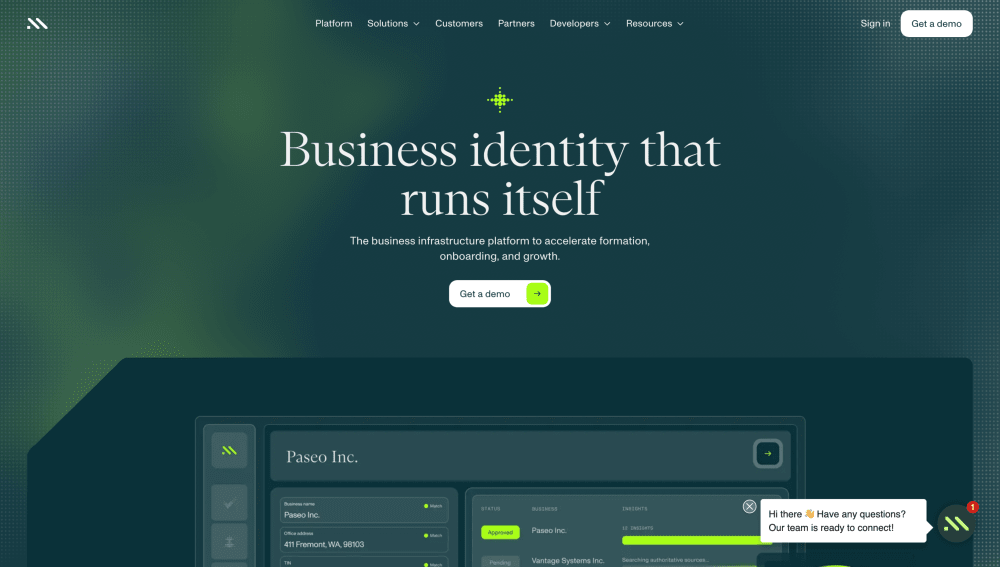
Middesk is the strongest option for US-domiciled business verification based on direct corporate registry data. The platform pulls from state secretary of state databases, IRS records, and USPS address validation to produce business verification reports that reflect actual filing data rather than commercial database aggregates. That sourcing advantage translates directly into monitoring: when a state registry updates, Middesk’s monitoring layer reflects it faster than providers relying on third-party data resellers.
Middesk’s ongoing monitoring product watches for changes to business formation status, registered agent, address, and associated individuals. Sanctions and adverse media monitoring is available but relies on partner integrations rather than native data pipelines, which introduces a dependency worth evaluating during due diligence.
Where Middesk falls short relative to Alloy is UBO graph depth across complex holding structures and the absence of a native case management layer. Teams that use Middesk for monitoring will typically need to route alerts into a separate system, whether that is a compliance workflow tool, a SIEM, or a homegrown ticketing integration. Middesk does not publicly disclose monitoring pricing as of July 2025.
ComplyAdvantage: Best Screening Layer for Teams with Existing KYB Infrastructure
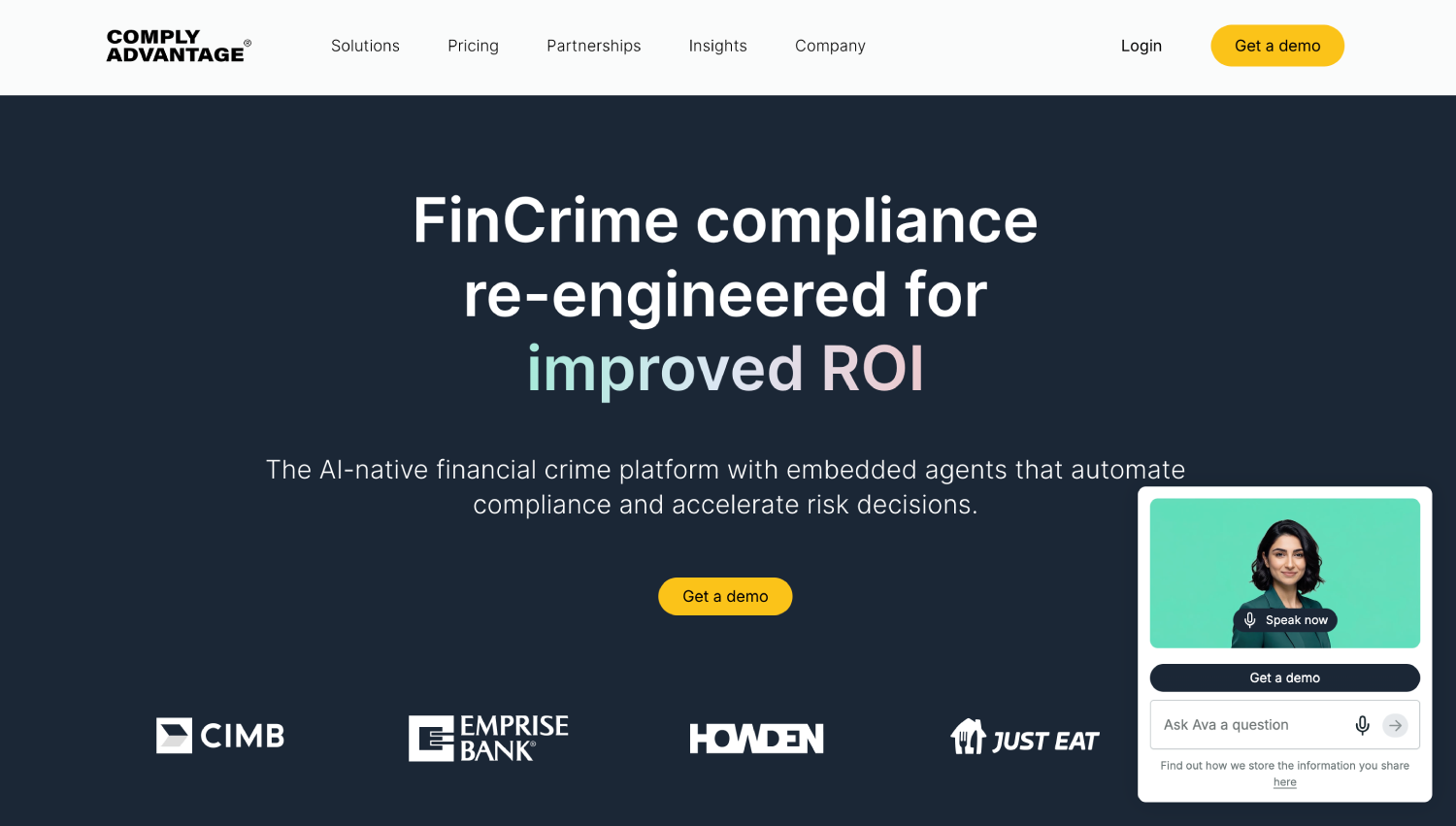
ComplyAdvantage is not a full KYB platform. It is a financial crime intelligence and screening platform that excels at the ongoing monitoring components: sanctions, PEP screening, and adverse media. For a team that already has a KYB vendor handling business registration verification and UBO documentation, ComplyAdvantage sits on top as the continuous watchlist and media monitoring layer.
The platform’s adverse media coverage is its most differentiated capability. ComplyAdvantage builds and maintains its own media dataset rather than licensing from standard aggregators, which improves entity resolution quality. The practical effect is fewer false positives on company names that share terms with unrelated news stories.
ComplyAdvantage offers a KYB add-on that can pull business registry data, but this is not its core product and the depth of registry sourcing does not match Middesk. Pricing is not publicly disclosed. Teams integrating ComplyAdvantage into an existing stack should evaluate the API carefully against their current data model since it outputs a different schema than most KYB-first vendors.
Kyckr: Best for Cross-Border Business Verification and Monitoring
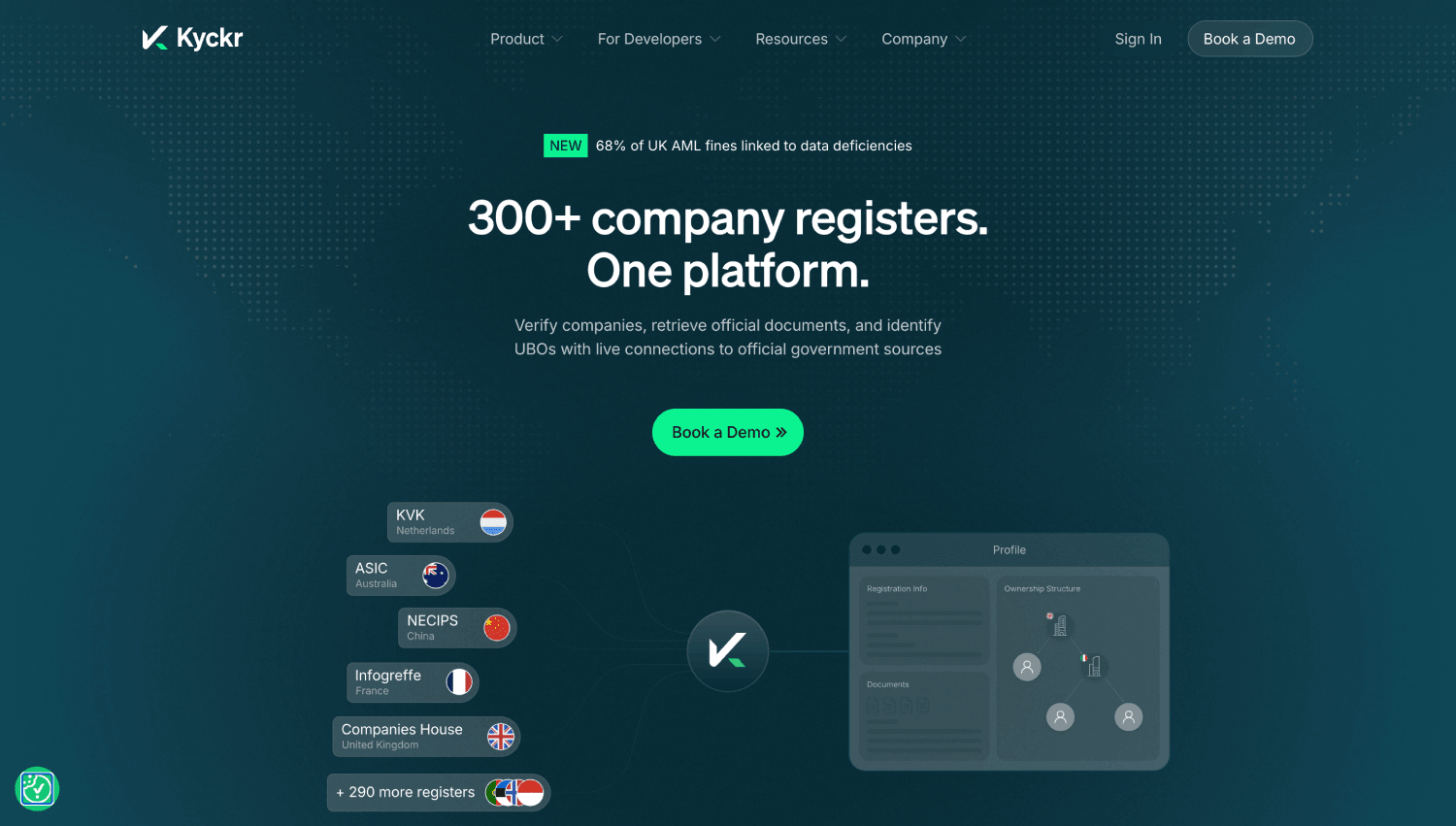
Kyckr sources data from corporate registries in over 100 jurisdictions, making it the strongest option for fintech platforms with meaningful international business customer bases. A US-based embedded payments platform serving European SMBs, for example, faces a monitoring challenge that US-only providers cannot solve: corporate registry data for a German GmbH or a UK limited company requires direct access to the relevant national registry, not a US-based commercial database.
Kyckr’s monitoring layer watches for changes in company status, directors, and shareholders across its supported jurisdictions. UBO graph depth is a strength, particularly for entities in jurisdictions with mandated beneficial ownership registers like the UK’s PSC register. Sanctions screening is handled via partner integrations rather than native pipelines.
Kyckr’s adverse media capability is limited relative to ComplyAdvantage, so international-focused teams often pair Kyckr for registry and UBO monitoring with a dedicated screening provider for watchlist and media coverage. Pricing is enterprise and not publicly disclosed as of July 2025.
Socure: Best for Consumer-First Platforms Extending Into Business Monitoring
Socure built its core product around consumer identity verification, and its business verification capabilities reflect that heritage. The platform’s KYB product, including ongoing monitoring, is strongest for platforms that need to verify business owners as individuals alongside the business entity itself, a common requirement for marketplace platforms, gig economy operators, and SMB lenders.
Socure’s continuous monitoring covers sanctions, PEP, and adverse media re-screening. UBO depth is limited compared to registry-first providers like Middesk or Kyckr. For platforms that already use Socure for consumer KYC and want to extend monitoring into their business customer base without adding another vendor, it is the obvious consolidation path.
Socure does not publish pricing. The Socure pricing breakdown on FintechSpecs covers the structure of verification costs and contract minimums for teams scoping a deployment.
What Does Real-Time KYB Monitoring Actually Look Like in Practice?
Consider a Series B embedded payments platform with 15,000 active merchant accounts. At onboarding, each merchant went through a standard KYB flow: EIN verification, state registration check, UBO identification against a 25% ownership threshold, and OFAC screening. That was 18 months ago.
Since then, three merchants have had ownership transfers. One has a new director who appears on a foreign PEP list. Two have state registrations showing delinquent status. One has news coverage linking a principal to a fraud investigation in another state. None of these changes triggered a re-check because the platform’s KYB workflow ends at onboarding approval.
A perpetual KYB setup on that same portfolio would have generated four to seven alerts across those cases over 18 months, each requiring a compliance analyst to review and make a disposition decision. That is an operationally tractable number. What is not tractable is discovering all of these issues simultaneously during a regulatory examination, which is where static KYB programs tend to break down.
The monitoring cadence matters too. A daily batch re-screen is meaningfully different from a continuous re-screen. OFAC can add an entity to the SDN list on a Tuesday afternoon. A daily batch that runs at midnight will have processed transactions with that entity for up to 35 hours before catching the hit. Most financial institutions and fintech platforms operating under BSA/AML programs cannot accept that window.
How Does KYB Re-Verification Differ from Ongoing Monitoring?
Ongoing monitoring and KYB re-verification are related but distinct processes. Continuous monitoring watches passively for external changes, registry updates, new sanctions listings, adverse media hits, and fires an alert when something changes. Re-verification is an active workflow where a business is asked to resubmit documentation and confirm current ownership as of a specific date.
Regulatory expectations typically require both. Monitoring catches passive changes without customer friction. Periodic re-verification at risk-tiered intervals, for example, annually for high-risk merchants and every three years for low-risk, creates a documented record of affirmative compliance action. Most platforms in this article support ongoing monitoring natively. Re-verification workflows are handled differently across vendors: some treat them as a configurable trigger within their monitoring product, others leave re-verification orchestration to the compliance team.
The distinction matters for audit purposes. If your monitoring platform flags a beneficial ownership change but your re-verification workflow does not document the step where you obtained updated certifications from the business, you have an incomplete compliance record even if you acted on the alert. Teams building perpetual KYB programs should map both components explicitly and confirm which parts of the workflow each vendor covers.
For teams evaluating the full compliance infrastructure stack, the fintech product and compliance readiness checklist covers the documentation requirements across onboarding and ongoing due diligence that regulators typically examine.
How Should You Select a Perpetual KYB Platform?
Start with the geography of your business customer base. A US-only registry provider cannot serve a platform with meaningful non-US merchant exposure. That single constraint eliminates several options immediately.
Next, assess whether you need a full-stack KYB and monitoring platform or a monitoring layer that sits on top of existing infrastructure. If you have invested in Middesk or a similar provider for onboarding and it is working well, adding ComplyAdvantage or a similar screening layer for ongoing monitoring may be more cost-effective than migrating to an all-in-one platform. If your onboarding and monitoring are currently disconnected systems creating manual reconciliation work, a unified platform like Alloy is worth the consolidation cost.
Alert configurability is the operational factor that compliance teams underestimate most in pre-sales evaluations. Ask every vendor: can you configure alert thresholds differently for high-risk versus low-risk entity segments? What is the alert format, and how does it integrate with your case management system? How many alerts does a comparable customer with a similar portfolio generate per month? Vendors who cannot answer that last question with a real number from a real customer are selling a monitoring product they have not stress-tested in production.
Teams building out their broader risk infrastructure alongside KYB monitoring will find the best AML screening APIs for US fintech useful for evaluating the watchlist and sanctions components separately from business registry data.
Frequently Asked Questions About Perpetual KYB
What is the difference between perpetual KYB and periodic KYB re-verification?
Perpetual KYB monitors business entities continuously in the background, watching for changes to corporate registry data, beneficial ownership, sanctions lists, and adverse media without requiring action from the business customer. Periodic re-verification is a scheduled process where the business is actively asked to resubmit documentation and confirm current ownership. Effective compliance programs typically require both: passive monitoring to catch changes between cycles and affirmative re-verification to create documented compliance records at defined intervals.
Which regulatory requirements drive the need for ongoing KYB monitoring?
FinCEN’s Customer Due Diligence rule requires covered financial institutions to maintain current and accurate beneficial ownership information as part of their AML programs. The FFIEC examination manual includes ongoing due diligence as a component of a risk-based BSA program. State banking regulators and money transmitter license requirements in states like New York add additional ongoing monitoring expectations. For fintech platforms operating as BaaS partners or payment facilitators, sponsor bank agreements often include explicit contractual obligations around sub-merchant monitoring.
How often should businesses in a monitored portfolio be re-screened against sanctions lists?
Most compliance programs and regulatory guidance support continuous or near-continuous sanctions re-screening rather than scheduled batch cycles. OFAC updates the SDN list without a fixed schedule, sometimes multiple times per week. A daily batch re-screen creates an exposure window of up to 24 hours between an SDN list update and detection. Platforms processing real-time payments face particular risk here. Continuous re-screening eliminates the exposure window but requires a vendor with the infrastructure to support it at scale.
Does perpetual KYB replace the need for periodic customer reviews?
No. Perpetual KYB monitoring reduces the risk of missing changes between scheduled reviews, but it does not substitute for documented periodic reviews at risk-tiered intervals. Regulatory examiners expect to see affirmative compliance actions at defined frequencies, including updated beneficial ownership certifications for high-risk customers. Monitoring creates the alert; the periodic review creates the compliance record. Both are required elements of a defensible BSA/AML program.
How do perpetual KYB platforms handle changes in beneficial ownership thresholds?
The quality varies significantly. Providers with direct corporate registry access can detect changes in formally filed ownership records. Changes in beneficial economic interest that fall below the formal filing threshold in a given jurisdiction are much harder to detect without direct business disclosure or transaction monitoring signals. FinCEN’s CDD rule sets a 25% threshold for beneficial ownership identification, but sophisticated compliance programs often apply lower internal thresholds for high-risk customer segments. Ask vendors specifically how they source and detect sub-25% ownership changes before assuming the platform covers this case.
What integrations should a perpetual KYB platform support?
At minimum, a perpetual KYB platform should offer REST API access for programmatic entity enrollment and alert retrieval, webhook support for real-time alert delivery, and documented integration paths to common case management systems. Platforms that require manual entity uploads via CSV or portal-based alert review are not compatible with high-volume fintech operations. Secondary integrations worth evaluating include core banking system connectors, AML transaction monitoring platforms, and fraud orchestration layers where alert context from monitoring can inform transaction-level risk decisions.
The Most Overlooked Risk in Perpetual KYB Deployments
Most teams evaluating perpetual KYB focus on data coverage: which registries, which watchlists, how current. That focus is correct but incomplete. The harder operational problem is alert disposition velocity. A monitoring platform that generates 200 alerts per week across a 10,000-entity portfolio has effectively created a compliance backlog that is larger than most fintech compliance teams can clear in a week. Unreviewed alerts that sit in a queue are not meaningfully better than no monitoring at all if an examiner asks for documented review records.
The best perpetual KYB deployments pair the monitoring platform with clear internal triage protocols: automated close-out for low-confidence alerts that do not match after secondary data verification, analyst review queues tiered by risk score, and escalation paths for high-confidence sanctions hits that require immediate transaction restriction. Building that protocol before you turn on monitoring is not optional. Turning on monitoring without it creates a compliance liability faster than it resolves one.
Fintech teams scaling compliance infrastructure alongside product growth will find the real cost of compliance in fintech SaaS broken down by stage useful for sizing the operational headcount requirements that accompany a monitoring deployment at different portfolio sizes. The technology is the easier part of this problem. The process design around it is where most implementations either succeed or quietly fail.