
- Loan origination software (LOS) handles the front-end of lending: application intake, credit decisioning, and closing. Loan management software (LMS) handles everything after: payment schedules, servicing, collections, and reporting. Most lenders need both, and they are rarely the same product.
- Matching software to lending type matters more than feature count. A consumer installment lender, an SMB lender, and a BNPL provider face different decisioning logic, compliance obligations, and servicing complexity.
- FCRA compliance, adverse action notice generation, and ECOA documentation live inside the LOS workflow. If your LOS does not generate compliant adverse action notices, you carry that liability manually.
- Several platforms covered here handle both origination and servicing in one system. That integration trades flexibility for simplicity, and for early-stage lenders, the simplicity usually wins.
- This article covers software lenders operate directly, not embedded lending APIs that other platforms bolt onto their products.
The best loan origination software for a US lender depends on lending type, volume, and whether the platform handles post-close servicing. For consumer lenders, LoanPro and Peach Finance combine origination with loan management. For SMB lenders, Abrigo and nCino offer structured credit workflow with bank-grade audit trails. For BNPL and high-velocity consumer credit, Canopy and Peach handle the servicing complexity that simpler tools cannot. No single platform leads across all three segments.
Why Origination and Servicing Are Two Different Software Problems
Most lenders shopping for an LOS assume it covers the full loan lifecycle. It typically does not. Origination ends at funding. Servicing begins the day after.
An LOS manages the workflow from application to disbursement: identity verification, credit pulls, underwriting rules, document collection, approval routing, and closing. An LMS manages the relationship after that: payment schedules, amortization, escrow, late fees, collections queues, and investor reporting. The data models are fundamentally different. An LOS is optimized for decision speed. An LMS is optimized for ledger accuracy over months or years.
Some platforms blur this line deliberately. LoanPro, Peach Finance, and Canopy all position themselves as end-to-end systems. Others, like Blend or Floify, focus exclusively on origination and expect you to connect a separate servicing layer. Getting this wrong means a rebuild 12 months in, after your loan book has grown past what spreadsheets can manage. For a deeper look at the compliance obligations that span both stages, the Fintech Product and Compliance Readiness Checklist covers what teams often miss before they sign a vendor contract.
The FintechSpecs LOS Selection Matrix: Four Checks Before You Shortlist
Rather than ranking platforms by feature count, the following four-part framework helps lending teams avoid the most common mismatches. Call it the FintechSpecs LOS Selection Matrix.
Check 1: Lending type fit. Consumer installment, mortgage, SMB term loans, lines of credit, and BNPL each have different regulatory touchpoints and underwriting logic. A platform built for mortgage (think Encompass or LendingPad) handles TILA-RESPA disclosures natively but will fight you on custom SMB credit models.
Check 2: FCRA and adverse action coverage. Any platform that pulls consumer credit data must support FCRA-compliant adverse action notices. Confirm whether the platform generates these automatically, exports them for manual review, or leaves that entirely to you. The last option is a compliance gap.
Check 3: Servicing handoff. Ask specifically: what happens after funding? Does the platform have a built-in loan ledger? Does it export to a specific servicing system? Can it generate payment reminders, handle ACH retries, and produce borrower statements? If the answer is vague, assume you need a separate LMS.
Check 4: Build or configure. Some platforms offer low-code rule configuration (Peach, LoanPro). Others require professional services to modify the underwriting engine (nCino, Finastra). Fintech lenders moving fast need the former. Banks with IT teams and 18-month implementation timelines can absorb the latter.
Which Platforms Are Built for Consumer Lending?
LoanPro
LoanPro is a cloud-native loan management and origination platform that handles both sides of the lifecycle. Its data model is built around the loan ledger first, which means servicing is genuinely deep rather than bolted on. Consumer lenders running installment products, credit lines, or card-linked credit find that LoanPro handles complex interest accrual, payment waterfall logic, and investor reporting without custom engineering.
LoanPro does not publish pricing publicly. Contracts are quote-based, typically structured around active loan volume. The platform integrates with bureau connections and supports adverse action notice workflows, though compliance teams should verify exact FCRA output format during the sales process.
Peach Finance
Peach Finance is purpose-built for modern consumer lenders and fintechs. Its architecture separates origination workflows from the loan management layer but connects them natively, so lenders do not need a separate integration. Peach handles complex loan structures including draw schedules, interest-free periods, and deferred payment products that BNPL and earned-wage access lenders need.
The platform’s compliance toolkit includes FCRA adverse action support, SCRA handling, and state-level regulatory configuration. Peach does not publish pricing on its public site. It targets Series A and beyond, and implementation is meaningfully faster than legacy servicing platforms.
Canopy Servicing
Canopy focuses on the post-origination side: loan management, servicing automation, and collections. Consumer lenders using a separate LOS for origination connect Canopy as their system of record for the loan book. It handles interest calculations across product types, payment processing, statement generation, and collections queue management. For lenders whose LOS does not have servicing depth, Canopy fills that gap without requiring a full platform migration.
Which Platforms Are Built for SMB Lending?
Abrigo
Abrigo (formerly Sageworks and BancAlliance combined) targets community banks and credit unions making commercial and SMB loans. Its LOS workflow covers spreading financials, covenant tracking, collateral management, and credit memo generation. These are the capabilities that generic consumer LOS platforms skip entirely.
Abrigo’s strength is credit analysis depth. Underwriters get tools for analyzing business tax returns, debt service coverage ratios, and global cash flow across multiple entities. The platform also connects to Abrigo’s portfolio risk and stress testing tools. It is not a good fit for high-velocity automated lending, but for relationship-based SMB credit with structured underwriting, it is one of the more complete options available to mid-size institutions.
nCino
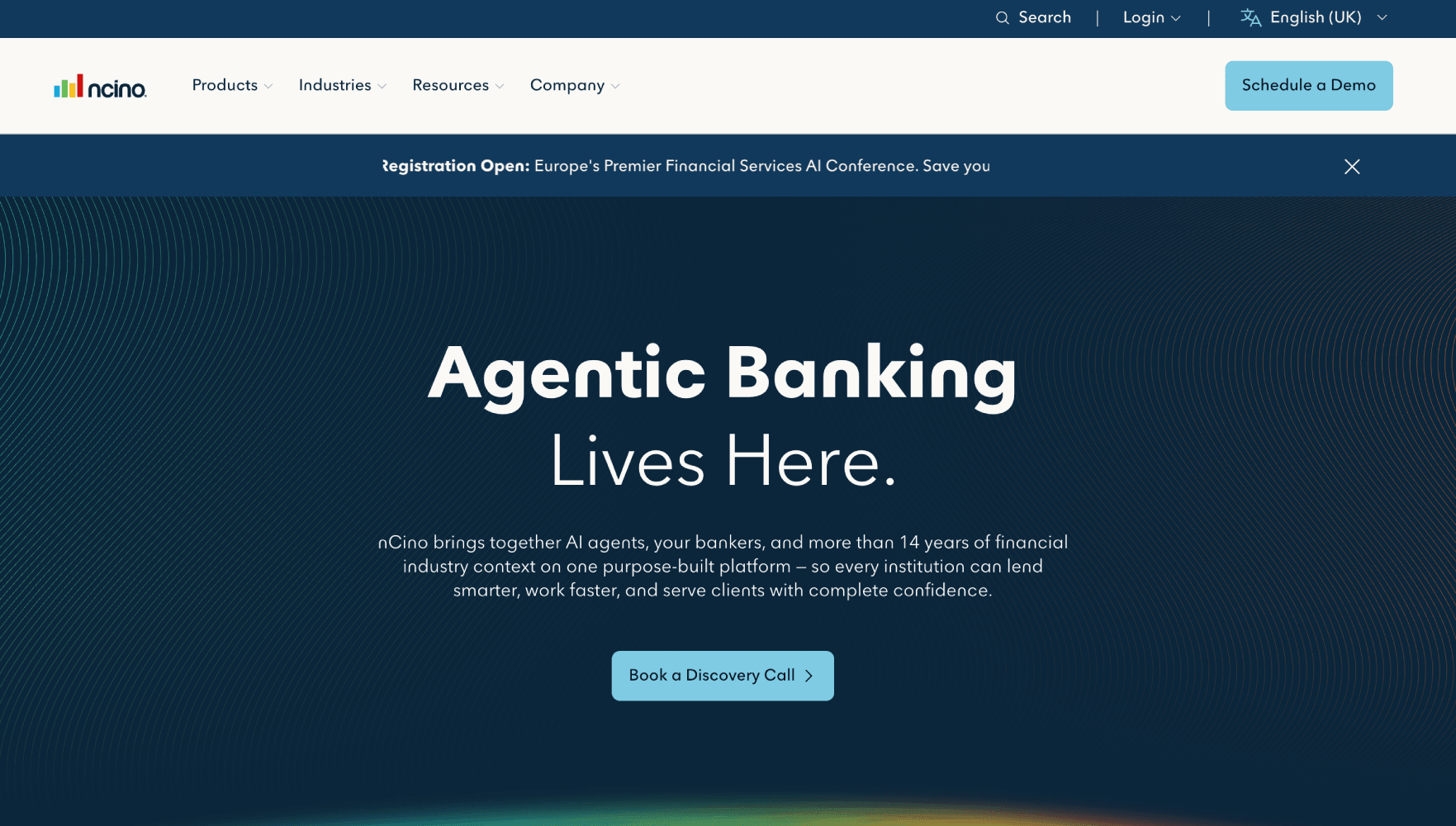
nCino is the dominant cloud-based LOS for bank-grade commercial and SMB lending. It runs on Salesforce, which means existing Salesforce deployments integrate cleanly, but also means the total cost of ownership includes Salesforce licensing. nCino handles the full origination workflow: application, spreading, credit approval with audit trail, covenant management, and document generation.
Servicing is not nCino’s core. Most institutions using nCino connect a separate core banking or loan servicing system on the back end. Implementation timelines are measured in months, not weeks, and the platform is rarely the right choice for a fintech lender below Series B. For teams evaluating the broader infrastructure choices around a platform like this, the 10 Critical Mistakes When Choosing Fintech Infrastructure article covers common selection errors that add up to expensive rebuilds.
Lendio and Biz2Credit
Lendio and Biz2Credit sit closer to the distribution layer than the infrastructure layer. Both offer marketplace-style origination tools with embedded underwriting logic for common SMB products , term loans, lines of credit, SBA-aligned products , and pre-built borrower acquisition funnels. What they provide is speed to a live borrower experience, not a configurable credit infrastructure.
They make sense for SMB lenders whose primary constraint is borrower acquisition, not underwriting flexibility. A community bank or CDFI that wants to stand up an online SMB application channel quickly, without building intake workflows from scratch, can use these platforms to move faster than a traditional LOS implementation allows. The tradeoff is control: neither platform gives lenders deep access to modify the decisioning logic, adjust the underwriting model, or own the borrower data relationship the same way a white-label LOS does. For lenders who need proprietary credit models or plan to build loan products that diverge from standard SMB structures, a dedicated LOS is the better path.
Which Platforms Handle BNPL and High-Velocity Consumer Credit?
Peach Finance (again)
Peach appears in both consumer and BNPL segments because its loan data model explicitly supports deferred interest structures, promotional period logic, and installment plans tied to specific purchase events. BNPL lenders building a proprietary product rather than using an embedded API (like Affirm’s merchant SDK) need exactly this kind of configurability at the ledger level. Most general-purpose LOS platforms cannot represent a “0% APR for 12 months with deferred interest” product accurately without custom development.
Canopy Servicing (again)
BNPL servicing generates a high volume of short-duration loans with frequent state changes: active, in promotional period, converting to interest-bearing, in collections. Canopy’s event-driven loan state machine handles this more cleanly than a traditional amortizing loan ledger. Lenders building BNPL at scale should evaluate Canopy specifically for its ability to handle loan lifecycle events programmatically via API.
Mortgage-Specific Origination: Where Does It Fit?
Blend
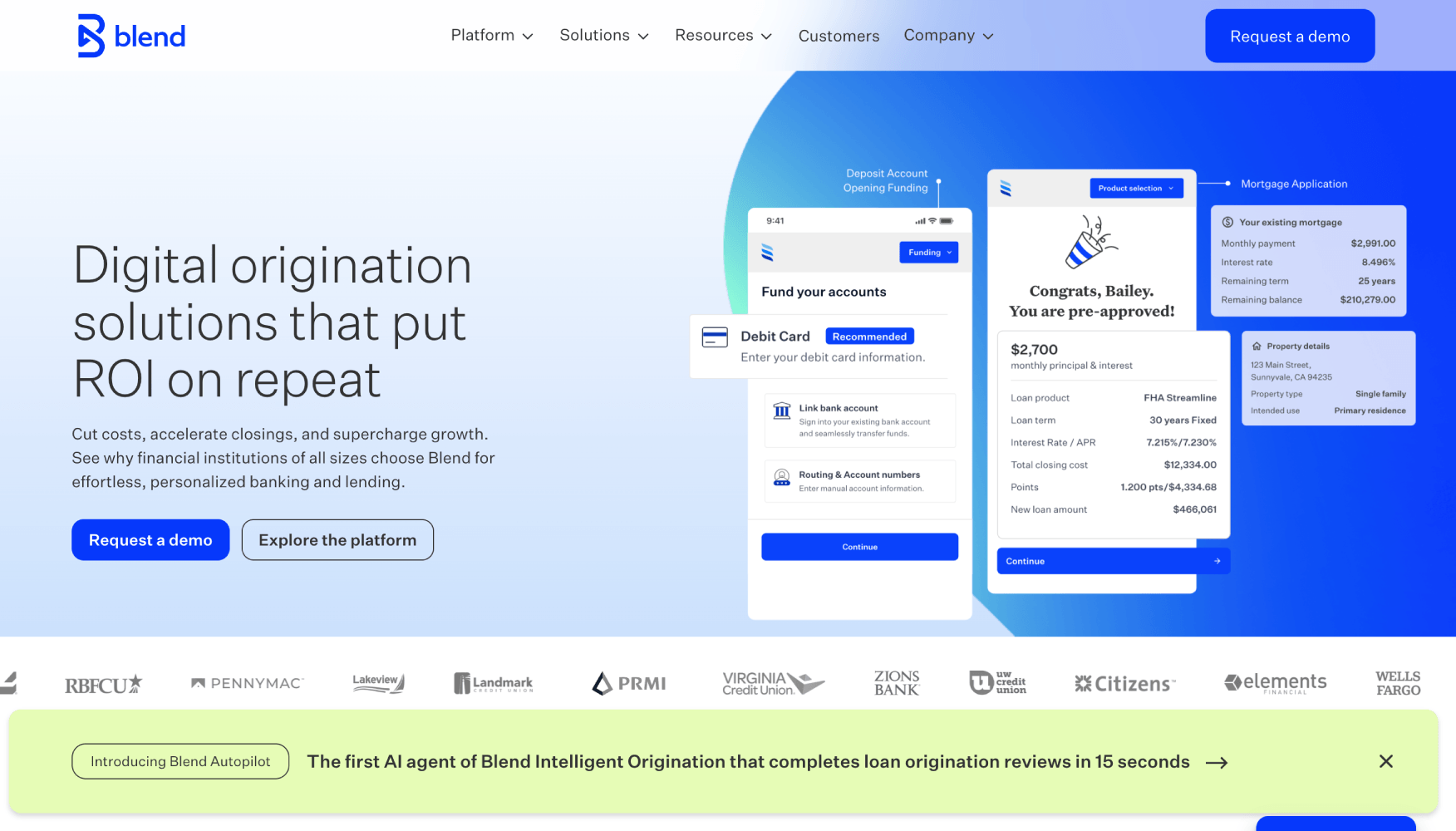
Blend targets mortgage lenders and consumer banks with a borrower-facing application layer and lender-side workflow tools. Its strength is the consumer experience: pre-qualification, document collection, and real-time status updates. Blend integrates with major mortgage servicing platforms on the back end and does not position itself as an LMS.
Floify
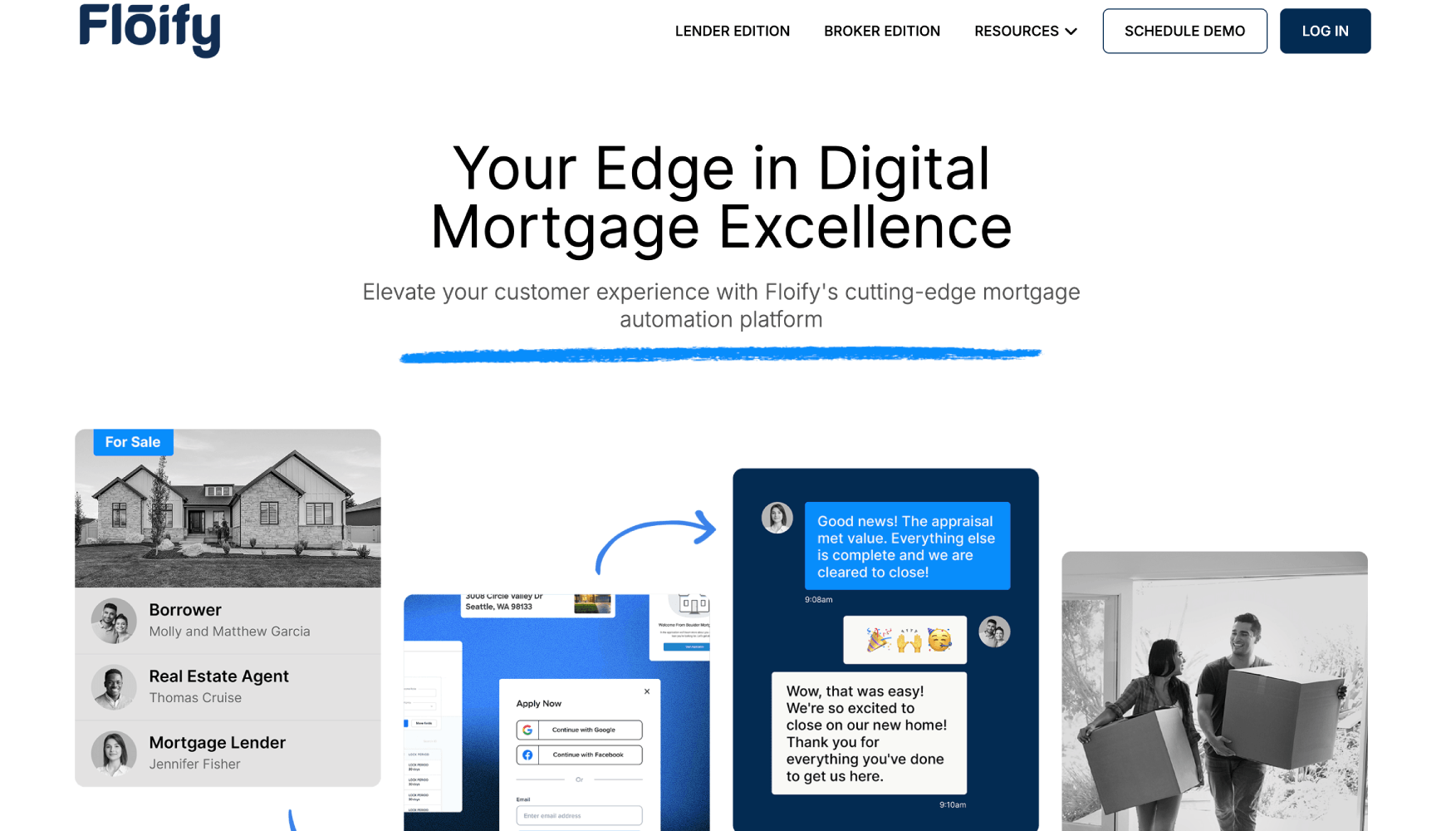
Floify (a Porch Group company) is a point-of-sale mortgage LOS aimed at independent mortgage brokers and smaller lenders. It handles borrower intake, document collection, condition management, and lender communication. Pricing is available on their public site and is structured per-user. Floify does not handle servicing and is explicitly a front-end origination tool.
Encompass by ICE Mortgage Technology
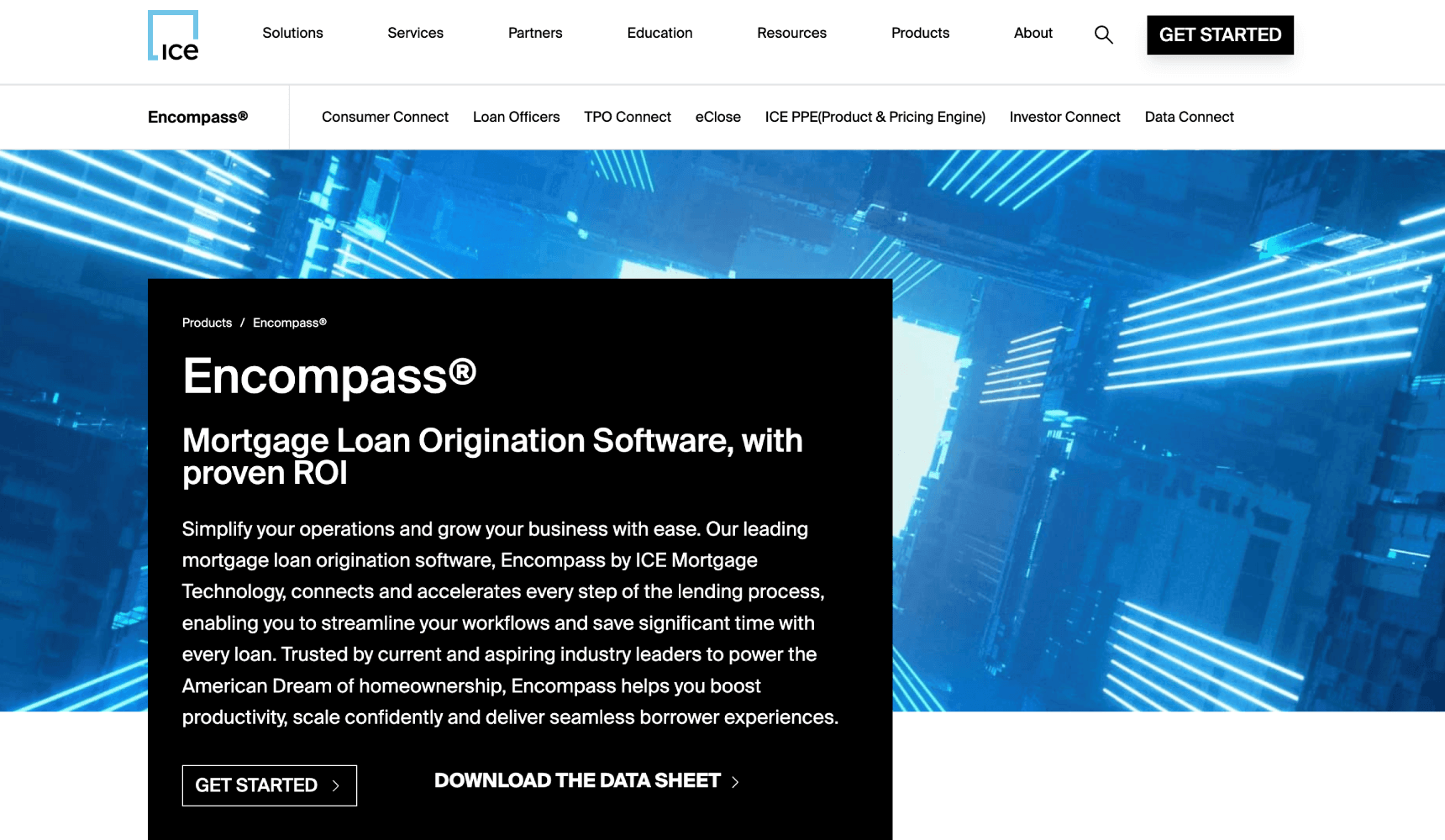
Encompass (ICE Mortgage Technology) is the largest LOS in the US mortgage market by volume. It handles compliance disclosure generation for TRID, HMDA reporting, and lender-side workflow management at scale. Encompass is a significant implementation project and not suited to early-stage lenders, but for mid-size to large mortgage originators, it covers FCRA and ECOA compliance requirements that custom-built systems struggle to maintain as regulations update.
Finastra
Finastra offers origination and loan management software primarily targeting banks and credit unions across consumer and commercial lending. Its product suite includes Finastra Loan IQ for complex commercial lending and syndicated loans, and origination tools for consumer and mortgage products. The platform handles adverse action notice generation and FCRA-required decision logging as part of its compliance workflow, which is a meaningful differentiator for regulated institutions that cannot afford gaps in audit trail documentation.
Finastra is not a typical fintech-startup choice. Implementation is a professional services engagement, timelines are measured in months, and the platform is architected for institutions that already have IT resources and defined integration requirements. Where it fits is at mid-size to large banks and credit unions that need a single vendor covering both the origination workflow and the post-funding loan management ledger, with the compliance infrastructure to support regulatory examinations. It does not publish pricing publicly; contracts are negotiated based on institution size and product scope.
For fintech teams evaluating Finastra against newer platforms like LoanPro or Peach, the relevant question is implementation capacity. Finastra’s depth of coverage comes with a correspondingly deeper implementation requirement. That trade is sensible for a $2B community bank. It is rarely sensible for a Series A fintech without a dedicated internal implementation team.
Platform Comparison: LOS vs LMS Coverage by Lending Type
| Platform | Primary Lending Type | Origination (LOS) | Servicing (LMS) | FCRA / Adverse Action | Best Fit |
|---|---|---|---|---|---|
| LoanPro | Consumer, Installment | Yes | Yes (core strength) | Supported | Fintechs needing end-to-end |
| Peach Finance | Consumer, BNPL | Yes | Yes | Supported | Modern lenders, complex structures |
| Canopy Servicing | Consumer, BNPL | Limited | Yes (core strength) | Partial | Lenders with separate LOS |
| Abrigo | SMB, Commercial | Yes | Limited | Supported | Community banks, credit unions |
| nCino | SMB, Commercial | Yes (full workflow) | No (separate system) | Supported | Mid-size banks, Series B+ fintechs |
| Blend | Mortgage, Consumer | Yes (front-end) | No | Supported | Mortgage lenders, consumer banks |
| Floify | Mortgage | Yes (point of sale) | No | Partial | Independent mortgage brokers |
| Encompass (ICE) | Mortgage | Yes (full lifecycle) | Limited | Yes (TRID, HMDA, ECOA) | Mid-to-large mortgage originators |
| Finastra | Consumer, Commercial | Yes | Yes | Supported | Banks, credit unions |
How Does FCRA Compliance Work Inside an LOS?
The Fair Credit Reporting Act requires any lender using consumer report data in a credit decision to provide an adverse action notice when an application is declined, or when terms are offered that are materially worse than what the applicant requested. The notice must name the consumer reporting agency used, include specific reasons for the adverse action, and provide the applicant’s right to dispute their credit file.
An LOS that pulls bureau data should generate these notices automatically and log them with a timestamp. If the platform only displays the credit report without logging the decision reason codes or supporting notice generation, the compliance burden falls on your team to build and maintain that process manually. That is a meaningful operational and regulatory risk.
Finastra‘s origination platforms and Encompass both handle adverse action notice generation as part of their decision workflow. For fintech lenders on newer platforms, ask vendors directly: does the platform output a FCRA-compliant adverse action notice, and does it log both the notice and the reason codes against the application record? The guide to FCRA compliance services for lending and credit data startups covers the broader compliance infrastructure these notices fit into.
What Does Loan Origination Software Actually Cost?
Most enterprise LOS and LMS platforms do not publish pricing publicly. Contracts are typically structured around one or more of these variables: active loan count, origination volume (dollar or unit), number of users, or a flat platform fee plus implementation costs.
Floify is an exception: pricing is available on their public site and is structured per loan officer per month, making it one of the more transparent options in the mortgage segment. For bank-grade platforms like nCino or Abrigo, expect a formal RFP process and implementation fees that may exceed the first year of licensing. Peach Finance and Canopy both operate on quote-based pricing tied to loan volume.
Early-stage lenders looking for the lowest entry cost should evaluate whether a platform has a startup tier or a minimum loan volume commitment. Some platforms with high minimums will price out seed-stage lenders entirely. Canopy and LoanPro have both worked with earlier-stage teams, but pricing at that stage requires direct negotiation.
A Worked Scenario: What Stack Would a Series A Consumer Lender Need?
Consider a hypothetical Series A consumer installment lender originating $3 million per month in personal loans, with an average loan size of $5,000. This scenario is illustrative , specific numbers are chosen to show where platform trade-offs become concrete, not to represent any particular company. The team has 12 people in ops, a single compliance officer, and pulls Experian and TransUnion bureau data for every application.
At this stage, the team needs: an LOS that handles application intake, bureau pulls, automated decisioning against a configured scorecard, FCRA-compliant adverse action notices for declines, and document generation for approved loans. They also need an LMS that tracks the loan ledger, generates ACH payment requests, handles NSF retries, and produces monthly borrower statements.
A platform like LoanPro or Peach Finance covers both sides in one contract, which reduces integration complexity and keeps the compliance data model unified. Splitting origination (say, a custom-built application layer) from servicing (a separate LMS) at this stage introduces a data sync dependency that a 12-person team will struggle to maintain. The unified platform trades some configuration flexibility for operational simplicity, and at this volume, that tradeoff is almost always worth it. For teams assessing whether their overall fintech infrastructure choices are set up for scale, the Fintech SaaS Scale Checklist covers the growth inflection points where platform decisions get painful.
When Should a Lender Use Two Separate Systems?
There are specific situations where running a best-of-breed LOS plus a separate LMS makes sense. Mortgage lenders almost always fit this model because origination (Encompass, Floify, Blend) and servicing (Black Knight’s MSP, ServiceMac) are handled by specialized platforms that each serve their respective regulatory environments.
SMB lenders using nCino for origination will connect a core banking system or a dedicated commercial loan servicing platform on the back end. This is standard practice in bank technology. The integration point between origination and servicing is a documented handoff, not a real-time sync, which is manageable when the servicing system is a stable core banking platform.
Consumer fintech lenders are the segment most likely to get hurt by the two-system approach without the IT resources to maintain it. If a consumer lender’s LOS and LMS do not share a unified data model, reconciling the loan ledger against origination records becomes a monthly manual exercise. This is where early-stage teams accumulate hidden technical debt that surfaces during an audit or a capital raise. Choosing the wrong infrastructure has a direct cost, and the hidden costs that kill fintech SaaS margins piece documents how vendor fragmentation compounds over time.
Frequently Asked Questions
What is a loan origination system (LOS) in lending?
A loan origination system is the software that manages the lending process from application submission through funding. It handles borrower intake, identity verification, credit bureau pulls, underwriting rule execution, approval routing, disclosure generation, and document management. An LOS ends at or near the point of disbursement. It does not typically manage ongoing payment processing, loan servicing, or collections after funding.
What is the difference between loan origination software and loan management software?
Loan origination software manages the decision-to-fund workflow: application, underwriting, and closing. Loan management software manages the post-funding lifecycle: payment schedules, interest accrual, statement generation, collections, and investor reporting. Some platforms cover both, but many specialize in one. Consumer fintech lenders usually need both connected. Mortgage lenders almost always run separate specialized systems for each stage.
What LOS software do small business lenders use?
Community banks and credit unions making SMB loans most commonly use Abrigo or nCino. Both handle the structured credit workflow that SMB lending requires: financial spreading, debt service coverage analysis, collateral tracking, and credit memo generation. Fintech SMB lenders operating at higher velocity and lower average loan size often build on more configurable platforms like LoanPro, or use marketplace-style tools like Lendio for borrower acquisition and a separate system for underwriting.
Which loan management platforms handle servicing and collections?
LoanPro, Peach Finance, and Canopy Servicing all handle post-origination loan management including payment processing, ACH retry logic, late fee application, collections queuing, and borrower statement generation. Canopy is most focused specifically on servicing and collections as a standalone layer. LoanPro and Peach offer more complete end-to-end coverage including origination. For mortgage servicing specifically, Black Knight’s MSP and Fiserv’s loan servicing platform are the dominant enterprise options.
Does loan origination software support FCRA and adverse action requirements?
It varies by platform and requires direct verification. Platforms like Encompass, Finastra, LoanPro, and Peach Finance have built-in support for generating FCRA-compliant adverse action notices and logging decision reason codes. Platforms focused purely on front-end intake (some point-of-sale mortgage tools, for example) may not generate adverse action notices natively. Any lender using consumer report data must confirm this capability explicitly before signing a contract, since gaps create direct regulatory exposure under FCRA and ECOA.
What is the cheapest loan origination system for a startup lender?
Floify is one of the most transparently priced LOS options for mortgage lenders, with per-user pricing published on their public site. For consumer fintech lenders, there is no widely available low-cost entry tier among the leading platforms. Most require direct negotiation. Early-stage lenders occasionally build thin origination workflows on top of existing CRM or no-code tools while evaluating dedicated LOS options, but this creates compliance gaps around adverse action documentation and bureau integration that need to be explicitly managed.
Is this article about software lenders operate, or APIs other platforms embed?
This article covers software that lenders operate directly to run their own lending products. Embedded lending APIs, which allow non-lending platforms to offer credit products to their own customers, are a separate category. Providers like Stripe Capital, Capchase, or embedded credit API providers serve that market. The platforms reviewed here are for lenders who are the principal on the loan and need origination, underwriting, and servicing infrastructure for their own book of business.
How to Read the Compliance Coverage Claims Vendors Make
Every LOS vendor lists “compliance” as a feature. The phrase is almost meaningless without specifics. When evaluating a platform, ask for the exact list of regulatory frameworks the platform supports natively versus which ones require custom configuration or third-party tools.
The relevant frameworks for most US consumer lenders are: FCRA (adverse action notices, permissible purpose tracking), ECOA (equal credit opportunity, disparate impact monitoring), TILA (truth in lending disclosures, APR calculations), and for mortgage lenders, RESPA and HMDA. SMB commercial lenders generally have fewer consumer protection obligations but face state-level lending license requirements that vary significantly.
Adverse action documentation is the most commonly overlooked compliance gap in early-stage LOS implementations. It requires that for every declined application, the system logs the consumer reporting agency name, the specific reason codes, and the date of notice delivery. Rebuilding this documentation retroactively after an audit is significantly more expensive than selecting a platform that handles it from day one. The biggest compliance blind spots in early-stage fintech covers the specific gaps that surface most often during regulatory examinations.
The Bottom Line on Choosing Between an LOS and LMS
The most expensive mistake a lending team makes is treating origination software as the whole solution, then discovering 18 months later that they have no servicing infrastructure as their loan book grows. The second most expensive mistake is buying a large enterprise platform before the team has the volume or technical resources to implement it without a multi-month professional services engagement.
Fintech consumer lenders at seed to Series B should default toward platforms that cover both origination and servicing in a unified data model, even if that means accepting some constraints on configurability. LoanPro and Peach Finance are the strongest options in this category for non-mortgage lenders. Mortgage lenders should expect to run separate origination and servicing systems, with Encompass or Blend on the front end and a specialist servicing platform on the back.
SMB and commercial lenders have the clearest segmentation. If you are operating inside a bank or credit union structure, Abrigo and nCino are the reasonable starting points. If you are a fintech SMB lender moving fast and needing configurable underwriting rules without a six-month implementation, evaluate LoanPro or Peach alongside purpose-built SMB credit infrastructure vendors. The decision is not about which platform has the longest feature list. It is about which platform’s data model matches your loan product structure, your compliance obligations, and your team’s capacity to implement and maintain it.