
- Most businesses conflate stablecoin lending with exchange yield programs. They are different products with different counterparty risk, collateral structures, and regulatory exposure.
- Business-grade stablecoin lending platforms fall into three categories: CeFi lenders (Nexo, Ledn), institutional DeFi (Aave, Morpho), and hybrid treasury platforms (Maple Finance, Goldfinch).
- The key selection criterion is not yield. It is custody model, bankruptcy remoteness, and whether your legal entity can actually access the product without triggering securities issues.
- USDC is the dominant collateral and lending asset across all business-facing platforms, with USDT a distant second for non-US entities.
- Regulatory clarity from the GENIUS Act is reshaping which platforms will remain viable for US businesses through 2026 and beyond.
The best stablecoin lending platforms for businesses in 2026 are Maple Finance, Aave, Morpho, Nexo, Ledn, Goldfinch, Clearpool, and TrueFi. Each serves a distinct use case: Maple and Goldfinch for institutional credit desks seeking real-world yield, Aave and Morpho for on-chain USDC deployment with transparent liquidation mechanics, and Nexo and Ledn for CeFi collateralized borrowing against crypto assets. No single platform suits every business structure, jurisdiction, or risk tolerance.
Why Stablecoin Lending for Businesses Is Not the Same as Crypto Yield Farming
Most finance teams that come to this category have idle USDC sitting in a wallet or bank account and want to earn yield. That is a straightforward goal. The mistake they make is shopping for the highest advertised rate without understanding what they are actually buying.
Stablecoin lending to another counterparty is a credit product. Stablecoin borrowing against crypto collateral is a secured loan product. Stablecoin yield farming on DeFi protocols is a liquidity provision product. These three things carry completely different risk profiles, and conflating them is how treasury teams end up with frozen funds during a credit event.
The 2022 cycle made this painfully clear. Celsius, Voyager, and BlockFi all marketed stablecoin yield products to businesses. All three entered bankruptcy. In each case, depositors were unsecured creditors. The lesson is structural, not anecdotal: where your assets sit in the capital stack during a default matters more than the yield rate two basis points higher than a competitor.
What Is the FintechSpecs Stablecoin Platform Stress Test?
Before shortlisting any platform, apply this four-point framework. Think of it as the FintechSpecs Stablecoin Platform Stress Test, designed specifically for business treasury and finance teams who cannot afford to treat this category like a consumer yield product.
Custody segregation: Are your assets held in segregated accounts, or co-mingled with platform funds? Segregated custody means your USDC is not on the platform’s balance sheet. Co-mingled means you become an unsecured creditor if the platform fails.
Liquidation transparency: For borrowing products, can you see the collateral ratio and liquidation threshold in real time? On-chain protocols publish this on-chain. CeFi platforms vary widely in disclosure.
Regulatory perimeter: Is the platform licensed in your jurisdiction? For US businesses, GENIUS Act compliance and state-level money transmission licensing matter. For non-US entities, check whether the platform serves your jurisdiction at all.
Legal entity access: Some platforms are consumer-only. Others require KYB. Institutional desks at Aave, Maple, and Morpho require entity verification. Confirm your business type qualifies before investing integration time.
Which Platforms Should Businesses Use to Lend Stablecoins and Earn Yield?
Maple Finance
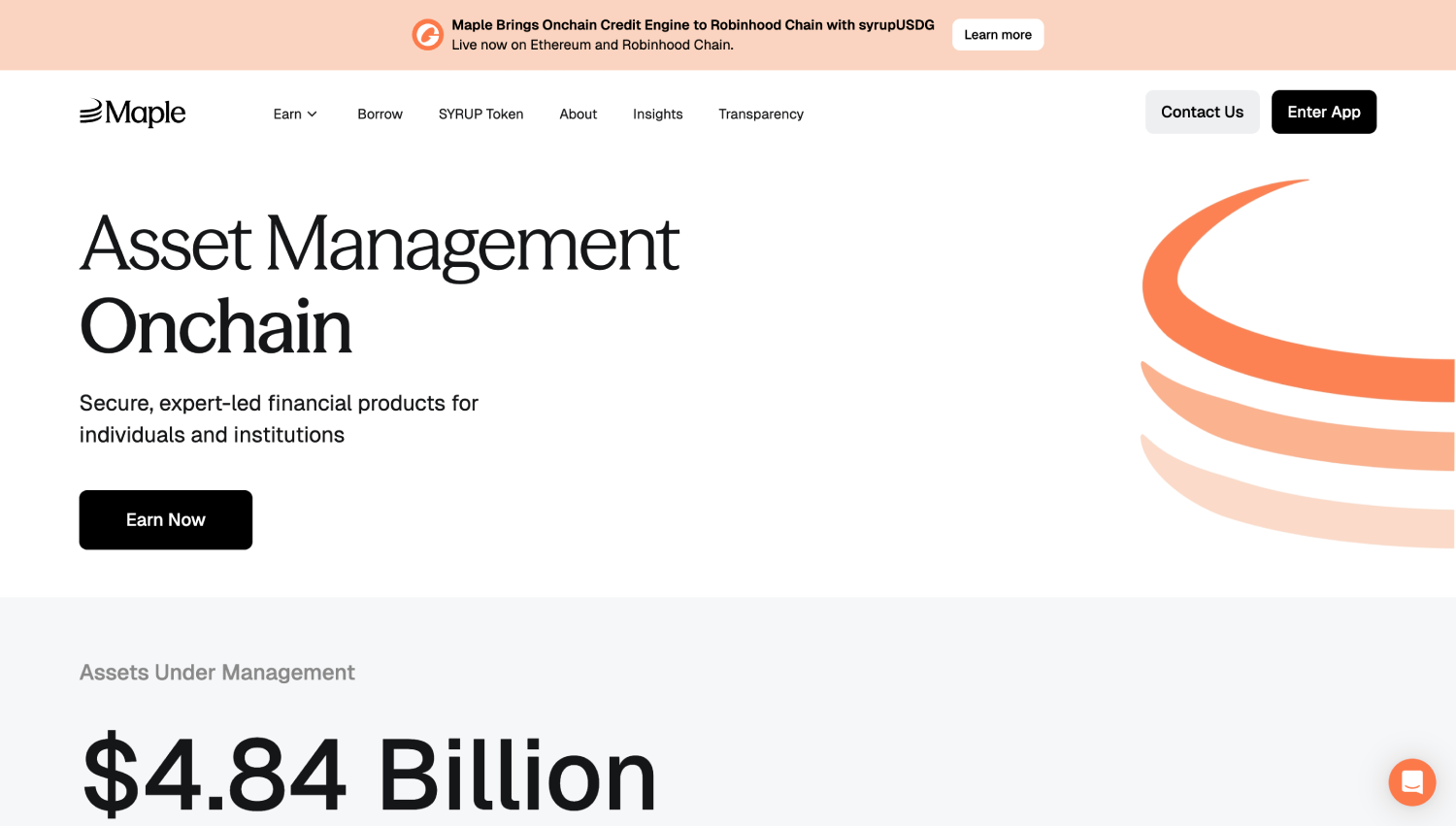
Maple Finance operates as an institutional credit marketplace. Businesses deposit USDC or USDT into lending pools, and the capital is deployed to verified institutional borrowers who have passed Maple’s KYB and credit underwriting process. Depositors earn yield from borrower interest payments.
Maple’s architecture separates it from generic DeFi yield: pool delegates perform credit due diligence on borrowers, and pools are not fully anonymous. The trade-off is smart contract risk plus counterparty risk on the borrower side. Maple suffered significant losses in the 2022 crypto credit contagion when borrowers defaulted. The protocol has since restructured its underwriting standards and added a separate Cash Management pool backed by US Treasury bills, which targets lower-risk institutional depositors.
Maple does not publicly disclose current APY rates, as they vary by pool and market conditions. Minimum deposit sizes and full pool terms are available through Maple’s platform directly. Best suited to: corporate treasury teams comfortable with on-chain protocols that want institutional credit exposure rather than pure DeFi liquidity mining.
Aave
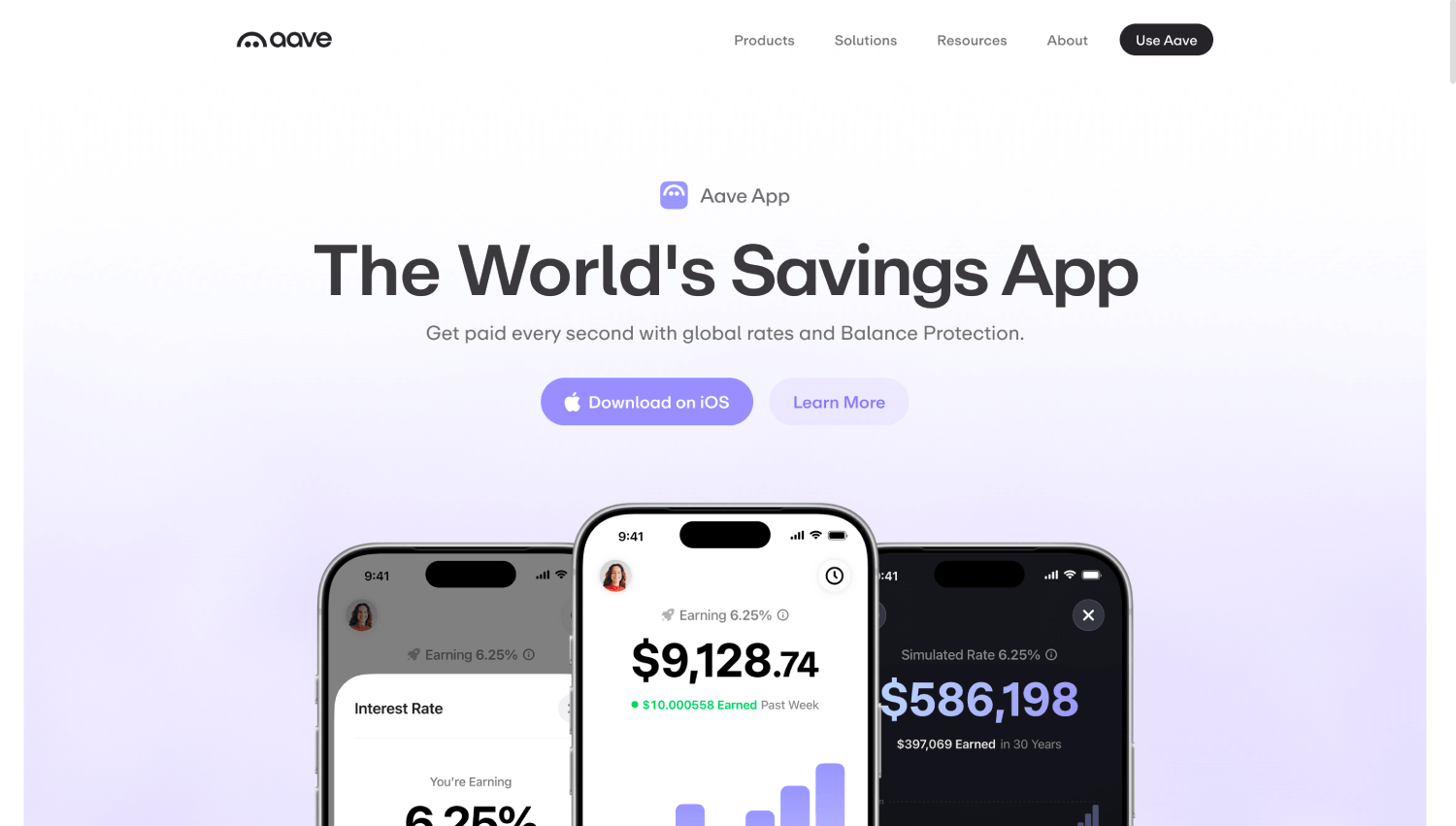
Aave is the largest decentralized lending protocol by total value locked, and it accepts USDC, USDT, DAI, and other stablecoins as both lending and borrowing assets. Depositors earn variable interest from borrowers who over-collateralize their loans with crypto assets.
Aave’s primary advantage for businesses is transparency. Every loan, collateral ratio, and liquidation event is visible on-chain in real time. There is no counterparty credit risk in the traditional sense because every borrow is over-collateralized and automated liquidations trigger when collateral falls below the required ratio. Aave v3, the current version, also introduces supply and borrow caps per asset, which limits protocol-level concentration risk.
The risk Aave carries is smart contract vulnerability and governance risk, not credit default in the traditional sense. Aave’s lending rates on USDC fluctuate with market demand and are visible on the protocol’s interface at any time. Businesses operating in the US need to confirm their legal counsel is comfortable with DeFi protocol interaction before deploying treasury funds here. For teams already exploring DeFi lending protocols for stablecoin yield, Aave is the default starting benchmark.
Morpho
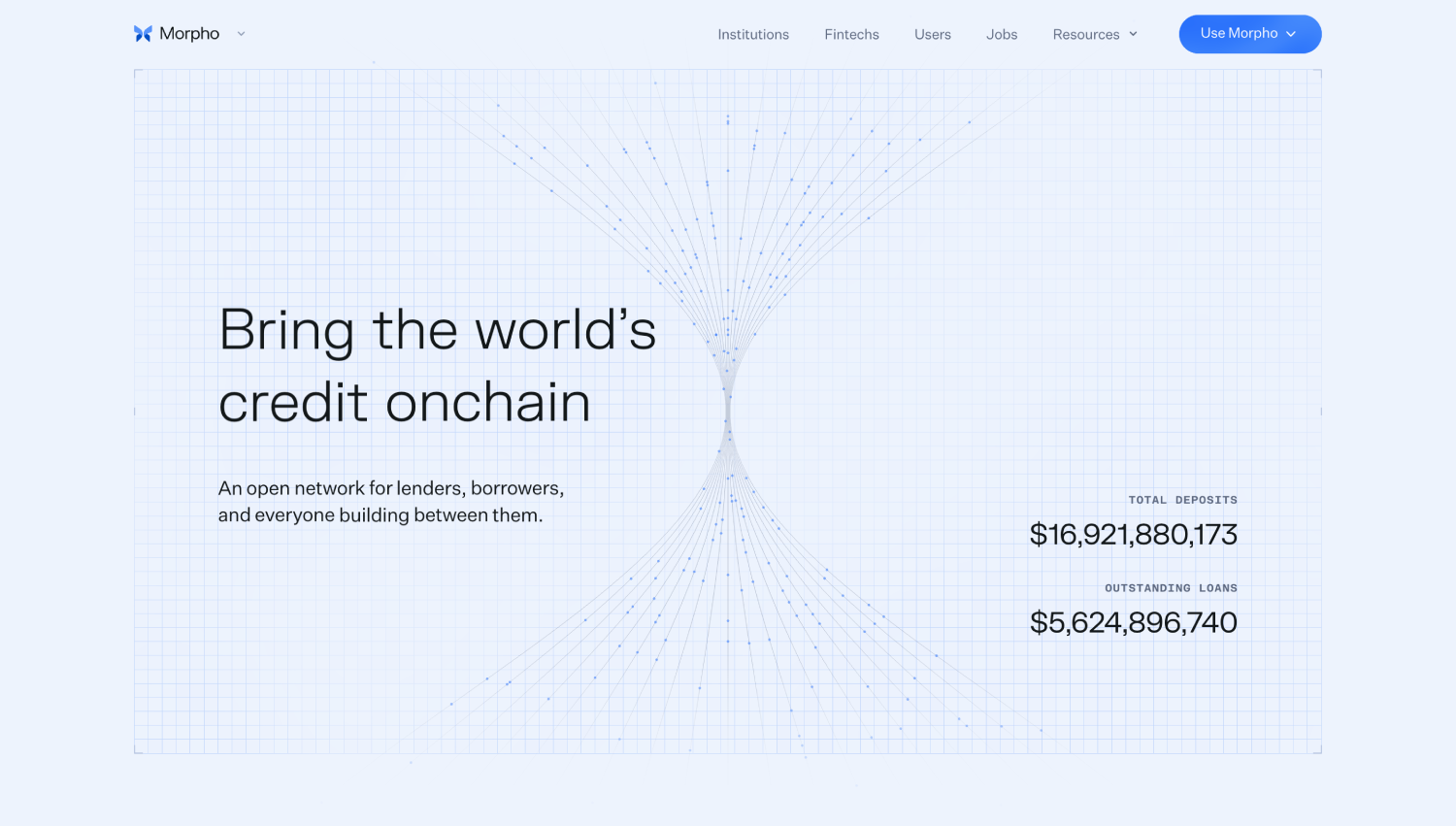
Morpho operates as a lending layer on top of Aave and Compound, matching lenders and borrowers peer-to-peer to improve rates for both sides. When no peer match exists, it falls back to the underlying protocol. The result is that depositors typically earn rates at or above what Aave offers for the same stablecoin, while borrowers pay at or below Aave’s rates.
Morpho Vaults, launched on Morpho Blue, allow curators to build managed lending products on top of Morpho’s base layer. Circle has already deployed a Morpho vault as part of its Circle Mint digital asset-backed borrowing product, which signals institutional comfort with the architecture. For businesses, Morpho’s appeal is a better rate on the same underlying risk you would take with Aave, with the added complexity of an extra protocol layer.
Clearpool
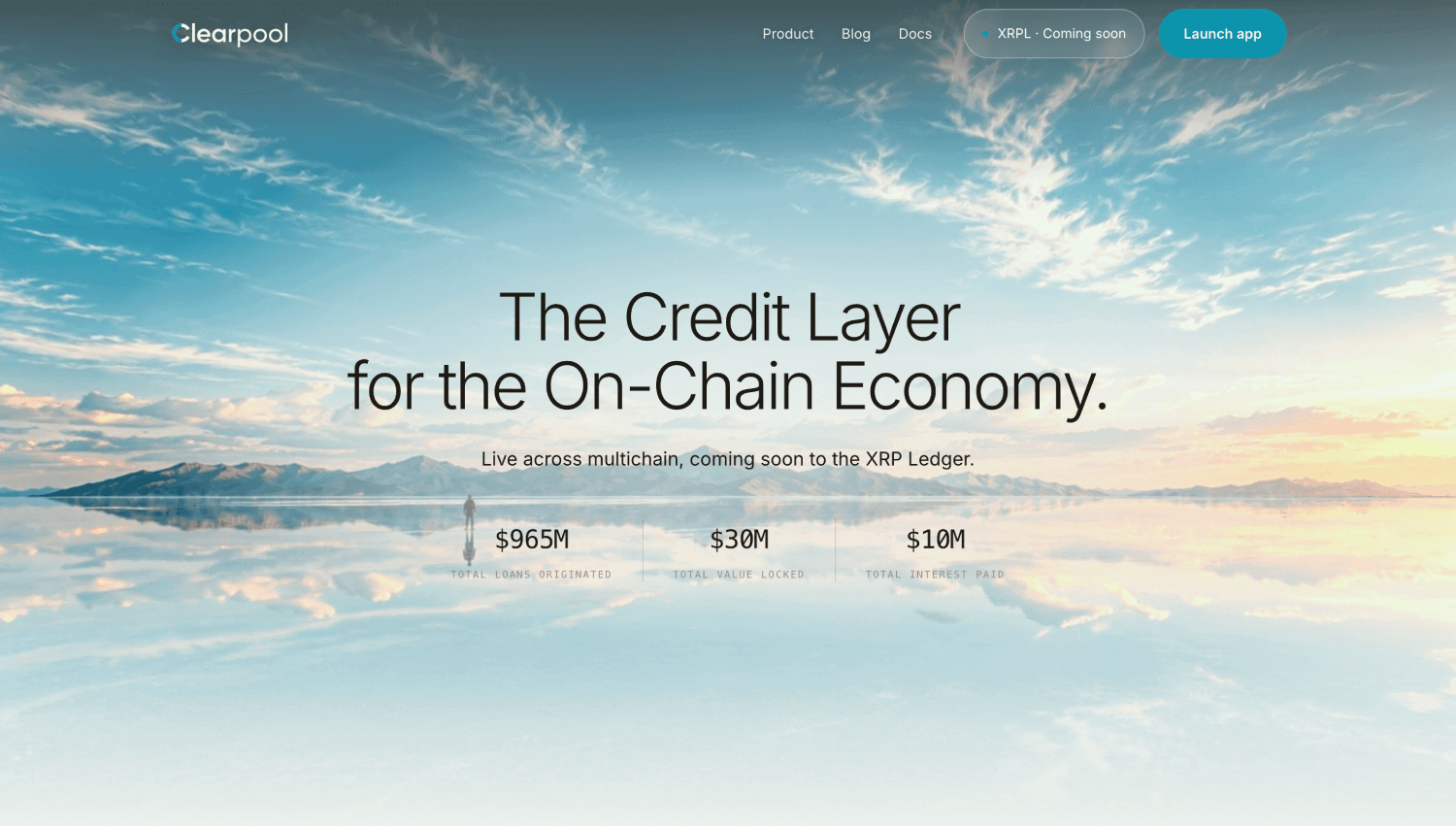
Clearpool is an institutional-grade unsecured lending protocol where whitelisted institutional borrowers create single-borrower pools. Lenders deposit USDC into a borrower’s pool and earn interest. Because loans are unsecured, lenders take direct credit risk on each borrower.
Clearpool publishes borrower names publicly, which lets lenders make informed credit decisions. Borrowers include recognized institutional crypto firms. The protocol includes a dynamic interest rate model where rates rise as pool utilization increases, incentivizing repayment and compensating lenders for higher risk. Businesses willing to underwrite individual borrower credit risk and comfortable with unsecured exposure may find Clearpool rates above what secured DeFi protocols offer.
TrueFi
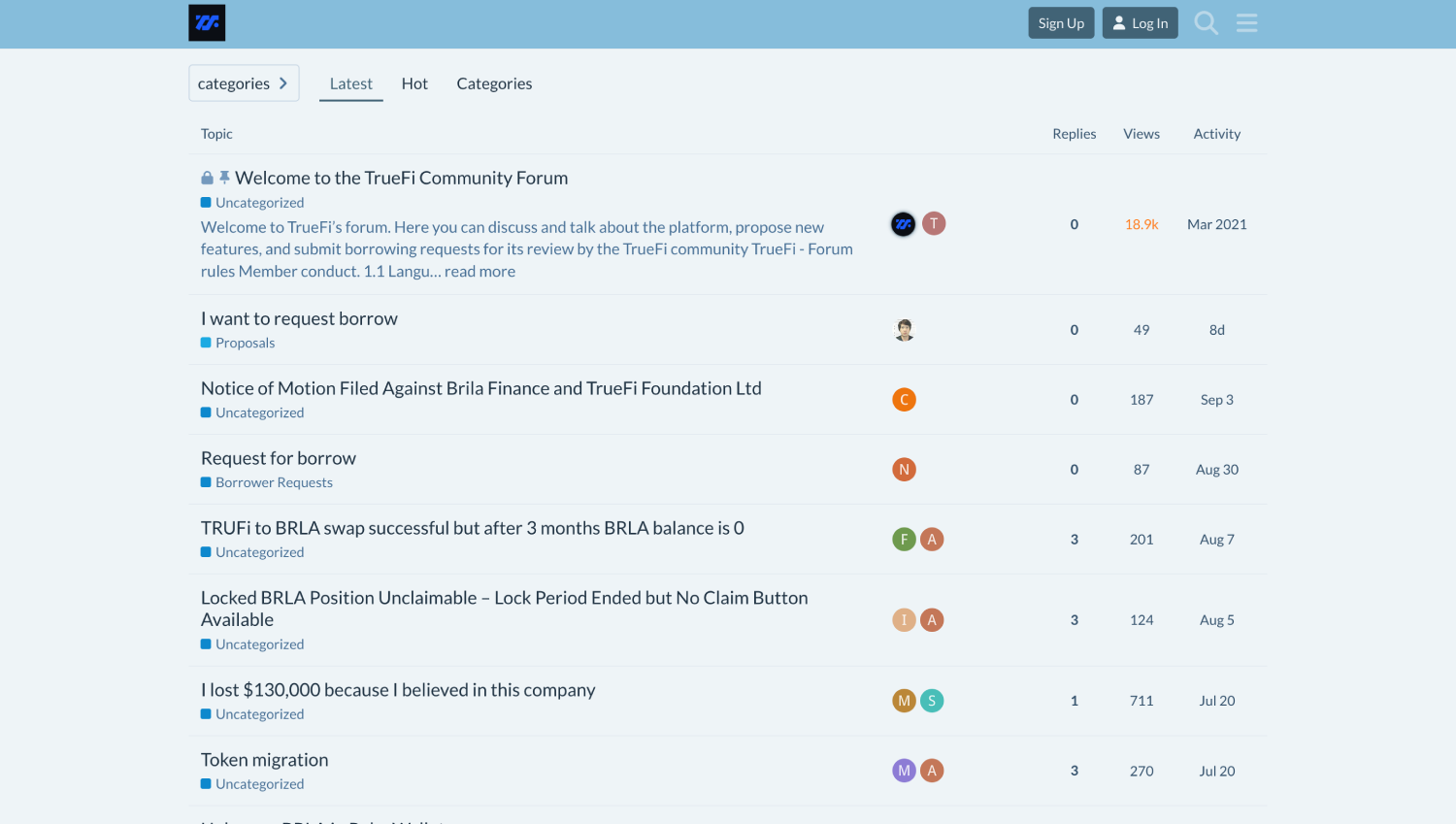
TrueFi began as an unsecured lending protocol and has expanded into a multi-strategy credit marketplace. Borrowers are institutions vetted through TrueFi’s credit process, and lenders earn yield on USDC and other stablecoins. TrueFi also operates structured credit products and RWA-backed pools, giving businesses access to real-world credit returns in stablecoin-denominated form.
TrueFi’s lending rates are not publicly advertised at fixed levels since they depend on pool and market conditions. For businesses evaluating the platform, TrueFi’s documentation and pool pages provide current terms. Best suited to: treasury teams that want on-chain exposure to institutional credit with RWA diversification, and that have legal sign-off on protocol interaction.
Goldfinch
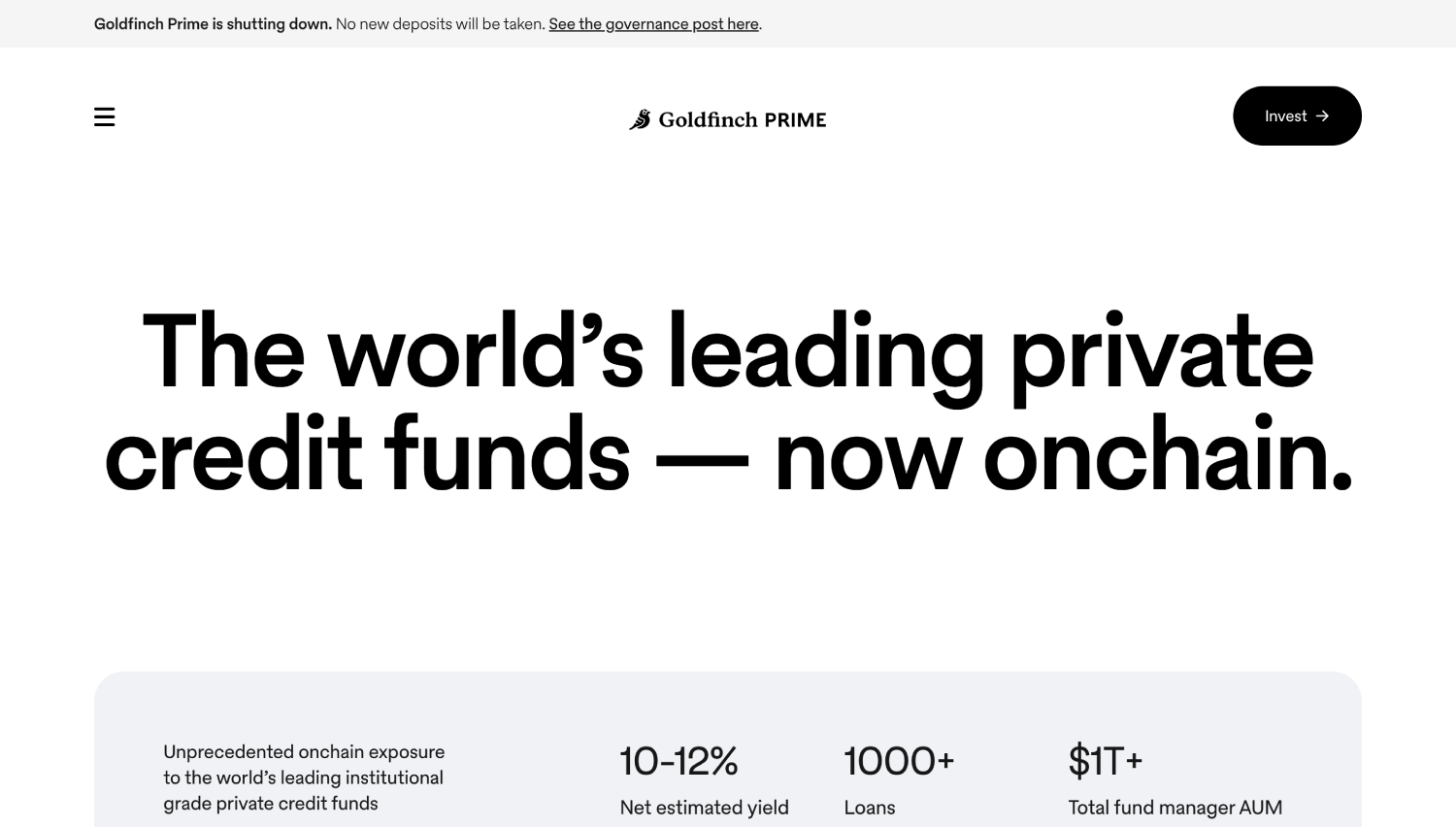
Goldfinch takes a different approach: businesses lend USDC to real-world borrowers, primarily fintech lenders and credit funds operating in emerging markets. Loans are not crypto-collateralized; they are backed by real-world assets and off-chain legal agreements.
Goldfinch requires lenders to be accredited investors or qualified institutions, which limits access but also places the product in a recognized regulatory category. The protocol separates lenders into backer (junior) and liquidity provider (senior) tranches, with backers taking first-loss position and earning higher rates. Businesses comfortable with emerging market credit risk and the legal framework of accredited investing may find Goldfinch a genuinely differentiated product, not just another stablecoin yield wrapper.
Which Platforms Should Businesses Use to Borrow Against Crypto Collateral?
Nexo
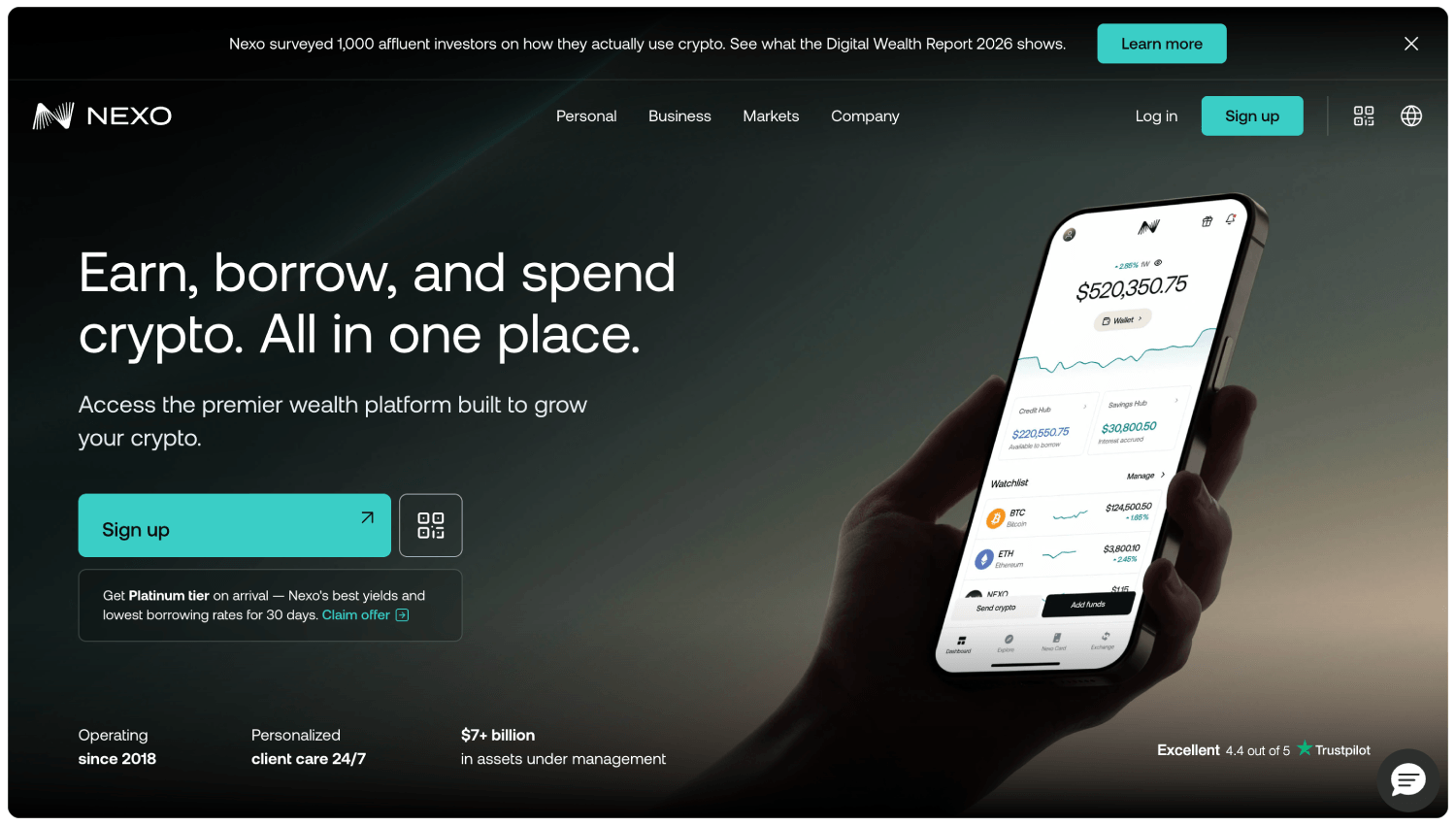
Nexo is a CeFi lender offering crypto-backed loans denominated in USDC, USDT, or fiat. Businesses deposit Bitcoin, ETH, or other supported assets as collateral and receive a line of credit. Nexo has been operational since 2018 and publicly states it has processed over $1 billion in crypto-backed loans, though FintechSpecs has not independently verified this figure.
Nexo’s key operational feature for businesses is its real-time LTV monitoring and automatic top-up notifications before liquidation. It does not send a margin call after the fact; it alerts well before the liquidation threshold is reached. Nexo’s institutional desk offers customized terms for larger borrowing needs, separate from its retail product. Business borrowers should confirm entity eligibility and jurisdictional availability before onboarding, as Nexo’s product availability varies by country.
For a detailed side-by-side of CeFi borrowing mechanics, the Nexo vs Ledn comparison on stablecoin loans covers collateral ratios, loan minimums, and liquidation mechanics in depth.
Ledn
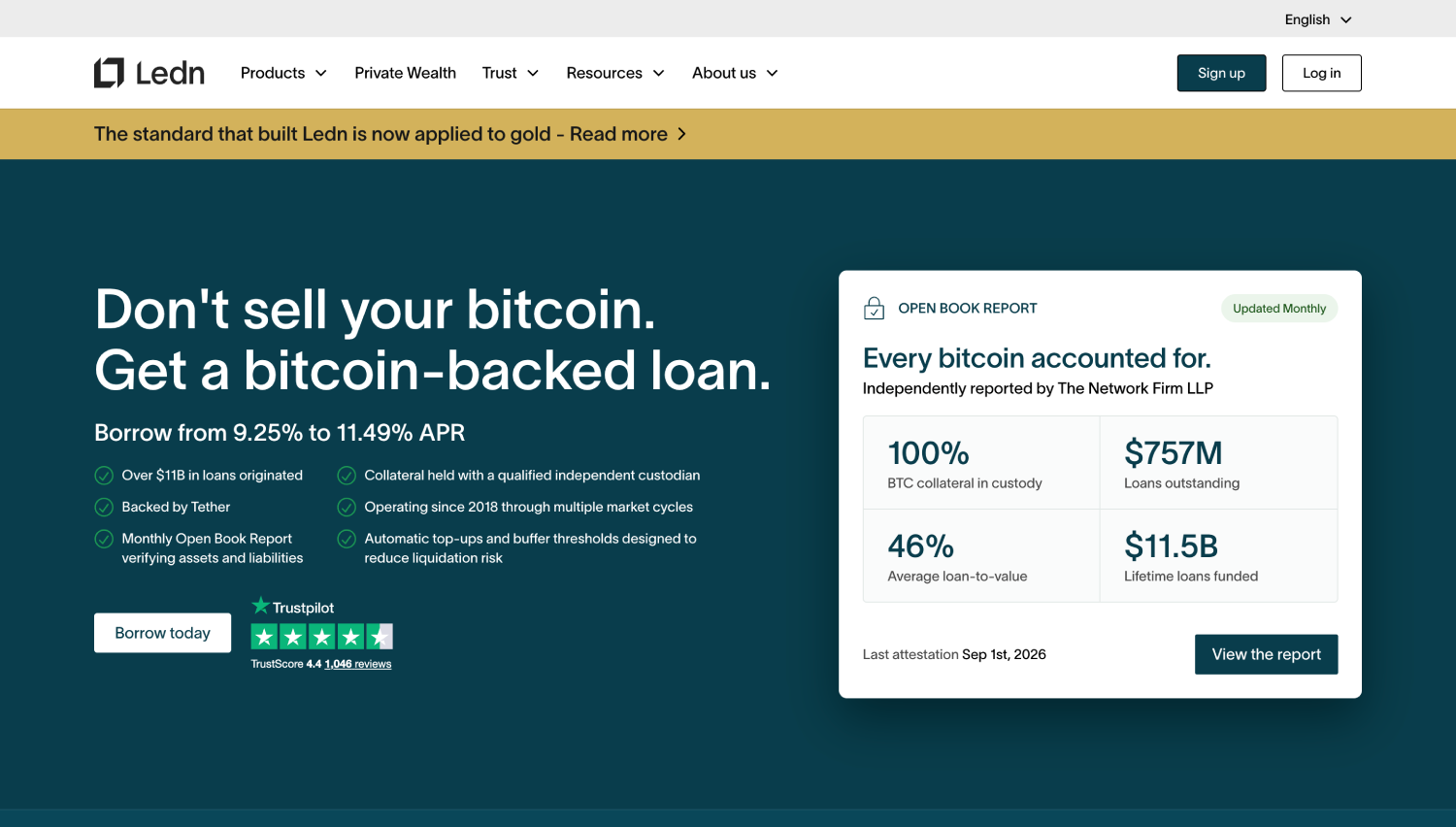
Ledn is a Canadian-headquartered crypto lender with a business lending product that offers USDC and USDT loans against Bitcoin collateral. Ledn publishes its annual Proof of Reserves audits, which distinguishes it from platforms that make custody claims without third-party verification.
Ledn’s Business Account is explicitly designed for corporate entities, with entity onboarding through KYB. The product requires Bitcoin as collateral, which is both a limitation and a strength: Bitcoin is the most liquid, most understood collateral in the crypto market. Businesses that hold BTC on their treasury and need stablecoin liquidity without selling their position have a direct use case here.
Platform Comparison: What Businesses Should Prioritize
| Platform | Type | Primary Asset | Yield or Borrow | Collateral Model | US Business Access | Custody Model |
|---|---|---|---|---|---|---|
| Maple Finance | Institutional DeFi | USDC, USDT | Yield (lending) | Institutional credit | Yes (KYB required) | On-chain smart contract |
| Aave v3 | Decentralized protocol | USDC, USDT, DAI | Both | Over-collateralized crypto | Yes (wallet-based) | Non-custodial (self-custody) |
| Morpho | Decentralized protocol | USDC | Both | Over-collateralized crypto | Yes (wallet-based) | Non-custodial (self-custody) |
| Clearpool | Institutional DeFi | USDC | Yield (lending) | Unsecured institutional | Yes (KYB required) | On-chain smart contract |
| TrueFi | Institutional DeFi | USDC | Both | Institutional credit + RWA | Yes (KYB required) | On-chain smart contract |
| Goldfinch | RWA credit protocol | USDC | Yield (lending) | Real-world assets (off-chain) | Accredited investors only | On-chain smart contract |
| Nexo | CeFi lender | USDC, USDT, fiat | Borrow | Crypto (BTC, ETH, others) | Varies by state | Custodial (Nexo holds assets) |
| Ledn | CeFi lender | USDC, USDT | Borrow + yield | Bitcoin only | Yes (KYB required) | Custodial (Ledn holds assets) |
What Does Stablecoin Borrowing Actually Cost for a Business?
Consider a company with $2 million in Bitcoin on its treasury. It needs $800,000 in USDC for an operating expense but does not want to trigger a taxable disposition of BTC. A crypto-backed stablecoin loan solves that problem.
On a CeFi platform like Nexo or Ledn at a typical 50% LTV ratio, $2 million in BTC supports an $800,000 USDC loan with room above the margin call threshold. The company retains BTC upside, avoids the taxable event, and services the loan from operating cash flow. If BTC appreciates 30% during the loan term, the effective cost of capital is the interest rate minus the capital gain it preserved. If BTC drops 40%, the company must post additional collateral or face partial liquidation.
On-chain protocols like Aave price this differently. The borrow rate is variable and determined algorithmically by pool utilization. It can be cheaper than CeFi during periods of low demand, and more expensive during high demand periods. There is no credit relationship and no human negotiation. The liquidation is automated and immediate when the LTV threshold is breached. Businesses that cannot monitor collateral ratios in real time should not use on-chain borrow products without automated position management tools.
Borrowing rates across all platforms fluctuate and are not publicly fixed. FintechSpecs recommends checking each platform’s live rate interface before making any funding decision, as these rates can move meaningfully in a 24-hour period.
How Does the GENIUS Act Change the Stablecoin Lending Picture for US Businesses?
The GENIUS Act, signed into law in 2025, establishes a federal framework for payment stablecoin issuers. Its primary effect on lending platforms is indirect but significant: platforms that accept USDC or other payment stablecoins as collateral or lending assets are now operating with a more defined regulatory counterpart on the asset side.
For US businesses, this means USDC’s legal status as a reserve-backed payment stablecoin is clearer than it has ever been, which reduces one layer of regulatory uncertainty when using it as a lending asset. Platforms that only accept compliant payment stablecoins, as opposed to algorithmic or partially-backed tokens, are better positioned for the post-GENIUS Act environment. Our GENIUS Act compliance checklist for fintech startups covers the specific obligations that apply to stablecoin-adjacent products.
CeFi platforms that hold customer stablecoin deposits are also likely to face increased scrutiny under state and federal money transmission frameworks. Businesses should confirm that any CeFi platform they use holds the appropriate licenses in their home state, and that the platform’s legal structure provides meaningful protection in the event of insolvency.
What Are the Real Risks Businesses Miss When Evaluating Stablecoin Lending Platforms?
Smart contract risk is the one most people list first. It is real, but it is also the most legible risk: audited protocols with years of on-chain history have a public track record. The risks finance teams consistently underestimate are different.
Governance risk is subtler. Aave, Morpho, and Maple are governed by token holders who can vote to change collateral parameters, fee structures, or even wind down pools. A business that deploys $5 million into a lending pool is subject to decisions made by a decentralized governance body. That is a material operational risk that does not appear in any APY comparison.
Liquidity risk is the other one. DeFi lending pools can experience utilization spikes where most deposited capital is borrowed out, making it temporarily impossible to withdraw. This is not a default; it is a utilization event. But it can freeze access to funds for days or weeks. Finance teams that need guaranteed same-day liquidity should not treat high-utilization DeFi pools as a cash equivalent. For teams thinking about stablecoin yield in the context of broader treasury management, the stablecoin treasury management tools comparison covers how to structure positions for liquidity access alongside yield.
Frequently Asked Questions
What is the difference between stablecoin lending and stablecoin yield farming?
Stablecoin lending means depositing your stablecoins with a protocol or platform that loans them to borrowers, who pay interest that flows back to you. Stablecoin yield farming involves providing liquidity to trading pools and earning fees from swap activity, often with exposure to impermanent loss and governance token rewards. They are different products with different risk drivers. Businesses evaluating yield should specify which product type they are considering before comparing rates across platforms.
Which stablecoin lending platforms accept business entities, not just individuals?
Maple Finance, Clearpool, TrueFi, Goldfinch, and Ledn all have explicit institutional or business onboarding flows that require entity KYB. Aave and Morpho are non-custodial protocols accessible via business wallet without formal entity onboarding, though your legal and compliance team should assess whether self-custody DeFi interaction fits your operating framework. Nexo offers an institutional desk for larger business borrowers, separate from its consumer product.
Is USDC lending safe for corporate treasury?
USDC itself is a reserve-backed payment stablecoin regulated under the GENIUS Act framework, which reduces issuer risk compared to algorithmic or partially-backed stablecoins. The risk in USDC lending is not the stablecoin; it is the platform. Co-mingled custody at a CeFi lender, smart contract vulnerabilities in DeFi protocols, and unsecured credit risk in institutional pools are the material risks. Businesses should treat this category as a higher-risk yield instrument, not a bank deposit equivalent.
How do on-chain stablecoin lending platforms handle liquidations?
On protocols like Aave and Morpho, liquidation is automated by smart contract logic. When a borrower’s collateral value falls below the liquidation threshold, third-party liquidators can repay a portion of the loan in exchange for the collateral at a discount. This happens without human intervention and can execute within a single block. Borrowers receive no advance warning beyond watching their own LTV ratio. Businesses borrowing on-chain must monitor collateral positions continuously or use automated position management tooling.
What is the minimum deposit size on institutional stablecoin lending platforms?
Minimums vary by platform and pool. Maple Finance and Goldfinch generally target institutional depositors with minimums that vary by pool structure. Aave and Morpho have no protocol-enforced minimums beyond gas costs, though small deposits make economic sense only if the yield outweighs transaction fees. Clearpool and TrueFi institutional pools typically require verified entity onboarding and may have pool-specific minimums. Confirm current minimums directly with each platform, as they change with market conditions.
Can US businesses legally use DeFi lending protocols?
There is no blanket prohibition, but the answer depends heavily on your business’s regulatory status and legal structure. Registered investment advisors, broker-dealers, and banks face different constraints than operating companies. The SEC’s treatment of certain DeFi lending activities as securities offerings is an evolving area. US businesses should obtain specific legal counsel before deploying material treasury funds into DeFi lending protocols. The regulatory clarity provided by the GENIUS Act applies to stablecoin issuers, not directly to lending protocols built on top of them.
What is the difference between Maple Finance and Goldfinch for business lenders?
Maple Finance lends to institutional crypto borrowers, primarily trading firms and market makers, with pool delegates performing credit underwriting. Goldfinch lends to real-world borrowers, primarily fintech lenders and credit funds in emerging markets, with off-chain legal agreements backing the loans. Maple’s borrower base is crypto-native; Goldfinch’s is traditional credit. Both are on-chain USDC lending products, but the underlying credit exposure is fundamentally different. Goldfinch also requires accredited investor status for lenders in the US.
How does stablecoin borrowing compare to traditional business credit lines?
Stablecoin borrowing against crypto collateral is faster to access, requires no credit history, and does not report to commercial credit bureaus. It does require over-collateralization, typically at 50% LTV or below, meaning you must hold more in collateral than you borrow. Traditional credit lines are based on business cash flows and credit history, carry no liquidation risk, and are not subject to crypto market volatility. For businesses with crypto treasury assets and a specific short-term liquidity need, crypto-backed stablecoin loans can bridge gaps without triggering asset sales. They are not a substitute for revolving credit.
How to Actually Choose Between These Platforms
Run the FintechSpecs Stablecoin Platform Stress Test before you open any account. The custody segregation question alone eliminates several platforms for businesses that cannot accept unsecured creditor status. After that, the choice narrows along two axes: whether you are lending or borrowing, and whether your organization can operate on-chain or requires a CeFi intermediary with a legal relationship.
For yield-seeking treasury teams operating on-chain with institutional sign-off, Aave and Morpho offer the most transparent mechanics, while Maple and Clearpool offer structured credit exposure for teams that want to underwrite specific institutional borrowers. For businesses that need stablecoin liquidity against crypto assets and prefer a legal counterparty relationship, Nexo and Ledn are the most established options with the clearest track records. Finance teams that are new to this category and want to understand the broader stablecoin infrastructure context should review the stablecoin infrastructure providers comparison before committing to any single platform.
The category is maturing faster than most finance teams’ familiarity with it. Platforms that seemed interchangeable two years ago now occupy distinct regulatory, custodial, and credit positions. The yield number in the headline is the last thing to optimize for. The first thing is whether you get your principal back.