
TLDR
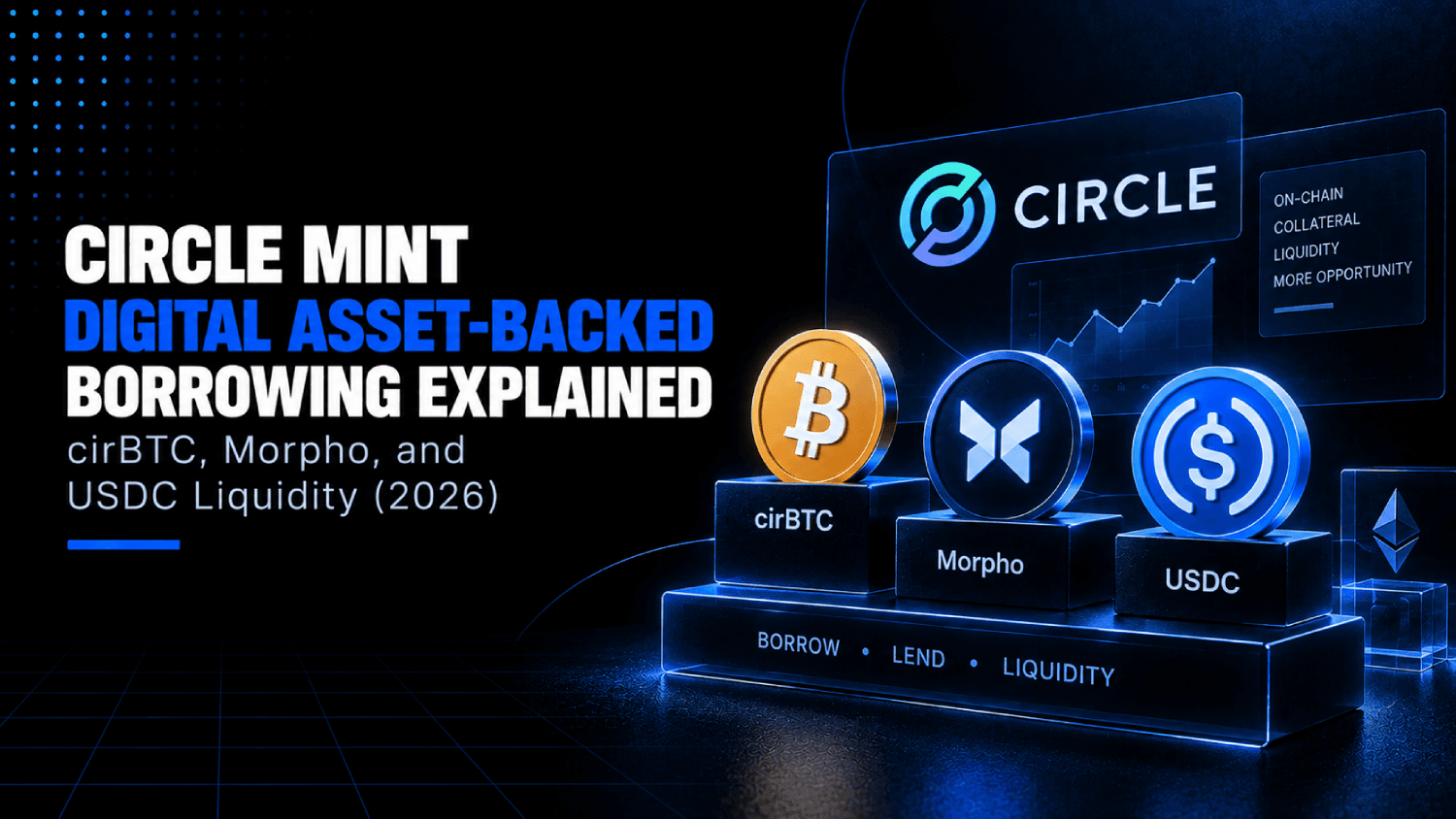
- On Sept. 21, 2026, Circle launched Digital Asset-Backed Borrowing (DABB) for eligible Circle Mint LLC customers: deposit BTC, mint cirBTC, post it as collateral on supported third-party lending markets, and receive USDC in Circle Mint without selling the underlying bitcoin.
- Launch networks are Arc and Ethereum. Morpho is the first approved lending protocol. Circle says Aave and other markets are expected later.
- Rates, collateral ratios, liquidation thresholds, and liquidity are set by the selected market, not by a fixed Circle borrowing rate. Positions are overcollateralized. Circle discloses a commercial relationship with Morpho.
- Operator read: this is a treasury and credit-ops rail, not a charter story and not Agent Pay. Pair with FintechSpecs’ stablecoin infrastructure, stablecoin issuance platforms, GENIUS Act checklist, and institutional custody.
- Secondary coverage the same day (The Coin Republic) tracks the blog. Primary truth remains Circle’s product post and DABB terms.
If you hold BTC on an institutional balance sheet and need dollar liquidity for payments, settlement, or working capital, Sept. 21, 2026 was Circle turning a multi-step wrap-and-borrow path into a Circle Mint-native workflow.
That sits next to FintechSpecs’ depth on stablecoin infrastructure, issuance platforms, and GENIUS Act compliance. It is not another OCC trust-bank charter explainer, and it is not card Agent Pay / KYA / AMP coverage. The product question is whether BTC-backed USDC credit belongs inside your existing Mint controls, or stays in a separate DeFi stack your treasury team refuses to operate.
What happened
On Sept. 21, 2026, Circle published that Digital Asset-Backed Borrowing is now available to eligible Circle Mint LLC customers (Circle blog).
Verified product facts from Circle:
- Eligible customers can deposit BTC, mint Circle Wrapped Bitcoin (cirBTC), supply cirBTC as collateral through a user-controlled Smart Wallet, and receive borrowed USDC in Circle Mint.
- The workflow is available on Arc and Ethereum at launch.
- Morpho is the first third-party lending protocol approved for DABB. Circle expects additional protocols, including Aave, over time.
- Borrowing rates, collateral requirements, liquidation thresholds, liquidity, and availability are determined by the selected market and can change.
- Positions are described as overcollateralized and open-ended: customers can add collateral and repay on their own schedule.
- Every cirBTC is backed 1:1 by native BTC, with reserves that Circle says can be independently verified onchain. Underlying BTC is safeguarded through Circle National Trust, a federally chartered trust bank and qualified custodian (per Circle).
- Circle states it does not operate a competing CEX, DEX, or lending protocol, positioning cirBTC as strategically neutral collateral.
- Circle explicitly discloses a commercial relationship with Morpho (COI flag for readers).
Legal framing for the product sits in Circle’s Digital Asset-Backed Borrowing terms (dated Sept. 16, 2026 on the legal page). Product marketing for Mint also lists DABB as available to eligible customers, excluding New York clients and subject to jurisdiction and eligibility (Circle Mint).
Secondary same-window coverage (The Coin Republic, Sept. 22, 2026) restates the blog workflow and ties timing to Arc Mainnet’s Sept. 16 debut. Use secondary for distribution context. Use Circle for binding product claims.
How the workflow actually works
Circle’s published sequence is deliberately short:
- Deposit BTC and mint cirBTC inside Circle Mint.
- Select a supported third-party lending market (Morpho markets at launch).
- Supply cirBTC as collateral and borrow USDC through a wallet the customer controls.
- Receive USDC in the Circle Mint balance.
- Repay USDC to release cirBTC collateral.
Developer docs already treat cirBTC like other Mint assets: mint/redeem APIs use currency code CIRBTC, with Chainlink Proof of Reserves cited for onchain reserve verification (Circle developers: what is cirBTC, mint and redeem cirBTC quickstart).
Network choice (Circle’s framing):
- Arc: Circle-designed L1 posture for stablecoin finance. Circle says supported Arc markets are expected to offer competitive USDC borrowing rates subject to utilization, liquidity, and governance. Arc is operated by Arc Network Services LLC with a permissioned validator set; Circle’s blog disclaims NYDFS (and other) review/approval of Arc.
- Ethereum: Access to deeper, established onchain lending markets and teams already on Morpho.
This is credit market plumbing, not Circle underwriting an unsecured line. If Morpho utilization spikes or liquidation parameters move, your effective cost of USDC liquidity moves with it.
How this sits vs OCC charters, Agent Pay, and classic credit
Do not collapse “Circle Mint can borrow USDC against BTC” into “Circle became a bank for agents” or “GENIUS is done.”
Lane map:
- DABB / cirBTC credit: Institutional BTC holders get USDC liquidity without selling BTC, settled back into Mint. Does not replace your bank credit facility, ISDA, or secured lending term sheet.
- OCC trust-bank wave (Bastion / Catena / Agora): Federal perimeter and GENIUS conform-or-cease clocks for proposed trust banks. Separate story from this product launch. Circle National Trust already sits in Circle’s custody narrative for cirBTC reserves; that is not the same as the Sept. 18 prelim approvals for Bastion, Catena, or Agora.
- Card Agent Pay / KYA / AMP: Merchant acceptance and agent authorization layers. DABB does not provision agent spend credentials or settle card auth.
- x402 / ACP / AP2 rails: Machine micropayments and checkout mandates. DABB is collateralized USDC liquidity for treasury, not HTTP 402 execution.
- GENIUS Act readiness: USDC and issuer perimeter still matter for who can hold, distribute, and redeem dollars. DABB does not finish GENIUS rulemaking.
Practical map for operators:
- Need dollars without selling BTC and already live on Circle Mint -> DABB is the direct product question this week.
- Need FDIC-insured deposits or traditional revolving credit -> wrong object. This is overcollateralized onchain credit via third-party markets.
- Need agent checkout acceptance -> stay on card Agent Pay / protocol lanes. Do not wait on cirBTC borrow for merchant auth.
- Need a regulated BTC wrap with Mint settlement -> cirBTC + DABB is Circle’s packaged path; diligence eligibility (including NY exclusion noted on Mint) before RFP language.
Risk, controls, and what treasury / compliance should ask
A unified Mint UI does not delete DeFi market risk.
Controls Circle already puts in writing
- Eligibility and jurisdiction gates (Circle Mint LLC customers; NY exclusion called out on the Mint page)
- User-controlled Smart Wallet path for collateral and borrow
- Market-set rates, LTVs, liquidation thresholds, and liquidity
- Overcollateralization framing (not unsecured credit underwriting)
- Explicit Morpho commercial relationship disclosure
- Arc risk disclaimers (smart contract, network, gas-in-USDC dependency, no Arc LLC responsibility for third-party apps)
What you still have to design
- Liquidation ops: Who watches health factors 24/7, who can add collateral, and what is the escalation path when Morpho parameters change?
- Accounting and basis: How do you book cirBTC, borrowed USDC, interest, and liquidation events relative to BTC mark-to-market and tax lots?
- Custody perimeter: Confirm which entity holds native BTC for cirBTC reserves (Circle National Trust per Circle), who is the smart-wallet controller, and what happens on redemption vs liquidation.
- Vendor COI: Morpho is commercially linked to Circle. Ask whether market listing, incentives, or rate presentation favor Morpho vs later Aave markets.
- Program eligibility: Get written confirmation of which legal entity, which jurisdictions, and whether your program is excluded (for example New York).
- Exit path: If you repay and redeem, what is the BTC return SLA and confirmation model vs keeping a standing Morpho position?
Who should care, and what to ask
Prioritize a deep read if you:
- Run treasury with material BTC holdings and recurring USDC or fiat working-capital needs
- Already mint or redeem USDC/EURC/cirBTC through Circle Mint APIs
- Build embedded finance or B2B payments that settle in USDC and want BTC-backed liquidity without CEX sell flows
- Compare onchain credit venues (Morpho, Aave, others) against bank-secured BTC lending desks
Concrete questions
- Which legal entity and jurisdictions are enabled for DABB today, and is New York (or any other state) blocked for your account?
- What Morpho markets are live on Arc vs Ethereum for cirBTC/USDC, and what are live LTV, LLTV, and borrow APY right now?
- Who controls the Smart Wallet keys/policies, and how do dual-control approvals map to your treasury SOP?
- What is the liquidation notification channel and maximum assumed response time?
- How does Circle’s Morpho commercial relationship affect incentives, listings, or support prioritization vs future Aave markets?
- For Arc positions: how do you source USDC for gas, and what is the fail-closed behavior if the network or a market pauses?
- How does cirBTC Proof of Reserves evidence attach to internal audit and SOC report packages?
The take: Mint just packaged BTC-backed dollar credit
Sept. 21’s launch matters because Circle collapsed wrap, collateral post, borrow, and Mint settlement into one institutional workflow on Arc and Ethereum, with Morpho first and Aave signaled next. That is a real operator signal for teams that already trust Circle Mint for USDC rails and have been refusing bespoke wrap-and-borrow runbooks.
It is not a reason to treat DABB as bank credit, Agent Pay, or a finished GENIUS story. Market parameters still price your liquidity. Liquidations still clear against collateral. Eligibility still gates who can open a position.
If you ship money movement that depends on BTC staying on the balance sheet while dollars move, diligence live Morpho markets, wallet controls, and jurisdiction eligibility before you rewrite credit policy. Circle made the path shorter. Your risk committee still owns the parameters.
FAQ
When did Circle launch Digital Asset-Backed Borrowing?
Sept. 21, 2026, per the Circle product blog. Secondary coverage clustered Sept. 22, 2026 (The Coin Republic).
What is cirBTC?
Circle Wrapped Bitcoin: a 1:1 BTC-backed token issued by Circle for use in smart-contract workflows, with Circle citing onchain reserve verification and custody via Circle National Trust (cirBTC docs).
Which chains and lending protocols are supported at launch?
Arc and Ethereum. Morpho is the first approved lending protocol. Circle says additional protocols, including Aave, are expected later.
Does Circle set the borrow rate?
No. Circle states rates, collateral requirements, liquidation thresholds, liquidity, and availability are set by the selected third-party market and can change.
Is this the same story as OCC Bastion / Catena / Agora approvals?
No. Those are preliminary/conditional national trust bank decisions. DABB is a Circle Mint product workflow for BTC-collateralized USDC borrowing. Related only at the broader “stablecoin + federal trust perimeter” industry level, not as the same news object.
Conflict of interest?
Yes, disclosed by Circle: Circle has a commercial relationship with Morpho. Treat Morpho-first launch framing accordingly.
Does this replace FintechSpecs’ stablecoin listicles?
No. This is a news explainer on a Sept. 21, 2026 product launch. Use stablecoin infrastructure, issuance platforms, custody, and the GENIUS Act checklist for vendor shortlists.