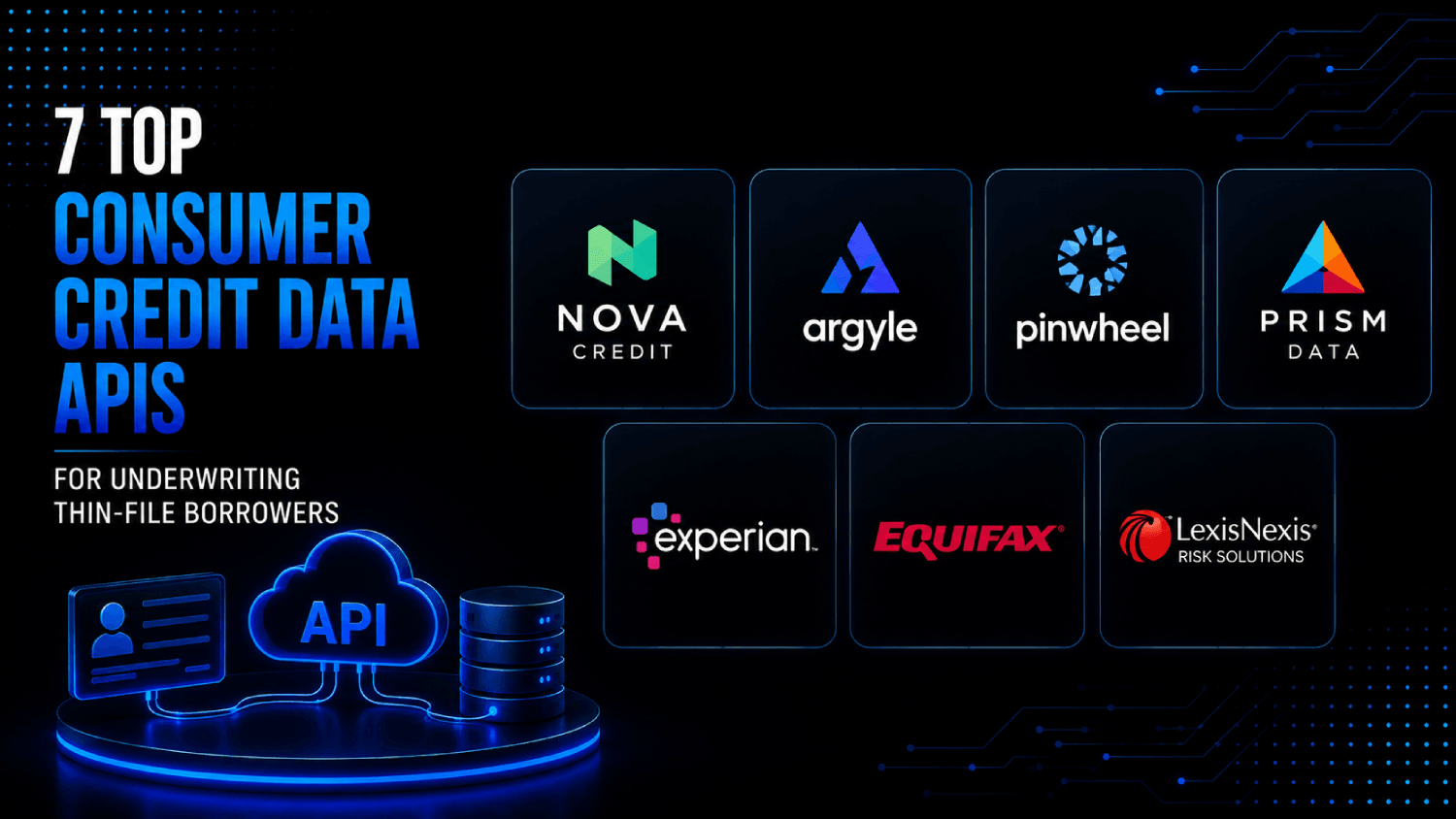

- Roughly 26 million Americans are “credit invisible” according to the Consumer Financial Protection Bureau, and tens of millions more have files too thin to score reliably with traditional bureau data alone.
- Alternative credit data APIs, covering payroll, bank transactions, rent, utilities, and international credit history, can approve borrowers that Equifax, Experian, and TransUnion would decline on file thickness alone.
- Coverage, consent mechanics, FCRA permissibility, and latency vary significantly across providers. Choosing the wrong one means paying for data your models cannot actually use.
- The best provider for a US consumer lender targeting recent immigrants is not the same one that works for a BNPL platform serving gig workers.
- Argyle and Pinwheel lead on payroll connectivity for income verification. Nova Credit is the clear pick for new-to-country borrowers. Experian and Equifax cover the bureau layer with modern API wrappers.
The best consumer credit data API for thin-file underwriting depends on the specific gap in your applicant pool. Payroll APIs like Argyle and Pinwheel fill income and employment data for borrowers without credit history. Nova Credit bridges international credit files for immigrants and new-to-country applicants. Experian and Equifax provide bureau-layer APIs with FCRA-compliant score delivery. LexisNexis and Prism Data round out the stack with identity-linked alt-data and cash-flow scoring, respectively. No single API covers all thin-file segments.
Why the Big Three Bureaus Miss a Quarter of the US Adult Population
Equifax, Experian, and TransUnion collect credit data from lenders who report to them. If a borrower has never had a credit card, auto loan, or student loan, there is nothing to collect. The Consumer Financial Protection Bureau has documented that around 26 million Americans fall into this “credit invisible” category, with another roughly 19 million having unscorable files, according to CFPB research. That is not a rounding error. It is a substantial share of the addressable US lending market sitting outside the reach of credit scoring models built on bureau tradelines alone.
Thin-file borrowers cluster in predictable segments: recent immigrants, young adults entering the workforce, people who pay cash and rent, and formerly banked individuals rebuilding after a credit event. Many are employed, earning stable income, and paying bills on time. Bureau data just does not see any of it. Alternative credit data APIs exist specifically to surface these signals for underwriters who want to lend beyond the traditional scoreable population.
The FCRA compliance layer matters as much as the data itself. Any data used to make a credit decision in the US must comply with the Fair Credit Reporting Act, and not all alternative data providers are consumer reporting agencies. Before integrating any API on this list, confirm CRA status or get legal clarity on permissible use. Our overview of FCRA compliance services for lending and credit data startups covers this in more detail.
How to Evaluate a Consumer Credit Data API: The FintechSpecs Thin-File Fit Test
Most vendor comparison guides evaluate APIs on integration complexity and price. For thin-file underwriting, those factors matter less than four specific criteria we call the FintechSpecs Thin-File Fit Test. Each criterion targets a failure mode that lenders hit after signing a contract.
Population coverage overlap asks how much of your actual applicant pool this API will return data for. An API with 80% payroll coverage sounds strong until you realize your borrowers are 60% gig workers and self-employed, where most payroll APIs drop to under 40% hit rates.
FCRA permissibility asks whether the provider operates as a consumer reporting agency. If they do not, you may not be able to use their data as a standalone adverse action basis, which limits how much weight your model can place on it without separate legal scaffolding.
Consent and data freshness asks how the borrower grants access and how stale the data can be. Payroll APIs that pull once at application time give you a point-in-time snapshot. APIs that support ongoing access let you monitor employment changes after origination, which matters for portfolio risk.
Model integration friction asks what format the data arrives in. Raw bank transaction JSON that your team must normalize is a different lift than a pre-computed cash-flow score delivered alongside bureau-style attributes. Both are legitimate, but they require different internal resources.
Which Alternative Credit Data API Is Right for Your Borrower Segment?
Before ranking individual providers, the decision tree matters. The right API depends on which thin-file segment you are targeting.
| Borrower Segment | Primary Data Gap | Best-Fit API Type | Providers to Evaluate |
|---|---|---|---|
| Recent immigrants, new-to-country | No US credit history | International credit portability | Nova Credit |
| Gig workers, 1099 earners | Irregular income, no pay stubs | Bank transaction / cash-flow | Prism Data, Plaid |
| W-2 employees, first credit product | No tradelines | Payroll connectivity | Argyle, Pinwheel |
| Young adults, students | Short or empty file | Utility, rent, telecom | Experian Boost (consumer), LexisNexis |
| Mixed thin-file population | Multiple gaps | Bureau API + alt-data overlay | Experian, Equifax + Argyle or Prism |
The 7 Top Consumer Credit Data APIs for Thin-File Underwriting
1. Nova Credit , Best for New-to-Country and Immigrant Borrowers
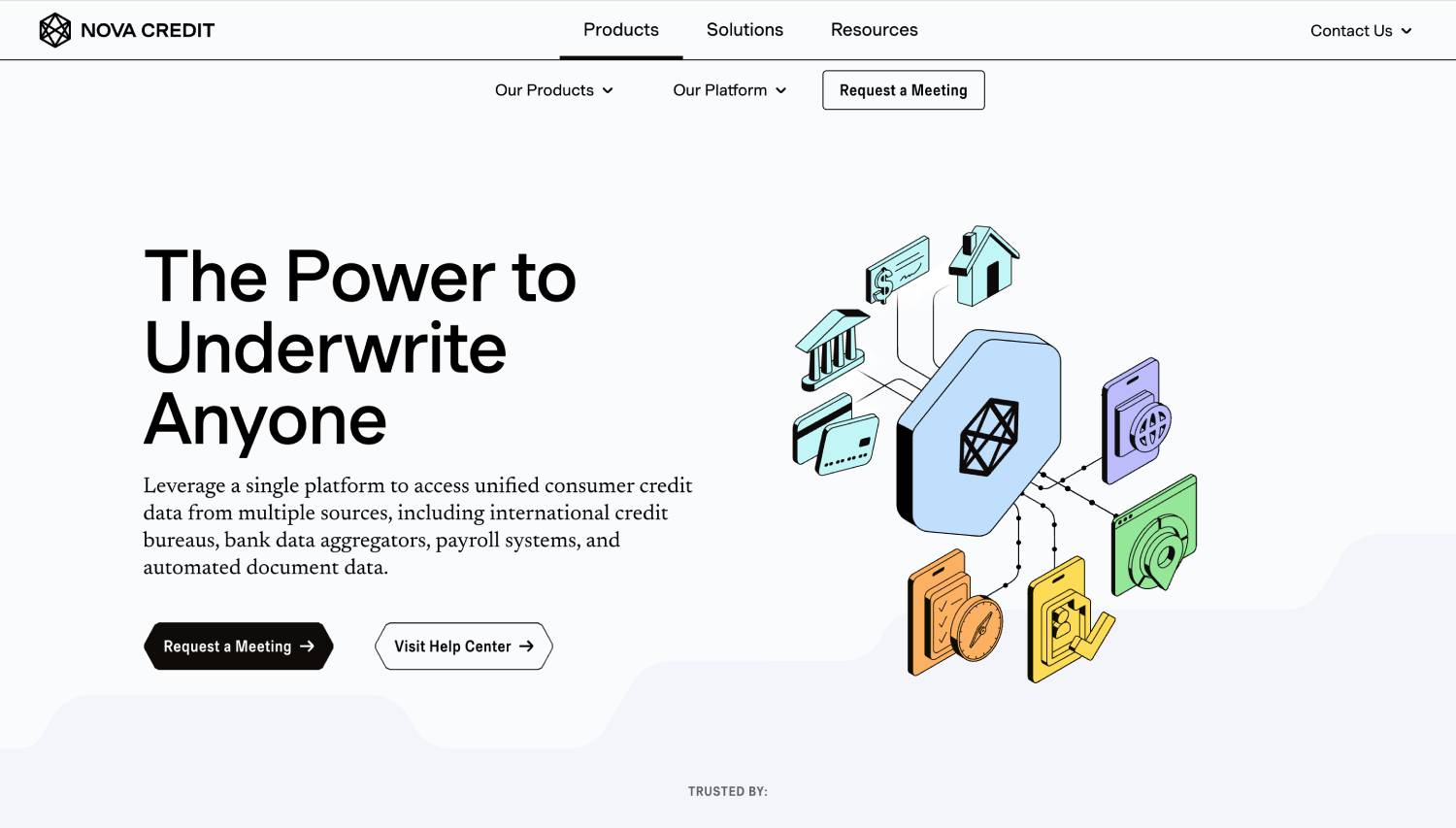
Nova Credit translates foreign credit bureau data from countries including Mexico, India, Canada, the UK, Australia, and several others into a US-equivalent format lenders can use at origination. It is the only provider in this list with a product specifically designed for applicants who have substantial credit history abroad but are credit invisible in the US.
Nova Credit operates as a consumer reporting agency, which means its Credit Passport product delivers FCRA-permissible data. Lenders using it can use it as a standalone adverse action basis. American Express, MPOWER Financing, and several major US apartment networks have publicly disclosed integrations. Nova Credit does not publicly list per-pull pricing. For volume estimates and segment coverage, you will need to contact their sales team directly.
The limitation is geography. Nova Credit’s coverage is strong for immigrants from certain origin countries and weaker for others. If your thin-file population includes refugees or immigrants from countries outside their bureau partnerships, hit rate will drop. Always request a coverage table for your specific applicant demographics before signing.
2. Argyle , Best Payroll Connectivity for W-2 Employment Verification
Argyle connects to employer payroll systems and gig platforms to return real-time employment, income, and identity data directly from the source. The API supports hundreds of payroll providers and gig platforms. Lenders use it to verify that a borrower with no credit file is, in fact, employed and earning consistent income, which is the core underwriting proxy for repayment capacity when tradeline history is absent.
Argyle’s data includes pay stubs, pay frequency, gross and net pay, employment start date, and job title in structured JSON. It also supports ongoing monitoring, meaning you can set up webhooks to receive alerts if a borrower’s employment status changes after origination. That ongoing access is worth more than the point-in-time snapshot most lenders default to using.
Argyle competes directly with Pinwheel on payroll connectivity. Argyle has historically emphasized lender use cases and income verification specifically. Pricing is not publicly listed. For platforms evaluating payroll data as part of a broader income verification stack, our comparison of the top income and employment verification APIs for lenders breaks down how Argyle, Pinwheel, and others compare on coverage and cost.
3. Pinwheel , Best for Gig and W-2 Income Verification at Scale
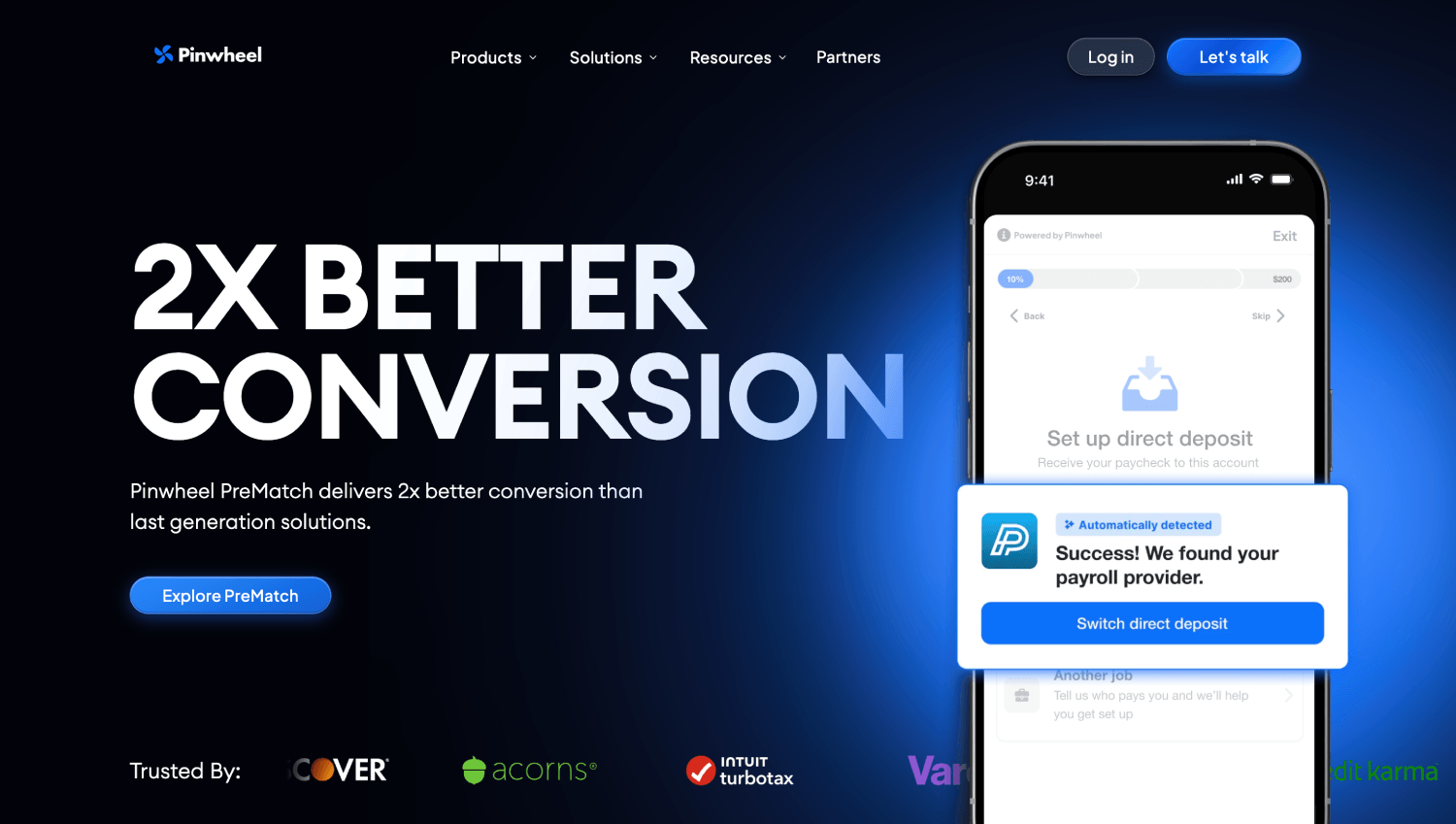
Pinwheel also connects to payroll providers and gig platforms through a consumer-permissioned API. As Pinwheel’s own documentation notes, payroll data connectivity lets lenders connect to their customer’s data with permission and get real-time income verification. Their coverage spans major payroll providers including ADP, Workday, and Gusto, plus gig platforms like Uber and DoorDash.
Where Pinwheel differentiates is in direct deposit switching, a feature that lets lenders offer deposit account products alongside lending decisions. For consumer lenders trying to deepen relationships with thin-file borrowers, that combination of income verification plus deposit switching creates a more complete product loop than pure data APIs offer. Pricing requires a direct conversation with their team.
Pinwheel and Argyle largely overlap in capability, so the real decision between them comes down to specific payroll provider coverage for your applicant base, integration timeline, and commercial terms. Request a coverage overlap analysis for your actual user data before committing to either.
4. Prism Data , Best for Cash-Flow Scoring on Bank Transaction Data
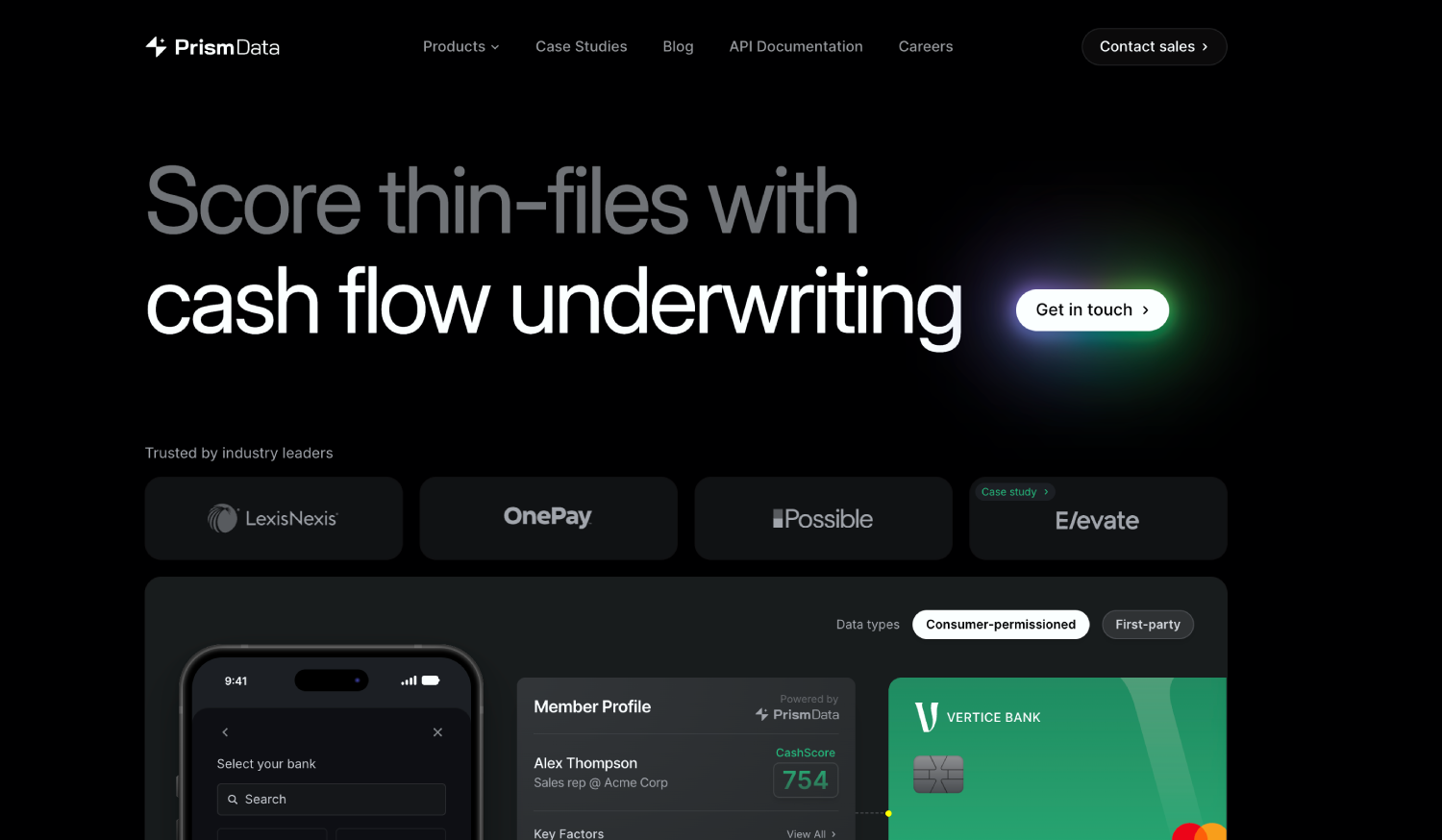
Prism Data specializes in turning raw bank transaction data into structured cash-flow attributes and scores designed specifically for thin-file underwriting decisions. Rather than requiring lenders to build their own transaction categorization and scoring logic, Prism delivers pre-computed outputs: income stability metrics, recurring expense ratios, overdraft frequency, and cash-flow scores that feed directly into credit models.
For gig workers, self-employed borrowers, and anyone whose income arrives through non-payroll channels, cash-flow scoring on bank transaction data is often the strongest available signal. A borrower depositing consistent freelance income and maintaining a positive average daily balance over 12 months is a meaningfully different risk profile than someone with the same bureau void but erratic deposits and frequent negative balances. Prism quantifies that difference in a format underwriters can act on.
The catch is that Prism requires bank transaction data as input, which means you need a bank connectivity layer (Plaid, MX, Finicity, or similar) already pulling that data. Prism is not an end-to-end bank data solution. It is a scoring and attributes layer that sits on top of existing connectivity. If you are evaluating the broader bank data infrastructure question, the Plaid vs MX vs Finicity breakdown covers that decision separately.
5. Experian , Best Bureau-Layer API with Alt-Data Signals Built In
Experian offers multiple API products for lenders, including the Experian Connect API for embedding credit check functionality into loan origination workflows. Beyond standard bureau data, Experian has developed Boost, a product that lets consumers add utility, telecom, and streaming service payments to their Experian credit file. Lenders using Experian’s bureau API can, in some configurations, access Boost-enhanced files that reflect these additional positive payment signals.
Experian’s real advantage for thin-file underwriting is breadth. They cover the full bureau layer, offer fraud signals, and have ongoing development in alternative data inclusion. For a lender who wants a single primary data vendor relationship covering both traditional credit scores and incremental alt-data signals, Experian’s API product range goes further than any pure-play alternative data provider. Pricing is negotiated commercially. The public Experian Connect API page confirms the product exists but does not list per-pull rates.
The limitation is that Experian’s alt-data signals augment bureau files rather than replacing them. A borrower who is completely credit invisible still returns a thin or no-hit result. Experian works best as the foundation layer that alternative data APIs complement, not as a standalone thin-file solution.
6. Equifax , Best for Combined Bureau and Employment/Income Data via The Work Number

Equifax operates The Work Number, one of the largest commercial employment and income databases in the US, alongside its traditional consumer credit bureau. The Work Number receives automated payroll feeds directly from thousands of employers, meaning it can return employment verification and income history without requiring borrower action in many cases.
For thin-file underwriting, the practical benefit is frictionless income verification. A borrower who cannot produce pay stubs and has no tradeline history may still appear in The Work Number if their employer participates. Equifax’s consumer credit data API products can return bureau data and income verification through a single integration point. That reduces the number of vendor relationships a lender needs to manage.
Coverage gaps exist for employers who do not report to The Work Number, particularly small businesses and gig platforms. Self-employed borrowers are largely absent. For those segments, Argyle or Pinwheel with direct payroll connectivity will outperform The Work Number significantly. Equifax API pricing is negotiated by volume and product combination.
7. LexisNexis Risk Solutions , Best for Identity-Linked Alternative Signals

LexisNexis Risk Solutions offers RiskView, a consumer credit scoring product built on alternative data including property records, professional licenses, utility payment history, and public records linked to an individual’s identity. It is designed to score consumers who have no usable bureau file, returning a score and attributes where Experian, Equifax, and TransUnion return a no-hit.
LexisNexis operates as a consumer reporting agency, which makes RiskView scores FCRA-permissible for credit decisioning. This is what separates RiskView from general identity data products in the LexisNexis portfolio. Lenders serving credit-invisible populations who still need a scoreable output rather than raw attributes will find this particularly useful in combination with an existing bureau pull.
RiskView does not replace income or employment verification. It addresses a different thin-file problem: the borrower with a detectable identity and a financial footprint (property, utilities, licenses) but no credit tradelines. For lenders building multi-vendor thin-file stacks, LexisNexis fills gaps that payroll APIs and cash-flow scorers do not cover.
Alt-Data Coverage and Thin-File Lift: A Provider Comparison
| Provider | Primary Data Type | FCRA CRA Status | Best Thin-File Segment | Ongoing Monitoring | Public Pricing |
|---|---|---|---|---|---|
| Nova Credit | International credit bureau translation | Yes | Immigrants, new-to-country | No | Not listed |
| Argyle | Payroll connectivity | Not as primary CRA | W-2 employees, first-credit | Yes (webhooks) | Not listed |
| Pinwheel | Payroll + gig connectivity | Not as primary CRA | W-2 + gig workers | Yes | Not listed |
| Prism Data | Cash-flow scoring on bank transactions | Yes | Gig, self-employed, variable income | Depends on connectivity layer | Not listed |
| Experian | Bureau + Boost alt-data | Yes | Thin-file with utility/telecom history | Yes | Negotiated |
| Equifax | Bureau + The Work Number income | Yes | Employed with participating employer | Yes | Negotiated |
| LexisNexis RiskView | Identity-linked alt-data score | Yes | Credit invisible with public record footprint | No | Negotiated |
What Does a Thin-File Underwriting Stack Actually Look Like in Practice?
Consider a consumer lender offering personal loans to first-time borrowers. A bureau pull on a 23-year-old recent college graduate returns a thin file: one student loan, no revolving credit, a 9-month credit history. The bureau score is either unscorable or in the low 600s based purely on limited data. The traditional model declines.
A multi-API stack changes the picture. The lender runs an Argyle pull and confirms 14 months of continuous W-2 employment at a consistent salary, with income matching the stated application figure. A Prism Data cash-flow analysis on the borrower’s checking account shows 12 months of positive average daily balances, no overdrafts, and consistent rent payments. Neither data point would appear in a bureau file. Together, they support an approval that bureau data alone could not generate.
The compliance step is where many lenders underestimate the complexity. If Argyle is not being used as a CRA-reportable data source, the lender needs to document how employment data informs the decision without functioning as a sole-basis adverse action trigger. That is a legal question as much as a product question. Our fintech product and compliance readiness checklist includes underwriting data permissibility as a checkpoint worth running before you build.
What Does a Consumer Credit Data API Integration Actually Cost?
None of the seven providers on this list publish per-pull pricing publicly. Bureau APIs from Experian and Equifax are negotiated by volume with pricing that varies significantly by pull volume, product mix, and whether you layer in scoring products alongside raw data. Alternative data providers like Argyle, Pinwheel, Nova Credit, and LexisNexis typically require a sales conversation before any pricing information is available.
What is publicly known is the cost structure pattern. Payroll connectivity APIs typically charge per successful connection or per report pull. Bureau APIs charge per inquiry, with volume tiers. Cash-flow scoring APIs may charge per score generated or per month per active user. Running multiple APIs in a waterfall costs more than a single bureau pull, but the underwriting lift on the incremental approvals often more than covers the cost difference if the lender prices loans to reflect actual risk.
For lenders worried about total infrastructure costs, the hidden costs that erode fintech margins covers how data vendor costs compound across the stack in ways that are not always obvious at contract signing.
How Does Alternative Credit Data Interact with Fair Lending Requirements?
Fair lending compliance is the underappreciated risk in any thin-file program. Alternative data can create disparate impact on protected classes even when the intent is inclusion. If a data source is systematically less available for borrowers in certain zip codes, or if a particular signal correlates strongly with a protected characteristic, the lender bears the regulatory burden.
This does not mean alternative data is legally risky by default. The CFPB has published guidance encouraging lenders to explore alternative data to expand access to credit. Providers like Nova Credit and LexisNexis have built their products specifically to support fair lending compliance and can provide disparate impact documentation. The work is in validating that the data you are using meets those standards for your specific model and population, not just trusting that the vendor has done it.
Lenders building new underwriting models should also be aware that any model change that materially affects credit decisions may require model validation and regulatory review under their charter or sponsor bank agreement. Connecting a new alt-data API is not just a product integration. If you are early in this compliance build, the data enrichment API comparison for fintech underwriting teams covers related infrastructure considerations.
Frequently Asked Questions
What is an example of alternative credit data for underwriting?
Alternative credit data includes any financial signal not captured in a traditional bureau file. Common examples are payroll and employment records (accessed via APIs like Argyle or Pinwheel), bank transaction history analyzed for cash-flow patterns (Prism Data), rent and utility payment records (Experian Boost, LexisNexis), international credit bureau data (Nova Credit), and income records from The Work Number (Equifax). These signals help lenders assess repayment capacity for borrowers who have no or limited tradeline history with Equifax, Experian, or TransUnion.
Does Experian have an API for lenders?
Yes. Experian offers the Experian Connect API, which lets lenders embed credit check functionality directly into loan origination platforms. Beyond standard bureau reports and scores, Experian’s API products can include Boost-enhanced files that add utility, telecom, and streaming service payment data for consumers who have opted in. Pricing is negotiated commercially. Experian’s public product pages describe the API capabilities but do not list per-pull rates.
Does TransUnion have an API for credit data?
TransUnion offers API-based access to its credit data through developer documentation and enterprise integrations. TransUnion has also developed its own alternative data products, including TruVision and CreditVision, which incorporate trended credit data and alternative signals. However, TransUnion does not appear in this list because their thin-file and alternative data product line is less differentiated than the dedicated alternative data providers covered above for the specific use cases described.
What is thin-file lending?
Thin-file lending refers to extending credit to borrowers whose bureau files contain too little data to generate a reliable score. A thin file might contain fewer than five tradelines, a credit history shorter than six months, or no accounts at all (making the borrower “credit invisible”). Thin-file borrowers are often declined automatically by traditional bureau-based models regardless of their actual financial behavior, which is the problem alternative credit data APIs are built to solve.
What is a credit bureau API?
A credit bureau API is a programmatic interface that lets lenders and financial services applications retrieve consumer credit reports and scores from Equifax, Experian, or TransUnion without manual processes. Bureau APIs embed credit data retrieval directly into loan origination systems, reducing manual processing time and supporting real-time decisioning. CRS, Experian Connect, and Equifax’s developer products are examples of bureau API products built for lenders.
What does new-to-credit data mean for underwriters?
New-to-credit data refers to financial signals generated by consumers who have recently entered the credit system or have not yet established traditional credit accounts. For underwriters, new-to-credit data usually means payroll records, bank cash flows, rent payment history, or utility payments that can serve as proxies for creditworthiness when bureau tradelines do not exist. APIs like Argyle, Pinwheel, and Nova Credit (for immigrant populations) are the primary infrastructure for accessing new-to-credit signals programmatically.
Are alternative credit data APIs FCRA compliant?
It depends on the provider. Providers operating as consumer reporting agencies (CRAs) under the FCRA, including Nova Credit, Prism Data, LexisNexis, Experian, and Equifax, deliver data that lenders can use as a basis for adverse action decisions with proper disclosure requirements. Payroll connectivity APIs like Argyle and Pinwheel are generally not CRAs and may be used to inform decisions, but lenders need specific legal guidance on how to use their data in adverse action notices. Always confirm CRA status before building compliance workflows around any provider.
Where the Real Complexity Lives in Thin-File Underwriting
The API integration itself is usually the easiest part. Connecting to Argyle or Prism Data is a few weeks of engineering work. The harder problem is building a model that appropriately weights alternative signals alongside bureau data, validating that model for disparate impact, and documenting it for regulators or sponsor bank compliance teams. Lenders who underestimate that compliance layer find themselves with a working integration they cannot legally deploy.
The second mistake is choosing a provider for its headline coverage number without validating it against your actual applicant file. An API that achieves high hit rates in the aggregate may perform poorly for your specific demographic mix. Request a sandbox test against a representative sample of real applications before signing any volume commitment. The providers on this list will accommodate that request if they want your business.
Thin-file underwriting is not a workaround. For lenders targeting the right segments, it is a material expansion of the addressable market. The population of employed, financially stable borrowers that bureau data systemically misses is large enough to represent a real credit product opportunity, not just a compliance checkbox. The infrastructure to reach them now exists. The constraint is knowing which tool fits which gap, and building the compliance scaffolding to use it.