
- DeFi lending protocols let you deposit stablecoins on-chain and earn yield without handing custody to a centralized platform , Aave, Compound, Morpho, Spark, and Euler are the protocols most institutional and retail depositors use today.
- Rates fluctuate with utilization, so the advertised APY on any protocol at any moment is not guaranteed to hold , understanding utilization-based rate models is non-negotiable before you deploy capital.
- Smart contract risk is real, but the oldest protocols (Aave v3, Compound v3) have years of live security audits and hundreds of millions in TVL without a core contract exploit , newer protocols offer higher rates with proportionally higher audit uncertainty.
- The CeFi-versus-DeFi choice is not purely ideological , it comes down to custody preference, regulatory exposure, and whether you can hold a crypto wallet at all.
- For fintech treasury teams already holding stablecoins, on-chain lending protocols represent a structurally different yield source than HYSA or CeFi interest accounts , one worth understanding before dismissing.
The most-used DeFi lending protocols for stablecoin yield are Aave v3, Compound v3, Morpho, Spark, and Euler v2. Each operates through audited smart contracts on Ethereum and other EVM chains. Depositors supply USDC, USDT, or DAI and earn variable interest paid by borrowers who post crypto collateral on-chain. No account approval, no KYC gate, no custodian holding your funds , the protocol holds them in a smart contract you can verify directly on-chain.
Why Are DeFi Lending Protocols Different From CeFi Yield Accounts?
Most stablecoin yield products people encounter first , Coinbase’s USDC rewards, Nexo, or Ledn , are custodial. You send your stablecoins to a company, that company deploys them, and you receive interest from that company. If the company fails, freezes withdrawals, or gets regulated out of existence, your funds are at their discretion. That is the CeFi model, and 2022 made its failure modes visible.
DeFi lending protocols work differently. When you deposit USDC into Aave v3, the USDC goes into a smart contract on Ethereum. The contract issues you aUSDC tokens representing your claim. Borrowers lock ETH, wBTC, or other accepted collateral, and the contract automatically liquidates undercollateralized positions. No human at Aave decides whether to pay you back. The protocol does.
The meaningful trade-off: with CeFi, you are trusting a company’s balance sheet. With DeFi, you are trusting code that has been audited but is still software. Both carry risk. They are just different risks, and understanding that distinction is the prerequisite for evaluating any stablecoin yield protocol on-chain. If you are exploring the broader stablecoin infrastructure stack, the full stablecoin infrastructure provider breakdown on FintechSpecs covers the custodial and non-custodial layers in more detail.
How Do DeFi Lending Rates Actually Work?
Every major onchain lending protocol uses a utilization-based interest rate model. The rate borrowers pay , and therefore the rate lenders earn , rises automatically as a higher percentage of deposited funds gets borrowed. At low utilization (say, 40%), rates are modest. At high utilization (80% or above), rates spike sharply to incentivize new deposits and discourage additional borrowing.
This means the APY shown on a protocol’s dashboard can move meaningfully within a single day. Aave v3’s USDC supply rate on Ethereum mainnet has historically ranged from under 2% to over 10% depending on market conditions. No DeFi protocol can promise a fixed rate because the rate is determined by real-time supply and demand, not a company’s treasury.
What stabilizes rates somewhat: Morpho, Spark, and some Compound markets source liquidity from multiple pools or integrate with DAI’s Dai Savings Rate (DSR), which creates a rate floor backed by MakerDAO’s protocol revenue rather than pure borrow demand. That structural difference matters when you are comparing rate stability across protocols.
The FintechSpecs DeFi Lending Stress Test: Four Checks Before You Deposit
Most DeFi protocol comparisons list features. This framework evaluates downside scenarios , the situations that matter when markets move fast. Run these four checks on any protocol before deploying meaningful capital.
1. Smart Contract Audit Depth
Look at how many independent firms have audited the protocol, how recently, and whether audits are public. Aave v3 has been audited by Trail of Bits, OpenZeppelin, ABDK, and Peckshield, among others. Compound v3 (Comet) was audited before its mainnet launch and maintains an active bug bounty on Immunefi. A newer protocol with a single audit and no live track record is a categorically different risk profile, regardless of the advertised APY.
2. Collateral Quality and Liquidation Parameters
The safety of your deposit as a lender depends on whether the protocol can liquidate borrower positions before they go underwater. Check the loan-to-value ratios and liquidation thresholds for the collateral assets the protocol accepts. Protocols that accept illiquid or volatile collateral at high LTV ratios are the ones that produce bad debt when markets crash. Aave v3 introduced isolation mode to contain exactly this risk for newer assets.
3. Withdrawal Liquidity Under Stress
At very high utilization, a protocol’s liquidity pool can be nearly fully borrowed , meaning depositors cannot immediately withdraw their full balance. This is a normal protocol mechanic, not a scam, but it is worth knowing. Check the current utilization rate before depositing and understand the protocol’s interest rate model well enough to know at what utilization you should expect withdrawal friction.
4. Oracle Dependency
DeFi lending protocols price collateral using on-chain oracles, primarily Chainlink or the protocol’s own TWAP system. A manipulated or stale oracle price can produce bad-debt attacks. Aave v3 and Compound v3 both rely heavily on Chainlink. Morpho’s architecture delegates oracle selection to market creators, which introduces variability. For any protocol you are evaluating, confirm which oracle it uses for the assets you care about.
Best DeFi Lending Protocols for Stablecoin Yield: Compared
| Protocol | Chain(s) | Key Stablecoin Markets | Rate Model | Notable Risk Factor | Best For |
|---|---|---|---|---|---|
| Aave v3 | Ethereum, Arbitrum, Base, Polygon, Optimism | USDC, USDT, DAI, GHO | Utilization-based, pool model | Governance parameter changes | Conservative depositors, multi-chain exposure |
| Compound v3 (Comet) | Ethereum, Base, Arbitrum | USDC, USDT | Utilization-based, single-asset base | Lower liquidity vs Aave on some chains | Depositors who want simpler architecture |
| Morpho | Ethereum, Base | USDC, USDT, DAI | Peer-to-peer matching over Aave/Compound + standalone vaults | Market curator risk in vaults | Rate-optimizing depositors comfortable with more complexity |
| Spark | Ethereum, Gnosis | DAI/USDS, USDC | DAI Savings Rate (DSR) + utilization | MakerDAO governance dependency | DAI/USDS holders, conservative DeFi users |
| Euler v2 | Ethereum | USDC, USDT | Utilization-based, modular vault architecture | Newer version, shorter live track record | Experienced DeFi users comfortable with newer protocols |
Aave v3: The Baseline for On-Chain Stablecoin Lending
Aave is the protocol most people mean when they say “DeFi lending.” Its v3 architecture, deployed across Ethereum mainnet and several L2s, introduced efficiency mode (eMode) for correlated asset pairs, isolation mode for riskier collateral, and portal functionality for cross-chain liquidity. For stablecoin depositors, the relevant number is the supply APY on USDC or USDT, which is visible in real time on Aave’s app dashboard and fluctuates with borrow demand.
Aave’s governance token (AAVE) controls protocol parameters through on-chain voting, which means rate curves, asset listings, and risk parameters can change through a governance process. That is a feature for decentralization advocates and a risk factor for depositors who want stability , a governance vote can lower the rate cap or change collateral requirements. Aave DAO has also launched GHO, its own overcollateralized stablecoin, which adds a second revenue stream to the protocol but introduces a new asset risk for depositors who want pure USDC/USDT exposure.
Compound v3 (Comet): Simpler Architecture, Narrower Market
Compound v3 abandoned the older pooled model and rebuilt around single-asset base markets. Each Comet deployment has one borrowable asset (USDC on mainnet, USDT on others) and a defined set of accepted collateral. Borrowers cannot use the base asset as collateral, which eliminates a category of recursive leverage attacks that plagued older DeFi designs.
For stablecoin suppliers, this simplicity is the appeal. You supply USDC, earn interest from USDC borrowers, and the market’s risk profile is defined by the collateral types the governance has approved. Total value locked in Compound v3 is lower than Aave’s, which generally means lower supply-side liquidity , withdrawal timing under stress can differ. Compound also operates a COMP governance token, and its bug bounty program on Immunefi has been active since before v3 launched.
Morpho: Higher Rates Through Peer-to-Peer Matching
Morpho started as an optimizer layer on top of Aave and Compound, matching lenders and borrowers directly when possible to eliminate the spread between the two rates. Its current iteration, Morpho Blue and MetaMorpho vaults, operates as a standalone lending infrastructure where third-party curators (institutions like Gauntlet and Block Analitica) create and manage risk-parameterized vaults.
The rate advantage over Aave on the same assets is real when utilization is high, because peer-to-peer matching removes the pool spread. The trade-off is that depositors into MetaMorpho vaults are also trusting the curator’s risk decisions , specifically, which markets the vault allocates to and at what LTV thresholds. A well-curated vault from an experienced firm is arguably safer than a poorly parameterized Aave pool. A poorly curated vault is the opposite. Knowing who curates your vault matters as much as knowing which protocol hosts it. For teams already managing stablecoin treasury exposure, the stablecoin yield platforms for corporate treasuries comparison covers how institutional depositors approach this.
Spark: The MakerDAO Protocol for Dai and USDS Holders
Spark is MakerDAO’s (now Sky’s) native lending protocol, forked from Aave v3’s codebase and optimized for DAI and USDS exposure. The most relevant feature for yield-seekers is the Dai Savings Rate (DSR), which distributes a portion of MakerDAO’s protocol revenue to DAI holders who deposit into the DSR contract. Unlike utilization-based rates, the DSR is set by MakerDAO governance and changed deliberately, not in real time based on borrow demand.
This creates a more stable and predictable yield profile for DAI/USDS holders specifically. The downside is concentration: your entire yield depends on MakerDAO’s revenue, governance stability, and the protocol’s collateral quality. MakerDAO has decades (in DeFi terms) of history and has weathered multiple market crashes with its peg intact, but it is a meaningful single point of governance dependency. Spark also accepts USDC on its main deployment, with rates influenced by Aave’s v3 markets given the shared codebase.
Euler v2: The Modular Challenger Worth Watching
Euler v1 was exploited in March 2023 in one of the largest DeFi hacks on record , approximately $197 million was drained, according to CoinDesk’s reporting on the incident, though the attacker later returned the funds. Euler v2 was rebuilt from scratch with a modular vault architecture, audited by multiple firms, and relaunched in 2024. The team’s willingness to return after a public exploit and rebuild is notable, but the live track record for v2 is shorter than Aave’s or Compound’s by a significant margin.
What distinguishes Euler v2 architecturally is its vault-level risk isolation. Each vault is independent, so a problem in one market cannot propagate across the protocol. Operators (comparable to Morpho’s curators) set risk parameters for their vaults. For experienced DeFi users who track protocol development closely, Euler v2 represents a genuinely different architectural approach. For conservative depositors or treasury teams with a mandate for proven infrastructure, the shorter live track record is a disqualifying factor at this stage.
What Does Stablecoin Yield on DeFi Protocols Actually Look Like in Practice?
Consider a treasury manager at a Series B fintech holding $500,000 in USDC. The team is not looking to take directional crypto exposure , they want yield on dollars they have already converted. A CeFi option like Coinbase’s USDC rewards program offers a fixed rate but requires trusting Coinbase’s custodial structure and is subject to program changes with notice. Depositing into Aave v3’s USDC market on Base earns a variable rate tied to actual borrow demand, the funds are withdrawable on-chain at any time (subject to utilization), and the smart contracts have years of audited history.
The operational difference: the fintech team needs a hot wallet or a smart contract treasury tool to interact with Aave directly. This is not a trivial operational lift for teams that have never managed on-chain assets. But teams that have already worked through the custody and wallet infrastructure questions , often because they are issuing stablecoins, accepting crypto payments, or working with RWA tokenization , find the marginal effort low. If your team is evaluating stablecoin treasury management tools, those platforms typically offer DeFi protocol integrations that abstract away direct wallet interaction.
How Does On-Chain Borrowing Work on These Platforms?
Borrowing on DeFi lending protocols is always overcollateralized. A borrower posts ETH worth $1,500 to borrow $1,000 in USDC. If ETH price drops enough that the position’s loan-to-value ratio breaches the liquidation threshold, the protocol automatically liquidates enough collateral to restore the ratio. No margin call email, no negotiation , the smart contract executes.
This model exists to protect lenders. Stablecoin depositors earn yield from borrowers who are paying to access liquidity without selling their collateral , common among traders who want to maintain ETH exposure while accessing dollars, or among teams that hold crypto treasury and want to borrow stablecoins against it for operational expenses. The absence of undercollateralized lending in most DeFi protocols is both a safety feature for lenders and a constraint that limits the addressable borrower market compared to traditional lending. For platforms building credit products that sit adjacent to DeFi infrastructure, the embedded credit API comparison covers the traditional lending side of that stack.
Frequently Asked Questions
Is DeFi lending safe for stablecoin yield?
No on-chain protocol is risk-free. Smart contract bugs, oracle manipulation, and governance attacks are real risks. The oldest protocols , Aave v3 and Compound v3 , have the longest live security track records and the most public audit coverage. Newer protocols carry higher smart contract risk in exchange for differentiated architecture or higher rates. Diversifying across protocols and keeping individual position sizes proportional to your risk tolerance is the standard approach among experienced DeFi depositors.
What stablecoins earn the highest yield on DeFi platforms?
USDC and USDT have the deepest liquidity and are supported by every major protocol. DAI and USDS offer DSR-backed yield through Spark that is more stable but directly tied to MakerDAO governance. Newer stablecoins like PYUSD sometimes offer boosted rates through protocol incentive programs, but incentivized rates are temporary and funded by token emissions rather than real borrow demand , always distinguish between organic yield and incentive-driven yield.
Can a fintech company or DAO use DeFi lending protocols for treasury yield?
Yes, and several do. The operational requirements are a wallet infrastructure that can interact with smart contracts and an internal policy framework for on-chain asset management. Teams managing stablecoin treasuries on-chain typically use multi-sig wallets (Gnosis Safe) or dedicated treasury management tools to enforce approval workflows. The legal and tax treatment of DeFi yield varies by jurisdiction and is not standardized , consulting legal counsel before deploying treasury capital on-chain is warranted.
How are DeFi lending rates different from CeFi stablecoin interest rates?
CeFi rates are set by the platform and can be changed at any time at the company’s discretion. DeFi rates are algorithmically determined by utilization in real time. CeFi rates are more predictable but dependent on the platform’s solvency and business decisions. DeFi rates are transparent and auditable but can move significantly within a single day. For depositors who prioritize predictability, CeFi is structurally simpler. For depositors who prioritize transparency and non-custodial control, DeFi is structurally superior.
What is the minimum deposit for DeFi lending protocols?
There is no protocol-level minimum deposit on Aave, Compound, Morpho, Spark, or Euler. The practical floor is the gas cost of the deposit transaction. On Ethereum mainnet, gas costs can make small deposits economically inefficient. On L2 networks like Base, Arbitrum, or Optimism , all of which host Aave v3 markets , gas costs are significantly lower, making smaller deposits viable. Morpho and Aave on Base are the most gas-efficient options for sub-$10,000 deposits.
What is the difference between Morpho Blue and MetaMorpho?
Morpho Blue is the core lending protocol , a permissionless set of isolated markets where anyone can create a lending pool for any asset pair. MetaMorpho is the vault layer built on top of Morpho Blue, where curators (typically professional risk managers) aggregate liquidity from multiple Morpho Blue markets into a single vault interface. Most retail and institutional depositors interact with MetaMorpho vaults rather than Morpho Blue markets directly, because the vault abstracts market selection and rebalancing into a managed product.
Do DeFi lending protocols require KYC?
Aave, Compound, Morpho, Spark, and Euler do not require KYC at the protocol level. Any wallet can interact with the smart contracts directly. Some front-end interfaces geo-block certain jurisdictions , Aave’s web app, for example, has blocked users from certain countries at the interface level, though the underlying contracts remain accessible on-chain. The absence of KYC is a feature for some users and a compliance concern for others. Institutions with AML obligations should consult compliance counsel before using DeFi protocols, even where technically accessible.
How does Spark’s Dai Savings Rate compare to Aave’s USDC rate?
The DSR is set by MakerDAO governance and functions as a baseline yield for DAI holders that does not depend on real-time borrow utilization. Aave’s USDC rate is purely utilization-driven and can be higher or lower than the DSR depending on market conditions. Historically, the DSR has served as a rate anchor , when it is set high, it competes with Aave’s supply rates and draws capital away from Aave USDC markets. Depositors holding DAI or USDS generally get the DSR yield through Spark as a floor, with the Spark lending market adding additional yield on top from borrower demand.
The Protocol Risk Spectrum: Where Each Protocol Sits
Framing all five protocols on a single risk axis misses the point. Risk in DeFi lending has at least three independent dimensions: smart contract risk (code quality and audit history), governance risk (who controls parameters and how quickly), and market risk (collateral quality and liquidation mechanics). Aave v3 and Compound v3 score conservatively on all three by virtue of age and audit coverage, but their rates reflect that conservatism. Morpho’s MetaMorpho vaults can score similarly to Aave on contract risk if the vault uses battle-tested Morpho Blue markets, but add curator risk as a fourth dimension that Aave depositors do not face.
Euler v2’s modular isolation is a genuine architectural improvement over pooled models , if one vault fails, others are unaffected. But architectural elegance is not a substitute for live battle-testing at scale. Any protocol that has not survived a full market cycle (a 50%-plus drawdown in ETH prices combined with high on-chain volatility) has an incomplete public risk record. Aave and Compound have that record. Euler v2 does not yet.
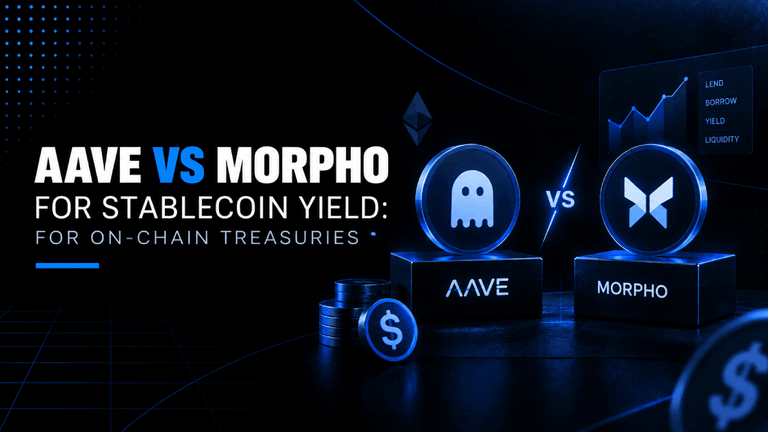
For readers evaluating DeFi protocols as part of a broader on-chain financial infrastructure decision, the Aave vs. Morpho comparison for on-chain treasuries on FintechSpecs covers that specific decision in more depth. Teams building adjacent Web3 compliance infrastructure may also find the AML and transaction monitoring tools for crypto and Web3 fintechs comparison relevant, particularly if they are subject to on-chain transaction reporting obligations.
The decision between these protocols ultimately comes down to one practical question: what failure mode can you actually absorb? If the answer is “none of them,” the CeFi versus DeFi debate is settled by operational constraints, not yield preference. If the answer is “smart contract risk on well-audited code,” then Aave or Compound on an L2 is the starting point. If the answer includes taking on curator risk for higher rates, Morpho’s MetaMorpho with a tier-1 curator is the next step. The rate difference between the safest and most aggressive options on this list will rarely exceed a few percentage points in any sustained market condition , and the risk difference between them is not marginal.