
TLDR
- General loan servicing software tracks payments and balances. Construction lending requires a separate layer for draw requests, inspection sign-offs, lien waiver collection, and conditional disbursement approvals before any money moves.
- The three platforms that handle the full post-close workflow for construction loan management software lenders rely on are Built Technologies, Construction Draw, and Procore Financial Management, each suited to different lender sizes and portfolio types.
- The clearest differentiator across platforms is how they handle the inspection-to-disbursement chain: does the system enforce a gate, or just log activity after the fact?
- Lenders managing more than 50 active construction loans in spreadsheets are leaving themselves exposed to draw fraud, mechanic’s lien risk, and audit failures that software specifically designed for this workflow eliminates.
- Pricing across this category is not publicly disclosed in full; every vendor requires a demo before quoting, which means the evaluation process itself takes time to plan.
The three strongest construction loan management software platforms for lenders today are Built Technologies, Construction Draw, and Procore Financial Management. Built Technologies fits mid-to-large lenders running high-volume residential or commercial portfolios. Construction Draw suits smaller lenders and community banks that need draw administration without a full platform deployment. Procore Financial Management belongs in portfolios where the borrower is already a Procore construction user and the lender wants shared project data visibility.
Why Can’t a General Loan Servicer Handle Construction Draws?
Standard loan servicing software, the kind covered in loan servicing software comparisons for US lenders, is built around a fixed amortization schedule. The borrower owes X per month, the servicer tracks whether that payment arrived, and the ledger closes. Construction lending works on a completely different logic.
A construction loan funds in tranches. The borrower submits a draw request claiming a percentage of work is complete. The lender sends an inspector to verify that claim. The title company collects lien waivers from subcontractors. Only after those documents are received and approved does a disbursement go out. A general servicer can record the disbursement, but it cannot enforce the upstream evidence chain that makes the disbursement legitimate.
That gap creates real exposure. Without a system that gates disbursements on inspection reports and lien waiver status, a lender can release funds to a project where subcontractors have unpaid claims, or where work completion has been overstated. Both scenarios produce losses that are difficult to recover post-draw.
What Features Define Purpose-Built Construction Draw Management Software?
Not every platform marketed as construction loan software actually manages the full draw administration cycle. The FintechSpecs Draw Administration Gate is a four-checkpoint framework for evaluating whether a platform truly handles post-close construction lending or just adds a construction skin to a loan ledger.
Checkpoint 1: Draw Request Intake
The system must accept a structured draw request from the borrower or general contractor, with line-item breakdowns by cost code or work category. Free-form document uploads do not count. The request needs to map to the original budget so the system can calculate percentage complete by line item, not just in aggregate.
Checkpoint 2: Lender Inspection Workflow
The platform must route an inspection order to a third-party inspector or internal reviewer, capture the inspection report with photo documentation, and compare inspector-verified completion against the draw request. If the system does not enforce that inspection is complete before a draw can advance in the approval queue, it fails this checkpoint.
Checkpoint 3: Lien Waiver Tracking
Lien waivers come in four types under most US state laws: conditional and unconditional waivers for both progress payments and final payments. The software needs to track which subcontractors and suppliers on the project have submitted the correct waiver type for each draw period. Missing waivers from a tier-one subcontractor are a title risk. The system should flag missing waivers before disbursement is approved.
Checkpoint 4: Conditional Disbursement Approval
The final checkpoint is whether the platform enforces a multi-party approval sequence, lender reviewer, credit officer, and potentially a title or escrow integration, before funds release. Logging approvals after the fact is an audit feature, not a control. The gate must exist before disbursement, not after.
| Feature | Built Technologies | Construction Draw | Procore Financial Mgmt |
|---|---|---|---|
| Structured draw request intake | Yes | Yes | Yes (borrower must use Procore) |
| Lender inspection order and report capture | Yes, with inspector network | Yes, manual or third-party | Partial (relies on Procore project data) |
| Lien waiver tracking by subcontractor | Yes | Yes | Limited in financial module alone |
| Conditional disbursement approval gate | Yes, configurable workflow | Yes | Yes, within Procore environment |
| Borrower/GC portal | Yes | Yes | Yes (Procore is the GC’s native tool) |
| Core loan system integration | Yes (Encompass, nCino, others) | Varies by engagement | Limited outside Procore platform |
| Public pricing | Not disclosed | Not disclosed | Not disclosed |
Built Technologies: The Draw Management Platform for Mid-to-Large Lenders
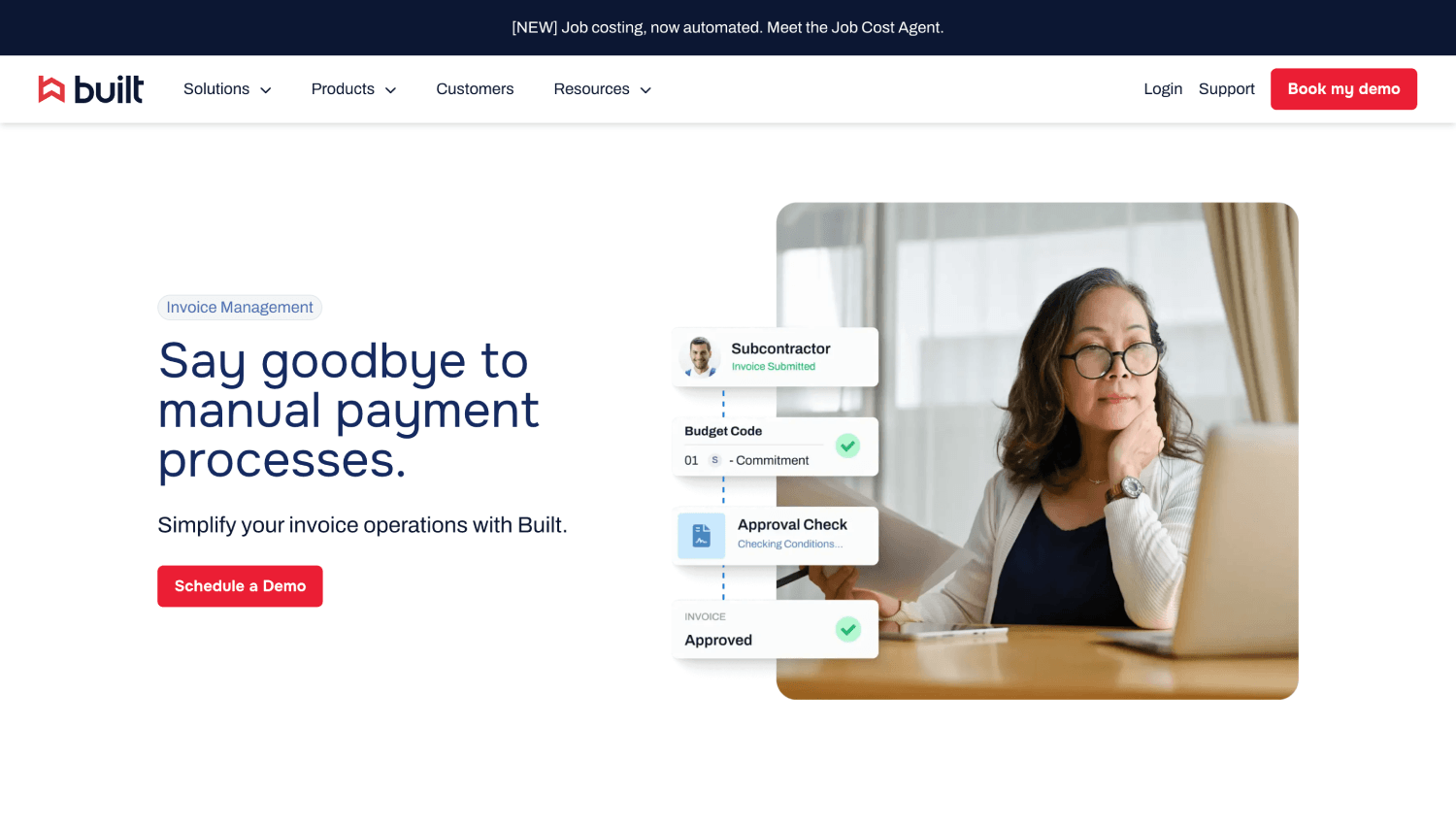
Built Technologies is the most established dedicated construction loan management platform for lenders in North America. The platform covers the full post-close lifecycle: draw request intake, automated budget tracking, inspection order management, lien waiver collection, and configurable approval workflows before disbursement.
What separates Built from lighter tools is its inspector network and integration depth. Built connects to third-party inspection firms, routes orders directly from within the platform, and pulls inspection data back into the draw review queue. Lenders who previously coordinated inspections by phone and email and then manually reconciled reports against draw requests understand what that integration eliminates.
Who Built Technologies Fits
Built is designed for lenders running substantial construction portfolios, regional banks, credit unions with active construction programs, and specialty construction lenders. The platform integrates with core loan origination systems including ICE Mortgage Technology’s Encompass and nCino, which matters for lenders who do not want to maintain a separate system of record for construction loans.
Built also covers both residential construction and commercial construction lending, which is relevant for lenders whose portfolios include spec builders, custom home builders, and commercial developers under the same loan administration team. Many draw management tools specialize in one asset class and handle the other awkwardly.
What Built Does Not Solve
Built is not a lightweight tool. Implementation requires configuration of approval workflows, budget templates, and integration setup with existing loan systems. Lenders with fewer than 20 or 30 active construction loans at any time will likely find the platform more infrastructure than the portfolio justifies. Built does not publicly disclose pricing; plan for a full sales and implementation cycle before go-live.
Construction Draw: The Purpose-Built Platform for Community Lenders
Construction Draw addresses the same core workflow, draw request intake, inspection documentation, lien waiver tracking, and disbursement approvals, but with a deployment model that fits community banks and smaller lenders who need a working system without a multi-month enterprise implementation.
The platform is built around the lender’s draw administration team rather than around a broader loan operations infrastructure. Borrowers and general contractors submit draw requests through a portal. Lenders review documentation, track lien waiver status by subcontractor and by draw period, and move draws through an approval queue before releasing funds. The workflow is linear and explicit by design.
Lien Waiver Tracking in Practice
Construction Draw’s lien waiver module is worth examining closely because lien waiver management is where most spreadsheet-based draw processes break down. The platform tracks waiver status at the subcontractor level, distinguishing between conditional waivers (submitted before payment) and unconditional waivers (submitted after payment clears), and flags missing or incorrect waiver types before a draw can advance. For lenders in states with strict mechanic’s lien statutes, that distinction is not administrative housekeeping; it determines whether the lender’s first lien position survives a dispute.
Who Construction Draw Fits
Community banks, credit unions, and regional lenders with construction portfolios under roughly 100 active loans will find this platform sized appropriately. The borrower portal is straightforward enough that general contractors who are not construction software users can submit draws without training. Pricing is not publicly listed; the company engages directly for quotes.
Procore Financial Management: When the Borrower Already Lives in Procore
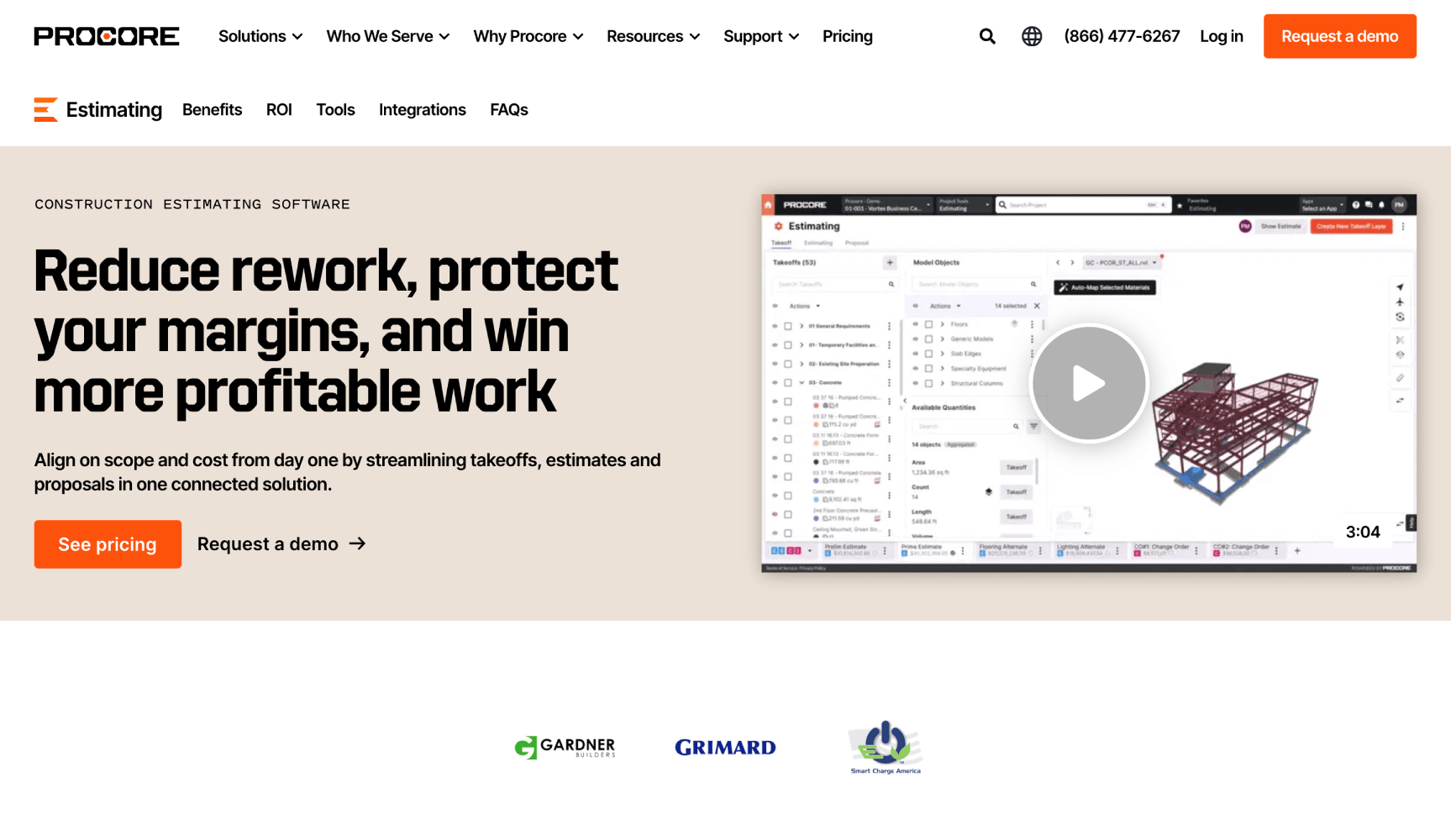
Procore Financial Management takes a different approach. Procore is primarily a construction project management platform used by general contractors and developers. Its financial module allows lenders to access the same project data the borrower’s construction team is already updating, budget line items, change orders, subcontractor payment applications, and schedule of values, without requiring a separate draw request submission process.
For a lender whose borrowers are already Procore users, this removes a significant friction point. The borrower does not submit a draw request to the lender through a separate portal; the lender reviews live project data in an environment where the GC’s team is working daily. That real-time access to project financials is a qualitatively different level of visibility than a point-in-time draw request document.
The Constraint Lenders Need to Understand
Procore Financial Management’s value for lenders is conditional on borrower adoption. If the developer or general contractor does not already use Procore for project management, the lender cannot impose that requirement as part of loan administration. The platform is not designed to onboard borrowers who have no existing relationship with Procore software.
The inspection and lien waiver workflows within Procore’s financial module are also less specialized for lender-side administration than Built or Construction Draw. Procore’s strength is project data visibility and owner-to-contractor payment flow. Lenders who need a formal, auditable approval gate managed entirely on the lender’s side, with explicit lien waiver status checkpoints, should evaluate whether Procore’s financial module alone satisfies their internal controls requirements or whether it needs to be paired with another tool.
How Do Draw, Inspection, and Lien Waiver Workflows Connect Across Platforms?
To make the comparison concrete, consider a hypothetical scenario that reflects a typical mid-size residential construction lender. Say a lender holds 60 active construction loans averaging $800,000 each, with draws occurring monthly across projects at different completion stages. Each draw involves a request from the borrower, an inspection from a third party, lien waivers from between 5 and 15 subcontractors per project (a range used here as a representative estimate for illustrative purposes; actual subcontractor counts vary by project type and contract structure), and an approval sequence involving a draw administrator and a credit officer before ACH disbursement.
In a spreadsheet workflow, that lender’s draw administrator is tracking 60 open draw requests across email threads, PDF inspection reports in a shared drive, and a lien waiver checklist in Excel. A single missed conditional waiver from a framing subcontractor on a draw that closes out that project phase creates a lien risk that may not surface until the loan is in default or the property sells.
Built Technologies handles this scenario end-to-end: draw request comes through the borrower portal, inspection order routes to the inspector network, the report populates the draw review queue, lien waiver status updates as documents arrive, and no disbursement can be approved until the configured checklist is complete. Construction Draw handles the same sequence with less automation in the inspection routing step but with the same gate logic before disbursement. Procore handles it only if the borrower’s GC team is actively updating project financials in Procore daily, which on a 60-loan residential portfolio is unlikely to be true for all borrowers.
| Scenario | Best Fit | Reason |
|---|---|---|
| 50+ active construction loans, mixed residential/commercial | Built Technologies | Inspector network, LOS integration, configurable multi-step approval |
| Under 50 active loans, community bank or credit union | Construction Draw | Faster deployment, simpler UI, strong lien waiver tracking |
| Lender financing developers who already use Procore | Procore Financial Management | Real-time project data access without separate draw submission |
| Lender needing standalone draw admin without LOS integration | Construction Draw | Operates independently without core system dependencies |
| Lender with existing nCino or Encompass deployment | Built Technologies | Native integrations reduce duplicate data entry |
Lenders evaluating this category should also consider how construction loan administration connects to their broader lending compliance infrastructure. The draw approval audit trail generated by purpose-built software is the same evidence an examiner will review during a safety and soundness examination. The fintech product and compliance readiness checklist covers how to structure that audit documentation before an examination, not after.
What Should Lenders Ask During a Construction Draw Software Demo?
None of the three platforms publish pricing. Every evaluation starts with a demo, which means the questions asked in that demo determine whether the evaluation produces a real comparison or just a marketing presentation. These are the questions that expose how each system actually works at the control level.
- Can a draw be approved and disbursed if any lien waiver on the required list is missing or is the wrong type? If yes, how is that exception documented?
- What happens if the inspector’s verified completion percentage is lower than the draw request percentage? Does the system automatically adjust the draw amount, flag it for manual review, or require a new draw request?
- How does the platform handle retainage? Can retainage percentage vary by cost line, and when does the system allow retainage release draws?
- What does the audit trail show for each draw, specifically what approvals occurred, by whom, and in what sequence?
- How does the system handle change orders that increase the total loan budget, and does that require a loan modification workflow or is it handled within the construction module?
- What integrations exist with title and escrow companies for lien waiver collection, or is that an entirely manual upload process?
The answers reveal whether the platform enforces controls or merely records them. A system that flags a missing lien waiver but still allows disbursement to proceed with an override and no documented exception is not a control. It is a logging function dressed as a control.
For lenders who are also evaluating their broader loan origination and servicing stack, the comparison of loan origination and management software platforms for US lenders covers the upstream systems that construction draw software typically needs to connect to.
Frequently Asked Questions About Construction Loan Management Software for Lenders
What is construction draw management software?
Construction draw management software is a platform that handles the post-close administration of construction loans, specifically the process of receiving draw requests from borrowers, verifying work completion through inspections, collecting lien waivers from subcontractors and suppliers, and routing disbursement approvals through a defined workflow before funds are released. It is distinct from general loan servicing software, which tracks payments and balances but does not enforce the evidence chain required before each construction disbursement.
Why does lien waiver tracking matter for construction lenders?
Mechanic’s liens can attach to a property even after a lender has disbursed funds if subcontractors or suppliers have not been paid. In most US states, a properly executed lien waiver from each party on a project, matched to the specific draw payment, is the lender’s primary protection against that risk. Tracking waivers manually in spreadsheets creates gaps. Purpose-built software tracks waiver type, waiver period, and submission status at the subcontractor level and blocks disbursement until required waivers are present.
How does the lender inspection workflow work in construction draw software?
When a borrower submits a draw request, the lender’s draw administrator places an inspection order through the platform, either to a third-party inspector in a connected network or to an internal reviewer. The inspector visits the site, documents completion by cost category or work phase, and uploads a report with photos. The platform compares the inspector’s verified completion percentages against the draw request amounts. If the inspection supports a lower draw than requested, the system either adjusts the approved amount or flags the discrepancy for review before the disbursement approval queue can advance.
Can construction draw software integrate with existing loan origination systems?
Built Technologies integrates with major loan origination systems including ICE Mortgage Technology’s Encompass and nCino, allowing loan data to flow from origination into the draw management platform without duplicate entry. Construction Draw operates more independently and integration depth varies by engagement. Procore Financial Management integrates with Procore’s broader project management platform but has limited native connections to lender-side origination systems. Any lender with an existing LOS should confirm specific integration availability during the vendor evaluation process.
What is the difference between a conditional and unconditional lien waiver?
A conditional lien waiver is submitted before payment clears and waives lien rights only once the payment is confirmed received. An unconditional lien waiver is submitted after payment has cleared and waives lien rights without conditions. Lenders typically collect conditional waivers before releasing a draw and unconditional waivers from prior draws before releasing the current one. Construction draw software that tracks both waiver types at the subcontractor level, and flags when the wrong type is submitted for the wrong payment stage, is enforcing a control that most spreadsheet-based processes miss.
How do construction draw platforms handle retainage?
Retainage is a percentage of each draw payment withheld until project completion, typically 5% to 10%, held as an incentive for the contractor to complete all punch-list items. Purpose-built platforms track retained amounts by cost line and by draw period, calculate the total retainage balance, and manage the separate approval process for retainage release draws at project completion. Lenders should confirm during demos whether retainage percentage is configurable per line item or applied only at the project level, since commercial contracts often carry different retainage terms by trade.
Is Procore Financial Management a lender platform or a contractor platform?
Procore is primarily a construction project management platform used by general contractors and developers. Its financial management module allows owners and lenders to access shared project financial data, but it is designed around the contractor and developer workflow first. Lenders benefit from it when their borrowers are already active Procore users, because the data the contractor enters daily is visible to the lender without a separate draw submission process. For lenders whose borrowers do not use Procore, the platform does not solve the draw administration problem.
What should a lender budget for construction draw management software?
None of the leading platforms, Built Technologies, Construction Draw, or Procore Financial Management, publish standard pricing publicly. Pricing is typically structured around loan volume, number of active projects, or a combination of platform fee and per-draw fees. Lenders should plan for a sales process that includes a demo, a needs assessment conversation, and a formal quote before any cost comparison is possible. The evaluation process itself typically takes four to eight weeks from first contact to contract, depending on the lender’s internal procurement timeline.
The Control Gap That Software Closes
Construction lending carries a category of risk that does not exist in term loans or revolving credit: the lender is funding work that has not yet happened, based on evidence that arrives after the fact. The entire draw administration process is a system of controls designed to minimize the gap between what a borrower claims has been completed and what a lender can verify before money moves. When that system lives in email, spreadsheets, and shared drives, the controls exist in name only.
Purpose-built construction draw management software does not eliminate judgment calls. An inspector still decides what percentage of framing is complete. A draw administrator still decides whether a submitted lien waiver covers the right payment period. What the software eliminates is the possibility that those judgment calls happen after disbursement, or that they go unrecorded entirely. The audit trail a platform generates is what separates a lender who can defend their draw process to an examiner from one who cannot.
Lenders evaluating this category should start from the FintechSpecs Draw Administration Gate: does the platform enforce all four checkpoints before funds release, or does it log them afterward? Built Technologies clears all four with the most integration depth. Construction Draw clears all four with a faster path to deployment. Procore Financial Management clears them conditionally, only where borrower adoption already exists. Any platform that cannot answer the four checkpoint questions directly in a demo has answered them already. Reviewing how other lending infrastructure vendors handle evaluation rigor, as covered in the seven-point fintech vendor evaluation framework, provides a useful parallel methodology for scoring these demos objectively.