
TLDR
- Account verification catches bad identities at the door. It does not catch a legitimate account holder who agreed to let someone use their account to move stolen funds.
- Money mule detection requires post-onboarding signals: transaction velocity, rapid pass-through patterns, linked device or address clusters, and inbound fraud typologies specific to the receiving bank.
- The three platforms that do this well for bank fraud and compliance teams are Unit21, Sardine, and Quantexa. Each has a distinct fit depending on team size, investigation workflow, and whether the need is rules-based alerting or network-level entity resolution.
- Receiving-bank fraud teams need a different toolset than originating-bank fraud teams. If your current stack was built around onboarding risk, it is likely missing the linked-account graph and pass-through transaction signals that define mule account detection.
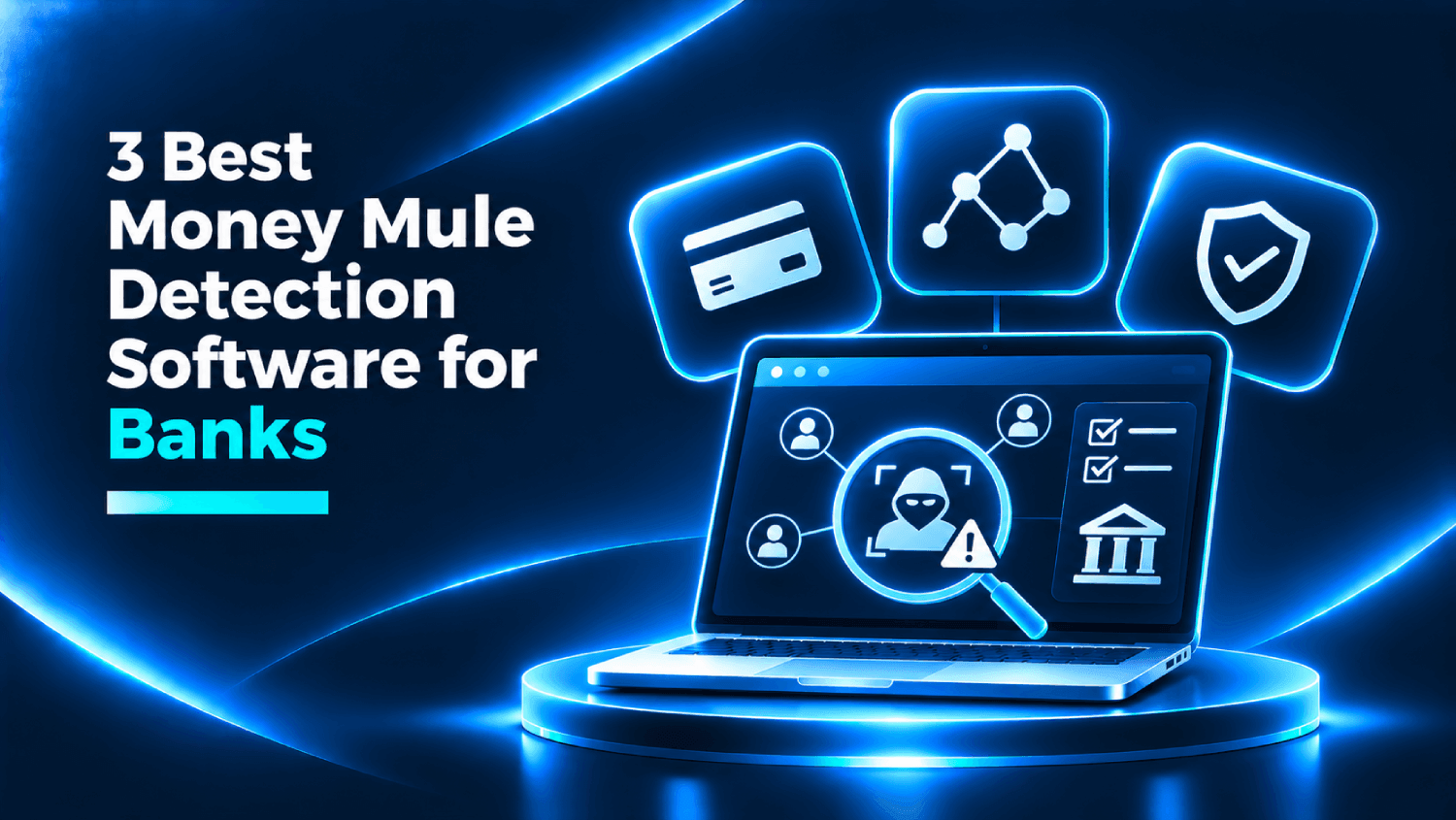
Money mule detection software for banks needs to analyze transaction behavior, linked account networks, and inbound fund patterns after account opening. The three strongest platforms for bank fraud teams are Unit21, Sardine, and Quantexa. Unit21 is best for mid-market fintechs and banks that need configurable rules and analyst case management. Sardine fits institutions that want device and behavioral signals layered on top of transaction monitoring. Quantexa is built for large banks running network analytics across millions of entities at the entity-resolution level.
Why Standard Account Verification Misses Mule Accounts
A mule account usually passes every check at onboarding. The identity is real, the document is genuine, and the bank account history looks normal. The problem starts three weeks later, when funds from an authorized push payment scam hit the account and move out within 48 hours.
Account verification APIs, as covered in our comparison of leading account verification APIs for fintech, are designed to confirm that an account exists, belongs to the right person, and has sufficient funds. That is a point-in-time check. It says nothing about what the account does in the weeks after onboarding.
Mule networks operate in the gap between onboarding controls and transaction monitoring. Funds arrive from a victim bank, dwell for one to three days, then exit through peer-to-peer apps, cryptocurrency exchanges, or wire transfers. The receiving bank is the institution sitting in the middle of that flow, and it is the one that faces FinCEN scrutiny when a Suspicious Activity Report is overdue.
What Makes Receiving-Bank Fraud Different
Originating-bank fraud is largely about preventing unauthorized debits and account takeover. Receiving-bank fraud is about detecting when your legitimate customer is the final destination for someone else’s stolen money, whether willingly or as a victim of recruitment. Those two problems require different signals.
For receiving banks, the high-value signals are pass-through velocity (funds in, funds out within 72 hours), account age relative to inbound wire volume, device sharing across multiple accounts, address clustering, and links to known fraud typologies like romance scam or business email compromise patterns. None of those signals exist at account opening.
The FintechSpecs Mule Detection Stack Test: Four Checks Before You Shortlist
Before evaluating any vendor, run what we call the FintechSpecs Mule Detection Stack Test. It is a four-check framework for receiving-bank fraud teams to identify whether a platform is built for mule detection or was retooled from an onboarding product.
Check 1: Pass-Through Detection. Can the platform fire an alert when funds arrive and exit the same account within a configurable time window, across multiple rail types (ACH, wire, RTP, debit card)? A platform that only monitors per-transaction risk without looking at inbound-then-outbound pairing misses the core mule pattern.
Check 2: Linked Account Graphing. Can the platform surface accounts that share a device ID, IP address, phone number, or mailing address, without requiring your fraud team to write a custom SQL query? Mule networks are rarely one account. They are clusters of 5 to 50 accounts coordinated by one recruiter.
Check 3: Receiving-Side Typology Coverage. Does the vendor ship pre-built detection scenarios for authorized push payment fraud, romance scams, and payroll diversion? Or does the platform require your team to build those scenarios from scratch using generic rules?
Check 4: Case Management with SAR Export. When an alert fires, can an analyst build and close a case, attach transaction evidence, and export a FinCEN SAR directly from the platform? Platforms that alert but require a separate case management workflow double the analyst workload.
Which Three Platforms Actually Solve Money Mule Detection for Banks
| Platform | Best For | Pass-Through Detection | Linked Account Graph | SAR Export | Pricing Model |
|---|---|---|---|---|---|
| Unit21 | Mid-market fintechs and banks needing configurable rules and analyst workflow | Yes, via configurable velocity rules | Yes, entity link analysis included | Yes, native FinCEN SAR filing | Not publicly disclosed; contract-based |
| Sardine | Banks wanting device and behavioral signals layered on transaction monitoring | Yes, with behavioral context | Yes, device graph across accounts | Yes, case management included | Not publicly disclosed; contract-based |
| Quantexa | Large banks running entity resolution across millions of customers and counterparties | Yes, within network context | Yes, enterprise-grade entity resolution | Workflow dependent on integration | Not publicly disclosed; enterprise contract |
Unit21: Best Money Mule Account Detection Tool for Analyst-Led Investigation
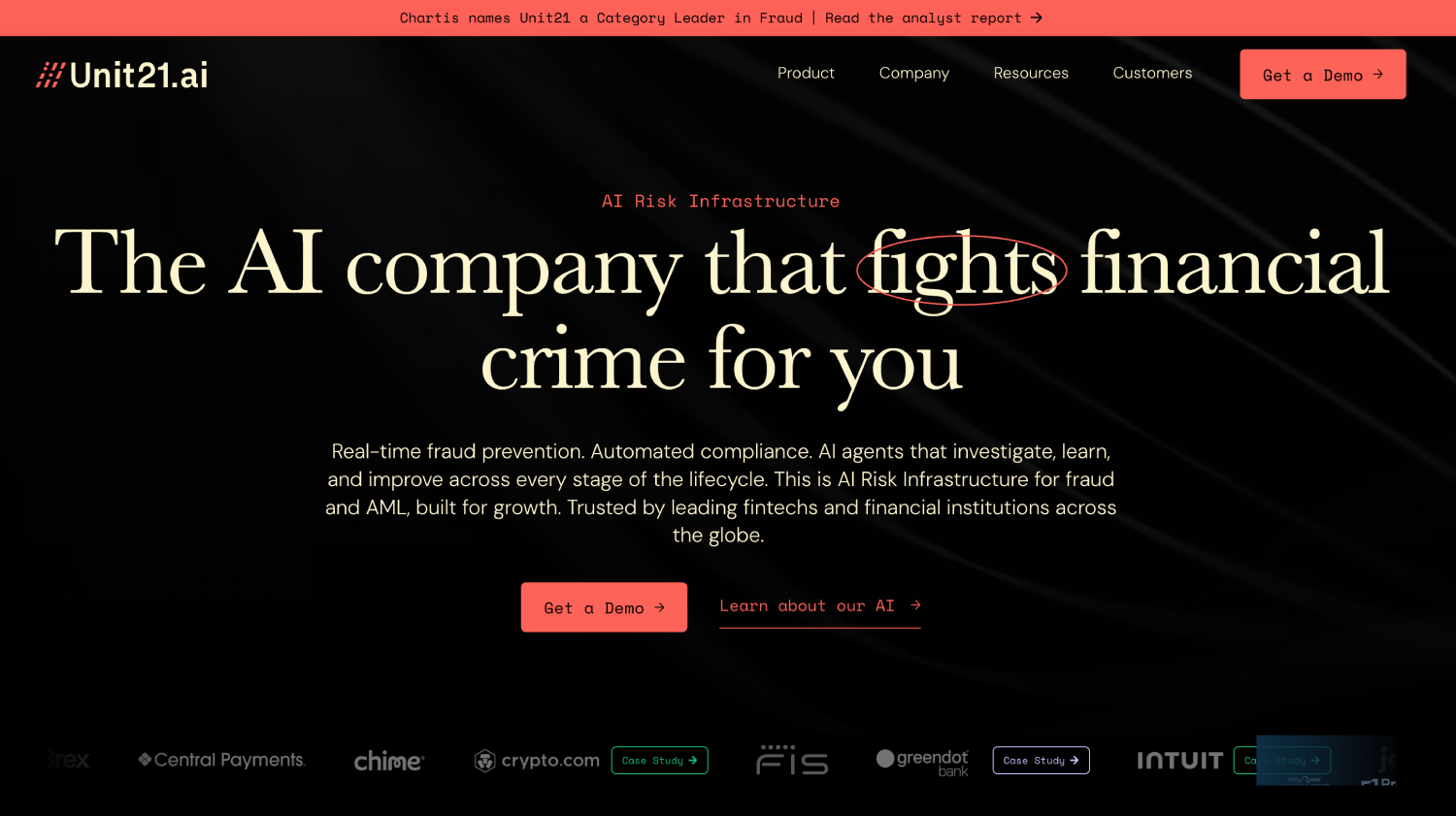
Unit21 is a no-code fraud and AML operations platform built for teams that need to move fast without depending on engineering. The platform centers on a rules engine where compliance and fraud analysts can configure detection logic without writing code, then route alerts to a structured case management interface.
For mule account detection, Unit21 ships with pre-built detection scenarios that cover pass-through behavior, structuring, and rapid account funding followed by outbound sweeps. Analysts can tune the lookback window, the threshold amounts, and the alert severity without opening a ticket with their data team. That matters for receiving-bank fraud teams whose threat patterns shift month to month as mule recruitment tactics evolve.
Unit21 and Linked Account Investigation
Unit21’s entity link analysis lets investigators see which accounts share device IDs, phone numbers, addresses, or email domains. When a mule account is flagged, an analyst can expand the graph to see whether five other accounts in the customer base share the same device fingerprint. That is the difference between closing one SAR and dismantling a network.
Unit21 also includes native FinCEN SAR filing, which removes the most time-intensive step in the analyst workflow. Many teams using older transaction monitoring platforms spend two to three hours per SAR manually compiling evidence and formatting the form. Unit21 collapses that into the case itself.
Pricing is not publicly listed on Unit21’s website. Contracts are sized by transaction volume and number of analyst seats. For teams comparing platforms at the evaluation stage, our Unit21 pricing breakdown covers what finance and risk teams should budget before entering a contract conversation.
Where Unit21 Falls Short
Unit21’s device intelligence depends on data you send it. If your core banking platform does not capture device-level signals at login or transaction time, you will not get the full linked-account picture. Banks that do not already pass device data into their transaction monitoring stack need to solve that upstream problem first, or pair Unit21 with a device fingerprinting layer.
Sardine: Best for Behavioral and Device Signal Enrichment on Receiving-Side Fraud
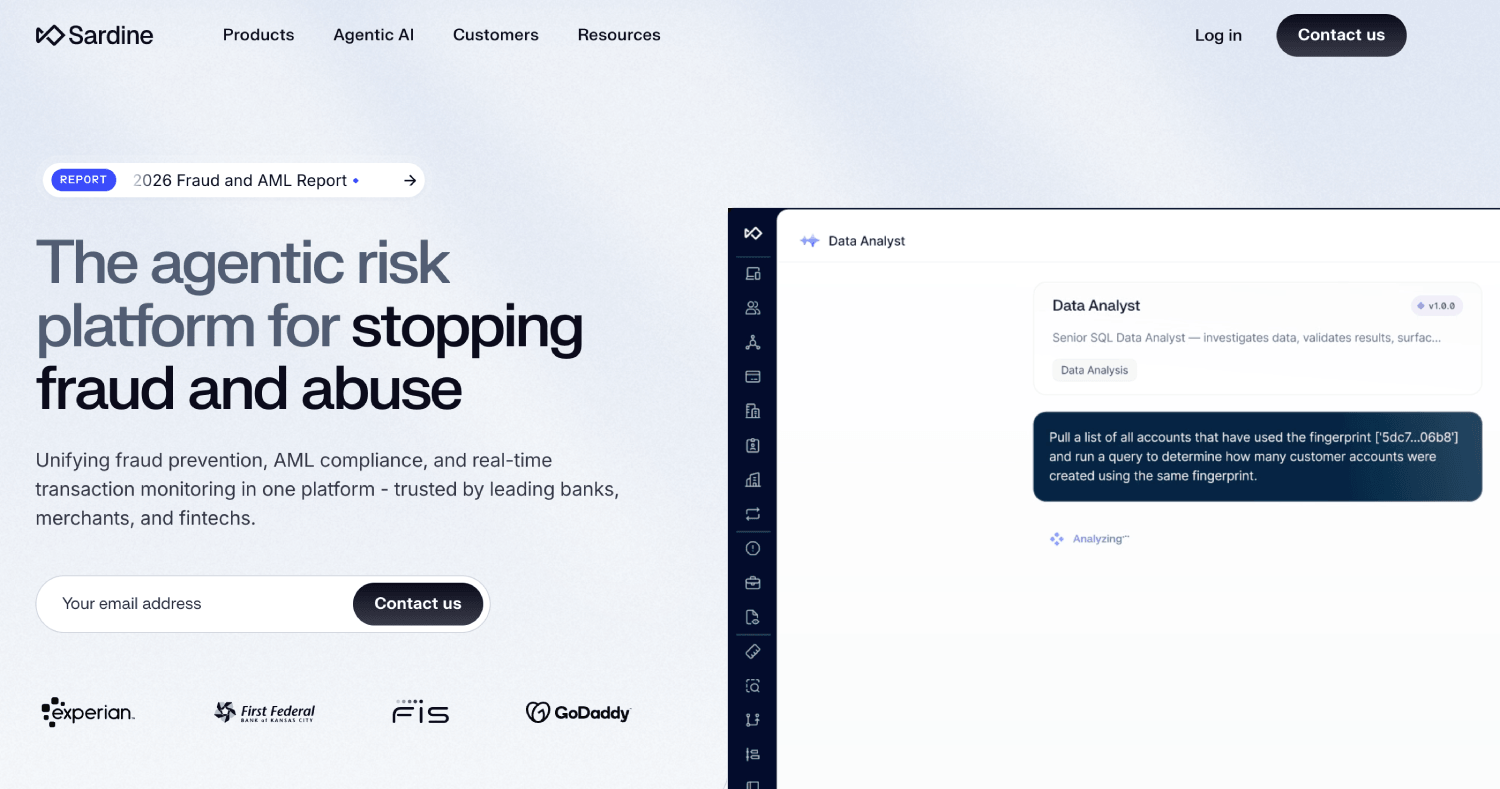
Sardine takes a different architectural approach. The platform collects device intelligence, behavioral biometrics, and transaction signals simultaneously, then fuses them into a single risk assessment. For mule detection, that means a receiving bank can see not just that an account received $12,000 and sent it out in three hours, but also that the session behavior during the outbound transfer was abnormal relative to the account holder’s historical pattern.
That behavioral layer matters because some mule accounts are operated by the account holder themselves, while others are operated by fraudsters who have taken over a legitimate account. The two scenarios require different SAR narratives and different downstream actions. Sardine’s behavioral signals help analysts distinguish between a recruited mule and a compromised account faster than transaction data alone.
Sardine’s Device Graph for Mule Network Detection
Sardine maintains a cross-institutional device graph. When a device appears on multiple accounts at your institution, or when a device has been seen in confirmed fraud events at other institutions on the network, Sardine surfaces that signal in real time. For receiving-bank fraud teams, that means a new account that opens today and immediately receives a large inbound wire can be flagged if the device has a history of fraud activity elsewhere.
This is one area where Sardine’s architecture differs meaningfully from a purely rules-based system. The cross-institutional device reputation signal is a network effect. It improves as more institutions contribute signals to the consortium. Teams looking at fraud detection and risk tools for fintech will find Sardine showing up consistently in comparisons that prioritize real-time device-level signals.
Where Sardine Falls Short
Sardine’s strength in behavioral biometrics and device intelligence is most valuable when your customer-facing application is a mobile app or web app where Sardine’s SDK collects behavioral data. If your bank’s customer interactions are primarily through call centers, branch visits, or legacy online banking interfaces that do not support SDK integration, the behavioral layer is unavailable and you are essentially using a transaction monitoring tool that lacks its core differentiator.
Sardine’s pricing is contract-based and not publicly disclosed. Teams evaluating Sardine should also read our ComplyAdvantage vs. Sardine comparison for sanctions and AML screening, since some institutions end up wanting both AML screening and behavioral fraud detection from a single vendor, and that combination shapes the contract differently.
Quantexa: Best Money Mule Detection Software for Large Banks Running Network Analytics

Quantexa is an enterprise intelligence platform built on entity resolution and network analytics. It is in a different weight class than Unit21 or Sardine. The platform is designed for institutions that have millions of customers, dozens of product lines, and transaction data that spans years, and need to find connections across all of it at once.
For mule detection, Quantexa’s core capability is resolving entities across fragmented data. A mule may appear as five different customer records in a large bank’s systems if they opened accounts across different branches or products. Quantexa merges those records, links them to external data sources, and builds a network map showing how that entity connects to other accounts, businesses, and third parties. What looks like a single suspicious account becomes a 30-node mule network when entity resolution is applied at scale.
Quantexa and Receiving-Bank Fraud at Enterprise Scale
Large banks handling thousands of daily SAR investigations need more than a rules engine. They need a system that can prioritize which networks are most significant, so that investigators are working the cases with the highest financial exposure or the most connections to known threat actors. Quantexa’s context engine scores network risk, not just individual transaction risk, which changes how investigators allocate their time.
The trade-off is implementation complexity. Quantexa is not a plug-and-play SaaS tool. Deployment requires data engineering work to ingest and normalize the bank’s existing customer, transaction, and third-party data. For large banks that already have a mature data infrastructure, that is a manageable integration project. For a fintech or mid-sized bank without a dedicated data platform team, the implementation effort is substantial and the ongoing data maintenance burden is real.
Where Quantexa Falls Short
Quantexa does not have a native SAR filing workflow in the same way that Unit21 does. The platform surfaces network risk and investigation insights, but the case management and regulatory filing steps typically rely on an integration with a separate case management system or the bank’s existing compliance workflow. For teams that prioritize analyst productivity and SAR cycle time, that gap adds friction. Quantexa pricing is enterprise-contracted and not publicly disclosed.
How These Three Platforms Compare for Receiving-Bank Mule Investigation
The table below maps each platform against the four checks in the FintechSpecs Mule Detection Stack Test, plus the additional dimension of implementation speed, since that factor often determines which tool a team can actually deploy before the next regulatory exam.
| Check | Unit21 | Sardine | Quantexa |
|---|---|---|---|
| Pass-through detection (configurable time window) | Yes, no-code rules | Yes, with behavioral context | Yes, within entity network |
| Linked account graph (device, address, phone) | Yes, entity link analysis | Yes, cross-institutional device graph | Yes, enterprise entity resolution |
| Pre-built receiving-side typologies | Yes, APP fraud, structuring | Yes, behavioral + transaction typologies | Requires configuration to bank’s data |
| Native SAR export | Yes, FinCEN SAR filing built in | Yes, case management included | Requires integration with existing workflow |
| Implementation speed | Weeks to months (SaaS) | Weeks to months (SaaS + SDK) | Months to a year (data engineering required) |
| Best fit | Mid-market banks and fintechs | Institutions with app-based channels | Tier 1 and Tier 2 banks with data teams |
What Should a Receiving Bank Actually Look for in Money Mule Detection Software?
To make the platform differences concrete, consider a community bank that processes 8,000 ACH transactions daily and has seen, as an illustrative example, a sharp increase in reported customer fraud complaints over the past year. The fraud team has three analysts. Their current transaction monitoring platform fires 200 alerts per day, 90% of which are false positives. They spend six hours per SAR.
That institution does not need Quantexa’s entity resolution engine. It needs Unit21’s configurable rules, analyst case management, and native SAR filing. The goal is to cut alert volume by tuning pass-through thresholds to match their transaction patterns, surface linked account clusters when alerts fire, and reduce per-SAR time from six hours to under two. That is a 12-month AML operations problem, not a data science problem.
Now consider a large regional bank with 2 million customers, a mobile-first digital banking app, and a growing authorized push payment fraud loss rate. Device signals at transaction time are already flowing into their data warehouse. Their fraud team wants to know when a new account’s device matches 15 other accounts that sent money to the same crypto exchange last week. That is Sardine’s core use case: real-time device graph queries against an enriched behavioral baseline.
The choice between these platforms is not about feature lists. It is about where your fraud signal gap actually is. Teams evaluating broader fraud infrastructure should also review our coverage of transaction monitoring tools for early-stage fintech companies for context on where mule detection fits within a full AML stack.
Frequently Asked Questions About Money Mule Detection Software for Banks
What is money mule account detection and how does it differ from KYC?
Money mule account detection identifies accounts that are being used to receive and quickly redistribute stolen funds, regardless of whether the account holder passed identity verification at onboarding. KYC confirms who opened the account. Mule detection monitors what the account does after opening. The two are complementary but solve different problems. A mule account almost always passes KYC because the recruiter specifically uses real identities to avoid identity verification flags.
Can transaction monitoring software handle money mule detection on its own?
Standard transaction monitoring software can flag pass-through behavior and velocity anomalies, but it typically lacks the linked-account graph needed to surface mule networks. A platform that alerts on a single account’s behavior misses the scenario where 20 accounts share a device or address cluster. Full mule detection requires both transaction-level signals and entity relationship analysis. Platforms like Unit21 and Sardine combine both. Generic AML monitoring tools often do not.
What data signals matter most for detecting mule accounts at a receiving bank?
The highest-value signals for receiving-bank mule detection are: inbound wire or ACH followed by outbound transfer within 72 hours; account age under 90 days combined with large inbound transactions; device or IP address shared across multiple accounts; and phone numbers or addresses linked to previously flagged customers. Secondary signals include transaction counterparties associated with crypto exchanges or P2P apps, and mismatches between account holder’s stated income and inbound transaction volume.
How long does it take to deploy money mule detection software at a bank?
Deployment time depends heavily on the platform. SaaS-based platforms like Unit21 and Sardine typically take weeks to a few months, primarily depending on how cleanly the bank can feed transaction data, device signals, and customer records into the platform’s API. Enterprise platforms like Quantexa require a more substantial data engineering effort. Neither vendor publicly discloses typical implementation timelines, so this is worth asking directly in an RFP process, and asking for reference customers at comparable data scale is a reasonable due-diligence step.
What is authorized push payment fraud and why does it create a receiving-bank mule problem?
Authorized push payment (APP) fraud occurs when a victim is tricked into voluntarily sending money to a fraudster-controlled account. The receiving bank holds the destination account, which is often a mule account. Because the payment was authorized by the victim, the originating bank has limited recourse under traditional fraud frameworks. The receiving bank is now the institution expected to have controls in place to detect that the account is operating as a mule, flag the inbound funds, and file a SAR. Regulatory trends on both sides of the Atlantic, including FinCEN guidance on SAR obligations and the UK Payment Systems Regulator’s reimbursement rules under its APP fraud policy, reflect a growing focus on receiving-bank accountability.
Do any of these platforms share fraud signals across institutions?
Sardine operates a cross-institutional device and fraud signal consortium. When a device fingerprint associated with confirmed fraud at one institution appears at another institution using Sardine, the second institution receives that reputation signal in real time. Unit21 has a consortium network called Sonar that enables cross-institution signal sharing for fraud teams. Quantexa uses external data enrichment from third-party sources rather than a real-time consortium model. For teams weighing consortium data as a selection criterion, our Unit21 vs. Sonar comparison on fraud consortium data sharing goes deeper on how those networks operate.
How do these platforms handle SAR filing for mule account investigations?
Unit21 includes native FinCEN SAR filing within its case management interface. Analysts build the case, attach transaction evidence, and submit the SAR without leaving the platform. Sardine includes case management with documentation support, though the specific depth of its SAR workflow varies by configuration and should be confirmed directly with the vendor. Quantexa’s SAR process relies on integration with the bank’s existing compliance and case management system, which is standard for large-bank deployments that already have established SAR workflows.
Is money mule detection software relevant for crypto exchanges and neobanks, not just traditional banks?
Yes. Crypto exchanges are frequently the final destination for mule-moved funds, and neobanks are disproportionately targeted by mule recruiters because of their faster onboarding and higher account opening volumes. FinCEN and FATF guidance both treat virtual asset service providers as subject to the same mule detection expectations as traditional banks. Neobanks in particular need platforms that handle high transaction volumes at speed, which is why device-based detection platforms like Sardine see significant adoption among digital-first financial institutions. For crypto-specific AML considerations, our coverage of AML and transaction monitoring tools for crypto and Web3 fintechs is relevant context.
The Decision Most Receiving-Bank Teams Get Wrong
The most common mistake is treating mule detection as an onboarding problem and buying a better identity verification tool. That improves KYC pass rates and catches synthetic identities, but it does not change what happens when a real account holder, or a real account holder whose device was stolen, starts moving scam funds six weeks after onboarding. The receiving bank is exposed regardless of how clean the KYC was.
The second mistake is deploying a transaction monitoring platform without also solving the linked-account visibility problem. A single-account alert engine will catch the most obvious pass-through cases, but it will miss the 15-account network operating from the same apartment building. That network, not the individual account, is what regulators and law enforcement care about when they review a bank’s SAR program.
The practical starting point for most receiving-bank fraud teams is Unit21 or Sardine, depending on whether the primary signal gap is in transaction-level rules and analyst workflow (Unit21) or in device and behavioral intelligence at the account level (Sardine). Quantexa is the right answer only when the institution has the data infrastructure to support it and the investigation volume that justifies enterprise-level entity resolution. All three pass the FintechSpecs Mule Detection Stack Test. The choice is about where your gap is, not which platform has the longer feature list.