
TLDR
- Persona is strong on no-code flow building and document coverage, but its per-verification pricing and limited out-of-the-box ML decisioning push high-volume fintechs toward purpose-built alternatives.
- Alloy wins for orchestration-first teams that need to chain KYC, KYB, and fraud signals in one decisioning layer, though that breadth comes with a longer integration timeline.
- Socure, Trulioo, and Jumio lead on document coverage and liveness accuracy for teams operating across multiple countries or serving thin-file consumer populations.
- Sumsub offers the most transparent public pricing in this category, making it the default shortlist pick for seed-to-Series A teams watching burn.
- The right swap depends on three variables: verification volume, geographic spread, and whether you need KYC alone or a full identity decisioning layer.
The strongest Persona alternatives for fintech KYC are Alloy, Socure, Sumsub, Jumio, Trulioo, Onfido (now part of Entrust), Sardine, Stripe Identity, and Veriff. Each wins in a specific scenario: Alloy for orchestration, Socure for synthetic identity fraud, Sumsub for transparent pricing, Jumio and Veriff for global document coverage, Trulioo for cross-border KYB and KYC in one platform, Onfido for European consumer apps, Sardine for device and behavioral signals layered on top of identity, and Stripe Identity for teams already on the Stripe stack.
Why Are Fintech Teams Searching for Persona Identity Verification Alternatives?
Persona built its reputation on a genuinely good product: a drag-and-drop flow builder, broad document support, and an API-first design that let seed-stage teams ship KYC without a compliance engineer. That positioning still holds for a narrow band of use cases. What has changed is what growth-stage fintechs need.
At higher verification volumes, the per-verification cost structure becomes a margin problem. Teams processing tens of thousands of verifications per month find themselves negotiating custom enterprise contracts with no public pricing anchor, which makes budget forecasting difficult. Beyond cost, the more common complaint is about decisioning depth: Persona surfaces a verification result but hands the actual risk decision back to the product team. For fintechs building lending, neobanking, or payments infrastructure, that gap between “identity confirmed” and “user approved” is exactly where they need vendor help.
There is also a geographic ceiling. Persona’s document library is strong in the US, Canada, and Western Europe, but teams expanding into Latin America, Southeast Asia, or Africa regularly hit unsupported documents or higher failure rates. That is when the switching conversation starts. If you are mid-evaluation, the KYC provider comparison by UX, cost, and approval rates on FintechSpecs covers what to benchmark before you sign anything.
The FintechSpecs Identity Stack Audit: Three Questions Before You Switch
Most teams switch KYC vendors for the wrong reason. They see a competitor demo better liveness detection and anchor on that feature, only to discover six months later that liveness was never their actual drop-off problem. Before shortlisting Persona competitors, run what we call the FintechSpecs Identity Stack Audit.
Question one: Where does your funnel actually break? Pull your verification funnel data and find the step with the highest abandonment or failure rate. If users are failing document capture, that is a liveness and image quality problem. If they are passing liveness but failing the downstream risk decision, that is a decisioning and data enrichment problem. Those require different vendors.
Question two: Is your KYC problem a KYC problem or a KYB problem? Many fintech teams conflate individual identity verification with business entity verification. Persona does both, but so do Alloy and Trulioo with considerably more depth on the business side. If you are onboarding SMB customers or marketplace sellers, check the KYB provider breakdown before defaulting to a KYC-first shortlist.
Question three: What does “switching” actually cost you? Every KYC vendor integration touches your onboarding flow, your compliance case management, and your data retention policies. A re-integration typically takes four to twelve weeks of engineering time. If you want to avoid approval rate disruption during the migration, the guide to switching KYC providers without hurting approval rates walks through how to run both vendors in parallel during the cutover.
Which Persona Alternative Wins on Identity Orchestration?
Alloy
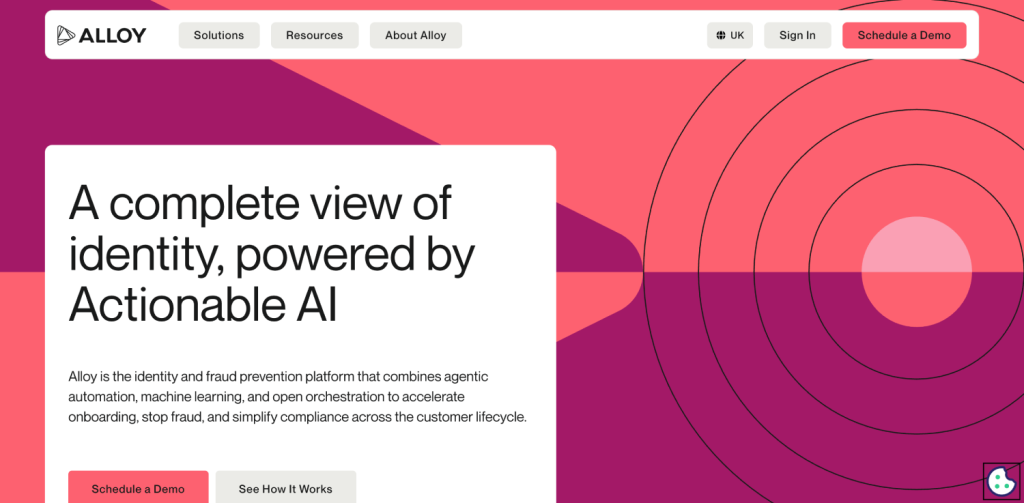
Alloy is the most direct Persona competitor for teams that need a full identity decisioning layer, not just a document check. Where Persona gives you a verification flow, Alloy gives you a rules engine that chains together KYC, KYB, fraud signals, credit data, and watchlist screening in a single decision. That matters for fintechs where the compliance question is not “is this person who they say they are” but “should we approve this person given our risk policy.”
Alloy integrates with over 190 data sources, which means teams can configure a waterfall that checks a bureau first, escalates to a document check only if the bureau match fails, and then routes to a human reviewer if both fail. That kind of logic lives in Persona too, but Alloy’s data partner depth is broader, particularly for US-focused underwriting workflows. Pricing is not publicly listed; Alloy quotes based on verification volume and data sources used. For the Alloy-versus-Persona decision specifically, the Alloy vs Persona comparison covers which platform wins at each stage of the identity stack.
Socure
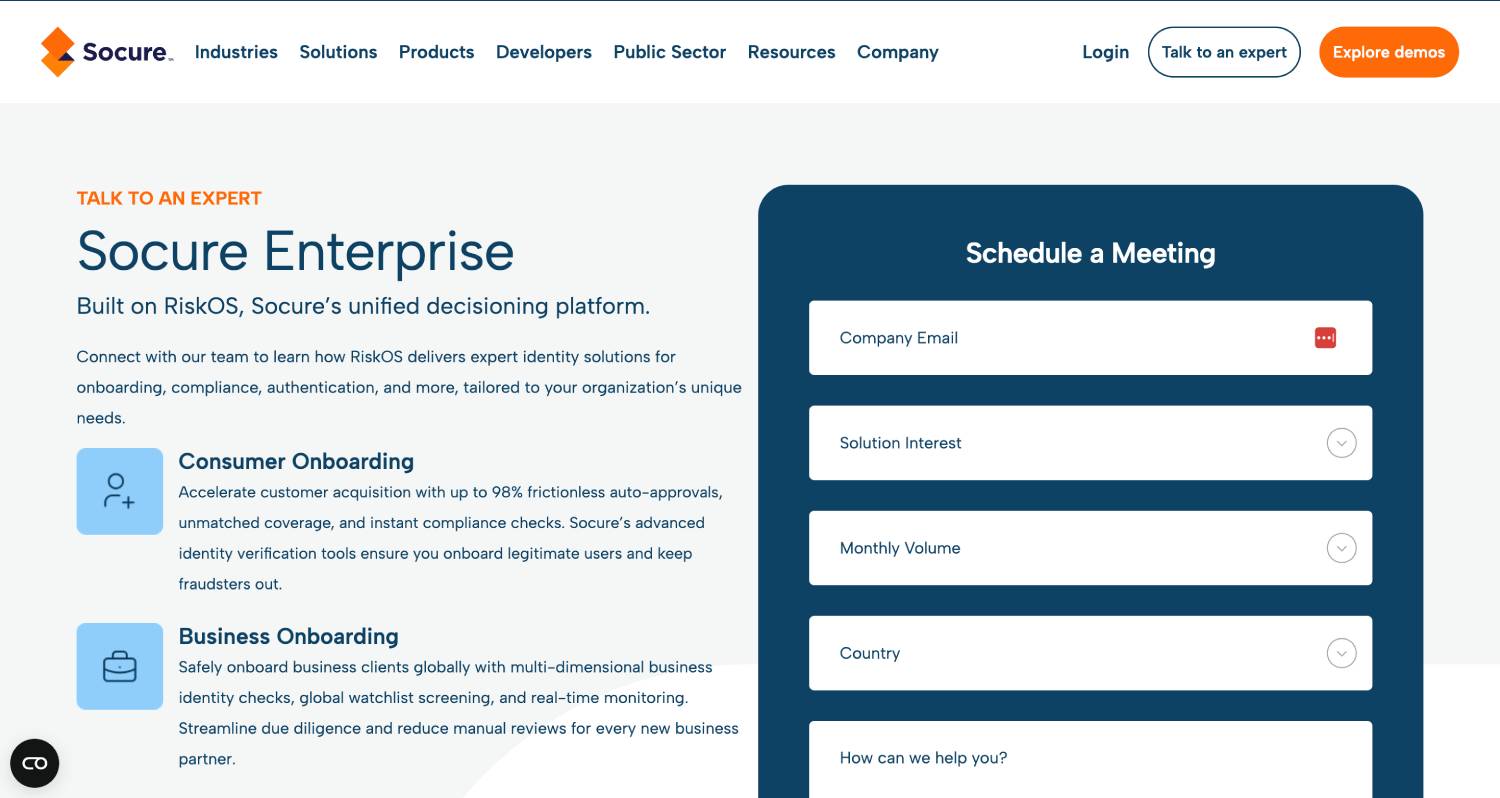
Socure takes a different approach. Rather than a configurable flow builder, it delivers a risk score built on a consortium of transaction and identity data from financial institutions. That consortium model is what makes Socure particularly effective against synthetic identity fraud, which is a category where document checks alone fail because the synthetic identity often comes with a valid-looking document.
Socure’s Sigma Synthetic Fraud product targets the specific problem of manufactured identities that pass standard KYC. Teams at neobanks and consumer lenders dealing with account opening fraud tend to rank it above Persona for that reason. Pricing is enterprise and not publicly disclosed. For a full view of what Socure costs, the Socure pricing breakdown covers minimums and total cost of ownership.
Which Persona Alternative Wins on Document Coverage and Liveness Detection?
Jumio

Jumio has been in the identity verification market longer than most of its competitors and has accumulated one of the larger document libraries in the category, covering documents from over 200 countries and territories. Its liveness detection, Jumio Liveness, is built to meet iBeta Level 1 and Level 2 presentation attack detection standards. For regulated fintechs that need to demonstrate liveness compliance to an auditor, that certification matters.
Jumio’s target customer is typically a larger organization with a formal procurement process, a compliance team, and a need for detailed audit trails. It is not the fastest integration path for a seed-stage team. Pricing is enterprise and negotiated; there is no public per-verification rate on its pricing page.
Veriff
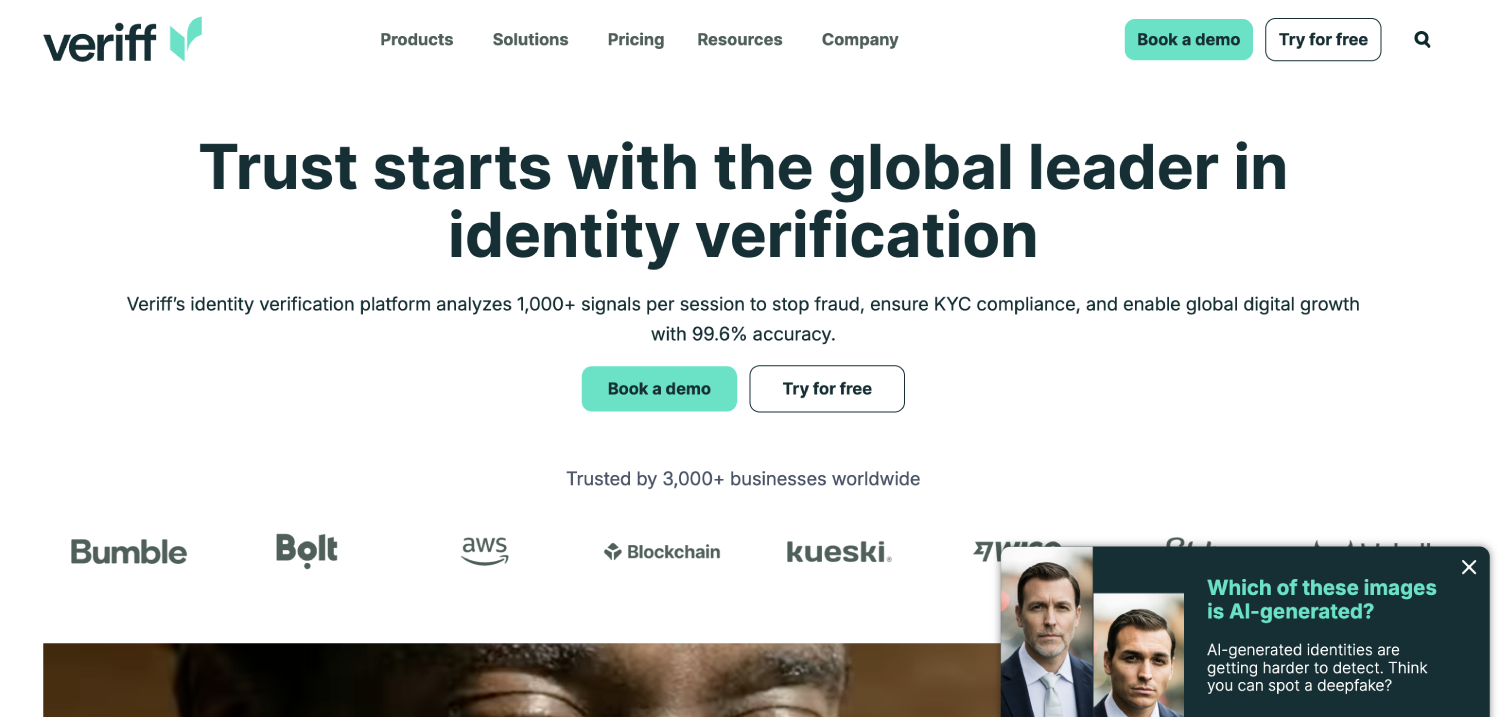
Veriff is one of the more serious Persona alternatives for teams with global user bases. Its document coverage spans over 11,500 document types across more than 230 countries and territories, per figures listed on Veriff’s product page. It also publishes a fraud index that provides reporting on attack patterns, which is useful for compliance teams that need to show regulators they are actively monitoring emerging fraud vectors.
Veriff’s pricing model offers a pay-as-you-go option alongside enterprise contracts, which makes it one of the more accessible options for teams not yet at high volume. The on-demand pricing is not listed publicly in a per-verification table, so teams will need to request a quote to compare against Persona’s rates.
Onfido (Now Part of Entrust)
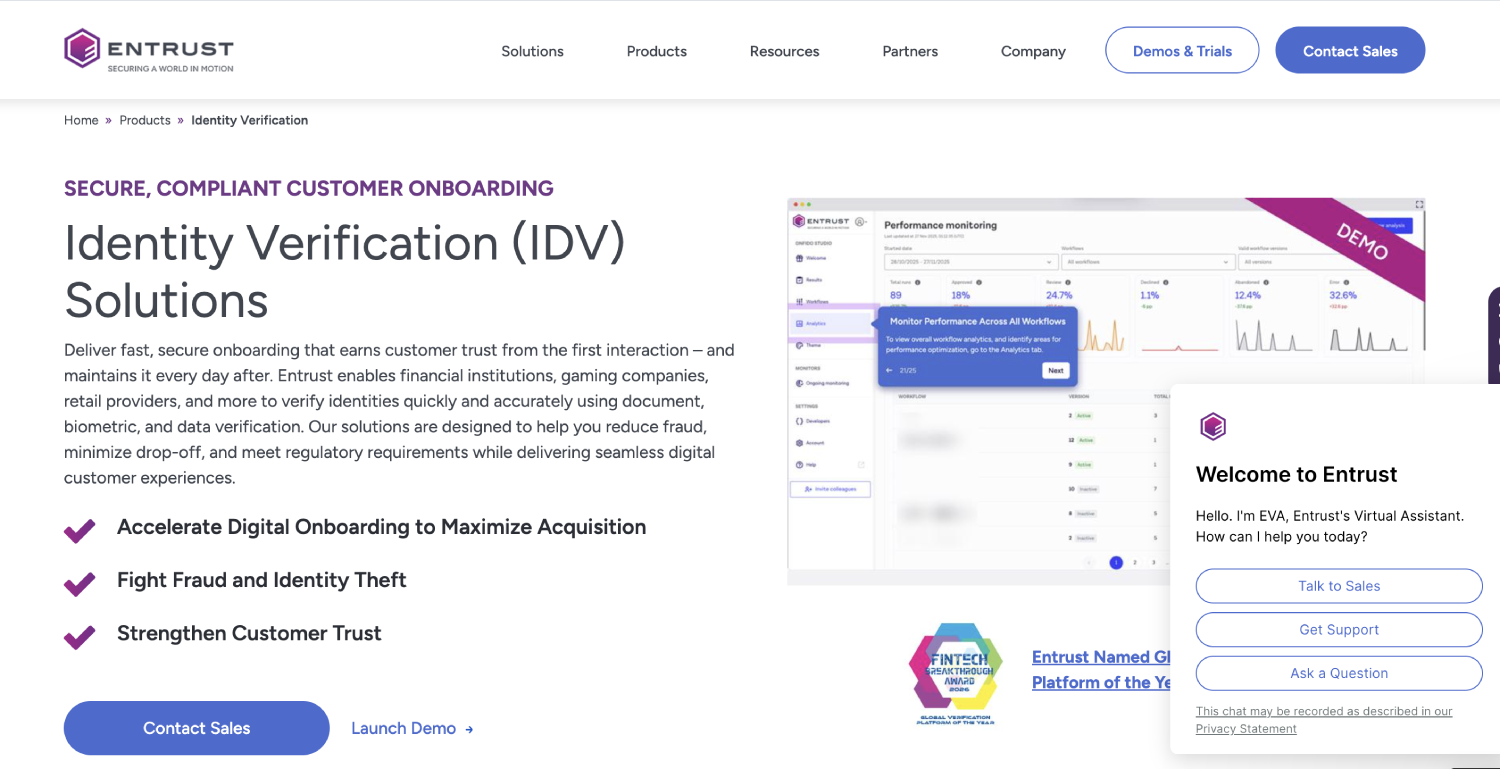
Onfido was acquired by Entrust, which completed in March 2024, and now operates under that umbrella, though the product still runs under the Onfido brand for most customer-facing purposes. Onfido’s Atlas AI is its core document and biometric verification engine. It supports over 2,500 document types and is particularly strong in the UK and European market, where Onfido has deep regulatory familiarity with eIDAS and UK DIATF frameworks.
For US-focused fintechs, Onfido is a reasonable alternative to Persona for document verification but lacks the US data consortium depth that Socure or Alloy bring to the decisioning layer. It tends to appear on shortlists for companies with significant European user bases or companies that need to demonstrate UK FCA compliance readiness.
Which Persona Competitor Wins on Price Transparency?
Sumsub
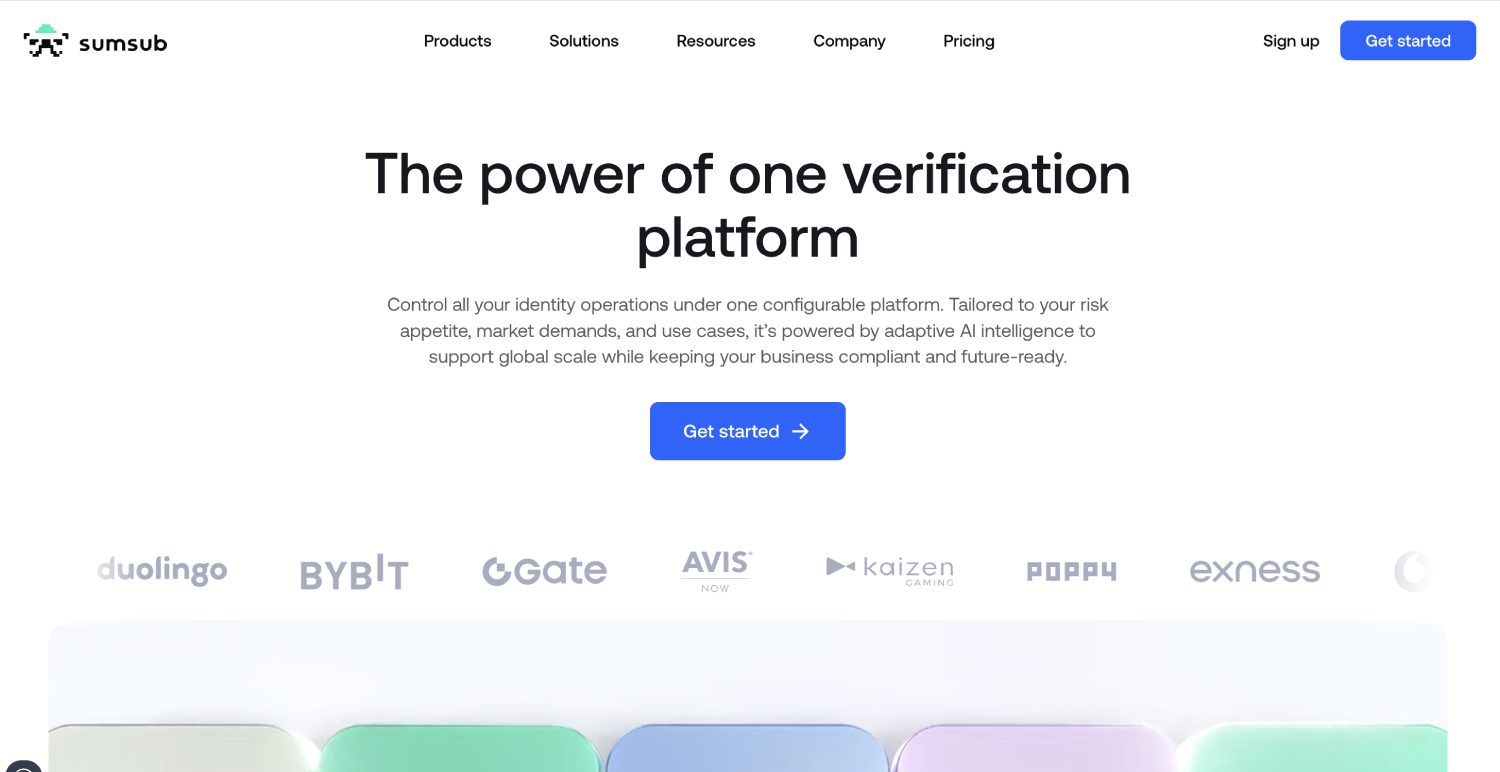
Sumsub is the most transparent vendor in this list on pricing, which is itself a differentiator in a category where almost every competitor says “contact sales.” As of their public pricing page, Sumsub offers a pay-as-you-go plan starting at $1.35 per verification for ID and selfie checks, with volume discounts available. That gives early-stage teams an actual number to put in a financial model before they talk to anyone in sales.
Beyond pricing, Sumsub covers KYC, KYB, AML screening, transaction monitoring, and fraud prevention in one platform. That breadth is comparable to Alloy, though the decisioning depth and US data source depth is thinner. For a Series A fintech that needs to cover the full compliance surface area without stitching together five vendors, Sumsub’s all-in-one approach is worth evaluating seriously.
Stripe Identity
Stripe Identity is worth including on this list specifically because of its pricing model and integration simplicity, not because it competes with Persona on feature depth. As of Stripe’s public pricing page, Stripe Identity charges $1.50 per successful verification. For teams already running their payments and billing on Stripe, the unified dashboard, shared customer objects, and minimal additional integration work make it the path of least resistance for basic identity verification.
The trade-off is capability ceiling. Stripe Identity does not offer the orchestration logic, AML screening, or multi-step risk decisioning that Persona, Alloy, or Socure provide. It is a document and selfie check with a clean API. That is enough for a narrow set of use cases, particularly marketplaces that need to verify sellers without building a full KYC program.
Which Persona Alternative Adds Fraud Intelligence on Top of Identity?
Sardine
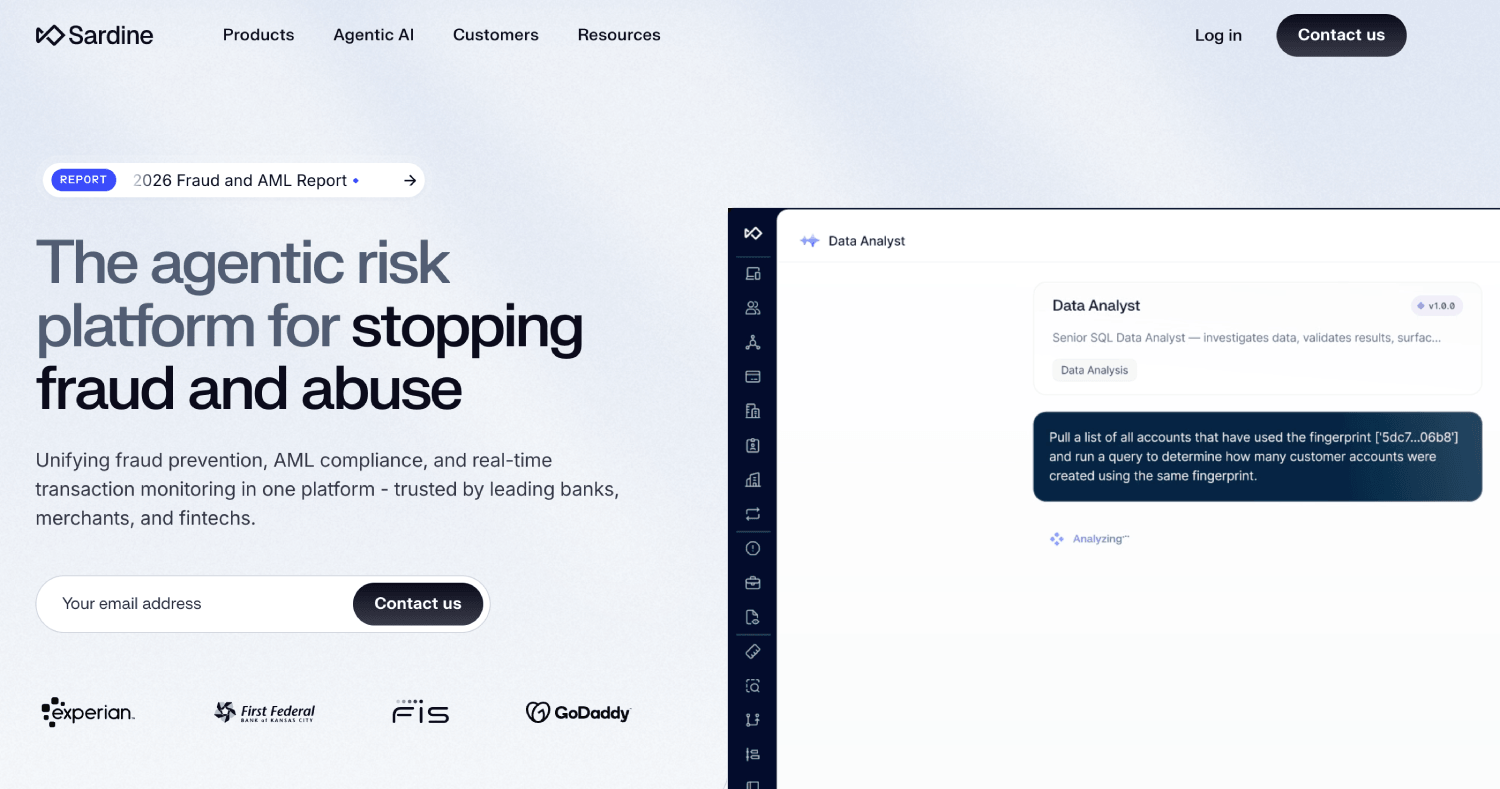
Sardine occupies a different position than the other vendors on this list. It is not primarily a document verification platform; it is a fraud and compliance platform that includes identity verification as one layer in a broader signal stack. Sardine captures device fingerprint, behavioral biometrics, and network signals alongside the identity check, which means its output is a richer fraud signal than a document match alone can produce.
For fintechs where the identity verification step is passing but fraud is still happening downstream during account funding or the first transaction, Sardine is the logical addition or replacement. It tends to replace Persona for teams that have already solved basic identity and are now dealing with sophisticated account takeover or first-party fraud patterns. Pricing is not publicly listed and is negotiated based on volume and use case.
Which Alternative Covers KYC and KYB Together for Cross-Border Fintechs?
Trulioo

Trulioo is the strongest candidate for teams that need individual KYC and business KYB verification in a single platform across multiple countries. It covers over 195 countries for identity verification and pulls from local registries, credit bureaus, and watchlists depending on the jurisdiction. That registry-level coverage is what separates it from document-only platforms when verifying entities in markets where government databases are the authoritative source.
Trulioo positions itself as a global intelligence platform rather than a point solution. The integration is more complex than Persona’s no-code builder, and the pricing is enterprise. For fintechs expanding beyond North America and Europe, particularly into Southeast Asia or Latin America, Trulioo’s registry coverage tends to outperform Persona’s document library for business verification. The Trulioo vs Sumsub comparison covers how the two platforms differ on global KYC and KYB depth.
Persona Alternatives Compared: Feature and Fit Matrix
| Vendor | Best For | Document Coverage | Decisioning Layer | Public Pricing | KYB Support |
|---|---|---|---|---|---|
| Alloy | Orchestration-first fintechs | US-strong, via partners | Deep (190+ data sources) | No | Yes |
| Socure | Synthetic fraud prevention | US-focused | Consortium-based score | No | Limited |
| Sumsub | Price-sensitive teams, all-in-one | Broad global | Moderate | Yes (from $1.35/verification, per public pricing page) | Yes |
| Jumio | Regulated enterprises, audit trails | 200+ countries | Moderate | No | Limited |
| Veriff | Global consumer apps | 230+ countries, 11,500+ doc types | Moderate | Partial (on-demand tier) | Limited |
| Onfido (Entrust) | UK/EU-regulated fintechs | 2,500+ doc types | Moderate | No | Limited |
| Sardine | Post-identity fraud prevention | Via partners | Deep (device + behavior) | No | Limited |
| Stripe Identity | Stripe-native simple KYC | Moderate | Minimal | Yes ($1.50/verification, per public pricing page) | No |
| Trulioo | Cross-border KYC + KYB | 195+ countries | Moderate | No | Yes (strong) |
What Does Persona Identity Verification Actually Cost, and How Do Alternatives Compare?
Persona does not publish per-verification pricing on its public pricing page. Teams typically enter a sales conversation and receive a quote based on volume, which makes it difficult to benchmark against competitors without going through that process. The most useful public data points come from teams that have shared pricing after negotiations on community forums, though those figures vary widely by volume tier and are not reliably current.
For a concrete comparison: Sumsub’s public pricing starts at $1.35 per verification, and Stripe Identity sits at $1.50 per successful verification, both per their respective public pricing pages. Those are the only two publicly anchored numbers in this category. Everything else is negotiated. For a detailed breakdown of what per-verification KYC actually costs across the category, the KYC cost and pricing benchmarks guide covers what teams are actually paying at different volume tiers.
The more important cost question for high-volume teams is total cost of ownership, not per-verification rate. A vendor at $0.80 per verification that generates a 15% false positive rate and forces manual review will cost more in operations than a vendor at $1.50 that holds an 8% review rate. That math shows up in compliance team headcount, not in the vendor contract line.
Frequently Asked Questions About Persona Identity Verification Alternatives
What is the main difference between Persona and Alloy for fintech KYC?
Persona is primarily a verification platform with a configurable flow builder that determines how identity checks run. Alloy is a decisioning platform that determines what happens after a check runs, using data from over 190 sources to approve, decline, or escalate. Fintechs that need a polished onboarding flow tend to start with Persona; fintechs that need to encode complex risk policy in a rules engine tend to migrate toward Alloy. Many mature teams run both: Persona for the user-facing flow, Alloy or a custom layer for the downstream decision.
Is Sumsub a legitimate Persona replacement for a Series A fintech?
For most Series A use cases, yes. Sumsub covers KYC, KYB, AML screening, and transaction monitoring in one platform, which removes the need to integrate separate vendors for each layer. Its public pricing makes budget forecasting possible before you talk to sales. The main trade-off is US data depth: Sumsub’s document and biometric coverage is strong globally, but its US-specific fraud consortium data is thinner than Socure or Alloy. For a US-only consumer fintech with synthetic fraud as the primary risk vector, Sumsub may not be enough on its own.
Can Stripe Identity replace Persona for a marketplace that just needs basic seller verification?
For a marketplace that needs to verify seller identity once at onboarding with a document and selfie check, Stripe Identity at $1.50 per successful verification per Stripe’s public pricing page is a reasonable and significantly simpler integration than Persona, particularly if the marketplace is already on Stripe for payments. It does not offer AML screening, ongoing monitoring, or risk decisioning. If sellers handle regulated financial activity or if the marketplace has BSA/AML obligations, Stripe Identity alone will not cover the compliance surface area and a more complete vendor is required.
Which Persona alternative has the best global document coverage?
Veriff covers over 11,500 document types across more than 230 countries and territories per its product page, making it the strongest on raw document breadth. Trulioo covers over 195 countries but adds local registry verification on top of document checks, which matters more for KYB or in jurisdictions where document forgery rates are high. Jumio covers documents from over 200 countries with iBeta-certified liveness. For a consumer app with a genuinely global user base, Veriff or Trulioo are the most defensible choices against an auditor asking about coverage gaps.
Does Sardine replace Persona or complement it?
Sardine complements rather than replaces Persona in most implementations. Sardine’s strength is in device intelligence and behavioral signals that happen before, during, and after the identity check, not in the document verification step itself. A fintech might keep Persona for the document capture and selfie match, then route the resulting identity data alongside Sardine’s device and behavioral signals into a combined risk decision. Teams that have already solved basic identity verification and are now dealing with account takeover or fraud-at-first-transaction tend to add Sardine rather than swap it for Persona.
What should a fintech look for in a Persona KYC replacement beyond features?
Three operational factors matter more than feature lists: false positive rate at your specific user population (which you will only learn from a proof of concept with your own data), API reliability and status history during high-load events, and the vendor’s willingness to share model logic or data sources with your compliance team during an exam. A vendor that cannot explain to your BSA officer how a decision was made is a liability during a regulatory review, regardless of how well the product demos.
Which Persona Alternative Should You Actually Short-List?
The answer comes down to where you are in company stage and what your actual verification problem is. Early-stage teams under roughly 5,000 verifications per month that want public pricing and an all-in-one platform should start with Sumsub. Teams with a US consumer base and a synthetic fraud problem should evaluate Socure. Teams that have outgrown point-solution KYC and need to encode underwriting and risk policy in a rules engine should talk to Alloy. Teams expanding to global markets need to put Trulioo or Veriff on the list based on whether the primary need is document verification or registry-based entity checks.
The vendors that do not fit neatly into one of those buckets, Stripe Identity, Sardine, Jumio, and Onfido, are right for specific structural conditions: Stripe Identity for teams already embedded in the Stripe stack who need basic verification without a separate vendor relationship; Sardine for teams where fraud is happening post-identity and behavioral signals are the missing layer; Jumio and Onfido for regulated enterprises that need certified liveness and deep audit documentation.
The most common error in KYC vendor evaluation is treating it as a one-time infrastructure decision rather than a layered compliance architecture. The vendors on this list do not all compete at the same layer. A fintech that picks one and assumes it covers every identity and fraud surface area it will ever face is building toward a painful re-evaluation eighteen months from now. Mapping your current stack against the fintech infrastructure stack before you finalize a vendor is the step most teams skip, and it is the step that determines whether the vendor you pick today still works at ten times your current volume.