
TLDR
- ChartMogul and Baremetrics are not the only serious options. Billing-native tools like Maxio and Chargebee, warehouse-first tools like Growthly and Peel, and open-source options like Metabase give SaaS teams more flexibility and often lower total cost.
- The right replacement depends on where your data lives. If your MRR lives in Stripe, a lightweight connector tool works. If you have multiple billing sources or usage-based pricing, you need a warehouse-native or billing-native approach.
- Standalone metrics tools add a third data layer between your billing system and your BI stack. For many teams past Series A, that layer creates more reconciliation work than it saves.
- Price is not the main switching trigger. Data accuracy, multi-source support, and cohort flexibility are where most teams find ChartMogul falls short at scale.
The strongest ChartMogul alternatives for most SaaS teams are Maxio, Chargebee Analytics, Paddle’s built-in reporting, Peel, Growthly, Profitwell (now part of Paddle), Stripe’s native revenue reporting, and Metabase connected to your data warehouse. Each fits a different data architecture and company stage. Billing-native analytics tools are the best default for teams already on those billing platforms, while warehouse-connected tools fit teams with complex multi-source revenue data.
Why Are SaaS Teams Looking for a ChartMogul Replacement?
ChartMogul does one thing well: it pulls subscription data from billing sources and presents standard SaaS metrics like MRR, ARR, churn, and LTV in a clean dashboard. For early-stage companies on a single billing source, that is genuinely useful. The friction starts when the company grows.
Multi-currency reconciliation gets messy when exchange rates differ between ChartMogul and your billing system. Teams running usage-based pricing find that ChartMogul’s data model, built around fixed subscriptions, requires workarounds that distort cohort accuracy. And at higher ARR, finance teams often need metrics to sync with their ERP or data warehouse, which ChartMogul does not handle natively.
The pricing structure also becomes a factor. ChartMogul’s plans tier by tracked MRR, so the tool gets more expensive precisely when you are growing fast. If you are already paying for a billing platform that includes analytics, running ChartMogul in parallel is a hard cost to justify.
Before comparing alternatives, it helps to understand what category of tool you actually need. The FintechSpecs Metrics Source Test is a quick three-question diagnostic: Where does your billing data live? Do you have more than one billing source? Does your finance team need these numbers to reconcile with your general ledger? If your answers are “one platform,” “no,” and “not yet,” a lightweight tool is fine. If any answer is more complex, you need a billing-native or warehouse-first approach. The test does not replace a full audit of your data stack, but it surfaces the structural question most teams skip when they treat a metrics tool switch as a simple product swap.
What Are the Best ChartMogul Alternatives for SaaS Metrics?
1. Maxio (formerly Chargify and SaaSOptics)
Maxio is the most direct billing-native replacement for ChartMogul among teams that need serious subscription analytics without a separate analytics layer. It handles both billing and revenue reporting in one platform, which eliminates the reconciliation gap that plagues ChartMogul integrations.
Its analytics module covers MRR movement, net revenue retention, cohort analysis, and deferred revenue reporting that feeds directly into ASC 606 schedules. That last point matters enormously for Series B and C companies with auditors asking about revenue recognition. For a deeper look at how Maxio compares to its direct billing competitors, the Chargebee vs Recurly vs Maxio breakdown covers the billing ops trade-offs in detail.
Maxio does not publish per-seat or per-MRR pricing publicly. The company positions itself toward mid-market SaaS with complex billing models rather than early-stage startups, and you will need a demo to get a quote.
2. Chargebee Analytics
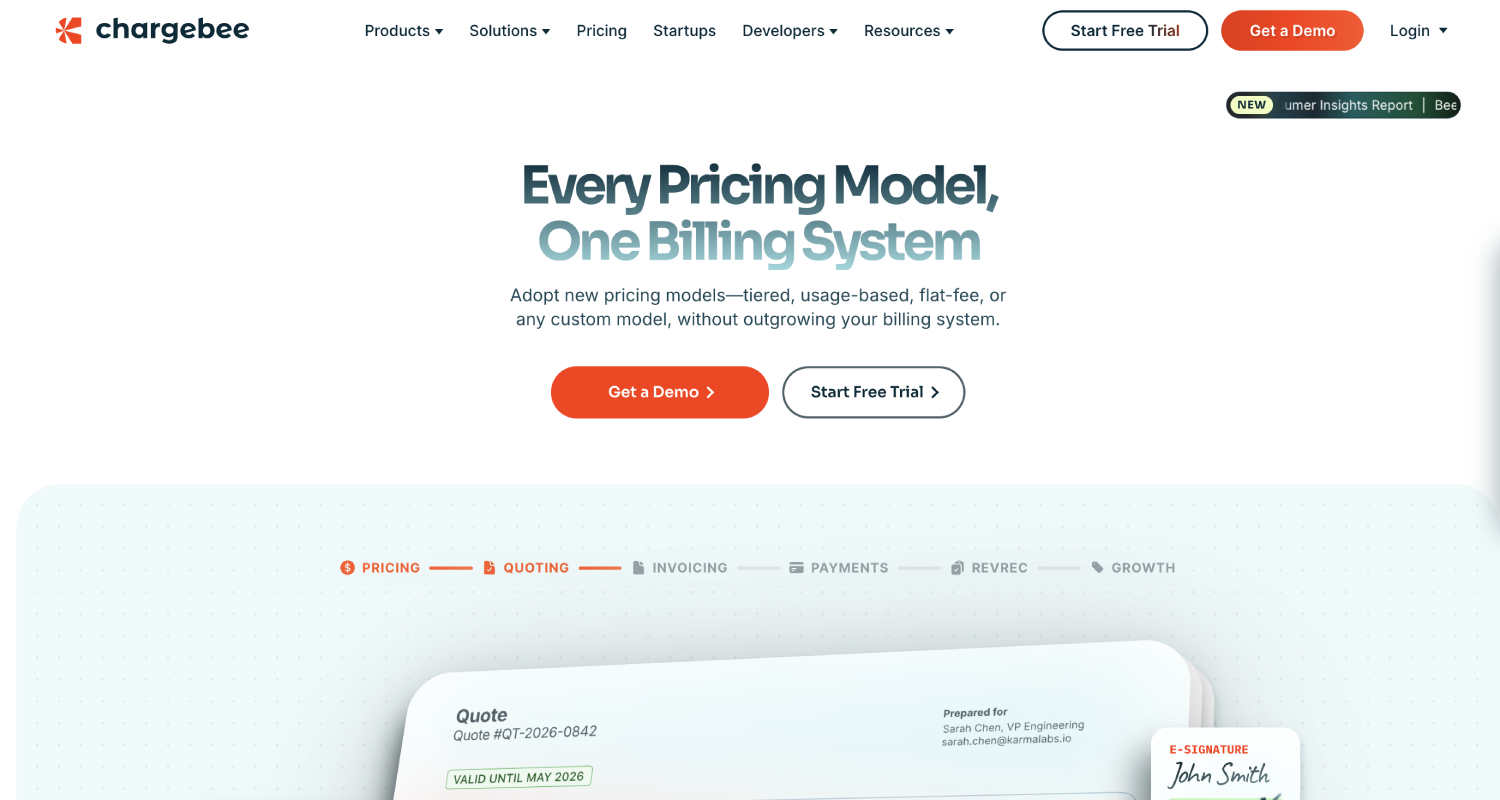
Chargebee includes a built-in analytics layer with its billing platform, covering retention curves, cohort MRR, expansion and contraction tracking, and revenue forecasting. If you are already on Chargebee for billing, switching to its native analytics eliminates your ChartMogul subscription with no data migration required.
The analytics quality has improved significantly in recent product cycles. It is not as deep as a dedicated BI tool, but it handles the standard SaaS metrics board decks require. Chargebee publishes its plan pricing publicly, and the analytics features are included starting at its higher-tier plans. See the full Chargebee pricing breakdown for the per-plan detail before assuming it is cheaper than keeping ChartMogul separately.
3. Paddle (Built-in Reporting)

Paddle operates as a merchant of record and includes subscription analytics as part of the platform. For teams on Paddle’s billing stack, its reporting dashboard covers MRR, churn, and revenue by plan without an additional tool. The limitation is that reporting only covers revenue processed through Paddle. It is not designed to aggregate metrics from multiple billing sources.
Paddle’s acquisition of ProfitWell means ProfitWell’s metric tracking is now part of the Paddle offering, which strengthens its analytics for existing customers. Teams evaluating Paddle as a broader switch from both their billing platform and ChartMogul will find the merchant of record comparison across Stripe, Paddle, Lemon Squeezy, and Polar useful context before committing.
4. Peel Insights

Peel takes a different architectural approach. Rather than sitting between your billing source and a dashboard, it connects directly to Shopify and Stripe data and builds cohort and retention analysis on top of your actual transaction data. This matters for subscription businesses that also have one-time revenue, because ChartMogul tends to either exclude or misclassify non-subscription transactions.
Peel is strongest for DTC subscription and hybrid commerce models. Pure B2B SaaS with annual contracts and invoiced billing will find its feature set thinner than Maxio or Chargebee Analytics. Peel does not publicly list pricing.
5. Growthly (Stripe-Native Analytics)
Growthly is a lightweight Stripe-native analytics tool built specifically for founders and small finance teams who want ChartMogul-style dashboards without the per-MRR pricing model. It pulls directly from Stripe, calculates standard SaaS metrics, and surfaces them in a clean interface without requiring a data warehouse or ETL setup.
The honest limitation is that Growthly’s depth stops at the standard metric set. Teams that need custom cohort definitions, multi-source data, or revenue recognition reporting will outgrow it quickly. As a ChartMogul replacement for single-source Stripe businesses at earlier stages, it is worth evaluating on price alone.
6. Stripe Revenue Recognition and Reporting

Stripe’s native Revenue Recognition product has matured considerably. It handles deferred revenue, refund accounting, and ASC 606-compliant schedules directly inside the Stripe dashboard. For teams where Stripe is their only billing source, this is the most defensible argument against paying for ChartMogul at all.
Stripe’s Revenue Recognition is priced separately from core Stripe processing and is available as an add-on, see Stripe’s public pricing page for current rates. The standard subscription metrics (MRR, churn, subscriber counts) are available in Stripe’s basic reporting at no extra cost. The Revenue Recognition product targets teams who need the accounting layer, not just the KPI dashboard.
7. Metabase (Connected to Your Warehouse)
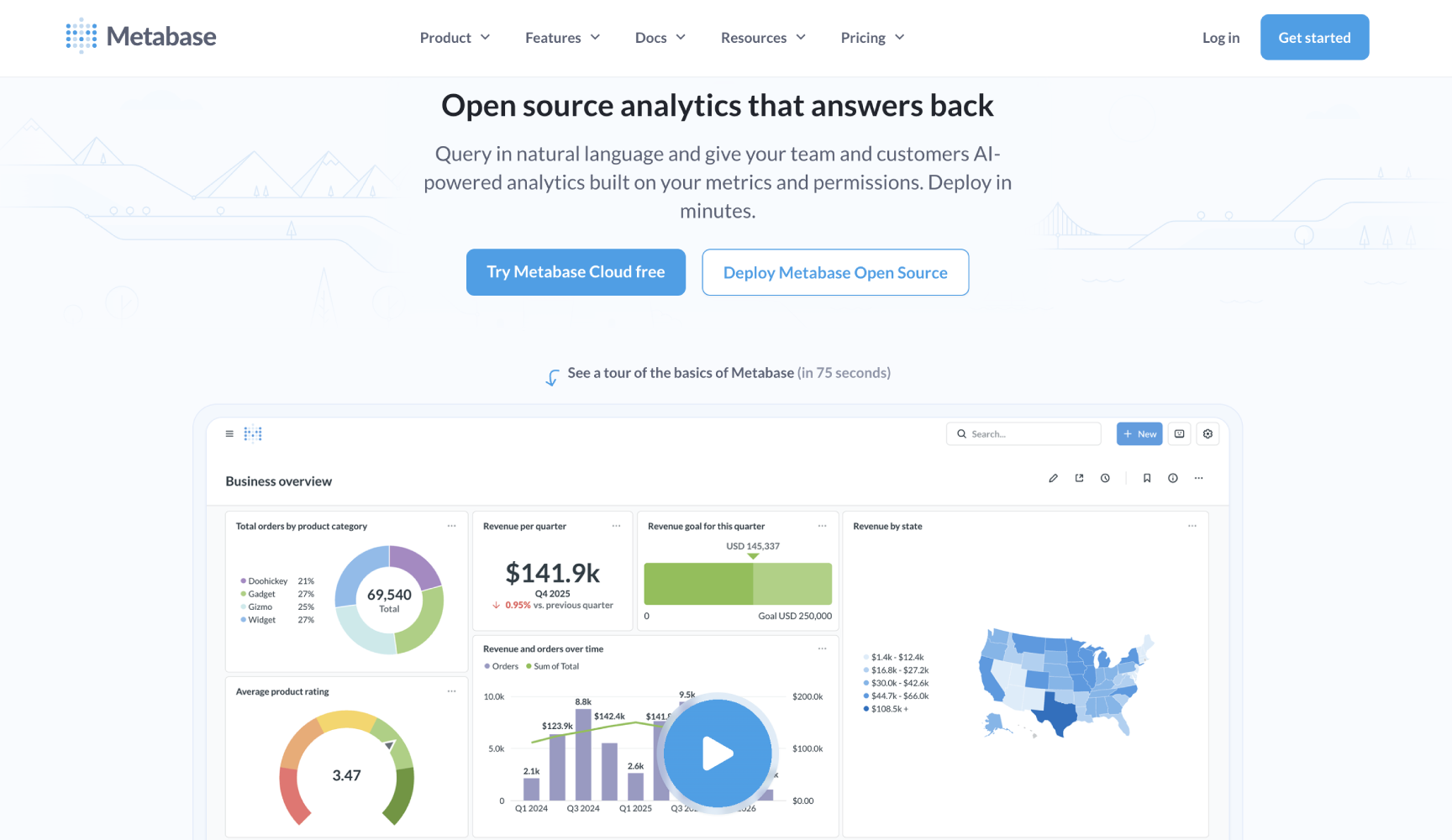
Metabase is not a SaaS metrics tool out of the box, but it becomes one the moment you connect it to a data warehouse that already holds your billing, product, and payment data. This is the approach most engineering-led teams above Series A end up choosing, because it gives full flexibility over metric definitions without paying a per-MRR toll as the company scales.
The setup cost is real. Someone on your data or analytics team needs to build and maintain the models. But if you are already running dbt transforms on billing data for other purposes, the marginal cost of building a Metabase SaaS metrics layer is low compared to a ChartMogul subscription that scales with ARR. Metabase’s open-source version is free to self-host. The hosted Cloud version is priced per seat, see Metabase’s public pricing page for current tiers.
8. Baremetrics
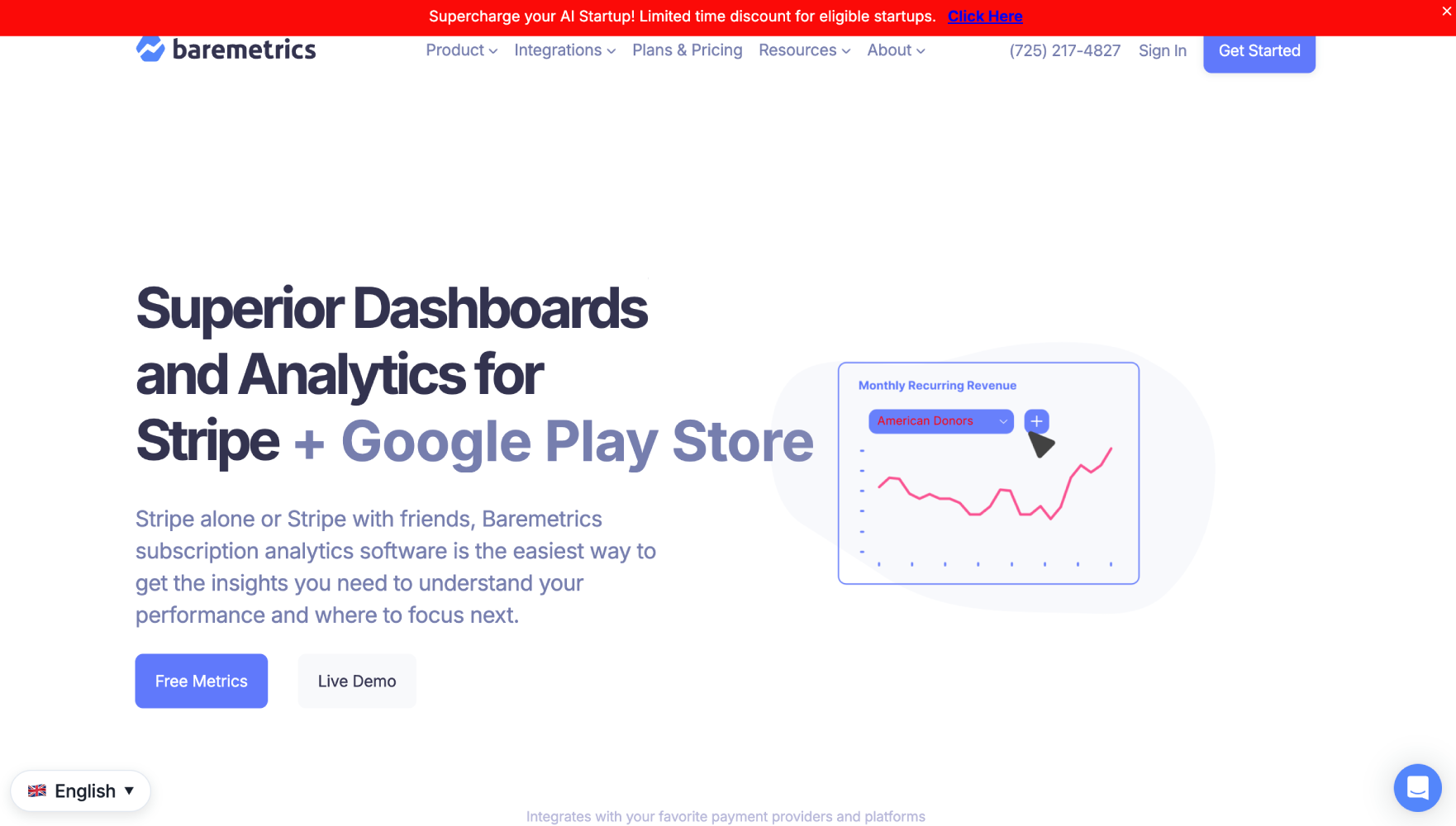
Baremetrics is the most direct feature-for-feature ChartMogul competitor and the tool most teams consider first when switching. It covers the same core metric set, connects to Stripe and Braintree, and offers features like dunning management and cancellation insights that ChartMogul does not.
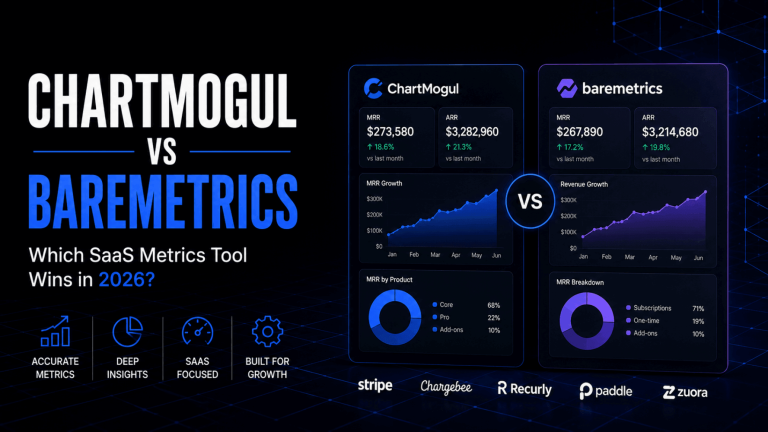
The architectural similarity to ChartMogul is both its strength and its limitation. It inherits the same constraint of living outside your billing system, which means reconciliation gaps persist. If the reason you are leaving ChartMogul is data accuracy or multi-source complexity, Baremetrics solves neither. If the reason is pricing or UI preference, it is the lowest-friction switch. A full head-to-head evaluation is covered in the ChartMogul vs Baremetrics comparison.
How Do These ChartMogul Alternatives Compare on Key Features?
| Tool | Multi-Source Billing | Usage-Based Pricing Support | Revenue Recognition | Open Source / Free Tier | Best For |
|---|---|---|---|---|---|
| Maxio | Yes (native) | Yes | Yes (ASC 606) | No | Mid-market SaaS with complex billing |
| Chargebee Analytics | Yes (native) | Yes | Yes | No | Teams already on Chargebee |
| Paddle Reporting | Paddle only | Partial | Yes (MoR handles tax) | No | Paddle-billed SaaS products |
| Peel Insights | Stripe, Shopify | Partial | No | No | Hybrid subscription and commerce |
| Growthly | Stripe only | Limited | No | Free tier available | Early-stage Stripe-only teams |
| Stripe Revenue Recognition | Stripe only | Yes | Yes (ASC 606) | Basic reporting free | Stripe-first teams needing accounting |
| Metabase | Any (via warehouse) | Yes | Depends on models built | Yes (open source) | Eng-led teams with existing warehouse |
| Baremetrics | Stripe, Braintree | Limited | No | No | Teams switching from ChartMogul for UI/price |
Which ChartMogul Alternative Is Best for Usage-Based SaaS Pricing?
Usage-based pricing breaks most standalone subscription analytics tools. ChartMogul’s data model is built around per-seat and flat-rate subscriptions. When revenue is metered, MRR calculations depend on how you normalize consumption data, and that normalization logic lives in ChartMogul’s import layer where you have limited control over it.
Maxio is the strongest purpose-built option here. It has a native usage-rating engine, so metered revenue is first-class data rather than an import approximation. Stripe’s Revenue Recognition product also handles usage-based revenue correctly if Stripe is your billing processor. The comparison of Stripe Billing alternatives for usage-based pricing covers the billing layer decision in detail, which flows directly into which analytics tool makes sense.
For teams running Metronome, Orb, or Lago as their usage billing engine, the cleanest analytics path runs through a data warehouse. These tools generate raw event and usage data that does not map cleanly to ChartMogul’s subscription import format. The Metronome vs Orb vs Lago comparison explains the billing data output format differences that affect your analytics layer choice downstream.
What Should a Growing SaaS Team Evaluate Before Switching Metrics Tools?
Most teams switch on price frustration and discover afterward that the metric they trusted in ChartMogul was already wrong. The root cause is almost always the same: the tool’s data import logic did not handle refunds, plan changes, or free trials the way the team assumed.
Before picking a replacement, audit three things: First, does your current MRR in ChartMogul reconcile against your billing system’s recognized revenue within a reasonable tolerance? If there are persistent gaps, the problem is the data model, and switching tools without fixing that model will reproduce the same error in the new platform. Second, how many billing sources do you have? Stripe plus Paddle, or Stripe plus manual invoices, or Stripe plus a reseller? Each additional source is a reconciliation surface that standalone tools handle poorly. Third, does your finance team need these metrics to match your general ledger for audit purposes? If yes, billing-native tools with ASC 606 support (Maxio, Chargebee, Stripe Revenue Recognition) are the only defensible choices.
Teams that skip that three-point check and choose a lightweight standalone replacement tend to repeat the same reconciliation problems within 18 months. The list of fintech metrics that actually matter gives useful context on which numbers warrant investment in a proper data layer versus which ones can live in a spreadsheet longer than founders assume.
Frequently Asked Questions
Is there a free ChartMogul alternative?
Metabase is open source and free to self-host. Stripe’s basic subscription reporting is included with Stripe billing at no additional cost. Growthly offers a free tier for small Stripe-based businesses. None of these match ChartMogul’s out-of-the-box dashboard experience exactly, but each delivers core SaaS metrics without a per-MRR subscription fee. For teams with minimal engineering bandwidth, Growthly is the least-setup free option.
Can I replace ChartMogul with Stripe’s native reporting?
If Stripe is your only billing processor, yes. Stripe’s built-in dashboard covers MRR, subscriber counts, churn, and revenue by plan. Stripe Revenue Recognition handles ASC 606 deferred revenue schedules as an add-on. The gap is cohort depth and custom segmentation: Stripe’s reporting is less flexible than ChartMogul for slicing metrics by customer segment, acquisition channel, or pricing plan combination. Teams that need that flexibility should use Metabase or a billing-native platform instead.
What is the main difference between Baremetrics and ChartMogul?
Baremetrics and ChartMogul cover the same core metric set and both rely on Stripe as the primary data source. Baremetrics includes features ChartMogul does not, such as dunning management and a cancellation flow with exit surveys. ChartMogul’s data import supports more billing sources and its cohort analysis is more configurable. Teams switching primarily for cost or UI reasons will find Baremetrics an easy migration. Teams switching for data accuracy or multi-source reasons will find both tools have the same architectural limitations. The full comparison is in the ChartMogul vs Baremetrics analysis.
What do SaaS teams with multiple billing sources use for subscription analytics?
Teams with more than one billing source typically outgrow standalone analytics tools and move to a warehouse-connected approach. The common stack is Stripe plus Chargebee (or Paddle) feeding into a warehouse like BigQuery or Snowflake, with dbt models normalizing the subscription data and Metabase or Looker on top. This architecture gives accurate, auditable metrics across all sources but requires engineering time to set up and maintain. Maxio is the strongest option if you want to consolidate billing and analytics in a single platform rather than build a custom pipeline.
Does ChartMogul handle usage-based pricing accurately?
ChartMogul supports usage-based billing to a degree through its custom imports and API, but the platform was designed around fixed subscription models. Metered revenue requires you to send normalized monthly values through the API, and how you define those values determines metric accuracy. Teams with true consumption-based models where monthly revenue varies significantly per customer typically find ChartMogul’s MRR calculations require manual adjustment. Maxio, Stripe Revenue Recognition, or a warehouse-based approach handles this more reliably.
How much does ChartMogul cost compared to its alternatives?
ChartMogul prices by tracked MRR and does not publish its full plan pricing publicly. This means your cost scales directly with your revenue, which is a structurally expensive model at higher ARR. Chargebee and Maxio charge per platform seat or by billing volume rather than tracked MRR. Stripe’s reporting is included with processing. Metabase’s cloud version charges per seat. The practical comparison depends on your specific ARR and team size, but teams above $2M ARR frequently report that billing-native tools cost less in total once they eliminate the standalone metrics subscription.
The Right Frame for This Decision
Most teams approach a ChartMogul replacement as a tool swap. Find something similar, migrate the data, done. The teams that end up in the same frustration 18 months later are the ones who treated it that way.
The more productive frame is to ask where your subscription data should live as an authoritative source of record. If the answer is your billing platform, then a billing-native analytics layer (Maxio, Chargebee, Paddle) gives you metrics that are always reconciled with the system generating the revenue. If the answer is your data warehouse, because you have multiple sources, complex usage models, or audit requirements, then a warehouse-first approach with Metabase is the right long-term architecture regardless of what it costs to set up.
Standalone metrics tools like ChartMogul and Baremetrics fit teams in the middle: past the spreadsheet stage, not yet running a warehouse. That is a real and common position, and both tools serve it reasonably well. But the window where a standalone tool is the best answer tends to be shorter than founders expect. Understanding which side of that window you are on is the actual decision. Everything else is just a product comparison.