

- Your billing platform’s built-in dashboard almost certainly miscalculates churn and MRR once you have plan changes, mid-cycle upgrades, annual contracts, and paused accounts in the mix simultaneously.
- Dedicated subscription analytics tools rebuild those numbers from raw transaction data using consistent definitions, which is what investors and auditors actually check against.
- Stripe-native tools like Baremetrics are fast to set up but break down if you ever add a second billing source. ChartMogul handles multi-source billing but costs more as you scale.
- Net revenue retention (NRR) is the single metric that separates tools worth paying for from glorified dashboards. If a tool cannot show you NRR by cohort, skip it.
- Free options exist and are genuinely useful at low MRR, but every tool on this list has a ceiling where its limitations start costing more than its subscription.
The best subscription analytics tools for SaaS finance teams are ChartMogul, Baremetrics, ProfitWell (now Paddle’s free tier), Maxio, Mosaic, Stripe’s native Revenue Recognition (for Stripe-only stacks), Recurly Analytics, Discern AI, Metabase with custom MRR queries, Tableau with a SaaS data model, and Paddle Analytics. ChartMogul leads for multi-source billing accuracy; Baremetrics leads for Stripe-native speed; Maxio leads for finance-grade reporting at scale.
Why Your Billing Dashboard Is Lying to You About MRR
Stripe, Chargebee, Recurly, and most other billing platforms calculate MRR as a convenience metric, not as an accounting artifact. When a customer upgrades halfway through a billing cycle, pauses a subscription, or gets a manual credit, the native dashboard typically uses one of several competing conventions for how to spread that revenue across the month. Most teams never notice until a Series A investor asks for a cohort waterfall and the numbers do not reconcile.
The specific problem is definitional inconsistency. MRR (monthly recurring revenue) should equal the sum of normalized monthly values of all active subscriptions at a point in time, adjusted for discounts and excluding one-time charges. That sounds simple. It is not, because “active” has edge cases: trials, paused accounts, accounts in dunning, annual contracts with mid-year cancellations. A billing platform built to process charges is not built to adjudicate those edge cases the same way every time. A subscription analytics tool is.
This matters in practice, not just in theory. If you raise a round and your investor’s analyst rebuilds your MRR model from raw Stripe exports, their number will differ from your dashboard number. The explanation will be embarrassing at best and a negotiating liability at worst. You can avoid it by generating your MRR from a tool that applies consistent, auditable definitions from day one. For more context on how billing stack choices affect your financial reporting downstream, the Chargebee vs Recurly vs Maxio comparison for fintech SaaS billing covers where the differences show up at the billing layer before data even reaches an analytics tool.
What Metrics Should a Subscription Analytics Tool Actually Track?
Before evaluating any tool, agree on the six numbers that matter. These are not optional, and if a tool cannot produce all six, it is a dashboard, not an analytics platform.
- MRR: total normalized monthly recurring revenue at a point in time
- MRR movement: broken into new MRR, expansion MRR, contraction MRR, and churned MRR (sometimes called the MRR waterfall)
- Churn rate: both customer churn (percentage of customers lost) and revenue churn (percentage of MRR lost), which tell different stories
- Net revenue retention (NRR): the percentage of MRR retained from a cohort of customers after 12 months, including expansion; anything above 100% means expansion outpaces churn
- Cohort analysis: how MRR from customers acquired in a specific month evolves over time, the only way to see compounding retention problems before they hit your top-line growth
- Average revenue per account (ARPA): useful for segmenting by plan tier and spotting whether growth is coming from volume or expansion
Tools that track only MRR and basic churn are measuring the output. Tools that show cohort NRR over time are measuring the engine. The distinction is worth paying for.
The FintechSpecs Billing Stack Compatibility Test
Every tool on this list was evaluated against the FintechSpecs Billing Stack Compatibility Test , a FintechSpecs editorial framework for predicting whether a subscription analytics tool will remain accurate as your billing complexity grows. It applies four checks.
- Multi-source ingestion: can it pull from two or more billing systems simultaneously without requiring manual CSV imports? A company that uses Stripe for self-serve and Chargebee for enterprise contracts needs this from the start.
- Mid-cycle event handling: does it correctly prorate upgrades, downgrades, and pauses, or does it treat them as full-month events?
- Custom plan logic: can you define non-standard billing intervals, annual-to-monthly normalization, and volume discount structures, or are you limited to the tool’s preset plan types?
- Cohort export: can you export raw cohort data for use in a BI tool or investor data room, or is it locked to an internal dashboard?
Any tool that fails two or more of these checks will require manual correction work within six months of your billing operations getting even modestly complex. Keep that ceiling in mind as you evaluate.
11 Best Subscription Analytics Tools, Ranked by Use Case
1. ChartMogul
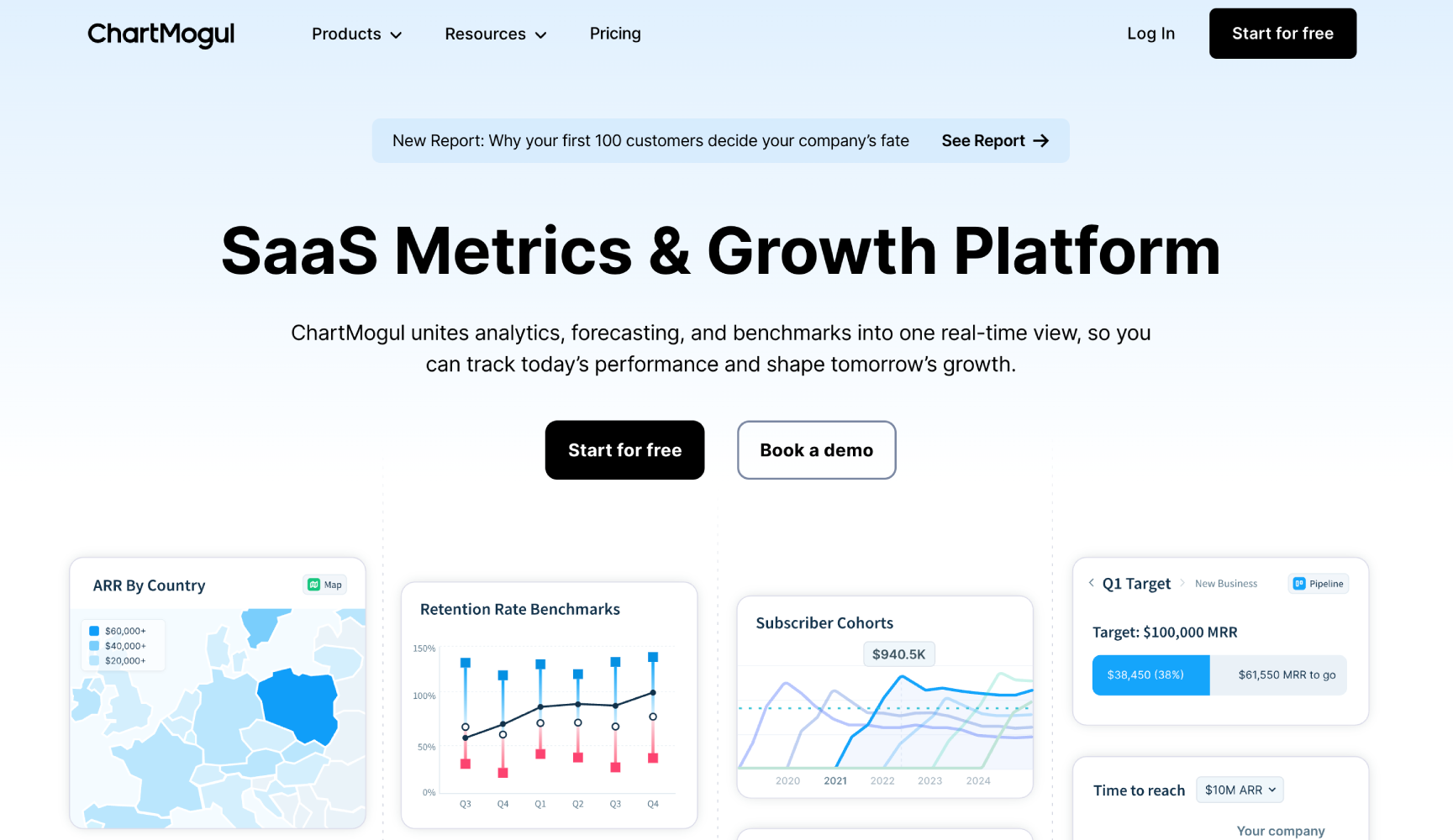
ChartMogul is the clearest choice for a SaaS company that needs investor-grade MRR, NRR, and cohort reporting from multiple billing sources. It natively integrates with Stripe, Braintree, Recurly, Chargebee, PayPal, and others, and applies consistent metric definitions across all of them. The MRR waterfall, cohort charts, and customer-level revenue timelines are genuinely useful for a Series A pitch, not just internal monitoring.
Pricing is tiered by MRR. According to ChartMogul’s public pricing page, there is a free plan up to $10k MRR, with paid plans starting above that threshold. Costs rise meaningfully as MRR scales, which is the most common complaint in operator forums. ChartMogul does not publicly list exact pricing for its higher tiers, describing them as custom. For a detailed head-to-head on this tool against its closest competitor, see the ChartMogul vs Baremetrics comparison on FintechSpecs.
Best for: Series A and beyond, multi-billing-source stacks, investor data rooms.
2. Baremetrics
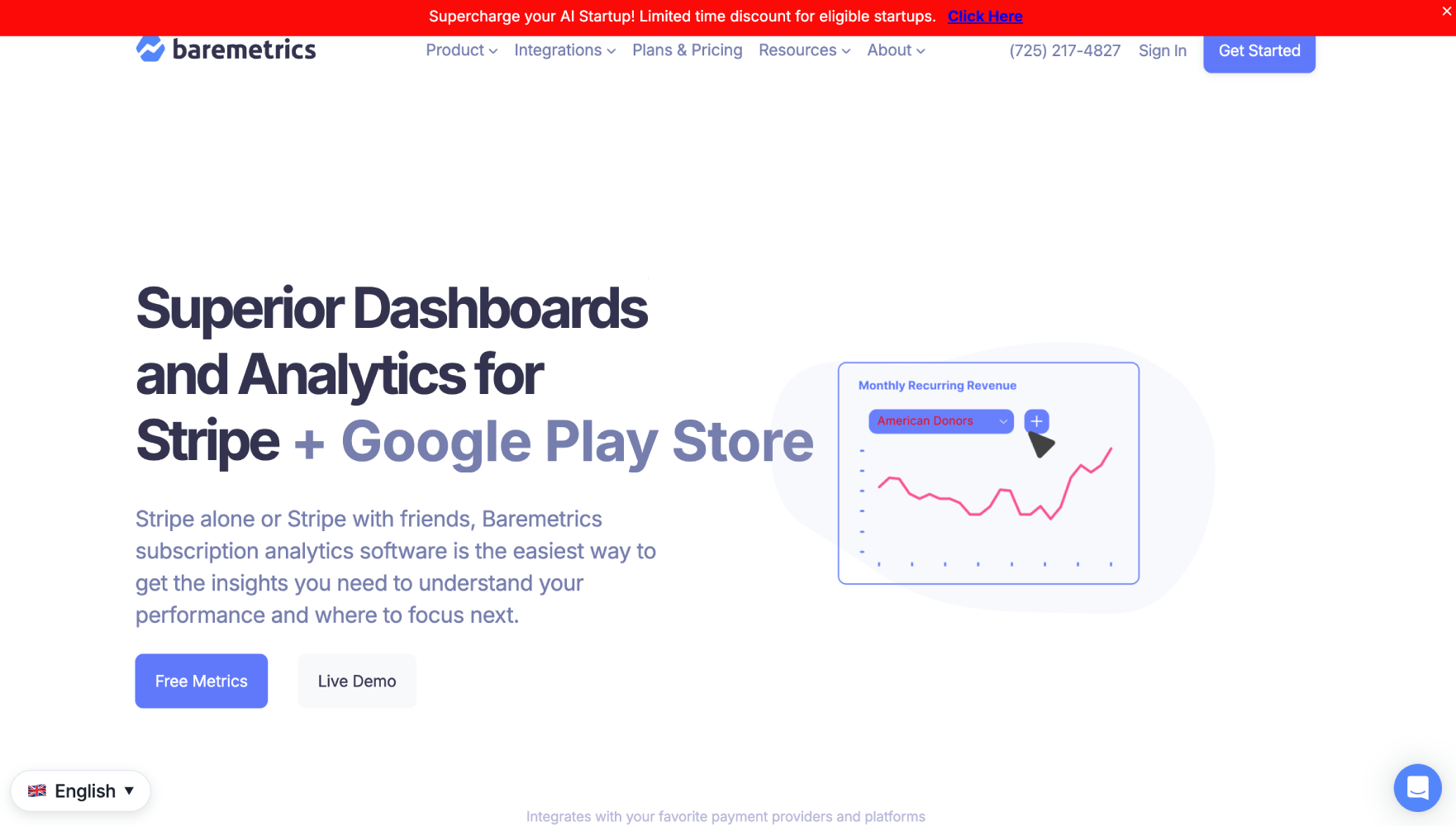
Baremetrics is the fastest way for a Stripe-native SaaS to get a clean metrics dashboard. Connect a Stripe account and within minutes you have MRR, churn, LTV, and ARPU displayed clearly. The UI is the cleanest in this category, and the Recover product (dunning) is often bundled, though that is outside scope here.
The Stripe dependency is the ceiling, not a footnote. If you add Chargebee or Recurly later, Baremetrics does not ingest both simultaneously. Teams that reach that point typically migrate to ChartMogul or Maxio. According to Baremetrics’ public pricing page, plans start at $108/month for companies up to $10k MRR and increase with MRR volume. For a full feature comparison between these two tools, the ChartMogul vs Baremetrics piece on FintechSpecs covers that decision in depth.
Best for: Stripe-only stacks, pre-Series A teams, founders who want metrics in an afternoon.
3. ProfitWell (Paddle)

ProfitWell, now owned by Paddle, offers its core metrics product free. It connects to Stripe and Braintree and produces MRR, churn, and basic cohort data at no cost. The free tier is genuinely useful, not stripped down to the point of uselessness, and for teams under $50k MRR it is often enough.
The catch is that ProfitWell’s data and insights products push toward the Paddle product suite over time, and the product roadmap has shifted since the acquisition. Teams building on Stripe who want a truly independent tool should factor that into a multi-year decision. ProfitWell also provides SaaS benchmarking data, which is useful for contextualizing your churn rate against industry averages.
Best for: Early-stage Stripe or Braintree users who need free, reliable MRR without a monthly line item.
4. Maxio (formerly SaaSOptics + Chargify)
Maxio sits at the intersection of billing operations and financial reporting. It handles subscription management, revenue recognition, and SaaS metrics in a single platform, which matters when your finance team is preparing for an audit or managing deferred revenue under ASC 606. The reporting depth exceeds ChartMogul and Baremetrics for finance-grade use cases.
The tradeoff is complexity and cost. Maxio is not a plug-in dashboard; it requires implementation time and is priced for companies with meaningful ARR. It is the right choice when you need your subscription analytics to talk to your general ledger, not just your investors. Pricing is not publicly listed and requires a sales conversation.
Best for: Series B and beyond, companies preparing for audit, teams that need ASC 606 compliance alongside MRR reporting.
5. Mosaic

Mosaic (has integrated with HiBob) is a financial planning and analysis platform that pulls in subscription data alongside headcount, spend, and pipeline. For a VP Finance or CFO building board-ready revenue models, it does more than a pure subscription analytics tool because it connects billing data to the full P&L. MRR, NRR, and churn are components of a broader financial operating model, not standalone charts.
It is not a replacement for ChartMogul or Baremetrics at the operator level. Mosaic is for finance leadership, not for a growth engineer who wants to check yesterday’s expansion MRR. Pricing is custom and enterprise-oriented.
Best for: CFOs and VP Finance roles at Series B+ companies building integrated financial models.
6. Stripe Revenue Recognition

Stripe Revenue Recognition is included here because many Stripe-native teams assume it covers subscription analytics. It covers ASC 606 revenue scheduling and waterfall reports, but it is not a subscription analytics tool in the MRR and cohort sense. Churn rates, NRR, and cohort analysis are absent. It solves a different problem: when revenue is recognized, not how subscription health is trending.
For teams that want to understand why this distinction matters when choosing your billing infrastructure, the overview of Stripe billing alternatives for usage-based pricing is useful context on where Stripe’s native tooling ends and third-party analytics begins.
Best for: Stripe users who need revenue recognition schedules, not subscription health metrics. Use alongside, not instead of, a dedicated analytics tool.
7. Recurly Analytics
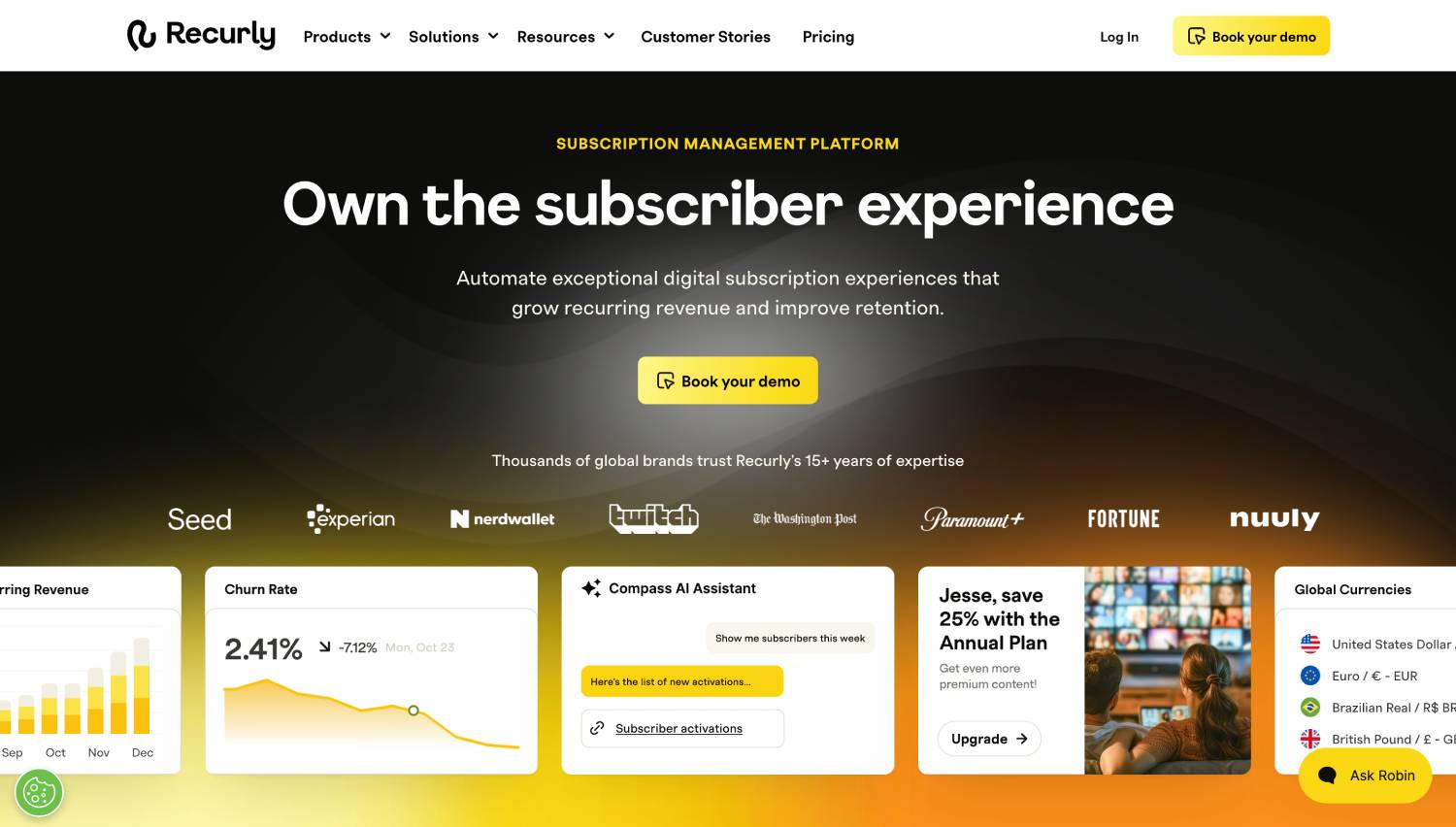
Recurly includes a native analytics module with MRR, churn, subscriber counts, and plan-level reporting built into the billing platform. If you are already using Recurly for billing, the native analytics are solid enough for internal monitoring through roughly $1M MRR. Above that, the lack of cohort depth and limited export options push most finance teams toward ChartMogul or Maxio.
Recurly’s analytics do not support multi-billing-source aggregation, which is expected since it is purpose-built for Recurly subscribers. The value is convenience, not analytical depth.
Best for: Recurly billing customers at early to mid-stage who want zero additional tooling overhead.
8. Discern AI
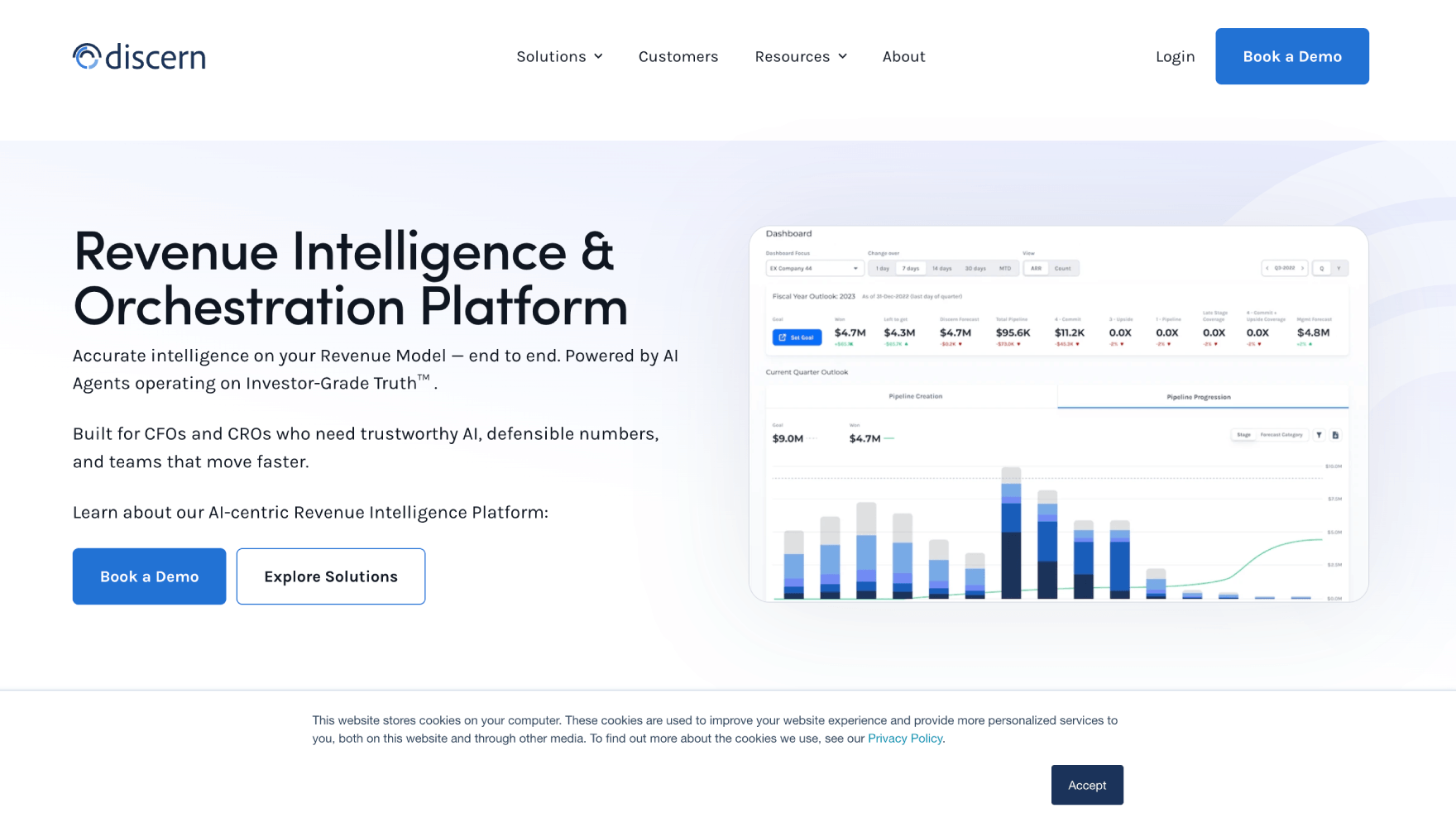
Discern AI is a newer entrant focused on ARR and retention analytics with an emphasis on connecting billing data to sales CRM data for a complete revenue picture. It positions itself around revenue intelligence rather than pure subscription metrics, which means it surfaces signals like expansion risk and contraction patterns before they show up in your MRR waterfall.
The tool is less mature than ChartMogul or Baremetrics but has been gaining traction with B2B SaaS teams that have both a large self-serve and a direct sales motion running simultaneously. Pricing is not publicly listed.
Best for: B2B SaaS teams with a hybrid PLG and sales-led motion that want churn signals connected to CRM data.
9. Metabase (with a custom MRR data model)
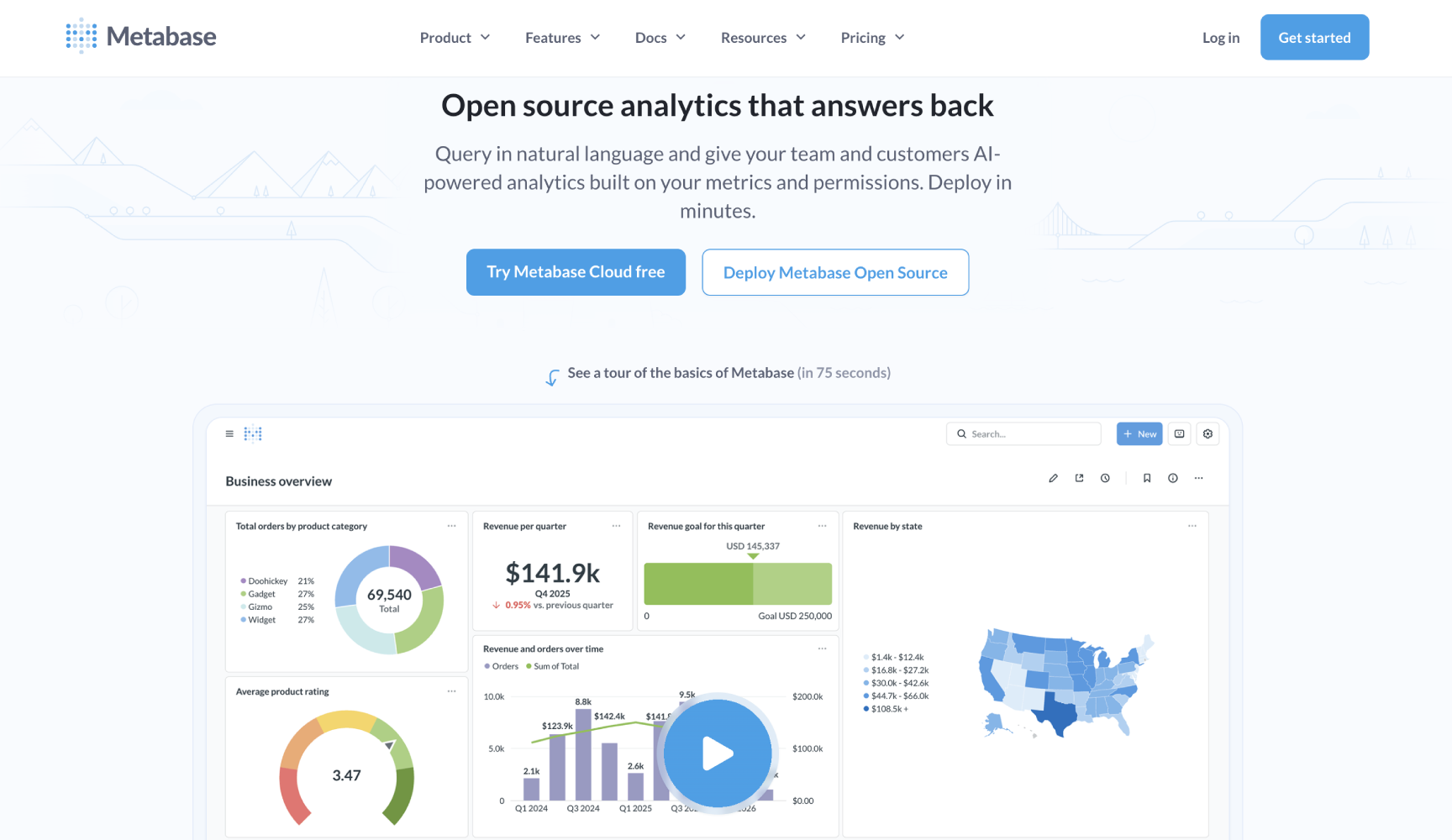
Metabase is an open-source BI tool, not a subscription analytics product, but it belongs on this list because it represents the right answer for engineering-heavy teams that want complete control over metric definitions. A Metabase instance pointed at a cleaned Stripe or Chargebee Postgres replica can produce every metric on this list at a fraction of the cost of a SaaS tool.
The hidden cost is the time to build and maintain that data model. A senior data engineer needs two to four weeks to produce a reliable MRR and cohort model from scratch, and it needs ongoing maintenance when billing logic changes. For teams already running a data warehouse, this is often the right call. For teams without a data function, it is a trap. Consider how this fits into your broader reporting stack by reviewing the options in BI tools for Series C fintech teams with audit logs and permissions.
Best for: Engineering-led teams with a data warehouse who want full metric ownership and zero vendor lock-in.
10. Tableau (with a SaaS metrics data model)

Tableau operates at the same layer as Metabase but with a higher price tag and more enterprise-grade visualization and governance features. For fintech teams that have Tableau already deployed for other reporting, building a SaaS metrics layer on top of it avoids tool sprawl. Cohort charts and MRR waterfalls in Tableau require custom data preparation but produce audit-ready, permissions-controlled dashboards that Baremetrics and ProfitWell simply cannot match for enterprise governance requirements.
Tableau’s licensing costs mean it rarely makes sense to adopt it specifically for subscription analytics. Its value is as an existing platform that can absorb billing data without requiring a separate vendor.
Best for: Enterprise teams already licensed on Tableau who want to consolidate subscription reporting into existing BI infrastructure.
11. Paddle Analytics (native, for Paddle merchants)
Paddle‘s merchant of record platform includes native analytics for MRR, churn, and plan performance for merchants using Paddle for billing. Because Paddle acts as the merchant of record and processes transactions directly, the analytics have full transaction visibility without requiring a separate integration. For teams already on Paddle, the native analytics are adequate for most pre-Series A reporting needs.
Paddle Analytics does not support external billing source ingestion, so it applies only to the Paddle billing stack. Teams evaluating Paddle as their billing infrastructure can read the full Stripe vs Paddle vs Lemon Squeezy vs Polar merchant of record comparison for context on whether that billing decision is right before committing to Paddle’s native analytics.
Best for: Paddle merchants who want zero additional tooling for basic MRR and churn reporting.
Comparison Table: Subscription Analytics Tools
| Tool | Multi-Billing Source | Cohort Analysis | NRR Reporting | Free Tier | Best Fit |
|---|---|---|---|---|---|
| ChartMogul | Yes | Yes | Yes | Up to $10k MRR | Series A+, multi-source billing |
| Baremetrics | Stripe only | Yes | Yes | No | Stripe-native, pre-Series A |
| ProfitWell | Stripe, Braintree | Basic | Yes | Yes (core metrics) | Early-stage, free MRR tracking |
| Maxio | Yes | Yes | Yes | No | Series B+, audit-ready reporting |
| Mosaic | Yes (via integrations) | Limited | Yes | No | CFO-level FP&A |
| Stripe Rev Rec | Stripe only | No | No | Included with Stripe | ASC 606 only, not MRR analytics |
| Recurly Analytics | Recurly only | Limited | Partial | Included with Recurly | Recurly billing customers, early-stage |
| Discern AI | Yes | Yes | Yes | No | Hybrid PLG + sales-led teams |
| Metabase | Any (custom) | Custom | Custom | Yes (open source) | Engineering-led, data warehouse teams |
| Tableau | Any (custom) | Custom | Custom | No | Enterprise BI consolidation |
| Paddle Analytics | Paddle only | Basic | Yes | Included with Paddle | Paddle merchants only |
Which Tool Fits Which Billing Stack?
The single most reliable filter is your billing source count. If your entire subscription revenue runs through one billing platform, Stripe-native or platform-native tools are often enough and cost less. If you have or plan to have more than one billing source (self-serve on Stripe, enterprise on Chargebee, legacy on Recurly), only ChartMogul, Maxio, Discern AI, Metabase, or Tableau can aggregate correctly.
Consider a company at $200k MRR that processes monthly self-serve subscriptions through Stripe and annual enterprise contracts through Chargebee. Their total MRR should include normalized annual contract value from Chargebee divided by twelve, combined with live Stripe MRR. Baremetrics will only show the Stripe portion. ProfitWell will not ingest Chargebee at all. ChartMogul will handle both and show a unified MRR waterfall. That gap is not a minor inconvenience; it means a significant portion of the company’s revenue is invisible in some tools.
For teams that are still deciding on billing infrastructure before picking an analytics layer, the comparison of fintech metrics that actually matter beyond vanity growth is worth reading to understand which reporting capabilities you need your billing stack to support from the start.
What Does Accurate NRR Reporting Actually Require?
Net revenue retention is calculated by taking MRR from a cohort of customers at the start of a period, then measuring their combined MRR twelve months later, including any expansion from upsells and reduced by any contraction and churn. Divide the ending number by the starting number. A result above 100% means your existing customers are growing their spend faster than others are canceling.
Producing this number accurately requires three things most billing dashboards do not do well. First, a consistent customer identity layer: if a customer changes their email, gets merged with a parent account, or has multiple subscriptions, the tool must link all revenue to one entity. Second, correct plan change attribution: if a customer upgrades in month three of a cohort window, that expansion needs to attach to the original cohort, not appear as new MRR from a new customer. Third, a stable lookback model: the tool must recalculate historical cohorts correctly when you backfill data, which matters the first time you connect a new billing source.
ChartMogul and Maxio handle all three reliably. Baremetrics handles the first two but is Stripe-dependent for data completeness. ProfitWell’s NRR reporting is functional but less granular at the cohort segmentation level. Metabase and Tableau can do all of it, given a well-built data model.
Frequently Asked Questions
What is subscription analytics?
Subscription analytics is the practice of measuring and reporting on key recurring revenue metrics, primarily MRR, churn rate, net revenue retention, customer lifetime value, and cohort behavior, using consistent definitions applied to billing transaction data. It differs from standard reporting in that it normalizes irregular billing events (upgrades, downgrades, annual contracts, pauses) into comparable monthly figures that can be tracked over time and compared across customer segments.
What is MRR tracking software?
MRR tracking software connects to billing platforms (Stripe, Chargebee, Recurly, and others), applies standardized definitions to subscription transaction data, and produces monthly recurring revenue figures broken down by new, expansion, contraction, and churned MRR. The best tools also produce NRR, cohort retention curves, and ARPA over time. Dedicated MRR tracking software exists because native billing dashboards do not apply consistent rules across mid-cycle plan changes, trials, and multi-source billing.
What is the best subscription analytics tool for a Stripe-based SaaS?
For a Stripe-only stack, Baremetrics is the fastest to set up and covers MRR, churn, LTV, and cohorts adequately through Series A. ProfitWell is the right choice if budget is the primary constraint, since its core metrics are free. ChartMogul is the better long-term choice if you expect to add a second billing source or need investor-grade cohort exports. All three connect natively to Stripe without requiring a data engineering investment.
What is the cheapest way to get accurate SaaS metrics?
ProfitWell’s core metrics product is free and connects to Stripe and Braintree. ChartMogul offers a free plan up to $10k MRR according to its public pricing page. Metabase is open source and free to self-host, but requires engineering time to build a correct MRR model from your billing data. For teams below $10k MRR, ChartMogul’s free tier or ProfitWell is almost always the best starting point. Above that threshold, the cost of a dedicated tool is typically less than one hour of senior finance time spent manually reconciling billing exports per month.
Which subscription analytics tools handle multiple billing systems?
ChartMogul, Maxio, Discern AI, Mosaic, Metabase, and Tableau all support multiple billing sources. ChartMogul natively integrates with Stripe, Recurly, Chargebee, Braintree, and others. Maxio handles multi-source billing but is designed for companies that also use it as a billing management platform. Metabase and Tableau support any billing source if you have the engineering resources to build and maintain a unified data model.
How do I report net revenue retention automatically?
ChartMogul, Maxio, and Baremetrics all calculate NRR automatically once connected to your billing data. ChartMogul and Maxio produce cohort-level NRR that shows retention curves by acquisition month. Baremetrics calculates NRR but is limited to Stripe data. The key requirement for automatic NRR reporting is consistent customer identity resolution, meaning the tool must correctly associate all subscriptions, upgrades, and expansions with a single customer record over time rather than treating plan changes as new customers.
ChartMogul vs Baremetrics: which is better for a small SaaS?
Below $10k MRR with a single Stripe account: Baremetrics is faster to set up and the UI is cleaner for a founder-led review. ChartMogul’s free tier is also available at that level, and it offers more export flexibility. Above $10k MRR or with any complexity beyond a single Stripe account, ChartMogul is the better long-term investment because it handles multi-source billing and produces more granular cohort exports. The primary cost difference appears as you scale past $50k MRR, where both tools price by MRR volume.
How to Pick the Right Tool Without Overpaying
The decision comes down to two variables: billing source count and the seniority of the audience reading your metrics. If you have one billing source and your audience is internal (founder, small team), start with ProfitWell free or Baremetrics. If you have two or more billing sources or you are preparing metrics for an investor data room, go directly to ChartMogul. If you need subscription analytics as part of a broader finance operating model that feeds a CFO’s board deck, Maxio or Mosaic are in the right tier.
Avoid the mistake of choosing a tool based on the demo, which is always built to show the clean path. Ask the sales team specifically how the tool handles mid-cycle downgrades, annual contracts paid upfront, and customers with multiple active subscriptions. A tool that answers those questions clearly in a pre-sales conversation will handle them correctly in production. A tool that hedges or redirects is telling you something.
The companies that get this right are the ones who connect their subscription analytics to their financial reporting early, not after a funding event forces a cleanup. Accurate MRR, defensible NRR, and auditable cohort data are not reporting luxuries. They are the foundation of every growth and retention conversation your team will have once you are past the initial traction phase. Understanding the broader implications of that for your margins is covered in why most fintech SaaS margins are worse than founders think.