
TLDR
- Unit21 and Sonar approach fraud consortium signals and cross-institution fraud detection from opposite directions: Unit21 centers on case management and rule-based detection with network data as a supplement, while Sonar is built from the ground up as a shared fraud intelligence network.
- The value of any consortium depends entirely on who else is in it. A network with thin membership returns weak signals. Before committing, ask vendors for concrete membership counts and the vertical composition of their participating institutions.
- Internal rules catch repeat fraud within your walls. They miss the first-time offender who already burned three other fintechs last week. Consortium signals close that blind spot, but only if the network has seen the same actor.
- Unit21 fits teams that need a full fraud operations platform and want consortium signals layered in. Sonar fits teams whose primary gap is cross-institution fraud signal sharing and who already have detection infrastructure.
- Pricing for both platforms is not publicly disclosed as of July 2025, the last date FintechSpecs confirmed pricing pages for both vendors. Expect contract negotiations anchored to transaction volume and consortium access tier.
Unit21 and Sonar serve different roles in a fraud stack. Unit21 is a fraud and AML operations platform that includes access to shared network signals, while Sonar functions primarily as a fraud consortium network that institutions join to share and receive cross-institution fraud intelligence. Teams evaluating Unit21 vs Sonar fraud consortium capabilities are usually trying to close the same gap: catching fraud actors who rotate across institutions before internal models have enough data to flag them. Which product closes that gap better depends on what your stack already contains and how much of your fraud exposure comes from actors seen first at other institutions.
What Is Fraud Signal Sharing and Why Does Cross-Institution Fraud Detection Matter?
A fraud consortium is a network of participating financial institutions that share signals about known bad actors in near-real-time or in batch. When a fraudster opens an account at Institution A, gets flagged, and then attempts the same at Institution B, consortium membership means Institution B has prior context before the first transaction clears.
Internal detection models are good at identifying patterns within a single institution’s data. They are structurally blind to behavior that spans institutions, because that cross-institution history does not exist in any one company’s database. Synthetic identity fraud, first-party bust-out schemes, and mule account rings all exploit that blind spot. Cross-institution fraud signal sharing is the correction.
The catch is straightforward: a consortium is only as useful as its network density. If the network does not include institutions where your fraud population previously appeared, the signals are sparse. This is why evaluating Unit21 versus Sonar for fraud consortium data sharing is not purely a feature comparison. It is a network coverage question first.
How Does Unit21 Handle Shared Fraud Intelligence?
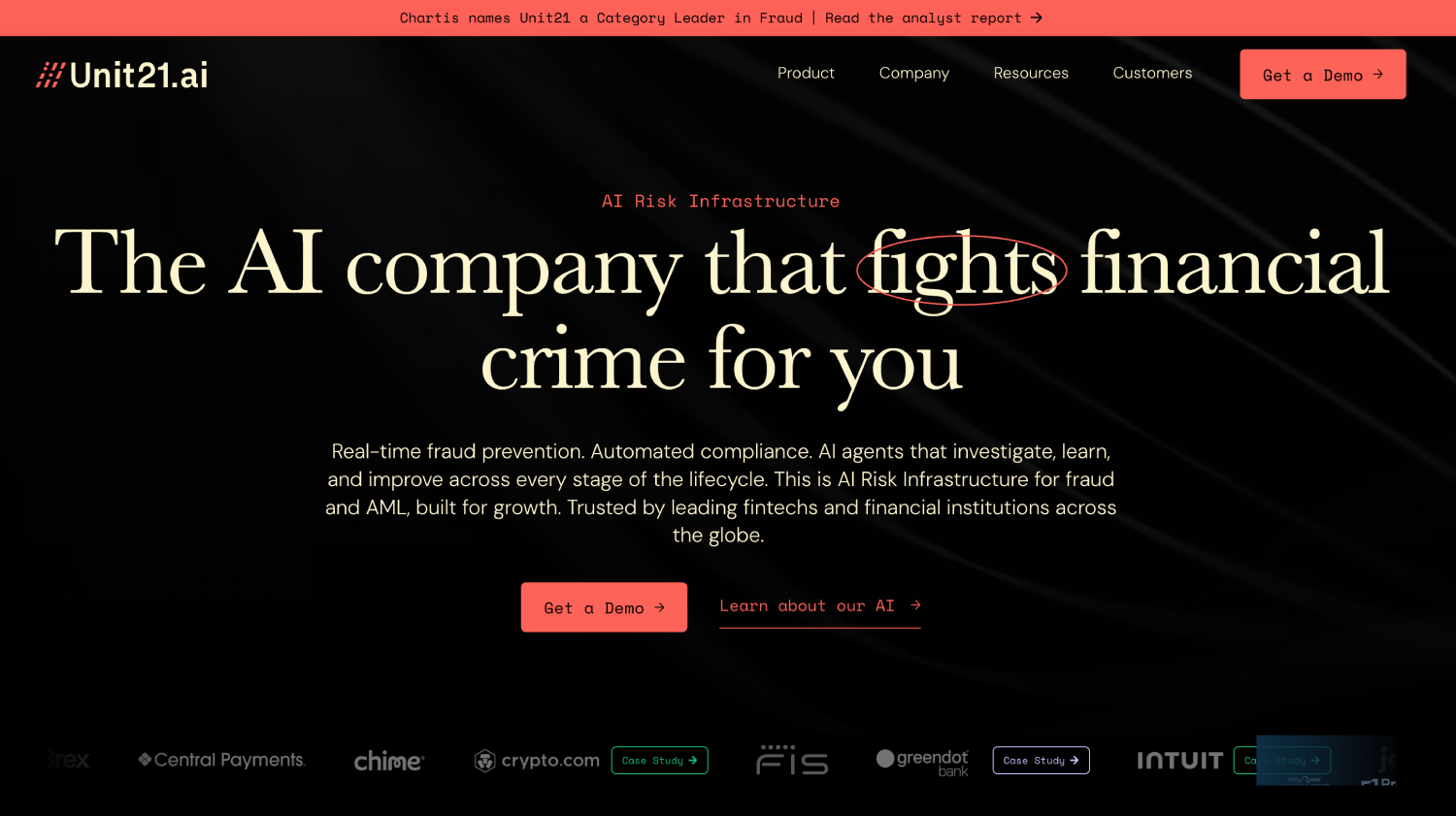
Unit21 is primarily a fraud and AML operations platform covering transaction monitoring, case management, SAR filing, and rule orchestration. Its network signal capability sits inside a broader platform that also handles alert triage, analyst workflows, and regulatory reporting. Teams using Unit21 for consortium signals are, by design, also using it as their fraud operations layer.
According to Unit21’s public product documentation, the platform surfaces shared signals within its rules and case management interface. A fraud analyst working a case can see whether the same entity, device, or account attribute has appeared across other participating institutions in the Unit21 network. This integration into the case workflow is genuinely useful: the signal arrives in context, not as a separate lookup in a separate tool.
The trade-off is that Unit21’s consortium network is composed of its own customer base. That means the signal pool is bounded by which institutions have adopted Unit21’s platform. It is not a neutral, multi-vendor network. If your highest-risk fraud population primarily touches banks and fintechs running different fraud stacks, Unit21’s shared signals may not capture those actors.
For teams already evaluating Unit21 as a full fraud platform, the Unit21 versus Alloy comparison covers how the platform positions against identity orchestration-first tools, which is a useful frame for understanding what Unit21 is actually optimizing for.
How Does Sonar Approach Cross-Institution Fraud Signal Sharing?

Sonar is built around the consortium premise first. Its model is a shared fraud intelligence network where participating institutions contribute confirmed fraud signals and receive signals back from other participants. The product is designed for teams whose primary need is the network layer, not a full fraud ops replacement.
According to Sonar’s public product materials, its architecture allows institutions to share signals without exposing underlying customer PII to the network, using tokenization and hashing to match entities across institutions without transmitting raw personal data. This matters for compliance teams evaluating whether consortium participation creates any GLBA or Reg P exposure. The approach allows a signal to be matched to a known bad actor across institutions without either institution learning the other’s customer details.
Because Sonar’s core product is the network rather than a full detection platform, it is designed to pipe signals into existing fraud stacks via API. That means it integrates with whatever transaction monitoring, decisioning, or orchestration layer a team already runs. It does not require replacing existing infrastructure to participate in the consortium. This is a meaningful architectural difference from Unit21’s approach, which wraps consortium access inside its own platform.
What Is the FintechSpecs Consortium Signal Utility Test?
When evaluating any consortium product, raw feature lists mislead. The right evaluation framework assesses whether the network will actually surface signals relevant to your specific fraud population. The FintechSpecs Consortium Signal Utility Test applies four checks in sequence before signing a consortium contract.
Check 1: Network Composition Fit
Ask the vendor to describe the institutional composition of their network by vertical: neobanks, credit unions, community banks, lending platforms, payment processors. If your fraud population originates at institutions not represented in the network, the signal hit rate will be low regardless of platform quality.
Check 2: Signal Lag Tolerance
Determine whether the consortium signals are real-time, near-real-time, or batch. For account opening fraud, a 24-hour batch signal is too late to block a funded account. For transaction monitoring, near-real-time is acceptable. Confirm the latency model in writing, not just in a sales deck.
Check 3: Signal Type Coverage
Confirm which entity types the consortium matches on: device fingerprints, phone numbers, email addresses, SSN hashes, IP addresses, bank account numbers. A consortium that matches only on email misses fraudsters who rotate email addresses. The richer the match surface, the higher the hit rate on sophisticated actors.
Check 4: Contribution Obligation and Feedback Loop
Understand what your institution must contribute to participate. Some consortiums require active reporting of confirmed fraud cases to maintain access. If your team’s fraud confirmation workflows are slow or inconsistent, you may contribute stale signals and receive lower-quality signals in return. The contribution requirement is an operational cost that often goes unmodeled in procurement decisions.
Unit21 vs Sonar Fraud Consortium: Signal Sharing Matrix
| Dimension | Unit21 | Sonar |
|---|---|---|
| Primary product category | Fraud and AML operations platform | Fraud consortium network |
| Consortium network composition | Unit21 customer base | Multi-vendor, cross-institution network |
| Integration model | Signals embedded in platform UI and rules | API-first, integrates into existing stack |
| Requires platform replacement | Yes, to access signals natively | No, designed to augment existing tools |
| PII sharing model | Within Unit21’s platform data model | Tokenized/hashed entity matching |
| Analyst workflow integration | Native, signals appear in case management | Via API; depends on your case management tool |
| Signal types matched | Varies by platform configuration | Multi-attribute entity matching |
| Pricing model | Not publicly disclosed as of July 2025 | Not publicly disclosed as of July 2025 |
| Best fit | Teams replacing or upgrading full fraud ops stack | Teams adding consortium layer to existing stack |
Which Fraud Vectors Does Each Platform Address Better?
First-Party Application Fraud
When a real person applies with their own identity intending to default or bust out, internal models often face a structural disadvantage because the application clears KYC cleanly. Cross-institution fraud consortium signals are most valuable in this scenario: if that same SSN or device hash appeared in a confirmed fraud case at another institution six months ago, the signal arrives before you fund the account. Both Unit21 and Sonar can surface this, but Sonar’s multi-vendor network has a broader observation base for serial applicants who shop across platforms running different fraud stacks.
Synthetic Identity Fraud
Synthetic identities are built to pass KYC. The fraud signal almost never comes from a failed identity check. It comes from behavioral patterns over time, combined with cross-institution matching on shared attributes like phone numbers or device identifiers attached to synthetic profiles. Teams dealing with synthetic fraud at scale should evaluate the depth of Sonar’s entity matching, specifically whether it captures the low-probability attribute correlations that reveal a synthetic ring. For a broader overview of synthetic detection tooling, the synthetic identity fraud detection platforms comparison covers the full vendor field.
Account Takeover
ATO fraud is primarily a device and behavioral signal problem rather than a cross-institution consortium problem. Both platforms have limited differentiated value here compared to dedicated ATO tools. Teams focused on ATO should weight device intelligence and behavioral biometrics ahead of consortium membership. See the account takeover prevention platforms roundup for tools purpose-built for that threat vector.
Money Mule Networks
Mule accounts are often opened at multiple institutions to distribute illicit funds. Cross-institution network signals are directly relevant here because mule recruiters deliberately spread accounts across institutions to stay below any single bank’s monitoring thresholds. This is where consortium density matters most: a network with broad coverage across consumer banking institutions catches mule networks that a single-platform consortium may not.
What Should a Fintech Risk Team Ask Before Choosing?
The procurement question is not “which platform has better consortium signals” in the abstract. It is “what does my current stack look like and what is the gap I’m actually trying to close.”
Teams without a mature fraud operations platform, specifically without workflow-integrated case management and rule orchestration, will find Unit21’s integrated approach more immediately useful. Getting consortium signals in a tool that also manages alerts, cases, and SAR filing reduces analyst context-switching. The platform cost is higher, but it replaces multiple point tools.
Teams that already run a fraud operations platform, whether that is a homegrown rules engine, a competing SaaS tool, or a system embedded in their core banking layer, should evaluate Sonar as an additive layer. Ripping out existing case management to access consortium signals through a new platform is a poor trade. Sonar’s API-first design is built for exactly this additive scenario.
One operational consideration that rarely appears in vendor demos: contribution requirements. Consortium membership typically obligates you to report confirmed fraud back into the network. Fraud case confirmation workflows vary significantly across institutions depending on analyst queue depth and escalation thresholds, if cases age slowly, you contribute stale signals. Stale contributions degrade your network standing and, in some consortium models, reduce the quality of signals you receive in return. Before joining any consortium, audit how quickly your team closes and confirms fraud cases. For a broader discussion of how fraud ops discipline connects to platform selection, the build vs buy fraud orchestration analysis covers the operational trade-offs in detail.
For teams evaluating the broader fraud orchestration layer alongside this decision, the fraud orchestration platforms comparison covers how signal inputs from consortium networks fit into a broader detection architecture.
How Does Pricing Compare Between Unit21 and Sonar?
Neither Unit21 nor Sonar publishes pricing. Both require a sales conversation, and pricing is structured around transaction volume, institution size, and product tier. Unit21’s pricing covers the full platform, so consortium signal access is priced as part of a broader package rather than a standalone line item. For a detailed breakdown of what Unit21 charges across its product modules, the Unit21 pricing breakdown covers what fintech teams should expect to budget.
Sonar’s pricing reflects a network access model, though the exact structure is not publicly disclosed as of July 2025. Expect volume-based tiers with potential premiums for real-time versus batch signal delivery. Any institution modeling the cost of consortium membership should include the operational cost of maintaining the contribution workflow, not just the subscription fee.
Frequently Asked Questions
What is a fraud consortium and how does it work in fintech?
A fraud consortium is a network of financial institutions that share confirmed fraud signals with each other, typically through hashed or tokenized entity attributes like device fingerprints, phone numbers, or SSN hashes. When one institution confirms a fraud case, the associated signals are contributed to the network. Other members query the network at account opening or transaction time and receive a risk signal if the entity has appeared in a prior confirmed case at another institution. The core value is cross-institution visibility into serial fraudsters who would otherwise appear clean to any single institution’s internal models.
How is Unit21 different from a pure fraud consortium like Sonar?
Unit21 is a full fraud and AML operations platform that includes access to a shared signal network composed of its own customer base. Sonar is built primarily as a cross-institution fraud intelligence network, designed to plug into existing fraud stacks via API. The difference matters operationally: Unit21 requires adopting its platform to access consortium signals natively, while Sonar can augment whatever platform a team already runs. Teams without a mature fraud operations layer will benefit more from Unit21’s integrated approach. Teams with stable existing infrastructure who need to close a specific cross-institution fraud signal gap are better served by Sonar’s additive model.
Can fraud consortium signals catch synthetic identity fraud?
Consortium signals can catch synthetic identities that have already been confirmed as fraud at another institution in the network. The challenge is that synthetic identities are purpose-built to pass initial verification cleanly, so the consortium signal often only exists after a prior institution has discovered the fraud and contributed the case. Effectiveness depends on how quickly member institutions close and contribute confirmed synthetic fraud cases. Faster confirmation workflows across the network improve detection rates for synthetic identities. For detection tooling that addresses the synthetic identity problem earlier in the lifecycle, the Socure vs SentiLink comparison covers identity-layer approaches that complement consortium signals.
What data privacy considerations apply to fraud consortium membership?
Consortium participation raises questions under GLBA and state privacy laws about sharing customer data with third parties. Most modern consortium platforms, including Sonar according to its public product materials, use tokenization and hashing so that raw PII is not transmitted across institutions. The match happens on irreversible hashes of attributes. Teams should nonetheless review consortium data sharing agreements against their existing privacy policies and confirm that their sponsor bank or charter holder has reviewed the arrangement. Compliance review is a prerequisite, not an afterthought. The Fintech Product and Compliance Readiness Checklist includes a third-party data sharing section relevant to this evaluation.
What is the network density problem in fraud consortiums?
Network density refers to how many institutions, covering which verticals and geographies, participate in a consortium. A consortium with 50 member community banks in one region has limited signal value for a neobank whose fraud population primarily touches large digital-first platforms. Before signing any consortium agreement, ask the vendor to describe membership composition by institution type, vertical, and approximate size. Thin networks return low signal hit rates regardless of how well the technology works. This is the single most important due diligence question in any fraud consortium evaluation.
Should a fraud team use Unit21 and Sonar together?
Using both is architecturally possible if Sonar’s API signals feed into Unit21’s rule engine as an external data source. Some teams may find this worth evaluating if they want Unit21’s case management and analyst workflow alongside a broader multi-vendor consortium network for wider cross-institution fraud signal coverage. The cost and integration overhead of running both should be weighed against the marginal signal gain. For most growth-stage fintechs, the more practical question is whether to build on one platform first and add the other as a point integration later. The fraud detection and risk tools comparison provides a broader view of how these products sit within a full fraud stack.
Conclusion
The core misconception teams bring to this evaluation is that internal fraud rules can approximate what a consortium provides. They cannot. Internal rules catch repeat offenders within your data. A consortium catches the offender who is new to you but familiar to the network. Those are structurally different detection problems, and conflating them leads to underinvestment in cross-institution fraud signal sharing.
Unit21 is the right anchor if you are building or rebuilding your fraud operations layer and want consortium signals baked into case management from day one. Sonar is the right additive layer if your fraud ops infrastructure is stable and your gap is specifically the cross-institution signal blind spot. The two are not substitutes; they sit at different levels of the fraud stack. The mistake is evaluating them as if they compete for the same slot.
Whatever platform you select, the consortium’s value compounds over time only if your contribution workflow keeps pace. A team that takes 30 days to close and confirm a fraud case contributes stale signals that degrade the network for everyone. The technical integration is the easier half of the problem. The harder half is building the internal fraud operations discipline that makes consortium membership worth what it costs.