
TLDR
- Sumsub covers 220-plus countries on paper, but its US-specific identity graph, AML screening depth, and orchestration flexibility lag behind dedicated North American alternatives.
- The strongest replacements split into three categories: US-first identity orchestrators (Alloy, Persona), global document verification specialists (Veriff, Onfido, now part of Entrust), and pure AML screening engines (ComplyAdvantage, Sardine).
- Pricing across all vendors is quote-based at scale, but entry-point economics differ sharply. Some charge per check, others per decisioned user, and that distinction changes your per-verification cost by a factor of two or more once fallback checks stack up.
- Teams switching KYC providers most often regret not modeling their full verification waterfall before signing. A vendor with a lower headline rate but a higher fallback rate can cost more in production.
- For a detailed head-to-head on one of the most common pairings, see the Trulioo vs Sumsub comparison for KYB and KYC fintech onboarding.
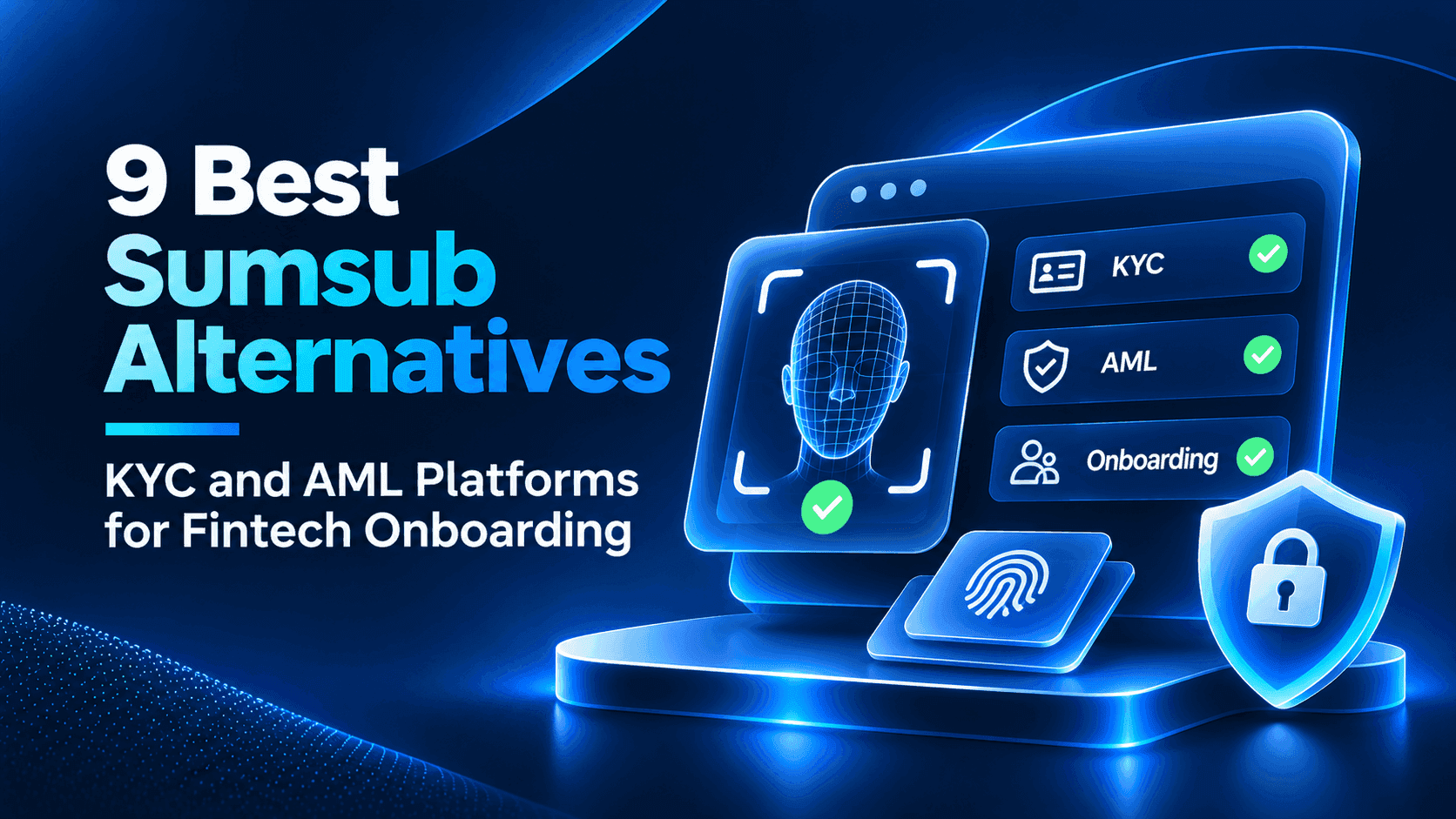
The best Sumsub alternatives for fintech onboarding are Alloy, Persona, Veriff, Onfido (Entrust), Trulioo, ComplyAdvantage, Sardine, Socure, and Jumio. Each targets a different gap: Alloy and Persona lead on US orchestration depth, Veriff and Onfido on document accuracy across global markets, Trulioo on KYB and cross-border entity checks, ComplyAdvantage and Sardine on AML screening, and Socure and Jumio on identity graph richness for US consumer onboarding.
Why Are Fintech Teams Looking for a Sumsub Replacement?
Sumsub built its reputation as a one-stop KYC and AML platform that works out of the box across a wide range of markets. That breadth is genuinely useful for a consumer fintech going live in multiple regions fast. The friction starts when teams outgrow the defaults.
Three pain points surface repeatedly in vendor evaluation calls. First, Sumsub’s US identity data sourcing is thinner than dedicated US-first players like Alloy or Socure, which matters for pass rates on domestic populations. Second, its orchestration layer, while functional, does not give compliance teams the same rule-engine granularity that Persona or Alloy offer for building multi-step decisioning flows. Third, teams running AML screening through Sumsub often find the watchlist coverage and adverse media feeds less comprehensive than standalone AML tools, which creates a secondary vendor relationship anyway.
None of that makes Sumsub a bad product. It makes it a product with a specific sweet spot: international consumer onboarding at early to mid scale, where simplicity matters more than surgical tuning. When that sweet spot no longer fits, the market has real alternatives.
How Should You Evaluate Sumsub Competitors Before Switching?
Most teams approach a KYC vendor switch by comparing feature lists. That is the wrong starting point. The evaluation should run on what FintechSpecs calls the Verification Waterfall Cost Model: map your current user population by risk tier, estimate fallback check rates at each step, then apply vendor-specific per-check pricing to get a true per-decisioned-user cost. A vendor priced at $1.20 per ID check that sends 25% of users through a liveness fallback and 10% through a manual review queue is more expensive in production than a vendor priced at $1.80 per check with a 5% fallback rate.
Beyond cost, four criteria separate vendors in practice. Coverage depth in your primary markets (not just “supported countries” but actual data source quality). Orchestration flexibility, meaning can your compliance team write rules without engineering support. AML screening integration, whether native or third-party. And SLA on manual review queues, since review backlogs are the hidden killer of onboarding conversion.
If you are also evaluating KYB for business onboarding, the best KYB providers for B2B fintech onboarding in the US covers that segment in detail, since several vendors below handle both KYC and KYB differently and that distinction affects your contract structure.
Which Sumsub Alternatives Lead on US Identity Orchestration?
1. Alloy
Alloy is the most cited alternative for US-focused fintechs that need a full identity decisioning layer, not just a document check. It operates as an orchestration platform that connects to 190-plus data sources, including bureau data, document verification, liveness, device signals, and watchlist screening, and lets compliance teams build decisioning workflows without code using a visual rule engine.
The core difference from Sumsub is depth versus breadth. Alloy is built for the US market first and treats international as an add-on, while Sumsub is the reverse. For a US neobank or lending platform, Alloy’s access to credit bureau signals and US-specific identity graph data translates to meaningfully higher auto-approval rates on domestic users.
Alloy does not publish pricing publicly as of November 2026. Contract terms are negotiated based on volume and product scope. Teams evaluating Alloy should expect a minimum commitment conversation and plan for a proof-of-concept period. For a direct comparison of how Alloy’s orchestration approach differs from persona-based decisioning, the Alloy vs Persona identity decisioning comparison covers the trade-offs in detail.
2. Persona
Persona targets product and compliance teams that want granular control over every step of the onboarding flow without depending on engineering sprints. Its template-based flow builder lets non-technical teams configure verification sequences, fallback logic, and document requirements by country. That flexibility is a genuine differentiator for companies running multiple products or geographic segments under one platform.
Where Persona pulls ahead of Sumsub is in the developer experience for custom onboarding flows. Where it falls short is in native AML screening. Persona handles identity verification well but relies on integrations for watchlist and adverse media coverage, so teams need to decide whether to add a standalone AML tool or accept Persona’s integrated options.
Persona’s pricing is not publicly listed as of November 2026. The company positions itself toward growth-stage and enterprise customers. Smaller teams often find the contract minimums higher than expected at seed stage.
Which Alternatives Win on Global Document Verification?
3. Veriff
Veriff processes identity documents from more than 230 countries and territories and publishes accuracy benchmarks for its AI-assisted document verification engine. Its approach differs from Sumsub in one important way: Veriff invests heavily in the feedback loop between its automated decision layer and human review, which the company says improves accuracy over time on specific document types.
Veriff is a strong fit for companies with global user bases where document diversity is high. Its support for ID documents from less common markets is better documented than most competitors. The trade-off is that Veriff is primarily a verification layer. It is not an orchestration platform. Teams using Veriff still need to build or buy the decisioning logic that sits around it.
Pricing is quote-based as of November 2026. Veriff has historically offered a pay-per-session model at lower volumes and volume-discounted contracts for larger teams, based on publicly available information as of that date. Teams should confirm current pricing structure and tier thresholds directly with Veriff, as these arrangements can change between contract cycles.
4. Onfido (now part of Entrust)
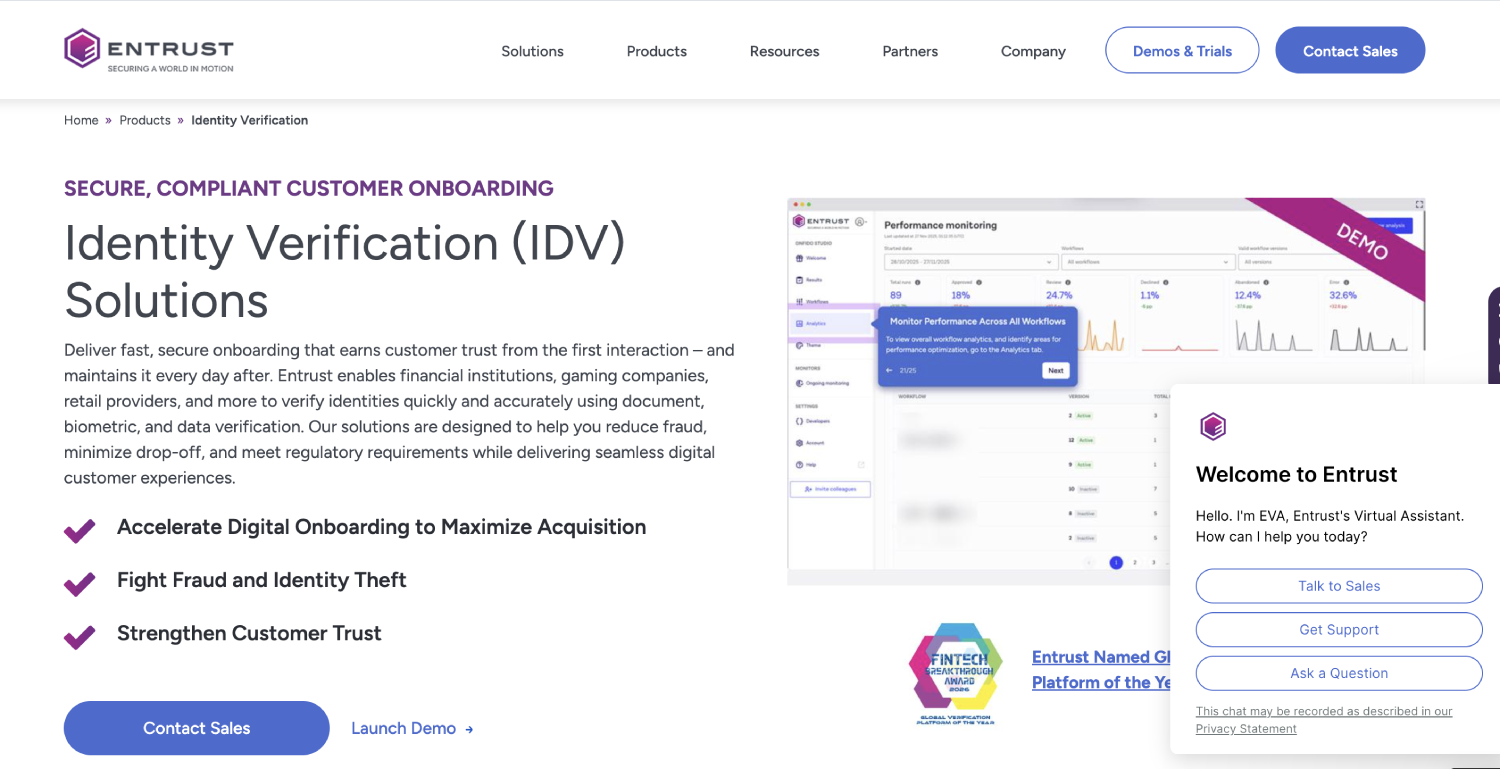
Onfido was acquired by Entrust and now operates as part of its digital identity portfolio. The product itself, document verification plus biometric liveness, remains well-regarded for accuracy on a wide range of document types. The acquisition has introduced some product roadmap uncertainty that prospects should ask about directly during sales conversations.
Onfido’s Atlas AI engine for document and biometric verification is one of the more frequently cited alternatives when teams are specifically replacing Sumsub’s document check module. The integration path is developer-friendly with SDKs for iOS, Android, and web. For AML, Onfido connects to third-party providers rather than offering native screening.
5. Jumio
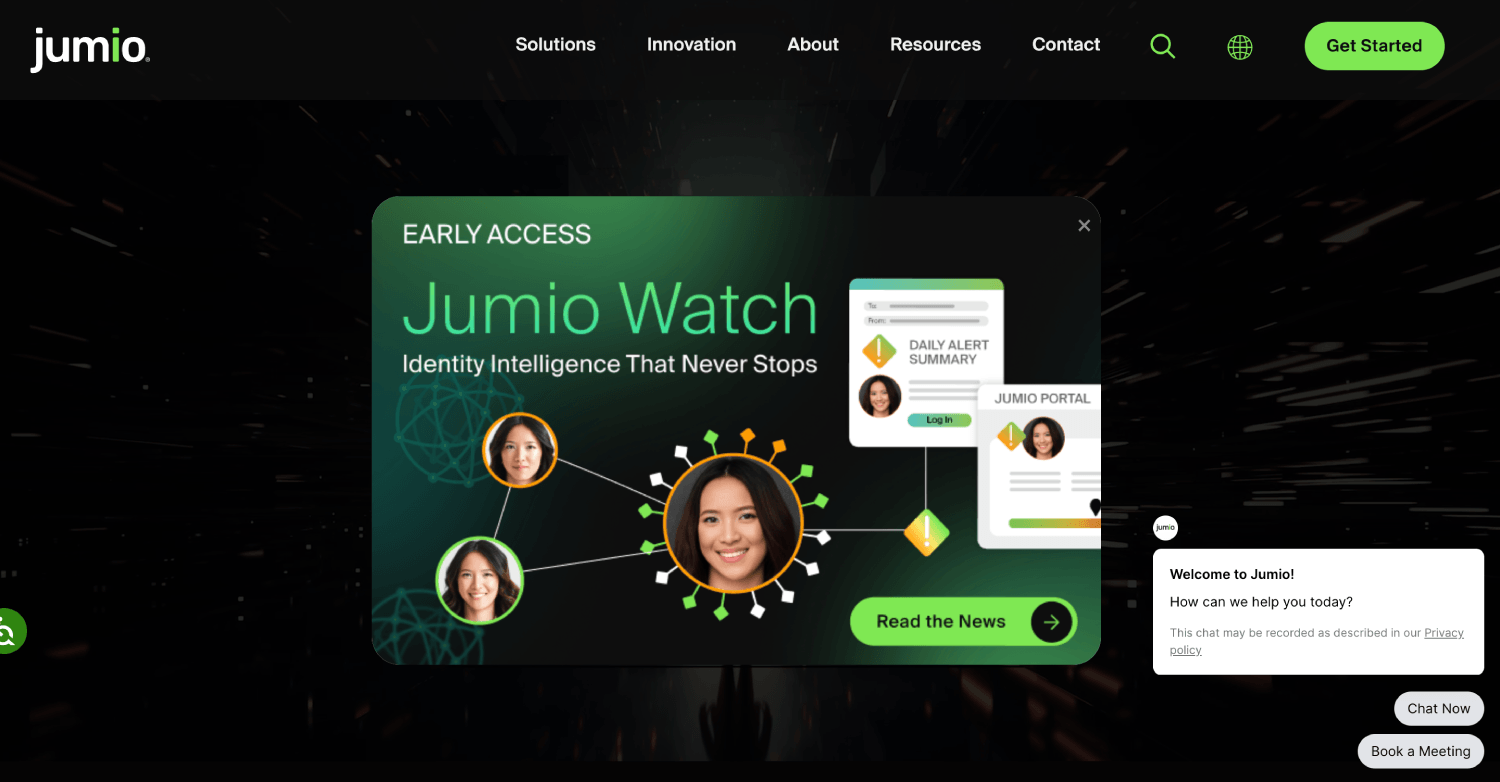
Jumio targets regulated industries including banking, crypto, and insurance and covers more than 200 countries and 5,000 document types according to its public documentation. It combines document verification, biometric face matching, and liveness detection in a single API.
Jumio’s strength relative to Sumsub is in its identity verification accuracy on regulated use cases where false negatives are costly. Its Jumio KYX platform also includes AML screening and ongoing monitoring, which makes it a more direct Sumsub competitor on product scope than Veriff or Onfido. Pricing is enterprise-negotiated and not publicly disclosed as of November 2026.
Which Platforms Go Deeper on AML Screening?
6. ComplyAdvantage
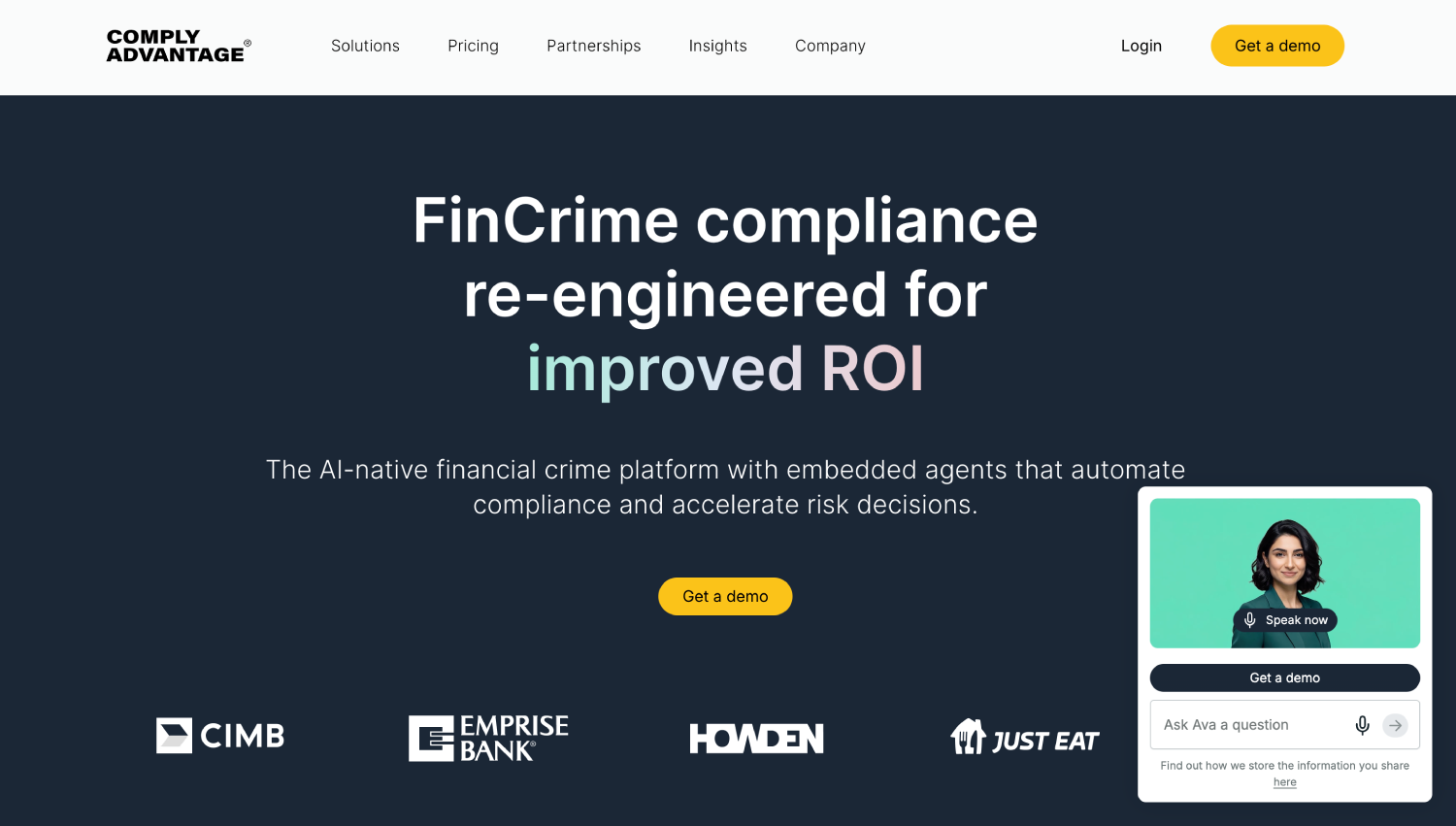
ComplyAdvantage is the most widely used standalone AML data and screening platform among fintech compliance teams. It covers sanctions lists, PEP databases, and adverse media with real-time refresh rates. Its data sourcing is proprietary, drawing from regulatory databases and media sources directly rather than relying on third-party aggregators.
Teams that use Sumsub for document verification but find its AML coverage thin are the natural ComplyAdvantage customer. It integrates via API and can sit alongside any identity verification layer. The company offers transaction monitoring as well as onboarding screening, which matters for teams that need a single AML vendor across the customer lifecycle.
Pricing is not publicly listed as of November 2026. The best AML screening APIs for US fintech companies covers ComplyAdvantage alongside alternatives with more detail on coverage and pricing structures.
7. Sardine
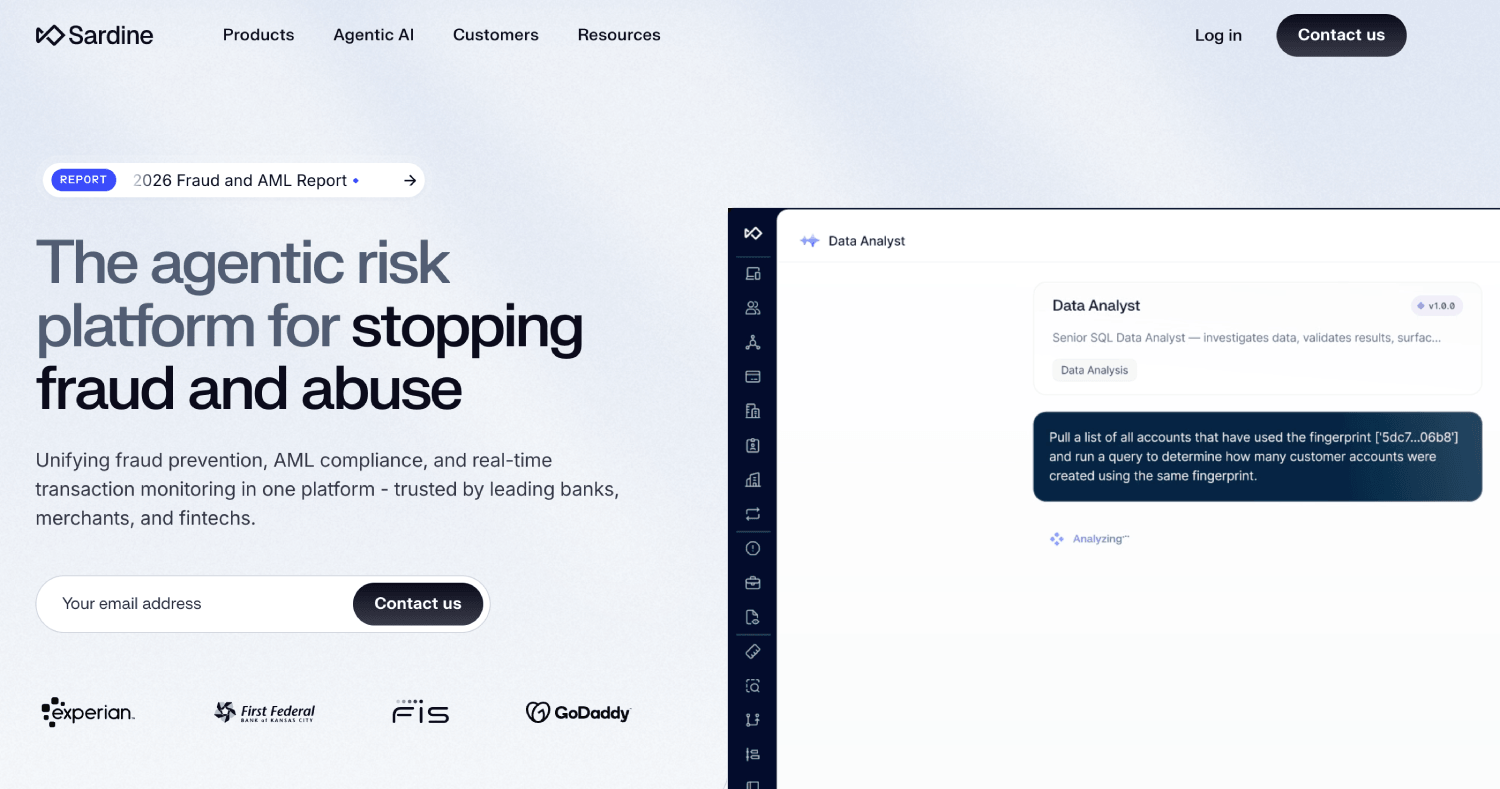
Sardine takes a different approach to fraud and AML than any other vendor on this list. It combines device intelligence, behavior biometrics, and transaction risk scoring with KYC verification and sanctions screening in a single platform. That combination is unusual and addresses a gap that Sumsub does not fill: real-time risk signals during the onboarding session itself, not just after the fact.
Sardine is particularly well-suited to crypto, neobank, and payments companies where account opening fraud and velocity abuse are primary threats. Its AML coverage spans OFAC, global sanctions, and adverse media. For a head-to-head on Sardine’s AML approach versus ComplyAdvantage, the ComplyAdvantage vs Sardine sanctions and watchlist screening comparison breaks down the differences by use case.
Which Alternatives Have the Strongest US Consumer Identity Graph?
8. Socure
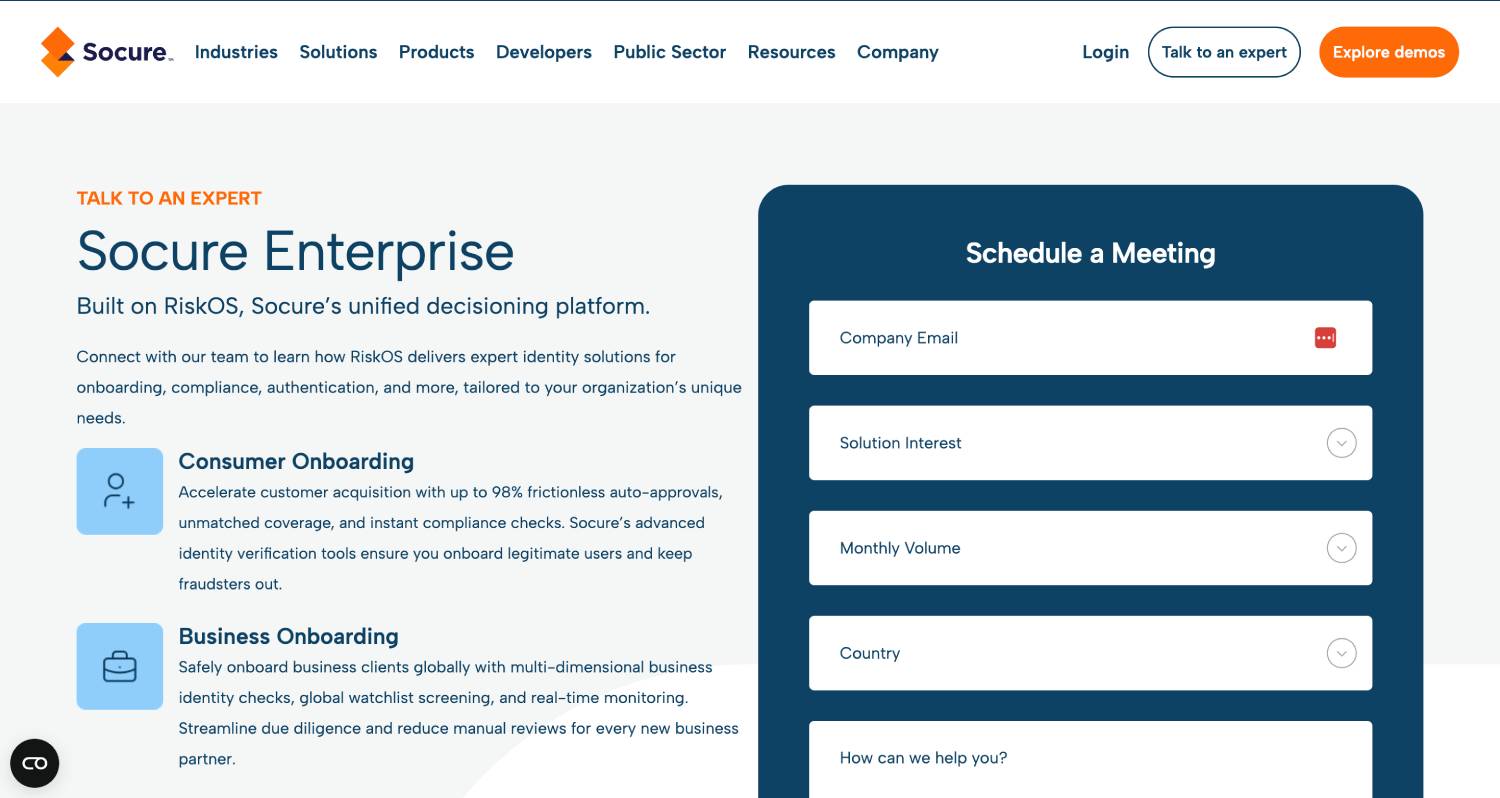
Socure is built around a predictive identity verification model trained on US consumer data. Rather than starting with a document check and working outward, Socure starts with a risk score derived from email, phone, name, and address signals and uses that to determine whether a document check is needed at all. That approach can reduce friction for low-risk users while maintaining compliance standards.
The practical impact is higher auto-approval rates on US populations compared to platforms that require a document check for every applicant. Socure publishes straight-through processing benchmarks for specific verticals on its website; teams should request data specific to their user profile and risk tier rather than relying on aggregate figures. Socure is not a strong fit for international onboarding or for platforms whose users span many countries, but for a US consumer fintech, its identity graph depth is a structural advantage that document-first platforms cannot replicate without similar data sourcing. For teams evaluating Socure specifically, the Socure pricing and total cost breakdown explains what the product actually costs beyond the headline rate.
9. Trulioo

Trulioo is the strongest alternative for teams that need both KYC and KYB at global scale. It covers identity verification for individuals and business entity verification across more than 195 countries, with direct data source connections rather than data broker aggregation in many markets. That direct sourcing matters for data freshness and for coverage in markets where third-party data quality is inconsistent.
Trulioo positions itself as a global data network rather than a workflow tool. Teams that need coverage breadth across many markets without compromising on data quality tend to find it more reliable than Sumsub in specific international markets, though Sumsub’s onboarding UX is generally considered smoother out of the box. Trulioo’s pricing is custom as of November 2026. The full evaluation of Trulioo against Sumsub across KYB and KYC dimensions is covered in the dedicated Trulioo vs Sumsub comparison for fintech onboarding.
Sumsub Alternatives Compared: Feature and Fit Table
| Vendor | Primary Strength | KYC | KYB | AML Screening | Orchestration Layer | Best Fit |
|---|---|---|---|---|---|---|
| Alloy | US identity orchestration | Yes (via integrations) | Yes | Yes (via integrations) | Strong | US neobanks, lenders |
| Persona | Configurable onboarding flows | Yes | Yes | Partial (integrations) | Strong | Multi-product fintechs |
| Veriff | Global document accuracy | Yes | No | No | Weak | Global consumer onboarding |
| Onfido (Entrust) | Biometric + document verification | Yes | No | No | Weak | Regulated consumer KYC |
| Jumio | Regulated industry KYC+AML | Yes | Partial | Yes | Moderate | Banking, crypto, insurance |
| ComplyAdvantage | AML data and screening | No | No | Yes | None (API layer) | Standalone AML augmentation |
| Sardine | Real-time fraud + AML | Yes | No | Yes | Moderate | Crypto, neobanks, payments |
| Socure | US consumer identity graph | Yes | No | Partial | Moderate | US consumer fintech |
| Trulioo | Global KYC + KYB data network | Yes | Yes | Partial | Moderate | Multi-market fintechs needing KYB |
What Does Switching KYC Providers Actually Cost?
The direct vendor cost is the smallest part of a KYC switch. The real cost sits in three places: engineering time to integrate the new SDK and API, compliance review of the new provider’s data sources and certifications, and the dip in auto-approval rates during the tuning period after go-live.
Consider a hypothetical Series B consumer lending platform processing 50,000 applications per month. If a vendor switch causes auto-approval rates to drop from 78% to 72% for the first 90 days while rules are being tuned, that is 3,000 additional manual reviews per month. Using an illustrative internal cost of $8 per manual review , consistent with figures cited in industry benchmarking discussions, though your actual cost will vary by team size and review complexity , that translates to roughly $24,000 per month in hidden switching cost before counting engineering hours. This is not an argument against switching. It is an argument for modeling the transition period explicitly rather than treating it as zero cost. Teams should calculate this figure using their own internal labor costs before committing to a cutover timeline.
The practical guide on how to switch KYC providers without hurting approval rates or compliance covers the transition mechanics in detail, including how to run a parallel evaluation period before full cutover.
Frequently Asked Questions
What is the closest direct replacement for Sumsub?
Jumio is the closest direct product replacement for Sumsub because it covers document verification, biometric liveness, and AML screening in a single platform, which mirrors Sumsub’s bundled approach. For teams that prioritize US consumer onboarding, Alloy’s orchestration layer with integrated data sources offers a more powerful replacement, though it requires more configuration. The right answer depends on whether you need a bundle or depth on a specific layer.
Is Veriff better than Sumsub for document verification?
Veriff is generally considered stronger than Sumsub on document verification accuracy, particularly for less common document types from non-Western markets. Veriff’s AI model is trained on a wider document corpus and its human-in-the-loop review process is well-regarded for edge cases. However, Veriff does not offer AML screening, orchestration, or KYB, so teams replacing Sumsub with Veriff need to source those capabilities separately.
Can I use ComplyAdvantage alongside Sumsub or another KYC vendor?
Yes. ComplyAdvantage is designed as an API-first AML data layer that sits alongside any identity verification platform. Many fintechs use it to augment a KYC vendor that has weaker AML coverage, including Sumsub, Veriff, or Onfido. The integration is typically straightforward: pass the verified identity to ComplyAdvantage for sanctions and adverse media screening as a separate API call within your onboarding flow.
How does Socure differ from Sumsub for US consumer onboarding?
Socure starts with a predictive identity score derived from digital identity signals before requesting a document, which reduces friction for low-risk US applicants. Sumsub defaults to a document capture flow for most users regardless of risk tier. The result is that Socure typically delivers higher straight-through processing rates on US consumer populations, though it is not designed for international markets where document-first approaches are often the only option.
Does Persona handle AML screening natively?
Persona does not offer native AML screening with proprietary watchlist data. It integrates with third-party AML providers and allows teams to include an AML check as a step within a Persona workflow, but the underlying screening data and logic come from the external provider. Teams that need a single vendor for both KYC and AML screening should evaluate Jumio, Sardine, or Sumsub itself rather than Persona.
What should I ask a KYC vendor before signing a contract?
Ask for pass rate benchmarks on your specific user population and document types, not global averages. Ask how fallback checks are priced and whether they count as separate billable events. Ask for the data source list behind their identity verification for each country you operate in. Ask what their SLA is for manual review queues and what happens during peak volume periods. These four questions will expose more about total cost and operational risk than any feature comparison sheet.
Who Should Stay With Sumsub?
Not every team reading this should switch. Sumsub’s bundled approach at a single commercial relationship is genuinely valuable for teams that are pre-Series B, moving fast across multiple international markets, and do not yet have the compliance bandwidth to manage three or four vendor relationships. The product works, the coverage is real, and the onboarding UX is cleaner than most of its competitors out of the box.
The teams that should leave are those hitting a specific ceiling: US auto-approval rates that trail benchmarks, AML screening gaps that are creating regulatory risk, or orchestration limitations that require engineering support for every compliance rule change. Those are solvable problems, but they require a vendor built differently than Sumsub is built.
The pattern across fintech infrastructure decisions is consistent: bundled platforms win at early scale because they reduce coordination cost, and specialized platforms win at later scale because coordination cost becomes smaller than the gap in capability. KYC and AML are no different. The switch from Sumsub is not a reflection of product quality. It is a reflection of where your compliance program has grown. Knowing which of the nine alternatives above fills your specific gap is the only analysis that matters, and it starts with understanding your current verification waterfall before you open a single vendor demo call.