
- Every API, BaaS provider, payment processor, and data partner a fintech integrates is a risk surface. Vendor failures have triggered regulatory enforcement actions against fintechs that never touched the problem directly.
- Most vendor risk tools were built for enterprise banks. A handful now serve startups specifically, with lighter implementation overhead and pricing that does not require a procurement team to approve.
- The five categories that matter most for fintech vendor diligence are security posture, regulatory standing, uptime and reliability, financial health, and data handling practices.
- Tools like Vanta, Panorays, and ProcessUnity sit at very different price and complexity points. Matching the right tool to your stage matters more than picking the most feature-complete platform.
- Startups that build a vendor risk process before a Series B audit or a bank partnership negotiation pay significantly less in remediation costs than those who bolt it on later.
The best vendor risk management tools for fintech startups are Vanta, Panorays, Venminder, ProcessUnity, OneTrust, Ncontracts, BitSight, UpGuard, Whistic, Prevalent, and Drata. These platforms cover the five core risk categories fintech teams must evaluate when selecting vendor risk management tools for fintech operations: security, regulatory, uptime, financial, and data. The right choice depends on your stage, your vendor volume, and whether you need a lightweight assessment workflow or a full third-party risk program that can survive a bank examiner review.
Why Vendor Risk Is Not Just a Bank Problem
A common assumption among early-stage fintech founders is that vendor risk management is something banks do. It is something regulated, enterprise-grade, and expensive. That assumption is wrong, and it tends to get corrected at the worst possible moment.
When a BaaS provider goes offline, your users lose access to their money. When a KYC vendor misconfigures its data retention, your company is holding PII it should not have. When a payment processor gets sanctioned, the ripple can hit every platform running on top of it. The fintech inherits these problems because the fintech signed the user agreement and collected the customer relationship.
Regulators increasingly agree. The OCC, FDIC, and CFPB have all issued guidance in recent years signaling that fintechs operating through banking partnerships carry third-party risk obligations. A sponsor bank will ask about your vendor oversight process. So will a Series B investor’s due diligence team. If you have not built it yet, you are not building it, you are scrambling to reconstruct it under pressure. The Fintech Product and Compliance Readiness Checklist covers what that scrutiny looks like in practice.
What Does a Vendor Risk Management Tool Actually Do?
At the simplest level, a vendor risk management tool is a structured way to collect, score, and track information about the third parties your business depends on. Without software, this tends to be a spreadsheet that one person maintains inconsistently and that nobody can find during an audit.
The core functions are vendor inventory (cataloging every third party), risk assessment (questionnaires, scoring, security ratings), ongoing monitoring (alerts when a vendor’s posture changes), and documentation (audit trails for regulators and partners). More mature platforms add remediation tracking, contract management, and fourth-party visibility, meaning the vendors your vendors use.
For a fintech with 20 to 80 active vendors, the difference between a spreadsheet and a dedicated tool is not just efficiency. It is the difference between having evidence of a risk program and not having it. That distinction matters when you are negotiating a bank partnership or responding to a regulatory inquiry.
The FintechSpecs Vendor Risk Stack Framework: Five Categories Every Fintech Must Cover
Most vendor risk checklists focus exclusively on security. Fintech vendors carry four additional dimensions of risk that are equally capable of causing material harm. The FintechSpecs Vendor Risk Stack Framework groups third-party diligence into five categories, each with distinct signals to collect and monitor.
1. Security Risk
This covers what most people think of when they hear “vendor security review.” Is the vendor SOC 2 Type II certified? Do they have a documented vulnerability management program? How do they handle penetration testing, access controls, and incident response? Security ratings from tools like BitSight or UpGuard provide continuous signals here rather than a point-in-time questionnaire.
2. Regulatory Risk
Does the vendor hold the licenses it needs to operate? Are they under any active enforcement actions or consent orders? For payment processors, BaaS providers, and KYC vendors, regulatory standing can change quickly. A vendor that was compliant at onboarding may not be compliant six months later. Checking NMLS, OFAC, and relevant state databases belongs in this category.
3. Uptime and Operational Risk
What SLA does the vendor publish, and do they have a public status page with a track record that validates it? For any vendor whose downtime translates directly into your downtime, operational risk is as critical as security risk. This category also covers concentration risk: if two of your critical systems run through the same cloud provider or payment rail, a single outage can cascade.
4. Financial Risk
Vendor financial health is rarely part of early-stage diligence, and it should be. A vendor in financial distress may cut engineering and support before they announce problems. Signs to track include funding rounds, layoff announcements, public financial statements for publicly traded vendors, and whether the vendor is growing or contracting its customer base. This is especially relevant for smaller fintech infrastructure providers that could be acquired or shut down.
5. Data Risk
What data does the vendor access, store, or process on your behalf? Do they have a published data processing agreement that meets your requirements? Do they sub-process to fourth parties you have not reviewed? For any vendor touching PII, financial account data, or transaction records, data risk assessment is a regulatory obligation, not just a best practice.
Running all five categories across a 50-vendor portfolio manually is how compliance tasks become a full-time job. The tools below are designed to handle that load systematically.
The 11 Best Vendor Risk Management Tools for Fintech Startups
| Tool | Best For | Key Strength | Pricing Model |
|---|---|---|---|
| Vanta | Seed to Series B fintechs already doing compliance automation | Connects vendor risk to SOC 2 / ISO 27001 evidence collection | Not publicly listed; quote-based |
| Panorays | Teams wanting continuous external attack surface monitoring | Combines questionnaires with live security ratings | Not publicly listed; quote-based |
| Venminder | Fintechs working with or under community banks | Pre-built financial services vendor library and bank examiner-ready reports | Not publicly listed; quote-based |
| ProcessUnity | Series B+ teams building a formal TPRM program | Configurable workflows that mirror bank-grade risk management processes | Not publicly listed; quote-based |
| OneTrust | Fintechs with complex data privacy obligations across multiple jurisdictions | Integrates vendor risk with data mapping and privacy program management | Not publicly listed; quote-based |
| Ncontracts | Fintechs operating in banking or credit union contexts | Deep financial services compliance expertise baked into the product | Not publicly listed; quote-based |
| BitSight | Security-first teams who want continuous external ratings | Industry-standard security ratings used by insurers, banks, and regulators | Not publicly listed; quote-based |
| UpGuard | Engineering-led teams comfortable with technical security outputs | Detailed technical scanning with clear remediation guidance | Not publicly listed; quote-based |
| Whistic | Fintechs receiving many inbound vendor assessment requests | Two-sided network reduces duplicate questionnaire effort for both parties | Not publicly listed; quote-based |
| Prevalent | Teams needing end-to-end TPRM including contract and offboarding tracking | Covers the full vendor lifecycle, not just initial assessment | Not publicly listed; quote-based |
| Drata | Fintechs running multiple compliance frameworks simultaneously | Vendor management integrated with automated compliance monitoring across SOC 2, HIPAA, ISO 27001, and PCI DSS | Not publicly listed; quote-based |
Vanta

Vanta is the most natural starting point for a seed-to-Series B fintech that is already using it for SOC 2 or ISO 27001 automation. Its vendor risk module pulls from the same evidence collection infrastructure, meaning the work done for a security certification overlaps with your third-party risk program instead of duplicating it. That integration is genuinely useful: most compliance programs create two separate documentation burdens, and Vanta reduces that overhead meaningfully. Pricing is not publicly listed; Vanta requires a demo and quotes by company size and framework scope.
The limitation is that Vanta’s vendor risk features are not as deep as a dedicated TPRM platform. If you have 10 to 30 vendors and your primary audience is a SOC 2 auditor or a Series B investor, it is probably sufficient. If you are preparing for a bank examiner or a sponsor bank onboarding, you may need more granular workflow configuration.
Panorays
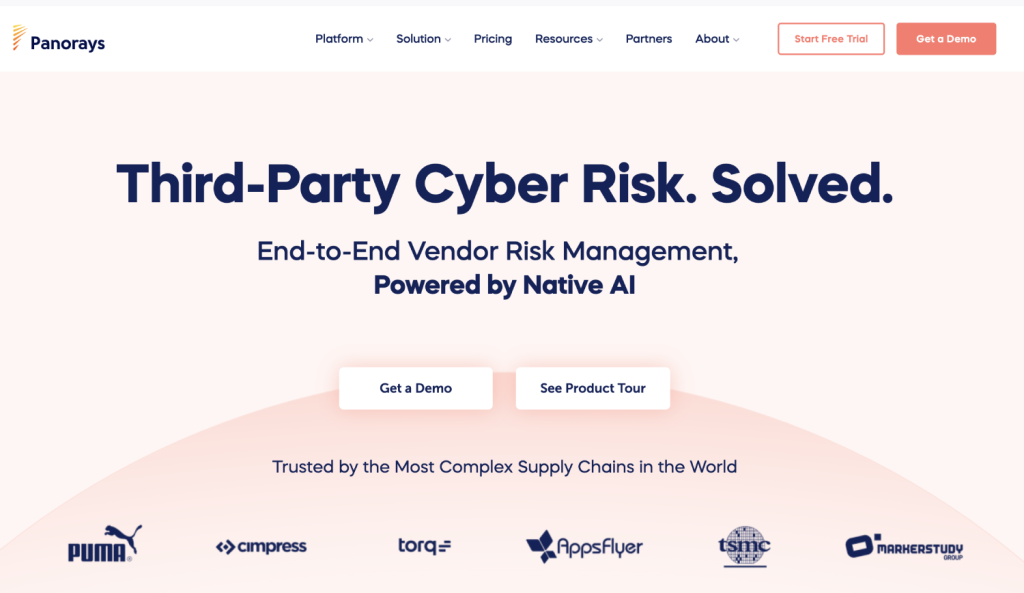
Panorays differentiates from questionnaire-only tools by combining self-reported vendor data with continuous external attack surface monitoring. It scans publicly visible assets of your vendors and scores their security posture dynamically, so you are not relying solely on what a vendor tells you once a year. For fintech teams where a vendor’s security breach could directly compromise customer data, that ongoing signal matters more than a static risk score. Like most platforms in this category, Panorays does not publish pricing; expect a quote-based conversation tied to vendor volume.
Panorays also includes a vendor collaboration portal, which reduces friction when vendors are submitting documentation. The product is more implementation-intensive than Vanta but less so than ProcessUnity.
Venminder
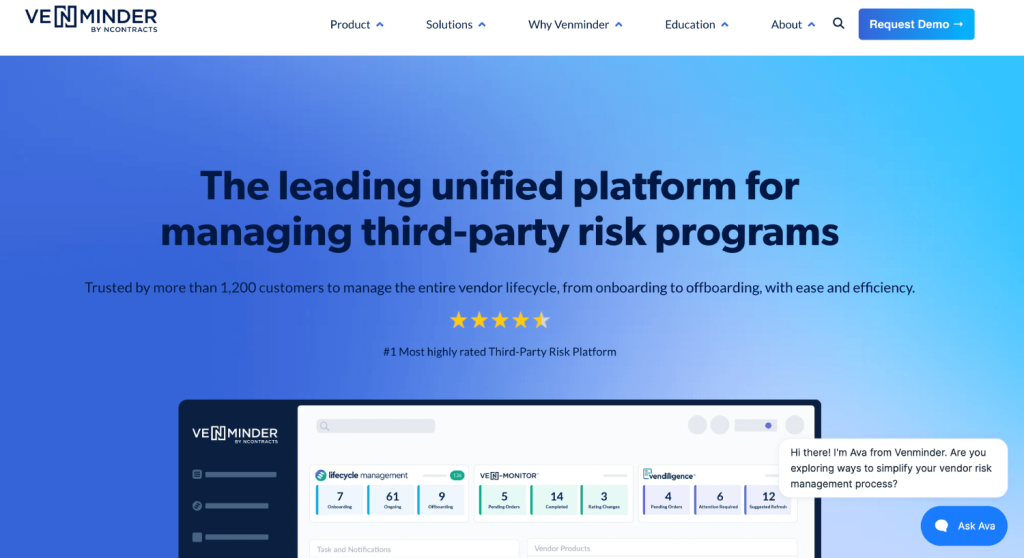
Venminder is built specifically for financial services third-party risk. Its library of pre-assessed vendor profiles and its bank-examiner-ready reporting templates reflect a product designed with community banks and their fintech partners in mind. If your fintech operates through a sponsor bank arrangement, Venminder is the closest thing to speaking the bank’s native language. Pricing is quote-based and not publicly disclosed.
The platform also includes contract management and a risk scoring methodology aligned with regulatory guidance from the OCC and FDIC. For fintechs whose bank partners will audit their vendor management practices, that alignment has real value. The guide to sponsor bank programs for fintech startups covers what those bank partnership obligations typically look like.
ProcessUnity
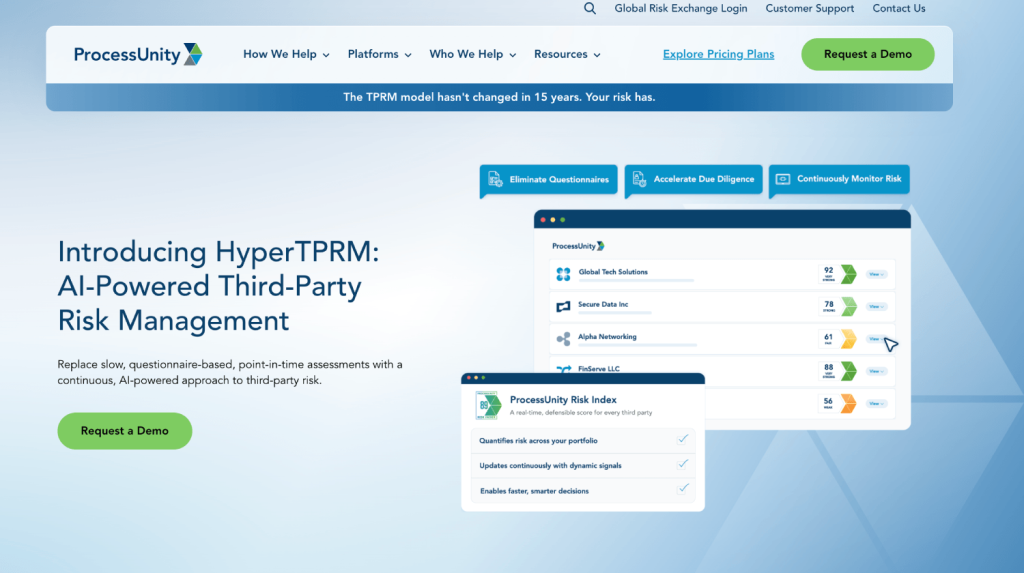
ProcessUnity targets organizations building a formal, repeatable third-party risk management program. Its workflow configurability goes significantly further than lighter tools, allowing risk teams to design onboarding questionnaires, tiering logic, remediation workflows, and escalation paths that match their specific program requirements. The trade-off is complexity: ProcessUnity requires meaningful configuration effort before it returns value. Pricing is enterprise-grade and quote-based, typically structured around vendor count and user seats.
For a Series B or Series C fintech that has hired a dedicated compliance or risk officer, ProcessUnity is worth evaluating seriously. For a team where the founder or a part-time consultant owns vendor risk, it is likely more than needed at this stage.
OneTrust
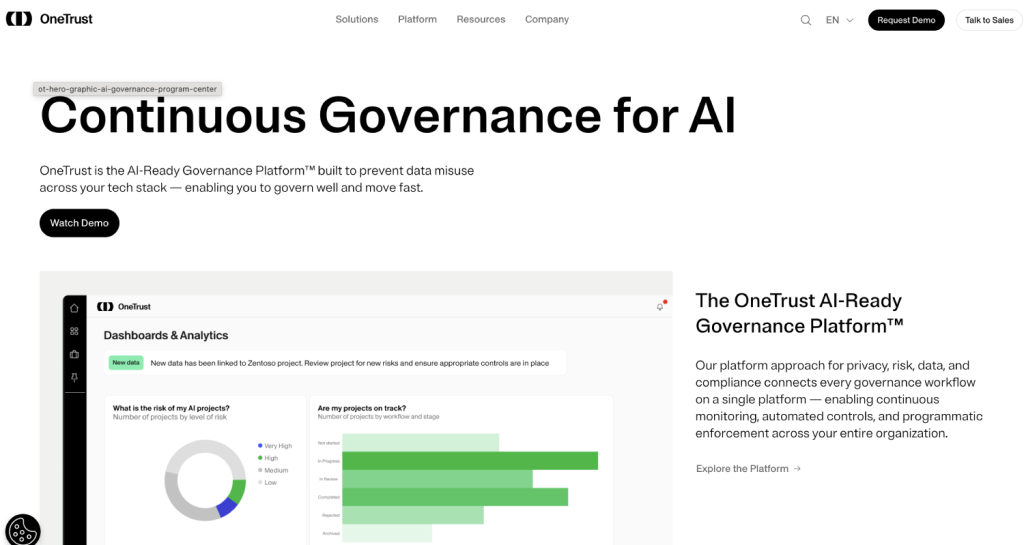
OneTrust is the right tool when vendor risk intersects heavily with data privacy. Fintechs processing data under GDPR, CCPA, or state-level privacy laws often need to map which vendors process which categories of personal data, maintain data processing agreements, and document lawful basis for transfers. OneTrust integrates that data mapping layer with vendor risk assessment in a way most pure-play TPRM tools do not. It does not publish pricing publicly; contracts are structured around modules, user count, and data subject volume.
It is a large platform that takes time to implement well. Teams with narrow compliance needs often find they are paying for features they will not use for years. But for a fintech operating across multiple geographies with meaningful data privacy obligations, the integration of privacy and vendor risk into one system reduces significant operational fragmentation.
Ncontracts
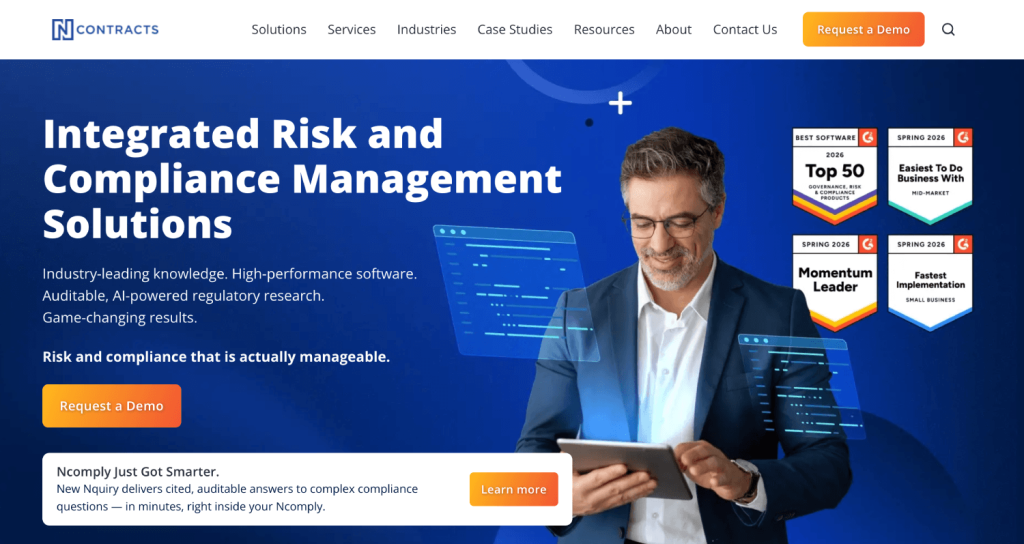
Ncontracts positions itself specifically at the intersection of financial institution compliance and vendor risk. Its SaaS platform bundles risk management, contract management, and compliance content built around banking regulatory requirements. For fintechs that are embedded inside banking operations or that serve financial institutions as customers, the regulatory alignment is a genuine product differentiator rather than a marketing claim. Pricing is not publicly available.
BitSight
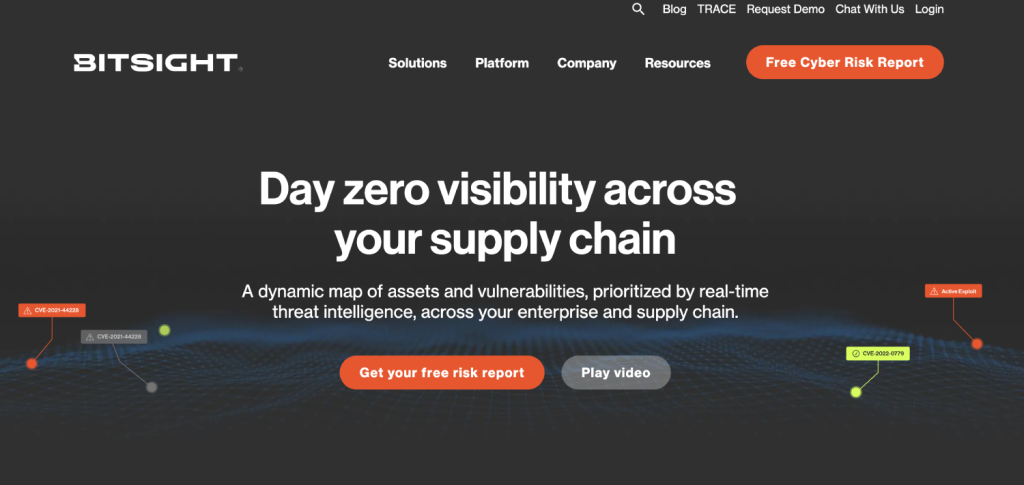
BitSight produces the security ratings that institutional buyers, insurance underwriters, and regulators already use. If your fintech is selling to enterprise buyers who will rate your security posture, having a BitSight score that you actively manage carries external credibility that internal-only assessments do not. On the vendor side, BitSight gives you continuous ratings for your entire third-party portfolio without requiring vendors to complete questionnaires at all. Pricing is not publicly listed and scales with portfolio size.
The ratings are based on external signals: exposed ports, SSL certificate issues, malware communications, and similar observable data. They do not capture internal controls that a questionnaire would reveal. BitSight is best used alongside a questionnaire-based tool rather than instead of one.
UpGuard
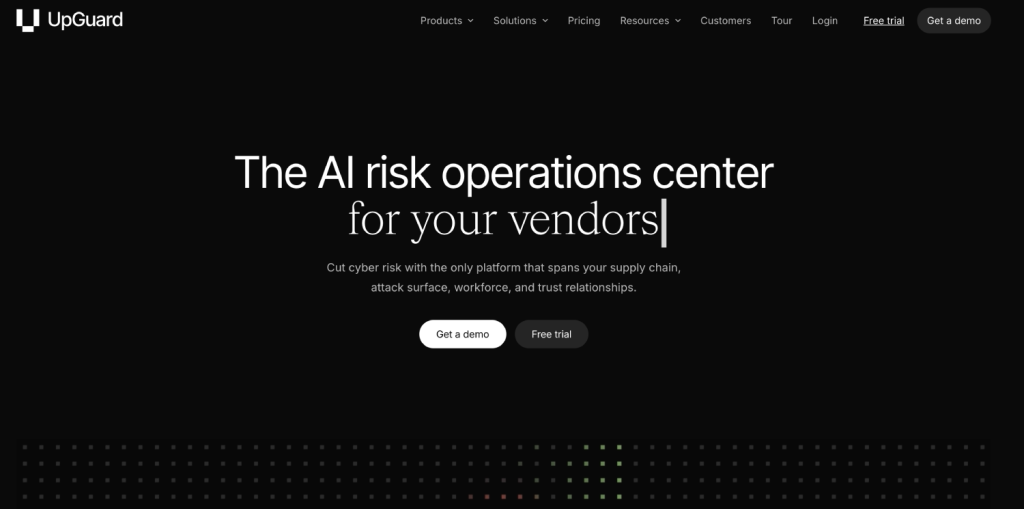
UpGuard takes a technical security scanning approach similar to BitSight but tends to produce more detailed remediation guidance, which makes it a better fit for engineering-led security teams. Its BreachSight product monitors your own attack surface, while Vendor Risk focuses on third-party monitoring. The combination is useful for fintechs that want a unified view of their own security posture alongside their vendor portfolio. UpGuard publishes some tier information on its website but full pricing requires a sales conversation.
Whistic
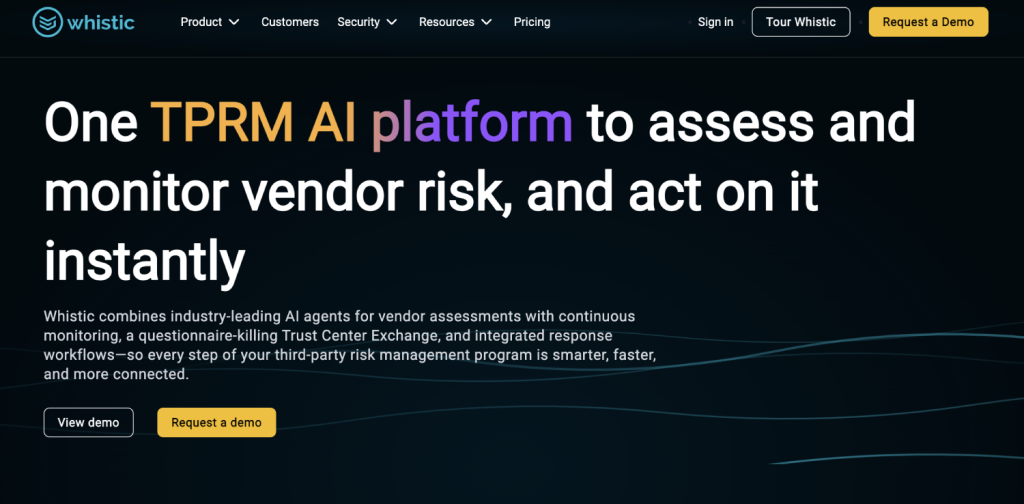
Whistic solves a specific pain point: if your fintech is growing and increasingly receiving vendor security assessment requests from your enterprise customers, Whistic lets you build a trust profile that customers can access on demand instead of completing redundant questionnaires. As a vendor risk tool for your own suppliers, it also simplifies outbound assessment requests through a shared network where vendors can publish completed assessments. For fintechs that are both buyers and sellers in a compliance context, the bilateral efficiency is meaningful. Pricing is not publicly listed.
Prevalent

Prevalent covers the full vendor lifecycle in a way that questionnaire-and-rating tools typically do not. That means onboarding, ongoing monitoring, contract management, and offboarding. Vendor offboarding is a frequently overlooked risk: when you stop using a vendor, ensuring they have deleted your data and revoked access is a compliance obligation that many startups handle informally. Prevalent builds that into the workflow systematically. Pricing is quote-based and not publicly disclosed.
Drata
Drata approaches vendor management from a multi-framework compliance angle. If your fintech needs to satisfy SOC 2, PCI DSS, HIPAA, and ISO 27001 simultaneously, Drata’s vendor risk module connects vendor assessments to the specific control requirements across all of those frameworks. That cross-framework mapping reduces duplication in a way that single-framework tools cannot. Drata and Vanta serve similar audiences but have different product depth in specific framework areas, so a direct comparison using your actual framework requirements is worth doing before committing. Pricing is not publicly listed.
Which Vendor Risk Tool Is Right for Your Stage?
Stage matters more than feature count when selecting a vendor risk tool. A 12-person seed-stage fintech does not need the same solution as a 200-person Series C company preparing for a public market filing.
Consider these illustrative scenarios:
Series A lending platform. 35 active vendors, a single compliance hire, an upcoming sponsor bank audit, and a 90-day timeline to produce bank-examiner-ready documentation. They need a tool that supports risk tiering, generates the right report formats, and does not require three months of configuration before it is useful. Venminder or Vanta with its compliance automation features fit that profile. ProcessUnity, while more configurable, would require more internal resources than that team realistically has available at this stage.
Seed-stage payments startup. 15 vendors, no dedicated compliance hire, a SOC 2 audit approaching as part of a first enterprise customer contract requirement. The primary deliverable is evidence of a vendor review process, not a comprehensive TPRM program. Vanta or Drata handles this well because the vendor risk module sits inside a compliance automation tool the team is already using, avoiding a separate platform purchase.
Series C payments company. 150 vendors, an active data privacy program covering CCPA and GDPR, and enterprise customers demanding documented evidence of vendor oversight as part of their own supplier risk programs. The investment in implementing OneTrust or Prevalent is justified by the volume and the external audience consuming the outputs. A lightweight tool built for 30 vendors will create operational gaps that become visible in a customer audit.
| Stage | Vendor Volume | Primary Use Case | Recommended Tools |
|---|---|---|---|
| Seed | 5-20 vendors | Basic documentation for investors or auditors | Vanta, Drata |
| Series A | 20-50 vendors | Bank partnership prep, first compliance hire | Venminder, Vanta, Panorays |
| Series B | 50-100 vendors | Formal TPRM program, regulatory readiness | ProcessUnity, Prevalent, BitSight |
| Series C+ | 100+ vendors | Multi-framework compliance, enterprise customer demands | OneTrust, Prevalent, ProcessUnity |
Vendor Risk Checklist: What to Evaluate for Every Critical Vendor
This checklist covers the minimum diligence items for any vendor that handles financial data, customer PII, or a function your product depends on operationally. Critical vendors warrant a full review. Lower-tier vendors can use a shorter version.
Security
- SOC 2 Type II report (not just Type I) completed within the last 12 months
- Penetration testing completed within the last 12 months, with a summary report available
- Documented vulnerability management and patching policy
- Multi-factor authentication enforced for employee access to production systems
- Incident response plan documented and tested
- External security rating (BitSight or UpGuard) above your defined minimum threshold
Regulatory
- Relevant licenses current and verifiable (NMLS, state money transmission licenses)
- No active OCC, FDIC, CFPB, or state enforcement actions
- OFAC screening completed at onboarding and monitored ongoing
- AML/BSA program documentation available for regulated vendors
Uptime and Operational
- Published SLA with defined uptime guarantee (99.9% or higher for critical systems)
- Public status page with historical incident data accessible
- Business continuity and disaster recovery plan documented
- Documented RTO (Recovery Time Objective) and RPO (Recovery Point Objective)
- No single points of failure through shared infrastructure or cloud providers
Financial
- Funding status verified (not in a distressed runway situation)
- No public reports of significant layoffs in core engineering or support functions
- For publicly traded vendors: review most recent earnings or SEC filings
- Ability to escrow source code or maintain access to critical systems in a vendor failure scenario
Data
- Signed data processing agreement (DPA) in place before any data transfer
- Sub-processor list documented and reviewed
- Data retention and deletion policy documented and enforceable
- Data residency requirements confirmed (US-only, EU, etc.)
- Breach notification timeline specified in contract (72 hours or less for regulated data)
This checklist connects directly to the compliance failures described in 10 Compliance Mistakes That Can Destroy Your Fintech Startup, most of which trace back to gaps in third-party oversight rather than internal control failures.
What Does Good Fintech Vendor Diligence Actually Cost?
The tooling cost is the smaller part of the total investment. The larger cost is the operational time spent designing questionnaires, chasing responses, reviewing documentation, and maintaining ongoing monitoring. For a fintech with 50 active vendors and a dedicated compliance resource, a realistic estimate is 20 to 30 hours per month on vendor risk activities before any tooling is in place. Purpose-built tools reduce that, but they do not eliminate it.
Tooling costs for the platforms in this list are not publicly disclosed. Based on the products’ positioning and target markets, lighter tools aimed at seed-to-Series A companies tend to start at a few hundred dollars per month. Enterprise platforms with full TPRM workflow support are priced significantly higher, often by vendor count and user count. Budget conversations should be had directly with vendors.
The cost of not building a vendor risk program is harder to quantify but historically more expensive. Regulatory enforcement actions for third-party oversight failures, remediation after a vendor breach, and the cost of rebuilding a compliance program under a bank partner’s supervision are all significantly more expensive than the tooling and labor investment upfront. The real cost of compliance in fintech SaaS broken down by stage covers this comparison in detail.
How Does Vendor Risk Management Interact With Your Broader Risk Program?
Vendor risk does not sit in isolation. It connects to fraud controls, since a compromised KYC vendor creates fraud exposure. It connects to data privacy, since a vendor breach may trigger breach notification obligations. It connects to business continuity, since a payment processor outage may require a failover process you have not documented. For a fintech building a fraud detection and risk program, the vendor layer is part of the attack surface, not separate from it.
The cleanest way to think about it: every vendor in your stack is a node in your risk graph. A breach, a failure, or a regulatory action at any node propagates through the graph to your customers and your regulators. Vendor risk management is the discipline of understanding that graph, monitoring it, and having documented responses when a node fails.
Frequently Asked Questions About Vendor Risk Management Tools for Fintech
What is a vendor security review in fintech?
A vendor security review is a structured assessment of a third-party provider’s information security controls before and after onboarding. In fintech, it typically includes reviewing a vendor’s SOC 2 report, penetration testing documentation, access control policies, and incident response plan. Security rating tools like BitSight or UpGuard can supplement questionnaire-based reviews with continuous external monitoring. The review should be repeated annually and triggered by significant changes in the vendor’s infrastructure or ownership.
Do fintech startups actually need vendor risk management software?
Not at day one, but by the time a fintech is processing real customer data through third-party APIs, yes. A spreadsheet works for 10 vendors if one person owns it diligently. It fails at 30 vendors, especially when you need to produce evidence of a risk program for a bank partner, a SOC 2 auditor, or a regulatory examiner. The cost of implementing a lightweight tool at Series A is far lower than reconstructing documentation under examination pressure at Series B.
What is the difference between a security rating tool and a TPRM platform?
A security rating tool (BitSight, UpGuard) monitors externally observable signals of a vendor’s security posture continuously. A TPRM platform (ProcessUnity, Prevalent, Venminder) manages the full third-party risk lifecycle including questionnaires, documentation, contract management, tiering, and remediation tracking. Security ratings tell you what a vendor’s perimeter looks like from the outside. TPRM platforms help you manage the full relationship and produce audit-ready evidence. Most mature programs use both.
What is fourth-party risk and why does it matter for fintech?
Fourth-party risk refers to the vendors your vendors use. A KYC provider may process identity data through a cloud infrastructure vendor you have never reviewed. If that sub-processor has a breach, the liability chain may reach you. Fourth-party visibility is a feature in more advanced TPRM platforms like Prevalent and OneTrust. Reviewing your critical vendors’ sub-processor lists and requiring contractual notification of changes is a minimum standard for regulated fintech operations.
How often should fintech companies re-assess their vendors?
Critical vendors, meaning those handling financial data, customer PII, or core operational functions, should be reviewed at least annually. Events that should trigger an off-cycle review include a vendor acquisition, a publicized breach, a significant staffing reduction, or a change in regulatory status. Lower-tier vendors can be assessed on a longer cycle, typically every two to three years. Risk tiering your vendor population before designing your review schedule is the most efficient way to allocate compliance team time.
What happens if a vendor fails after we have already signed a contract?
This is one of the more practically consequential questions in vendor risk, and it rarely gets discussed until it becomes urgent. If a vendor goes insolvent, gets acquired, or loses a critical license after you are live on their platform, you face a few distinct problems: continuity of service, data retrieval, and contractual obligations that may be in limbo. The time to address this is during contract negotiation, not after the fact. Specific provisions worth including are source code escrow for critical software vendors, defined data return and deletion timelines upon termination, and explicit notice requirements if the vendor undergoes a change of control. For vendors providing a regulated function, your contract should also specify what happens to your compliance obligations if their regulatory standing changes. Some TPRM platforms, including Prevalent, track contract terms and flag expiration and change-of-control clauses specifically for this reason. The most expensive risk mistakes fintech founders make often involve exactly this gap: assuming a vendor relationship is stable without building contractual protections for the scenarios where it is not.
What should a fintech vendor risk management process look like at Series A?
At Series A, the baseline is a documented vendor inventory, a tiering methodology that distinguishes critical from non-critical vendors, a questionnaire and review process for critical vendors at onboarding, and a calendar for annual re-reviews. That process should be codified in a vendor risk management policy, not just practiced informally. A lightweight tool like Vanta covers most of this without requiring dedicated TPRM staff. The goal is to produce evidence of a functioning program, not to build enterprise-grade complexity before you need it.
The Vendor Risk Program Is a Business Asset, Not Just a Compliance Task
Most fintech teams treat vendor risk as a checkbox they fill in before an audit. The startups that build it seriously discover it becomes something else: a negotiating tool. When a sponsor bank, a reinsurer, or an enterprise customer asks about your vendor oversight program and you can produce tiered vendor inventory, documented assessments, and a monitoring schedule, you are closing that conversation faster than competitors who are scrambling to assemble a spreadsheet.
The tools in this list span a wide range of complexity and cost. Vanta and Drata are the right starting point for early-stage teams that want vendor risk integrated with their broader compliance automation. Venminder and ProcessUnity serve teams that are preparing for bank-grade scrutiny. BitSight and UpGuard give any team continuous security signals without requiring vendor cooperation. Choosing the wrong tool for your stage does not disqualify you, but it does create migration friction later that is entirely avoidable.
A fintech that understands its vendor stack deeply, knows where each vendor sits on the risk spectrum, and has documented evidence of ongoing oversight is a fintech that is harder to surprise. Given that the most common source of early-stage compliance problems is not internal controls but vendor failures that were never anticipated, that understanding is worth building as early as the infrastructure itself. The most expensive risk mistakes fintech founders make often trace back to exactly that gap.