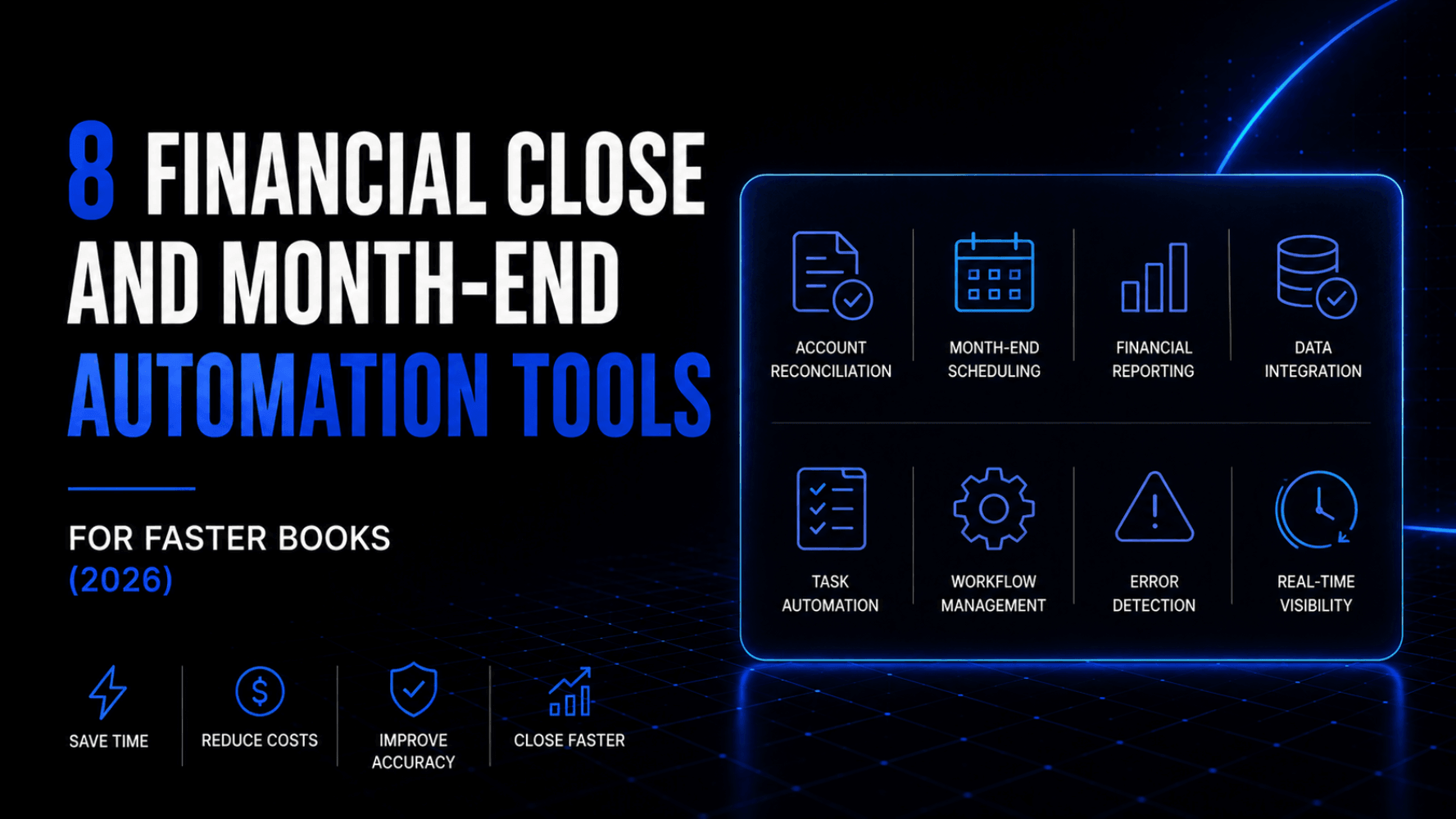

- Most finance teams treating a slow close as a staffing problem are actually looking at a process problem. The bottleneck is usually manual reconciliation and status chasing, not headcount.
- The eight tools in this comparison handle close checklists, account reconciliation, flux analysis, and reviewer sign-offs. They do not replace your ERP or your FP&A platform.
- FloQast and Numeric are the two names controllers at Series A through Series C companies ask about most. They solve meaningfully different problems.
- NetSuite and QuickBooks Online integrations vary more than vendors advertise. Check the depth of the sync, not just whether the integration exists.
- A structured close checklist with assigned owners and due dates cuts days off the close before any software is purchased. That checklist is in the FAQ section below.
The best financial close software for a scaling company is whichever one closes the gap between where tasks are today and who owns them. For most teams under 200 employees, that means FloQast or Numeric for close management, Trintech or BlackLine for reconciliation-heavy workflows, and HighRadius or OneStream when consolidation enters the picture. Pricing is not publicly listed for most enterprise options. Numeric publishes starting tiers on its website. FloQast quotes on request.
Why Most Month-End Closes Run Long (and It Is Not Headcount)
A five-day close does not become a ten-day close because the team is too small. It slows down because three reconciliations are waiting on one person, a prepaid schedule lives in someone’s personal spreadsheet, and no one knows which tasks are actually done versus “mostly done.” Status meetings eat the time that reconciliation work should occupy.
Close automation tools attack two specific bottlenecks: task visibility and reconciliation matching. When every prepaid, accrual, and intercompany rec has an assigned owner, a due date, and a status visible to the controller, the close stops running on memory. When bank and subledger balances match automatically, the team stops spending the first two days of close just confirming that nothing is obviously wrong.
The teams that shorten their close by two or three days without adding staff are almost never working faster. They removed the waiting. Software makes waiting visible, which is the first step to eliminating it.
The FintechSpecs Close Bottleneck Audit: Four Checks Before You Buy Software
Buying close management software before diagnosing the bottleneck is how companies end up with expensive checklists that do not move the needle. Run these four checks first.
Check 1: Where does the close actually stall? Map the last three closes. Note the day each major area (AR, AP, payroll, prepaids, intercompany, revenue) was signed off. If the median stall is always in the same two areas, that is where automation will pay back fastest.
Check 2: How many reconciliations are still done in spreadsheets? Count them. If more than half of your account recs live in Excel or Google Sheets, reconciliation-first tools like Trintech or BlackLine will likely return more value than a checklist-first tool like FloQast.
Check 3: What is your ERP, and how deep is the integration? This is not a checkbox. Ask vendors whether their integration pulls journal entries, trial balance, and sub-ledger detail, or just a high-level GL feed. The difference is two to four hours of manual export per close.
Check 4: Who reviews, and where do they get stuck? If the controller spends most of close reviewing work rather than doing it, a tool with strong reviewer workflows and sign-off trails matters more than reconciliation matching. If the team is doing the work and the controller is the one person who cannot scale, the bottleneck is review capacity, not automation.
8 Financial Close and Month-End Close Software Tools Compared
1. FloQast

FloQast is the closest thing to a category standard for close management at mid-market companies. It handles task checklists, reconciliation sign-offs, flux commentary, and tie-outs to the GL, and it does all of it inside a UI that accountants actually use without training. The integration with NetSuite, Sage Intacct, and QuickBooks Online is deeper than most competitors, pulling trial balance data to auto-populate rec tie-outs.
The platform’s strongest feature is its Slack and email-based status nudges. Controllers report that the automated reminders alone cut the time spent chasing status updates by a measurable amount. FloQast does not publish pricing publicly. It quotes based on entity count and user seats. Expect a mid-four-figures annual contract for a team under 50 people, though the company does not confirm this figure.
FloQast is the default choice for a controller who wants a close management layer without a multi-month implementation. It is not the right tool if you need full reconciliation automation with matching logic. For that, it sits upstream of tools like BlackLine or Trintech.
2. Numeric
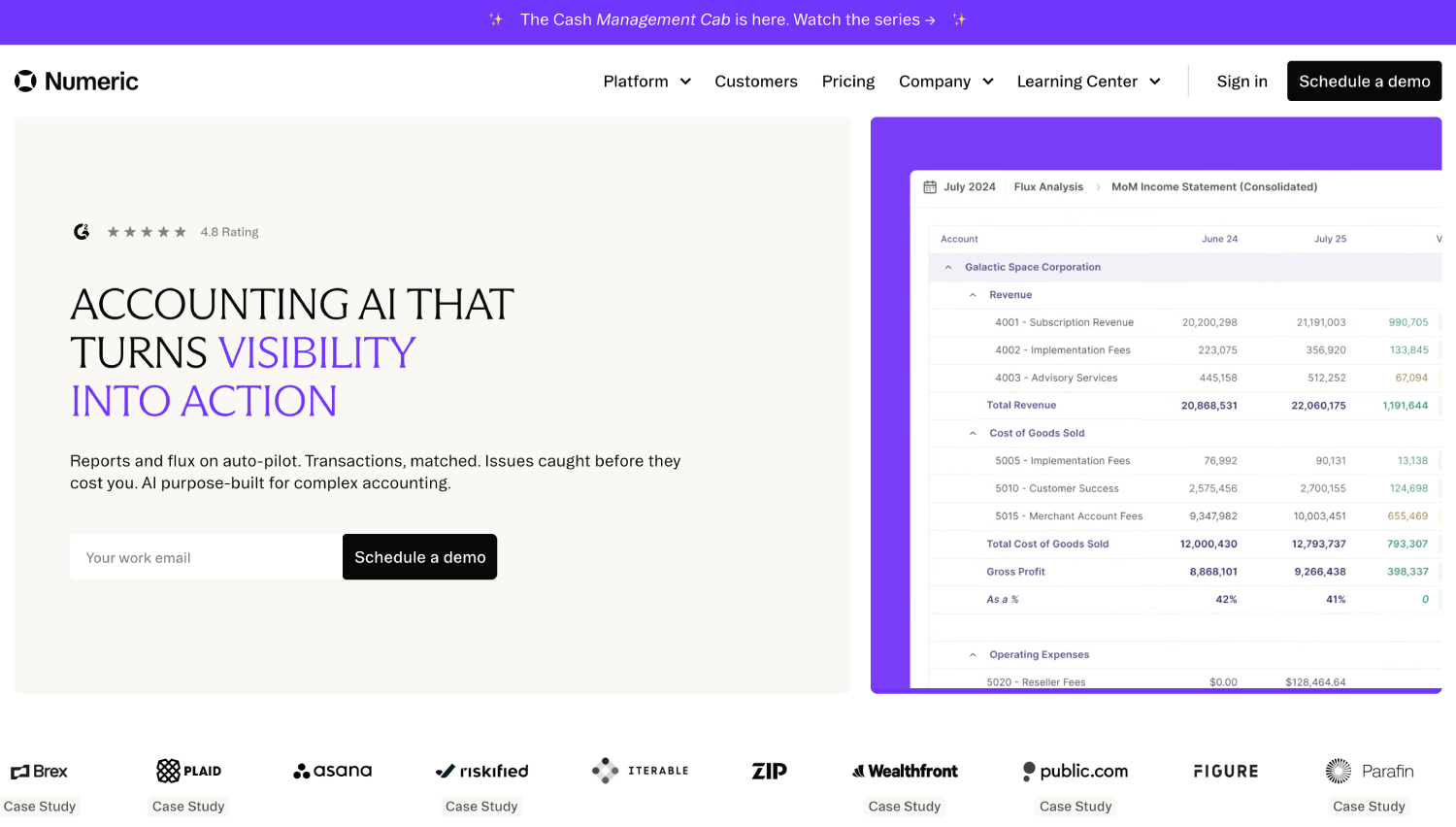
Numeric positions itself as the modern FloQast alternative, built specifically for companies using NetSuite or QuickBooks Online. Its close checklist, rec management, and flux analysis features are comparable to FloQast, but the interface is visibly cleaner and the setup time is shorter. According to Numeric’s own website, teams go live in under two weeks.
The standout difference is Numeric’s native flux analysis. While FloQast requires manual commentary or add-ons, Numeric generates variance explanations from the GL and lets reviewers annotate them directly in the platform. For a controller who spends two or three hours each close writing flux commentary, that is real time back. Numeric publishes pricing on its website, with plans starting for smaller teams and scaling by entity and user count.
Numeric is the right call for a Series A or B company that has already standardized on NetSuite or QBO and wants to get live fast without a formal implementation project. It is not the right tool for a company with complex intercompany eliminations or multi-entity consolidation at scale.
3. BlackLine

BlackLine is the enterprise standard for account reconciliation software. The platform handles automated matching, journal entry management, task management, and intercompany accounting in a single system. It integrates with SAP, Oracle, and NetSuite at a depth that smaller tools cannot match, pulling GL balances, sub-ledger detail, and supporting documents into a unified workflow.
According to G2 reviews, BlackLine consistently rates highly for reconciliation automation and audit trail completeness. The trade-off is implementation complexity and cost. BlackLine is not a two-week setup. Expect a formal implementation project measured in months, and a contract that starts in the mid-five-figures annually for a full deployment. It is built for companies with dozens of entities, hundreds of accounts, and a team that can support the platform.
For a company under 200 employees, BlackLine is almost always too much. For a company post-IPO or approaching it, the audit-grade documentation and SOX controls make it the defensible choice.
4. Trintech (Cadency and Adra)

Trintech offers two products: Cadency for enterprise close and consolidation, and Adra for mid-market account reconciliation. Adra is the more relevant tool for scaling companies. It automates transaction matching, manages rec workflows, and provides a full audit trail without requiring a multi-month implementation.
According to Trintech’s public marketing, its reconciliation software targets a 30% reduction in close time, consistent with the figures HighRadius also cites for their platform. Trintech’s matching logic is strong for companies with high transaction volumes in bank, credit card, or intercompany accounts. Pricing for Adra is not publicly listed. Cadency is enterprise-priced and requires a full sales process.
Trintech competes most directly with BlackLine at the enterprise level and with Numeric or FloQast at mid-market. For a company whose primary pain is reconciliation matching rather than task management, Adra is worth evaluating alongside Numeric before defaulting to FloQast.
5. HighRadius
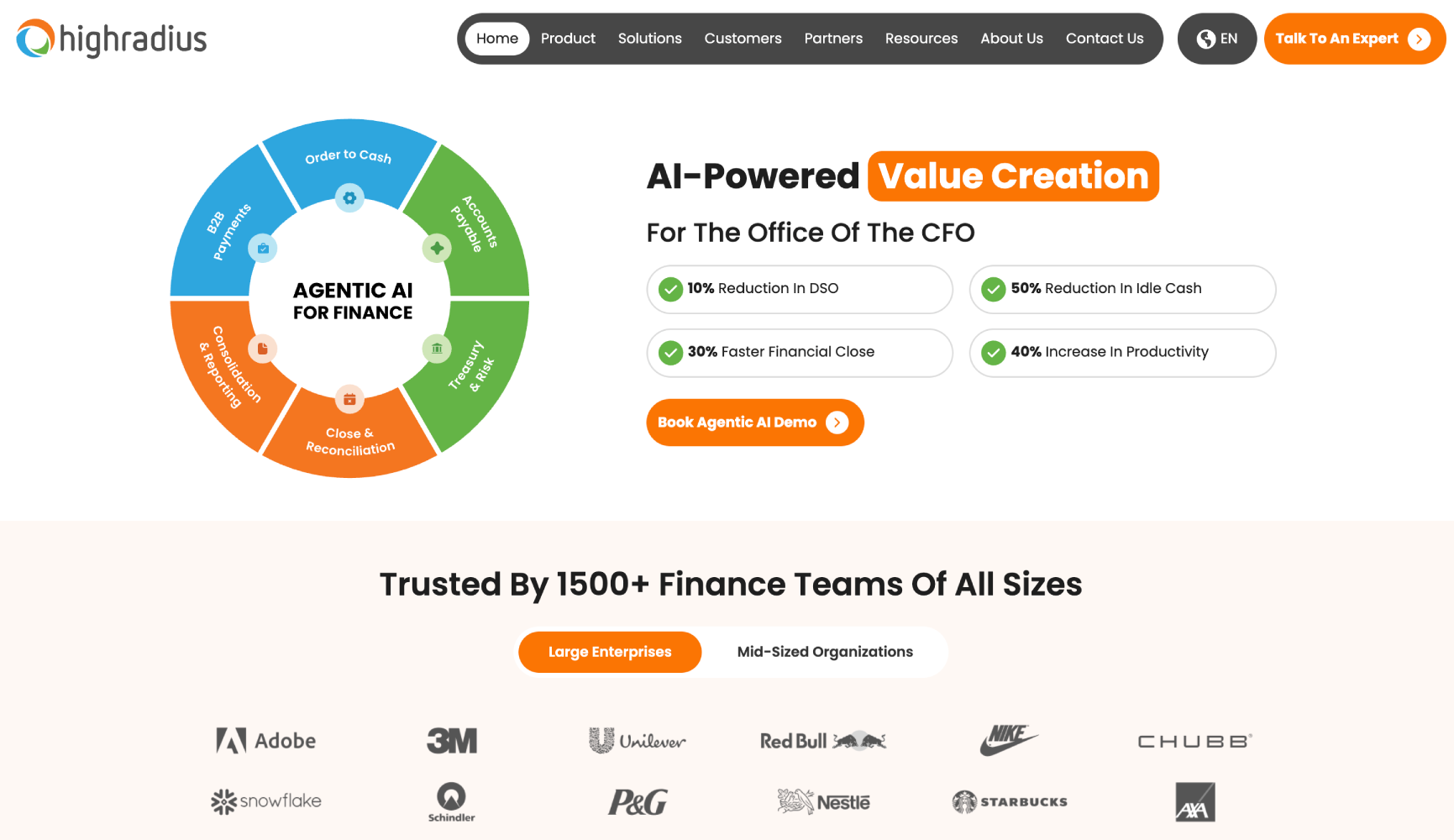
HighRadius markets its financial close platform around a 30% reduction in close time, according to the company’s public website. The platform uses AI-driven matching for reconciliations, automates accrual journal entries, and handles period-end compliance tasks. It integrates with SAP, Oracle, and NetSuite.
HighRadius is a broader platform than pure close management tools. It covers accounts receivable, treasury, and record-to-report in addition to the close. That breadth is an advantage for a company that wants a single vendor across finance operations, and a complexity risk for a team that just needs close checklists and recs. The platform is enterprise-priced. Pricing is not publicly disclosed.
HighRadius makes the most sense for a company with $50M or more in revenue that is evaluating a broader finance transformation, not just a close tool. Buying it for close management alone is buying more than you need.
6. OneStream
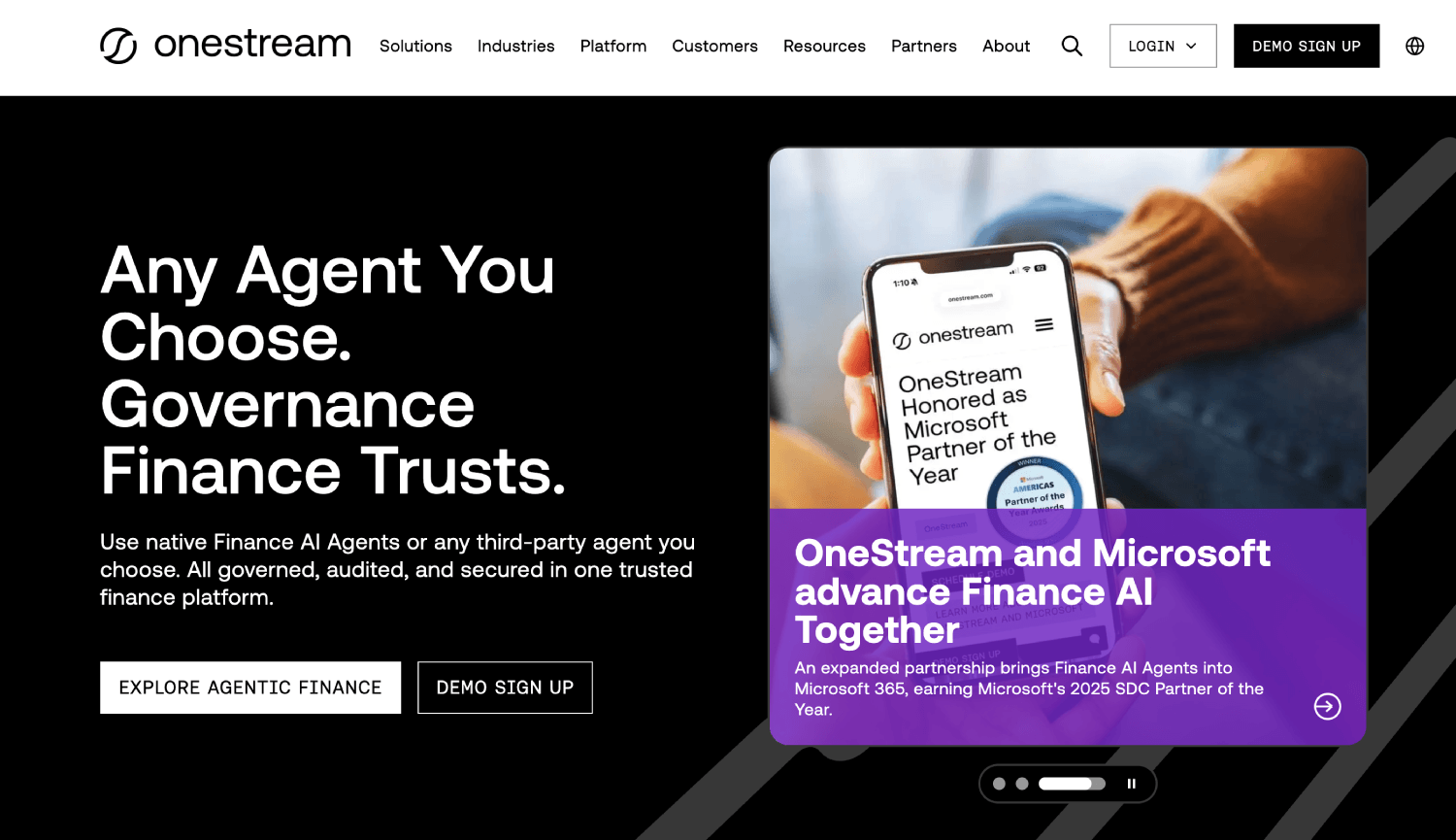
OneStream sits at the intersection of financial close, consolidation, and financial planning. It eliminates the need for separate consolidation software by handling group close, multi-entity elimination, currency translation, and reporting in one platform. According to OneStream’s website, it automates data loading, reconciliation, and reporting to accelerate the financial close.
This is a CPM (corporate performance management) platform, not a close management tool in the FloQast or Numeric sense. Controllers who need close checklists and rec sign-offs will find OneStream’s task management secondary to its consolidation and reporting capabilities. The right buyer is a company with 10 or more entities, a complex consolidation, and a need to connect the close to board and management reporting in the same system.
OneStream pricing is enterprise and undisclosed. Implementation is a significant project. It competes with Workiva and Planful at the upper end of the market, not with FloQast or Numeric.
7. Workiva
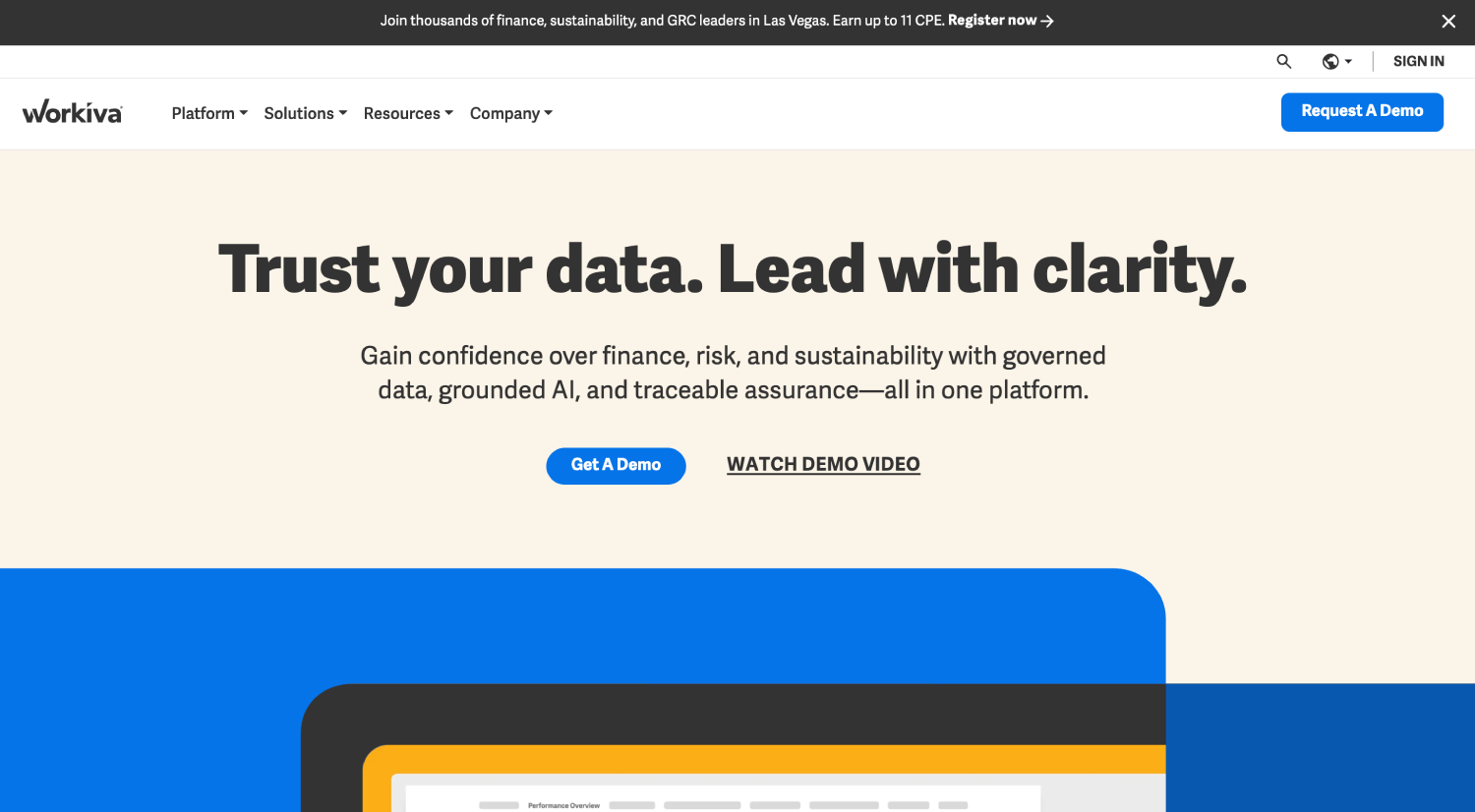
Workiva approaches the close from the reporting and compliance end rather than the checklist and reconciliation end. Its primary use case is financial reporting, SEC filings, ESG reporting, and controls documentation. Many public companies or pre-IPO companies use Workiva to manage the audit and reporting layer of the close without using it for daily rec management.
For a controller at a Series C company preparing for an audit or building toward a public offering, Workiva’s audit trail, version control, and collaborative review features are genuinely differentiated. The platform connects narrative reporting to underlying data, which reduces the manual copy-paste that causes version errors in board packages and audit workpapers. Pricing is not public. Workiva is an enterprise contract.
Workiva is not a competitor to FloQast or Numeric for day-to-day close management. It is the layer you add when financial reporting, controls documentation, and regulatory filings become the constraint, not the reconciliation work itself.
8. Sage Intacct Close Management (Built-In)
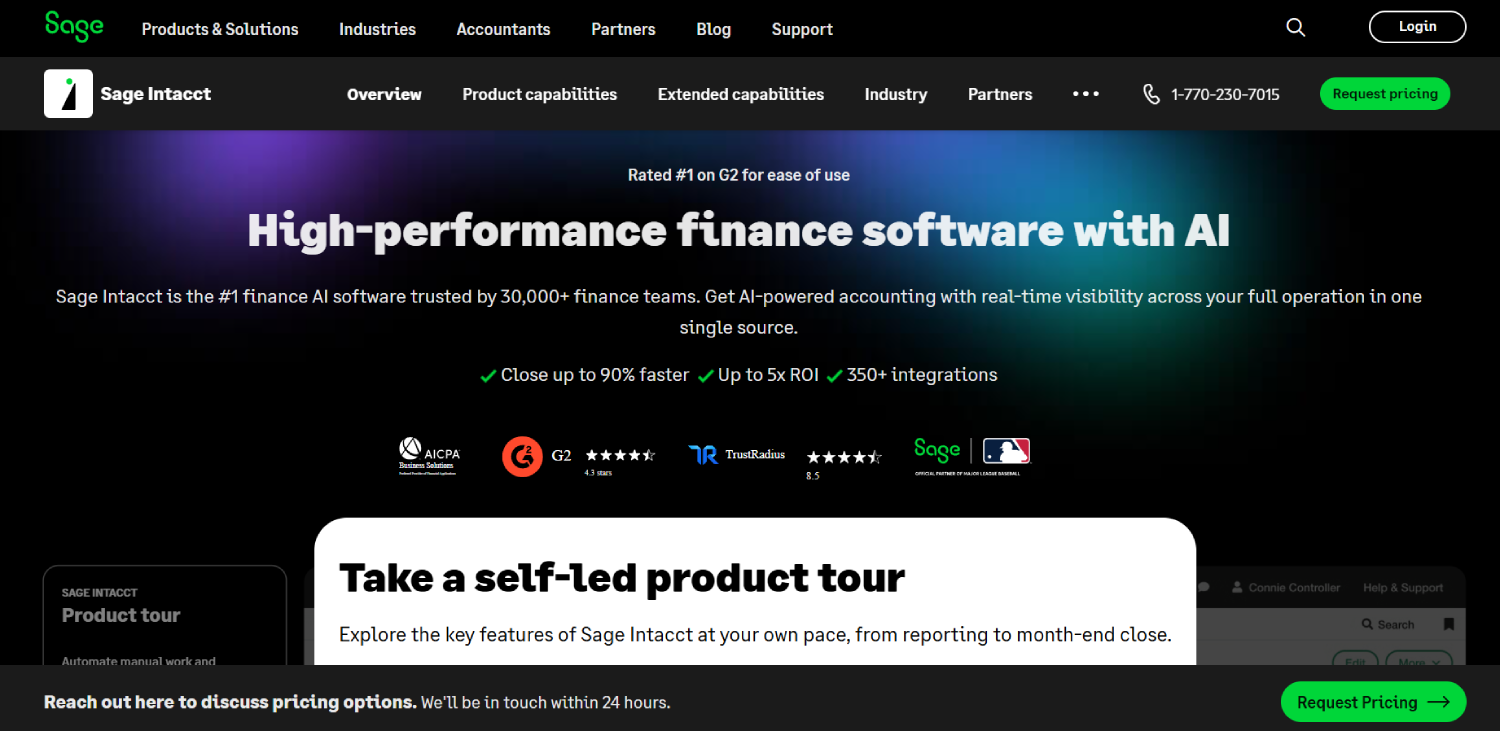
Sage Intacct includes a native close management module that handles period-close checklists, user task assignments, and close status tracking directly inside the ERP. For companies already on Intacct, this module eliminates the need for a separate tool for basic checklist and sign-off workflows.
The native module is not as feature-rich as FloQast or Numeric. It handles task assignment and period locking well, but flux analysis, automated rec matching, and cross-entity visibility require either an add-on or a separate tool. For a 20-to-40 person company running a relatively simple close on Intacct, the built-in module may be enough to eliminate spreadsheet-based checklists and cut one or two days from the close without additional spend.
The honest evaluation: if you are on Intacct and your close is taking seven or more days, exhaust the native module first before paying for a separate tool. If you are on NetSuite, the native close management capabilities are more limited, and a dedicated tool becomes worth the cost faster.
Head-to-Head Comparison: Which Financial Close Tool Fits Your Stage?
| Tool | Best For | Close Checklists | Auto Reconciliation | Flux Analysis | Multi-Entity | Pricing |
|---|---|---|---|---|---|---|
| FloQast | Series A-C, mid-market | Yes | Tie-outs only | Manual commentary | Limited | Quote only |
| Numeric | Seed-Series B on NetSuite/QBO | Yes | Tie-outs + matching | Native AI-assisted | Limited | Published on site |
| BlackLine | Enterprise, SOX environments | Yes | Full matching | Yes | Yes | Quote only |
| Trintech Adra | Mid-market, rec-heavy | Yes | Full matching | Limited | Moderate | Quote only |
| HighRadius | $50M+ revenue, broad finance ops | Yes | AI matching | Yes | Yes | Quote only |
| OneStream | 10+ entities, CPM needed | Secondary | Yes | Yes | Yes | Quote only |
| Workiva | Pre-IPO, audit-ready reporting | No | No | No | Reporting only | Quote only |
| Sage Intacct Native | SMB already on Intacct | Yes | No | No | Basic | Included in ERP |
FloQast vs Numeric: The Comparison Controllers Actually Search For
FloQast has a larger installed base and more public case studies. Numeric has a faster implementation timeline and a cleaner approach to flux analysis. Both connect to NetSuite and QuickBooks Online, but the depth differs in ways that matter at close time.
FloQast’s tie-out process links reconciliation sign-offs directly to the GL balance, flagging variances between the rec total and the posted balance. Numeric does the same but adds a layer where the system surfaces the variance explanation from the transaction detail, so the accountant confirms rather than writes from scratch. For a controller whose team spends two hours a month writing flux commentary, Numeric’s approach saves real time. For a controller whose close bottleneck is not flux but review and sign-off visibility, FloQast’s workflow is equally capable.
On integration with NetSuite specifically, both tools pull GL data. FloQast’s NetSuite integration has been in market longer and has more documented edge cases handled. Numeric’s is newer but designed for NetSuite from the start, which shows in how the data model maps to Intacct and NetSuite’s period structure. If your ERP is QuickBooks Online, both work. If you are on SAP or Oracle, go directly to BlackLine or HighRadius.
What Close Automation Tools Cannot Do
Close management software does not replace judgment. It replaces the spreadsheet that tracked judgment. The tool does not know whether an accrual estimate is reasonable. It does not catch a revenue recognition error buried in a complex contract. It will not tell you that the prepaid roll-forward is missing a termination fee.
These tools remove the overhead around the work, not the work itself. The controller still reviews. The accountant still estimates. The auditor still samples. What changes is that status chasing, manual tie-outs, and version-controlled spreadsheets stop consuming the hours that analytical review should occupy.
This distinction matters when evaluating ROI. The hours saved by close automation are the mechanical hours, not the judgment hours. A company that expects the software to do the accounting will be disappointed. A company that expects it to eliminate the overhead around the accounting will likely shorten its close.
For teams evaluating broader finance ops, the accounts payable automation tools and accounts receivable automation platforms that feed into the close are a separate evaluation from the close management layer itself. Getting the upstream data clean before month-end is as important as how you manage the close process.
How Close Automation Works With NetSuite and QuickBooks Online
NetSuite users have the widest range of close tool integrations. FloQast, Numeric, BlackLine, HighRadius, and Trintech all publish NetSuite as a supported ERP. The variation is in what the integration actually pulls. A surface-level integration imports trial balance. A deeper one imports journal entry detail, sub-ledger aging, open items, and period locking signals. Ask each vendor for their NetSuite integration spec sheet, not just the integration logo on their website.
QuickBooks Online users have fewer enterprise-tier options. FloQast and Numeric both support QBO, and for a company under 50 employees on QBO, either tool works for checklist management and rec tie-outs. If the company is growing toward NetSuite or Sage Intacct, it is worth selecting a tool that will support the future ERP, not just the current one, to avoid re-implementation later.
For teams building on top of accounting data programmatically, the accounting integration APIs compared across Codat, Rutter, and Merge are relevant if you are pulling GL data into a custom dashboard or building a workflow layer on top of your ERP.
What Does Financial Close Software Actually Cost?
Most enterprise close tools do not publish pricing. FloQast, BlackLine, HighRadius, Trintech Cadency, OneStream, and Workiva all require a sales conversation. Numeric is the notable exception, publishing tier-based pricing on its website.
From market conversations and publicly available review data on G2 and Gartner, close management tools at the mid-market level (FloQast, Numeric, Trintech Adra) typically land in the range of low-to-mid five figures annually for a company with one or two entities and a finance team under 20 people. Enterprise platforms (BlackLine, HighRadius, OneStream) are typically in the mid-to-high five figures or six figures annually, with implementation costs layered on top.
Sage Intacct’s native close management module is included in the ERP contract, which makes it the lowest-friction starting point for companies already on that platform. The trade-off is feature depth. For teams evaluating total finance infrastructure costs, the broader picture of hidden costs in fintech SaaS operations is worth reading before committing to a multi-year close software contract.
Frequently Asked Questions About Financial Close Software
What is close management software?
Close management software is a platform that organizes and tracks every task required to close the books at period-end. It assigns owners to reconciliations, accruals, flux commentary, and review sign-offs, then makes status visible to the controller without requiring status meetings. The best tools also connect to the ERP to auto-populate reconciliation balances and flag variances. FloQast and Numeric are the two most-referenced tools in this category for mid-market companies.
How do I shorten my month-end close?
Start by mapping where the last three closes actually stalled, not where you think they stalled. The bottleneck is almost always one of three things: reconciliations waiting on a single person, status that lives in someone’s head instead of a shared system, or upstream data (AP, payroll, revenue) that arrives late. Fix the process first with a structured checklist and assigned owners. Then add software to automate the reconciliation matching and status tracking. Most teams can cut two to four days from a ten-day close before purchasing any tool.
What is a standard month-end close checklist?
A functional month-end close checklist covers seven areas in sequence: (1) sub-ledger close, including AR aging, AP aging, and payroll posting confirmation; (2) bank reconciliations for all accounts; (3) credit card and expense reconciliations; (4) prepaid and fixed asset roll-forwards; (5) accrual entries, including payroll accrual, commission accrual, and vendor accruals; (6) revenue recognition and deferred revenue reconciliation; (7) flux review and management reporting package. Each item needs an owner, a due date, and a sign-off mechanism. That structure is what close management software automates.
Is FloQast the best financial close software for a scaling startup?
FloQast is the most widely adopted close management tool at Series A through Series C companies, which means it has the largest base of peer references and the most documented ERP integrations. Numeric is a genuine alternative with faster setup and better native flux analysis, particularly for teams on NetSuite. FloQast is a defensible default choice. Numeric is worth evaluating if you are on NetSuite and want to avoid a multi-month implementation or if flux commentary is a specific bottleneck.
What is account reconciliation software and how does it differ from close management software?
Account reconciliation software automates the matching of transactions between two sources, such as a bank statement and the GL, or an AR subledger and the trial balance. It flags unmatched items and manages supporting documentation. Close management software is broader: it organizes every task in the close, of which reconciliation is one part. BlackLine and Trintech lead on reconciliation automation. FloQast and Numeric handle both checklist management and rec tie-outs, but their matching logic is less sophisticated than dedicated reconciliation platforms.
How does financial close software integrate with NetSuite?
FloQast, Numeric, BlackLine, and HighRadius all offer NetSuite integrations. The key question is whether the integration pulls trial balance only or also imports journal entry detail, sub-ledger data, and period-locking signals. A trial-balance-only integration still requires manual export for rec detail. A full integration auto-populates rec balances and ties them to posted journal entries. Ask vendors for a technical integration spec, not just confirmation that the integration exists.
When does a company need BlackLine instead of FloQast or Numeric?
BlackLine is the right tool when reconciliation volume is high, when SOX compliance requires audit-grade documentation, or when the company operates multiple entities with complex intercompany transactions. For a company pre-SOX with one or two entities and a finance team under 20 people, BlackLine is almost certainly more than the situation requires. FloQast or Numeric will cover the close management and basic rec workflow at a fraction of the cost and implementation time.
What BI and audit trail tools pair well with close management software?
Close management tools generate the signed-off data. BI tools consume it for reporting. For teams that need audit-logging and permissions on top of their financial reporting, the BI tools built for Series C fintech teams with audit logs and the audit logging tools for fintech SaaS are the next layer to evaluate after the close is stabilized.
How to Pick the Right Close Tool for Your Stage
The framework is simple: solve the biggest bottleneck first, and buy only as much tool as that bottleneck requires. A company with a twelve-day close driven by manual reconciliations needs reconciliation automation before it needs a better checklist tool. A company with a nine-day close driven by status chasing and review bottlenecks needs task visibility and workflow before it needs matching logic.
For most companies at seed through Series B, the buying decision comes down to Numeric or FloQast, with Trintech Adra as the right add if reconciliation volume is the specific constraint. BlackLine becomes the conversation at Series C and beyond, particularly when the audit relationship and SOX readiness start influencing tool selection. OneStream and HighRadius are the platforms for companies where the close is one module in a broader finance transformation, not a standalone purchase.
The teams that close fastest are not the ones with the most sophisticated software. They are the ones with the clearest process, the most explicit task ownership, and a tool that makes both visible. The software enforces the discipline. The discipline has to exist first.