
TLDR
- QuickBooks and Xero include basic bank reconciliation, but they break down fast once you have multiple entities, high transaction volumes, or complex balance sheet accounts that need systematic matching.
- Dedicated account reconciliation software auto-matches transactions, flags exceptions, and produces an auditable trail , work that otherwise happens in spreadsheets the night before a close.
- The right tool depends on where reconciliation pain actually lives: bank feeds and cash, intercompany accounts, or the full financial close cycle.
- Enterprise platforms like BlackLine and Trintech Cadency cover the full close; mid-market tools like FloQast and Numeric move faster and cost less; payment-ops tools like Ledge and Optimus Fintech handle transaction-level matching at scale.
The best account reconciliation software for most mid-market finance teams is FloQast for close management or BlackLine for enterprise-grade controls, with Numeric emerging as the strongest option for Series A through Series C companies that want automated matching without an 18-month implementation. For payment-heavy fintech stacks, Ledge and Optimus Fintech handle transaction-level reconciliation that general ledger tools were never designed for. The right choice depends on whether your primary pain is bank rec, balance sheet rec, or the full financial close workflow.
Why Account Reconciliation Software Is Its Own Category
Most finance teams discover this category after a bad audit or a close that ran four days late. The assumption that QuickBooks or Netsuite handles reconciliation is technically true in the same way a hammer technically drives screws: it works, poorly, and with a lot of manual effort filling the gaps.
General ledger systems record transactions. Reconciliation software matches them. The distinction sounds semantic until you have 15,000 transactions a month across six bank accounts and three payment processors, and your controller is manually running VLOOKUP formulas at 11 PM on day nine of the close. At that point, the category makes itself obvious.
Dedicated reconciliation tools handle several things that ERPs skip: auto-matching rules that learn from prior matches, exception queuing so reviewers only touch unmatched items, timestamped audit trails with preparer and approver sign-offs, and templates for recurring accounts that enforce consistency across periods. The FintechSpecs Reconciliation Stack Framework (introduced below) separates tools into three tiers by where they operate, which is a more useful lens than vendor marketing claims about being “end-to-end.”
The FintechSpecs Reconciliation Stack Framework
Rather than ranking tools on a single axis, this framework places each product in one of three operational tiers based on where reconciliation work actually happens. Most buyers need clarity on which tier is creating the pain before selecting a product.
Tier 1: Transaction-Level Matching. Raw feeds from banks, payment processors, and PSPs get matched against internal records. Volume is high, rules are repetitive, and the goal is exception isolation. Tools here: Ledge, Optimus Fintech, ReconArt.
Tier 2: Account-Level Reconciliation. Individual GL accounts are reconciled against source balances on a periodic schedule. This is where balance sheet rec and bank rec templates live. Tools here: Numeric, FloQast, HighRadius.
Tier 3: Close Orchestration. The full financial close is managed as a workflow: task assignments, preparer/reviewer routing, SOX control attestation, and cross-entity consolidation. Tools here: BlackLine, Trintech Cadency, FloQast (which spans Tiers 2 and 3).
The common implementation mistake is buying a Tier 3 platform when the actual problem is Tier 1. A 200-person company whose controller spends three days on bank recs does not need SOX workflow automation , they need automated matching rules and exception queuing.
What Does Good Automated Bank Reconciliation Actually Look Like?
Consider a SaaS company processing $2M per month across Stripe, a corporate bank account, and a payroll account. Without dedicated software, the finance team downloads three CSVs, pastes them into a master sheet, and manually marks each line as matched. With an automated bank reconciliation tool, the same workflow runs as: bank feeds pull nightly via API or SFTP, matching rules identify cleared transactions by amount and date range, unmatched items surface in an exception queue, and a reviewer clears exceptions in a single session rather than building the match list from scratch.
The practical time difference for a company at that volume is typically several hours per account per month , time that compounds across every close cycle. The audit benefit is separate: instead of a spreadsheet with no version history, every match decision carries a timestamp, a user ID, and an audit-ready export.
11 Best Account Reconciliation Software Tools
1. BlackLine
BlackLine is the default enterprise choice for account reconciliation and financial close management. It covers account reconciliation, transaction matching, journal entry, intercompany hub, and task management inside a single platform. SOX-compliant controls, preparer/reviewer workflow, and certifications are built into every account rec template.
BlackLine is best suited for public companies or late-stage private companies with active SOX requirements, multi-entity structures, and finance teams large enough to justify the implementation cost. It is not a tool you buy and configure in a weekend. Typical implementations involve professional services engagements and take several months. Pricing is not publicly disclosed; buyers should expect enterprise contract minimums. BlackLine’s own site directs all pricing to sales.
The genuine differentiator is its transaction matching engine, which handles high-volume matching across bank, subledger, and intercompany accounts with configurable tolerance rules. For companies already running a financial close process that needs audit infrastructure, BlackLine remains the category standard. FintechSpecs covered the BlackLine versus FloQast decision in detail in the BlackLine vs FloQast financial close platform comparison.
2. FloQast

FloQast built its market position by being easier to implement than BlackLine while covering the same close management workflow. It integrates directly with QuickBooks, NetSuite, Sage Intacct, and Microsoft Dynamics, pulling trial balances automatically so account rec templates pre-populate with current GL balances. Controllers assign accounts to preparers, set due dates, and track close status on a dashboard without chasing people over email.
FloQast’s bank reconciliation functionality works through its reconciliation template system: the controller defines matching logic once, and FloQast compares GL balances to bank statements flagging differences for review. It is less automated at the raw transaction-matching level than BlackLine’s transaction matching engine, but for mid-market teams running 50 to 300 monthly reconciliations, the close orchestration workflow is what actually saves time.
FloQast does not publish pricing publicly. Mid-market teams typically report contract values in the five-figure annual range, though this varies by entity count and module scope. Companies between Series B and Series D that want a faster implementation path than BlackLine, and that primarily need close orchestration rather than high-volume transaction matching, consistently land on FloQast.
3. Trintech Cadency
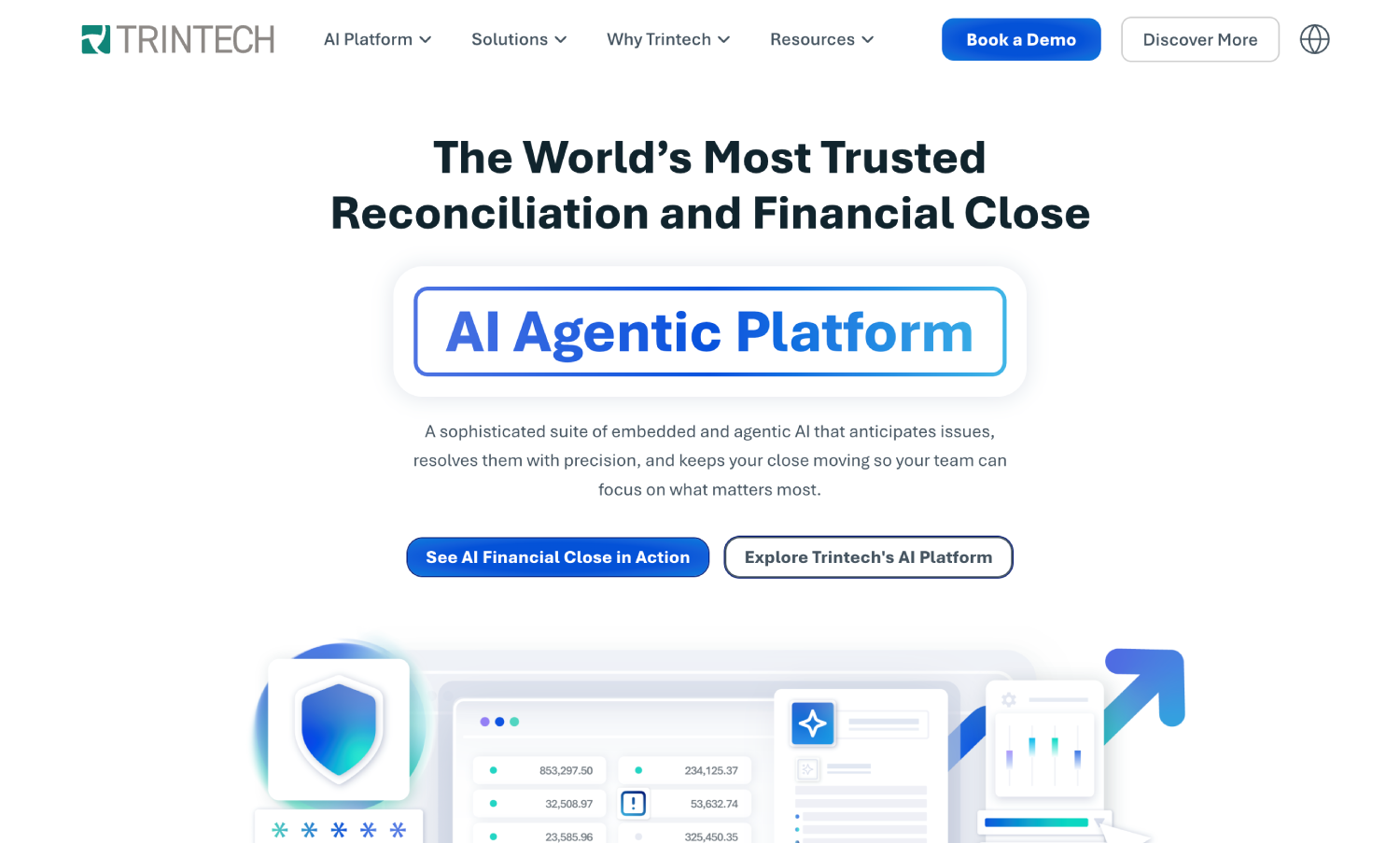
Trintech Cadency competes directly with BlackLine in the enterprise segment. Its account reconciliation module covers balance sheet certification, transaction matching, and journal entry workflow, and it adds strong support for multi-currency and multi-entity environments. Cadency is particularly common in regulated industries like financial services and insurance, where the audit trail requirements are non-negotiable.
Where Cadency distinguishes itself from BlackLine is in its approach to reconciliation risk scoring: it automatically classifies accounts by risk level based on account type, balance size, and historical exception rates, then routes low-risk accounts to auto-certification and surfaces high-risk accounts for manual review. This cuts reviewer time on routine accounts substantially. Like BlackLine, pricing is enterprise-negotiated and not publicly disclosed.
Cadency is worth evaluating for companies already operating on Trintech’s Adra platform for smaller-scale close management, since the migration path between products is designed to be straightforward.
4. Numeric
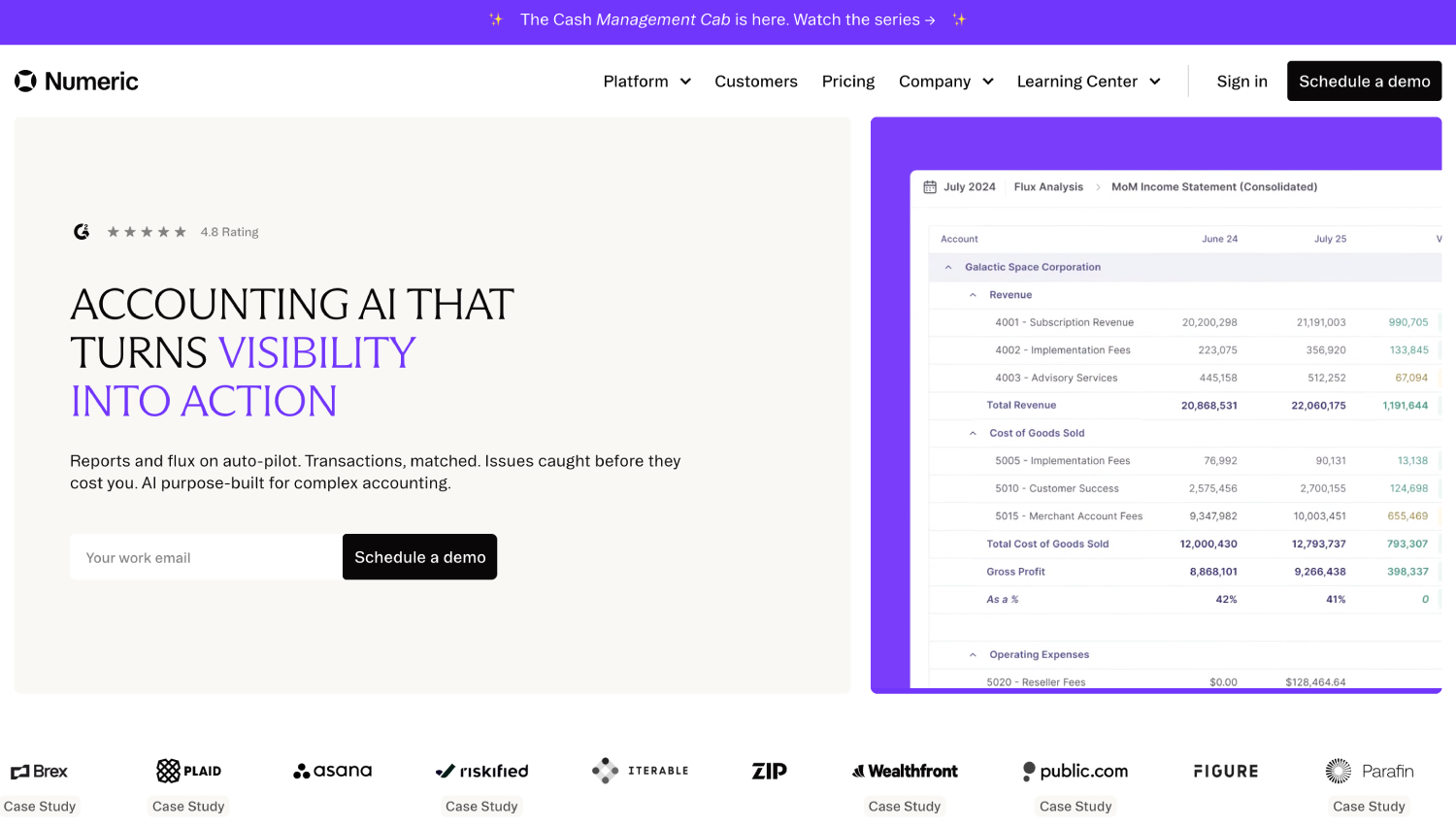
Numeric is built specifically for high-growth companies running close-side reconciliation in Google Sheets or basic ERP modules who want to graduate to a purpose-built tool without an enterprise procurement process. It connects directly to NetSuite and QuickBooks Online, surfaces variance explanations with AI-assisted commentary, and routes accounts through a preparer/reviewer workflow that mirrors what you would build manually in a shared spreadsheet, but with version control and an audit trail.
The positioning is clear: Numeric is for finance teams of 2 to 10 people who want to run a clean close without hiring a BlackLine implementation partner. The product does not attempt to match raw bank transactions at the feed level , it operates at the account level, which is the right scope for companies under 1,000 employees with manageable bank account counts. Pricing is not publicly listed; the company directs buyers to a demo request.
For Series A through Series C companies where the controller is still hands-on and the team does not have a dedicated systems administrator, Numeric fits better than any enterprise platform on this list.
5. Ledge
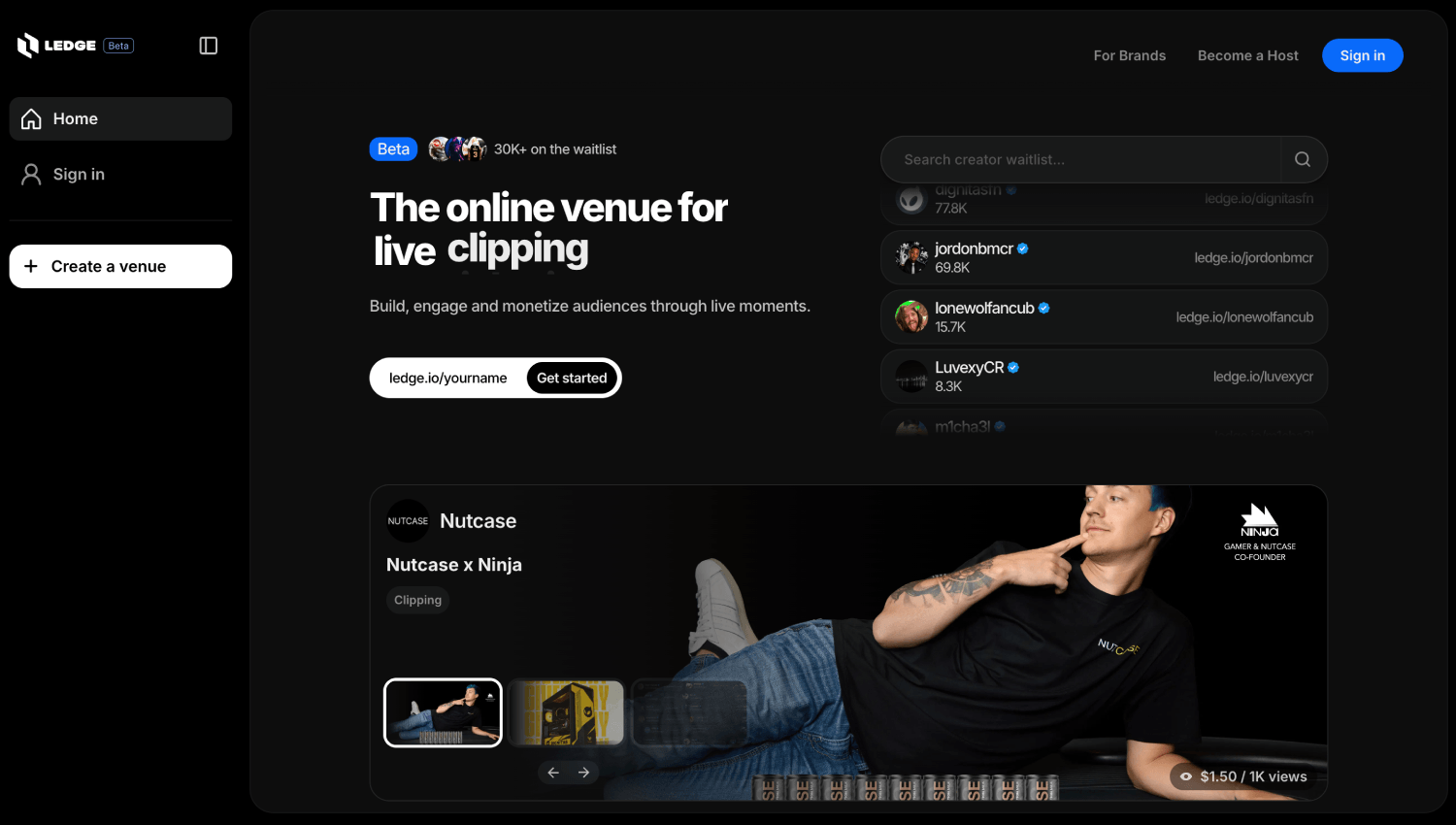
Ledge sits squarely in Tier 1 of the reconciliation stack: it handles transaction-level matching between payment processors, banks, and the GL, which is the problem that finance teams at fintech companies and high-volume SaaS businesses hit first. It ingests data from sources like Stripe, Brex, and bank feeds, then applies configurable matching rules to auto-reconcile at the transaction level before the results flow into the GL.
The practical use case is a company running payments through multiple processors and needing to reconcile settlements to payouts to GL entries without building and maintaining a custom pipeline. Ledge replaces that pipeline with a configurable rules engine. This is distinct from what FloQast or Numeric do , those tools operate after the GL is populated; Ledge works upstream, ensuring the GL gets populated accurately in the first place. Pricing is not publicly disclosed.
For fintech teams dealing with the payment reconciliation side of the problem, FintechSpecs covered the broader payment reconciliation tool category in the best payment reconciliation software comparison for fintech finance teams.
6. Optimus Fintech
Optimus Fintech targets the same transaction-level matching problem as Ledge but with a focus on banks and financial institutions running high-volume nostro, vostro, and correspondent account reconciliation alongside retail payment reconciliation. The platform ingests SWIFT messages, bank statements, and internal transaction files, applies tolerance-based matching rules, and surfaces exceptions with full context for resolution.
For a fintech or payments company running cross-border transactions across multiple currency accounts, Optimus Fintech covers matching complexity that most accounting-side tools do not touch. It is not a general close management platform , it is a reconciliation engine for high-volume, high-complexity transaction environments. Pricing is enterprise-negotiated and not publicly available.
7. ReconArt
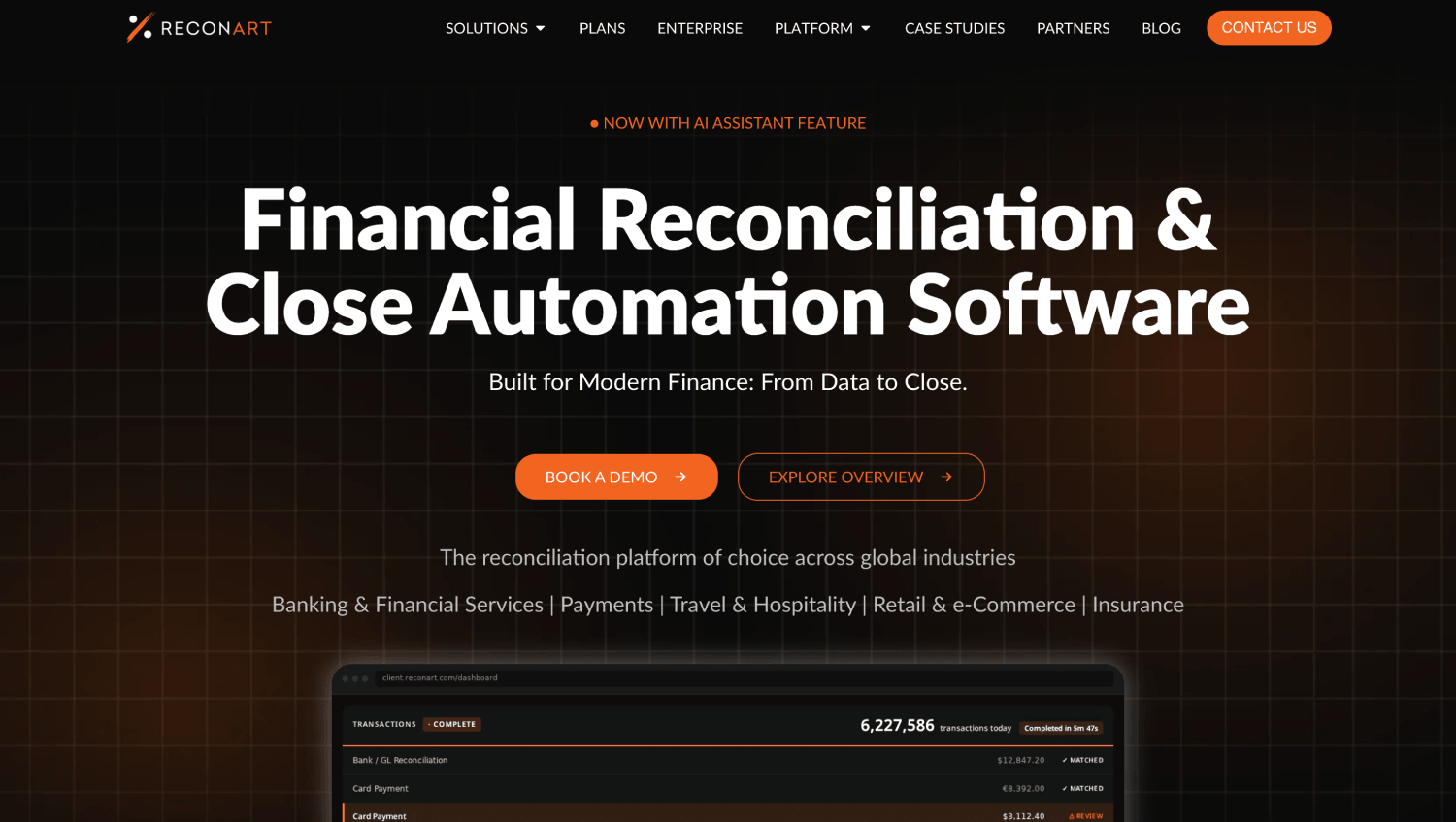
ReconArt is a purpose-built reconciliation platform that covers both transaction matching and account-level reconciliation, making it one of the few tools that spans Tiers 1 and 2 of the reconciliation stack without requiring an enterprise budget. It handles bank rec, intercompany rec, balance sheet rec, and payment reconciliation through a configurable rules engine, with no-code setup for matching logic.
ReconArt’s distinguishing feature is its breadth across reconciliation types. A mid-market company that needs to reconcile bank accounts, credit card accounts, intercompany balances, and payment processor settlements in a single platform , without buying BlackLine , will find ReconArt covers more ground than most tools at its price point. Pricing is not publicly disclosed, but ReconArt is generally considered more accessible than enterprise-tier platforms. FintechSpecs compared ReconArt head-to-head with AutoRek in the ReconArt vs AutoRek reconciliation platform comparison.
8. HighRadius
HighRadius approaches reconciliation from the accounts receivable and treasury side. Its account reconciliation module applies AI-based matching to cash postings, bank statements, and open receivables, with the goal of automating the cash application step that sits between payment receipt and GL posting. For companies with high volumes of incoming payments across multiple channels, this is where days sales outstanding gets compressed.
HighRadius is not a general-purpose balance sheet reconciliation platform , it is most valuable to companies whose reconciliation pain is specifically on the AR and cash application side. Enterprise pricing applies; the company does not publish rates publicly.
9. Xero with Bank Reconciliation
Xero includes bank reconciliation natively, and for companies with under 500 monthly transactions and a single bank account, it may be entirely sufficient. Xero’s bank feed integration pulls transactions directly from connected accounts and presents suggested matches against open bills, invoices, and manual journal entries, which the user approves or adjusts.
The honest framing: Xero’s reconciliation is a feature, not a platform. It does not support multi-entity consolidation, configurable tolerance rules, or audit-ready preparer/reviewer workflows. Once a company hits meaningful volume or complexity, they hit the ceiling. As of Xero’s public pricing page, plans start at $20/month and scale by features and contacts, not by transaction volume , which also signals the product’s intended market.
10. QuickBooks Online Advanced with Reconciliation
QuickBooks Online Advanced includes bank reconciliation with bank feed connectivity and a reconciliation history report. Like Xero, it is a feature within an accounting product, not a standalone reconciliation platform. The matching is manual: QBO surfaces a list of bank transactions and a list of GL transactions, and the user marks them as cleared.
QuickBooks works for small businesses with low transaction volumes and simple bank account structures. As of QuickBooks’ public pricing page, the Advanced plan runs $235/month (billed monthly) as of current published pricing. Companies outgrowing QBO reconciliation typically face a choice between upgrading to a proper ERP (NetSuite, Sage Intacct) or adding a reconciliation layer on top of their existing books.
11. Sage Intacct with Reconciliation
Sage Intacct sits above QuickBooks in sophistication and below BlackLine in close management capability. Its built-in bank reconciliation module handles multi-entity reconciliation natively, which is its primary advantage over QuickBooks and Xero. For multi-entity businesses that do not yet have the transaction volume to justify a dedicated reconciliation platform, Sage Intacct’s built-in module delays the need for a separate tool.
Sage Intacct pricing is not publicly disclosed and is sold through resellers. Companies that have already implemented Sage Intacct and are questioning whether they need a separate reconciliation tool should evaluate Numeric or FloQast as add-ons before committing to a platform replacement.
Account Reconciliation Software Comparison Table
| Tool | Best For | Reconciliation Tier | Key Differentiator | Pricing |
|---|---|---|---|---|
| BlackLine | Public companies, SOX environments | Tier 3 (+ Tier 1) | Enterprise close + transaction matching | Not publicly disclosed |
| FloQast | Mid-market close management | Tier 2 + 3 | Fast implementation, native ERP sync | Not publicly disclosed |
| Trintech Cadency | Regulated enterprise, multi-entity | Tier 3 | Risk-scored auto-certification | Not publicly disclosed |
| Numeric | Series A to C, lean finance teams | Tier 2 | Lightweight close with AI commentary | Not publicly disclosed |
| Ledge | Fintech, high-volume payment ops | Tier 1 | Payment processor to GL matching | Not publicly disclosed |
| Optimus Fintech | Banks, cross-border payment ops | Tier 1 | SWIFT/nostro/vostro matching | Not publicly disclosed |
| ReconArt | Mid-market, multi-type rec | Tier 1 + 2 | No-code rules across all rec types | Not publicly disclosed |
| HighRadius | AR-heavy, cash application | Tier 2 | AI cash posting and AR matching | Not publicly disclosed |
| Xero | Small business, low volume | Tier 2 (basic) | Bank feed integration, native accounting | From $20/month (public pricing page) |
| QuickBooks Online Advanced | SMB, simple bank rec | Tier 2 (basic) | Manual match with bank feed | $235/month (public pricing page, as of current published pricing) |
| Sage Intacct | Multi-entity mid-market | Tier 2 | Multi-entity native bank rec | Not publicly disclosed |
How Do You Choose Between Bank Reconciliation and Balance Sheet Reconciliation Software?
Bank reconciliation and balance sheet reconciliation are related but not interchangeable. Bank rec matches the GL cash account to the bank statement for each bank account , it answers whether your books reflect what the bank holds. Balance sheet reconciliation covers every account on the balance sheet, including prepaid expenses, accrued liabilities, fixed assets, intercompany receivables, and deferred revenue , it answers whether every account is supported by documentation, not just whether it balances.
A company doing only bank recs is leaving most of its close risk unmanaged. Balance sheet accounts without periodic reconciliation are where material misstatements hide: stale prepaid balances, duplicated accruals, ghost intercompany entries. Dedicated software for balance sheet rec automates the population of each account’s balance, surfaces the supporting schedule from the prior period, and routes the completed rec through a sign-off workflow.
For teams choosing software, the practical question is which problem is most acute. If close delays come from bank accounts specifically, Ledge or a lighter tool solves it. If the auditors are commenting on balance sheet support, FloQast or BlackLine’s account reconciliation module is the right scope. If both are true, a platform that covers both tiers, like ReconArt or BlackLine, is worth the larger investment.
What Features Should You Require in General Ledger Reconciliation Software?
Not every feature in a vendor demo will matter to your team. Five features actually separate useful reconciliation tools from tools that just move the spreadsheet problem into a new interface.
Auto-matching rules with configurable tolerance are non-negotiable for any meaningful transaction volume. Without them, you still match manually. The tolerance configuration matters: a rule that matches only exact amounts will miss bank fees, FX rounding, and split payments that together account for a large share of real-world exceptions.
Preparer and reviewer workflow with sign-off tracking is what makes close documentation audit-ready. A reconciliation without a named approver and a timestamp is a spreadsheet with extra steps. Any tool that cannot produce a completion report showing who certified each account and when should not be in consideration for a team with external auditors.
ERP and bank feed connectivity determines whether the tool adds work or removes it. A platform that requires manual CSV uploads will be abandoned within two close cycles. Confirm that the specific integrations your stack requires (NetSuite, Sage Intacct, QuickBooks, your bank’s feed format) are live and maintained, not listed as “available upon request.”
Exception management with aging is the difference between resolving breaks and accumulating them. Good tools show how long each exception has been open, flag items past a defined threshold, and allow comments and attachments directly on the exception record. Stale exceptions are how small errors compound into audit findings.
Reporting for audit and management review should be exportable in a format your auditors will accept without further formatting. Some tools produce reconciliation completion reports; others require users to export raw data and build reports separately. Verify this during the trial, not after signing.
Which Account Reconciliation Tools Fit Which Company Stage?
Stage matters more than any individual feature in reconciliation software selection. A Tier 3 close orchestration platform deployed at a 40-person company will be underused and over-administrated. A basic ERP reconciliation module at a 500-person company with multiple entities and high transaction volume will create audit risk.
Seed through Series A companies with a single entity and under 1,000 monthly transactions: Xero or QuickBooks reconciliation features are genuinely sufficient. The case for dedicated software does not hold at this stage unless you have an unusual volume of payment processor feeds to reconcile.
Series A through Series C companies with 2-10 person finance teams: Numeric is the clearest fit for accounting-side reconciliation. For fintech companies with payment ops complexity, Ledge or ReconArt handles the upstream problem. If the team is close-management focused rather than transaction-matching focused, FloQast’s implementation speed is a real advantage.
Late-stage private and public companies with SOX obligations, multi-entity structures, or complex intercompany accounts: BlackLine or Trintech Cadency. These are the only platforms purpose-built for the compliance documentation requirements that come with public company audit standards. For companies sitting between these tiers, the financial close and month-end automation tools comparison covers the decision in more detail.
Frequently Asked Questions
What is account reconciliation software?
Account reconciliation software automates the process of comparing balances and transactions across different financial records , bank statements against GL accounts, payment processor settlements against internal records, or balance sheet account balances against supporting documentation. Unlike general ledger systems, which record transactions, reconciliation software matches them, flags discrepancies, and manages the preparer/reviewer workflow that makes the output audit-ready. The category spans tools from basic bank feed matching to enterprise close orchestration platforms with SOX-compliant sign-off chains.
Is QuickBooks or Xero sufficient for bank reconciliation?
For companies with a single bank account and under 500 monthly transactions, yes. QuickBooks and Xero include bank feed connectivity and basic reconciliation features that handle the matching task adequately at low volume. The limitations appear at scale: neither platform supports configurable tolerance rules for auto-matching, preparer/reviewer sign-off workflows, or multi-entity rec consolidation. Companies processing high transaction volumes or managing multiple entities will hit those ceilings within months of meaningful growth.
What is the difference between bank reconciliation and balance sheet reconciliation?
Bank reconciliation confirms that the GL cash balance matches the bank statement for each bank account. Balance sheet reconciliation covers every account on the balance sheet , prepaid expenses, accrued liabilities, intercompany balances, fixed assets, deferred revenue , verifying that each account balance is supported by documentation. Bank rec is a subset of balance sheet rec. Companies that only run bank recs are leaving most of their close risk unaddressed, which is why dedicated software covers both processes rather than treating them as separate workflows.
How much does account reconciliation software cost?
The two publicly priced tools on this list are Xero, starting at $20/month as of their current public pricing, and QuickBooks Online Advanced at $235/month as of current published pricing. Every other platform on this list , BlackLine, FloQast, Trintech Cadency, Numeric, Ledge, Optimus Fintech, ReconArt, HighRadius, and Sage Intacct , does not publish pricing and requires a sales conversation. Enterprise-tier platforms typically involve annual contracts in the five to six figure range depending on entity count, user count, and module scope.
What is automated bank reconciliation?
Automated bank reconciliation uses software to match bank statement transactions against GL entries without manual line-by-line comparison. The tool ingests bank feeds via API or file upload, applies configurable matching rules (by amount, date, reference number, or tolerance range), and automatically clears matched transactions. Only unmatched items , exceptions , require human review. The result is that a reconciliation that previously took several hours is reduced to reviewing a short exception list, with a full audit trail generated automatically.
Do fintech companies need different reconciliation software than regular businesses?
Fintech companies typically face Tier 1 reconciliation complexity that standard accounting tools do not handle: high-volume transactions across multiple payment processors, settlement timing mismatches between processor payouts and bank deposits, FX conversions, and fee netting. Tools built for general close management (FloQast, BlackLine account rec) handle the accounting-side workflow well but do not solve the upstream matching problem between payment processor data and GL entries. Fintech finance teams often need both a Tier 1 tool like Ledge or Optimus Fintech and a Tier 2 tool for the balance sheet close.
What integration should I verify before buying reconciliation software?
Before signing any reconciliation software contract, confirm three integrations are live and maintained: your ERP or accounting system (NetSuite, Sage Intacct, QuickBooks, Dynamics), your bank feed sources (direct bank API, SFTP statement delivery, or aggregator like Plaid), and any payment processors or PSPs relevant to your business (Stripe, Adyen, Brex, etc.). Request a demonstration of the live integration with your specific systems, not a generic demo environment. Missing or broken integrations are the primary reason reconciliation software implementations fail to deliver the expected time savings.
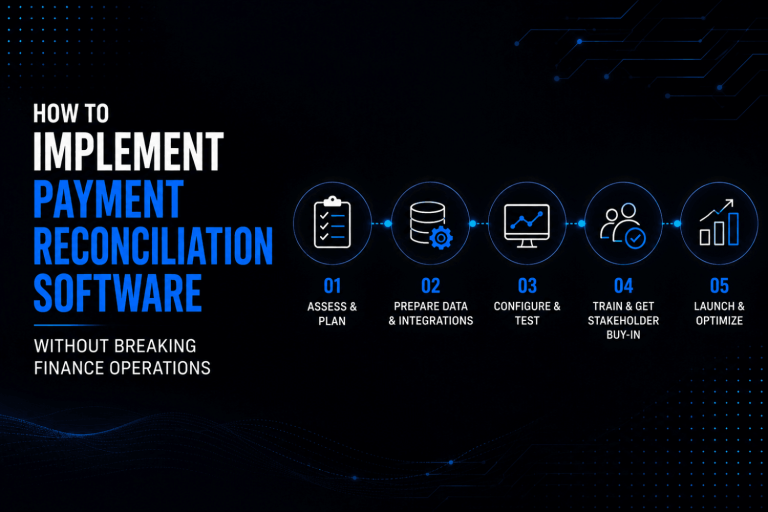
How to Implement Account Reconciliation Software Without Extending Your Close
Implementation is where reconciliation software projects most commonly fail , not in selection. Finance teams sign a contract expecting to cut their close from ten days to six, then spend two close cycles configuring templates and correcting data mapping errors while also running their normal close process in parallel. The workload temporarily doubles before it shrinks.
The teams that implement fastest share one practice: they start with their two or three highest-pain accounts rather than attempting to migrate every balance sheet account simultaneously. Bank accounts and cash equivalents are the right starting point because the matching logic is straightforward, the volume impact is immediate, and success builds confidence for the broader rollout. Balance sheet accounts with more complex support schedules (prepaid, accrued liabilities) follow once the workflow is understood. For a broader view of how these tools fit into the larger accounting infrastructure, the accounts payable automation tools comparison covers adjacent tooling that often gets evaluated alongside reconciliation software.
One thing worth tracking during any trial period: how the tool handles the exceptions that do not fit standard matching rules. Every vendor demo shows the clean case. The real test is what happens when a bank posts a transaction two days after the period close, or when a payment processor nets fees against a settlement in a way that breaks the expected matching pattern. The tool’s exception management interface is what your team will live in, and it is almost never the feature that gets the most attention in a sales demo.