- BlackLine targets mid-market and enterprise finance teams that need deep transaction matching, multi-entity consolidation, and audit-grade controls baked into the platform itself.
- FloQast is built for accountants first, with a checklist-driven close workflow that integrates directly inside Excel and Google Sheets, and goes live in weeks rather than months.
- Implementation time is a real differentiator: according to FloQast’s published comparison materials, their customers go live in an average of 1.7 months versus 5 months for BlackLine customers. These figures originate from FloQast’s own marketing and should be read as directional rather than independently audited benchmarks.
- Pricing for both platforms is quote-based and not publicly disclosed, but BlackLine’s contract minimums and implementation costs skew significantly higher, making it a harder fit for Series A and Series B finance teams.
- For fintech companies under 200 employees with a lean accounting team, FloQast wins on speed, adoption, and total cost. BlackLine earns its place once you have complex intercompany flows, a SOX audit requirement, or a large shared services center running parallel reconciliation workloads.
BlackLine and FloQast both automate the financial close, both integrate with major ERPs, and both get cited in the same G2 shortlists. For a fintech CFO doing a two-vendor evaluation, the feature pages look nearly identical. They are not. BlackLine is a controls platform that happens to manage the close. FloQast is a close management platform that happens to have controls. That difference determines which one fits a fintech finance team at each stage of growth.
BlackLine vs FloQast: Quick Verdict and Decision Table
If your finance team is running SOX compliance, managing 10 or more legal entities, or needs automated transaction matching at volume, BlackLine is the more appropriate platform. If you have a close process that currently lives in spreadsheets and Slack threads, and your team needs to get organized before you can automate, FloQast will deliver value faster and with less implementation risk.
| Decision Factor | Choose BlackLine | Choose FloQast |
|---|---|---|
| Company size | 200+ employees, mid-market to enterprise | Seed to Series C, 20-300 person finance org |
| ERP environment | SAP, Oracle, complex multi-ERP | NetSuite, QuickBooks, Xero, Sage |
| SOX compliance | Built-in SOX controls framework | Supports SOX workflows, less native depth |
| Transaction matching | Rules-driven matching engine, high volume | Basic matching, reconciliation-focused |
| Implementation time | ~5 months average (per FloQast’s published comparison materials) | ~1.7 months average (per FloQast’s published comparison materials) |
| Close checklist UX | Functional but process-heavy | Strong, Excel and Google Sheets native |
| Team adoption curve | Significant change management required | Accountants typically adopt with minimal training |
| Pricing tier | Higher contract minimums, enterprise contracts | Lower entry point, more startup-accessible |
| Best for fintech stage | Series C and beyond, pre-IPO, public companies | Series A through Series C, scaling finance teams |
What Do BlackLine and FloQast Actually Do Differently?
BlackLine is a financial close and accounting automation platform that launched in 2001 and now serves large enterprises and mid-market companies globally. Its core product set includes account reconciliations, transaction matching, journal entry management, intercompany accounting, and reporting. The platform is built around controls and auditability, which is why it has deep penetration in publicly traded companies and organizations running through SOX 404 audits.

FloQast launched in 2013 with a different assumption: accountants already know how to close the books, they just need better coordination tooling. The product started as a close management checklist that lived natively in Excel and has since grown into a broader accounting operations platform including reconciliation management, flux analysis, and an emerging AI layer the company calls FloQast AI. The user experience is deliberately familiar to anyone who has managed a close in a spreadsheet.
The philosophical gap matters in practice. BlackLine asks finance teams to rearchitect their close workflows inside its platform. FloQast asks teams to connect their existing workflows to a management layer. Neither approach is wrong, but the first requires a longer runway before it delivers ROI.
How Do BlackLine and FloQast Compare on ERP Integration and Technical Fit?
BlackLine maintains certified integrations with SAP (including S/4HANA), Oracle Cloud, Oracle E-Business Suite, Microsoft Dynamics, and NetSuite, among others. For companies running SAP at the core, BlackLine’s depth is hard to match. It offers a dedicated SAP connector that pulls transaction data directly into the matching engine without middleware, which matters when you are reconciling millions of line items per month.
FloQast integrates with NetSuite, QuickBooks Online, Xero, Sage Intacct, Microsoft Dynamics 365, and several others. The integrations work well for the mid-market ERP stack that most fintech startups run. Where FloQast differentiates is in how it surfaces that data: reconciliation packages link directly to cells inside a connected Excel or Google Sheet, so accountants are working in a tool they already know rather than a new interface.
For fintech companies on NetSuite, both platforms offer solid connectivity. The practical difference is the post-integration experience. BlackLine will pull data into its own reconciliation workspace. FloQast will push it into the spreadsheet environment your team is already using. If your close currently involves 12 Excel workbooks across five preparer accounts, FloQast’s architecture maps onto that reality more directly.
Teams evaluating their full accounting API and integration stack may also want to review how accounting data connectivity tools like those covered in our top accounting integration APIs for B2B SaaS comparison fit alongside either platform.
Which Platform Has Stronger Transaction Matching and Reconciliation Controls?
BlackLine’s transaction matching is the clearest area where the platform outperforms FloQast. According to third-party comparisons published on review sites, BlackLine’s matching engine is rules-driven and can handle high-volume, multi-source matching across bank data, subledger data, and ERP balances simultaneously. You can configure tolerance thresholds, matching hierarchies, and exception routing without writing code. For a fintech company processing hundreds of thousands of payment transactions per month, this is not a minor feature difference.
FloQast’s reconciliation module handles account-level reconciliation well, meaning it confirms that the trial balance agrees with the supporting schedule. It is not designed for line-item transaction matching at volume. If you are reconciling a Stripe settlement account with 50,000 line items against a general ledger, FloQast is going to hit a ceiling before BlackLine does. If you are reconciling 30 balance sheet accounts with human-prepared workpapers each month, FloQast handles that cleanly and with less overhead.
The controls architecture also differs. BlackLine enforces a preparer-reviewer-approver workflow at the platform level, with timestamps, role-based access, and an immutable audit log. FloQast supports similar workflows, but the level of control enforcement is lighter by design. For SOX-controlled environments, BlackLine’s audit trail is more defensible during a PCAOB inspection. For a Series B fintech not yet under SOX, FloQast’s workflow is sufficient and significantly easier to administer.
What Does BlackLine vs FloQast Cost?
Neither BlackLine nor FloQast publishes pricing on their public-facing websites. Both sell on annual contracts negotiated through a sales process. Based on publicly available information from software review platforms and community discussions, BlackLine’s contracts typically carry higher minimums and implementation costs, reflecting its enterprise positioning. Implementation alone, whether handled by BlackLine’s professional services team or a consulting partner, adds cost that FloQast generally does not require at the same scale.
FloQast is accessible to smaller finance teams partly because implementation is lighter. A team of three accountants can often configure and go live without a formal implementation partner engagement. BlackLine almost always requires one, which adds both cost and timeline before the platform delivers value.
Both vendors price based on user count, module selection, and sometimes transaction volume. The module structure matters: BlackLine’s transaction matching, intercompany hub, and consolidation capabilities are typically priced as add-ons to the core platform. Buying a comprehensive BlackLine stack can cost substantially more than the base reconciliation module alone.
Any fintech finance team running this evaluation should factor in the full total cost of ownership, not just the SaaS license. Our breakdown of hidden costs that reduce fintech SaaS margins covers how implementation and change management expenses routinely exceed first-year license fees for enterprise tools.
How Long Does Implementation Actually Take for Each Platform?
According to FloQast’s publicly published comparison pages, FloQast customers go live in an average of 1.7 months, while BlackLine customers average 5 months. These figures come from FloQast’s own marketing materials, so they should be read with appropriate skepticism, but the directional gap is consistent with what surfaces in community discussions on forums like Reddit’s r/Accounting.
The implementation length difference reflects real structural differences, not just complexity theater. BlackLine implementations typically involve a formal discovery phase, configuration workshops, data mapping from the ERP, user acceptance testing, and a phased rollout. For companies with multiple entities or complex chart-of-accounts structures, that timeline is necessary to get the platform configured correctly. Shortcuts during BlackLine implementation tend to produce reconciliation exceptions that require manual remediation post-go-live.
FloQast implementations start with connecting to the ERP, mapping balance sheet accounts to close checklist items, and configuring user assignments. The process is simpler because the platform is doing less transformation of the underlying data. That is a feature for teams that need to show progress quickly. It becomes a constraint if you later need the platform to do more sophisticated matching or consolidation work.
The FintechSpecs Close Readiness Framework: Matching Platform Complexity to Finance Team Maturity
One of the gaps in most BlackLine-versus-FloQast evaluations is that they compare features without anchoring to where the buyer’s finance function actually is. The FintechSpecs Close Readiness Framework maps platform selection to four observable signals in your current close process.
Signal 1: Close duration. If your team’s monthly close takes longer than 10 business days, the problem is almost never the absence of a sophisticated matching engine. It is unclear task ownership, missing preparer checklists, and review bottlenecks. FloQast solves this directly. BlackLine may also solve it, but it introduces more process change than the underlying problem requires.
Signal 2: Entity count. If you are managing more than five legal entities with intercompany eliminations, BlackLine’s intercompany hub becomes a genuine differentiator. FloQast can support multi-entity environments, but intercompany accounting across many subsidiaries is where BlackLine earns its enterprise price tag.
Signal 3: Transaction volume. If your finance team is reconciling more than 50,000 line items per month across payment processors, bank accounts, and ledger accounts, you need a rules-driven matching engine. BlackLine has one. FloQast does not at the same depth. This threshold matters for fintech companies specifically, because payment volume typically scales faster than headcount.
Signal 4: Audit exposure. If you are SOX-controlled today, or expect to be within 18 months, the cost of retrofitting audit controls into a lighter platform later usually exceeds the cost of implementing BlackLine now. If you are not on that path, paying for SOX-grade controls infrastructure is premature.
Which Platform Fits a Fintech Finance Team at Each Growth Stage?
At the Series A and early Series B stage, most fintech finance teams are running a three-to-six person accounting function. The close is managed in spreadsheets, with some version of a shared tracker in Notion or Google Sheets. The immediate need is coordination and visibility, not automation. FloQast addresses this directly. It layers structure onto existing workflows without requiring those workflows to change fundamentally. The adoption argument matters here: an accountant who already lives in Excel does not need training to understand a FloQast reconciliation package.
At late Series B and Series C, finance complexity accelerates. New legal entities form for international expansion. Payment volume climbs. The first Big Four audit engagement arrives. SOX readiness conversations start. This is the stage where a fintech CFO needs to make a genuine platform decision rather than a productivity tool decision. FloQast can grow with a company through this stage, but its ceiling becomes visible. BlackLine starts to make sense when the reconciliation volume or compliance requirement exceeds what a checklist-and-spreadsheet architecture can handle cleanly.
Pre-IPO and public fintech companies belong on BlackLine or a comparable enterprise platform. The audit committee, the PCAOB, and the external auditors will scrutinize close controls in ways that require a platform with immutable audit logs, formal exception workflows, and a documented control environment. FloQast does not position itself for that environment in the same way.
How Do BlackLine and FloQast Handle Compliance and Audit Support?
BlackLine’s compliance architecture is its most durable competitive advantage. The platform maintains a timestamped, role-segregated record of every preparer action, every reviewer sign-off, and every journal entry approval. The audit trail is not editable after the fact, which satisfies the documentation requirements that external auditors look for under SOX Section 302 and 404. BlackLine also maintains SOC 1 Type II and SOC 2 Type II certifications, which matter when your auditors are asking about the controls over your financial reporting systems.
FloQast also holds SOC 1 Type II and SOC 2 Type II certifications. Its close management workflows generate documentation that most external auditors accept for smaller public or pre-public companies. Where it falls short of BlackLine is in the depth of the control enforcement mechanism. FloQast’s workflow can be configured to require a reviewer approval, but the platform’s architecture is more flexible and therefore less rigid, which is a feature for smaller teams and a risk for heavily regulated environments.
For fintech companies navigating their first audit or building toward SOX readiness, our fintech product and compliance readiness checklist outlines the control documentation requirements that auditors typically expect before a company reaches the public markets.
What Are the Realistic Switching Costs If You Start with One and Need to Change?
Starting with FloQast and later moving to BlackLine is a common and manageable transition. The data that matters to BlackLine (trial balance, reconciliation history, user assignments) is generally exportable from FloQast, and BlackLine’s implementation team has run this migration before. The bigger cost is organizational: your accounting team will have learned one workflow, and BlackLine will require them to learn a different one. Budget for three to six months of parallel operations and a formal change management plan.
Starting with BlackLine and moving to FloQast is rarer, because companies that have invested in BlackLine’s implementation typically have requirements that FloQast cannot fully address. If you made the choice incorrectly and BlackLine is genuinely over-engineered for your team, the switching cost is real: you lose the implementation investment, you re-train the team, and you accept that some control documentation will have a gap period during the transition.
The asymmetric switching cost argument slightly favors starting with FloQast if there is genuine uncertainty about whether your team needs BlackLine-grade controls today. The cost of growing into BlackLine later is lower than the cost of buying BlackLine before your processes are mature enough to benefit from it.
How Do Support Models Compare Between BlackLine and FloQast?
BlackLine’s support model is enterprise-standard: a customer success manager assigned to each account, a formal implementation project team during onboarding, and a support portal for ongoing tickets. Response times and support quality vary based on contract tier. Larger accounts get more proactive engagement. Smaller accounts inside BlackLine’s mid-market segment report more variability in support responsiveness, based on user reviews published on G2 and Gartner Peer Insights.
FloQast’s support reputation among its core customer segment (senior accountants at growth-stage companies) is generally strong in published reviews. The company structures its customer success model around accounting practitioners, meaning the people handling support conversations typically understand the close process themselves rather than routing through a generic SaaS support queue. For a controller at a 150-person fintech who needs an answer on a reconciliation configuration at 10pm before quarter close, that practitioner-level familiarity matters.
Frequently Asked Questions: BlackLine vs FloQast
Is FloQast better than BlackLine?
FloQast is better for finance teams at growth-stage companies that need faster implementation, lighter change management, and a close coordination platform that works inside existing spreadsheet workflows. BlackLine is better for organizations with high transaction volumes, complex multi-entity structures, SOX compliance requirements, or a formal shared services center. “Better” depends entirely on where your finance function is today and where it needs to be in 18 months. For most Series A and Series B fintech companies, FloQast delivers faster ROI with less implementation risk.
Who are BlackLine’s main competitors?
BlackLine’s primary competitors in the financial close software market include FloQast, Trintech (Cadency and Adra), Workiva, Oracle Account Reconciliation Cloud, and SAP Financial Closing Cockpit. For companies specifically evaluating the close management and reconciliation space, Numeric has also emerged as a newer alternative targeting mid-market accounting teams. The competitive set depends on whether you frame the buying category as close automation, reconciliation management, or financial controls infrastructure, since each framing produces a different shortlist.
What is the typical BlackLine implementation timeline and cost?
According to FloQast’s published comparison pages, BlackLine customers average approximately 5 months to go live. Implementation costs are not publicly disclosed by BlackLine. Based on community discussions on accounting forums and software review platforms, total implementation investment for a mid-market company , including partner fees, internal staff time for configuration, testing, and training , commonly runs into six figures and can reach the hundreds of thousands of dollars for a full platform deployment. Those figures are not independently verified and will vary significantly by company size, module scope, and whether implementation is handled internally or by a certified partner. The cost is lower for companies that buy fewer modules or handle implementation internally.
Does FloQast support SOX compliance?
FloQast supports SOX-compliant workflows, including preparer-reviewer-approver sign-off chains, certification tracking, and audit documentation exports. It holds SOC 1 Type II and SOC 2 Type II certifications. For smaller public companies and pre-IPO companies preparing for SOX, FloQast’s control documentation is generally accepted by external auditors. For larger public companies with complex control environments or a PCAOB-inspected audit firm, BlackLine’s more rigid control enforcement architecture is typically the safer choice.
Can a fintech startup use BlackLine instead of FloQast?
A fintech startup can use BlackLine, but the decision usually does not pay off until the company has reached a scale where BlackLine’s controls and matching capabilities are genuinely necessary. The implementation timeline alone (averaging around 5 months, per FloQast’s published data) is a meaningful cost for a team trying to move fast. Most early-stage fintech finance teams would see faster ROI from FloQast and can move to BlackLine if and when the compliance environment or transaction complexity demands it. Buying BlackLine at the Series A stage is typically over-engineering the close function before the team is ready to use it.
How does BlackLine’s transaction matching compare to FloQast’s reconciliation module?
BlackLine’s transaction matching engine is designed for high-volume, line-item matching across multiple data sources, using configurable rules to automatically match debits and credits, flag exceptions, and route unmatched items for manual review. FloQast’s reconciliation module operates at the account level: it confirms that the supporting schedule agrees with the trial balance and tracks the status of each reconciliation through the review workflow. For fintech companies reconciling payment processor data at volume, BlackLine’s matching capability is materially more powerful. For standard balance sheet reconciliations, FloQast handles the job adequately.
What ERP systems do BlackLine and FloQast integrate with?
BlackLine integrates with SAP (including S/4HANA and ECC), Oracle Cloud ERP, Oracle E-Business Suite, Microsoft Dynamics 365, NetSuite, Workday, and others, with particularly deep native connectivity to SAP environments. FloQast integrates with NetSuite, QuickBooks Online, Xero, Sage Intacct, Microsoft Dynamics 365, and several others. For companies running SAP as their ERP backbone, BlackLine’s SAP connector is a meaningful technical advantage. For the mid-market ERP stack common at growth-stage fintechs, both platforms offer workable integrations.
What should I ask during a BlackLine or FloQast demo?
Ask BlackLine to demo transaction matching configuration with your actual data volume, show the SOX control workflow from preparer to auditor export, and explain what post-go-live support looks like in month seven after the implementation team is gone. Ask FloQast to show how reconciliation packages behave when your ERP data does not match the GL, what happens to historical reconciliation data if you later migrate ERPs, and how the AI features they now market actually change the close workflow versus what the core platform already did. Both vendors give polished demos. Push them to show the failure cases.
The Decision Most Finance Teams Get Wrong
The most common mistake in a BlackLine-versus-FloQast evaluation is treating both platforms as close automation tools and comparing them on feature checklists. BlackLine is not primarily a close automation tool. It is a financial controls platform. FloQast is not primarily a controls platform. It is a close operations platform. Buying BlackLine because it has more features is like buying enterprise ERP because it can handle more simultaneous users than you will ever need. The features only matter if your team and your process are ready to use them.
Fintech finance teams in particular tend to underestimate how much of the close problem is a coordination and visibility problem rather than an automation problem. A Series B fintech with a seven-person accounting team closing in 15 days does not have a transaction matching problem. It has a handoff problem, a status visibility problem, and probably an Excel version control problem. FloQast was designed to solve exactly that. Deploying BlackLine into that environment solves a different problem at three times the cost and five times the implementation time.
The right sequence for most growth-stage fintechs is FloQast first, BlackLine if you outgrow it. The triggers to make that transition are clear: SOX requirement lands, entity count passes ten, or monthly transaction volume climbs into territory where manual reconciliation is genuinely untenable. Finance leaders who understand this sequence make better platform decisions at each stage, and avoid the sunk cost of deploying a platform their team is not yet ready to use. Before signing either contract, the most useful thing you can do is map your current close process against the four signals in the Close Readiness Framework above, and be honest about which signal you are actually trying to solve for.
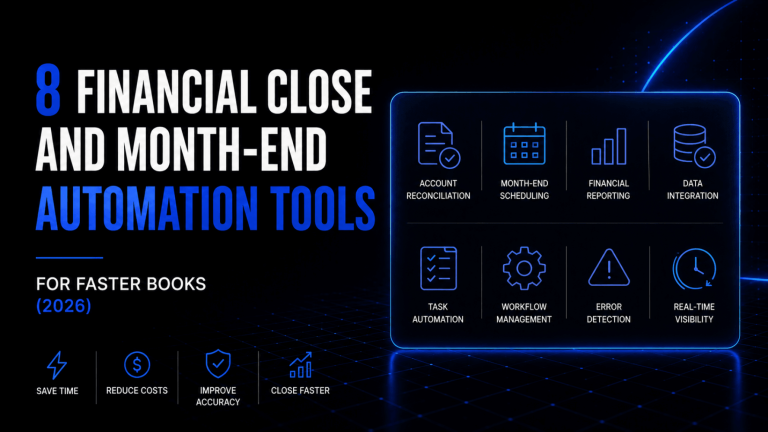
Finance teams also running broader evaluations of their accounting operations stack, including FP&A and reconciliation tooling, will find relevant context in our overview of financial close and month-end automation tools and our evaluation of FP&A tools that replace spreadsheet forecasting.