
TLDR
- Lithic is developer-friendly, but its BIN sponsorship model and pricing structure make it a poor fit for platforms that need direct card network relationships or enterprise-grade program management.
- Stripe Issuing, Highnote, and Marqeta each offer meaningfully different program models, not just different interfaces to the same infrastructure.
- The right alternative depends on whether you need virtual-only cards, physical cards, consumer credit programs, or commercial spend controls, since these requirements push you toward entirely different vendors.
- Several providers on this list, including Highnote and Marqeta, offer configurable BIN sponsorship and program management that Lithic does not expose at the same layer of control.
- Pricing across all card issuing APIs is largely custom and not publicly disclosed. Any vendor that quotes you interchange share terms without understanding your volume should be a red flag.
The main Lithic alternatives for card issuing APIs are Stripe Issuing, Highnote, Marqeta, Galileo, Unit, Synctera, Extend, and i2c. Each operates a different BIN sponsorship and program management model. Stripe Issuing fits platforms already on the Stripe stack. Highnote and Marqeta offer more configurable program controls. Galileo and i2c serve enterprise card programs at scale. Unit and Synctera bundle issuing with broader banking-as-a-service. Extend targets commercial card extension without full issuing infrastructure.
Why Are Developers Looking for Lithic Alternatives?
Lithic built its reputation as the developer-first card issuing API, and that reputation is mostly deserved. The sandbox is clean, the documentation is thorough, and the API lets teams issue virtual and physical cards quickly without negotiating with a bank directly. For many early-stage products, it was the right starting point.
The complaints that push teams toward a Lithic replacement tend to cluster around three areas. First, program-level flexibility: Lithic manages its BIN sponsor relationship on behalf of clients, which limits how much teams can customize the cardholder agreement, spending controls at a network level, or interchange economics. Second, geographic scope: Lithic is primarily US-focused, and platforms expanding internationally hit a wall fast. Third, pricing at scale: interchange revenue share terms and per-card fees become meaningful negotiating points as volume grows, and some teams find Lithic less flexible on this than alternatives.
None of that makes Lithic a bad product. It makes it a product with a specific profile, and when your program outgrows that profile, you need a clear-eyed look at what comes next. For a broader view of where card issuing sits in the fintech infrastructure stack, the fintech infrastructure stack overview maps every layer from core banking to payments.
The FintechSpecs Issuing API Stack Test: Four Checks Before You Switch
Before evaluating any specific Lithic competitor, run your program through what we call the FintechSpecs Issuing API Stack Test. It is four questions that filter the field faster than any feature matrix.
1. BIN ownership or BIN access? Some platforms need to own or co-own the BIN range for brand, compliance, or revenue reasons. Others just need API access to issue cards under a sponsor’s BIN. These are fundamentally different infrastructure decisions with different vendor pools.
2. Consumer, commercial, or both? Consumer card programs require different regulatory treatment than commercial spend cards. Vendors that specialize in one often do the other poorly. Know which you are building before you talk to sales.
3. Virtual-only or physical cards? Virtual card issuance is table stakes for every vendor on this list. Physical card programs require card manufacturing relationships, fulfillment logistics, and in some cases different network certifications. If you need both, your shortlist shrinks.
4. What is your projected monthly card spend in 12 months? Below roughly $1 million per month, most platforms take whatever pricing they can get. Above that, interchange economics and sponsor bank fee structures matter enough to shape your vendor decision. Know your number before the first call.
Which Lithic Competitors Are Worth Evaluating?
1. Stripe Issuing
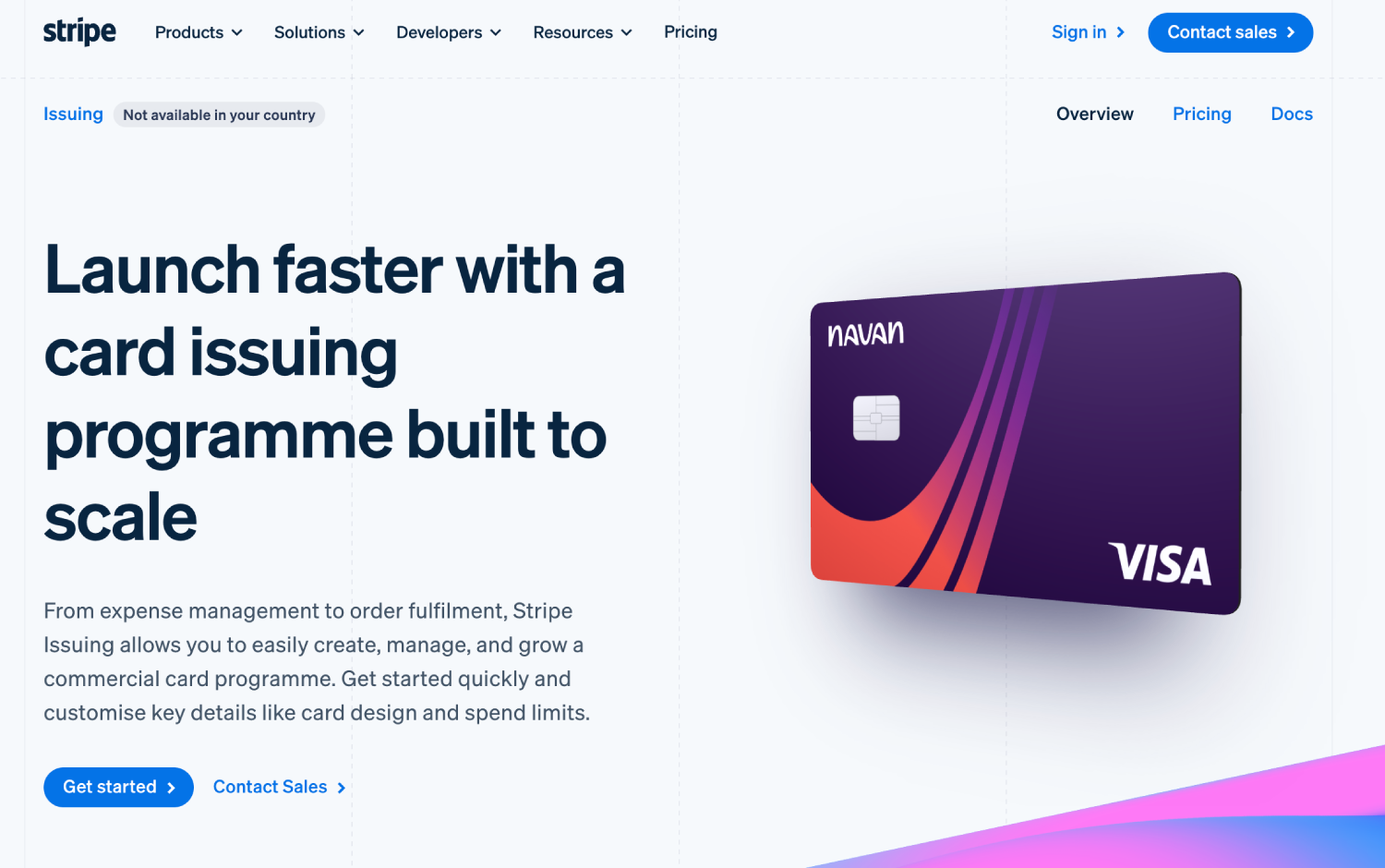
Stripe Issuing is the most obvious Lithic alternative for any platform already running payments, billing, or treasury on Stripe. The integration is native, card spend flows directly into the same financial data model as your other Stripe products, and the developer experience is consistent with what Stripe does everywhere.
The practical limits are real. Stripe Issuing is US and EU focused, it handles virtual and physical card issuance but leans heavily toward commercial spend cards for platforms (expense management, vendor payments, earned wage access), and the program controls are good but not enterprise-configurable in the way Marqeta or i2c are. Stripe does not publicly disclose issuing pricing as a standalone line item; it is embedded in platform agreements. If interchange revenue share is a core part of your business model, Stripe Issuing is not where you will get the most aggressive economics. For a direct three-way comparison, the Marqeta vs Lithic vs Stripe Issuing breakdown covers the program model differences in detail.
Best for: Platforms already on Stripe that need cards as an add-on, not as a primary revenue driver.
2. Highnote
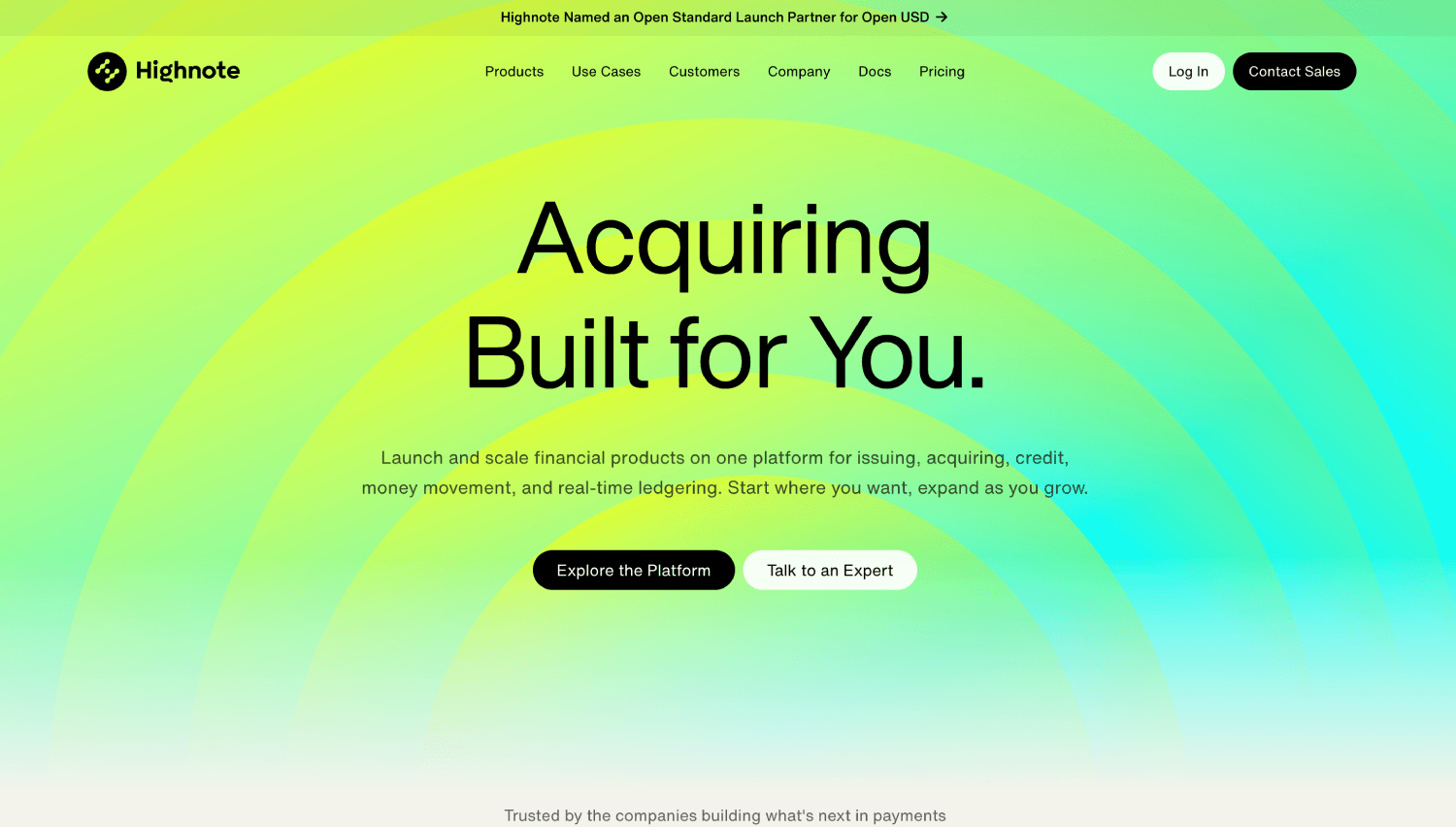
Highnote is the alternative that most directly targets Lithic’s developer audience while offering more program configurability. It was founded by former Braintree and PayPal executives and positions itself specifically at platforms building card programs where BIN sponsorship flexibility and interchange economics matter.
Highnote offers both consumer and commercial card issuing, physical and virtual cards, and a program management layer that exposes more controls than Lithic does at the API level. The company handles its own BIN sponsorship arrangements, which means you are still working through their sponsor bank, but the program terms Highnote negotiates tend to give clients more levers. Pricing is not publicly disclosed. This is a strong shortlist candidate for any team that liked Lithic’s developer experience but needs more commercial flexibility as the program scales.
Best for: Growth-stage platforms building consumer or commercial card programs that have outgrown Lithic’s program model.
3. Marqeta
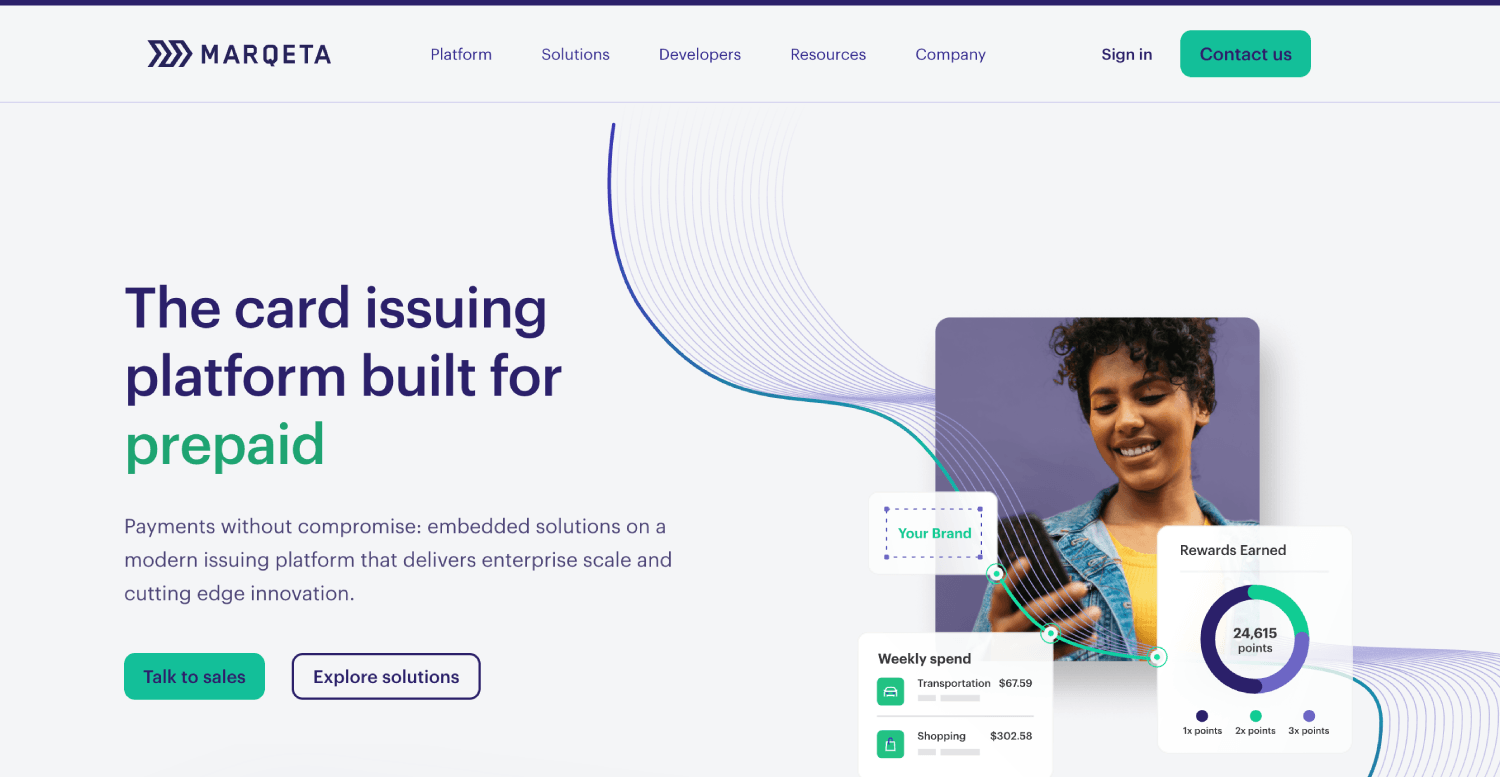
Marqeta is the enterprise-grade option on this list and the one with the longest track record at scale. Cash App, DoorDash, and Uber have all built card programs on Marqeta. The platform supports real-time transaction decisioning, which lets programs approve or decline individual transactions based on custom logic at the network level, something Lithic’s standard API does not offer at the same granularity.
The trade-off is complexity and cost. Marqeta is built for large-scale programs, and its pricing reflects that. Implementation timelines are longer, the integration is heavier, and the sales process is not geared toward seed-stage teams. If you are running a consumer fintech or gig economy product at meaningful volume and need transaction-level control, Marqeta earns its complexity premium. If you are pre-launch, it is too much infrastructure for where you are.
Best for: High-volume consumer or commercial card programs that need real-time transaction decisioning and can absorb enterprise implementation timelines.
4. Galileo Financial Technologies
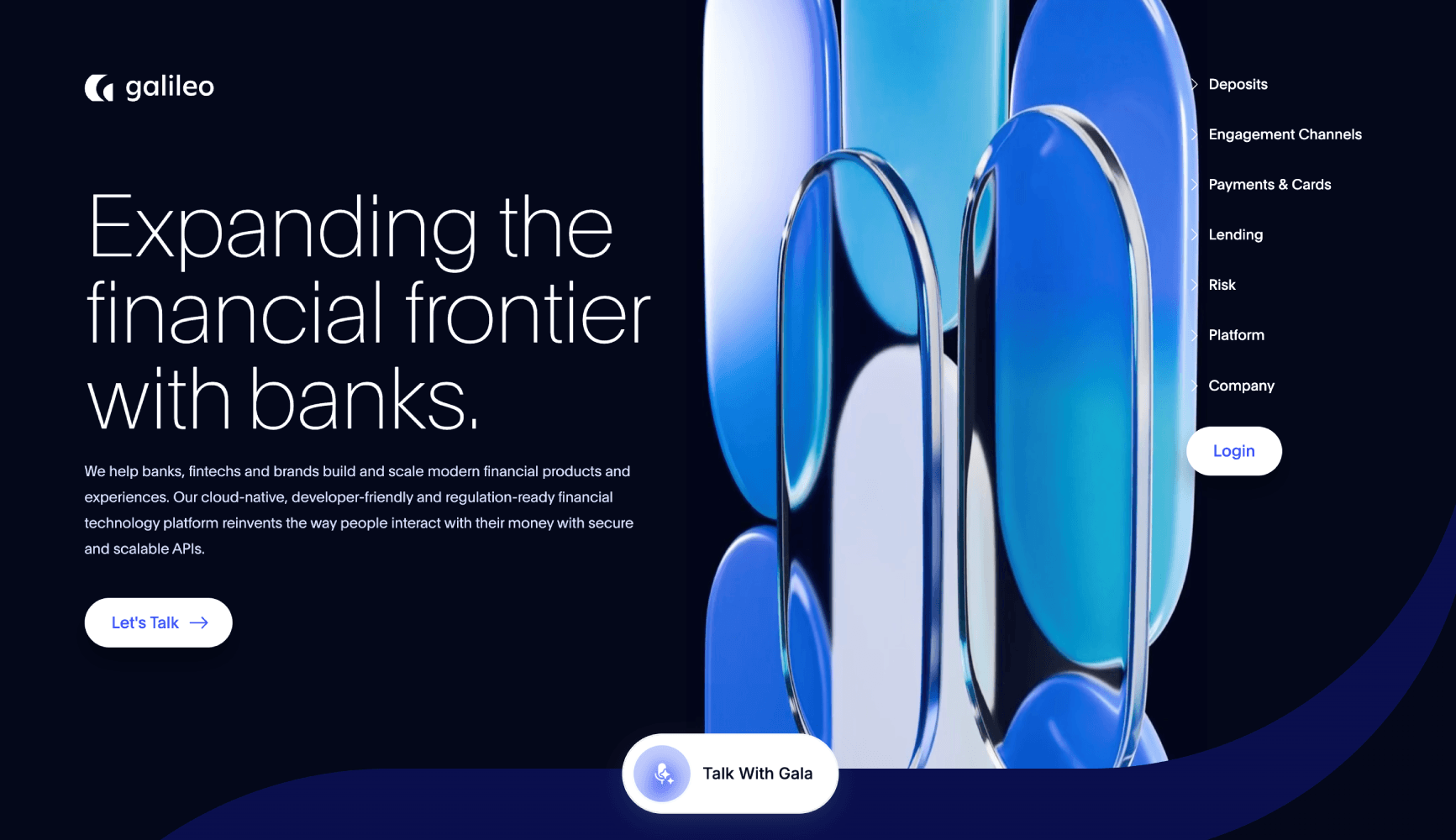
Galileo, now a subsidiary of SoFi, is one of the foundational card processing platforms in US fintech. SoFi, Chime, and Dave all built on Galileo early. The platform handles debit, credit, and prepaid card programs at significant scale, with deep ACH and real-time payment integration baked in.
Galileo is not a developer-first API in the Lithic sense. The integration is more involved, the documentation is less consumer-friendly, and the onboarding process is enterprise-oriented. For platforms that need battle-tested card processing infrastructure with proven scale history and deep sponsor bank relationships, Galileo is a serious option. For a team of four engineers who need to issue cards in six weeks, it is not the right path.
Best for: Established fintech programs needing proven infrastructure at scale, particularly debit and prepaid card products tied to deposit accounts.
5. Unit
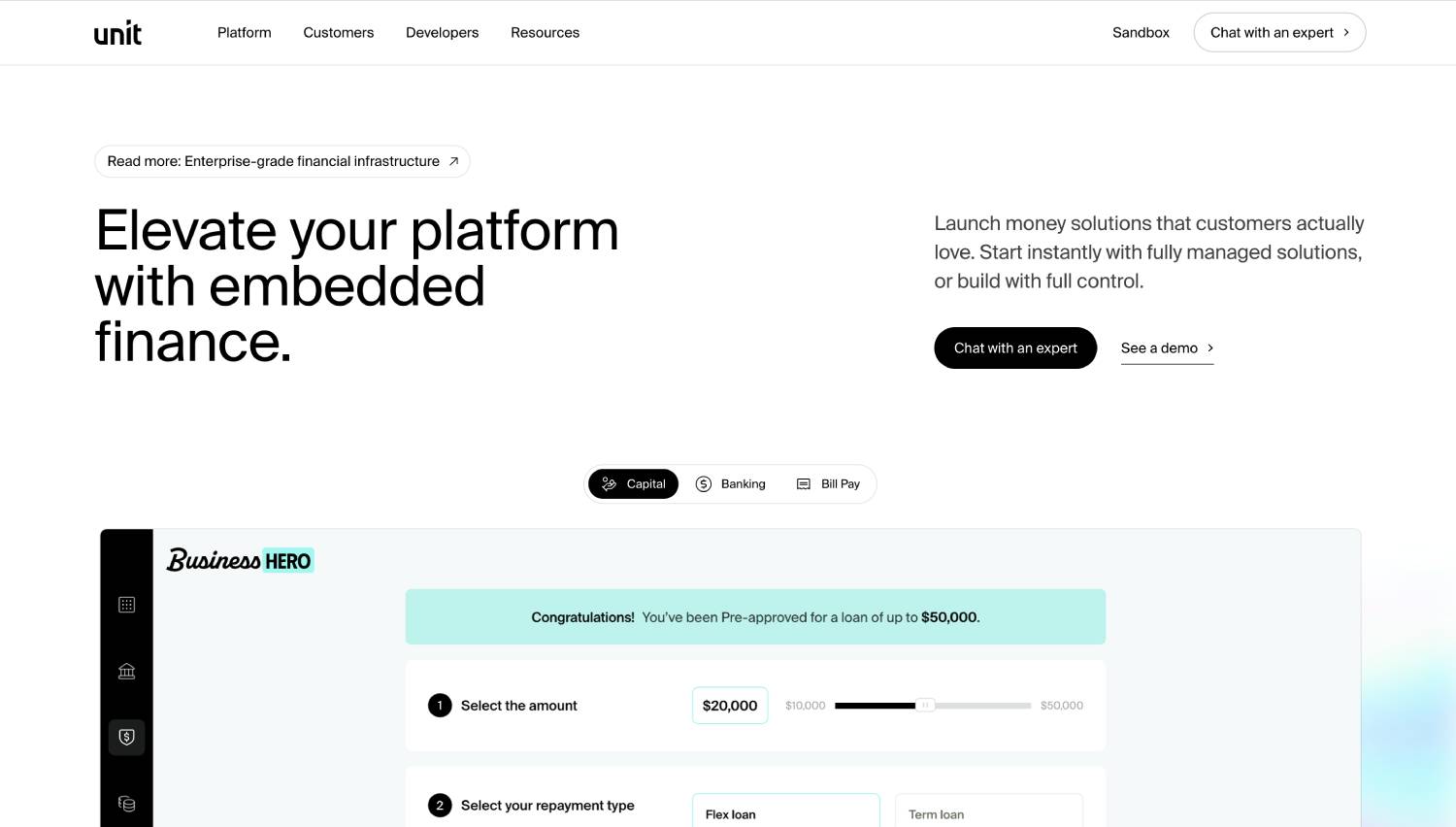
Unit takes a different approach to card issuing than Lithic. Rather than offering a pure card API, Unit bundles issuing with deposit accounts, ACH, wire transfers, and compliance infrastructure into a single banking-as-a-service layer. You get cards as part of a broader embedded banking product, not as a standalone issuing API.
That is either the perfect fit or the wrong fit depending on what you are building. If your product needs both a deposit account and a linked debit card for end users, Unit’s bundled model is significantly faster to launch than stitching together a BaaS provider and a separate card issuing API. If you only need cards, Unit is more than you need and you will pay for infrastructure you do not use. Unit’s pricing is not publicly disclosed. For a broader comparison of BaaS options, the best banking-as-a-service platforms guide covers Unit alongside its direct competitors.
Best for: Platforms building embedded banking products that need cards, accounts, and payments from one provider.
6. Synctera
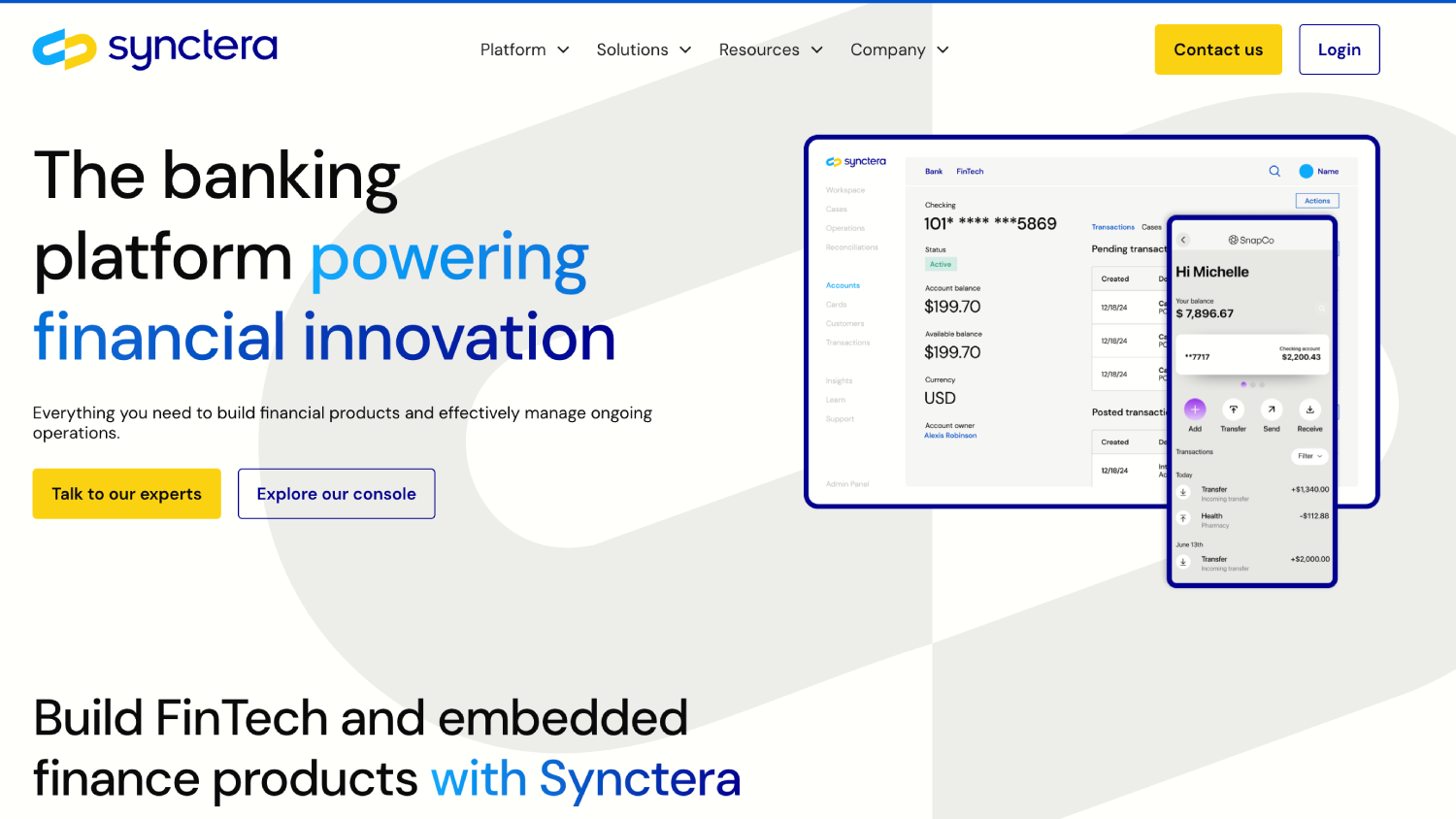
Synctera operates similarly to Unit in that it packages card issuing inside a broader BaaS offering, but its model explicitly connects fintech platforms with partner banks through a marketplace-style arrangement. You pick a sponsor bank from Synctera’s network, Synctera handles the middleware, and you build on top of their APIs.
This model gives platforms more direct visibility into the sponsor bank relationship than a pure middleware provider like Lithic. For compliance-sensitive programs or teams that want to understand and negotiate sponsor bank terms more directly, Synctera’s transparency is a meaningful differentiator. The trade-off is that the implementation requires genuine bank partnership work, and the go-live timelines reflect that. Pricing is not publicly disclosed. The Synctera vs Unit comparison breaks down the structural differences between these two BaaS approaches in detail.
Best for: Platforms that want more sponsor bank transparency and are willing to engage in a genuine bank partnership process.
7. Extend
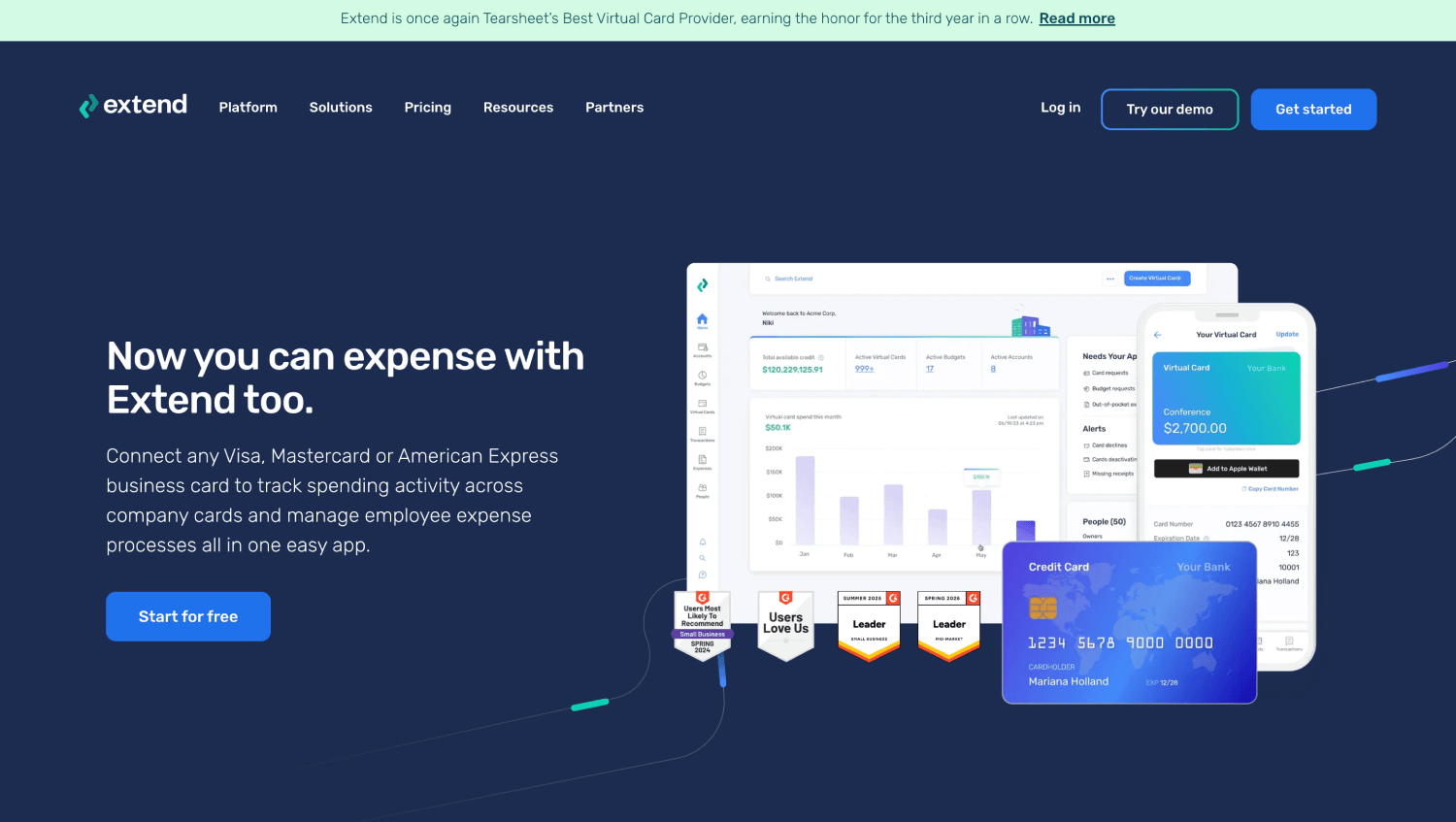
Extend is not a card issuing API in the traditional sense. It sits on top of existing commercial card infrastructure from banks like BBVA, First National Bank of Omaha, and others, and lets platforms create virtual cards from those existing commercial card programs without needing their own card issuing program at all.
This distinction matters. If your platform needs to issue virtual cards for vendor payments, travel, or expense management, and your company or your customers already have commercial card relationships, Extend can get you to market faster than any other option on this list because there is no new bank sponsorship to negotiate. The limits are real: you are dependent on the underlying commercial card network, you do not own the program economics, and consumer card issuance is not in scope. For accounts payable use cases specifically, the virtual card issuing APIs for AP and procurement guide covers Extend alongside purpose-built alternatives.
Best for: Platforms targeting commercial virtual card use cases that want fast time-to-market without full card program infrastructure.
8. i2c Inc.
i2c is the most configurable card program platform on this list and also the most complex to implement. The company processes hundreds of billions in card volume annually across prepaid, debit, credit, and commercial card programs globally. It supports both Visa and Mastercard issuance across dozens of countries, making it one of the few options with genuine international scale.
i2c is not a startup-friendly option. The implementation is enterprise-grade, the sales process is long, and the platform’s flexibility comes with significant configuration work. Teams building global credit card programs, particularly consumer credit products that need international card network support and regulatory coverage across multiple jurisdictions, should evaluate i2c seriously. Everyone else should start elsewhere on this list. Pricing is not publicly disclosed and is negotiated based on program volume and structure.
Best for: Enterprise or near-enterprise teams building global card programs, particularly credit products, at significant volume.
How Do These Eight Platforms Compare Across Key Dimensions?
| Platform | Card Types | Consumer or Commercial | Developer-First | BaaS Bundled | International | Best Stage |
|---|---|---|---|---|---|---|
| Stripe Issuing | Virtual, Physical | Primarily Commercial | Yes | Partial (via Stripe Treasury) | US, EU | Seed to Series B |
| Highnote | Virtual, Physical | Both | Yes | No | US | Series A to Series C |
| Marqeta | Virtual, Physical | Both | Partial | No | US, UK, EU, AU | Series B and above |
| Galileo | Virtual, Physical | Both | No | Partial | US, Latin America | Established programs |
| Unit | Virtual, Physical (Debit) | Both | Yes | Yes | US | Seed to Series B |
| Synctera | Virtual, Physical (Debit) | Both | Partial | Yes | US | Seed to Series B |
| Extend | Virtual Only | Commercial Only | Yes | No | Limited | Seed to Series A |
| i2c | Virtual, Physical | Both | No | No | Global | Enterprise |
What Should You Prioritize When Evaluating a Lithic Replacement?
The single biggest evaluation mistake teams make when switching card issuing APIs is optimizing for developer experience when they should be optimizing for program economics. At low volume, the developer experience matters most because speed to launch determines whether you have a product at all. At higher volume, interchange share, sponsor bank fee structures, and program-level controls determine whether the product is profitable.
Consider a hypothetical: a Series A expense management platform processing $5 million per month in card spend at a 1.5% average interchange rate generates roughly $75,000 per month in gross interchange revenue. How much of that the platform keeps depends entirely on its sponsor bank arrangement and what the issuing API provider takes as its cut. A difference of 20 basis points in interchange share at that volume is $10,000 per month. At $20 million per month, it is $40,000 per month. This is why teams that chose Lithic at $500,000 in monthly spend often revisit the decision at $5 million.
Compliance overhead is the other underweighted factor. Card programs carry cardholder agreement obligations, Regulation E error resolution requirements, and in the case of credit products, Truth in Lending Act disclosures. Some vendors bundle compliance infrastructure; others leave it to you. For early-stage teams, the compliance gap between what an API provides and what a card program legally requires is one of the more expensive surprises in fintech infrastructure. The fintech product and compliance readiness checklist is worth running through before you sign any issuing infrastructure contract.
Does Lithic’s Developer Experience Actually Outperform Its Competitors?
Lithic’s developer experience is genuinely good, particularly the sandbox environment and the speed at which a team can go from API key to test card transactions. The honest answer, though, is that the gap between Lithic and its top competitors has narrowed considerably. Stripe Issuing’s developer experience is at minimum comparable for teams already familiar with Stripe’s API patterns. Highnote was built by people who understood Lithic’s market positioning and designed their developer tooling accordingly. Unit’s documentation and sandbox are strong for a bundled BaaS product.
Where Lithic still leads is in the specificity of its card-issuing-focused documentation. It is a product built entirely around cards, so the edge cases, the spend control documentation, and the dispute management APIs are more thoroughly covered than in platforms where cards are one of several products. For teams that need to get deep into card program mechanics quickly, that documentation depth is a real advantage.
Frequently Asked Questions
What is the main difference between Lithic and Stripe Issuing?
Lithic is a card-issuing-only platform with more specialized card program documentation and spending control APIs. Stripe Issuing is part of Stripe’s broader financial infrastructure suite, which means easier integration for platforms already on Stripe but less card-program specificity. Lithic gives you more granular card mechanics. Stripe gives you a unified financial data model across payments, treasury, and cards. The right choice depends on whether cards are your primary product or one component of a broader financial product.
Can you switch from Lithic to another card issuing API without reissuing cards?
In most cases, no. Switching card issuing processors means moving to a new BIN range and sponsor bank, which requires reissuing physical cards to cardholders. Virtual cards can be migrated more cleanly since there is no physical card to replace, but cardholders will receive new card numbers. This migration friction is real and should be factored into your switching cost analysis. Plan for a parallel-run period where both old and new programs operate simultaneously.
Which Lithic alternative is best for consumer credit card programs?
Highnote and i2c are the strongest options for consumer credit card programs. Marqeta handles consumer card programs at scale but is more commonly associated with debit and prepaid products. Stripe Issuing and Unit lean toward commercial spend cards rather than consumer credit. i2c is better suited for large-scale or international consumer credit programs. Highnote is a stronger fit for growth-stage consumer credit products that need developer-accessible APIs and BIN program flexibility without enterprise implementation timelines.
What does BIN sponsorship mean in the context of card issuing APIs?
A BIN (Bank Identification Number) identifies the issuing bank on every card. Because card network rules require a licensed bank to sponsor each BIN range, fintech platforms that issue cards need a sponsor bank relationship either directly or through a middleware provider. Lithic, Highnote, Unit, and Synctera all manage sponsor bank relationships on behalf of clients. Marqeta and i2c also have sponsor bank arrangements but give enterprise clients more program-level control over those relationships. Owning or co-owning a BIN is a different and significantly more complex undertaking that requires direct bank partnership.
Is there a Lithic alternative that works internationally?
Marqeta is the strongest option for multi-region card programs, covering US, UK, EU, and Australia. i2c supports a broader set of countries and is the leading option for truly global consumer credit programs. Galileo has strength in Latin American markets. Stripe Issuing covers US and EU. Highnote, Unit, Synctera, and Extend are primarily US-focused. If international card issuance is a near-term requirement, Marqeta or i2c are the realistic options on this list.
How does interchange revenue sharing work with card issuing APIs?
When a cardholder makes a purchase, the card network pays interchange to the issuing bank. The issuing bank, card processor, and in some cases the platform split that interchange according to their contractual arrangements. Platforms using Lithic or most alternatives on this list receive a share of interchange as part of their program economics, with the specific split negotiated based on volume, program type, and card network category. No vendor on this list publicly discloses their standard interchange share terms. Higher volume and cleaner program structures generally produce better economics.
The Decision Most Teams Get Wrong
Most teams evaluating Lithic alternatives spend their evaluation time on API documentation quality and sandbox experience when the more consequential evaluation is on sponsor bank terms, program compliance obligations, and interchange economics. Developer experience gets you to launch. Program economics determine whether the launch was worth it.
The practical implication is that the right sequencing is to run the FintechSpecs Issuing API Stack Test first, eliminate vendors that do not match your program type, and then do the developer evaluation on the two or three that remain. Doing it the other way around means you pick the platform with the best docs and discover 18 months later that the economics do not work at your volume.
For platforms that are still designing their embedded banking architecture rather than just the card layer, the best embedded finance APIs guide covers how card issuing fits into broader embedded product decisions. The card issuing choice rarely lives in isolation, and the vendor that wins your card program should fit the broader infrastructure decisions you have already made or are about to make.