
- Single-use virtual cards with per-card spend controls block AP fraud at the authorization layer, before a dollar leaves the account.
- The right API depends on whether you need raw card issuing infrastructure, a pre-built AP workflow, or rebate sharing baked into the program.
- Most expense card APIs are not designed for AP use cases: they lack vendor-locked card numbers, PO-level matching, and ERP sync out of the box.
- Interchange rebate programs on virtual AP cards can return meaningful cash on supplier spend, but only if your card program runs on a commercial credit network, not debit rails.
- The biggest integration mistake in AP virtual cards is conflating the card issuing layer with the payment workflow layer. They are separate decisions.
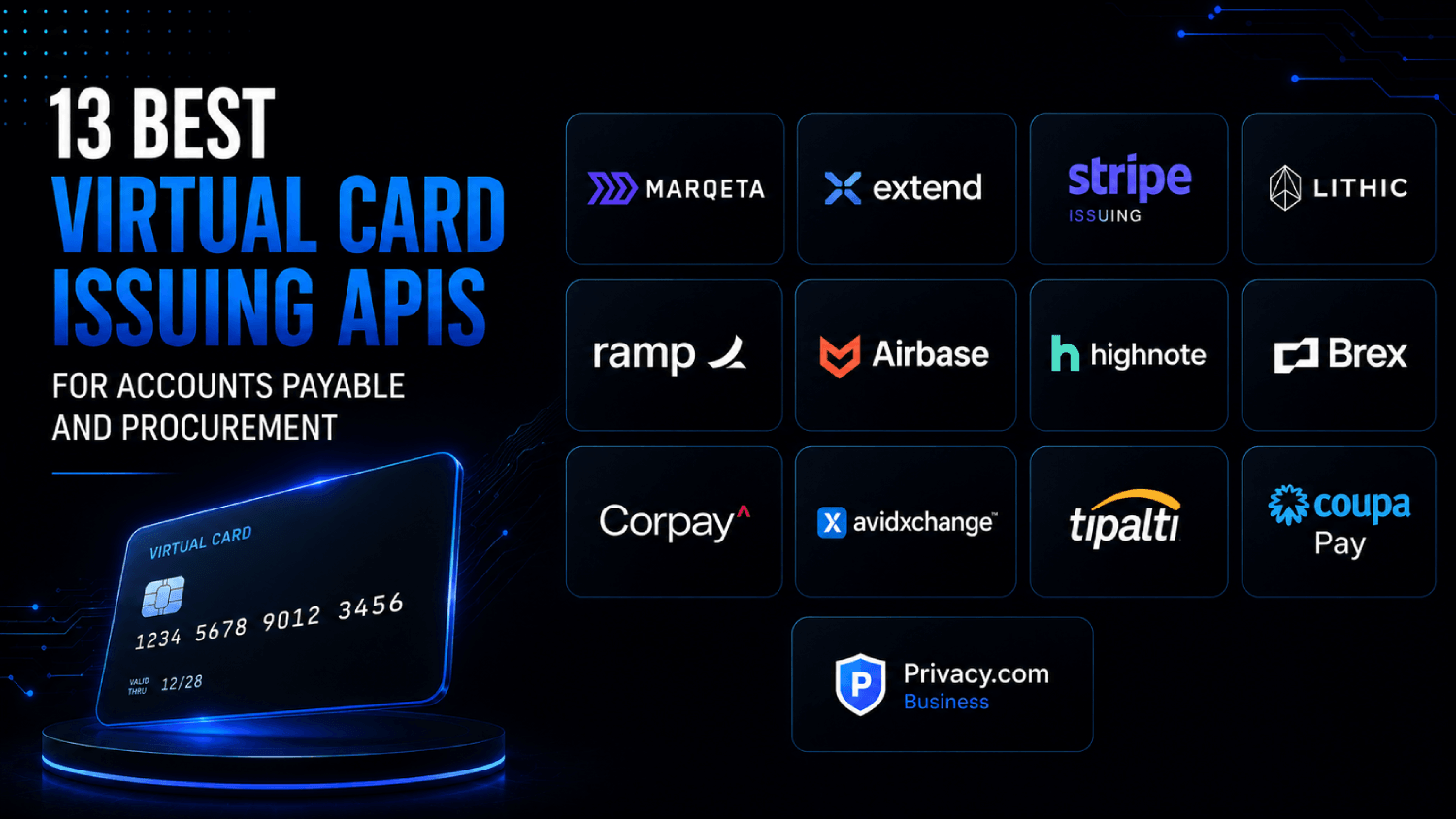
The best virtual card APIs for accounts payable combine single-use card generation, vendor-locked spend controls, and ERP or AP platform integration. Marqeta, Extend, and Stripe Issuing lead for raw API flexibility. Ramp and Airbase lead for teams that want a pre-built AP workflow with virtual cards included. For pure procurement card infrastructure, Lithic and Highnote offer the most control at the issuing layer without forcing you into a managed spend product.
Why AP Virtual Cards Are Different From Expense Cards
Most finance teams encounter virtual cards through an employee expense product: Ramp, Brex, or Airbase issues a card to a person, that person buys software or travel, and the transaction flows into an expense report. That is a person-centric workflow. AP is a vendor-centric workflow, and the difference matters more than it sounds.
In accounts payable, the card is issued to pay a specific invoice from a specific vendor at a specific amount. The card number may be shared with the vendor directly, or used by an AP system to push payment programmatically. The card should expire after one transaction, be locked to a single merchant, and carry a spend limit equal to the invoice total. None of those behaviors are defaults in an expense card API.
Procurement card programs add another layer. A p-card is a purchasing card issued to buyers so they can buy goods or services directly, typically under an established credit limit by category. The controls are different again: category-level MCC restrictions, per-transaction limits, and sometimes ERP punch-out integration so card spend ties to a PO before the card is even charged. If you are building or buying an AP virtual card API, you need to know which of these three patterns you are solving for.
For a broader look at how card issuing infrastructure works across product types, the FintechSpecs comparison of Marqeta vs Lithic vs Stripe Issuing covers the platform-level trade-offs in detail.
The FintechSpecs AP Card API Evaluation Matrix
Before getting into individual products, it helps to have a shared vocabulary for what actually matters in this buying decision. Most vendor comparison pages rank on API uptime and documentation quality. Those matter, but they are table stakes. The decision points that actually separate AP virtual card APIs are:
Card lifecycle control means whether you can programmatically create, fund, lock, and expire individual card numbers via API, with per-card spend limits and optional merchant locking. AP workflow depth refers to whether the platform includes invoice ingestion, PO matching, or ERP sync, or whether it expects you to bring those workflows yourself. Rebate structure covers whether the platform shares interchange income with you, at what rate, and whether it requires a minimum spend volume. Spend control granularity is the range of restrictions you can apply: MCC blocking, single-merchant locking, transaction count limits, velocity rules, and time-bounded validity.
Buying teams that skip this framework tend to select on API documentation quality and end up rebuilding the AP workflow from scratch because the card issuing API had no concept of an invoice. Do not conflate the two layers.
Which Providers Offer the Best Virtual Card API for AP?
1. Marqeta
Marqeta is the reference implementation for programmatic card issuing. Its Just-in-Time (JIT) funding model is particularly well-suited to AP: card funds are only moved from your account at the moment of transaction authorization, which means you carry no pre-funded float risk. Each virtual card can have a spend limit, merchant identifier lock, and expiration window set at creation.
Marqeta’s API is REST-based and developer-friendly, with webhooks for real-time transaction events. The trade-off is that Marqeta is infrastructure, not a product. You build the AP workflow on top of it, and that requires engineering resources and a sponsor bank relationship unless you go through a managed program. Pricing is not publicly listed; expect custom commercial terms based on volume.
2. Extend
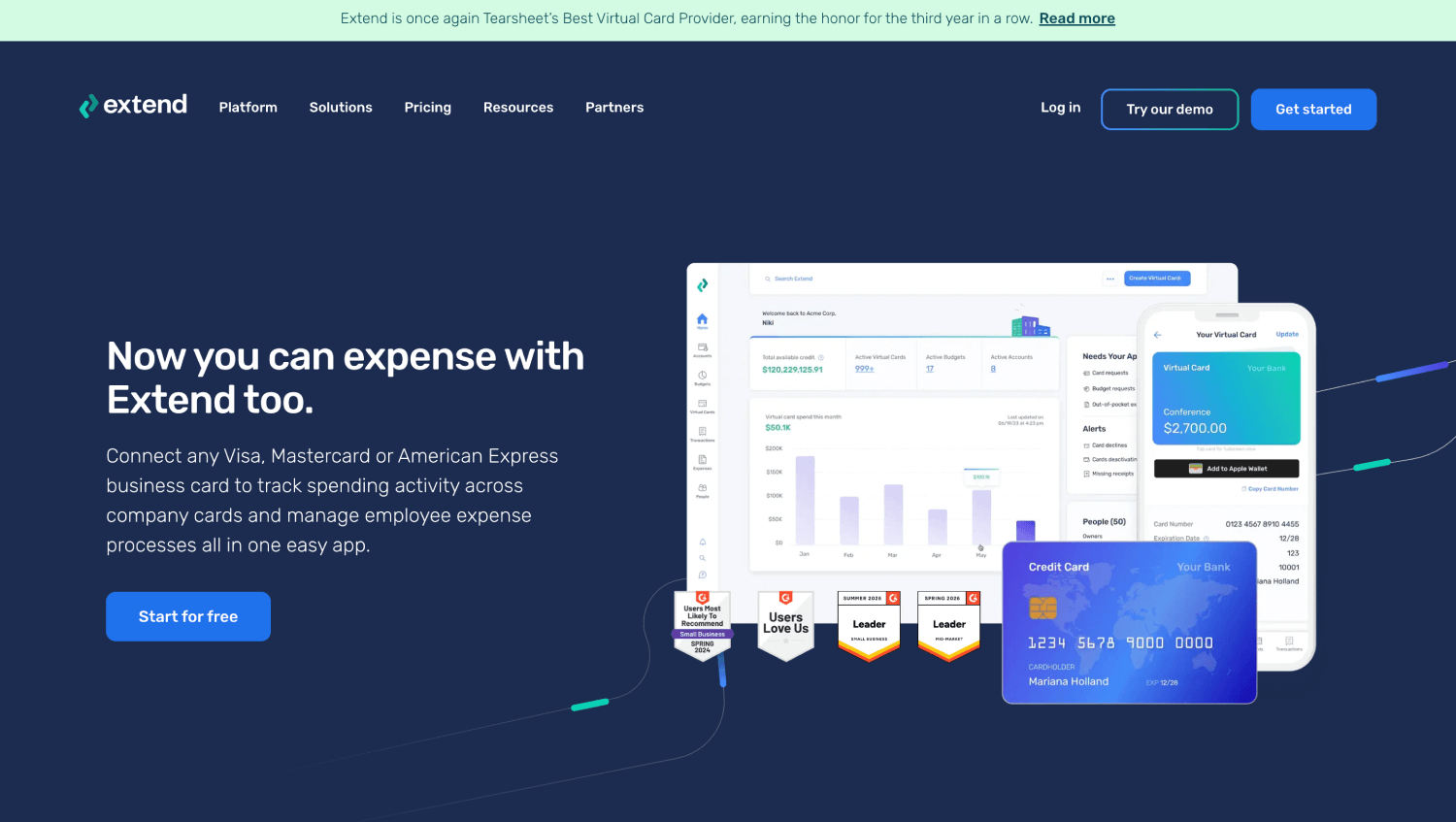
Extend positions itself specifically as a virtual card API for AP and procurement use cases. Rather than building new card issuing infrastructure, Extend works with existing commercial card programs from banks like Wells Fargo, Citibank, and HSBC. You send virtual cards from cards you already have, which means your existing rebate relationship with your bank stays intact.
The practical implication: if your company already earns cashback or rebate points on a commercial Visa or Mastercard, Extend preserves that. The API supports single-use card creation, spend controls, and recipient-level card sharing. AP teams can push virtual card numbers directly to vendors without the vendor needing to onboard to a new platform. According to Extend’s public documentation, the platform integrates with NetSuite, QuickBooks Online, and several AP automation tools.
3. Stripe Issuing
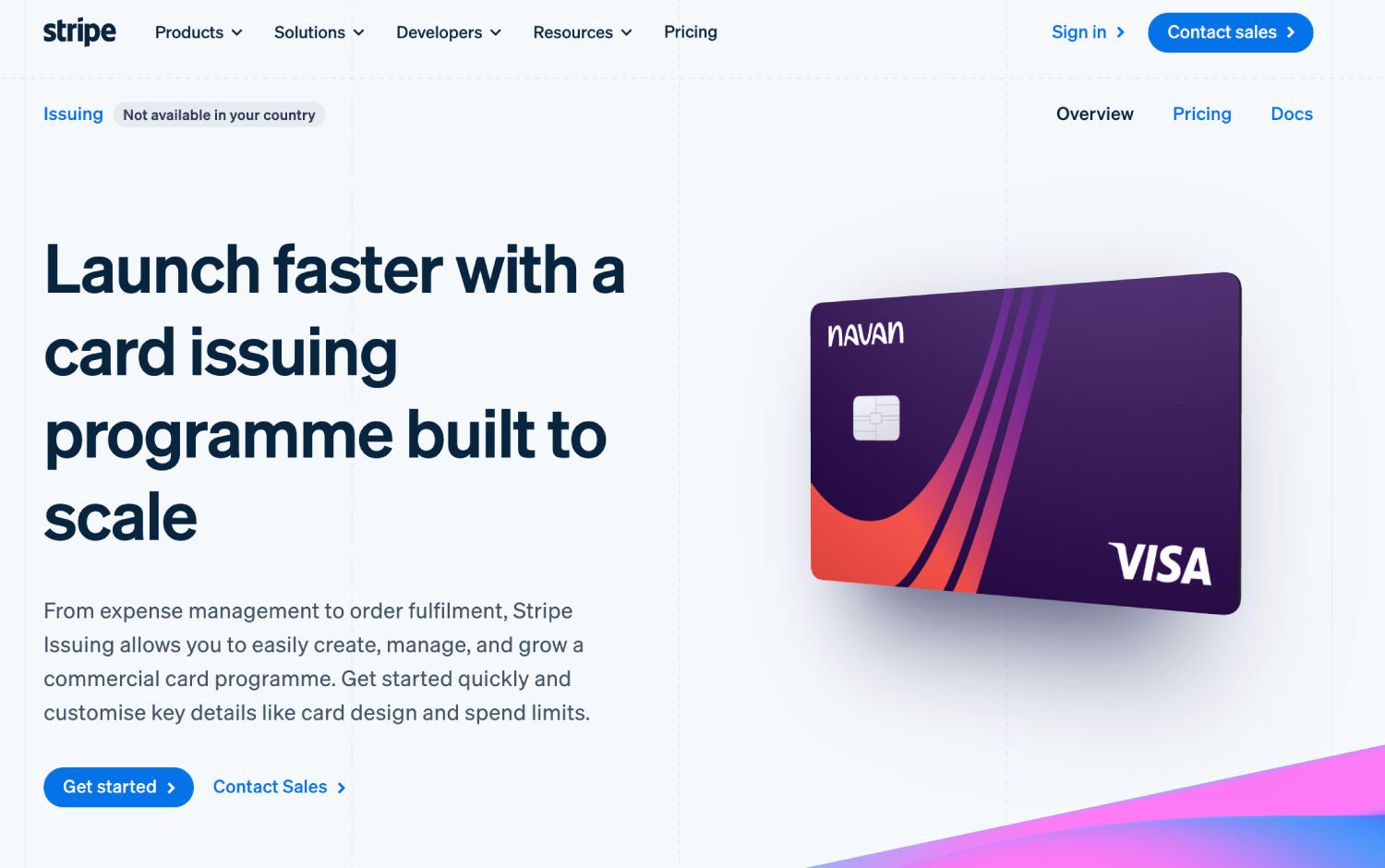
Stripe Issuing is the cleanest API in this list from a developer experience standpoint. Card creation is a single API call, spend controls are applied as structured JSON parameters, and transaction data flows into the same Stripe dashboard your team may already use for payments. For companies already on Stripe’s payments stack, the integration overhead is minimal.
The AP-specific limitation is that Stripe Issuing does not provide invoice management, PO matching, or vendor payment workflows natively. It is a card rails API. Teams building an internal AP tool or embedding cards into a procurement product will find it excellent. Teams looking for a turnkey AP automation platform with virtual cards will need to combine it with something else. Stripe Issuing is available in the US, EU, and UK, with pricing published on their public pricing page.
4. Lithic
Lithic offers a card issuing API with fine-grained spend controls and a developer-first architecture. Where it stands out for AP use cases is merchant control: you can lock a virtual card to a specific MCC code, a specific merchant descriptor, or both. That level of restriction is useful when you are issuing cards for vendor payments where the merchant identity is known in advance.
Lithic also offers a sandbox that mirrors production behavior closely, which reduces the integration testing cycle. The platform does not bundle AP workflow tooling; it is issuing infrastructure. Pricing is available on request, and Lithic has published documentation showing support for both single-use and recurring virtual card configurations.
5. Ramp
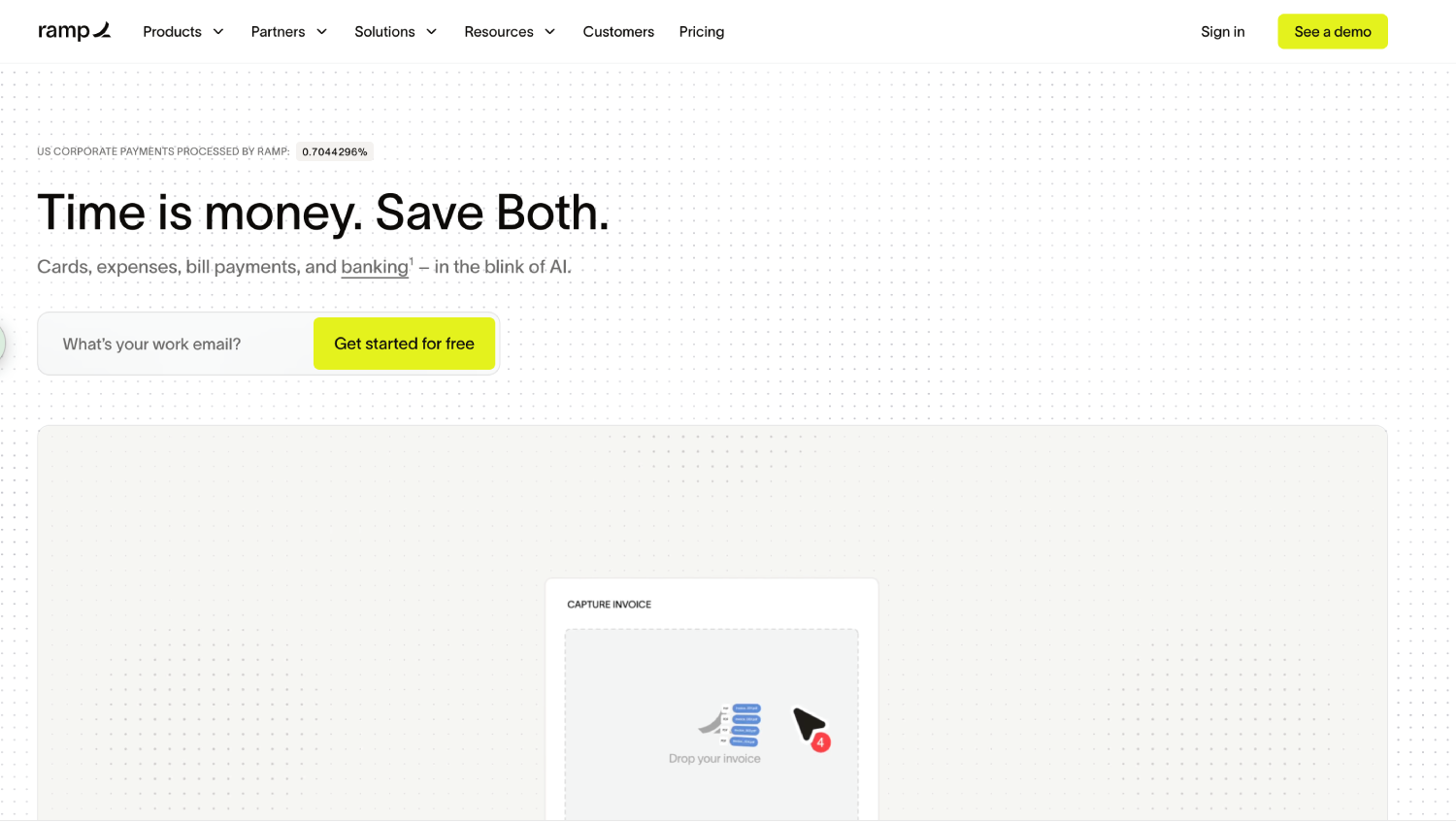
Ramp includes a virtual card program where, according to their public documentation, the platform handles both issuance and policy enforcement. Their AP-specific use case is vendor direct pay: Ramp can issue a single-use virtual card tied to a specific vendor payment, push it through the network, and reconcile back to the invoice. The Ramp API exposes card creation and transaction data for teams building custom integrations.
The key difference from pure infrastructure plays is that Ramp is an all-in-one spend management platform, not just an issuing API. You get corporate cards, expense management, AP automation, and reporting in one product. For a team that wants to replace a fragmented AP stack rather than build on top of issuing infrastructure, Ramp is the faster path. The FintechSpecs comparison of Ramp vs Brex vs Airbase covers how the spend platforms compare on features and pricing.
6. Airbase
Airbase (now part of Paylocity) is designed for the mid-market finance team that wants guided AP approvals, vendor payments, and virtual card issuance under one roof. Virtual cards in Airbase can be created at the purchase request stage, before a vendor is ever paid, which creates a clean pre-authorization approval workflow. That is different from issuing a card after an invoice arrives.
The procurement workflow integration is notable: Airbase connects budget owners, finance approvers, and the payment itself in a single UI without requiring a separate procurement tool. The trade-off is that Airbase’s API surface is narrower than a pure infrastructure provider. If you want to embed card creation into a custom internal tool, Marqeta or Lithic will give you more control. If your goal is to give a finance team of 3-10 people a better AP process, Airbase is the stronger option.
7. Highnote

Highnote is a card issuing platform built for product teams embedding financial services. Its virtual card API supports both commercial and consumer programs, and the spend control model is particularly flexible: you can define authorization rules at the card level, cardholder level, or program level. For a B2B platform building embedded procurement cards into a vertical SaaS product, Highnote is worth evaluating alongside Marqeta and Lithic.
Highnote provides BIN sponsorship and card network access as part of its platform, which reduces the overhead of managing sponsor bank relationships separately. Pricing is not publicly listed. The platform targets product builders, not finance teams, so it requires more technical lift than a turnkey AP tool.
8. Brex
Brex includes virtual card creation as part of its corporate spend platform, with spend policies configurable at the card, team, or merchant level. For AP, Brex’s vendor cards feature allows finance teams to issue a single-use card number tied to a specific vendor and invoice amount. The Brex API exposes card management and transaction data for teams with custom integration needs.
Brex’s recent focus on enterprise and global teams means the product has matured significantly in approval workflows and multi-entity support. The limitation for pure AP use cases is similar to Ramp: Brex is a spend management platform with AP features, not an AP automation tool with cards attached. Teams that primarily want check replacement and vendor payment automation may find a more targeted tool more efficient.
9. Corpay (formerly FLEETCOR)
Corpay operates one of the largest commercial card and virtual payment programs in the US. Their AP virtual card product, often marketed under the Corpay One or virtual payables brand, is specifically designed to replace check payments with virtual card numbers that carry single-use authorization limits. The rebate structure is a primary selling point for large AP volumes.
The integration model is less API-forward than Marqeta or Stripe. Corpay typically works through direct integrations with ERP platforms like Oracle, SAP, and Coupa, rather than exposing a developer-first REST API. For a large enterprise with an established ERP and a high check-to-card conversion objective, Corpay’s program economics and network relationships are compelling. For a startup building a new product, the integration path is more cumbersome.
10. AvidXchange
AvidXchange focuses specifically on AP automation for the mid-market, and virtual card payment is one of several disbursement rails the platform supports alongside ACH and check. The virtual card component is vendor-facing: AvidXchange presents payment options to suppliers and routes to virtual card when the supplier accepts, generating rebate for the buyer.
The API layer is designed for ERP integration rather than direct card program access. AvidXchange connects natively to platforms like MRI Software, Sage Intacct, and Microsoft Dynamics. If your AP runs on one of those ERPs and you want card-based payment without rebuilding the payment workflow, AvidXchange handles the supplier enrollment and payment routing so you do not have to.
11. Tipalti
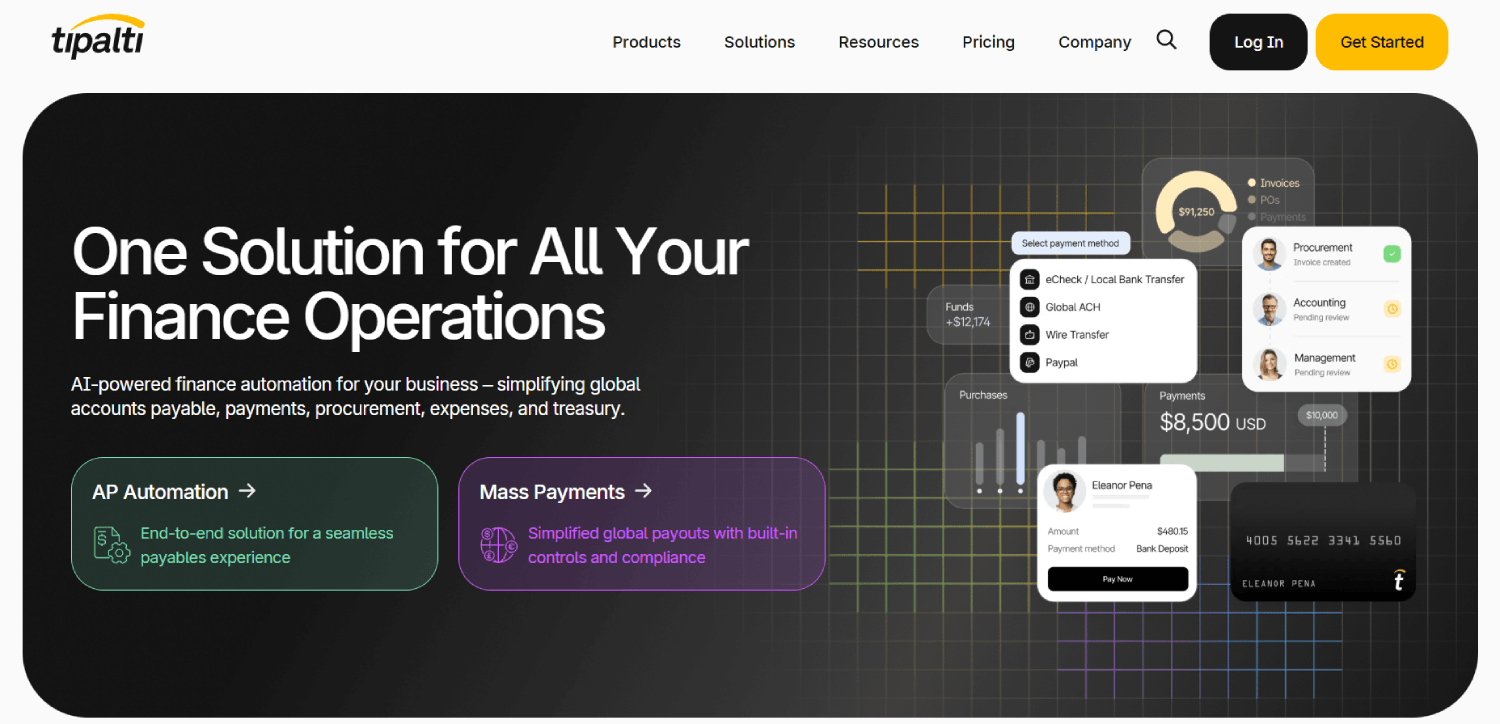
Tipalti is an AP automation platform that includes virtual card as a payment method alongside wire, ACH, and PayPal. The supplier self-service portal handles payment method selection, which means your team does not need to manually enroll vendors into a card program. Tipalti’s API supports invoice ingestion, approval routing, and payment execution, though the card issuing layer is managed by Tipalti rather than exposed for custom configuration.
For a global AP team, Tipalti’s multi-currency and cross-border capabilities are a significant advantage over US-only card programs. The trade-off is less granular control over card-specific spend parameters compared to building on Marqeta or Lithic. The FintechSpecs comparison of Bill.com vs Tipalti covers where each platform fits by team size and complexity.
12. Coupa Pay

Coupa Pay is the payment layer inside the Coupa procurement platform. For enterprises already using Coupa for sourcing, contracts, and purchasing, Coupa Pay adds virtual card disbursement directly from within the procurement workflow. Cards can be issued against approved POs, which creates a clean three-way match before payment is executed.
This is the procurement card integration that most enterprise finance teams imagine when they search for a procurement card API. The reality is that Coupa Pay is a feature of a large procurement suite, not a standalone issuing API. Smaller companies not already in Coupa’s procurement platform will find the onboarding and pricing disproportionate to the card program benefit.
13. Privacy.com for Business
Privacy.com for Business is the most accessible entry point for single-use virtual card creation, particularly for smaller teams and early-stage companies. The platform allows users to create virtual card numbers with custom spend limits and merchant locks, and the API exposes card creation and management for teams building light automation on top of it.
Privacy does not offer a commercial rebate program the way enterprise AP card platforms do, and the card limits and program scale are designed for small business use rather than high-volume AP. But for a company processing under a few hundred vendor payments per month that needs single-use card controls without enterprise procurement infrastructure, Privacy’s API is a legitimate and fast-to-implement option.
Spend Controls Comparison: What Each AP Virtual Card API Actually Lets You Enforce
| Provider | Single-Use Cards | Merchant Lock | MCC Restriction | PO Matching | ERP Integration | Interchange Rebate |
|---|---|---|---|---|---|---|
| Marqeta | Yes | Yes | Yes | Build yourself | Build yourself | Negotiated |
| Extend | Yes | Yes | Yes | Partial | NetSuite, QBO | Preserves existing bank rebate |
| Stripe Issuing | Yes | Yes | Yes | Build yourself | Build yourself | Not disclosed |
| Lithic | Yes | Yes | Yes | Build yourself | Build yourself | Negotiated |
| Ramp | Yes | Yes | Yes | Yes | NetSuite, Sage, QBO, others | Yes (1.5% on some programs) |
| Airbase | Yes | Yes | Yes | Yes | NetSuite, Sage Intacct | Yes |
| Highnote | Yes | Yes | Yes | Build yourself | Build yourself | Negotiated |
| Brex | Yes | Yes | Yes | Partial | NetSuite, Xero, QBO | Yes |
| Corpay | Yes | Yes | Limited via program | Via ERP | Oracle, SAP, Coupa | Yes (volume-based) |
| AvidXchange | Yes | Partial | Limited | Via ERP | Sage Intacct, MRI, Dynamics | Yes |
| Tipalti | Yes | Partial | Limited | Partial | NetSuite, Xero, QBO, SAP | Not disclosed |
| Coupa Pay | Yes | Yes | Via program | Yes | Native to Coupa | Negotiated |
| Privacy.com Business | Yes | Yes | Limited | No | Limited | No |
Table notes: “Negotiated” means the provider offers rebate or revenue share but does not publish rates publicly , terms depend on program volume and are confirmed during contract discussions. “Yes” in the Interchange Rebate column means the provider publicly confirms rebate sharing as part of the standard program. “Not disclosed” means the provider has not publicly confirmed whether rebate sharing is available. “Build yourself” under PO Matching or ERP Integration means the API exposes the data needed to build those connections but provides no native workflow or connector.
How to Match the Right Virtual Card API to Your AP Setup
The buying decision splits cleanly along two axes: build vs. buy, and infrastructure scale. Here is how to read that matrix for your situation.
If your team has engineering capacity and wants to embed virtual card payments into a custom internal tool or a vertical SaaS product, start with Marqeta, Lithic, or Stripe Issuing. All three offer clean REST APIs, flexible spend control parameters, and sandbox environments. Marqeta wins if JIT funding matters and you need advanced authorization controls. Lithic wins if you want simpler commercial terms and faster onboarding. Stripe wins if you are already on the Stripe stack and want to minimize vendor count.
If your finance team wants a working AP product rather than infrastructure to build on, Ramp, Airbase, or Tipalti are the right starting point. The API exposure in those products is for integrations and custom reporting, not for building a card program from scratch. For teams with under 500 monthly vendor payments and an existing ERP, Airbase or Ramp will reach production faster than any infrastructure-first approach.
If you are a larger company with an established ERP and a goal of converting check payments to card to earn rebate, Corpay and AvidXchange serve that specific use case well. They are not developer-first APIs; they are payment network programs with ERP connectors. The distinction matters because the buying process, contracting, and implementation timeline are entirely different from a developer API evaluation.
Teams building embedded procurement tools into vertical SaaS products should evaluate Highnote alongside Marqeta and Lithic. Highnote’s program manager model reduces the compliance and bank relationship overhead that comes with building on raw card infrastructure. For context on how embedded card programs fit into a broader fintech infrastructure decision, the FintechSpecs roundup of fintech APIs for SaaS covers the full stack.
What Do Spend Controls on a Virtual Card API Actually Cost You?
Pricing in virtual card programs is deliberately opaque because most of the economics run through interchange, not subscription fees. Here is how the money actually moves.
When a virtual card is used to pay a vendor, the card network charges the vendor’s bank an interchange fee, typically between 1.5% and 2.5% for commercial card transactions. The card issuer captures most of that interchange. In a rebate program, the card program operator shares a portion of that interchange back with the buyer. This is why AP virtual card programs can offer “free” software: they are monetizing the payment float and interchange, not the license fee.
The implication for your buying decision: if a virtual card API charges a per-card or per-transaction fee without offering rebate sharing, you are paying twice. The better commercial structures either share rebate explicitly or charge a platform fee against which rebate offsets. Ask any vendor to show you the net economics on $1 million in annual AP spend before signing anything. The rebate math at that volume often more than covers the platform fee.
For a broader view of how card program economics work across BaaS and card issuing, the FintechSpecs piece on BaaS economics explains the interchange split structure in more detail.
A Worked AP Scenario: What Single-Use Virtual Cards Do in Practice
Consider a mid-market company processing 300 vendor invoices per month, with an average payment of $4,500 and a current mix of 70% check and 30% ACH. Total monthly AP spend is roughly $1.35 million. Checks cost approximately $8 to $10 each in fully loaded processing cost (labor, printing, mailing, reconciliation time) , this is a commonly cited industry estimate; your actual cost will vary based on staffing and process. ACH is cheaper but earns no rebate.
If the company converts 60% of that spend to virtual card payments, they are running approximately $810,000 per month through the card program. At a 1% rebate rate, that is $8,100 per month, or $97,200 per year, returned to the company. The check processing cost eliminated on those 180 monthly payments represents an estimated $1,440 to $1,800 per month in labor and overhead savings , again, a general estimate based on industry benchmarks rather than a fixed figure. The virtual card program pays for itself within weeks.
The fraud control benefit is separate. Each virtual card number is valid for one transaction at one merchant. A vendor data breach that exposes the card number returns a useless credential: the card is already expired. Compare that to a paper check, where a stolen check number gives an attacker a reusable account and routing number. The fraud loss asymmetry between check and virtual card is significant, and it is the argument that converts most CFOs when the rebate math alone is not enough.
Frequently Asked Questions
Is there a way to create one-time use virtual cards via API?
Yes. Marqeta, Lithic, Stripe Issuing, Extend, Ramp, and Privacy.com all support single-use virtual card creation via API. The card is issued with a spend limit equal to the intended transaction amount, locked to a specific merchant or MCC, and expires after one authorization. In AP contexts, this means each invoice payment generates a card number that cannot be reused or applied to a different vendor, which eliminates the most common vectors for payment fraud.
What is a virtual payables card in accounts payable?
A virtual payables card is a commercial credit card number generated specifically to pay a vendor invoice. Unlike a traditional corporate card, it is not assigned to an employee. The AP team or AP automation system generates the card number, sets the spend limit to the invoice amount, and transmits the number to the vendor for charging. The vendor processes it like any other card payment. The buyer earns interchange rebate. The card expires after the transaction, so there is no ongoing exposure.
What is the difference between a procurement card API and a virtual card issuing API?
A virtual card issuing API creates card numbers on demand with programmable spend controls. A procurement card, or p-card, is a purchasing card assigned to a buyer for direct purchasing, often with category-level MCC restrictions and PO integration. The APIs overlap but are not identical. Issuing APIs like Marqeta and Lithic support both use cases, but the procurement workflow, including PO creation, approval routing, and three-way matching, must be built or sourced separately unless you use a platform like Coupa Pay or Ramp that bundles both layers.
How do spend controls work on AP virtual cards?
Spend controls on AP virtual cards operate at the authorization layer, meaning the card network enforces them in real time before a transaction completes. You can set a maximum transaction amount, restrict the card to a specific merchant identifier or Merchant Category Code, limit the number of authorized transactions, and set an expiration date. When a vendor attempts to charge an amount above the limit, charge from a different merchant, or use an expired card, the authorization is declined automatically. No manual intervention is required.
Do AP virtual card programs earn rebate on all spend?
Rebate accrues on spend that clears through the card network on a commercial credit card program. Debit-rail card programs typically do not earn meaningful interchange rebate. Some vendors, particularly those in low-interchange categories like utilities or government services, may decline card payments or surcharge them, which affects the rebate calculation. Most AP virtual card programs publish rebate rates as a percentage of eligible spend volume, with higher rates at higher annual volumes. Always confirm the rebate tier structure and any category exclusions before committing to a program.
Which virtual card API is best for a startup building an AP automation product?
Stripe Issuing is the fastest path for a startup already on the Stripe infrastructure stack. Lithic is the best choice if you want clean commercial card program terms without building on a payments processor. Marqeta is the most capable option for advanced authorization logic and JIT funding, but it carries more implementation overhead. All three require you to build the AP workflow layer, including invoice ingestion and payment reconciliation, separately. If you want that workflow included, Extend or Ramp provide API access alongside a pre-built AP product.
What ERP systems do AP virtual card platforms integrate with?
Ramp integrates with NetSuite, Sage Intacct, QuickBooks Online, and Xero, among others. Airbase connects to NetSuite and Sage Intacct natively. Tipalti covers NetSuite, Xero, QuickBooks, and SAP. Corpay and AvidXchange target Oracle, SAP, and Microsoft Dynamics for enterprise clients. Extend supports NetSuite and QuickBooks Online. Pure infrastructure APIs like Marqeta and Lithic have no native ERP integration; those connections are built by the product team using the API. For teams evaluating how to connect AP card data back into accounting systems, the FintechSpecs guide to accounting integration APIs for B2B SaaS covers the middleware options.
Can virtual cards replace checks entirely for vendor payments?
For domestic US vendors that accept card payments, yes. The conversion rate varies by vendor category: most SaaS vendors, hotels, airlines, and professional services providers accept commercial card payments. Utilities, landlords, government entities, and some manufacturers often do not, or add a surcharge that erodes the rebate benefit. AP automation platforms like AvidXchange and Tipalti handle supplier enrollment and route payments to virtual card when accepted, defaulting to ACH or check for vendors that do not participate. A realistic card conversion rate for a diversified vendor portfolio is 40% to 70% of payment volume, depending on industry.
What to Prioritize Before You Sign
The vendor will lead with rebate rates and integration speed. Neither tells you the thing that actually determines whether the program works: how the card creation call fits into your existing AP approval chain. If a virtual card number is generated before the invoice is approved, you have created a fraud vector, not closed one. The card should be created at the point of payment authorization, after the invoice has cleared your approval workflow, and the spend limit should be set to exactly the approved invoice amount. Any API that cannot enforce that sequence at the code level is the wrong tool for AP.
For teams at the infrastructure evaluation stage, the decision between building on Marqeta or Lithic versus buying Ramp or Airbase often comes down to what the company does next. A finance team optimizing its own AP process buys the product. A fintech startup embedding payments into a vertical SaaS tool builds on the API. The companies that get this wrong usually do so by picking the infrastructure-first option because it sounds more powerful, then discovering six months later that they needed to hire two engineers to build the AP workflow they assumed was included.
The most durable AP virtual card programs are the ones where card creation is invisible to the AP team: the invoice arrives, the approval happens in the existing ERP workflow, and a card number is generated and transmitted without a human touching it. That level of automation is achievable with any of the top providers on this list, but the path to it is different depending on whether you start with an API or a platform. Know which you are buying before the contract lands. For a structured approach to evaluating any fintech vendor before signing, the FintechSpecs fintech vendor evaluation framework walks through the seven checks worth running.