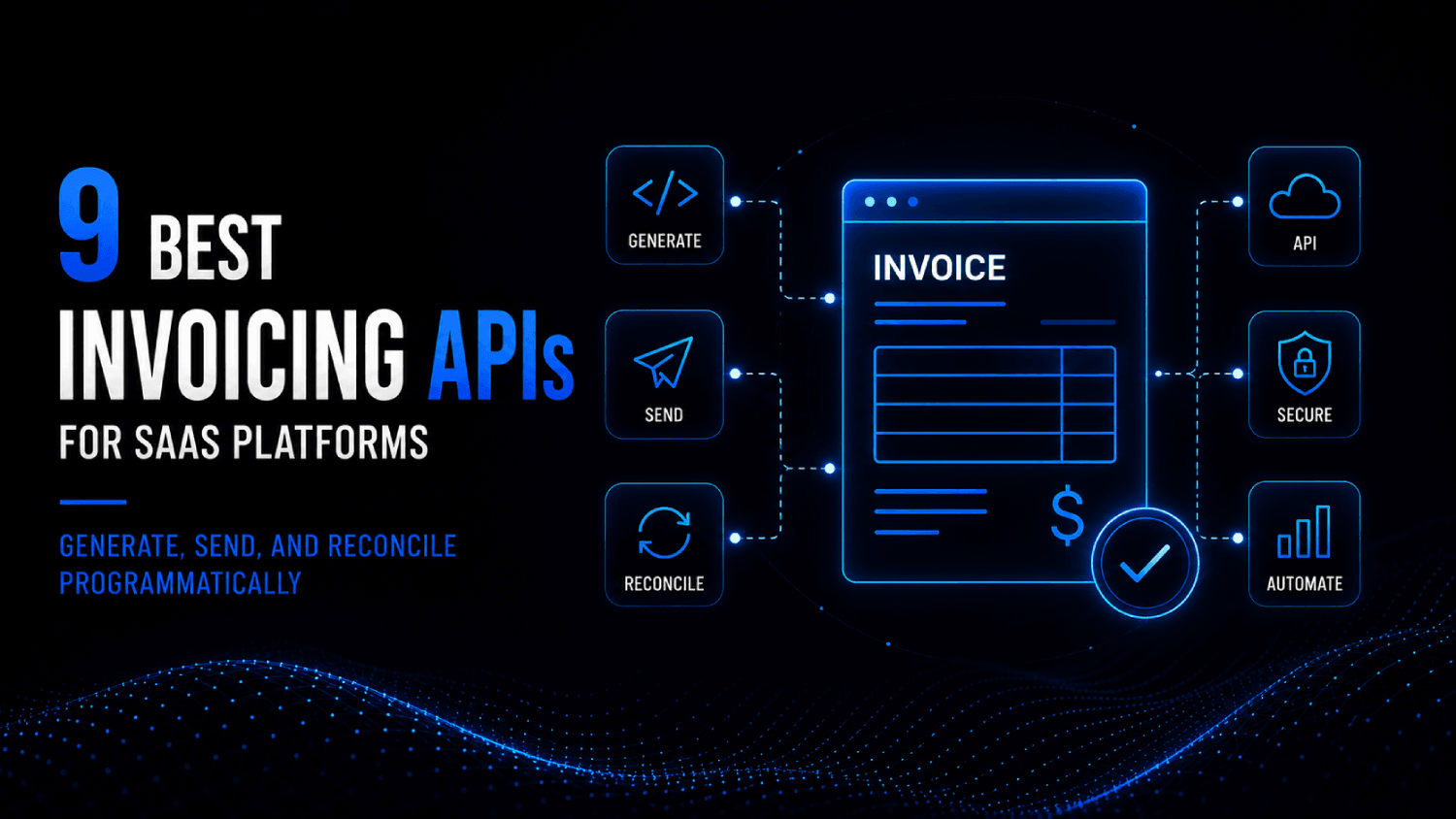

- Invoicing APIs are a distinct infrastructure category: they handle document generation, delivery, payment collection, and ledger reconciliation in one API surface, which your subscription billing tool or accounting integration almost certainly does not do natively.
- The right provider depends on three variables: whether you need to collect payment inside the invoice, whether you need e-invoicing compliance for international buyers, and whether reconciliation needs to write back to a ledger automatically.
- Stripe Invoicing and Lago are the strongest starting points for most SaaS platforms, but neither is the right call if your buyers need Peppol-compliant e-invoices or net-terms payment flows.
- Documentation quality varies more than feature sets do. Several providers in this list have identical webhook events but radically different sandbox experiences.
- Picking the wrong API here does not just create tech debt: it creates revenue recognition debt, because invoices that do not reconcile cleanly force manual intervention at month-end close.
The best invoicing APIs for SaaS platforms in order of overall developer fit are Stripe Invoicing, Lago, Paddle Billing, Monite, Storecove, Quadient, Zuora, Chargify (now Maxio), and Invoice Ninja. Stripe leads for payment-attached invoicing with card and ACH collection built in. Lago leads for open-source, usage-based invoice generation with direct ledger control. Monite and Storecove lead for embedded e-invoicing with international compliance requirements including Peppol and ZATCA.
Why Invoicing APIs Are Not the Same as Billing, Bill-Pay, or AR Automation
Four adjacent categories share vocabulary but serve completely different jobs. Getting them confused is expensive. Bill-pay APIs handle accounts payable outflows: your platform pays vendors. AR automation tools handle collections and dunning after an invoice already exists. Subscription billing platforms like Chargebee, Recurly, and Maxio manage recurring billing logic and plan management, but their invoice objects are byproducts of subscription events, not first-class API resources you can generate, template, and send independently.
Invoicing APIs sit in the middle: they create the document, deliver it to a buyer, collect payment against it, and report the settled amount back to a ledger. That last step, reconciliation, is where most teams discover their billing tool was never really an invoicing tool. If you are embedding invoice creation into a vertical SaaS product so that your customers can bill their own customers, you need this category specifically.
The four neighbors map like this. Bill-pay APIs automate outbound AP flows. Subscription billing handles recurring plans and proration. AR automation tools accelerate collection on existing receivables. Invoicing APIs generate, send, collect on, and reconcile the invoice document itself, whether or not a subscription triggered it.
What Should a Production-Ready Invoicing API Actually Do?
Before evaluating any specific provider, you need a clear checklist of capabilities. The FintechSpecs Invoicing API Scorecard covers four layers, each of which has to work independently and together.
Layer 1: Document generation. The API must support custom line items, tax calculations (or tax API passthrough), multi-currency amounts, and PDF rendering. Template control matters if your customers are white-labeling the invoice under their own brand.
Layer 2: Delivery. Email delivery is table stakes. Production-grade providers also support delivery via Peppol network, SFTP, or buyer-specific portals. If your buyers are European governments or enterprise procurement teams, format support (UBL 2.1, EDIFACT, Factur-X) is non-negotiable.
Layer 3: Payment collection. Some invoicing APIs are document-only: they generate and deliver but expect you to collect payment separately. Others embed a pay link, support ACH and card, and handle payment confirmation natively. Know which mode you need before committing to an integration.
Layer 4: Reconciliation. Every invoice event (sent, viewed, partially paid, fully settled, disputed) should fire a webhook, and the settled amount should write back to either an internal ledger or an accounting integration. If this layer is missing, you are building manual reconciliation into your month-end close, which compounds as volume scales.
The 9 Best Invoicing APIs: Ranked by Use Case Fit
1. Stripe Invoicing
Stripe Invoicing is the default choice for SaaS platforms already on Stripe’s payment stack because the invoice object is natively connected to Stripe’s payment collection infrastructure. You can generate an invoice via API, attach a pay link, collect card or ACH payment, and receive a confirmed webhook in one atomic flow. The sandbox mirrors production behavior closely, which is rare.
Stripe’s invoicing docs are among the best-maintained in the category. The Invoice object reference is extensive , the object carries a large number of attributes across its fields , and webhook events are granular enough to build a complete AR dashboard without any third-party tooling. Pricing for Stripe Invoicing is 0.4% per invoice paid through Stripe, per Stripe’s public pricing page, with a cap per invoice for high-volume senders. Verify the current rate directly on Stripe’s pricing page before finalizing your cost model, as Stripe updates pricing periodically.
The limitation is lock-in: Stripe Invoicing works cleanly only when payment also runs through Stripe. If your buyers pay via wire, check, or a non-Stripe payment rail, reconciliation requires custom webhook work. It also has no Peppol delivery support, which rules it out for European e-invoicing mandates. Teams evaluating Stripe’s broader payment infrastructure fit can find a detailed stack comparison in the Stripe vs Adyen analysis for B2B SaaS.
2. Lago (Open Source)
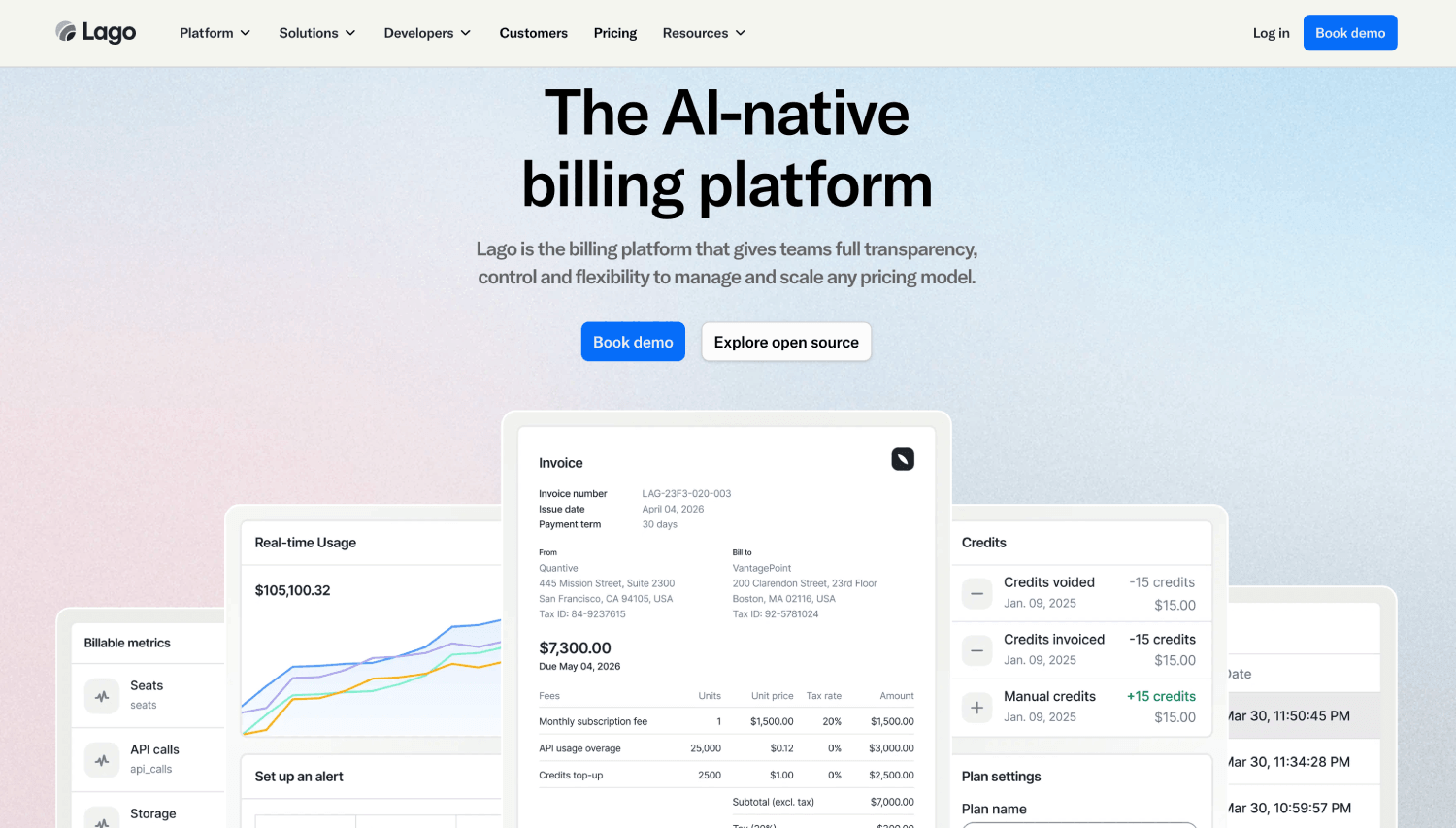
Lago is an open-source billing and invoicing API built specifically for usage-based and hybrid pricing models. You can self-host it or use the managed cloud version. The invoice object in Lago is the central resource, not a byproduct of subscription logic, which gives engineering teams direct control over every line item, tax calculation, and invoice state.
Lago’s strongest differentiator is its aggregation engine: you can feed raw usage events via API and have Lago compute the invoiceable amount at billing period close. This is the architecture you want if your SaaS product bills customers by consumption rather than flat rate. The webhook system is comprehensive, and the open-source codebase means you can inspect every reconciliation step.
Payment collection is not built in the way Stripe’s is: Lago expects you to connect a payment provider. That is a deliberate design choice favoring flexibility, but it adds integration steps that Stripe skips. Lago’s managed cloud pricing is not publicly listed at a fixed rate; teams should request a quote directly from Lago for managed hosting costs.
3. Paddle Billing
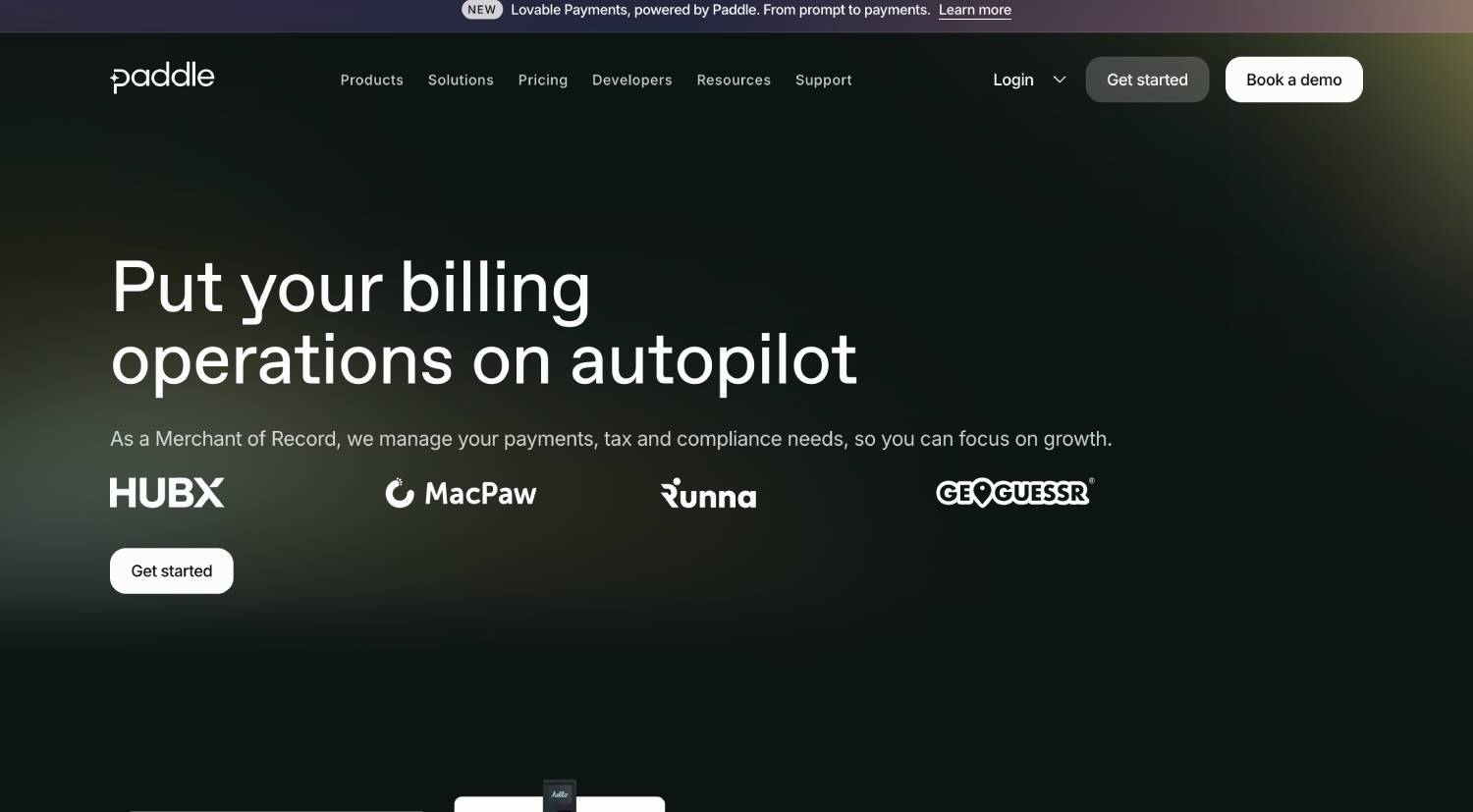
Paddle Billing wraps invoicing inside a merchant-of-record model, which means Paddle issues the invoice on your behalf, handles global tax collection, and remits to local tax authorities. For SaaS teams selling to international buyers who expect a compliant local invoice, this removes significant legal and accounting overhead. The merchant of record decision has real implications for who owns the tax liability.
The invoice API in Paddle Billing supports custom line items, buyer-specific pricing, and net terms. The documentation is solid, and the sandbox environment is stable. The constraint is that Paddle controls the payment flow, so if you need to embed invoicing into a platform where your customers invoice their own customers, Paddle is not the right tool. It works cleanly when you are the seller and your buyer is the end customer.
4. Monite
Monite is purpose-built for embedded invoicing inside B2B SaaS products. It provides both an invoicing API and a payables API under one platform, which matters for vertical SaaS tools where users need to both send and receive invoices. According to Monite’s developer documentation, their API supports e-invoice delivery via Peppol and includes compliance features for several European markets.
The standout capability is the white-label invoice UI that platforms can embed directly in their product, so end users never leave the host application to generate or view invoices. For fintech platforms building embedded finance features, Monite sits at the intersection of embedded finance API infrastructure and document workflow automation. Pricing is not publicly listed; teams should request a quote from Monite, as commercial terms are structured per deployment.
5. Storecove
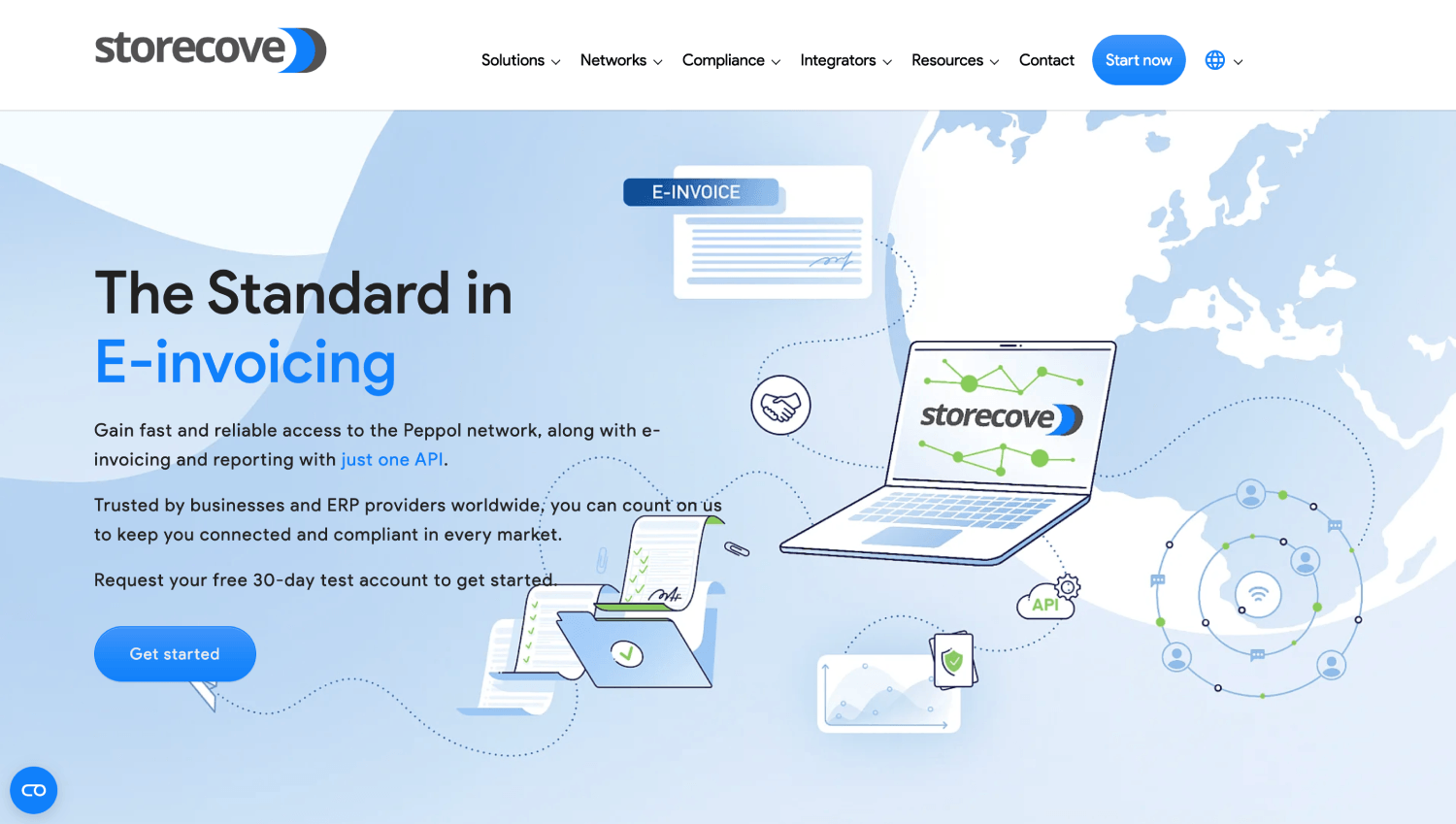
Storecove is the strongest choice when e-invoicing compliance is the primary requirement. The platform provides a RESTful API that handles format conversion (UBL, EDIFACT, CII, Factur-X) and delivers invoices via Peppol network to buyers in over 30 countries. If your buyers include European government agencies, large Dutch or German enterprises, or Singapore public sector entities, Storecove’s network reach is the deciding factor.
As a document delivery and compliance layer, Storecove does not handle payment collection. It expects an invoice document in and returns a delivery confirmation out. Platforms that need both compliance delivery and payment collection need to layer Storecove with a separate payment rail. The documentation is thorough, and Storecove publishes its supported country and format matrix publicly, which reduces integration surprises.
6. Quadient Accounts Receivable (formerly Beanworks)
Quadient AR, which acquired Beanworks, targets mid-market finance teams and platforms that need invoicing combined with AR workflow automation. The API supports invoice generation, approval routing, and payment matching. It is more opinionated than Stripe or Lago: the workflow assumptions favor accounting teams over engineering teams, which means the API is cleaner for finance-first integrations than for developer-first embedded products.
The reconciliation layer is Quadient’s genuine strength. Invoice events map to payment events with matching logic that handles partial payments, early payment discounts, and dispute holds. For vertical SaaS products serving professional services or construction, where invoice disputes and partial payments are routine, that matching logic saves significant engineering time.
7. Zuora
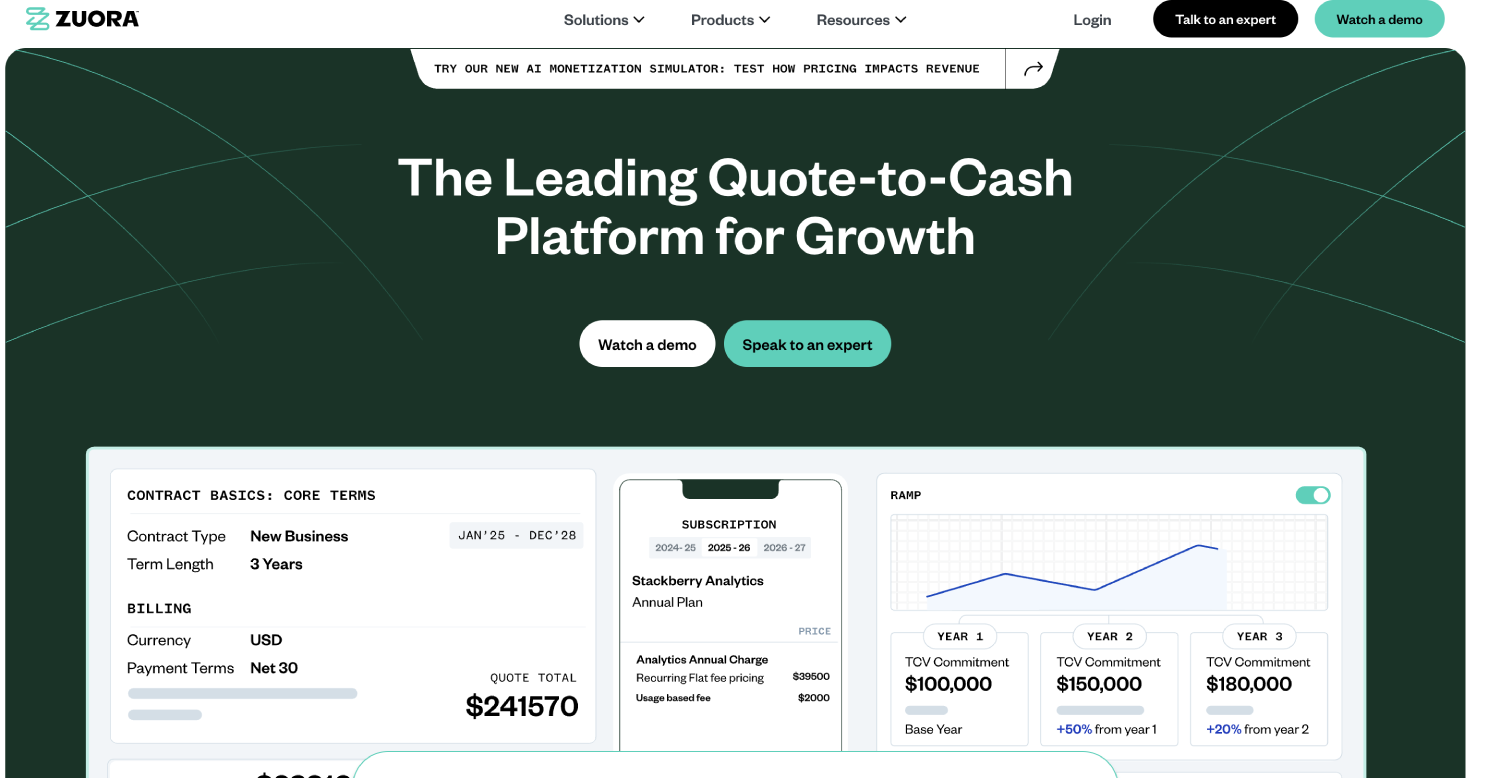
Zuora targets enterprise SaaS with complex subscription and invoicing requirements: multi-entity billing, revenue recognition under ASC 606, consolidated invoicing across subsidiaries, and multi-currency settlement. The invoice API is mature and documented in depth. The tradeoff is implementation overhead: Zuora deployments typically involve a dedicated professional services engagement, not a weekend integration sprint.
For a Series B or C company processing significant ARR with complex billing arrangements, Zuora’s revenue recognition automation is worth the friction. For a seed-stage team adding invoicing to a new product, it is almost certainly the wrong tool. Zuora does not publish per-transaction pricing publicly; teams should request a quote, as commercial terms are negotiated based on subscription volume.
8. Maxio (formerly Chargify + SaaSOptics)
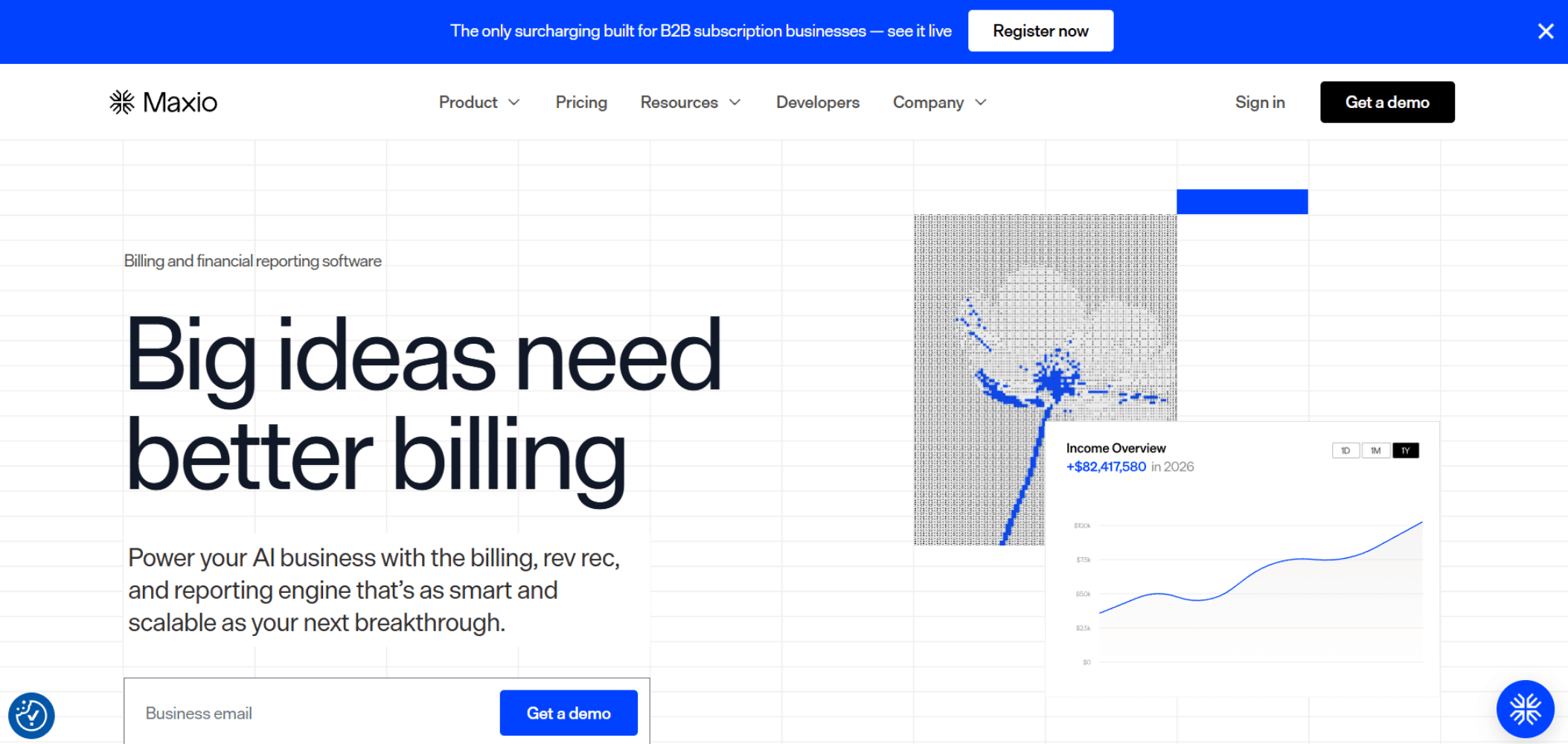
Maxio combines subscription billing from Chargify with SaaS revenue analytics from SaaSOptics, and it includes an invoicing API that handles both recurring and one-off invoice generation. The invoice object supports net terms, payment reminders, and ACH collection via Stripe or Maxio’s own payment processing. The API documentation is serviceable but not as developer-friendly as Stripe or Lago.
Maxio is best positioned for B2B SaaS companies that need subscription billing, invoicing, and revenue reporting in one platform without building a multi-vendor stack. The Stripe Billing alternatives comparison covers Maxio alongside its competitors in more detail. Pricing is not publicly listed and varies by billing volume.
9. Invoice Ninja (Open Source)
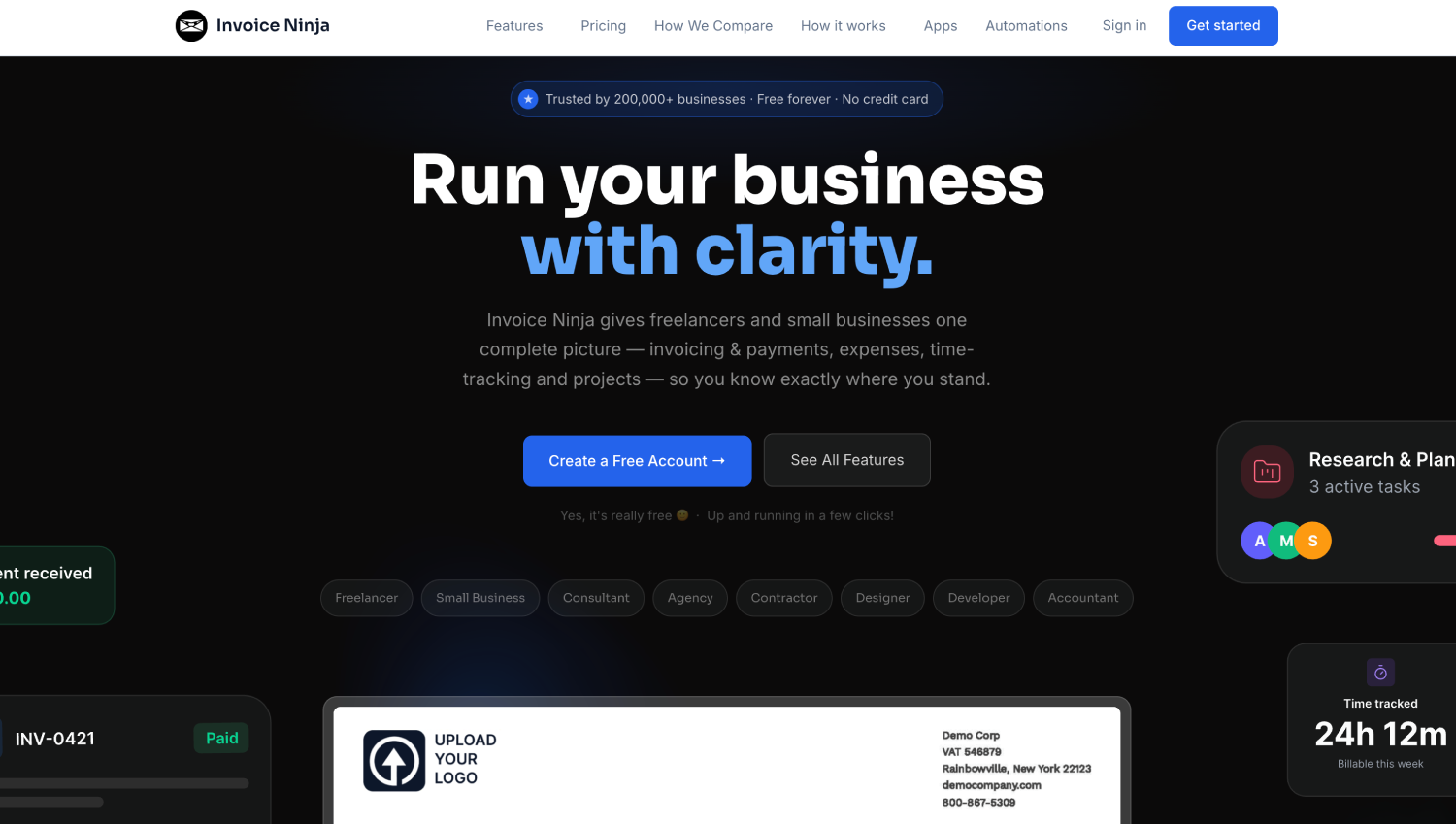
Invoice Ninja is an open-source invoicing platform with a public REST API that covers invoice generation, client management, payment recording, and PDF export. It is self-hostable under an open-source license, which makes it the lowest-cost entry point for platforms that need basic invoice generation without payment processing complexity.
The API is well-documented and covers webhook events for invoice status changes. The limitation is scale: Invoice Ninja was built as a standalone invoicing app, so the API reflects that architecture. Embedding it into a multi-tenant SaaS product requires work to isolate client data and customize the invoice template per tenant. For developer tools or indie SaaS products with straightforward invoicing needs, it is a credible starting point.
Capability Matrix: What Each API Actually Does
| Provider | Invoice Generation | Payment Collection | Peppol / E-Invoice Compliance | Reconciliation Webhooks | Embeddable UI | Open Source |
|---|---|---|---|---|---|---|
| Stripe Invoicing | Yes | Yes (card, ACH) | No | Yes (granular) | Partial (hosted page) | No |
| Lago | Yes (usage-based) | Via connected provider | No | Yes | No | Yes |
| Paddle Billing | Yes (MoR model) | Yes (MoR) | No | Yes | Hosted checkout | No |
| Monite | Yes | Via connected provider | Yes (Peppol) | Yes | Yes (white-label) | No |
| Storecove | Format conversion only | No | Yes (30+ countries) | Delivery confirmation | No | No |
| Quadient AR | Yes | Yes (with matching) | No | Yes | No | No |
| Zuora | Yes (enterprise) | Yes (multi-rail) | Partial | Yes | No | No |
| Maxio | Yes | Yes (ACH, card) | No | Yes | No | No |
| Invoice Ninja | Yes | Yes (basic) | No | Yes (basic) | Partial | Yes |
How Should You Choose Between These APIs?
The decision tree has three branch points, in order. First, does payment need to be collected inside the invoice? If yes, you need Stripe Invoicing, Paddle Billing, Maxio, or Quadient AR. If no, or if you are connecting your own payment rail, Lago, Monite, Storecove, and Invoice Ninja become viable.
Second, do your buyers or their buyers require e-invoicing compliance in Europe, Singapore, Australia, or Saudi Arabia? If yes, Storecove is the delivery layer and Monite is the embedded platform layer. Neither Stripe nor Lago handles Peppol delivery natively, and adding it retroactively is painful.
Third, are you embedding invoicing so your platform’s customers can invoice their own customers? That is the embedded invoicing pattern, and it changes the architecture entirely. Monite is built for this. Stripe Invoicing supports it but requires careful multi-tenant data isolation using Connect accounts. Lago supports it via tenant scoping on their managed platform. Most of the others assume you are the invoice sender, not a platform facilitating invoice sending on behalf of others.
One pattern worth naming: teams building vertical SaaS for professional services, agencies, or field service businesses often discover they need invoicing plus payment collection plus basic AR workflow. That three-part stack is where Stripe Invoicing plus a lightweight AR tool often beats any single-vendor solution, because Stripe’s payment reliability is hard to replicate and most all-in-one invoicing platforms make payment collection feel like an afterthought. If you are evaluating your broader payment infrastructure choices, the invoicing layer is downstream of that decision.
What Do Invoicing API Docs Actually Look Like at the Developer Level?
Documentation quality is the single most under-rated evaluation criterion in this category. A feature matrix tells you what an API can do. The docs tell you how long it will take your team to do it.
Stripe’s invoicing documentation sets the baseline. Every endpoint has a working code example in six languages, a full attribute table, and an explicit list of which events fire at each invoice state transition. The sandbox is a faithful replica of production behavior, including failed payment retry logic. You can simulate an invoice going from draft to open to paid to voided in under ten minutes.
Lago’s docs are strong for the core invoice generation flow but thinner on edge cases: partial payments, credit notes, and invoice reversal are documented but with fewer code examples than Stripe. The open-source codebase compensates: you can read the actual implementation when the docs run out.
Monite’s developer documentation covers the embedded UI components in detail, which is appropriate given that the UI is their differentiator. The API reference is complete but the sandbox setup requires more steps than either Stripe or Lago. Storecove’s documentation is notably good on format requirements: they publish format support tables per country that save significant research time when scoping an international e-invoicing integration.
Zuora’s documentation is extensive but organized for implementation consultants, not first-time integrators. Invoice Ninja’s API docs are adequate for self-hosted use but show the seams of a product built for end users rather than developers.
What Does a Real Embedded Invoicing Integration Look Like?
Consider a vertical SaaS platform serving independent freight brokers. Each broker uses the platform to manage loads, and they need to invoice shippers at load completion. The platform’s options illustrate why provider choice is architectural, not cosmetic.
With Stripe Invoicing via Connect, each broker is a connected account. The platform creates an invoice via API, attaches the shipper’s email, and Stripe sends a payment link. When the shipper pays, Stripe settles to the broker’s connected account minus the platform’s take rate. Reconciliation is automatic: every payment event hits the platform’s webhook endpoint with a full invoice and charge object. The engineering lift is roughly one sprint to get to production.
With Monite, the platform embeds Monite’s invoice creation UI directly inside the freight dashboard. Brokers never know they are using a third-party tool. Monite handles delivery, payment link generation, and event webhooks. The platform gets a consolidated view of all broker invoices via the Monite management API. The trade-off is more complex initial setup versus a cleaner long-term embedded UX.
With Lago plus a separate payment rail, the platform feeds load completion events into Lago as usage records, Lago computes the invoiceable amount and generates the invoice document, and a separate ACH API handles payment collection. More moving parts, but maximum flexibility over billing logic. This architecture fits platforms where invoice amounts are computed from usage data rather than fixed line items. For teams thinking through the broader architecture of fintech API infrastructure, the invoicing layer fits inside a larger stack decision.
Frequently Asked Questions
What is an invoicing API?
An invoicing API is a programmatic interface that lets software create, deliver, and manage invoice documents without manual data entry. It exposes endpoints for generating invoice objects (with line items, tax, and payment terms), sending those invoices to buyers via email or electronic delivery networks, collecting payment against them, and reporting back the settled or outstanding balance via webhooks or polling. It is distinct from a subscription billing API, which manages plan logic, and from an AR automation tool, which chases outstanding invoices that already exist.
What is the difference between an invoicing API and a billing API?
A billing API typically manages subscription plans, trial periods, proration, and recurring charge schedules. An invoicing API generates the document that formalizes an amount owed, delivers it to a buyer, and tracks payment status. In practice, many subscription billing platforms (Chargebee, Maxio, Recurly) produce invoice objects as part of their billing cycle, but those invoice objects are often not independently accessible or templatable via API. A dedicated invoicing API treats the invoice document as the primary resource, not as a byproduct of subscription management.
Can I use Stripe as an invoicing API?
Yes. Stripe’s Invoices API supports programmatic invoice generation, delivery via email, payment collection via card or ACH, and granular webhook events for each invoice state. It is the most developer-complete invoicing API for teams already on the Stripe payment stack. The constraint is that payment collection requires Stripe as the payment processor, and international e-invoicing formats (Peppol, UBL) are not supported. Stripe charges 0.4% per invoice paid through Stripe, according to their public pricing page , confirm the current rate on Stripe’s pricing page before budgeting, as rates are subject to change.
Which invoicing API is best for international e-invoicing compliance?
Storecove leads for pure e-invoicing delivery compliance across international Peppol networks, supporting format conversion and delivery in over 30 countries. Monite covers Peppol delivery as part of its embedded invoicing platform and adds an embeddable UI layer. Neither Stripe nor Lago handles Peppol natively. If your platform serves buyers in the EU, Singapore, or Australia where e-invoicing mandates are active or incoming, Storecove or Monite should anchor your compliance stack.
Does an invoicing API handle tax calculation?
Tax handling varies by provider. Stripe Invoicing integrates with Stripe Tax, which calculates sales tax and VAT based on buyer and seller location. Paddle Billing handles tax as part of its merchant-of-record model, meaning Paddle collects and remits tax on your behalf. Lago and Invoice Ninja accept tax rates as inputs but do not calculate them: you supply the rate, they apply it. Storecove handles tax formatting for e-invoice compliance but does not calculate rates. For platforms with complex multi-jurisdiction tax requirements, layering a dedicated tax API like Avalara or TaxJar alongside your invoicing API is common practice.
What should I look for in invoicing API documentation?
Five things matter most. First, working code examples in your language for the core invoice lifecycle (create, send, mark paid, void). Second, a complete webhook event reference showing every state transition. Third, sandbox behavior that mirrors production, including failure scenarios. Fourth, explicit documentation of credit notes and invoice reversal, because those edge cases always surface in production. Fifth, clear guidance on multi-tenant or platform use cases if you are embedding invoicing for your customers’ use rather than your own internal billing.
How does invoice reconciliation work in an invoicing API?
Reconciliation connects a payment event to an invoice record so your ledger reflects accurate AR balances. Well-implemented invoicing APIs fire webhook events for every payment applied to an invoice, including partial payments, and include enough data in the event payload (invoice ID, amount paid, outstanding balance, payment method, timestamp) to update a ledger without making additional API calls. Platforms that need automated write-back to an accounting system typically pair their invoicing API with an accounting integration layer like Codat or Rutter, which translates webhook payloads into QuickBooks or NetSuite journal entries.
Is open-source invoicing API software production-ready?
Lago and Invoice Ninja are both production-ready for the use cases they target. Lago handles usage-based billing at scale and has an active open-source community with documented deployment patterns for Kubernetes and Docker. Invoice Ninja is better suited to smaller-scale deployments or development tools where invoicing volume is moderate. Self-hosting either means owning uptime, data backups, and security patching, costs that are invisible in a free pricing tier but real in engineering time. Lago’s managed cloud offering removes the self-hosting burden while preserving API flexibility.
The Decision Most Teams Get Wrong
Most product teams treat invoicing as a feature request from a sales prospect and pick whatever integrates fastest with their existing payment stack. That is usually Stripe Invoicing, and for most US-focused SaaS platforms with card-paying customers, it is the right call. The mistake comes later, when international buyers start requesting Peppol-compliant invoices, or when platform customers need to invoice their own customers and the data model breaks because it was built for one seller, not many.
The FintechSpecs Invoicing API Scorecard (document generation, delivery, payment collection, reconciliation) is worth running against any shortlisted provider before the first API key is issued. Gaps at layer three (payment) and layer four (reconciliation) are the ones that generate months of engineering rework. They are also the gaps most easily missed when evaluating a product through its marketing page rather than its API reference.
Invoicing is where revenue becomes real. An invoice that cannot be delivered, cannot collect payment, or cannot reconcile to a ledger is not a document. It is a liability. The providers that treat all four layers as first-class API concerns are the ones worth building on. The ones that treat invoicing as a checkbox feature will show you the seams at the worst possible time, which is quarter close, when your finance team is already under pressure and your engineering team is mid-sprint on something else entirely. The right choice is the one that makes that moment boring.