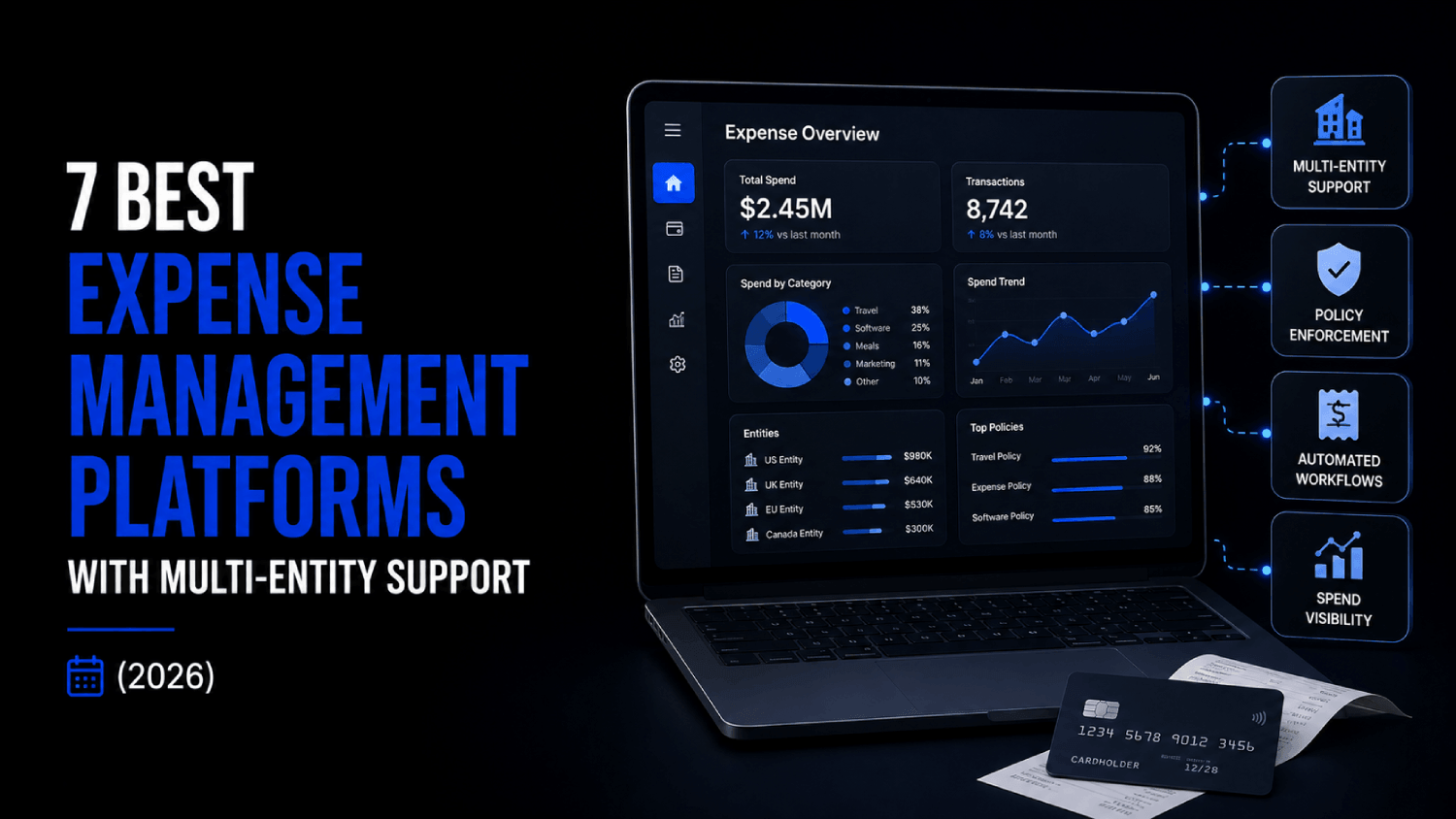

- Multi-entity expense management varies sharply across platforms: consolidated close, per-entity card issuance, intercompany transaction handling, and ERP field mapping are not universal features.
- Ramp and Brex lead on NetSuite and Sage Intacct depth; Airbase (now Maxio) edges ahead on procurement workflow complexity for mid-market holding structures.
- Choosing on cashback rate alone costs finance teams weeks of manual reconciliation per quarter when entity-level reporting breaks down at month-end.
- The platforms that handle true subsidiary isolation (separate GL codes, per-entity approval chains, currency segregation) are a short list of five or fewer.
- Mercury and Rho compete on price but trail on ERP sync depth, which matters more than most controllers realize until their first consolidated close.
The best expense management platforms for multi-entity companies are Ramp, Brex, Airbase (Maxio), Rho, Mercury, Navan, and Expensify. Ramp and Brex offer the deepest NetSuite and Sage Intacct integrations with true per-entity card issuance and consolidated reporting. Airbase handles complex approval workflows across subsidiaries. Rho and Mercury are cost-competitive but have narrower ERP sync. Navan suits travel-heavy entities. Expensify fits smaller or simpler holding structures. The right choice depends on your ERP, entity count, and intercompany transaction volume.
Why Multi-Entity Expense Management Is a Different Problem Than Single-Entity Spend
Most spend platforms were built for a single legal entity: one chart of accounts, one bank relationship, one approval hierarchy. Add a second subsidiary and the cracks appear fast. You need separate card programs per entity, GL codes that map to each entity’s books, and a consolidation layer that rolls everything up without requiring a spreadsheet.
The failure mode finance teams hit is what FintechSpecs calls the Entity Collapse Problem: the platform issues cards under one entity, syncs transactions to one GL, and forces the controller to manually split and recode everything at close. That is not a minor inconvenience. On a 10-entity structure, it can add three to five business days to month-end.
Three capabilities separate platforms that genuinely support multi-entity operations from those that market the feature but deliver it halfway: per-entity card issuance with isolated spend limits, ERP field mapping that writes entity identifiers at the transaction level, and a consolidated reporting view that does not require exporting to Excel first. Every platform on this list is evaluated against those three gates.
The FintechSpecs Multi-Entity Stress Test: How We Scored Each Platform
To cut through marketing copy, we applied a four-part evaluation framework to each platform. We call it the FintechSpecs Multi-Entity Stress Test, and it mirrors the actual questions a controller should ask before signing.
- Entity Isolation: Can the platform issue separate card programs, budgets, and approval chains per legal entity, without cross-contamination of transactions?
- ERP Sync Depth: Does the integration write subsidiary, class, department, and location fields at the line-item level, or does it push a summary journal entry that the controller still has to explode?
- Consolidation Layer: Is there a native consolidated spend view across all entities, filterable by subsidiary, without requiring a third-party BI tool?
- Intercompany Handling: Does the platform have any native logic for intercompany allocations, or does that fall entirely outside its scope?
No platform on this list scores a perfect four. The trade-offs are the point. Here is how the shortlist stacks up.
| Platform | Entity Isolation | ERP Sync Depth | Consolidation View | Intercompany Logic | Best For |
|---|---|---|---|---|---|
| Ramp | Strong | Deep (NetSuite, Intacct, QBO) | Native | Partial (allocations) | Tech-forward finance teams on NetSuite |
| Brex | Strong | Deep (NetSuite, Intacct, Xero) | Native | Partial | Venture-backed multi-subsidiary orgs |
| Airbase (Maxio) | Strong | Deep (NetSuite, Intacct) | Native | Better than average | Mid-market with complex PO workflows |
| Rho | Moderate | Mid (NetSuite, QBO) | Native (limited filters) | Minimal | Cost-sensitive teams, simpler structures |
| Mercury | Moderate | Light (QBO, Xero) | Limited | None native | Seed-to-Series A holding cos on QBO |
| Navan | Strong | Mid-Deep (NetSuite, Concur) | Native | Partial | Travel-heavy entities, global subsidiaries |
| Expensify | Basic | Mid (QBO, Xero, NetSuite) | Limited | None native | Simple holding cos, small entity count |
1. Ramp: Best for Multi-Entity NetSuite and Sage Intacct Users
Ramp treats multi-entity as a first-class design requirement, not an afterthought. Controllers can create separate entities within a single Ramp organization, assign dedicated card programs and budgets to each, and set approval policies that never cross entity lines. The NetSuite integration writes subsidiary, department, class, and location fields at the transaction level, which means the data arrives in NetSuite already coded rather than requiring a controller to recode a summary entry.
The Sage Intacct integration is similarly mature. Ramp maps to Intacct’s native multi-entity structure, and transactions sync with entity identifiers intact. For teams running a consolidated close in Intacct, this cuts the manual reconciliation step that plagues controllers on lighter integrations.
Where Ramp falls short: intercompany eliminations are not handled natively. If your holding company has material intercompany loans or management fee charges between subsidiaries, those still live in your ERP workflow, not in Ramp. Also, Ramp’s pricing is not publicly listed per entity, so costs for large entity counts require a direct sales conversation. According to Ramp’s public pricing page, the core product is free for most features, with costs on premium tiers disclosed on request.
Who should choose Ramp for multi-entity management
Ramp fits controllers running five or more subsidiaries on NetSuite or Sage Intacct who want transaction-level ERP writes and a native consolidated spend dashboard. It is the strongest option for Series B and C companies with a dedicated finance team that can configure entity structures on setup.
2. Brex: Best for Venture-Backed Holding Structures with Global Subsidiaries
Brex competes directly with Ramp on NetSuite and Sage Intacct depth and adds meaningful global coverage that matters for holding companies with international subsidiaries. Brex supports multi-currency card programs and can issue cards in multiple countries under a single parent account, which Ramp’s US-first structure does not match for global entities.
According to Brex’s accounting integration documentation, the NetSuite sync supports subsidiary, department, class, location, and custom segment mapping. That puts it on equal footing with Ramp for domestic NetSuite users. Brex’s Sage Intacct integration carries similar depth, and the Xero connector is more developed than Ramp’s, which matters for subsidiaries domiciled outside the US that run on Xero.
Brex’s budget management across entities is slightly more flexible for distributed teams: spend limits can be set at the entity level, team level, or individual card level simultaneously. The consolidated reporting view filters by subsidiary without requiring export. Where Brex lags: the platform’s procurement and bill pay features, while improving, are not as deep as Airbase’s for companies with high AP volume across subsidiaries.
Brex vs Ramp for multi-entity budgets: the real difference
Both platforms handle per-entity card issuance and ERP sync at a comparable depth for domestic NetSuite and Intacct users. Brex edges ahead on global entity support and Xero connectivity. Ramp edges ahead on AP automation and domestic-first simplicity. For a pure US holding company on NetSuite, the two are nearly interchangeable on multi-entity features. Our broader Ramp vs Brex vs Airbase comparison covers the full feature-by-feature breakdown beyond multi-entity use cases.
3. Airbase (Now Part of Maxio): Best for Mid-Market Multi-Entity with Complex AP
Airbase, now integrated into the Maxio platform, sits in a different lane than Ramp and Brex. It built its core around purchase orders, bill approvals, and accounts payable automation before adding corporate cards. For holding companies where subsidiary-level AP volume is as important as card spend, that heritage shows in the product.
Airbase’s multi-entity structure allows separate AP workflows, approval chains, and vendor records per subsidiary. The NetSuite and Sage Intacct integrations are deep and write entity identifiers at the transaction level. Importantly, Airbase handles non-card spend (bills, reimbursements, purchase orders) within the same entity structure, which means a controller managing a fund or holding company with both card programs and vendor payments can run a single close process rather than reconciling two separate platforms.
The trade-off is complexity and price. Airbase is typically the most expensive of the three top-tier options, and the interface is denser. Teams without a dedicated AP manager or controller will find the setup overhead significant. According to Airbase’s public site, pricing is customized and requires a demo, so budget should be negotiated based on entity count and feature tier.
4. Rho: Best Cost-Competitive Option for Simpler Multi-Entity Structures
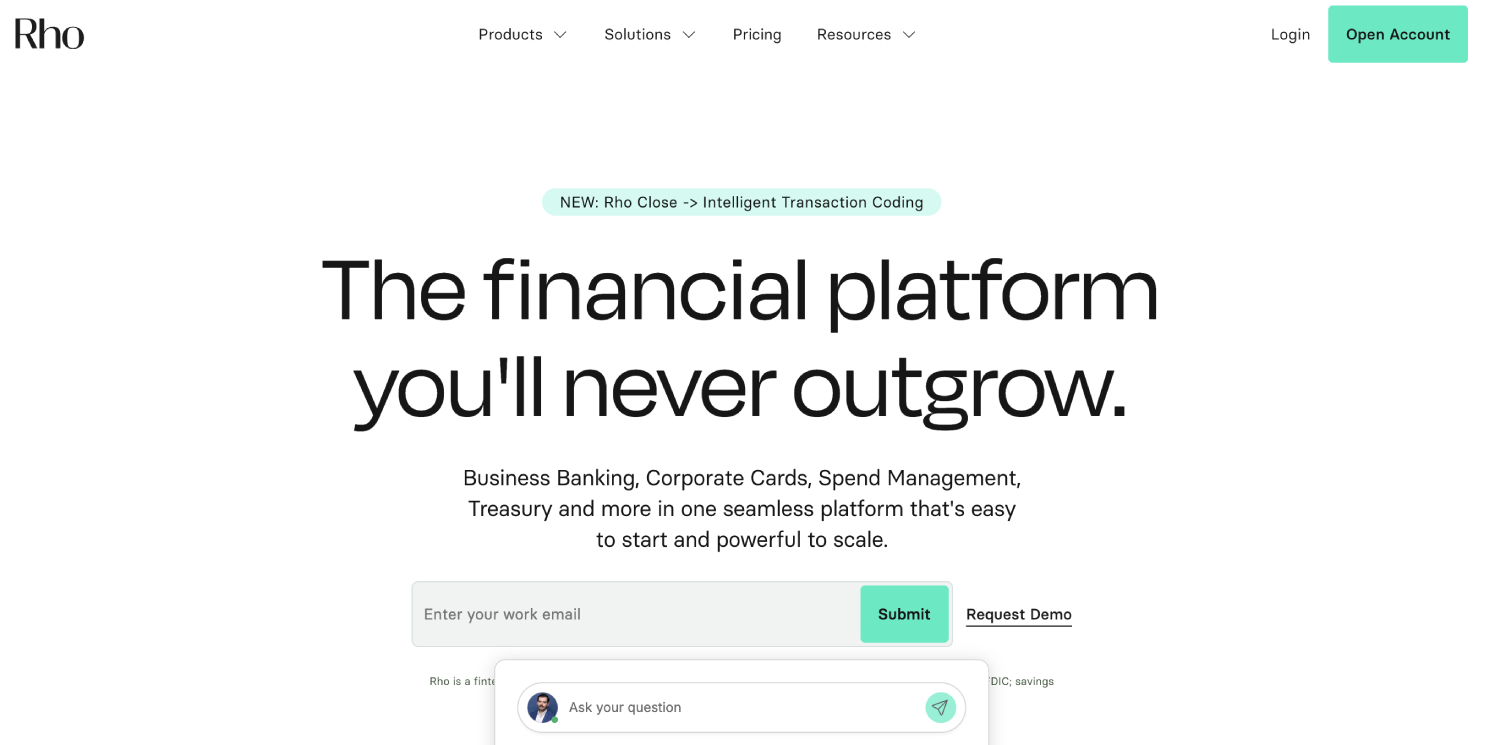
Rho markets itself as a full-stack banking and spend platform with no platform fees, which makes it attractive for cost-sensitive finance teams. Its multi-entity support is real but narrower than the top three. Rho allows separate card programs and budget policies per entity, and it connects to NetSuite and QuickBooks Online. The NetSuite sync writes subsidiary and department fields, but the mapping is less configurable than Ramp or Brex at the line-item level.
For a holding company running three to five US-based subsidiaries on QuickBooks or a mid-tier ERP, Rho delivers multi-entity functionality without the cost or complexity of the enterprise-tier platforms. The consolidated reporting is basic: entity-level filtering exists, but the dashboard lacks the drill-down depth that Ramp and Brex provide. Controllers doing a close on a tight schedule will likely export to their ERP or a spreadsheet for final reconciliation steps.
Rho’s no-fee model is genuinely differentiated. According to Rho’s public pricing page, the platform does not charge a monthly software fee. Revenue comes from interchange and banking spreads, which means Rho’s incentive structure differs from software-first platforms. That is worth understanding before signing.
5. Mercury: Best for Early-Stage Holding Companies on QuickBooks or Xero

Mercury is a banking-first product. Its expense management features are lighter than the other platforms on this list, but for a seed-to-Series A holding company with two or three subsidiaries running on QuickBooks Online or Xero, it may be all that is needed. Mercury allows separate accounts per entity under a single login, and corporate cards can be issued per entity.
The accounting integrations (QBO and Xero) push transaction data automatically, but entity-level field mapping is basic. There is no native consolidated spend dashboard across entities. A controller at a Mercury-banking holding company typically views each subsidiary’s account separately and reconciles in QBO or Xero. That works at small scale. It breaks at five-plus entities with active intercompany transactions.
Mercury’s publicly listed pricing makes it one of the most transparent options. The core account is free; Mercury Pro with additional features runs $35 per month as of their public pricing page. For an early-stage holding company not yet ready for an enterprise spend platform, Mercury is a reasonable start, with the clear expectation that it will need to be replaced when entity complexity grows.
6. Navan: Best for Multi-Entity Companies with Heavy Travel Spend
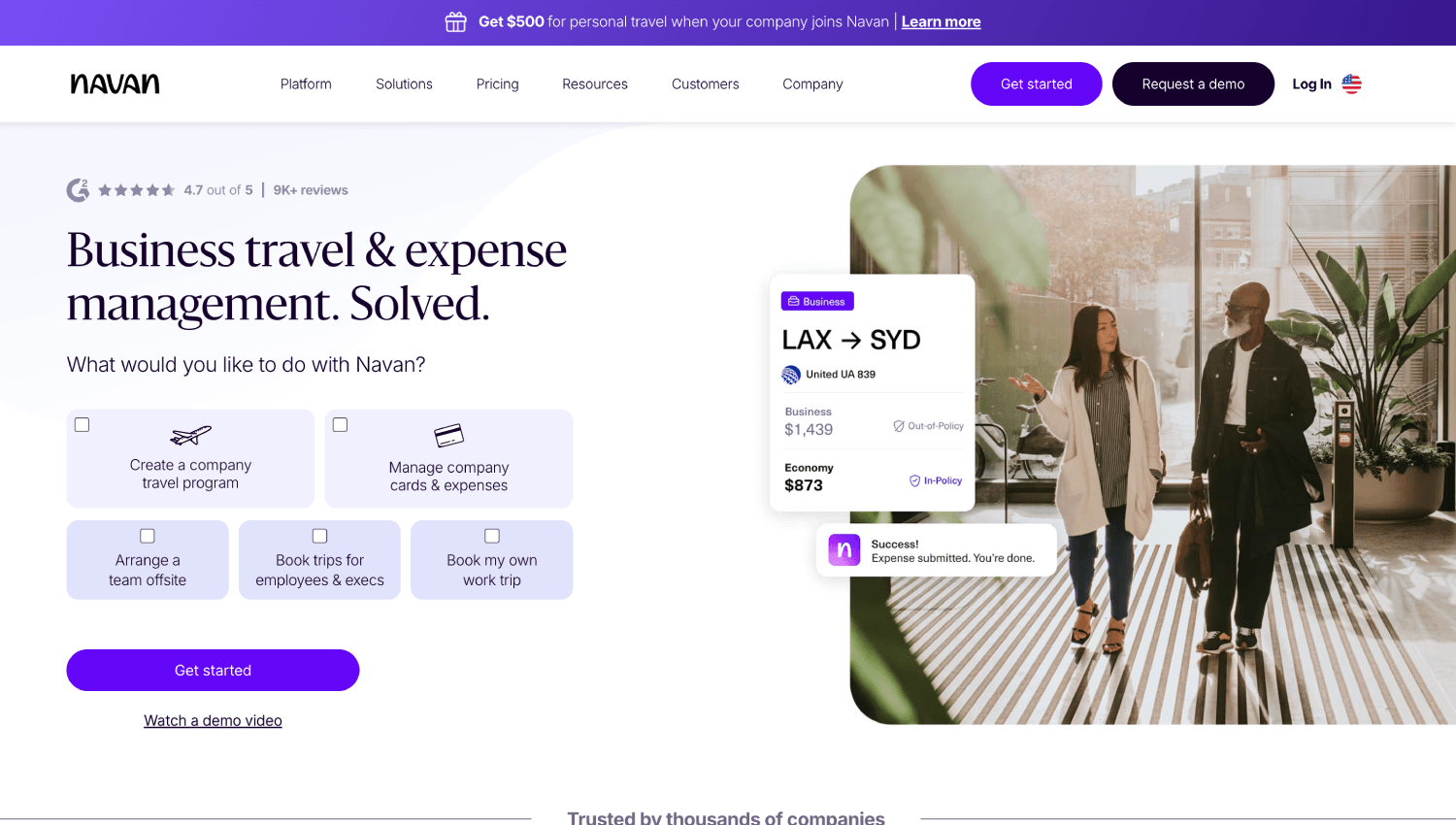
Navan (formerly TripActions) started as a travel management platform and added expense management over time. For holding companies where a meaningful portion of subsidiary spend is travel and entertainment, this heritage is an advantage. Navan’s travel booking, policy enforcement, and expense reconciliation are tightly integrated in a way that pure expense platforms cannot match.
On multi-entity support, Navan allows entity-level policies, separate card programs, and consolidated reporting across subsidiaries. The NetSuite integration handles subsidiary and department mapping. For global subsidiaries with frequent travel, Navan’s multi-currency expense capture and receipt matching are more developed than Ramp or Brex.
Where Navan struggles in a multi-entity context: non-travel AP and bill payment are outside its scope. A holding company using Navan for travel and expense still needs a separate bill pay solution, which adds reconciliation complexity. Navan’s pricing is not publicly disclosed and requires a direct sales engagement.
7. Expensify: Best for Simple Holding Structures with Small Entity Counts
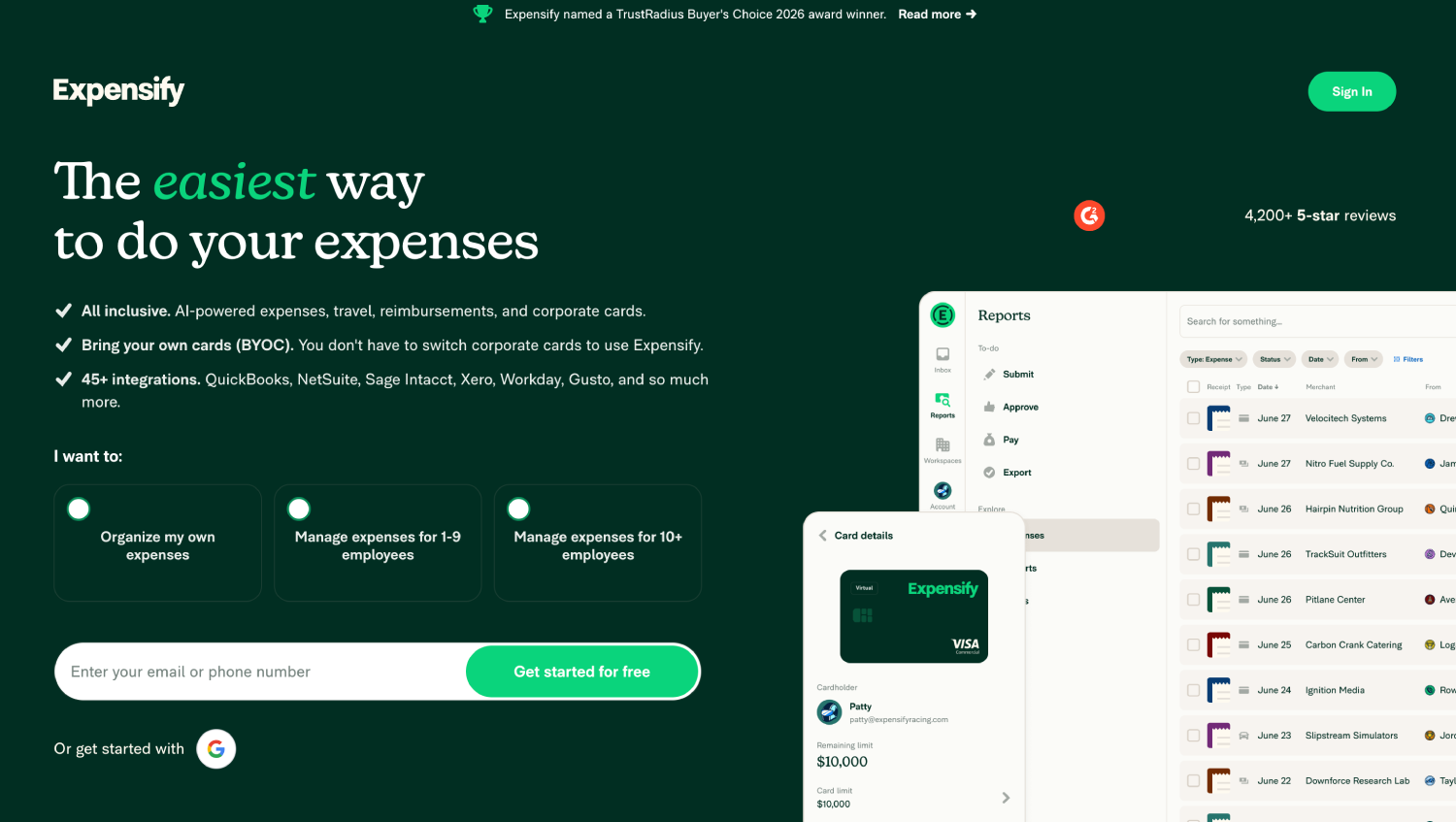
Expensify handles multi-entity setups through its “workspaces” model, where each entity gets its own workspace with separate policies, approval chains, and expense categories. The model works for holding companies with two or three subsidiaries where card spend is modest and ERP requirements are straightforward.
The QuickBooks, Xero, and NetSuite integrations exist, but multi-entity mapping depth is limited compared to Ramp, Brex, or Airbase. Intercompany handling is not native. Consolidated reporting across workspaces requires manual export or a third-party BI connection. According to Expensify’s public pricing page, plans start at $5 per user per month for Collect and $9 per user per month for Control, with the Control tier required for multi-entity policy features.
Expensify’s position in this list is realistic: it is the right answer for a small or newly formed holding company that does not yet have the entity complexity to justify an enterprise spend platform. Controllers managing more than four active subsidiaries with ERP sync requirements will hit its limits within six months.
Does Brex Have the Same Accounting Integrations as Ramp for NetSuite and Sage Intacct?
Broadly yes, but with differences in configuration depth. Both Ramp and Brex offer native NetSuite and Sage Intacct integrations that write subsidiary, department, class, and location fields at the transaction level. Brex’s Xero integration is more developed, which matters for international subsidiaries. Ramp’s AP automation layer is more mature for domestic-only operations. For a controller deciding between the two purely on ERP integration quality for NetSuite or Intacct, the platforms are functionally comparable. The decision typically comes down to global entity needs (Brex) versus domestic AP depth (Ramp).
What Does Consolidated Spend Reporting Actually Mean Across These Platforms?
The term “consolidated reporting” covers a wide range. On Ramp and Brex, it means a native dashboard showing real-time spend across all entities, filterable by subsidiary, category, and time period, without leaving the platform. On Rho and Navan, it means entity-level filtering with somewhat less drill-down granularity. On Mercury and Expensify, it effectively means reviewing each entity’s data separately and combining in your ERP or a spreadsheet.
For a controller doing a monthly close, the difference between the first and third tier is measured in hours. Consider a holding company with eight subsidiaries closing on the last business day of the month: on Ramp or Brex, the consolidated spend view is available in the platform the moment it is needed. On a lighter platform, the controller exports per-entity reports, maps them to a consolidation template, and reconciles before any ERP journal entries are touched. That process can consume four to six hours that a tier-one platform eliminates.
Finance teams evaluating spend platforms alongside their broader financial close process should also look at financial close and month-end automation tools to understand where spend platform consolidation ends and close automation begins.
How Do Corporate Cards Work Across Multiple Entities?
In a true multi-entity card program, each legal entity has its own card program: its own credit facility or prepaid balance, its own billing statement, and its own liability structure. Transactions on Subsidiary A’s cards never appear on Subsidiary B’s statement. In practice, most corporate card platforms issue cards under one parent entity, and multi-entity “support” means tagging transactions with an entity label after the fact. That distinction matters enormously at close.
Ramp, Brex, and Airbase issue cards with per-entity programs at the platform level, meaning the entity identifier is set at card issuance, not at transaction coding. Rho and Navan are closer to true per-entity issuance for their primary market. Mercury’s card program operates at the account level, which aligns with its per-entity banking accounts but does not create a true separate card program in the accounting sense.
For holding companies where each subsidiary has its own credit agreement or where legal liability must be isolated, this distinction is not administrative. It is a compliance and audit requirement. Controllers should ask any platform vendor explicitly: “Is each entity’s card program issued under a separate legal agreement, or are all cards under one parent program with entity tags?”
Which Platform Fits a Holding Company Running on NetSuite?
Ramp is the strongest default choice for a multi-entity holding company on NetSuite. Its NetSuite integration supports bi-directional sync, writes all standard NetSuite fields (subsidiary, department, class, location, custom segments) at the line item level, and can be configured by a NetSuite admin without professional services in most cases. Brex is a legitimate alternative with equivalent NetSuite depth. Airbase is worth evaluating if the holding company also needs PO-based procurement and bill approvals handled in the same platform.
Expensify’s NetSuite integration exists but is less configurable. Rho’s NetSuite connection is functional but writes fewer fields natively. Mercury does not have a mature NetSuite integration as of this writing. Teams building out a finance stack around NetSuite should also consider how their spend platform connects to adjacent tools. Our comparison of accounting integration APIs for B2B SaaS covers the middleware options for teams that need custom field mapping beyond what native integrations support.
Frequently Asked Questions
What are management expenses for a holding company?
Management expenses at a holding company are costs incurred at the parent level that may be allocated down to subsidiaries: executive compensation, legal and professional fees, shared services costs, and corporate overhead. In a spend management platform context, these are typically coded to the holding entity with intercompany allocation entries pushed to each subsidiary’s books. Platforms like Airbase handle partial allocation logic natively; most others require this to be managed in the ERP.
Can you have multiple company cards across different subsidiaries on one platform?
Yes, on the better platforms. Ramp, Brex, Airbase, and Navan all support issuing separate card programs per legal entity within a single parent organization. Each subsidiary gets its own cards, spend limits, and approval policies. The cards are managed through one admin interface, but the billing, liability, and reporting stay entity-segregated. Lighter platforms like Mercury issue cards per banking account, which achieves similar isolation but with less ERP integration depth.
Does Brex support multi-entity expense management?
Yes. Brex supports per-entity card programs, entity-level budget policies, and a consolidated spend dashboard across subsidiaries. Its NetSuite and Sage Intacct integrations write subsidiary and department fields at the transaction level. Brex also handles global subsidiaries more naturally than most competitors, with multi-currency card programs and international entity support. It does not handle intercompany eliminations natively; those remain an ERP-side function.
What is the difference between a corporate card and a company card in a multi-entity context?
In practice, the terms are often used interchangeably, but in a multi-entity structure the distinction matters legally. A corporate card is typically issued under a corporate credit agreement where the company (or a specific legal entity) bears the liability. A company card may refer to a charge card or prepaid card where liability structures differ. When evaluating platforms for a holding company, ask which legal entity is on the card agreement for each subsidiary’s program, not just how the cards are labeled in the dashboard.
How does intercompany expense handling work on spend platforms?
Most spend platforms do not handle true intercompany accounting natively. They can tag transactions with entity identifiers and allocate costs across entities in their dashboard, but the intercompany journal entries (due-to / due-from between subsidiaries) are still created in the ERP. Airbase has the most developed partial intercompany allocation logic among the platforms on this list. For holding companies with high intercompany transaction volume, the ERP remains the system of record for those entries regardless of platform choice.
Is Ramp or Airbase better for controllers managing multiple subsidiaries?
Ramp is better for controllers who want fast setup, clean NetSuite or Intacct integration, and a simple consolidated spend view. Airbase is better for controllers who also manage subsidiary-level AP, purchase orders, and vendor payments in the same workflow. If card spend is the primary use case, Ramp wins on speed and ERP depth. If the controller’s job includes managing the full AP cycle across subsidiaries, Airbase’s broader spend management scope is worth the added complexity and cost.
What should a holding company ask a spend platform before signing?
Ask four questions: First, is each subsidiary’s card program issued under a separate legal agreement or a single parent program with tags? Second, does the ERP integration write entity identifiers at the transaction line level or as a summary journal entry? Third, is there a native consolidated spend view across all entities without exporting data? Fourth, how are intercompany transactions handled, and where does that process live? Any vendor that cannot answer all four specifically is selling marketing copy, not a tested multi-entity product.
How Multi-Entity Expense Needs Evolve as Companies Grow
A holding company at Series A with two subsidiaries and 20 employees does not have the same platform requirements as one at Series C with eight subsidiaries, international entities, and a monthly AP volume in the millions. The platforms on this list were not built equally for both stages.
Mercury and Expensify serve the early stage well: low cost, fast setup, basic entity separation. As entity count grows past four and ERP requirements deepen, Ramp or Brex become the natural upgrade. When AP complexity or global subsidiary count pushes further, Airbase or Navan enter the conversation. The mistake most controllers make is selecting a platform on current requirements and discovering 18 months later that the integration cannot be configured to support a new subsidiary structure without starting over.
Teams building toward that complexity should think about their full finance stack in parallel. The accounts payable automation tools comparison covers what happens when AP volume across subsidiaries outgrows a spend platform’s native bill pay features. And for teams at the stage where spend controls connect to broader financial operations, the FP&A tools that replace spreadsheet forecasting covers where entity-level budget data feeds into planning models.
The single most important thing a controller can do before shortlisting: run one month of actual transactions through a vendor’s demo environment with your entity structure configured. Not a slide deck walkthrough. Not a sales call. A live configuration test with your GL codes, your subsidiaries, and your ERP sandbox. Every platform on this list will look adequate in a demo. Only one or two will survive contact with your actual chart of accounts.