
TLDR
- Individual PSP dashboards show you your numbers in isolation. They cannot show you that Processor A is declining a card type that Processor B approves at a 94% rate.
- Cross-PSP analytics platforms ingest raw authorization event data from every processor simultaneously, so your payments team sees one normalized view instead of three contradictory ones.
- The platforms reviewed here differ most on data latency, the depth of decline reason code mapping, and whether they sit inside or outside your orchestration layer.
- If you already have a payment orchestration platform routing transactions, analytics-only tools are often a faster path to insight than switching orchestrators.
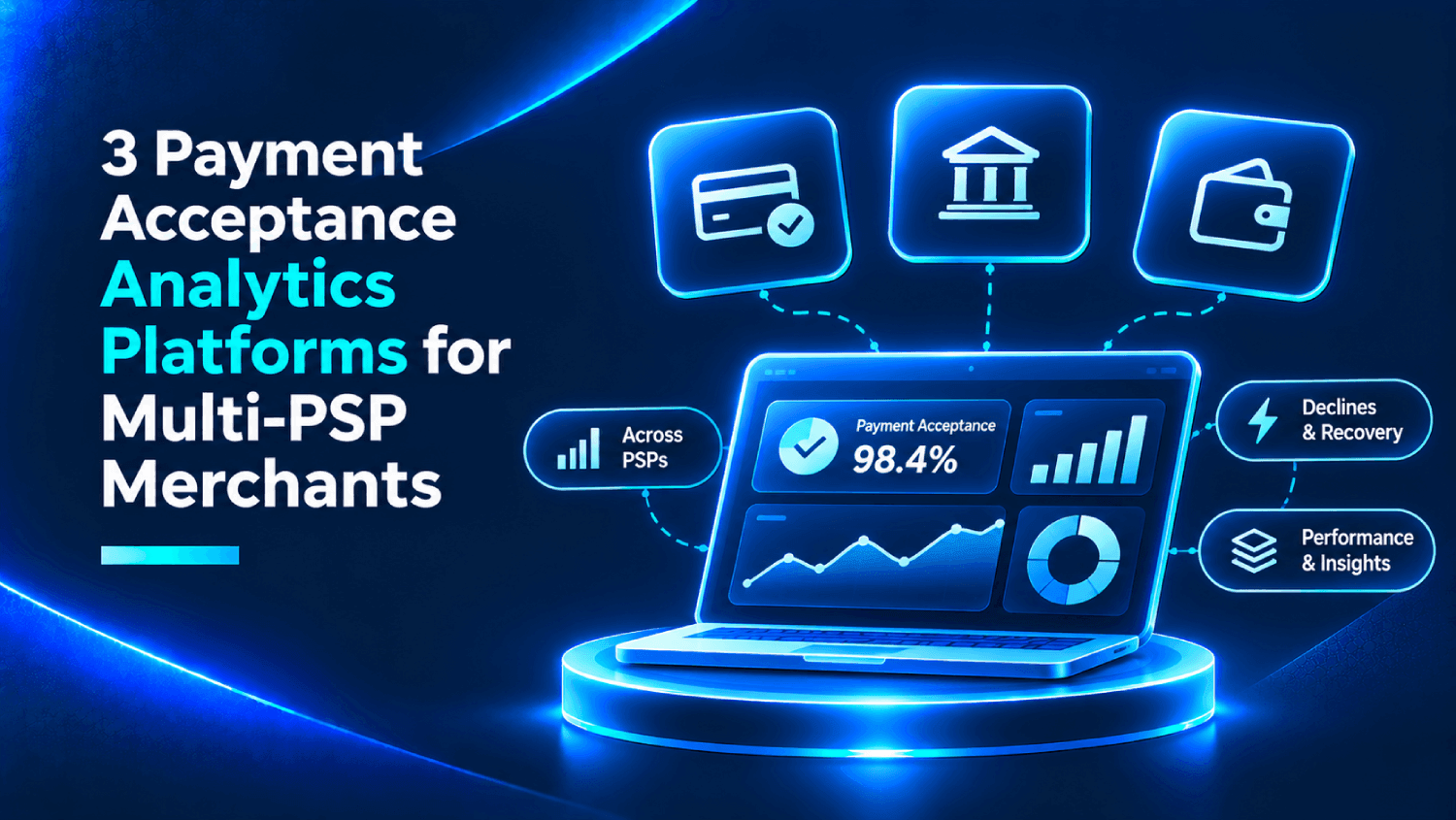
Multi processor payment analytics software for merchants aggregates authorization, decline, and processor-performance data from every PSP into a single normalized view, exposing acceptance gaps that individual PSP dashboards structurally cannot show. The leading platforms in this category are Pagos, Spreedly Insights, and Gr4vy Analytics. Each connects to multiple processors via direct API ingestion or network tokenization infrastructure, surfaces authorization-rate dashboards and decline reason code breakdowns, and flags routing inefficiencies across your processor mix.
Why Your Existing PSP Dashboards Create a Blind Spot
Every major PSP gives you a dashboard. Stripe, Adyen, Braintree, Worldpay: they all show authorization rates, decline breakdowns, and dispute counts. The problem is that each one defines these metrics differently, buckets decline codes differently, and counts retries differently.
Say your team processes across Stripe and Adyen. Stripe reports a 91% authorization rate for US Visa debit. Adyen reports 88% for the same card type. Neither dashboard tells you whether those declines are hitting the same BIN ranges, whether one processor handles certain issuing banks better than the other, or whether a routing change could recover 2 or 3 points of authorization rate. Each dashboard optimizes for making its own numbers look interpretable, not for giving you a cross-processor signal.
This is not a minor gap. To illustrate the scale: a merchant running $5 million per month in card volume and experiencing a 2-point authorization rate difference between processors on the same card type could, in that specific scenario, recover roughly $100,000 per month by routing correctly. That worked example scales proportionally with your volume and processor spread, but the actual recovery depends on your card mix, issuer relationships, and how systematically the gap is distributed. For a deeper look at how infrastructure decisions compound into margin outcomes, see the hidden costs eating fintech SaaS margins.
The platforms below all solve a version of the same problem: they normalize event-level authorization data across processors, so your payments team can run a genuine multi-PSP authorization analytics comparison instead of reconciling three PDFs.
What Should a Multi-PSP Analytics Platform Actually Do?
Before evaluating vendors, it helps to define what the category actually delivers at a functional level. The FintechSpecs PSP Analytics Coverage Test is a four-point checklist that maps to the four jobs a cross-PSP platform must perform before it earns a place in a merchant’s stack.
The FintechSpecs PSP Analytics Coverage Test
1. Normalized event ingestion. The platform must ingest raw authorization events from each processor in real time or near-real time and map them to a consistent schema. Without normalization, an “insufficient funds” decline from Stripe and a “51” decline code from Adyen are invisible to each other.
2. Cross-PSP authorization rate comparison. You need to compare approval rates for the same card type, BIN range, or customer segment across processors side by side. If the platform only shows aggregate auth rates per processor, it has not solved the problem.
3. Decline reason code taxonomy. Decline codes from card networks and issuers map inconsistently across acquirers. A good platform standardizes this into clear categories: soft declines (retriable), hard declines (not retriable), and network-specific codes that indicate issuer behavior worth escalating to your account manager.
4. Routing signal output. The analysis is only useful if it feeds a decision. The best platforms either integrate directly with an orchestration layer to push routing rules, or export structured data to a BI tool where your team can act on it. Analytics that stops at a pretty chart has limited operational value.
Which Platforms Pass the Cross-PSP Analytics Coverage Test?
Three platforms stand out for multi-PSP merchants evaluating authorization-rate dashboards and decline analytics. The comparison below is based on each company’s public product documentation and stated positioning. We did not test these platforms directly in a live merchant environment.
| Platform | Primary Data Model | PSP Connections | Auth-Rate Dashboard | Decline Code Mapping | Routing Integration | Pricing Transparency |
|---|---|---|---|---|---|---|
| Pagos | Event-level ingestion | Stripe, Adyen, Braintree, Worldpay, and others | Yes, cross-processor | Standardized taxonomy | Routing recommendations, no native orchestrator | Not publicly disclosed |
| Spreedly Insights | Tokenization + event capture | 190+ gateways via Spreedly vault | Yes, within Spreedly network | Mapped across network | Native (Spreedly orchestration) | Not publicly disclosed |
| Gr4vy Analytics | Cloud-native orchestration layer | Varies by integration | Yes, per-processor and blended | Yes | Native (Gr4vy orchestration) | Not publicly disclosed |
Pagos: Standalone Analytics Without Touching Your Routing Layer
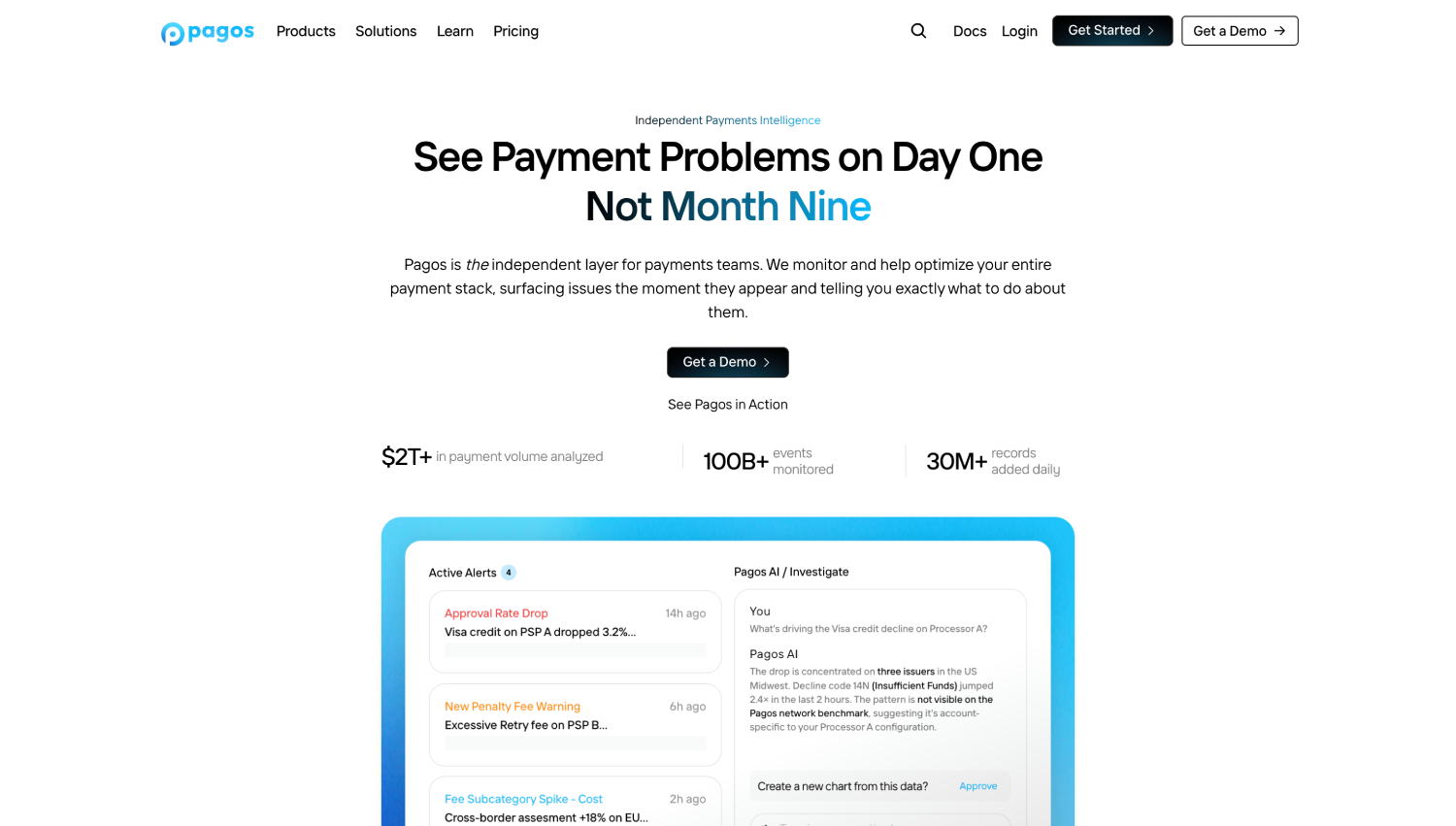
Pagos positions itself as a payment intelligence platform that sits outside your orchestration stack. It connects to your existing processors via API, ingests transaction-level event data, and builds a unified data model across your processor mix. The core product is a set of analytics tools called Canary, Loon, and Toucan, each focused on a different layer of payment data.
Canary handles monitoring and alerting on authorization rate shifts, surfacing drops before they compound. Loon focuses on card data enrichment and BIN-level insight, which matters for merchants who want to understand which issuing banks or card types are driving declines. Toucan is the visualization layer where teams build custom authorization-rate dashboards and run decline analytics across processors.
The key operational advantage of Pagos is that it does not require you to change your payment routing setup. If your team has already invested in a processor relationship, an acquirer contract, or a tokenization vault, Pagos reads from those systems rather than replacing them. This makes it a realistic option for payments teams that want cross-PSP visibility before committing to a full orchestration migration.
Pricing is not publicly listed on the Pagos website. Merchants evaluating Pagos should expect a custom quote based on transaction volume.
Spreedly Insights: Analytics Embedded in a Network Tokenization Layer
Spreedly connects merchants to more than 190 payment gateways through a single card vault and tokenization layer. Because every transaction flows through the Spreedly vault, Spreedly Insights has access to raw authorization event data across every processor in a merchant’s mix by default, without a separate ingestion step.
The practical implication is that the analytics are structurally tied to the tokenization infrastructure. Merchants who are already using Spreedly for multi-PSP tokenization get cross-processor authorization-rate data as a byproduct of the existing integration. For a merchant onboarding Spreedly specifically for analytics, the trade-off is that the full value of the platform requires running payment credentials through the Spreedly vault, which is a meaningful architectural decision.
The authorization-rate dashboard within Spreedly Insights breaks down approval rates by processor, card type, BIN, and geography. Decline code mapping normalizes issuer and network codes into a consistent taxonomy across gateways. Because Spreedly also offers orchestration, merchants can close the loop from insight to routing rule without leaving the platform.
Spreedly pricing is not publicly disclosed. The company positions the platform for enterprise and mid-market merchants with significant multi-processor volume, and pricing is negotiated based on transaction count and gateway connections.
Merchants comparing orchestration tools alongside analytics capabilities should also read the comparison of the best payment orchestration platforms for SaaS companies before deciding whether to consolidate analytics into an orchestration layer or keep them separate.
Gr4vy: Cloud-Native Orchestration with Native Analytics
Gr4vy is a cloud-native payment orchestration platform built on a multi-region, multi-tenant infrastructure model. Its analytics layer is embedded in the orchestration product, meaning authorization data flows into the reporting layer from every processor routed through Gr4vy’s infrastructure.
The authorization-rate dashboard in Gr4vy surfaces per-processor approval rates alongside blended rates, with the ability to filter by card type, country, and transaction amount. Decline analytics map network and issuer codes to a standardized set of categories, distinguishing between retriable soft declines and terminal hard declines.
The architectural distinction between Gr4vy and Pagos is meaningful: Gr4vy is a routing layer first, analytics layer second. If you route through Gr4vy, you get the analytics. If you use Gr4vy only for analytics without routing through it, the data model does not apply. This is the same constraint as Spreedly Insights, and it is worth naming explicitly when comparing options.
Gr4vy pricing is not publicly disclosed. Prospective customers go through a demo and scoping process before receiving a quote.
Standalone Analytics vs Embedded Analytics: Which Architecture Fits?
The most important structural decision for a payments team evaluating this category is not which platform has the better dashboard. It is whether you want analytics that are independent of your routing infrastructure or analytics that are built into it.
Platforms like Pagos are analytics-first. They ingest data from wherever transactions are processed and produce insight without requiring you to change how transactions flow. This suits merchants with established processor relationships, complex routing setups they cannot easily migrate, or teams that want to separate the analytics function from the routing function organizationally.
Platforms like Spreedly and Gr4vy are orchestration-first. The analytics are real and capable, but they only capture transactions that flow through the platform’s routing layer. The benefit is tight integration between insight and action: when the authorization-rate dashboard shows that Processor A outperforms Processor B for UK Mastercard debit, your team can update routing rules in the same interface. The constraint is that migrating your transaction flow to a new orchestration layer is a material engineering and commercial project.
Consider a Series B merchant processing $8 million per month across Stripe and Braintree. The team has issuer-specific decline patterns they cannot explain using either PSP dashboard. If they want insight within 30 days without a routing migration, Pagos is the faster path. If they are already planning an orchestration migration and want analytics as part of that build, Spreedly or Gr4vy makes the consolidation argument. The decision is not about which platform has better charts. It is about where your team can absorb the integration cost.
For teams building toward a more complete payment infrastructure decision, the best payment infrastructure tools for SaaS founders covers adjacent tooling that often sits alongside cross-PSP analytics in a mature payments stack.
Cross-PSP Acceptance Metrics: What to Measure and How to Read It
Multi processor payment analytics software for merchants is only useful if your team is measuring the right things. The following breakdown reflects the metrics that experienced payments operators track when diagnosing acceptance problems.
Authorization Rate by Processor and Card Type
The top-level authorization rate is a starting point, not a diagnosis. The useful signal is authorization rate segmented by card network (Visa, Mastercard, Amex), card type (credit, debit, prepaid), and issuing country. A 2-point gap in Visa credit approval between two processors is recoverable with routing. A 10-point gap in prepaid card approvals across all processors is likely a risk or eligibility issue that routing will not fix.
Decline Code Distribution
Decline reason codes fall into a small number of categories that drive different responses. Soft declines (do not honor, insufficient funds, card velocity) are retriable with appropriate timing. Hard declines (stolen card, lost card, do not retry) waste money if retried. Issuer-specific declines (declined by issuer, refer to card issuer) often indicate a relationship or configuration issue between the acquiring bank and a specific issuing bank, which your payment orchestration layer or acquirer account manager can sometimes address.
BIN-Level Performance
BIN (Bank Identification Number) analysis identifies which card-issuing banks or card programs are driving disproportionate decline rates. If a single issuing bank accounts for 40% of your soft declines across all processors, that is a signal worth investigating. Some cross-PSP analytics platforms, particularly Pagos through its Loon product, specialize in BIN-level enrichment that individual PSP dashboards rarely surface at this resolution.
Retry Rate and Retry Success Rate
Automatic retries on soft declines are standard, but the retry strategy matters. How long after the initial decline? How many times? On the same processor or a different one? A multi-PSP analytics platform should show you retry success rates by decline code and by processor so your team can tune the retry logic rather than guessing.
How Do Multi-PSP Analytics Platforms Handle Data Freshness?
Data latency is a real differentiator in this category. Event-level ingestion platforms that pull directly from processor webhooks or APIs can surface authorization data within minutes of a transaction occurring. Platforms that batch-sync daily are less useful for real-time decline monitoring, though they may be adequate for weekly trend analysis.
Pagos markets near-real-time monitoring through its Canary product, with alerting on authorization rate drops. Spreedly and Gr4vy capture data at the point of routing, which is inherently real-time for transactions flowing through their infrastructure. Merchants should ask vendors specifically what the data latency is between a transaction event and its appearance in the analytics dashboard, and what the update frequency is for aggregated metrics.
Frequently Asked Questions
What is multi-PSP payment analytics?
Multi-PSP payment analytics software ingests authorization, decline, and performance data from every payment service provider a merchant uses, normalizes it into a consistent schema, and surfaces cross-processor comparisons in a single dashboard. The goal is to identify authorization rate gaps, issuer-specific decline patterns, and routing inefficiencies that are invisible when you look at each PSP’s native reporting in isolation. These platforms either ingest data via API without touching your routing layer or are embedded in a payment orchestration infrastructure.
Can I use a cross-PSP analytics platform without changing my payment routing?
Yes, if you choose a standalone analytics platform like Pagos. It connects to your existing processors via API, reads transaction event data, and builds a unified data model without requiring you to route payments through a new infrastructure layer. Platforms embedded in orchestration tools like Spreedly and Gr4vy only capture data for transactions routed through their infrastructure, so they require a routing migration to deliver full cross-PSP visibility.
What authorization rate improvement can I expect from cross-PSP analytics?
No verifiable industry benchmark applies universally, and vendors do not publicly disclose average authorization rate improvements across their customer base. The practical range depends heavily on how much variance exists in your current processor mix and how systematically your team has addressed decline patterns before. The clearest case for the investment is when you can already see a gap in authorization rates between two processors for the same card type and have no way to diagnose the cause from your existing dashboards.
How do multi-PSP analytics platforms handle PCI compliance?
Standalone analytics platforms like Pagos work with transaction metadata and event-level data rather than raw card numbers, which limits their PCI scope. Platforms embedded in tokenization infrastructure like Spreedly operate as a PCI-compliant vault, meaning the card data stays within their certified environment. Any merchant evaluating these platforms should confirm the vendor’s PCI DSS scope and ask specifically how cardholder data is handled during ingestion. For a broader overview of PCI compliance tooling, see PCI DSS compliance tools for SaaS and payment companies.
How is a multi-PSP analytics platform different from a payment reconciliation tool?
Payment reconciliation tools match settled transactions to bank statements and identify discrepancies in what was processed versus what was paid out. Multi-PSP analytics platforms focus on the authorization layer: what happened before settlement, why transactions were declined, and how approval rates compare across processors. The two categories solve different problems and are often used together. For reconciliation tooling specifically, the best payment reconciliation software for fintech finance teams covers that category separately.
Do I need a payment orchestration platform to use cross-PSP analytics?
No. Analytics-first platforms like Pagos are explicitly designed to work without an orchestration layer. If you already have a stable multi-processor setup and want insight without a routing migration, analytics-only tooling is a faster and lower-risk path. If you are evaluating orchestration at the same time, bundling analytics into the orchestration platform simplifies your stack. The decision framework for payment orchestration covers the broader build-vs-buy question for teams at that stage.
What pricing model do multi-PSP analytics platforms typically use?
None of the three platforms reviewed here publish pricing publicly. The category generally uses enterprise pricing based on transaction volume, number of processor connections, and feature tier. Merchants should expect a custom quote process and prepare to share current processing volume and processor mix during the sales conversation. Contracts in this category are typically annual, with volume-based pricing tiers.
The Bottom Line on Multi-PSP Analytics
The core insight this category delivers is not new data. Your processors already generate authorization events at the transaction level. What cross-PSP analytics platforms provide is a consistent layer of translation across those events, so a decline from Braintree and a decline from Adyen are speaking the same language when your analyst builds a query.
The choice between platforms comes down to one structural question: do you want analytics that sits above your existing routing setup, or analytics that is built into the routing layer itself? Pagos answers the first question. Spreedly and Gr4vy answer the second. Neither answer is wrong. They map to different engineering timelines, different organizational readiness for infrastructure change, and different priorities on how quickly you need the insight versus how tightly you want it coupled to routing decisions.
If your payments team is already running reports from three separate PSP dashboards and manually reconciling the numbers in a spreadsheet, any of these platforms represents a material improvement in signal quality. The harder question is whether the insight will actually change your routing decisions, and whether your team has the operational bandwidth to act on what the dashboard surfaces. Analytics without a decision process attached is expensive reporting.