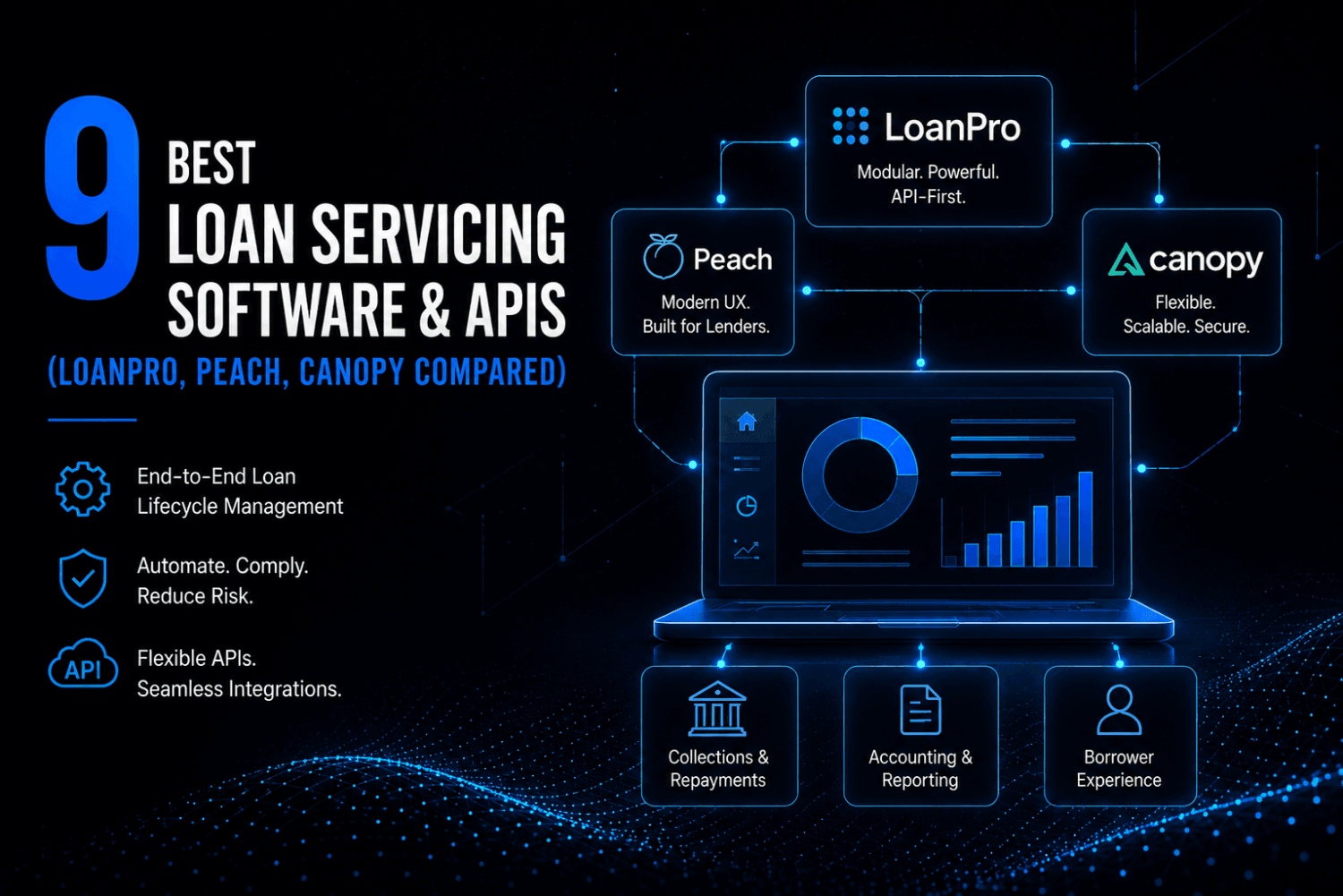

- Your loan origination system handles decisioning and disbursement. Your loan servicing software handles everything after the money moves, and those are genuinely different infrastructure problems requiring different systems.
- Modern servicing cores like LoanPro, Peach Finance, and Canopy are API-first platforms built for multi-product lending. Legacy systems like Nortridge and Nucleus were built for single-product banks and retrofitted for fintechs.
- Product support matrix matters more than feature lists. A platform that handles installment loans but cannot model revolving credit or BNPL without custom engineering will block your next product launch.
- The FintechSpecs Servicing Core Fit Test, outlined below, is the fastest way to filter your shortlist before you sit through six vendor demos.
- Pricing is rarely public. Most platforms require a call to get numbers. Where pricing is available on public pages, it is noted here. Where it is not, this article says so plainly.
The best loan servicing software for fintechs in 2026 includes LoanPro, Peach Finance, Canopy, Nortridge, Nucleus, TurnKey Lender, Lendsqr, LoanProlific, and Mortgage Automator. LoanPro leads for multi-product API-first fintechs. Peach Finance suits companies needing granular account state management. Canopy is the strongest option for revolving credit and BNPL. Legacy platforms like Nortridge serve established lenders with complex amortization needs. The right choice depends on your product type, API requirements, and how fast you need to ship.
Why Loan Servicing Software Is Not the Same as Your LOS
A loan origination system decides who gets a loan and on what terms. The moment funds disburse, the origination system’s job is largely finished. Everything after that, payment collection, interest accrual, statement generation, delinquency management, payoff calculations, charge-off processing, and regulatory reporting, lives in the servicing layer.
Most founding teams underestimate this gap. They build or buy a strong LOS, then assume billing and collections can be patched together with a payment processor and a spreadsheet. That works until it does not, usually around the time you want to launch a second product or hit a compliance audit.
Servicing software determines which loan products you can actually support at scale. A platform that only models flat-rate installment loans cannot run a revolving credit line or a merchant cash advance without significant custom engineering. Getting this wrong costs six to twelve months of re-platforming work, and it happens to otherwise well-run lending fintechs regularly. For a broader look at where servicing fits in the full infrastructure picture, the fintech infrastructure stack breakdown on FintechSpecs covers every layer from core banking to disbursement rails.
The FintechSpecs Servicing Core Fit Test
Before evaluating any vendor, run your requirements through these four checks. This framework, the FintechSpecs Servicing Core Fit Test, filters out roughly half the market before you sit through six vendor demos.
Product model check. List every loan product you plan to offer in the next 24 months: installment, revolving, BNPL, MCA, line of credit, or hybrid. Ask each vendor to show you a live implementation of each, not a slide deck.
API depth check. Can you trigger every servicing action programmatically? Payment posting, rate changes, forbearance, charge-offs, and payoff quotes should all be available via REST API. If a vendor requires a support ticket or a UI click to complete any of those, that is a ceiling on your automation.
State machine check. Ask vendors how they model account states. A well-architected servicing core tracks every account through a defined set of states, current, past due, delinquent, default, charged off, paid off, with transitions that are auditable and reversible. Platforms that blur state management create reconciliation problems at scale.
Compliance surface check. Confirm out-of-the-box support for truth-in-lending disclosures, SCRA protections, and state-by-state rate caps. If compliance configurations require professional services to adjust, every regulatory change becomes a billable project.
Product Support Matrix: What Each Platform Can Actually Handle
| Platform | Installment | Revolving Credit | BNPL | MCA / Revenue-Based | Mortgage | API-First |
|---|---|---|---|---|---|---|
| LoanPro | Yes | Yes | Yes | Yes | Limited | Yes |
| Peach Finance | Yes | Yes | Yes | Yes | No | Yes |
| Canopy | Yes | Yes | Yes | Limited | No | Yes |
| Nortridge | Yes | Yes | Limited* | Limited* | Yes | Partial |
| Nucleus | Yes | Yes | Limited* | No | Yes | Partial |
| TurnKey Lender | Yes | Limited | Yes | Limited | No | Partial |
| Lendsqr | Yes | Limited | No | No | No | Partial |
| LoanProlific | Yes | Limited | No | No | No | Partial |
| Mortgage Automator | Limited | No | No | No | Yes | No |
Sources: vendor documentation and public product pages. “Limited” indicates the feature exists but requires configuration or professional services that are not part of standard onboarding. *For Nortridge and Nucleus, BNPL and MCA support is assessed as limited based on their publicly documented product architecture, which centers on traditional amortizing loan structures; neither vendor’s public documentation lists BNPL or MCA as a native supported product type. This table reflects publicly available information and may not capture recent product updates.
API-First vs Legacy Platforms: What Actually Differs
| Dimension | API-First (LoanPro, Peach, Canopy) | Legacy / Retrofitted (Nortridge, Nucleus) |
|---|---|---|
| Core architecture | REST API as primary interface; UI is secondary | UI-first; APIs added on top of existing workflows |
| Payment posting | Programmatic, real-time | Often batch-based, manual overrides common |
| Product configuration | Self-serve via API or dashboard | Professional services typically required |
| Webhook / event support | Native event streams for account state changes | Limited or polling-based |
| Integration complexity | Weeks to sandbox; months to production | Months to sandbox; 6-18 months to full deployment |
| Typical buyer | Fintech startup, neobank, embedded lender | Bank, credit union, established private lender |
| Pricing model | Per-account or revenue share, often monthly | License fee plus implementation, sometimes per-seat |
The practical consequence of this architecture difference shows up in product velocity. An API-first platform lets an engineering team configure a new loan product, say a split-pay BNPL option with a 0% promotional period, in days. A legacy platform with retrofitted APIs requires a configuration ticket, a test environment refresh, and often a professional services engagement before the same product can go live.
The 9 Best Loan Servicing Software Platforms Ranked
1. LoanPro
LoanPro is the most cited platform in this category for a reason. It was built as a loan management system from the ground up with an API layer at its core, not bolted on later. The platform handles installment, revolving, BNPL, and MCA products on a single servicing core, which matters for fintechs that expect to expand their product set.
The platform’s data model separates loan configuration from account state, meaning you can change how interest accrues on a product without touching the accounts already on that product. That sounds like an engineering detail, but it becomes critical during regulatory changes or product repricing events affecting thousands of accounts simultaneously.
LoanPro does not publish pricing publicly. The company requires a sales conversation to quote, which is standard at this tier. According to their public product documentation, the platform supports automated payment processing, configurable rate structures, collections workflows, and compliance reporting. It ranks first in most SERP results for loan servicing software and lending core platforms, which reflects both brand investment and genuine product depth. Best for fintech startups to Series C lenders running multi-product portfolios.
2. Peach Finance
Peach Finance distinguishes itself with one of the most granular account state management systems among modern servicing cores. The platform models every account through explicit state transitions, with a full audit trail of what changed, when, and why. For a lender dealing with forbearance requests, modifications, or charge-off disputes, that audit trail is not a nice-to-have.
Peach supports installment, revolving credit, BNPL, and MCA structures. Its API documentation is among the most developer-friendly in the category, with clear endpoint references and sandbox environments that do not require a sales call to access. The platform has been used by several embedded lending companies building credit products on top of third-party platforms.
Peach’s investor-grade compliance tooling, including SCRA management and state-level rate cap enforcement, makes it a strong choice for lenders who anticipate regulatory scrutiny. Pricing is not public. Best for fintechs where compliance precision and account state auditability are non-negotiable requirements. Teams building embedded credit products for B2B platforms will find Peach’s model alignment particularly relevant.
3. Canopy
Canopy was built specifically around revolving credit and BNPL use cases, and that focus shows in the product. Its statement generation, minimum payment calculations, promotional rate handling, and credit limit management are purpose-built rather than adapted from an installment loan core.
The platform’s API covers the full post-origination lifecycle and includes native support for customer-facing servicing actions like payment scheduling, statement retrieval, and dispute initiation. Canopy also offers a white-labeled borrower portal, which is meaningful for lenders who do not want to build a full servicing UI in-house.
For MCA and revenue-based products, Canopy’s support is more limited. It is the right choice if your product roadmap centers on card-adjacent or revolving credit products. Pricing requires a sales engagement. Best for fintech lenders whose core product is a credit card, charge card, line of credit, or BNPL offering.
4. Nortridge Loan System
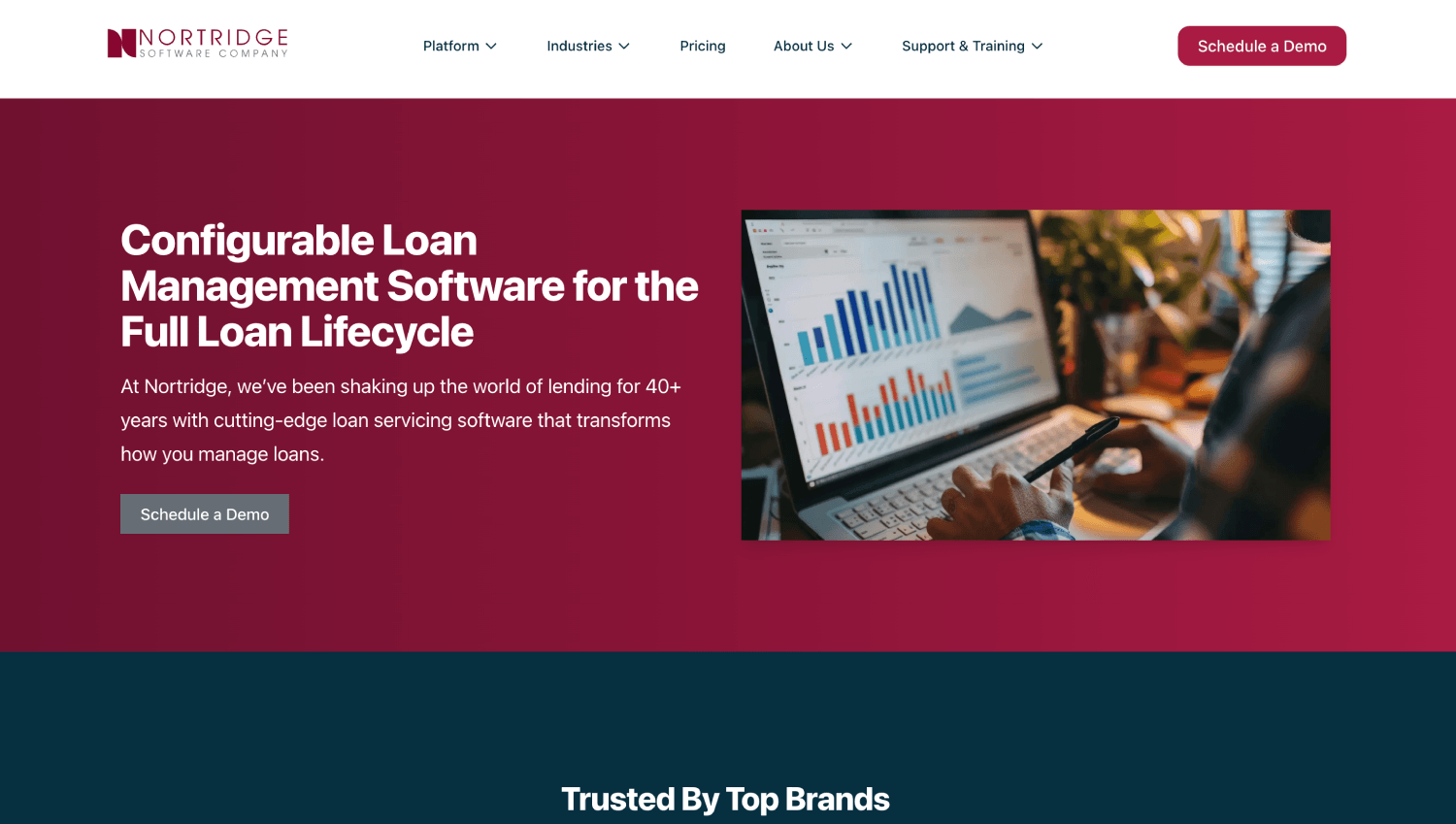
Nortridge is the longest-standing platform on this list and the clearest representative of the pre-API generation of servicing software. It handles complex amortization structures, mortgage servicing rules, and multi-lender participation arrangements that newer platforms have not yet needed to build.
The trade-off is integration complexity. Nortridge’s API layer exists, but it was added to a UI-first system. Developers building automated workflows will find more friction here than with LoanPro or Peach. Implementation timelines are measured in months, not weeks.
For established private lenders, credit unions, or community banks with complex loan structures and existing operational staff, Nortridge is a defensible choice. For a Series A fintech building a new product from scratch, it is not the right starting point. Best for lenders who need deep amortization modeling and are comfortable with longer implementation cycles.
5. Nucleus (Nucleus Commercial Finance)

Nucleus occupies a similar position to Nortridge: strong for commercial lending, mortgage, and traditional installment products, less suited for the BNPL and revolving credit products that dominate fintech product roadmaps today. Its reporting and compliance infrastructure are mature.
The platform targets larger financial institutions rather than early-stage fintechs, and its implementation model reflects that. Expect a professional services-heavy deployment and a longer runway to production. Best for established lenders in commercial or real estate lending who need a proven, regulation-tested platform.
6. TurnKey Lender
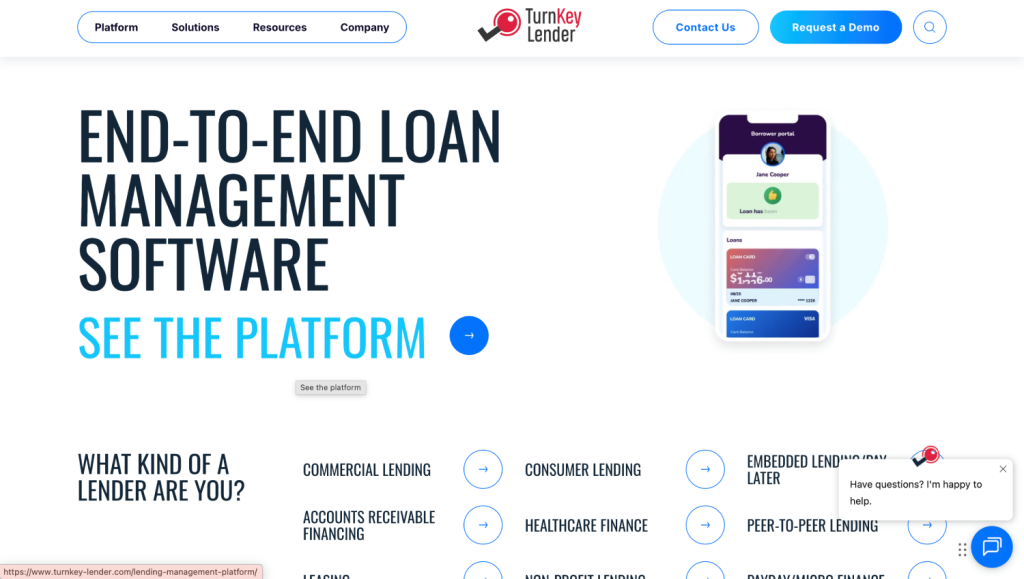
TurnKey Lender packages both origination and servicing in a single platform, which makes it appealing for small to mid-sized lenders who want to avoid managing two separate systems. The servicing module handles installment loans and BNPL structures, with payment automation, collections workflows, and borrower communication tools included.
The API coverage is partial. Core servicing operations are available programmatically, but the platform is not designed for teams who want to build a fully custom front-end on top of the servicing layer. For lenders who want a more complete out-of-the-box solution and are not running heavy engineering teams, TurnKey Lender offers a reasonable trade-off. Pricing is available in tiers on their public pricing page, making it one of the more transparent vendors in this category. Best for mid-market lenders or credit programs that need bundled origination and servicing without deep API customization.
7. Lendsqr
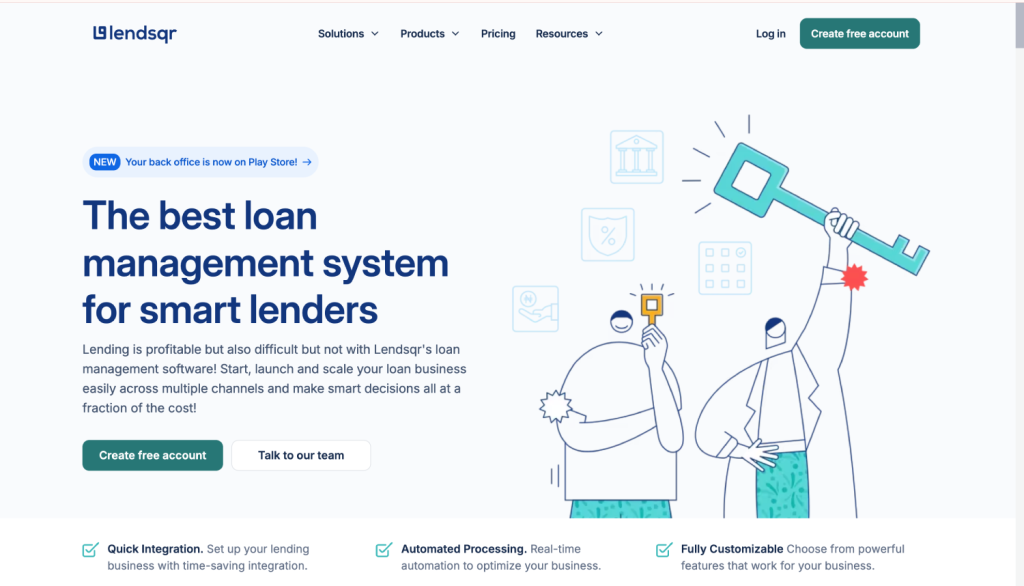
Lendsqr is a cloud-based loan management platform aimed at smaller lending operations, microfinance institutions, and emerging market lenders. It covers installment loan servicing with payment tracking, collections, and borrower management, and offers a free tier that makes it accessible to early-stage operations with minimal portfolio volume.
The platform’s API coverage and product flexibility do not match the tier-one platforms above. Revolving credit support is limited, and BNPL and MCA structures are not core to the product. For a US-based fintech building a multi-product lending company, Lendsqr’s ceiling will be reached quickly. Best for early-stage consumer lending operations or international lending programs that need simple installment servicing without enterprise-level investment.
8. LoanProlific
LoanProlific targets private lenders, hard money lenders, and small lending operations with a straightforward loan management interface. It handles installment loan tracking, payment processing, and basic collections without requiring significant setup or technical resources.
It is not an API-first platform in any meaningful sense, and it does not compete with LoanPro or Peach at the infrastructure level. The value proposition is simplicity and low cost of entry for operations that do not need programmatic servicing control. Best for individual private lenders or very small lending operations managing portfolios manually.
9. Mortgage Automator

Mortgage Automator serves a specific and narrow use case: private mortgage lenders, hard money lenders, and real estate-backed lending operations. Its servicing features are built around mortgage-specific workflows, including draw schedules, construction loan management, and trust accounting.
Outside of mortgage and real estate-backed lending, this platform is not relevant. It does not support consumer installment products, revolving credit, or BNPL. Best for private mortgage lenders who need purpose-built mortgage servicing without the overhead of a general-purpose platform.
How to Choose Between LoanPro, Peach Finance, and Canopy
These three platforms represent the genuine tier-one API-first servicing cores for fintechs in North America. The decision between them comes down to three variables: product mix, engineering capacity, and compliance needs.
Choose LoanPro if you are running or planning to run multiple loan product types on a single platform. Its breadth across installment, revolving, BNPL, and MCA structures on a single servicing core is the widest in this class. It also has the most documented market presence, which matters for vendor risk assessments during fundraising or bank partnership due diligence.
Choose Peach Finance if your product involves account modifications, forbearance, or complex lifecycle events that require a bulletproof audit trail. Its state machine architecture is genuinely differentiated, and its developer documentation is strong enough that a small engineering team can move quickly. Consider reading the fintech product and compliance readiness checklist before your vendor selection, since the compliance surface questions it covers map directly onto Peach’s strengths.
Choose Canopy if your primary product is a revolving credit line, a credit card program, or a BNPL offering. Canopy’s promotional rate handling and statement generation are purpose-built for those structures in a way that LoanPro and Peach, which started from installment loan roots, are not.
What Does Loan Servicing Software Actually Cost?
LoanPro, Peach Finance, and Canopy do not publish pricing publicly. All three require a sales engagement to receive a quote, which is standard for infrastructure platforms at this level of complexity. Pricing models in this category typically combine a platform fee with a per-account or per-active-loan fee, sometimes with a revenue share component for embedded lending programs.
TurnKey Lender publishes tiered pricing on their website, making it the most transparent option in the group. Lendsqr offers a free tier for small portfolio sizes. For the enterprise platforms, expect implementation costs in addition to recurring licensing, since most require professional services for initial configuration.
When evaluating total cost, factor in three numbers that are rarely discussed upfront: the implementation fee, the cost of professional services for future product changes, and the per-account fee at your projected portfolio size in year two. A platform that looks affordable at 5,000 active accounts can get expensive at 500,000. This is one of the hidden costs that erode fintech margins faster than founders expect.
A Worked Scenario: What Choosing the Wrong Platform Costs
Consider a hypothetical Series A fintech that launches with a personal installment loan product using a legacy servicing platform. Eighteen months later, they want to add a BNPL option for their merchant partners. The legacy platform supports BNPL in theory, but the configuration requires a professional services engagement. The cost estimate and timeline in this scenario are illustrative, actual figures vary by vendor and configuration complexity, but the structural problem is real and documented across fintech operators who have switched platforms mid-growth.
By contrast, a team running on an API-first platform like LoanPro or Canopy can configure a BNPL product in their sandbox within days, test it against a pilot merchant, and promote to production in a few weeks. The delta is not just cost. It is the difference between launching before a competitor does and launching months after them.
Frequently Asked Questions
What is a loan servicing system?
A loan servicing system is the software that manages every aspect of a loan after it has been funded. This includes payment processing, interest accrual, statement generation, delinquency tracking, collections workflows, payoff calculations, and regulatory reporting. It is distinct from a loan origination system, which handles the application, underwriting, and approval process. For fintech companies, the servicing system is the infrastructure that determines which loan products can be supported and how automated the post-funding workflow can be.
What is the difference between loan servicing software and a loan origination system?
A loan origination system manages the process of creating a loan, from application intake through credit decisioning to funding. A loan servicing system manages everything after the loan is funded, including payment collection, balance tracking, rate adjustments, and compliance reporting. Many lenders use separate systems for each function. Some platforms like TurnKey Lender bundle both, but purpose-built servicing platforms like LoanPro, Peach Finance, and Canopy focus exclusively on the post-origination lifecycle, which tends to produce deeper functionality in that layer.
Which loan servicing platforms have the best APIs?
LoanPro, Peach Finance, and Canopy are the strongest API-first servicing platforms for fintech companies in North America. All three expose full REST APIs that allow programmatic control over payment posting, account state changes, rate modifications, and compliance configurations. Peach Finance is frequently cited by developers for documentation quality and sandbox accessibility. Nortridge and Nucleus have API layers but were built as UI-first systems, which creates gaps in programmatic coverage for complex servicing actions.
Can a single loan servicing platform handle installment loans, revolving credit, and BNPL?
LoanPro and Peach Finance support all three product types on a single platform, along with merchant cash advances and revenue-based financing structures. Canopy handles installment, revolving, and BNPL well but has more limited support for MCA products. Legacy platforms like Nortridge and Nucleus can technically support multiple product types but typically require professional services configuration for each new product structure, which adds cost and time. Multi-product support out of the box is one of the primary reasons fintech lenders choose modern API-first platforms over legacy alternatives.
How long does it take to implement a loan servicing platform?
API-first platforms like LoanPro, Peach Finance, and Canopy typically allow sandbox access within days and production deployment within weeks to a few months, depending on integration complexity and product configuration requirements. Legacy platforms like Nortridge and Nucleus generally require six to eighteen months for full implementation, including professional services engagements for configuration and data migration. The implementation timeline is a material factor in vendor selection for growth-stage companies, since a delayed servicing core launch directly delays product revenue. For guidance on evaluating fintech vendors before committing, the FintechSpecs fintech vendor evaluation framework covers the key diligence steps.
Is there loan servicing software built specifically for BNPL?
Canopy is the closest to a BNPL-native servicing platform among the major options. Its promotional rate handling, minimum payment calculations, and statement generation were designed with card-adjacent and split-pay products in mind. LoanPro and Peach Finance also support BNPL structures, but both started from installment loan architectures and extended to BNPL. For companies whose entire product is a BNPL offering or a credit line rather than a traditional amortizing loan, Canopy’s core data model is the most naturally aligned.
What compliance features should loan servicing software include?
At minimum, a loan servicing platform should include out-of-the-box support for Truth in Lending Act disclosures, Servicemembers Civil Relief Act protections, state-level rate cap enforcement, and configurable late fee rules by jurisdiction. Platforms like Peach Finance and LoanPro both document compliance tooling prominently. Any platform that requires a professional services engagement to adjust compliance configurations for a new state creates a scaling problem as you expand geographically. You can cross-reference these requirements against the common compliance mistakes fintech startups make to identify gaps before signing a contract.
Do loan servicing platforms also handle loan origination?
Most purpose-built loan servicing platforms in this article do not include origination. LoanPro, Peach Finance, and Canopy are post-origination systems designed to integrate with your existing LOS or underwriting layer. TurnKey Lender is an exception, offering a bundled platform that covers both functions. If you are evaluating platforms that cover the full loan lifecycle including origination, the loan origination and management software comparison on FintechSpecs covers that space separately, since the buying decision for origination and servicing involves different criteria.
The Real Constraint Is Not Software. It Is Architecture.
The servicing platform you choose sets the architecture for your entire lending operation. It determines which products you can launch without re-platforming, how much your engineering team spends maintaining servicing logic versus building customer-facing features, and how long it takes to respond when a regulator asks for a specific account history report. These are not software features. They are operating constraints that compound over time.
For most growth-stage fintech lenders, the decision resolves to LoanPro for breadth, Peach Finance for compliance precision, or Canopy for revolving and card-adjacent products. Legacy platforms serve a real market, but that market is established lenders with existing operations, not companies building from scratch. The API-first platforms do not just move faster. They are structurally different in ways that matter as you scale.
Run your requirements through the FintechSpecs Servicing Core Fit Test before you enter any vendor sales process. The four checks, product model, API depth, state machine, and compliance surface, will surface your real constraints faster than any demo will. Buy accordingly.