
- Most credit teams believe explainability and speed are in tension. Modern AI underwriting platforms deliver both, generating machine-readable adverse action reasons in the same sub-second pass that scores an application.
- The real compliance risk is not adopting AI decisioning. Running opaque manual scorecards without documented model governance is harder to defend in a fair lending exam than a well-logged decisioning engine.
- Approval time is now a competitive moat. Lenders using automated decisioning pipelines close applications in minutes; those using hybrid manual review lose borrowers to whoever responds first.
- Platform choice splits cleanly by vertical: SMB lenders need alternative data connectors and cash flow logic; consumer lenders need FCRA-compliant adverse action workflows and thin-file scoring.
- EnFi, Accend, Feathery, and Casca each target distinct parts of the lending stack. Knowing which layer you are buying matters more than comparing feature checklists.
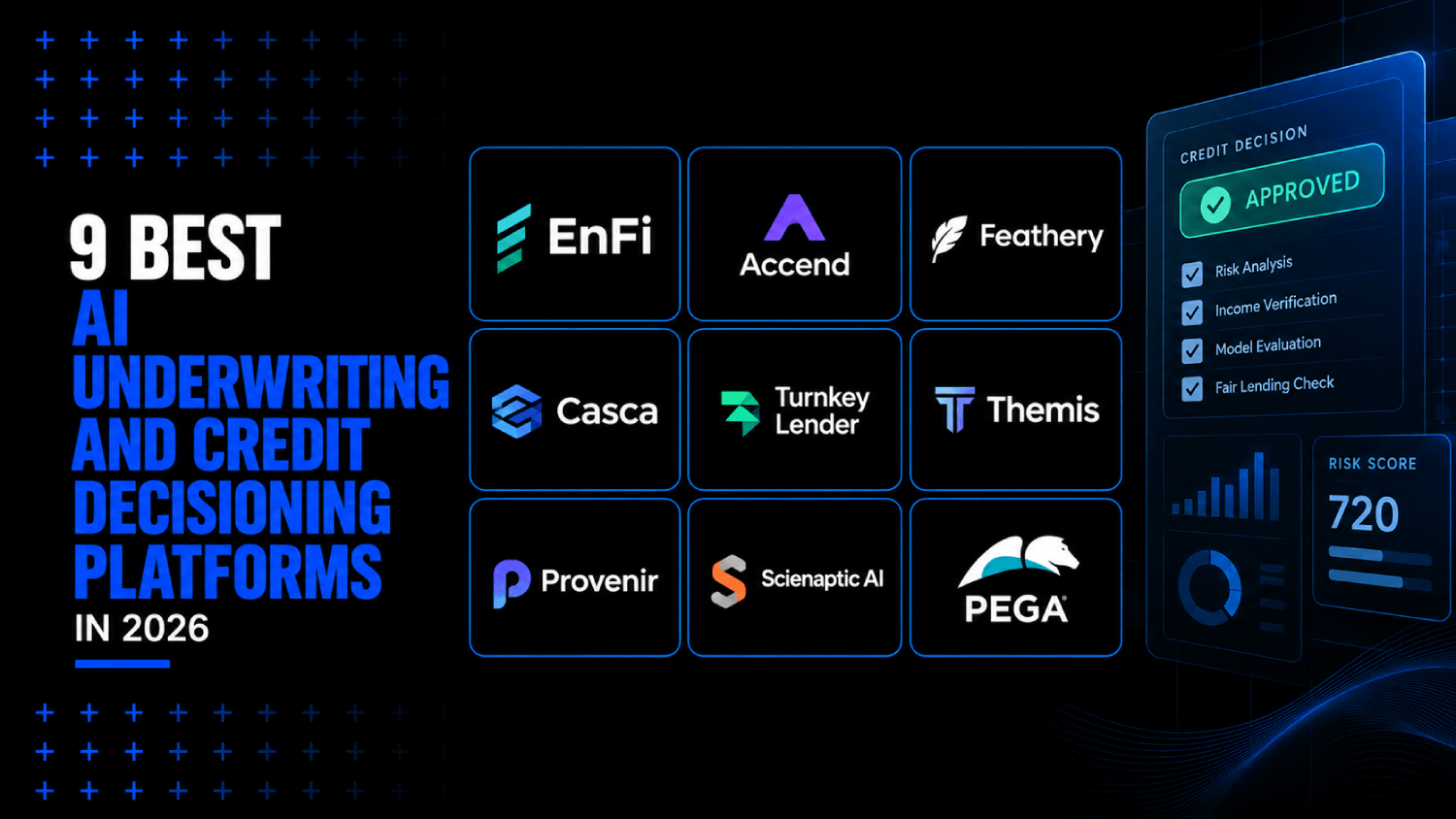
The best AI underwriting software platforms in 2026 are Encora (now EnFi), Accend, Feathery, Casca, Turnkey Lender, Themis, Provenir, Scienaptic AI, and Pega Decision Management. Each handles automated credit decisioning differently: some are end-to-end loan origination systems with embedded AI, others are standalone decision engines that plug into existing origination workflows. The right choice depends on whether you are underwriting consumers, SMBs, or merchants, and how much model governance documentation your compliance team needs.
Why Manual Scorecards Are a Regulatory Liability, Not a Safe Harbor
Credit teams that resist AI decisioning often frame it as the cautious choice. Regulators see it differently. A static scorecard with no version history, no documented feature importance, and no disparity testing is harder to defend in a CFPB or OCC examination than a modern decisioning engine with full audit logs and explainability outputs baked in.
The compliance burden has shifted. Under current fair lending guidance, lenders must be able to explain why a specific applicant was declined, not just describe the model in general terms. Manual scorecards rarely produce applicant-level adverse action reason codes with the specificity examiners now expect. AI platforms built for regulated lending generate those reasons automatically, ranked by impact, as part of the decision output.
Speed is the other pressure. A lender using a three-day manual review cycle is not competing with other lenders using three-day cycles. They are competing with platforms that return a decision in 90 seconds. Borrowers who can get approved elsewhere in minutes rarely wait.
How to Evaluate AI Underwriting Platforms: The FintechSpecs Decision Layer Test
Most comparison articles treat credit decisioning platforms as interchangeable feature lists. They are not. The relevant question is which layer of the underwriting stack you are actually buying. The FintechSpecs Decision Layer Test sorts platforms into four categories before you spend time on demos.
Layer 1: Rules Engine Only. You configure logic; the platform executes it. Fast to implement, but model governance and ML are your problem.
Layer 2: ML Scoring with Explainability. The platform owns the model, generates a score, and surfaces ranked reason codes. Works best when plugged into an existing origination system via API.
Layer 3: End-to-End Decisioning. Application intake, data enrichment, scoring, adverse action notices, and workflow all live inside one platform. Higher switching cost, faster time-to-first-decision.
Layer 4: Embedded Decisioning in LOS. The credit engine is part of a broader loan origination or origination-plus-servicing suite. You cannot buy the decisioning without buying the origination layer too.
Before running any vendor evaluation, assign each platform to a layer. Comparing a Layer 2 API to a Layer 4 LOS on the same feature matrix wastes everyone’s time. If you are already running a loan origination system, your actual need is probably a Layer 2 or Layer 3 integration, not a full platform replacement. Our guide to loan origination and management software covers the LOS layer separately.
Which AI Underwriting Software Should You Actually Use?
The nine platforms below span all four layers. Each entry notes the layer, the vertical fit, and the specific trade-off that most comparison articles skip.
1. EnFi
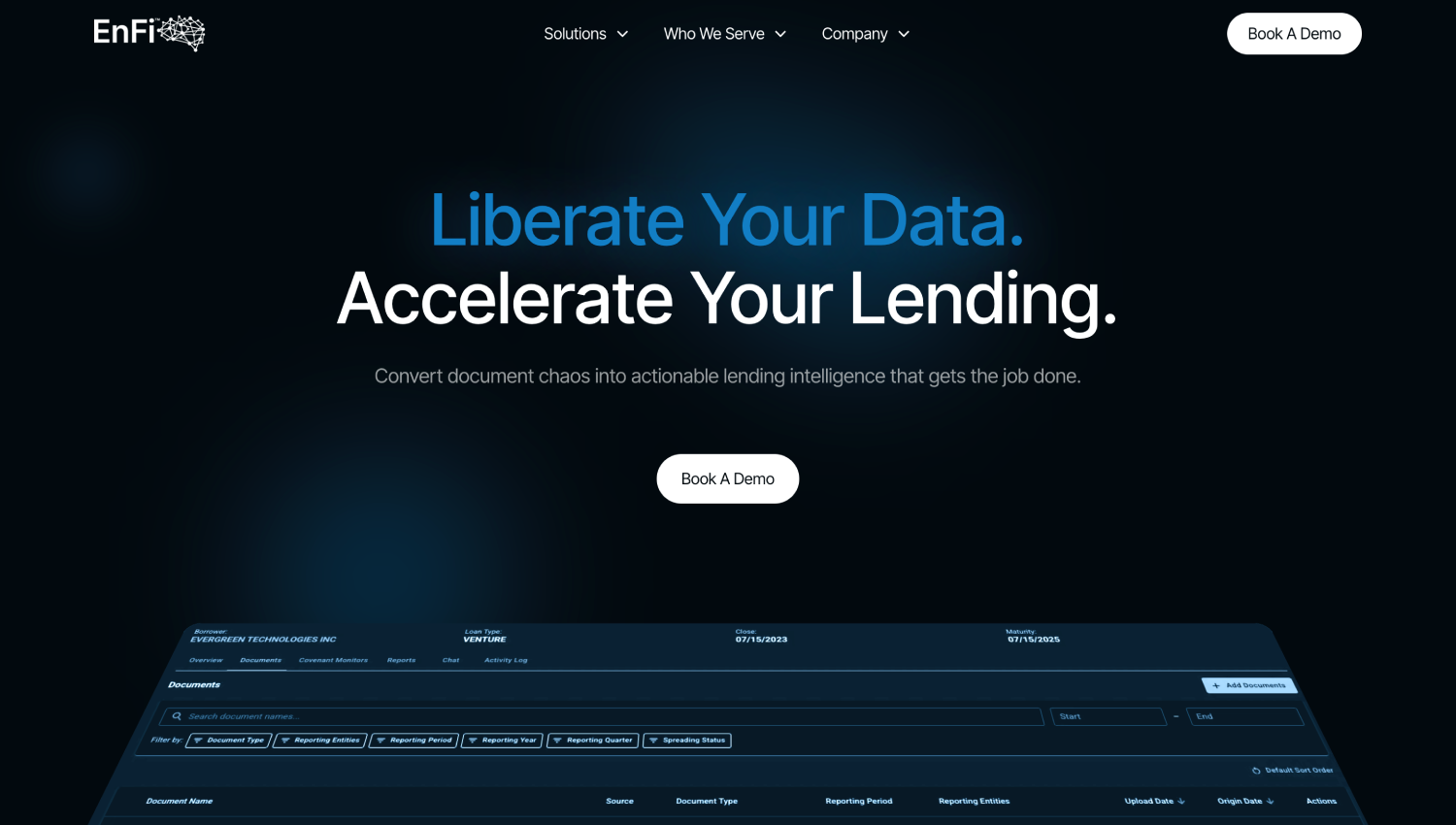
EnFi is a credit decisioning platform built specifically for SMB and commercial lenders. It connects directly to accounting software, bank statements, and business credit data to run automated underwriting on cash flow rather than traditional credit bureau scores alone. That makes it particularly useful for lenders serving businesses with short credit histories or irregular revenue patterns.
EnFi sits at Layer 3 in the Decision Layer Test. The platform handles intake, data aggregation, and the decisioning pass in a single workflow, which shortens time-to-decision significantly compared to assembling those components yourself. Its explainability output is designed to map to ECOA adverse action requirements, generating ranked reason codes that reference specific data inputs rather than abstract model weights.
Where EnFi is weakest: consumer lending. The platform is not built for FCRA permissible purpose workflows or consumer credit bureau dispute processes. If your portfolio is mixed, you will need a separate consumer decisioning layer.
2. Accend
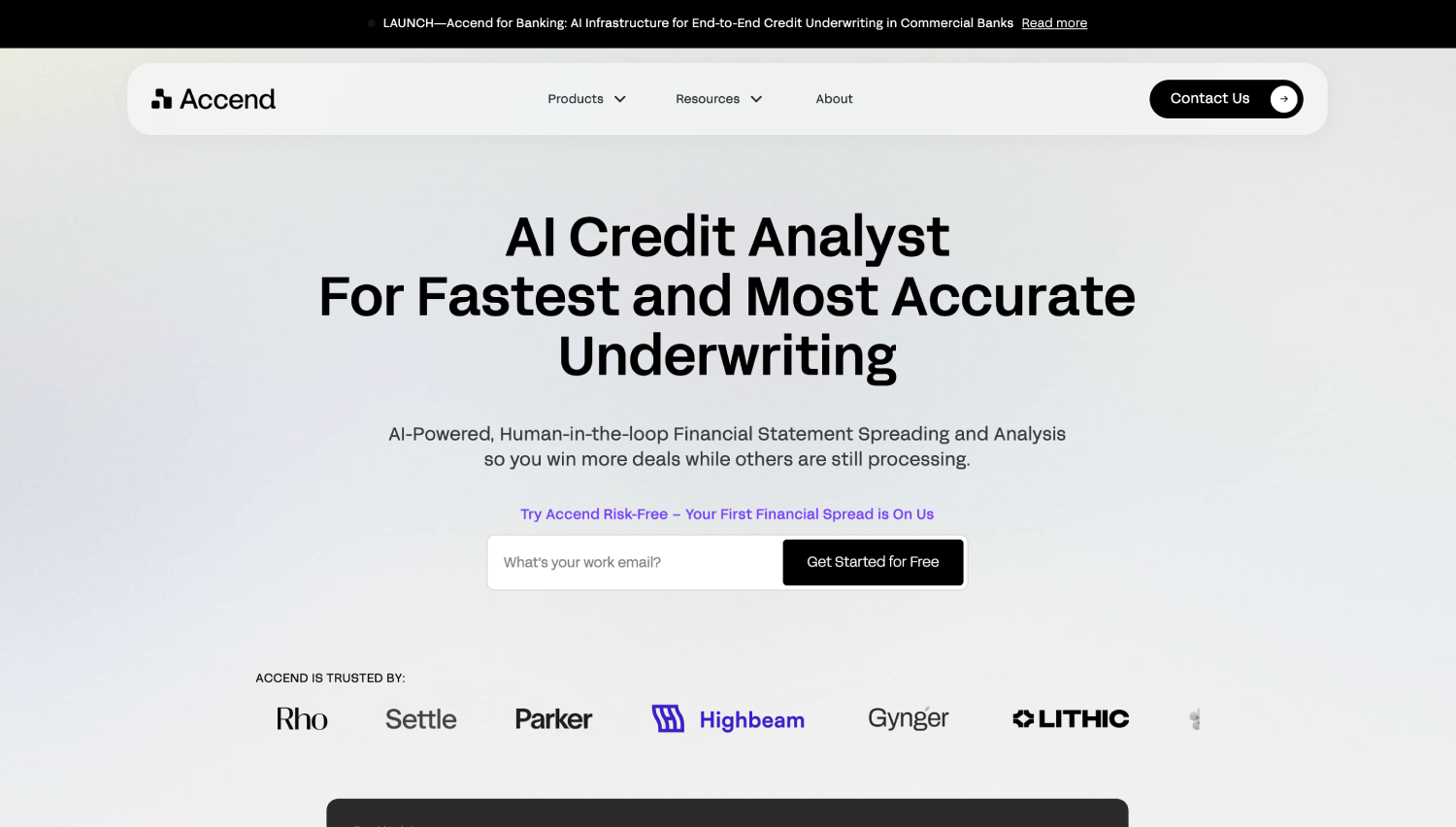
Accend positions itself as a decisioning infrastructure platform rather than a complete underwriting suite. It is a Layer 2 tool: it takes application data, runs it through configurable ML models, and returns a score with ranked adverse action reasons via API. Lenders bring their own origination system and plug Accend into the decision step.
The design philosophy is deliberately narrow. Accend does not try to be an LOS, a document ingestion tool, or a servicing platform. That focus means the API is clean and the integration surface is small, which matters when your engineering team is running other projects. It also means you own the orchestration logic that sits above and below the decision call.
Accend’s model governance tooling is a genuine differentiator. The platform logs every model version, every feature weight change, and every decision with a timestamp, producing the kind of audit trail that model risk management teams require under SR 11-7 guidance. For lenders who have already been through a model validation examination, that documentation layer is worth significant time savings.
3. Feathery
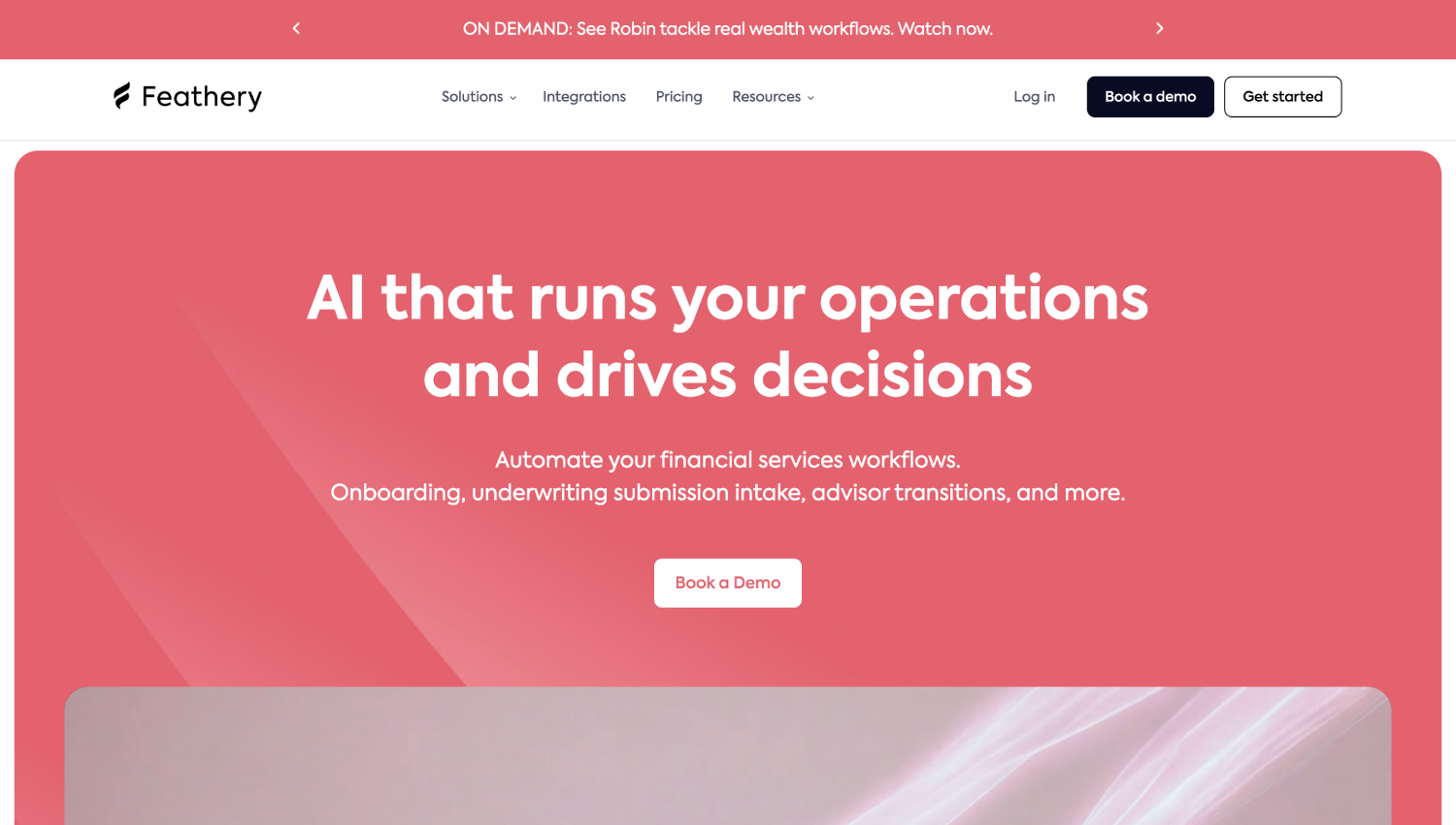
Feathery enters the list from a different angle. It is primarily a form and workflow builder that has built conditional logic and decision-routing capabilities used by lending teams for application intake and pre-qualification flows. In the Decision Layer Test it occupies a hybrid position between Layer 1 and Layer 3, depending on how deeply teams configure it.
Where Feathery earns its place here is in the application experience layer. Many lenders have a capable decisioning engine but a fragile, developer-dependent application form that takes weeks to update when products change. Feathery lets credit and product teams modify intake flows, branching logic, and data collection rules without engineering tickets. That agility compounds over time as regulatory requirements and product terms evolve.
Feathery is not a scoring engine. Teams that need it to replace a credit model are looking at the wrong product. It fits best as the front-end orchestration layer feeding a dedicated decisioning API.
4. Casca
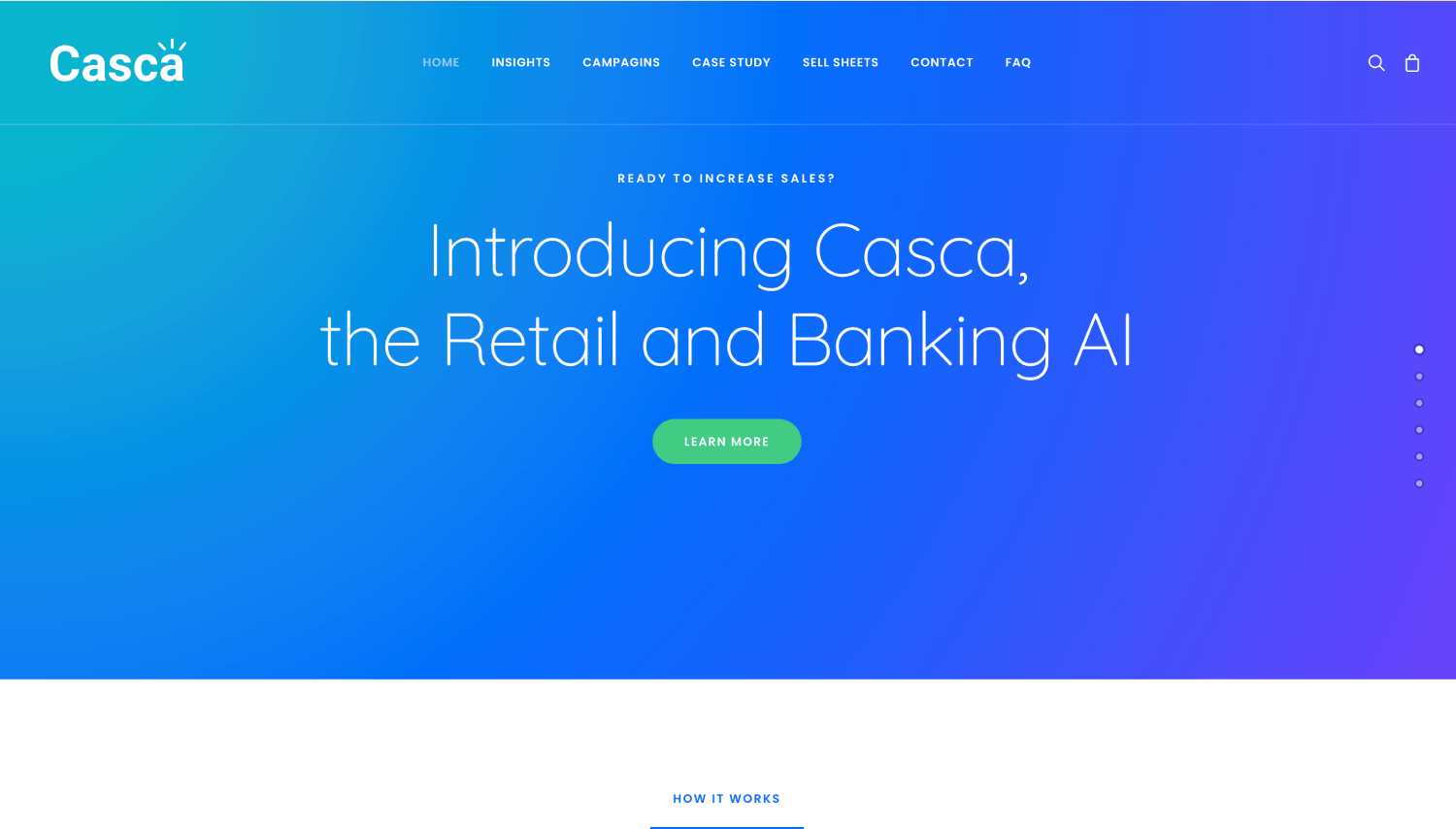
Casca is an AI-native loan origination and underwriting platform targeting community banks and credit unions making commercial loans. It automates document collection, spreading financial statements, and generating credit memos, with a decisioning layer that produces structured output credit analysts can review and approve.
Casca sits at Layer 4. The decisioning is embedded in the origination workflow, which means you are evaluating the full platform, not just the AI component. That is a meaningful commitment, but it also means the explainability output is formatted for human review rather than API consumption. Credit analysts see a structured memo with supporting data, not raw reason codes. For institutions where a human still makes the final call, that format is more useful.
The platform’s focus on community banks means it is built for relationship lending workflows where an analyst is in the loop, not fully automated consumer decisioning. If you are building toward touchless approval, Casca is not the right fit. If your underwriters spend hours spreading financials and drafting memos, it addresses a real cost center. See our loan origination software comparison for context on how Casca fits alongside LOS alternatives.
5. Turnkey Lender
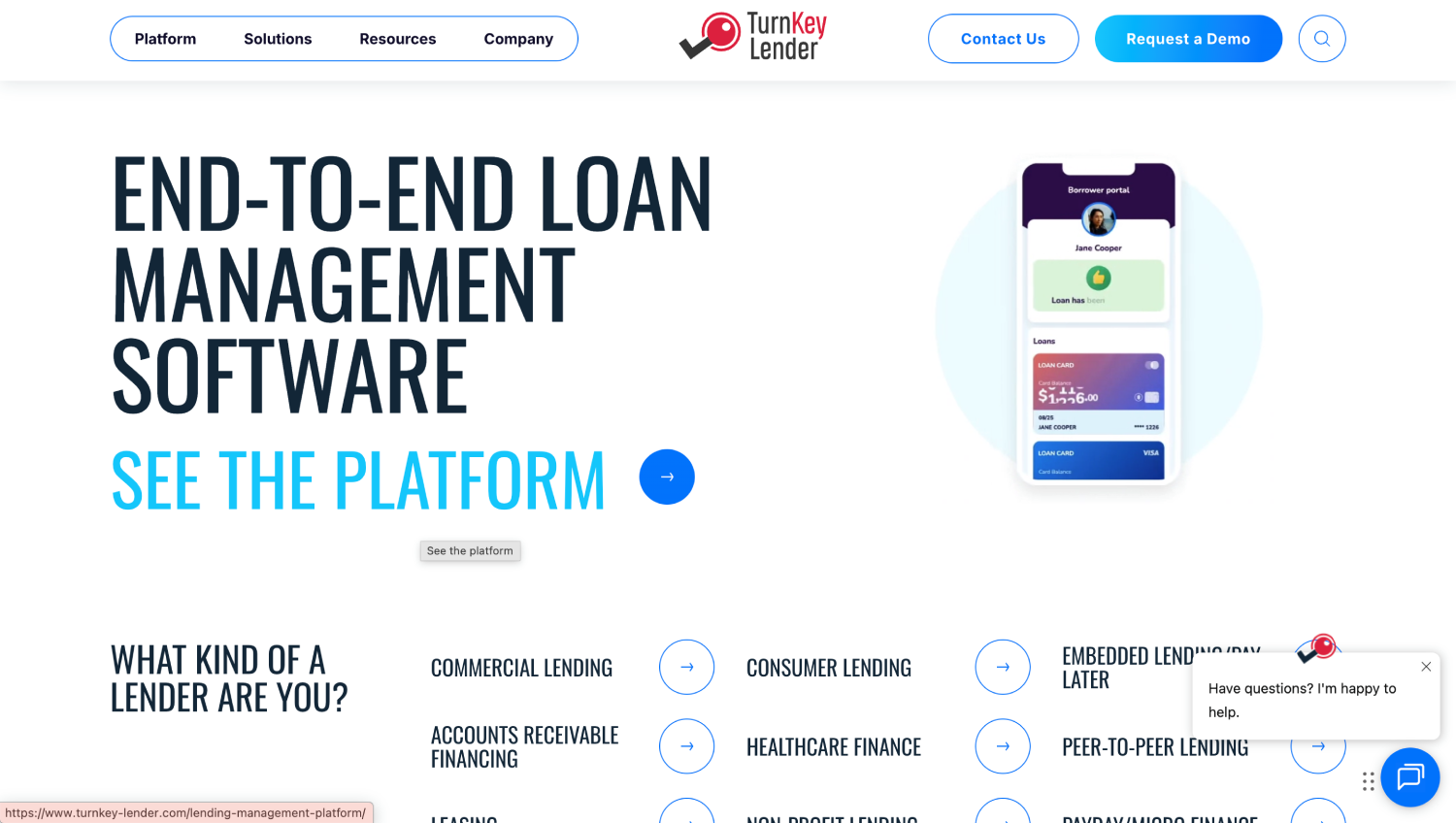
Turnkey Lender is an end-to-end lending platform that includes automated underwriting as one module within a broader loan origination, servicing, and collections suite. The decisioning engine uses behavioral scoring and bureau data, and the platform covers consumer, SMB, and embedded lending verticals.
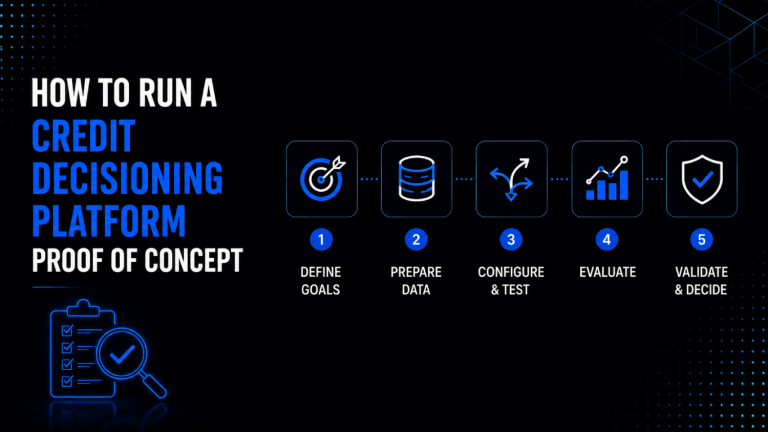
It is a Layer 4 product. The upside is that a lender can run their entire operation on one platform. The downside is that the decisioning module is not available as a standalone API, so teams that already have an LOS cannot buy just the AI underwriting component. Turnkey Lender’s public documentation notes support for explainable AI decisioning and configurable credit policies, though the depth of adverse action reason code generation should be verified directly against your specific lending vertical during a proof of concept. Our guide to running a credit decisioning platform PoC covers exactly how to structure that validation.
6. Themis
Themis is a compliance management platform that intersects with AI underwriting through its model governance and fair lending documentation workflows. It does not score applications. What it does is give compliance and model risk teams a structured environment to document model testing, track fair lending disparity analysis, and manage the audit trail that regulators examine.
The reason it belongs on this list is that many lenders buying an AI decisioning engine underestimate the governance overhead. A fast, accurate model that cannot survive a fair lending audit is not a net positive. Themis functions as the compliance layer that sits above your decisioning platform, not as a replacement for it. Teams running Scienaptic or Provenir often pair them with a governance tool like Themis to satisfy model risk management requirements.
7. Provenir
Provenir is a data and AI decisioning platform for financial services. It covers credit risk, fraud, and onboarding decisioning through a no-code rules engine combined with ML model integration. Provenir is a Layer 3 platform: it handles data ingestion from multiple sources, applies configurable decisioning logic, and produces outputs with explanation.
Provenir’s strongest vertical fit is consumer financial services, particularly for mid-market and enterprise lenders that need to run high decisioning volumes with real-time data enrichment. The platform connects to bureau data, alternative data sources, and internal behavioral data in a single orchestrated pass. That data orchestration layer is where Provenir differentiates from simpler rules engines, though it also means implementation complexity is higher than a point-solution API. Provenir does not publicly list pricing; contract terms are negotiated directly.
8. Scienaptic AI
Scienaptic AI is a credit underwriting platform that focuses on alternative data and ML-based scoring for consumer and small business lenders. The platform is designed to increase approval rates on thin-file and near-prime applicants by incorporating non-traditional data signals alongside bureau data. Its explainability layer generates ECOA-compliant adverse action reasons tied to the specific alternative data features that drove a decision.
Scienaptic positions itself directly against the argument that AI decisioning introduces fair lending risk. Its fair lending testing and disparity monitoring are built into the platform rather than bolted on, which matters when a model uses alternative data inputs that could act as proxies for protected classes. For lenders trying to expand credit access without expanding regulatory exposure, that built-in disparity testing is a material feature, not a marketing claim.
Scienaptic is a Layer 2 platform with Layer 3 capabilities depending on integration depth. It works best for lenders with an existing LOS who want to replace or augment a bureau-only scorecard with an ML model that can handle thin-file applications. Pricing is not publicly listed.
9. Pega Decision Management
Pega Decision Management is an enterprise-grade decisioning platform that financial institutions use for credit, fraud, and customer management decisions at scale. It is a Layer 3 platform with a strong rules engine, ML model management, and a next-best-action framework that consumer banks use to orchestrate decisions across multiple products simultaneously.
Pega is not built for seed-stage lenders. The implementation footprint is large, the licensing structure is enterprise-only, and customization requires Pega-credentialed developers. For a large bank or established financial institution processing millions of decisions monthly across multiple product lines, Pega’s decisioning infrastructure is genuinely powerful. For a Series A fintech, the switching cost and implementation timeline make it the wrong starting point.
The reason to include Pega here is that many mid-market lenders encounter it as an incumbent system and need to decide whether to build on it or replace it. Its model governance tooling and audit trail are mature, and its explainability outputs are well-documented for regulatory purposes. That history matters in examination contexts where vendor credibility is a factor.
How Do These Platforms Compare on Explainability and Fair Lending Compliance?
Explainable AI in credit decisioning means two distinct things, and most vendors conflate them. The first is technical explainability: the ability to identify which input features contributed most to a specific score. The second is regulatory explainability: the ability to translate those features into ECOA or FCRA-compliant adverse action reason codes that a borrower can understand and that a regulator can audit.
A platform can have excellent technical explainability and still fail the regulatory test. Adverse action notices must cite specific, principal reasons for denial in plain language. A reason code that says “Model Feature 14 weight: -0.34” is technically correct and legally insufficient.
| Platform | Decision Layer | Vertical Fit | Adverse Action Reason Codes | Fair Lending Disparity Testing | Model Governance Audit Trail | Pricing Model |
|---|---|---|---|---|---|---|
| EnFi | Layer 3 | SMB / Commercial | Yes, ECOA-mapped | Partial | Yes | Not publicly listed |
| Accend | Layer 2 | SMB / Consumer | Yes, ranked by impact | Yes | Yes, SR 11-7 aligned | Not publicly listed |
| Feathery | Layer 1-3 (varies) | Any (intake layer) | Not a scoring engine | Not applicable | Workflow logs only | Tiered SaaS; public pricing available |
| Casca | Layer 4 | Commercial / Community Bank | Structured memo format | Analyst-driven | Yes | Not publicly listed |
| Turnkey Lender | Layer 4 | Consumer / SMB / Embedded | Configurable | Verify on PoC | Yes | Not publicly listed |
| Themis | Governance layer | All verticals (overlay) | Not a decisioning tool | Yes, structured | Yes, purpose-built | Not publicly listed |
| Provenir | Layer 3 | Consumer / Enterprise | Yes | Yes | Yes | Not publicly listed |
| Scienaptic AI | Layer 2-3 | Consumer / Thin-file | Yes, ECOA-compliant | Yes, built-in | Yes | Not publicly listed |
| Pega Decision Mgmt | Layer 3 | Enterprise / Multi-product | Yes, mature | Yes | Yes, mature | Enterprise contract only |
None of the platforms above publish per-decision pricing publicly as of July 2026. All require direct engagement for a quote. That is common in credit infrastructure, where pricing depends on decision volume, data source integrations, and implementation scope. Budget conversations should start with expected monthly decision volume and grow from there.
SMB Lending vs Consumer Lending: Which Platform Fits Which Vertical?
The decisioning logic for SMB lending and consumer lending is structurally different, and most platforms are genuinely better at one than the other.
SMB underwriting relies heavily on cash flow analysis, business credit data, bank statement parsing, and sometimes accounts receivable aging reports. The credit decision often involves a human analyst at some point, especially for loans above a certain threshold. The alternative data that matters most is business performance data, not consumer behavioral data. EnFi and Casca are built for this environment.
Consumer underwriting at volume needs touchless automation, FCRA-compliant adverse action workflows, bureau integration, and thin-file scoring capability. The decision speed expectation is different: a consumer applicant waiting 20 minutes feels friction; an SMB applicant waiting 20 minutes is used to waiting days. Scienaptic AI and Provenir are better fits for high-volume consumer decisioning.
Embedded lending, where a SaaS platform or marketplace offers credit to its users, has its own requirements: the decisioning API must integrate cleanly with the host platform, return fast enough not to interrupt user flow, and generate outputs that the host can render without building a compliance layer from scratch. For embedded use cases, Accend’s API-first design and clean integration surface make it worth evaluating first. Teams building embedded credit products should also review our overview of embedded credit APIs for B2B platforms.
Can AI Underwriting Software Pass a Fair Lending Audit?
Yes, with conditions. The platforms that pass fair lending audits are the ones where the lender has done three things before the examiner arrives: documented the model’s training data and feature selection rationale, run and logged disparity analysis across protected class proxies, and mapped every adverse action reason code to a plain-language explanation that meets ECOA and Regulation B requirements.
The platforms that create fair lending exposure are not the AI platforms. They are the manual scorecards with no documentation, the Excel-based overrides with no audit log, and the policy exceptions approved verbally with no record. Examiners increasingly expect lenders to produce model risk documentation similar to what bank regulators defined in SR 11-7 guidance, even for non-bank lenders. AI platforms with built-in governance tooling make that documentation easier to produce, not harder.
Alternative data introduces additional scrutiny. If a model uses data inputs like rent payment history, cash flow patterns, or educational data, the lender must demonstrate those inputs are not acting as proxies for race, national origin, or other protected classes. Scienaptic AI builds that disparity testing into its platform. Accend provides the audit trail that lets a third-party validator run the analysis. Teams relying on alternative data should also understand the underlying data sources being enriched, which our guide to data enrichment APIs for underwriting covers in depth.
One practical point most vendors do not lead with: the adverse action reason code is a legal document. It is mailed or disclosed to the applicant and must meet specific statutory requirements. A platform that generates reason codes internally but does not format them for regulatory disclosure has done half the job. Verify this output specifically during your proof of concept, not during procurement.
What Does Alternative Data Underwriting Actually Mean in Practice?
Consider a small landscaping business applying for a $75,000 equipment loan. The owner has a 640 personal credit score and a two-year-old business with no business credit history. A bureau-only scorecard either declines the application or prices it at a rate the business cannot afford.
A decisioning platform using alternative data analyzes 18 months of business bank statements, identifies consistent cash inflows from recurring commercial contracts, notes low overdraft frequency, and observes a rising monthly revenue trend. The model scores the application as lower risk than the bureau score implies. The decision: approved at a rate that reflects actual cash flow risk rather than thin-file uncertainty.
That scenario is not hypothetical in structure. It is the operating logic behind platforms like EnFi and Scienaptic. The practical prerequisite is that the lender has permission to access that bank statement data and has a data connection to retrieve it. That connection is a data API layer, not the decisioning platform itself. The two are separate products. Decisioning platforms consume enriched data; they do not produce it. See our cash flow underwriting platform comparison for the data layer that feeds these engines.
What Should Be in a Credit Decisioning Platform RFP?
Most vendor conversations start too broad. A sharper evaluation starts with five specific questions that force the vendor to show their work.
- Show us the actual adverse action reason code output for a declined application, formatted as it would be disclosed to an applicant.
- How does the platform handle a model version change mid-month? What happens to in-flight applications?
- What does the audit log contain per decision, and what is the retention period?
- How is fair lending disparity analysis run, and who produces the output: the platform or the lender?
- What is the latency on a decisioning API call with three data source integrations active?
Vendors who cannot answer questions one and four specifically have not deployed in a regulated environment or have not deployed at scale. Both are disqualifying. The rest of the RFP process can follow standard vendor evaluation criteria, but those five questions separate platforms that have been through an audit from those that have not.
For broader compliance evaluation across your lending stack, our fintech product and compliance readiness checklist provides a structured framework that credit leads can run in parallel with platform evaluations.
Frequently Asked Questions
What is AI underwriting software?
AI underwriting software automates credit decisioning by applying machine learning models and configurable rules to application data, bureau data, and alternative data sources. Unlike traditional scorecards, AI underwriting platforms generate decisions with ranked explanations tied to specific input features, produce ECOA-compliant adverse action reasons, and log every decision with version-controlled audit trails. The category covers both standalone decision engines and embedded decisioning within loan origination systems.
How do AI credit decisioning platforms handle adverse action reasons?
Compliant platforms generate ranked adverse action reasons for each declined application, identifying the specific data inputs that contributed most to the negative decision and translating them into plain-language reason codes that satisfy ECOA and Regulation B disclosure requirements. The reason codes are generated per-applicant, not per-model-version, meaning each individual gets a specific explanation for their specific decision. Platforms vary significantly in how well they format these outputs for actual regulatory disclosure, which is worth testing explicitly during a proof of concept.
Can AI underwriting platforms use alternative data without triggering fair lending violations?
They can, but only with documented disparity testing. Any alternative data feature used in a credit model must be analyzed to confirm it does not act as a proxy for race, national origin, sex, or other protected classes. Platforms like Scienaptic AI build that disparity testing into the workflow. Platforms that do not include it require the lender to run that analysis independently, typically with a third-party model validator. Using alternative data without disparity documentation is the actual fair lending risk, not the use of alternative data itself.
What is the difference between a decisioning rules engine and an AI credit model?
A rules engine executes explicit if-then logic configured by a credit team: if debt-to-income exceeds 45%, decline. A credit model uses statistical or machine learning methods to weight input features and generate a probability score. Most modern platforms combine both. The rules engine handles hard cutoffs and regulatory guardrails; the ML model handles risk scoring within the approved population. Running only a rules engine is not inherently safer than running a model. It is simply more brittle when conditions outside the original rules appear.
Which AI underwriting platform is best for SMB lending?
EnFi and Casca are the strongest fits for SMB and commercial lending. EnFi handles automated decisioning using cash flow data and business financials, producing ECOA-mapped reason codes without requiring analyst involvement in every decision. Casca is better suited to community banks and credit unions where an analyst reviews a structured credit memo before a final approval. The choice between them depends on whether you want touchless automation or augmented analyst workflows.
How long does it take to implement an AI credit decisioning platform?
Implementation time varies by layer. A Layer 2 API integration with an existing LOS typically takes four to twelve weeks depending on data source connections and compliance review cycles. A Layer 4 platform replacement, where the decisioning engine is embedded in a new loan origination system, typically takes three to nine months. The compliance review of the model itself, including any required model validation under SR 11-7 guidelines, adds time that vendors rarely include in their implementation estimates. Budget that separately.
Do AI underwriting platforms work for thin-file borrowers?
The ones built for that use case do. Scienaptic AI is specifically designed to score thin-file applicants using alternative and non-traditional data. Generic decisioning platforms that rely primarily on bureau data will produce the same thin-file outcome as a traditional scorecard: a decline or a high-rate approval. The key variable is whether the platform can ingest and weight alternative data signals, and whether those signals have been validated to predict repayment behavior in your specific borrower population.
What is model governance in credit decisioning, and why do regulators care?
Model governance refers to the documented process for developing, validating, deploying, and monitoring a credit model over time. Federal Reserve SR 11-7 guidance, which applies broadly across regulated lending, requires financial institutions to maintain documentation of model assumptions, validation results, performance monitoring, and change management procedures. For non-bank lenders, examiners increasingly apply similar expectations. Platforms like Accend and Themis are specifically built to produce and maintain that documentation as a byproduct of normal operations, rather than requiring the lender to reconstruct it retroactively before an examination.
The Decision That Actually Matters
Every team evaluating AI underwriting software eventually converges on the same discovery: the platform is not the hardest part. The hard part is knowing which layer of your decisioning stack is broken and buying only what fixes that layer. A lender that needs better thin-file scoring does not need a new LOS. A lender with a sound model but no audit trail does not need a new scoring engine. Getting that diagnosis right before vendor conversations start saves months.
The compliance anxiety around AI decisioning is real but mostly misplaced. The platforms that generate regulatory risk are the ones without documentation, without disparity testing, and without reason code outputs that survive disclosure. Modern decisioning engines produce better documentation than manual scorecards ever did, because the documentation is generated automatically rather than assembled before an exam.
Speed, in the end, is the competitive argument that matters most for most lenders. A borrower approved in 90 seconds by a competitor is not coming back to compare rates. The lenders who have not yet adopted automated decisioning are not competing on underwriting quality. They are losing on response time before underwriting even begins.