
- Bank statement analysis APIs have moved well past basic OCR. Production-grade tools from Ocrolus, Heron Data, and Prism Data classify transactions, detect NSF patterns, calculate recurring income, and return underwriting-ready JSON in seconds.
- Cash flow signals predict default risk for thin-file borrowers more accurately than credit scores alone, according to lenders who have run both models in parallel.
- Document type and volume are the two variables that narrow a shortlist fastest. High-volume PDF processing favors Ocrolus; real-time bank-feed decisioning favors Heron Data or Plaid’s consumer reporting products.
- A bake-off between two finalists can realistically run in one week using sandbox credentials, a set of 50 anonymized statement files, and a scoring rubric tied to your specific underwriting attributes.
- Pricing is not publicly disclosed by most vendors in this category. Expect per-report or per-page models with volume tiers, and request a benchmark run before committing to a contract.
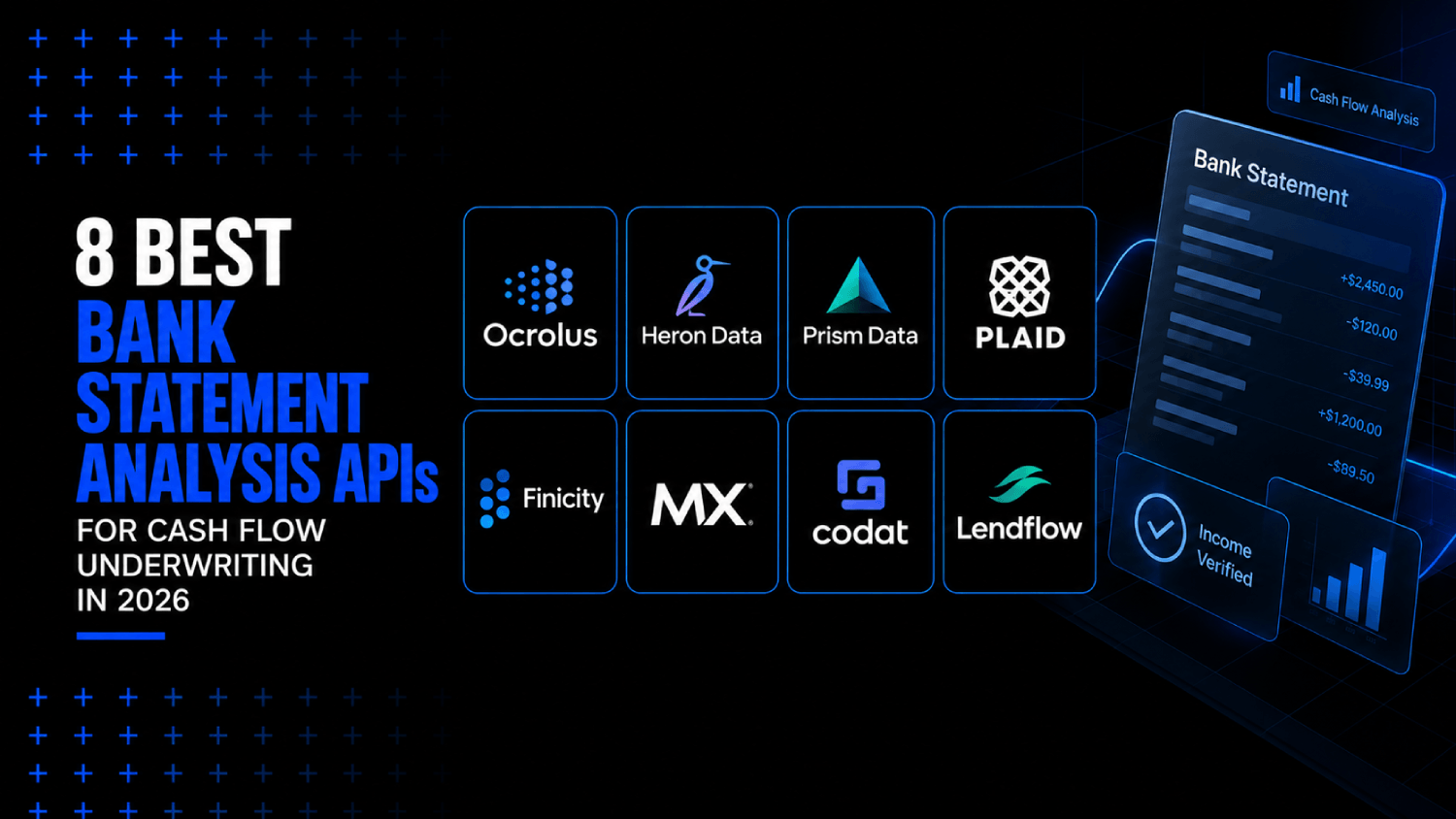
The best bank statement analysis APIs for cash flow underwriting in 2026 are Ocrolus, Heron Data, Prism Data, Plaid (via its consumer reporting products), MX, Finicity (a Mastercard company), Fiserv’s AllData, and Codat. Each targets a different input format or borrower segment. Ocrolus leads for document-heavy small business lending; Heron Data and Prism Data lead for consumer and gig-economy cash flow decisioning; Plaid and Finicity anchor open-banking pipelines where borrowers connect accounts directly.
Why Statement Review Is No Longer an Analyst Job
Most underwriting teams still think of bank statement analysis as a three-step process: receive PDFs, hand them to an analyst, get a memo. That workflow made sense when lenders processed a few hundred applications a month. It breaks at a few thousand. An analyst reading a 12-month PDF statement spends 20 to 40 minutes per file, misses non-obvious patterns like rolling 90-day average daily balance or NSF clustering on paydays, and introduces inconsistency across reviewers.
Modern cash flow underwriting APIs automate all three steps. They ingest PDFs, images, or live bank-feed data; run transaction categorization; and return structured JSON attributes that plug directly into a credit decisioning model. The output is not a summary document for a human to read. It is a machine-readable array of variables: average monthly revenue, revenue volatility, negative balance days, estimated monthly obligations, NSF count by quarter, largest single inflow, and dozens more.
For lenders extending credit to small businesses or thin-file consumers, these signals matter. A borrower with no FICO history but 18 months of consistent ACH deposits and zero overdrafts is a materially different risk than a borrower with a 680 score and four NSF events in the last quarter. Credit scores cannot capture that. Cash flow underwriting APIs can. This is why lenders building on credit decisioning platforms have started treating statement analysis as infrastructure, not a manual review step.
What Is the FintechSpecs Cash Flow API Evaluation Matrix?
Before listing vendors, it helps to have a consistent lens. The FintechSpecs Cash Flow API Evaluation Matrix applies four criteria to every tool in this category: input flexibility (what document and data formats it accepts), output depth (how many structured attributes it returns and how granular they are), decisioning readiness (whether the output plugs directly into a rules engine or model without additional cleaning), and borrower coverage (which populations it works for, specifically thin-file consumers, gig workers, or small businesses). Vendors score differently across these four dimensions, which is why the “best API” question only resolves when you specify your use case.
No single vendor tops all four. Ocrolus scores highest on input flexibility and decisioning readiness for document-heavy workflows. Heron Data scores highest on output depth for consumer transaction data. Prism Data scores highest on borrower coverage for thin-file and alternative-income borrowers. Plaid anchors open-banking pipelines but requires borrower-initiated account connection, which changes conversion dynamics. Keep this matrix in mind as you read through each entry below.
Which API Is Best for Small Business Lending: Ocrolus, Heron, or Prism?
Ocrolus
Ocrolus is the clearest choice for lenders processing uploaded PDF or image bank statements at scale. The platform combines machine learning with human-in-the-loop review for edge cases, which is how it achieves accuracy rates the company publicly cites as above 99% on document parsing. That human-augmented approach costs more per document than a pure-ML competitor, but it removes the accuracy risk that causes problems downstream when a miscategorized transaction inflates or deflates a cash flow figure used to set a loan amount.
On the output side, Ocrolus returns structured cash flow attributes including monthly revenue, average daily balance, NSF and overdraft events, top payors and payees, and recurring transaction patterns. It handles statements from hundreds of US financial institutions, including smaller regional banks and credit unions that are underrepresented in open-banking connectivity networks. For small business lenders where borrowers submit statements because they cannot or will not connect accounts via Plaid, Ocrolus is the production-proven option.
Pricing is not publicly listed on Ocrolus’s site. Contracts are volume-tiered and custom. Request a sandbox run with your actual statement mix before pricing negotiations, because per-page and per-report structures are both available depending on volume.
Heron Data
Heron Data takes a different approach. It is built primarily for lenders who receive transaction data from open-banking connections or raw CSV exports rather than PDFs. Its transaction categorization model is trained on lending-specific taxonomy, which means it classifies payroll, rent, loan payments, and NSF events differently than a generic personal finance categorizer. That lending-native classification matters when you are building underwriting rules around specific transaction types.
Heron’s API returns a rich attribute set that includes income stability scores, expense-to-income ratios, and recurring payment detection. It works particularly well for gig-economy borrowers who receive income from multiple platforms (Uber, DoorDash, Instacart) because its categorization logic is trained on those payer names. Lenders building consumer or small business credit products on top of bank feed data should put Heron on their shortlist next to Prism. For a detailed head-to-head of these three, the Ocrolus vs Heron Data vs Prism Data comparison on FintechSpecs covers decision-stage trade-offs in depth.
Prism Data
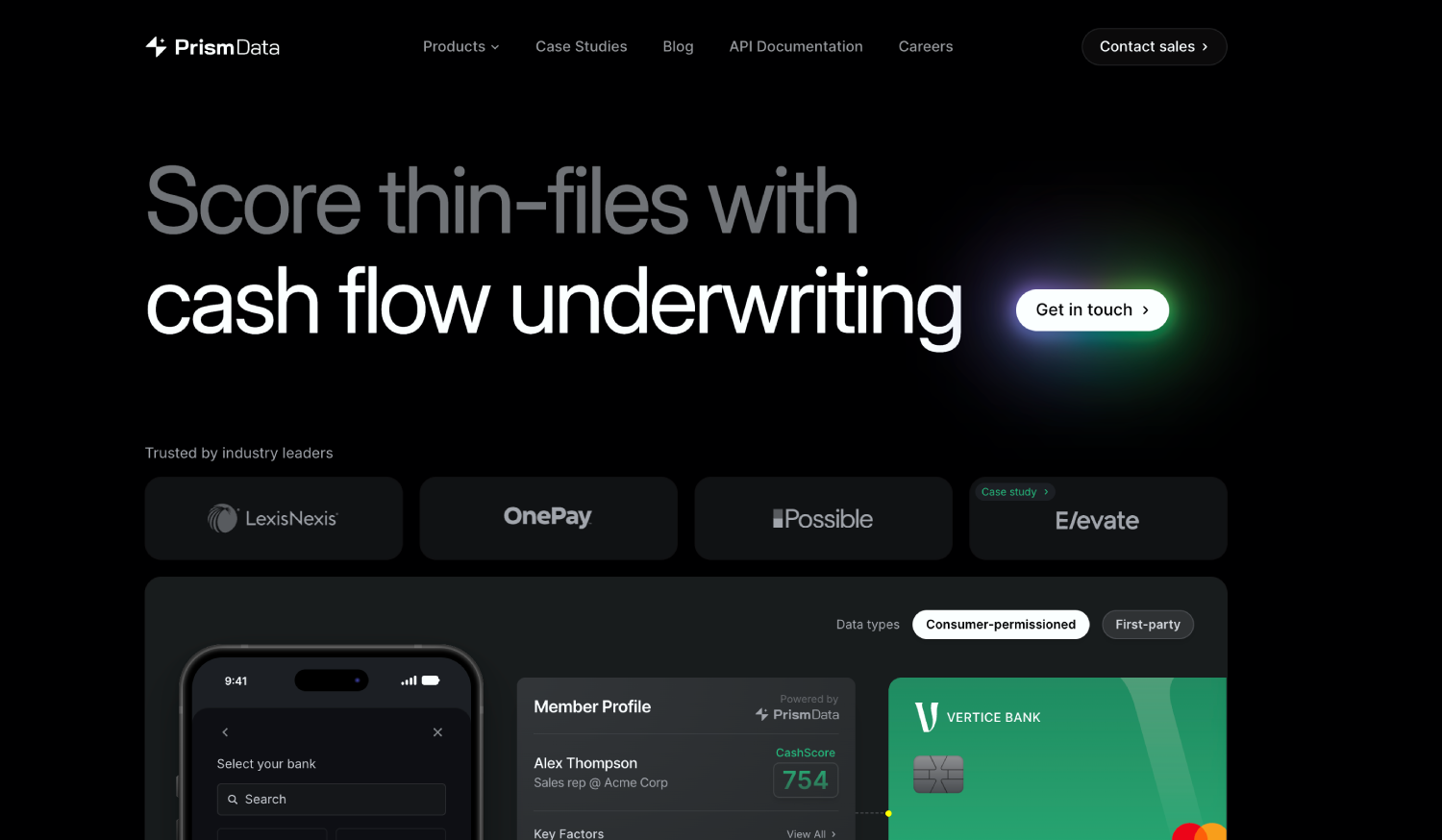
Prism Data focuses specifically on thin-file and no-hit consumers. Its CashScore product is designed to sit alongside or replace a credit score in decisioning for borrowers who lack sufficient credit file history for a traditional score to be predictive. The company works with consumer lenders, community banks, and fintechs extending credit to underserved populations.
Where Heron returns a transaction attribute set you build on top of, Prism delivers a pre-built score designed to map to default probability. That is a meaningful difference in implementation complexity. If your team wants to skip model training and get a score they can plug into an approval threshold, Prism reduces the build time. If your team wants raw attributes to train a proprietary model, Heron or Ocrolus give you more control. Prism does not publicly disclose pricing.
Which Bank Statement Analysis Tools Work for Open-Banking Pipelines?
Plaid
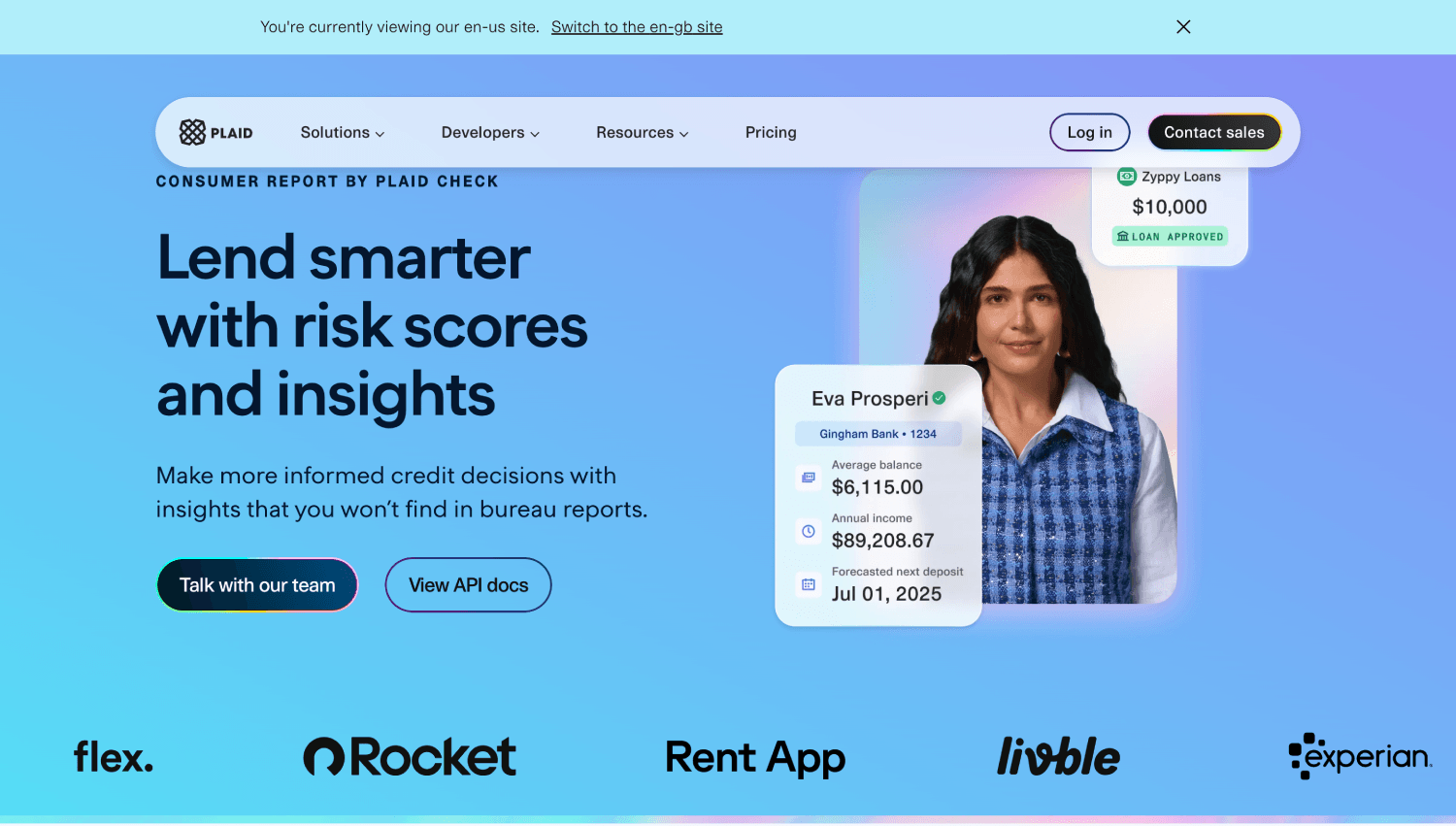
Plaid covers more US financial institutions than any other open-banking connectivity provider and has built a set of consumer reporting products on top of its bank-feed access that are specifically designed for credit and underwriting use cases. Its Assets product returns verified account balance history and transaction history for use in mortgage and consumer lending. Its Income product verifies employer payroll deposits.
Plaid’s consumer reporting products, Assets and Income, are designed to operate under the Fair Credit Reporting Act (FCRA) for use in credit, employment, and housing decisions, as described in Plaid’s Consumer Report User Agreement. That FCRA compliance layer is something many lenders overlook when evaluating open-banking tools for underwriting. Using a data source that is not FCRA-compliant in an adverse action scenario creates regulatory exposure. Plaid’s credentialed products address this; its raw transaction API does not.
The trade-off with Plaid is borrower conversion. Account connection requires the borrower to authenticate in real time, which introduces drop-off. For lenders who prefer submitted PDFs, Plaid is not a substitute for Ocrolus. For lenders who want the highest-coverage open-banking pipeline with FCRA-compliant output, Plaid is hard to beat. Pricing is custom and not publicly listed. Plaid’s developer documentation covers endpoint-level detail.
Finicity (Mastercard)
Finicity, acquired by Mastercard, is Plaid’s closest competitor in open-banking connectivity for US lending. Its Mortgage Verification Service is used by lenders for GSE-compliant asset and income verification, and it has consumer lending and personal finance use cases through its core transaction data products. Finicity is FCRA-certified for credit decisioning use.
Finicity has broader institutional relationships in the mortgage and auto lending space than Plaid, which makes it a stronger fit for lenders in those verticals who need GSE or lender acceptance. For consumer fintech lenders building outside of mortgage, the two are more comparable. Our full analysis of how these platforms differ in bank data connectivity is in the Plaid vs MX vs Finicity comparison. Pricing is enterprise and custom.
MX Technologies
MX is primarily known as a financial data platform for banks and credit unions, but its transaction enrichment and categorization API is used by lenders for cash flow analysis. MX normalizes transaction data from multiple sources and applies categorization that covers income, spending, and liability identification. Its data connectivity layer spans thousands of financial institutions.
MX is less commonly the primary cash flow underwriting API for fintech lenders and more commonly an enrichment layer added to a broader data pipeline. Its categorization accuracy is strong for consumer transactions. For lenders who already have MX connected for account aggregation and want to add underwriting attributes without introducing a new vendor, it is worth evaluating the depth of its lending-specific attribute set before assuming you need a specialist like Heron or Prism.
What Tools Handle Statement OCR and Document Parsing for Lenders Without Open-Banking Access?
Fiserv AllData
Fiserv AllData is a data aggregation platform with document processing capabilities that is used primarily by established financial institutions and larger lenders. It combines account aggregation with hosted document collection workflows. AllData is not an API-first product in the same way Ocrolus or Heron are; it is a platform with an integration layer that suits lenders who are already Fiserv customers or who are purchasing it as part of a broader technology relationship.
For a seed-to-Series C fintech lender evaluating cash flow underwriting infrastructure, AllData is unlikely to be the right starting point. It is designed for scale and for organizations with implementation resources. Mention it here because it appears in enterprise RFPs and is sometimes positioned as a competitor to Ocrolus at larger institutions. If you are evaluating it in that context, the key question is whether its document parsing accuracy and attribute depth match your underwriting model’s requirements.
Codat
Codat occupies an adjacent space. It connects to small business accounting software (QuickBooks, Xero, FreshBooks, Sage) and returns structured financial data including profit and loss, balance sheets, and banking transactions. For small business lenders, Codat is not a bank statement parser but a different path to the same underlying information: what does this business’s cash flow actually look like?
When a borrower uses cloud accounting software and keeps it reasonably up to date, Codat data can be more comprehensive and more accurate than a bank statement parse because it captures invoices, payables, and categorized expenses that do not appear as distinct transaction types in a bank feed. For lenders targeting small businesses with established accounting practices, Codat deserves a place on the evaluation list. For consumer lenders or small business lenders whose borrowers do not use accounting software, Codat is not relevant. The Ocrolus vs Codat cash flow underwriting comparison covers this distinction in detail.
Lendflow
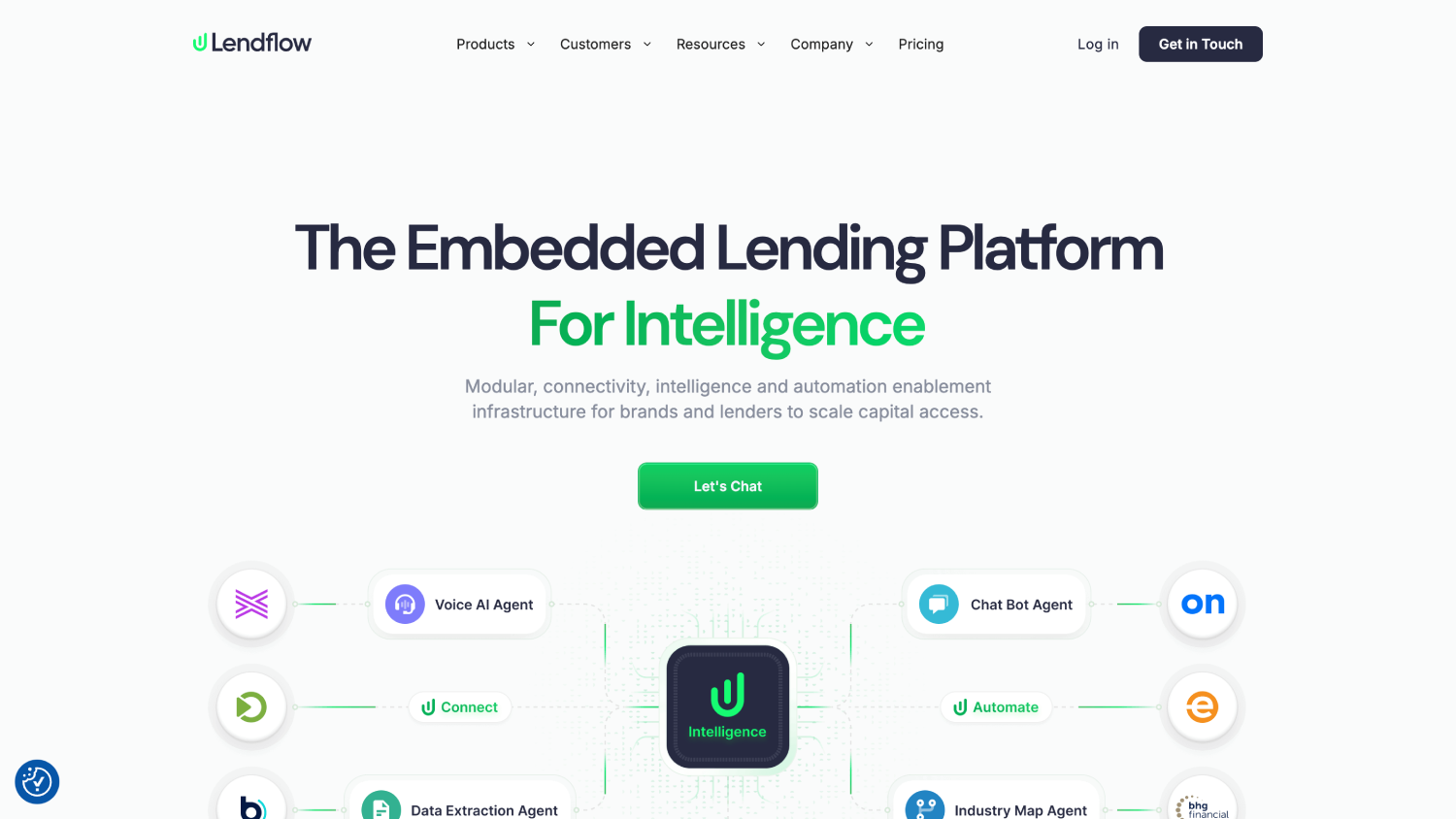
Lendflow is a credit infrastructure platform that bundles data orchestration, cash flow analysis, and decisioning tools for small business lenders. It connects to multiple data sources, including bank feeds, accounting software, and statement processing, and surfaces underwriting attributes through a single API. For lenders who want to avoid building their own data orchestration layer across multiple providers, Lendflow reduces integration complexity.
The trade-off is control. Lendflow sits between you and the underlying data sources, which means you are dependent on their data partnerships and their attribute definitions. Lenders who need custom attribute engineering or who want to train proprietary models on raw transaction data should evaluate whether Lendflow gives them sufficient access to underlying data or whether they are limited to its pre-built attribute set.
How Do These APIs Compare on Key Underwriting Attributes?
| API | Primary Input | NSF Detection | Income Verification | Recurring Transaction Detection | FCRA Compliance | Best For |
|---|---|---|---|---|---|---|
| Ocrolus | PDF / image statements | Yes | Yes | Yes | Consult vendor | SMB lenders, high-volume PDF processing |
| Heron Data | Bank feed / CSV | Yes | Yes | Yes | Consult vendor | Consumer and gig-economy lenders |
| Prism Data | Bank feed | Yes | Yes (CashScore) | Yes | Consult vendor | Thin-file and no-hit consumers |
| Plaid | Open-banking connection | Via transactions | Yes (Income product) | Via transactions | Yes (Assets and Income products; per Plaid’s CRA documentation) | Consumer lenders, FCRA-required use cases |
| Finicity | Open-banking connection | Via transactions | Yes | Via transactions | Yes | Mortgage, auto, consumer lending |
| MX | Aggregation / bank feed | Via categorization | Via categorization | Yes | Consult vendor | Banks, CUs adding enrichment layer |
| Codat | Accounting software | No | Via P&L | Via invoices | No | SMB lenders where borrowers use cloud accounting |
| Lendflow | Multi-source orchestration | Yes | Yes | Yes | Consult vendor | SMB lenders avoiding multi-vendor integration |
How Do You Run a One-Week Bank Statement API Bake-Off?
A bake-off does not need to be complicated. Collect 50 anonymized application files that represent your actual statement mix: a spread across industries, income types, and statement quality (clean PDFs, scanned images, mobile photos). Run the same files through both finalists in sandbox mode. Score the output against a rubric that matches your underwriting model’s attribute requirements.
The rubric should cover five things: field completeness (did the API return a value for every attribute you need, or did it return nulls on key fields), categorization accuracy (spot-check 10 files manually and compare the API’s transaction categories to your analyst’s classification), NSF detection precision (specifically check whether the API correctly identifies NSF events rather than bounced ACH returns), income consistency (does the API’s calculated monthly income match what your analyst would calculate from the same statements), and parse time (how long does a 12-month statement take end to end in production conditions).
Build the rubric in a spreadsheet before you start. Assign weights to each dimension based on your loan product. A high-frequency small-dollar lender might weight parse time heavily. A small business term lender might weight income consistency above all else. Score each finalist on the same rubric, and the shortlist resolves itself. This approach also gives you documentation for your credit policy committee when you present the decision.
Teams running this kind of structured evaluation across fintech infrastructure decisions can reference the FintechSpecs fintech vendor evaluation framework for a broader set of due diligence criteria beyond technical performance.
Cash Flow Underwriting vs Credit Scores: Which Predicts Default Better?
For prime borrowers with thick credit files, FICO and VantageScore models trained on decades of repayment data are hard to outperform on default prediction. The credit bureau data is rich, the models are well-calibrated, and the signals are stable. Cash flow data adds value at the margin in this segment, mostly by catching recent stress that has not yet appeared in a tradeline.
For thin-file borrowers, the picture reverses. A consumer with fewer than five tradelines or a credit file shorter than 24 months has a score that is essentially statistically noise. The CFPB has documented this population as disproportionately comprising young adults, recent immigrants, and lower-income consumers. For these borrowers, 12 months of bank transaction data contains far more predictive signal than a credit file that barely exists.
The lenders who have made this model shift most effectively use cash flow signals not to replace bureau data but to extend approval rates into segments where bureau data provides no lift. A credit decisioning engine that runs both in parallel and applies cash flow signals when bureau data falls below a confidence threshold gives you coverage without abandoning score-based decisioning where it works. That dual-signal architecture is now common among fintech lenders who have found that income verification APIs and cash flow underwriting tools are complementary rather than competing with bureau pulls. The income and employment verification API comparison on FintechSpecs covers the data sources that feed these parallel pipelines.
What Are the FCRA Compliance Requirements for Cash Flow Underwriting APIs?
This is the compliance detail most teams miss. When a bank statement analysis API is used in a credit decision, employment decision, or housing decision, the data it provides likely qualifies as a consumer report under the Fair Credit Reporting Act. That means the API provider must be a certified Consumer Reporting Agency (CRA), and you as the lender must meet obligations around permissible purpose, adverse action notices, and dispute rights.
Not every API in this category operates as a CRA. Plaid’s Assets and Income products are designed for FCRA use cases, as reflected in Plaid’s published CRA documentation. Finicity operates as a CRA. Whether Ocrolus, Heron, or Prism operate as CRAs in your specific use case requires a direct legal review with each vendor, because the FCRA classification depends on how the data is assembled and used, not just what it contains. Using a non-FCRA-compliant data source in an adverse action notice creates regulatory liability. Get this confirmed before you go to production.
For a fuller treatment of the compliance infrastructure around lending data decisions, the FCRA compliance services guide covers the vendor and process considerations in this category.
Frequently Asked Questions
What is a bank statement analysis API?
A bank statement analysis API accepts bank statement files (PDF, image, or structured transaction data from an open-banking connection) and returns structured data attributes about a borrower’s cash flow. These attributes typically include average monthly deposits, average daily balance, NSF and overdraft event counts, recurring income detection, recurring payment obligations, and balance trend data. Lenders use this output as input to credit decisioning models instead of relying on manual analyst review of raw statements.
How accurate is automated bank statement OCR for underwriting?
Accuracy varies significantly by vendor and by statement quality. Ocrolus publicly cites above 99% accuracy on document parsing, achieved by combining machine learning with human review on edge cases. Pure-ML approaches without human-in-the-loop correction tend to perform worse on low-quality scans, handwritten annotations, or unusual statement formats from smaller regional banks. For underwriting use cases where a single miscategorized transaction can materially affect a loan amount, accuracy benchmarking on your actual statement mix should be part of any bake-off process before signing a contract.
Can these APIs detect NSF events and overdrafts reliably?
NSF detection is a standard capability in the major cash flow underwriting APIs, but the precision varies. NSF fees and bounced payment fees often appear as similar transaction descriptions, and the distinction matters for underwriting because they signal different borrower behaviors. The more lending-specific the training data behind the categorization model, the more precisely these events are distinguished. Heron Data’s lending-native taxonomy handles this more granularly than a generic personal finance categorizer. When running a bake-off, NSF detection precision on files where you know the ground truth is one of the most useful quality checks.
What is the difference between Prism Data’s CashScore and a traditional credit score?
A traditional credit score is built from credit bureau data: tradeline history, utilization, derogatory marks, and inquiry counts. CashScore from Prism Data is built from bank account transaction history. It is designed to predict default probability for consumers who lack sufficient credit file history for a traditional score to be statistically reliable. Prism Data does not publicly disclose the exact model architecture or input variables, but its product is positioned for consumer lenders extending credit to thin-file and no-hit borrowers who would otherwise be declined or approved with minimal confidence.
Do cash flow underwriting APIs work for both consumer and small business lending?
Yes, but different tools are better suited to each. Ocrolus is optimized for small business statement processing at volume, handling business checking accounts across hundreds of institutions. Heron Data and Prism Data are primarily built for consumer lending use cases. Codat works for small businesses that use cloud accounting software. Open-banking tools like Plaid and Finicity span both but require real-time account connection from the borrower. Matching the tool to the borrower segment and document type is the first decision to make before evaluating any other feature.
How long does it take to integrate a bank statement analysis API?
Integration timelines depend on your existing data pipeline, not just the API. For a team with a functioning loan origination system and a defined attribute set, a sandbox integration with a provider like Ocrolus or Heron can run in a few days. Production integration, including testing on your actual statement mix, FCRA compliance review, and connection to your decisioning model, typically takes two to six weeks based on vendor guidance and lender implementation reports. Lenders who are also building or selecting a credit decisioning layer simultaneously should expect longer timelines because the two systems need to be specified together.
What is transaction enrichment and why does it matter for credit decisions?
Transaction enrichment is the process of taking a raw bank transaction description (something like “ACH CREDIT 9342871 PAYRL”) and converting it into a structured, human-readable record that identifies the merchant or payer, the transaction category, and the income or expense type. For credit decisions, unenriched transaction data is nearly unusable because the raw descriptions from financial institutions are inconsistent and often unreadable by an underwriting model. Transaction enrichment is the layer that makes cash flow analysis possible. Vendors differ on enrichment depth, especially for gig-economy platforms, business payors, and non-standard payroll processors.
The Decision Your Team Actually Needs to Make
Two variables cut through the noise faster than any feature comparison: the format of the data coming in and the population you are lending to. If your borrowers submit PDFs and your loan product targets small businesses, Ocrolus is where you start. If your borrowers connect accounts digitally and you are lending to consumers or gig workers with limited credit history, Heron Data and Prism Data belong on the shortlist. If FCRA compliance is a known requirement, Plaid and Finicity are the safest starting points, with a legal review confirming scope before you go live.
The bake-off framing matters more than most teams realize. Running two finalists against the same 50-file test set with a weighted rubric gives you defensible evidence for an internal decision, surfaces categorization gaps before they reach production, and often reveals that one vendor handles your edge cases (unusual payroll structures, foreign currency deposits, multi-entity business accounts) while the other does not. That kind of pre-contract evidence is harder to get after you have signed and launched.
The broader infrastructure decision, including how your underwriting data layer connects to your loan origination system and credit policy engine, is worth examining before selecting any individual API. A bank statement analysis tool that does not fit cleanly into your existing loan origination and management platform will cost more in integration time than the analysis layer itself. Get that architecture decision right first, then narrow the API shortlist. The two choices inform each other more than most vendors will tell you.