
- AI collections platforms running FDCPA-compliant scripts outperform human call centers on complaint rates because they cannot go off-script, forget disclosures, or react emotionally to hostile borrowers.
- Voice agents now handle promise-to-pay automation, self-serve repayment portals, and omnichannel follow-up across SMS, email, and phone without adding headcount.
- The compliance risk is not in using AI for collections. It is in using AI that lacks call recording, real-time audit logs, and configurable suppression logic for TCPA and FDCPA.
- Recovery rate lift varies by delinquency stage. Early-stage (1 to 30 days past due) sees the most consistent improvement from AI outreach because speed and frequency matter more than negotiation skill.
- Two of the most-funded names in this space are deliberately excluded from this list. Their market presence is well-documented elsewhere. This list covers the platforms that servicing and risk teams are actually piloting right now.
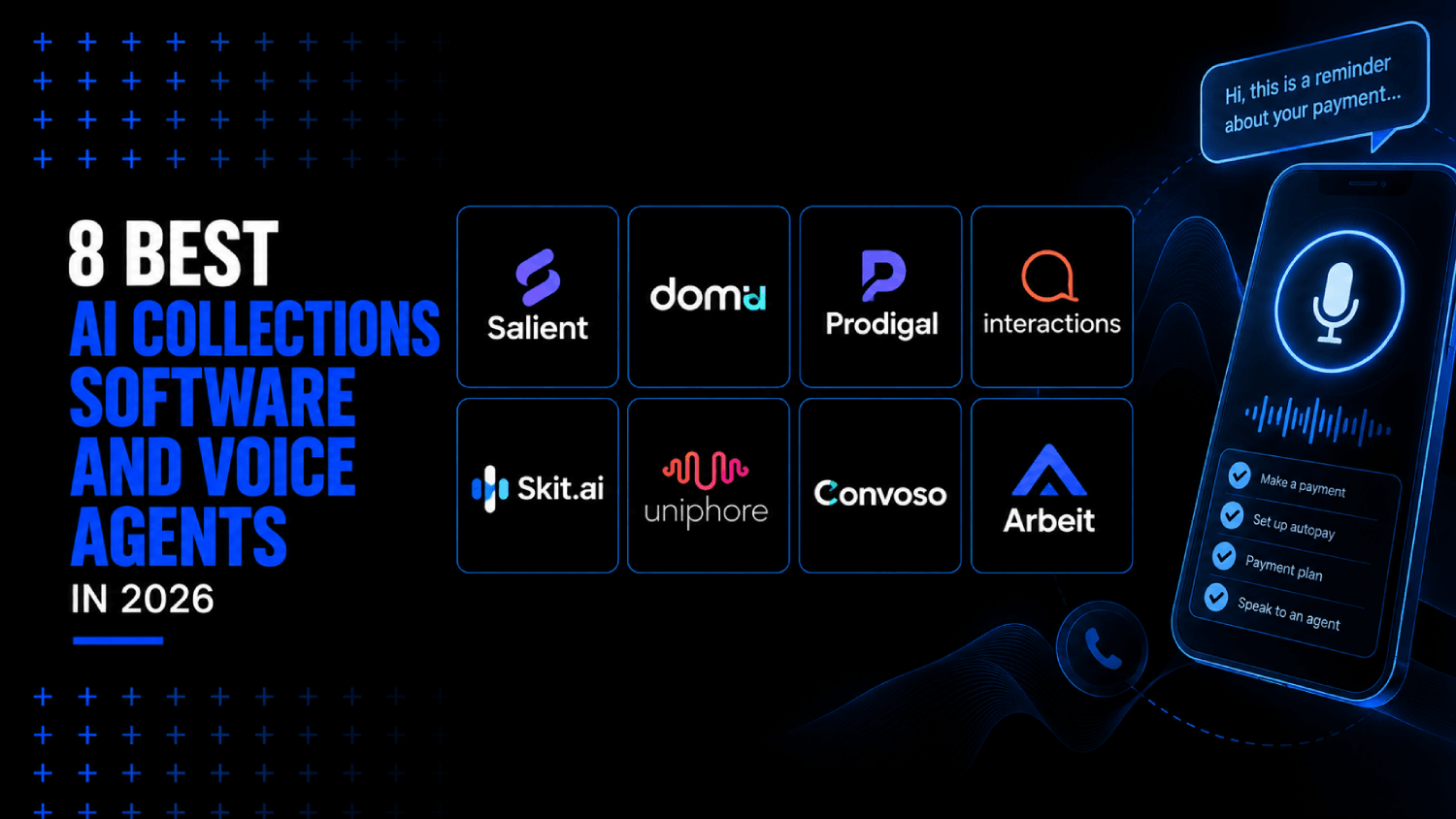
The best AI collections software combines FDCPA-compliant voice agents, omnichannel outreach across phone, SMS, and email, and self-serve repayment portals to recover delinquent accounts faster than human call centers while generating fewer complaints. Platforms like Salient, Domu, Prodigal, and others in this list are built specifically for regulated lending environments, with audit logs, suppression controls, and promise-to-pay automation included by design, not bolted on after a compliance incident.
Why Most Teams Get the Compliance Framing Backwards
The objection that stops most servicing leads from piloting AI collections is not budget. It is the assumption that an AI voice agent calling a borrower creates regulatory exposure. That assumption gets the risk backwards.
A human collector working an 80-account queue at hour six of their shift will skip disclosures, use pressure language, and call outside permitted hours when the system allows it. A well-configured AI agent does exactly what its compliance ruleset says, every call, with a full recording. According to the CFPB’s 2021 Debt Collection Rule (Regulation F), the rule does not prohibit AI-initiated contact , it requires disclosures, opt-out mechanisms, and channel frequency limits. Every platform on this list is built to enforce those requirements automatically.
The actual compliance risk in AI collections is poor configuration: a voice agent that ignores state-level calling windows, a platform without TCPA consent tracking, or an omnichannel system that counts SMS and phone contacts separately instead of against a combined daily limit. Those are solvable engineering problems, not fundamental objections to the category. If you are evaluating these tools for the first time, the Fintech Product and Compliance Readiness Checklist on FintechSpecs is a useful baseline before you start vendor conversations.
How to Compare AI Collections Platforms: The FintechSpecs Delinquency Stack Test
Most vendor comparisons in this space measure features in isolation. That misses how collections actually works: an account moves through stages, and the right tool for a 5-day-past-due borrower is different from the right tool for a 90-day charge-off candidate. The FintechSpecs Delinquency Stack Test evaluates each platform across four dimensions that correspond to real operational stages.
- Early-stage reach rate: Can the platform contact a borrower within hours of a missed payment, across at least two channels, without manual triggering? This is where AI has the clearest edge over human queues.
- Promise-to-pay automation: Does the platform capture, log, and follow up on payment commitments without agent involvement? Broken PTPs are the most common source of re-delinquency.
- Self-serve repayment depth: Can a borrower negotiate a modified plan, select a payment date, and process ACH without talking to anyone? The answer determines how much your servicing headcount actually drops.
- Compliance configuration surface: How granular is the suppression logic? Can you set state-level calling windows, TCPA consent tiers, combined channel frequency caps, and bankruptcy flag suppression independently?
Every platform below is evaluated against all four dimensions. Not every platform is strong across all four, and those gaps are noted directly.
Which AI Collections Platforms Are Actually Worth Piloting?
1. Salient
Salient is an AI voice agent platform built specifically for debt collection and loan servicing. Its core product is a conversational AI that handles outbound and inbound collection calls, processes payment arrangements, and captures promise-to-pay commitments with a full call recording and transcript on every interaction.
What separates Salient from generic voice AI platforms is its compliance architecture. The system is configured with FDCPA disclosure logic, TCPA consent gating, and state-level calling window enforcement at the campaign level. Supervisors can audit any call in real time through the dashboard. The platform does not require a separate compliance overlay tool because the rules are embedded in the call flow design.
Salient is strongest in early to mid-stage delinquency (1 to 60 days past due) where high contact volume and fast follow-up on broken PTPs drive the most recovery. As of the time of writing, pricing is not publicly disclosed on Salient’s website; the company requires a direct conversation for scoping, which is standard for enterprise-configured voice AI at this compliance depth.
| Dimension | Salient |
|---|---|
| Early-stage reach rate | Strong , automated outbound within configurable SLA |
| Promise-to-pay automation | Strong , PTP capture and follow-up built in |
| Self-serve repayment | Moderate , handled within the voice channel |
| Compliance configuration | Strong , state-level suppression, TCPA gating, full audit logs |
2. Domu
Domu is a collections AI platform targeting consumer lenders, buy-now-pay-later providers, and fintech servicers. Its design philosophy centers on digital-first outreach: SMS and email sequences that drive borrowers to a self-serve repayment portal before a voice agent is ever involved.
That sequencing is deliberate. Domu’s data shows that a significant portion of early-stage delinquencies resolve through self-serve channels when the borrower receives a clear, non-threatening message with a direct repayment link. Voice outreach is reserved for accounts that do not engage digitally within a configurable window, which means the AI voice agent handles a smaller, more selective call queue rather than blasting every delinquent account by phone.
The self-serve repayment portal is Domu’s clearest product differentiator. Borrowers can select a payment date, split a balance across installments, or request a short extension without speaking to anyone. Every action is logged and synced back to the servicer’s system of record. As of the time of writing, pricing is not publicly disclosed on Domu’s website. Domu targets fintech lenders and credit-focused platforms rather than traditional third-party collection agencies, which shapes its integration surface.
3. Prodigal
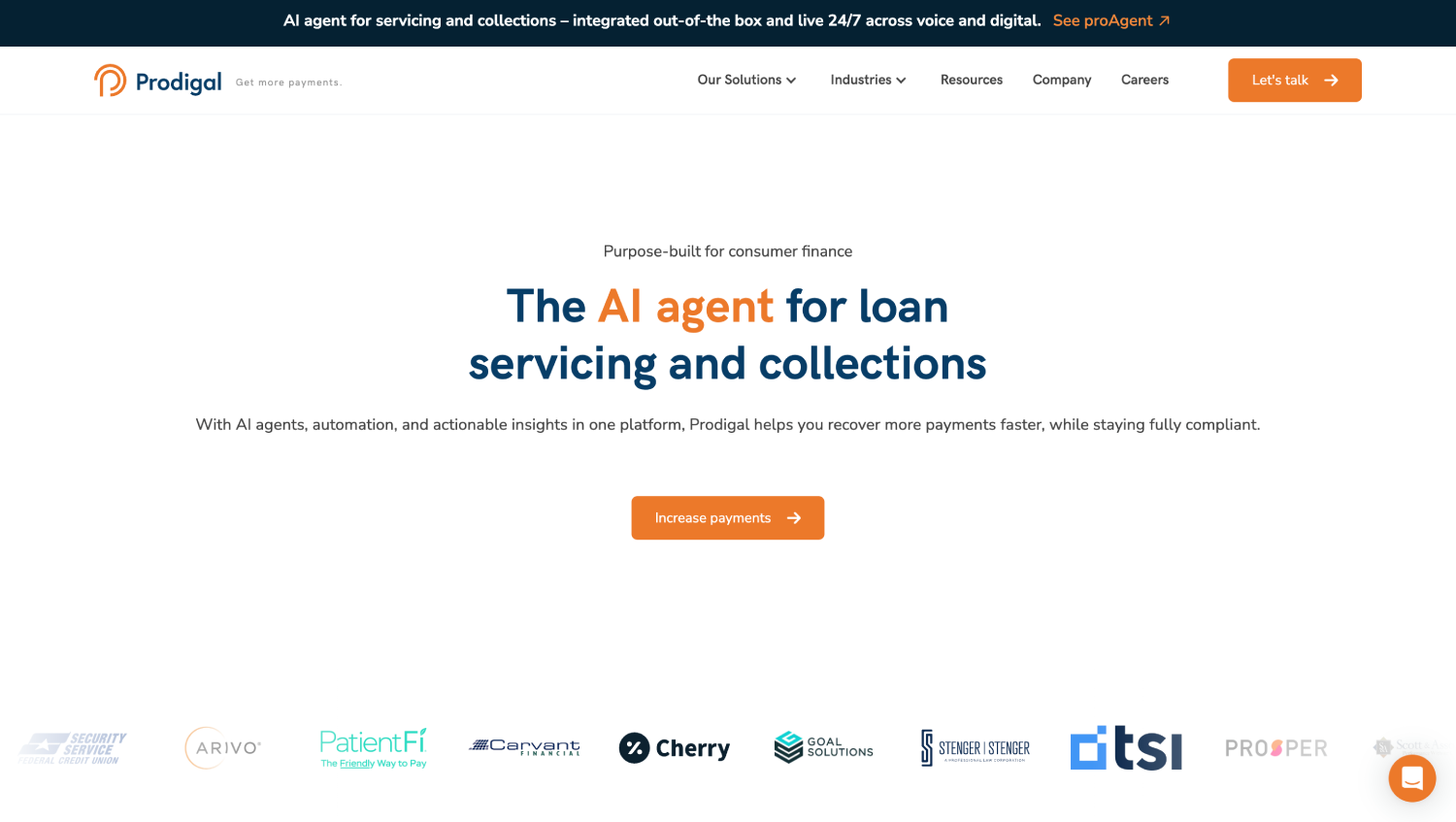
Prodigal approaches collections differently than the voice-agent-first platforms above. Its primary product is an AI that listens to and analyzes collection calls, then surfaces compliance flags, coaching prompts, and intent signals to supervisors in real time or post-call.
For servicers that are not ready to replace human agents with AI voice, Prodigal is the middle path: keep your human collectors but give them AI-driven guidance that reduces FDCPA violations, improves PTP capture rates, and identifies which accounts are most likely to pay. The platform also offers automated outreach features, but its clearest strength is augmenting existing teams rather than replacing them.
Prodigal is well-suited for mid-market lenders with established servicing operations where compliance violations are the primary risk and full automation is not yet approved by leadership. As of the time of writing, pricing is not publicly listed on Prodigal’s site.
4. Interactions
Interactions (now SoundHoundAI) is an enterprise conversational AI platform with a dedicated debt collection vertical. It combines AI with human assist, meaning a human agent can take over a conversation mid-call when the AI detects that escalation is warranted.
The hybrid model is Interactions’ core differentiation. For servicers handling complex accounts, bankruptcy-adjacent situations, or hardship cases that require judgment calls, full automation creates legal exposure. Interactions threads that needle by keeping a human in the loop without requiring human-initiated contact on every account. The platform is enterprise-priced and primarily targets large financial institutions and third-party collection agencies with high call volumes. As of the time of writing, pricing is not publicly listed and requires a direct quote from the vendor.
5. Skit.ai
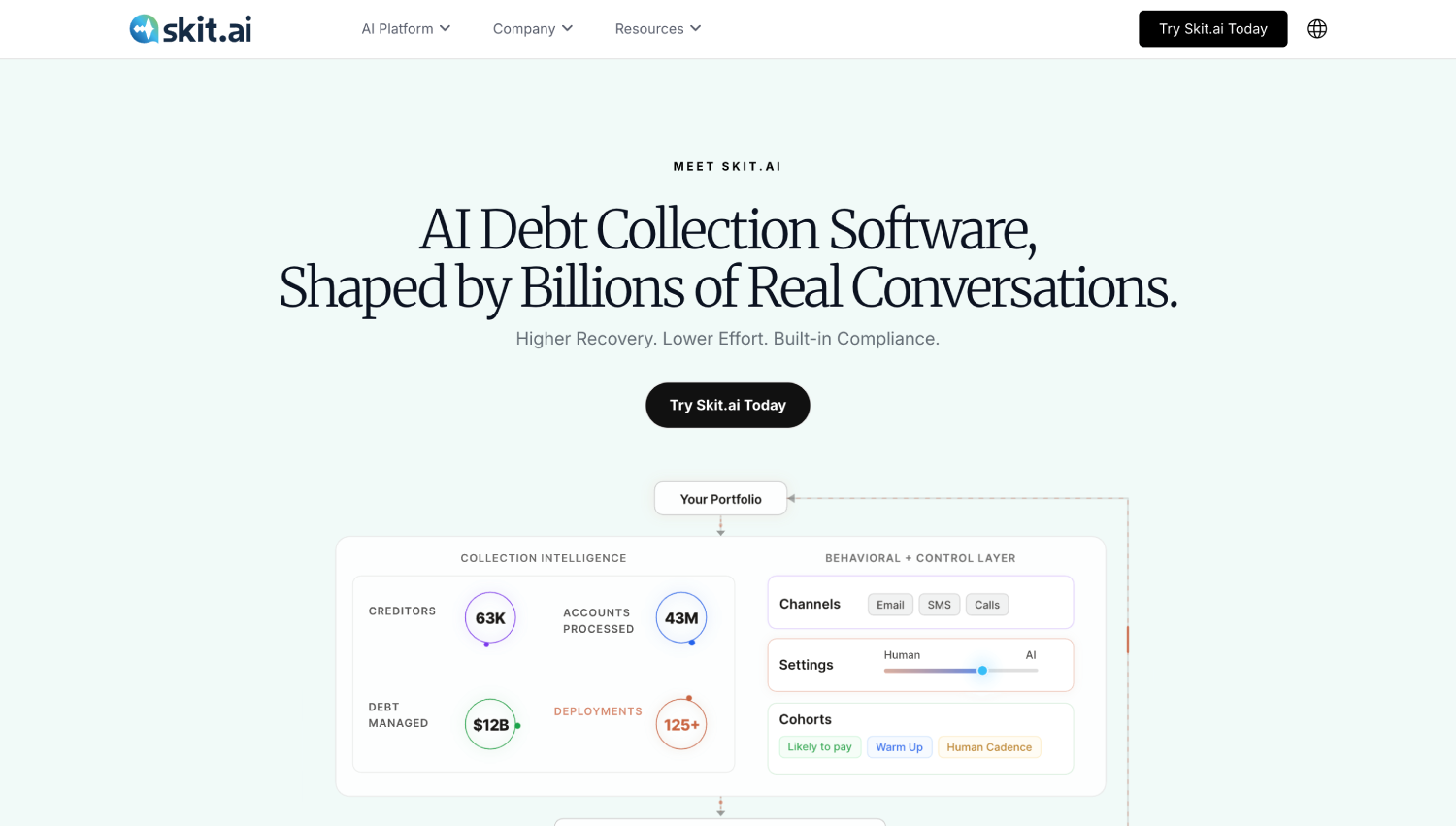
Skit.ai is an AI voice platform with a collections and payments use case built specifically for North American and international lenders. The platform handles outbound reminder calls, inbound payment processing, and promise-to-pay capture across multiple languages.
Its multilingual capability is the differentiator that most competitors do not match at production depth. For servicers with Spanish-speaking, Mandarin-speaking, or other non-English borrower populations, Skit.ai handles the full call flow in the borrower’s preferred language without a separate localization layer. FDCPA disclosures are configurable per language and per state. As of the time of writing, pricing is not listed publicly on Skit.ai’s website and requires direct engagement.
6. Auris (by Uniphore)
Uniphore’s collections AI products sit within a broader conversational intelligence platform. The relevant capability for servicing teams is real-time agent guidance, automated call summarization, and compliance monitoring across inbound and outbound collection interactions.
Like Prodigal, Uniphore’s collections layer is most useful for teams that want to reduce compliance risk in existing human-run operations before committing to full automation. The platform integrates with major contact center infrastructure including Genesys and Cisco, which reduces implementation friction for servicers already on enterprise telephony stacks. As of the time of writing, pricing is enterprise-negotiated and not disclosed publicly on Uniphore’s site.
7. Convoso
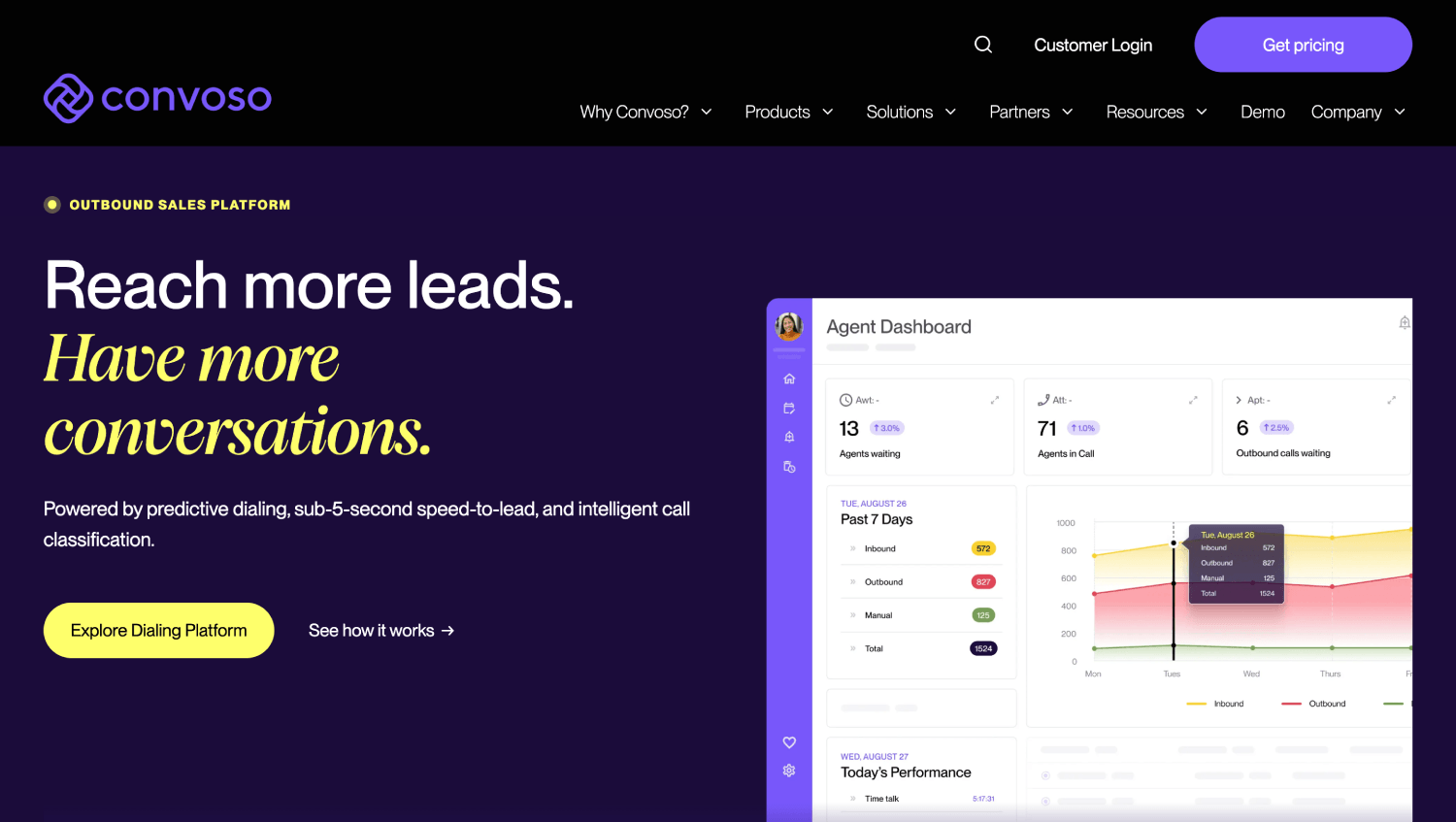
Convoso is a contact center dialer platform with AI-driven pacing and compliance controls targeted at collections and financial services. Its TCPA compliance engine manages consent verification, calling window enforcement, and DNC list scrubbing at the campaign level.
Convoso is not a pure AI collections platform. It is a power dialer and campaign management system with AI overlaid on top. For servicers running human agent teams who need better dialer compliance and smarter contact prioritization, it solves a real operational problem. For teams looking to replace human agents with AI voice, it is not the right starting point. As of the time of writing, Convoso provides pricing on request and offers demos directly through its site.
8. Arbeit Software
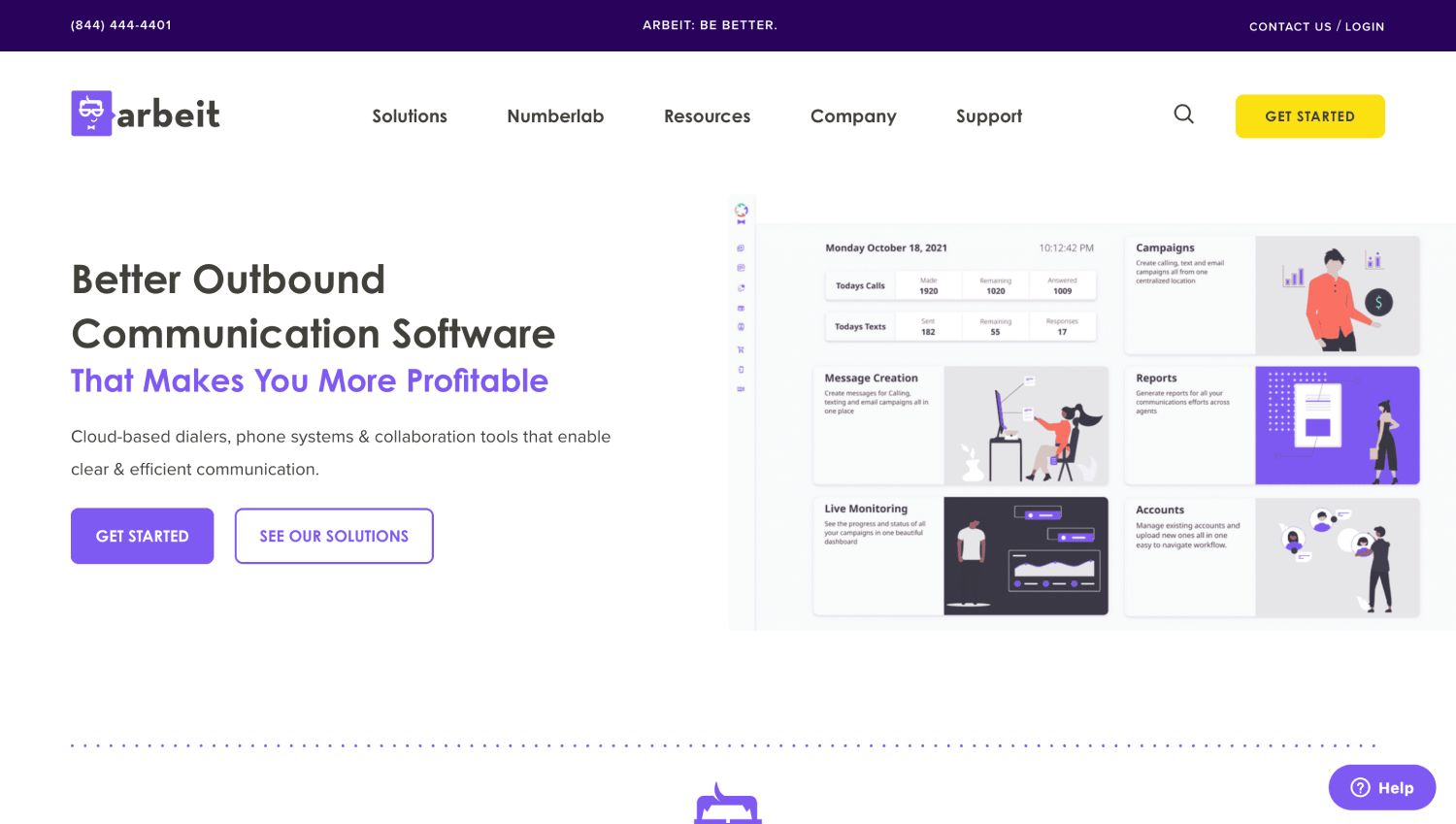
Arbeit Software is a collections-specific contact center and dialer platform with TCPA compliance features, omnichannel outreach including voice, SMS, and email, and workflow automation for delinquency management. It is built for smaller collection agencies and in-house servicing teams that need compliance controls without enterprise-level implementation complexity.
Arbeit’s strength is operational simplicity. A servicing team of ten to thirty agents can configure campaigns, manage suppression lists, and run FDCPA-compliant outreach without a dedicated technical implementation team. It does not offer the AI voice agent depth of Salient or Domu, but it covers the compliance and workflow requirements that matter most for teams not yet ready for full voice automation. As of the time of writing, pricing is available on request through Arbeit’s site.
How Do AI Voice Agents Compare to Human Collectors on Early Delinquency?
On accounts that are 1 to 30 days past due, AI voice agents consistently outperform human collectors on contact rate, not negotiation quality. The reason is operational: an AI agent can call an account six hours after a missed payment, follow up by SMS the next morning, and send an email reminder that afternoon without queue delay or shift constraints. A human collector in a shared queue may not reach that account for two to three days.
Speed matters most in early delinquency because borrowers in this window often missed a payment due to oversight, cash timing, or a banking issue rather than financial distress. A fast, non-threatening reminder resolves a large portion of these accounts before they age into harder categories. This is where self-serve repayment portals earn their recovery rate lift: a borrower who gets a text with a payment link at 7 AM can resolve the account without waiting on hold.
On mid-stage (30 to 90 days) and late-stage delinquency, the picture is more complex. Accounts in this range often involve genuine hardship, dispute situations, or bankruptcy proceedings that require judgment. Fully automated AI without escalation logic creates legal exposure in these cases. The platforms that handle this range well, Interactions and Prodigal, either keep humans in the loop or use AI to identify which accounts need human intervention before the AI touches them.
What Does FDCPA-Compliant AI Outreach Actually Require?
FDCPA-compliant AI outreach requires four non-negotiable capabilities, regardless of which platform you choose. First, every initial communication must include the required mini-Miranda disclosure, the statement that the communication is from a debt collector and that information obtained will be used for that purpose. AI voice agents must deliver this disclosure accurately on every call, and the platform must log that it was delivered.
Second, the platform must honor cease-and-desist requests immediately. If a borrower says “stop calling me” during an AI-handled call, the system must suppress that account from future outreach across all channels, not just the voice channel. Third, TCPA compliance requires prior express consent for autodialed or prerecorded calls to mobile numbers. The platform must track consent at the account level and gate outreach accordingly. Fourth, calling window enforcement must be state-specific, not just federal. Federal rules prohibit calls before 8 AM or after 9 PM local time, but several states have stricter windows that a federal-only configuration will violate.
The compliance configuration surface is where platforms diverge most sharply. Salient and Domu build these controls into their core product. Platforms adapted from general-purpose contact center tools require more configuration effort to reach the same compliance depth. This distinction matters more than almost any other feature comparison when you are deciding which platforms to pilot first. For a broader view of how compliance costs scale across fintech operations, the real cost of compliance in fintech SaaS analysis on FintechSpecs breaks down what teams typically underestimate.
Side-by-Side Comparison: AI Collections Platforms by Use Case Fit
| Platform | Best For | Primary Channel | AI Voice Agent | Self-Serve Repayment | Compliance Configuration Depth | Pricing |
|---|---|---|---|---|---|---|
| Salient | Fintech lenders, early-to-mid delinquency | Voice | Yes | Moderate | High | Not publicly disclosed |
| Domu | BNPL and consumer fintech, digital-first | SMS, email, voice | Yes | High | High | Not publicly disclosed |
| Prodigal | Servicers augmenting human teams | Voice (analytics) | Partial | No | High | Not publicly disclosed |
| Interactions | Enterprise, complex account types | Voice (hybrid) | Yes (with human assist) | Moderate | High | Not publicly disclosed |
| Skit.ai | Multilingual borrower populations | Voice | Yes | Moderate | High | Not publicly disclosed |
| Uniphore | Enterprise teams on existing CCaaS stacks | Voice (analytics) | Partial | No | Moderate-High | Not publicly disclosed |
| Convoso | Human agent teams needing compliance dialing | Voice, SMS | Limited | No | Moderate | Not publicly disclosed |
| Arbeit Software | Smaller agencies and in-house servicing | Voice, SMS, email | Limited | No | Moderate | Not publicly disclosed |
How Does AI Collections Software Connect to Loan Servicing Infrastructure?
AI collections does not sit in isolation. It plugs into your loan servicing platform to read delinquency status, pull account data, and write back payment promises and contact records. The integration quality between your collections AI and your servicing system of record determines whether you get a real-time bidirectional sync or a daily batch file that creates a 24-hour lag between a borrower making a payment and the AI campaign suppressing that account.
Most of the platforms above offer API-based integrations with major loan origination and servicing systems. Salient and Domu are built with API-first architectures that support near-real-time status syncing. Platforms like Convoso and Arbeit, which are closer to traditional dialers, often rely on CSV imports or scheduled syncs that introduce lag. For a full view of the servicing platform options, the best loan servicing software and APIs comparison on FintechSpecs covers what to expect from LoanPro, Peach, Canopy, and others in terms of integration surfaces.
The integration gap also affects delinquency management workflow. If a borrower makes a partial payment through the self-serve portal at 10 PM, that payment status needs to reach the collections AI campaign before the next scheduled outreach at 8 AM. A batch-file architecture cannot guarantee that. API-based sync with webhook triggers can. This is a question worth asking every vendor before you sign a contract.
What Should a Pilot Look Like Before Full Deployment?
A well-structured pilot for AI collections software runs for 60 to 90 days on a defined segment of delinquent accounts, with a clear control group receiving standard human-agent outreach. Without a control group, recovery rate lift is unmeasurable because portfolio composition varies month to month.
The pilot segment should be early-stage delinquency (1 to 30 days past due) where AI has the most established track record and the legal complexity is lowest. Exclude bankruptcy accounts, accounts with active disputes, and accounts flagged for hardship programs from the pilot pool. Configure all FDCPA and TCPA suppression logic before the first outbound contact, not after. Ask the vendor for their compliance documentation, specifically their FDCPA disclosure scripts, their TCPA consent handling workflow, and their suppression logic specification, before the pilot starts rather than during it.
Measure four metrics at minimum: contact rate, promise-to-pay rate, PTP kept rate, and complaint rate per thousand contacts. The complaint rate metric is the one most teams forget to set up in advance, and it is the metric that will matter most to your compliance and legal teams when they review results. Teams evaluating new fintech vendors for the first time may find the fintech vendor evaluation framework on FintechSpecs useful for structuring that due diligence process.
Frequently Asked Questions About AI Collections Software
Is AI debt collection legal under FDCPA?
Yes. The FDCPA does not prohibit automated or AI-driven debt collection contact. It requires that specific disclosures be made, that opt-out requests be honored immediately, and that calling windows and frequency limits be respected. AI voice agents that are properly configured to deliver those disclosures and enforce those rules on every interaction are legally compliant. The risk comes from poor configuration, not from the technology itself. Several platforms in this list are already deployed at scale with major financial institutions and have been reviewed by external compliance counsel.
Do AI voice agents outperform human collectors on recovery rate?
On early-stage delinquency (1 to 30 days past due), AI agents consistently achieve higher contact rates and faster first-contact times, which drives recovery rate improvement in that segment. On mid-to-late-stage delinquency involving hardship or dispute scenarios, human judgment or human-assisted AI performs better. The platforms that claim across-the-board recovery superiority over human agents in all delinquency stages are overstating the evidence. The honest answer is that AI wins on speed and volume in early-stage, and the comparison becomes more nuanced as accounts age.
What is promise-to-pay automation in collections AI?
Promise-to-pay (PTP) automation means the AI captures a borrower’s verbal or digital commitment to pay on a specific date, logs that commitment in the system of record, and automatically triggers a follow-up sequence if the payment is not received by the committed date. This matters because broken PTPs are one of the leading drivers of account re-delinquency. A human agent capturing a PTP on a call and logging it manually in a CRM introduces lag and error. Automated PTP capture and follow-up closes that gap and is a standard feature in the leading platforms on this list.
How does TCPA apply to AI voice agents calling borrowers?
The Telephone Consumer Protection Act requires prior express consent for autodialed or prerecorded calls or texts to a borrower’s mobile number. AI voice agents calling mobile numbers without documented TCPA consent create significant legal exposure. Compliant platforms track consent at the account level and gate mobile outreach accordingly. They also maintain a record of when and how consent was obtained, which is important if a borrower later disputes the contact. State laws in California, Florida, and Washington impose stricter consent and calling-window requirements beyond federal TCPA minimums , California under its Consumer Privacy and TCPA-mirroring statutes, Florida under the Florida Telephone Solicitation Act, and Washington under the Washington Consumer Protection Act , that any multi-state servicer must configure as separate suppression rules. Consult compliance counsel for current state-specific requirements before deploying in those markets.
What is omnichannel collections and why does it matter?
Omnichannel collections means coordinating outreach across voice calls, SMS, email, and in-app messaging so that a borrower receives appropriately sequenced contact without being over-contacted on any single channel. It matters for two reasons. First, according to the CFPB’s Regulation F, contact frequency limits apply across all channels combined, not per channel individually. A platform that manages voice and SMS as separate campaign systems can inadvertently exceed daily contact limits. Second, borrowers respond to different channels at different times. A borrower who ignores a phone call may respond immediately to an SMS with a payment link. Omnichannel coverage increases first-contact success rates.
Which AI collections platforms are best for fintech lenders versus traditional collection agencies?
Fintech lenders running in-house servicing should evaluate Salient and Domu first. Both are built for API-first integration with modern loan servicing infrastructure, and their compliance configurations are designed for consumer lending environments. Traditional third-party collection agencies that need to manage multi-client campaigns, high daily call volumes, and legacy dialer infrastructure should look at Interactions, Convoso, and Arbeit, which have stronger roots in the agency contact center environment. Prodigal and Uniphore fit servicers in both categories that want to augment human agents before committing to full automation.
The Decision That Actually Matters
Most servicers evaluating AI collections software are not choosing between AI and compliance. They are choosing between the compliance risk they can see, an AI agent calling a borrower, and the compliance risk they cannot, a fatigued human collector skipping disclosures on call 47 of a shift. The documented call recording, consistent script delivery, and real-time suppression logic of a properly configured AI platform reduce the second risk category substantially.
The FintechSpecs Delinquency Stack Test gives you four concrete questions to put to any vendor: How fast can you trigger first contact after a missed payment? How does PTP follow-up work without agent involvement? What can a borrower do to resolve their account without speaking to anyone? And how granular is your suppression logic at the state level? Any platform that cannot answer all four clearly in the first sales call is not ready for a production collections environment.
The category is moving fast. Platforms that were voice-only eighteen months ago now support SMS and email sequences. Self-serve repayment portals that required custom development in 2023 are now standard features. If your servicing operation is still treating AI collections as a future consideration rather than an active pilot, the gap between your contact rates and a competitor running Salient or Domu on the same portfolio is already widening. For context on how AI-driven tools are changing operational decisions more broadly across fintech, the loan origination and management software comparison on FintechSpecs shows how the same infrastructure shift is playing out on the front end of the lending cycle.