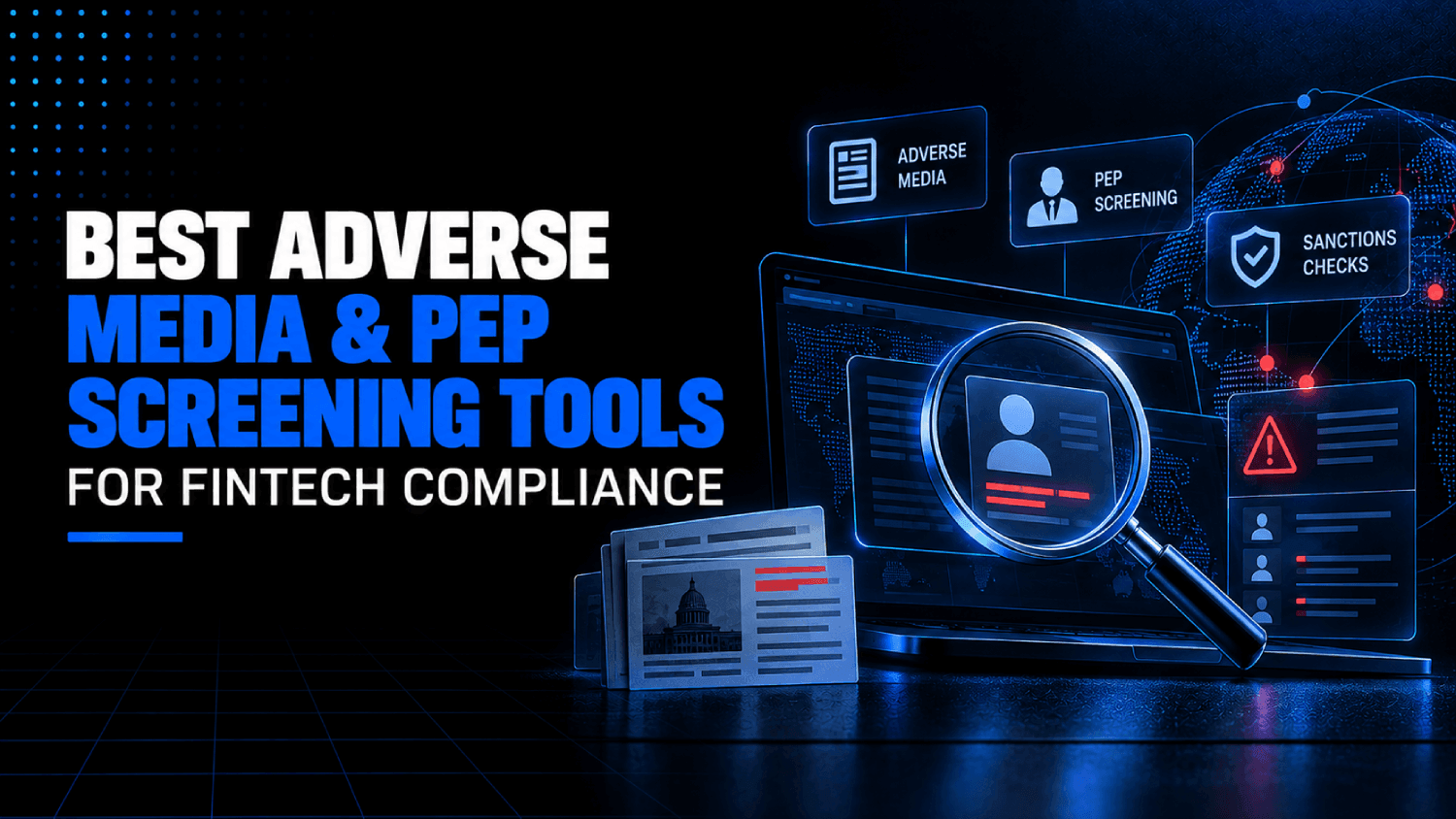

- Sanctions screening and adverse media screening are not the same thing. Running OFAC checks does not flag a PEP who appears in a Reuters investigation about bribery.
- Adverse media and PEP screening require dedicated tools that pull from news archives, court records, and PEP databases, not just government watchlists.
- The best tools for fintech onboarding combine real-time negative news monitoring with structured PEP data and a REST API that plugs into your existing KYC workflow.
- Pricing across this category is almost entirely custom or quote-based. Any vendor claiming a flat per-check fee worth publishing has not yet spoken to their sales team.
- Choosing the wrong tool means either over-flagging low-risk users and killing conversion, or under-flagging high-risk ones and inviting a regulator’s attention.
The best adverse media and PEP screening tools for fintech compliance are Refinitiv World-Check, Dow Jones Risk and Compliance, ComplyAdvantage, Acuris Risk Intelligence, and Moody’s (Bureau van Dijk Orbis), each covering different trade-offs between database depth, API quality, false-positive rates, and pricing structure. Smaller teams often start with ComplyAdvantage for its developer-friendly API, while larger compliance operations typically anchor on Refinitiv or Dow Jones for coverage breadth.
Why Adverse Media Screening Is Not the Same as Sanctions Screening
Most early-stage fintech teams assume their AML or sanctions stack already covers reputational risk. It does not. Sanctions lists like OFAC SDN, EU Consolidated, or the UN Security Council list are structured datasets with named entities and dates. AML screening APIs query those lists and return a match or a non-match.
Adverse media screening does something different. It crawls news sources, court records, regulatory filings, and government databases looking for negative associations: fraud allegations, money laundering investigations, sanctions violations, bribery, terrorism financing, and related financial crimes. A person can be completely clear on every watchlist and still appear in a credible investigative report that would disqualify them from onboarding.
Politically exposed persons (PEPs) add another layer. A PEP is a foreign or domestic official whose position creates a higher risk of corruption or bribery, and regulators expect you to apply enhanced due diligence to them regardless of whether they appear on any sanctions list. FinCEN, the FCA, and most FATF member regulators treat PEP screening as a distinct obligation. That means a separate structured database of government officials, their family members, and close associates, maintained and updated continuously.
Running one without the other is a gap. Running neither because you have OFAC coverage is a common mistake that shows up in exam findings.
What Should You Actually Evaluate in a PEP Screening Tool?
Vendor marketing in this space is heavy on coverage claims and light on methodology. Before any demo, it helps to have a sharper evaluation lens. FintechSpecs uses a four-point framework called the Adverse Signal Stack to cut through the noise.
Signal depth
How many sources does the vendor monitor, and at what update frequency? A vendor citing “millions of sources” without naming them is not answering the question. You want to know whether they cover local-language media in the jurisdictions you serve, and how quickly a new negative story appears in their index. For global fintech platforms, regional coverage gaps are where regulatory risk hides.
PEP database structure
Structured PEP data matters more than most buyers realize. Ask not just “do you have a PEP list” but whether the list distinguishes between Tier 1 (heads of state, senior government officials), Tier 2 (lower-level officials, senior military, judiciary), and Tier 3 (relatives and close associates). Some vendors collapse all tiers into a single flag, which either floods your review queue or forces you to add manual classification on top of their output.
False-positive rate and tuning controls
A tool that flags 40 percent of your onboarding queue as potential matches is not a compliance tool; it is a throughput problem. Ask vendors for their false-positive methodology, whether they use entity resolution and disambiguation, and whether you can tune sensitivity thresholds by risk tier or geography without calling their support team.
API design and workflow integration
For fintech teams building onboarding flows, the API surface matters. You want a REST API that returns structured JSON, supports both synchronous screening at onboarding and asynchronous monitoring of existing customers, and exposes webhook events when a previously clean entity generates a new adverse signal. If the API requires you to poll for results, that is a design constraint worth surfacing early. Our overview of the best fintech APIs for SaaS covers integration quality signals to watch for across compliance tools.
The 6 Best Adverse Media and PEP Screening Tools for Fintech
| Vendor | Best For | PEP Coverage | Adverse Media API | Pricing Model |
|---|---|---|---|---|
| Refinitiv World-Check | Enterprise banks and global platforms | Tiered PEP + RCA | Yes (REST) | Custom / enterprise contract |
| Dow Jones Risk and Compliance | Global fintech with deep media coverage | Tiered PEP | Yes (REST) | Custom / annual license |
| ComplyAdvantage | Series A-C fintechs building API-first stacks | PEP + adverse media combined | Yes (REST, webhooks) | Custom, usage-based tiers |
| Acuris Risk Intelligence | Teams needing deep investigative journalism sourcing | PEP + RCA | Yes | Custom |
| Moody’s (Bureau van Dijk Orbis) | B2B underwriting with beneficial ownership checks | Corporate PEP links | Yes (API) | Custom / enterprise |
| NameScan | Early-stage teams needing affordable entry point | Basic PEP lists | Yes (REST) | Subscription tiers, publicly listed |
Refinitiv World-Check
Refinitiv World-Check is the most widely deployed PEP and adverse media database in enterprise financial services. Its structured data covers over 300 categories of risk and includes PEP lists with relative and close associate (RCA) linkage, meaning if an onboarding applicant is the spouse of a foreign minister, that connection surfaces. The database is maintained by a team of human analysts, not solely by automated crawls.
The API integrates via REST and is designed for bulk screening and continuous monitoring, not just point-in-time checks. It is the right choice for a fintech with a sponsor bank relationship that demands documented PEP and adverse media controls, or for a platform operating across multiple jurisdictions where coverage gaps carry regulatory consequences. Pricing is enterprise contract only and the company does not publish rates publicly.
Dow Jones Risk and Compliance
Dow Jones Risk and Compliance brings the backing of the Dow Jones Newswires archive, which is a genuine differentiator for negative news screening. Their adverse media coverage is particularly strong for English-language financial crime and regulatory enforcement content, and they have built out PEP lists with tiering and RCA data. The platform supports both individual and entity screening.
For fintech teams whose customer base skews toward financial services professionals or corporate clients with complex ownership structures, the depth of financial press coverage is hard to match. Like Refinitiv, pricing is annual license based and negotiated directly. Neither vendor publishes per-check pricing.
ComplyAdvantage
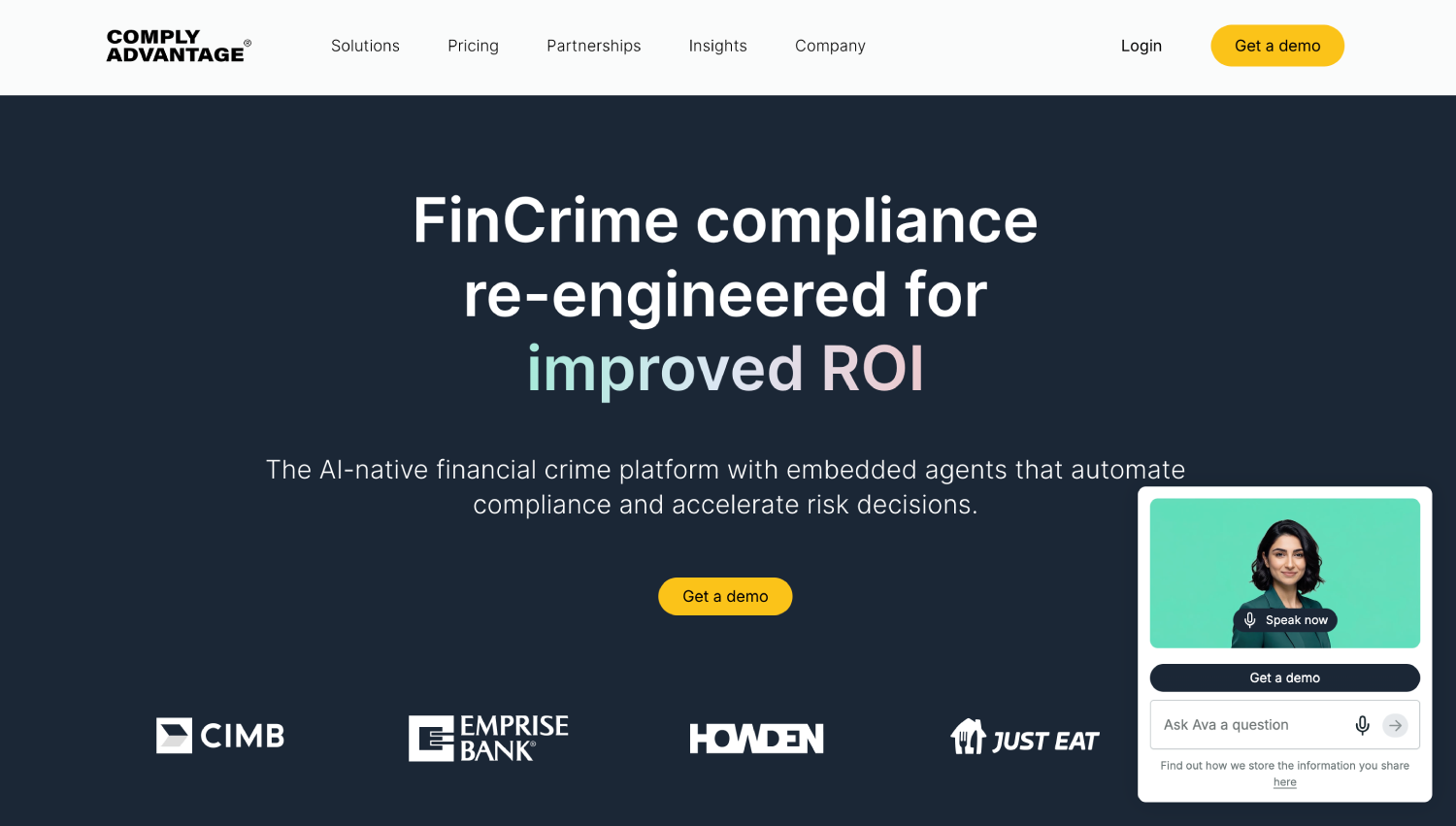
ComplyAdvantage is the most developer-friendly option in this list and the most common first choice for Series A-to-C fintechs building compliance into their onboarding API. According to ComplyAdvantage’s own product documentation, their adverse media tool monitors tens of millions of sources including news articles, government data, regulatory databases, and court records, using a combination of machine learning and human review to reduce false positives.
The REST API returns structured results with risk categories, source links, and entity scores. Webhooks fire when a previously screened entity generates new adverse content, which is what you need for ongoing customer monitoring rather than just onboarding checks. ComplyAdvantage also combines PEP, sanctions, and adverse media into a single API response, reducing the number of vendors you need to stitch together. Their pricing is usage-based and tiered, negotiated per customer, but they do offer a self-serve entry point for low volumes that smaller teams can use to evaluate the product before committing to an enterprise contract.
Acuris Risk Intelligence
Acuris Risk Intelligence (formerly Mergermarket Group’s compliance data arm) distinguishes itself through primary sourcing. Their adverse media content draws on original investigative reporting, not just aggregated news feeds. For fintech platforms serving clients in emerging markets or higher-risk jurisdictions where local investigative journalism is sparse but important, this sourcing model has real value.
Their PEP database includes RCA coverage and is updated continuously. The API is available and documented for enterprise customers. Pricing is custom and enterprise-oriented, and this vendor is generally a better fit for compliance teams that already have a research function and want to augment it with structured data, rather than teams looking for a pure API-first plug-in.
Moody’s (Bureau van Dijk Orbis)
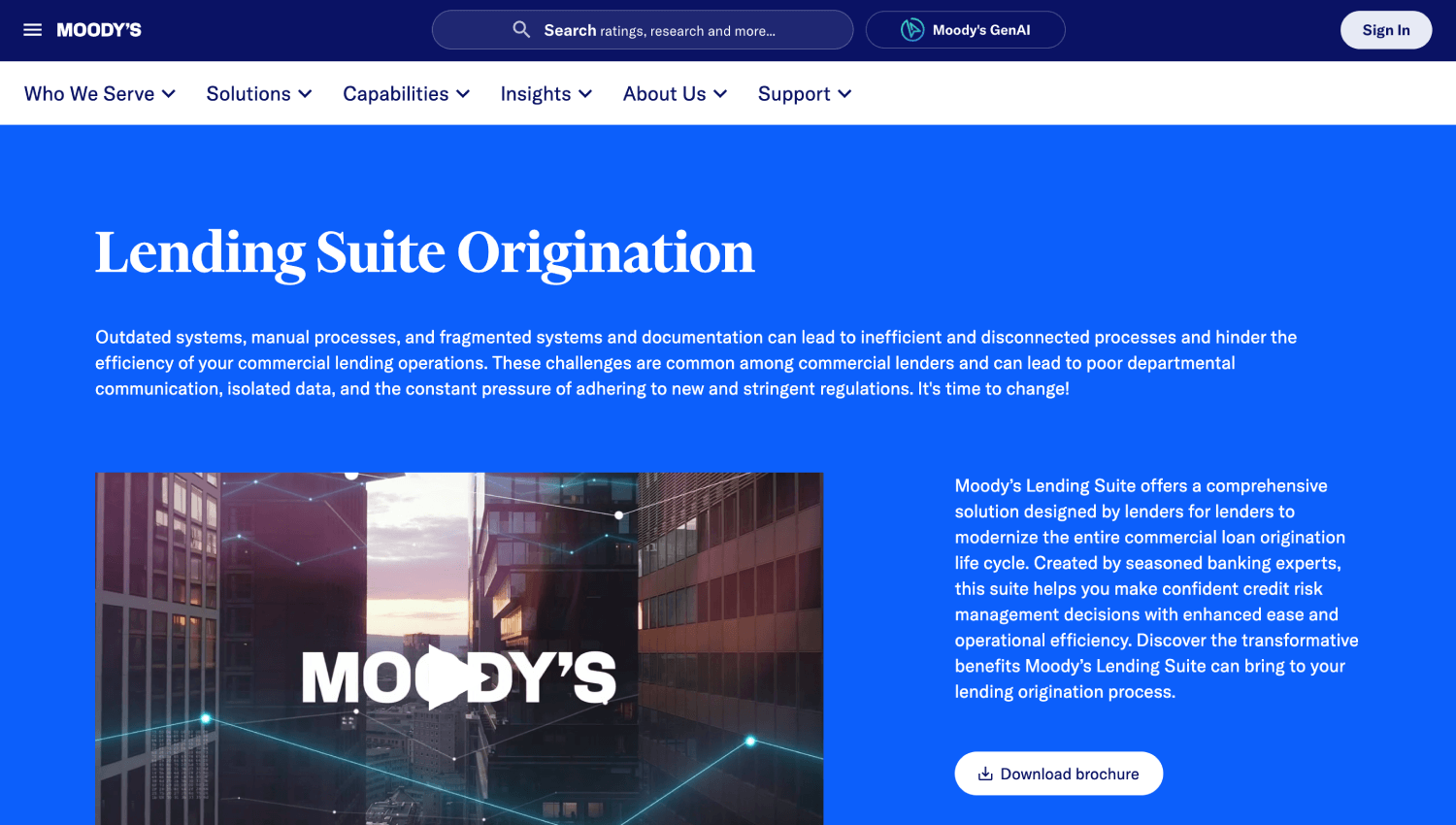
Moody’s Orbis is primarily a corporate intelligence database, and its relevance to adverse media and PEP screening sits at the intersection of KYB and beneficial ownership. If your fintech onboards businesses rather than individuals (or both), Orbis allows you to map ownership structures and identify where a PEP or sanctioned individual sits within a corporate hierarchy, even if they are not the named applicant.
This is the tool to add when your primary concern is corporate customers using layered ownership to obscure a PEP connection. It is not a replacement for individual adverse media screening but a complement to it. Pricing is enterprise contract, not publicly disclosed. Moody’s acquired Bureau van Dijk in 2017 and has integrated the data into its broader analytics platform. Teams evaluating KYB providers for B2B fintech onboarding frequently encounter Orbis as a data layer within broader KYB platforms rather than as a standalone screening tool.
NameScan
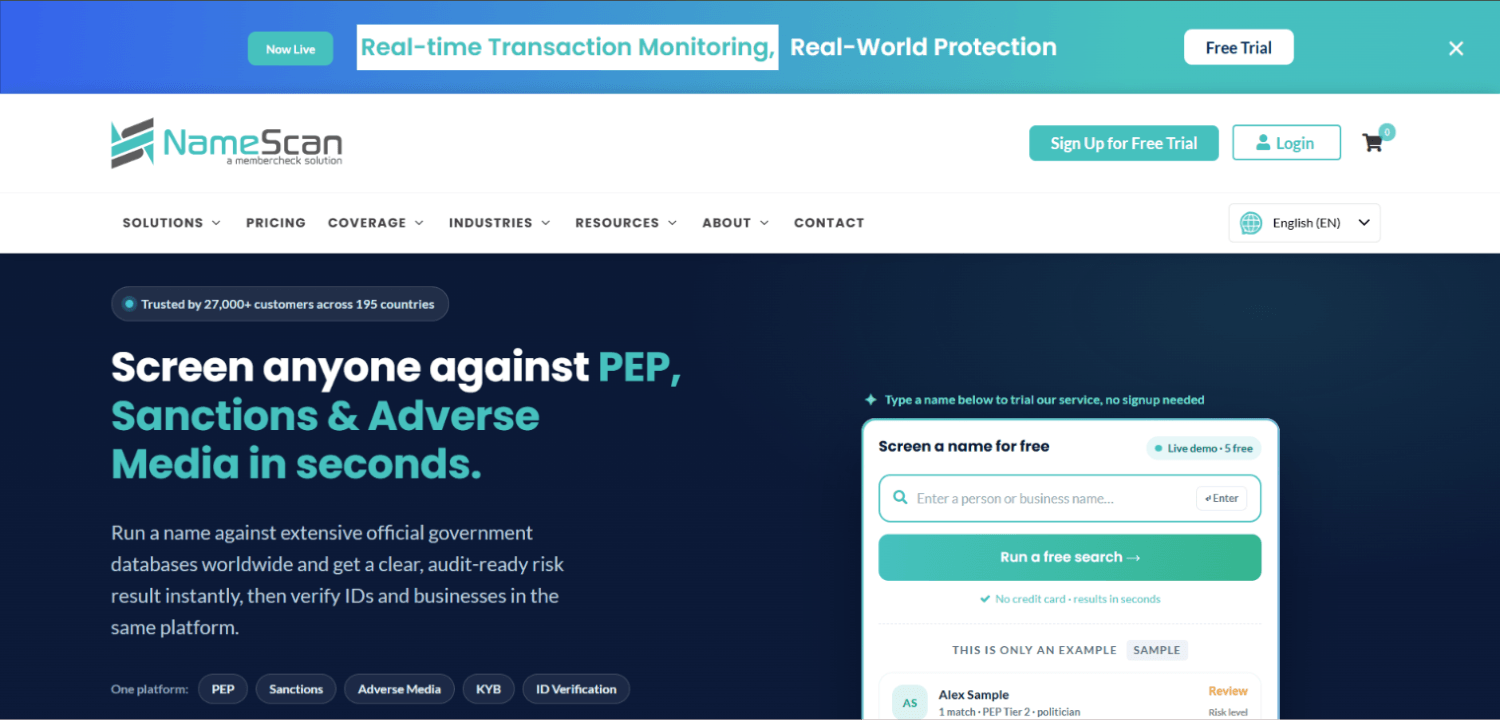
NameScan occupies a different tier from the vendors above, and it is worth naming honestly. It is not an enterprise adverse media monitoring platform. It is a PEP and sanctions screening tool with a publicly listed subscription pricing model, making it accessible to pre-Series A teams that need documented PEP checks without a six-figure data contract.
Their API is REST-based and returns PEP and sanctions match results with fuzzy matching. Adverse media coverage is limited compared to the enterprise options. The right way to think about NameScan is as a tool to fulfill a specific regulatory checkbox during early onboarding while you establish product-market fit, with a planned migration to a more comprehensive platform as customer volumes and risk complexity grow.
How Does Adverse Media Monitoring Differ from Point-in-Time Screening?
Onboarding screening catches risk at the moment a customer applies. Adverse media monitoring catches risk that develops after they are already on your platform. A customer who was clean at onboarding can appear in a regulatory enforcement action six months later, and without ongoing monitoring, you will not know until an examiner asks why you kept servicing them.
Most enterprise-grade tools in this list support both modes. At the API level, the difference is between a synchronous call at onboarding and a webhook or batch monitoring job that runs against your existing customer base on a scheduled basis. The monitoring frequency your compliance program requires depends on your risk tier structure: monthly for standard-risk customers, weekly or real-time for elevated-risk profiles, and near-real-time for PEPs already enrolled after enhanced due diligence.
This is a distinction that often gets missed when teams are evaluating vendors purely on onboarding API quality. A tool that returns a clean result at signup but has no mechanism for continuous monitoring is half a solution. If your onboarding flow already handles the initial KYC step, the fintech product and compliance readiness checklist covers the full program controls you need around ongoing monitoring obligations.
What Does Adverse Media Screening Actually Cost?
Pricing transparency in this category is essentially nonexistent at the enterprise level. Refinitiv, Dow Jones, ComplyAdvantage, Acuris, and Moody’s all negotiate contracts based on volume, geography, entity types screened, and whether you need both onboarding and ongoing monitoring. None of them publish a per-check rate that reflects real transaction pricing.
NameScan is the exception. As of their public pricing page (verified at the time of publication), NameScan offers plans starting at a lower subscription tier for basic PEP and sanctions screening, with per-scan costs that decrease at higher volumes. Their pricing is publicly listed at namescan.io/Pricing, which is an unusual level of transparency in this space.
For budgeting at a growth-stage fintech, the practical reality is this: expect adverse media and PEP screening from an enterprise vendor to be priced as an annual contract with a meaningful minimum commitment, often structured around the number of entities screened per month rather than per verification. A team onboarding 5,000 customers per month faces a fundamentally different pricing conversation than one processing 500,000. The compliance cost structure matters more than most founders realize. The real cost of compliance in fintech SaaS, broken down by stage, gives a useful benchmark for where these vendor contracts typically land relative to other compliance line items.
How Do These Tools Integrate with Existing KYC and Onboarding Stacks?
For most fintech teams, adverse media and PEP screening does not stand alone. It sits inside a broader onboarding orchestration layer alongside identity verification, document checks, and sanctions screening. The integration question is whether you add a dedicated adverse media vendor via API, or whether your existing KYC platform already bundles some form of adverse media coverage.
Alloy and Persona, for example, are identity orchestration platforms that can pull in multiple third-party data sources within a single workflow, though whether either includes adverse media signals by default depends on how your integration is configured, and you should confirm coverage scope directly with your account team before assuming it is included. If you are already using one of those platforms, your first call should be to your existing vendor to understand whether their adverse media coverage meets your program requirements, before adding a standalone adverse media API vendor. Adding a separate vendor creates deduplication complexity and may surface conflicting results that require manual review to resolve.
If your current stack does not cover adverse media and PEPs adequately, ComplyAdvantage is the most common standalone API addition for growth-stage teams because its output schema is relatively straightforward to map to an existing onboarding data model. Refinitiv and Dow Jones integrations typically require more implementation time and often benefit from a dedicated compliance engineering sprint rather than a quick API key swap.
Frequently Asked Questions
What is adverse media screening in fintech compliance?
Adverse media screening is the process of searching news sources, court records, regulatory databases, and other public records for negative information about a customer or entity. In fintech, it is used during onboarding and ongoing monitoring to identify individuals or businesses associated with financial crime, fraud, corruption, or other regulatory violations. It is a distinct process from sanctions screening, which only checks structured government watchlists.
What is a politically exposed person (PEP) and why does it matter for onboarding?
A PEP is an individual who holds or has recently held a prominent public position, such as a head of state, senior government official, military leader, or senior executive of a state-owned enterprise. Their position creates a higher risk of corruption or bribery. FATF guidelines and most national AML regulations require financial institutions and regulated fintechs to identify PEPs during onboarding and apply enhanced due diligence, regardless of whether they appear on any sanctions list.
Does running OFAC or sanctions checks replace adverse media screening?
No. Sanctions checks query structured government watchlists of designated individuals and entities. Adverse media screening searches unstructured content including news articles, court filings, and investigative reports for negative associations. A person can be entirely clear on all sanctions lists while appearing in credible reporting about bribery or fraud. Regulators treat them as separate program components, and an exam finding on one does not indicate coverage on the other.
Which adverse media screening tool is best for a Series A fintech?
ComplyAdvantage is the most practical starting point for a Series A fintech building an API-first compliance stack. It combines PEP, sanctions, and adverse media in a single REST API with webhook support for ongoing monitoring, has a faster implementation timeline than Refinitiv or Dow Jones, and offers usage-based pricing that scales more proportionally at lower volumes. Teams with complex global customer bases or a sponsor bank mandate for enterprise-grade data should evaluate Refinitiv World-Check alongside it.
What is the difference between PEP screening and adverse media monitoring?
PEP screening checks a customer against structured databases of government officials and their relatives to flag elevated-risk individuals who require enhanced due diligence. Adverse media monitoring scans news, court records, and regulatory sources for negative content about any customer, whether or not they are a PEP. Both are required for a complete customer risk program. Most enterprise vendors provide both through the same API, but the underlying data sources and update mechanisms are different.
How often should existing customers be rescreened for adverse media?
The standard compliance program approach is risk-tiered: low-risk customers rescreened monthly or quarterly, elevated-risk customers weekly, and PEPs or customers under enhanced due diligence on a near-real-time or continuous basis. The specific cadence should be documented in your AML policy and will be reviewed by examiners. Most enterprise adverse media platforms support configurable monitoring schedules, and some offer real-time alerting when a previously clear entity generates new adverse content.
Can I use a single API for both adverse media and PEP screening?
Yes. ComplyAdvantage, Refinitiv World-Check, and Dow Jones Risk and Compliance all return both PEP flags and adverse media signals in a single API response. This is generally preferable to stitching together two separate vendors because it reduces the risk of contradictory results, simplifies your data model, and cuts vendor management overhead. The trade-off is that bundled tools may be stronger on one signal type than the other, so it is worth testing the quality of each component during a proof of concept before signing a contract.
What the Right Tool Actually Depends On
For most growth-stage fintechs, the vendor decision comes down to two variables that are rarely covered in analyst briefings: how much ongoing monitoring matters relative to onboarding volume, and what your sponsor bank or regulator has explicitly required in writing. If your bank partner’s compliance questionnaire names specific data providers or requires a minimum coverage standard, that requirement narrows the field before you evaluate a single demo. Check the exam findings in your bank partner relationship before spending four weeks on vendor calls.
Teams building toward a Series B with institutional investors or a regulated charter should treat adverse media and PEP screening as infrastructure, not a checkbox. A tool that flags a real risk at month three of customer monitoring versus one that misses it until a regulatory inquiry arrives are not comparable outcomes from a reputational standpoint. The compliance mistakes that can destroy a fintech startup tend to cluster around exactly this kind of infrastructure gap, where a team assumed one tool covered what another actually needed to handle.
The vendors in this list are not interchangeable. Refinitiv and Dow Jones are the right answer for platforms that need auditable, analyst-maintained data and have the contract budget to match. ComplyAdvantage is the right answer for teams that need a working API integration inside a quarter and a vendor that sells to growth-stage companies. NameScan is the right answer for teams that need to show documented PEP checks before their first regulator conversation. Pick the tool that matches where your compliance program actually is today, with a clear line of sight to what you will need when the next audit arrives.