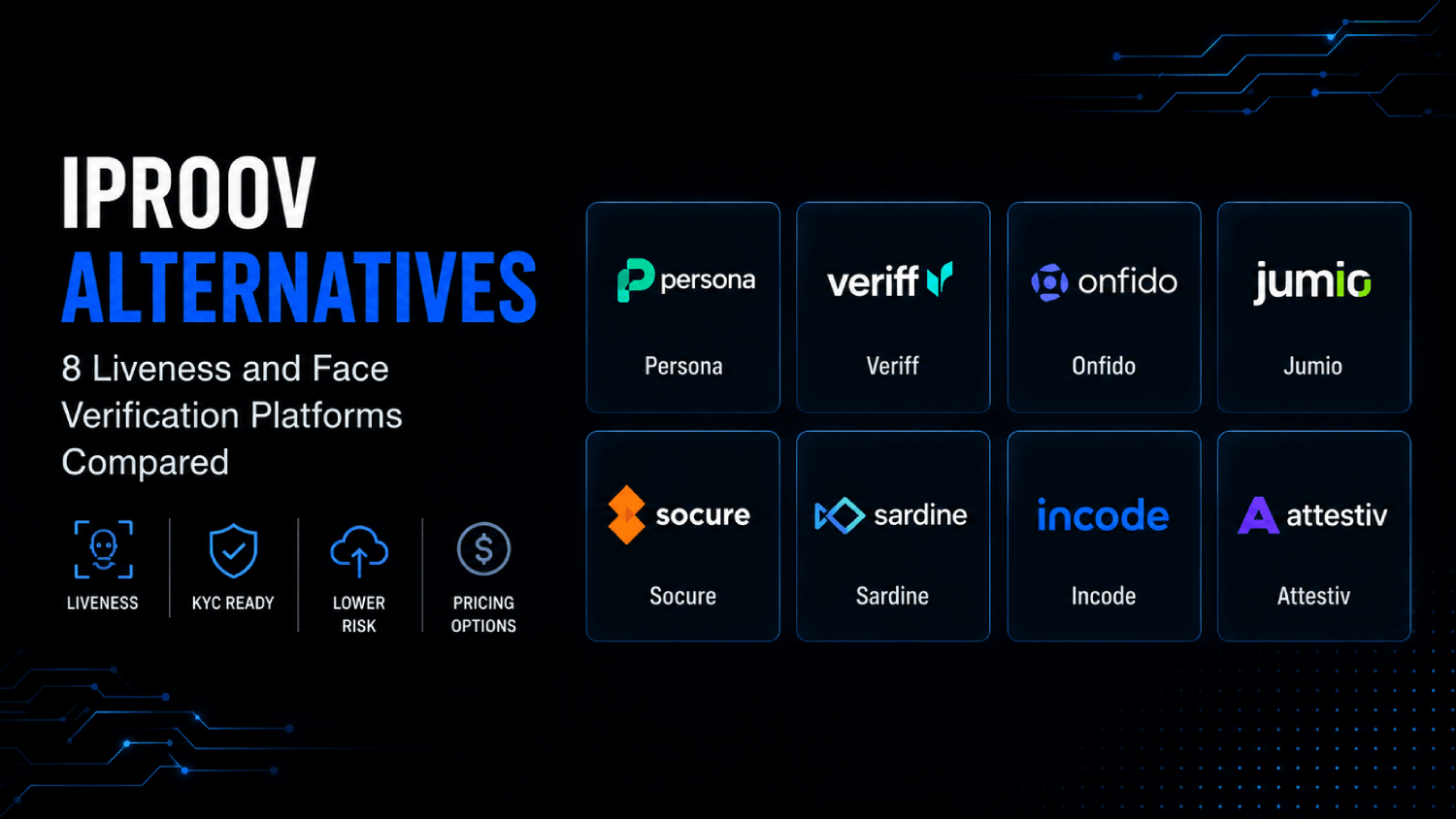

- iProov is a credible enterprise liveness vendor, but buyers consistently cite high minimum contract values, slow integration timelines, and limited self-serve tooling as reasons to evaluate alternatives.
- Eight vendors cover the same core use cases: passive liveness, active liveness, document plus face match, and deepfake detection. The right one depends on your deployment environment, verification volume, and how much engineering time you can spend on the integration.
- The FintechSpecs Liveness Stack Audit identifies five decision variables that most buyers miss: SDK injection risk, geographic face model coverage, certification scope, replay attack methodology, and contract exit terms.
- For early-stage fintechs, Persona and Onfido offer the most accessible entry points. For high-volume enterprise deployments, Socure and Jumio compete directly on accuracy benchmarks. For developer-first teams, Sardine and Veriff offer faster time-to-production.
- Migration risk is real but manageable. The biggest cost is not integration; it is retraining your fraud review team on a new decisioning interface mid-cycle.
Several credible iProov alternatives exist for fintech KYC and onboarding teams, including Persona, Veriff, Onfido, Jumio, Socure, Sardine, Incode, and Attestiv. The best choice depends on verification volume, deployment environment (web, mobile SDK, or server-side), geographic coverage needs, and contract structure. iProov is strongest for regulated enterprise deployments requiring ISO 30107-3 PAD Level 2 certification. Most alternatives trade some depth of biometric science for faster integration, lower minimums, or better developer tooling.
Why Buyers Start Looking for an iProov Alternative
iProov built its reputation on passive liveness detection for high-security government and banking deployments. Its Flashmark and Genuine Presence Assurance technology is genuinely differentiated at the top of the market. But several recurring friction points push buyers to evaluate competitors.
Contract minimums are the most common trigger. iProov targets large enterprise deals, and teams processing fewer than 50,000 verifications per month often find the commercial terms misaligned with their stage. For more on how iProov structures its pricing, see the iProov pricing breakdown published separately on FintechSpecs.
Integration complexity is the second issue. iProov’s SDK requires a native mobile implementation for its most accurate passive liveness checks. Teams building web-first or cross-platform flows report longer time-to-production than they expected. Third, some buyers want a single vendor covering document capture, face match, database checks, and AML screening in one API. iProov is a point solution for biometric liveness; composing a full KYC stack around it means managing additional vendor relationships.
The FintechSpecs Liveness Stack Audit: Five Variables That Drive the Right Choice
Most vendor comparison frameworks stop at feature lists. The FintechSpecs Liveness Stack Audit uses five specific decision variables that actually change which vendor wins for a given team.
SDK injection risk tolerance. Some liveness solutions can be attacked by injecting a synthetic video stream at the camera driver level. Vendors counter this differently: some use server-side challenge-response, some use device attestation, some use hardware-bound cryptographic signals. Ask every vendor how they detect camera injection specifically, not just “deepfake attacks” generically.
Geographic face model coverage. Liveness models trained predominantly on certain ethnic or geographic populations produce higher false rejection rates on underrepresented groups. If your user base spans South Asia, Sub-Saharan Africa, or Southeast Asia, ask for demographic accuracy disaggregation data. Vendors that cannot provide it are likely to create compliance exposure under emerging algorithmic fairness obligations.
Certification scope. ISO 30107-3 PAD (Presentation Attack Detection) is the standard benchmark, but Level 1 and Level 2 certifications have meaningfully different requirements. Level 2 testing by an accredited laboratory is significantly harder to achieve. Check which specific scenarios each vendor’s certificate covers before treating certifications as equivalent.
Replay attack methodology. A replay attack presents a recording of a legitimate user’s prior liveness session. Ask how each vendor invalidates recorded sessions at the network level, not just the video analysis level.
Contract exit terms. Multi-year contracts with annual true-up clauses are common in this space. If your volume drops or you get acquired, understand whether you can exit, reduce committed volume, or port your user data before signing.
Who Are iProov’s Main Competitors?
The eight vendors below cover the realistic shortlist for any fintech team replacing or benchmarking iProov. They are grouped by use case fit rather than ranked generically, because a seed-stage neobank and a Series C lending platform have almost nothing in common when it comes to liveness requirements.
| Vendor | Best For | Liveness Approach | Full KYC Stack? | Migration Risk | Pricing Model |
|---|---|---|---|---|---|
| Persona | Product teams wanting configurable orchestration | Passive + active hybrid | Yes | Low | Per verification, volume tiers |
| Veriff | Global consumer onboarding, high UX bar | Passive liveness + doc capture | Yes | Low to Medium | Per verification, contract |
| Onfido | Teams needing document plus face match in one flow | Active + passive, Motion Check | Yes | Low to Medium | Per check, volume tiers |
| Jumio | Regulated financial institutions, global coverage | Passive liveness, 3D face map | Yes | Medium | Enterprise contract |
| Socure | US-focused lenders and neobanks using data signals | Passive liveness + identity graph | Yes (US-centric) | Medium to High | Enterprise contract |
| Sardine | Fraud-first teams layering device and behavior signals | Behavioral + passive liveness | Partial | Low | Usage-based, transparent |
| Incode | Latin America deployments, in-person + remote hybrid | Passive liveness, 3D scan | Yes | Medium | Per verification, enterprise |
| Attestiv | Teams prioritizing deepfake media authentication | AI media forensics, passive | No | Low | API usage, custom |
Which iProov Alternatives Work Best for Fintech KYC Teams?
Persona: Best for teams that want to own the verification logic
Persona is the closest thing to a no-code orchestration layer for identity. Rather than a black-box liveness API, Persona lets product teams configure which checks run in which order, what triggers a manual review, and how the decision engine responds to edge cases. A fintech running KYC for both consumer accounts and business accounts can build separate flows without touching the API again.
The liveness module uses a hybrid approach: passive analysis runs first, and active prompts engage only when passive confidence falls below a threshold. That means low friction for most users and a fallback for harder cases. Persona also covers document capture, database checks, and watchlist screening, making it a genuine full-stack replacement for teams that assembled iProov alongside two or three other vendors.
The migration risk is low. Persona’s SDK is well-documented, the sandbox environment is self-serve, and their support team is responsive at earlier commercial stages than iProov typically is. For any team sitting between seed and Series B, Persona is the first vendor to put in front of your engineering lead. The KYC provider comparison on FintechSpecs covers Persona’s approval rate benchmarks in more detail alongside other full-stack alternatives.
Veriff: Best for consumer onboarding where UX conversion matters
Veriff built its reputation on a high-completion onboarding flow. The front-end SDK is polished, the document auto-capture is genuinely good at guiding non-technical users, and the face match engine handles a wide range of lighting conditions. For consumer fintech products where drop-off at identity verification is a real problem, Veriff’s UX advantage translates directly to conversion. According to Veriff’s official site, the company covers 230+ countries and territories and supports over 12,500 government documents.
The trade-off versus iProov is depth of biometric science at the very high end. iProov’s Genuine Presence Assurance uses a server-side challenge that is harder to spoof because the liveness signal originates remotely rather than from the client device. Veriff’s liveness is strong for most fintech threat models, but if your threat model includes coordinated deepfake attack campaigns at scale, iProov’s specific architecture is harder to beat. Most consumer fintechs are not there yet.
Veriff integrates with most major identity orchestration platforms and has built-in AML screening hooks. Contract minimums exist but are more accessible than iProov at mid-market volumes. Migration complexity is manageable: plan two to four weeks for a mobile SDK swap and an additional week to reconfigure your fraud review queue.
Onfido: Best for teams replacing iProov within an existing identity orchestration layer
Onfido, acquired by Entrust in 2024, offers a mature biometric product with a large installed base in financial services. Its Motion Check is a passive liveness product that captures a user’s natural movement rather than asking them to perform specific gestures, which reduces friction without sacrificing much accuracy. The document AI covers a broad set of country-specific ID formats with strong extraction accuracy.
The acquisition creates real post-acquisition uncertainty that buyers should weigh carefully. Entrust is a large identity and security company, and integrations of this kind routinely affect product roadmap priorities, pricing flexibility, and support responsiveness for customers who were not part of the acquiring entity’s core install base. If you are evaluating Onfido now, ask explicitly about your support tier, whether your account team will change, and whether your pricing is contractually locked for the full term. Onfido remains a natural iProov replacement for teams that already use a KYC orchestration layer like Alloy or Unit21 and just need to swap the biometric component, but the due diligence bar for a new contract should be higher than it was pre-acquisition.
Jumio: Best for regulated financial institutions needing global coverage and certification depth
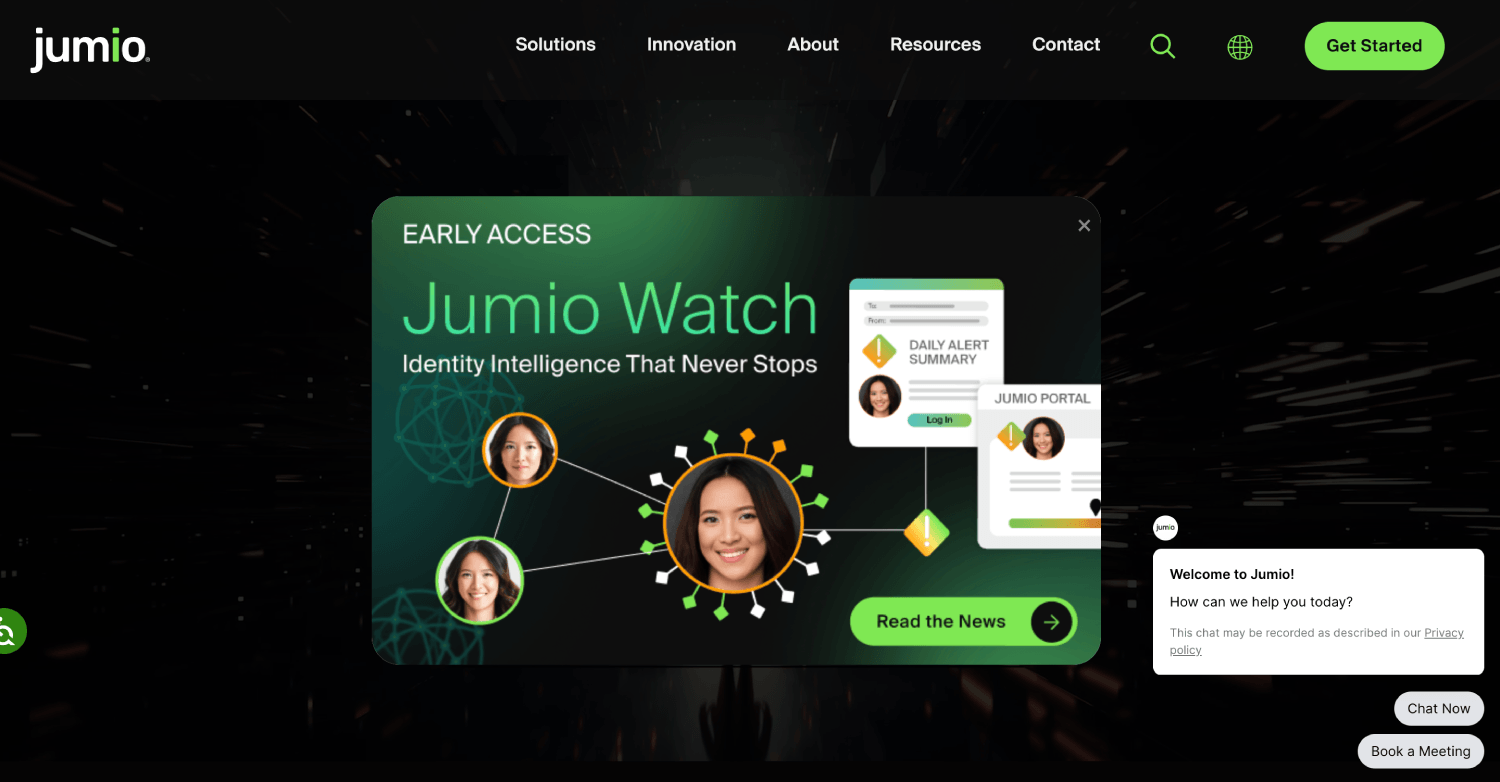
Jumio sits in the same enterprise tier as iProov and competes directly on global document coverage and certification pedigree. Jumio’s liveness detection uses a 3D face map approach and has maintained strong certification status across major regulatory jurisdictions. The vendor has significant deployments in banking, crypto exchanges, and regulated lending.
Migration from iProov to Jumio is not a weekend project. Both vendors require native SDK integration, both have enterprise contract minimums, and both require a meaningful compliance review to update your approved vendors list. The realistic timeline for a full migration is two to three months. The benefit: Jumio’s document AI is strong enough that teams often eliminate a separate document verification vendor from their stack, which can offset the integration cost.
Jumio is not the right call for early-stage companies. It is the right call for Series B or later teams processing significant verification volume in multiple regions who need a vendor that can grow into a multi-year enterprise agreement without outgrowing the relationship.
Socure: Best for US-focused lenders combining liveness with identity graph signals
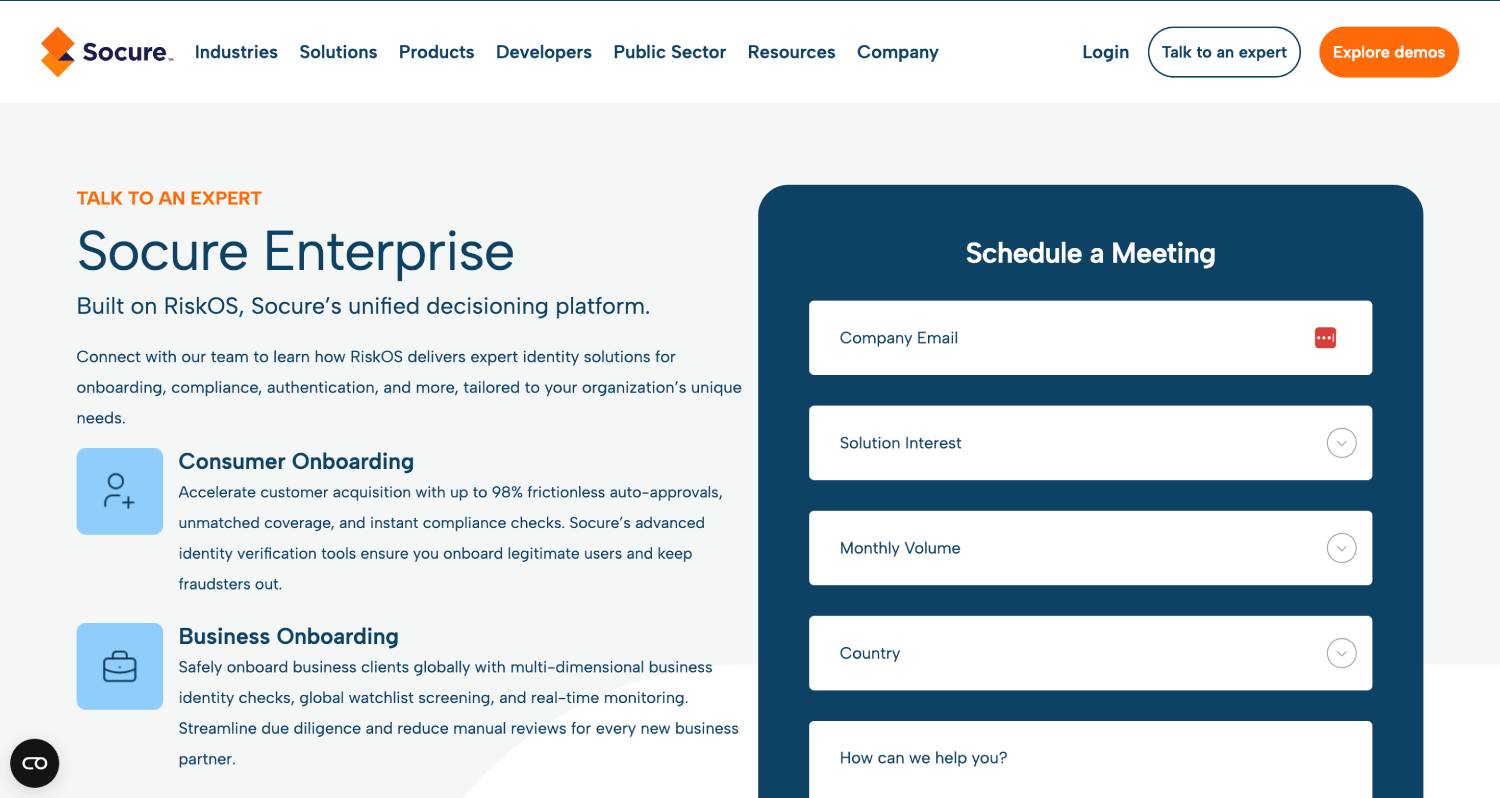
Socure approaches identity verification from a different angle than most liveness vendors. Its core strength is the identity graph: a probabilistic model built from thousands of data attributes that predicts the likelihood an identity is genuine before liveness ever runs. The biometric liveness module, Sigma Identity Fraud, layers on top of that graph signal rather than standing alone.
For US-based fintechs, this approach produces measurably lower false positive rates for domestic users compared to biometric-only systems. The limitation is geographic: Socure’s data graph is predominantly US-sourced, and its performance on international users is not comparable to vendors that have built global identity infrastructure. If your user base is US-only, Socure is one of the strongest alternatives to iProov on the market. If you are expanding internationally, it is not the right anchor vendor.
Migration risk from iProov to Socure is medium to high. The decisioning model works differently enough that your fraud review team will need meaningful retraining time. Budget three to four months for a complete migration including model calibration. The Socure alternatives comparison on FintechSpecs covers how its identity graph stacks up against other US-focused platforms.
Sardine: Best for fraud-first teams who think about liveness as one signal among many
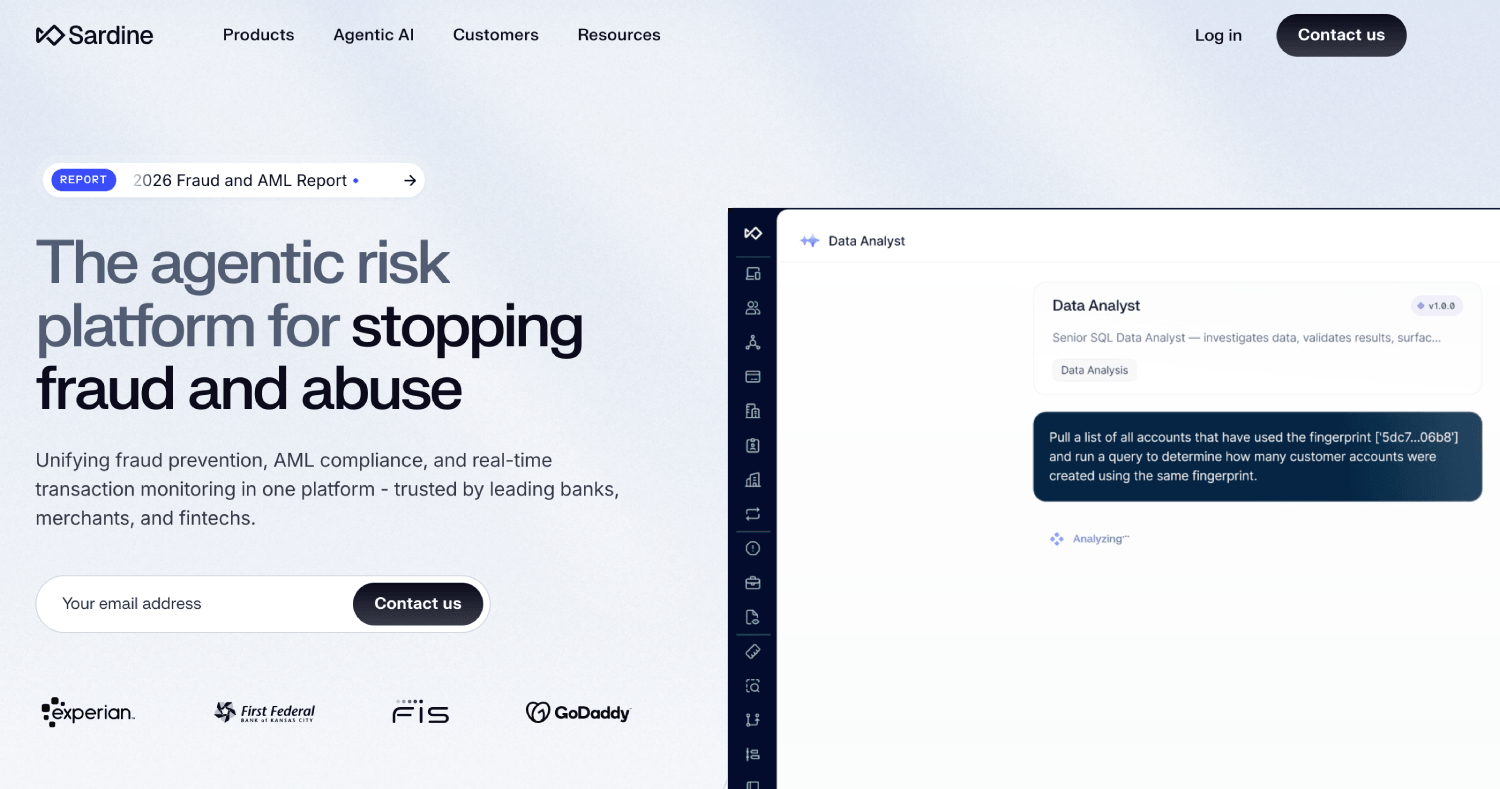
Sardine is not primarily a liveness vendor. It is a fraud orchestration platform that includes device intelligence, behavioral biometrics, and identity signals alongside a liveness check. The distinction matters: if you think of liveness as a standalone gate, Sardine is the wrong frame. If you think of it as one input into a broader fraud decision, Sardine’s architecture produces better outcomes than a liveness-only solution.
The behavioral biometrics layer is genuinely differentiated. Sardine captures how a user types, how they move their mouse, whether their session behavior matches prior patterns, and dozens of other signals that a traditional liveness check never sees. This is particularly valuable for account takeover detection and for high-risk transactions post-onboarding, not just at initial KYC. Sardine’s pricing is more transparent than most enterprise liveness vendors and the integration is developer-friendly. For early-stage fintech teams, this is a strong starting point that can scale without a vendor replacement mid-growth.
Incode: Best for Latin American deployments and in-person hybrid verification flows
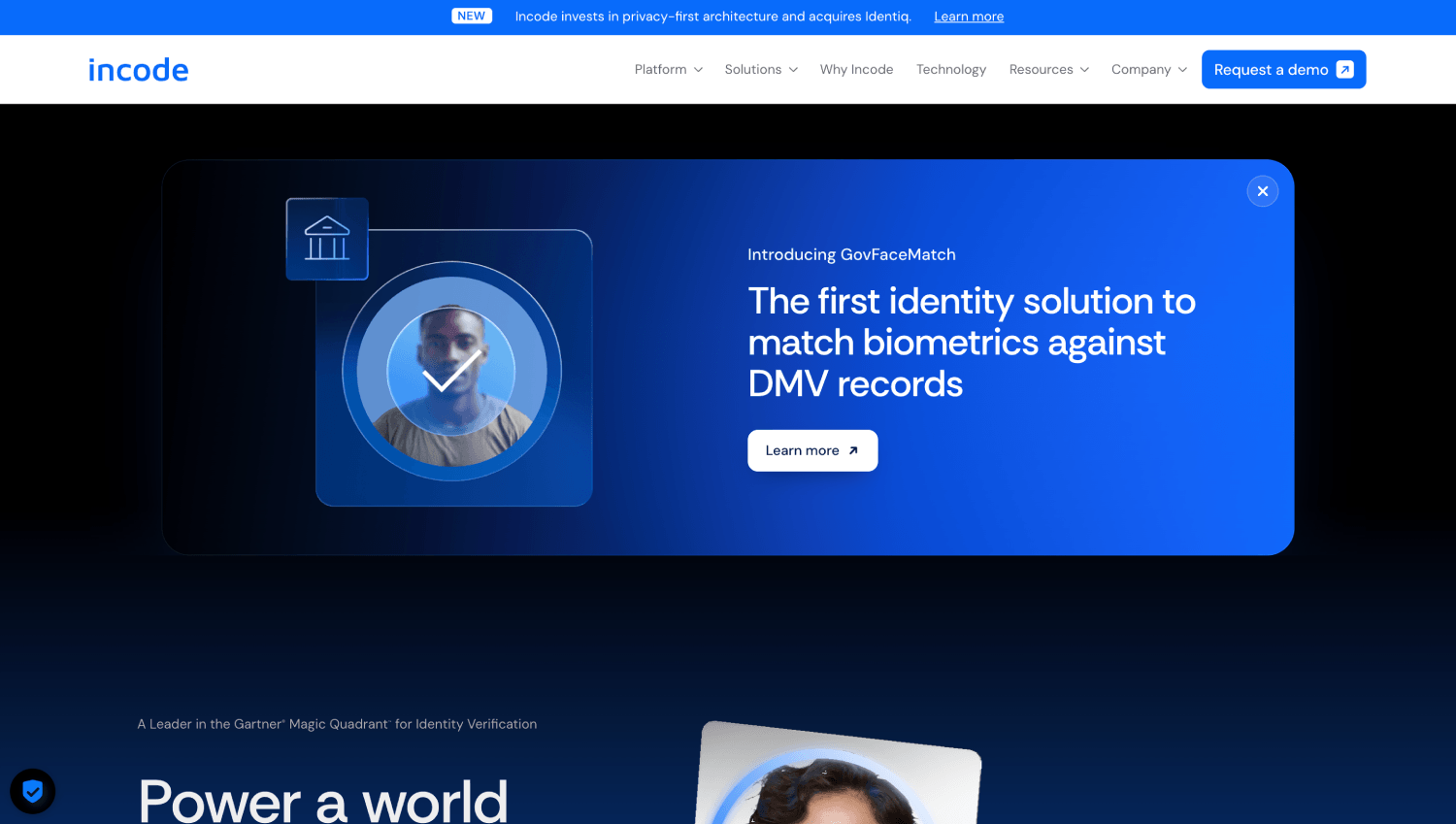
Incode has built a significant presence in Latin American financial services, with deployments at banks and credit unions across Mexico and the broader region. Its liveness technology uses a 3D passive scan that performs well across the darker lighting conditions and document quality variations common in those markets. The in-person verification module is a genuine differentiator: Incode can run both remote biometric and branch-level identity verification from a single platform.
For US-focused fintechs with no Latin American exposure, Incode is probably not the first vendor to evaluate. But if you have or plan to have a cross-border user base in the Americas, or if you are operating a product that has any in-person touchpoint, Incode’s hybrid model is difficult to replicate by stitching together separate vendors.
Attestiv: Best for teams focused on deepfake media authentication rather than full KYC
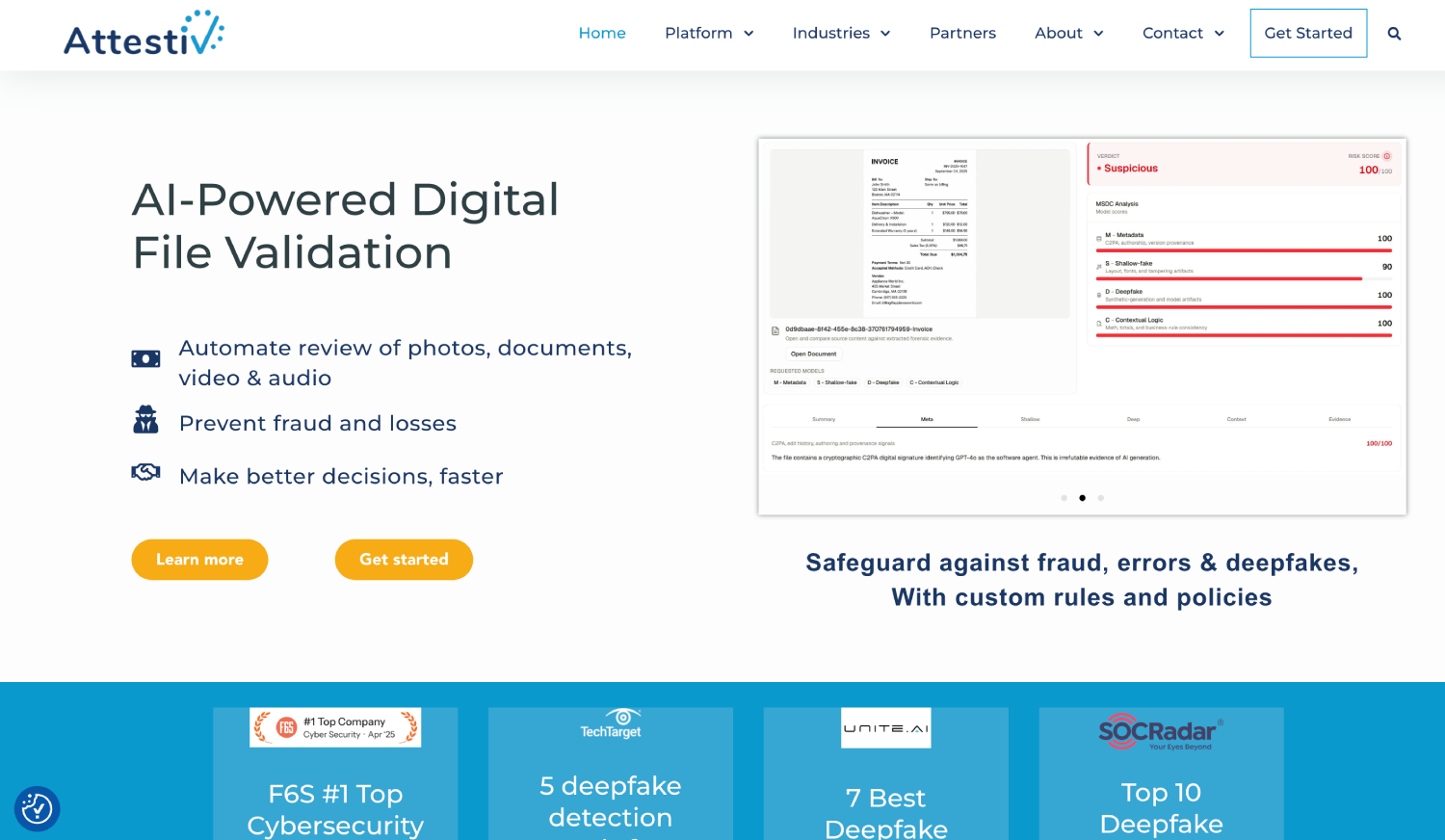
Attestiv occupies a narrower space than the other vendors on this list. Its core product is AI-driven media forensics: detecting whether a submitted image, video, or document has been synthetically generated or manipulated. It is not a full KYC stack and does not replace iProov entirely. It complements a liveness platform when the specific threat model is sophisticated deepfake submission rather than standard presentation attacks.
Teams running high-value remote account openings for wealth management, private credit, or crypto asset platforms may find Attestiv worth layering on top of their primary liveness vendor. The API is straightforward, pricing is usage-based, and integration does not require a long-term commitment. Think of it as a deepfake insurance layer rather than a core identity product.
What Does the Migration Actually Cost?
Switching liveness vendors has three distinct cost centers that most teams underestimate. Engineering time is the visible one: SDK swap, webhook reconfiguration, sandbox testing, and production deployment. Depending on your integration complexity, that is two to six weeks of a senior engineer’s time.
The less visible cost is compliance documentation. If your liveness vendor is named in your BSA/AML program, your internal controls documentation, or your sponsor bank agreement, you need to update those references and potentially notify your compliance officer or banking partner before go-live. The guide to switching KYC providers without hurting approval rates covers this documentation process in detail.
The third cost is operational: your fraud review team will need time to calibrate to a new vendor’s decisioning outputs, confidence scores, and manual review interface. A vendor change that does not account for this retraining period often produces a temporary spike in false positives during the first four to six weeks post-migration, which can affect onboarding conversion and fraud KPIs simultaneously.
Consider a hypothetical Series A neobank processing 8,000 verifications per month. At a per-check rate in the $1.00 to $1.50 range, typical for mid-market liveness contracts based on publicly available vendor pricing tiers, monthly verification spend runs between $8,000 and $12,000. Moving to a self-serve vendor like Persona or Sardine may reduce that per-check rate, but the two-week engineering sprint and four-week fraud team recalibration period represent real cost that does not appear in a vendor comparison spreadsheet. Build that into your switching calculation before presenting a business case internally. The KYC cost per verification breakdown on FintechSpecs provides additional context for benchmarking these numbers against market rates.
Is iProov Compliant with Data Regulations?
iProov publishes its compliance certifications including GDPR adherence for European deployments, ISO 27001 certification, and ISO 30107-3 PAD Level 1 and Level 2 certifications for presentation attack detection. For buyers in regulated financial services, data residency is often the more pressing question: where biometric data is processed and stored, and whether you can contractually require data to stay within a specific jurisdiction.
All eight vendors on this list support GDPR-compliant data handling in some form, but the specific data residency options and processing agreements vary. Ask each vendor for their Data Processing Agreement before signing, and confirm whether your biometric data is used to improve their shared models or kept isolated to your tenant. Some vendors offer dedicated processing environments at higher contract tiers; others do not offer it at any tier.
Can Liveness Checks Be Fooled?
Yes. The threat environment for liveness detection is a real arms race. Presentation attacks using printed photos and basic video replays are effectively blocked by any reputable vendor on this list. The harder attacks are digital injection attacks, where an attacker bypasses the camera entirely and injects a synthetic video stream at the driver level, and high-quality deepfake video generated by commercially available AI tools.
iProov’s specific architecture addresses the injection attack vector with a server-side challenge-response mechanism that is genuinely harder to spoof than a client-side-only check. Most alternatives rely more heavily on client-side device attestation, which is meaningful protection but operates differently. For most fintech threat models, the difference is academic. For high-value account opening at a private bank or a crypto exchange targeted by organized fraud rings, it is not academic. The fraud prevention versus user experience trade-off is a useful frame for where to set your liveness threshold relative to your conversion goals.
Frequently Asked Questions
Who are iProov’s main competitors in the fintech KYC market?
iProov’s main competitors for fintech KYC liveness and face verification are Persona, Veriff, Onfido, Jumio, and Socure. For teams with a fraud-first architecture, Sardine also competes on the same use cases. Jumio and Socure compete most directly in the enterprise and regulated financial services segment. Persona and Veriff are stronger fits at mid-market volumes and for teams prioritizing developer experience and UX conversion.
What is the difference between active and passive liveness detection?
Active liveness detection requires the user to perform a specific action, such as blinking, turning their head, or reading a number displayed on screen. Passive liveness detection analyzes a brief video or image sequence without requiring any deliberate user action. Passive approaches generally produce better conversion rates because they reduce friction, but they require more sophisticated underlying models to achieve equivalent security. iProov, Jumio, and Incode use primarily passive approaches. Onfido and Persona use hybrid methods that start passive and escalate to active only when needed.
How long does it take to migrate from iProov to a different liveness vendor?
A realistic migration timeline depends on your integration complexity. Teams with a native mobile SDK implementation should budget two to four weeks for the engineering swap, one to two weeks for compliance documentation updates, and four to six weeks for fraud review team calibration post-launch. The total elapsed time from vendor selection to stable production is typically eight to twelve weeks. Teams using a KYC orchestration layer like Alloy can reduce the engineering component substantially since the biometric vendor swap does not require touching downstream systems.
Do iProov alternatives support ISO 30107-3 PAD certification?
Jumio and Onfido both maintain ISO 30107-3 PAD certifications. Veriff and Persona publish compliance documentation but their specific PAD certification levels should be confirmed directly with each vendor’s sales team, as certification scope changes when vendors update their models. Sardine and Attestiv do not position themselves around this certification specifically, as their threat models address different attack vectors. If ISO 30107-3 PAD Level 2 is a hard requirement from your regulator or banking partner, confirm the exact certificate scope in writing before finalizing vendor selection.
What should fintech teams ask during an iProov alternative vendor demo?
Five questions cut through vendor marketing in this category. First, how do you detect camera injection attacks specifically? Second, can you provide demographic accuracy disaggregation data for your liveness model across our target user geographies? Third, what is the data residency option for biometric processing in our target region? Fourth, is our user data used to train your shared model, or kept tenant-isolated? Fifth, what is the contract exit clause if our verification volume drops significantly or we are acquired? Vendors that cannot answer these questions concretely should be treated with appropriate skepticism.
Is there a self-serve iProov alternative for early-stage fintechs?
Persona and Sardine offer the most accessible self-serve onboarding among credible liveness vendors. Both provide sandbox environments without requiring a sales conversation first. Veriff has improved its mid-market onboarding process but still involves a commercial conversation before full production access. Jumio, Socure, and iProov all require a direct sales engagement before any meaningful technical evaluation. For a seed or Series A team that needs to run a proof of concept before committing to a contract, Persona is the most practical starting point. The fintech vendor evaluation framework on FintechSpecs offers a structured process for running that POC without wasting engineering time.
What Actually Drives the Choice Between These Vendors
The honest answer is that most fintechs do not need iProov’s specific architecture. iProov’s Genuine Presence Assurance is a defensible technical choice for government identity programs, large bank digital account openings, and high-value remote transactions where an adversary has both the motive and the resources to mount a sophisticated injection attack. For the majority of consumer fintech onboarding flows, the marginal security improvement over a well-configured Persona or Veriff implementation does not justify the contract complexity or the integration investment.
The vendors that most commonly win against iProov in competitive evaluations are Persona for product-led teams and Veriff for consumer-first companies. Socure wins in US-only deployments where an identity graph signal adds more fraud lift than deeper biometric science. Jumio wins when an existing enterprise relationship or a specific regulatory certification requirement makes it the default choice.
What buyers consistently undervalue is the operational cost of a black-box liveness decision. Knowing a check passed or failed is less useful than understanding why, especially when your fraud review queue fills up and your team needs to triage cases quickly. Before selecting any vendor on this list, test the review interface with your actual operations team, not just your engineering team. The platform they can work in efficiently is often more important than a 0.2% improvement in biometric accuracy for the volume you are processing today. That operational fit question rarely appears in an RFP, and it almost always surfaces three months after go-live.