
TLDR
- Brex works well for venture-backed US startups, but it requires a US entity and has pulled back from smaller accounts, leaving a real gap for bootstrapped teams, Canadian companies, and multi-entity operators.
- Ramp, Airbase, Mercury, Divvy, Spendesk, Mesh Payments, Payhawk, Extend, and Jeeves each serve a distinct segment: Ramp for cost control, Jeeves for international entities, Payhawk for European-headquartered teams with US ops, and so on.
- The right pick turns on three variables: entity geography, ERP depth, and whether you need a lending-based credit limit or a charge card backed by your own cash.
- Canadian companies specifically have the fewest options. Jeeves and Airwallex are the two platforms with real multi-country card programs covering Canadian entities as of November 2026.
- If you are comparing Brex, Ramp, and Airbase head to head on features and contract terms, the Ramp vs Brex vs Airbase deep comparison on FintechSpecs covers that ground in full.
The nine best Brex alternatives for corporate spend management are Ramp, Airbase, Mercury, Divvy, Spendesk, Mesh Payments, Payhawk, Extend, and Jeeves. Each solves a specific problem Brex does not: Ramp for savings-focused US teams, Jeeves and Payhawk for multi-country entities, Mercury for early-stage teams without VC backing, Divvy for credit-building, Spendesk for European-first orgs, Mesh for ERP-heavy finance stacks, and Extend for teams that want virtual cards on top of their existing bank card program.
Why Are Companies Looking for a Brex Replacement?
Brex made a deliberate move in 2022 to exit the SMB market and focus on enterprise and venture-backed startups. If your company did not fit that profile, you either got offboarded or found the product increasingly mismatched to your size. The minimum spend thresholds, the US-entity requirement, and the underwriting model built around VC funding rounds all create hard walls for a large slice of growing companies.
There are three specific situations that drive most Brex alternative searches. First, non-US entities, particularly Canadian companies, hit the eligibility wall immediately. Second, bootstrapped or revenue-funded companies without institutional backing struggle to qualify for meaningful credit limits. Third, finance teams at 50- to 200-person companies often find Brex’s pricing for the full platform is more than their spend complexity justifies.
The misconception most teams carry into this search is that Ramp is the only real alternative and every other option is a downgrade. That is not accurate. The market has matured enough that several platforms now outperform both Brex and Ramp on specific dimensions, depending on your entity structure and ERP stack.
Eligibility and Entity Coverage: Which Platforms Support Which Geographies
Before evaluating features, confirm whether a platform can actually onboard your entity. This table reflects publicly stated eligibility as of November 2026.
| Platform | US Entity | Canadian Entity | UK/EU Entity | Multi-Entity Support | Card Network |
|---|---|---|---|---|---|
| Brex | Yes | No | No (cards only in US) | Yes (enterprise) | Mastercard |
| Ramp | Yes | No | No | Yes | Visa |
| Airbase | Yes | Limited | No (AP automation only) | Yes | Visa |
| Mercury | Yes | No | No | No | Visa |
| Divvy | Yes | No | No | Limited | Visa |
| Spendesk | No | No | Yes (EU/UK primary) | Yes | Mastercard |
| Mesh Payments | Yes | Yes | Yes | Yes | Visa/Mastercard |
| Payhawk | Yes | No | Yes (EU/UK primary) | Yes | Visa |
| Extend | Yes | No | No | No | Depends on issuing bank |
| Jeeves | Yes | Yes | Yes | Yes | Mastercard |
Canadian entities have the smallest field. Jeeves and Mesh Payments are the two platforms that explicitly support Canadian company registration and issue cards to Canadian employees. Airbase has extended its AP automation and some expense features northward, but its card program remains US-centric, with Canadian entity support listed as “Limited” rather than a full card issuance product. For any company with a Canadian legal entity that wants a full corporate card program with policy controls and ERP sync, Jeeves is the clearest path as of November 2026.
The FintechSpecs Spend Platform Fit Test
Most spend platform comparisons score features in a vacuum. The FintechSpecs Spend Platform Fit Test frames the decision differently: it identifies the three variables that determine fit before you read a single feature list. Run your company through these three checks first.
Check 1: Credit model alignment. Brex and Ramp extend credit based on cash held or VC backing. Divvy underwrites you like a credit card issuer. Mercury uses your Mercury bank balance. If your company is not venture-backed and does not hold significant cash in a US bank, your credit limit on Brex or Ramp may be far lower than you expect. Know which model fits your cash profile before applying.
Check 2: ERP depth vs. workflow depth. Some platforms (Ramp, Mesh) invest heavily in accounting integrations with NetSuite, Sage Intacct, and QuickBooks. Others (Spendesk, Payhawk) invest heavily in pre-approval workflows and receipt capture. A finance team that already has a solid close process needs ERP depth. A team with weak approval controls needs workflow depth. These are not the same thing.
Check 3: Entity count and currency exposure. If you run a single US entity with USD spending, almost every platform on this list works. Add a second entity in Canada or the EU and the field shrinks to four. Add multi-currency payroll or international vendor payments and you are down to two or three. Map your entity structure before you evaluate any product.
1. Ramp: Best for US Teams Focused on Cost Reduction
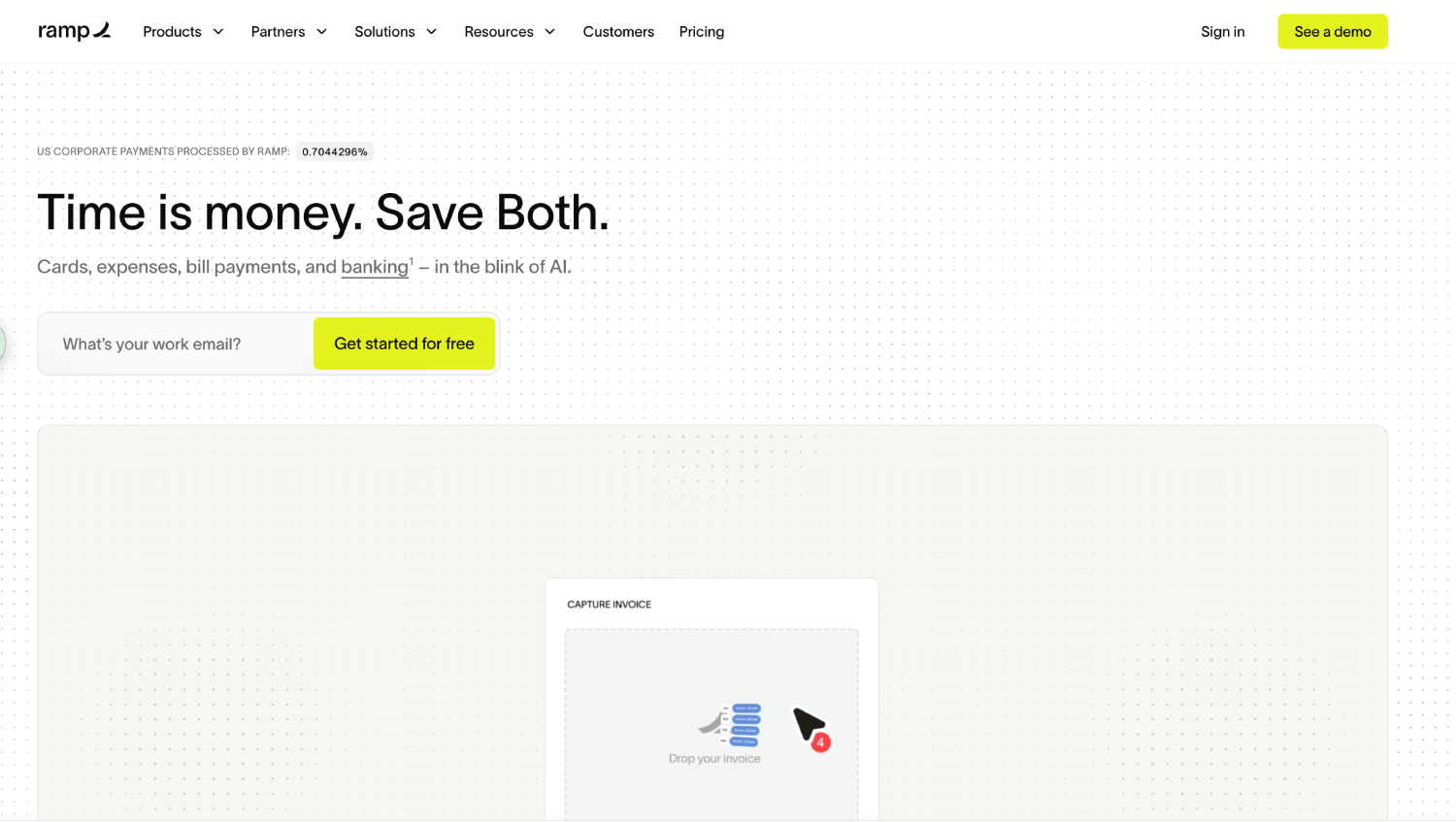
Ramp is the most direct Brex competitor in the US market and the platform most finance teams compare first. Its core differentiator is not the card. It is the savings detection layer: Ramp automatically surfaces duplicate subscriptions, unused software seats, and negotiation opportunities, which gives CFOs a concrete dollar value to attach to the platform beyond cashback. According to Ramp’s pricing page, the Free plan is $0/mo/user, the Plus plan is $15/mo/user plus a platform fee based on team size, and Enterprise carries custom pricing.
Ramp is a strong fit for US companies that want spend controls, receipt matching, and accounting sync without paying a platform fee to start. It does not support non-US entities, so any company with Canadian or European operations needs to look elsewhere. For a full breakdown of how Ramp stacks up against Brex and Airbase on contract terms, policy controls, and ERP integrations, see the Ramp vs Brex vs Airbase platform comparison.
2. Airbase: Best for Mid-Market Teams That Need Full AP Automation
Airbase bundles corporate cards, bill pay, reimbursements, and approval workflows into one platform in a way that neither Brex nor Ramp fully matches. The distinction matters for 100- to 500-person finance teams where procurement approvals, PO matching, and multi-step vendor payment flows are a daily reality, not an edge case.
Airbase integrates with NetSuite, Sage Intacct, and QuickBooks, and its subsidiary ledger handles multi-entity consolidation better than most card-first platforms. Pricing is not publicly listed as of November 2026 and varies by module and company size. The tradeoff is complexity: smaller teams often find Airbase’s configuration overhead disproportionate to their needs. If your finance team has a dedicated AP function and at least two entities, Airbase is worth a formal evaluation.
3. Mercury: Best for Early-Stage Startups Without VC Backing

Mercury started as a business bank account and added corporate cards later, which gives it a fundamentally different underwriting approach. Credit limits on Mercury cards are tied to your Mercury cash balance, not your venture round. That means a $500K seed-funded startup or a profitable bootstrapped company with $200K in deposits can get a meaningful card limit without institutional backing.
Mercury’s spend management features are lighter than Brex or Ramp. Receipt capture, basic policy controls, and QuickBooks sync are there, but the deep ERP integrations and savings analysis that Ramp offers are not. Mercury is best for teams under 50 employees that want a single banking and card platform without paying for spend management features they will not use. The no-fee business checking account and the card in one place removes a real integration headache at the early stage.
4. Divvy (BILL Spend and Expense): Best for Companies That Need Credit Line Flexibility
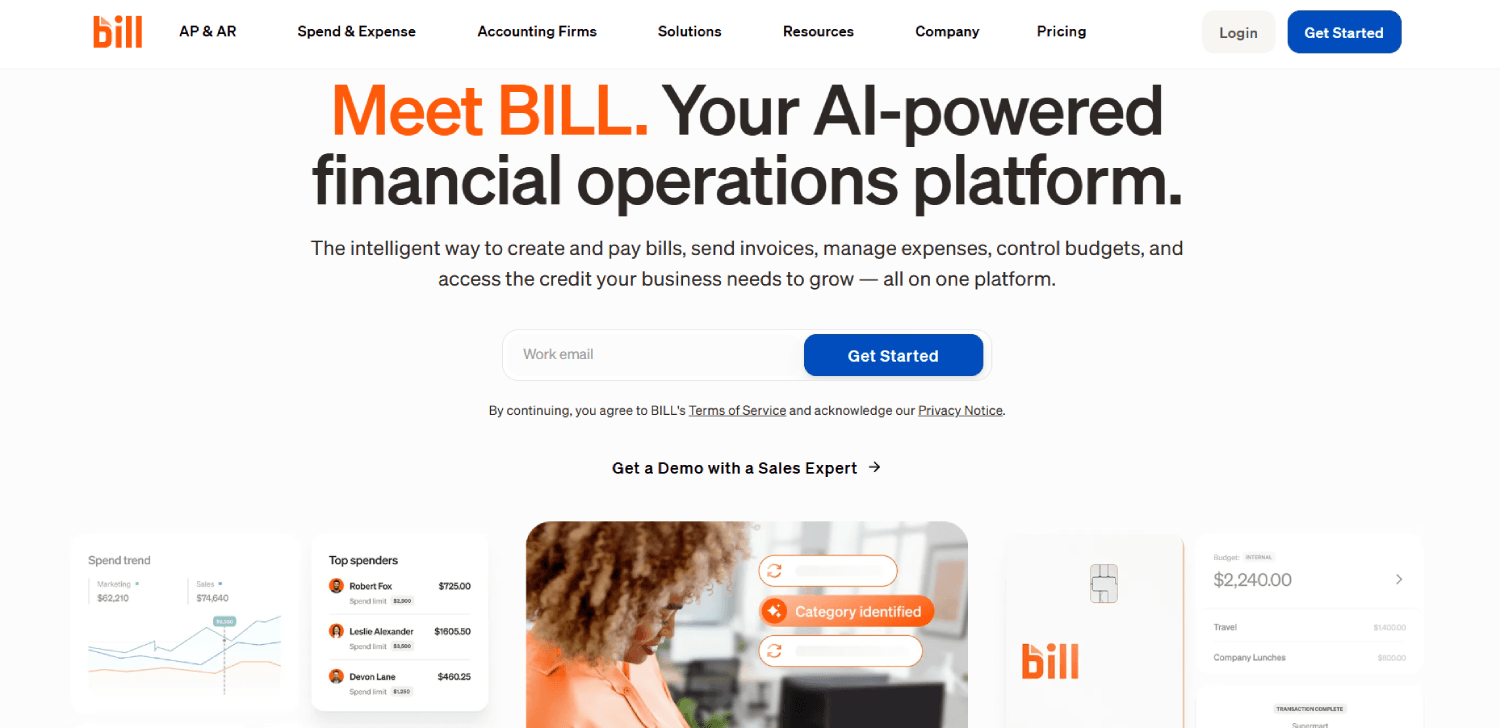
Divvy, now operating under the BILL Spend and Expense brand, takes a different approach to credit. Rather than underwriting based on bank balances or VC funding, Divvy functions more like a traditional revolving credit line with budget-based controls layered on top. For companies that need to carry a balance or manage uneven cash flow, this model is more accessible than Brex’s charge card structure.
The platform offers real-time budget tracking, virtual cards, and receipt matching, with native integration into BILL’s AP automation suite. That BILL connection is either a feature or a constraint depending on your stack. If your team already uses BILL for vendor payments, the unified platform is genuinely useful. If you are on a different AP tool, you are paying for integration surface you will ignore. Pricing for BILL Spend and Expense is not publicly listed as of November 2026.
5. Spendesk: Best for European-Headquartered Teams with Multi-Country Operations
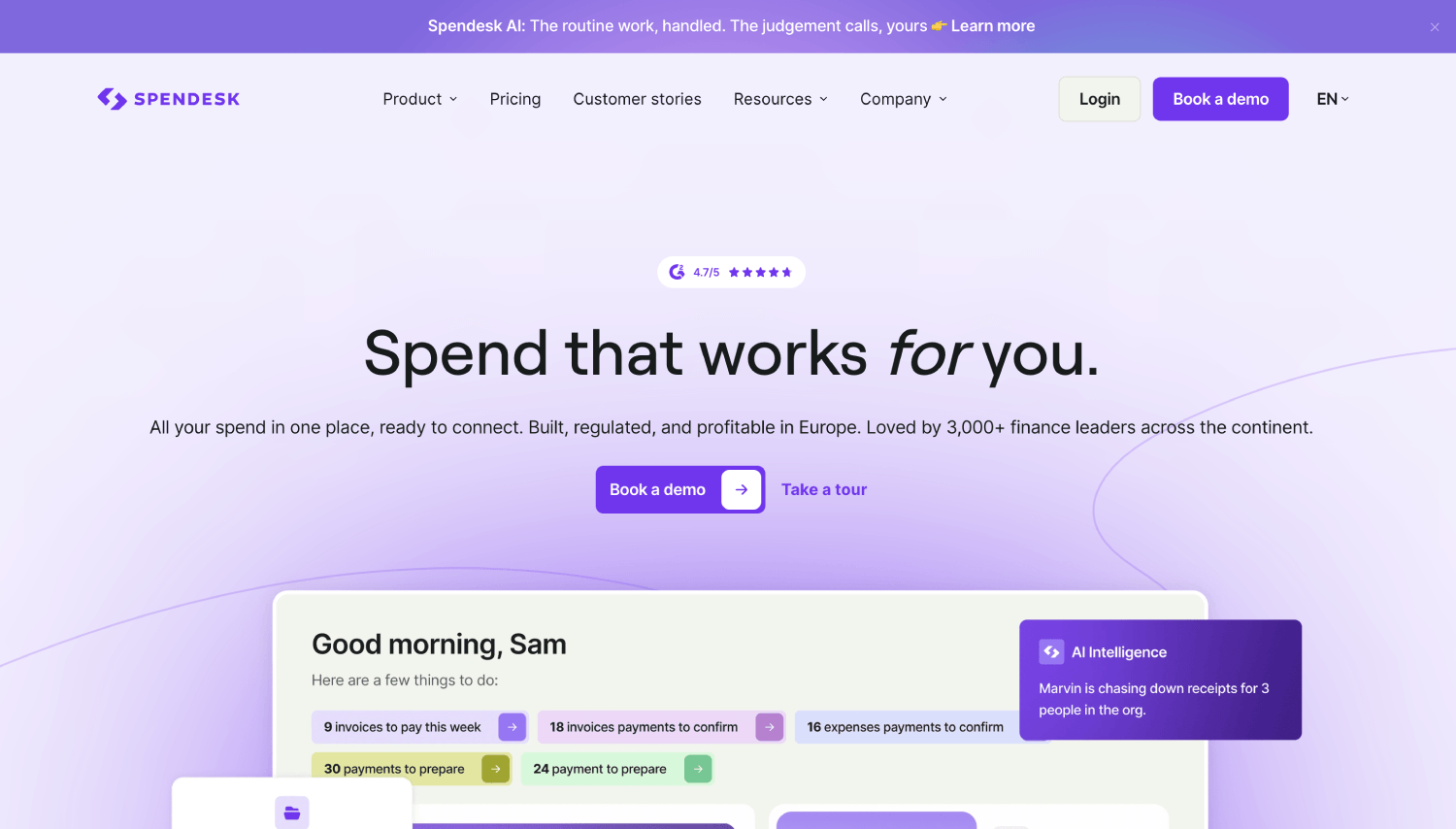
Spendesk is built for European finance teams and covers France, Germany, the UK, Spain, and several other EU markets with dedicated local payment rails, VAT capture, and country-specific expense policy templates. For a US audience, Spendesk is most relevant when a company is headquartered in Europe but has US operations, or when a US acquirer inherits a European subsidiary that already runs on Spendesk.
The platform includes corporate cards, virtual cards, single-use cards for one-off vendor payments, invoice management, and a finance controller dashboard. Its VAT recovery workflow, which automatically flags recoverable VAT on expense receipts, is something most US-first platforms do not offer at all. Spendesk does not currently issue cards to US-only entities, which makes it irrelevant for purely US operations but worth knowing for cross-Atlantic finance teams.
6. Mesh Payments: Best for Multi-Entity Companies with Complex ERP Environments
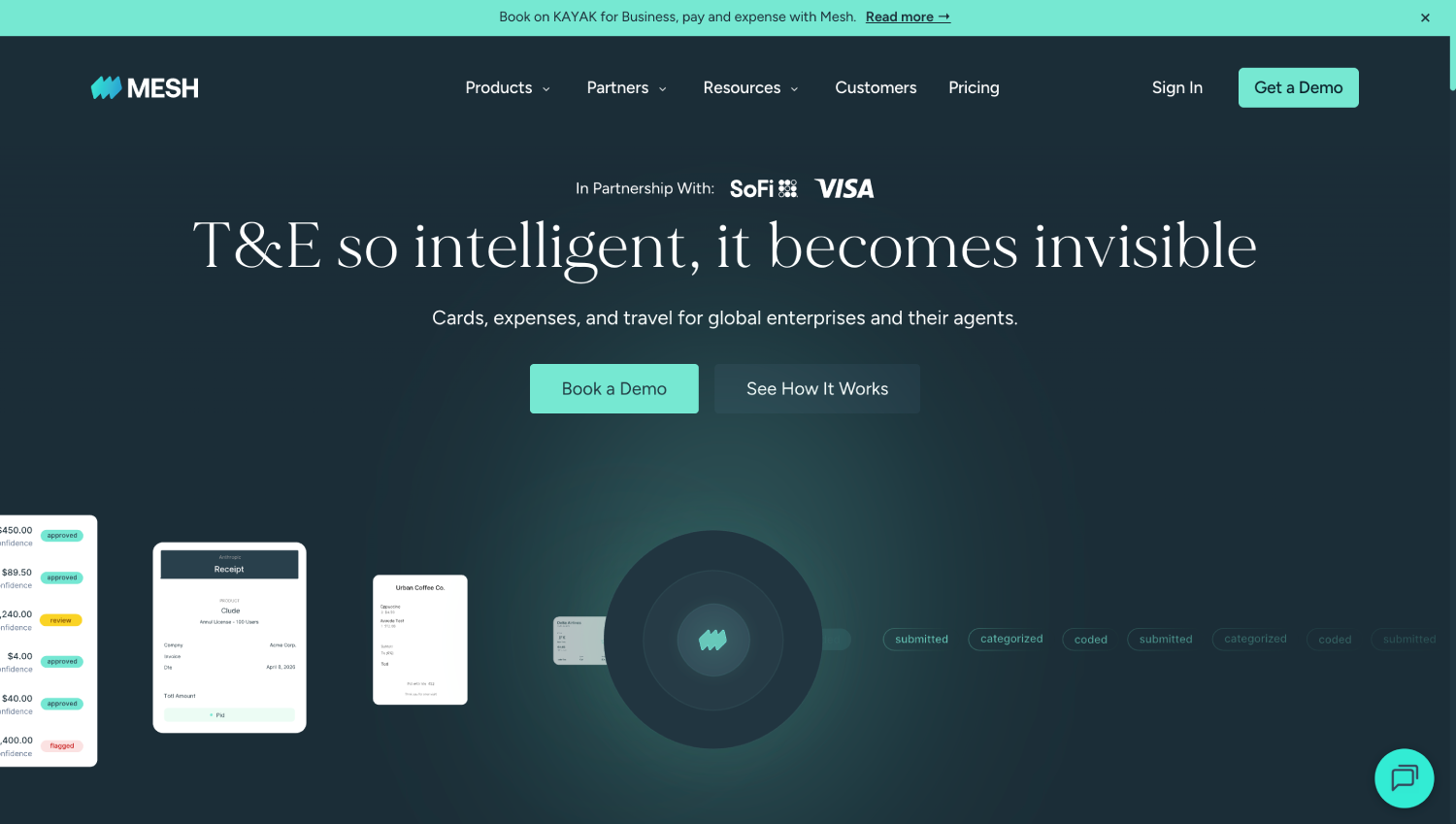
Mesh Payments is one of the less visible platforms in this category but has genuine depth on two dimensions: global entity support and ERP integration breadth. Mesh supports entities in the US, Canada, UK, EU, and Israel, with cards issued in multiple currencies. On the integration side, Mesh connects to NetSuite, Sage Intacct, QuickBooks, Xero, and several ERPs that Ramp and Brex do not touch.
For a 200-person company running three entities across North America and Europe with a NetSuite GL, Mesh solves a problem that most card-first platforms cannot. The tradeoff is brand recognition: Mesh has less community adoption than Ramp, which means fewer third-party integration resources and a smaller peer network to benchmark against. Pricing is custom and not publicly listed as of November 2026.
7. Payhawk: Best for European-First Companies That Also Have US Entities
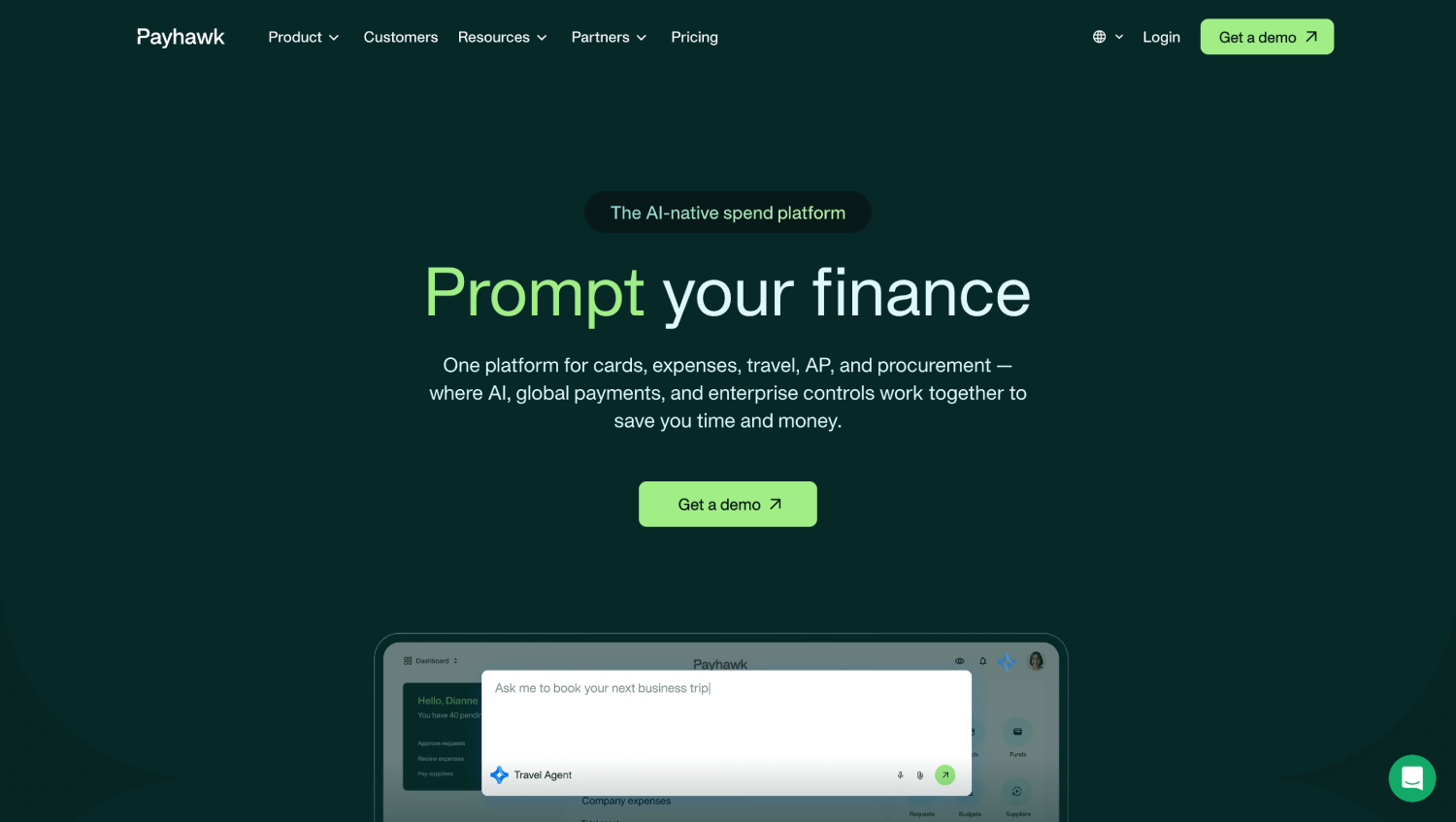
Payhawk is a European spend management platform that has expanded into the US market, making it particularly relevant for companies that are headquartered in the UK or EU but have a US subsidiary. Unlike Spendesk, Payhawk does issue cards to US entities, which means a London-headquartered SaaS company with a Delaware C-corp can run both entities on a single Payhawk instance.
Payhawk’s strength is policy-driven spend control: approval chains, budget enforcement, and real-time card limits that update based on budget remaining rather than a static credit line. The platform integrates with NetSuite, Xero, Sage, and several HR systems for employee onboarding and offboarding automation. Pricing is not publicly listed as of November 2026. For finance teams managing spend across currencies and jurisdictions, the unified GL coding across entities is a genuine time saver during month-end close.
8. Extend: Best for Teams That Want Virtual Cards Without Switching Banks
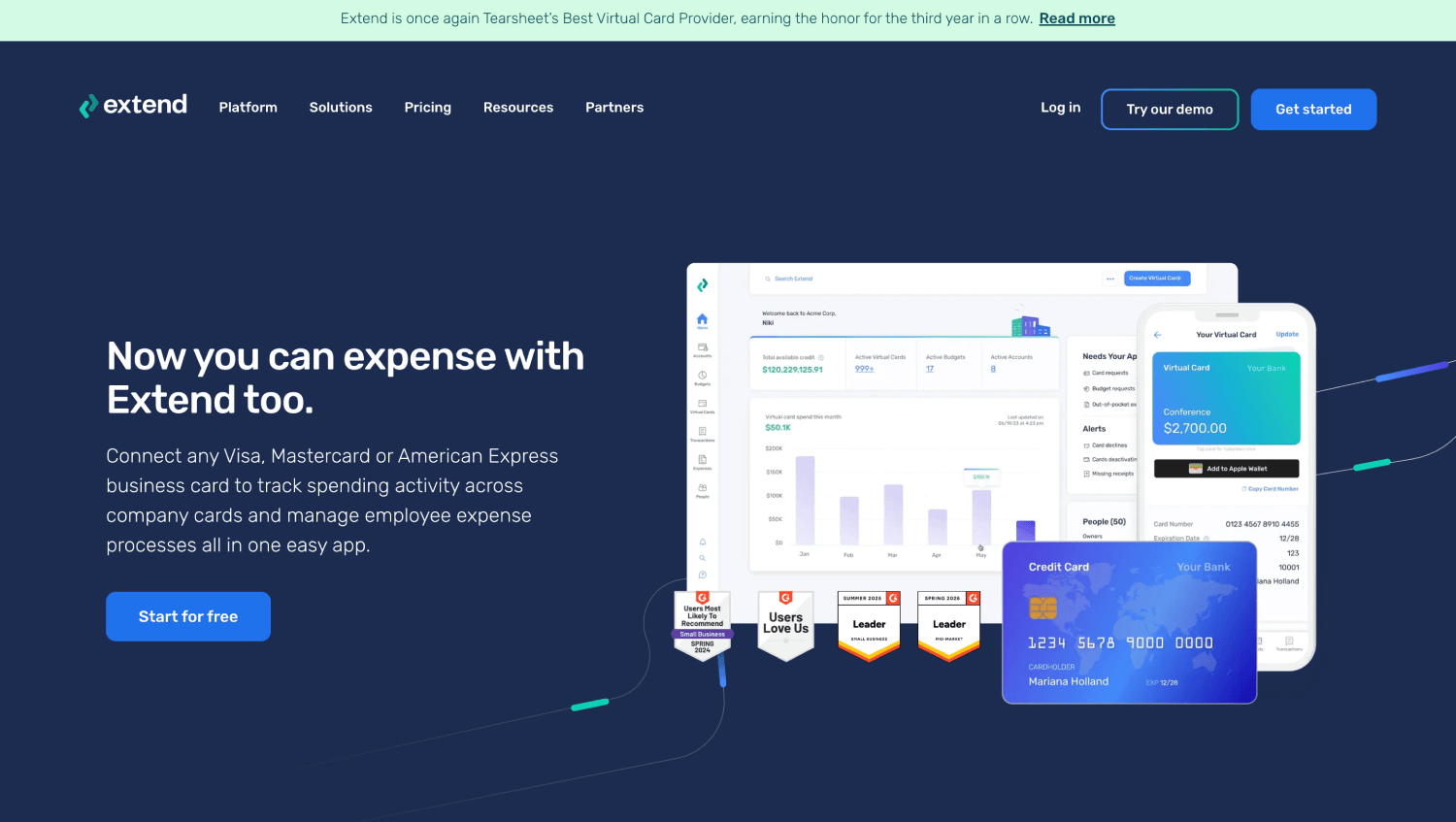
Extend takes a structurally different approach from every other platform on this list. Rather than issuing its own cards, Extend layers virtual card controls on top of your existing corporate card from a partner bank (including American Express, First Bankcard, and several regional banks). Your credit relationship and cashback program stay with your current bank. Extend adds virtual card issuance, spend controls, and receipt tracking on top.
This model makes Extend the right call for a specific scenario: a company that has a strong relationship with its current bank, does not want to move its credit line, but needs virtual card controls for SaaS subscriptions, contractor payments, and ad spend. The limitation is that Extend’s approval workflows and ERP integrations are less mature than dedicated platforms like Airbase or Ramp. Extend’s pricing details were not available in the vendor source materials reviewed for this article; contact Extend directly for current pricing.
9. Jeeves: Best for Multi-Country Companies Including Canadian Entities
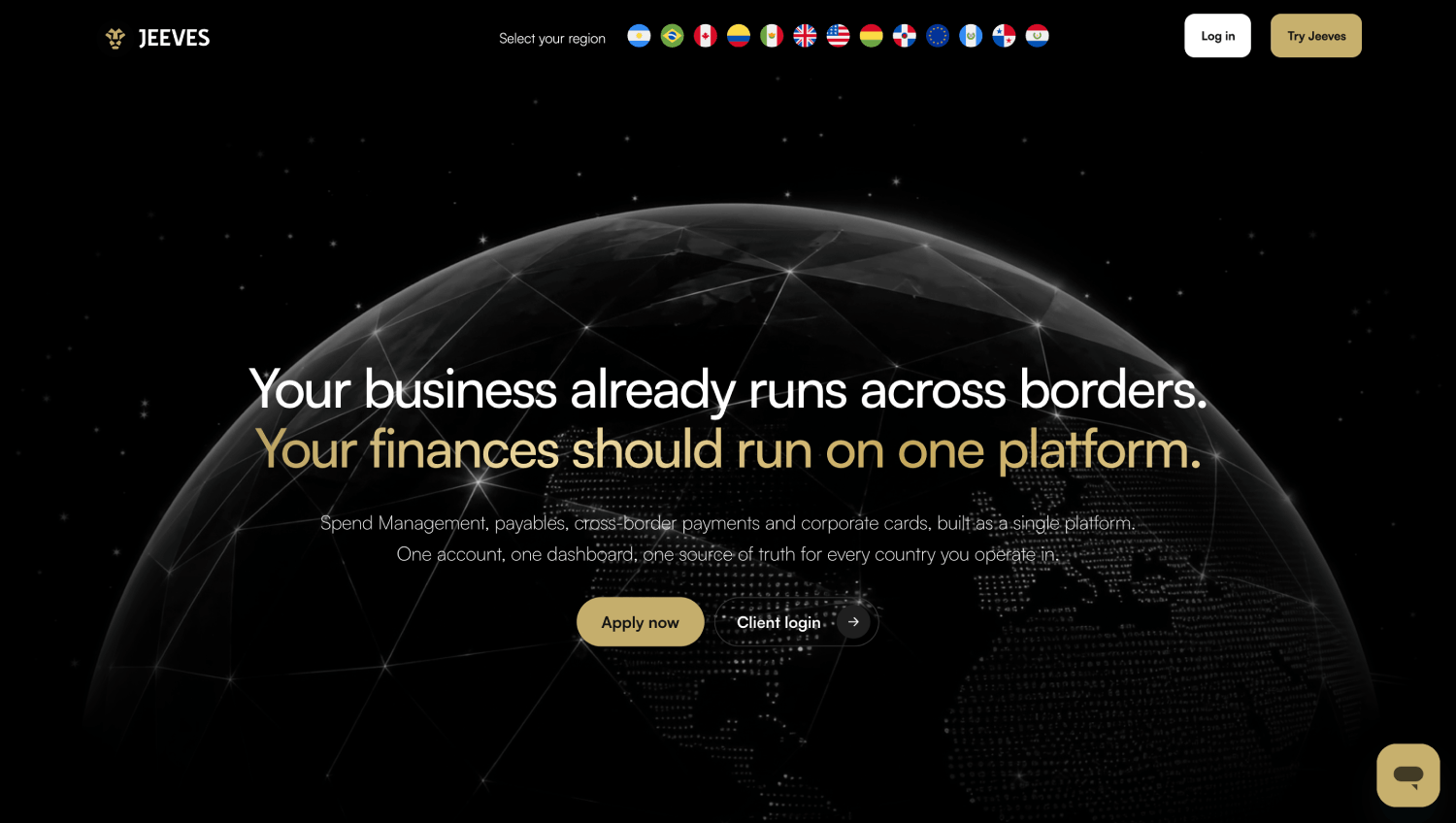
Jeeves is the platform built specifically for multi-country companies that US-centric platforms cannot serve. It issues corporate cards in the US, Canada, Mexico, the UK, and several EU countries, with a credit facility that underwrites the company globally rather than entity by entity. For a company with employees in Toronto, New York, and London, Jeeves is the only platform on this list that handles all three without requiring separate card programs.
Jeeves operates on a charge card model with credit limits based on revenue and cash, not VC backing. That makes it accessible to profitable non-venture companies that Brex would decline. The platform includes expense management, receipt capture, and ERP integrations with NetSuite and QuickBooks. Pricing is not publicly listed as of November 2026. For teams asking specifically about Brex alternatives in Canada, Jeeves and Mesh are the two platforms with documented Canadian entity support and a full card program, not just an AP tool that happens to pay Canadian vendors.
How Does Brex Compare to These Alternatives on Core Features?
| Platform | Free Tier | Real-Time Budgets | NetSuite Sync | AP Automation | Non-US Entities | Credit Model |
|---|---|---|---|---|---|---|
| Brex | Yes | Yes | Yes | Yes (enterprise) | No | Cash or VC-backed |
| Ramp | Yes | Yes | Yes | Yes | No | Cash-backed |
| Airbase | No | Yes | Yes | Yes (full) | Limited | Cash-backed |
| Mercury | Yes | Limited | No | No | No | Balance-backed |
| Divvy | Yes | Yes | Yes | Via BILL | No | Revolving credit |
| Spendesk | No | Yes | Yes | Yes | EU/UK only | Prepaid/charge |
| Mesh | No | Yes | Yes | Yes | Yes | Credit facility |
| Payhawk | No | Yes | Yes | Yes | US + EU/UK | Charge card |
| Extend | No | Yes | Limited | No | No | Your existing bank |
| Jeeves | No | Yes | Yes | Limited | Yes (US, CA, MX, EU) | Revenue-based |
The two gaps Brex does not close are non-US entity support and access for non-venture-backed companies. Every alternative on this list addresses one or both of those gaps differently. The right choice is not the platform with the longest feature list. It is the platform that covers your entities and matches your credit profile.
What Should Small Businesses Look for in Brex Alternatives?
Small businesses searching for Brex alternatives face a different problem than enterprise teams. The issue is usually the credit model, not the features. Brex historically required either a VC-backed entity or substantial cash deposits to extend meaningful credit limits. Ramp has similar constraints. For a small business with $100K in a checking account and no institutional backing, Mercury and Divvy are the two platforms most likely to approve a usable credit limit.
Feature depth matters less at this stage. A 10-person company does not need multi-entity GL consolidation or a procurement approval workflow. What it needs is a card that gets approved, virtual cards for software subscriptions, and a receipt capture that syncs to QuickBooks. Mercury delivers all three without a platform fee. Divvy adds a revolving credit option for teams that need to carry balances. Either platform serves a small business better than trying to qualify for Brex’s full program.
Finance teams building out their full operations stack at this stage may also want to look at how spend management fits into the broader infrastructure picture. The accounts payable automation comparison on FintechSpecs covers the AP side of the equation, which often becomes the next purchase after a corporate card program is in place.
What Is the Best Brex Alternative for Canadian Companies?
Canadian companies face the narrowest field of any geography in this comparison. Brex, Ramp, Mercury, Divvy, Spendesk, and Extend all require a US entity. That eliminates six of the nine alternatives on this list immediately. Airbase has some Canadian functionality but does not issue cards to Canadian entities as a primary product.
That leaves Jeeves and Mesh Payments as the two platforms with documented, active Canadian entity support and a physical/virtual card program as of November 2026. Jeeves has the broader geographic reach and a credit facility that spans entities, which matters if your Canadian company also has a US subsidiary. Mesh has deeper ERP integrations, which matters if your finance team runs NetSuite or Sage across multiple entities. Canadian companies should request demos from both and specifically ask about CAD-denominated card limits, Canadian interbank settlement, and HST/GST receipt capture before committing.
Frequently Asked Questions
Does Ramp work as a Brex alternative for non-US companies?
Ramp does not support non-US legal entities as of November 2026. It issues cards only to US-registered companies and underwrites based on US bank balances. If your company is registered outside the United States, Ramp is not eligible. Canadian, UK, and EU companies should evaluate Jeeves, Mesh Payments, or Payhawk depending on their specific entity structure and ERP requirements.
What is the biggest functional difference between Brex and Ramp?
Brex has historically positioned as a full financial stack including business accounts, corporate cards, and expense management, with a focus on high-growth startups. Ramp’s core pitch is cost reduction: its platform actively identifies wasteful spending, duplicate subscriptions, and price-reduction opportunities. Both offer corporate cards and spend controls, but the underlying product philosophy is different. Teams that want a banking relationship lean toward Brex; teams optimizing for spend efficiency lean toward Ramp.
Can a bootstrapped company get approved for a corporate card on these platforms?
Yes, but the platform choice matters. Brex and Ramp favor venture-backed companies or those with large cash reserves. Mercury ties credit limits directly to your Mercury bank balance, making it accessible for profitable bootstrapped companies with solid cash. Divvy operates more like a traditional credit underwriter and may approve bootstrapped businesses with good revenue history. Jeeves underwrites on revenue and cash, not funding status, which makes it a viable option for profitable non-venture companies.
Which Brex alternatives integrate with NetSuite?
Ramp, Airbase, Mesh Payments, Payhawk, Spendesk, and Jeeves all offer NetSuite integrations as of November 2026. The depth varies. Ramp and Airbase have native bi-directional syncs that most NetSuite admins can configure without custom development. Mesh and Payhawk also publish native connectors. Always request a demo of the actual sync during a proof of concept, since the quality of GL coding, subsidiary mapping, and custom field support varies significantly across vendors.
Is Airbase better than Brex for mid-market finance teams?
For teams with genuine AP automation needs, yes. Airbase combines corporate cards, bill pay, purchase orders, and multi-step approval workflows in a single platform. Brex offers some of these features at the enterprise tier, but Airbase’s AP module is deeper and has been its core product for longer. The tradeoff is pricing and implementation time. Airbase requires more configuration and typically costs more per seat than Brex’s base offering.
What is the best Brex alternative if I want to keep my current bank relationship?
Extend is the only platform on this list designed specifically for that scenario. It layers virtual card issuance and spend controls on top of your existing corporate card from a partner bank. Your credit line, cashback rewards, and bank relationship remain intact. Extend adds the virtual card management and receipt tracking layer. The limitation is that Extend’s ERP integrations and approval workflows are less mature than standalone spend platforms like Ramp or Airbase.
Do any of these platforms support multi-currency expense reimbursement?
Jeeves, Mesh Payments, Payhawk, and Spendesk all handle multi-currency expense reimbursement as of November 2026. Jeeves and Mesh are strongest for North American and European currency combinations. Payhawk and Spendesk are strongest for EUR-denominated operations with GBP and USD secondary. US-only platforms like Ramp, Mercury, and Divvy handle USD reimbursements only. If your employees submit expenses in multiple currencies, confirm FX rate handling and reimbursement rail support before signing.
How do these platforms handle expense management for remote teams with employees in multiple countries?
The short answer is that most US-first platforms handle this poorly. Ramp and Mercury work for US-based remote employees but not for employees with foreign bank accounts. Jeeves is purpose-built for distributed international teams and handles reimbursements across its supported geographies. Payhawk and Mesh also support cross-border reimbursement workflows. The critical detail to verify is whether the platform can pay out to a local bank account in each country where your employees are based, since many platforms route everything through a US ACH even if the employee is in another country.
Which Platform Actually Fits Your Company
The Brex vs Ramp binary that most teams start with collapses quickly once you map your actual entity structure, credit profile, and ERP stack against what each platform can deliver. For US-only, venture-backed teams under 200 people, Ramp is the most defensible choice on cost and integration quality. For teams with Canadian or European entities, Jeeves covers the most ground. For teams that need deep AP automation alongside corporate cards, Airbase is the only platform that genuinely competes with dedicated AP tools. Finance teams looking deeper into the AP side of spend management will find the multi-entity expense management platform comparison useful for seeing how these tools handle subsidiary-level consolidation.
The hidden variable that most comparison guides ignore is the credit model. A feature comparison between two platforms means nothing if one of them will not approve your company for a credit limit that matches your actual monthly spend. Run the FintechSpecs Spend Platform Fit Test on your entity structure and cash profile first. That alone will cut your shortlist from nine platforms to two or three.
For teams sitting between Brex, Ramp, and Airbase without a clear winner, the deciding factor is usually whether you need the AP automation or just the card and expense layer. If you need both in one platform, Airbase wins. If you need one with industry-leading integrations and cost controls, Ramp wins. If you need international coverage that neither can provide, Jeeves or Mesh is the call. Companies building out the broader fintech infrastructure stack around these spend tools may also find value in the tools fintech ops teams actually use daily as a cross-reference for what sits upstream and downstream of the spend management layer.