
TLDR
- AP automation is not enterprise-only. Tools like Melio, Bill.com, and Plooto start at free or under $50 per month and are built explicitly for teams processing fewer than 500 invoices a month.
- QuickBooks integration is the single most important compatibility filter for small businesses. Every tool on this list syncs with QuickBooks Online or Desktop, but the depth of that sync varies significantly.
- The real cost of manual AP at 200 invoices per month is roughly 10 to 15 staff hours of data entry, chasing approvals, and reconciling errors. Most tools recoup their fee in the first month.
- Stampli is the most capable AP automation tool in this list for teams that need a collaborative approval workflow, but its pricing is not public and it is calibrated for mid-market volumes, not sub-500 invoice teams.
- Ramp and Tipalti belong on different ends of the spectrum. Ramp wins for domestic spend management paired with bill pay. Tipalti wins when you pay international contractors or suppliers across many currencies.
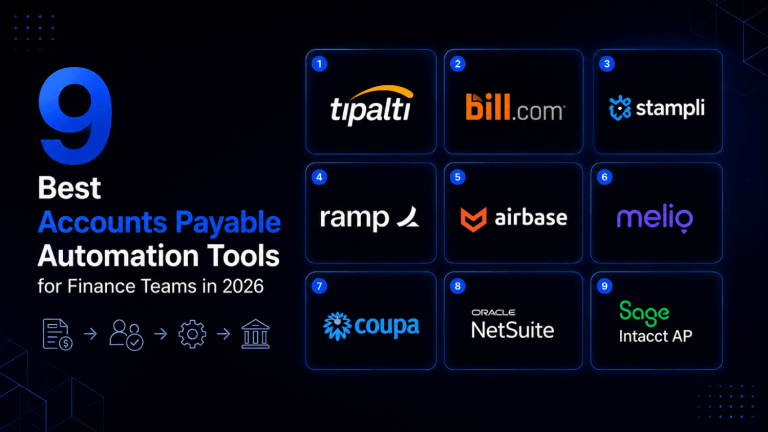
The best AP automation software for small businesses processing under 500 invoices per month includes Bill.com, Melio, Plooto, Ramp, Tipalti, Routable, Stampli, QuickBooks Bill Pay, Airbase, and Corpay One. Most of these tools connect directly to QuickBooks Online, start at under $50 per month, and automate invoice capture, approval routing, and payment execution without requiring an IT implementation project.
Why Small Teams Keep Running AP Manually (and What It Costs Them)
The assumption driving most manual AP decisions is that automation tools are priced for companies with finance teams of 10 or more. That was accurate in 2018. Today it is not. The dominant AP automation vendors now offer self-serve onboarding, transparent per-invoice or flat monthly pricing, and QuickBooks sync that takes under an hour to configure.
Consider a 40-person professional services company processing 200 invoices per month. At 15 minutes of handling time per invoice across data entry, approval chasing, and payment execution, that is 50 hours per month of AP labor. For context on how that labor cost compounds across a finance stack, the hidden costs analysis on FintechSpecs covers where manual workflows quietly drain margin. Most tools on this list cost between $0 and $199 per month at that volume, and the math on switching typically closes within the first month.
The harder cost is errors. A duplicate payment or missed early-pay discount on a $12,000 vendor invoice is more expensive than a year of software subscription fees. AP automation does not eliminate those risks, but two-way sync with your general ledger and digital audit trails reduce the exposure substantially.
How to Choose AP Automation Software When You Process Under 500 Invoices Per Month
Before comparing tools, run what we call the FintechSpecs AP Fit Filter: four questions that eliminate 60% of the market immediately.
1. Does it sync with your existing GL? If you are on QuickBooks Online, this list covers you. If you are on Xero, NetSuite, or Sage, verify the integration depth before you demo anything. Bidirectional sync is non-negotiable. One-way export is not automation.
2. Who approves invoices? If one person approves everything, a lightweight tool like Melio is sufficient. If invoices route to three different department heads, you need conditional approval workflows, which narrows the field to Stampli, Bill.com Business Essentials, or Tipalti.
3. Do you pay internationally? Domestic ACH and check tools are significantly cheaper. If you pay contractors or suppliers in other countries, Tipalti, Routable, and Ramp are the only tools in this list with real multi-currency infrastructure.
4. Is your invoice volume growing or flat? At under 100 invoices per month, almost any tool here is financially rational. At 300 to 500 per month and growing, choose a tool whose pricing scales predictably. Per-invoice pricing models from some vendors become expensive fast above 250 invoices.
Price-Per-Invoice Comparison Across All 10 Tools
| Tool | Starting Price | Per-Invoice Cost | QBO Sync | International Payments | Best For |
|---|---|---|---|---|---|
| Bill.com | $45/user/month (Essentials) | Flat fee, not per-invoice | Yes, bidirectional | Yes (international wire) | SMBs needing approval workflows |
| Melio | Free | $0 ACH; 2.9% card | Yes, bidirectional | Limited | Lean teams, very low volume |
| Plooto | $30/month (Solo) | $0.50 per domestic transaction | Yes | Yes (CAD/USD) | US-Canada cross-border AP |
| Ramp | Free | Free for most payments | Yes | Yes | Spend management + bill pay combined |
| Tipalti | Not publicly disclosed | Not publicly disclosed | Yes | Yes, 196 countries | High contractor/supplier count globally |
| Routable | Not publicly disclosed | Not publicly disclosed | Yes | Yes | Fast-growing teams with multi-entity needs |
| Stampli | Not publicly disclosed | Not publicly disclosed | Yes | No native (uses Bill.com) | Collaborative invoice review teams |
| QuickBooks Bill Pay | $0 for existing QBO subscribers | $0 ACH; 1% check | Native | No | Teams already on QBO wanting zero friction |
| Airbase | Not publicly disclosed (Starter tier available) | Not publicly disclosed | Yes | Yes | Teams needing expense + AP in one platform |
| Corpay One | Free to start | Free ACH; fee for card | Yes | No | Very small teams with simple domestic AP |
Note: Prices for Tipalti, Routable, Stampli, and Airbase are not publicly listed on their pricing pages. Contact sales for a quote before budgeting these tools. All other pricing figures are sourced from each vendor’s public pricing page.
The 10 Best AP Automation Tools for Small Business Teams
1. Bill.com: Best AP Automation for Small Businesses That Need Approval Workflows
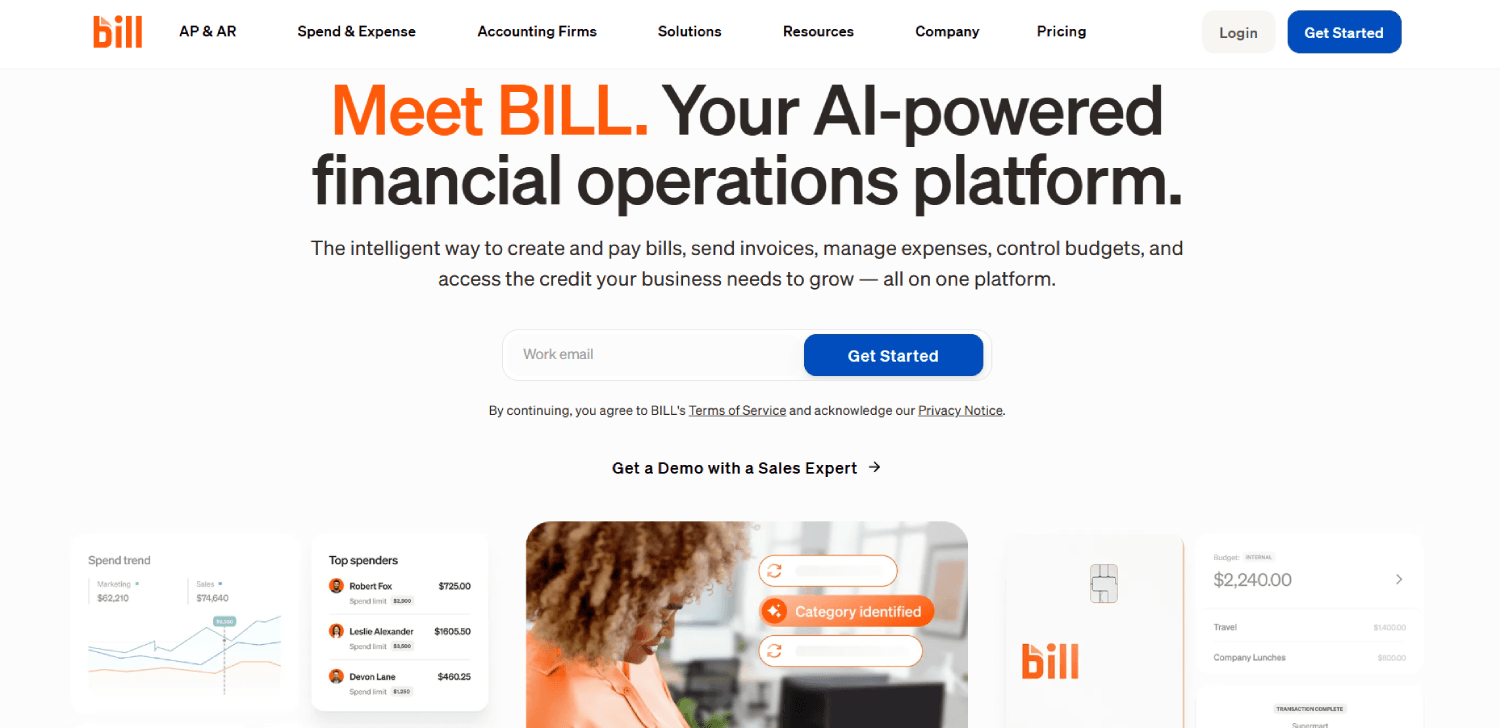
Bill.com is the most widely deployed AP automation tool among US small businesses. Its Essentials tier starts at $45 per user per month, per Bill.com’s public pricing page, and covers invoice capture, domestic ACH and check payments, approval routing, and bidirectional QuickBooks Online sync. The platform processes a substantial portion of US B2B payments, which gives it deep bank relationship infrastructure for faster ACH settlement.
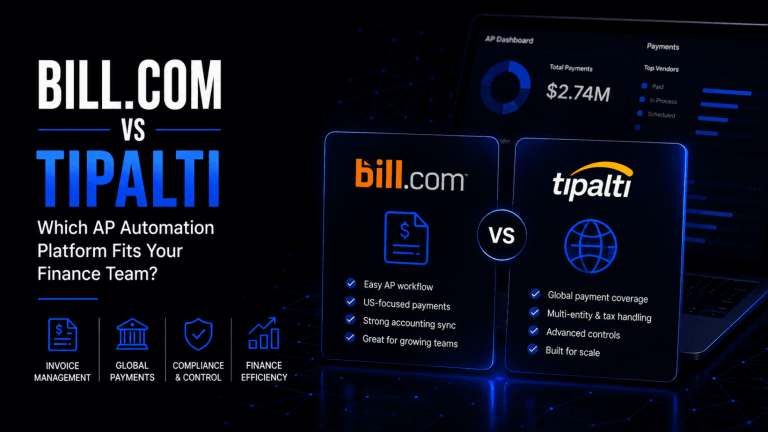
The limitation at small volumes is cost per seat. A two-person finance team pays $90 per month before any transaction fees. International wire payments are available but carry per-transaction fees that add up at moderate volume. For a direct comparison of how Bill.com stacks up against Tipalti at scale, the Bill.com vs Tipalti breakdown on FintechSpecs goes deeper on the contract economics.
2. Melio: Best Free AP Automation for Small Businesses Under 100 Invoices Per Month
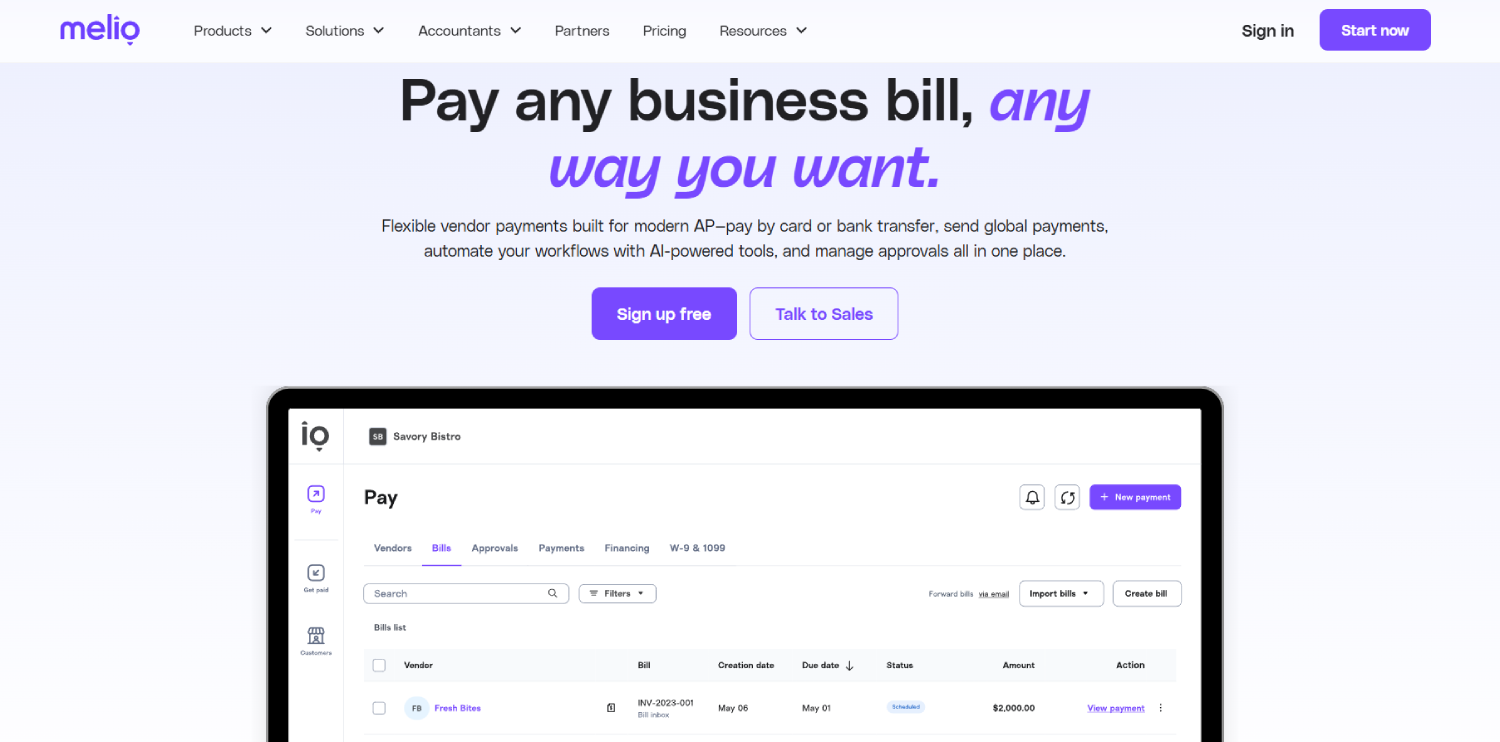
Melio charges nothing for ACH payments and syncs bidirectionally with QuickBooks Online at no cost. Per Melio’s public pricing page, card-funded payments carry a 2.9% fee, which lets vendors pay by card while suppliers receive ACH or check. That fee structure is worth understanding: if you use cards to pay invoices because it preserves cash, Melio is a float-friendly option. If you pay by ACH, it is genuinely free.
Melio’s approval workflow is basic compared to Bill.com or Stampli. Teams with multi-step approvals involving more than one or two people will hit its limits. It also lacks the OCR invoice capture sophistication of Bill.com. For under 75 invoices a month with simple payment flows, it is the strongest value available.
3. Plooto: Best AP Automation for US-Canada Cross-Border Payments
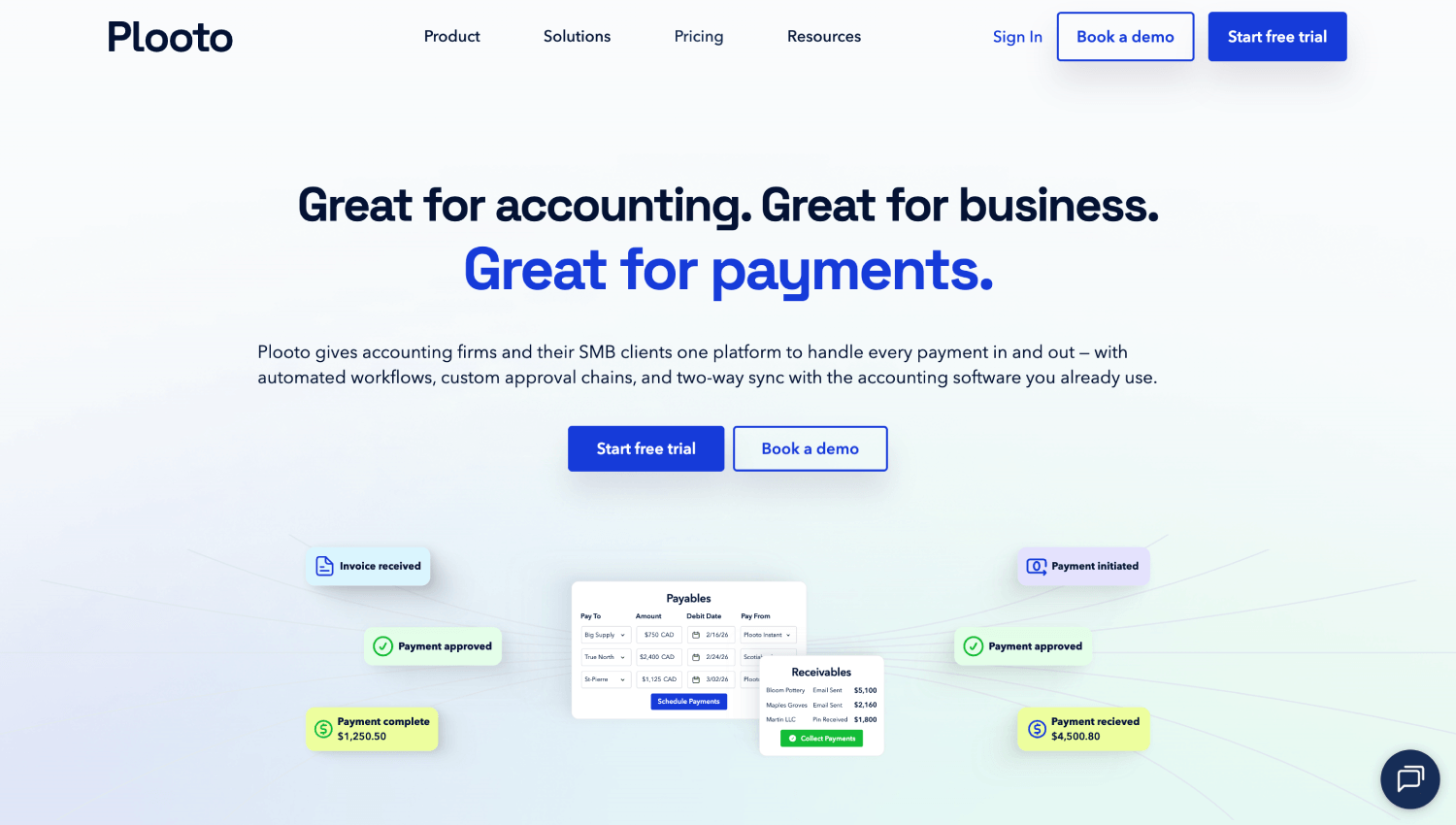
Plooto starts at $30 per month on its Solo plan, per Plooto’s public pricing page, plus $0.50 per domestic transaction. For teams in the US that pay Canadian suppliers, or Canadian businesses paying US vendors, Plooto’s native CAD-USD infrastructure eliminates the wire fee overhead that other tools pass through to third-party banks. QuickBooks Online and Xero sync is included.
Approval workflows in Plooto are functional but not as configurable as Bill.com’s. The interface is clean and its onboarding is genuinely fast, typically under a day for a small team. Teams processing exclusively domestic US payments will find better value in Melio or QuickBooks Bill Pay at comparable volume.
4. Ramp: Best for Small Businesses Combining Spend Management With Bill Pay
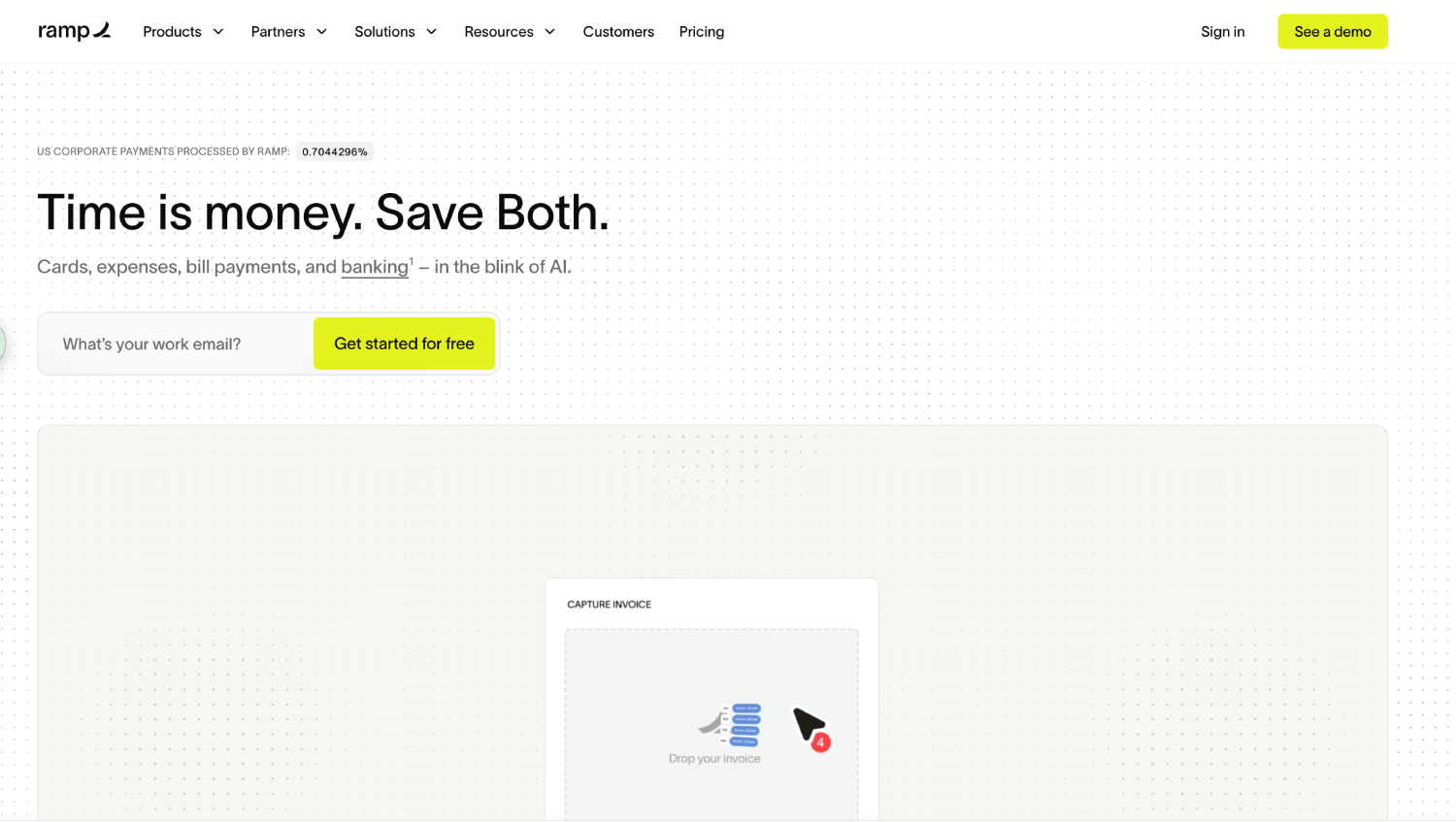
Ramp is free for its core platform, per Ramp’s public pricing page, and covers corporate cards, expense management, and bill pay in a single product. The bill pay feature handles domestic ACH payments at no additional charge. For a small business that also needs to manage employee expenses and card spending, Ramp eliminates the need for a separate expense tool alongside an AP tool.
The trade-off is depth. Ramp’s AP workflow is less mature than Bill.com’s for teams with complex invoice approval hierarchies. It is also US-centric for bill pay, though international capabilities have expanded. Teams that already compared Ramp against Brex and Airbase for corporate spend will find that Ramp’s bill pay is the most integrated of the three. The Ramp vs Brex vs Airbase comparison covers the spend platform differences in detail.
5. Tipalti: Best for Small Businesses With High International Contractor Volume
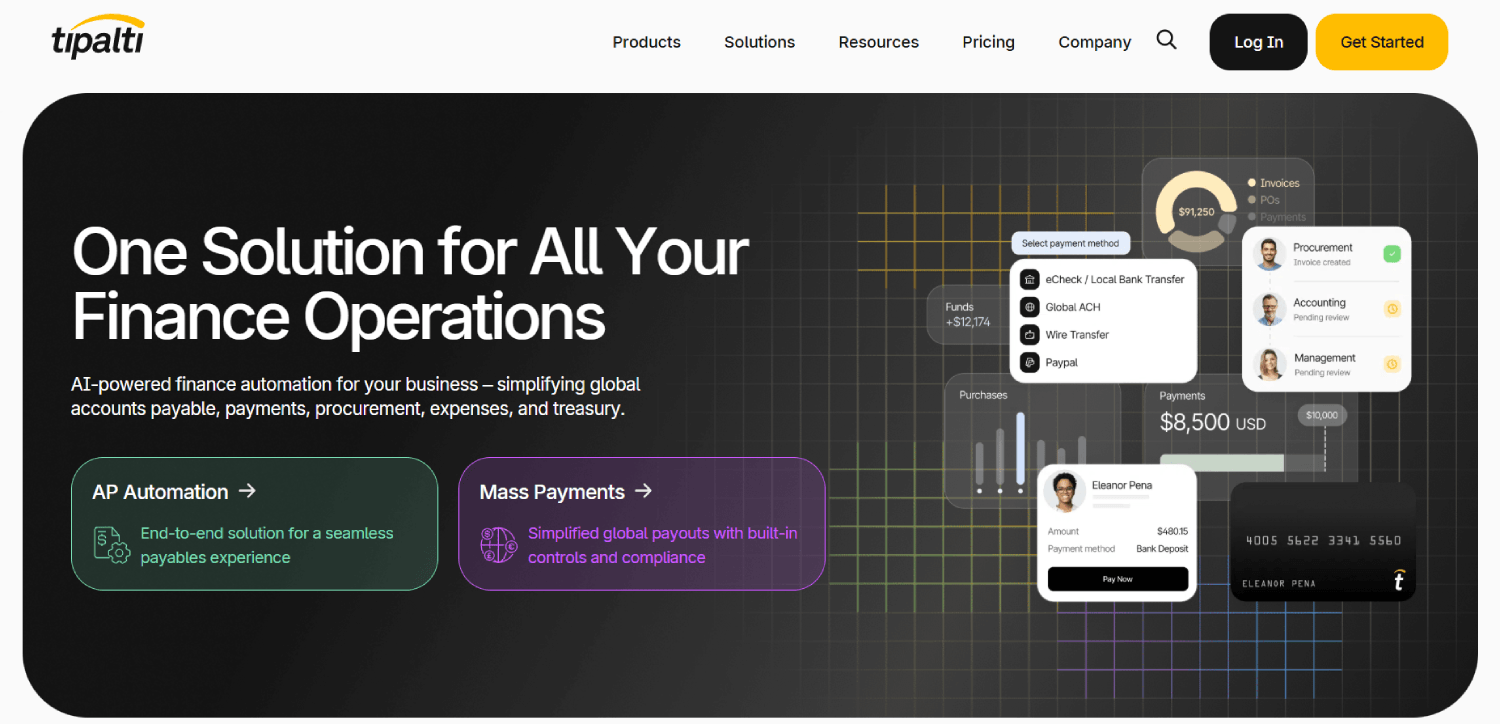
Tipalti targets businesses paying a large number of global suppliers or contractors. It supports 196 countries and over 120 currencies, handles supplier self-registration for tax form collection (W-9, W-8BEN), and automates payment method selection by country. The platform’s pricing is not publicly disclosed.
Tipalti is overkill for a small business with 20 domestic vendors. It earns its place when a 50-person company pays 150 contractors across a dozen countries and needs 1099 and FATCA compliance baked into the payment workflow. The onboarding is more involved than the other tools in this list, typically taking weeks rather than days.
6. Routable: Best for Fast-Growing Small Businesses Moving Toward Mid-Market
Routable is built for businesses with complex payment operations, including multi-entity structures and high-velocity domestic payments. Its pricing is not publicly listed. The platform integrates with QuickBooks, NetSuite, and Sage Intacct, and its two-way sync is considered reliable among the finance ops community.
Small businesses at the lower end of this list’s volume range may not need Routable’s capabilities. It is worth evaluating if you expect invoice volume to double within 12 months and want a platform that does not force a migration later. Companies building out structured finance operations early will find Routable’s approval logic and audit trail more mature than Melio or Plooto.
7. Stampli: Best Stampli Alternative for QuickBooks Users Needing AI-Powered Invoice Review
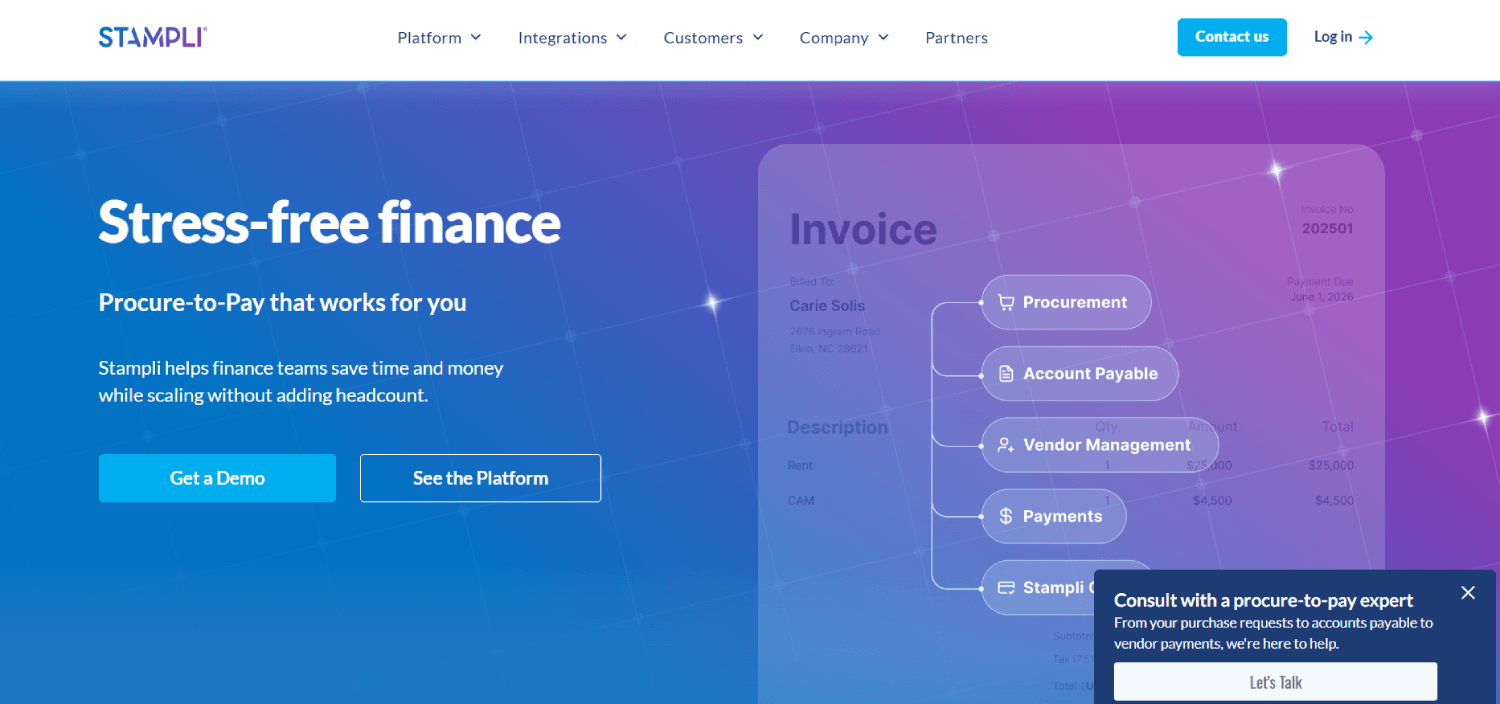
Stampli sits in a specific niche: teams where multiple people need to discuss, annotate, and approve invoices before payment. Its interface puts a collaboration layer directly on top of each invoice, letting team members tag each other, ask questions, and resolve issues without leaving the AP workflow. Pricing is not publicly disclosed.
Stampli integrates with over 70 ERPs and accounting platforms, including QuickBooks. For teams searching for Stampli alternatives that integrate with QuickBooks, the honest answer is that Bill.com and Airbase are the closest functional comparisons for QuickBooks-native businesses, though neither replicates Stampli’s invoice-level communication layer. Stampli is not the best fit for a 15-person company paying 80 invoices a month, but it is excellent for a 150-person company where five department heads each need visibility into specific invoices.
8. QuickBooks Bill Pay: Best AP Automation for Teams Already Using QuickBooks Online
QuickBooks Bill Pay is built directly into QuickBooks Online and charges nothing for ACH payments from an existing QBO subscription, per Intuit’s public pricing page. A 1% fee applies for check payments. For businesses already paying for QuickBooks Online, this is the lowest-friction entry into AP automation available.
The limitations are real. Invoice capture is basic, approval workflows are minimal, and there is no international payment capability. QuickBooks Bill Pay is not trying to be Bill.com. It is a native payment layer for businesses that want to stop printing checks without switching software stacks. For teams under 75 invoices per month with simple vendor relationships, it may be the only tool they need.
9. Airbase: Best All-in-One AP and Spend Platform for Series A-Adjacent Small Businesses
Airbase combines accounts payable, corporate cards, and expense reimbursements into one platform with GL coding at the point of purchase. Its Starter tier is designed for smaller teams, though pricing is not publicly disclosed. The QuickBooks integration is bidirectional and includes automatic sync of vendor records, GL codes, and payment status.
Airbase’s strength is eliminating the stitching problem: instead of running Bill.com for AP, Expensify for receipts, and a corporate card separately, one platform handles all three. The trade-off is implementation time. Getting Airbase configured correctly takes longer than setting up Melio or QuickBooks Bill Pay, and the value is clearest for teams spending meaningfully on both vendor invoices and employee expenses. Finance teams building out their AP infrastructure alongside other financial operations tools will find Airbase fits well into a structured fintech ops stack.
10. Corpay One: Best Free AP Automation for Very Small Teams With Simple Domestic Payables
Corpay One (formerly Beanworks) offers a free tier that covers AP automation for very small businesses, including QuickBooks sync, digital approval workflows, and ACH payment execution. Transaction fees apply for card payments. The free tier is a legitimate entry point for teams under 50 invoices per month, per Corpay One’s public pricing page.
Corpay One’s limitation is brand recognition in the AP market relative to Bill.com or Melio, which means fewer third-party integrations and a smaller support community. For a sole proprietor or a small LLC with straightforward domestic payables, it competes well on pure cost. Teams that will grow past 200 monthly invoices should consider starting with a tool that scales more predictably.
What Does QuickBooks AP Automation Actually Do That QuickBooks Bill Pay Does Not?
This is the most common point of confusion for small businesses. QuickBooks Bill Pay, built into QuickBooks Online, handles payment execution. It does not do OCR-based invoice capture, it does not route invoices to department heads for approval before payment, and it does not match purchase orders to invoices to receiving documents in a three-way match.
True AP automation software does all three before a payment is ever scheduled. Invoice data is extracted automatically from a PDF or email, matched against a purchase order if one exists, routed to the right approver based on rules you define, and only then queued for payment. The result is fewer duplicate payments, documented audit trails for each invoice, and a closed-loop record that maps directly to your QuickBooks chart of accounts. Teams evaluating how AP automation fits into their broader finance infrastructure will find the full AP automation software comparison on FintechSpecs useful as a companion to this list.
Frequently Asked Questions
What is the best AP automation software for a small business under 100 invoices per month?
Melio is the best starting point at under 100 invoices per month. It is free for ACH payments, syncs bidirectionally with QuickBooks Online, and handles basic approval routing. QuickBooks Bill Pay is a close second if you are already on QuickBooks Online and need nothing beyond payment execution. Both handle domestic US payments well; neither is suited for international vendors.
Does Bill.com integrate with QuickBooks?
Yes. Bill.com connects bidirectionally with QuickBooks Online and QuickBooks Desktop. It syncs vendors, bills, payments, and chart of accounts entries automatically. The integration is considered one of the more reliable QuickBooks connections in the AP market. Bill.com’s Essentials plan, which includes the QuickBooks sync, starts at $45 per user per month per Bill.com’s public pricing page.
What are the best Stampli alternatives for QuickBooks users?
Bill.com is the closest functional alternative for QuickBooks-native businesses that need structured approval workflows. Airbase is a strong alternative if you also want to manage corporate card spend in the same platform. Neither replicates Stampli’s invoice-level commenting and collaboration layer, but both offer more transparent pricing for small business budgets. Melio is the alternative if your primary need is payment execution rather than invoice workflow management.
How much does AP automation software cost for a small business?
It ranges from free to roughly $200 per month for teams under 500 invoices a month. Melio, Ramp, Corpay One, and QuickBooks Bill Pay have free tiers for ACH payments. Bill.com starts at $45 per user per month per their public pricing page. Plooto starts at $30 per month plus $0.50 per domestic transaction per their public pricing page. Tipalti, Stampli, Routable, and Airbase do not publish pricing; expect sales-quoted contracts that typically start higher.
Is AP automation worth it for a business processing fewer than 200 invoices per month?
Yes, for most businesses processing more than 50 invoices per month. At 100 invoices per month, manual handling typically consumes 20 to 25 staff hours when you account for data entry, approval routing, and payment execution. Even a $50-per-month tool eliminates most of that labor cost. The ROI tightens below 30 invoices per month, where QuickBooks Bill Pay or Melio at zero cost is the rational choice.
Can AP automation software handle international vendor payments?
Several tools on this list do, but coverage varies significantly. Tipalti covers 196 countries and over 120 currencies. Routable and Ramp also support international payments. Melio, QuickBooks Bill Pay, and Corpay One are primarily domestic US tools. Plooto handles US-Canada cross-border well. If international payments represent more than 10% of your invoice volume, Tipalti is the most complete option available at small business scale.
What is the difference between accounts payable software and bill pay software?
Bill pay software handles payment execution: scheduling and sending money to vendors via ACH, check, or wire. Accounts payable software includes payment execution plus invoice capture, three-way matching, approval workflow routing, vendor management, and GL coding. QuickBooks Bill Pay is bill pay software. Bill.com, Stampli, and Tipalti are AP automation platforms. The distinction matters for teams where invoices require review before payment rather than just scheduling.
Which Tool Should You Actually Start With?
Run the FintechSpecs AP Fit Filter before committing to any platform. Most small businesses under 100 invoices per month can solve 80% of their AP problem with Melio or QuickBooks Bill Pay at zero cost, then upgrade to Bill.com when approval routing complexity or audit trail requirements make a paid platform worth the price. That upgrade moment usually arrives between 150 and 250 monthly invoices, or when a first audit or due diligence request surfaces.
Teams with international vendor exposure should skip the free tier entirely and start with Tipalti or Routable quotes. The cost of a wire fee error or a missed tax form on a global contractor is almost always higher than the software subscription. And teams that have outgrown Stampli’s pricing or are looking for a QuickBooks-native alternative will find Bill.com handles 90% of the same workflow at publicly available pricing, which matters when you are building a finance stack that needs to be explainable to a board or an investor.
AP automation’s reputation as enterprise software is a lag in perception, not reality. The tools are here. The pricing is accessible. The only remaining question is which one fits the volume and workflow you actually have today, not the one you might have in three years.