
TLDR
- BlackLine’s total cost of ownership at enterprise scale routinely exceeds what finance teams budgeted at contract signing, once professional services, module add-ons, and annual escalators are factored in.
- Trintech, HighRadius, OneStream, and Workiva now offer structured migration programs that reduce cutover risk, which was historically the strongest argument for staying put.
- The right BlackLine replacement depends on one qualifier: whether your team needs close management, account reconciliation, financial consolidation, or all three in a single platform.
- Mid-market teams with simpler close workflows often overpay for BlackLine’s enterprise architecture; platforms like Numeric and FloQast serve that segment at materially lower price points.
- Guided migrations from established vendors typically run 90 to 180 days for companies with 10 to 50 legal entities, based on implementation timelines documented in vendor case studies and partner implementation guides.
The strongest BlackLine alternatives for enterprise reconciliation and financial close in 2026 are Trintech Cadency, HighRadius Record to Report, OneStream, Workiva, ReconArt, Numeric, Ledge, and Oracle ARCS. Each addresses a distinct segment: Trintech and HighRadius for large-volume reconciliation automation, OneStream and Workiva for consolidation-heavy enterprises, ReconArt for payment-volume recon, and Numeric and Ledge for tech-forward mid-market teams ready to leave legacy close tooling behind.
Why Are Finance Teams Looking for BlackLine Replacements?
BlackLine built its reputation on automating the financial close at a time when most enterprise finance teams were running the process entirely in Excel. Competitors have since closed the feature gap, implementation times have shortened, and AI-assisted matching has become table stakes rather than a differentiator.
The most common complaint from BlackLine customers is not the product itself but the commercial model. Annual price escalators, module-by-module licensing, and professional services charges for configuration changes make the total cost difficult to predict three years into a contract. Finance teams that signed during a growth phase often find themselves locked into a pricing tier that no longer matches their actual usage.
There is also a product-fit problem. BlackLine was architected for large, complex public companies. A Series C fintech with 8 legal entities and 12 people in finance is carrying overhead designed for a Fortune 500 controller’s office. That mismatch shows up in implementation timelines, user adoption rates, and support escalation queues.
What Is the FintechSpecs Close Stack Audit Framework?
Before evaluating alternatives, finance teams need to answer four questions about their current close stack. This is the FintechSpecs Close Stack Audit, a four-point diagnostic that prevents teams from replacing BlackLine with a different platform that solves the wrong problem.
1. Volume gate: How many reconciliations do you run monthly, and what percentage are automated today? Platforms like ReconArt and HighRadius are built for high-volume, high-frequency matching. Numeric is better suited to teams doing 200 or fewer recs per month.
2. Entity gate: How many legal entities, currencies, and intercompany eliminations do you manage? OneStream and Workiva carry the overhead to handle complex consolidation. A single-entity company does not need them.
3. ERP gate: What is your primary ERP, and how deeply is BlackLine embedded in its GL workflow? NetSuite, SAP, and Oracle each have certified integration paths with most major alternatives. The migration complexity scales with how many custom API connections your team built on top of BlackLine’s standard connectors.
4. Audit gate: Are you public, pre-IPO, or subject to SOX? Close documentation, segregation of duties, and audit trail requirements narrow the field significantly. Platforms without native SOX controls require compensating configurations that add cost and delay.
How Do the Top BlackLine Competitors Compare on Total Cost?
None of the vendors below publish per-seat or per-entity pricing publicly. All figures in the table are based on what is publicly known from vendor websites, analyst commentary, and community sources. Where specific pricing is not available, the table notes that pricing requires a direct quote. ERP integration support listed for each vendor reflects integrations documented on their respective product pages at time of publication; verify current connector availability directly with each vendor before finalizing an evaluation.
| Platform | Best For | ERP Integrations | SOX Ready | Pricing Model | Migration Support |
|---|---|---|---|---|---|
| Trintech Cadency | Large enterprise, high-volume recon | SAP, Oracle, NetSuite, Workday | Yes | Custom quote | Structured program |
| HighRadius Record to Report | AI-driven recon, cash app, AR+close | SAP, Oracle, NetSuite | Yes | Custom quote | Yes |
| OneStream | Consolidation + close in one platform | SAP, Oracle, NetSuite, Workday | Yes | Custom quote | Yes |
| Workiva | Public companies, reporting + close | SAP, Oracle, NetSuite | Yes | Custom quote | Yes |
| ReconArt | Payment recon, banking ops, high-volume | Multiple ERPs, open API | Yes | Custom quote | Yes |
| Numeric | Tech-forward mid-market, NetSuite/QBO | NetSuite, QuickBooks, Xero | Partial | Custom quote | Standard onboarding |
| Ledge | Fintech ops, payment recon, API-first | API-first, custom connectors | Partial | Custom quote | Standard onboarding |
| Oracle ARCS | Oracle ERP customers only | Oracle natively | Yes | Bundled with Oracle | Oracle PS |
The clearest cost signal is whether a platform charges by module or by platform. BlackLine charges by module, which means reconciliation, task management, journal entry, and close management each carry separate line items. OneStream and Workiva price as unified platforms, which tends to produce more predictable total cost as the organization scales across functions. Teams evaluating total cost of ownership should request a 3-year cost model from every vendor, including professional services estimates for configuration changes, not just the base license.
Trintech Cadency: The Closest Direct BlackLine Replacement
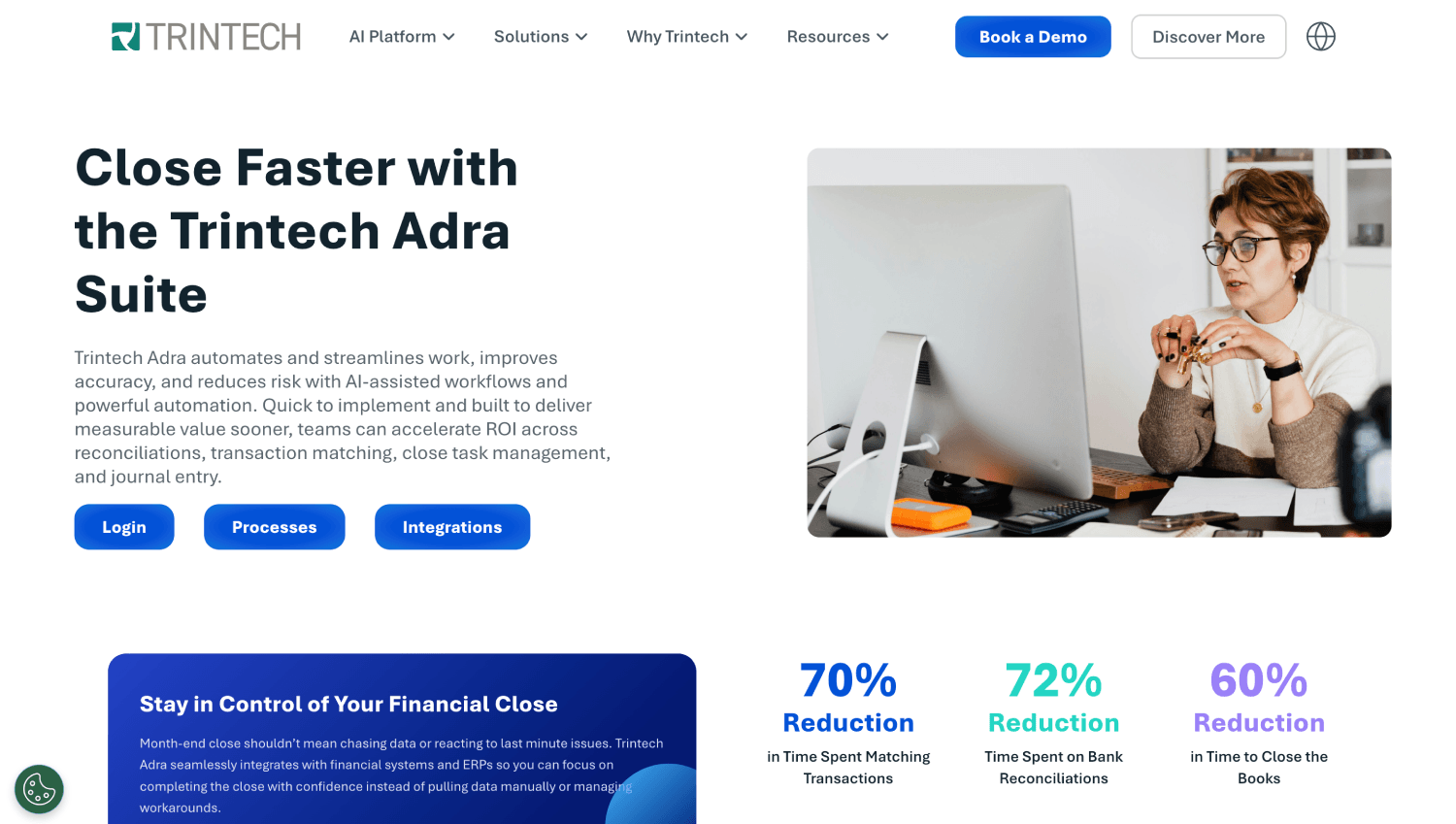
Trintech Cadency is the platform most often evaluated side-by-side with BlackLine in enterprise RFPs. It covers account reconciliation, close task management, journal entry, and variance analysis in a single application, which maps directly to the BlackLine module set most large companies have deployed.
Trintech’s strongest differentiator is its matching engine. For companies reconciling bank statements, intercompany accounts, and subledger balances at high volume, Cadency’s rule-based and AI-assisted matching handles large transaction sets that would require significant manual intervention in lighter-weight platforms. The company targets organizations with complex, multi-entity close cycles rather than growth-stage companies still building out their close process.
Migration from BlackLine to Cadency is supported through a formal program that Trintech calls a guided transition. The company has documented this process publicly and positions it as a core competitive response to BlackLine retention. Finance teams with existing BlackLine configurations can expect 90 to 180 days to full production depending on entity count and integration complexity, according to implementation timelines documented in Trintech’s published case studies and implementation resources.
HighRadius Record to Report: Best for AI-Driven Reconciliation at Scale
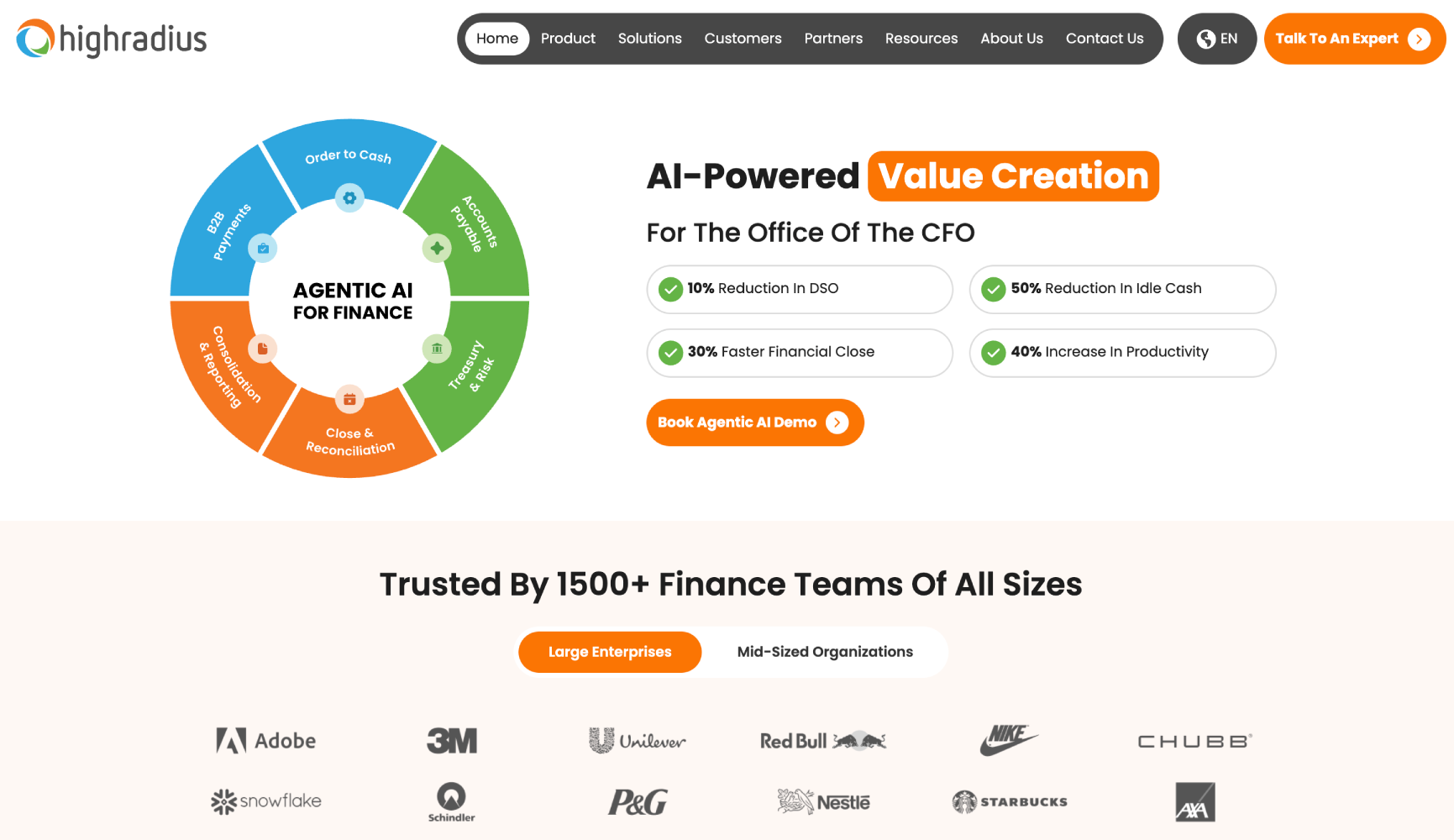
HighRadius approaches the close from a different architectural angle than BlackLine. Its Record to Report suite layers AI-driven matching directly into the reconciliation workflow, with the system learning from historical match patterns to increase auto-match rates over time. For companies running cash application alongside month-end close, the integration between HighRadius AR and its close module reduces the handoffs that typically cause delays.
HighRadius is particularly strong for organizations that have already deployed it on the AR side and want to consolidate vendors. Adding Record to Report to an existing HighRadius deployment is faster than a greenfield implementation, and the shared data model means transaction data does not have to be re-imported for close purposes. That integration story does not exist if you are coming from a different AR platform.
The weakness is reporting depth. HighRadius’s close reporting is functional but not as configurable as BlackLine’s reporting layer for teams that have built custom dashboards over years of use. Budget for a configuration phase if your controller’s office depends on non-standard close reports.
For context on how close automation fits into broader finance ops, the FintechSpecs guide to financial close and month-end automation tools covers the full category with implementation considerations.
OneStream: Best BlackLine Alternative for Consolidation-Heavy Enterprises
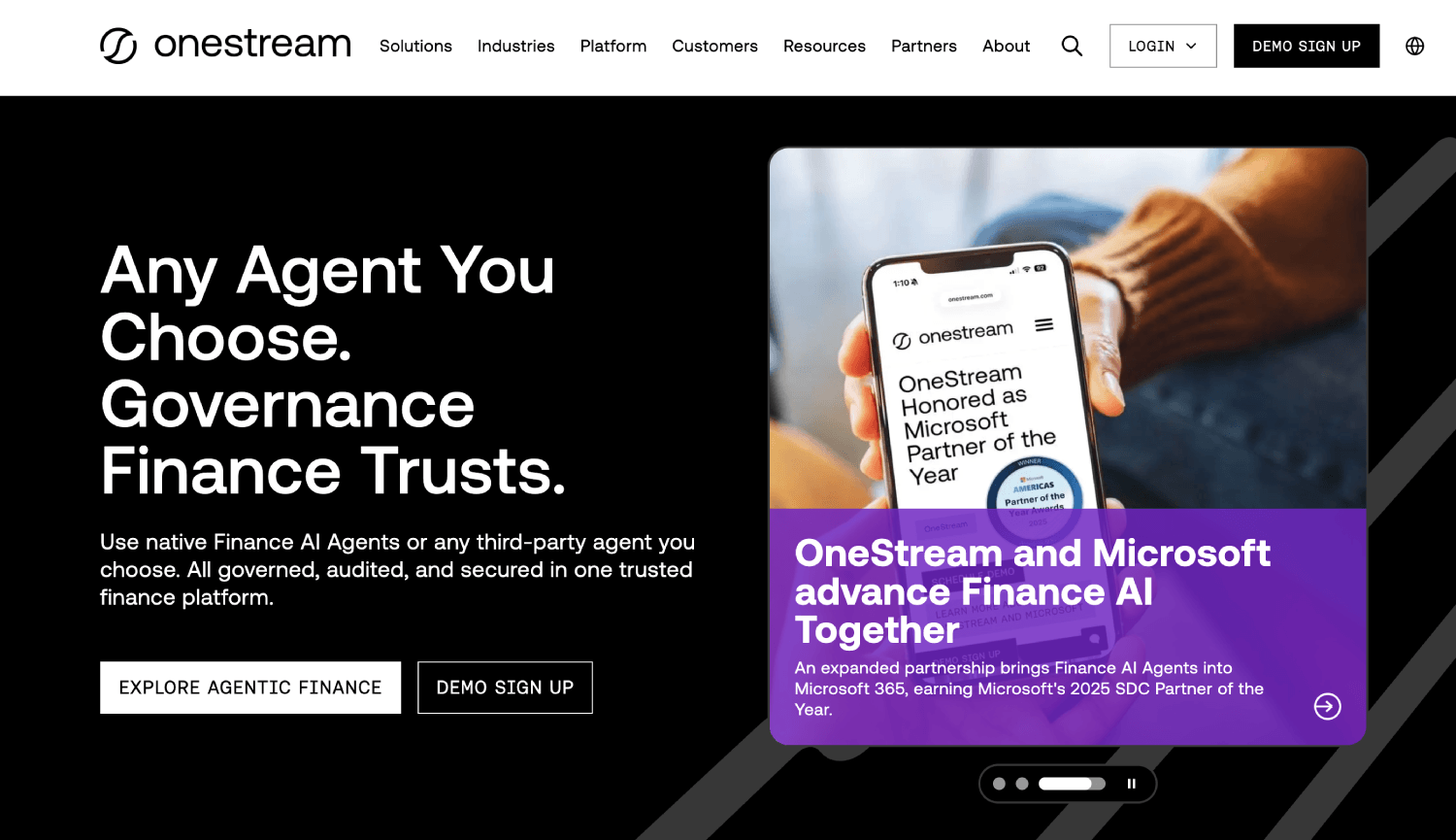
OneStream is not a direct BlackLine replacement in the way Trintech is. It is a CPM platform that handles financial consolidation, planning, and close in a unified data model, and it attracts BlackLine customers who want to collapse their close and consolidation tools into a single platform rather than run two systems in parallel.
The value proposition is architectural. Most large enterprises run BlackLine for close management and a separate EPM platform for consolidation. OneStream eliminates that boundary. A company with 40 legal entities closing in BlackLine and consolidating in Hyperion or Cognos is maintaining two integration layers, two audit trails, and two vendor relationships. OneStream collapses both into one.
The trade-off is implementation scale. OneStream deployments at the enterprise level are not 90-day projects. Plan for 6 to 12 months depending on entity complexity, chart of accounts standardization, and the number of custom calculation rules that need to be migrated from legacy consolidation platforms , a timeline consistent with implementation guides published by OneStream’s certified partner network. OneStream is not the right choice if you only need better close task management.
Workiva: Best for Public Companies Replacing BlackLine’s Reporting Layer
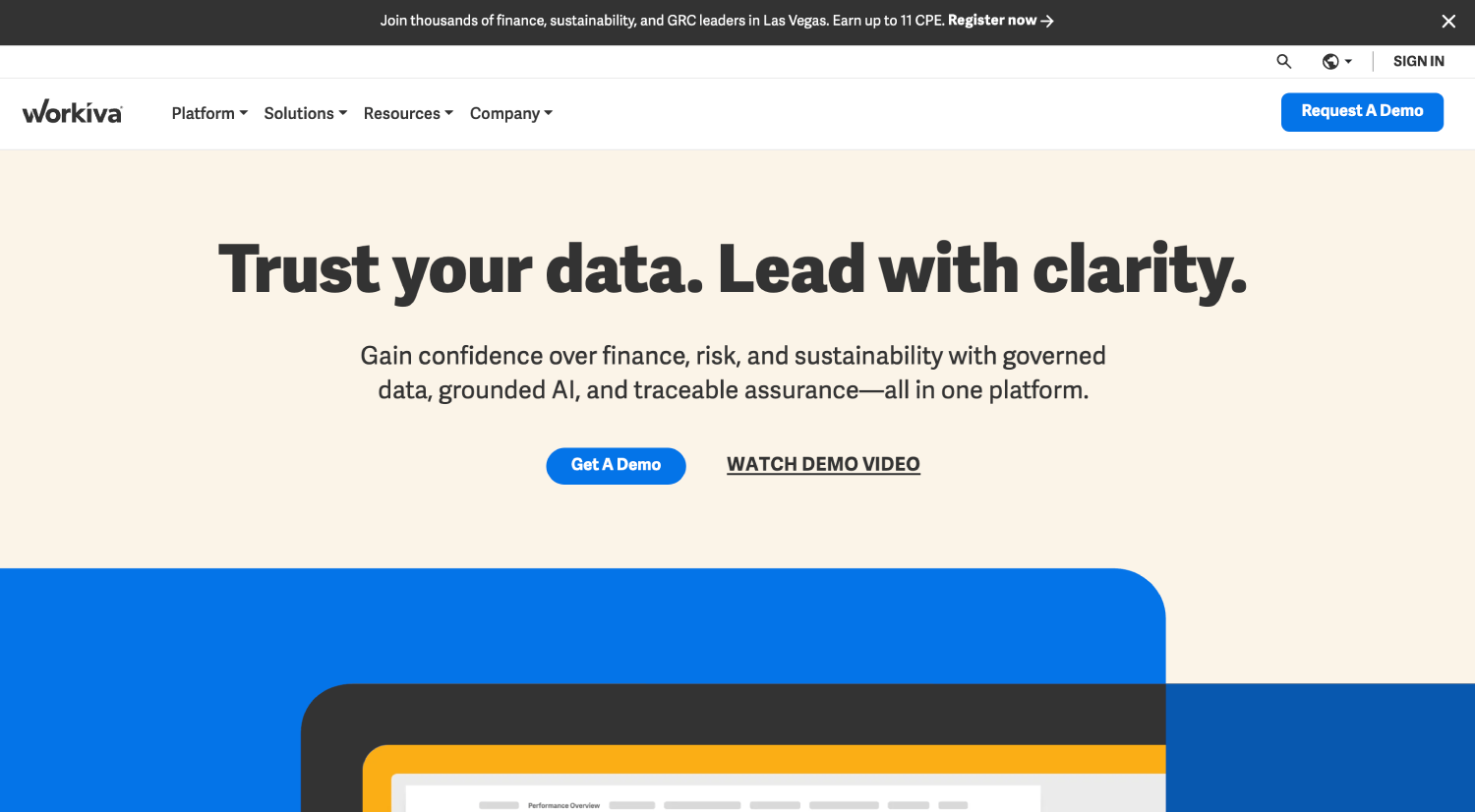
Workiva occupies a specific position in the enterprise close market. It combines close management with SEC reporting and ESG disclosure in a connected workflow, which makes it the strongest option for public companies where the close feeds directly into 10-K, 10-Q, or proxy filings. BlackLine does not have a native SEC reporting module, so public companies on BlackLine typically run Workiva or a competitor alongside it.
For companies already running Workiva for reporting, adding its close management module is often faster and cheaper than maintaining a BlackLine contract. The data linkage between close tasks, reconciliation sign-offs, and report disclosures is native in Workiva, not an integration that has to be built and maintained.
Workiva is less competitive on pure reconciliation volume. It handles the close workflow and task management well, but high-volume transaction matching is not its core strength. Companies with a large automated reconciliation need should evaluate Workiva alongside a reconciliation-specialist platform rather than as a standalone BlackLine replacement.
ReconArt: Best BlackLine Alternative for Payment and Banking Reconciliation
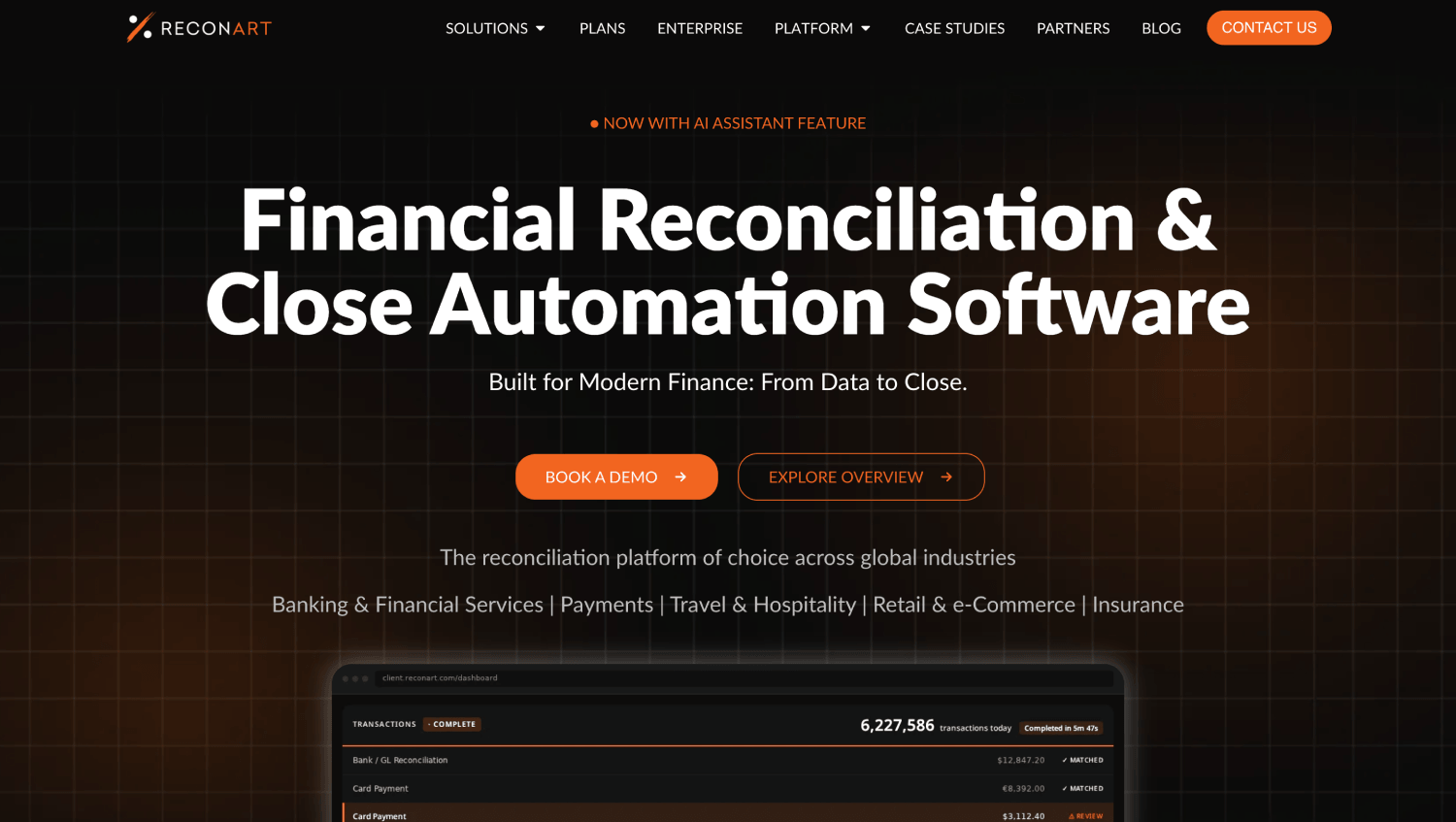
ReconArt is a reconciliation-specialist platform that excels in payment operations contexts: bank statement reconciliation, credit card processing recon, intercompany clearing, and nostro/vostro matching for financial institutions. It is not a close management platform in the task-management sense, and it does not try to be.
For fintech companies and financial services firms where the reconciliation problem is volume-driven rather than process-driven, ReconArt’s matching engine and exception workflow are purpose-built for the use case. A payment processor reconciling millions of daily transactions against bank files needs different tooling than a manufacturing company closing 50 accounts at month-end. ReconArt targets the former. For a detailed comparison of how ReconArt stacks up against AutoRek on payment operations, the FintechSpecs ReconArt vs AutoRek reconciliation platform comparison covers both architectures in depth.
The limitation is the absence of a full close management module. Companies replacing BlackLine’s entire suite will need ReconArt to serve as the reconciliation layer alongside a separate close task management tool. That two-vendor architecture is worth the trade-off for high-volume payment firms; it is harder to justify for a general corporate finance team.
Numeric: Best BlackLine Alternative for Tech-Forward Mid-Market Teams
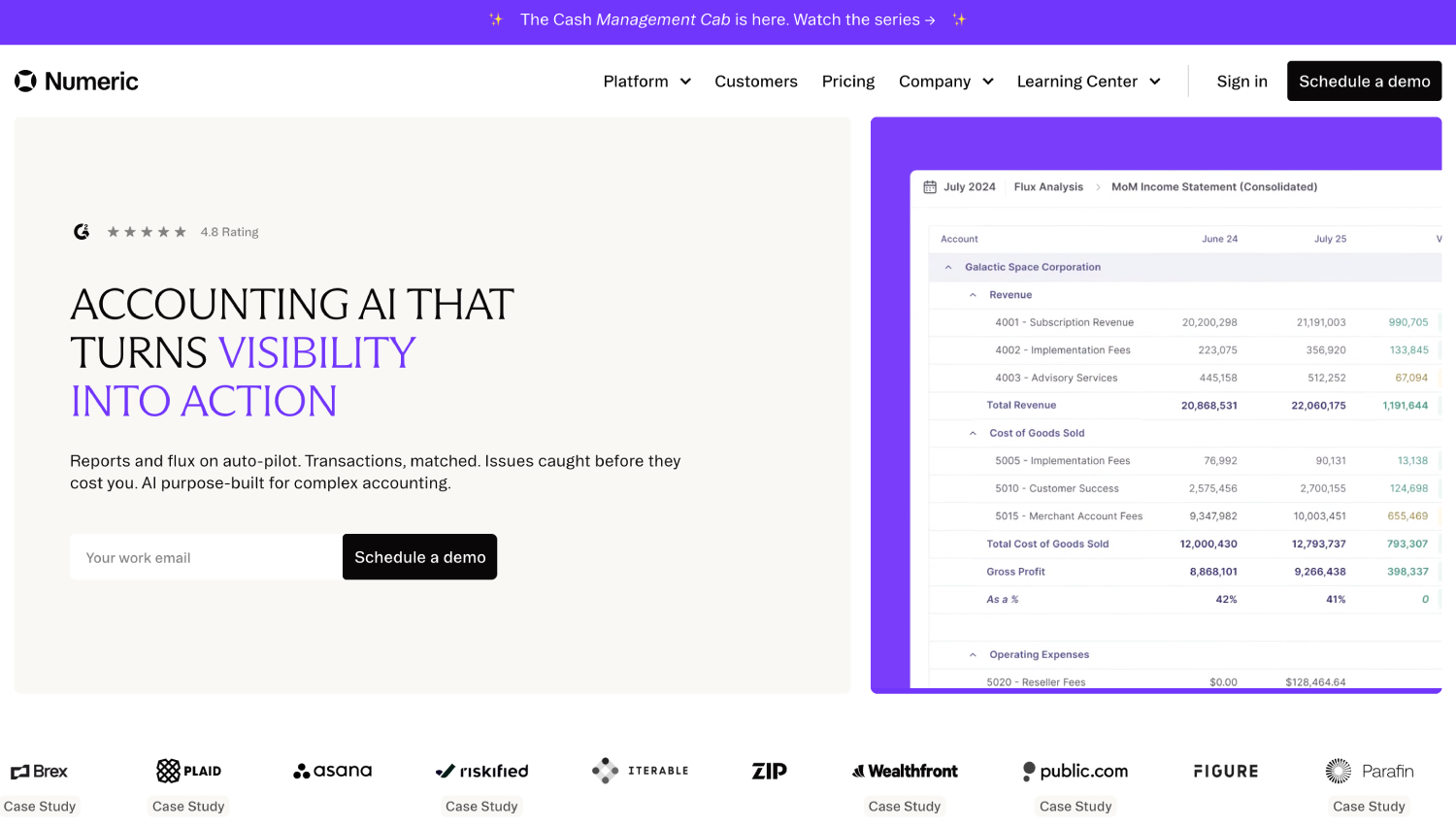
Numeric targets the fastest-growing segment of BlackLine’s customer base: Series B to Series D companies that outgrew spreadsheet-based close but do not need the full weight of enterprise close infrastructure. The product is built natively on modern cloud architecture, connects directly to NetSuite, QuickBooks, and Xero, and is designed to be implemented by a finance team without a six-month professional services engagement.
The product’s differentiator is its interface design. Numeric was built for finance teams that prefer a product that feels like modern SaaS rather than legacy enterprise software. The close checklist, flux analysis, and reconciliation views are designed for a controller who is also managing five other priorities, not for a dedicated close operations team.
SOX readiness is partial. Numeric covers the workflow controls and audit trail requirements that most pre-IPO companies need, but public companies with full SOX programs should verify the specific control mapping before committing. The platform is transparent about this distinction in its positioning, which is more useful than vendors who claim SOX readiness without qualification.
Ledge: Best BlackLine Alternative for Fintech Finance Ops Teams
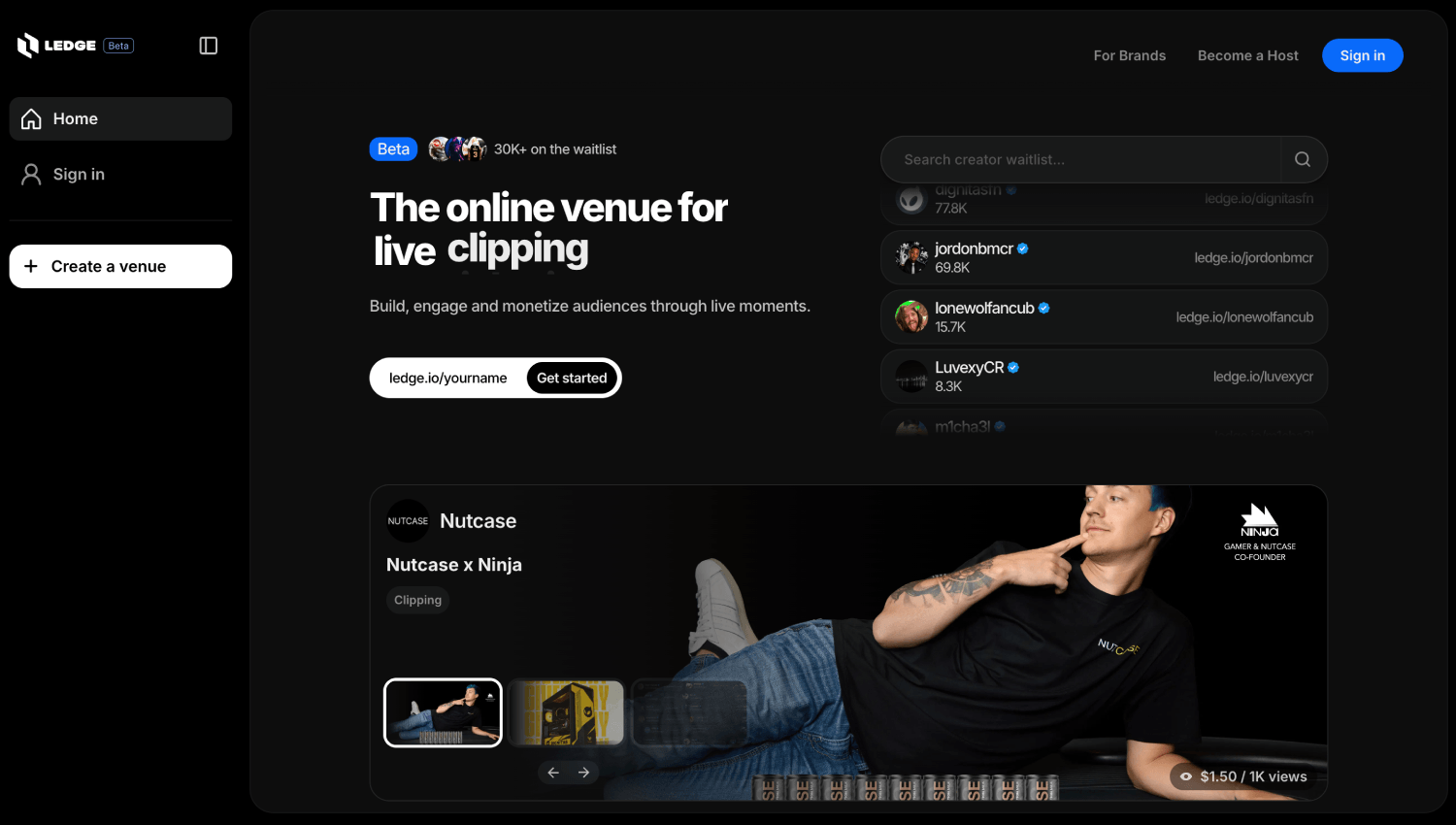
Ledge is built specifically for fintech and payments companies where the reconciliation problem is rooted in complex transaction flows across multiple payment rails, banking partners, and processor relationships. It is API-first, which means it connects to payment processors, banking platforms, and internal systems through code rather than file imports. That architecture fits fintech engineering cultures better than traditional enterprise recon tools that were built around scheduled file transfers.
For a payments company reconciling Stripe settlement files against bank accounts while also matching internal ledger positions, Ledge’s data model handles the multi-rail, multi-currency complexity that generic close platforms were not designed for. The FintechSpecs guide to payment reconciliation software for fintech finance teams provides additional context on how API-first reconciliation platforms compare to traditional close tools.
Ledge is not a full-close-suite replacement for BlackLine at a large public company. It is the right choice for a fintech company whose primary close problem is reconciliation complexity driven by payment volume, not consolidation or SEC reporting. Companies evaluating Ledge should also look at how it integrates with their existing double-entry ledger infrastructure, since Ledge works best when it can read directly from a structured transaction log.
Oracle ARCS: Best for Oracle ERP Customers Who Want to Consolidate Vendors

Oracle Account Reconciliation Cloud Service sits inside the Oracle EPM Cloud suite and is the natural replacement for BlackLine at organizations where Oracle E-Business Suite, Oracle Cloud ERP, or Oracle Fusion is the system of record. The integration is native, which eliminates the most error-prone part of any close platform deployment: the ERP data feed.
The commercial model is a bundling play. Oracle ARCS pricing is part of the broader Oracle EPM Cloud contract, which means an Oracle shop can often add reconciliation capability without a net-new vendor relationship. The trade-off is product independence. Oracle ARCS is not as capable as BlackLine or Trintech on standalone reconciliation automation, and companies that do not already have a significant Oracle footprint will not get the integration benefit that justifies the choice.
Oracle’s professional services costs for EPM Cloud deployments are well-documented as substantial. Finance teams should request a fully-loaded implementation estimate including Oracle PS, partner implementation fees, and data migration before comparing Oracle ARCS total cost against alternatives.
How Long Does It Actually Take to Migrate Off BlackLine?
The migration timeline is the primary reason finance teams stay on BlackLine past the point where the platform makes economic sense. Migration is manageable when scoped correctly , the companies that have the worst experiences are those that start implementation before finishing the scoping.
Consider a company with 15 legal entities, a NetSuite ERP, and BlackLine deployed for reconciliation, journal entry, and task management. A migration to Trintech Cadency or HighRadius Record to Report for a profile like this typically runs 90 to 120 days in production deployment, based on implementation timelines documented by both vendors in their published case study libraries. The first 30 days are data mapping and ERP connector setup. Days 31 to 60 are parallel-running BlackLine and the new platform simultaneously. Days 61 to 90 are cutover validation and user training. The parallel-run phase is where most delays occur, because it requires the finance team to operate two systems at once during an active close cycle.
The variables that push migration past 120 days are custom-built integrations on top of BlackLine’s API, non-standard journal entry workflows, and multi-ERP environments where transaction data lives in more than one system. Mapping those edge cases before the contract is signed is the single most important step in scoping a migration. Vendors that refuse to scope edge cases during the sales process are signaling that implementation risk will be transferred to the customer.
Frequently Asked Questions
Is Trintech a direct BlackLine replacement for enterprise reconciliation?
Trintech Cadency covers the same core functional areas as BlackLine: account reconciliation, close task management, journal entry, and variance analysis. For companies whose primary BlackLine deployment is reconciliation and close workflow, Trintech is the most direct architectural equivalent. It is not a financial consolidation platform, so companies using BlackLine alongside a separate EPM for consolidation will still need that layer. Trintech’s guided migration program is specifically designed for BlackLine customers and is one of the more structured transitions available in the category.
Can a mid-market company replace BlackLine with Numeric or FloQast?
Yes, and many do. Companies with fewer than 20 legal entities, a single ERP, and no SOX obligation often find that BlackLine’s architecture is more than their close process requires. Numeric and FloQast both cover close task management and reconciliation for this profile at a lower total cost and with shorter implementation timelines. The decision point is whether your team needs full SOX audit trail controls and high-volume automated matching, which are BlackLine’s core enterprise strengths. For a direct comparison between BlackLine and FloQast, the FintechSpecs BlackLine vs FloQast analysis covers the key trade-offs.
What is the difference between BlackLine and OneStream?
BlackLine is a close management and reconciliation platform. OneStream is a corporate performance management platform that includes close management as part of a broader financial consolidation, planning, and reporting suite. A company choosing between them is deciding whether to solve the close problem in isolation or to consolidate multiple finance system layers into one platform. OneStream requires a larger implementation investment but eliminates the integration between close and consolidation that BlackLine customers typically maintain with a separate EPM tool.
Does HighRadius do financial close or just accounts receivable?
HighRadius has a full Record to Report suite that covers account reconciliation, journal entry automation, close task management, and financial reporting. Its roots are in the AR and cash application market, which means its integration between payment matching and close reconciliation is stronger than most competitors. For companies that want to consolidate their AR automation and close management under one vendor, the combined HighRadius platform is a credible option. For companies that only need close management and have no interest in AR consolidation, HighRadius offers less commercial advantage over dedicated close platforms.
What is the total cost of switching from BlackLine to an enterprise alternative?
Total switching cost has three components: the new platform license, implementation and professional services, and the internal finance team time spent on migration and parallel-run operations. None of the enterprise vendors in this category publish public pricing, so direct quotes are required. ERP consulting partners that implement platforms in this category commonly reference implementation fees in the range of one to two times the annual software license for complex enterprise deployments , a figure that appears in partner pricing discussions on forums such as r/Accounting and in analyst coverage of the EPM market, though individual quotes vary significantly by scope. Teams should also budget for a 60-day parallel-run period during which both platforms are active.
Is Workiva a BlackLine competitor or a complement?
Both, depending on how a company has deployed BlackLine. For public companies that use BlackLine for close management and a separate tool for SEC reporting, Workiva is a potential consolidation play that replaces BlackLine’s close workflow and adds native report-to-disclosure connectivity. For companies that do not file with the SEC and have no ESG reporting requirement, Workiva’s reporting-focused strengths are less relevant, and a pure close platform like Trintech or HighRadius is a more efficient replacement. The overlap between the two products is concentrated in close task management and audit trail documentation.
Which BlackLine alternative is best for fintech companies specifically?
Fintech companies should evaluate Ledge and ReconArt before defaulting to enterprise close platforms designed for corporate finance teams. The reconciliation problem at a payments company or neobank is driven by transaction volume, multi-rail settlement complexity, and real-time data requirements, not by the number of legal entities or the complexity of intercompany eliminations. Ledge’s API-first architecture and ReconArt’s high-volume matching engine are built for that use case. Numeric is the right mid-market choice for a fintech with a standard NetSuite or QuickBooks setup that needs close workflow management rather than payment recon infrastructure.
How does the FintechSpecs Close Stack Audit help narrow the field?
The FintechSpecs Close Stack Audit applies four qualification gates before evaluating any vendor: volume, entities, ERP depth, and audit requirements. Teams that clear all four gates at enterprise thresholds (high volume, many entities, deep ERP integration, full SOX) belong in Trintech, HighRadius, OneStream, or Workiva. Teams that clear two or fewer gates are overspending on BlackLine’s enterprise architecture and should evaluate Numeric, Ledge, or FloQast. Running the audit first prevents the common mistake of replacing one mismatched platform with a different mismatched platform at equal or higher cost.
What Should a Finance Team Actually Do Before Booking a Demo?
The vendors on this list will all show you a polished demo. The differentiating questions come from your own close data, not from the vendor’s slide deck. Before any demo, pull your last six months of close timelines, identify the three longest-running reconciliation categories, and quantify how many exceptions your team resolves manually each month. Those numbers are the only basis for a meaningful apples-to-apples comparison between platforms.
Migration risk is real but manageable when scoped correctly. The companies that have the worst BlackLine replacement experiences are those that start the implementation before they have finished the scoping. A vendor that cannot produce a written implementation plan with named milestones during the sales process is one where the scope will expand after signature.
The close platform market has matured enough that BlackLine no longer holds a structural moat. Alternatives are capable. Whether a replacement succeeds comes down to how well your team’s specific close profile, ERP environment, and audit requirements match the platform you are considering , not brand or market share.