
TLDR
- NetSuite’s built-in AP works for simple invoice flows, but it lacks OCR capture, multi-entity routing, and automated approval chains that growing finance teams actually need.
- The tools on this list all maintain a two-way NetSuite sync, meaning vendor records, bill records, and payment status stay current in both systems without manual reconciliation.
- Native SuiteApp integrations (built inside NetSuite’s platform) carry less sync risk than middleware-dependent connectors, and that distinction drives how this list is ordered.
- Stampli, Tipalti, and Zone & Co lead for different reasons: Stampli for mid-market approval workflows, Tipalti for global payments, Zone & Co for teams that want to stay entirely inside NetSuite.
- Pricing for every tool here is quote-based or unlisted, with one exception noted below.
The best AP automation tools for NetSuite are Stampli, Tipalti, Zone & Co, Medius, AvidXchange, Bill (formerly Bill.com), and Ramp. Each offers a direct NetSuite integration with bill capture, approval routing, and payment execution. The right choice depends on whether your company needs global payment rails, multi-entity consolidation, or a native SuiteApp that never leaves the NetSuite environment. Teams processing fewer than 200 invoices per month will find Bill sufficient; teams above that threshold with multi-entity or cross-border requirements should evaluate Tipalti or Zone & Co.
Why NetSuite’s Native AP Falls Short for Scaling Finance Teams
NetSuite does have accounts payable functionality built in. It handles vendor records, bill entry, payment runs, and basic approval routing. For a company cutting 30 checks a month to a handful of US vendors, that is enough.
Past that point, the gaps show up fast. NetSuite requires manual data entry for invoice capture. There is no OCR or AI extraction built into the base product. Approval workflows are rigid, without dynamic routing based on GL code, department, or dollar threshold. And for companies with subsidiaries, inter-entity billing requires configuration work that most NetSuite admins spend days fighting.
The other common problem is payment execution. NetSuite can generate ACH files, but scheduling, vendor portal management, and international wires are not native. Finance teams end up exporting files, uploading them to a bank portal, then manually marking bills paid in NetSuite. That three-step process introduces reconciliation errors that compound at month-end.
The tools below solve those gaps without replacing NetSuite as the system of record. Every product on this list writes back to NetSuite, not alongside it.
How to Evaluate AP Automation for NetSuite: The Sync Depth Test
Most AP vendors claim “NetSuite integration.” That phrase covers a wide range of actual implementations, and the differences matter when something breaks at month-end.
The FintechSpecs Sync Depth Test is a four-check framework for evaluating what a NetSuite AP integration actually does:
- Record origin: Does the tool write bills natively into NetSuite, or does it maintain a parallel ledger and sync summaries? Native writes mean your NetSuite GL is always current. Parallel ledgers create reconciliation work.
- Bidirectional updates: If a bill is edited in NetSuite after it is created in the AP tool, does the AP tool reflect that change? One-directional syncs break when finance teams make corrections.
- Entity mapping: For companies with multiple subsidiaries, does the integration handle per-subsidiary vendor records, approval chains, and currency conversion, or does everything funnel through one entity?
- Payment writeback: After a payment clears (ACH, wire, check, virtual card), does the AP tool automatically mark the NetSuite bill as paid with the correct payment method and date? Manual payment marking is where most reconciliation errors begin.
A tool that passes all four checks is a genuine NetSuite AP integration. One that passes two is a connector with upside risk. Ask vendors to demo each check explicitly before signing.
Which AP Tools Integrate Most Deeply with NetSuite?
| Tool | Integration Type | Bill Writeback | Multi-Entity | Payment Execution | Best For |
|---|---|---|---|---|---|
| Zone & Co | Native SuiteApp | Yes | Yes | Yes | NetSuite-first teams |
| Stampli | API + SuiteApp | Yes | Yes | Yes | Mid-market approval workflows |
| Tipalti | API connector | Yes | Yes | Yes (196 countries) | Global vendor payments |
| Medius | API connector | Yes | Yes | Yes | Procurement-connected AP |
| AvidXchange | API connector | Yes | Yes | Yes (AvidPay) | Real estate and construction |
| Bill | API connector | Yes | Limited | Yes (US only) | SMB, under 200 invoices/mo |
| Ramp | API connector | Yes | Limited | Yes (US ACH/wire) | Spend management + AP |
| Ottimate (Plate IQ) | API connector | Yes | Limited | Yes | Hospitality and food service |
| Yooz | API connector | Yes | Yes | Yes | European multi-entity |
What Are the Best AP Automation Tools for NetSuite?
1. Zone & Co (ZoneCapture + ZoneBilling)
Zone & Co is the only vendor on this list that builds exclusively inside NetSuite. ZoneCapture, their AP module, runs as a SuiteApp, meaning it installs directly into your NetSuite instance. There is no external system, no middleware, and no API call to worry about when NetSuite has a maintenance window.
Invoice capture uses AI-powered OCR to extract vendor, line-item, amount, and GL coding from PDFs. Extracted data populates NetSuite bill records directly. Approval routing uses NetSuite’s native workflow engine, so finance admins configure rules without leaving the platform. For companies with multiple subsidiaries, Zone handles inter-company transactions within a single NetSuite environment without the manual journal entry work that native NetSuite requires.
The trade-off is payment execution. Zone’s payment functionality is less mature than Tipalti or AvidXchange for complex international payments. If your vendor list is primarily US-based, that is a non-issue. Zone does not publish pricing; it is quote-based based on NetSuite license tier and transaction volume.
2. Stampli
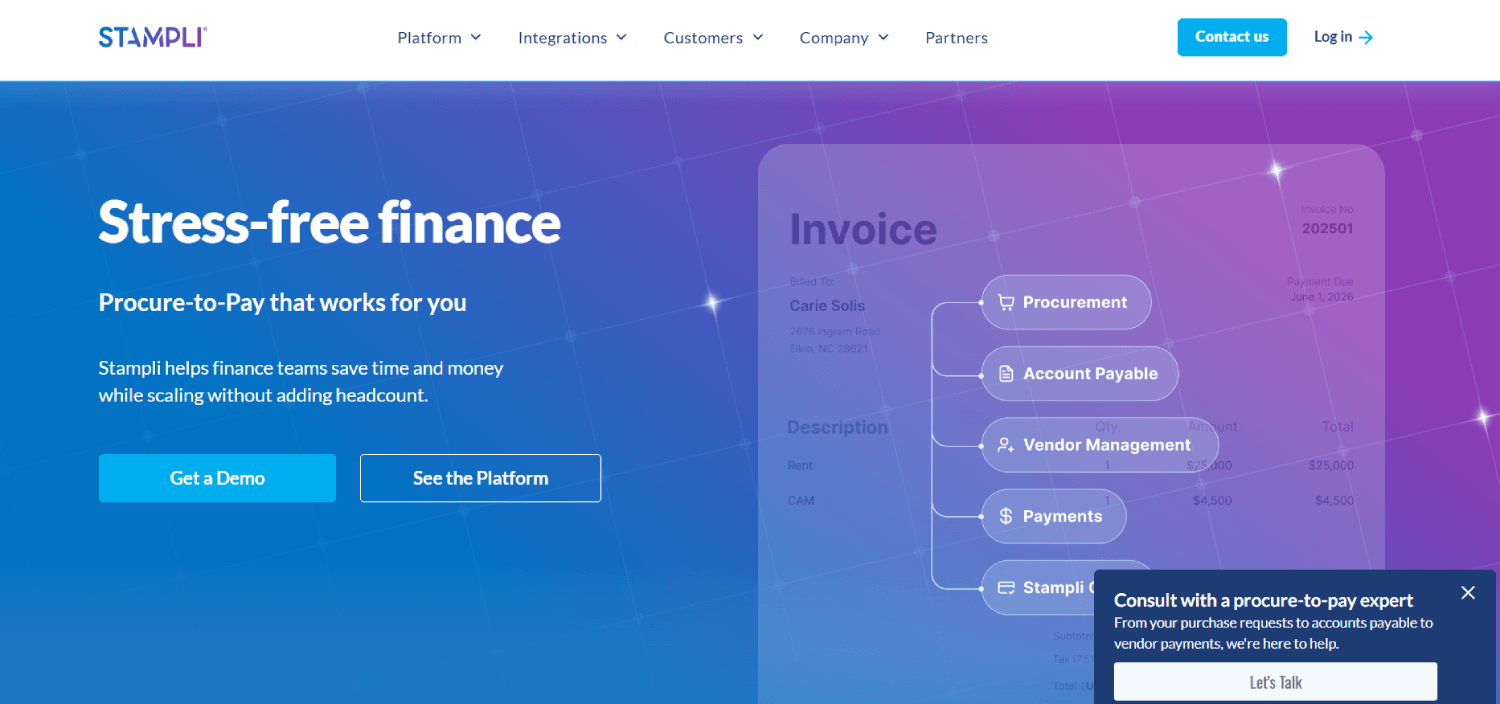
Stampli built its reputation on AP-specific workflow, and it shows. The product centers on what Stampli calls Billy the Bot, an AI that learns from your historical invoices to suggest GL coding, flag duplicates, and route approvals to the right people automatically. For finance teams whose biggest AP pain is getting department heads to approve invoices on time, Stampli’s communication layer, which keeps all invoice discussion threaded on the invoice itself, cuts email chains significantly.
The NetSuite integration syncs vendor master data, chart of accounts, department records, and locations from NetSuite into Stampli. Approved bills write back as NetSuite bill records with full line-item detail. Payment execution runs through Stampli Pay, which handles ACH, check, and virtual card payments with automatic NetSuite payment writeback.
Stampli works best for mid-market companies, roughly 50 to 500 employees, where AP volume is high enough to justify a dedicated tool but the team is not yet running global treasury operations. Pricing is not published; Stampli sells through direct sales with custom quotes.
3. Tipalti
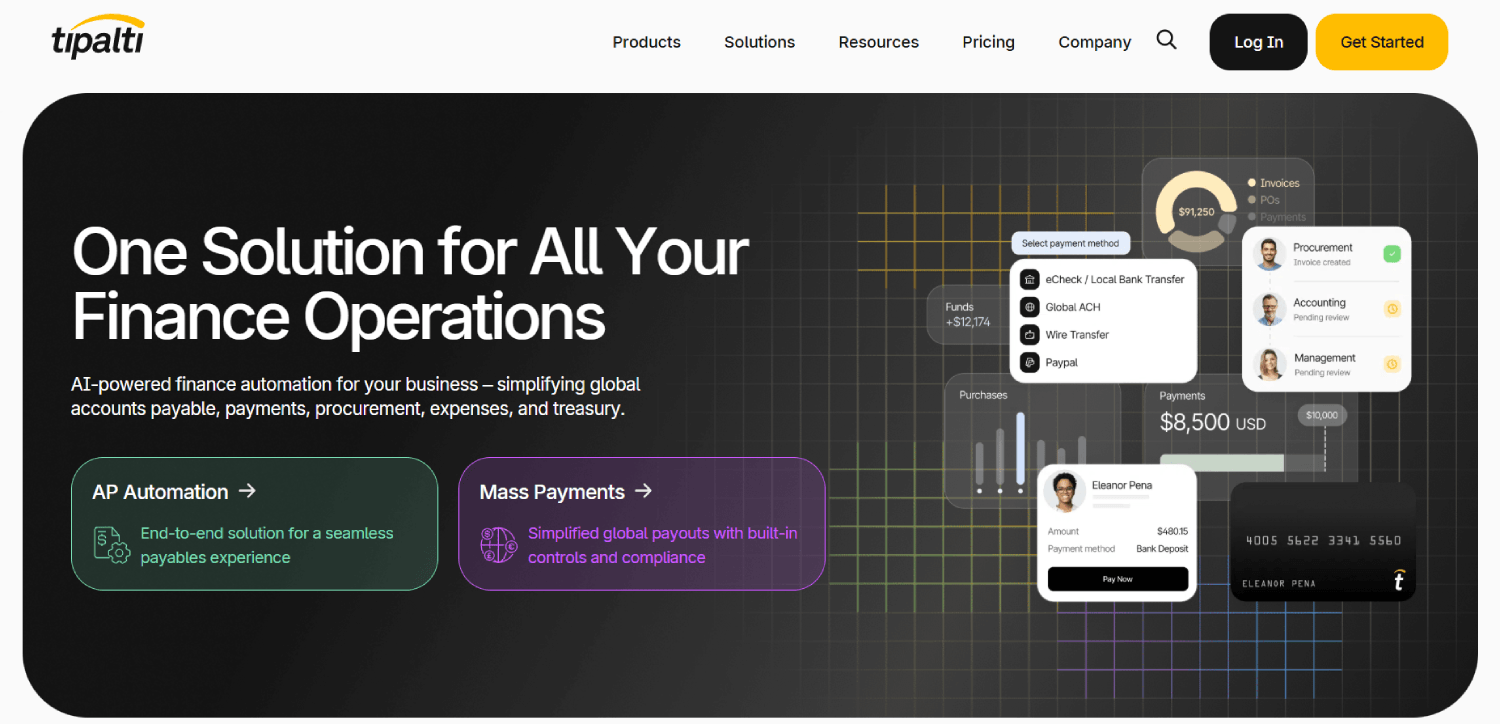
Tipalti covers more payment rails than any other tool on this list. The platform supports payments to vendors in over 196 countries across ACH, wire, local bank transfer, PayPal, and prepaid debit. For companies paying contractors, agencies, or suppliers internationally, that coverage eliminates the need for a separate global payment provider.
The NetSuite integration writes approved bills directly into NetSuite with full GL coding, and Tipalti’s payment status syncs back to mark bills as paid with the correct date and reference number. Multi-entity support allows separate NetSuite subsidiaries to run independent vendor lists and approval chains through a single Tipalti instance.
Tax compliance is where Tipalti separates from the pack. The platform collects W-9 and W-8 forms from vendors directly, stores them, and generates 1099 and 1042-S files at year-end. For companies with large contractor or supplier bases, that alone can justify the cost. According to Tipalti’s public pricing page (verified July 2025), the entry-level plan starts at $149 per month, with higher tiers adding advanced features and enterprise pricing available on request. If you are comparing this platform head-to-head with Bill, the Bill vs Tipalti analysis on FintechSpecs covers that decision in detail.
4. Medius
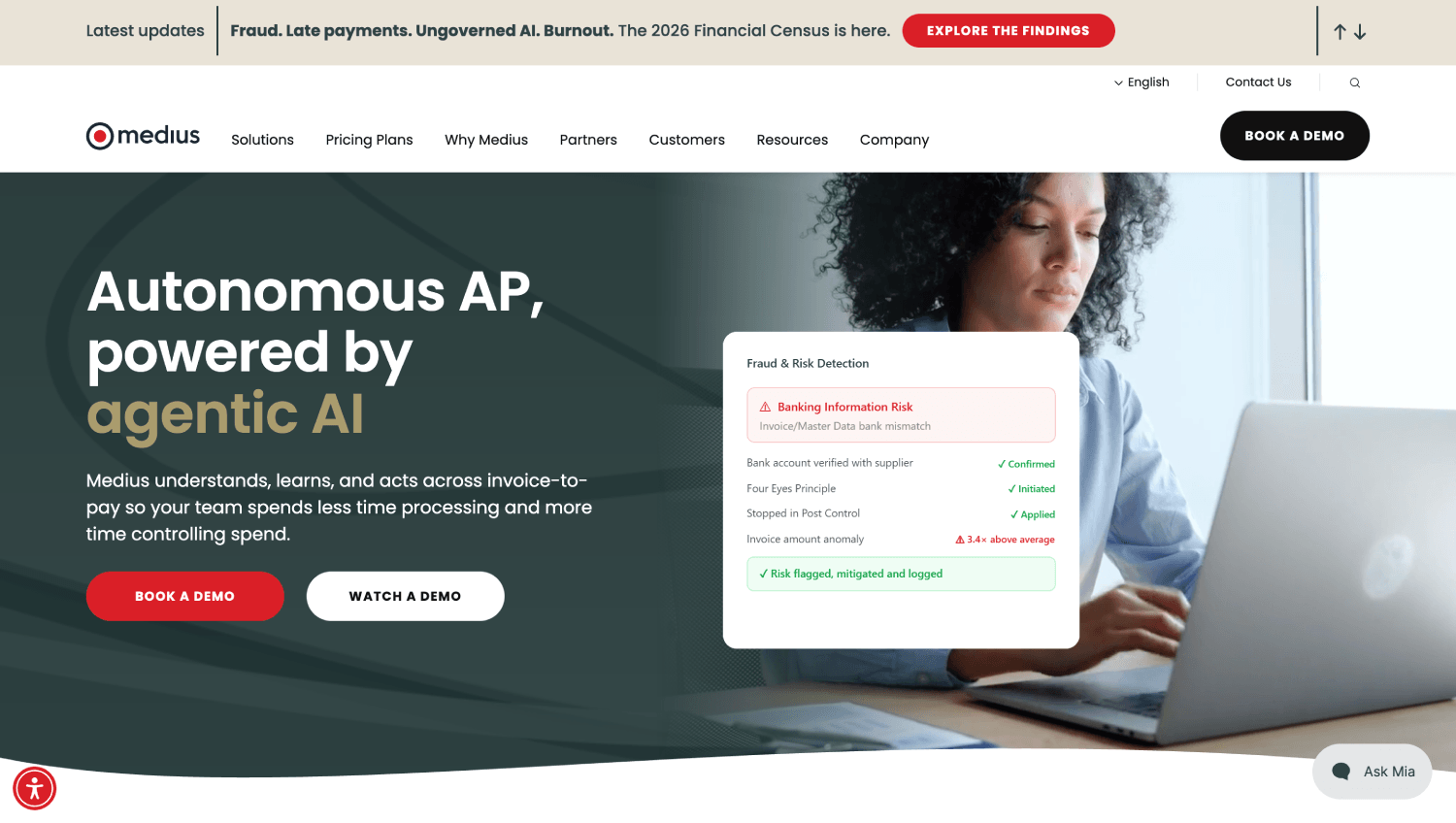
Medius positions itself as AP automation with a procurement connection. The platform covers invoice capture, coding, approval, and payment, but its differentiator is purchase order matching. For companies that issue POs before receiving goods or services, Medius automatically matches invoices to POs and receipts, flagging discrepancies for review rather than passing them through.
The NetSuite connector pulls vendor, PO, and GL data from NetSuite and writes approved invoices back as bills. Multi-entity and multi-currency support is included. Medius’s AI coding engine learns from historical approvals to suggest GL splits, which reduces the manual review burden on AP staff.
Medius fits mid-market to enterprise companies with procurement processes, not just informal vendor relationships. Companies with no PO process get less value from Medius’s matching capabilities than from Stampli or Zone. Pricing is quote-based.
5. AvidXchange
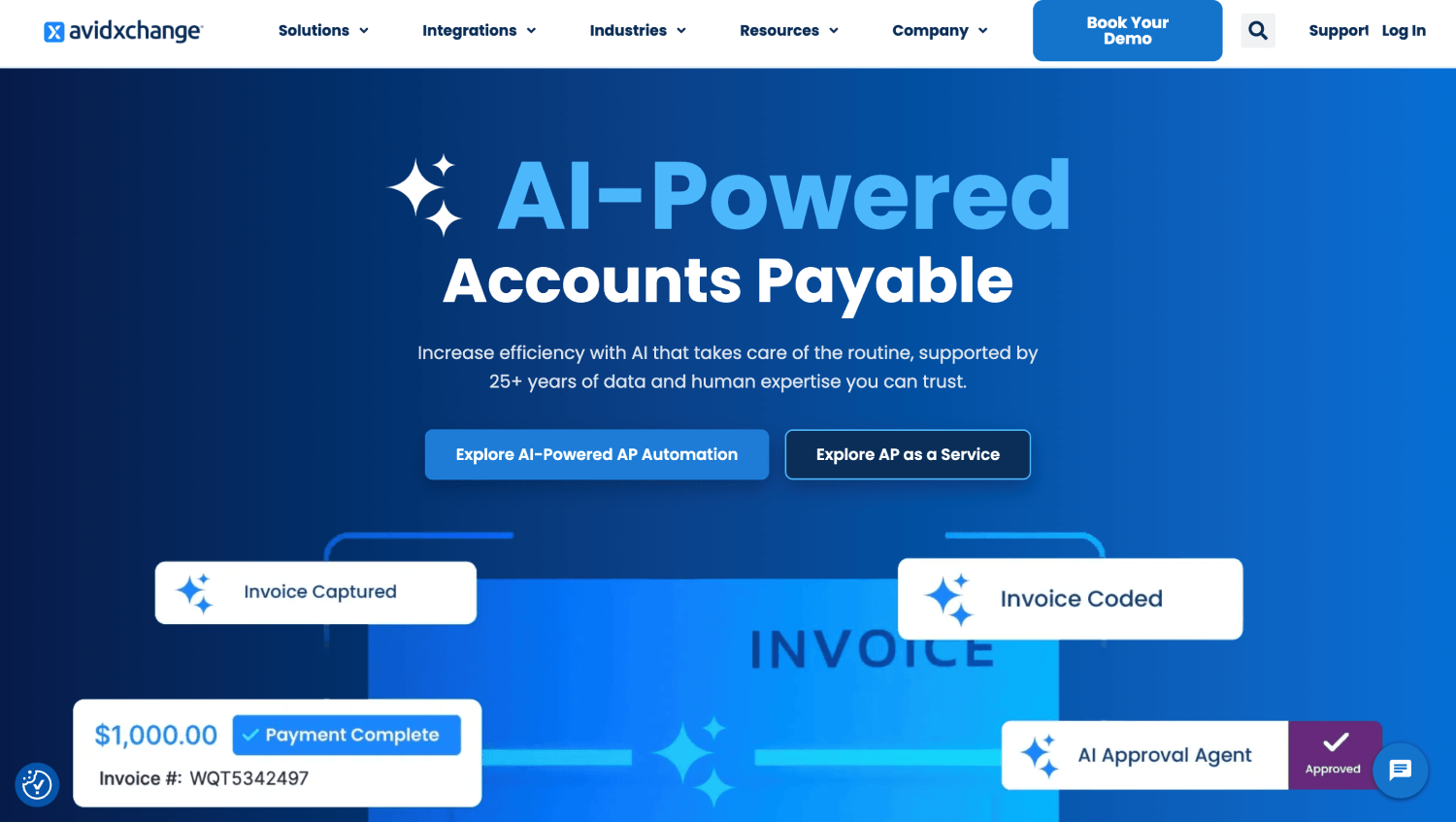
AvidXchange is the dominant AP automation vendor in real estate, construction, and property management, and its NetSuite integration reflects that focus. The platform handles high volumes of property-related invoices, utility bills, and contractor payments that come with complex coding requirements across multiple cost centers.
AvidPay, their payment network, processes check, ACH, and virtual card payments to vendors enrolled in the AvidPay network. Vendor enrollment is handled by AvidXchange, which reduces the setup burden on finance teams. Payment status writes back to NetSuite automatically.
Outside of real estate and construction, AvidXchange competes less distinctly. The interface is older than Stampli or Tipalti, and the AI coding features are less sophisticated. For a technology company or professional services firm, Stampli or Medius is a better fit. For a property management company running NetSuite with 1,000 invoices per month across 20 properties, AvidXchange is purpose-built for that workload. Pricing is quote-based.
6. Bill (formerly Bill.com)
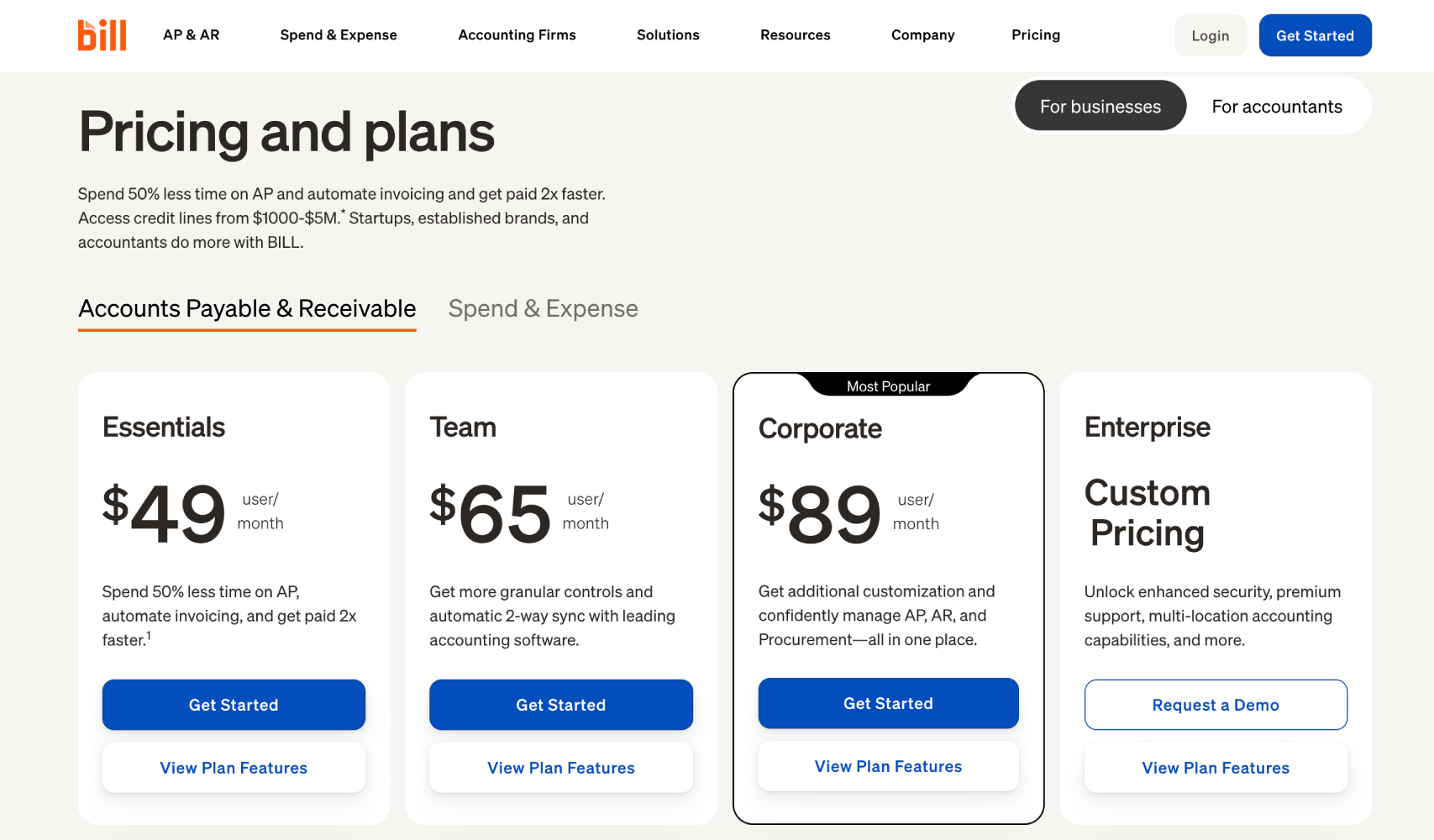
Bill is the most accessible entry point for NetSuite AP automation. The NetSuite sync pulls chart of accounts, vendor records, and payment status. Approved bills flow back into NetSuite as paid bills when payment clears. Setup is faster than most competitors on this list, with most teams going live in days rather than weeks.
The limitations are real and matter at scale. Multi-entity support in Bill is limited compared to Zone or Tipalti. International payment rails cover fewer countries. The AI coding assistance is less sophisticated than Stampli’s Billy the Bot for high-volume, varied invoice types.
According to Bill’s public pricing page (verified July 2025), the Essentials plan starts at $45 per user per month, making it the only tool on this list with transparent entry-level pricing. For companies processing under 200 invoices per month with mostly US vendors, Bill delivers a clean NetSuite sync at a cost that larger platforms cannot match. Finance teams that have grown past Bill’s ceiling and are evaluating alternatives will find the broader AP automation comparison on FintechSpecs useful for seeing what comes next.
7. Ramp
Ramp approaches AP from the spend management side. The product started as a corporate card platform and expanded into bill pay, expense management, and vendor invoice processing. For companies already using Ramp cards, adding AP automation keeps all spend data in one place, which simplifies category reporting and budget-to-actual tracking in NetSuite.
The NetSuite integration syncs GL codes, departments, and vendor records, and writes back paid bills. Ramp’s invoice ingestion handles emailed or uploaded PDFs with AI extraction. Approval workflows are configurable but less sophisticated than Stampli’s for complex routing logic.
According to Ramp’s public pricing page (verified July 2025), the core platform is free, with paid tiers available for advanced features. Bill pay is included in the base product, which makes Ramp unusually accessible for early-stage companies. The catch is that Ramp’s AP functionality is a supporting feature, not a primary product. Companies with high invoice volume or complex multi-entity structures will find its AP capabilities fall short of dedicated tools. Teams evaluating how Ramp compares to Brex and Airbase for the broader spend platform decision can reference the Ramp vs Brex vs Airbase analysis.
8. Ottimate (formerly Plate IQ)
Ottimate is a narrow-focus tool built for hospitality, food service, and multi-location restaurant groups. Its OCR captures line-item detail from food invoices, including item name, quantity, and unit price, not just total amount. That granularity lets operators track food cost by ingredient across locations in NetSuite.
The NetSuite integration writes bills with full line-item detail, which is more than most AP tools provide. Payment execution handles ACH and virtual cards through the Ottimate Pay network. For any company outside food service, hospitality, or similar goods-heavy industries, Ottimate’s specialized capture capabilities are unnecessary overhead.
Ottimate does not publish pricing publicly. The company sells to mid-market hospitality groups with significant invoice volume, and deal sizes reflect that segment. Prospective buyers should request a quote directly.
9. Yooz

Yooz is a cloud AP platform with particularly strong European market coverage. For US companies with European subsidiaries running NetSuite, Yooz handles VAT compliance, local payment rails, and multi-currency coding that US-centric tools handle poorly. The NetSuite connector syncs vendor data, GL codes, and approval rules, and writes bills back with entity-specific coding.
Yooz uses AI-powered document recognition across invoice formats including PDFs, scans, and electronic invoices. Approval workflows are configurable with escalation rules and delegation. For purely US operations, Yooz competes less distinctly against Stampli or Tipalti. Its advantage is specifically in cross-border multi-entity environments where European compliance adds friction. Yooz does not publish pricing publicly; pricing is available on request and structured per quote.
What Should Finance Teams Ask Before Buying AP Software for NetSuite?
NetSuite version compatibility is the first thing to verify. Several AP tools built their integrations against older NetSuite API versions and have not kept pace with updates. Ask specifically which NetSuite release your prospective vendor supports, and confirm they have tested against your current instance configuration.
Custom fields are the second common failure point. Most companies running NetSuite have added custom fields to vendor records, bill records, or transaction lines. If the AP tool does not map custom fields, your team will still be doing manual data entry after go-live, which defeats the purpose. Require a demo that shows a bill with your custom fields populated correctly in NetSuite.
Implementation timelines vary more than vendors admit. Zone & Co, because it installs natively inside NetSuite, typically configures in two to four weeks for standard setups. API-based connectors like Tipalti or Medius typically take four to eight weeks for a clean multi-entity rollout. If a vendor promises go-live in a week for a complex setup, that should raise questions about what is being skipped. The FintechSpecs vendor evaluation framework outlines exactly what to ask in that conversation.
How Do AP Automation Tools Handle Multi-Entity NetSuite Environments?
Multi-entity is where most AP integrations reveal their actual depth. A company with three US subsidiaries and two international entities running NetSuite OneWorld needs an AP tool that maintains separate vendor master records per entity, applies the correct inter-company accounting treatment, and can run approval chains that reflect each entity’s organizational structure.
Zone & Co handles this natively because it runs inside NetSuite OneWorld itself. Entity context is always correct. Tipalti handles multi-entity well at the payment level, routing payments from the correct subsidiary bank account and writing back to the correct NetSuite entity. Stampli supports multi-entity but requires configuration during implementation to map entities correctly.
Bill and Ramp both have limited multi-entity support, generally adequate for two or three entities with similar structures but not for complex global consolidations. If your NetSuite environment has more than three subsidiaries with distinct approval structures, Bill and Ramp should be removed from your shortlist early.
Does AP Automation for NetSuite Require a NetSuite Administrator?
Most tools require some NetSuite admin involvement during setup, not ongoing. The initial integration configuration, custom field mapping, and approval workflow setup typically take a NetSuite admin between four and twenty hours depending on the complexity of your instance. Zone & Co requires the most NetSuite expertise during configuration, since it operates within NetSuite’s SuiteApp framework. Bill and Ramp require the least, with API-based connectors that finance teams can often configure without admin help.
Post-implementation, the ongoing maintenance is minimal for all tools on this list. Vendor adds, GL code changes, and approval chain updates sync automatically or require simple configuration changes. The exception is major NetSuite upgrades, where you should verify compatibility with your AP vendor before allowing the upgrade to proceed.
Frequently Asked Questions: AP Automation for NetSuite
What is the best AP automation software that integrates with NetSuite natively?
Zone & Co is the only tool built entirely inside NetSuite as a SuiteApp, making it the deepest native integration available. It installs directly into your NetSuite instance, uses NetSuite’s native workflow engine for approvals, and writes bills without any external API dependency. Stampli and Tipalti offer strong integrations but operate as external systems connected via API, which introduces a dependency on API uptime and version compatibility that Zone does not have.
Does Tipalti sync with NetSuite for international payments?
Yes. Tipalti’s NetSuite connector writes approved bill records into NetSuite with full GL detail, and once a payment clears, Tipalti marks the corresponding NetSuite bill as paid with payment date and reference number. International payments across wire, ACH, local bank transfer, and PayPal are supported to vendors in over 196 countries, with payment status syncing back to NetSuite regardless of payment method. Tax form collection for W-9 and W-8 compliance is handled within Tipalti.
Will AP automation tools break my NetSuite chart of accounts setup?
No, but only if the integration is configured correctly. Every tool on this list pulls your existing chart of accounts from NetSuite and maps to it. The risk is with custom GL segments or custom fields that the AP tool has not been configured to handle. Before go-live, run a test invoice that uses your most complex GL coding structure, including any custom segments, and verify that the NetSuite bill record shows exactly what your accounting team expects. Skipping that test is the most common cause of post-launch reconciliation problems.
How does Stampli’s AI improve AP workflows for NetSuite users?
Stampli’s AI, called Billy the Bot, learns from your approved invoices over time. It observes which vendors map to which GL accounts, which cost centers, and which approvers, then applies those patterns automatically to new invoices. For a team receiving 500 invoices per month from recurring vendors, Billy typically handles GL coding on a large portion of invoices without human input within the first few months. The approver routing logic also adapts, escalating invoices above defined thresholds to senior approvers without manual intervention.
Can Bill handle multi-entity NetSuite environments?
Bill handles simple two-entity setups adequately, but it does not support full multi-entity workflows with separate approval chains, inter-company transactions, and entity-specific vendor records the way Zone & Co, Tipalti, or Stampli do. If your NetSuite instance uses OneWorld with more than two or three subsidiaries with different currencies or ownership structures, Bill is not the right fit. Finance teams at that complexity level should evaluate Zone, Tipalti, or Medius instead.
What is the difference between a NetSuite SuiteApp and an API connector for AP automation?
A SuiteApp installs inside your NetSuite instance and runs within NetSuite’s execution environment. A SuiteApp uses NetSuite’s own workflow engine, data model, and permissions structure. Zone & Co is built this way. An API connector, used by Stampli, Tipalti, Bill, Ramp, and most others, operates as a separate external system that exchanges data with NetSuite through NetSuite’s REST or SOAP APIs. API connectors are more flexible and often faster to build, but they depend on NetSuite’s API availability and can break when NetSuite updates its API or when the connector has not been maintained. Neither approach is universally superior; the SuiteApp model wins on reliability, the API connector model often wins on feature velocity.
How long does NetSuite AP integration take to implement?
For a standard single-entity implementation, Bill and Ramp typically take one to two weeks. Stampli and Zone & Co typically take three to five weeks, accounting for configuration, approval chain setup, and user training. Tipalti and Medius for multi-entity global rollouts typically run six to ten weeks including vendor onboarding and tax form collection. Any vendor quoting a one-week go-live for a complex multi-entity setup is not accounting for the NetSuite configuration time required.
Does Ramp replace AP automation for companies already on NetSuite?
For teams under 100 employees with straightforward US vendor payment needs, Ramp can serve as both spend management and AP automation with its NetSuite integration. Past that scale, or when multi-entity structures, complex approval routing, or international payments are in play, Ramp’s AP feature set becomes a limiting factor. It is better described as a spend platform with AP capabilities than an AP automation tool. Companies building out finance infrastructure alongside AP should also look at how their broader fintech ops toolstack fits together before committing to any single vendor.
The Decision Most Finance Teams Get Wrong
Most teams evaluating AP automation for NetSuite lead with the question of which tool has the best features. The better starting question is which integration model matches your NetSuite instance’s complexity. A company running a single-entity NetSuite setup with US-only vendors should not pay for Tipalti’s global payment infrastructure. A company with five subsidiaries across three currencies should not expect Bill to handle that without workarounds.
The sync depth matters more than the feature list for one specific reason: AP tools touch your financial records directly. A sync error in an expense management tool creates a reporting problem. A sync error in your AP tool creates a reconciliation problem that surfaces at audit time and takes days to unwind. The FintechSpecs Sync Depth Test framework, specifically the payment writeback and bidirectional update checks, will tell you more about real integration quality than any vendor demo. Finance teams evaluating where AP sits within a broader financial close process should also consider how the tool interacts with their month-end workflow, a topic covered in the financial close automation analysis on FintechSpecs.
Zone & Co is the answer for teams that want to live entirely inside NetSuite. Tipalti is the answer for teams with global vendor complexity. Stampli earns its place for mid-market companies where invoice approval bottlenecks are the primary pain. Every other tool on this list is a legitimate choice for a specific combination of company size, geography, and invoice volume, and a wrong choice for every other scenario.