
- Chargeflow’s success-fee model works well at low dispute volume. Above roughly 100 chargebacks per month, the percentage you hand over compounds faster than most merchants realize.
- Flat-fee and hybrid alternatives exist across every price tier, from self-serve tools aimed at Shopify merchants to managed programs built for enterprise payment volumes.
- Win-rate claims from vendors are marketing figures. The only comparable metric is your own win rate on your own dispute type, tested over 60 to 90 days.
- The seven alternatives below are ranked by use case fit, not by who has the loudest marketing budget or the most polished affiliate program.
- Success-fee economics and flat-fee economics both break down under different conditions. The right model depends on your dispute volume, average order value, and how much internal capacity you have.
The best Chargeflow alternatives for automated chargeback recovery are Justt, Disputifier, Chargebacks911, Chargeback Gurus, ChargebackHelp, Midigator, and Signifyd. Each uses a different pricing model, ranging from pure success fees to flat monthly fees to hybrid arrangements. The right fit depends on your monthly dispute volume, your processor relationships, and whether you need prevention or recovery or both.
Why Merchants Start Questioning Chargeflow at Volume
Chargeflow built its reputation on a simple pitch: no dispute, no fee. You only pay when they win. For a merchant processing 20 or 30 chargebacks per month, that alignment is genuinely appealing. The risk transfers away from you, and the vendor has skin in the game.
The problem surfaces when dispute volume grows. Say a merchant handles 200 chargebacks per month at an average order value of $180, and Chargeflow charges 25% of recovered revenue. A 60% win rate on that volume means roughly $21,600 recovered per month. The fee on that recovery is $5,400, every single month, indefinitely, for disputes the vendor is largely automating. At that scale, the cost of a flat-fee tool or an in-house workflow starts looking very different.
This is what FintechSpecs calls the Volume Inflection Point: the dispute threshold where your monthly success-fee payout exceeds what a flat-fee or hybrid competitor would charge for equivalent automation. For most merchants, that inflection arrives somewhere between 80 and 150 chargebacks per month, depending on AOV. It is worth running the math before you assume success-fee is always the merchant-friendly model.
If you are also thinking about the upstream problem, preventing disputes before they become chargebacks, the 7 Best Chargeback Alert Services for SaaS and Fintech covers Verifi RDR, Ethoca, and CDRN, which sit a layer above the dispute management tools in this list.
How Do Chargeflow’s Main Competitors Structure Their Pricing?
Before the vendor rankings, one table to anchor the comparison. Pricing figures below reflect each vendor’s publicly stated model as of their current public-facing pages. Where pricing is not publicly disclosed, that is noted explicitly.
| Vendor | Pricing Model | Public Pricing Available | Best For |
|---|---|---|---|
| Chargeflow | Success fee (% of recovered revenue) | No (custom quote) | Low-to-mid dispute volume, no internal resources |
| Justt | Success fee (% of recovered revenue) | No (custom quote) | Mid-to-high volume, complex dispute types |
| Disputifier | Flat monthly fee + success fee hybrid | Partial (contact for full pricing) | Shopify merchants, small teams |
| Chargebacks911 | Custom (flat fee and managed service options) | No (enterprise custom) | Large merchants, multi-processor environments |
| Chargeback Gurus | Success fee or managed retainer | No (custom quote) | Mid-market merchants seeking managed service |
| ChargebackHelp | Custom (flat fee options available) | No (custom quote) | High-risk verticals, CNP-heavy merchants |
| Midigator | Flat fee (SaaS model) | No (custom quote) | Merchants who want software control, not outsourcing |
| Signifyd | Guarantee model (Signifyd absorbs chargeback cost) | No (custom quote) | E-commerce fraud prevention with chargeback coverage |
A note on win-rate claims: every vendor in this space publishes win rates on their own marketing pages. These figures are not independently audited, and they typically reflect best-case dispute categories. This article does not repeat those claims as gospel. Where a vendor’s win-rate figure appears in third-party coverage or customer documentation, it is noted with context.
Which Chargeflow Alternative Is Best for Merchants Who Want AI-Driven Automation?
1. Justt
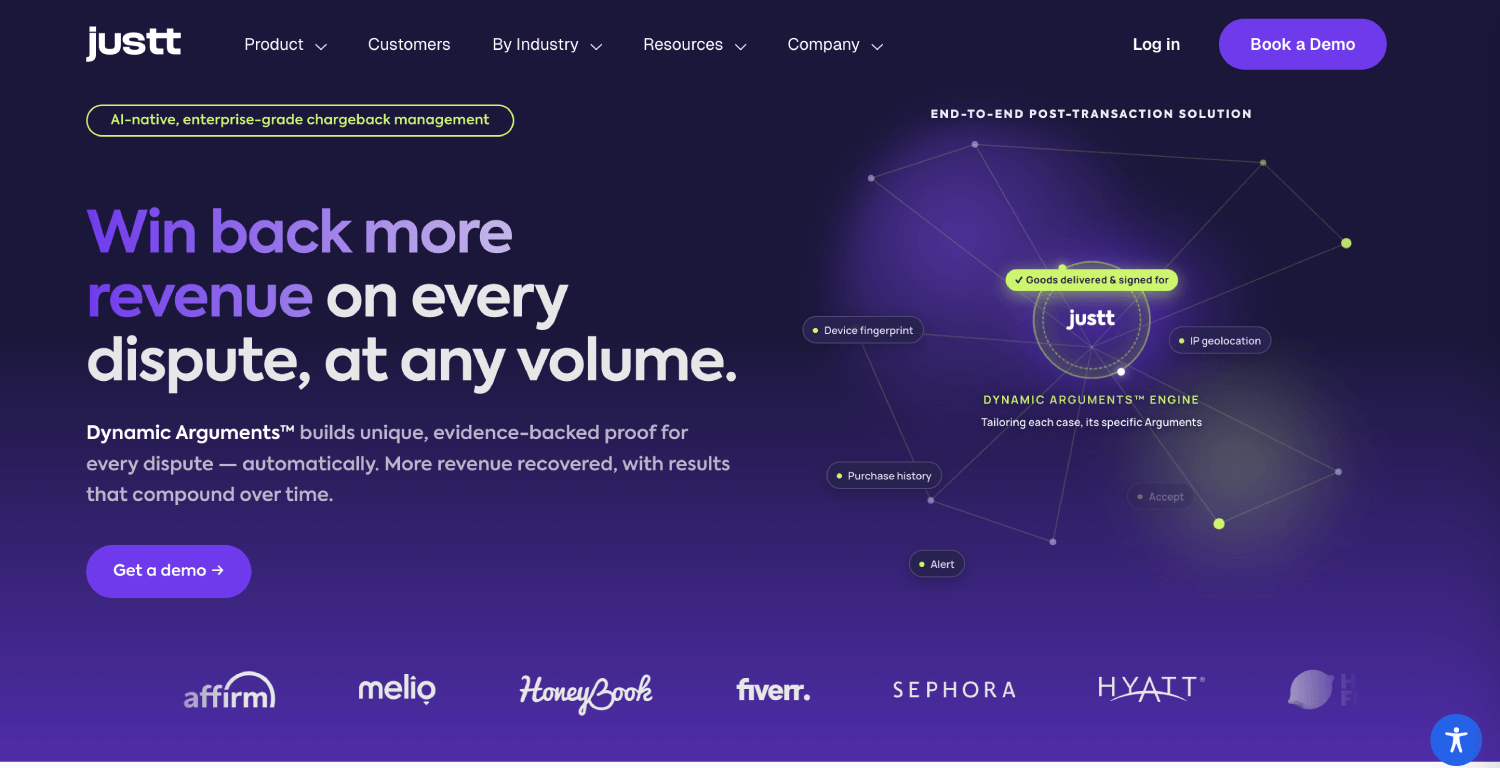
Justt is the most direct Chargeflow competitor in terms of positioning. Both tools use AI to build dispute evidence packages and automate submission across processors and card networks. The core difference is in how each vendor approaches evidence construction. Justt uses what it calls a “continuous learning” approach, where its models update based on outcomes across its merchant base, theoretically improving win rates over time on your specific dispute patterns.
Justt operates on a success-fee model, so the Volume Inflection Point calculus applies here too. If you are weighing Chargeflow vs Justt specifically, the deciding factor is usually integration depth: Justt connects directly with Stripe, Braintree, Adyen, and other major processors, and its evidence packages are built from transaction metadata rather than requiring merchants to upload documents manually. Chargeflow has similar integrations, but Justt’s enterprise focus means its account management tends to be more hands-on for large dispute volumes.
Win-rate claims on Justt’s public site should be treated as directional, not contractual. The comparison that matters is how each vendor performs on your specific dispute reason codes, not on aggregated marketing figures. Justt does not publicly disclose its pricing beyond confirming a success-fee structure.
2. Disputifier
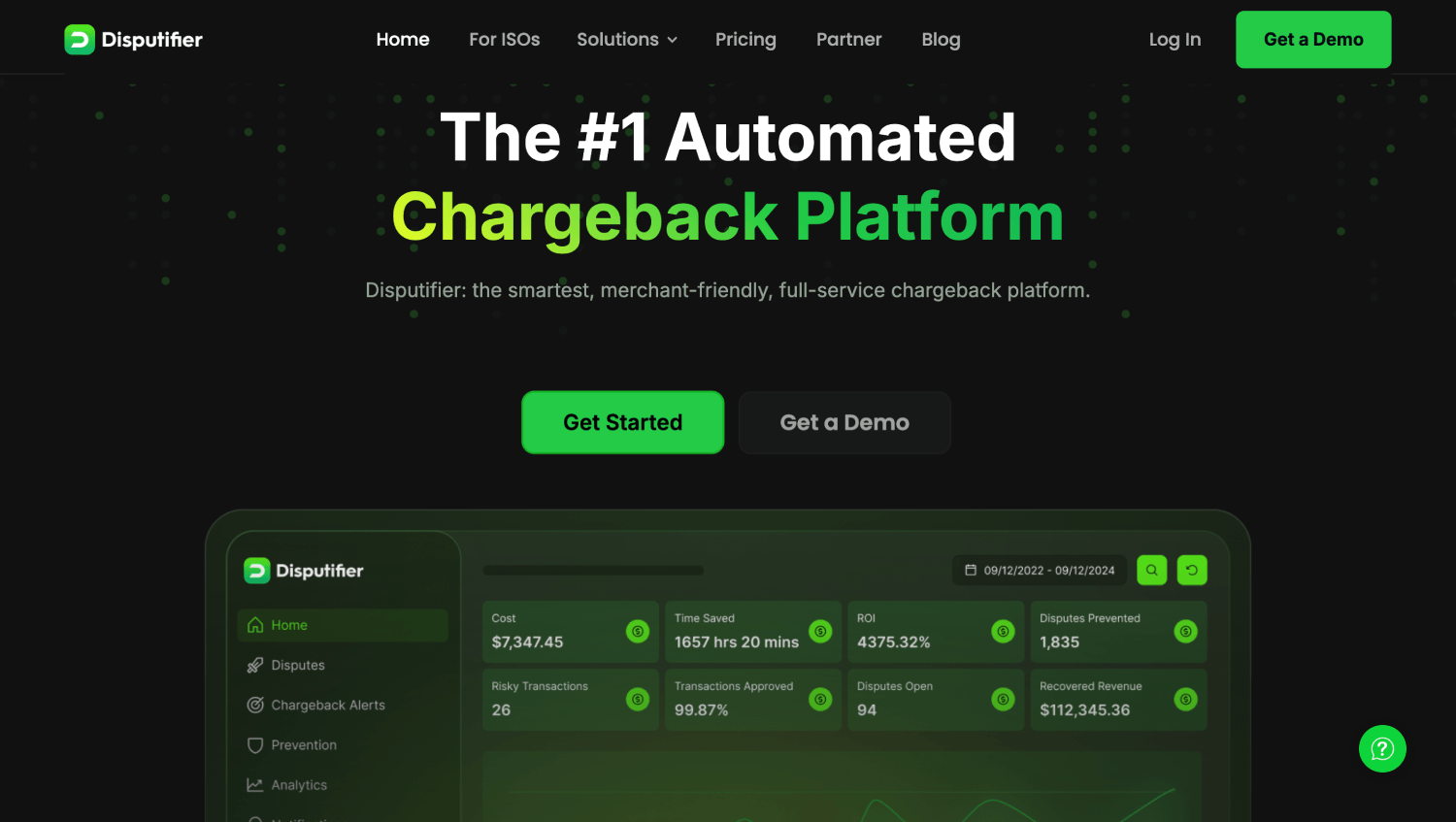
Disputifier targets Shopify merchants first, and that focus shows in its integration experience. Setup is faster than most enterprise tools, and the interface is built for operators who are not running a dedicated disputes team. The pricing model is a hybrid: there is a flat monthly component plus a success-fee component on won disputes, which lowers the pure success-fee exposure compared to Chargeflow without fully converting to a flat-fee SaaS model.
Disputifier’s positioning as a Chargeflow alternative is explicit on its own site. Its core argument is speed of evidence submission and broader coverage of Shopify-native dispute types. For a merchant under 100 chargebacks per month who wants something simpler than Chargebacks911’s enterprise workflow, Disputifier is worth evaluating. The trade-off is ceiling: it is not built for multi-processor complexity or high-risk verticals.
3. Chargebacks911
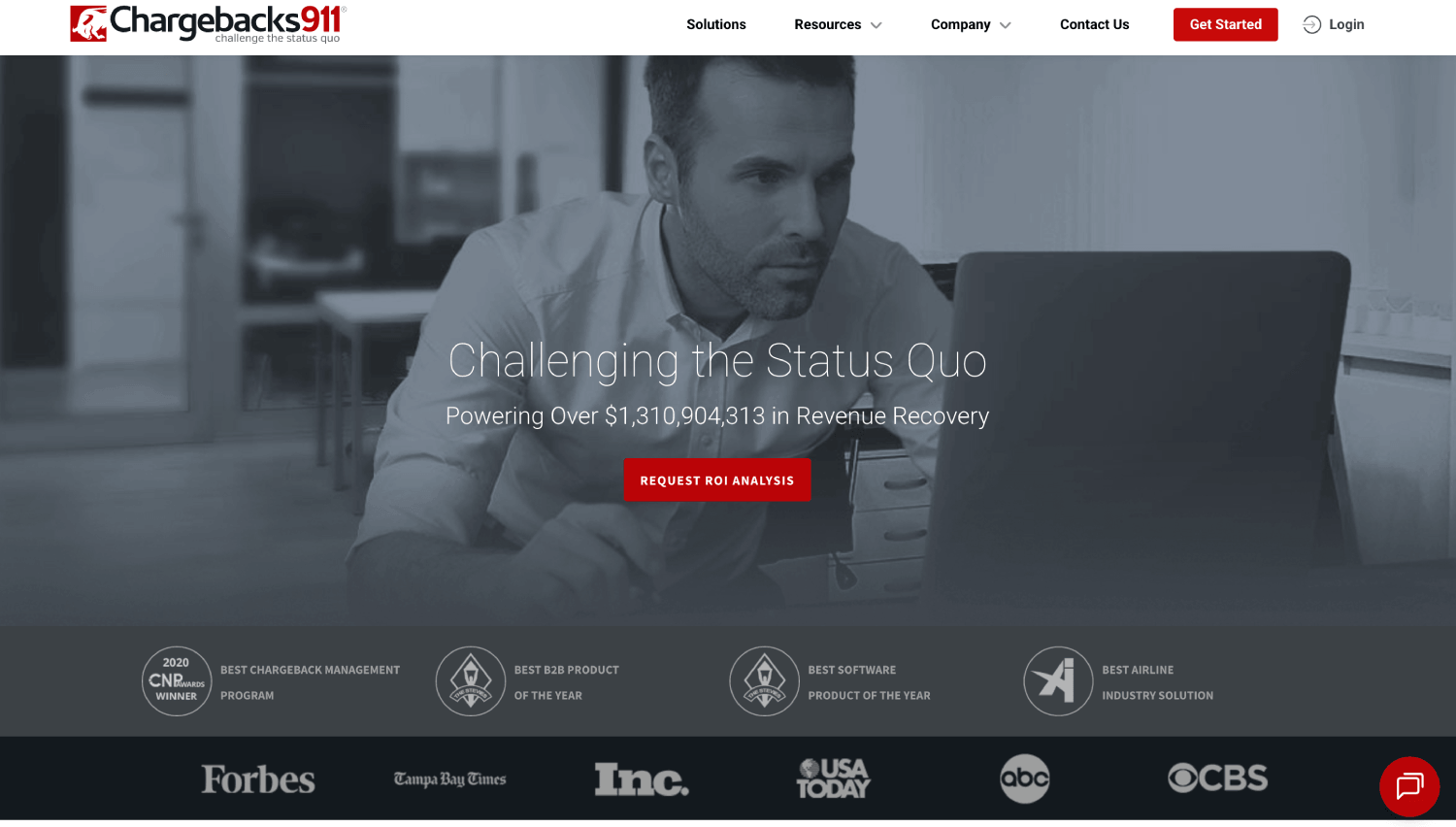
Chargebacks911 has been in this space longer than most of its competitors, and that history shows in its network relationships with acquiring banks, card networks, and issuers. It offers both managed-service and software-only engagement models, which makes it unusual in this category. A merchant who wants to keep disputes in-house but use better tooling can buy software access. A merchant who wants full outsourcing can buy the managed service.
The managed-service pricing is custom and not publicly disclosed. For larger merchants processing thousands of disputes per month, Chargebacks911 often wins on raw dispute coverage, meaning the breadth of reason codes it can handle automatically. Its dispute analyst team supplements the automation, which is either a feature or overhead depending on how you think about vendor dependency.
Chargebacks911 is the right pick if you are a larger merchant with multi-processor complexity, high dispute volume, or if you operate in a vertical where reason code nuance matters more than integration speed. It is not the right pick if you want a self-serve SaaS tool you can configure in an afternoon.
4. Chargeback Gurus
Chargeback Gurus runs a managed-service model with an analytical layer it calls “Guru Insights,” which is a reporting dashboard showing dispute root causes, prevention opportunities, and win/loss patterns by reason code. That root-cause analysis is the genuine differentiator here. Most automated dispute tools focus on recovery. Chargeback Gurus frames the work as both recovery and prevention, and the analytics layer supports that framing with actual data.
Pricing is not publicly disclosed. The model is a mix of success fees and retainer arrangements depending on volume and service tier. For a mid-market merchant that wants a vendor to help identify why disputes are happening, not just fight them, Chargeback Gurus is worth a call. For a merchant who just wants automation and does not care about root-cause analysis, the added complexity may not be worth it.
5. ChargebackHelp
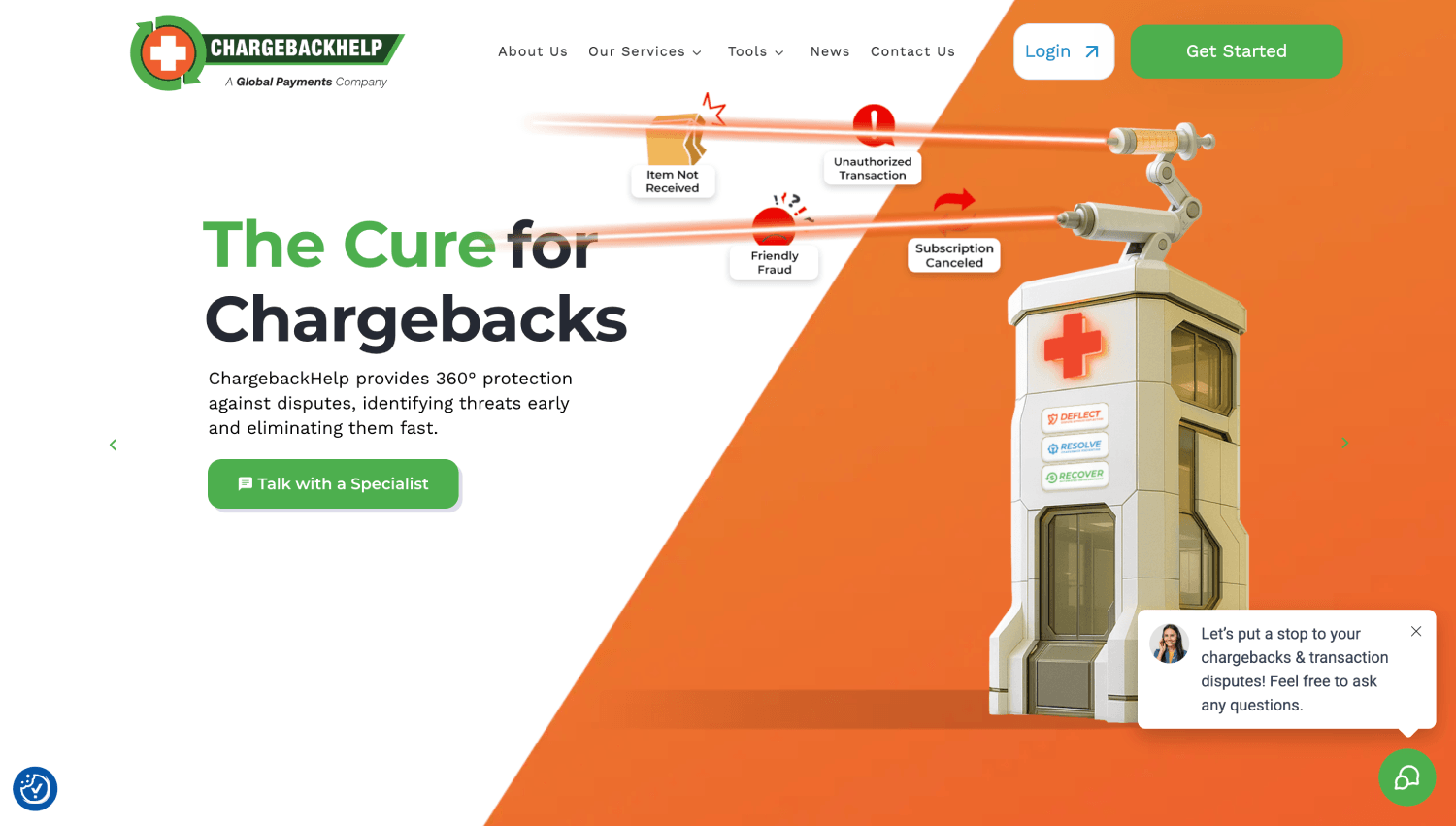
ChargebackHelp focuses on card-not-present disputes, which is where most e-commerce and SaaS merchants lose money. Its strongest suit is high-risk vertical support, covering adult content, nutraceuticals, gaming, and other categories where standard chargeback tools either decline to work or perform poorly. This makes it a relevant alternative for merchants that Chargeflow or Justt might turn down or underperform for due to vertical restrictions.
The flat-fee option ChargebackHelp offers for certain service tiers makes the Volume Inflection Point analysis more favorable than with pure success-fee tools. Exact pricing is custom, but the availability of flat-fee structures is confirmed on their public-facing services pages. Merchants in standard e-commerce verticals will not gain much from ChargebackHelp’s high-risk specialization, so the recommendation here is narrow: it is the right tool if you have been rejected by or underserved by mainstream vendors.
6. Midigator
Midigator(as equifax) takes a different structural position than every other vendor on this list. It sells software, not a service. You get a platform to manage dispute workflows, automate evidence collection, and track outcomes, but your team operates it. That means you need internal capacity, but it also means you are not paying a percentage of every recovered dollar indefinitely.
For a merchant or SaaS company that has reached a dispute volume where a dedicated FinOps or payments operations person makes sense, Midigator converts the cost structure from variable to fixed. That is the key trade-off: Midigator’s flat SaaS fee looks expensive compared to a 0% success fee on months with few wins, but it looks cheap compared to a 25% success fee on a high-win month at volume.
Midigator connects to major processors and supports automated response submission. Pricing is custom and requires a sales conversation, which is a friction point for smaller merchants evaluating self-serve options. The company was acquired by Mastercard’s Ethoca unit in 2022. That acquisition adds institutional weight to its network relationships and access to Ethoca’s issuer data, though it also raises reasonable questions about long-term product roadmap independence , something worth discussing directly with their sales team before signing a multi-year contract.
7. Signifyd
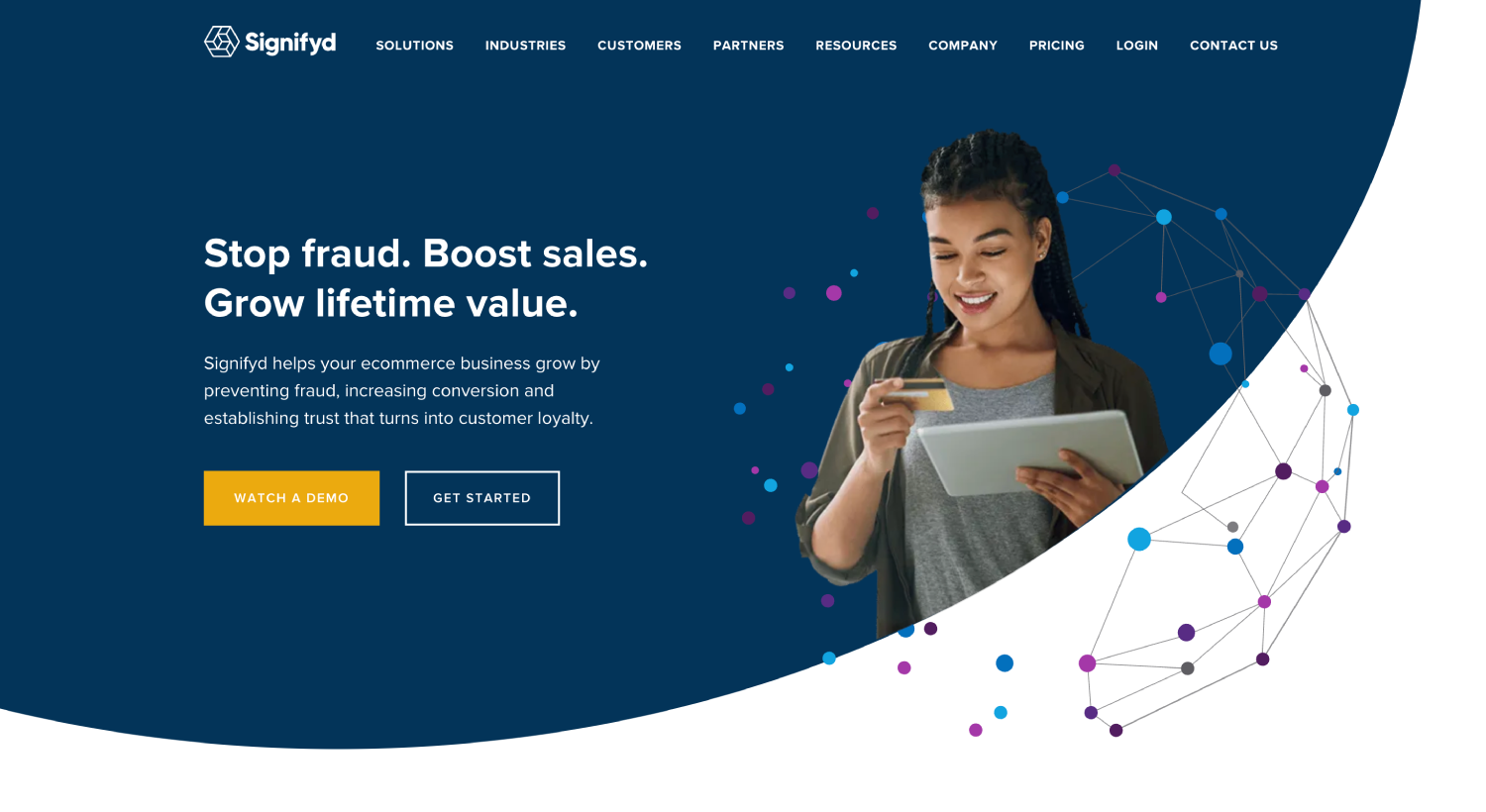
Signifyd operates a fundamentally different model than every other tool in this list. Rather than fighting chargebacks after they occur, Signifyd provides a financial guarantee: it reviews orders in real time, and if it approves a transaction that later results in a fraud chargeback, it covers the loss. That shifts the product category from chargeback recovery to chargeback prevention with financial backstop.
The guarantee model means you are paying for Signifyd’s coverage fee regardless of whether chargebacks occur. For merchants with high fraud-driven chargeback rates, this can be cheaper than fighting disputes after the fact. For merchants whose chargebacks are primarily non-fraud disputes, such as customer service failures or subscription cancellations, Signifyd’s guarantee does not apply. Understanding your dispute reason code breakdown is a prerequisite for evaluating Signifyd accurately , the tool only addresses a specific slice of the dispute universe. Pricing is not publicly disclosed and requires a custom quote.
This connects to a broader point worth making: automated chargeback recovery tools are often evaluated without first understanding which dispute categories are actually costing the most. That upstream analysis belongs in the same planning process as picking a tool, and the Chargeback Statistics 2026 breakdown on FintechSpecs covers industry-level rates and win rates by reason code category.
What Is the Difference Between Success-Fee and Flat-Fee Chargeback Tools?
Success-fee tools charge a percentage of the revenue they recover for you. You pay nothing when they lose, and you pay a cut, typically between 20% and 40% depending on the vendor, when they win. The appeal is obvious: no risk, no upfront cost, aligned incentives.
Flat-fee tools charge a fixed monthly amount regardless of outcomes. You pay whether they win or lose, so you need enough baseline confidence in the tool’s performance to accept that risk transfer. The payoff is predictability: your dispute management cost does not scale with your wins, which matters a great deal once volume increases.
Hybrid models, which Disputifier uses, try to capture both. A base platform fee plus a smaller success-fee percentage reduces the variable cost relative to pure success-fee tools while keeping some downside protection on months with poor win rates.
For a SaaS founder trying to understand how chargeback costs fit into overall payment infrastructure costs, the 10 Best Payment Infrastructure Tools for SaaS Founders provides broader context on how dispute costs interact with processor fees, fraud tooling, and billing ops.
What Tools Automate Chargeback Disputes Across Multiple Processors?
Multi-processor dispute automation is where the vendor field thins out. Most tools work natively with Stripe and are weaker with Adyen, Braintree, or PayPal. Merchants running split-processor setups, which is common at growth-stage companies that have added processors for redundancy or regional coverage, need to verify integration depth explicitly before committing to a vendor.
Chargebacks911, Justt, and Midigator have the broadest reported processor coverage in this set. Chargeflow itself handles Stripe natively but requires API configuration for other processors. If you are a SaaS company already thinking through payment stack complexity, the Stripe vs Adyen for B2B SaaS analysis on FintechSpecs covers the processor decision upstream of this chargeback tool evaluation.
For cross-network coverage, meaning disputes on Visa versus Mastercard versus Amex, each network has its own dispute rules, timelines, and evidence requirements. Vendors that have been in the market longer, Chargebacks911, Chargeback Gurus, and Midigator, tend to have more complete rule sets built out for each network. Newer AI-first tools like Chargeflow and Justt are catching up but may have gaps in less common network-specific dispute categories.
The FintechSpecs Dispute Tool Selection Framework
Most merchants pick a chargeback tool based on who had the best cold email or the loudest presence at their payment conference. A more durable approach is to run through four specific filters before shortlisting vendors.
Filter 1: Dispute Origin Audit. Categorize your last 90 days of chargebacks by reason code. Fraud disputes, non-fraud disputes, and service disputes require different evidence types and favor different vendor strengths. If 70% of your disputes are “item not received” or “unauthorized transaction,” the vendors optimized for those codes outperform generalist tools.
Filter 2: Volume Inflection Calculation. Multiply your monthly average chargeback count by your average order value and by the vendor’s success-fee percentage. If that number exceeds what a comparable flat-fee tool costs per month, you are at or past the inflection point where switching models saves money.
Filter 3: Processor Match. Confirm which processors a vendor integrates with natively versus through a workaround. Native integrations pull dispute metadata automatically. Workarounds require manual evidence uploads, which creates response time risk given the card network deadlines, typically 30 to 45 days from dispute opening depending on the network and reason code.
Filter 4: Prevention Ceiling. If your chargeback rate is above 0.9% of transactions (approaching Visa’s 1% threshold for the standard program), recovery tooling alone will not solve the problem. You need prevention tooling, alerts, and root-cause fixes. Vendors with analytics layers, Chargeback Gurus and Chargebacks911 specifically, cover this. Pure automation tools do not.
Merchants building out fraud infrastructure more broadly should also look at the 10 Best Fraud Detection and Risk Tools for Fintech Startups, since chargeback rates often trace back to upstream fraud prevention gaps that dispute tools cannot fix on their own.
How Much Do Chargeback Automation Tools Actually Cost at Scale?
Because none of the vendors in this list publish fully transparent public pricing, this section works from first principles using publicly confirmed pricing models rather than specific dollar amounts.
The following is an illustrative scenario, not a real client case or an industry benchmark , treat it as a framework for running your own numbers, not as a prediction of outcomes. Consider a merchant with 200 chargebacks per month, an average order value of $120, and a 55% win rate on disputes. That yields approximately 110 won disputes per month, recovering $13,200 in revenue. At a 25% success fee, the monthly cost is $3,300. Annualized, that is $39,600 paid to a vendor for work that, if internalized or moved to a flat-fee tool, might cost $12,000 to $18,000 per year depending on the platform and the internal time investment.
The actual math at your business will depend on your specific AOV, reason code mix, and win rates on your dispute types. But the structure holds: success-fee costs scale with revenue recovered, flat-fee costs do not. The break-even calculation is straightforward arithmetic that most merchants should run before signing a success-fee contract.
For a broader view of how payment-related costs accumulate inside SaaS companies, the 15 Hidden Costs Killing Your Fintech SaaS Margins covers chargeback costs alongside processor fees, dunning overhead, and other often-underestimated line items.
Frequently Asked Questions About Chargeflow Alternatives
What is the best alternative to Chargeflow for high-volume merchants?
Chargebacks911 and Midigator are the strongest alternatives for merchants handling high dispute volume. Chargebacks911 offers managed-service depth and multi-processor coverage. Midigator converts your dispute cost from a variable success fee to a fixed SaaS fee, which reduces total spend significantly once monthly recovered revenue exceeds a certain threshold. Both require a custom pricing conversation. Justt is a close third if your disputes are concentrated in Stripe or Adyen environments.
Does Chargeflow work with processors other than Stripe?
Chargeflow integrates natively with Stripe and has confirmed integrations with PayPal and Shopify Payments. Coverage for other processors, including Braintree and Adyen, requires verification directly with Chargeflow’s sales team, as integration depth varies. Merchants running multi-processor setups should confirm native versus API-only integration before committing, because response time windows on disputes are tight and manual evidence uploads introduce operational risk.
What is the difference between Justt and Chargeflow?
Both tools use AI to automate chargeback dispute evidence building and submission. Justt is positioned more explicitly toward enterprise merchants with complex dispute types and larger volumes. Chargeflow’s onboarding is faster and its Shopify integration is tighter, making it more accessible for mid-market e-commerce operators. Both use success-fee pricing. The deciding factor for most merchants is which tool performs better on their specific dispute reason codes, which requires a trial period, not a feature comparison.
Is success-fee pricing always better for merchants than flat-fee pricing?
Success-fee pricing transfers risk to the vendor, which benefits merchants at low dispute volume or when win rates are unpredictable. Once dispute volume scales and win rates stabilize, the success-fee percentage compounds into a significant recurring cost. A merchant recovering $15,000 per month in disputes at a 25% success fee pays $3,750 monthly to the vendor. A flat-fee tool covering the same volume might cost $1,000 to $2,000 per month. Above the Volume Inflection Point, flat-fee pricing is almost always cheaper.
Can chargeback automation tools prevent chargebacks, not just fight them?
Most dispute automation tools recover chargebacks after they have been filed. Prevention requires different tooling: chargeback alert services like Verifi RDR and Ethoca, which notify merchants of pending disputes before they become chargebacks, and fraud prevention tools that reduce unauthorized transaction rates upstream. Vendors with analytics layers, Chargeback Gurus specifically, help identify root causes so merchants can reduce future dispute rates. Pure automation tools handle the back end but do not address the front-end conditions that generate disputes.
What chargeback rate should trigger a switch to a more sophisticated dispute tool?
Visa’s standard chargeback threshold is 1% of transaction count per month. Merchants approaching that threshold risk being placed in a monitoring program, which carries fines and potential account termination. If your dispute rate exceeds 0.65%, dispute recovery tooling alone is not enough. You need prevention tooling and root-cause analysis alongside recovery automation. For merchants below 0.5%, a lighter-weight tool or even in-house dispute management may be sufficient depending on internal capacity.
The Part Most Comparison Articles Skip
Every vendor in the chargeback automation space has an incentive to make the dispute management problem feel larger and more complex than your internal team can handle. That framing is often accurate at scale, but it is consistently overstated for smaller merchants. A business with 40 to 60 disputes per month, a cooperative payment processor, and one person who understands Visa and Mastercard dispute rules can manage a meaningful percentage of those disputes manually and win them at rates that compete with automated tools.
The automation argument becomes unambiguous above roughly 150 disputes per month, when manual management creates response-time risk and error rates that cost money. Below that, the calculation is genuinely closer than vendors will admit. This is not a reason to avoid these tools. It is a reason to evaluate them honestly against the actual cost of your current approach, not against an implied counterfactual of doing nothing.
The right dispute tool is the one that beats your current win rate at a cost lower than the revenue it adds back. That is the only metric that matters. Automation is a means to that end, not an end in itself.