
TLDR
- Marqeta is the established name in card issuing, but its enterprise-grade pricing and minimum volume requirements make it a poor fit for most seed-to-Series B fintech programs.
- Lithic, Stripe Issuing, and Highnote each address a different gap: Lithic for developer-led teams, Stripe for companies already in the Stripe infrastructure, Highnote for programs that need more product control at mid-market scale.
- Several alternatives on this list, including Galileo and i2c, outperform Marqeta on network breadth and processing volume but require more compliance infrastructure to run.
- Pricing across all eight platforms is largely custom or volume-gated. The right comparison is total cost of ownership, not headline interchange splits.
- The FintechSpecs Card Program Fit Test below is the fastest way to eliminate platforms before you get on a demo call.
The leading Marqeta alternatives for fintechs and SaaS companies are Lithic, Stripe Issuing, Highnote, Galileo, i2c, Synctera, Unit, and Cardless. Lithic and Stripe Issuing suit developer-led teams launching quickly. Highnote fits growth-stage programs needing more product control. Galileo and i2c serve higher-volume programs with multi-network requirements. Synctera and Unit bundle card issuing into a broader banking-as-a-service layer. Cardless targets consumer credit programs that need a card-network co-brand path.
Why Are Fintechs Looking for a Marqeta Replacement?
Marqeta built its reputation on just-in-time funding and real-time transaction controls, features that matter most when a company needs to authorize and settle spend dynamically, as in gig-economy payouts or buy-now-pay-later cards. Those capabilities are real. The problem is the commercial model attached to them.
Marqeta’s contracts typically require minimum monthly processing commitments and a dedicated implementation engagement, which creates cost and timeline friction for programs still finding product-market fit. Pricing is not publicly listed, and interchange splits depend heavily on volume negotiation. For a team issuing fewer than a few hundred thousand cards, the economics rarely favor Marqeta over a newer alternative.
There is also an operational consideration. Marqeta sits as a processor between your program and a sponsor bank, so you are adding a layer, and each layer adds latency to dispute resolution and feature changes. Teams that need to iterate fast on card controls, spending rules, or cardholder UX often find that layer costly.
The FintechSpecs Card Program Fit Test
Before evaluating any specific platform, it helps to run a consistent diagnostic. The FintechSpecs Card Program Fit Test is four questions, answered honestly, that eliminate roughly half the vendor list before you spend time on demos.
Volume realism: What is your projected monthly card spend in month 12 and month 24? Platforms like Galileo and i2c are built for programs above $50 million per month in spend. Below that, you are either overpaying or under-supported.
Stack dependency: Are you already deep in Stripe for billing, payouts, or identity? If yes, the switching cost argument for Stripe Issuing is real, not a marketing claim. If you are on a different stack, that advantage disappears.
Control depth: Do you need to write your own authorization logic, or will standard velocity limits and merchant category controls suffice? The former points to Lithic or Highnote. The latter opens the full field.
Banking-as-a-service bundling: Does your program need deposit accounts, ACH, or lending alongside cards? If yes, Unit or Synctera cut your vendor count. If cards are the only product, they may add more infrastructure than you need.
Marqeta vs Lithic vs Stripe Issuing: Which Comparison Already Exists?
If you are deciding specifically between Marqeta, Lithic, and Stripe Issuing as a three-way choice, that comparison is covered in depth in the Marqeta vs Lithic vs Stripe Issuing card-issuing platform decision published on FintechSpecs. This article covers eight alternatives across a wider range of use cases, company stages, and program types.
What Are the 8 Best Marqeta Alternatives for Card Issuing?
| Platform | Best For | Card Types | Pricing Model | Developer API |
|---|---|---|---|---|
| Lithic | Developer-led programs, fast launch | Virtual, physical, prepaid | Pay-as-you-go + custom volume | Strong, sandbox available |
| Stripe Issuing | Stripe-native stacks, expense cards | Virtual, physical | Interchange-based, public pricing | Native Stripe SDK |
| Highnote | Growth-stage programs needing product control | Virtual, physical, credit | Custom, enterprise contracts | Strong, modern REST |
| Galileo | High-volume debit and prepaid programs | Debit, prepaid, virtual | Volume-tiered, custom | Mature, well-documented |
| i2c | Multi-network, complex program logic | Debit, credit, prepaid, virtual | Custom enterprise pricing | Configurable, not developer-first |
| Synctera | BaaS-bundled card programs | Debit, prepaid | Platform fee plus transaction fees | Moderate |
| Unit | SaaS platforms embedding banking plus cards | Debit, prepaid, charge | Platform fee plus per-account fees | Strong, embedded finance focus |
| Cardless | Consumer co-brand credit programs | Credit (Mastercard) | Custom, revenue share model | Moderate, program-managed |
1. Lithic: The Developer-First Marqeta Competitor
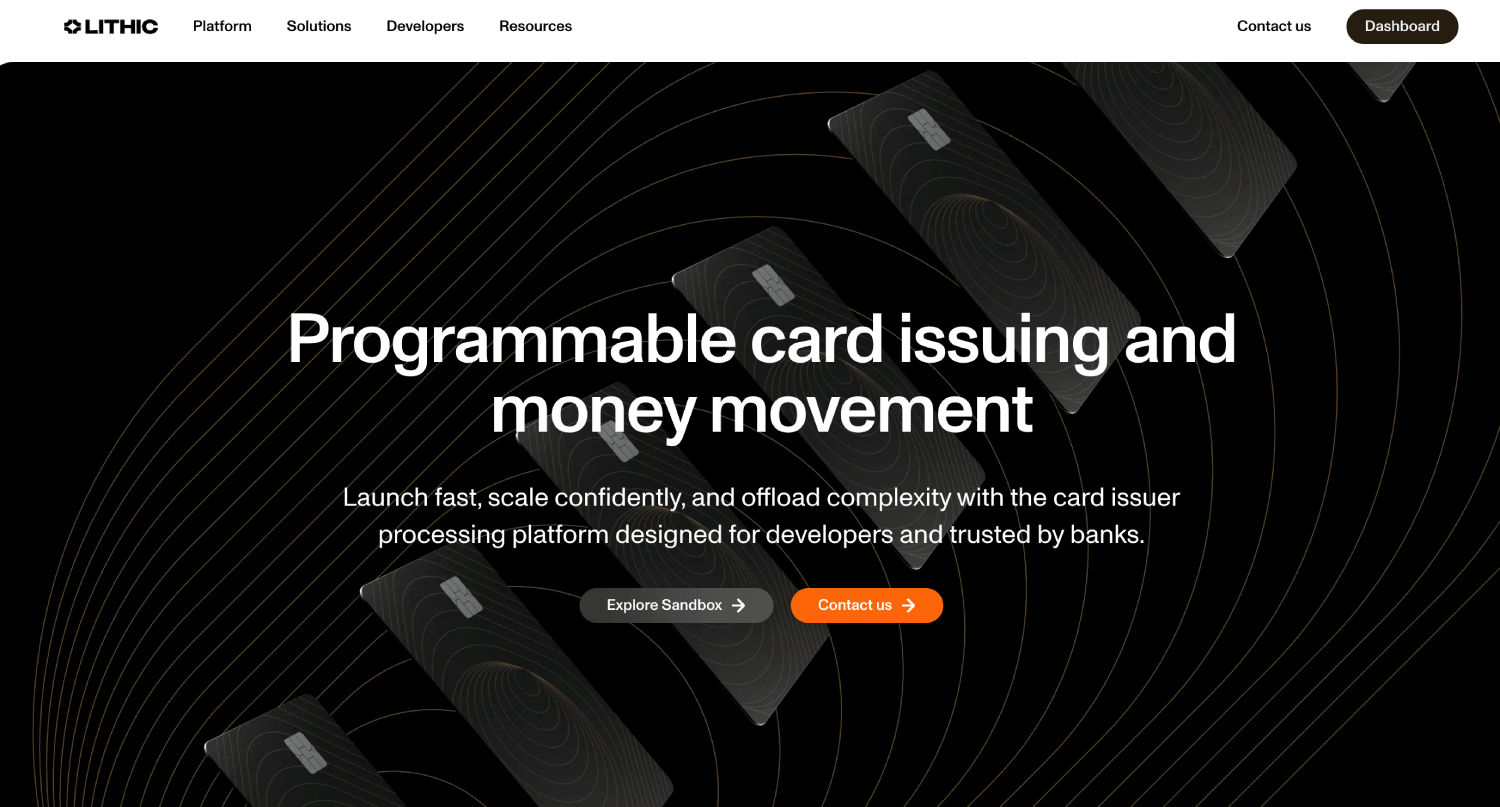
Lithic is the most common first stop for teams running the Marqeta comparison. Its public sandbox is available without a sales call, which alone separates it from most competitors on this list. A developer can issue a virtual card via API within hours of signing up.
Lithic supports virtual and physical cards on Visa, with real-time spend controls you define through its API. You can set merchant category blocks, velocity rules, and single-use card logic programmatically. That matters for expense management tools, accounts payable automation products, and any platform that needs cardholder controls to change dynamically based on business logic.
Pricing is not publicly broken down per transaction on Lithic’s site, but the platform offers a pay-as-you-go structure for lower volumes and custom terms for higher-volume programs. Lithic functions as both a card processor and program manager, with sponsor bank relationships baked in, so you do not need to source your own bank partner to launch.
The honest limitation: Lithic is primarily US-focused and runs on Visa only. If your program needs Mastercard or international card issuing, that is a structural constraint worth confirming early. For a detailed look at how Lithic compares specifically to Stripe Issuing and Marqeta, the Marqeta vs Lithic vs Stripe Issuing comparison covers the trio side by side.
2. Stripe Issuing: Best Marqeta Alternative for Stripe-Native Stacks
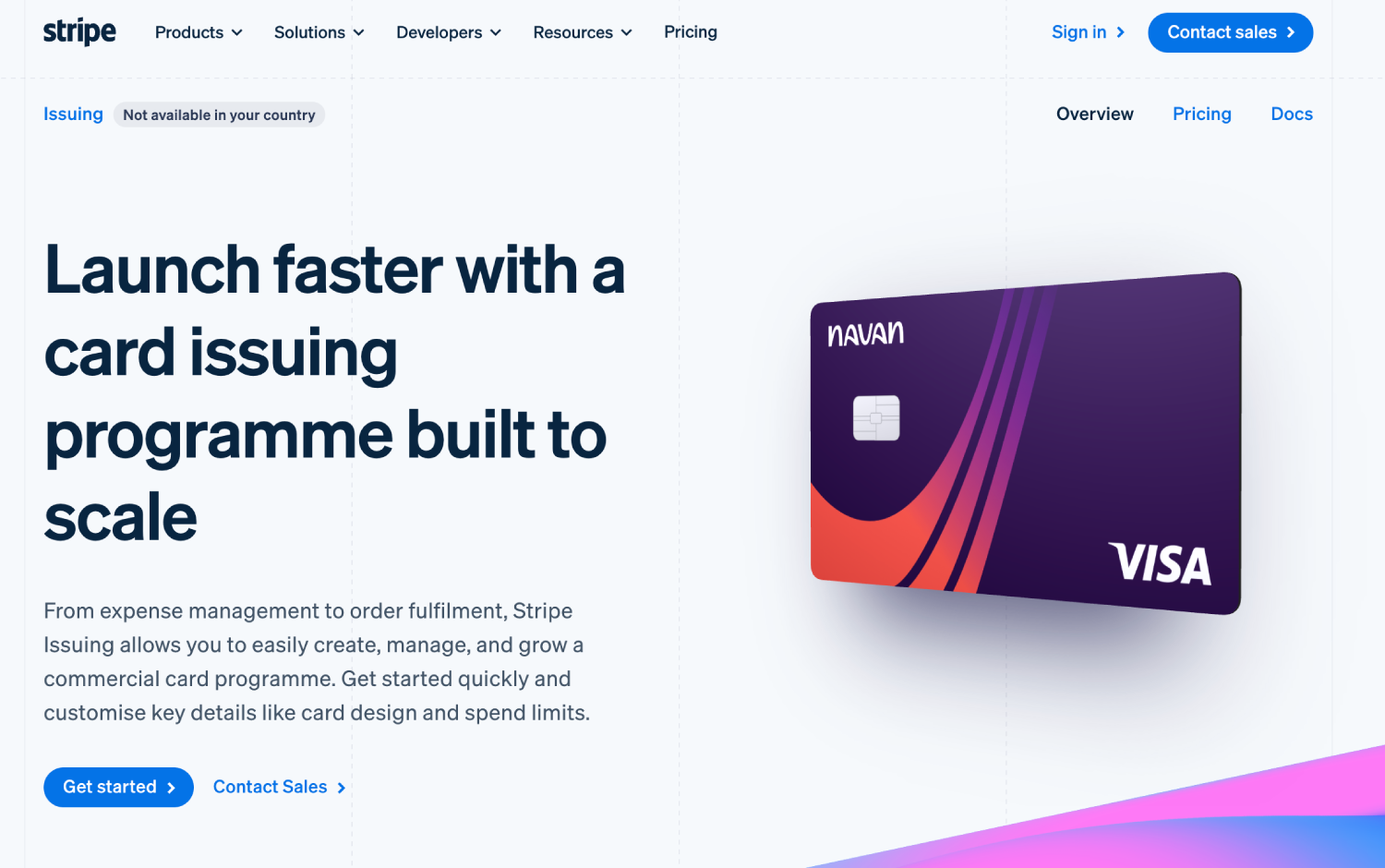
Stripe Issuing makes the most sense when your company already runs payments, billing, or payouts through Stripe. The integration cost is low because you are extending an existing relationship, and card data lives in the same environment as your payment and customer data.
Stripe Issuing supports virtual and physical cards on both Visa and Mastercard. Cardholders can receive funds from your Stripe balance and spend on a physical or virtual card issued in your program’s name. Spending controls are set via the Stripe API and update in real time. Stripe publishes some pricing on its issuing page, though exact interchange rates and volume terms vary.
The case against Stripe Issuing is consolidation risk. Building your card program, billing, and payouts all on Stripe creates a single dependency. If Stripe changes pricing, deprecates a feature, or experiences an outage, the blast radius hits multiple product layers at once. Teams that view that concentration as acceptable get a genuinely tight integration. Teams that do not should weight this seriously.
3. Highnote: Best for Growth-Stage Programs Needing More Control
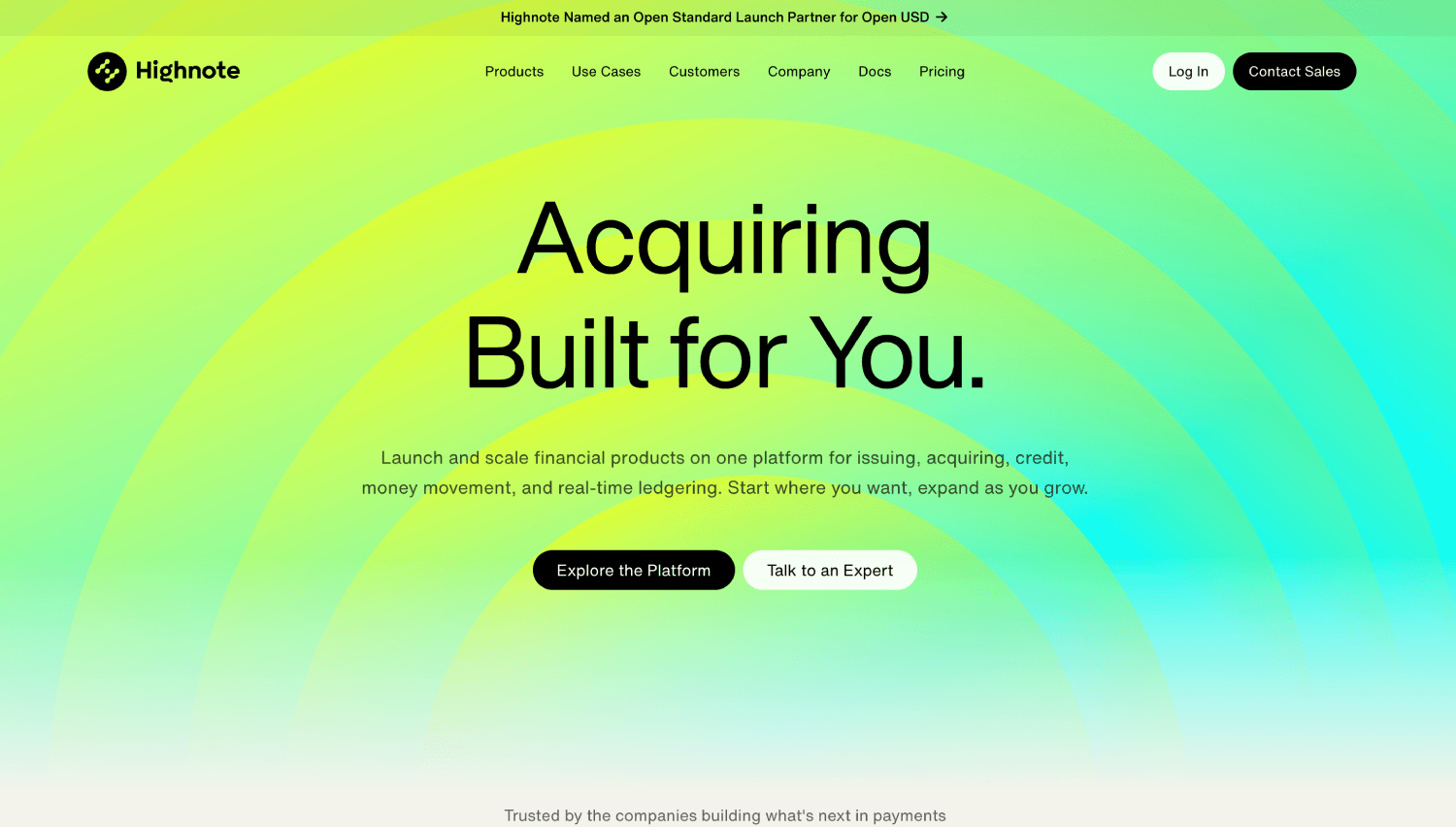
Highnote sits between the developer-first simplicity of Lithic and the enterprise complexity of Galileo. It supports virtual cards, physical cards, and credit programs, and its API is designed around modern REST conventions rather than the older SOAP or batch-file patterns some legacy processors still use.
Highnote’s differentiation is in its card program configurability. Teams can define authorization rules, rewards logic, and cardholder lifecycle events without writing custom middleware to work around the platform’s defaults. For a growth-stage fintech building a branded credit or charge card, that configurability compresses the time between product decision and in-market execution.
Pricing is custom and contract-based, so budget accordingly for a longer sales cycle. Highnote is worth the conversation if your program is approaching $5 million to $20 million in monthly card spend and you are finding that simpler platforms are limiting your product roadmap rather than supporting it.
4. Galileo: Best Marqeta Alternative for High-Volume Debit Programs
Galileo, now part of SoFi Technologies, is one of the most widely deployed card processing platforms in the US. Its client list includes programs that have scaled to millions of active cards. That scale is a genuine advantage: its APIs and operational infrastructure carry a production track record that newer platforms have not had the time to accumulate.
Galileo supports debit, prepaid, and virtual cards. Its API documentation is mature and well-maintained. For high-volume programs running north of $50 million per month in spend, Galileo’s volume-tiered pricing and processing reliability are legitimate competitive advantages over platforms priced for early-stage programs.
The trade-off is implementation complexity. Galileo expects more infrastructure on your side, including sponsor bank relationships and compliance program management. It is not a platform you launch in days. Teams without prior card program experience typically need six to twelve months to go live. If your program is at that scale, that timeline is acceptable. If you are still finding product-market fit, it probably is not.
Understanding the broader economics of card programs and BaaS relationships before signing with Galileo is worth the time. The hidden economics of Banking-as-a-Service covers interchange splits, program manager margins, and sponsor bank fees that affect your total cost across any of these platforms.
5. i2c: Best for Complex, Multi-Network Card Programs
i2c is the platform most card program operators would name if you asked which processor can handle the most complex authorization and program logic. It supports Visa, Mastercard, American Express, and Discover, which is a broader network footprint than any other platform on this list.
i2c’s platform is highly configurable through its Agile Processing architecture, which lets program managers define spending rules, rewards structures, and cardholder eligibility logic without custom development for every change. For programs with multiple card products, multiple cardholder segments, or unusual transaction types, that configurability is a real operational advantage.
i2c is not a developer-first platform. Its integration model is more enterprise-contract than API-sandbox, and pricing is custom and negotiated by volume. It is a strong fit for a team that has already proven card program economics and needs a processor that can support continued complexity as the program grows. It is a poor fit for a team still in prototype or early-launch mode.
6. Synctera: Best for BaaS-Bundled Card Programs
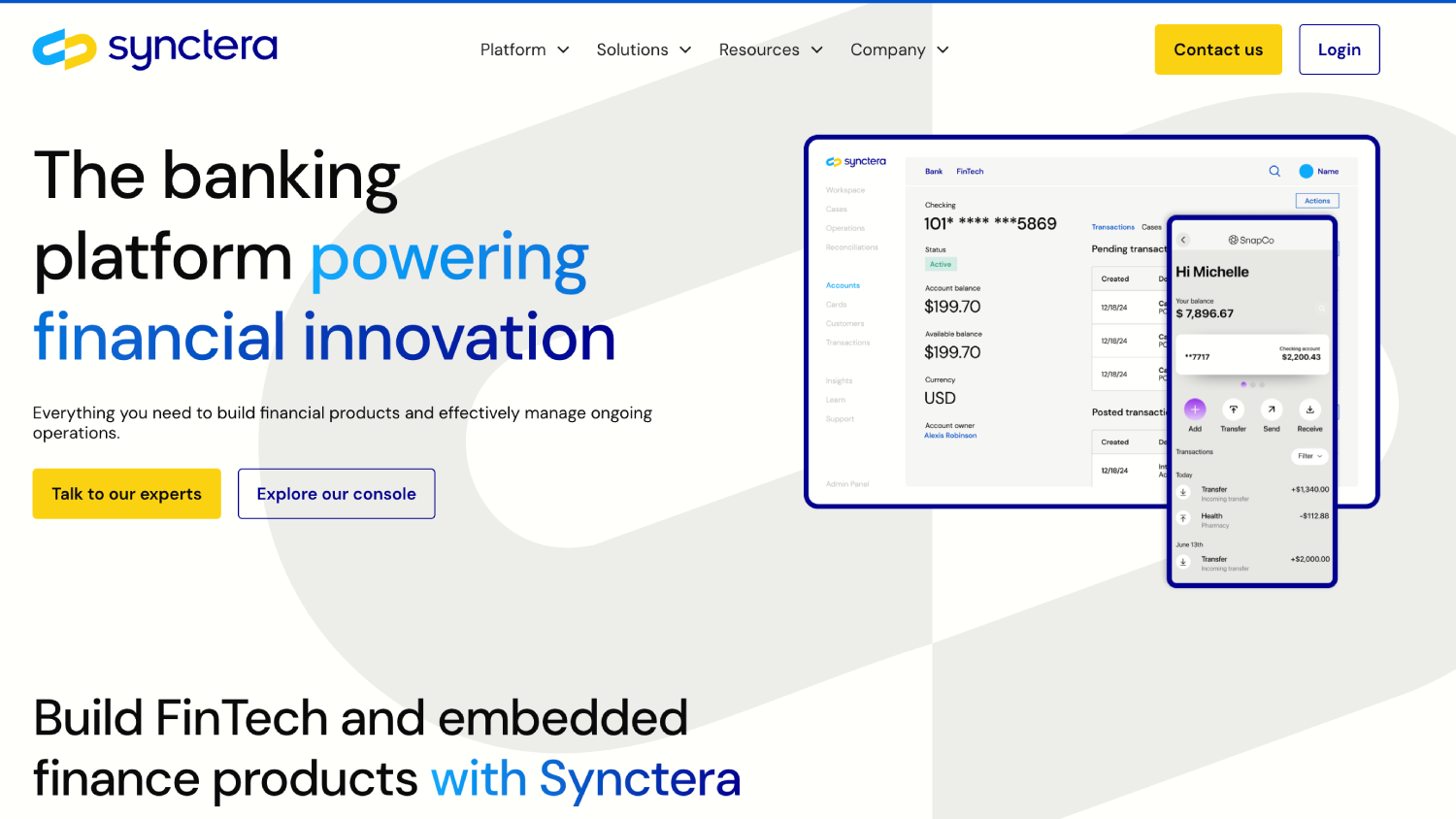
Synctera takes a different approach to card issuing. Rather than positioning as a pure card processor, it bundles card programs inside a broader banking-as-a-service layer that includes deposit accounts, ACH, wire transfers, and compliance infrastructure. The card product is one component of a broader embedded banking program.
For a fintech that needs to offer cardholders a checking account alongside a debit card, Synctera reduces vendor count significantly. You are not separately managing a card processor, a BaaS provider, and a sponsor bank relationship. Synctera handles the sponsor bank relationship and regulatory compliance layer for you.
The trade-off is that card-only programs pay for infrastructure they do not use. Synctera’s pricing includes a platform fee plus transaction-level charges, and the total cost only makes sense if you are using multiple BaaS capabilities together. If your program is debit-only with no need for deposit accounts or ACH, a pure card processor will likely be cheaper.
For a broader comparison of BaaS platforms including Synctera, the best Banking-as-a-Service platforms for fintech startups covers the field across multiple dimensions beyond card issuing.
7. Unit: Best Marqeta Alternative for SaaS Platforms Embedding Banking and Cards Together
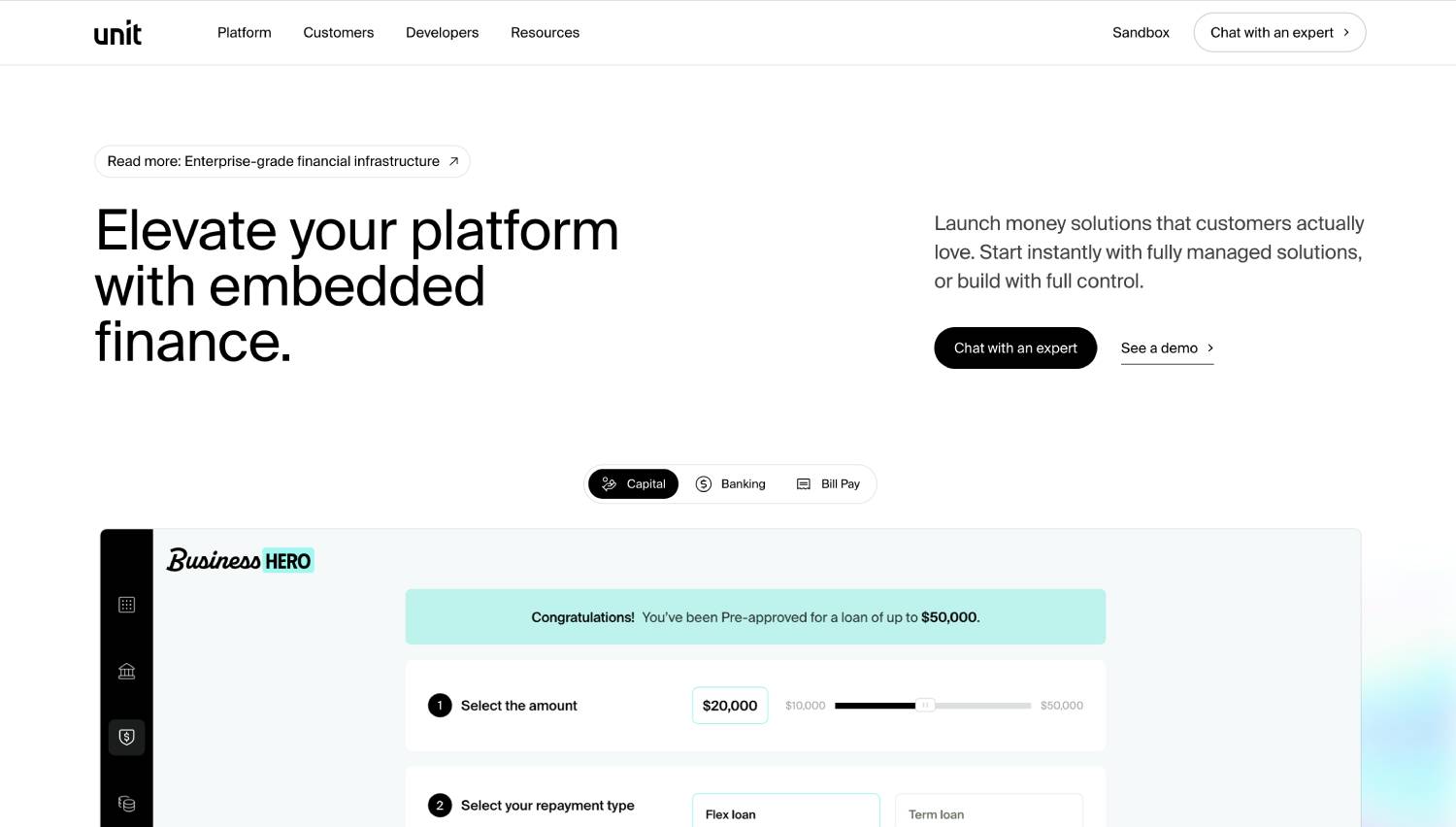
Unit is built for vertical SaaS companies that want to embed financial products directly into their platform, with cards as one feature among several. Its target customer is not a standalone fintech but a software company in healthcare, construction, logistics, or similar verticals that wants to offer employees or customers a financial product without building a fintech from scratch.
Unit supports debit, prepaid, and charge cards alongside deposit accounts, ACH, and wire transfers. Its API is well-documented and designed for developers who are not card industry specialists. The compliance and sponsor bank infrastructure is managed by Unit, which significantly reduces what your team needs to know about banking regulation to launch.
Unit’s pricing model combines a platform fee with per-account and per-transaction charges. The economics favor platforms with meaningful account volume. A platform issuing a few hundred cards a month will find the platform fee heavy relative to the utility. A platform with thousands of active cardholders gets better unit economics as volume scales.
If you are evaluating Unit, the comparison with Synctera is worth running directly. The Synctera vs Unit BaaS platform comparison breaks down the differences in pricing model, compliance coverage, and product depth.
8. Cardless: Best for Consumer Co-Brand Credit Programs
Cardless occupies a narrow but important position in the market. It specializes in consumer co-brand credit card programs for brands, media companies, and consumer apps that want to issue a credit card under their own name without building the credit underwriting, compliance, and issuing infrastructure internally.
Cardless issues on the Mastercard network. Based on publicly available information, Cardless operates exclusively on Mastercard and does not currently support Visa or other networks. Its model is closer to a managed program than a raw API: the company handles underwriting criteria, credit bureau integration, cardholder servicing, and regulatory compliance. The brand partner defines the rewards structure and cardholder experience, and Cardless operates the program behind it.
This is a fundamentally different model from Lithic or Stripe Issuing, where you maintain more direct control over program logic. Cardless makes sense if your program is consumer-facing, credit-based, and your team does not want to build or manage underwriting capability. It is not a fit for B2B expense programs, prepaid products, or any program where real-time authorization control is a core product requirement.
How Do These Platforms Compare on Key Decision Factors?
| Platform | Time to Launch | Min Volume Required | Credit Card Support | Multi-Network | Sponsor Bank Included |
|---|---|---|---|---|---|
| Lithic | Days (sandbox) | Low | No | No (Visa only) | Yes |
| Stripe Issuing | Days (Stripe account) | Low | No (charge only) | Yes (Visa + Mastercard) | Yes (via Stripe) |
| Highnote | Weeks to months | Medium | Yes | Yes | Yes |
| Galileo | Months | High | No | Yes | No (you source) |
| i2c | Months | High | Yes | Yes (Visa, MC, Amex, Discover) | No (you source) |
| Synctera | Months | Medium | No | Yes | Yes |
| Unit | Weeks to months | Medium | Charge only | Yes | Yes |
| Cardless | Months | Medium-High | Yes (consumer credit) | No (Mastercard only) | Yes |
What Does a Card Issuing Platform Actually Cost?
None of the eight platforms on this list publish complete pricing. Card issuing pricing has three real cost layers that every team should model before signing a contract.
The first layer is interchange revenue. When a cardholder uses your card, the merchant pays an interchange fee that flows back through the network. Depending on your card type and network, the platform and sponsor bank take a share of that interchange. Your net share depends entirely on your volume and your contract.
The second layer is per-transaction or per-card fees. Most platforms charge a fee per card issued, per active card per month, or per transaction. These fees compress your economics at low volume and become more favorable as you scale. A program issuing 500 active cards per month faces very different unit economics than one issuing 50,000.
The third layer is platform fees, which apply to BaaS-bundled platforms like Unit and Synctera. These are fixed monthly charges for access to the infrastructure, regardless of transaction volume. They create a floor on your monthly cost that you need to cover before card economics turn positive.
The practical implication: build a twelve-month cost model using realistic card count, average spend per card, and expected transaction frequency before you evaluate any platform. Without that model, vendor pricing conversations are impossible to compare meaningfully. The hidden costs killing fintech SaaS margins goes deeper on how infrastructure fee stacking erodes gross margin at each stage of growth.
Illustrative Cost Scenario: Early-Stage Card Program
Consider a vertical SaaS company issuing expense cards to business customers. At month 12, they have 2,000 active cards with $500 average monthly spend per card, totaling $1 million in monthly card spend. At that volume, a platform-fee-based BaaS provider charging $3,000 per month in platform fees plus $0.10 per transaction (assume 10 transactions per card per month) adds up to roughly $5,000 per month in baseline costs before interchange netting.
At the same volume on a pure processor like Lithic or Galileo, your costs are primarily interchange-based with per-card or per-transaction fees. The structure favors programs where interchange revenue can offset per-unit processing costs. At $1 million per month in spend on a Visa debit card, blended interchange might return 0.5% to 1.5% gross to the program depending on card type and merchant mix, before the platform takes its share.
This scenario is illustrative, but the math reveals a real pattern: BaaS-bundled platforms make economic sense only when you are using enough of the bundle to justify the fixed cost. A debit-only card program on Unit or Synctera is subsidizing infrastructure you do not use. A debit plus checking account plus ACH program starts to find the bundle economics reasonable.
Frequently Asked Questions About Marqeta Alternatives
Is Lithic actually better than Marqeta for early-stage fintechs?
For most early-stage programs, yes. Lithic does not require a sales process to access its sandbox, its pricing scales from low volume, and its API is designed for developer teams rather than enterprise integration teams. Marqeta’s commercial model, with negotiated minimums and enterprise contracts, creates friction that most seed-to-Series A programs cannot absorb. Lithic is not better for every use case, but it is a materially lower barrier to entry.
Can Stripe Issuing replace Marqeta for a corporate expense card product?
For many expense card products, yes. Stripe Issuing handles virtual and physical cards with real-time spending controls, and if you are already on Stripe for billing or payouts, the integration lift is minimal. The limitation is credit: Stripe Issuing issues charge cards that settle against a balance, not revolving credit lines. If your expense product requires a true credit facility, Stripe Issuing does not support that, and you would need Highnote or a credit-specific processor.
Which Marqeta competitors support both debit and credit card programs?
Highnote, i2c, and Cardless all support credit programs alongside debit or prepaid. i2c has the broadest network and program logic configurability for credit. Highnote suits growth-stage programs building consumer or SMB credit products. Cardless focuses specifically on consumer co-brand credit and handles underwriting and servicing as part of its managed program model.
Do any Marqeta alternatives include a sponsor bank relationship?
Lithic, Stripe Issuing, Highnote, Synctera, Unit, and Cardless all include sponsor bank relationships as part of their platform. Galileo and i2c typically expect clients to source their own sponsor bank, which adds negotiation time and ongoing compliance management to the launch process. For programs that are not ready to manage a direct bank relationship, the platforms with bundled sponsor bank access are significantly faster to market.
How long does it take to launch a card program on a Marqeta alternative?
Lithic and Stripe Issuing can reach sandbox testing in days and production in a few weeks, assuming your compliance and KYC infrastructure is ready. Highnote, Unit, and Synctera typically take one to three months for full production launch. Galileo and i2c typically require three to six months or longer, particularly for programs that need to source their own sponsor bank. The timeline varies significantly based on your program’s complexity and your team’s prior card program experience.
What compliance infrastructure do I need before launching with any of these platforms?
At minimum, you need a KYC and KYB process for cardholder and business onboarding, an AML transaction monitoring program, and a sanctions screening workflow. Platforms like Unit and Synctera provide more of this infrastructure as part of the bundle. Galileo and i2c expect you to bring more of your own. The fintech product and compliance readiness checklist is a useful starting point for identifying which compliance layers your program needs before you can go live.
Is there a Marqeta alternative that works for international card issuing?
i2c has the broadest international footprint among the eight platforms covered here, supporting programs across multiple geographies and networks. Highnote and Cardless have US-centric program management with some international capability. Lithic and Stripe Issuing are primarily US-focused. If international card issuing is a core requirement from day one, i2c or a purpose-built international issuing platform warrants evaluation before committing to a US-primary alternative.
How to Shortlist the Right Card Issuing Platform in Three Steps
Step one: apply the FintechSpecs Card Program Fit Test from the top of this article. Volume realism, stack dependency, control depth, and BaaS bundling. Honest answers to those four questions eliminate at least half the list before you spend time on demos.
Step two: build your twelve-month cost model using realistic card counts and spend per card. Run the model against at least three platforms using whatever pricing signals you can extract from public pages or early vendor conversations. The platform that looks cheapest in a sales deck often looks different once you apply your actual volume profile.
Step three: test the developer experience before you commit. Lithic and Stripe Issuing both offer sandbox access without a contract. Use it. The gap between what a platform promises in a demo and what a developer can actually build in the first two weeks of integration is often the most reliable signal of what your launch timeline will look like.
Card issuing infrastructure is a long-term dependency. The platform you launch on shapes your cardholder experience, your compliance posture, and your unit economics for years. The platforms that feel the fastest to launch are not always the ones that scale cleanly. And the platforms that handle scale often carry implementation costs that early-stage programs cannot afford to absorb. That tension does not resolve with more research. It resolves with an honest read of where your program actually is today versus where you plan to be in eighteen months.